Pashmina is a very luxurious fabric from Nepal. Many people know it as Cashmere. Pashmina shawls are made from soft wool. This wool comes from mountain goats in Tibet. These shawls are handmade in Nepal. They are smooth and warm. Pashmina shawls are perfect for buying in Nepal. Take one home as a souvenir. Pashmina shawls are fashionable. They always look good. You can wear them for any event. Other things to buy in Nepal from Pashmina include cardigans and blankets. These also make great gifts.
Khukuri Knives
Looking for unique things to buy in Nepal? Consider a Khukuri knife. Khukuri are authentic Nepali daggers. They are great souvenirs. These knives are important in Nepal’s history and culture. Nepali Khukuri are special. They are different from knives elsewhere. Buying things in Nepal that show Nepali identity is a good idea. Khukuri knives do just that.
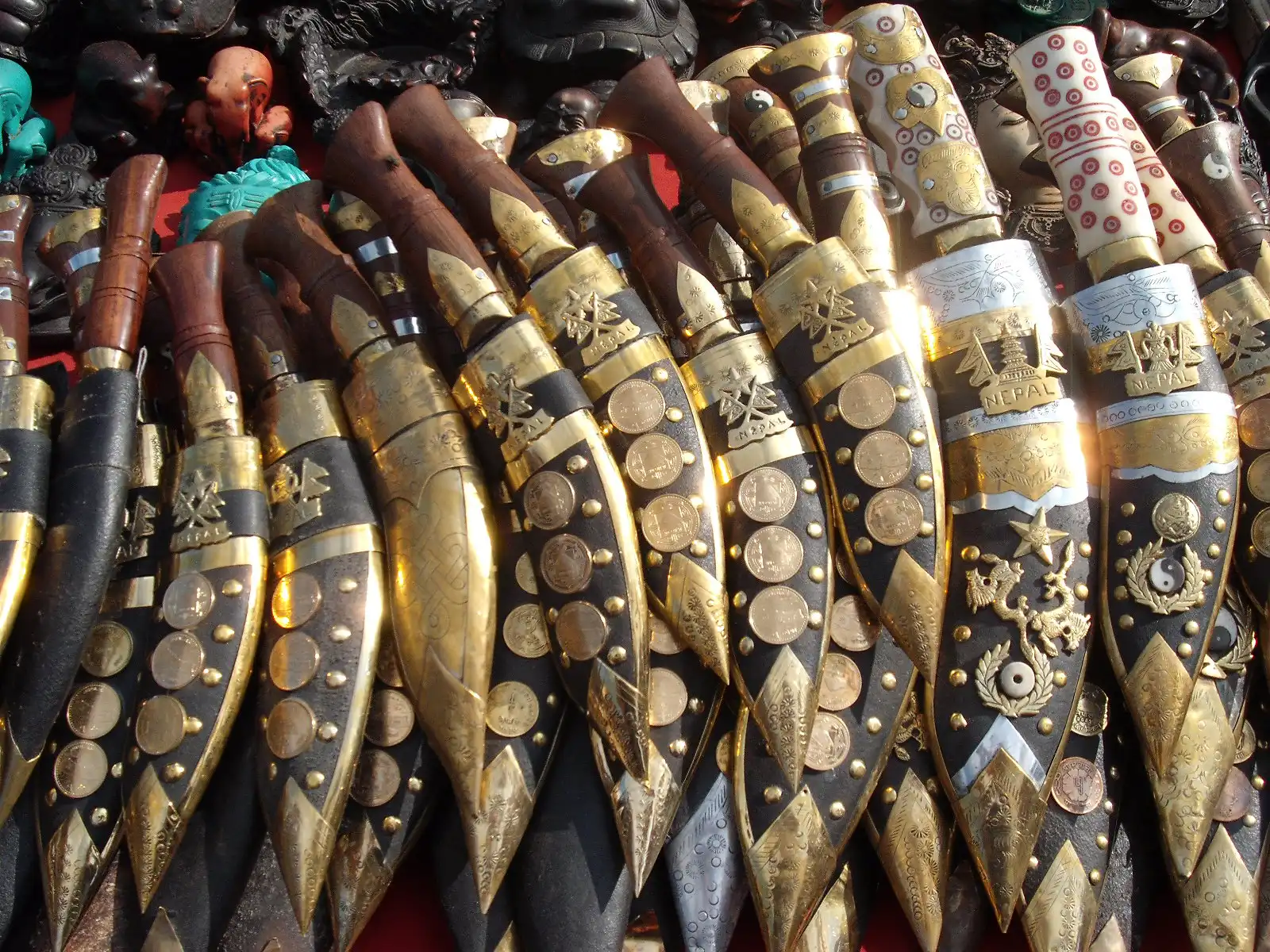
A Khukuri has a strong, shiny blade. The blade curves inward. It works as both a weapon and a knife. The handle, or hilt, often has Nepali designs. When you buy a Khukuri, you get two small extra blades. These are for sharpening the primary blade.
Khukuri knives are usually small and light. But some are bigger and more decorated. They do not take up much space. This makes them easy to carry home as things to buy in Nepal. Nepali people use Khukuri in ceremonies. They are part of weddings and other events. A Khukuri knife is a meaningful and traditional thing to buy in Nepal.
A beautifully arranged selection of Khukuri knives, Nepal’s iconic curved blades, featuring intricate metalwork and decorative engravings.
Rice Paper Products
Rice paper is the traditional form of paper available in Nepal. It is handmade from rice husks and the daphne or bark found in remote areas of Nepal. You can buy them from there. Usually, this kind of paper is used for manuscripts and paintings; it is an exciting gift or souvenir to take away from Nepal. You will find rice paper stores in Patan, Bhaktapur, and Thamel. Lampshades, calendars, journals, diaries, notebooks, etc., are some paper products tourists can carry back home easily (the lampshades are often available in foldable designs). The Babar Mahal Revisited mall also has a store selling these products.
Handicrafts
Handicrafts are everywhere in Nepal. You can easily find them. Nepali handicrafts are special and different. Looking for things to buy in Nepal? Consider handicrafts.
Famous Nepali handicrafts include:
Prayer wheels
Puppets
Traditional masks
Carved wood items
Pottery
Hemp products
Painted masks of gods are very Nepali. They come in many sizes. Wooden carvings like boxes and vases are great things to buy in Nepal.
Hemp products are also popular. Find hemp t-shirts and pants. Backpacks and bags made of hemp are good gifts. These are unique things to buy in Nepal.
Be careful about antiques. Some sellers might try to sell fake antiques. Authentic antiques are rare. You cannot take real antiques out of Nepal without permission. So, be cautious when buying “antique” things in Nepal.
Handicrafts are excellent things to buy in Nepal. They are unique souvenirs and gifts.
Statues and Masks
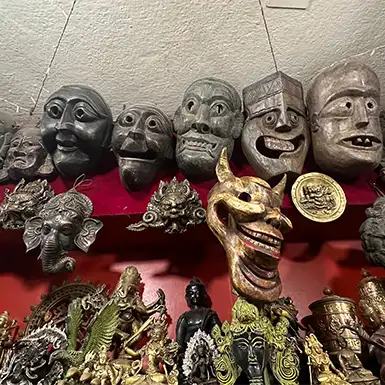
When you walk through the streets and corners of Kathmandu, especially in Thamel, you will find several shops displaying different forms of statues and masks. The statues are made from brass, bronze, clay, and other products. They are a great showpiece with which to spruce up your house. Many people regard them as lucky charms. The Nepalese masks are unique. The masks in Nepal range from average masks to the masks of Buddha, Shiva, Indra, or other deities. Usually, they are hanging on the wall. Additionally, they play a significant role in Nepal’s local and traditional festivals.
Tea
Nepal is one of the prominent places to buy Teas. If you stay in Nepal for a few days, you will become addicted to delicious Nepali tea, locally known as Chiya; it is better to pack different leaf flavors of tea for your family. Purchasing local tea is the perfect way to bring home a little taste of Nepal. The climate and hills of Nepal are ideal for tea bushes and other herbs. So, the cultivation of tea is quite widespread there. Flavorful and tasty Nepali tea has many health benefits and is refreshing. Also, you can find different varieties of tea in Nepal, which include green tea, oolong tea, white tea, and hand-rolled tea.
Jewelry
Undoubtedly, the way to a woman’s heart is through fine jewelry, and jewelry as delicate and exotic as that found in Nepal could make any woman happy. Nepal offers them all: silver or gold, beads or semi-precious stones, blue lapis, or yak bone. Also, you can buy something ready-made or custom-made or purchase individual beads to create your necklace.
Nepali Spices
The Himalayan country of Nepal is famous for its spices and rare herbs. Undoubtedly, the fragrance of these distinctive herbs can be found in every Kitchen in Nepal. As you move around the local market and alleyways, you come across the pleasant aroma of fresh spices. The Nepali market is filled with multiple spices. Also, some of them are unique to the country.
Conclusion
These souvenirs truly show what Nepal is about. When you buy things to buy in Nepal, remember to bargain. Bargaining is normal here. Be ready to negotiate prices. This helps you get a better deal. If you want to buy something expensive, shop around. Check different stores first. Comparing prices is a good idea. We have listed some of the best things to buy in Nepal as souvenirs. We hope you enjoy shopping! For Nepal trekking or Nepal tours, contact us. We can plan the perfect trip for you.
Nepal is not just a market for tourist goods. Many of the crafts on sale here connect to real working traditions. Thangka painters often train for years. Metalwork from Patan follows methods passed down through Newari cartisans. Pashmina weavers in Kathmandu work with techniques rooted in Himalayan textile culture.
Buying in Nepal carries the chance to support local artisans, women-led cooperatives, and small family workshops. Fair trade stores and social enterprises give shoppers a direct way to invest in communities rather than large supply chains.
Focus on quality, cultural meaning, and the story behind the item. A well-made singing bowl or a hand-painted thangka tells you something about the place you visited. A machine-made replica does not.
Best Souvenirs to Buy in Nepal
Pashmina Shawls and Scarves
Pashmina stands among the most popular Nepali handicrafts for visitors. Real pashmina is made from fiber from Himalayan goats. Fine pashmina shawls feel noticeably soft and lightweight against the skin.
The market includes a wide range: genuine pashmina, wool-pashmina blends, and acrylic imitations. Price, fiber content, and seller transparency help separate them. A trusted shop explains the fiber content clearly and does not avoid the question when you ask.
A pashmina suit is almost perfect for every traveler on your gift list. Shawls work for women, men, and older recipients. Scarves travel easily in a carry-on bag. Buy from stores that display fiber content labels and explain their sourcing.
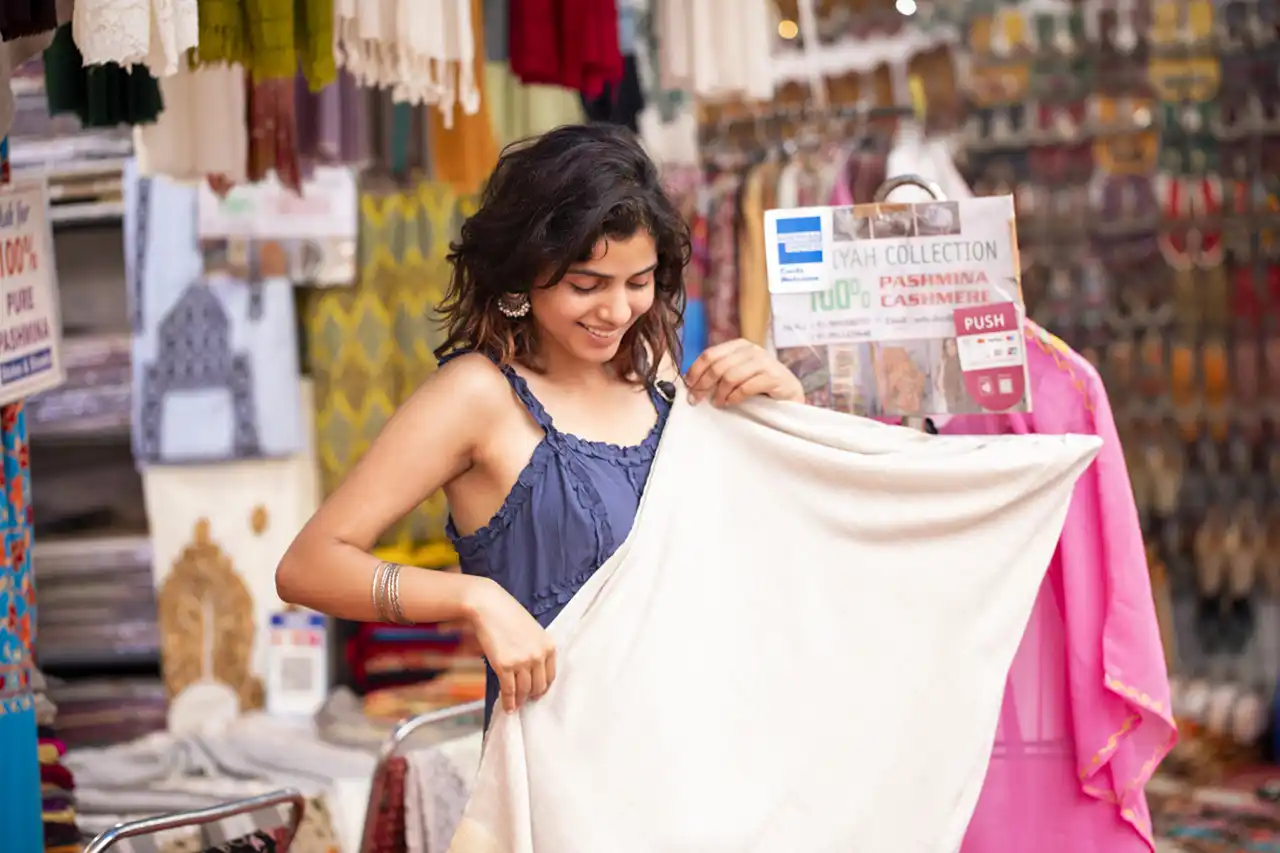
A shopper checks the texture of a pashmina shawl while browsing vibrant textiles in a local market.
Singing Bowls
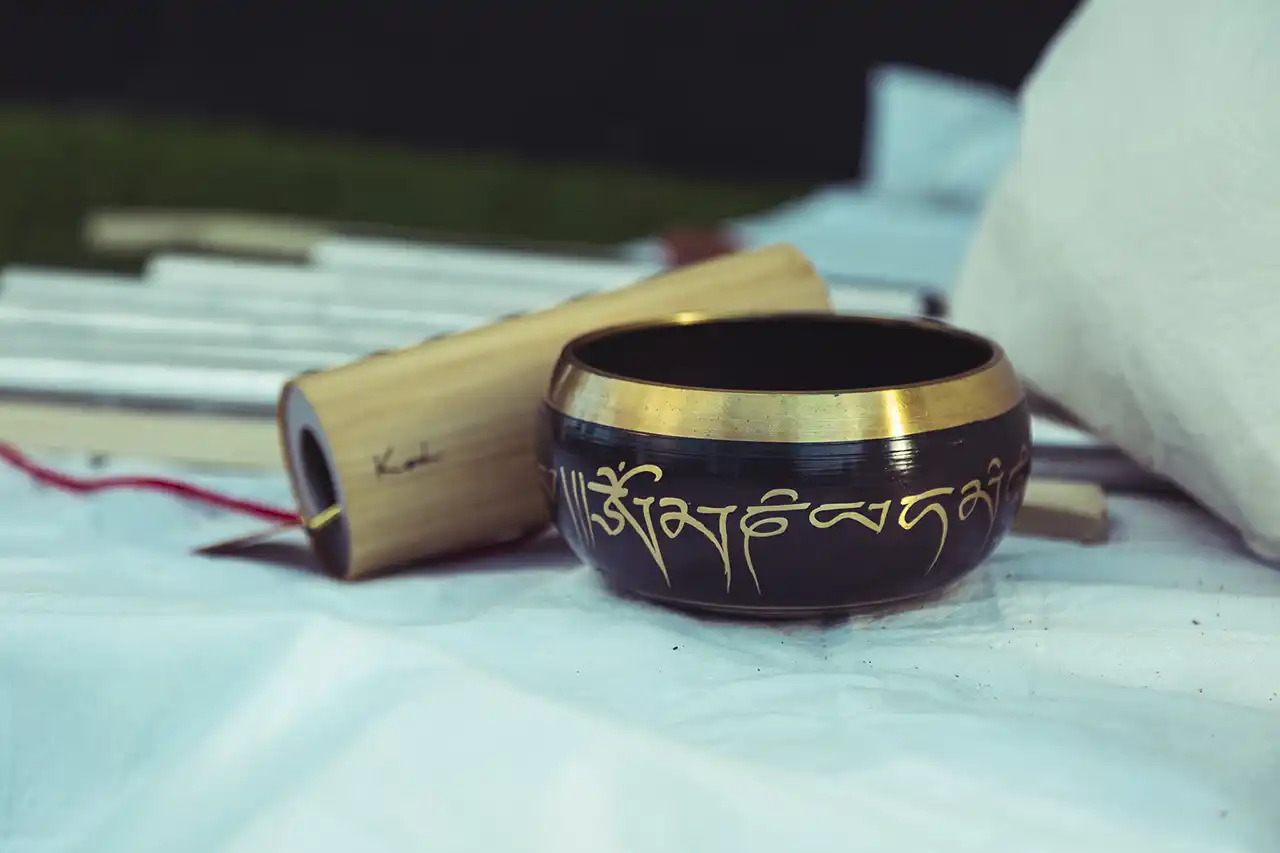
Singing bowls hold decorative, spiritual, and meditation value. Kathmandu and Boudhanath carry the widest selection, from small palm-sized bowls to large ones used in sound meditation sessions.
Handmade bowls produce a richer, more sustained tone than machine-pressed versions. Test the sound before buying. Strike the bowl gently and listen. A good bowl sustains a clear, even tone without metallic rattling.
Smaller bowls pack easily in a daypack. Larger ones need careful wrapping before travel. Singing bowls suit spiritual travelers, meditation practitioners, and anyone who appreciates handmade objects.
Thangka paintings are part of a sacred Buddhist art tradition. Artists paint deities, mandalas, and spiritual scenes on cotton or silk canvas. Hand-painted thangkas take weeks or months to complete. Printed versions cost far less but lack the same craft value.
Quality shows in the detail, color depth, and precision of the symbolism. A well-painted thangka has clean lines, fine layering, and no smearing at the edges. Ask the seller directly whether the piece was painted by hand.
Thangkas suit art lovers, spiritual buyers, and travelers who want to bring home something with genuine cultural depth. They need careful tube packing for travel.
A traditional singing bowl used for meditation and sound healing, displayed with its wooden striker.
Lokta Paper Products
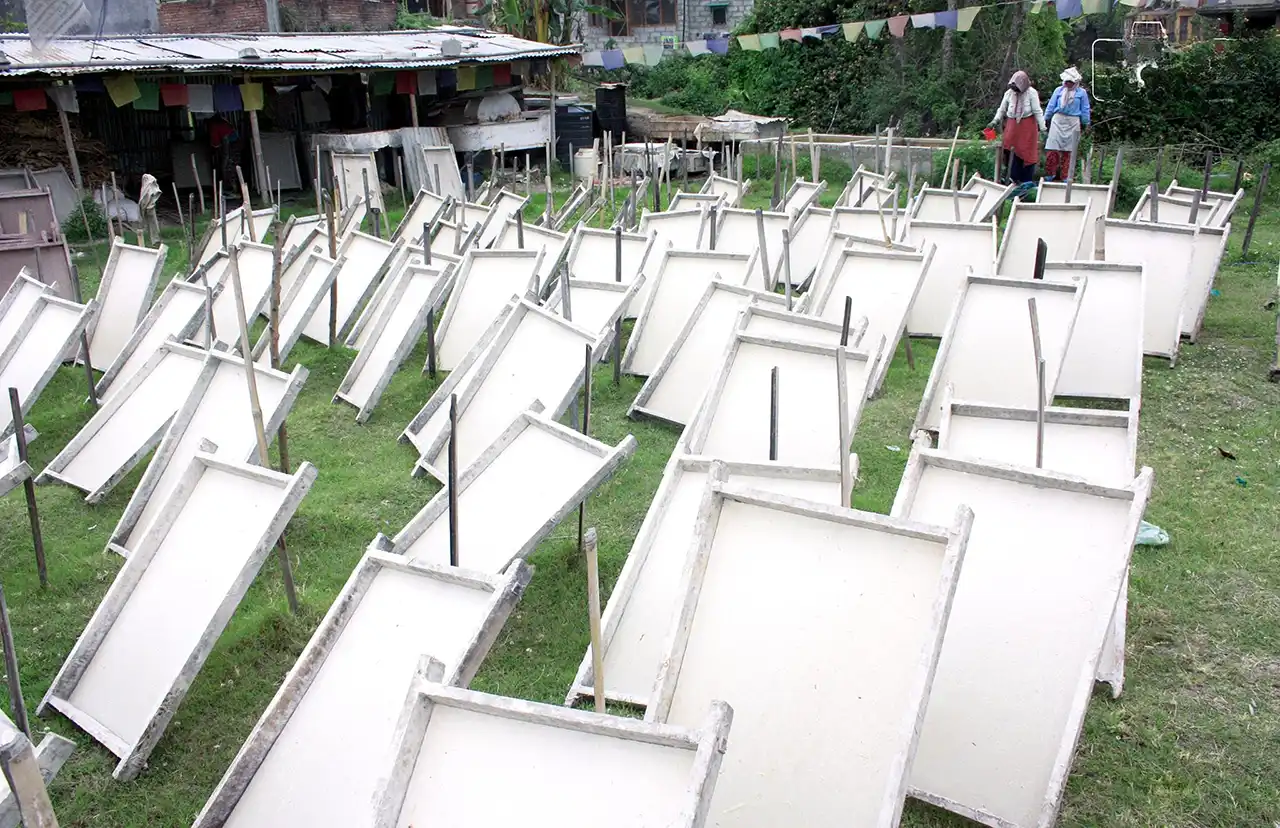
Lokta paper comes from the bark of the Himalayan daphne shrub. Artisans make it entirely by hand. The result feels textured, durable, and unlike factory paper.
Lokta products include journals, notebooks, greeting cards, lampshades, and gift wrapping. They travel easily, cost relatively little, and suit almost every budget range.
Lokta paper products rank among the safest, most practical, and most thoughtful gifts to bring home from Nepal. Budget travelers and light packers both find this category easy to work with.
Fresh lokta paper sheets dry naturally in the open air at a local workshop in Nepal.
Handmade Jewelry and Beads
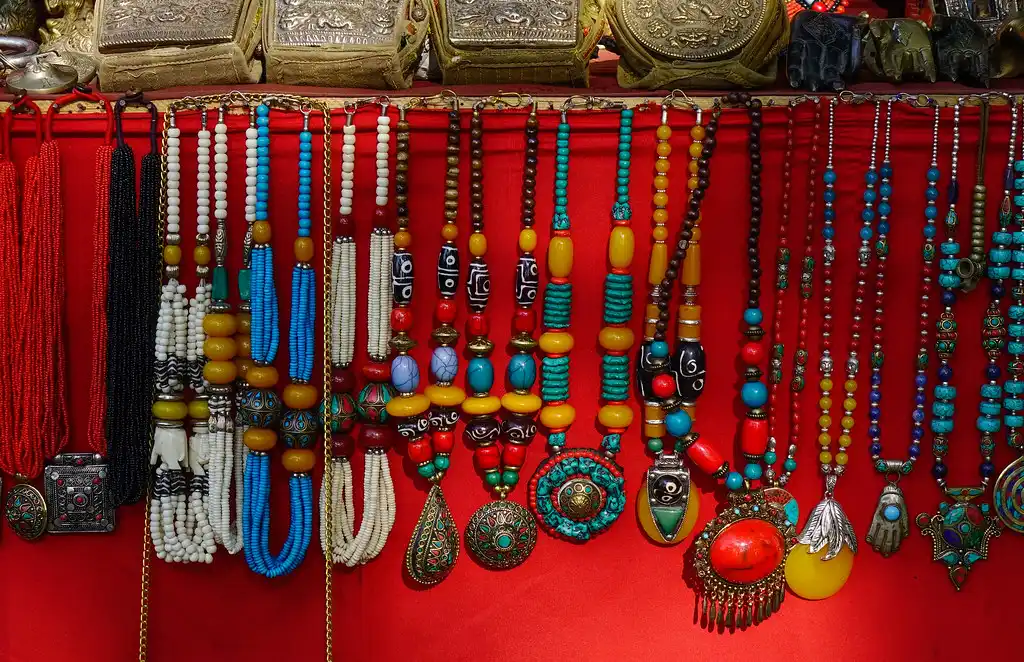
Nepal produces a wide range of handmade jewelry. Silver pieces, malas, turquoise-style beads, coral-style beads, and Tibetan-influenced designs fill markets from Thamel to Boudhanath.
Many pieces carry spiritual meaning in addition to decorative value. Malas serve as prayer and meditation tools. Silver jewelry from established Patan workshops uses traditional Newari silverwork techniques.
Ask about materials before buying. Some pieces use genuine silver. Others use silver-colored alloys. A seller who knows the product clearly explains what the piece contains and where it was made.
A vibrant collection of handcrafted necklaces featuring beads, stones, and traditional designs.
Prayer Flags, Incense, and Small Spiritual Items
Prayer flags and incense make excellent small gifts. They travel easily, cost very little, and carry real cultural significance in Tibetan Buddhist practice.
Buy these respectfully. Prayer flags carry spiritual meaning beyond decoration. Choose them as meaningful gifts rather than novelty items. Tibetan incense from Boudhanath shops uses traditional herb and resin recipes. Many visitors find it far richer and more complex than commercial incense.
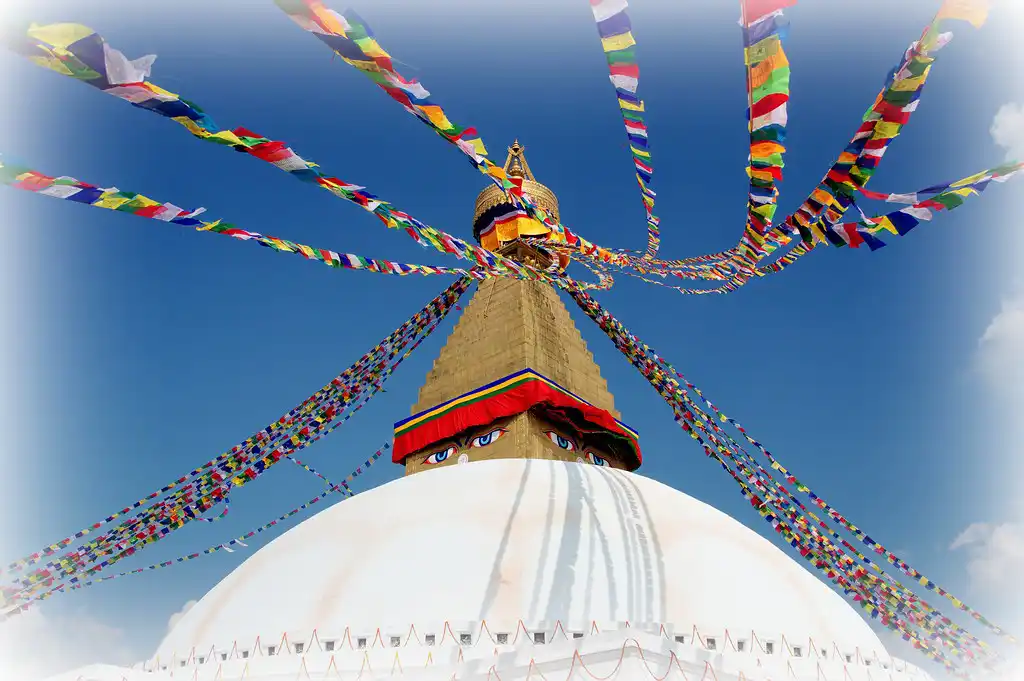
Prayer flags spread from the top of Boudhanath Stupa, carrying prayers across the sky.
Wood Carvings and Metal Crafts
Nepal’s Newari artisans produce masks, deity statues, carved wooden panels, temple bells, and decorative metal objects. Bhaktapur and Patan carry the strongest selections of traditional woodwork and metalwork, respectively.
These items suit art lovers and home decor buyers who want something with real character. They need careful packing. Wrap fragile pieces in clothes and place them at the center of your bag, away from the corners.
Buy directly from workshop areas in Patan and Bhaktapur for better quality and more direct artisan connection than generic tourist shops in Thamel.
Nepali Tea, Coffee, Spices, and Herbs
Tea from the Ilam region in eastern Nepal rivals Darjeeling in quality. Himalayan herbs, Timur pepper, black cardamom, and locally blended teas make practical, lightweight, and genuinely useful gifts.
Food gifts travel well and suit almost any recipient. Tea and spices are cleared through customs in most countries when declared. Check your destination’s customs rules before buying large quantities.
Asan Bazaar in old Kathmandu sells tea, spices, and herbs at lower prices than those in Thamel. Local grocery shops near Thamel also carry good selections.
Khukuri
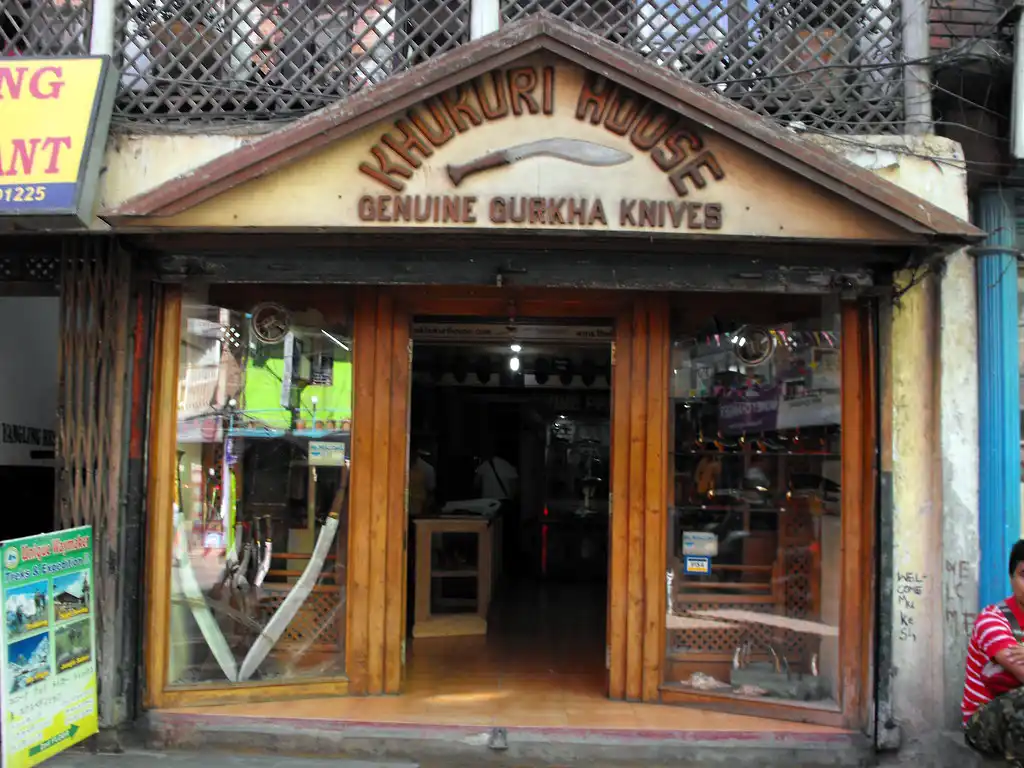
The khukuri knife holds iconic status as a Nepali symbol. Military, decorative, and collector versions all appear in markets across Kathmandu.
Check your airline’s carry-on and checked luggage rules before buying. Most airlines allow bladed objects only in checked baggage. Some countries restrict the port of bladed items entirely. Research your destination’s customs rules before purchasing any khukuri.
Decorative versions without a functional edge are easier to travel with than sharp working knives. A khukuri suits serious collectors and Nepal enthusiasts rather than general gift buyers.
A traditional shop in Kathmandu specializing in authentic Gurkha khukuri knives.
Regional Crafts and Local Art
Mithila art from Janakpur features bold geometric patterns and bright colors rooted in the Madhesi community’s artistic tradition. Pottery and carved window frames from Bhaktapur carry the character of one of Nepal’s most intact heritage towns.
Metal crafts from Patan’s artisan quarter reflect a metalworking tradition that produced work for temples and palaces across the valley. Buying regional crafts connects you to specific communities rather than generic Kathmandu tourist production.
Best Places for Souvenir Shopping in Nepal
Thamel, Kathmandu
Thamel offers the widest variety of shops in Nepal. Hundreds of shops sell pashmina, singing bowls, thangkas, clothing, trekking gear, jewelry, and crafts within a walkable area.
Thamel suits travelers who want one-stop shopping convenience. Prices run higher in tourist-heavy zones. Quality varies widely between shops. Compare items across at least three or four stores before buying anything.
Asan and Old Bazaar Areas
Asan Bazaar in old Kathmandu sells spices, tea, beads, daily goods, and local produce at more local prices. The atmosphere feels less polished than Thamel but more genuinely Nepali.
Asan suits travelers looking for tea, spices, incense, and daily goods at realistic prices. Go on a weekday morning for the best selection and least crowded lanes.
Patan
Patan carries a stronger artistic identity than Thamel. The city around Durbar Square houses metalwork shops, fine craft galleries, and workshops where artisans still produce traditional pieces.
Patan suits buyers looking for quality metalwork, silver jewelry, Buddhist art, and heritage craft items. Shopping here takes more time but delivers stronger quality and a more meaningful connection to the craft tradition.
Bhaktapur
Bhaktapur sells pottery, carved wooden objects, traditional masks, reproductions of peacock-window designs, and heritage-style crafts within a well-preserved medieval city atmosphere.
The city suits culture-focused travelers who want crafts rooted in a specific place and heritage. Pottery from Bhaktapur’s potters’ square comes from workshops that have produced ceramic goods for centuries.
Boudhanath Area
Boudhanath is home to one of the largest Buddhist stupas in Asia. The shops and stalls here focus on Tibetan Buddhist items: singing bowls, malas, prayer wheels, thangkas, incense, and jewelry with Tibetan design influences.
Boudhanath suits spiritual travelers and anyone looking for Tibetan Buddhist souvenirs. The shopping atmosphere feels calmer and more focused than Thamel.
Pokhara
Pokhara offers a relaxed shopping environment suited to travelers who prefer less chaotic markets than Kathmandu. Lakeside shopping covers clothing, jewelry, pashmina, tea, and decorative items.
Pokhara works well for casual gift shopping and for travelers who want to shop after a trek. Prices and selection match Thamel broadly, though there are fewer specialty art shops.
Fair Trade and Fixed-Price Stores
Fair trade shops and social enterprises in Kathmandu sell handmade items at fixed prices. No bargaining applies. Prices cover fair artisan wages and verified product quality.
Mahaguthi, Sana Hastakala, and similar organizations run stores with clearly labeled, authentic products. These shops suit ethically minded buyers, first-time shoppers unsure of quality, and travelers who prefer clear pricing over bargaining.
How to Spot Authentic Souvenirs in Nepal
Authentic souvenirs reward careful attention. Ask direct questions and compare across several shops before buying anything above a small amount.
Ask what material the product uses and where it was made
Check stitching, weave detail, paint quality, and finish on all sides of the item
Compare the same product type across three or four different shops
Avoid sellers who pressure you to buy within the first minute of conversation
Be careful with labels like ‘real pashmina,’ ‘antique,’ or ‘100% handmade’ without further explanation
Buy higher-value items like thangkas, metal crafts, and jewelry from shops that explain the product clearly and answer questions openly
Weight and texture matter for metal items: heavier, denser pieces often indicate higher material quality
A seller who knows the product well welcomes your questions. A seller who deflects or rushes you past quality checks usually has something to hide about the item.
How Much Do Souvenirs Cost in Nepal?
Prices in Nepal vary by area, seller type, material quality, and whether you bargain. Use these ranges as a planning guide, not a guarantee.
Nepali tea gift boxes and premium spice collections
$30 to $100 — Quality Craft Items
Pure pashmina shawls from trusted stores
Handmade singing bowls with good tonal quality
Small to medium-sized thangka paintings (machine-printed on quality canvas)
Silver jewelry from established Patan workshops
Carved wooden objects and smaller metal statues
Above $100 — Premium Art and Collectibles
Hand-painted thangkas by trained artists
Large bronze or copper statues
High-grade pure pashmina with certification
Large hand-hammered singing bowls
Antique-style metalwork from reputable dealers
Fair trade and fixed-price shops remove the uncertainty around pricing. Tourist markets in Thamel allow bargaining. Old bazaar areas like Asan often have more local pricing without heavy tourist markup.
Smart Shopping Tips for Tourists in Nepal
Compare prices across three or four shops before buying anything mid-range or above.
Bargain politely in tourist markets — start lower than the asking price and meet in the middle calmly
Do not bargain in fair trade stores or fixed-price shops — sellers set honest prices there
Inspect every item before handing over money: check seams, finish, color, and joints.
Carry cash in Nepali rupees for small shops and market stalls
Ask about card payment fees before swiping: some shops add 3 to 5 percent for cards
Wrap fragile items like thangkas, wooden carvings, and large bowls carefully in clothes inside your bag
Check airline rules before buying a khukuri or any sharp item
Shop in the morning when sellers are fresh and less tired from a full day of negotiations
What to Avoid Buying in Nepal
Some items look appealing in a Kathmandu market but create problems later. Avoid these to shop smarter.
Fake pashmina sold as genuine — acrylic versions feel scratchy after washing and wear out quickly
Machine-made crafts sold as handmade — check for mold lines, identical finishing, and zero variation in color
Very fragile or oversized items, if your luggage space is limited
Antique claims without proper export documentation — Nepal restricts the export of genuine antiques over 100 years old
Wildlife products made from animal materials — Nepal strictly prohibits trade in protected species
Knives and bladed items without checking both the airline rules and your country’s import customs
Anything you buy purely because a seller pressured you into it — walk away and return later if you genuinely want it
Ethical Souvenir Shopping in Nepal
Money spent in local shops, artisan workshops, and fair trade stores reaches Nepali families and communities more directly than it does through large-scale tourist retail chains.
Fair trade organizations in Nepal set wages, verify the sourcing of materials, and often support women-led producer groups. Products from these stores cost slightly more, but the price reflects honest labor and quality materials rather than a tourist premium.
Artisan-made goods carry time, skill, and cultural knowledge in every item. A hand-carved wooden mask from Bhaktapur or a hand-painted thangka from a trained Patan artist represents weeks of dedicated work. Factory replicas do not.
Shop with curiosity and respect. Ask about the maker. Ask about the process. The best souvenir shopping in Nepal connects you to the place you traveled to, not just to a generic market stall.
Best Souvenirs in Nepal by Traveler Type
Best Nepal Souvenirs by Traveler Type
Traveler Type
Best Nepal Souvenirs
Budget traveler
Lokta paper products, small prayer flags, malas, tea, and incense
Couple
Pashmina shawls, silver jewelry, and thangka painting for shared home decor
Art lover
Hand-painted thangka, Patan metalwork, Mithila art print, Bhaktapur carving
Spiritual traveler
Singing bowls, mala beads, prayer flags, Tibetan incense, and small deity statues
Food lover
Ilam tea, Himalayan herbs, Timur pepper, black cardamom, herbal tea blends
Family with children
Lokta paper kits, small painted masks, simple malas, animal-motif wood toys
Light packer
Lokta cards, tea packets, small mala, incense, pashmina scarf
Quick Comparison Table for Souvenir Shopping in Nepal
Best Nepal Souvenirs: Where to Buy, Price Level, and Authenticity Risk
Souvenir
Best Place to Buy
Best For
Easy to Pack
Price Level
Authenticity Risk
Pashmina shawl
Thamel, fair trade stores
Everyone
Yes
Mid to high
High — blends common
Singing bowl
Boudhanath, Thamel
Spiritual travelers
Yes, if small
Low to high
Medium — test sound
Thangka painting
Patan, Thamel galleries
Art and spiritual buyers
With care
Mid to high
High — many printed versions
Lokta paper product
Thamel, Patan
All travelers
Yes
Low to mid
Low — widely genuine
Handmade jewelry
Patan, Boudhanath
Couples, individuals
Yes
Low to high
Medium — check materials
Prayer flags
Boudhanath, Thamel
Spiritual travelers
Yes
Low
Low — widely genuine
Wood carving
Bhaktapur, Patan
Art and decor lovers
With care
Mid to high
Low if bought locally
Nepali tea and spices
Asan, local shops
Food lovers
Yes
Low to mid
Low — widely genuine
Khukuri
Thamel, specialist shops
Collectors
Checked baggage only
Mid to high
Low — widely genuine
Thangka, hand-painted
Patan workshops
Serious art buyers
With care
High
High — ask for artist info
FAQs About Souvenir Shopping in Nepal
Q: What are the best souvenirs to buy in Nepal?
A: Pashmina shawls, singing bowls, thangka paintings, Lokta paper products, handmade jewelry, prayer flags, Nepali tea, and regional crafts from Patan and Bhaktapur rank among the most popular and meaningful choices.
Q: Where is the best place for souvenir shopping in Nepal?
A: Thamel in Kathmandu offers the widest variety. Patan suits metalwork and fine craft. Bhaktapur suits pottery and woodwork. Boudhanath suits Tibetan Buddhist items. Fair trade stores in Kathmandu suit ethically minded shoppers who prefer fixed prices.
Q: Is pashmina in Nepal always real?
A: No. The market includes genuine pashmina, wool-pashmina blends, and acrylic imitations. Buy from shops that clearly explain fiber content and sourcing. Price alone does not guarantee quality.
Q: Can tourists bargain in Nepal?
A: Yes, in most tourist markets like Thamel. Polite bargaining is normal. Do not bargain in fair trade shops or fixed-price stores. Start below the asking price and stay calm throughout.
Q: Are souvenirs cheaper in Kathmandu or Pokhara?
A: Prices stay broadly similar in both cities. Asan Bazaar in Kathmandu and local shops outside tourist zones often offer lower prices than Thamel or Lakeside in Pokhara.
Q: What souvenirs are easy to carry home from Nepal?
A: Lokta paper products, tea, spices, pashmina scarves, small malas, prayer flags, and small singing bowls all travel easily in a carry-on bag. Fragile items such as thangkas and carvings require careful wrapping.
Q: Is it safe to buy a khukuri in Nepal?
A: You may buy one, but check your airline’s rules before packing it. Most airlines require bladed items in checked baggage only. Check the import rules for your destination country for bladed goods before purchasing.
Q: What should tourists avoid buying in Nepal?
A: Avoid fake pashmina, machine-made items sold as handmade, antiques without export documentation, wildlife products, and anything bought only because of seller pressure. Research import rules before buying bladed items.
Q: Are there fixed-price or fair trade shops in Nepal?
A: Yes. Organizations like Mahaguthi and Sana Hastakala operate fair trade shops in Kathmandu with fixed prices and verified artisan products. These shops suit buyers who value quality and transparency over bargaining.
Q: Which handmade products is Nepal famous for?
A: Nepal is well-known for pashmina textiles, thangka painting, Newari metalwork, singing bowls, Lokta paper crafts, wood carving from Bhaktapur, and jewelry and beadwork from across the Kathmandu Valley.
Final Thoughts on Souvenir Shopping in Nepal
The best souvenirs from Nepal are meaningful, well-made, and realistic to carry home. A hand-painted thangka, a genuine pashmina shawl, or a well-tuned singing bowl connects you to Nepal’s actual craft traditions rather than its tourist market.
Kathmandu gives the widest variety. Patan and Bhaktapur offer deeper cultural shopping experiences for buyers who take the time to explore. Boudhanath suits spiritual shoppers. Fair trade stores serve buyers who value honesty and artisan support over the lowest price.
Buy with interest and judgment. Check materials. Ask questions. Compare options. Walk away from pressure. The best souvenir shopping in Nepal rewards patience and curiosity more than it rewards rushed buying in the first shop you enter.