Canyoning in Nepal: Can you?

Canyoning, or canyoneering as it is called in the US, is an adventure sport that is fast developing as one of Nepal’s popular adventure tourism products. Canyoning means traveling through canyons using different techniques. It requires abseils and ropework, down-climbing, jumps, boulder hopping, and swims, among other skills. The thrill-seeker can enjoy Canyoning in Nepal waterfalls.

Canyoning is an adventure sport that utilizes abseiling, rock climbing, caving, swimming, hiking, and trekking. Most canyoners use at least one of these activities. Canyoning is fun for everyone because it takes you away to places far from the hustle and bustle of everyday life. Lush mountains, pristine waterfalls cascading down a rocky wall, and splashes of water on your face as you descend will give your body that much-needed adrenalin-pumping adventure. Canyoners first reach the top of the waterfall, which may require days of walking and climbing. They then fix ropes on the top of the waterfall, wear a canyoning harness, fix the rope to their harness, and abseil gradually. Many technical skills are required to avoid getting injured on the rocky surface.

The sport is believed to have been introduced to Nepal by visitors from Europe, especially France. European canyoners came to practice in the canyons in the Bhote Koshi River, which originated in Tibet in the 1990s. The canyons fascinated them, and they started coming to the place repeatedly. They even invited some local youth to try the sport. As the sport became popular, the French Embassy in Kathmandu sponsored two Nepali mountain guides – Rajesh Lama Tamang and Kabindra Lama – to take canyoning training in France. When they returned, they trained some more youth. These canyoning guides started exploring new canyoning sites and promoted them in the international market. The establishment of the Nepal Canyoning Association (NCA) in 2007 is regarded as a milestone for the expansion of canyoning in Nepal.

Canyoning should be done only under the supervision of trained guides. Canyoners need different equipment like a wetsuit, helmet, canyoning harness, waterproof rucksack, neoprene socks or booties, buoyancy aid, throw bag, elbow and knee guards, sports towel, an old pair of trainers, water bottle, and rugged protective case for your camera, phones or other gadgets if you intend to take them.

NCA has produced many canyoning guides and explored new canyoning sites since its establishment in 2007. Karna Lama, president of NCA, said 36 entry-level guides, 19 basic-level guides, nine advanced-level guides, and two instructors/guides had been produced so far. Similarly, it has explored 19 canyoning sites so far – five in Bhotekoshi river, nine in Marshyangdi Valley, two in Lwang Ghalel of Kaski, two in Kakani, one in Sunkoshi River near Timal village of Kavre, one in Pokali waterfall of Okhaldhunga and one in Phu village of Manang. Lunga waterfall in Phu village, which is situated at an altitude of 5215m, is regarded as one of the highest canyoning sites in the world. Similarly, Syange in Lamjung and Chamche Khola in Manang are very popular among canyoners. Canyoners also frequent canyoning sites in Bulbule, Chipla, Tatopani, Rendu, Syange, Jagat, and Sanchup.

Due to the lack of clear government rules and regulations, entrepreneurs organize canyoning trips through trekking agencies. “Though the government has introduced rules to register canyoning companies, entrepreneurs are reluctant to register because of some impractical provision,” Lama said. “The law requires canyoning companies to ensure canyoners for every event. That means the insurance premium required to pay will be higher than the fee we charge from canyoners.”

Lama said canyoning is not a new tourism business altogether. “We can say it is an additional product to trekking. Canyoners need to trek for many days to reach the canyoning sites. There is the possibility of promoting canyoning and trekking jointly,” he added. As most of the canyoning sites are located in the mid-hills, Lama said canyoning could be a vital tourism product to link the Himalayas with the mid-hills. Though the number of foreign tourists coming for canyoning in Nepal is unknown, Lama said around 600 foreign tourists come to enjoy canyoning in Nepal. According to Lama, September-May is the best time to enjoy canyoning in Nepal.

When you are in Nepal next time, make sure you put canyoning on your to-do list. You will not be disappointed.

Vibrant Thamel

Thamel, which has been in the limelight since the time of hippies in the 60s, continues to woo visitors. Every corner has different people from different parts of the world, carrying different stories of their own.

 — Pradip Karki

Thamel is one of the most popular destinations in Nepal and a tourist hotspot in Kathmandu Valley. As expected from many tourist areas, Thamel is full of stores selling clothes, jewelry, mandalas, trinkets, food stalls, tattoo shops, etc. Numerous gullies winding across Thamel and old Newari-style buildings give Thamel a unique Nepali touch and feel. It has also remained a popular tourist hangout since the hippie era when many tourists visit this place because of legally available marijuana and other drugs.

Nepal was one of the most popular stopovers on the famous hippie trail. The entry of hippies in the 60s brought Nepal to the limelight and opened up different business opportunities in Thamel. The best example of hippie influence can be seen in the clothes around here. Hippie clothing was often loose and made of natural fibers like cotton and hemp, very colorful, with floral and tie-dye patterns.

We can see most of the stores in Thamel full of clothes that match the hippie description. Also, hippies adored various jewelry, and we can see stalls with colorful jewelry like earrings, necklaces, rings, anklets, etc. We can see Tibetan influence in this jewelry. The place is, therefore, particular with the hippie and Nepali cultures intermixing for an authentic experience.

Thamel has also been considered a backpacker’s paradise with many budget hotels. Thamel has many stores selling mountaineering and trekking gear. Very often, it is also the first stop for many mountaineers. Accommodation is readily available here. The place has numerous stores, cafes, pubs, music stores, mandala shops, and gift shops to cater to the needs of tourists. Tourists also visit this place to get inked. Thamel is full of gullies and small streets. Each corner has fascinating stores, food, sound art, music, and an incredible sensory treat.

Many shops are selling both fake and authentic branded gear. You can find The North Face opposite Fire and Ice Café. Along with Fire and Ice, other beautiful cafes like the New Orleans Café, Northfield Café, and Black Olives, and bars like Funky Buddha, Tom and Jerry, Neon Pub, and J-Bar. There are also numerous bookstores like Paradise Book Store, Summit BookStore, Pilgrims Book House, etc. The stores here have various famous and rare books, travel books, travel guidebooks, travel journals, etc. Most of the stores also have provisions for trading books. Nightlife is also happening in Thamel, with many cafes providing live music.

Thamel has seen a rise and a fall in the number of tourists. But it has always remained the top destination for tourists. Marijuana is not legal anymore. So the authorities are trying to keep illegal activities under check. But still, we can see some trading going on. Thamel seems to entice everyone who visits this place, and they consider it beautiful, enchanting chaos. Most tourists here wear the local hippie clothes signifying the ease with which Thamel influences the visitors. The intermixing of humans, traffic, sellers, and rickshaws are always there, and most visitors need to take some time to immerse in it to enjoy this ever-bustling place thoroughly.

Although there are numerous stalls and shops, the price can be very high as it targets tourists. So, bargaining can be the best option. Despite that, some tourists in Thamel shared that they do not mind paying a little extra as they can see that these sellers are not wealthy, to begin with, and need what they can earn to sustain themselves.

Every turn usually has a music shop with music playing, which adds to the fantastic Thamel experience. In addition to the modern and meditation music from these stores, we can also see the street musicians of Thamel, the Gandharvas, playing the Sarangi and providing a cultural feel to the atmosphere. Thamel, therefore, has also become a place where researchers and music students come to complete their studies. They usually learn from skilled traditional folk musicians in Thamel who are adept in folk instruments like Sarangi, Madal, flute, etc.

Thamel, which has been in the limelight since hippies in the 60s, continues wooing visitors. Every corner has different people from different parts of the world, carrying different stories. Thamel is also one of the oldest trading places in Kathmandu, which the old Newari-style houses can see. Thamel provides a very enticing, compelling, and colorful experience. The nearness of Durbar Square, New Road, King’s Way, and the monkey temple make the place convenient. The area has been attracting various tourists who come here for adventurous, educational, or spiritual purposes and seem to enthrall all.


But like any other place, Thamel might not be suitable for anyone who cannot stand the crowd and chaos, vendors trying to sell, and a bit of traffic along the narrow streets.

Along with all these attractions, Thamel also sees illegal traders still trying to sell hashish, cocaine, and even more potent drugs. They usually come up to the tourists and whisper it out, but most are smart enough to ignore them. It is still straightforward to get hashish in Thamel, as it once was a fantastic hippie hangout place, but the security is very high, and sometimes tourists get caught with drugs. So like Dave from The Longest Way Home says in his excellent travel journal — Like all countries, Nepal has its good and bad sides. Enjoy Nepal for everything else!

Thrills in the air

I have traveled to several places and have done loads of things in my life. But this one was the most extreme thing I have ever experienced in my life so far. It was the ultimate thrill and the best experience. I would definitely recommend all to do both Zipline and Bungy when they are in Pokhara. Don’t miss the thrills in the air!

— By Rajiv Joshi

On my recent trip to Pokhara, the adventure capital of Nepal, the only objective was to try some new activities it has to offer. Though I have explored every aspect of Pokhara in my countless trips to lake city, I was still to experience the adventure tourism activities that Pokhara offers.
My initial plan was to paraglide and enjoy a bird’s eye view of Pokhara on board the ultralight flight. Zipline and Bungy jump was not on my bucket list. But I had to change the plan as Ms. Shiney Khetan, the executive director of Highground Adventures Nepal, the operator of both the activities, asked me to try these new adventures and made all the arrangements while I was on my way to Pokhara. When I reached their office to get the details, I was only thinking of doing the Zipline.
Bungy Jump! These two words can bring chills down the spine of anyone. I felt the same when I was first offered the opportunity to try it along with the Zipline.
I had never dared or dreamt of doing Bungy. But I was persuaded by Mr. Abhinav Churiwal of Highground Adventures to enjoy the jump without fear. Reluctantly, I booked the combo. I was told to report to their office early the following day.

With some mixed feelings, I reached the office on time. I was greeted by the staff and told to wait for a while as they were awaiting other clients to arrive. It rained the whole night, and the morning was cloudy. Despite this, I briefly got to see the tip of Machapuchhre from my hotel room. I was a little bit worried about the weather condition, and on top of that, the nervousness was killing me.
Two groups of people from different countries arrived after some time, and we were soon on board the bus that took us to Sarangkot, passing through the twists and turns up to the zipline station. I was disappointed to see the mountains covered by clouds.

The crew welcomed us all, gave some tips, and briefed us about safety procedures. The Zipline in Pokhara is 1,800 meters long and has a vertical drop of 600 meters. It starts from the top of Sarangkot hill and slides down to a maximum speed of up to 120 km per hour to the landing site at Hemja. According to the company, the Zipline is the longest, steepest, and fastest Zipline in the world.

After a test ride was made, we were informed to get ready. I was the first one to be called along with an Asian girl. We went up the ramp, hung and harnessed in our racks, and stretched our feet on the closed metal gates until the start of the ride. After some last-minute safety instructions by the crew, the countdown began, the gates opened, and the Zipline launched down the cliff at an extreme speed. The initial fly-down was a bit nerve-wracking. The creaking sound of the pulley hooked in the cable was added to the thrill. The blazing wind hitting my face speeding down with some shakes in between made it the ride of a lifetime.

Flying down, I could see the other side of Pokhara city open before me beneath the cloud, showing the stunning view of the surrounding hills and green forests. Very soon, I could see crew members waving a white flag. It was a signal to pull the cable, which applies brakes to the Zipline. I finally came to the base station. The ride may have lasted just two minutes, but it was enough to take my breath away. The experience was incredible!
The sight of the Bungy platform near the zipline base station hanging above the cliff sent shivers down my spine. After rest and sipping a cup of coffee, I was ready for another adventure – Bungy. The Bungy in Pokhara is only the second Bungy site in Nepal and the first tower Bungy in the country.

Though I was a bit hesitant, the ever-friendly crew got two other Bangladeshi tourists harnessed in no time and me. They then asked us to walk up the ramp of a large steel structure hanging from the cliff. Though views around Yamdi Khola below the Bungy ramp were beautiful, I was getting anxious and my legs trembling. Still, the crew was encouraging me and building some confidence in me. As the two Bangladeshi tourists were jumping before me, I had time to analyze their jumps and prepare myself for the thrill. The first guy was a bit hesitant and was pushed by the crew, while the second one made an easy jump. The intensity of those jumps, meanwhile, was making me nervous.
I was attached to the bungee cord and told to step on the edge. The crew prepared me for the jump with GoPro mounted on my helmet. I couldn’t look down. I felt the longer I stood on the edge, the harder it would be for me to take the plunge. There was no looking back. I spread my arms, and the countdown began – 5, 4, 3, 2, 1, and Go! With a slight push, I dived with my eyes opened and my hands spread like wings. The fall was swift. The freefall that lasted three seconds was the most gruesome second of my life.


The Bungy cord stretched to its limit and recoiled, pulling me up and then pushing me down. It was like being man-handled. I screamed from the top of my lungs with massive excitement as I bounced up and down, and the first word that came out of my mouth was: “Oh Sh*t….!”


After some bone stretching bounces and some uncontrollable spinning, the hustle finally stopped, and I took a deep breath. It was the only moment when I felt and enjoyed the jump.

Hanging upside down by the cable and slowly descending, I finally felt at peace. There was a small boat in a pond made on the banks of Yamdi, where I was supposed to be landing after the scariest flight of my life. A guy from the crew already on the boat unhooked me. That was when I felt; I had never dreamt of doing it. But I dared it, and ‘Yes! I did it.’ It was a feeling of accomplishment after the nerve-wracking descent.

I have traveled to several places and done many things in my life. But this one was the most powerful thing I have ever experienced in my life so far. It was the ultimate thrill and the best experience. I would recommend all to do both Zipline and Bungy when they are in Pokhara. Don’t miss the thrill!

La campagne “Visit Nepal 2020“– Une mission Pour accueillir 2 Millions de  voyageurs

Nous approchons prochainement de  La campagne “Visit Nepal 2020“. Le Tourisme est une activité qui relie le monde. C’est aussi l’échange d’expériences, de cultures, entre le  peuple, le gouvernement et encore, le tourisme est une activité majeure pour le développement de plusieurs pays. Un des pays de l’Asie du sud est  « Le Népal » avec un potentiel de tourisme très variés et que ce soient un voyage découvertes, de la culture et tradition ou un tourisme sportif. Le voyage au Népal n’est pas seulement un voyage comme les autres. Ce pays vous fascine, vous ouvre un nouveau monde et vous vous attachez. Ce ne serait pas étonnant de voir des voyageurs revenir assez souvent ou s’installer au Népal en profitant la vie sereine et la beauté naturelle.

Comment se prépare  Le  Népal  pour « Visit Nepal Year 2020»?

De nombreux guides sont formés pour mieux présenter le pays dans les sentiers de l’Himalaya et des lieux historiques. A part la promotion, le partenariat à l’étranger et la participation à différentes manifestations touristiques, le gouvernement applique une stratégie de développer de nouveaux produits. Ils sont classifiés en culture, villes et loisirs, le peuple et le patrimoine, les activités en plein air et d’aventure, la religion et les lieux de cultes et la nature et la vie sauvage. L’infrastructure comme le logement chez l’habitant sont mis en place pour le tourisme équitable. En outre, la qualité de service, le transport, la nourriture et  l’hébergement sont améliorés dans les lieux.

Comment pourriez-vous supporter la mission « Visit Nepal 2020 « comme voyageur?

Le Népal a commencé sa première l’année de Tourisme en 1998 et le deuxième en 2011.Depuis après neuf ans , Le gouvernement annonce  l’année de Tourisme en 2020. Le but de ce projet est d’accueillir 2 millions de voyageurs en 2020.

Le Népal est sur le point  d’atteindre son but par la promotion intense de ses richesses naturelles et des destinations majestueuses.

L’Année du Tourisme aurait du être célébrée en 2015. Suite au séisme le pays et le peuple a souffert et « Visit Nepal »  a été reporté pour l’an 2020.En regagnant l’esprit et la meilleure position parmi des destinations plus prisées, Le Népal relance sa mission touristique. Etant un voyageur, vous pouvez supporter le Népal et son projet « Visit Nepal 2020 ».

Voici les Cinq façons pour réaliser cette mission avec succès.

Achats des souvenirs fais par des locaux

De même que la culture et tradition, le Népal a  une tradition de sculpture en bois, en bronze et ce savoir faire est transféré de génération en génération. Depuis longtemps, le Népal est connu pour l’exportation des objets artisanaux comme les tapis, les arts sur papier népalais, les sculptures en bois et en métal. Au Népal il y 126 groupe ethniques avec leur propre tradition, culture et langue. Vous pouvez en trouver en grand magasins, mais vous aurez une meilleure satisfaction en achetant directement chez les artisans, en les voyant travailler. C’est une occasion de faire un échange et de découvrir leur savoir faire. Privilégier des artisans locaux aide le peuple à améliorer leur niveau de vie et bien sûr c’est une geste  humanitaire.

Publicité de bouche à oreille

Ce qui marche le mieux c’est une publicité de bouche à oreille. Si vous avez déjà voyagé au Népal et que vous soyez émerveillé par ce pays.  Grâce à votre partage d’expérience autour de vous, ils se sentiront déjà concerné et auront envie de voyager au Népal. Le Népal n’est  pas présent sur les, bandes d’annonces ou de publicité mais votre parole est beaucoup plus efficace que tout le reste. Partager vos expériences par des blogs de voyage, faire des vidéos, ou partager des photos. Par conséquent, partager vos expériences peut devenir motivant pour vos connaissances.

Privilégier des restaurants locaux

Chaque individu a son goût et la préférence vis à vis de la nourriture. Pour maintenir le standard de restauration, vous trouverez des hôtels internationaux et leur cuisine du pays. Tout de même nous vous conseillons de diversifier vos choix et la nourriture locale préparée par des locaux.  Vous hésiterez légèrement mais consommer chez des locaux  sera non seulement plus économique mais sera meilleur.

Pratiquer le tourisme durable

Nous pourrons  assurer le tourisme durable  en améliorant  en permanence nos secteurs. Pour cela, tout le monde doit se mettre ensemble pour le meilleur concept et le  réaliser. Par exemple, minimiser l’usage de plastique, appliquer l’habitue de bien mettre des ordures dans  la poubelle. Bien que le peuple rural ne soit pas bien éduqué, vous pouvez démontrer vos habitudes et votre  connaissance. Parce que le Népal est un pays naturel et il doit rester tel qu’il est.

Embaucher un guide ou porteur

C’est toujours préférable d’avoir un accompagnateur local quand vous êtes en trekking. Un guide local sera une grande source de connaissance quand vous voyagez dans un endroit inconnu.

La plupart des gens dans des collines ou montagnes sont moins éduqués. Ces gens utilisent leurs forces physiques et travaillent comme porteurs. Ils portent les bagages des touristes sur les chemins des trekkings. Ce n’est pas parce que vous n’êtes pas capable de le faire. Mais, cela donne effectivement du travail à beaucoup de gens nécessiteux.  Par conséquent c’est un moyen de les aider pendant la courte saison de trekking.

Nous espérons que la campagne « Visit Nepal 2020 » sera couronnée de succès.

Everest Base Camp Trek FAQs

Answers to Everest Base Camp Trek FAQs given by our guides:

I am Nima, a senior trekking and climbing guide at Peregrine Treks. I have summited Mount Everest, Mount Manaslu, and Mount Cho-Oyu twice. With my several years of experience in the Everest Region, I will answer a few questions which are given below:

When is the best time to trek to Everest Base Camp?

The trekking season for Everest Base Camp starts in mid-September and ends in May. October is usually the most significant time for this trek. The views are high, and the temperature is moderate with the warm sun above our heads. Besides crowd season, many trekkers enjoy the winter season (Dec-Feb). During this season, the trails are pretty silent, with fewer visitors.

Winters are much colder, or it’s close to freezing temperatures. If you are a winter trekker, ensure your body can cope with the temperature. Pack warm trekking clothes with thermals, a down jacket, a sleeping bag, etc.

March and April return with warm temperatures and a mass of expeditors marching to summit Mount Everest. Days and accommodations could get pretty busier and hazier. However, the weather is super suitable for magnificent mountain views.

How challenging is the trek? How many hours a day do I need to walk?

This is commonly asked in Everest Base Camp Trek FAQs. I consider the Everest Base Camp Trek moderate. An individual with a genuine personality and passion for completing the trek can quickly achieve success. Regarding the itinerary, we must walk for 7-8 hours to reach our daily destination. We even have a few rest days. On that day, we will be going on a hike. Depending on the elevation and challenges, we will walk for 3-4 hours on hike days.

Hence, Everest Base Camp Trek is not tricky if you thoroughly prepare yourself physically and mentally. 

Do I need any training before trekking to Everest Base Camp?

It depends on how seriously each individual takes this trek. Preparing yourself physically before you trek to EBC for fourteen long days is advisable. According to your current fitness level and medical conditions (if any), you can engage in regular light exercise and hike to the hills once a week. You can also do cycling or running to increase your leg stamina and body strength. Apart from exercise, never forget to eat healthily and sleep on time.

Is acclimatization necessary? What are the symptoms of altitude sickness?

Acclimatization is resting the body at a lower elevation to help it adapt to the environment. Every trekker and climber must prevent their bodies from attaining altitude sickness.

Altitude sickness or Acute Mountain Sickness (AMS) can vary from individual to individual. Any person, despite their age, physical status, or body size, can suffer from AMS. However, we have adequately designed our itinerary, including proper acclimatization days at a proper lower elevation.

The most common symptoms of AMS are:

  • Headache
  • Tiredness
  • Lack of sleep
  • Loss of appetite/nausea
  • Shortness of breath
  • Cough
  • Trembling of hands
  • Swelling of the hands and face

If you feel any symptoms mentioned above, please let us know immediately. We (trekking guides) have extensive first-aid training and can effectively monitor you.

Some tips:

  • Walk at a slow and steady pace.
  • Stay hydrated. Drink enough water/ fluid.
  • “Hike high and Sleep low,” meaning we will always hike to higher elevations and return lower to sleep. In such a case, we will get enough oxygen for the body to adapt.

Is there any provision for Emergency medical services?

Our guide will never leave on a trek without an essential medical kit. We cannot risk the health of any individuals when there are limited medical facilities on the route. Moreover, we also carry portable altitude chambers for those individuals suffering from AMS (Acute Mountain Sickness). When there is any evacuation due to extensive adverse health conditions, Peregrine Treks provides Emergency Helicopter Evacuation; an individual must consult the agency and appropriate insurance company.

What is the average size of the group?

Depending upon the season, groups can extend up to 12 trekkers. The group can consist of individuals from different nations. Trekking with a mixed group could be an excellent opportunity to make new friends and share more travel experiences.

How many staff do you provide?

We provide one trekking guide for every group and a porter for two trekkers. If the group exceeds five people, we provide one assistant guide. Besides, there will be a trek leader when there are more than ten members in a group.

I am Mingmar Sherpa, also a local resident of Everest Region. I have several years of trekking in my own home land, knowing the geography and culture better. Moreover, I have proficiency in Korean language which has always helped to in handling my Korean clients successfully. I am going to give Frequently Asked Questions (FAQs of Everest Base Camp Trek.)

Can I stay overnight at Everest Base Camp?

Everest Base Camp is the highest altitude we will gain on our trek, which is 5,364m. Due to the elevation, the temperature is extremely low, and our body will not get enough oxygen. Staying there overnight could result in AMS, HAPE, or HACE. Moreover, one needs a special permit to camp at EBC, which is very expensive. Hence, we do not suggest our client stay overnight at Everest Base Camp. Our Everest Base Camp trek does not stay overnight at base camp. Instead, we have a tea house to stay at Gorak Shep, a gateway to EBC.

What is the accommodation like?

Since our EBC trek is a tea house trek, you will stay at tea houses or mountain lodges daily. The tea houses are simple and have comfortable private and shared rooms. Some rooms have en suite bathrooms, whereas you must share bathrooms. We believe one should have a proper bed to sleep in no matter how long they walk during the day. So, we arrange the best possible accommodations for our guests.

What is the food like?

You might find a similar food menu on your trekking routes in tea houses. However, we guarantee that we will select the best tea houses to provide us with healthy, clean, and delicious foods. Some common foods on the menu are Nepali Daal Bhat Tarkari (lentil sauce- rice- veggies), momo, and Chowmean (Fried noodles). You can also find Wai-Wai or Rara (packaged crunchy noodles), which are delicious snacks. We advise you not to consume meats in higher elevations. There are no direct modes of transportation at a higher altitude, and it could take several days for a porter to carry meat. Most people use freezing beef, which could cause food poisoning. Hence, try to avoid meat if you can be healthy.

Where can I have a hot shower?

During the trek, you can find hot showers in the following locations: Ghat, Namche, Deboche, Dingboche, Lobuche, Dole, and Machhermo. Depending on availability, the tea house owners might charge you 300‑650 Nepali rupees.

Hello, I am Lhakpa from Solukhumbu region. Along with trekking, I am also a climbing guide. I am specialized in Mera, Lobuche and Island Peaks which are neighbouring peaks of EBC.

How often can I charge my phone and camera batteries?

On the way to EBC, you will find tea houses or mountain lodges with 24 hours of electricity. You can charge your electronics when you pause for a lunch break and reach the tea house for a night’s stay. Most of the places have two portal plug-ins. It is advisable to carry a universal adapter suitable for your gadget. Depending upon the distance and availability of the electricity facility, the charging stations might charge you some money. The cost can range from 200 to 300 NRS.

The following locations have electricity available:

  • Lukla
  • Ghat
  • Monjo
  • Namche
  • Deboche
  • Dingboche
  • Lobuche
  • Gorak Shep

Where is Wi-Fi available?

You can access Wi-Fi at Lukla, Namche, Dingboche, Lobuche, and Gorak Shep. However, some of them can charge you for Wi-Fi as well. 

Do you provide a porter, or should I carry my luggage?

As promised, Peregrine Treks will provide you with a porter while booking the trip. However, one porter in every group carries the luggage of two trekkers. The maximum weight one porter can have is 30kg. So, each trekker should not pack a bag of more than 15 kg. Still, you can ask for a private porter at an extra cost.

How do I pack ideally for the trek?

Packing for a trip is always a tricky task for humans. We usually get confused about what we need and what we want. Hence, follow these guidelines for packing things essential for the trek.

  • Trekking pole (one pair)
  • Hiking sandals (one pair)
  • Trekking boots (one pair)
  • A small pack of toiletries
  • Lots of sanitizers and wet and dry wipes are needed.
  • Down jacket (one)
  • Thermal set (one)
  • Trekking socks (three pairs)
  • Trekking pants (two pairs)
  • Quick-dry towel (one)
  • Woolen cap and gloves (one)
  • Personal first aid kit

Namaste! I am Krishna Regmi certified yoga trekking guide in Nepal. I have conducted yoga trek in various trekking destinations in Nepal.

What kind of shoes do I need?

Your legs are your assets. If you keep them happy during the trek, they will undoubtedly take you to EBC. Hence, we suggest you invest in good quality trekking shoes that perfectly fit your legs. Do not forget to gift your legs with quality socks to prevent the ankle from blisters from new shoes.

Is it culturally appropriate to wear shorts or leggings?

Every corner of Nepal is equally rich in its own culture and tradition. One common thing in every ethnic group is females cover their bodies appropriately. It applies to foreigners as well. However, there are no strict rules for wearing full-length clothing while trekking. We still suggest you wear knee-length pants and waist-level tops to be safe from people’s lousy targets.

Namaste, I am Sonam Sherpa, trekking guide is a profession that is carried out by my ancestors and now I am taking it as well. I am originally from Everest regions. I have summited Mt. Ama Dablam, Mt. Manaslu, and other trekking peaks. I am able to give answer of Frequently Asked Questions (FAQs) of Everest Base Camp Trek.

Why is tipping necessary? What is the standard rate of tipping?

Tipping reflects a kind gesture. Thank your guide and porter for keeping you safe and successfully taking you to your destination. The standard rate of tipping in trekking is generally 20% of your total trekking cost. However, it depends on how much you tip and whom you tip. We believe in appreciating the hard work performed by the staff and tipping them with your heart.

Where can I exchange my money?

Landing in Kathmandu, you will have a day to do your stuff, lie, change money, or go shopping. You can readily find money exchange shops in Thamel and another central tourist area in Kathmandu. There might be fewer chances of recovering money exchange offices in the Everest region. So, we suggest you exchange money in Kathmandu.

Related Post

Why Peregrine Treks?

Well, I have been working at Peregrine Treks for a long time. I have served numerous clients over the years; they were satisfied with the service. Peregrine Treks is best known for its accountability, trekking experienced guides, creating a flexible itinerary, and time-saving and optimizing expenses. All staff and members come together to ensure travel packages’ smooth and successful functioning. The friendly and caring nature of the Chairman to the guides and porters is very well appreciated.

Hence, choose what is best for you. Choose what is best in its field. No matter what, we welcome you to Nepal on your visit to Nepal Year 2020. Nepal is a beautiful country with diverse geography and cultures. Come and explore its beauty. Join us in making Visit Nepal Year 2020 successful.

About Us

Peregrine Treks and Tour has dedicated, passionate travel enthusiasts coming together and forming a team. Back at the office in Kathmandu, you will meet Mr. Pradip Karki, our Chairman. He does his best to help clients with bookings and inquiries. We have Ms. Jamuna Bhandari as the director. Apart from the board of directors, eight indoor members contribute to our agency’s smooth functioning and management. We have seven trekking guides. Among them, one is a professional yoga guide, whereas three are professional mountain climbing guides. Two tour guides are also enrolled with us.

Regarding trekking in Nepal, Peregrine Treks has expertise in leading the guests to complete the targeted destination. Among the trekking spots in Nepal, Everest Base Camp is the most popular and high-rated destination. Our trekking guides have maximum experience leading treks to Everest Base Camp. We have answered Everest Base Camp Trek FAQs raised worldwide in this context.

Please enable JavaScript in your browser to complete this form.

Flora and Fauna of Nepal

Nepal’s species variety can be attributed to the country’s extremely varied climate and topography. Due to this, Nepal is blessed with a wide variety of plants and animals. Flora and Fauna of Nepal have some 868 species of birds, including the Spiny Babbler (Turdoides nipalensis), found only in Nepal (a helpful website for Nepal bird-watchers is www.birdlifenepal.org), more than 650 butterflies (as well as over 3,900 months), and about 6,500 flowering plants. Butterflies (putali) emerge in March and April, becoming abundant by May and June. At least six butterfly species are endemic to Nepal, i.e., believed to be found only in Nepal.

Between 1998 and 2008, 353 new species were reported in the Eastern Himalaya (comprising Nepal, Bhutan, northeastern India, northern Burma, and southern Tibet). The discoveries include 242 plants, 16 amphibians, 16 reptiles, 14 fish, two birds, two mammals, and 61 invertebrates. Of the birds, Sykes’ nightjar (Caprimulgus mahrattensis) was discovered in the Koshi Tappu Wildlife Preserve in January 2008.

In the lowlands, such as Chitwan National Park, subtropical forests support the most significant number of species. Some of the Indian subcontinent’s largest mammals can be found here, including the greater one-horned or Indian rhinoceros (Rhinoceros unicornis) and tiger (Panthera tigris). The World Wildlife Fund (WWF) recently estimated that there are 121 adult tigers in four protected areas of the Terai.) Only small areas of the country’s lowland grasslands remain, and almost all lie within protected forest areas. They are essential for several threatened animals, including the swamp deer, the greater one-horned rhinoceros, and two of the world’s most endangered bustards, the Bengal and Lesser Florican.

At the other extreme towards the high peaks in the alpine zone, which holds the smallest number of species. In spring and summer, alpine grasslands have a vibrant carpet of blooming flowers. Several mammals, such as the bharal or blue sheep and common ghoral (an I nail ungulate resembling the goat and antelope), depend on high grasslands for grazing. In turn, they are the vital prey of the rarely viewed and threatened snow leopard (Panthera uncia), with an estimated Nepal population of 300-400, about 10% of the world population (not including 600 in zoos). Unlike birds, wild mammals (jaanawar) are usually difficult to see in Nepal. Many of them are active only at night.

Hindu Festivals of Nepal

The Hindu Festivals of Nepal below follow the lunar cycle and, therefore, have no fixed yearly date but are determined by monthly moon phases.

Magh Sankranti (official government holiday)

Mid-January, the first day of the Nepali month of Magh

Winter’s ending is heralded, and the sun is honored as it approaches northward from the southern hemisphere. Sankranti means “sacred transition,” and people celebrate it by taking ritual baths in rivers throughout the country. Devghat, just north of Narayanghat, where the Kali Gandaki and Narayani rivers flow together, sees some of the largest crowds. Patan’s Sankhamul Ghat, along the banks of the Bagmati River, is Kathmandu Valley’s focal point for ablutions. Due to the pollution of the Bagmati, most participants nowadays sprinkle a little water on themselves rather than fully submerging.

Sesame and jaggery sweets (unrefined brown sugar) are popular today, as are a dish called kitchari (rice and lentil mixture) and foods with ghee, molasses, and yam. Tharu people celebrate this day as their new year with feasts, traditional attire, and song and dance.

Basanta (Shree) Panchami

January/February

This is the birthday of Saraswati, the Goddess of Education and Wisdom. Students mainly celebrate this day. They make a point to bathe, wear new clothes, and pay respect at a Saraswati Temple. Parents will escort toddlers to a shrine to have them write requests in chalk on temple walls requesting Saraswati’s blessings. On this day, spring’s arrival is foretold at Kathmandu Hanuman Dhoka (and Vajrayana Buddhists take the occasion to honor Manjushri, Slayer of Ignorance).

Shiva Ratri

The new moon in February/March

A night consecrated to Shiva and celebrated the night before and the day of the new moon in February/March, with activities a few days before. All-night vigils with sacred bonfires are held at Shiva shrines, and the largest takes place at the World Heritage Site of Pashupatinath Temple, which lies along the banks of the Bagmati River in eastern Kathmandu. Pashupati is another manifestation of Shiva, considered the “protector of animals.” Shaivites and onlookers crowd into the Pashupatinath grounds, where a hearty mix of Brahman priests, ash-smeared yogis, wandering ascetics, beggars, vendors, and sight-seers mingle. Rudraksha (seeds of Elaeocarpus ganitrus), worn by many followers, is a sign of respect to Shiva.

Naga Babas adorned with ash and marigold necklaces march towards Pashupatinath Temple for Maha Shivaratri in Kathmandu.
Naga Babas, revered Hindu ascetics, head towards Pashupatinath Temple in preparation for the Maha Shivaratri festival in Kathmandu.

Ardent Hindus consider it auspicious to visit Pashupatinath Temple at some point during the festival. Pilgrims travel from afar in the rituals, which include fasting, singing, tabla, and sitar music, praying, chanting, reciting of holy text, and meditating (along with conspicuous consumption of bhang, aka, cannabis, which is overlooked during this devotional time).

Although Pashupatinath is the focal point in Kathmandu, celebrations occur throughout the valley and country. Devotees around Nepal and India enjoy prasad, a blessed food offering, and pay homage to Shiva by building sacred bonfires and holding vigils tonight.

Holi (also known as Fagun Purnima)

February/March

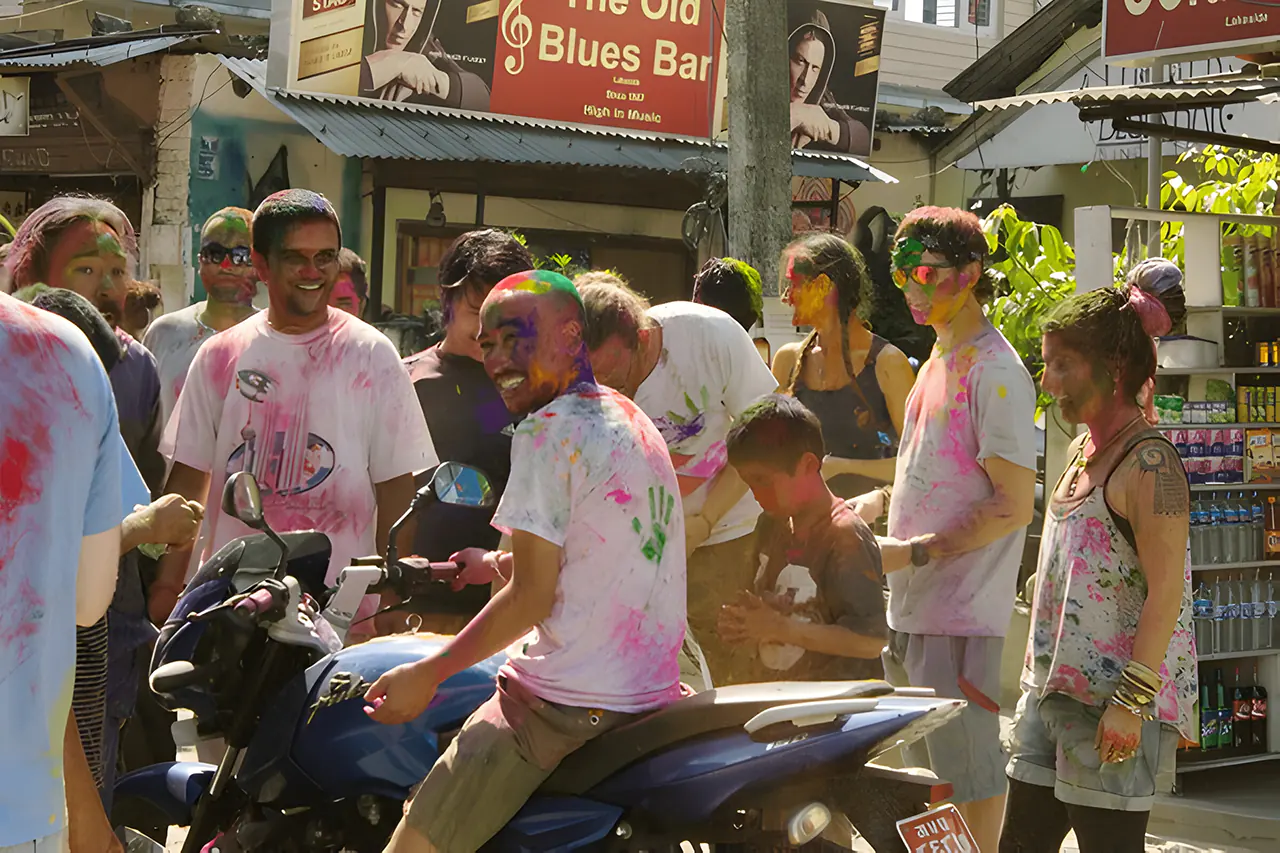
Countrywide trench warfare with water balloons. Holi Festival heralds the arrival of spring and the legendary defeat of demoness Holika by Vishnu. Happy Holi or holy hell? Be fairly warned: exuberant groups of young people take over. They roam about throwing water and brightly colored powder on everybody, and bucketfuls of water and water balloons are launched from balconies above the streets.

Diverse group of people celebrating Holi festival with colorful powders in the streets of Pokhara, Nepal.
Locals and tourists alike enjoy the vibrant celebrations of Holi in Pokhara, Nepal, a festival of colors and joy.

Being feted with water and colored powder is meant to be an honor. Enjoy the fun, or hide away indoors until it’s over. If you join the raucous free-for-all, wear clothes that color stains can ruin, leave valuables in your room, or cover them in plastic to keep them from being soaked. The commotion lasts only a day, whereas India undergoes a merciless multi-day event.

GhoDe Jatra

March/April

Initially, a Newari event centered on Kathmandu’s Bhadrakali and Kankeshwari temples, it now showcases a military pageant with horse racing at Tundikhel Parade Ground. According to legend, the pounding of hooves keeps the demonic fiend Gurumaa hidden underground for another year. Other activities at Tundikhel include mounted mock warfare and acrobatics on horseback.

Chaite Dashain

March/April

Dasai is celebrated biannually. This much smaller version of the 10-day fall affair features a public ceremony at Kathmandu’s Durbar Square, where the Nepal Army ceremonially decapitates goats and water buffalo. The rites begin around 8 am and end a few hours later when military banners are doused with sacrificial blood.

Rato (Red) Machhindranath

April/May, the first day of the Nepali month of Baisakh

Rato Machhindranath is considered a God of Rain and Crops and has ties to Tantric Buddhism. The idol is ritually bathed, put on a chariot, and honored as human resources pull it throughout Patan. The chariot is three stories high and tremendously heavy, requiring up to a hundred or more people to move it. Music with drums and cymbals accompanies the chariot, which stops overnight at four symbolic locations. People offer plates of food to the icon, signifying gratefulness for harvest blessings. The festival is a vibrant jamboree with feasts and merrymaking. Kathmandu has a similar chariot procession, Seto (White) Machhindranath, presided over by Kumari, the living goddess who resides in Durbar Square.

Ghantakarna

July/August

It’s mostly a Newari festival for boys. Ancient in origin, it commemorates the victory over Ghantakarna, a demon defeated by the natives of Kathmandu Valley. On this day, effigies of Ghantakarna are erected along walkways and roadsides, and groups of boys take a toll from passersby for the demon’s mock funeral. In the evening, the figure is beaten and dragged to a river, where it is burned and thrown into the water. After that, the boys sing and celebrate the victory on the way home.

Janai Purnima

The full moon of July/August

The name refers to a sacred thread worn by higher castes (Brahmin and Chhetri). A new thread is created, representing renewal and cleansing of body and mind. The cord is three-ply, with separate strands representing the energies of Brahma (creative), Vishnu (preservative), and Shiva (destructive). People also wrap the thread around a wrist as protection from harm until Laxmi Puja (the third day of Tihar, see below), when it is removed and, if possible, tied to a cow’s tail for good fortune. A priest traditionally soaked the thread overnight in 108 herbs. Nowadays, turmeric is used to turn the cord golden and has antiseptic properties.

At this time, many people, not just the high caste, participate in the celebrations. Devotees pilgrimage to a sacred location, often a high-altitude lake such as Gosainkunda (4,381 m, 14,374 ft), where one form of righteousness is to plunge into the chilly waters.

Gai Jatra

The new moon of July/August

It usually falls on the first two days of the new moon of July/August and is marked by a procession from the palace squares of Kathmandu, Patan, and Bhaktapur. `Gai’ means ‘cow,’ and `Jatra’ means ‘journey.’ Gai Jatra is a celebration of cows (representing the deity Laxmi) leading a procession to heaven for the deceased to follow. Entertainers paint their faces and join parades to amuse onlookers with satire, drama, and comedy. Relatives of recently deceased people hire some of the performers. They are joined by accomplices in masks and wearing unusual garments who represent departed souls in need of guidance by the celestial cows.

Krishna Janmashtami (also known as Krishnashtami)

August/September

A celebration of the birth of Krishna, a hero of the classic Mahabharata and regarded as an avatar of Vishnu. He is often depicted with blue-hued skin, reminding followers that he is as eternal as the blue sky above. Devotees celebrate by flocking to Patan’s Krishna Temple in Durbar Square (as well as Krishna temples across the nation) and singing hymns.

Teej (transliteration, tip (also known as Hari Talika)

August/September

According to legend, Parvat Raj, Lord of the Himalayas, decreed that his daughter Parvati would join Vishnu in matrimony. Parvati’s heart was elsewhere, and friends followed her to a forest where Shiva was abiding the night before her nuptials. Shiva became enamored with her, but only after trials to verify that the love was mutual.

Single women fast on this day, hoping to be blessed with a suitable husband, while married women also fast and wear red (the color of matrimony) saris. They pray and perform rites for marital harmony and the well-being of their families. Pashupatinath and other Shiva temples are exceptionally crowded on Teej. It has become a modern tradition for female friends to get together and celebrate just before Teej.

Ganesh Chaturthi or Chatha- Hindu festivals of Nepal are celebrated mainly in the Terai Region.

August/September

It is celebrated as the birthday of Ganesh (“the elephant god”), the son of Shiva and Parvati. Ganesh is beloved as a divinity who augurs good luck and removes obstacles.

Indra Jatra

September/October

The King of the Gods, Indra, is celebrated by raising a victory banner in his honor (in Kathmandu at Hanuman Dhoka temple). Among other duties, Indra is also considered the controller of rain and harvests and is especially important to people whose livelihood depends on a successful growing season. Indra is known to have gathered flowers in Kathmandu Valley for his mother and is a slayer of demons representing natural disasters. The festival lasts eight days, highlighted by appearances from the Living Goddess Kumari. The massive idol of Bhairav, a form of Shiva, in Kathmandu’s Durbar Square, also figures prominently in the proceedings, which involve chariot processions, singing, and masked dancing.

Dashain (The prominent and famous Hindu festival of Nepal)

Late September/October

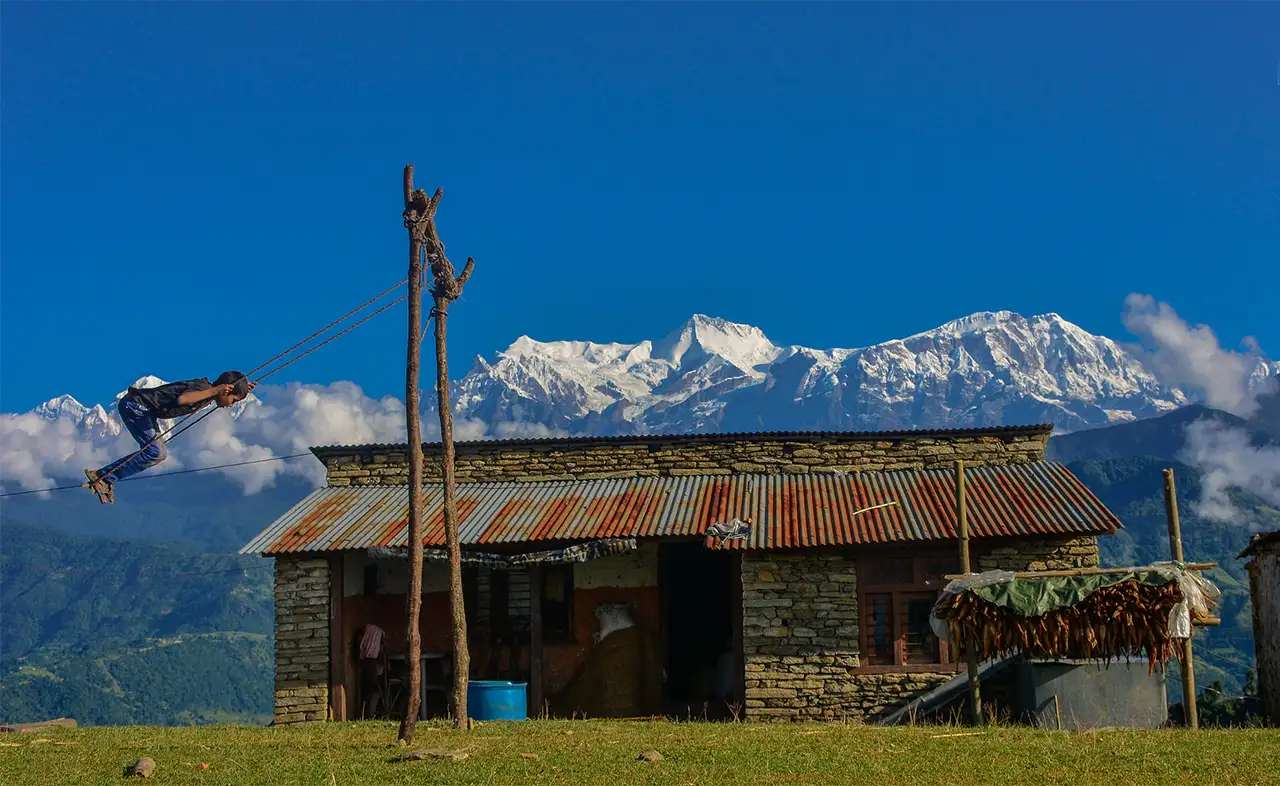
Dashin is a Hindu festival commemorating the legendary victory of the goddess Durga (Kali) over the demon buffalo, Mahishasura, and symbolizes the triumph of Good over Evil. This is Nepal’s grandest festival and generally coincides with the end of the monsoon and is a time of family reunions. The holiday pervades the nation and lasts ten days, beginning in late September or early October, depending on the lunar cycle. Schools, shops, and government offices are closed for up to two weeks during Dashain, and all transportation is overcrowded and difficult to book. There is much feasting as friends and families unite, exchanging gifts and blessings. Bamboo swings are set up around the country, and city skies are filled with kites.

A young boy swings on a traditional swing in Thulakot, Nepal, with the Himalayas in the background during Dashain Festival.
Joyful moments captured as a boy enjoys a swing ride against the backdrop of the majestic Himalayas during Dashain Festival.

The festival begins with Ghatasthapana, the formal setting of a jar of water in a place of worship in one’s house. It symbolizes Shakti, the primordial force of femininity or Universal Mother. A prominent feature of Dashain is the ritual of decapitating buffaloes at the Kot (fort) near Kathmandu Hanuman Dhoka in Durbar Square on the ninth day of the festival. Goats and sheep are sacrificed nationwide, and festive banquets are held.

The tenth day, called Vijaya Dasami, celebrates Durga’s victory, and Tikal is given (a vermilion mark of religious as well as decorative significance placed on the forehead during the festival and generally at religious ceremonies and other occasions; giving someone Tikaa express good wishes, friendship, and honor). In rural areas, village leaders administer Tikaa to the public. On this occasion, before the monarchy was dismantled in 2008, the former King and Queen received citizens at the royal palace.

Tihar (aka, Diwali, Deepawali, Bhai Tikka, and Laxmi Puja)

October/November

Tihar is a five-day ‘festival of lights in late October or November. The lights represent Knowledge and its victory over Ignorance. During the five days of Tihar, special rites are performed. Certain animals receive worship and positive attention from days one to four with unique food offerings and sometimes flower garlands and Tikal.

Day 1: crows, messengers of Yama Raj, King of the Dead

Day 2: dogs, general protectors, and especially guardians of homes; also the vehicle of Bhairav, an emanation of Shiva revered by the Valley’s Newars

Day 3: cows, divine representations of Laxmi

Day 4: bulls are sacred animals for many reasons in Hinduism, chiefly as Nandi, Shiva’s transport and foremost devotee. Nandi is also a guardian at Shiva and Parvati’s abode.

Day 5: The final day, Bhai Tikka. Sisters ceremonially give younger brothers Tikaa and wish them prosperity and long life, and brothers offer a gift in return, usually money or clothing.

The third day of this festival is also known as Laxmi Puja, which is dedicated to Laxmi, the goddess of wealth. Houses and shops are thoroughly cleaned. Buildings are trimmed with marigold flowers, and hundreds of tiny oil lamps and candles light up Kathmandu as dusk falls, hoping that Laxmi will visit the cleanest and brightest homes. During Tihar, public gambling is condoned, and crowds gather around groups of Juwan (cowry shell) players or card players. Among the Newar community, Tihaar marks the beginning of the New Year.

Kirat Prabh (Ubhauli Parba)

November/December

This festival is celebrated by Limbu and Rai ethnic groups, mainly in eastern Nepal, to express gratefulness for harvest blessings. The term Udhauli means migration of birds between climes, and Udhauli is also celebrated during the planting season in May/April.

Yomari Punhi

Full moon in December

Yomari is a Newar delicacy, meaning “pastry that is liked.” In this event, the delicious confection is prepared with rice flour; the standard filling is khula, a milk product, brown sugar, and sesame seeds. The dumpling is steamed, and an offering is made to the goddess of harvests.

Additionally, Yomari is important in Newari culture on the birthday of youngsters. A garland with the number of Omari on the necklet represents the child’s age, which is significant for the second birthday.

Please enable JavaScript in your browser to complete this form.

Nepal Trek Planning

Trekking is more successful if the participants are prepared and know what to expect. Foremost, Nepal trek planning to be flexible and make the best of all circumstances. Trekking is essentially hiking extended routes that generally have facilities for room and board. During a trek, travelers spend nights in well-furnished hotels, simple lodges, camp, or stay in the homes of local people. In Nepal, walking is the usual means of reaching most rural destinations, and the road network is one of the lowest in the world relative to area and population. Still, a rapid increase in road building is changing things quickly.

Do not travel alone, especially on lesser-used routes and as a female (unfortunately, double standards exist). Find a trustworthy travel companion. Sexual harassment is not uncommon. Foreign pornographic media is wrongly attributed to all foreigners. Dressing as conservatively as Nepalese will gain cultural acceptance. Those trekking alone would be wise to hire a guide or a porter, especially on trails with few tourists.

Please remember that rare attacks on trekkers have occurred in remote areas and usually to people traveling alone. Although lawlessness is on the rise, particularly in the southern plains, due to a succession of weak administrations, travel in Nepal is relatively safer than in most modernized countries. However, there are assaults, theft, and harassment instances, and foreigners have gone missing.

Outdoor Adventure

Many special-interest activities are available these days with themes of art, flora and fauna, health, meditation, natural history, religion, yoga, and more. Adventure sports include rock climbing, mountain biking, rafting, canyoning, kayaking, paragliding and parahawking, bungee jumping, and more. Peregrine Treks easily arrange these activities.

Restricted Areas

Certain areas, including the regions around Kangchenjunga, Upper Mustang, Manaslu and Tsum Valley, Humla and Mugu (northeastern Nepal), Dolpo, Naar, and Phu (within ACAP), are only open to trekkers by booking with an agency. This is supposed to be an attempt by the government to lessen the environmental impact; however, financial reasons play an essential role, too. Regulations are in flux, and there is pressure to make these areas more accessible to all tourists. Such a change would help to spread the wealth to the local economy rather than non-local trekking agencies. Until then, these areas are considered “restricted” by the government and require not the only involvement of an agency but a minimum of two customers and supplementary permits from the Immigration Department.


Mid-hills

Restricted areas notwithstanding, most of Nepal is open for trekking. Outside the publicized and regulated trekking routes are areas not covered in guidebooks and worth exploring, including much of the mid-hills or Pahaad, the heartland of Nepal. This broad belt of hills and fertile valleys stretching east to the west lies between the lowland plains and the Himalayas. Most visitors will discover that areas without the choicest mountain views are at least as enjoyable as the famous destinations, culturally rich and well-endowed with natural scenery. However, before venturing into some of the more remote, less popular, or unpublicized areas, a guidebook trek is recommended, and hopefully, the trails herein described will be your introduction. Proverbially speaking, the rest is up to you to discover.

When to trekking

The most popular trekking season is autumn, when the rains have washed the skies, and the weather and views are unrivaled, followed by spring and winter. Generally, people avoid trekking during the monsoon season, which typically begins in early June and finishes by the beginning of October, but frequently drags on for much of that month. Notwithstanding late storms, views are usually most evident in October and November and, thus, the busiest months for trekking. December and January are coldest but offer clear vistas, too, although haze often sits in valleys and reaches the upper heights, too, diminishing the clarity of views.

Much of the air pollution arises from the northern plains of India, one of the most densely populated regions on the planet. Haze drifts north from fires there and in Nepal for winter warmth, cooking, burning fields, and incineration of rubbish, a common practice in more excellent Asia. The problem is exacerbated by vehicle emissions and general industrial output, especially brick making. February and March bring warmer weather and occasional storms, but generally, it is the dry season. Toward the end of March, the airborne dust and pollution can obscure distant views. At this time, it is much warmer in regions below 3000 feet (1000 m), while April and May are the hottest and haziest.


Nepal Trek Planning in Monsoon

Trekking in the monsoon (June through the end of September) can be undertaken by enthusiastic trekkers who are not troubled by getting wet. Rain and fog can be expected almost daily, making the air more oxygen-rich than it would otherwise be. Clouds occasionally give spectacularly evocative views of the mountains and surroundings.

Generally, more rain falls in the east of Nepal as the monsoon arrives from the Bay of Bengal and moves westward. Flora is usually at its most colorful, and mid-elevation meadows are swarming with flowers and dancing with butterflies. Waterfalls are roaring at this time, too. Although clouds cloak the mountain vistas, it is undeniably a beautiful time of year—a season when the haze of pollution is absent. Be advised that there will be occasional downpours throughout the day.

When a deluge arrives, find the nearest shelter and wait it out, as cloudbursts usually do not last long—although some last for several days. The negative side of trekking during the monsoon is that you and your gear will likely get wet. Trails can be muddy and treacherously slippery. It will be hot and humid. Roads, trails, and bridges may wash out, necessitating time-consuming and difficult detours. Travel sometimes involves wading through streams or even rivers. To make matters worse, hordes of leeches tyrannize the forests above 4000 feet (1200 m), while mosquitoes are a menace at lower elevations. Certain equipment items are essential: a waterproof cover for your pack, sheets of plastic covering porter loads, an umbrella, a hat with a brim, a walking stick or ski pole, and footwear with good traction.


Maps

Maps are an integral tool for travel in Nepal and provide vital route information and terrain characteristics. Essential are features of elevation and settlement locations. Nepal-produced, detailed maps are available at bookstores in Nepal, especially in Thamel, Kathmandu, and Lakeside, Pokhara. Trails, villages, and some contours are shown on most of them, although not always accurately; some maps have been drawn by people who have not traveled in the region. Himalayan Map House produces excellent maps of the trekking regions. Additionally, Pilgrims Books of Thamel and Patan have a vast supply of maps. Some maps of Nepal are also available at online stores; Peregrine Treks provides maps of related trekking areas free of cost for each trekker.

Costs

Daily costs on popular routes depend on the amount spent on food, accommodation, and extras. Rates commonly increase with elevation and remoteness. If you are traveling without porters or guides and eating food locally, $25—USD 30 per person per day might take care of necessities, although on popular routes, you may need at least $30—USD 40 per day. (With a porter, add at least another $18 a day and $20 for a guide if you hire them independent of an agency).

There are more stylish hotels in the Annapurna and Khumbu regions, and you can spend a great deal more. Carry enough funds for contingencies. There are also national park and conservation area permit costs; for example, entry into Sagarmatha National Park is 3390 NRS and ACAP 2000 NRS. Restricted areas cost much more. Additionally, since March 2010, TIMS card fees have been USD 20 per person per trek ($10 for trekkers on an agency trek).

Off the main routes, daily costs will be lower. Eat locally grown food, buy locally produced crafts, and limit the purchase and use of imported products (packaged foods, bottled drinks and sauces, and other items brought from Kathmandu and beyond) to save costs, support the local economy and reduce unmanageable waste. You are highly recommended to take a complete package from the government-authorized trekking agency for cost efficiency. Hotels and lodges provide reasonable rates for guides rather than free individual trekkers. Also, trekking agencies provide good tea houses during trekking at the peak season and hold the room in advance for you. So, you can trek in the hassles-free mode.

Nepal Trek Planning Schedule

In the hills, people rise at dawn, usually followed by a cup of milk tea, and then work until a mid-morning meal around 10 AM. Work continues until late afternoon and is followed by a second meal in the evening. A light snack in the early afternoon is typical. Until recently, activities coincided with periods of daylight, and people tended to retire indoors soon after sunset; however, with solar power lighting available in much of Nepal, activity patterns are changing.

Most trekkers stop before 5 PM regardless of the season and usually depart mid-morning, after a warm drink and breakfast. Schedules are more affected by altitude and place to stay than by length of the day, which has less variation from season to season than more northern climes. Nepal is roughly at the latitude of Florida, the USA, and northern Egypt. In areas with plenty of trekker-oriented hotels, travelers can structure the day as they wish. Along the popular routes, lodges can be comfortable yet crowded during the high season. No effort has been made to evaluate the quality of lodges and services. Not only do travelers have widely ranging sensibilities, but standards, reliability, and ratings cannot be counted on in rural Nepal.

Food and Drink

Busy trailside hotels often hire regional staff and offer extensive ‘international’ menus. Travelers can choose local food, typically Daal Bhat Tarakaari (rice, lentil soup, and a vegetable dish, or sometimes roti, a flatbread, is substituted for rice), which is what the hotel employees usually eat and is more energy-efficient to cook or Westernized food. Daal Bhat uses local resources and, although consisting of the same general ingredients, has a range of tastes depending on specific ingredients, seasonings, and preparation from place to place and even day to day at the exact location. It is the safest bet for a quality meal and nearly always satisfying with a delicious variety.

Unlimited quantities of bhaat (rice) are generally included in the meal, but the daal (lentils) and tarakaari (vegetables) are rationed. In the commercialized trekking areas, second helpings of each are usually offered but not more. The custom is to have it prepared fresh, and often quantities are misjudged before preparation, and extra helpings might not be available. Fresh fruit is uncommon and rarely to never available in the alpine heights. Weekly markets occur in some towns and are a source of fresh food, general supplies, and entertainment. The type of food available in the hills varies depending on the place and the season.

Packaged, quick-cooking noodles have become more commonplace in shops and inns throughout the country. They are usually insufficient as a meal replacement, contain monosodium glutamate (MSG), and vegetarians will be keen to know that the flavor packets generally contain animal by-products). Often plastic packaging is tossed away indiscriminately or burned and adds to pollution problems.

Western processed and packaged foods are available in large “supermarkets” in Kathmandu, catering mainly to tourists, expatriates, and wealthy Nepalese. You may want to bring dried fruit and nuts as a supplement, and combined with a bit of chocolate, you will have a nutritious energy boost. Sealable containers are convenient for carrying snacks, too.

Chiyaa, or tea with milk and sugar, is the traditional beverage. Per request, lodge owners along popular routes will make it without milk or sugar. Tibetan salt-butter tea (solja) is available in the higher territory, although an acquired taste. You might ask for boiled water (umaaleko paani). Local alcoholic drinks include Chyaang (Tibetan), Jad and Raksi (Nepali) and Tongbaa (Tibetan and Limbu). Chyaang and Jaad are fermented but not distilled and the water used will not have been purified and might be unsafe to drink.

Raksi is distilled; however, it is often diluted with untreated water to increase volume. Tongbaa is a drink made by pouring hot water into an individual vessel (the Tongbaa is the name of the container itself but has become the common name of the drink, too) of fermented millet, and the liquid is traditionally I am bibbed through a bamboo or aluminum straw, whereas nowadays plastic is used. Hot water is refilled as needed. Commercially produced spirits are available at higher prices.


Home Stay

Homestay can be the most memorable way of traveling and might be able to be the highlight of a journey. It will offer an insider’s view into the culture and lifestyle of your hosts, often untouched by modern amenities.

Always be sure to remove footwear before entering a home. Visitors will likely be shown where to sit and offered a drink, perhaps a light snack, and something more substantial at mealtime. Otherwise, try to eat when and what the family eats. You will probably be plied with questions. A private room might be offered for sleeping, or you will end up on a carpet on the floor. Relax and enjoy!

Ask whether the family has a charpi (toilet) or if there is a communal latrine. In much of Nepal, there are no restrooms, and you will have to use the great outdoors. Nepalese are somehow able to time this to dawn or pre-dawn in a place near the village, and they carry a loTaa or small container of water for necessities. Find a corner of a field or other sheltered spot away from running water and bury the “meadow muffin” at least 6 inches (15 cm), or at least cover it with stones. If you use toilet paper (or sanitary supplies), carry a cigarette lighter or matches and burn the used paper at once. At a high altitude with no soil, overlaying the excreta on an out-of-sight rock is best for the environment. Whatever you do, be sure to exercise appropriate modesty and stay out of view.

If at any time you are unsure how to behave in a particular situation, follow the lead of your hosts on how to proceed. After all, is said and done, when intentions are in the right place, actions will follow accordingly, and mistakes, should they be made, will be easily overlooked. When departing, the amount of payment will often be up to you.


Camping along the Way

Those with gear can camp along the way. Tents and stoves will undoubtedly attract a crowd in places without much camping equipment. National parks and conservation areas will have designated fee sites. Peregrine Treks will arrange these by the agency. On your own, look near villages for campsites on terraces harvested or fallow or clearings in the forest.

Guides and Porters

There is a saying among independent trekkers, “No porters, no guides, no hassles!” A poor guide can sometimes cause needless conflict and tension and turn the journey into a struggle. That said, having an informed guide can make all the difference on a venture into the Himalayas. A guide will keep you on the correct trials and may sometimes carry a load. They can share a wealth of knowledge and insight on the route and culture, assist in arranging food and accommodation, and generally help to ensure your well-being. The experience can be a great introduction to Nepal.

Traveling with a porter hired to carry a load can also be a tremendous opportunity to get to know Nepal and its people. Porters can often be found when necessary along the trail or hired in Kathmandu before starting a trek. However, some tourists might be uncomfortable allowing another person to carry one’s gear. In reality, having a porter is a mutually beneficial arrangement, providing a decent wage in a land with a shortage of employment. The tourist will have more freedom and ease to experience the sights and sounds, and the journey will be enhanced in many ways. Not only will the trek be more comfortable, but often long-lasting friendships are made. Trekkers are indirect recipients of porter labor, carrying food and goods purchased along routes. Hiring someone to carry gear will likely be a significant pay increase overhauling other goods.

Porters use a conical basket called a Doko, available throughout much of Nepal with a plastic cover to keep the load dry when it rains. They carry these baskets using a wide band around the forehead called a Naamlo. Even with a modern pack to carry, most porters disregard the straps and waist belt in favor of a tumpline. Items carried by porters often receive rough treatment. It is best to carry fragile items yourself. Porters should lock all bags to prevent pilfering and possible recriminations. Small locks and cheap duffel bags are available in Kathmandu.

Generally, there is a two-tiered pricing system, and Nepalese receive a cut rate for rooms and food. However, you may want to set a limit for the daily costs. The pay rate for guides and porters varies depending on where they are hired, the destination, the time of year, experience and language capabilities, and whether the trekker provides food. It is best to have a guide from the specific area you will be visiting. Peregrine Treks will provide experienced and well-trained guides and porters with extensive knowledge about the trekking area, culture, flora, and fauna.

Female Crew

Nowadays, women, as well as men, are available as porters and guides. To eliminate the potential for harassment, female travelers and families with children might be especially interested in hiring a female crew.

It is no secret that in Asia, women are often given a lower status, perhaps an especially striking prejudice in the motherlands of Buddhism and Yoga, considered major pathways to liberation from ignorance. Females face disadvantages in school enrollment, control over household income and work burden, employment and earnings disparities, and representation in government and policymaking. Some women, particularly in western Nepal, are kicked out of the household during monthly menses and forced to live in a shed to face hypothermia, hunger, and insect and animal bites.

Peregrine Treks is ready to provide well-trained and experienced trekking crew members for female travelers upon their request. Our female crew members are physically and mentally sound to serve trekkers. It would help if you asked a female crew member at the time of Nepal trek planning because of the limited female trekking crew member.

Nepal Trekking Gear List

It is usual for a human being to get excited about the trip and carry almost everything. We believe it’s in human nature. Still, it would help to consider what you take for your trekking trip. There is a weight limitation on domestic flights and porters. Hence, we suggest you read the Nepal Trekking Equipment and Gear List below and only carry things that are very important for the entire trip.

Important documents and items

  • The passport has to be valid for at least six months, extra passport size photos, and valid air tickets.
  • Xerox copies of passport, visa application, and insurance papers.
  • Cash of any currency for a visa and other activities
  • Valid credit card; Cash/ ATM cards of International Standard Banks.
Head
  • Headbands or scarves to prevent dust.
  • Woolen hats to cover your ear
  • Headlight with extra batteries.
  • UV protection sunglasses/ proper mountain glasses.
 Upper Body
  • Polypro shirts (1 half sleeve and two long sleeves)
  • Light and portable thermal tops
  • Fleece windcheater jacket
  • Waterproof shell jacket
  • Down jacket
  • Gore-Tex jacket with hood
Hands
  • One pair of lightweight gloves of any material (probably waterproof)
  • Mittens consisting of Gore-Tex over mitt matched with a hot polar-fleece mitt liner (one each seasonal)
Lower Body
  • Non-cotton innerwear.
  • Hiking shorts and trousers (one pair each)
  • Lightweight thermal bottoms (one pair-seasonal)
  • Fleece or woolen trousers or waterproof shell pants, breathable fabric.
Feet
  • Thin, lightweight inner socks, heavy poly or wool socks, and cotton socks( one pair each)
  • Hiking boots with spare laces and ankle support (sturdy soles, water-resistant, ankle support, “broken-in”)- one pair
  • Trainers or running shoes and sandals (one pair)
  • Gaiters (to walk on snow terrain-winter only), optional, “low” ankle high version
Sleeping
  • One sleeping bag (good to -10 degrees C or 14 degrees F)*
  • Fleece sleeping bag liner (optional)
Rucksack and Travel Bags
  • A medium rucksack (50-70 liters/3000-4500 cubic inches, can be used for an airplane carryon)
  • One large duffel bag
  • A small daypack/backpack with good shoulder padding for carrying your valuables
  • Small padlocks for duffel-kit bags
  • Two sizeable waterproof rucksack covers (optional)
Medical
  • Handy, personal first-aid kit
  • Aspirin, first-aid tape, and plasters
  • Skin-blister repair kit
  • Anti-diarrhea and anti-headache pills
  • Anti-cough/ cold medicine
  • AMS prevention pills: Diamox or Acetazolamide
  • Stomach antibiotic: Ciprofloxacin, etc. Warning: do not bring sleeping pills as they are respiratory depressants.
  • Water purification tablets or the water filter
  • A set of earplugs
  • Extra pair of sunglass, prescription glasses, and contact lens supplies
Practical Items
  • Small roll of repair tape/duct tape, sewing-repair kit (one each)
  • Cigarette lighter, a small box of matches (one each)
  • Alarm clock/watch (one each)
  • A digital camera with extra cards and batteries
  • Extra-large Ziplocs
  • Two reusable water bottles (one liter each)
  • Multi-tool kit
  • Four large, waterproof, disposable rubbish sacks
  • Binoculars (optional)
  • One compass or GPS(optional)
Toiletries
  • A medium-sized quick-drying towel
  • Toothbrush and paste Multi-purpose soap (preferably biodegradable)
  • Deodorants
  • Nail clippers
  • Face and body moisturizer
  • Female hygiene products
  • Small mirror
  • Personal Hygiene
  • Wet wipes (baby wipes) Tissue /toilet roll
  • Anti-bacterial hand wash or sanitizer
Extras/Luxuries
  • Trail map/guide book
  • Reading book
  • Journal/ notebook, pen, and music player
  • Portable travel game, i.e., chess, backgammon, scrabble, playing cards (to help you pass the time at teahouses or camps)
  • A modest swimsuit
  • Lightweight pillowcase or stuffed neck pillow

 This equipment and gear list will help you to arrange the trekking equipment for Nepal Trekking. If you have an additional query, please get in touch with us or call us at +977 98510 52413.

Nepal’s trails are steep, and every addition to your load counts! Review your Nepal Trekking gear list, and pare down items beforehand. 


Second-hand Gear

Second-hand camping and mountaineering equipment used by other trekkers and climbers on Himalayan expeditions are often available for sale or rent in Kathmandu, Pokhara, Namche Bazaar, and waypoints along popular routes. You may even find new gear that went unused on expeditions. The road forming the southern border of Thamel in Kathmandu has shops with expedition kits, and do not be surprised if the shop owner with whom you are bargaining is a prolific climber.

Prices vary from cheap to outrageous, and quality is not uniform. Some trekkers sell equipment using notice boards in restaurants, hotels and KEEP. Packs, jackets, and other items are locally manufactured and often carry a counterfeit labels. Such gears might only last one trek, but some are more durable. There are now good outlet stores along Tridevi Marg in Thamel and Durbar Marg, the road that leads from the former royal palace, now the Narayanhiti National Museum. Some people can pick up everything they need in the city, but arriving at least minimally prepared is safer. If buying or renting in Nepal, be aware that quality is variable, and a sleeping bag with an advertised rating of —20°C will not likely match expectations.

 Clothing

Hiking Nepal’s steep terrain can cause a swift buildup of body heat, especially carrying a loaded pack up a sun-drenched hill. Conversely, in high-altitude areas, the temperature will drop rapidly, especially in the shade of the mighty Himalayas, when the sun has set or is behind the clouds. It will be hard if your clothes are wet and cold from sweat. Hence, it is essential to have the ability to remove or add items to adjust quickly to conditions. Clothes made of an all-cotton material, though comfortable, are not the best choice as cotton absorbs and holds moisture. The first layer of clothing should keep you dry by wicking moisture away from the skin to the next layer. There are many brand specialties in this area. Long thermal underwear is necessary at higher altitudes, especially during winter. Thermals made of polypropylene, a petroleum-based synthetic, might be a functional inner layer, although it has a reputation for quickly becoming foul-smelling. Nylon is durable. Silk is lightweight yet needs extra care and might soon come apart at the seams. (There are now silks on the market that do not rely on the mass killing of production caterpillars. These include ahimsa silk, peace silk, vegetarian silk, and tussah or wild silk.)

The next layer should provide warmth. We traditionally choose Woolen Clothing for cold because it keeps us warm. A sweater or synthetic fiber-insulated fleece (pile) jacket works well in wet weather and dries quickly. Underarm “pit zips” allow ventilation if not the removal of entire sleeves. The outer layer should add warmth and keep you dry as well. A waterproof, breathable shell that is soft and light works well. Aim for something either with a zip-out liner or large enough to cover a sweater or fleece jacket. Check to ensure that the seams have been adequately sealed.

 Packs

Though many well-designed packs are available, choose one that feels comfortable when loaded, allows easy access, and can expand capacity when necessary. Carry a spare plastic buckle, at least for the waistband (keep fasteners engaged while not wearing the pack to protect them from being stepped on and possibly broken). Porters carry equipment and supplies that can be packed in sturdy, bright-colored (for recognizability) duffel bags, preferably ones that can be locked.

 Shelter

Your route and preferred style dictate whether you need a tent. A tent is necessary if you prefer to camp or desire privacy where there aren’t lodges. Generally, one large enough to sit up and house other people such as porters in an emergency is best. Weight, seasonality, and ease of setting up are factors to consider. A three-season tent with ventilation and rain flying over the openings is versatile enough for most trekkers. Properly seal the seams. Check out setup instructions, practice before you depart, and do not forget a groundsheet to keep gear clean and dry and prevent dampness from being wicked up from the ground.

A lightweight “emergency blanket” (aluminized polyester), bivouac shelter, or plastic sheet can be carried for an emergency shelter.

 Cooking Gear

Gear is available in Kathmandu. Regulations require those trekkers and their porters, cooks, and guides to be self-sufficient in national parks. Trekkers should use stoves powered by kerosene, propane, butane, or other fuel rather than wood, especially in high-altitude areas and conservation areas. Kerosene is the only fuel available in the hills, although some shops on popular routes may have mixed-fuel canisters (e.g., Primus) for sale. It is better to buy cartridges at trekking shops in Kathmandu that also sell stoves capable of using portable canisters and kerosene. However, the kerosene available is often impure and clogs up most stoves necessitating frequent cleaning of the fuel jet. Become familiar with stove operation before the trek and carry spare parts of critical components.

 Sleeping Gear

A down or synthetic fiber sleeping bag is usually necessary for comfort at temperatures below freezing. Usually, the lodges have quilts, comforters, and blankets, but you cannot always rely on their presence, adequacy, and cleanliness, especially during busy times.

Many trekkers along the popular routes manage without a sleeping bag, but going without one is not advised on high-altitude trekking trails. In lodges along popular trekking trails, mattresses and pillows are available, but not everywhere, especially during high season when late arrivers sometimes have to sleep in a dining hall. Although most lodges will have foam padding, those camping might need an air mattress, foam pad, or inflatable pad for a comfortable night’s sleep.

 Eye-Wear

Sunglasses should absorb ultraviolet light, and sunglasses that do not can do more harm than good by opening the pupil and exposing the eye to potentially damaging UV rays. A visor to shade the eyes from the sun is an ideal addition. If you wear eyeglasses or contact lenses, bring a spare pair, and a copy of the prescription if replacements are needed. If you wear contact lenses, do not neglect regular cleaning. Infections are more prevalent in Nepal. Use boiled water. If you do not want to bother with cleaning, bring disposable extended-wear contact lenses with less risk of infection, although the packaging can be burdensome.

Perhaps some people will use Nepal’s trails as an opportunity to strengthen the eyes naturally by going without glasses and contacts and training the eyes to focus alternately on things far and near and in differing light conditions. Remember that falling off the trail is a leading cause of the injuries and infrequent deaths of trekkers.

 Water Containers

Each person should have a water bottle of at least 1-quart (liter) capacity. Plastic and lightweight stainless-steel or aluminum containers can be found in trekking shops in Nepal. Stainless steel or aluminum bottles can be ideal for storing water that has been boiled and is still hot. Encasing the bottle in a clean sock or hat or wrapping another item of clothing around it will make a source of heat that can be kept close to the body or even placed in a sleeping bag for added warmth.

 Other Nepal Trekking Gear List

Footwear that supports the ankles is highly recommended as well as lightweight foam or rubber sandals that can be ideal for changing into at the end of the day.

Leatherman or Swiss Army Knife gadget combination can be helpful but unnecessarily burdensome unless the multi-functional tools are needed. Often a dull pocket knife will do, if anything at all.

Umbrellas can be used not only against rainfall but also for protection from the sun on hot days and privacy while answering nature’s call. Collapsible ski poles and walking sticks (Lauro in Nepali), often made of lightweight bamboo, can help significantly ease the load and impact on the knees.

Bring several handkerchiefs or bandannas. A scarf can be useful as a makeshift face mask in windy, dusty areas and during vehicle travel, and to dry cups, plates, and hands. You can keep a separate bandana for a usual runny nose that accompanies colds and upper-respiratory infections—or learns to blow your Nepali nose style, covering each nostril in turn and blowing out the other. Petroleum jelly, ChapStick, and lip balm are good to prevent or treat chafing in cold weather.

For women, a reusable menstrual cup (e.g., Mooncup) is an ecologically sound alternative to tampons and sanitary napkins, ideal for travel, and lasts for years. You should become familiar with using and cleaning before relying on it during a trek.

Pack biodegradable soap, a washcloth or towel, and a toothbrush. Bring a headlamp, small flashlight (torch), and spare batteries (lithium is best), especially to power the modern camera. Outside the main trekking routes, good batteries will rarely be available in the hills. Above all, it is better to have rechargeable batteries and to carry extra charged battery packs. Make sure to bring a universal adapter – electricity averages 220 volts/50 cycles in Nepal. As Nepal is becoming increasingly electrified, there are more and more places along the popular routes to recharge. Entrepreneurs might sometimes take a fee to charge batteries. Carry spares and remember that less-frequented trails might offer only solar power without the accessories to fit recharging devices. Nepal has no battery recycling facilities, so it is considered environmentally ethical to bring spent cells back to your home country for proper disposal.

Consider earplugs (several pairs, as they are easily lost) for noisy hotels, buses, and the occasional loud dog in the depths of night. It is wise to have at least a Global Positioning System (GPS) device or compass for high mountain travel. A GPS can be unreliable in sections of Himalayan drainages where steep gorges diminish satellite reception.

Insects are not usually a problem in the high country, and malaria is very rare in trekkers to Nepal. Still, visitors traveling extensively in the lowlands during the warmer months or the monsoon might want to use insect repellent and a mosquito net while sleeping. Repellents with picaridin and DEET (or N, N-diethyl meta-toluamide) are effective against mosquitoes or try natural repellents such as citronella or eucalyptus oil-based repellents. Insecticide sprays and powders (those containing pyrethrins or permethrin are safest) may help in the sleeping bag and can be applied to the netting. Anti-leech oil can be found in some Kathmandu pharmacy shops for monsoon treks.

A supply of duct tape can serve as an all-purpose, temporary fix for various situations. Several feet of tape can be wound around a flashlight handle or water bottle to store for future needs.

If you play a portable musical instrument, consider bringing it along. A harmonica, recorder, or flute can quickly ease communication barriers. Consider other social and entertainment skills you might share, such as portrait drawing or simple magic tricks. Most trekkers carry reading matter and writing materials, and hotels along the popular routes often have paperbacks to sell or trade. A pack of cards or miniature versions of popular board games (such as Scrabble) can be an excellent way to pass the time, liven up a restaurant, and get to know fellow trekkers.

It’s a good idea to have a particle mask, to protect you from dust and fumes in cities and on bus journeys. These are available in Kathmandu pharmacies.

 LEAVE NO TRACE

  • Dispose of Waste Properly (Pack It In, Pack It Out)
  • Leave What You Find
  • Respect Farm Animals and Wildlife
  • Be Considerate of Others, Local Customs, and Traditions

The Minimum Impact Code of conduct for model trekkers, as suggested by ACAP and KEEP and includes the following suggestions:

  • Encourage lodges and trekking companies in their efforts to conserve environmental resources.
  • Campfires and hot showers are a luxury, primarily when locals use fuel only for cooking.
  • Use washing and toilet facilities provided; if none are available, ensure you are at least 30 meters (100 ft) from any water source—bury excreta at least 15 cm (6 in) and use biodegradable toiletries.
  • Limit your use of non-biodegradable items and pack them out.
  • Respect religious shrines and artifacts.
  • Please don’t give money, sweets or other things to begging children.
  • Taking photographs is a privilege, not a right. Ask for permission before taking pictures and respect people’s desires.
  • Dress modestly, in line with local customs, and avoid outward displays of physical affection.
  • You represent outside culture, and your impact lingers long after you return home.

You might see garbage bins outside lodges and shops along with popular trekking trails. Usually, the contents, including harmful plastics, are burned, and metals are discarded. Often, litter is pitched off the backsides of lodges and shops or piled on a site nearby. Talk to the lodge owners and operators about your preferences for disposal. You can influence them because they want your business.