Nepal Trekking Information

Here is some Nepal Trekking information that makes it easy for the traveler:

Arrival at Tribhuvan International Airport

This is the only international airport in Nepal. After passing through the immigration gate, there are two channels. The first one is the green channel, which can be used by travelers who do not have dutiable goods. The second one is the Red Channel, which you must proceed through if you have dutiable goods.

Getting a Taxi

Peregrine Treks provides free pick-up and drop-off service, so you need not worry about getting a taxi. Our office representative or your guide will welcome you to the airport. Don’t forget to collect your belongings before leaving the taxi or car.

Respect essential Nepalese customs:

More than 80 percent of Nepalese people are Hindu. They are open-hearted, and each Nepalese person welcomes you with a smile. Most Nepalese Ladies are shy of nature, so never offer your hand first to ladies. Instead of a handshake, you can say Namaskar (folded palms) or Hello. You can give hands first to the male for a handshake.

Before entering the Nepalese home, take off your shoes near the door, and never leave your sandals or shoes upside down. Use your right hand to give gifts or money to anybody, including a shopkeeper.

Visiting the temple

Taking off your shoes or sandals before entering the temple or stupas is customary. It would help if you walked around the temple clockwise. You may take permission before entering the temples. For example, non-Hindus are not allowed to enter the Pashupatinath Temple. Smoking and taking stiff drinks are strictly prohibited inside the temple.

Photographs

You can take enough photographs outside the stupas or temples during festival time. But you may get permission before taking pictures at the standard time and inside the temple. So, you can ask for permission. Many people, especially women, may not be interested in photographing, so take their permission first.

Dress

Use formal dress while traveling outside of Kathmandu Valley and significant cities. The highly suggested dress is if your clothes cover the knee, shoulders, and back.

Money

Travelers can easily exchange US dollars and other significant currencies in banks or through government-authorized money changers. You can get 5, 10, 20, 50, 100, 500, and 1000 notes, and you are highly recommended to carry below 500 notes for easy exchange of your money. Extra money can be returned at the time of your departure; at that time, you need to show the encashment receipt.

Credit Card

Significant restaurants and hotels will accept VISA, MASTER CARD, and AMERICAN EXPRESS CARD. They may take 3.5%-4% extra by paying via credit cards. You can withdraw Nepalese currency from the ATM Machine, too. Peregrine Treks accepts major credit cards.

Food

Nepal’s famous food is Dal, Bhat, and Tarkari, and they eat Nepali foods with their hand people s. Food eaten on the same plate is considered impure, so don’t offer others to eat at the same plate. Hindus and Buddhists do not entertain beef because they worship the cow. But you can get beef in restaurants and hotels.

Tipping

Tipping is not mandatory, but it is highly expected. Restaurants and hotels already add a 10% service charge; it is unnecessary to tip. Tipping for the guides, porters, and drivers is highly recommended. They will not get enough salary for their work on the mountain, so you can give them tips.

Safe Trekking (Nepal Trekking Information)

Trekking is not easy because of the rugged mountain and high altitudes. Don’t go too high too fast; this is the first precaution for safe trekking. It would help to give yourself enough time to acclimate to your body. You can get acute mountain sickness (AMS) while trekking. In the worst case, you may get HAPE and HACE.

AMS Sign: Headache, often with loss of appetite, nausea, vomiting, tiredness, dizziness, and disturbed sleep. At this time, you need to acclimatize or take Diamox (250 mg every 12 hours)

HACE Sign: Severer Headache, loss of balance/coordination, staggering, irrational behavior, confusion, drowsiness, coma, death (sometimes in a few hours). In this situation, you must descend immediately, even at night, at least 1000 meters with your guide or porter, oxygen, and Gamow bag, keep the patient warm, and immediate helicopter rescue.

HAPE Sign: Breathless (even at rest), dry cough/pink or rusty spit, blue lips/nails, very tired, low fever, gurgling breath, exhausted, comma, death. In this situation, you must descend immediately with your supporter, take oxygen, and rescue asap.

A helicopter rescue service is available, but it is too expensive. You need to pay around USD 5000 to rescue from Everest Base Camp and USD 4500 from Annapurna Base Camp. So, it is highly recommended that you take travel insurance, which will cover helicopter rescue and medical treatment in the event of an accident.

The traveler must have Nepal Trekking Information before the trek to Nepal. This is very important for those traveling for the first time and who do not have proper Nepal Trekking Information. For more information, please visit the Nepal Trekking Packages page.

Student Tour Packages

The Student Tour Packages include the company or organization visit for the management and other faculty students. These packages are available for the whole year, and students can choose the travel date per their requirements. We hope that the students like the Student Tour Packages. Each travel itinerary can customize as per the student’s available time and budget.

We offer Khaptad Trek, Rara Lake, Lumbini, Pokhara, Muktinath, Chitwan, and other tours in the western region. Similarly, the central region includes Chisapani Nagarkot Hiking, Namobuddha Hiking, Nuwakot Tour, and Gosainkunda Trek. Also, the Ilam Tour, Pathibhara Darshan Tour, Sikkim Darjeeling Tour, and Janakpur tour in the eastern region of Nepal. As per the student or college’s request, we will develop a customized itinerary for Singapore Tour, Thailand Tour, Malaysia and Singapore Tour, India Tour, Sri Lanka Tour, Malaysia Tour, Europe Tour, and USA Tour. In most packages, the student gets breakfast, lunch, dinner, and other facilities such as sightseeing entrance fees, vehicles as per the group size, and hotel accommodation as per the budget. We also provide full complementary (for the inbound tour only) for two office staff from the respective college to take guardianship of the students.

The objective of the Student Tour Packages

Our main objective of the tour is to reduce the gap between practical experience the theoretical knowledge. We will arrange a short interaction between students and working professionals upon completion of the industry visit. This might support gaining practical knowledge for the students. We will separate the students as per their specialized subjects and manage the experience-sharing session.

Student Tour Packages Accommodation

We will provide three-star accommodation in Pokhara, Chitwan, Lumbini, and the city area. The hotel will be on sharing basis, including breakfast and dinner at that hotel. During the remote area, we will provide the best available lodge with a hot shower on sharing basis. The accommodation will be comfortable, clean, and private.

Meals

We will provide three-times meals per day. Most days, breakfast and dinner will be served at the same hotel or guesthouse, but this could change per the travel itinerary. Lunch will be served on the way. You will be served Nepali authentic food and other international food such as Continental, Chinese, Indian, and so on.

Physical Fitness & Walking Experience

We have some hiking packages for students. The student must walk around 6-7 hours daily during hiking. So, an average fitness level is necessary for such types of hikes. Regular exercise before trekking is highly recommended to complete the trek successfully. If the student has any significant health problems such as high blood pressure or heart problem, we highly recommend they consult the doctor before hiking.

Accessible Trekking Trail Nepal

The pioneer Accessible Trekking Trail Nepal developed at the Nepal Tourism Board’s initiation falls between Himalayan Deurali Resort, Naudanda, Kaskikot of Annapurna Village, and Deurali of Pokhara in Lekhnath Metropolitan City. The Accessible Trekking Trail Nepal aims to promote and ensure tourist destinations, products, and services are accessible to all people, regardless of their physical limitations or disabilities, or age.

 This relatively moderate 1.24 km length and 6 feet width trail is built at an elevation of 1,600 meters in a peaceful and pristine natural atmosphere and perched northwest of Pokhara. The trail offers a panoramic view of Mt. Dhaulagiri and across Mt. Annapurna to Mt. Manaslu. The trail route audited by Great Himalaya Trails is designed for wheelchair users, senior citizens, and slow walkers. There are signposts, basic infrastructures, etc., throughout the trail to ensure visitors’ safety and enhance their trip experience.

Accessible Trekking Trail in Nepal

The first tourism conference on accessible tourism was held in March 2018 in Kathmandu and Pokhara by more than 200 delegates to promote accessible holidays. The delegates included representatives from global communities of the disabled.

Statistics also say that the accessible tourism market, although under-served, will account for 25% of total tourism spending by 2020. Looking forward to just a few years, the proportion of people with disabilities will only continue to rise, given the general aging of the population. The retiring Baby Boomer generation in western countries, in particular, will have a significant impact on the tourism market: they will control 50 percent of total tourism spending, 40 percent of them will have some form of disability, and by 2020, 25 percent of total worldwide tourism spending will be by travelers with a disability (McKinsey, 2007).

The market for accessible tourism is large and continues to grow. With the growing life expectancy worldwide, the tourism industry will get more seniors/ elderly travelers with less mobility. By promoting inclusive tourism, Nepal can attract such travelers in significant numbers.

This is an untapped market for Nepal with proper infrastructure and information. Nepal has the full potential to boost numbers and revenue from this market. To tap this market, the focus should be placed on ensuring that the tourism industry realizes its potential and works to make tourism in Nepal more accessible. Therefore a little investment in infrastructure modification is of utmost importance here. Hotels and roads should be encouraged to construct curbs to make their movement more accessible. Similarly, the construction of curbs should also be promoted and encouraged in parks, museums, and roads in tourist areas to facilitate accessible tourism. Accessible toilets are also essential in tourist areas and accommodation places.

Trekking areas that are branded as accessible should be graded, and tourist services on such trekking trails should have services that are accessible to all. Also, information must be present in all such areas on the various aspects of the visit.

According to the Division for Social Policy and Development under the Department of Economic and Social Affairs of the United Nations, the impact of accessible trekking trails in Nepal goes beyond the tourist beneficiaries to the broader society, ingraining accessibility into the social and economic values of society.

Buddhist Circuit

The Holy Buddha, considered by many to be the reincarnation of Lord Vishnu, is the foremost apostle of Peace and Enlightenment. He is known to have dedicated his life to attaining Nirvana and some of his most prominent lessons are built around the periphery of spiritual completion. Tales of his seven-year meditative trance to attain what The Buddha calls “higher knowledge” (Abhijna in Tevijjavacchagotta Sutta) are widely read and taught even today. Building on his knowledge and his imitable way of life, a wave of conversion ensued and today, Buddhism is the fourth largest religion with about 520 million followers worldwide.

Nepal Buddhist Circuit Tour

Dedicating our humble effort towards recognizing the novel teachings of Lord Buddha, we have designed a special program called “Buddhist Circuit” to help spread the Light of Knowledge seeded by The Light of Asia.

The Buddhist Circuit starts with a visit to some of the most significant Buddhist pilgrimage sites within Kathmandu Valley. We drive to Namo Buddha where the pre-incarnation of Buddha is said to have fed his flesh to a starving tigress symbolizing Empathy and Generosity. After visiting the Monastery and Stupa there, we move on to other Historical sites full of architectural wealth. The circuit of India and Nepal includes places of high significance to Buddhism. These particularly include Lumbini in Nepal (where Lord Buddha was born as Siddhartha Gautam to King Suddhodhan and Queen Maya Devi), Bodhgaya in India (where Prince Siddhartha attained Enlightenment/ Nirvana to be Lord Buddha- the Enlightened One), Sarnath in India (where Buddha gave his first sermon to be Enlightened) and Kushinagar in India (where Buddha became ill and left this world in 543 BC).

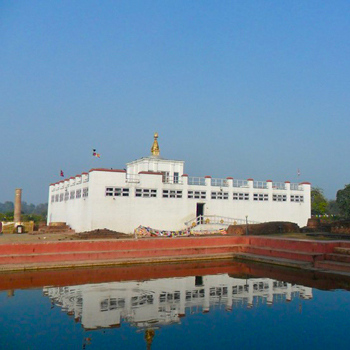
The Buddhist Circuit of Nepal begins from Lumbini with a nice stroll across Lumbini Garden. We will also visit the Maya Devi Temple and the Sacred Pond along with all the nearby monasteries inside the Maya Devi Garden. The following day comprises a visit to other interesting Buddhist Sites, mainly Tilaurakot (Kapilvastu), Sagarhawa, Gotihawa, Kudan, and Niglihawa. All of these sites carry their own religious and cultural depth, and they all lay serene in the spiritual contentment they inspire.

While the Buddhist circuit of Nepal is limited only up to Niglihawa, the Buddhist circuit of India & Nepal has an addition to the aforementioned destinations. This trip extends to Vaishali (Patna), Patilputra-the Capital of Ashokan via Kesharia. The next day, we go on a merry drive to Bodhgaya via Nalanda and Rajgir. Here, we can see the famous Mahabodhi Temple and the Bodhi Tree under which the Buddha meditated. Next we drive to Varanasi and continue to Sarnath. At Sarnath we can visit the Dhamekha Stupa, Buddha’s first teaching site. We can also visit the Mulgandha Kuti and the famous Ashokan Pillar. This pillar was originally erected by King Ashoka and is now the proud symbol of India.

We drive to Khushinagar the next day to visit Mahaparinirvana Temple. This is where Lord Buddha got samadhi (the deepest meditative trance for sages as per Shakya Buddhists). We will finally proceed to the Cremation Stupa that symbolizes Buddha in Samadhi and end our spiritual trip here. Therefore we cover Lord Buddha’s life in the Buddhist Circuit. from his Birth to his Enlightenment and finally ending to the place of his Samadhi.

Thus standing, our agendas and ideas that form the foundation of the Buddhist Circuits have been designed and crafted from a very novel perspective. We intend to propel the ship of knowledge set sail by Buddha with more vigor. Following in his footsteps, we hope to help people walk Buddha’s way of life and that is why we have been trying to make people see and feel, in their most intimate soul, the path that Great Buddha once walked.

Everest Mini Trekking

Accommodation

Luxurious deluxe hotels, as well as small teahouses, are available during this trek. You can choose the hotel that fits your budget. Also, the government-authorized trekking company gives an alternative for you. You can get Western, Nepali, Indian, and continental food until Namche. However, in Khumjung, different cuisines may not be available.

Please visit the Everest Mini Trek package for the trekking itinerary and cost details.

Nepal

Nepal, being a naturally beautiful country with diversity in culture, religion and landscape is an idle destination for foreigners as well as natives who wish to enjoy the freshness of nature with their near and dear ones. Tourism is the largest economy generating industry in Nepal.

This is a hotspot destination for mountaineers, rock climbers and people seeking adventures as Nepal possesses 8 of 10 highest mountains in the World. Mt. Everest, being the highest mountain in the world is the major attraction for tourists. The other attraction includes Lumbini, the birthplace of Lord Buddha, Tilicho Lake, the highest lake in the world and various heritages included in the World Heritage List.

Discovery Channel has ranked Nepal in No.1 spot for extreme sports a year ago,2012 where one can get involved with various activities such as Zip Flying, Bungy jumping, Paragliding, white water rafting, rock climbing, trekking, hiking, jungle safari and expeditions.

This is the “Land of Paradise” for trekkers and mountaineers. Mustang “The Forbidden Kingdom of Nepal” possesses a different diversity in landscape and weather. The dessert like barren hills gives you an experience you have never felt before. The chilly air from the mountains mixed with the freshness of nature makes you feel like, you never want to leave this place.

Pashupatinath Temple is Nepal’s most sacred Hindu shrine and one of the four most important holy places in the world for Lord Shiva worshippers. People from Nepal and its neighbouring country India frequently visit Pashupatinath to worship Lord Shiva. Nepal is the only country that has living goddess “Kumari” residing at Basantapur Durbar Square. Nepal has also been listed No.1 in the topmost destinations to be visited in Asia by
Kathmandu, a place where it is said to have more temples than houses and more god and goddesses than people. You can visit 5 world heritages within a day. From the high Himalayas to the southern plains of Terai, this is a home to the high variety of ethnic groups with their own language and cultural tradition.

Nepal is a small country jammed between two huge nations India and China but within this small land, we possess high biodiversity which is really difficult in any other part of the world. Visit Nepal is a lifetime experience in one’s life.

Trekking in Nepal during monsoon

Nepal is a fantastic place for trekking and touring; you can trek in Nepal for the whole year. However, the best season for trekking and expedition may be spring and autumn. By Trekking in Nepal during the monsoon, you can get a different experience. Find out the quick facts on monsoon highlights in Nepal to make your trip unforgettable by discovering the best of nature and floral impressions.


Facts to know beforehand

  • The rainy season in Nepal usually starts from months of the middle week of June to the first week of September.
  • During this time, the temperature is between 22 degrees Celsius or 71 degrees Fahrenheit in Kathmandu (1350m above sea level) and one degree less in every 200m higher elevation. (All are near approximate values).
  • Nepal experiences the most rainfall, between 130-320mm, during this time, with July being the month with the heaviest rainfalls.
  • Rain is most often seen during the evening and night, with 7 to 10 hours of sunshine in a day. So, it’s not always raining.


In the present context, many travelers also look up trekking in Nepal during monsoon time. And with no worry of crowd or unavailability of rooms in lodges, you can feel the real thrill of trekking during monsoon. Along with these, there are a few other advantages too that you can grab on:

Advantages of Monsoon Trekking

  • Excellent sunrise views. The rainfall happens mainly during the nighttime, and the skies are usually apparent in the morning. This allows us to view excellent sunrise views from popular viewpoints across the trails. The warm lights of the sun striking the rain clouds and the gradual change of white snow-capped, rain-soaked Himalayas to golden colors is an incredible sight to see and enjoy.
  • Limited edition natural highlights only for you. Trekking routes will mostly be isolated during this time, allowing you to soak well into natural highlights. You have plenty of time to immerse yourself in the beauty of nature. In the meantime, take care of yourself too. It would help if you strolled on the slippery trails.
  • Lots of greenery brings the best of floral highlights. The Himalayas are more beautiful and clean in the rain-soak monsoon season than ever. The trekking route is usually filled with lush green vegetation, flowers blooming, and agricultural farming on terrace farmlands; It is a good time for all these views and a chance to interact with locals about local products.

Why you should use travel agent

Why Travel agent??

This is the age of technology; you can get enough information in a single click. Flight tickets, Hotels, and all other things can be booked online, which is an easy option for travelers. You can travel without a travel agent. But, the travel agent is a specialist in travel and tourism. The specialist offers much more information and better service than booking. The travel agent offers a different alternative based on your requirement. We will also tell you about the pros and cons of your destination, and you can decide where, how, and when to go, etc.

Here are some reasons why you should choose Travel Agents:

Accountability

Our job is to provide the correct information and give possible options for our clients on every trip. We are also responsible for managing everything necessary to complete the journey. We will be accountable in case of an adverse situation towards the clients.

Knowledge

We have previous experience in the successful completion of the trip. We also have perfect knowledge about budgeting, time frame, equipment, available services, etc., and that knowledge can be exchanged with the traveler.

More for your money

At the time of booking a trip, travelers want to see everything and want to take a pleasant experience with complete information. A travel agent ensures that the clients don’t miss the historical places, natural beauties, and unique things like local festivals and lifestyles. Travel agent gives an idea of where to go and how to go when to go.

Setting an Itinerary

We can customize your itinerary as per your requirement. The standard template may be available on the internet, but you may not get a perfect plan per your requirement. A travel agent provides excellent knowledge of everything that will be happening daily, which is included in the trip.

Budgeting

The travel agent makes everything clear about your trip cost. On which topic how much do you need to spend? Can that cost be customized as per your requirement? And so on. As per your budget, travel agents could provide the best alternatives to you. The travel agent can guide you, and you can save money, or you can get other things at the exact cost.

Insurance

During traveling, the traveler may face adverse situations. The travel agent can offer the best insurance policy from different insurance companies. Insurance companies may provide a discount on insurance premiums. A travel agent supports you during an emergency evacuation or medical emergency and even helps to correct the travel documents.

Time savings

During your busy schedule, you may not have the proper time to manage destinations, flight tickets, hotels, restaurants, traveling documents, support staff, and other related things. We take little time to know your requirement, and they will manage everything as per your desire and customize your trip.

Leverage

If you can’t get a flight ticket at your time, can’t get a hotel room at a place you want to stay. After hiring a travel agent, this is not your problem. We have spent many years developing good relations with Airlines Companies, hotels, and other entities. Because of the skills and experience, the business travel agent can manage everything even in the last minute booking.

Last but not least, if you haven’t visited a travel agent during your past trip, you missed the chance to save money, time, annoyance, and aggravation, then Peregrine Treks is here to manage your trip to Nepal Tibet, and Bhutan as well as India. You can join us or inquire about your vacation.

Find more travel agents at itravelnet.com – Travel directory.

China Tours Packages: China Discovery provides a selection of carefully designed private tours, special theme tours, city tours, private group tours, and tailor-made trips for families, couples, friends, and business travelers from all over the world.

Heaven of the Earth, Rara National Park

Nestled deep in the heart of the Nepalese Himalayas, Rara Lake isn’t just a destination; it’s a masterpiece of nature. Known as Nepal’s deepest and largest freshwater lake, Rara mesmerizes visitors with its shimmering turquoise waters, utterly serene surroundings, and unparalleled tranquility that washes over you. Tucked away within Rara National Park—Nepal’s most diminutive—in the remote districts of Mugu and Jumla, this high-altitude jewel, sitting pretty at 2,990 meters, offers a genuine escape into a world of untouched, raw beauty. Often whispered about as an “earthly paradise,” Rara Lake is rapidly becoming a must-visit for avid hikers, devoted nature lovers, and anyone truly yearning for peace amidst stunning natural grandeur. This article dives deep into what makes Rara Lake so alluring: its unique charm, the best times to experience it, exciting activities, and some practical tips to help you plan your unforgettable journey.

The Enchanting Beauty of Rara Lake

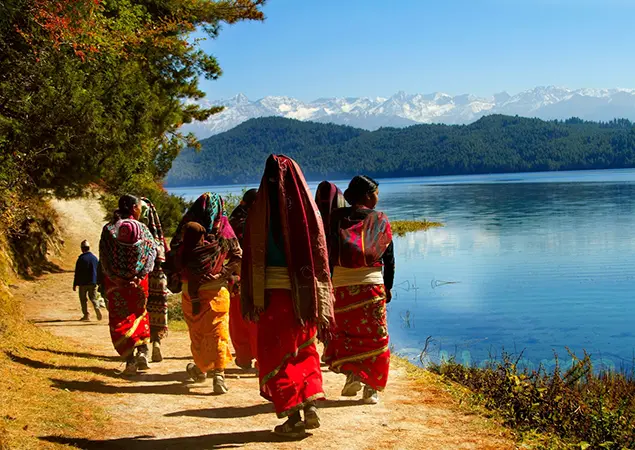
Rara Lake is a natural marvel, stretching approximately 10.8 square kilometers and plunging to depths of up to 167 meters. It’s obvious waters aren’t just blue; they dance through a spectrum of blues and greens, subtly shifting with every change in the day’s light. Hugging the lake’s edges are dense, fragrant forests of juniper, spruce, and pine, forming a vibrant green frame that beautifully contrasts with the distant, snow-capped peaks of the Himalayas. The lake’s pristine environment and secluded location weave together to create an almost ethereal charm, making it feel like a truly hidden paradise just for you.

And that Himalayan backdrop? Peaks like Chuchemara are simply majestic, adding a powerful, awe-inspiring touch to the landscape. On those clear days, the reflection of these giants in the lake’s glassy surface creates a mirror-like effect that’s nothing short of pure magic. This seclusion has been Rara’s guardian, preserving its distinct local culture and natural environment. It offers travelers a rare glimpse into Nepal that feels like a world away from the bustling cityscapes of Kathmandu and Pokhara.

Rara National Park: A Haven for Biodiversity

Rara Lake is cradled within Rara National Park, a protected area established in 1976 to safeguard this precious lake and its vibrant ecosystem. Don’t let its title as Nepal’s smallest national park (just 106 square kilometers) fool you; it teems with diverse flora and fauna. The park’s forests are home to elusive creatures like the Himalayan black bear, musk deer, and even the rare red panda – though spotting them is a thrilling challenge! The lake is a living treasure, supporting unique aquatic life, including fish and frog species found nowhere else.

For birdwatchers, Rara National Park is an absolute dream! With over 270 bird species recorded, you might spot migratory beauties like the great crested grebe and ruddy shelduck. And in spring, the park’s diverse plant life explodes with vibrant rhododendrons, painting the hillsides in glorious shades of red, white, and pink. This incredible biodiversity and the lake’s sheer scenic beauty firmly establish Rara as a haven for eco-tourism and wildlife enthusiasts.

Getting to Rara National Park

Reaching Rara Lake is truly an adventure; its remote location demands some planning and effort, but it is worth it! The only real way in for a long time was flying from Nepalgunj to Talcha Airport (followed by a good 3-hour trek) or Jumla Airport (a more adventurous 2-3 day trek). Thankfully, with the extension of the Karnali Highway, Rara has become more accessible, though the journey still offers plenty of rugged charm.

Now, brave travelers can journey to Rara by road from Kathmandu, a scenic ride that typically takes two days by bus or private vehicle. The route winds through incredibly rugged terrain, offering glimpses of rural Nepal’s untouched landscapes. Flights to Talcha or Jumla remain popular for those who prefer a quicker path, followed by a truly scenic trek through whispering forests and charming villages. No matter your route, the journey to Rara Lake is as rewarding as the destination, filled with stunning vistas and that exhilarating sense of truly venturing into the unknown.

Best Time to Visit Rara Lake

If you want to experience Rara Lake at its most glorious, autumn (September to October) and spring (April to May) are your golden tickets. These seasons bless the region with delightful weather, crystal-clear skies, and unobstructed views of the mighty Himalayas. Autumn, in particular, is a showstopper, with crisp, invigorating air and foliage ablaze with vibrant colors. On the other hand, spring brings the hillsides to life with blooming rhododendrons, painting the landscape in joyous bursts of color. During these times, the lake’s waters are at their most reflective, creating those postcard-perfect scenes you’ve dreamt of.

Winter (November to March) here means biting cold, often dipping below zero, and heavy snow can make trekking quite challenging. The monsoon season (June to August) brings a deluge of rain, turning trails slippery and often shrouding those incredible views in clouds. So, to truly savor Rara’s breathtaking beauty, aim for autumn or spring.

Things to Do at Rara Lake

Rara Lake offers a fantastic mix of activities, whether you’re an adrenaline junkie or simply craving a peaceful escape. Here are some of the highlights:

  1. A Leisurely Stroll Around the Lake: Imagine a gentle 4-5 hour walk around Rara Lake—the perfect way to soak in its beauty, truly. The trail is mostly flat and easy to follow, winding through peaceful forests and open meadows. Along the way, you’ll discover countless viewpoints offering those sweeping, panoramic vistas of the lake and its majestic mountain guardians.
  2. Trek to Murma Top: The trek to Murma Top is a must for those seeking more adventure! This viewpoint offers an incredible bird’s-eye view of Rara Lake that will take your breath away. The round trip takes about 6-7 hours and involves a moderate climb through beautiful forested trails. Every bit of effort is gloriously rewarded with that unparalleled perspective of the lake’s turquoise expanse, perfectly framed by the towering Himalayas.
  3. Boating on Rara Lake: On those clear days, the local army camp near the lake offers short, serene boating trips. Gliding across the lake’s calm, reflective waters provides a unique and truly intimate view of its beauty. Just a friendly reminder: Swimming isn’t allowed, helping preserve the lake’s pristine ecosystem.
  4. Birdwatching and Nature Photography: Rara’s incredibly diverse birdlife and jaw-dropping landscapes make it a true paradise for both birdwatchers and photographers. Don’t forget your binoculars and a good camera to capture the vibrant feathered residents and the lake’s ever-shifting, vivid colors.
  5. Relax by the Lake: Sometimes, the best thing to do is… nothing. Just find a quiet spot by the lake, watch the sunlight dance on its surface, and let the serene atmosphere wash over you. It’s the perfect setting for silent meditation, diving into a good book, or simply unwinding completely in nature’s pure embrace.
  6. Explore Nearby Villages: Why not extend your adventure with a trek to Khalanga, the capital of Jumla district? It’s a rewarding 3-day journey through remote villages and untouched landscapes. This trek offers a fascinating glimpse into the local Thakuri and Chhetri cultures, with excellent opportunities to connect with friendly villagers.

Where to Stay at Rara Lake

Accommodation options on Rara Lake are charmingly limited, with just two lodges on the lake’s banks. These lovely wooden structures blend seamlessly with the natural environment, offering cozy rooms, some even with attached bathrooms. Imagine waking up to stunning views of the lake and the Himalayas right from your window – truly ideal for a peaceful retreat.

Dining here typically features delicious local Nepali dishes like the hearty dal bhat (lentils and rice), alongside some continental options. For a truly immersive experience, these lodges also offer tented camps in their yards, letting you sleep under a canopy of stars, surrounded by nature’s symphony. Due to limited availability, reserving your stay well in advance is highly recommended, especially during peak seasons.

Cultural Insights: The People of Rara

The region surrounding Rara Lake is the cherished home of the Thakuri and Chhetri communities, whose traditions and way of life remain wonderfully untouched by the rush of modernity. As a visitor, you’ll likely be met with warm, genuine hospitality and witness unique cultural practices, from traditional dances to vibrant festivals. The remoteness of this region has truly safeguarded its distinctive character, offering a rare and precious window into authentic, traditional Himalayan village life.

Tips for Visiting Rara Lake

  • Pack Smart: Even in spring or autumn, nights at 2,990 meters can get chilly, so bring plenty of warm clothing. Sturdy trekking shoes, a reliable raincoat, and a good camera are essential.
  • Respect Nature: Rara National Park is a protected sanctuary, so please do not litter and always follow eco-friendly practices. Let’s keep this paradise pristine.
  • Stay Hydrated: That elevated altitude can quickly lead to dehydration, so always carry a reusable water bottle and sip frequently.
  • Plan for Connectivity: Mobile network coverage here is quite limited, so do yourself and your loved ones a favor: inform them of your itinerary before you head out.
  • Consider a Guide: For longer treks like Murma Top or Khalanga, hiring a local guide is smart for safety and smooth navigation.

Why Visit Rara Lake?

Rara Lake is more than just a destination; it’s a profound experience revitalizing your soul. Its untouched beauty, serene ambiance, and remote charm make it the perfect antidote to the chaos of everyday life. Whether you’re trekking its peaceful trails, gently gliding across its waters by boat, or simply losing yourself in its mesmerizing reflections, Rara Lake leaves an indelible, beautiful mark on every single visitor. As the undisputed “Queen of the Himalayas,” it beckons to all seeking adventure, inner peace, and a deeper, more meaningful connection with nature.

Plan your journey to Rara Lake today and discover why this hidden gem truly is the Heaven of the Earth.

Please enable JavaScript in your browser to complete this form.