Hindus and Buddhists from neighboring countries like India come to pay homage to Nepal’s many pilgrimage sites. Other mainstream traveler goals are also found in various parts of the nation besides the well-known worship of Pashupati and noteworthy locales such as Lumbini and Janakpur. While some are lovely and complicatedly planned sanctuaries worked by unknown artisans of past days, different spots are known for their fairs and celebrations or are blessed washing spots respected by the era of admirers. Here is a famous pilgrimage of Nepal.
Top Pilgrimage Sites of Nepal
Dolakha Bhimsen
In the upper piece of Dolakha Township lies the sanctuary of Bhimeshwar, prominently known as Dolakha Bhimsen. The general population of Dolakha views Bhimeshwar as their preeminent Lord. The roofless sanctuary houses a Shiva Linga, a sacred object. Fairs are held at this sanctuary for events such as Bala Chaturdashi, Ram Navami, Chaitra-Ashtami, and Bhima Ekadashi. Amid the Dashain celebration, goats are relinquished here. Roughly 200 meters from the Bhimeshwar sanctuary is the sanctuary of Tripurasundari, where fans amass amid the celebrations of Chaitrastami and Dashain. Only the minister of this sanctuary is permitted to look at the picture revered inside.
Devghat
Devghat holds a special place in the pilgrimage of Nepal, resting at the sacred confluence of the Kali Gandaki and Trisuli rivers. Located just north of the Royal Chitwan National Park, this spiritual site draws Hindu devotees year-round, especially during the Makar Sankranti festival in January. Thousands gather to take holy dips in the river, seeking purification and blessings.
Several important religious and historical sites surround Devghat, offering meaningful side visits. These include the Triveni Temple and Balmiki Ashram—where Sage Balmiki once meditated—the Someswar Kalika Temple and ancient fort, Pandavanagar, believed to be linked to the Mahabharat heroes, and the Kabilaspur Fort, built by the former kings of Palpa. Together, they enrich Devghat’s role in Nepal’s spiritual and cultural pilgrimage.
Kamala Maisthan
Kamala Maisthan is one of the most important religious spots of the Sindhuli locale and lies at the confluence of the Kamala and Gwang streams.
Located at 610 meters above sea level, it is eleven kilometers from Sindhulimadi and is associated with a jeepable road from Janakpur. On the principal day of the Nepalese month of Magh (January-February), a stupendous fair is held at Kamala Maisthan. Many travelers give up goats and pigeons, after which they sing a melody and move for the duration of the night.
Dhanusha
About twenty kilometers northeast of Janakpur stands Dhanusha, a revered location in the pilgrimage of Nepal. According to legend, this is where a piece of Lord Shiva’s mighty bow—shattered by Lord Rama during the swayamvar of Sita—fell to earth. The name “Dhanusha” comes from “Dhanu,” meaning bow.
Devotees gather here every Sunday in the month of Magh to bathe in the sacred waters and honor the site. The area becomes especially vibrant during Ram Navami and Bibaha Panchami, when religious fairs draw pilgrims across the region. These celebrations highlight Dhanusha’s deep spiritual connection to the epic of Ramayana and its lasting role in the cultural pilgrimage of Nepal.
Jaleshwar Mahadev
The memory of Jaleshwar Mahadev lies in the city of Jaleswar, the headquarters of the Janakpur zone. Jaleswar Mahadev is one of Nepal’s conspicuous spots of the journey and is said in the Hindu epic, Padma Purana.
As indicated by legends, a loner named Jagadish landed in the bereft backwoods of Jaleshwar and had a fantasy in which he was assigned to direct excavations on the spot. Following the fantasy, he started burrowing and soon found a picture of Jaleshwar Mahadev. He then manufactured a sanctuary with gold, which he brought from Sunukhadagarh.
Just before the Jaleshwar Mahadev sanctuary, there are two holy lakes called Barunsar and Kshiresar. Many travelers collect at these lakes during the Ram Navami and Bivaha Panchami celebrations.
Gosainkunda – Most visited Pilgrimage of Nepal
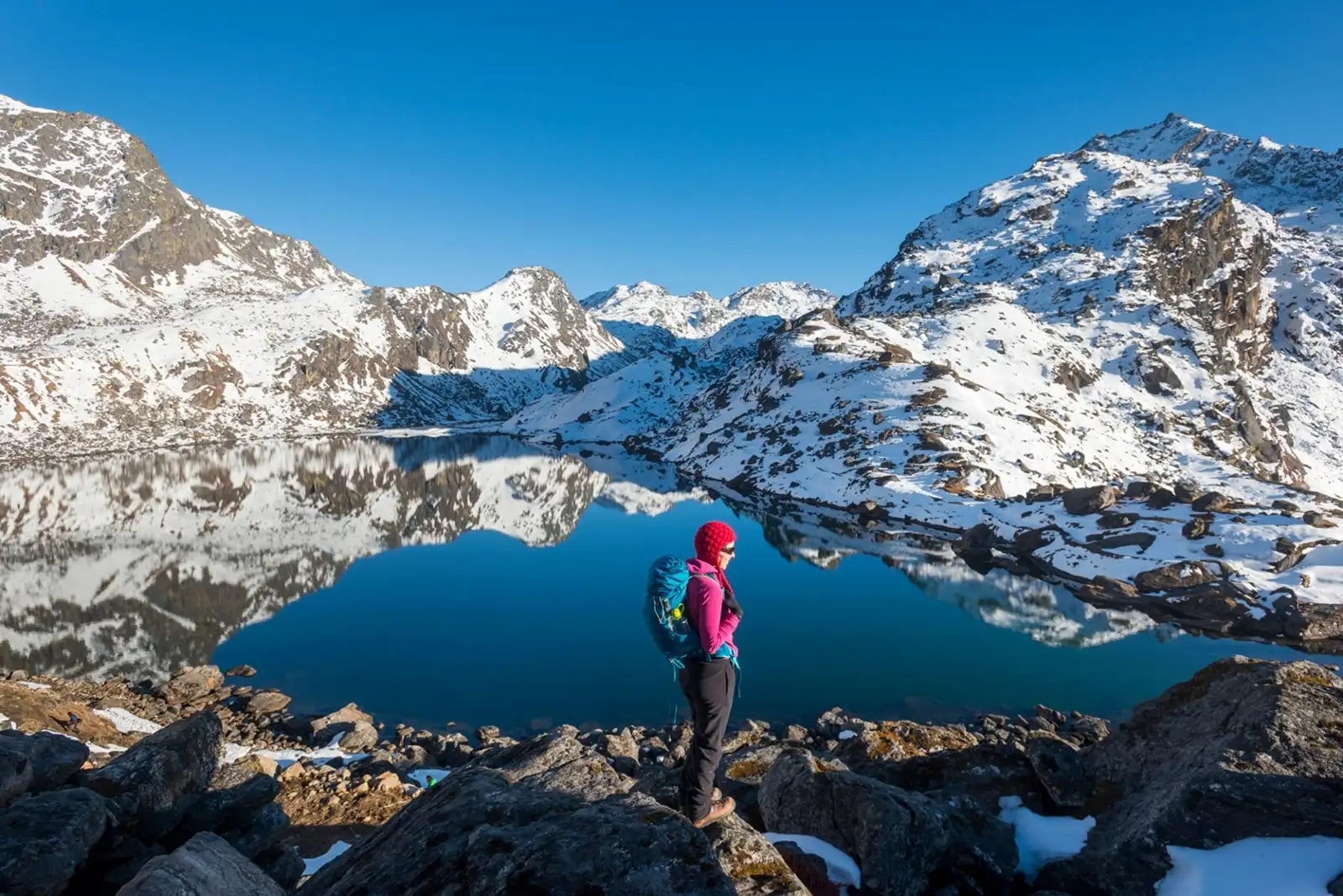
One of Nepal’s most acclaimed spots of the journey is the blessed pool of Gosainkunda, at an elevation of 4,380 meters above sea level. Encompassed by a higher landscape towards the east and north, this kunda or lake is excellent and beautiful. On the east and west of the Kunda are nine different lakes, including Saraswatikunda, Bhairavkunda, Sooryakunda, and Ganeshkunda. Consistently, amid Janai Poornima in August, many Hindu pioneers and fans trek to this spot to wash up and take part in the festival.
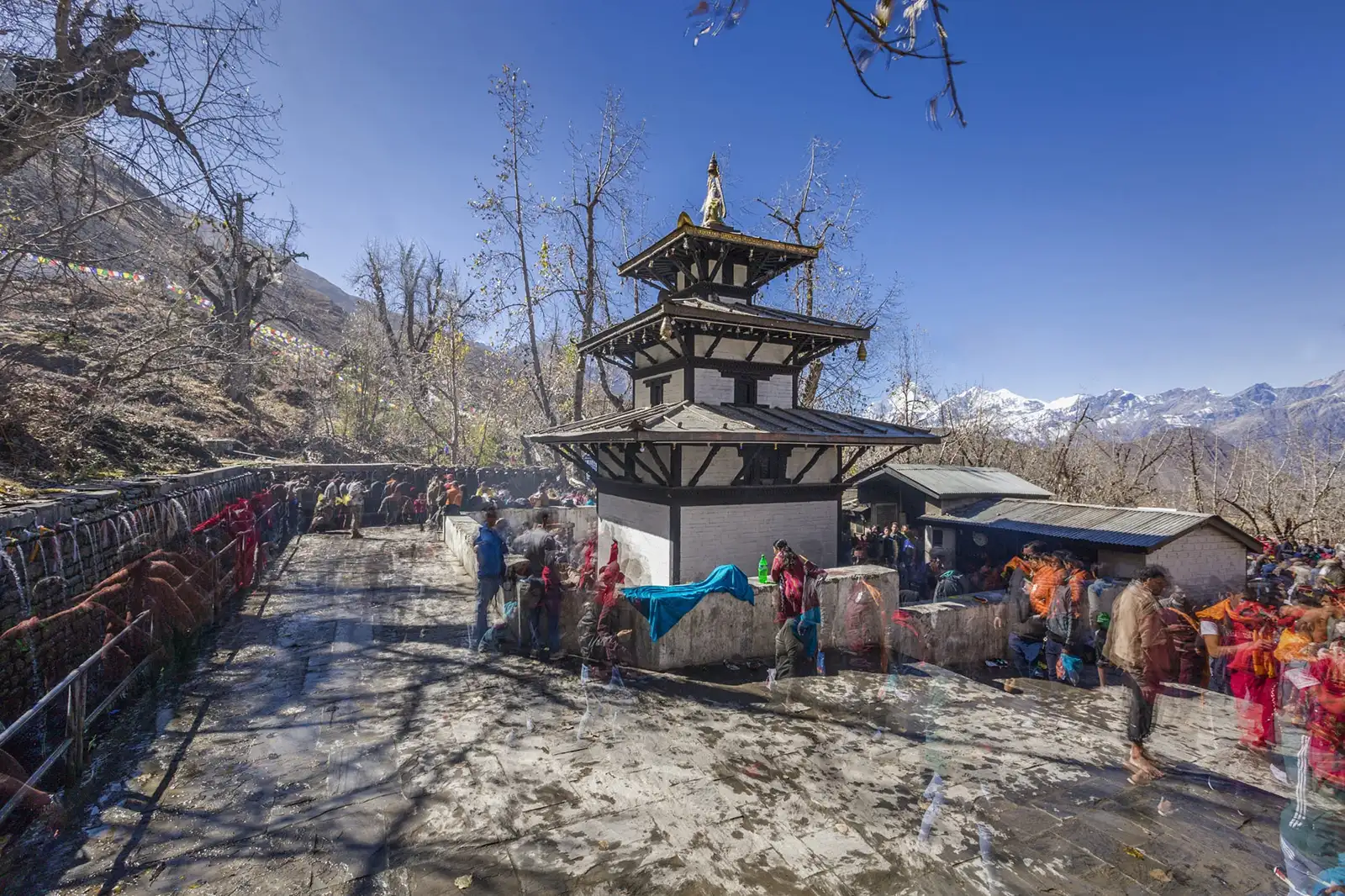
Muktinath
The well-known sanctuary of Muktinath lies in the Mustang region and is situated on a high mountainside. Amid the celebration of Janai Poornima, Hindu lovers gather at this spot to pay reverence to Lord Muktinath. Dharmashala and Maharani Powa (resting places for pioneers) are given to guests and explorers. Various divine beings and goddesses are cherished around one hundred meters south of the sanctuary. On the sanctuary’s grounds are three openings from which blazes shoot forward persistently. Since antiquated times, divine blazes of Jwala have been revered as Jwaladevi (the goddess of fire).
Muktinath Temple and Mukti Dhara
Swargadwari
Located in the western hills of Pyuthan District, Swargadwari is a prominent site in the pilgrimage of Nepal. About 26 kilometers south of Khalanga Bazar, the district headquarters, Swargadwari holds deep spiritual meaning for Hindu devotees. The name “Swargadwari” translates to “gateway to heaven.” Legend connects the place with ancient sages who practiced deep meditation and penance here.
One sage, Padma Gin, gained spiritual enlightenment through years of repentance and service to the local community. He built a sacred pond and initiated the Akhanda Hom—an eternal fire ritual that continues today. After his death, he was buried at the site, where marble slabs now mark his resting place, and a temple was later built in his honor.
Swargadwari also maintains a herd of several hundred cows, which is part of the temple tradition. The temple trust manages accommodations and meals for pilgrims, preserving the site’s legacy of hospitality and devotion.
At the summit of Swargadwari, visitors can explore a serene cave where the sage once meditated. Large festivals occur each year during Baisakh Poornima and Kartik Poornima, drawing pilgrims from across Nepal and India. These gatherings reinforce Swargadwari’s sacred role in Nepal’s cultural and religious pilgrimage.
Jaljaladhuri, Rolpa
In the area of Rolpa in Rapti Zone, about seventy kilome¬ters north of Libang, the locale central station, lies the Parbat Dhuri (which means peak), 3,494 meters above sea level. On the Parbat, Dhuri is the three sanctuaries of Baju, Varah, and Kaile Varah.
As the prevalent story goes, long before Magar, adolescents named Karmapal and Dharmapal used to chase together. One night, they both had dreams in which Baju and Varah’s divine beings told Karmapal and Dharmapala, ‘Shoot your bolts in the bearing that the downpours, the winds, and the mists move.’ When they did, enormous snakes were executed, and the Jhyrabi River altered its course from east to west. After this, Baju, Varah, and the girl of the Satsalle god could live there gently.
Baju and Varah are worshiped as the watchman divinities of the Magar in Rolpa. Consistently amid Jestha Poornima and Janai Poornima, three-day fairs are held at these sanctuaries, and sheep and goats are relinquished.
Mai Pokhari, Ilam
Somewhere thirteen kilometers north of Ilam Bazaar lies the lake of Mai Pokhari, a position of journey arranged at an elevation of 2,438 meters. The outline of the lake is more than one kilometer. Out and out, nine lakes are in the range, some suitable for watercraft. Others have layers of greenery so thick that one can get lost in them.
Consistently amid Harisyani Ekadasi, a one-night festival is held at this temple; there are no yield creatures. The range is an outing spot with a sanctuary and a loner’s cabin. Neighborhood individuals assert that Mai Pokhari is steadily moving and changing its area. From the Ilam bazaar, it takes four hours to reach Mai Pokhari by jeep. In transit are the towns of Chure Ghanti, Bakhaute, Dharapani, and Jasbir Bahanjyang, which offer different perspectives of the cold crests toward the north.
Solu-Khumbu: A Spiritual Heart in the Pilgrimage of Nepal
Solu-Khumbu, part of the Sagarmatha Zone, represents natural grandeur and spiritual depth. Known globally as the region that hosts Mount Everest (Sagarmatha), it also stands as a center of Buddhist culture in the pilgrimage of Nepal. The area houses many ancient Gompas (monasteries), each of which is of religious and cultural importance for both locals and visiting pilgrims.
Major Monasteries in Solu-Khumbu
Solu-Khumbu features several key monasteries that contribute to its spiritual atmosphere:
Thyangboche Monastery
Perched at 3,900 meters, Thyangboche is the most recognized monastery in the region. Though recently damaged by fire, it is being rebuilt with community support. Located against the backdrop of Ama Dablam, the monastery also provides a stunning view of Mt. Everest, flanked by Lhotse and Nuptse. During Mani Rimdu, a major local festival, the monastery draws pilgrims across Nepal and beyond.
Junbesi Monastery
One of the oldest in the region, Junbesi Monastery holds a massive statue of Lord Buddha and plays a central role in local religious life. It becomes especially lively during festivals like Dumje, where locals and visitors gather to celebrate and worship.
Other Important Monasteries
Additional monasteries across Solu-Khumbu include Chiwong, Pangboche, Gumila, Kyorok, Thame, Shingefu, Thaksindu, Thaktoo, and Goli. Each offers a distinct spiritual experience, with traditional architecture, peaceful settings, and sacred rituals preserved through generations.
Pilgrimage and Trekking Together
The region blends pilgrimage with trekking. Trekkers often follow trails that pass through these monasteries, making spiritual stops. Whether visiting for religious reasons or as part of a cultural trek, Solu-Khumbu delivers both serenity and awe.
As a vital destination in the pilgrimage of Nepal, Solu-Khumbu allows visitors to witness Himalayan beauty while connecting deeply with Tibetan Buddhist traditions.
A practical guide for independent travelers, first-time Himalayan hikers, and solo female trekkers planning a Nepal trek.
Nepal holds a strong place on almost every serious trekker’s list. The trails, the mountain views, and the cultural richness attract travelers from every corner of the world every year.
Many of those travelers want to go on their own. Solo trekking in Nepal has always carried a particular appeal: setting your own pace, choosing your own stops, and experiencing the trail without a fixed group schedule.
But the rules around solo trekking in Nepal changed in 2023. What “solo trekking” means in practice changed with them. Many major routes now require a licensed guide and an agency-issued TIMS card. Understanding what the rule says — and what it means for your specific route — is the first step in planning a smart and safe solo trek.
Quick Answer: Can You Still Go Solo Trekking in Nepal? On most major trekking routes, fully independent trekking without a licensed guide is no longer permitted under official rules. But solo travelers can still trek as one private client with a guide. That remains both the most practical and the safest option under the current framework. Solo trekking in Nepal still works — it just looks different from what it looked like before 2023.
Langtang Valley Trek in October
What Does Solo Trekking in Nepal Mean Today?
The word “solo” creates confusion because it describes the traveler, not the trek setup. Understanding the difference saves a lot of planning headaches.
A solo traveler means one person making the trip. An independent trekker is someone trekking without a guide or any company support. A private guided solo traveler means one person trekking with a guide booked through a registered agency.
Most solo travelers today fall into the third group. They trek alone as an individual experience. But they travel with a licensed guide who handles route logistics, permits, and safety communication. The trail still feels personal. The planning stays compliant.
Solo traveler: one private client on a customized trek
Independent trekker: no guide, no agency — not compliant on most listed routes under the 2023 rule
Group-joined solo traveler: one traveler joining a shared group departure
Private guided solo traveler: one traveler with a licensed guide — the most practical current option
What the Official Nepal Trekking Rule Says
Nepal Tourism Board (NTB) revised the TIMS provision effective March 31, 2023. Under this revision, trekkers on many major listed routes must travel with a licensed trekking guide. The TIMS card must come through a registered trekking agency, not through an independent self-application.
The listed routes cover multiple major trekking regions. They include Everest Region routes, Langtang Region routes, Helambu and Gosaikunda routes, Annapurna-linked routes, Manaslu-linked routes, Upper Mustang, Upper Dolpo, and other connected trekking corridors.
Trekkers should always verify their specific route against the current NTB list before departure. The official list holds authority. Advice from old travel blogs or travel forums may reflect older rules that no longer apply.
Official Rule Snapshot by Region
Nepal Trekking Regions, Guide Rules, and TIMS Requirements
Region
Example Routes
Guide Required?
TIMS Through Agency?
Everest Region
Everest Base Camp, Gokyo, Cho La Pass
Yes — under 2023 rule
Yes
Langtang Region
Langtang Valley, Gosaikunda, Helambu
Yes
Yes
Annapurna Region
ABC, Annapurna Circuit, Poon Hill, Mardi Himal
Yes
Yes
Manaslu Region
Manaslu Circuit, Tsum Valley
Yes + restricted permit
Yes
Upper Mustang
Lo Manthang route
Yes + restricted permit
Yes
Upper Dolpo
Upper Dolpo Circuit
Yes + restricted permit
Yes
All restricted-area routes also require a special trekking permit from the Department of Immigration. Only applications for restricted-area permits are denied. A minimum group of 2 trekkers and a licensed guide is required for all restricted zones.
Why Travelers Still Need Current Local Information
Official rules and on-ground travel experience do not always feel identical. Local administration, checkpoint staffing, route popularity, and season can all affect what travelers encounter on the trail.
None of that changes the official rule. The 2023 NTB provision remains active. Travelers who plan around rumors, outdated blog posts, or assumptions about enforcement take unnecessary risks. Route conditions, permit procedures, and checkpoint practices do change.
A registered trekking company provides current, verified information before your trek begins. The company handles permit paperwork, guide registration, and route logistics based on current requirements—not what applied two years ago.
Solo trekking in Nepal works best when supported by a company that stays up to date on local rules and trail conditions. Plan with real information, not guesswork.
TIMS, Trekking Permits, and Restricted Areas
TIMS stands for Trekkers’ Information Management System. The system tracks trekker movements across Nepal’s major trail networks. It links each trekker to a registered guide and a licensed agency before the trek starts.
Under the current system, a registered agency issues the TIMS card after registering the guide and the trekker’s route details. The card now generates as an eCard with a QR code. Current TIMS fees: NPR 1,000 for SAARC-country visitors and NPR 2,000 for all other nationalities. Verify these on the NTB website before booking because NTB updates fees after official department verification.
National park and conservation area entry permits add a second cost. Most major protected areas charge NPR 3,000 for foreign trekkers. The Shivapuri Nagarjun National Park charges NPR 1,000.
Restricted areas like Upper Mustang, Upper Dolpo, and the Manaslu Restricted Section require a third permit layer from the Department of Immigration. Only authorized trekking agencies apply for these permits. Individual travelers cannot apply on their own.
For solo travelers, this permit structure makes a registered company the practical path. An agency efficiently handles all three permit layers and ensures the documentation remains accurate at every checkpoint along your route.
Best Treks for Solo Travelers: Booking a Private Guide
Every route below works well as a private solo trek. Each section notes duration, altitude, difficulty, and why the trail suits a traveler going alone.
Everest Base Camp
Duration: 12 to 16 days. Max altitude: 5,364 meters. Difficulty: moderate to challenging.
Everest Base Camp delivers the most iconic Himalayan scenery in Nepal. The trail passes through Sherpa villages, high-altitude monasteries, and dramatic glacial terrain. Tea house accommodation runs the full length of the route.
Solo travelers enjoy the personal rhythm a private guided trek offers. You set the pace. You choose rest days. The guide handles altitude monitoring, local communication, and checkpoint documentation. Best season: October to November and March to May.
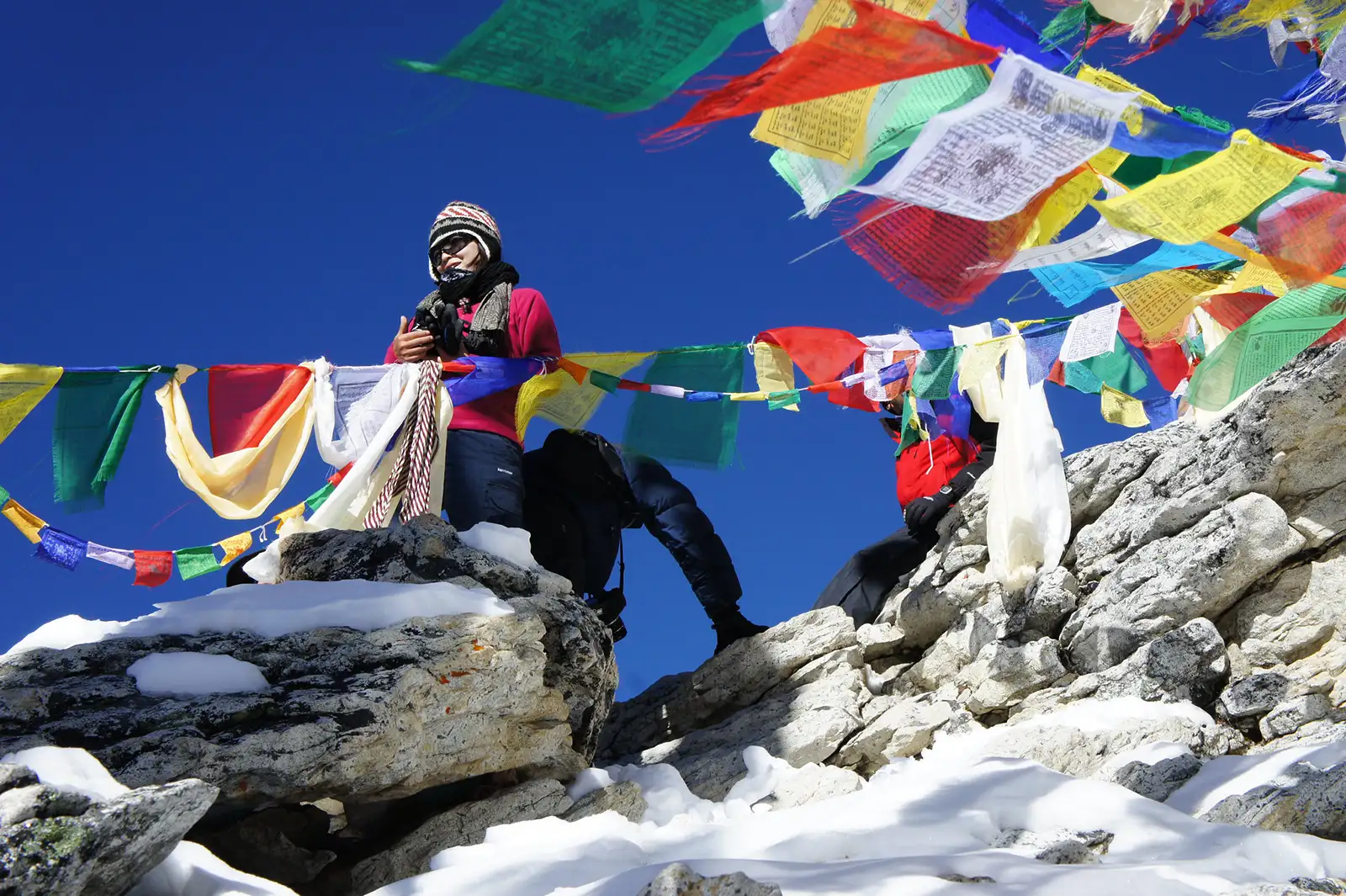
A trekker captures the serene moments at Kala Patthar, surrounded by vibrant prayer flags and the vast Himalayan sky.
Annapurna Base Camp
Duration: 7 to 12 days. Max altitude: 4,130 meters. Difficulty: moderate.
Annapurna Base Camp sits inside a natural amphitheater surrounded by some of Nepal’s most dramatic peaks. The trail passes terraced farmland, rhododendron forest, and mountain villages before rising to the high camp.
The route suits first-time solo trekkers. The altitude stays manageable, and the trail runs clearly. Tea houses are located along the entire route. Best season: March to May and October to November.
Ghorepani Poon Hill
Duration: 4 to 6 days. Max altitude: 3,210 meters. Difficulty: easy to moderate.
Poon Hill delivers one of Nepal’s most celebrated sunrise mountain views. The trail through Ghorepani suits travelers who want their first Himalayan experience without committing to a multi-week route.
Solo trekkers often choose Poon Hill as an introduction to Nepal trekking. The duration stays short, the altitude stays safe, and the trail runs through some of Nepal’s most scenic hill country. Best season: October to April.
Mardi Himal
Duration: 5 to 8 days. Max altitude: 4,500 meters. Difficulty: moderate.
Mardi Himal sits inside the Annapurna Conservation Area and sees fewer trekkers than the main Annapurna routes. The high camp views face directly toward Machapuchare and the Annapurna massif.
Solo travelers who want solitude over a crowd prefer Mardi Himal. The trail does not attract the same volume as Everest or ABC, which makes the private guided solo experience feel especially personal. Best season: October to November and March to May.
Langtang Valley
Duration: 7 to 10 days. Max altitude: 3,870 meters to an optional 4,984 meters at Tserko Ri. Difficulty: moderate.
Langtang lies close to Kathmandu and offers a strong combination of Tamang culture, alpine scenery, and yak-pasture terrain. The valley trail suits solo trekkers who prefer cultural depth alongside mountain views.
The route suits both first-timers and experienced solo travelers. Accommodation runs through the full valley. Best season: October to November and March to May.
Solo Trekker in Gosainkunda – Langtang Region
Gokyo Valley
Duration: 12 to 15 days. Max altitude: 5,360 meters at Gokyo Ri. Difficulty: challenging.
Gokyo offers a quieter alternative to the main Everest Base Camp trail. The route passes three glacial lakes and the Gokyo Ri viewpoint, with arguably the best panoramic mountain views in the Khumbu region.
Solo travelers with strong fitness and previous high-altitude experience find Gokyo deeply rewarding. The guide handles altitude safety monitoring, which matters especially above 4,500 meters. Best season: October to November and March to May.
Upper Mustang
Duration: 10 to 14 days. Max altitude: approximately 3,840 meters at Lo Manthang. Difficulty: moderate.
Upper Mustang sits in a Himalayan rain shadow. The landscape changes completely from standard Nepal trekking — ancient cave monasteries, walled villages, and Tibetan-influenced culture define the experience.
Upper Mustang requires a restricted-area permit (USD 50 per person per day), an ACAP permit, a TIMS card, a minimum group of two trekkers, and a licensed guide. Experienced solo travelers who arrange permits properly find it unlike any other Nepal trekking experience. Best season: May to October.
Quick Trek Comparison for Solo Travelers
Best Trekking Routes in Nepal: Duration, Difficulty, Altitude, and Season
Trek
Duration
Difficulty
Max Altitude
Best Season
Guide Rule
First-Timer Fit
Everest Base Camp
12–16 days
Moderate–hard
5,364 m
Oct–Nov, Mar–May
Yes
With experience
Annapurna Base Camp
7–12 days
Moderate
4,130 m
Mar–May, Oct–Nov
Yes
Yes
Ghorepani Poon Hill
4–6 days
Easy–moderate
3,210 m
Oct–Apr
Yes
Yes — ideal
Mardi Himal
5–8 days
Moderate
4,500 m
Mar–May, Oct–Nov
Yes
Yes
Langtang Valley
7–10 days
Moderate
3,870–4,984 m
Oct–Nov, Mar–May
Yes
Yes
Gokyo Valley
12–15 days
Challenging
5,360 m
Oct–Nov, Mar–May
Yes
With experience
Upper Mustang
10–14 days
Moderate
~3,840 m
May–Oct
Yes + restricted
Experienced only
Is a Porter-Guide the Best Option for Some Solo Travelers?
A porter-guide carries gear and provides trail navigation support. Porter-guides suit solo travelers who want practical help without feeling constantly guided through every conversation and decision on the trail.
Porter-guides work well on moderate trails where the route runs clearly, the altitude stays manageable, and the tea house accommodation covers the full length. They carry 15 to 20 kilograms of luggage, answer route questions, and handle basic local communication.
Solo travelers who want light physical support and some independence on the trail often prefer a porter-guide over a full certified guide. But a porter-guide does not replace a licensed guide where the official rule specifically requires one.
Always confirm with your registered trekking agency whether a porter-guide meets the current permit and checkpoint requirements for your specific route. Some routes require a fully licensed guide. Your agency gives you the correct and current answer for your trail.
Guide and porters with trekkers
How Much Does Solo Trekking in Nepal Cost?
Solo trekkers pay more per person than group travelers. All fixed costs — guide, permit, logistics — are covered by a single person rather than being shared across a group. Plan your budget with this in mind.
Typical Daily and Per-Trip Cost Ranges
Nepal Trekking Cost Breakdown: Private vs Group Trek
Expense Item
Private Solo Trek (Per Person)
Group Trek (Per Person)
Licensed guide
$25–$40 per day
Shared across the group
Porter (optional)
$18–$25 per day
Shared or not included
TIMS card
NPR 2,000 (~$15)
NPR 2,000 (~$15)
National park / CA permit
NPR 3,000 (~$22)
NPR 3,000 (~$22)
Tea house accommodation
$5–$20 per night
$5–$20 per night
Meals on trail
$25–$45 per day
$25–$45 per day
Domestic flight (if needed)
$180–$250 one way
$180–$250 one way
Agency service fee
Varies by company
Lower per person
Restricted-area permit
$30–$100 per week or ~$50 per day
Same per person
A 12-day Everest Base Camp private solo trek with a guide typically costs USD 1,400 to USD 2,200 all-in, including permits, guide, tea houses, meals, and the Kathmandu to Lukla domestic flight. Routes without domestic flights cost less. Restricted-area routes cost more.
Budget travel solo trekking on routes like Poon Hill runs USD 500 to USD 800 for 5 days, including guide, permits, and accommodation. Compare these figures against group departures, where per-person costs often drop by 30 to 50 percent because guide and service fees are split across the group.
Safety Tips for Solo Travelers in Nepal
Safety matters more when you travel alone. No group partner notices if something goes wrong. Plan accordingly.
Weather changes: mountain weather shifts fast — carry waterproof layers even on forecast-clear days
Route navigation: download offline maps before leaving the city and carry a printed route card
Communication gaps: buy a local Nepali SIM with data in Kathmandu before departure
Medical emergencies: carry basic first aid, know the location of the nearest health post for your route, and have helicopter evacuation insurance
Insurance: Buy travel insurance that explicitly covers high-altitude trekking and helicopter rescue before departure
Documentation: keep copies of all permits, your passport, insurance policy, and emergency contacts in a waterproof bag
Cash: carry enough Nepali rupees to cover 3 to 4 extra days in case of weather delays or unexpected costs
A licensed guide handles many of these safety factors automatically. The guide monitors your condition, contacts rescue services if needed, and communicates with local tea house owners along the route. Solo travelers without a guide carry all of these responsibilities alone.
Solo Female Trekking in Nepal
Nepal attracts thousands of solo female trekkers every year. Most report positive experiences on popular routes like Poon Hill, Annapurna Base Camp, Mardi Himal, and Langtang Valley.
Many solo female travelers choose a private guided trek specifically because it provides a known, vetted local contact throughout the trip. A licensed guide from a registered agency offers a layer of support and local communication that reduces uncertainty on the trail.
Registered agencies can arrange female guides on request in some cases. Ask about this when you book. Stay in established tea houses with reviews rather than unfamiliar accommodation on isolated sections.
Book through a registered agency with verified reviews from female travelers
Request a female guide or a reviewed male guide, depending on comfort level
Stay in known tea houses along established routes
Keep your itinerary and daily check-in schedule with a contact at home
Carry a local SIM with data and keep it charged
Use insurance that covers helicopter evacuation for all trekking altitudes on your route
Solo female trekking in Nepal on popular routes with a registered guide is rated as genuinely safe and deeply rewarding for most travelers who plan well.
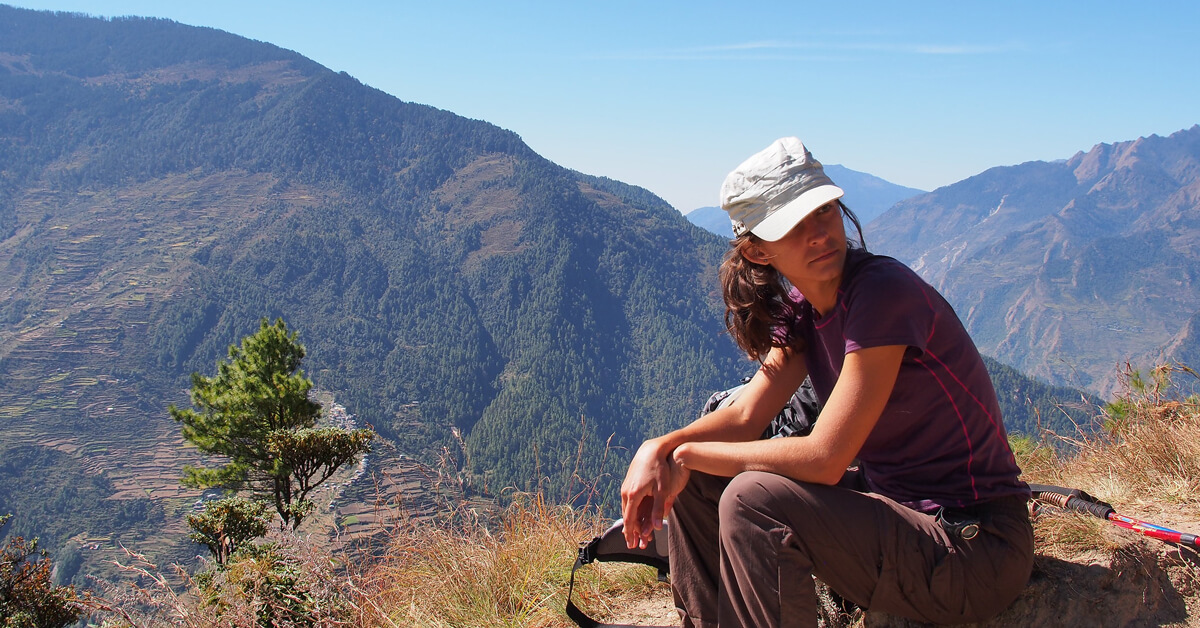
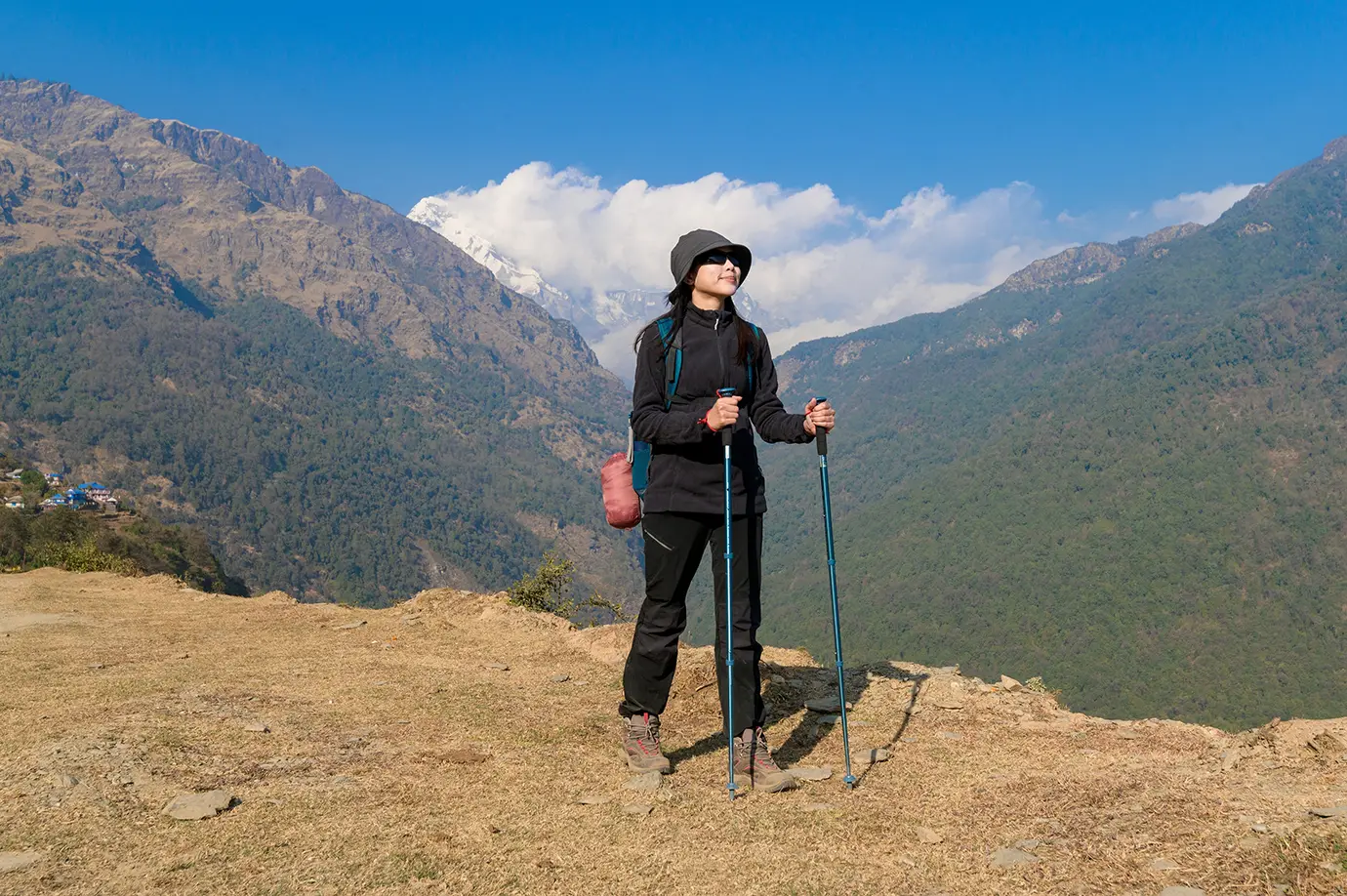
A solo woman enjoys a peaceful trekking experience with mountain views in Nepal
Best Time for Solo Trekking in Nepal
Stable weather matters especially for solo travelers. Weather delays affect a solo traveler’s logistics more directly than they do a group, where decisions are shared.
Autumn — October to November
Autumn delivers the clearest skies and the most reliable trail conditions of any season. Post-monsoon air clears mountain views and dries most trail surfaces. October and November rank as the most popular trekking months.
Spring — March to May
Spring brings warmer temperatures and strong lower-trail scenery, including rhododendron bloom on forested routes. The weather stays mostly stable except for some afternoon cloud build-up on high routes in May.
Winter — December to February
Winter suits lower-altitude routes like Poon Hill and some Kathmandu Valley trails. High passes close on routes like the Annapurna Circuit. Nights above 3,000 meters get very cold.
Monsoon — June to September
Monsoon brings heavy rain to most of Nepal. Rain-shadow areas like Upper Mustang stay drier and offer a viable summer option for prepared solo trekkers. Most other routes are plagued by leeches, wet trails, and limited visibility.
Packing Tips for Solo Trekkers in Nepal
Solo travelers carry their own daypack and manage their own gear. Traveling light works strongly in your favor.
Layering system: moisture-wicking base layer, warm fleece or down mid-layer, waterproof windproof outer shell
Footwear: broken-in hiking boots tested before departure — never start a trek in brand-new boots
Power bank: 10,000 mAh minimum for multi-day treks where charging is limited
Water purification: tablets or a lightweight filter plus two 1-liter reusable bottles
First aid: blister plasters, pain relief, altitude medication if prescribed, oral rehydration salts
Documents: original passport, all permit copies, insurance details, and emergency contacts in a waterproof zip bag
Navigation: phone with offline maps downloaded before departure, plus a printed route overview
Cash: Nepali rupees covering 3 to 4 extra days beyond your planned budget
Snacks: energy bars, nuts, and electrolyte sachets for days when the tea house timing does not suit your pace
Why Booking Through a Registered Trekking Company Still Makes Sense
Solo trekking in Nepal works much better when organized through a registered company. Not because the company removes the solo experience, but because it handles the parts that solo travelers cannot easily manage on their own.
Current route information verified against local conditions, not outdated online sources
Licensed guide arrangement matched to your experience level and preferred trail style
Full permit processing for TIMS, national park entry, and restricted-area permits where applicable
Airport transfer and Kathmandu logistics handled before and after the trek
Weather monitoring and domestic flight backup for routes starting with a mountain flight
Emergency coordination and helicopter rescue communication if a medical situation develops
Honest route advice based on your fitness level, solo travel experience, and season of travel
Confidence for first-time solo Himalayan trekkers who want support without losing personal freedom
The private solo trek through a registered company gives you one client, one guide, your route, and your pace. The personal nature of the experience stays fully intact. The compliance, logistics, and safety support have improved significantly.
FAQs About Solo Trekking in Nepal
Q: Is solo trekking in Nepal allowed now?
A: On most major listed trekking routes, fully independent trekking without a licensed guide no longer follows the official rule under the 2023 NTB revision. Solo travelers can still trek as one private client with a guide. That arrangement remains both compliant and practical.
Q: Do I need a guide for Everest Base Camp?
A: Everest Base Camp sits in the Everest Region, which NTB lists under the routes covered by the guide and agency-issued TIMS card requirement. A licensed guide is required under the current official rule.
Q: Can I still trek as one person in Nepal?
A: Yes. Trekking as a solo traveler remains fully available. The rule covers how you organize the trek, not how many clients join it. A solo traveler booking a private guided trek stays entirely within the official framework.
Q: What is the difference between solo trekking and a private guided trek?
A: Solo trekking in the older sense meant one person with no guide or company support. A private guided trek means one traveler with a licensed guide arranged through a registered agency. Today, the private guided solo trek is the standard recommended option for independent travelers.
Q: Is Nepal safe for solo female trekkers?
A: Yes, on popular routes with a licensed guide from a registered agency. Many solo women trek in Nepal annually with positive results. Choose a verified agency, book a reviewed guide, stay in established tea houses, and keep your communication plan active throughout.
Q: How much does solo trekking in Nepal cost now?
A: A private solo trek costs more per person than a group trek because guide and service fees cover one person only. Budget routes like Poon Hill run USD 500 to USD 800 for 5 days. Everest Base Camp with a private guide typically runs USD 1,400 to USD 2,200 for 12 days all-in.
Q: What is a porter-guide?
A: A porter-guide carries luggage and provides basic trail navigation support. Porter-guides suit solo travelers who want light assistance without full guiding throughout the day. They do not replace a licensed guide on routes where the official rule specifically requires one.
Q: Can I get trekking permits on my own?
A: National park and conservation area permits can be obtained at the Tourist Service Center in Kathmandu or at some entry gates. TIMS cards for listed routes must now be issued by a registered agency. Restricted-area permits require an application through an authorized agency with the Department of Immigration.
Q: Why should solo trekkers use a registered company?
A: A registered company provides current route information, licensed guide arrangement, full permit processing, local logistics, emergency coordination, and safety support. Solo travelers get the personal experience they want, with safer, more reliable planning behind it.
Final Thoughts on Solo Trekking in Nepal
Nepal works very well for solo travelers. The trails, the tea houses, and the mountain culture all suit someone traveling alone at their own pace and with a private itinerary.
But the old idea of fully independent trekking — no guide, no agency, no support — no longer fits the official rule on most major Himalayan routes. Many solo travelers today choose private guided treks. One traveler, one guide, one route. The experience stays personal. The planning stays compliant.
Solo trekking in Nepal in 2026 and 2027 means planning smart rather than just traveling alone. Book through a registered company that knows the current rules, handles the permits correctly, and arranges a guide who fits your trekking style.
The best solo treks in Nepal reward preparation. Use this guide as a starting point, and connect with a registered agency in Kathmandu before your trip. A well-planned solo trek gives you everything Nepal’s trails offer — without unnecessary risk and without rule-related surprises at a checkpoint two days from the nearest town.
Nepal is not just a market for tourist goods. Many of the crafts on sale here connect to real working traditions. Thangka painters often train for years. Metalwork from Patan follows methods passed down through Newari cartisans. Pashmina weavers in Kathmandu work with techniques rooted in Himalayan textile culture.
Buying in Nepal carries the chance to support local artisans, women-led cooperatives, and small family workshops. Fair trade stores and social enterprises give shoppers a direct way to invest in communities rather than large supply chains.
Focus on quality, cultural meaning, and the story behind the item. A well-made singing bowl or a hand-painted thangka tells you something about the place you visited. A machine-made replica does not.
Best Souvenirs to Buy in Nepal
Pashmina Shawls and Scarves
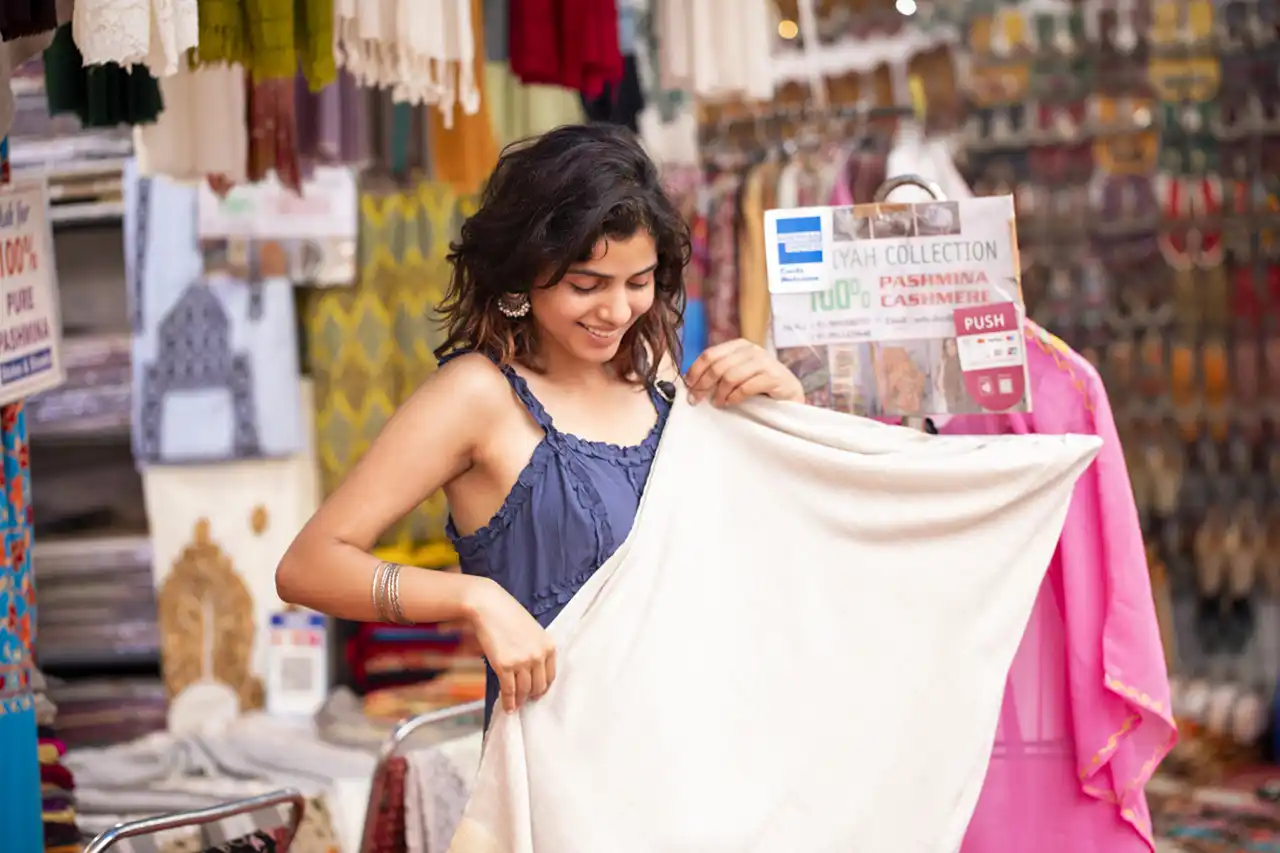
Pashmina stands among the most popular Nepali handicrafts for visitors. Real pashmina is made from fiber from Himalayan goats. Fine pashmina shawls feel noticeably soft and lightweight against the skin.
The market includes a wide range: genuine pashmina, wool-pashmina blends, and acrylic imitations. Price, fiber content, and seller transparency help separate them. A trusted shop explains the fiber content clearly and does not avoid the question when you ask.
A pashmina suit is almost perfect for every traveler on your gift list. Shawls work for women, men, and older recipients. Scarves travel easily in a carry-on bag. Buy from stores that display fiber content labels and explain their sourcing.
A shopper checks the texture of a pashmina shawl while browsing vibrant textiles in a local market.
Singing Bowls
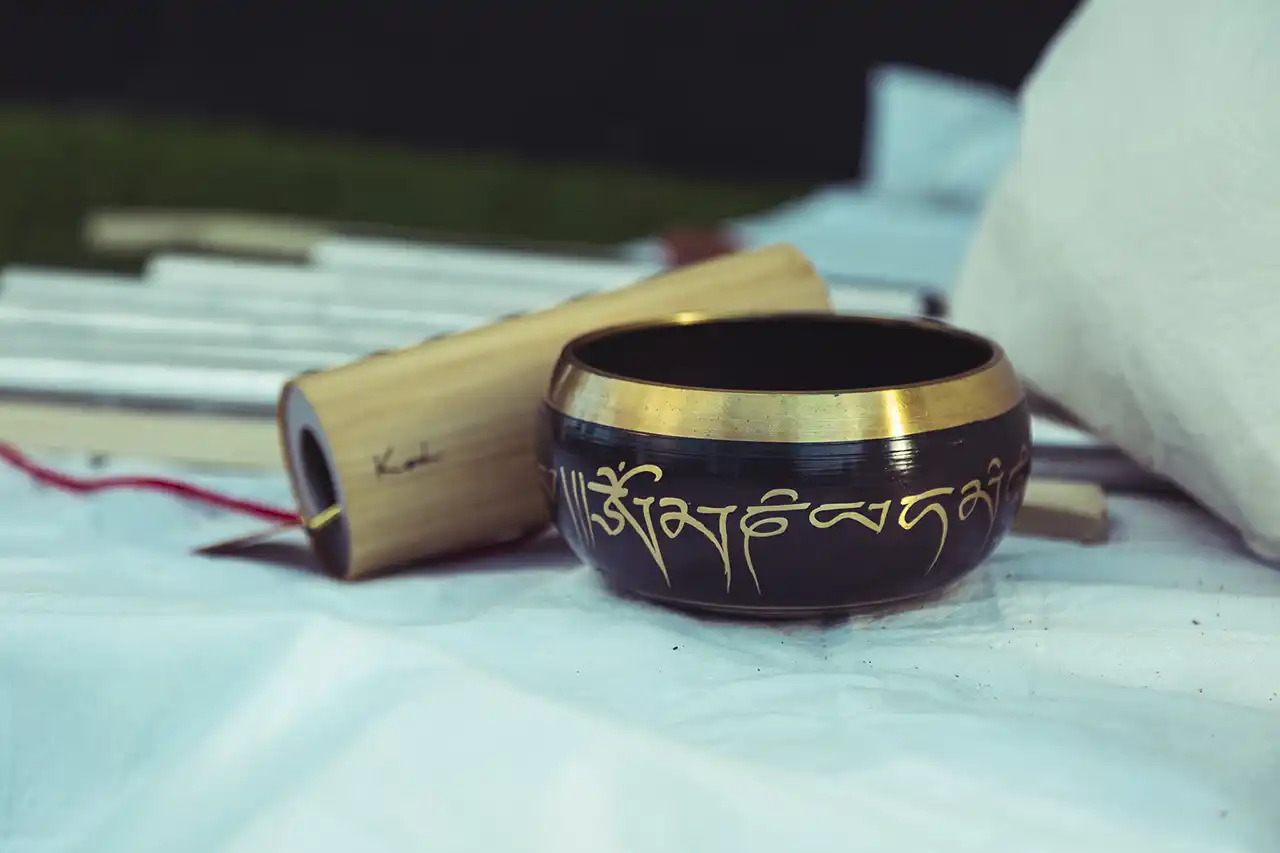
Singing bowls hold decorative, spiritual, and meditation value. Kathmandu and Boudhanath carry the widest selection, from small palm-sized bowls to large ones used in sound meditation sessions.
Handmade bowls produce a richer, more sustained tone than machine-pressed versions. Test the sound before buying. Strike the bowl gently and listen. A good bowl sustains a clear, even tone without metallic rattling.
Smaller bowls pack easily in a daypack. Larger ones need careful wrapping before travel. Singing bowls suit spiritual travelers, meditation practitioners, and anyone who appreciates handmade objects.
Thangka paintings are part of a sacred Buddhist art tradition. Artists paint deities, mandalas, and spiritual scenes on cotton or silk canvas. Hand-painted thangkas take weeks or months to complete. Printed versions cost far less but lack the same craft value.
Quality shows in the detail, color depth, and precision of the symbolism. A well-painted thangka has clean lines, fine layering, and no smearing at the edges. Ask the seller directly whether the piece was painted by hand.
Thangkas suit art lovers, spiritual buyers, and travelers who want to bring home something with genuine cultural depth. They need careful tube packing for travel.
A traditional singing bowl used for meditation and sound healing, displayed with its wooden striker.
Lokta Paper Products
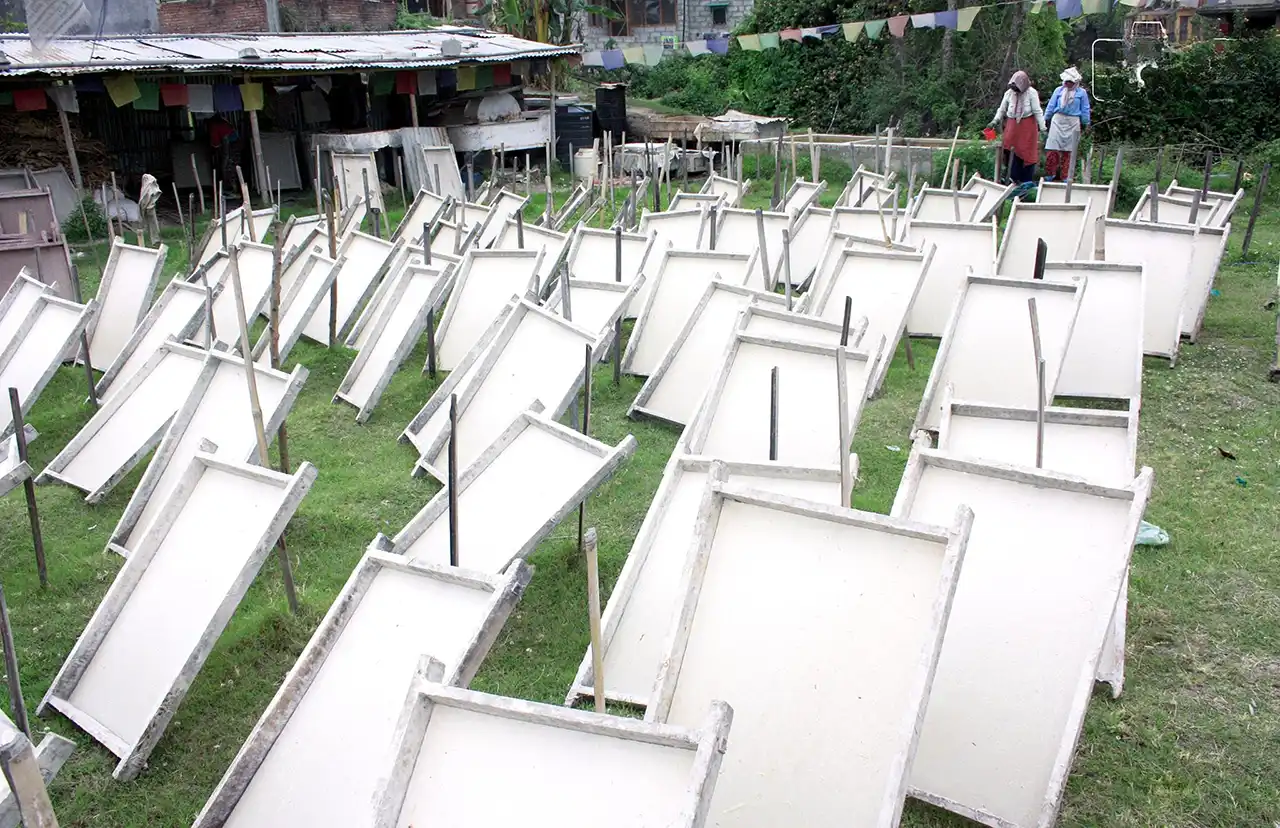
Lokta paper comes from the bark of the Himalayan daphne shrub. Artisans make it entirely by hand. The result feels textured, durable, and unlike factory paper.
Lokta products include journals, notebooks, greeting cards, lampshades, and gift wrapping. They travel easily, cost relatively little, and suit almost every budget range.
Lokta paper products rank among the safest, most practical, and most thoughtful gifts to bring home from Nepal. Budget travelers and light packers both find this category easy to work with.
Fresh lokta paper sheets dry naturally in the open air at a local workshop in Nepal.
Handmade Jewelry and Beads
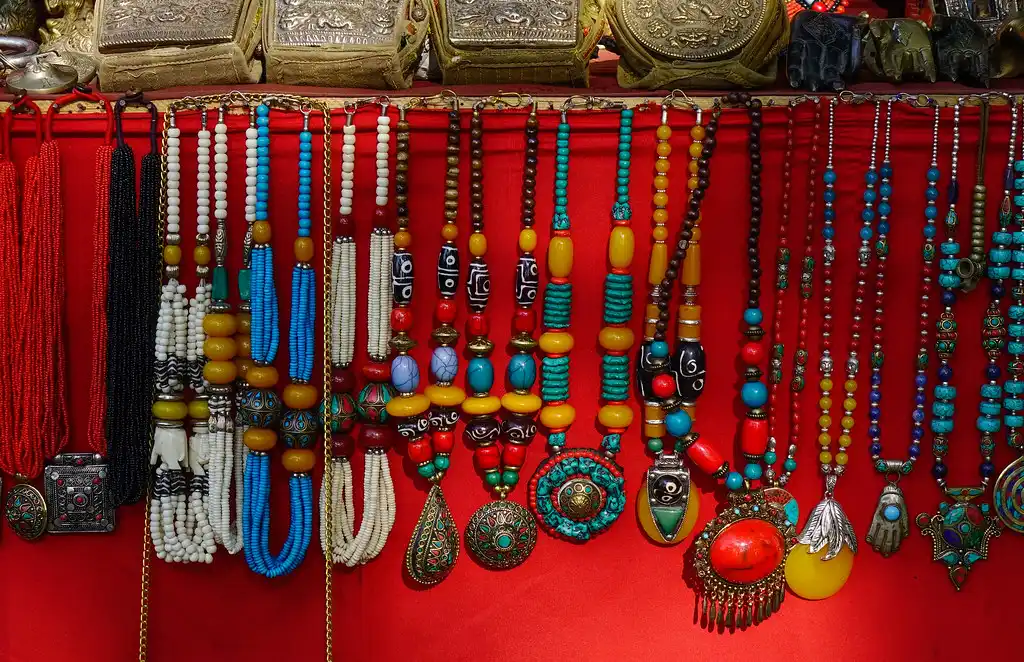
Nepal produces a wide range of handmade jewelry. Silver pieces, malas, turquoise-style beads, coral-style beads, and Tibetan-influenced designs fill markets from Thamel to Boudhanath.
Many pieces carry spiritual meaning in addition to decorative value. Malas serve as prayer and meditation tools. Silver jewelry from established Patan workshops uses traditional Newari silverwork techniques.
Ask about materials before buying. Some pieces use genuine silver. Others use silver-colored alloys. A seller who knows the product clearly explains what the piece contains and where it was made.
A vibrant collection of handcrafted necklaces featuring beads, stones, and traditional designs.
Prayer Flags, Incense, and Small Spiritual Items
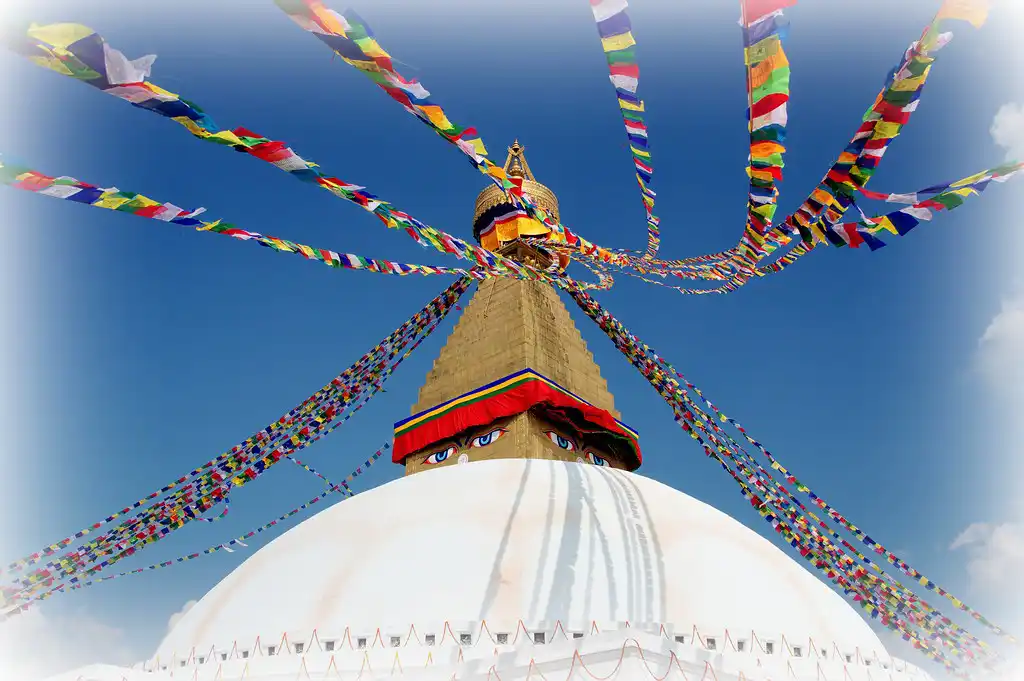
Prayer flags and incense make excellent small gifts. They travel easily, cost very little, and carry real cultural significance in Tibetan Buddhist practice.
Buy these respectfully. Prayer flags carry spiritual meaning beyond decoration. Choose them as meaningful gifts rather than novelty items. Tibetan incense from Boudhanath shops uses traditional herb and resin recipes. Many visitors find it far richer and more complex than commercial incense.
Prayer flags spread from the top of Boudhanath Stupa, carrying prayers across the sky.
Wood Carvings and Metal Crafts
Nepal’s Newari artisans produce masks, deity statues, carved wooden panels, temple bells, and decorative metal objects. Bhaktapur and Patan carry the strongest selections of traditional woodwork and metalwork, respectively.
These items suit art lovers and home decor buyers who want something with real character. They need careful packing. Wrap fragile pieces in clothes and place them at the center of your bag, away from the corners.
Buy directly from workshop areas in Patan and Bhaktapur for better quality and more direct artisan connection than generic tourist shops in Thamel.
Nepali Tea, Coffee, Spices, and Herbs
Tea from the Ilam region in eastern Nepal rivals Darjeeling in quality. Himalayan herbs, Timur pepper, black cardamom, and locally blended teas make practical, lightweight, and genuinely useful gifts.
Food gifts travel well and suit almost any recipient. Tea and spices are cleared through customs in most countries when declared. Check your destination’s customs rules before buying large quantities.
Asan Bazaar in old Kathmandu sells tea, spices, and herbs at lower prices than those in Thamel. Local grocery shops near Thamel also carry good selections.
Khukuri
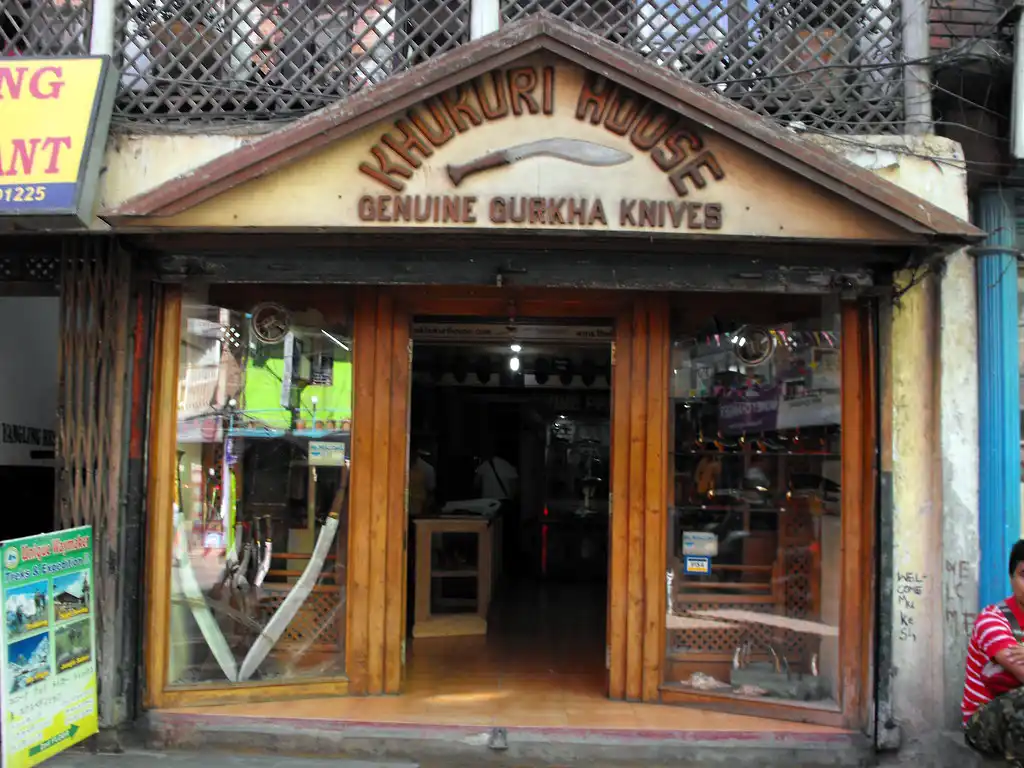
The khukuri knife holds iconic status as a Nepali symbol. Military, decorative, and collector versions all appear in markets across Kathmandu.
Check your airline’s carry-on and checked luggage rules before buying. Most airlines allow bladed objects only in checked baggage. Some countries restrict the port of bladed items entirely. Research your destination’s customs rules before purchasing any khukuri.
Decorative versions without a functional edge are easier to travel with than sharp working knives. A khukuri suits serious collectors and Nepal enthusiasts rather than general gift buyers.
A traditional shop in Kathmandu specializing in authentic Gurkha khukuri knives.
Regional Crafts and Local Art
Mithila art from Janakpur features bold geometric patterns and bright colors rooted in the Madhesi community’s artistic tradition. Pottery and carved window frames from Bhaktapur carry the character of one of Nepal’s most intact heritage towns.
Metal crafts from Patan’s artisan quarter reflect a metalworking tradition that produced work for temples and palaces across the valley. Buying regional crafts connects you to specific communities rather than generic Kathmandu tourist production.
Best Places for Souvenir Shopping in Nepal
Thamel, Kathmandu
Thamel offers the widest variety of shops in Nepal. Hundreds of shops sell pashmina, singing bowls, thangkas, clothing, trekking gear, jewelry, and crafts within a walkable area.
Thamel suits travelers who want one-stop shopping convenience. Prices run higher in tourist-heavy zones. Quality varies widely between shops. Compare items across at least three or four stores before buying anything.
Asan and Old Bazaar Areas
Asan Bazaar in old Kathmandu sells spices, tea, beads, daily goods, and local produce at more local prices. The atmosphere feels less polished than Thamel but more genuinely Nepali.
Asan suits travelers looking for tea, spices, incense, and daily goods at realistic prices. Go on a weekday morning for the best selection and least crowded lanes.
Patan
Patan carries a stronger artistic identity than Thamel. The city around Durbar Square houses metalwork shops, fine craft galleries, and workshops where artisans still produce traditional pieces.
Patan suits buyers looking for quality metalwork, silver jewelry, Buddhist art, and heritage craft items. Shopping here takes more time but delivers stronger quality and a more meaningful connection to the craft tradition.
Bhaktapur
Bhaktapur sells pottery, carved wooden objects, traditional masks, reproductions of peacock-window designs, and heritage-style crafts within a well-preserved medieval city atmosphere.
The city suits culture-focused travelers who want crafts rooted in a specific place and heritage. Pottery from Bhaktapur’s potters’ square comes from workshops that have produced ceramic goods for centuries.
Boudhanath Area
Boudhanath is home to one of the largest Buddhist stupas in Asia. The shops and stalls here focus on Tibetan Buddhist items: singing bowls, malas, prayer wheels, thangkas, incense, and jewelry with Tibetan design influences.
Boudhanath suits spiritual travelers and anyone looking for Tibetan Buddhist souvenirs. The shopping atmosphere feels calmer and more focused than Thamel.
Pokhara
Pokhara offers a relaxed shopping environment suited to travelers who prefer less chaotic markets than Kathmandu. Lakeside shopping covers clothing, jewelry, pashmina, tea, and decorative items.
Pokhara works well for casual gift shopping and for travelers who want to shop after a trek. Prices and selection match Thamel broadly, though there are fewer specialty art shops.
Fair Trade and Fixed-Price Stores
Fair trade shops and social enterprises in Kathmandu sell handmade items at fixed prices. No bargaining applies. Prices cover fair artisan wages and verified product quality.
Mahaguthi, Sana Hastakala, and similar organizations run stores with clearly labeled, authentic products. These shops suit ethically minded buyers, first-time shoppers unsure of quality, and travelers who prefer clear pricing over bargaining.
How to Spot Authentic Souvenirs in Nepal
Authentic souvenirs reward careful attention. Ask direct questions and compare across several shops before buying anything above a small amount.
Ask what material the product uses and where it was made
Check stitching, weave detail, paint quality, and finish on all sides of the item
Compare the same product type across three or four different shops
Avoid sellers who pressure you to buy within the first minute of conversation
Be careful with labels like ‘real pashmina,’ ‘antique,’ or ‘100% handmade’ without further explanation
Buy higher-value items like thangkas, metal crafts, and jewelry from shops that explain the product clearly and answer questions openly
Weight and texture matter for metal items: heavier, denser pieces often indicate higher material quality
A seller who knows the product well welcomes your questions. A seller who deflects or rushes you past quality checks usually has something to hide about the item.
How Much Do Souvenirs Cost in Nepal?
Prices in Nepal vary by area, seller type, material quality, and whether you bargain. Use these ranges as a planning guide, not a guarantee.
Nepali tea gift boxes and premium spice collections
$30 to $100 — Quality Craft Items
Pure pashmina shawls from trusted stores
Handmade singing bowls with good tonal quality
Small to medium-sized thangka paintings (machine-printed on quality canvas)
Silver jewelry from established Patan workshops
Carved wooden objects and smaller metal statues
Above $100 — Premium Art and Collectibles
Hand-painted thangkas by trained artists
Large bronze or copper statues
High-grade pure pashmina with certification
Large hand-hammered singing bowls
Antique-style metalwork from reputable dealers
Fair trade and fixed-price shops remove the uncertainty around pricing. Tourist markets in Thamel allow bargaining. Old bazaar areas like Asan often have more local pricing without heavy tourist markup.
Smart Shopping Tips for Tourists in Nepal
Compare prices across three or four shops before buying anything mid-range or above.
Bargain politely in tourist markets — start lower than the asking price and meet in the middle calmly
Do not bargain in fair trade stores or fixed-price shops — sellers set honest prices there
Inspect every item before handing over money: check seams, finish, color, and joints.
Carry cash in Nepali rupees for small shops and market stalls
Ask about card payment fees before swiping: some shops add 3 to 5 percent for cards
Wrap fragile items like thangkas, wooden carvings, and large bowls carefully in clothes inside your bag
Check airline rules before buying a khukuri or any sharp item
Shop in the morning when sellers are fresh and less tired from a full day of negotiations
What to Avoid Buying in Nepal
Some items look appealing in a Kathmandu market but create problems later. Avoid these to shop smarter.
Fake pashmina sold as genuine — acrylic versions feel scratchy after washing and wear out quickly
Machine-made crafts sold as handmade — check for mold lines, identical finishing, and zero variation in color
Very fragile or oversized items, if your luggage space is limited
Antique claims without proper export documentation — Nepal restricts the export of genuine antiques over 100 years old
Wildlife products made from animal materials — Nepal strictly prohibits trade in protected species
Knives and bladed items without checking both the airline rules and your country’s import customs
Anything you buy purely because a seller pressured you into it — walk away and return later if you genuinely want it
Ethical Souvenir Shopping in Nepal
Money spent in local shops, artisan workshops, and fair trade stores reaches Nepali families and communities more directly than it does through large-scale tourist retail chains.
Fair trade organizations in Nepal set wages, verify the sourcing of materials, and often support women-led producer groups. Products from these stores cost slightly more, but the price reflects honest labor and quality materials rather than a tourist premium.
Artisan-made goods carry time, skill, and cultural knowledge in every item. A hand-carved wooden mask from Bhaktapur or a hand-painted thangka from a trained Patan artist represents weeks of dedicated work. Factory replicas do not.
Shop with curiosity and respect. Ask about the maker. Ask about the process. The best souvenir shopping in Nepal connects you to the place you traveled to, not just to a generic market stall.
Best Souvenirs in Nepal by Traveler Type
Best Nepal Souvenirs by Traveler Type
Traveler Type
Best Nepal Souvenirs
Budget traveler
Lokta paper products, small prayer flags, malas, tea, and incense
Couple
Pashmina shawls, silver jewelry, and thangka painting for shared home decor
Art lover
Hand-painted thangka, Patan metalwork, Mithila art print, Bhaktapur carving
Spiritual traveler
Singing bowls, mala beads, prayer flags, Tibetan incense, and small deity statues
Food lover
Ilam tea, Himalayan herbs, Timur pepper, black cardamom, herbal tea blends
Family with children
Lokta paper kits, small painted masks, simple malas, animal-motif wood toys
Light packer
Lokta cards, tea packets, small mala, incense, pashmina scarf
Quick Comparison Table for Souvenir Shopping in Nepal
Best Nepal Souvenirs: Where to Buy, Price Level, and Authenticity Risk
Souvenir
Best Place to Buy
Best For
Easy to Pack
Price Level
Authenticity Risk
Pashmina shawl
Thamel, fair trade stores
Everyone
Yes
Mid to high
High — blends common
Singing bowl
Boudhanath, Thamel
Spiritual travelers
Yes, if small
Low to high
Medium — test sound
Thangka painting
Patan, Thamel galleries
Art and spiritual buyers
With care
Mid to high
High — many printed versions
Lokta paper product
Thamel, Patan
All travelers
Yes
Low to mid
Low — widely genuine
Handmade jewelry
Patan, Boudhanath
Couples, individuals
Yes
Low to high
Medium — check materials
Prayer flags
Boudhanath, Thamel
Spiritual travelers
Yes
Low
Low — widely genuine
Wood carving
Bhaktapur, Patan
Art and decor lovers
With care
Mid to high
Low if bought locally
Nepali tea and spices
Asan, local shops
Food lovers
Yes
Low to mid
Low — widely genuine
Khukuri
Thamel, specialist shops
Collectors
Checked baggage only
Mid to high
Low — widely genuine
Thangka, hand-painted
Patan workshops
Serious art buyers
With care
High
High — ask for artist info
FAQs About Souvenir Shopping in Nepal
Q: What are the best souvenirs to buy in Nepal?
A: Pashmina shawls, singing bowls, thangka paintings, Lokta paper products, handmade jewelry, prayer flags, Nepali tea, and regional crafts from Patan and Bhaktapur rank among the most popular and meaningful choices.
Q: Where is the best place for souvenir shopping in Nepal?
A: Thamel in Kathmandu offers the widest variety. Patan suits metalwork and fine craft. Bhaktapur suits pottery and woodwork. Boudhanath suits Tibetan Buddhist items. Fair trade stores in Kathmandu suit ethically minded shoppers who prefer fixed prices.
Q: Is pashmina in Nepal always real?
A: No. The market includes genuine pashmina, wool-pashmina blends, and acrylic imitations. Buy from shops that clearly explain fiber content and sourcing. Price alone does not guarantee quality.
Q: Can tourists bargain in Nepal?
A: Yes, in most tourist markets like Thamel. Polite bargaining is normal. Do not bargain in fair trade shops or fixed-price stores. Start below the asking price and stay calm throughout.
Q: Are souvenirs cheaper in Kathmandu or Pokhara?
A: Prices stay broadly similar in both cities. Asan Bazaar in Kathmandu and local shops outside tourist zones often offer lower prices than Thamel or Lakeside in Pokhara.
Q: What souvenirs are easy to carry home from Nepal?
A: Lokta paper products, tea, spices, pashmina scarves, small malas, prayer flags, and small singing bowls all travel easily in a carry-on bag. Fragile items such as thangkas and carvings require careful wrapping.
Q: Is it safe to buy a khukuri in Nepal?
A: You may buy one, but check your airline’s rules before packing it. Most airlines require bladed items in checked baggage only. Check the import rules for your destination country for bladed goods before purchasing.
Q: What should tourists avoid buying in Nepal?
A: Avoid fake pashmina, machine-made items sold as handmade, antiques without export documentation, wildlife products, and anything bought only because of seller pressure. Research import rules before buying bladed items.
Q: Are there fixed-price or fair trade shops in Nepal?
A: Yes. Organizations like Mahaguthi and Sana Hastakala operate fair trade shops in Kathmandu with fixed prices and verified artisan products. These shops suit buyers who value quality and transparency over bargaining.
Q: Which handmade products is Nepal famous for?
A: Nepal is well-known for pashmina textiles, thangka painting, Newari metalwork, singing bowls, Lokta paper crafts, wood carving from Bhaktapur, and jewelry and beadwork from across the Kathmandu Valley.
Final Thoughts on Souvenir Shopping in Nepal
The best souvenirs from Nepal are meaningful, well-made, and realistic to carry home. A hand-painted thangka, a genuine pashmina shawl, or a well-tuned singing bowl connects you to Nepal’s actual craft traditions rather than its tourist market.
Kathmandu gives the widest variety. Patan and Bhaktapur offer deeper cultural shopping experiences for buyers who take the time to explore. Boudhanath suits spiritual shoppers. Fair trade stores serve buyers who value honesty and artisan support over the lowest price.
Buy with interest and judgment. Check materials. Ask questions. Compare options. Walk away from pressure. The best souvenir shopping in Nepal rewards patience and curiosity more than it rewards rushed buying in the first shop you enter.
Nepal has been ranked as one of the best countries in the world to travel destination for 2017, according to Lonely Planet’s annual Best in Travel list.
Publishing the travel listing for 201, the world’s popular travel guide has said that Nepal is the freshest vacation spot for all budget vacationers. At the same time, Nepal came out in the 5th vicinity among the ten nations on the list.
“Nepal is the arena’s number one destination in terms of provider and cost,” the excellent travel destination for 2017 listing showcases the top 10 countries, towns, areas, and best value destinations for next year.
The ‘travel bible’ notes that natural failures can’t even maintain Nepal down for long.
“The 2015 earthquakes caused devastation, but what is most striking from a traveler’s perspective is not how much was lost but how much remains.”
It introduces Landmark temples that crumbled. However, others got through with just the peculiar tile out of place, and whole swathes of the country escaped severe harm, including most of the popular trekking trails.
Consistent with the leading travel manual brand, Nepal has all of the skills required to restore monuments and infrastructure, but what it does want is earnings.
“By visiting Nepal now and supporting local culture and people, you can help a nation rebuild and bounce back even stronger.”
Nepal is bouncing lower back from earthquakes and a gasoline strike that made getting spherical in the state challenging. “It remains a fabulous choice for budget-conscious travelers, who can access the best of its world-famous trekking routes and underrated wildlife for well south of US$50 a day,” it describes.
“The number of visitors is slowly recovering, and the time is ripe to get back to Nepal’s mighty mountains; wherever you go, you’ll receive a warm welcome, as your visit brings much-needed income to communities getting back on their feet.”
Lonely Planet’s listing positively inspires the stakeholders because the country has already announced to mark 2017 and 2018 as ‘Nepal visit years.’ As can be seen, millions of clients around the globe rely on Lonely Planet to assist them in a tour, Lonely Planet stated.
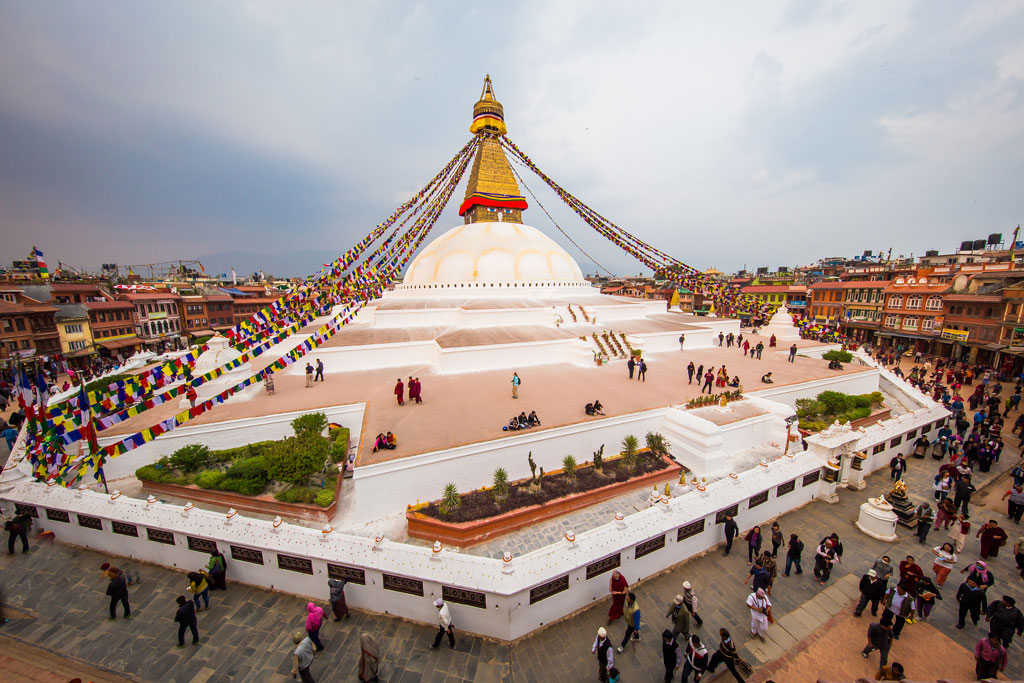
The reconstruction of the Boudhanath Stupa at Boudha has been finished, turning into the first heritage site of the country to be reconstructed in a brief period. However, the remaking of other heritage destinations harmed by the April 25 quake of a year ago has recently started or is in the underlying stage. Boudhanath Area Development Committee (BADC) finished the remaking undertaking within 17 months. The reconstruction of the Boudhanath Stupa started in June 2015 and was finished in November 2016.
Boudhanath Stupa – UNESCO World Heritage Site
The exertion of the board of trustees and contributors, and additionally, Buddha supporters finished the work rapidly. The reconstruction of the Boudhanath Stupa was completed for Rs. 230 million. The reconstructing assignment of the Stupa was begun from the arch territory. The apex, umbrella, lotus, thirteen stages, two eyes, nose image, and Harmika segments of the Stupa were reconstructed. A sum of 31 kilos of gold was utilized in the thirteen stages, known as Trayodas Bhawan. Of the aggregate sum of gold utilized, 26 kilograms were given by Situpa Rimpoche of Palpung Monastery of Kaangada, India. Buddha supporters contributed the rest of the measure of gold alongside money to finish the remaking undertaking.
Reconstruction of the Boudhanath Stupa
At the point when the modifying works of the Stupa started, the neighborhood individuals gave volunteer work worth about Rs. 6 million. The Boudha Ghyan Guthi, neighborhood Youth Club and Buddha adherents assumed a fundamental part in supporting the culmination of the development errand. When I got some information about the foundation of the Boudhanath Stupa, the correct name of the developer or the date of its establishment was unknown. There were numerous legends behind Stupa’s development. Along with the exhuming procedure, no script or report identified with the date of Stupa’s development was found. Nonetheless, 19 bolted boxes were found from the zenith range, and they have been kept in a similar place in a similar condition in the wake of finishing the development work.
The mystery inside the containers couldn’t be revealed as the Boudha devotees protested opening the bolted boxes. The Boudhanath Stupa is known as “Khasi” in Nepal Bhasa and “Jyarung Khashor” in the Tamang and Tibetan dialects. It is one of the seven World Heritage Sites of the Kathmandu Valley and a remarkable tourist destination. Boudhanath is the biggest Stupa in Nepal and the holiest Tibetan Buddhist sanctuary outside Tibet, making it the focal point of Tibetan culture in the capital. Be that as it may, the sightseer has not been permitted to enter the Boudhanath Stupa after the staggering seismic tremor after a formal program opened to the general population on November 22.