

Last updated: April 2026
A practical guide for independent travelers, first-time Himalayan hikers, and solo female trekkers planning a Nepal trek.
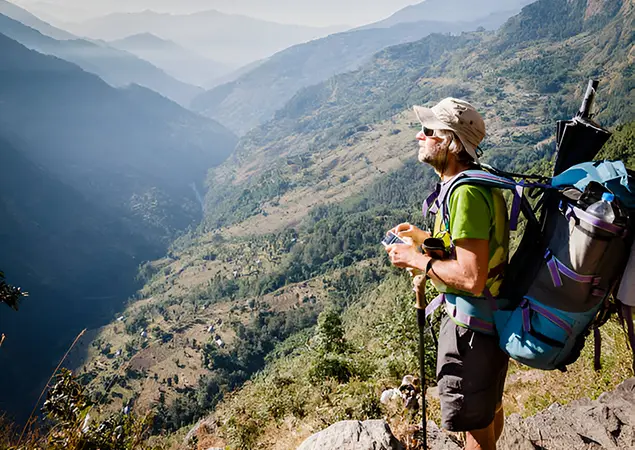
Nepal holds a strong place on almost every serious trekker’s list. The trails, the mountain views, and the cultural richness attract travelers from every corner of the world every year.
Many of those travelers want to go on their own. Solo trekking in Nepal has always carried a particular appeal: setting your own pace, choosing your own stops, and experiencing the trail without a fixed group schedule.
But the rules around solo trekking in Nepal changed in 2023. What “solo trekking” means in practice changed with them. Many major routes now require a licensed guide and an agency-issued TIMS card. Understanding what the rule says — and what it means for your specific route — is the first step in planning a smart and safe solo trek.
| Quick Answer: Can You Still Go Solo Trekking in Nepal? On most major trekking routes, fully independent trekking without a licensed guide is no longer permitted under official rules. But solo travelers can still trek as one private client with a guide. That remains both the most practical and the safest option under the current framework. Solo trekking in Nepal still works — it just looks different from what it looked like before 2023. |
What Does Solo Trekking in Nepal Mean Today?
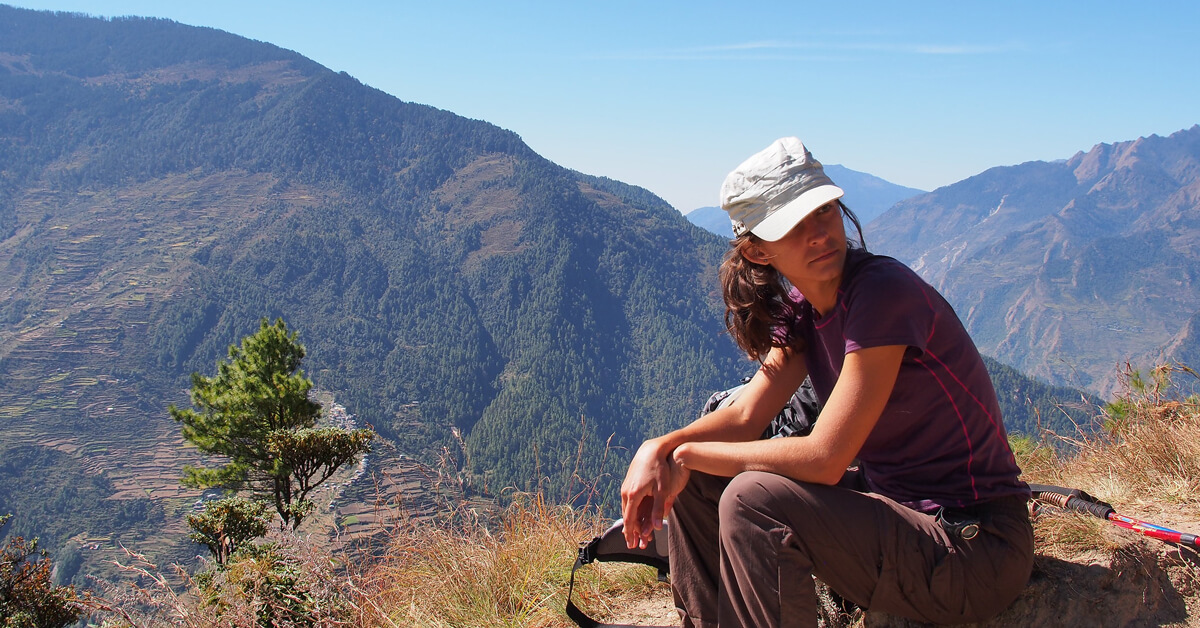
The word “solo” creates confusion because it describes the traveler, not the trek setup. Understanding the difference saves a lot of planning headaches.
A solo traveler means one person making the trip. An independent trekker is someone trekking without a guide or any company support. A private guided solo traveler means one person trekking with a guide booked through a registered agency.
Most solo travelers today fall into the third group. They trek alone as an individual experience. But they travel with a licensed guide who handles route logistics, permits, and safety communication. The trail still feels personal. The planning stays compliant.
- Solo traveler: one private client on a customized trek
- Independent trekker: no guide, no agency — not compliant on most listed routes under the 2023 rule
- Group-joined solo traveler: one traveler joining a shared group departure
- Private guided solo traveler: one traveler with a licensed guide — the most practical current option
What the Official Nepal Trekking Rule Says
Nepal Tourism Board (NTB) revised the TIMS provision effective March 31, 2023. Under this revision, trekkers on many major listed routes must travel with a licensed trekking guide. The TIMS card must come through a registered trekking agency, not through an independent self-application.
The listed routes cover multiple major trekking regions. They include Everest Region routes, Langtang Region routes, Helambu and Gosaikunda routes, Annapurna-linked routes, Manaslu-linked routes, Upper Mustang, Upper Dolpo, and other connected trekking corridors.
Trekkers should always verify their specific route against the current NTB list before departure. The official list holds authority. Advice from old travel blogs or travel forums may reflect older rules that no longer apply.
Official Rule Snapshot by Region
| Region | Example Routes | Guide Required? | TIMS Through Agency? |
|---|---|---|---|
| Everest Region | Everest Base Camp, Gokyo, Cho La Pass | Yes — under 2023 rule | Yes |
| Langtang Region | Langtang Valley, Gosaikunda, Helambu | Yes | Yes |
| Annapurna Region | ABC, Annapurna Circuit, Poon Hill, Mardi Himal | Yes | Yes |
| Manaslu Region | Manaslu Circuit, Tsum Valley | Yes + restricted permit | Yes |
| Upper Mustang | Lo Manthang route | Yes + restricted permit | Yes |
| Upper Dolpo | Upper Dolpo Circuit | Yes + restricted permit | Yes |
All restricted-area routes also require a special trekking permit from the Department of Immigration. Only applications for restricted-area permits are denied. A minimum group of 2 trekkers and a licensed guide is required for all restricted zones.
Why Travelers Still Need Current Local Information
Official rules and on-ground travel experience do not always feel identical. Local administration, checkpoint staffing, route popularity, and season can all affect what travelers encounter on the trail.
None of that changes the official rule. The 2023 NTB provision remains active. Travelers who plan around rumors, outdated blog posts, or assumptions about enforcement take unnecessary risks. Route conditions, permit procedures, and checkpoint practices do change.
A registered trekking company provides current, verified information before your trek begins. The company handles permit paperwork, guide registration, and route logistics based on current requirements—not what applied two years ago.
Solo trekking in Nepal works best when supported by a company that stays up to date on local rules and trail conditions. Plan with real information, not guesswork.
TIMS, Trekking Permits, and Restricted Areas
TIMS stands for Trekkers’ Information Management System. The system tracks trekker movements across Nepal’s major trail networks. It links each trekker to a registered guide and a licensed agency before the trek starts.
Under the current system, a registered agency issues the TIMS card after registering the guide and the trekker’s route details. The card now generates as an eCard with a QR code. Current TIMS fees: NPR 1,000 for SAARC-country visitors and NPR 2,000 for all other nationalities. Verify these on the NTB website before booking because NTB updates fees after official department verification.
National park and conservation area entry permits add a second cost. Most major protected areas charge NPR 3,000 for foreign trekkers. The Shivapuri Nagarjun National Park charges NPR 1,000.
Restricted areas like Upper Mustang, Upper Dolpo, and the Manaslu Restricted Section require a third permit layer from the Department of Immigration. Only authorized trekking agencies apply for these permits. Individual travelers cannot apply on their own.
For solo travelers, this permit structure makes a registered company the practical path. An agency efficiently handles all three permit layers and ensures the documentation remains accurate at every checkpoint along your route.
Best Treks for Solo Travelers: Booking a Private Guide
Every route below works well as a private solo trek. Each section notes duration, altitude, difficulty, and why the trail suits a traveler going alone.
Everest Base Camp
Duration: 12 to 16 days. Max altitude: 5,364 meters. Difficulty: moderate to challenging.
Everest Base Camp delivers the most iconic Himalayan scenery in Nepal. The trail passes through Sherpa villages, high-altitude monasteries, and dramatic glacial terrain. Tea house accommodation runs the full length of the route.
Solo travelers enjoy the personal rhythm a private guided trek offers. You set the pace. You choose rest days. The guide handles altitude monitoring, local communication, and checkpoint documentation. Best season: October to November and March to May.
Annapurna Base Camp
Duration: 7 to 12 days. Max altitude: 4,130 meters. Difficulty: moderate.
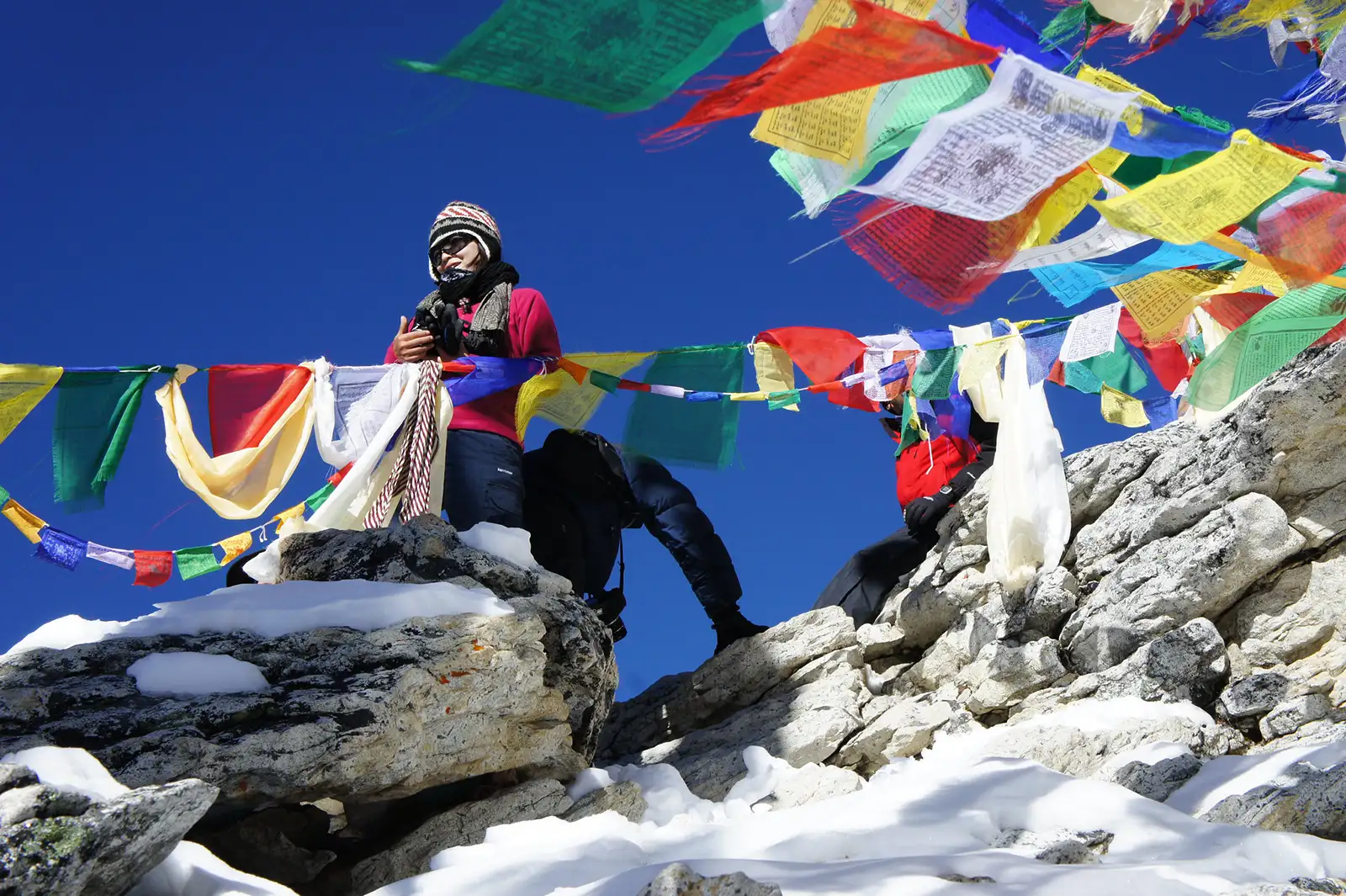
Annapurna Base Camp sits inside a natural amphitheater surrounded by some of Nepal’s most dramatic peaks. The trail passes terraced farmland, rhododendron forest, and mountain villages before rising to the high camp.
The route suits first-time solo trekkers. The altitude stays manageable, and the trail runs clearly. Tea houses are located along the entire route. Best season: March to May and October to November.
Ghorepani Poon Hill
Duration: 4 to 6 days. Max altitude: 3,210 meters. Difficulty: easy to moderate.
Poon Hill delivers one of Nepal’s most celebrated sunrise mountain views. The trail through Ghorepani suits travelers who want their first Himalayan experience without committing to a multi-week route.
Solo trekkers often choose Poon Hill as an introduction to Nepal trekking. The duration stays short, the altitude stays safe, and the trail runs through some of Nepal’s most scenic hill country. Best season: October to April.
Mardi Himal
Duration: 5 to 8 days. Max altitude: 4,500 meters. Difficulty: moderate.
Mardi Himal sits inside the Annapurna Conservation Area and sees fewer trekkers than the main Annapurna routes. The high camp views face directly toward Machapuchare and the Annapurna massif.
Solo travelers who want solitude over a crowd prefer Mardi Himal. The trail does not attract the same volume as Everest or ABC, which makes the private guided solo experience feel especially personal. Best season: October to November and March to May.
Langtang Valley
Duration: 7 to 10 days. Max altitude: 3,870 meters to an optional 4,984 meters at Tserko Ri. Difficulty: moderate.
Langtang lies close to Kathmandu and offers a strong combination of Tamang culture, alpine scenery, and yak-pasture terrain. The valley trail suits solo trekkers who prefer cultural depth alongside mountain views.
The route suits both first-timers and experienced solo travelers. Accommodation runs through the full valley. Best season: October to November and March to May.
Gokyo Valley
Duration: 12 to 15 days. Max altitude: 5,360 meters at Gokyo Ri. Difficulty: challenging.
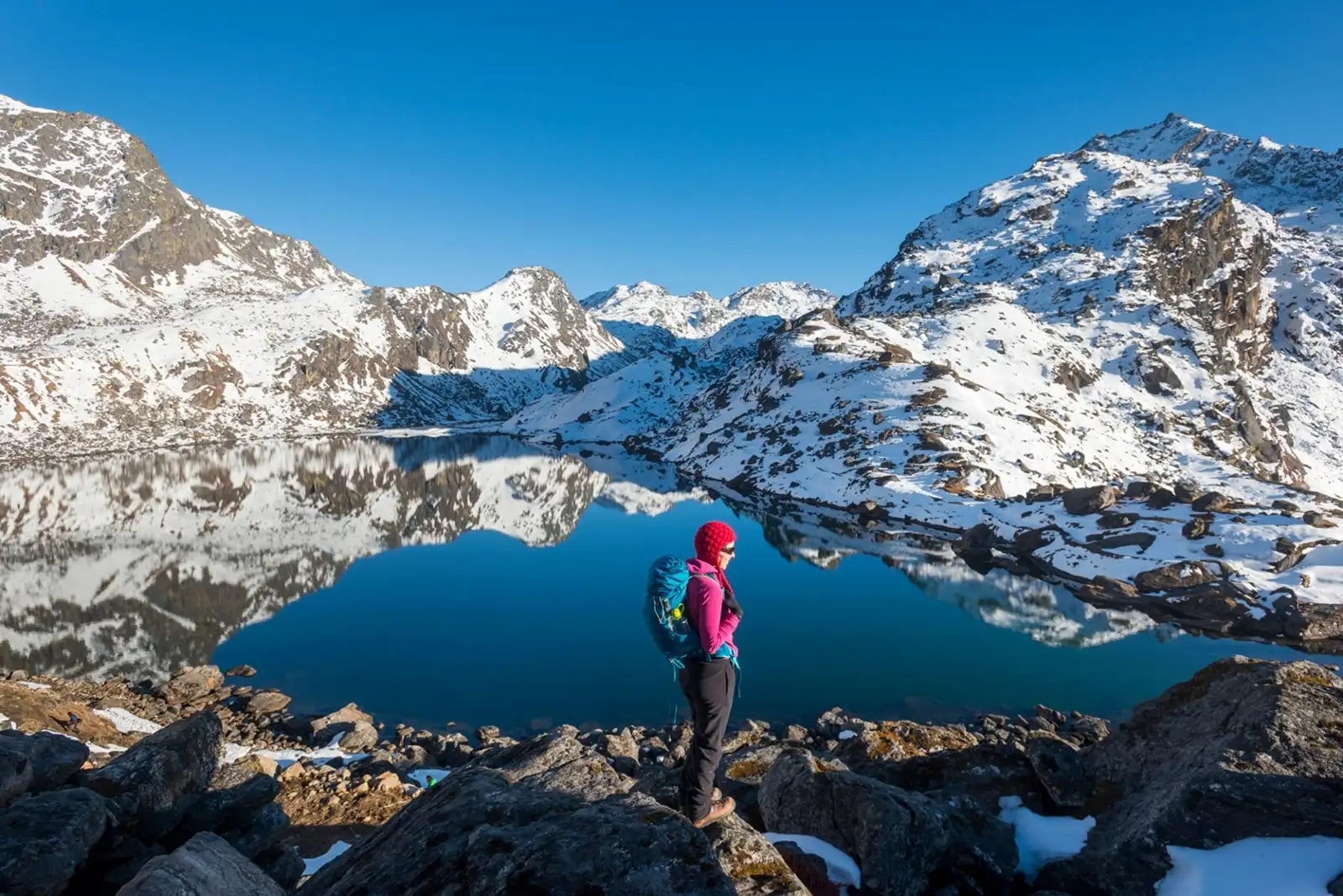
Gokyo offers a quieter alternative to the main Everest Base Camp trail. The route passes three glacial lakes and the Gokyo Ri viewpoint, with arguably the best panoramic mountain views in the Khumbu region.
Solo travelers with strong fitness and previous high-altitude experience find Gokyo deeply rewarding. The guide handles altitude safety monitoring, which matters especially above 4,500 meters. Best season: October to November and March to May.
Upper Mustang
Duration: 10 to 14 days. Max altitude: approximately 3,840 meters at Lo Manthang. Difficulty: moderate.
Upper Mustang sits in a Himalayan rain shadow. The landscape changes completely from standard Nepal trekking — ancient cave monasteries, walled villages, and Tibetan-influenced culture define the experience.
Upper Mustang requires a restricted-area permit (USD 50 per person per day), an ACAP permit, a TIMS card, a minimum group of two trekkers, and a licensed guide. Experienced solo travelers who arrange permits properly find it unlike any other Nepal trekking experience. Best season: May to October.
Quick Trek Comparison for Solo Travelers
| Trek | Duration | Difficulty | Max Altitude | Best Season | Guide Rule | First-Timer Fit |
|---|---|---|---|---|---|---|
| Everest Base Camp | 12–16 days | Moderate–hard | 5,364 m | Oct–Nov, Mar–May | Yes | With experience |
| Annapurna Base Camp | 7–12 days | Moderate | 4,130 m | Mar–May, Oct–Nov | Yes | Yes |
| Ghorepani Poon Hill | 4–6 days | Easy–moderate | 3,210 m | Oct–Apr | Yes | Yes — ideal |
| Mardi Himal | 5–8 days | Moderate | 4,500 m | Mar–May, Oct–Nov | Yes | Yes |
| Langtang Valley | 7–10 days | Moderate | 3,870–4,984 m | Oct–Nov, Mar–May | Yes | Yes |
| Gokyo Valley | 12–15 days | Challenging | 5,360 m | Oct–Nov, Mar–May | Yes | With experience |
| Upper Mustang | 10–14 days | Moderate | ~3,840 m | May–Oct | Yes + restricted | Experienced only |
Is a Porter-Guide the Best Option for Some Solo Travelers?
A porter-guide carries gear and provides trail navigation support. Porter-guides suit solo travelers who want practical help without feeling constantly guided through every conversation and decision on the trail.
Porter-guides work well on moderate trails where the route runs clearly, the altitude stays manageable, and the tea house accommodation covers the full length. They carry 15 to 20 kilograms of luggage, answer route questions, and handle basic local communication.
Solo travelers who want light physical support and some independence on the trail often prefer a porter-guide over a full certified guide. But a porter-guide does not replace a licensed guide where the official rule specifically requires one.
Always confirm with your registered trekking agency whether a porter-guide meets the current permit and checkpoint requirements for your specific route. Some routes require a fully licensed guide. Your agency gives you the correct and current answer for your trail.

How Much Does Solo Trekking in Nepal Cost?
Solo trekkers pay more per person than group travelers. All fixed costs — guide, permit, logistics — are covered by a single person rather than being shared across a group. Plan your budget with this in mind.
Typical Daily and Per-Trip Cost Ranges
| Expense Item | Private Solo Trek (Per Person) | Group Trek (Per Person) |
|---|---|---|
| Licensed guide | $25–$40 per day | Shared across the group |
| Porter (optional) | $18–$25 per day | Shared or not included |
| TIMS card | NPR 2,000 (~$15) | NPR 2,000 (~$15) |
| National park / CA permit | NPR 3,000 (~$22) | NPR 3,000 (~$22) |
| Tea house accommodation | $5–$20 per night | $5–$20 per night |
| Meals on trail | $25–$45 per day | $25–$45 per day |
| Domestic flight (if needed) | $180–$250 one way | $180–$250 one way |
| Agency service fee | Varies by company | Lower per person |
| Restricted-area permit | $30–$100 per week or ~$50 per day | Same per person |
A 12-day Everest Base Camp private solo trek with a guide typically costs USD 1,400 to USD 2,200 all-in, including permits, guide, tea houses, meals, and the Kathmandu to Lukla domestic flight. Routes without domestic flights cost less. Restricted-area routes cost more.
Budget travel solo trekking on routes like Poon Hill runs USD 500 to USD 800 for 5 days, including guide, permits, and accommodation. Compare these figures against group departures, where per-person costs often drop by 30 to 50 percent because guide and service fees are split across the group.
Safety Tips for Solo Travelers in Nepal
Safety matters more when you travel alone. No group partner notices if something goes wrong. Plan accordingly.
- Altitude sickness: ascend slowly, follow rest-day schedules, descend immediately if symptoms worsen above 3,000 meters
- Weather changes: mountain weather shifts fast — carry waterproof layers even on forecast-clear days
- Route navigation: download offline maps before leaving the city and carry a printed route card
- Communication gaps: buy a local Nepali SIM with data in Kathmandu before departure
- Medical emergencies: carry basic first aid, know the location of the nearest health post for your route, and have helicopter evacuation insurance
- Insurance: Buy travel insurance that explicitly covers high-altitude trekking and helicopter rescue before departure
- Documentation: keep copies of all permits, your passport, insurance policy, and emergency contacts in a waterproof bag
- Cash: carry enough Nepali rupees to cover 3 to 4 extra days in case of weather delays or unexpected costs
A licensed guide handles many of these safety factors automatically. The guide monitors your condition, contacts rescue services if needed, and communicates with local tea house owners along the route. Solo travelers without a guide carry all of these responsibilities alone.
Solo Female Trekking in Nepal
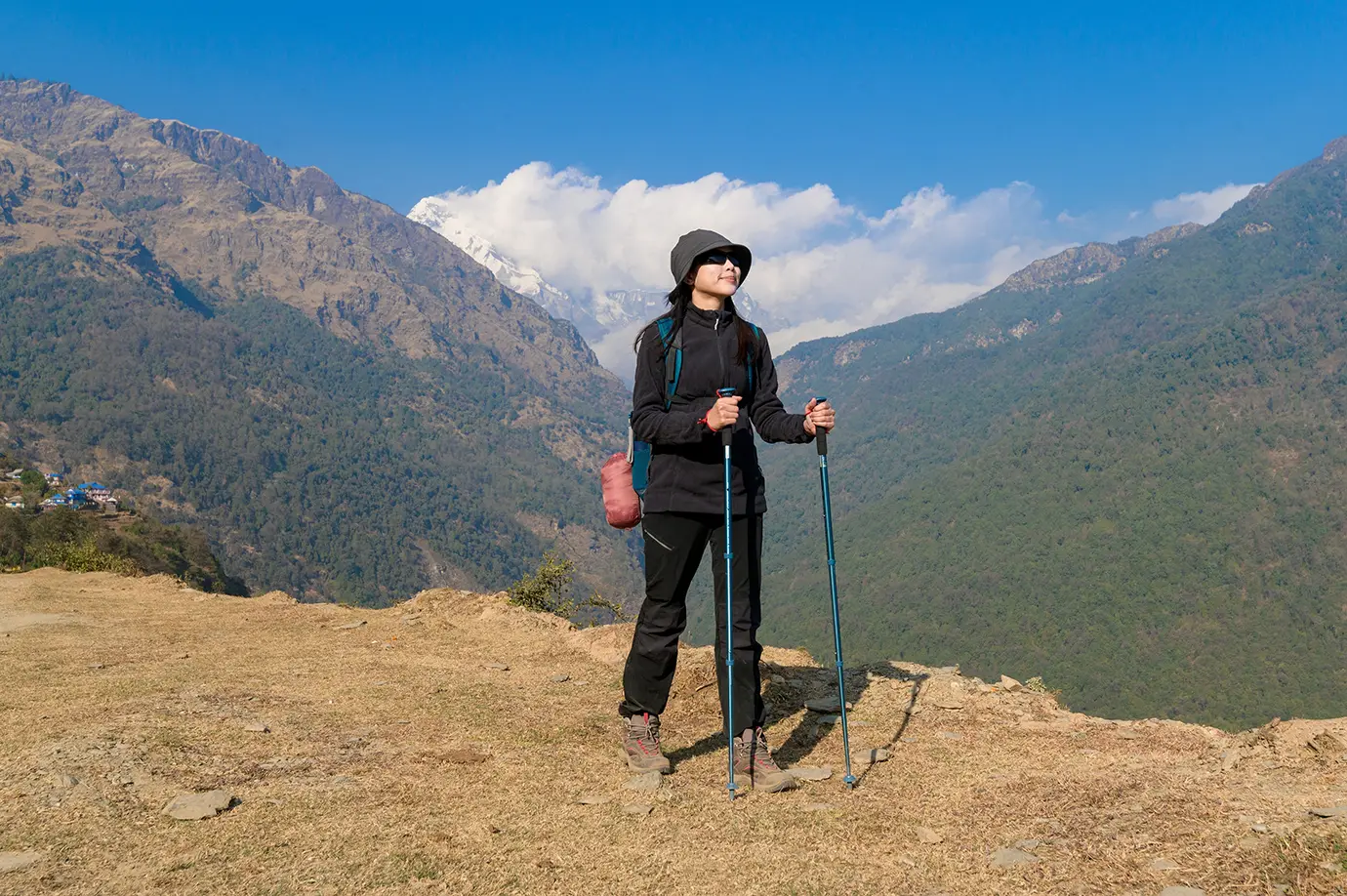
Nepal attracts thousands of solo female trekkers every year. Most report positive experiences on popular routes like Poon Hill, Annapurna Base Camp, Mardi Himal, and Langtang Valley.
Many solo female travelers choose a private guided trek specifically because it provides a known, vetted local contact throughout the trip. A licensed guide from a registered agency offers a layer of support and local communication that reduces uncertainty on the trail.
Registered agencies can arrange female guides on request in some cases. Ask about this when you book. Stay in established tea houses with reviews rather than unfamiliar accommodation on isolated sections.
- Book through a registered agency with verified reviews from female travelers
- Request a female guide or a reviewed male guide, depending on comfort level
- Stay in known tea houses along established routes
- Keep your itinerary and daily check-in schedule with a contact at home
- Carry a local SIM with data and keep it charged
- Use insurance that covers helicopter evacuation for all trekking altitudes on your route
Solo female trekking in Nepal on popular routes with a registered guide is rated as genuinely safe and deeply rewarding for most travelers who plan well.
Best Time for Solo Trekking in Nepal
Stable weather matters especially for solo travelers. Weather delays affect a solo traveler’s logistics more directly than they do a group, where decisions are shared.
Autumn — October to November
Autumn delivers the clearest skies and the most reliable trail conditions of any season. Post-monsoon air clears mountain views and dries most trail surfaces. October and November rank as the most popular trekking months.
Spring — March to May
Spring brings warmer temperatures and strong lower-trail scenery, including rhododendron bloom on forested routes. The weather stays mostly stable except for some afternoon cloud build-up on high routes in May.
Winter — December to February
Winter suits lower-altitude routes like Poon Hill and some Kathmandu Valley trails. High passes close on routes like the Annapurna Circuit. Nights above 3,000 meters get very cold.
Monsoon — June to September
Monsoon brings heavy rain to most of Nepal. Rain-shadow areas like Upper Mustang stay drier and offer a viable summer option for prepared solo trekkers. Most other routes are plagued by leeches, wet trails, and limited visibility.
Packing Tips for Solo Trekkers in Nepal
Solo travelers carry their own daypack and manage their own gear. Traveling light works strongly in your favor.
- Layering system: moisture-wicking base layer, warm fleece or down mid-layer, waterproof windproof outer shell
- Footwear: broken-in hiking boots tested before departure — never start a trek in brand-new boots
- Power bank: 10,000 mAh minimum for multi-day treks where charging is limited
- Water purification: tablets or a lightweight filter plus two 1-liter reusable bottles
- First aid: blister plasters, pain relief, altitude medication if prescribed, oral rehydration salts
- Documents: original passport, all permit copies, insurance details, and emergency contacts in a waterproof zip bag
- Navigation: phone with offline maps downloaded before departure, plus a printed route overview
- Cash: Nepali rupees covering 3 to 4 extra days beyond your planned budget
- Snacks: energy bars, nuts, and electrolyte sachets for days when the tea house timing does not suit your pace
Why Booking Through a Registered Trekking Company Still Makes Sense
Solo trekking in Nepal works much better when organized through a registered company. Not because the company removes the solo experience, but because it handles the parts that solo travelers cannot easily manage on their own.
- Current route information verified against local conditions, not outdated online sources
- Licensed guide arrangement matched to your experience level and preferred trail style
- Full permit processing for TIMS, national park entry, and restricted-area permits where applicable
- Airport transfer and Kathmandu logistics handled before and after the trek
- Weather monitoring and domestic flight backup for routes starting with a mountain flight
- Emergency coordination and helicopter rescue communication if a medical situation develops
- Honest route advice based on your fitness level, solo travel experience, and season of travel
- Confidence for first-time solo Himalayan trekkers who want support without losing personal freedom
The private solo trek through a registered company gives you one client, one guide, your route, and your pace. The personal nature of the experience stays fully intact. The compliance, logistics, and safety support have improved significantly.
FAQs About Solo Trekking in Nepal
Q: Is solo trekking in Nepal allowed now?
A: On most major listed trekking routes, fully independent trekking without a licensed guide no longer follows the official rule under the 2023 NTB revision. Solo travelers can still trek as one private client with a guide. That arrangement remains both compliant and practical.
Q: Do I need a guide for Everest Base Camp?
A: Everest Base Camp sits in the Everest Region, which NTB lists under the routes covered by the guide and agency-issued TIMS card requirement. A licensed guide is required under the current official rule.
Q: Can I still trek as one person in Nepal?
A: Yes. Trekking as a solo traveler remains fully available. The rule covers how you organize the trek, not how many clients join it. A solo traveler booking a private guided trek stays entirely within the official framework.
Q: What is the difference between solo trekking and a private guided trek?
A: Solo trekking in the older sense meant one person with no guide or company support. A private guided trek means one traveler with a licensed guide arranged through a registered agency. Today, the private guided solo trek is the standard recommended option for independent travelers.
Q: Is Nepal safe for solo female trekkers?
A: Yes, on popular routes with a licensed guide from a registered agency. Many solo women trek in Nepal annually with positive results. Choose a verified agency, book a reviewed guide, stay in established tea houses, and keep your communication plan active throughout.
Q: How much does solo trekking in Nepal cost now?
A: A private solo trek costs more per person than a group trek because guide and service fees cover one person only. Budget routes like Poon Hill run USD 500 to USD 800 for 5 days. Everest Base Camp with a private guide typically runs USD 1,400 to USD 2,200 for 12 days all-in.
Q: What is a porter-guide?
A: A porter-guide carries luggage and provides basic trail navigation support. Porter-guides suit solo travelers who want light assistance without full guiding throughout the day. They do not replace a licensed guide on routes where the official rule specifically requires one.
Q: Can I get trekking permits on my own?
A: National park and conservation area permits can be obtained at the Tourist Service Center in Kathmandu or at some entry gates. TIMS cards for listed routes must now be issued by a registered agency. Restricted-area permits require an application through an authorized agency with the Department of Immigration.
Q: Why should solo trekkers use a registered company?
A: A registered company provides current route information, licensed guide arrangement, full permit processing, local logistics, emergency coordination, and safety support. Solo travelers get the personal experience they want, with safer, more reliable planning behind it.
Final Thoughts on Solo Trekking in Nepal
Nepal works very well for solo travelers. The trails, the tea houses, and the mountain culture all suit someone traveling alone at their own pace and with a private itinerary.
But the old idea of fully independent trekking — no guide, no agency, no support — no longer fits the official rule on most major Himalayan routes. Many solo travelers today choose private guided treks. One traveler, one guide, one route. The experience stays personal. The planning stays compliant.
Solo trekking in Nepal in 2026 and 2027 means planning smart rather than just traveling alone. Book through a registered company that knows the current rules, handles the permits correctly, and arranges a guide who fits your trekking style.
The best solo treks in Nepal reward preparation. Use this guide as a starting point, and connect with a registered agency in Kathmandu before your trip. A well-planned solo trek gives you everything Nepal’s trails offer — without unnecessary risk and without rule-related surprises at a checkpoint two days from the nearest town.