



Based on 18 reviews

Luxury Everest Base Camp Trek
Private 16-day EBC Trek with 5-star hotels in Kathmandu, premium lodges on the trail, and an optional helicopter return.

Duration
16 Days

Meals
- 15 breakfast
- 11 Lunch
- 11 Dinner

Accommodation
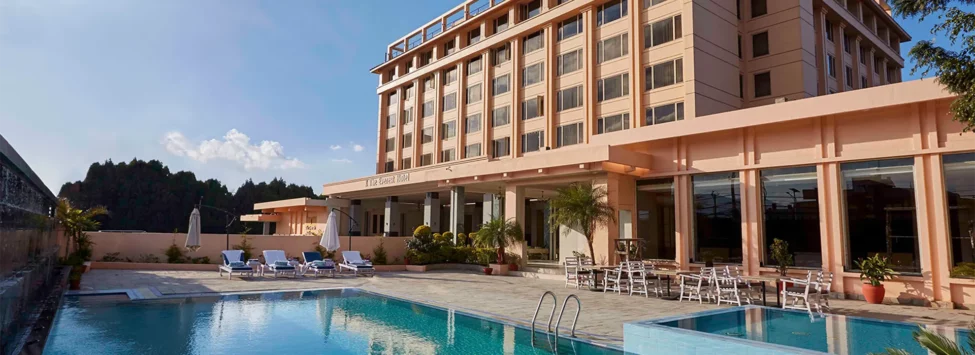
- 4-nights – The Everest Hotel
- 6-night luxury hotel
- 5 nights best-available lodges

Activities
- Trekking
- Sightseeing
- Scenic Flight
SAVE
US$ 768Price Starts From
US$ 3840
Overview of Luxury Everest Base Camp Trek
4.9
★★★★★
44 verified reviews
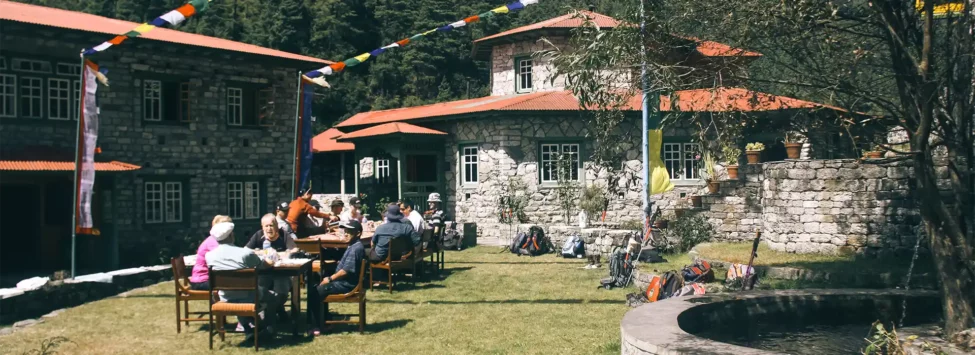
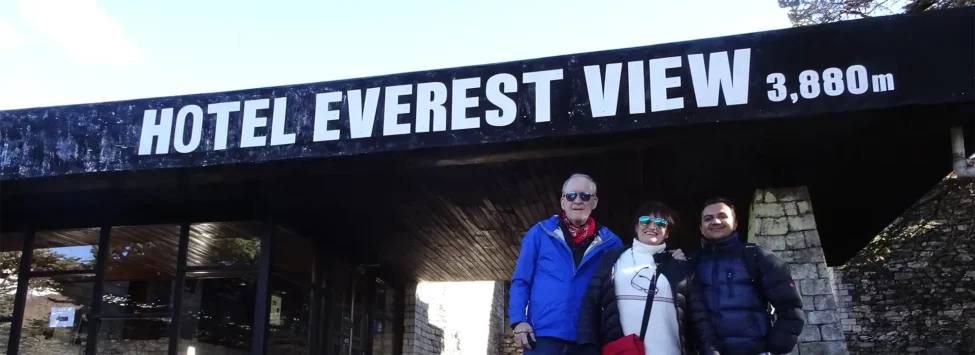
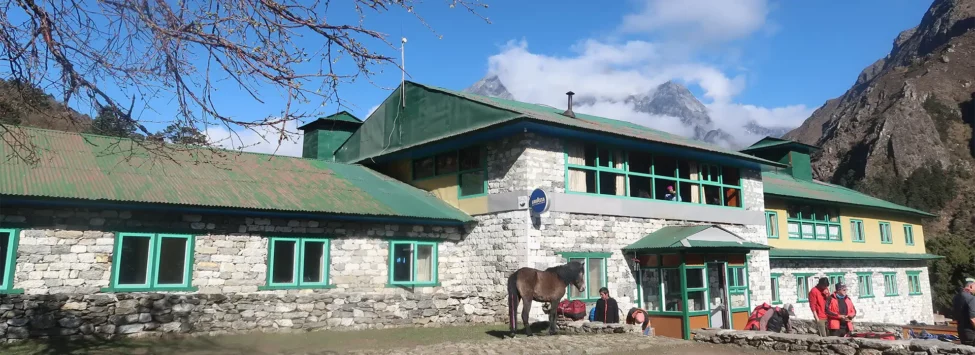
Our 16-day Luxury Everest Base Camp Trek provides a private, fully supported route to the base of the world’s highest peak. We prioritize your physical recovery by securing premium accommodations, including Yeti Mountain Home properties and Hotel Everest View. In these lodges, you get heated rooms, attached bathrooms, and hot showers up to 3,880 meters. At higher altitudes where luxury lodges are not available, we book the highest-quality teahouses to ensure your comfort.
This itinerary features an optional direct helicopter extraction from Gorak Shep (5,164 meters) to Kathmandu. Flying out replaces three grueling days of downhill trekking on fatigued joints and gives you a direct aerial perspective of the Khumbu Icefall. We guarantee a 1:2 porter-to-trekker ratio and one guide for 5 trekkers. This allows our NATHM-certified guides, who have summited Everest multiple times, to monitor your blood oxygen levels twice daily and manage your acclimatization safely.
Trip Facts:
- Trip Duration: 16 Days
- Max Elevation: 5545m (Kala Patthar)
- Trek Grade: Moderate to Strenuous. Suitable for fit beginners with proper acclimatization
- Accommodation: 5-star hotel in Kathmandu, luxury lodges with up to 3,820m private bathrooms. 5 nights best-available premium teahouses (above Deboche)
- Meals Included: All meals on trek, including 15 breakfasts, 11 lunches, and 11 dinners.
- Transport: Round-trip flights or helicopters between Kathmandu and Lukla, as well as private vehicles for all land transfers.
The best time for a Luxury Everest Base Camp Trek is spring and autumn. These seasons offer clear skies and ideal trekking weather. Plan your trip at any time of year, as it is available year-round. Choose the winter option for quieter routes and snow-covered trails, or the monsoon option with helicopter support for more reliable access and scenic aerial views.
Luxury Everest Base Camp Trek Cost
The Luxury Everest Base Camp Trek costs USD 3,840 per person. This package covers a 4-night stay in a 5-star hotel in Kathmandu, luxury lodges in the lower Everest region, and the best available teahouses along the trek itinerary at higher altitudes. The itinerary also includes domestic flights, all trekking permits, meals during the trek, a private guide, porter support, airport transfers, and guided sightseeing tours in Kathmandu.
The optional helicopter return from Gorak Shep to Kathmandu costs an additional USD 950 per person on a sharing basis, or USD 4500 for a private charter. The flight takes about 1.5 hours and replaces three days of return trekking. You can confirm this option at the time of booking or decide during the trek, subject to availability.
Standard vs. Luxury Everest Base Camp Trek: What Sets This Trek Apart?
While both standard and luxury trekkers walk the exact same trail from Lukla to Everest Base Camp, the recovery conditions differ entirely. Above 3,000 meters, your body requires optimal rest to combat lower oxygen levels. A standard trek relies on basic teahouses with uninsulated plywood walls, communal squat toilets, and dining halls heated only by a central yak dung stove.
Our Luxury Everest Base Camp Trek enhances this experience by using purpose-built lodges such as Yeti Mountain Home and Rivendell Lodge. You sleep on heated beds in insulated rooms with private, en suite bathrooms. Instead of standard high altitude lodge food, our chefs provide varied, diet-specific meals to keep your appetite up when altitude naturally suppresses it. We also replace the standard large-group format with a strict 1:2 guide-to-student ratio. This ensures our Sherpa guides can conduct personalized morning and evening SpO2 pulse oximetry readings to track your exact physical adaptation.
| Feature | Standard EBC Trek | Luxury EBC Trek (Peregrine) |
|---|---|---|
| Duration | 14–16 days | 16 days (extra acclimatization time) |
| Accommodation | Basic teahouses, shared rooms, no heating | Yeti Mountain Home, Hotel Everest View, Rivendell Lodge — heated, attached bath, hot shower |
| Guide Ratio | 1 guide per 8–12 trekkers | 1 guide per 5 trekkers |
| Health Monitoring | Basic daily check | Twice-daily SpO₂ pulse oximetry, AMS protocol by summit-experienced guide |
| Meals | Standard teahouse menu | 3 meals daily with Western/Nepali menu, dietary accommodations |
| Kathmandu Hotel | 3-star or budget | 5-star (The Everest Hotel or equivalent) |
| Group Size | 8–16 per group (fixed dates) | Private departure, your dates, 2–5 trekkers |
| Guide Credentials | Licensed local guide | Khumbu-born, NATHM-certified, Everest summit experience (Dorche 7x, Nima 2x) |
| Price (per person) | USD 1,850 | USD 3,840 (all-inclusive) |
| Success Rate | ~85–90% | 99% (verified across 300+ departures) |
Scroll left or right to view the full table.
Photo & Video Gallery
Detail Itinerary of Luxury Everest Base Camp Trek
Day 01: Arrive in Kathmandu
On arrival at Tribhuvan International Airport, our company representative will receive you and transfer you to your hotel. The drive takes around 20 minutes, depending on traffic conditions in the city. After check-in, you can rest or step out briefly to settle in. If you need any trekking gear, you may purchase it today or on Day 2 of the itinerary, whichever is convenient for you.
Meal Recommendation:
Begin your first day in Nepal by choosing familiar meals. Kathmandu offers a unique mix of weather, temperature, water, and cuisine, so your body needs time to adjust.
While we cannot control the environment, food choices remain in your hands. Eating familiar meals helps your system settle into the new surroundings more comfortably. Once your body adjusts, you can gradually enjoy local cuisine and explore different food options with ease.
No activities are planned for today, keeping the schedule intentionally light for your well-being. Spend the day resting at your hotel and allow yourself to recover from jet lag before the journey begins.
- Altitude: Arrive at 1,350 m in Kathmandu Valley (Tribhuvan Int’l Airport). (Oxygen level ~88% of sea level)
- Trekking Distance: 0 (No trekking – airport transfer only)
- Elevation Gain/Loss: N/A (settling in Kathmandu)
- Travel Duration: 15-30 minute drive from the airport to the hotel
Meal: Not Included
Day 02: Kathmandu Valley Sightseeing and Trek Preparation
Begin the day with a guided tour of Kathmandu’s key historical and spiritual landmarks. Visit Durbar Square to see its old palaces, courtyards, and temples, which reflect the city’s royal history and architectural detail. Continue to Pashupatinath, a sacred Hindu temple complex along the Bagmati River, where daily rituals and cremation ceremonies take place.
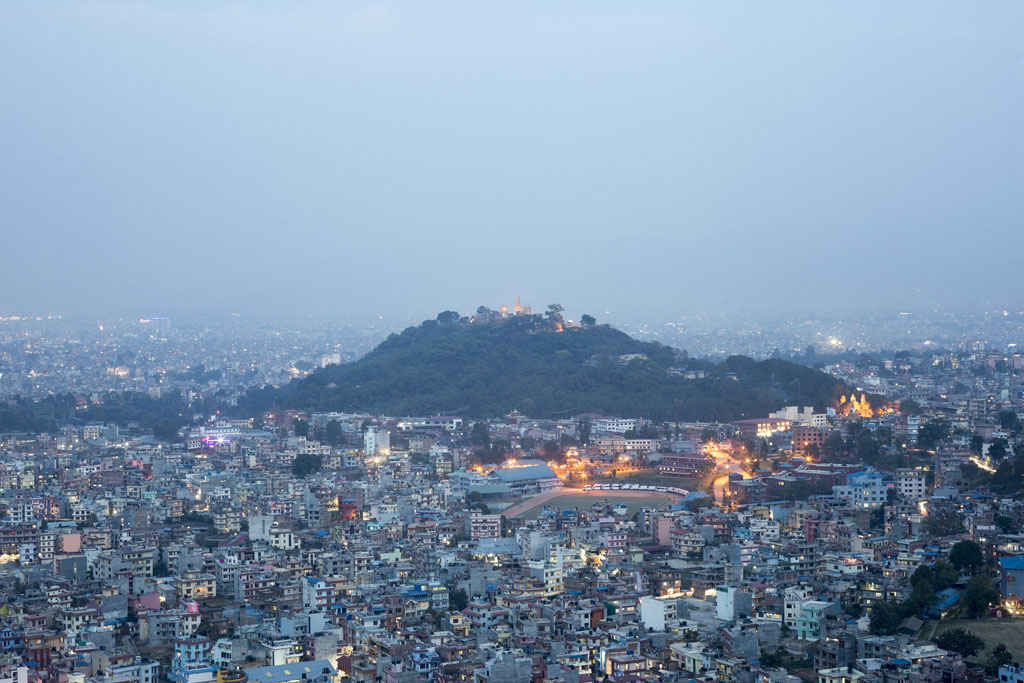
Proceed to Swayambhunath, also known as the Monkey Temple, set on a hilltop with wide views over the valley. Conclude the tour at Boudhanath Stupa, one of the largest and oldest stupas in the world and a UNESCO World Heritage Site, where pilgrims circle the structure and spin prayer wheels in a steady rhythm.
Attend a brief pre-trip group discussion in the late afternoon, where the guide outlines the plan, route, and key details for the days ahead. Continue with a preparation session for the Luxury Everest Base Camp Trek, organized by Peregrine Treks and Expedition Pvt. Ltd., and use this time to review gear, clarify any last questions, and get fully ready for the journey.
- Altitude: Kathmandu 1,350 m (no change, easy day for acclimation)
- Activities: Guided city tour (half day) and trek briefing/preparation
- Sightseeing Duration: ~4-5 hours by private car and short walks
- Accommodation: The Everest Hotel
- Meals: Breakfast at the hotel
Day 03: Fly to Lukla and Trek to Phakding
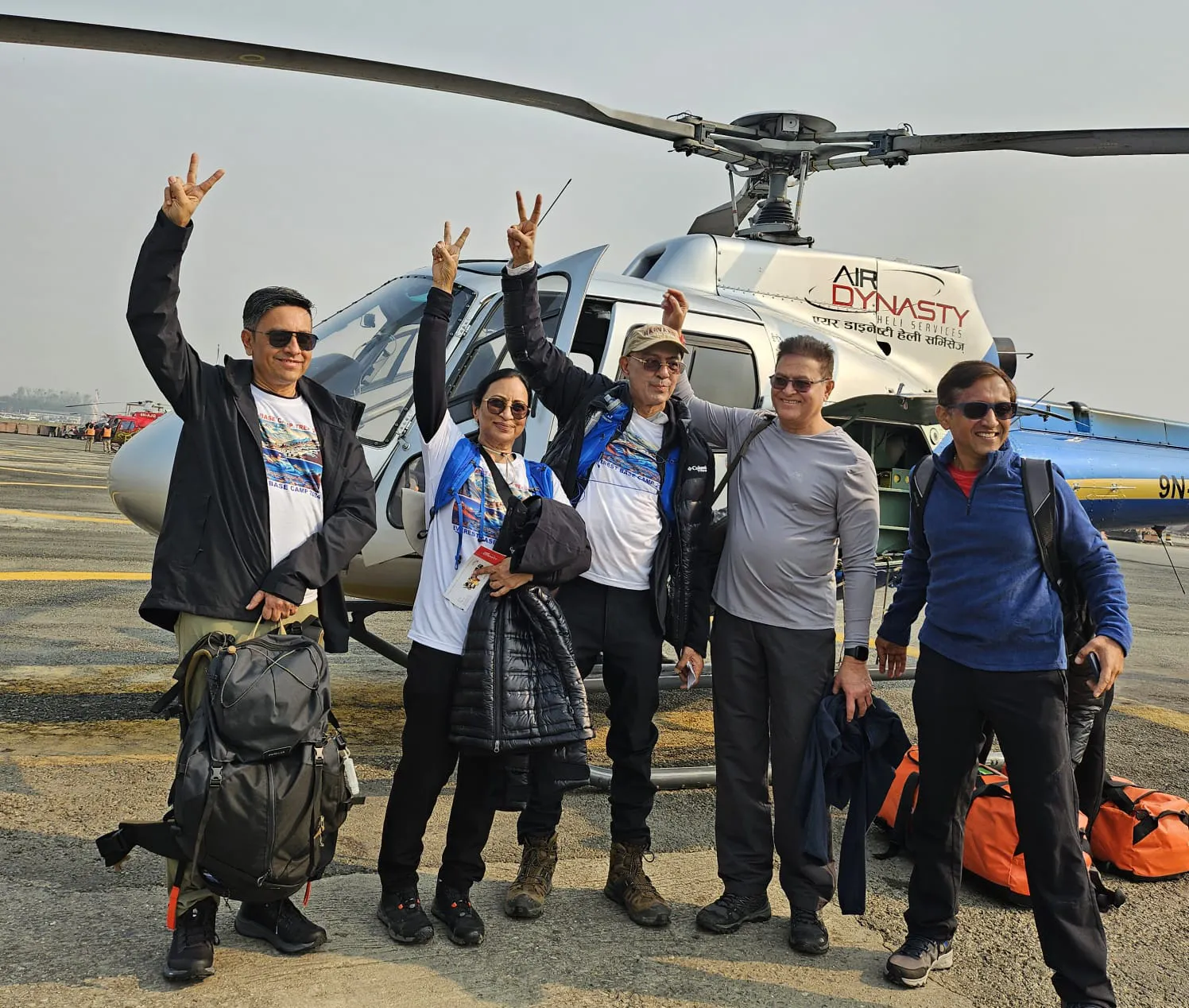
Your trek begins with a morning flight from Kathmandu to the Tenzing-Hillary Airport in Lukla (2,840 m). For groups of four or more, we arrange a private helicopter flight to avoid the crowded domestic terminal and bypass the long drive to Ramechhap. Upon landing, you meet your porter team and have a fresh breakfast before hitting the trail.
The walk to Phakding (2,610 m) takes about three hours. It is an active descent, dropping 230 meters. You pass the stone walls of Chaurikharka village and follow the Dudh Koshi River valley. Mount Khumbila, a sacred unclimbed peak, dominates the skyline above you. We keep the pace deliberately slow to help your lungs adjust to the lower oxygen levels. By early afternoon, you arrive at the Yeti Mountain Home in Phakding, where you can take a hot shower and rest in a heated room before dinner.
Practical Tips
- Stay Hydrated: Drinking enough water helps you cope with high altitude.
- Plan Rest Days: Slower pacing reduces the risk of altitude sickness.
- Check Gear Requirements: Your package may include items like down jackets or sleeping bags; please confirm in advance.
- Starting Altitude: Kathmandu 1,350m — fly to Lukla 2,840m
- Ending Altitude: Phakding 2,610 m
- Altitude Gain: +1,490 m (Kathmandu to Lukla flight); Trek Descent: -230 m net down from Lukla to Phakding
- Highest Point: Lukla 2,840 m (approx. 73% oxygen at this altitude)
- Trekking Distance: ~8 km (Lukla to Phakding)
- Trekking Duration: 3–4 hours (easy pace)
- Trail Route: Lukla – Chaurikharka – Chheplung – Thado Koshi – Ghat – Phakding, following the Dudh Koshi River valley
- Landmarks: Scenic helicopter flight over the Himalayas, Tenzing-Hillary Airport in Lukla, first suspension bridges, mani stone walls, and prayer wheels in villages
- Meals: Breakfast, Lunch & Dinner (gourmet lodge cuisine)
Day 04: Trek to Namche Bazar
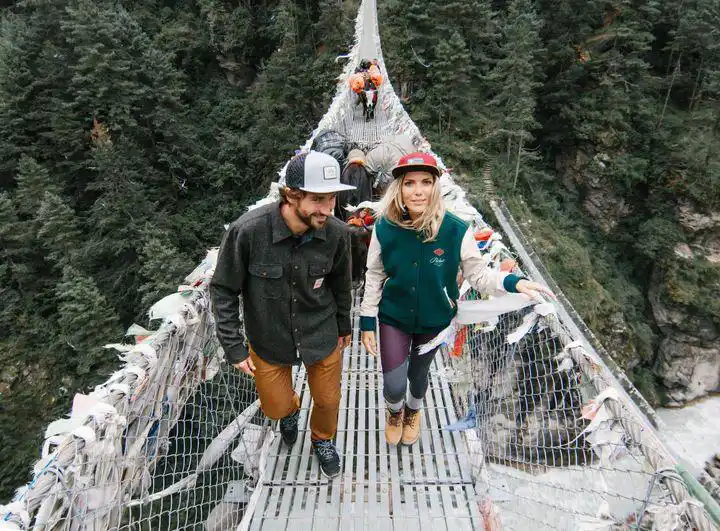
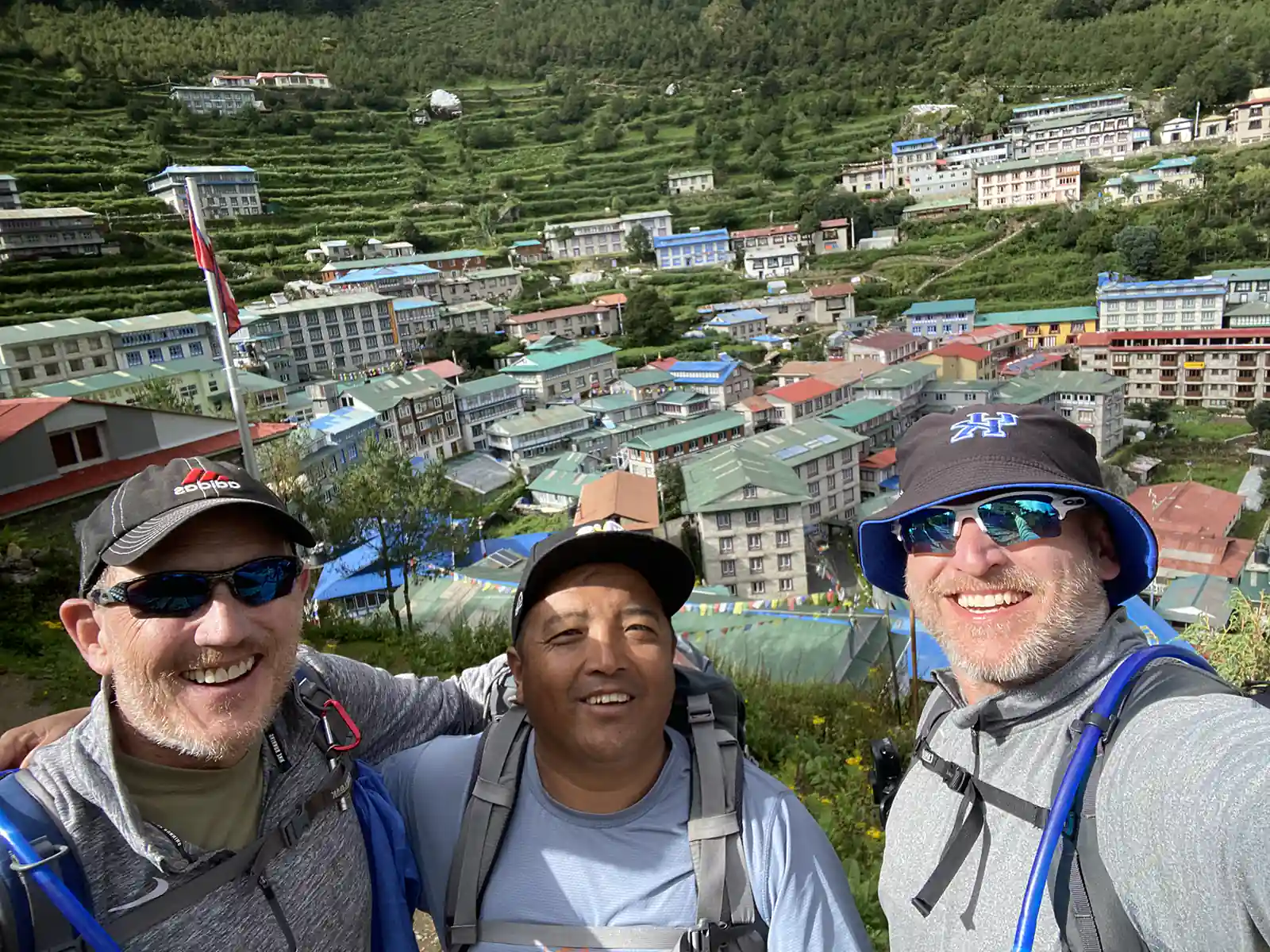
Today involves a significant altitude gain as you hike from Phakding up to the Sherpa capital of Namche Bazaar (3,440 m). The trail crosses the Dudh Koshi River multiple times via steel suspension bridges, culminating at the famous Hillary Suspension Bridge.
Immediately after crossing the bridge, you face the Namche Hill. This is a steep, continuous 600-meter ascent that takes two to three hours. This switchback section is typically where trekkers first feel the heavy physical impact of high altitude. Your guide will enforce a slow, steady walking rhythm to prevent early fatigue. Halfway up the hill, a clearing through the pine trees provides your first direct sight of Mount Everest. Upon reaching Namche, you check into the Yeti Mountain Home. The facility offers premium bedding and modern amenities, providing your body with the exact comfort it needs to recover from the strenuous climb.
- Starting Altitude: Phakding 2,610 m
- Ending Altitude: Namche Bazaar 3,440 m
- Altitude Gain: +830 m net elevation gain
- Highest Point: Namche Bazaar at 3,440 m (approx. 73% oxygen)
- Trekking Distance: ~11 km
- Trekking Duration: 6–7 hours (including rest stops and lunch)
- Trail Route: Phakding – Benkar – Monjo – Jorsalle – Hillary Bridge – Namche Bazaar (entering Sagarmatha National Park)
- Landmarks: Dudh Koshi River gorge, Sagarmatha National Park entrance gate (Monjo), multiple suspension bridges (including the high Hillary Bridge), first views of Mount Everest on the trail (weather permitting)
- Villages Passed: Toktok, Benkar, Monjo, Jorsalle
- Meals: Breakfast, Lunch & Dinner (fresh ingredients, wider menu options, unlimited hot beverages)
Note: From running this route since 2002, we’ve learned that trekkers who arrive in Namche by 3 PM and rest for one hour before an easy evening walk show measurably better SpO2 readings the next morning. Our guide Dorche Sherpa checks every trekker’s oxygen saturation at 6 PM and again at 6 AM — these paired readings shape the next day’s pace.
Day 05: Namche to Everest View Hotel
To safely adapt to the elevation at 3,440 meters, you will spend today actively acclimatizing. Your morning begins with a steep ascent to the Sagarmatha National Park viewpoint. From this ridge, you watch the sunrise illuminate Mount Everest, Lhotse, Ama Dablam, and Thamserku.
After taking in the panoramic views, you continue hiking up to 3,790 meters to reach the Sherpa village of Khumjung. Here, you visit the Khumjung Edmund Hillary School, originally established by the famous mountaineer in 1961. Next, your guide takes you inside the Khumjung Monastery. This sacred Buddhist site houses a famous historical relic kept in a locked glass box, which the local monks protect as an actual Yeti scalp.
- Altitude: Namche (3,440m) overnight; Hike to 3,880m and back for acclimatization
- Altitude Gain: +440 m (Namche to Everest View Hotel)
- Highest Point: Everest View Hotel at 3,880 m (approx. 60% oxygen)
- Trekking Distance: ~4–5 km round trip for acclimatization hike
- Trekking Duration: 3–4 hours of hiking (not including leisurely stops)
- Activities: Easy morning hike to Syangboche and Everest View Hotel
- Landmarks: Syangboche Airstrip, Everest View Hotel (world’s highest altitude hotel), panoramas of Everest, Ama Dablam, Thamserku; optional visit to Khumjung village and Hillary School
- Meals: Breakfast, Lunch & Dinner
Day 06: Trek from Hotel Everest View to Tengboche and Deboche
Leaving Hotel Everest View, the trail traverses the hillside high above the Dudh Koshi River. The path is relatively flat for the first two hours and offers constant views of Ama Dablam. After descending to Phunki Tenga (3,250 m) for lunch, you face a challenging two-hour climb through a rhododendron forest to reach Tengboche (3,860 m).
Here, you visit the famous Tengboche Monastery, the largest Buddhist center in the Khumbu region. Because Tengboche lodges are often basic and crowded, we guide you a further 20 minutes downhill to Deboche (3,820 m). In Deboche, you stay at the Rivendell Lodge. This property offers superior insulation, private bathrooms, and a quieter environment for your recovery.
- Starting Altitude: Namche Bazaar 3,440 m
- Ending Altitude: Debuche 3,820 m (near Tengboche)
- Altitude Gain: +380 m net (Namche to Debuche); ~ +600 m / -200 m total (with ups and downs)
- Highest Point: Tengboche ridge 3,867 m (approx. 12.3% oxygen)
- Trekking Distance: ~10 km
- Trekking Duration: 5–6 hours
- Trail Route: Namche – Kyangjuma – Sanasa – Phunki Tenga (3,250m, riverside) – Tengboche (3,867m) – Debuche (3,820m)
- Landmarks: Ama Dablam views throughout, 360° Himalayan vistas from Tengboche, the Tengboche Monastery (largest in Khumbu), rhododendron and juniper forests, the crossing of the Dudh Koshi at Phunki Tenga, possible wildlife sightings (musk deer, pheasants)
- Meals: Breakfast, Lunch & Dinner
Day 07: Trek from Deboche to Dingboche
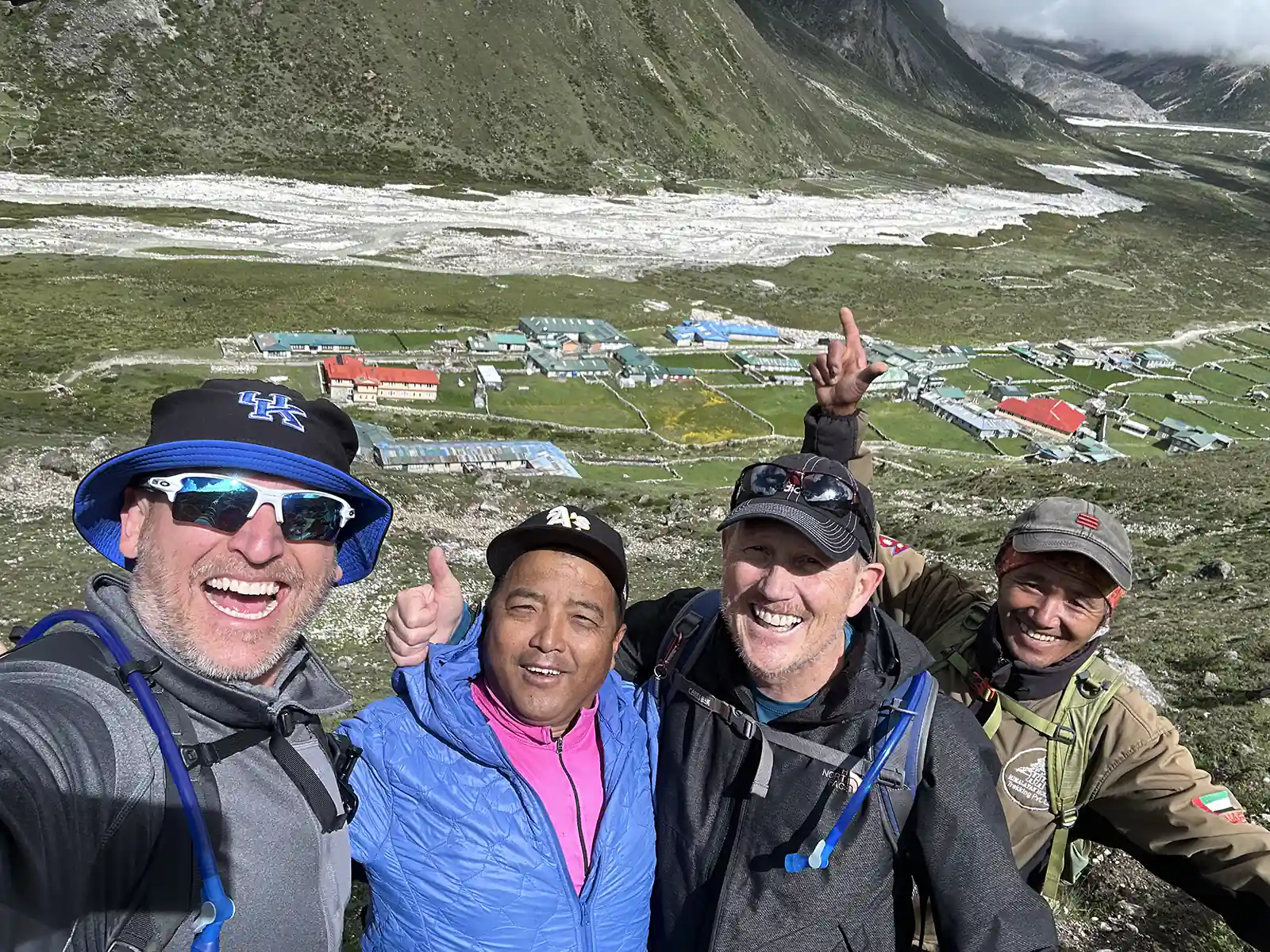
Today, you cross the 4,000-meter mark, which is a critical altitude threshold. The trail takes you through a shaded forest before crossing a suspension bridge over the Imja Khola river. As you climb toward Pangboche (3,985 m), the tree line disappears completely and is replaced by alpine scrub and barren landscapes.
The air here holds significantly less oxygen, so your guide will keep your walking pace extremely slow. You arrive in Dingboche (4,410 m) by early afternoon. This village sits in a sunlit valley protected from high winds. You will spend two nights here in the best available premium teahouse, ensuring you stay warm and well fed as your body adapts.
- Starting Altitude: Debuche 3,820 m (Tengboche 3,867 m)
- Ending Altitude: Dingboche 4,410 m
- Altitude Gain: +590 m net elevation gain
- Highest Point: Dingboche 4,410 m (approx. 11.3% oxygen)
- Trekking Distance: ~9–10.5 km (depending on the route via upper Pangboche or lower Pangboche)
- Trekking Duration: 5–6 hours
- Trail Route: Debuche – Pangboche – Shomare – Orsho – Dingboche (along the Imja Khola valley)
- Landmarks: Imja Khola River, Pangboche village (the oldest monastery in Khumbu), crossing the river at Orsho, entering the Imja Valley, expansive views of Ama Dablam’s north face and Island Peak, fields of buckwheat and potatoes in Dingboche
- Villages Passed: Pangboche (3,985m), Shomare (4,010m), Orsho (4,190m)
- Accommodation: Hotel Good Luck or similar, Dingboche (best available lodge with attached bathroom)
- Meals: Breakfast, Lunch & Dinner
Day 08: Acclimatization Day in Dingboche
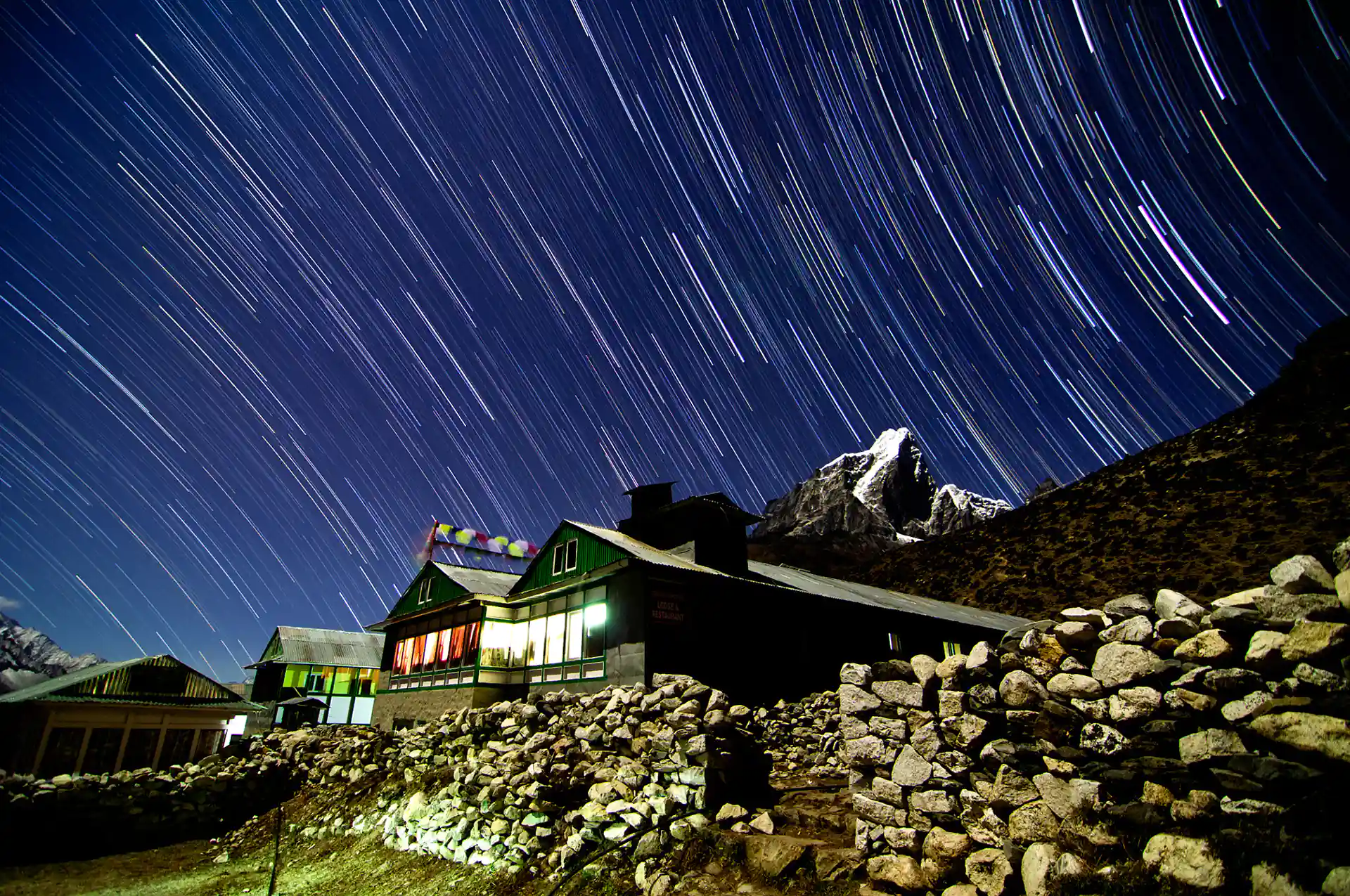
This is your second mandatory acclimatization stop. To stimulate red blood cell production, you hike up Nangkartshang Peak, which sits directly behind the village. The goal is to reach an elevation of around 4,800 meters.
The climb is steep and rocky, taking about three hours round-trip. You are rewarded with close-up views of Makalu, the fifth-highest mountain in the world. After spending 30 minutes at the high point to let your body register the altitude, you descend back to Dingboche for a hot lunch. Your guide will check your blood oxygen levels in the evening to confirm you are ready for the final push.
- Altitude: Dingboche 4,410m (sleep); optional hike to ~5,000m
- Highest Point (optional): Nangkartshang Viewpoint ~5,083 m (approx. 10.8% oxygen)
- Altitude Gain (hike): +670 m (if reaching ~5,080m); return to 4,410m (net gain 0 for sleeping)
- Trekking Distance: ~4–5 km round trip for acclimatization hike (depending on how high you go)
- Trekking Duration: 3–4 hours (up and down) for a side hike
- Activities: Rest and acclimatization; short hike to panoramic viewpoint; leisure time in Dingboche
- Views from Hike: Spectacular close-up of Makalu (8,485m) (5th highest mountain) on clear days, Lhotse, Ama Dablam’s lofty ridges, Cholatse and Tawoche to the west, Imja Valley with Island Peak and the glacier flowing from it, possibly even a glimpse of Cho Oyu far in the distance
- Accommodation: Hotel Good Luck, Dingboche
- Meals: Breakfast, Lunch & Dinner
Day 09: Trek from Dingboche to Lobuche
The day begins with a gradual climb up the Khumbu Khola valley to Thukla (4,620 m). After a short tea break, you face the Thukla Pass. This steep, rocky ascent takes about an hour. At the top (4,830 m), you walk through a sobering memorial ground dedicated to climbers who lost their lives on Everest.
From the pass, the trail flattens out as it follows the lateral moraine of the Khumbu Glacier into Lobuche (4,940 m). The temperature drops sharply here. Your lodge in Lobuche is basic compared to the lower elevations, but our staff ensures you have extra blankets and continuous access to hot drinking water to prevent altitude sickness.
- Starting Altitude: Dingboche 4,410 m
- Ending Altitude: Lobuche 4,940 m
- Altitude Gain: +500 m net elevation gain
- Highest Point: Lobuche 4,940 m (approx. 10.5% oxygen)
- Trekking Distance: ~8–9 km
- Trekking Duration: 5–6 hours
- Trail Route: Dingboche – Dughla (Thukla) – Thukla Pass (memorial site ~4,830m) – Lobuche (4,940m)
- Landmarks: Treeline ends (barren alpine zone), crossing of the glacial stream at Dughla, Everest Memorials at Thukla Pass (monuments for fallen climbers such as Scott Fischer, Babu Chiri Sherpa, etc.), first close-up of Khumbu Glacier moraine, looming views of Pumori (7,161m) and Lingtren, and Nuptse right above Lobuche
- Accommodation: New EBC Lodge, Lobuche (best available teahouse, warm dining, possibly basic attached toilet)
- Meals: Breakfast, Lunch & Dinner
Day 10: Trek to Gorak Shep and Everest Base Camp
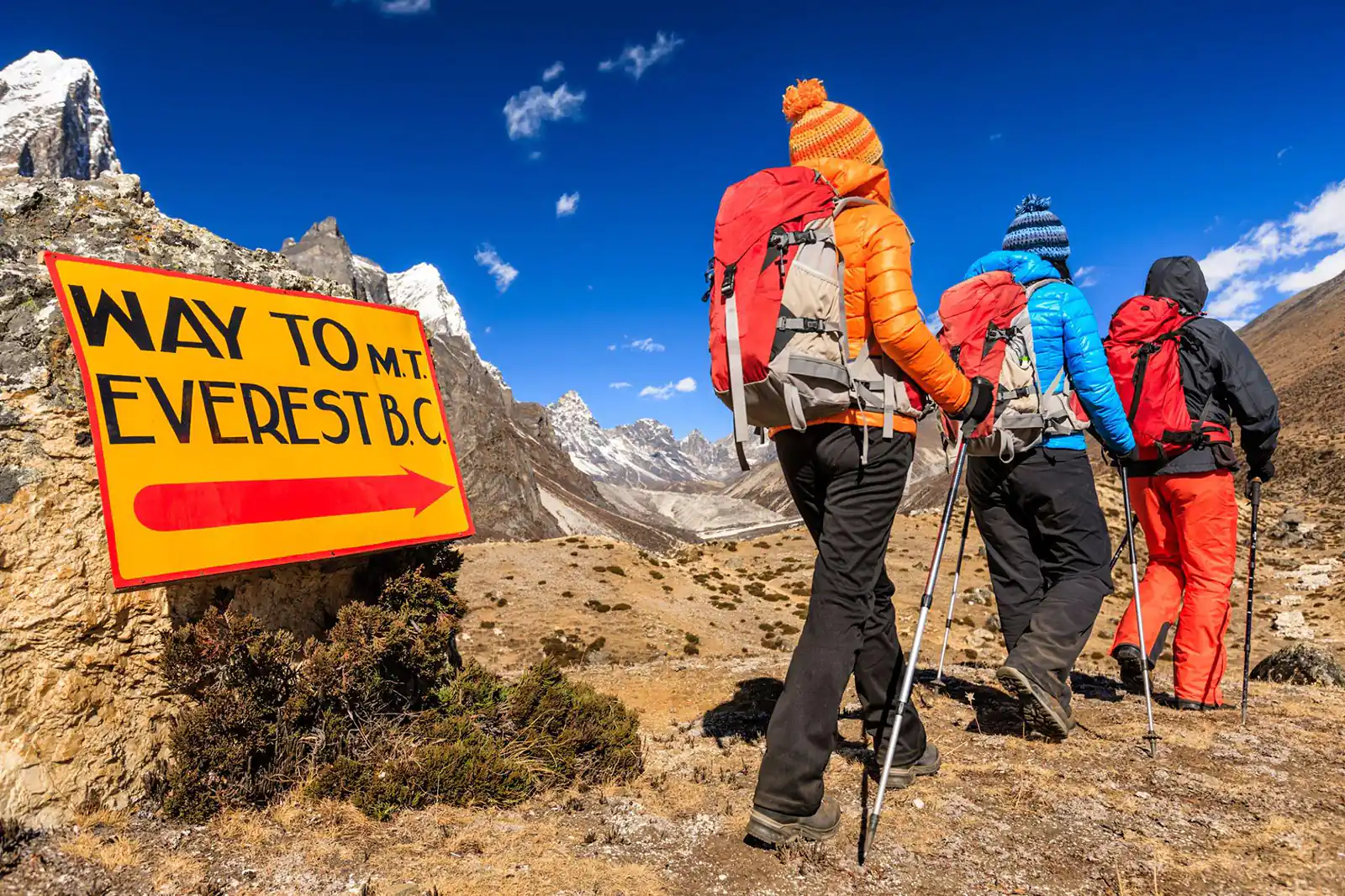
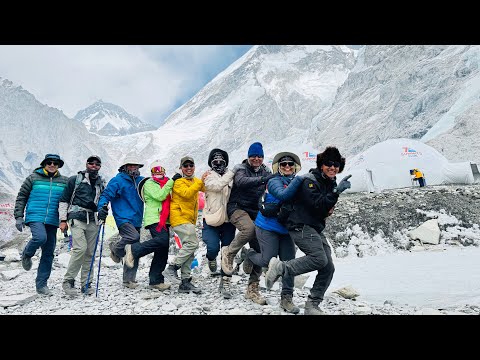
This is the most physically demanding day of the itinerary. You start early, hiking alongside the Khumbu Glacier over loose rocks and uneven terrain to reach Gorak Shep (5,164 m). After dropping your heavy gear at the lodge and having a quick meal, you begin the final push to Everest Base Camp (5,364 m).
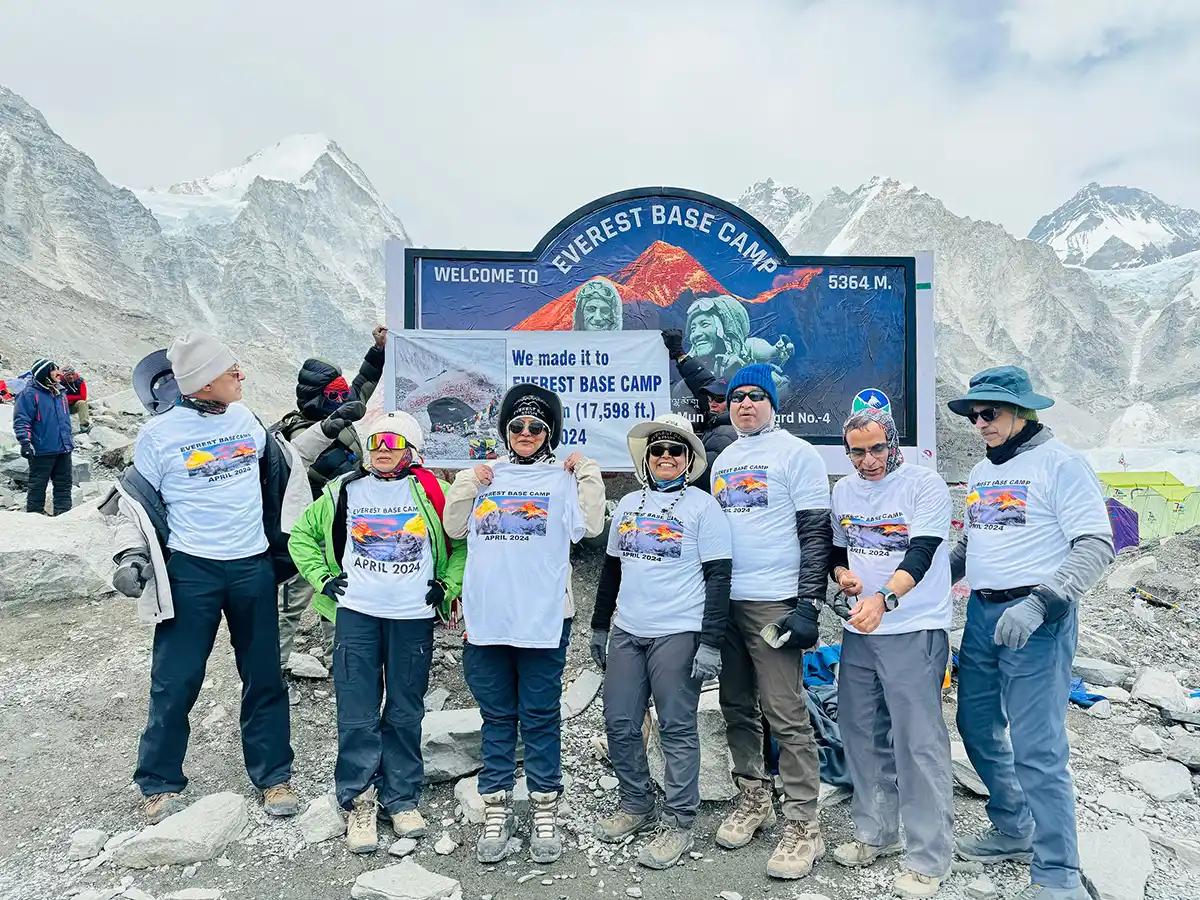
The trail weaves through ice pinnacles and glacial moraine for about two hours. Upon reaching the base camp, you stand directly beneath the notorious Khumbu Icefall. After taking photos and celebrating the milestone, you return to Gorak Shep before the afternoon weather deteriorates. Sleep is often difficult at this altitude, but your guide remains on standby with pulse oximeters and supplementary oxygen if needed.
- Starting Altitude: Lobuche 4,940 m
- Destination 1: Gorak Shep 5,164 m (lodge)
- Destination 2: Everest Base Camp 5,364 m, then return to Gorak Shep
- Altitude Gain: +254 m Lobuche to Gorak Shep; additional +200 m to EBC from Gorak Shep (with ups and downs on moraine)
- Highest Point: Everest Base Camp ~5,364 m (approx. 10.2% oxygen)
- Trekking Distance: ~4 km (Lobuche to Gorak Shep) + 3.5 km (Gorak Shep to EBC one-way, same back) = ~11 km total
- Trekking Duration: 3 hours (Lobuche to Gorak Shep), 5 hours (round-trip Gorak Shep to EBC and back) – ~8 hours total today
- Trail Route: Lobuche – along lateral moraine – Gorak Shep – (after lunch) trek on Khumbu Glacier moraine – Everest Base Camp – return to Gorak Shep
- Landmarks: Initial view of Khumbu Icefall from the trail, reaching the small dry lakebed of Gorak Shep, iconic Everest Base Camp site marked by prayer flags and rock pile (in climbing season, filled with tents and expeditions), Khumbu Icefall close-up (towering seracs and ice towers), Nuptse and Khumbutse surround EBC, feeling the rugged glacial terrain underfoot
- Accommodation: Himalaya Lodge (basic lodge, limited facilities, but best available)
- Meals: Breakfast, Lunch & Dinner
Day 11: Climb Kala Patthar and Trek to Pheriche
The day begins with a pre-dawn climb from Gorakshep to the summit of Kala Patthar at 5,545 meters. This ascent takes approximately two hours in freezing temperatures. Unlike Everest Base Camp, where the mountain profile is blocked by Nuptse, the summit of Kala Patthar offers an unobstructed view of Everest. Your guide will position you at the optimal ridge point to photograph the sunrise lighting up the horizontal strata of the Everest summit pyramid. After capturing the view, you descend to Gorakshep for a hot breakfast.
From Gorakshep, you begin a 13-kilometer descent to Pheriche village at 4,371 meters. The trail retraces your steps past the Khumbu Glacier moraine, drops through the steep rocky section of the Thukla Pass, and opens into the wide Pheriche valley. The entire trek takes seven to eight hours, during which the atmospheric oxygen level increases significantly from 50 percent to roughly 60 percent.
Why the Standard Route Walks Back to Lukla
We design our core itinerary to walk the entire route back to Lukla. Completing the continuous trail on foot is the only way to claim you finished the full Everest Base Camp trek. Returning by air from the top makes it a partial trek. Walking the descent allows you to properly process the expedition and view the changing alpine ecosystems from a completely different perspective.
The Optional Helicopter Return
If you want to bypass the final three days of downhill trekking to protect your knees, you can upgrade to a direct helicopter flight from Gorakshep to Kathmandu for an additional USD 950 per person. We keep this as an optional upgrade rather than a standard inclusion due to strict seasonal aviation laws. During the monsoon season, the Civil Aviation Authority of Nepal strictly prohibits commercial passenger helicopter flights to Gorakshep for safety reasons. Helicopters only receive clearance for emergency medical rescues during these months. Therefore, we only offer the commercial fly-back option during the stable weather windows of the spring and autumn trekking seasons.
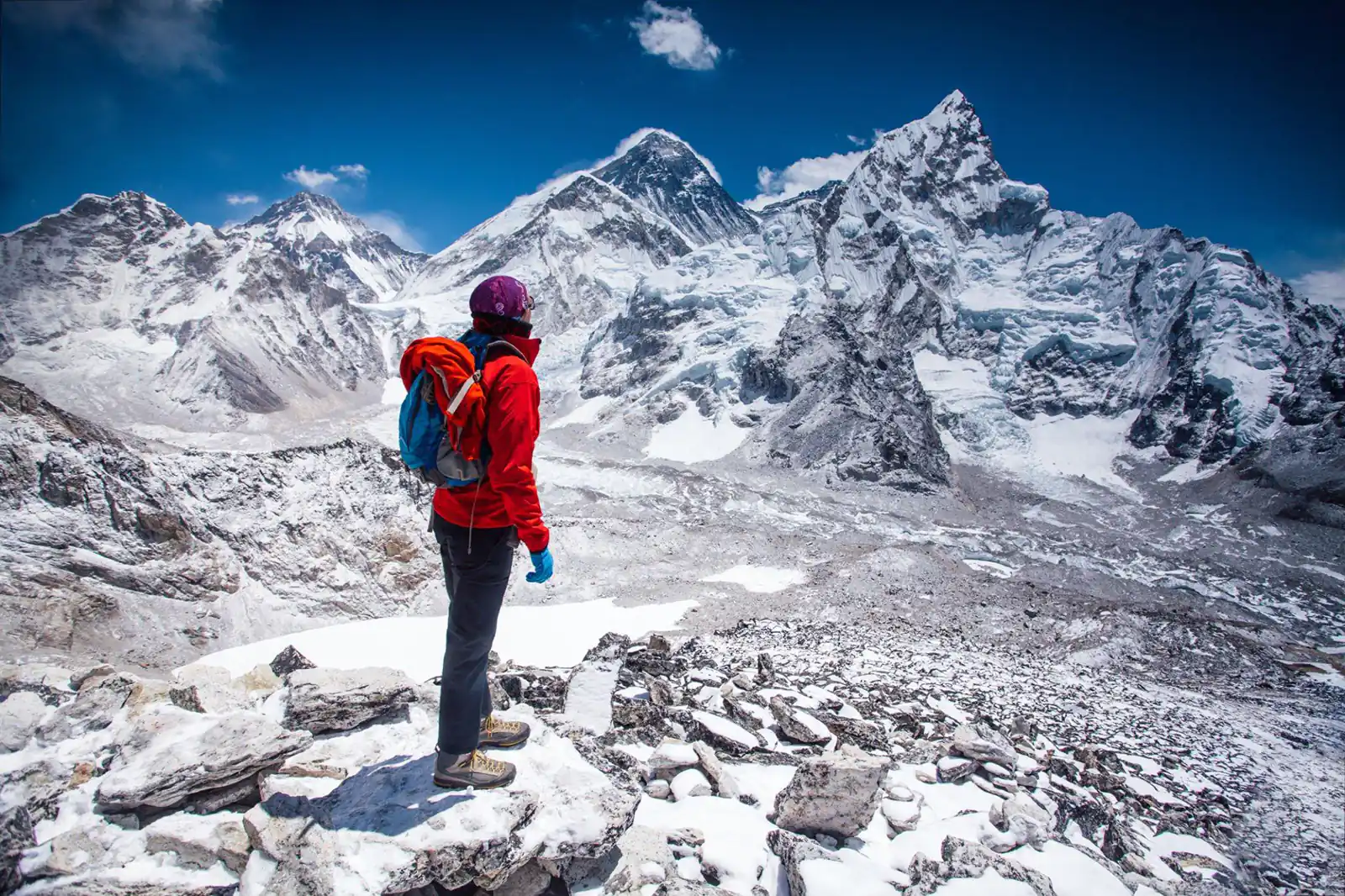
After witnessing the sunrise, return to Gorakshep at a steady pace and enjoy breakfast. Take some time to rest and have lunch before continuing the journey. Begin a gradual descent toward Pheriche village, moving carefully along the trail as the altitude drops and the terrain becomes easier. Arrive in Pheriche by evening and settle in for an overnight stay.
- Location Reached: Pheriche
- Location History: Kala Patthar, known as “Black Rock,” gives an unmatched view of Everest. Gorakshep was the original Everest Base Camp site in the 1950s, now a rest stop for trekkers.
- Altitude: Start 5,545m (Kala Patthar); End 4,371m (Pheriche)
- Altitude Loss: 1,273m
- Est. Oxygen Level: Approx. 50% at Kala Patthar
- Trekking Distance: 13 km
- Trekking Duration: 7-8 hours
- Significant Landmarks: Gorakshep village, Lobuche Pass, Thukla Pass
Day 12: Trek Down to Namche Bazaar
You depart from Pheriche and begin a 15-kilometer hike down to Namche Bazaar. The route drops 931 meters in elevation and takes six to seven hours. You follow the path along the Imja Khola river, passing through the stone houses of Pangboche village. The trail then leads through protected forests of rhododendron, juniper, and alpine pine, where you can frequently spot wildlife like the Himalayan tahr and the colorful Impeyan pheasant.
After crossing the river, you make a brief ascent to the Tengboche Monastery before a steep drop through the forest to Phunki Tenga. The final leg of the day is a high, scenic traverse winding along the hillside back into the bustling trading hub of Namche Bazaar at 3,440 meters. You check into your luxury lodge for the evening to celebrate completing the high-altitude portion of the trek.
- Location Reached: Namche Bazaar
- Location History: Namche Bazaar, a bustling trading hub, offers a unique blend of Sherpa culture, vibrant markets, and modern amenities.
- Altitude: Start 4,371m; End 3,440m
- Altitude Loss: 931m
- Est. Oxygen Level: Approx. 64% at Pheriche
- Trekking Distance: 15 km
- Trekking Duration: 6-7 hours
- Significant Landmarks: Pangboche, Tengboche Monastery, Phunki Tenga
Day 13: Trek Down to Lukla
Today is your final and longest day of walking, covering 18 kilometers from Namche Bazaar back to Lukla. The trail drops 580 meters over roughly seven hours of trekking. You begin with the steep descent down Namche Hill, exit the Sagarmatha National Park gate at Monjo, and cross the Hillary Suspension Bridge over the Dudh Koshi River.
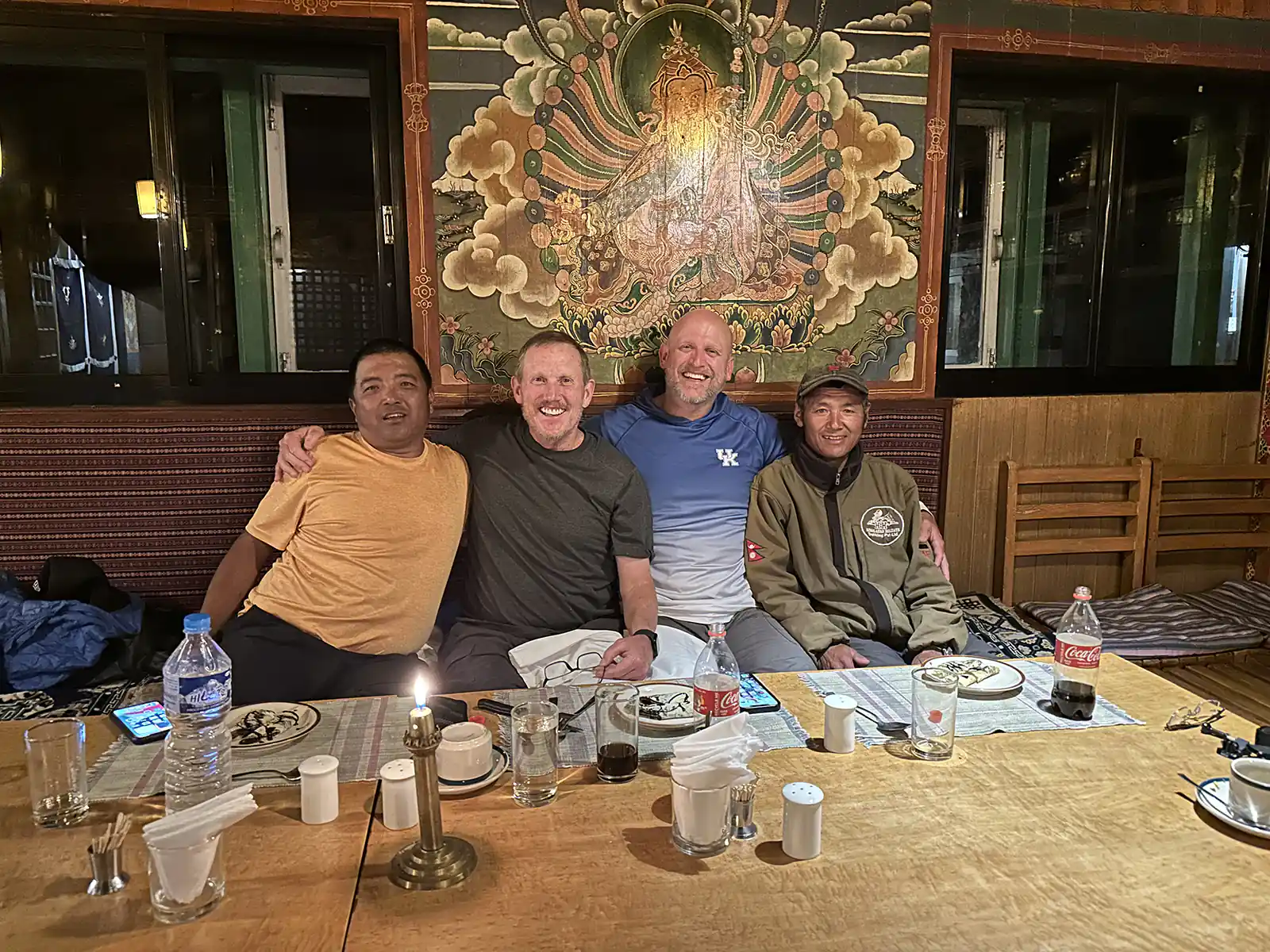
The path continues through lower Sherpa settlements, including Phakding, following the river valley layout. The final hour of the trek requires a steady 200-meter climb from Chheplung village up to the Lukla ridge at 2,860 meters. You conclude the trek by checking into the premium Yeti Mountain Home in Lukla, where your team hosts a farewell gathering to thank the local porters and sherpa staff.
- Location Reached: Lukla
- Location History: Lukla serves as the gateway to the Everest region, famous for its dramatic airport.
- Altitude: Start 3,440m; End 2,860m
- Altitude Loss: 580m
- Est. Oxygen Level: Approx. 72% at Namche
- Trekking Distance: 18 km
- Trekking Duration: 7 hours
- Significant Landmarks: Monjo, Phakding, Dudh Koshi River
Elevation: 2860m
Meal: Breakfast, Lunch, and Dinner
Day 14: Fly from Lukla to Kathmandu
You board an early morning twin-otter aircraft for the 30-minute flight from Lukla Airport back to Kathmandu. On clear days, sitting on the right side of the plane gives you a final look at the Langtang and Jugal Himal ranges. Upon landing at the Kathmandu domestic terminal, a private vehicle transfers you to The Everest Hotel. You have the rest of the day to rest or visit the Peregrine Treks office for a trip debriefing and a celebratory farewell dinner.
Weather Contingency Protocol: Lukla flight schedules depend entirely on visibility. If adverse weather conditions cancel the flights, we will arrange accommodation at a local lodge in Lukla. Please note that an additional charge of USD 300 per person applies if you choose to extend your stay at the premium Yeti Mountain Home during a weather delay.
- Location Reached: Kathmandu
- Location History: Kathmandu is Nepal’s cultural heart, famous for historic temples, bustling markets, and diverse cuisine.
- Altitude: Start 2,860m; End 1,400m
- Altitude Loss: 1,460m
- Est. Oxygen Level: 100% at Kathmandu
- Flight Duration: 30 minutes
Elevation: 1400m
Accommodation: The Everest Hotel or similar
Meal: Breakfast
Day 15: Leisure and Cultural Sightseeing Day in Kathmandu
This day serves as a built-in buffer for any flight delays out of Lukla, and doubles as a cultural exploration day. You can spend the time shopping for authentic Nepalese handicrafts, pashmina shawls, and thangka paintings in the Thamel market.
Alternatively, we can arrange private transport to the historic cities of Bhaktapur or Patan in the Kathmandu Valley. In Bhaktapur, you can explore the preserved Newari architecture of the 55-Window Palace and the five-story Nyatapola Temple. In Patan, you can visit the ancient Durbar Square, the stone-carved Krishna Mandir, and the Patan Museum to see a comprehensive collection of bronze statues and sacred art. You return to The Everest Hotel for your final night.
Elevation: 1400m
Accommodation: The Everest Hotel or similar
Meal: Breakfast
Day 16: Farewell
Your luxury Himalayan trip concludes today. We check your international flight schedule in advance to prevent any delays. A representative from Peregrine Treks picks you up from The Everest Hotel in a private vehicle and drives you to Tribhuvan International Airport. We assist you with your luggage and the initial airport check-in security process three hours before your flight departure time.
Elevation: 1400m
Accommodation: Not Included
Meal: Breakfast
Customize this trip with help from our local travel specialist that matches your interests.
Includes & Excludes
What is included?
The Luxury Everest Base Camp Trek costs from USD 3,840 per person and includes the following services.
- Airport Transfers: Private, air-conditioned transfers between Kathmandu airport and your hotel on arrival and departure.
- Hotels in Kathmandu: You’ll stay four nights in a 5-star hotel (The Everest Hotel or similar) with daily breakfast.
- Kathmandu Sightseeing: Sightseeing with a professional guide in a private car. The package includes all entrance fees to UNESCO World Heritage Sites and a professional city guide.
- Domestic Flights: Round-trip between Kathmandu and Lukla. You’ll drive to Ramechhap, then board a flight to Lukla if you plan to trek during the peak season. We can arrange a helicopter return for groups of 5 or more.
- Deluxe Trek Accommodation: Stay in luxury lodges for seven nights, including Yeti Mountain Home in Lukla, Phakding, and Namche. You’ll stay in Hotel Everest View in Syangboce and Rivendell Lodge in Deboche. We arrange the best available lodges in Dingboche with attached bathrooms and teahouses. You’ll spend five nights at the best available teahouses in the higher elevations. Lobuche, Gorak Shep, and Pheriche all have simpler facilities, likely with shared bathrooms.
- Meals: You will enjoy a full meal each day of the trek, including 15 breakfasts, 11 lunches, and 11 dinners. You can choose from lunch with tea or coffee in the morning and evening. We provide welcome drinks upon arrival at lodges and buffet-style dining at some lower-altitude properties.
- Guides and Porters: An experienced, licensed, English-speaking guide trained in first aid and altitude safety will lead you on the trek. Two trekkers will share one porter. Porters can carry a total of 25kg, so keep your gear to a maximum of 12kg. An assistant guide will join the group if it has more than six trekkers. We fully cover the staff’s salaries, insurance, meals, flights, and accommodation.
- Permit and Paperwork: We cover all required trekking permits. You need the Sagarmatha National Park Entry Permit, the Khumbu Pasang Lhamu Rural Municipality fee, and the TIMS Card. We include and arrange these as part of your package.
- Trekking Gear: We provide a complimentary high-quality down jacket and a sleeping bag rated to –20 °C during the trek. You can return these after the trek. You’ll also receive a Peregrine Treks duffel bag and a trekking map as souvenirs.
- First aid and safety: Your guide carries a stocked kit, including altitude sickness medication. The team also holds a portable oxygen cylinder for emergency use. They maintain phone contact to coordinate helicopter rescues.
- Extra Amenities: We serve seasonal fruits and snacks during the trek. Wi-Fi is complimentary in luxury lodges up to Deboche, and mobile data may be available for a small cost in higher elevations. You can charge your electronics for free till Deboche. If these devices require high power or you need to charge multiple devices, a small additional fee may be incurred.
- Cultural Touches and Celebration: You’ll enjoy a farewell dinner with Nepali cuisine on Day 14.
- Tax and Service Charge: All government taxes, trekking permits, and company service charges. Our package pricing is entirely transparent with no hidden costs.
Click here for more details about the Everest Base Camp Luxury Trek Cost
What is excluded?
- International Airfare: Round-trip flights to and from Tribhuvan International Airport in Kathmandu.
- Nepal Entry Visa: Available upon arrival. Because your itinerary spans 16 days, you must purchase the 30-day visa (USD 50) to avoid overstay penalties. You need physical passport photos and a passport valid for at least six months.
- Mandatory Travel Insurance: Your policy must explicitly cover high-altitude trekking up to 6,000 meters, medical treatment, trip cancellation, and emergency helicopter evacuation.
- Kathmandu Dining: Lunch and dinner in the city, excluding the provided farewell dinner. Budget approximately USD 15-25 per meal.
- Personal Mountain Expenses: Bottled water, alcoholic beverages, extra trail snacks, laundry services, premium Wi-Fi, satellite phone calls, and battery charging fees at lodges above Deboche.
- Crew Gratuities: Tipping is customary for Nepalese mountain staff. We suggest budgeting roughly USD 300 for your lead guide, USD 150 for your shared porter, and a smaller amount for your Kathmandu drivers and city guides.
- Helicopter Evacuation and Early Return: Emergency mountain rescues or voluntary early departures. Private Khumbu evacuations typically cost between USD 4,000 and USD 5,000 if your insurance policy denies the claim.
- Optional Add-ons: Everest scenic mountain flights, single supplement room upgrades, extended hotel nights in Kathmandu, or spa treatments.
Departure Dates
We also operate Private Trips.
Route Map
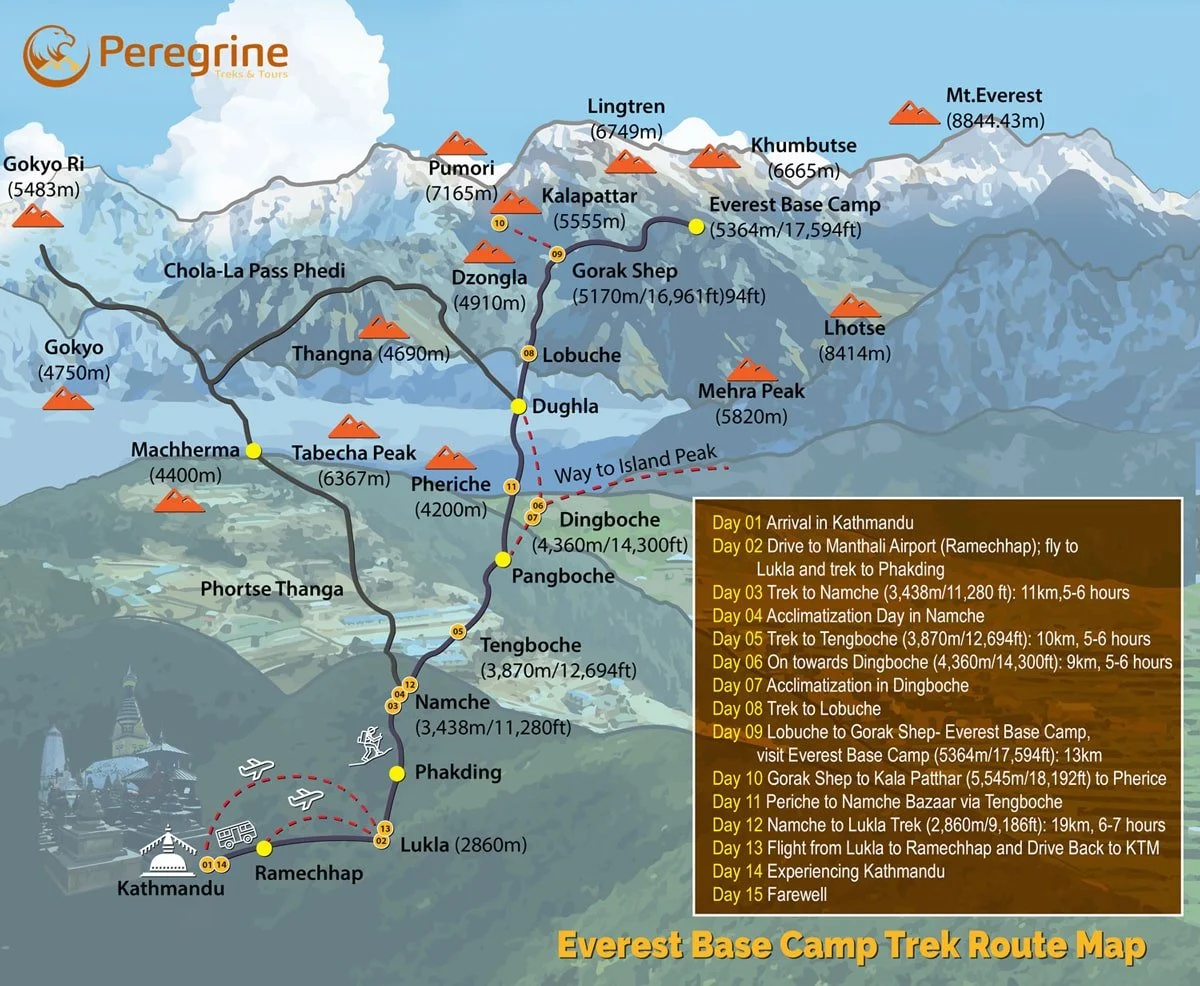
The 16-day route follows the classic Lukla–Namche–Tengboche–Dingboche–Lobuche–Gorak Shep corridor, with built-in acclimatization stops at Namche Bazaar (Days 4–5) and Dingboche (Days 8–9). Total trekking distance: 130 km round trip. Luxury lodges are available at every stop from Phakding to Gorak Shep.
Trip Information
Why Choose Peregrine for the Luxury Everest Base Camp Trek?
If you are seeking a budget-friendly trekking package, Peregrine Treks is not the right choice. We do not cut corners on high-altitude logistics. If you demand uncompromising safety, premium comfort, and the most experienced mountain crew in the Himalayas, we are your only option. We charge a premium because we provide a fail-safe experience from Kathmandu to Everest Base Camp.
Expert Sherpa Leadership
A Khumbu-born guide leads every Peregrine luxury departure. Our trek leaders do not just know the trail; they have real summit experience. Guides like Dorche Sherpa have stood on the top of Mount Everest seven times, while Nima Sherpa has reached the summit twice. They have completed the Everest Base Camp Trek more than 100 times. They speak English well enough to communicate (not fluent) and act as your dedicated safety guardians. We pay our team wages significantly above the local market rate to secure this top-tier talent.
Luxury Lodge Network
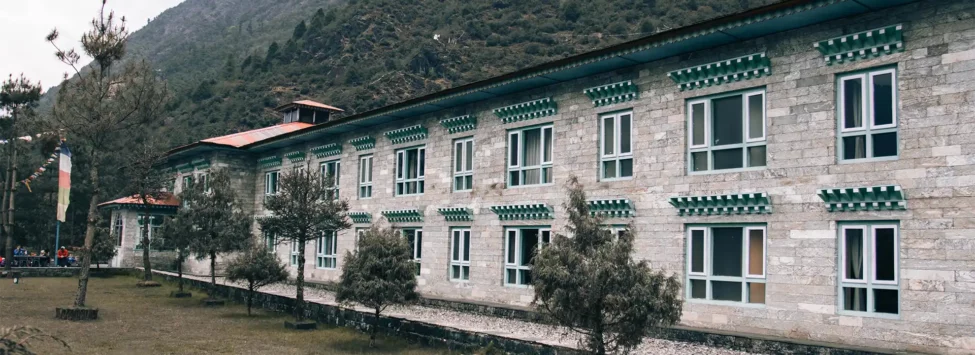
Standard treks rely on communal teahouses with uninsulated walls and shared facilities. We prioritize your physical recovery by booking purpose-built lodges like Yeti Mountain Home, Rivendell Lodge, and the famous Hotel Everest View. These properties offer heated rooms, cozy beds, and en-suite bathrooms with hot showers up to Deboche (3,820 m). At higher elevations like Lobuche and Gorak Shep, we secure the highest-quality private rooms available and provide electric-heated blankets to help you recover effectively after each day of climbing.
High-Altitude Dining Strategy
Proper nutrition is critical for successful acclimatization and energy management. We bypass standard teahouse menus to provide fresh, healthy options. At lower elevations, you enjoy buffet-style breakfasts and dinners featuring fresh ingredients. As we ascend, you receive unlimited à la carte choices ranging from traditional Nepali Dal Bhat to continental and Indian dishes. We easily accommodate vegetarian, vegan, and gluten-free dietary requirements to ensure you maintain your caloric intake when altitude naturally suppresses your appetite.
Advanced Medical and Safety Protocols
Your safety is our absolute priority. Our lead guides hold advanced Wilderness First Aid certifications and conduct mandatory daily health checks using pulse oximeters to monitor your blood oxygen levels. Every group carries a comprehensive medical kit, a dedicated emergency oxygen cylinder, and a Portable Altitude Chamber (PAC bag) to treat severe altitude sickness on the trail immediately. We maintain 24-hour contact with our Kathmandu office to coordinate immediate helicopter rescues up to 6,000 meters if necessary.
Flexible and Exclusive Itinerary
We design our itinerary with a safe, gradual pace of acclimatization. We maintain a strict ratio of one guide for every five trekkers, with one porter assigned to every two clients. This small group dynamic allows us to adjust your schedule instantly if you need extra rest, a longer visit to a monastery, or more time to explore a Sherpa village.
Helicopter Return Logistics
You can upgrade to a direct helicopter flight from Gorak Shep or Kala Patthar back to Kathmandu. This 90-minute flight provides a once-in-a-lifetime aerial perspective of the Khumbu Icefall, Everest, and Ama Dablam. Choosing this option saves you three days of descent and protects your knees from the heavy strain of the long walk back to Lukla.
Connectivity and Electronics
Staying in touch with home is easy on our luxury trek. You receive complimentary Wi-Fi access at all premium lodges up to Deboche. Above this altitude, we recommend purchasing an Everest Link prepaid data card for reliable satellite internet access. Your premium lodge rooms feature standard power outlets for free device charging, ensuring your cameras and phones are ready for the final summit push.
Views from the Balcony
Every day on the trail offers views of Everest, Lhotse, Nuptse, and Ama Dablam. Our luxury itinerary places you in the best locations for these sightings. For instance, the Hotel Everest View (3,880 m) is strategically positioned to offer direct, unobstructed balcony views of the Himalayas at sunrise and sunset, allowing you to enjoy the Himalayas without stepping outside into the freezing night air.
Authentic Cultural Encounters
We offer more than just a path to Base Camp. Our guides introduce you to the deep traditions of the Khumbu region. You visit essential monasteries like Tengboche and have the opportunity to engage with local Sherpa families, learning about mountain history from the very people who call the Himalayas home.
GUIDE EXPERTISE NOTE:
A Khumbu-born guide leads every Peregrine luxury departure with real summit experience. Dorche Sherpa has stood on the top of Everest seven times, while Nima Sherpa has reached the summit twice. They don’t just know the trail — they understand the mountain at every altitude, in every season, and in every weather window. That is the difference between a guide and a guardian. Our Luxury Everest Base Camp Trek will take you to Base Camp while offering warm accommodations, delicious food, and attentive care. You’ll trek through the Himalayas with utmost comfort and safety.
Everest Base Camp Luxury Lodge Trek: Night-by-Night Accommodation
| Night | Location (Altitude) | Accommodation | Room Type |
|---|---|---|---|
| 1–2 | Kathmandu (1,350 m) | The Everest Hotel (5-star) | Deluxe room, en-suite |
| 3 | Phakding (2,610 m) | Yeti Mountain Home Phakding | Luxury room, en-suite, heated bed |
| 4–5 | Namche Bazaar (3,440 m) | Yeti Mountain Home Namche | Luxury room, en-suite, heated bed |
| 6 | Deboche (3,820 m) | Rivendell Lodge | Luxury room, en-suite |
| 7–8 | Dingboche (4,410 m) | Hotel Good Luck | Private room, attached bath, electric blanket |
| 9 | Lobuche (4,940 m) | New EBC Hotel | Private room, attached bath |
| 10 | Gorak Shep (5,140 m) | Himalaya Lodge | Private room, electric blanket |
| 11 | Pheriche | The Edelweiss Pheriche | Private room, attached bath, electric blanket |
| 12 | Namche Bazaar (3,440 m) | Yeti Mountain Home Namche | Luxury room, en-suite |
| 13 | Lukla (2,840 m) | Yeti Mountain Home Lukla | Luxury room, en-suite |
| 14–15 | Kathmandu (1,350 m) | The Everest Hotel (5-star) | Deluxe room, en-suite |
Luxury Everest Base Camp Trek with Helicopter Return
While the standard teahouse trek is a rite of passage for many, it often means sacrificing sleep, warmth, and privacy. Our luxury itinerary is designed for trekkers who want to challenge themselves physically during the day but recover in premium comfort at night.
Trip Length: 13 Days (with Helicopter Return) Pickup Point: Gorak Shep or Kala Patthar (Weather Permitting) Best For: Trekkers who want to save time and avoid the grueling downhill descent.
Optional Helicopter Return Logistics
Instead of retracing your steps for three days back to Lukla, you can upgrade to a direct helicopter flight from the high mountains back to Kathmandu. This is one of the most exclusive features of our luxury package.
- Time-Saving: A helicopter flight from Gorak Shep or Kala Patthar to Kathmandu takes approximately 90 minutes. This eliminates three full days of trekking on the descent, allowing you to maximize your time in the city or avoid the return hike on fatigued legs.
- Aerial Perspective: You fly directly over the Khumbu Icefall, Ama Dablam, and the turquoise Gokyo Lakes. It is a rare opportunity to view the world’s highest peaks from a vantage point few climbers ever reach.
- Flexible Weather Operation: Helicopters can operate in weather conditions that ground fixed-wing flights at Lukla. This provides an additional layer of security to ensure you return to Kathmandu on schedule.
- The USD 950 Pricing Logic: A shared helicopter charter typically costs USD 1,200 per person. However, choosing this upgrade saves the cost of providing your mountain accommodation and meals during the three-day descent to Lukla. By balancing the savings from the mountain against the extra hotel nights in Kathmandu, the net cost of the upgrade is USD 950 per person.
- Booking Requirements: We handle all luggage transfers, ensuring your gear arrives in Kathmandu at the same time you do. Please notify us of this upgrade at least 48 hours in advance so we can adjust your Lukla flight logistics and lodge bookings.
Click here for Luxury Everest Base Camp Trek with Helicopter Return Package.
Trek Difficulty and Physical Preparation
We rate this trek as moderate to challenging. You do not need to be a professional climber, but you must be physically prepared for the unique environment of the Himalayas.
- Physical Demands: You will hike 5 to 7 hours daily over uneven, mountainous terrain. Kala Patthar (5,545 m) and Everest Base Camp (5,364 m) are your highest points.
- The Altitude Factor: The main challenge is the thin air. At high altitudes, oxygen levels drop to roughly 50% of sea-level levels, placing significant stress on the heart and lungs.
- Acclimatization Strategy: We enforce a strict “climb high, sleep low” protocol. We include two mandatory acclimatization days in Namche Bazaar and Dingboche to ensure your body adjusts safely. We insist that you drink at least 4 liters of water or fluids daily to maintain blood volume.
- Training and Preparation: You do not need prior high-altitude experience, but we highly recommend training at least two months in advance. Engage in cardiovascular workouts—jogging, swimming, or cycling—three times per week. If possible, complete weekend hikes with a 5kg daypack to condition your joints for the daily 6-hour treks.
- Mental Strength: Physical fitness is secondary to your mindset. The Everest region is demanding; maintaining a positive, steady pace is your best defense against early fatigue.
Read More: Do You Need to Be Super Fit for an Everest Luxury Lodge Trek?
Best Time to Go on a Luxury EBC Trek
The optimal window for trekking in the Khumbu region is dictated by weather stability and lodge availability. For our luxury itineraries, we recommend the following windows to ensure you get the best visibility and access to our preferred premium lodges.
Spring: March to May
Spring is the peak mountaineering season. The weather is relatively stable, with daytime temperatures between 10°C and 20°C in lower regions like Lukla and Namche. Nights above Dingboche remain below freezing, but our premium lodges with electric blankets keep you comfortable.
- Scenery: Rhododendron forests bloom in April, providing color in the lower valleys.
- Atmosphere: This is the peak climbing window for Mount Everest. You will see Everest Base Camp bustling with expedition tents and mountaineers, offering a unique opportunity to witness the mountain’s high-stakes activity.
- Best For: Trekkers who prioritize lively base camp energy, good weather, and mountain photography.
Autumn: September to November
Following the summer monsoon, the atmosphere clears, leaving the air crisp and dry. November provides the sharpest views of Everest and its neighboring peaks. While temperatures mirror spring, nights grow colder as November progresses.
- Visibility: This season offers the highest probability of clear skies, making it the preferred window for landscape photography.
- Logistics: October is the busiest month in the Everest region. Because luxury lodges have limited inventory, we require bookings 3 to 6 months in advance to guarantee your rooms.
- Cultural Highlights: The major Nepali festivals, Dashain and Tihar, often fall in this window, allowing you to witness local traditions and vibrant community celebrations.
- Best For: Trekkers prioritizing maximum mountain visibility and stable, clear weather conditions.
| Season | Weather | Views | Crowds | Recommendation |
|---|---|---|---|---|
| Spring (Mar–May) | Mild, 5–15°C at lower altitudes; possible afternoon cloud | Excellent; rhododendrons in bloom | Moderate to busy | Best overall — ideal for first-timers |
| Autumn (Sep–Nov) | Cool, dry, clearest skies of the year | Best visibility; the Everest summit is rarely clouded | Peak season — busiest | Best for photography & views |
| Winter (Dec–Feb) | Cold; −10 to −25°C at Gorak Shep; possible snowfall | Stunning on clear days; shorter daylight | Very quiet — lodges nearly empty | For experienced cold-weather trekkers only |
| Monsoon (Jun–Aug) | Rain at lower altitudes; leeches; the trail can be slippery | Often clouded below 4,000 m; clear above | Very quiet | Not recommended for luxury treks |
Related Article: Best Time for the Everest Base Camp Trek
Expert Insight: Why Early Booking Matters
For the Luxury Everest Base Camp Trek, “the best time to go” is also determined by lodge inventory. Because we exclusively book premium properties like Yeti Mountain Home and Hotel Everest View, these rooms are in limited supply. Even if the weather is perfect, if you book at the last minute, you may be forced into standard teahouses. We strongly advise confirming your dates at least four months in advance to ensure your full itinerary remains in our premium lodge network.
Packing List for the Luxury Everest Base Camp Trek
Mountain weather changes within minutes. While our porters carry your main luggage and we provide the high-altitude essentials, packing the right personal gear is critical for your comfort.
Provided by Peregrine Treks:
- Sleeping System: A high-quality sleeping bag rated to –20°C.
- Outerwear: A professional-grade down jacket.
- Logistics: A durable Peregrine duffel bag and a detailed trail map.
- Support: Trekking poles (upon request).
Personal Gear Checklist:
- Clothing: Moisture-wicking base layers, trekking shirts (lightweight), fleece or soft-shell mid-layers, and waterproof outer shell jacket and pants.
- Footwear: Broken-in, waterproof trekking boots (essential for ankle support) and comfortable camp shoes (like lightweight trainers or down booties for inside the lodge).
- Accessories: Warm hats (beanie and sun hat), insulated gloves, and several pairs of merino wool trekking socks.
- Daypack: A 30–40L daypack to carry your water, snacks, headlamp, rain cover, and camera gear.
- Essentials: Personal toiletries, a power bank (20,000 mAh+ capacity recommended), a small personal first-aid kit, and UV-protection sunglasses.
- Documentation: Passport copies, visa confirmation, travel insurance policy details, emergency contact list, and small denomination USD/NPR cash.
- Pro Tip: Dress in layers. Shedding clothing during a steep ascent prevents sweat buildup, which is the fastest way to get cold at high altitudes.
Read More: The Luxury Everest Base Camp Packing List: What to Bring (And Leave Behind)
How to Book Your Luxury Everest Base Camp Trek
Our booking process is designed to be seamless. As a luxury operator, we handle all permits, flight logistics, and lodge reservations to provide a stress-free experience from arrival in Kathmandu.
- Check Availability: Click the ‘Book Now’ button to view our departure schedule. Because premium lodge inventory is limited, we strongly recommend booking 3 to 6 months in advance.
- Tailor Your Itinerary: If you wish to extend your journey to Chitwan National Park or add a mountain flight, let us know. We customize the itinerary to fit your specific interests.
- Confirm Your Booking: A deposit is required to secure your spot. This payment allows us to instantly block out your rooms at Yeti Mountain Home and other premium lodges and book your Lukla flight tickets.
- Balance Payment: The remaining balance is due 30 days before your departure. We accept major credit cards and bank transfers.
- Preparation Pack: Once confirmed, we send a digital pack including your receipt, training tips, visa requirements, and insurance guidance.
Practical Tips for Your Everest Luxury Trek
Acclimatization is a strategy: Do not rush. We include two rest days in Namche and Dingboche specifically to allow your body to adjust.
- Hydration: Drink 4 liters of water or fluids daily. Staying hydrated is the single most effective way to prevent altitude sickness.
- Book Early: Premium luxury lodges have very few rooms. Booking early ensures you get the “Luxury” room type rather than a standard one.
- Pack Light: Even with porters, keep your personal daypack under 6kg. This makes climbing much easier and keeps you focused on the scenery rather than the weight.
Safety Protocols
Peregrine Treks adheres to the strictest safety standards in the Khumbu region. Our luxury treks include specific hardware and personnel protocols that standard agencies do not provide.
Medical and Operational Support
- Certified Guides: Every lead guide holds official Nepal Tourism Board (NTB) licensing and advanced Wilderness First Aid certification.
- Pulse Oximetry: Your guide monitors your blood oxygen levels daily to track your physiological adaptation to altitude.
- Emergency Oxygen & PAC: We carry dedicated emergency oxygen cylinders and a Portable Altitude Chamber (PAC bag) on all group treks to immediately address severe altitude symptoms.
Evacuation Strategy: We maintain 24-hour contact with our Kathmandu office. We facilitate helicopter rescues up to 6,000 meters for any client showing signs of medical distress.
Why Safety is Our Premium
A luxury trek is not just about better pillows; it is about better risk management. By employing guides who have summited Everest, using medical-grade safety equipment, and maintaining a strict 1:5 guide-to-client ratio, we ensure your protection. Our team monitors for hazards before they become emergencies.
Essential Insurance Reminder
Your travel insurance policy must explicitly include high-altitude trekking up to 6,000 meters, emergency medical evacuation, and trip cancellation. Please provide your insurance details to our team before the trek begins. Double-check your policy; many standard plans do not cover helicopter rescues at the altitudes reached during the Everest Base Camp Trek.
Trek Experience and Physical Fitness
The Everest Base Camp Luxury Trek is a trekking expedition, not a technical mountaineering climb. You do not need previous high-altitude mountaineering experience to succeed. However, because this trek takes you to an elevation of 5,545 meters, you must possess a good level of physical stamina. You will hike for 5 to 7 hours daily over mountainous terrain.
While the Luxury itinerary provides a more comfortable recovery environment than standard treks, the physical demands remain high. We recommend a training routine that includes cardiovascular exercises (jogging, swimming, or cycling) at least three times per week, beginning two months before your departure. Being comfortable walking 6 hours a day on uneven ground is the best way to ensure you enjoy the scenery rather than just focusing on your fatigue.
Group Size and Guide Ratio
We prioritize a personalized trekking experience by keeping our groups small.
- Average Group Size: 1 to 4 trekkers.
- Maximum Group Size: 12 trekkers.
- Support Ratio: 1 guide per 5 trekkers; 1 porter per 2 trekkers.
- Assistant Guides: For groups larger than 7, we provide an additional assistant guide to ensure every client receives personalized attention and safety monitoring.
Mandatory Travel Insurance
Travel insurance is non-negotiable for this expedition. Your policy must be comprehensive and explicitly include:
- High-altitude coverage: Trekking up to 6,000 meters.
- Emergency Medical: Coverage for treatment, hospital stays, and doctors’ expenses.
- Helicopter Evacuation: Immediate air rescue coverage to transport you from the Everest region to a hospital in Kathmandu.
- Trip Cancellation: Protection against flight cancellations or itinerary changes.
- Note: You must provide proof of insurance and the 24-hour emergency contact number before the trek begins.
Hydration and Refreshments
Hydration is your primary defense against altitude sickness. We recommend drinking at least 4 liters of fluid daily.
- Teahouse Amenities: Our lodges offer safe drinking water (approx. USD 1 per bottle).
- Hot Drinks: We include two complimentary cups of tea or coffee with breakfast each day.
- Local Dairy: We encourage you to try Yak and Nak milk tea, a staple in the Khumbu region that provides excellent warmth and energy during the trek.
- Beverage Advice: We suggest lemon, ginger, or honey tea at higher altitudes, as these are easier on your digestion than coffee.
Typical Day on the Trek
Our daily rhythm is designed to balance physical activity with recovery:
- Morning: Early wake-up with a hot beverage followed by a hearty breakfast to fuel your climb.
- Daytime: We trek at a steady, “pole-pole” (slow) pace, allowing you to breathe comfortably and acclimate naturally. We stop for lunch at a mountain lodge after roughly three hours of walking.
- Afternoon/Evening: We arrive at our premium lodge late in the afternoon. This gives you ample time to shower, relax, and socialize. Dinner features a diverse selection of local and international dishes.
- Evening: Your lead guide will plan the next day’s route, discuss the weather, and perform a health check before you retire to your room.
Extending Your Trek: Gokyo Lake and Cho La Pass
You can add the Gokyo Lake and Cho La Pass to your itinerary for an additional two days.
- The Route: After descending from Kala Patthar, you branch off toward the Cho La Pass (5,420 m).
- The Challenge: This is a high-altitude mountain pass. You will cross glaciers and navigate rocky terrain, offering unparalleled views of Ama Dablam, Lhotse, and Cho Oyu.
- Accommodations: Should you choose this extension, we will ensure you stay in the finest lodges available in the Gokyo and Namche areas, maintaining the luxury standard of your journey.
Domestic Flight Logistics
Flights between Kathmandu and Lukla take approximately 35 minutes. These flights are highly dependent on weather visibility.
- Peak Season Strategy: During spring and autumn, the aviation authority may redirect all flights to Ramechhap Airport. If your fixed-wing flight is diverted, we arrange ground transportation from Kathmandu to Ramechhap for an early-morning departure.
- The Peregrine Flight Guarantee: If a direct flight from Kathmandu is unavailable during peak season, we upgrade your group to a direct helicopter flight from Kathmandu to Lukla at no extra cost.
- Buffer Days: We strongly recommend scheduling at least one or two extra days in Kathmandu after your trek to account for potential Lukla flight delays.
Helicopter Evacuation & Emergency Protocols
We have dedicated rescue facilities. In the event of a medical emergency, a helicopter evacuation will be coordinated immediately. The cost ranges from USD 4,800 to USD 5,000. Your travel insurance is essential to cover these costs. If you are forced to end your trek early due to health or weather, we will assist you with all logistics, though we cannot provide refunds for unused portions of the package.
Booking and Refund Policy
- Reservation: Secure your spot by booking 3 to 6 months in advance, especially for Spring and Autumn departures.
- Customization: We are happy to tailor your trip, including side trips to Pokhara or Chitwan, or additional sightseeing in Kathmandu.
- Deposits: An initial deposit secures your lodge rooms and Lukla flight bookings.
- Flexibility: We believe in providing premium service and will assist you with any rescheduling needs to ensure your trip is successful. Please note that once services are booked, we cannot provide refunds for unused hotel nights or transport segments caused by early departure or itinerary changes.
Related Articles
Frequently Asked Questions
No. The Luxury Everest Base Camp Trek is a high-altitude hiking expedition, not a technical climb. You do not need mountaineering skills or ropes. However, it is physically demanding. You will hike 5–7 hours per day over uneven terrain at altitudes above 5,000 meters. Physical fitness is required, but your success depends more on your ability to acclimate to altitude than on raw athleticism.
We redefine “luxury” in the Khumbu region by replacing communal, uninsulated teahouses with premium lodge networks like Yeti Mountain Home and the Hotel Everest View. These properties provide private rooms, en-suite bathrooms with hot showers, and electric-heated beds. We also offer a higher guest-to-guide ratio, premium high-altitude meals, and dedicated medical support (pulse oximeters and oxygen kits) that standard budget treks do not.
No. You do not need to be an athlete, but you should have a baseline of cardiovascular fitness. We recommend a training routine of jogging, swimming, or cycling three times per week for two months prior to your trip. The trek requires stamina, not speed. Our luxury itinerary follows a slow, controlled “climb high, sleep low” pace that helps your body adapt to the thin air.
The helicopter flight from Gorak Shep or Kala Patthar back to Kathmandu is the ultimate luxury upgrade. It saves three full days of strenuous downhill trekking, which protects your knees and joints from fatigue. Furthermore, it provides an unparalleled aerial view of the Khumbu Icefall, Everest, and the Gokyo Lakes that you simply cannot see from the ground.
This is a common issue during peak seasons. While most agencies force you to wake up at 2:00 AM for a 4-hour drive to Ramechhap, we provide a Peregrine Flight Guarantee. If a direct flight from Kathmandu is unavailable, we upgrade your group to a private helicopter transfer from Kathmandu to Lukla at no additional cost, ensuring your trek begins on schedule and in comfort.
Yes. Your policy must cover high-altitude trekking up to 6,000 meters, medical treatment, and emergency helicopter evacuation. Many standard travel insurance policies do not cover altitudes above 3,000 meters; you must verify that your specific policy covers the EBC trail before departing.
Your lead guide monitors your health daily using pulse oximetry. If you show signs of severe altitude sickness, your safety is our priority; we will arrange an immediate helicopter evacuation to Kathmandu. Please note that while we provide the logistics for evacuation, we cannot offer refunds for unused portions of the trek (hotels or meals) due to the nature of mountain logistics.
Tipping is a standard practice in the Himalayas to reward your crew for their hard work. For our 16-day luxury itinerary, we recommend a budget of approximately USD 400 for your lead guide and USD 250 for your shared porter. Your lead guide can help organize a group tipping pool at the end of the trip to ensure the entire team is recognized.
Yes, you will have the opportunity to visit the Khumjung Monastery, which houses a famous religious relic—often referred to as the “Yeti Scalp”—protected within a glass casing. This is a highlight for many of our guests and a key part of our focus on sharing authentic Sherpa culture.
If you are looking for the lowest possible price, Peregrine is not the right fit. We specialize in high-end logistics, experienced summit-proven guides, and fail-safe safety protocols. If you are seeking a premium, fully supported, and professionally managed Himalayan experience, we are the industry leader in luxury Everest expeditions.
Luxury travel is about privacy. Our standard luxury package is based on double occupancy, but we offer a single supplement option for all travelers who prefer their own room throughout the trek. If you are a solo traveler, we will secure a private room for you in all luxury lodges and Kathmandu hotels.
We treat altitude prevention as a logistical priority, not an afterthought. We prevent sickness through three methods: a strict “climb high, sleep low” itinerary that includes two mandatory acclimatization days in Namche and Dingboche, a mandatory daily hydration protocol (4 liters per day), and daily health monitoring. Our guides are trained to identify the earliest physiological signs of distress—often days before they become serious—allowing us to adjust the pace or provide supplemental oxygen before a condition worsens.
While we provide free charging at all luxury lodges up to Deboche, power access becomes a shared resource at extreme altitudes such as Lobuche and Gorak Shep. We ensure your devices are prioritized, but we recommend bringing a high-capacity power bank (20,000 mAh) as a reliable backup. This ensures you can keep your cameras and phones charged for the final summit push without worrying about power availability at the lodge.
Reviews on Luxury Everest Base Camp Trek
5.0
Conquering Everest Base Camp in Luxury
Forget roughing it on the mountain! My Everest Base Camp Trek with Peregrine Treks was an unforgettable adventure in luxurious comfort. Peregrine took care of everything, from top-notch teahouse stays with stunning Himalayan views to delicious meals that fueled our challenging hikes. The highlight was definitely Gorakshep, where we stayed in a luxurious lodge with panoramic views of Everest. The feeling of accomplishment reaching Base Camp, surrounded by such majestic peaks, was indescribable. Our experienced guide ensured our safety and made the journey informative and fun. This trek was the perfect blend of physical challenge and luxurious pampering, and Peregrine delivered on all fronts!

Danny B. Kelly
Mandan Road Russellville, MO, United StatesPushing My Limits in Style: Everest Base Camp Trek
This Everest Base Camp Trek with Peregrine Treks wasn’t for the faint of heart, but the breathtaking scenery and Peregrine’s exceptional service made it a truly rewarding experience. The trek pushed me to my physical limits, but the comfortable lodges with hot showers each night were a welcome reward. Peregrine’s staff were incredibly attentive, ensuring we had everything we needed, from altitude medication to steaming cups of tea after a long day on the trail. The helicopter ride back from Gorakshep was the ultimate treat, offering stunning aerial views of the Himalayas that would have been impossible to see by foot. This trek was a fantastically organized adventure, perfect for luxurious travelers who want to experience it without sacrificing the challenge.
Edward E. Enriquez
Marcus Street Gadsden, AL, United StatesFirst Class Trekking Package
Trekking up to Everest Base Camp was challenging but much more satisfying and beyond my expectations. I communicated first class with Pradip, who organized this Luxury Everest Base Camp Trek. I had an excellent trekking guide named Chetup Sherpa, who looked after my ups and downs throughout the trek. He kept me informed about the Trekking distance to be covered, height to be ascended, and altitude to be reached daily, keeping me safe.
I will surely return to Nepal and have another adventure with Peregrine Trek. Accommodation in Lukla, Phakding, and Namche was terrific. From Namche, lodges are good, with attached bathrooms, hot water for showers, and WiFi for accessible communication with my family. The rooms of Everest View Hotel were terrific, and it’s beyond my imagination.
Namaste!!
Savannah Bagot
Sydney, AustraliaFabulous Everest Base Camp Luxury Lodge Trek
I had a fabulous time. Excellent guide and porters, lovely group, fabulous scenery, and people. I’m over 50, though, and I had never been trekking. Although I did a lot of walking in preparation, what really would have helped most would have been daily going up and down your stairs as much as I could bear. Hill and mountain hiking is a great idea. Also, doing daily is good preparation as you’re doing it daily on the trek. Well worth it, though.
Justin Pethard
AustraliaImpressive Everest Luxury Trek
I’m fortunate to have the opportunity to admire the Everest region from every angle in a luxurious way. Luxury Everest Base Camp Trek is a complete experience and well-satisfying satisfaction. Eating outstanding cuisine while enjoying the view from the Everest View Hotel was a fantastic experience. The trek up Kalapathhar cliff was also exciting, even though I was freezing from the altitude. I had an entirely different perspective on the Khumbu Region when I stepped up there. Throughout that, the exquisite accommodation and meals along the trek were the main thing I will never forget. This experience left a lasting impression on my heart, and I will try it again.
Margery J. Buffum
Austin, United StatesTop-notch experience of Everest Luxury Trek
From Pheriche, the breathtaking perspective of the northern side highlands was astounding. If I ever get the opportunity to visit there, I would dearly enjoy conversing with the gracious Sherpas again. The interactions with the locals were excellent, and I discovered a lot about their history. During my Everest Base Camp Luxury Lodge trek, the monasteries surrounding Pangboche and Tengboche lit my heart. More than that, I’ll never forget eating foreign and native Nepali cuisine while gazing northward at the stunning Makalu and Cho Oyu peaks. Overall, this expedition was a top-notch experience for me, and I will always be thankful to Peregrine Treks & Tours for providing me with this incredible adventure.
Ed E. Kerns
Dallas, United StatesUnforgettable Journey of Mount Everest Trek
A truly unforgettable journey to Everest Base Camp Luxury Lodge Trek. During the preparation phase, Pradip from Peregrine Treks and Tours responded quickly and accurately to our questions. We were cautious because we were accompanying our pre-teen and adolescent children. The quoted pricing was competitive. We arrived and had a nearly faultless tour. Our tour leaders and porters were fantastic. They catered to all of our needs and were always willing to help. I can’t say enough good things about Pradip and our guides, Nima and Pasang. Our porters, Tek, Dhiraj, and Suresh, were also excellent. The entire team kept our children (Aged 11 and 13) and us safe and entertained throughout the journey.
Laura J. Sharpe
Charlestown, United StatesFriendly and helpful staff
After reading numerous testimonials on TourRadar, I opted to take my Luxury Everest Base Camp Trek with Peregrine, and it was the best decision I could have made. Before I arrived in Nepal, Pradip answered my questions without hesitation. Nima, our guide, and Tekendra, our porter, were friendly and helpful, going out of their way to help us. This collaborative effort resulted in the best 15 days possible.
Demetria Zito
ItalyPriceless Everest Base Camp Luxury Lodge Trek
We hired Peregrine Treks and Tours for four persons for a 15-day Luxury Everest Base Camp Trek. 4-6 persons are the maximum number of people you should go hiking with since you would be waiting behind the others. It takes a lot of walking and trekking up and down mountains, but the experience is priceless. Pasang, our guide, was an excellent choice; despite being a little difficult to understand at times, he blended in with our group and became a team member.
Demetria Palermo
ItalyLuxury Everest Base Camp Trek with Helicopter Return to Kathmandu
I did not anticipate that the helicopter flight from Everest Base Camp to Kathmandu would be so stunning. Ama Dablam, Makalu, Kanchenjunga, Nuptse, Lhotse, and Cho Oyu were all visible from the helicopter. The adventure’s highlight was traveling through the quaint Sherpa hamlet. Their culture and heritage were exceptional, but what captivated me was that most of their family members were either engaged in trekking or agricultural pursuits. The Tengboche’s tranquil atmosphere and the Phakding lush surroundings were both excellent. I reached the trek’s highest point, Kalapathhar, by following our guide’s lead (5,545m).
Dominic Ayot
FranceTrek with full exciment
During my enjoyable holiday, the luxurious Everest Base Camp trek was a pleasure for me. I urge travelers to Nepal to attempt this once. The trail led us to the majestic destination, passing by Rhododendron woodland and low-lying clouds. Since there will be few ATMs or banks in the Everest region, I kindly ask that you exchange your local money in Kathmandu. I’ll never forget the fresh yak milk tea that went along with it. Rare plants and animals were abundant in the rainforest, stretching from Namche Bazaar to Pangboche. The spectacular stone-paved trail and waterfalls in the Khumbu Region enhanced the feeling of excitement.
Arianne Grivois
FranceFantastic Experience
It was an exciting flight from Kathmandu to Lukla. Likewise, Flying above the magnificent vegetation of central and eastern Nepal was mesmerizing. Being on the brink of Mount Everest was a fantastic experience for us. The finest experience I’ve ever had was ascending the cliff face of Everest Base Camp. The view of the Khumbu Glaciers and other snowy Himalayas from the Kalapathhar was refreshing. Upon returning to Lukla, I reminisced on my excellent accommodation and food on the trek. The picturesque Namche Bazaar hamlet reminded me of the ancient Himalayan village in Japanese classic films. The luxurious Everest Base Camp excursion, as a whole, was the most beneficial for me.
Troy Duval
FranceExcellent trek with warm hospitality
Since I returned from my first trek in Nepal in April, I have been swamped. Indeed, the hustle and bustle of life here starkly contrast with the tranquility I experienced in the mountains. It makes me even more nostalgic about my trek with Nima as our guide.
Like many people who have not been to Nepal, I was looking forward to basking in the beauty of the majestic Himalayan mountains. No doubt, I saw the majestic Himalayan Mountains, but what left me with deep impressions were the people I met. From the point we reached the airport, we felt the warmth of Nepali hospitality. We were treated more like friends rather than just mere visitors.
As friends, we had the privilege to hear his views on the political situation from our trekking guide, Nima, and we saw his passion for his country and his hope for the future. During the Luxury Everest Base Camp Trek, while we saw many porters carrying loads many times their weight, I also saw the resilience of the people, which is like the Himalayan Mountains that stood firm and sturdy in whatever weather conditions. On our day of departure, Pradip came down to fetch us to the airport, even though he did not have much sleep as he was trying to help his friend the night before. I saw his dedication to his work and his kindness to his friend.
Through all these that I saw, I couldn’t help but pray, “God, this is a wonderful country with wonderful people. May God bring to these countries capable leaders who love the people and who will bring the country to the heights of the Himalayan Mountains.” God bless Nepal!
Bethany Gowlland
AustraliaFantastic Experience of Everest
Our journey to EBC was a fantastic experience, and as a family of five ranging in age from 16 to 60, we were exceptionally well cared for; it was difficult, but we could not fault the experience.
Adèle Joly
FranceRecommended Trekking Package fro Everyone
When I discovered this local travel specialist, I was skeptical that they could keep their claims. Most of the treks I discovered were double the price, and the services appeared almost equal. After reading positive evaluations, I decided to take a chance. I’m SO HAPPY I CHOSEN Pradip and this local travel expert! He was responsive, met me at the hotel when I arrived to check the plan and worked tirelessly with me to overcome travel obstacles caused by monsoon weather.
NIMA IS FANTASTIC! He is an exceptional guide who got me to Base Camp despite numerous obstacles with the weather and my condition. I cannot recommend these people highly enough and Luxury Everest Base Camp Trek. It would be wise to spend less on inferior goods.
Sander C. Kruse
DenmarkLuxury Everest Base Camp Trek at resonable cost
Pradip is a living legend. He suggested a fantastic route and was extremely reasonable in his cost. He stayed in touch with me from the moment I arrived in Kathmandu from Germany till the very end of my journey. I recommend Peregrine Treks because of their education, fairness, and, most significantly, their excellent character.
Monika Peters
GermanyI had excellent information about what to do and bring from the day I booked my Luxury Everest Base Camp Trip; from the airport, they picked me up and gave me a two-night free 5-star hotel to stay in Kathmandu; on the Trek, I had an excellent guild who looked after me every second of the day, like my dad, ok the Trek is long days of walking, but that’s what you signed up for, great experience. The accommodation during the trip was superb.
Melanie Drescher
GermanyRelated Packages
Destination
NepalDifficulty
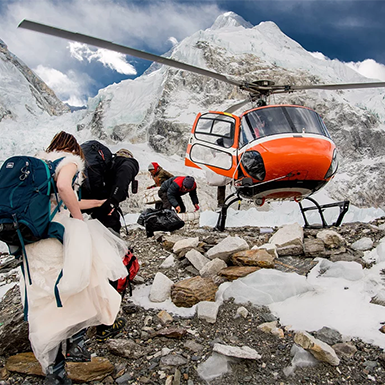
Moderate to ChallengingEverest Base Camp Trek with Helicopter Return
 11 Days
US$ 2890
Destination
NepalDifficulty
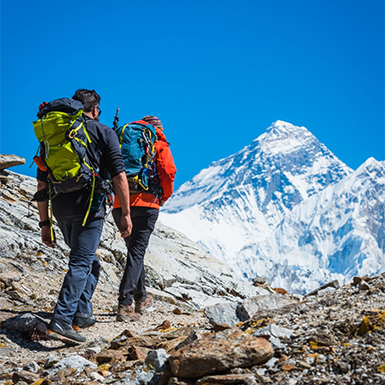
ModerateEverest Base Camp Trek for Beginners
16 Days
US$ 2450
Destination
NepalDifficulty
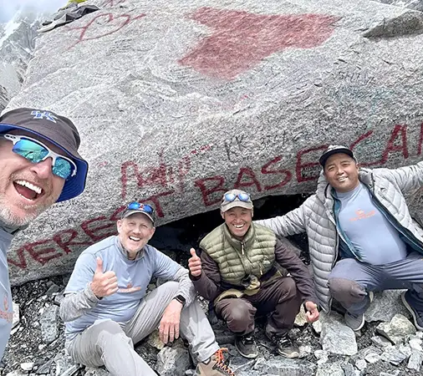
ModerateLuxury Everest Base Camp Trek with Helicopter Return
13 Days
US$ 4900