When is the Best Time for Annapurna Circuit Trek?

2. Spring – Second Best Time For Annapurna Circuit Trek

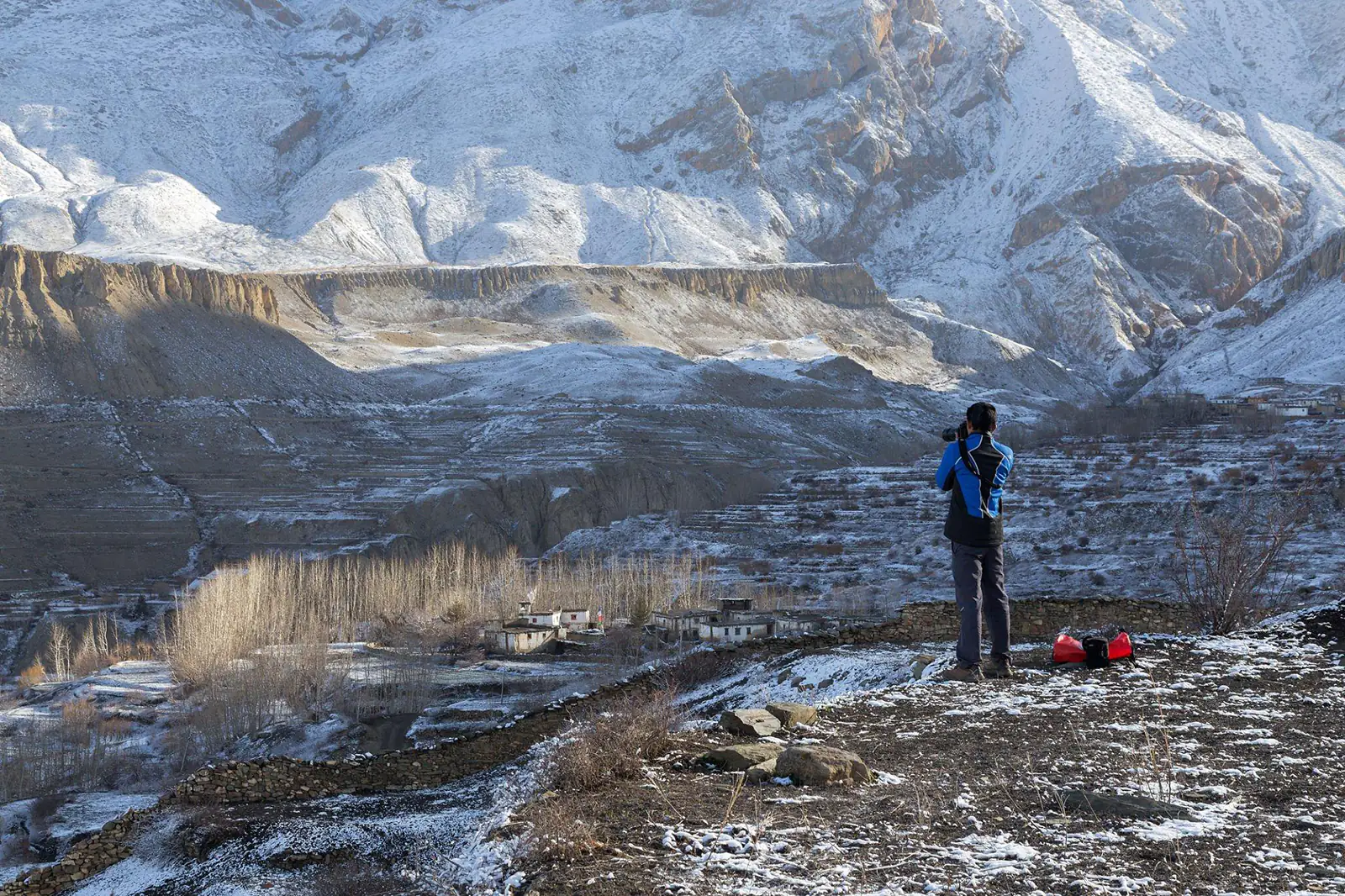
Spring is the second-best season to do Annapurna Circuit Trekking. Popularly known as the season of color, you will walk through a beautiful lush forest with many wildflowers and Rhododendron blossoms. The vegetation is in full blossom during this time of the year.

You will have a wonderful refreshing trek with fresh air combined with the rich aroma from the new blossom of wildflowers.

Spring brings warmer, longer days and a refreshing alternative to the busy autumn season with pink rhododendrons in full bloom at the lower altitudes. Days are usually sunny and bright, with white and low clouds, making the sky look even better.

The weather and temperature also remain constant for a long day span. There is a meager chance of rainfalls and snowfall in the Annapurna Region during spring.

Tips for Annapurna Circuit Trekking in Spring

  • Per-Book Accommodation.
  • If you are trekking in early March, carry some warm gear.
  • Similarly, during early March, you may experience occasional snowfall. So, be careful.
  • The temperature gets hotter during the late spring, leading to occasional rainfall. So, pack rainproof gear as well.
Best Time for Annapurna Circuit Trek
Related Articles:


3. Annapurna Circuit Trek During Winter- Off-Season

The Annapurna Circuit trek is moderate trekking. That is why it can be done throughout the year. However, winter trekking is not as famous as trekking in Autumn or Spring. Winter is considered off-season since there are fewer trekkers during this time.

The Annapurna Circuit Trails get pretty tricky due to cold weather and snowfall. The highest point of this Annapurna trekking is the Thorong La pass, located at 5416 meters above sea level.

At such a high altitude, the weather conditions undergo drastic changes within a short period, and the temperature becomes freezing. Heavy snowfall is quite common at the top of the pass. Hence, during such times, the trail is closed for trekking.

Due to these reasons, trekking the Annapurna Circuit during winter is not recommended. Additionally, you will experience heavy snowfall at the pass and in other high-altitude areas. Most local people migrate to the lower land to escape this harsh weather.

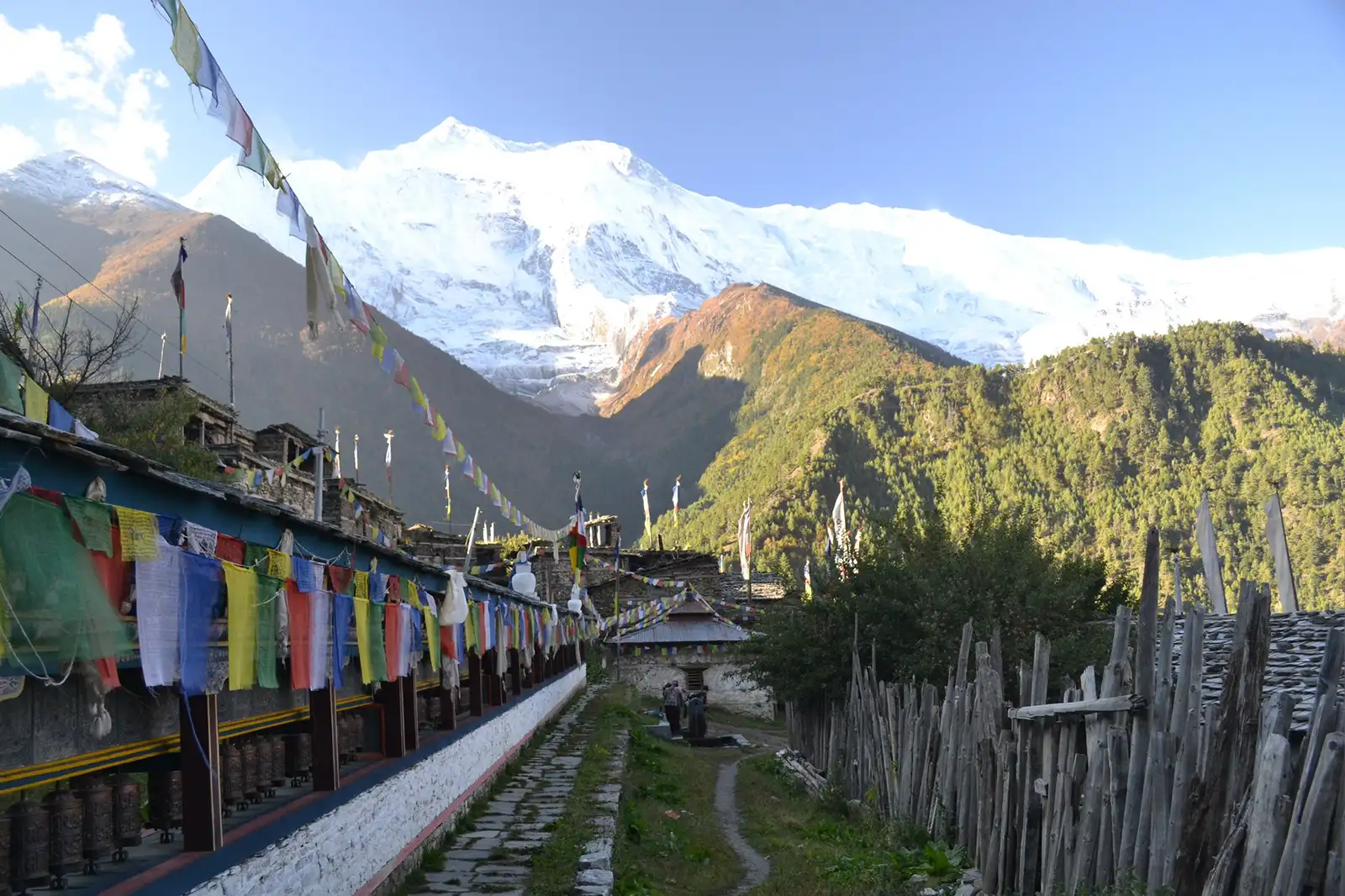
However, the view of the dazzling mountain peaks covered in white is spectacular. If you want an adventurous trek, trekking the Annapurna Circuit in winter is perfect.

If you plan to do the Annapurna circuit trek in winter, take full precautions about your safety. Prepare yourself to face harsh weather conditions and challenges during the trek, and carry all the necessary trekking gear.
Essential things to know before Annapurna Circuit Trek

4. Annapurna Circuit Trek During Monsoon – Off-Season

Trekking Annapurna Circuit in Monsoon is also considered an off-season. The weather during this season is quite hot and wet at the same time in the Annapurna region.

During the monsoon season, you will experience frequent heavy rainfall, which can go on nonstop for days. The downpour makes the trails too wet and slippery, making walking hard. The rain also raises the water level in the rivers, streams, and waterfalls.

In addition to that, leeches on the trail are not unusual. Along with the sponges, other bugs, such as mosquitoes, are also active on the trail. So, if you plan to trek during the monsoon, carry some repellent.

Also, there are some chances that you may face avalanches and landslides during the trek. So, be extra careful about that.

Crossing the Thorong La is another whole story. It will be the biggest challenge of all. It will be very challenging as the trails are muddy and slippery.

See More:
Essential things to know before Annapurna Circuit Trek

Conclusion

No matter what time of the year it is, you can never be assured about the weather in the Annapurna region. Even trekking during the best time, you can experience frequent weather changes.

Regardless of the time of your trek, you should always be prepared with the necessary training and equipment. Keep up with the weather forecast during the trek. Similarly, we recommend you take a guide along for your safety.

We have two trekking trips around the Annapurna circuit. Let us know if you want to go on the Annapurna Circuit trek or Tilicho Lake with the Annapurna Circuit trek. Peregrine Treks and Tours have experienced and well-trained trekking crew members; please contact us.
Please enable JavaScript in your browser to complete this form.

Grenada vs. Antigua and Barbuda Citizenship Programs: A Comprehensive Guide to Making the Right Choice

The Caribbean region is notably attractive among the options for acquiring a second citizenship. With its warm climates, thriving economies, and extensive visa-free travel privileges, countries like Grenada and Antigua and Barbuda consistently rank among the top choices for citizenship-by-investment programs. These nations offer not only a pathway to a second passport but also a gateway to enhanced global mobility, financial advantages, and a secure future for families. In this detailed exploration, Lyle Julien, an expert in investment programs from Immigrant Invest, provides an in-depth comparison of the citizenship programs of Grenada and Antigua and Barbuda. We’ll examine their unique features, outline the benefits of their passports, and walk you through the application process to help you decide which option aligns best with your aspirations.

Understanding Grenada’s Citizenship Program

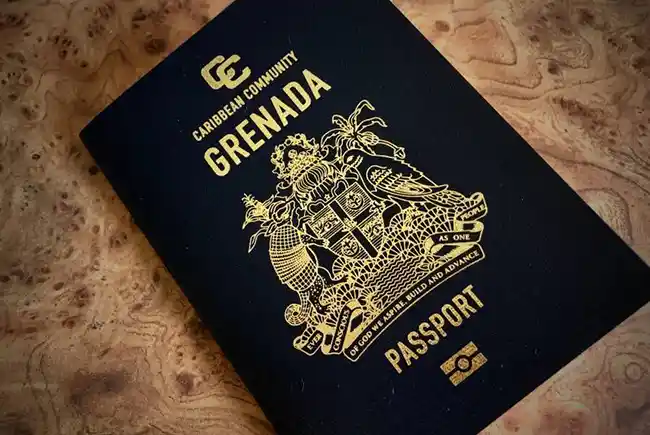
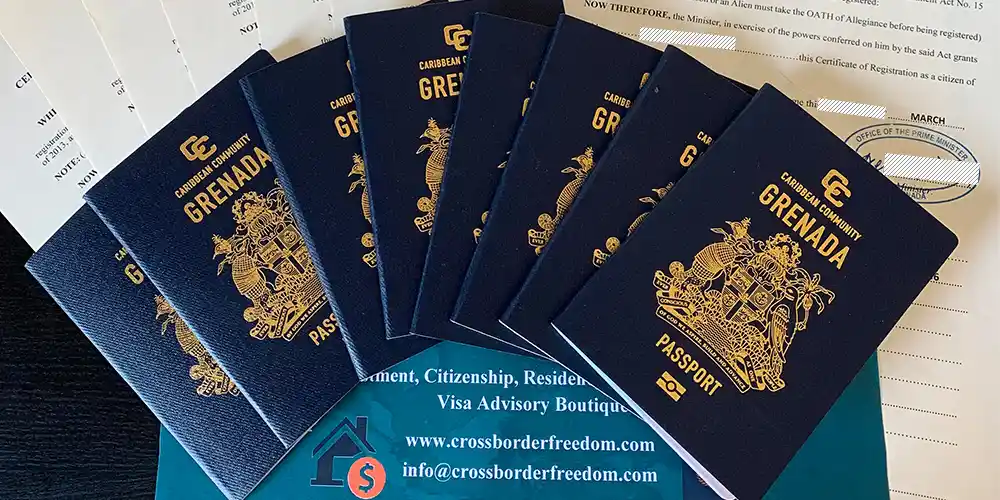
Grenada, called the “Spice Isle” due to its rich production of nutmeg and other spices, has established itself as a prominent player in the citizenship-by-investment landscape. Launched in 2013, Grenada’s program allows foreign nationals to acquire citizenship by making good financial support to the country. The most straightforward option is a non-refundable donation to the National Transformation Fund (NTF), which supports the nation’s development projects. As of April 2025, the minimum donation for a single applicant is $235,000. Alternatively, investors can opt for a real estate investment, requiring a minimum of $270,000 in government-approved properties, which must be held for at least five years.

Grenada Passport
Grenada Passport

What sets Grenada apart is the remarkable value of its passport. Citizens of Grenada benefit from travel without a prior visa or with the ability to obtain a visa upon arrival in over 140 nations. This includes significant global hubs such as the UK, the Schengen Area, China, and Russia. Grenada’s qualification for the United States E-2 Investor Visa agreement is a unique benefit. This treaty allows Grenadian citizens to apply for a visa to live and operate a business in the U.S., a feature not offered by most other Caribbean citizenship programs. For entrepreneurs and business professionals, this perk significantly enhances Grenada’s appeal.

Exploring Antigua and Barbuda’s Citizenship Program

Antigua and Barbuda, a twin-island nation known for its pristine beaches and vibrant tourism industry, introduced its citizenship-by-investment program in 2013 as well. This program provides multiple pathways for investors to secure citizenship. The most accessible route is donating to the National Development Fund (NDF), which finances public sector projects and disaster relief efforts. The minimum contribution for a single applicant is currently $230,000, slightly less than Grenada’s NTF donation. Other options include investing at least $400,000 in approved real estate projects (to be held for five years) or contributing $1.5 million to a government-approved business venture, with a reduced threshold of $400,000 if part of a group investment totaling $5 million.

Regarding global travel flexibility, the Antigua and Barbuda citizenship program offers an equally noteworthy advantage, providing visa-free or on-arrival visas to over 150 nations, including the Schengen Area, the United Kingdom, and Hong Kong. While it lacks the E-2 visa advantage of Grenada, its slightly broader visa-free travel list and lower entry-level donation make it a compelling choice for those prioritizing affordability and mobility.

11 Key Benefits of a Caribbean Passport

Investing in a Caribbean passport through Grenada or Antigua and Barbuda offers many advantages. Below are 11 standout benefits that make these programs highly sought after:

  1. Visa-Free Travel: The ability to travel seamlessly to many countries without the tension of visa applications is a significant draw. Both Grenada and Antigua and Barbuda passports unlock access to popular destinations across Europe, Asia, and the Americas, enhancing personal and professional flexibility.
  2. Business Opportunities: A Caribbean passport can serve as a springboard for international business ventures. Both nations boast stable economies and actively encourage foreign investment in tourism, real estate, and agriculture, offering a favorable environment for entrepreneurs.
  3. Dual Citizenship: Neither Grenada nor Antigua and Barbuda requires applicants to renounce their existing nationality. This flexibility allows individuals to retain ties to their home country while enjoying the perks of Caribbean citizenship.
  4. Tax Advantages: The tax regimes in both countries are highly attractive, with no taxes on inheritance, wealth, or capital gains. This can translate into significant financial savings and efficient wealth management for high-net-worth individuals.
  5. Family Inclusion: Both programs permit the inclusion of immediate family members, such as spouses, dependent children, and, in some cases, parents or grandparents. This makes them ideal for families seeking a collective path to global citizenship.
  6. Security and Stability: A second passport acts as a safety net against political or economic turmoil in one’s home country. Grenada, Antigua, and Barbuda offer peaceful, politically stable environments with low crime rates and reliable governance.
  7. Educational Opportunities: Citizenship in these nations provides access to reputable educational institutions. Grenada, for instance, hosts St. George’s University, a globally recognized medical school, while Antigua and Barbuda offers pathways to Commonwealth education systems.
  8. Real Estate Investment: For those opting for the real estate route, both countries present opportunities to invest in properties with potential for appreciation. These investments, from luxury resorts to residential developments, can yield financial returns alongside citizenship.
  9. Healthcare Access: The Caribbean has healthcare systems that meet international standards. Citizens benefit from quality medical services locally and can access advanced care abroad thanks to their enhanced mobility.
  10. Cultural Connections: With historical ties to Europe and North America, Grenada and Antigua and Barbuda offer a blend of Caribbean charm and Western influences, creating a welcoming environment for newcomers.
  11. E-2 Visa Access (Grenada Only): Grenada’s unique eligibility for the U.S. E-2 Investor Visa sets it apart, providing a direct route to living and working in the United States—a rare and valuable benefit.

How to Apply for a Caribbean Passport

Obtaining citizenship through investment in Grenada or Antigua and Barbuda follows a structured yet straightforward path. Here’s a step-by-step guide:

  1. Select Your Investment Option: Choose the investment route that suits your goals. Options include a donation to the NTF or NDF, a real estate purchase, or, in Antigua and Barbuda’s case, a business investment. Evaluate the costs and long-term benefits of each.
  2. Undergo Due Diligence: Both nations prioritize security and integrity, conducting rigorous background checks on all applicants. This involves submitting financial records, criminal history reports, and other personal documentation to verify eligibility.
  3. Submit Your Application: Compile and submit your application package once due diligence is cleared. This includes proof of investment (e.g., donation receipt or real estate purchase agreement), identification documents, and any additional forms required by the program.
  4. Await Processing: Processing times typically range from three to six months, depending on the complexity of the application and the volume of submissions. During this period, authorities review your file and finalize approvals.
  5. Receive Citizenship and Passport: Upon approval, you’ll be granted citizenship, and your Caribbean passport will be issued. From there, you can begin enjoying the full spectrum of benefits, from visa-free travel to tax optimization.

Grenada vs. Antigua and Barbuda: Which Should You Choose?

Deciding between Grenada and Antigua and Barbuda hinges on your priorities and circumstances. Here are the key factors to consider:

  • Investment Cost: Antigua and Barbuda’s $230,000 NDF donation is slightly more affordable than Grenada’s $235,000 NTF contribution, making it a budget-friendly entry point. However, real estate and business investment thresholds differ, so compare all options carefully.
  • Global Mobility: Both passports offer extensive visa-free travel, but Antigua and Barbuda edges out slightly with access to a few additional countries. Grenada, however, compensates with its exclusive E-2 visa pathway to the U.S.
  • Real Estate Market: If property investment is your focus, Antigua and Barbuda boasts a more developed luxury real estate sector driven by its robust tourism industry. Grenada, while smaller, offers promising opportunities tied to its growing eco-tourism and hospitality markets.
  • Family Needs: Both programs accommodate families, but Grenada’s more lenient residency requirements (no mandatory annual visits) may appeal to those with children or elderly dependents. Antigua and Barbuda requires a five-day stay within the first five years for renewals.
  • Economic Outlook: Grenada’s economy is diversified, with agriculture and education complementing tourism, while Antigua and Barbuda relies heavily on tourism, which can be more susceptible to global fluctuations. Assess your tolerance for economic variability.

Conclusion: Tailoring Your Choice to Your Goals

Grenada and Antigua and Barbuda both present exceptional citizenship-by-investment opportunities, each with distinct strengths. Grenada shines for business-minded individuals eyeing U.S. opportunities via the E-2 visa, while Antigua and Barbuda offers cost-effective entry and broader visa-free access. Whether your priorities lie in travel freedom, financial planning, or family security, these Caribbean nations deliver robust solutions. By weighing investment costs, lifestyle preferences, and long-term objectives, you can confidently select the program that best aligns with your vision for a global future.

Everest Base Camp Trek Difficulty – How Hard Is It Really?

[contact-form-7 id=”6913″ title=”Inquiry From – Blog”]

How to Make the Trek Easier

If you’re worried about the Everest Base Camp trek difficulty, consider these strategies to make your trek a bit easier:

  • Plan a longer itinerary: Adding extra days for acclimatization or splitting some trekking days into shorter segments can reduce fatigue. Some trekkers build in an extra night at a mid-point (for example, spending two nights in Phakding or an extra night in Pheriche on the way down). A slower pace with more rest days increases your success rate and comfort.
  • Hire a guide and/or porter: Having an experienced Sherpa guide means you have someone to manage the trek logistics, monitor your health, and encourage you when things get tough. A porter can carry the bulk of your gear (usually up to 15 kg per trekker if you hire one porter for two people), which means you only carry a light daypack. This makes a huge difference in how tired you feel each day. Even if you normally hike without support, remember that altitude and consecutive days of trekking make everything harder – a porter’s help can be a trip-saver.
  • Pack light: Whether or not you take a porter, be mindful of your packing. The less unnecessary weight you haul, the easier it will be on your body. Bring only essential gear and clothing. It’s tempting to pack extras “just in case,” but those kilos add up on your back (or on your porter’s back). Stick to the packing list essentials; you can always rent good gear in Kathmandu instead of carrying your own heavy equipment.
  • Stay hydrated and eat well: Dehydration can worsen altitude symptoms and sap your energy. Drink water frequently, even if you’re not very thirsty in the cold air. Aim for 3–4 liters per day, including hot drinks. Likewise, eat enough calories. At high altitudes you may lose some appetite, but your body is burning a lot of energy. Try to consume carbohydrates (rice, pasta, potatoes) and some protein to help your muscles recover. Treat yourself to snacks – a chocolate bar or energy bar during a long ascent can do wonders for morale and energy.
  • Use trekking poles: Many trekkers find that using trekking poles reduces strain on the knees during steep descents and helps with balance on rocky or uneven terrain. They effectively take some weight off your legs by engaging your arms. This can be especially helpful on the downhill sections when your legs are tired. If you’re new to poles, practice using them before the trek (there’s a bit of coordination involved in getting the rhythm right).
  • Consider some comforts: If budget allows, stay at a nicer lodge at a couple of points, such as in Namche or Lukla at the end. A hot shower, a heated dining room, or a real mattress with an electric blanket can vastly improve how you feel. Another comfort tip: bring a few small indulgences with you, like your favorite tea bags, a bit of instant coffee if you’re a coffee person (coffee options on the trail can be limited), or a preferred trail snack from home. Little things that lift your mood can make the challenge feel more manageable.

Also, See:

Everest Base Camp trek Difficulty - Altitude of Himalayas
Everest Base Camp trek Difficulty – Altitude of Himalayas

Conclusion

In summary, the Everest Base Camp trek difficulty is manageable for anyone prepared to put in some effort and time to train. It’s not an easy trek — the high altitude and long days make sure of that — but thousands of people from all walks of life succeed every year. Treat it with respect: train beforehand, go slow, and take care of your health on the trail. If you do that, the trek is not “impossibly hard,” but rather “hard enough to be very rewarding.”

Reaching Everest Base Camp is as much a mental victory as a physical one. When you stand at 5,364 meters with the Khumbu Icefall and the peaks of Everest, Nuptse, and Pumori around you, every challenging step will feel worth it. By understanding the challenges and preparing for them, you transform a daunting challenge into a doable adventure. The sense of achievement you’ll carry back home is immense — proof that you took on the Himalayas and prevailed.

Top Digital Tools for Travel Vloggers: What to Add to your Virtual Kit

Starting a career as a travel vlogger takes a little trial and error, to say the very least. You need to find the right tools, techniques, and even video upload timelines that work for you. Once you have these habits pinned down, it can be easier to iterate on your process from there and establish a daily work routine that’s sustainable for you, while also managing your travel plans.

In my chats with other like-minded travel vloggers, I’ve found that one of the major barriers to maintaining consistent content calendars and upload timelines is simply finding the right, reliable digital tools to add to their processes. So alongside sharing the travel photography equipment I use, I’d also like to highlight some of the top-most recommended digital tools for travel vloggers – this includes software like video and photo editing tools, storage solutions for organizing footage on the go, and even analytics tools that you can use to monitor your channel and blog performance better as you explore.

Video Editing Software

There is a wide variety of video editing tools that travel vloggers can use on the go easily, so long as they have a good-quality laptop with enough RAM to run these often heavy-duty apps. If you’re traveling with a more slimline notebook, however, you’ll want to use software that can also be accessed easily via your web browser, as well as via a desktop or mobile app if needed.

Here, we have to recommend Adobe Premiere Pro’s AI video editor. Newly integrated Adobe Firefly features make Premiere Pro easier to use for video editing while on the go. Use the app’s click and drag features to select and isolate segments from video files for editing. You can also take full advantage of Premiere Pro’s new Generative Expand tool to organically ‘expand’ on existing footage through generated video segments. The Generative Expand tool is ideal for documentary-style travel vlogging where you’re likely to use engagement elements like voiceovers and text overlays to enhance your storytelling.

You can also work across not only the Premiere Pro desktop and browser-based apps, but also the Premiere Mobile app. This makes Premiere Pro not only one of the most heavy-duty video editing tools available today, but also one of the most suitable tools for travel vloggers.

Pro tip: Need a great tool for voice-over production, too? Check out Adobe’s AI Audio tool in the Creative Cloud suite as well. This AI tool can be useful for generating realistic voiceovers based on basic scripts. Learn how to make AI voiceovers with Adobe AI Audio.

Photo Editing Software

I’ve already spoken about using Adobe Photoshop and Lightroom for processing travel shots throughout a few vlogging guides across this blog. Naturally, keeping all my digital assets in my Creative Cloud library also makes it pretty easy for me to adapt processed travel shots into things like YouTube thumbnails or even Instagram posts that promote me as both a travel blogger and vlogger.

But photo editing is just one part of the equation – you also need to make sure your image assets are optimized for social media posts and as thumbnails, etc. Here, tools like Adobe Express can be particularly useful, thanks in part to the app’s wide library of social media templates. It’s easy enough to adapt a travel shot into an Instagram post when you can upload it directly to a 1080 x 1080 square post size that’s perfect for the Insta grid.

Adobe Express is also useful for maintaining consistency across your aesthetic and branding as a travel vlogger. This is because your Adobe profile will keep track of all the editing features and elements that you use the most across the Creative Cloud apps – even if you’re accessing these tools via a browser rather than through the Creative Cloud desktop app. Using the same editing methods and adding the same elements can help your content style be recognizable, which, in turn, can help cultivate long-term audience engagement.

Social Media Tools

Alongside tools like Adobe Express for creating social-ready content and other image assets, such as YouTube video thumbnails, you’ll also want to use platform analytics tools to monitor the performance of your content. Here, software like Hootsuite and Sprout Social for social media and YouTube monitoring are an absolute must-add to your virtual toolkit as a career travel vlogger.

Here, it’s also well worth looking into some analytics tools that double up as browser plugins. We’ve listed two great YouTube analytics plugins for Google Chrome users below.

Top Recommended Browser Plugins for YouTube Analytics

TubeBuddy

TubeBuddy offers many free features that are great for YouTube video optimization. With a built-in keyword research tool for YouTube SEO and even a thumbnail analyzer, insights from TubeBuddy can help cross-check the quality of your vlogs before you post.

vidIQ

Similar to TubeBuddy, vidIQ is great for generating AI-generated recommendations for video scripts and descriptions. vidIQ also includes a built-in keyword generator, a thumbnail maker, and can even recommend future video concepts based on your latest upload. If you’re looking to post regularly, VidIQ may help keep your channel feeling fresh while maintaining consistency in content style.

Cloud-Based Storage

One of the best travel vlogging tips that I can offer is to keep your kit as lightweight as possible. You don’t want to lug multiple tripods and boom mics up a mountain trail, as doing so may deplete you well before you reach the peak and inhibit you from taking the best shots you can. Or at the very least, lead to longer trekking times that result in you missing the golden hour, for instance.

Sadly, the nature of vlogging means you will need to carry a decent amount of physical storage. Video files can get surprisingly large, so plenty of SD cards is one thing, but you can also expect to lug around an HDD or SSD or two. But do yourself a favor: get into the habit of reviewing and reorganizing your travel footage every evening from your HDD and SSD storage to cloud-based storage. That way, you can make sure your HDD and SSD footage is actually current, and that you don’t end up in a situation where you’re scrolling through hours of archival footage to produce your travel vlogs.

This is why cloud-based tools like Google Drive and Dropbox are the best friends of vloggers and digital nomads who are perpetually on the go.

Start your Career as a Travel Vlogger with the Perfect Toolkit

To recap, here are the top digital tools that we’ve recommended throughout this guide:

For video editing and production:

  • Adobe Premiere Pro
  • Adobe AI Audio

For photo editing and processing:

  • Adobe Photoshop
  • Adobe Lightroom
  • Adobe Express

For social media management and YouTube channel analytics:

  • Hootsuite
  • Sprout Social
  • TubeBuddy (+ browser plugin)
  • vidIQ (+ browser plugin)

For storage:

  • Dropbox
  • Google Drive

Be sure to experiment with these software recommendations and see how you can integrate them into your own travel vlogging workflows. Remember, too, that the main goal with building a robust virtual toolkit to support your content creation is to work smarter and travel lighter. These tools should help keep your editing and posting processes as streamlined as possible, helping you stay more present as you travel and maintain the time freedom you need to say ‘yes’ to all the new experiences that await you in every new day – and every new vlog.

Applying the Toolkit to Nepal Trekking Packages

If your travel vlogging journey takes you to the Himalayas, capturing a Nepal trekking package – whether it’s the classic Everest Base Camp trek, the Annapurna Circuit, or a luxury cultural odyssey like The Amchi’s Legacy Journey through Mustang – you’ll face unique challenges: high‑altitude battery drain, limited connectivity, and sheer volume of cinematic footage.

This is where the digital toolkit above becomes indispensable. Use Adobe Premiere Pro’s Generative Expand to stitch together sweeping mountain panoramas where your drone had to turn back early. Let Adobe AI Audio generate crisp voiceovers when wind noise ruins your on‑trail narration. Organize hours of yak‑herder interviews and sunrise timelapses into Google Drive folders labeled by trek day, so you can edit on rest days without sifting through chaos.

TubeBuddy and vidIQ are perfect for researching YouTube SEO around “Nepal trekking vlog” or “Mustang travel guide” – ensuring your hard‑earned footage reaches fellow adventure seekers. And when you’re posting from a tea house with spotty Wi‑Fi, Hootsuite lets you schedule Instagram reels of those Annapurna views for golden hour back home. In short, the right digital tools don’t just streamline your process – they amplify the storytelling power of every Nepal trekking package you document, turning a challenging shoot into a career‑defining series.

On Arrival Visa ban in Nepal

Nepal has decided to ban arrival visas for six different countries. Citizens who want to come to Nepal from Corona-affected countries for the entire month of March, which will be effective from March 7will no longer receive unauthorized visas. This bold government decision makes it safe for travelers to visit Nepal.

According to a Home Ministry source, the government bans unauthorized visas for citizens of South Korea, Japan, Iran, China, and Italy. Nepal does not grant illegal permissions to citizens of nearly a dozen countries where terrorist activity is still taking place.

Awareness has also started to take hold in Nepal as the novel coronavirus (COVID-19) has begun to take on a global epidemic in the past. According to the Director-General of the Department of Immigration, Ishwar Raj Poudel, the issue has been stopped.

Under the Immigration Department, there is a facility for obtaining an unrivaled visa after coming to Nepal from nine entry and departure points. Necessary arrangements have been made at Tribhuvan Airport for those arriving by air. All permits issued by the unraveling are ‘tourist visas.’

Arrival visa was stopped, but the citizens of those countries were not barred from coming to Nepal. After submitting their recent health certificate, they can get visas from the Nepalese diplomatic mission in the respective countries.

Does the On Arrival Visa Ban help to stop COVID-19 in Nepal

Nepal is secure to visit as the governmental bodies and private divisions of Nepal are working to control this outbreak. Visiting Nepal will not affect your travel knowledge, and of course, Nepal does not have any transmission history of coronavirus to date. With proper care and safety measures, you can travel to Nepal safely.

People may think there is a massive threat of coronavirus in Nepal. But after this provision, there will be no coronavirus thread. If people from affected areas cannot visit Nepal, how can the virus enter Nepal’s air?

Due to constant care by government authorities and swift medical response around the world, the spread of the virus has been arrested and well-managed internationally. So we want to inform you that we have decided to waive the unauthorized visa for coronavirus-affected countries. There is less chance of Coronavirus in Nepal because of the ban on arrival visas in Nepal for COVID-19-affected countries. So, travelers who want to visit Nepal and explore its beauty can do so without any fear.

Some prevention measures

  • Wash your hands frequently
  • Maintain social distance
  • Avoid touching the nose, eyes, and mouth
  • Wear Mask
  • Practice respiratory hygiene

Update on COVID-19 in Nepal

  1. Department of Immigration, Nepal has included three more countries, Spain, Germany, and France, to the list of countries for which there will be a temporary suspension of the On-Arrival Visa. The total number of listed countries is now eight, including China, Hong Kong, Japan, South Korea, Italy, Iran, France, Germany, and Spain. They are as per the global recommendations and measures of the World Health Organization. (Source: http://www.nepalimmigration.gov.np)
  2. The suspension of the On-Arrival Visa facility shall be effective from 10 March 10r, China, including Hong Kong, Japan, South Korea, Italy, & Iran. For Germany, Spain, and France, the rule will be applicable from 13th March 1320. (Source: http://www.nepalimmigration.gov.np)
  3. However, nationals from these countries and all travelers coming from these countries willing to visit Nepal can obtain a visa beforehand from the respective Nepali Missions abroad. Those applicants, including the nationals transiting from these countries bound to arrive in Nepal, are required to submit a recently issued health certificate stating that COVID-19 do not have COVID-19, along with their visa applications. This document will be scrutinized at the immigration counter at Tribhuwan International Airport and land border entry and exit points in Nepal. (Source: http://www.nepalimmigration.gov.np)
  4. The above rule shall apply to everyone coming to Nepal from the eight listed countries.
  5. Also, all Nationals of these eight countries are required to produce the Health Certificate, regardless of the region or country they are currently living in or coming from. (Source: http://www.nepalimmigration.gov.np)
    NTB has introduced a ‘Just Case’ card with all the essential numbers and email IDs for queries regarding COVID-19. This will be distributed from the Immigration Counter at TIA and from all entry points to Nepal.

Updated: 11 March 2020

Update: All tourist visas are on hold, and call off all spring climbing expeditions by the Nepal Government

The suspension of visas will begin on March 14 and end by the end of April, causing Nepal to lose millions from Everest Climbing fees. The Nepal Government has kept all tourist visas on hold and canceled all spring climbing expeditions.

Late Thursday, March 12, 2020, the Nepal Government decided to temporarily stop issuing visas for tourists arriving from all countries. The government has put an end to all spring mountaineering expeditions, including Mount Everest.
The decision was made after the World Health Organization declared COVID-19 an epidemic and advised other countries to take preventive measures.

The Government official told the Post, on condition of obscurity, that visa suspension, which also includes diplomatic and official visas, will come into effect on March 14 and last until April 30, 2020.
Furthermore, the meeting has decided to constrain traveler movement to and from India via land route and follow strict isolation measures at the border. As an alternative, any foreigner wishing to visit Nepal has to submit a medical report declaring that they are free of coronavirus while applying at the Nepal Embassy in their respective countries, said the official. Plus, the governments have also decided not to issue visas for tourists entering Nepal via land routes.

Everest Expedition Canceled

According to the official statement, all spring expeditions, including Everest, have been canceled. Undoubtedly, the decision has put an end to the beneficial spring climbing season, which is the peak season of Everest climbing.

The mountaineering generally applies for the Everest permits from the end of March as the spring season starts in early April. Everyone from hotels to restaurants, guides to porters, and airlines to helicopters is waiting eagerly for the spring climbing season. It also generates much-needed jobs and income for the people living in the mountain region.

China has already canceled all Everest expeditions from Tibet due to the global outbreak of the coronavirus pandemic (COVID-19). Also, the body that issues climbing permits, “The China Tibet Mountaineering Association,” notified on Wednesday that all Everest expeditions from the northern side have been canceled.

“Cancellation of the spring Everest expedition will lead to a huge loss to the expedition operator,” said Pradip Karki, Chairman of Peregrine Treks and Expedition.
Peregrine Treks and Expedition, which is the most significant expedition operator in Nepal, said that 40 climbers had registered already with them to climb Mount Everest. On the other hand, on Thursday, 26 climbers canceled their plans due to the global outbreak of COVID-19.

Updated on 13 March 2020

COVID -19: Is Nepal is safe from Novel Coronavirus?

As the world is aware of the 2019 Novel Coronavirus (COVID-19), here is one question: Is Nepal safe from the Novel Coronavirus? The 2019 Novel Coronavirus was first diagnosed in Wuhan, Hubei, China. The outbreak of COVID-19 affected many countries worldwide. The outbreak of this virus has also had an effect in Nepal. February 18th, 2020, hasn’t made a severe impact on the death toll in Nepal.

YouTube video

Coronavirus is said to have emerged from Wuhan, China. Nepal has not been affected by the coronavirus until now. China is Nepal’s neighbor. This big rule nation’s power all over the world is unquestionably the primary concern. However, the whole of Nepal is entirely safe to visit as Nepal is dedicating its Visit Nepal 2020. Because of the virus, Nepal was impacted by this campaign, with many tourist arrivals from China, but now it has stopped to a very extent. The National Health Public Laboratory is working with many health agencies and organizations to diagnose the coronavirus. However, regulatory agencies are facing stress in coping with the circumstances. But Nepal is safe in terms of fatality, and the diagnosed person appears today.

The thread of Coronavirus in Nepal?

The World Health Organization has affirmed a global health emergency because of the rapidly spreading rate of the Coronavirus. This alarming situation is the primary fear of today; however, the figures until the time of the Coronavirus pandemic in Nepal are insignificant and very negative. It will be very epidemic if Coronavirus enters Nepal because there is a lack of necessary modern equipment to diagnose a person with the Coronavirus. It is said that this virus may transform a healthy person into a competent person without any symptoms.

Symptoms of Coronavirus

The World Health Organization and many health agencies say that it can be transformed from a competent person to a healthy person. The virus directly attacks a person’s respiratory system and may spread through direct contact with another person. Coronavirus is in the ratio of 3, and it means that if one person is affected, then it can be transmitted to 3 people as well. The incubation period of the Coronavirus is only two days. The symptoms of the Coronavirus may appear in as few as two days or as long as 145 days after exposure.

Symptoms of Coronavirus are:
  • Fever
  • Chest Pain
  • Breathing difficulties
  • Headache
  • Kidney failure
  • Pneumonia
  • Sore throat
  • Chills
  • Cough and shortness of breath
Prevention measures:

Wash your hands – Wash your hands frequently with an alcohol-based hand rub or soap and water because it can kill viruses if it is on your hands.

Practice respiratory hygiene – Cover your nose and mouth with a fixed elbow when coughing and sneezing. And throw the tissue in the bin, and wash your hands immediately. Because when you cover your mouth, it prevents the spread of germs and viruses
Maintain distance – Keep at least 3 feet gap between yourself and different people, mainly those who are sneezing, coughing, and having a fever. When someone who is infected with a respiratory disease coughs and sneezes, they produce small droplets containing the virus. If you go close to them, you may breathe in that virus.

Avoid touching your eyes, nose, and mouth – You should avoid touching your eyes, nose, and mouth because if you touch your eyes, nose, and mouth with contaminated hands, you can transfer the virus from the surface to yourself.

Is Nepal safe to visit?

The effects of the Coronavirus are not seen in Nepal. Many health agencies in Nepal are working to diagnose and cope with the Coronavirus. Hopefully, it may stop the spread of this virus. Nepal is safe to visit, as many government bodies and the private sector have been working to control this outbreak. Visiting Nepal at this time will not affect your traveling experiences. Nepal does not have any historical record of the Coronavirus to date. With proper care and precaution, you can visit Nepal and travel here freely.

What has Nepal done to be safe from Coronavirus?

Now, there is a temperature screening area at the international airport, just like in most other countries. The leading hospitals have been put on alert, and staff in many hospitals have been trained on the symptoms of Coronavirus.

What would happen if there were an outbreak of Coronavirus in Nepal?

Nepal is ready for any massive outbreak. Doctors have affirmed there are enough isolation wards and beds—an evacuation plane carrying non-Coronavirus cases of Nepali from China here in Nepal on February 16th, 2020. A divided isolation area has been set up for them. In my experience, doctors in Nepal have a firmer hold on reality than the administration. Again, keep in mind that so far there seems to be a massive outbreak or any at all in Nepal.

Should you be worried about the Coronavirus when traveling to Nepal?

In this situation, you might think that it is dreadful to visit Nepal because its neighboring countries and many parts of the world are suffering from the Coronavirus. But in Nepal, there are negligible chances to spread around with the possible immediate action and medical assistance, as we can say that Nepal is safe from Coronavirus.

Additional coronavirus precautions if traveling to Nepal.

Socially and culturally, coughing and spitting are accepted in Nepal. However, these practices are not obligatory for healthcare organizations as they may contribute to the spread of a virus and are hygienically problematic.

Here, dust masks and face masks are easily available in Nepal, but it is better to use the N90 mask.

Sanitation and good hygiene are skills in Nepal, but it is better to take safety measures like washing your hands frequently and avoiding touching your face.

In the past few days, several medical organizations have said the virus can be transmitted through physical matter such as money or paper. So wash your hands frequently.

Do bring your supply of face masks, gloves, and hand sanitizer.

What we advocate

As an authentic travel operator, it’s our responsibility to give you information about the places you visit. Which will let you know about the risks and planning for the tour, which also regards safety and health? At this time, the World Health Organization is keeping a closer eye on this critical situation. If you are planning to visit the Himalayas on this holiday, we strongly recommend the following.

Before you travel to Nepal

  • Before you visit, read our tips on Coronavirus and medical assistance abroad.
  • Keep updated on the information about the coronavirus outbreak and medical assistance.
  • If you are pregnant or have a weak immune system, then first consult with your doctor before traveling.
  • Check with your travel operator, airline, agent, insurance provider, and accommodation provider to consider your options concerning possible changes in services.
  • Personalize your holiday, especially look for an option rather than group travel.
  • Take the information about the destination.
  • Stay away from the risks of Coronavirus, which may lead to widespread disruptions that may come into effect with minimal notice.

While you’re absent

  • Go to the medical immediately when you start to feel uneasy.
  • Take suggestions from the local authorities of your nation.
  • Try not to visit high-risk areas like livestock, markets, farms, and animal slaughter areas.
  • Stay away from dead or alive animals like pigs, chickens, ducks, and other wild birds.
  • Stay away from the surfaces with animal droppings or secretions.
  • Wash your hands frequently, mainly after contact with animals and birds.
  • Before touching your eyes and nose, wash your hands with soap and water.
  • Be away from sick people, especially people with fever, cough, or trouble breathing.
  • Check your health status to be in a safe zone.
  • Contact airlines and travel companies for any updates or changes in the services.
  • Wearing a mask is also one of the best prevention measures; we recommend that you wear a mask.

After returning from Nepal, you feel unwell.

When you return to your country after traveling, if you feel uneasy and unwell, then immediately consult with your doctor and tell them about your original travel plan. If you are in a position to do so, better hurry in on time before a meeting. Which will help the doctor study your symptoms?
Thank you.

Visit Nepal 2020 and Coronavirus.

The Visit Nepal 2020 campaign started on January 12th, 2020, by Nepal’s government to endorse tourism in Nepal. This campaign is open with the aim of bringing about 2 million tourists to Nepal. Experience-based tourism and the ultimate escapade that Nepal has to offer are the primary showcases in 2020. From the remotest places to the urban landscapes of Nepal, every destination has its different contributions, and that’s something visiting Nepal is about.

China is the main tourist-receiving region of Nepal, and the outbreak of the virus has had a significant impact on the tourism industry worldwide. Nearly every one of the baby boomers and Chinese millennials explores the world. While the outbreak of this deadly virus is hurting it, Nepal is also affected by the uncontrollable disaster. From one viewpoint, there is a risk of spreading the virus, and on the other hand, the financial sustainability of the tourism industry is also a significant source of anxiety.

The crash of the Coronavirus is already seen as February is the first month in which Chinese citizens travel. This is the best month in China, and with the administration ban and the spreading coronavirus, it will have a significant impact on the tourism industry of Nepal and throughout the whole world.

Wildest West Nepal: Paradise Yet to be Explored!

Western Nepal is relatively unexplored compared to other parts of the country. The area is home to beautiful lakes, dense forests, fast-flowing rivers, and pristine lakes, among others. Some of Nepal’s best-protected areas, which are rich in different species of flora and fauna, lie in the western part of the country. Also, the unique language, culture, and tradition of locals of the area can be of great attraction to the visitors.

Wild West Triangle is a relatively new tourism product that links three major tourist attractions in the mid and far-western development region – Rara National Park, Bardia National Park, and the Shuklaphanta Wildlife Reserve.


Day 1: Kathmandu  to Nepalgunj

The day was relatively uneventful. It begins with either a drive or a flight to Nepalgunj – the commercial hub of the mid-western development region. Nepalgunj is also a gateway to different remote districts in the mid-western area. There are good hotels and eateries in Nepalgunj. Flights and buses to Nepalgunj are readily available in Kathmandu.

Day 2: Nepalgunj to Rara

The day begins with a flight to Talcha airstrip in the Mugu district, which takes around 45 minutes. After the flight lands at the airfield, your trek begins. A trek of about 3 hours takes you to Rara Lake – the biggest lake in Nepal. Rara Lake is the major attraction of Rara National Park – the smallest yet most beautiful protected area in the country. The Rara National Park has spread over 106 sq km. The altitude in the national park varies from 1,800 meters to 4,480 meters. Coniferous forests cover most of the protected areas.

Rara Lake, which lies at the height of 2990m, is spread over 10.8 sq km. Richly forested hills surround the blue tortoise lake. Chuchemara Danda, at the elevation of 4087m, is the best vantage point to get the magnificent views of the lake and the forested hillside as well as the snow-capped peaks around it. The national park is home to 20 different species of mammals and 214 species of birds. Accommodation is on tented camps.

Day 3: Rara

The day is for an excursion around the national park. In the morning, you can enjoy hiking to Murmatop, which takes around two hours. Murmatop (3400m) is a small hill above Murma village. Breakfast is served after you descend to the camp. After breakfast, you can enjoy boating in the scenic Rara Lake. Lunch is served after the boating trip concludes. After lunch, you can walk around the lake. Accommodation is on a tented camp.

Day 4: Rara-Bardia National Park

You walk to Talchha airstrip to catch a flight back to Nepalgunj after having breakfast in Rara. You take lunch at a local in Nepalgunj before boarding a jeep to drive to Bardia National Park. The National Park is the largest and most undisturbed wilderness area in Tarai. Spread over 986 sq km, the national park provides an excellent habitat for different endangered species like rhinoceros, elephant, Royal Bengal Tiger, swamp deer, blackbuck, Gharial crocodile, Marsh Mugger Crocodile, and Gangetic dolphin among others. Similarly, Bengal florican, Silver-eared mesia, Sarus crane, and Lesser florican are some of the bird species found in the park. Accommodation is in a local lodge.

Day 5: Bardia National Park

The day is for sightseeing in the national park. After breakfast, you will enjoy an elephant safari deep into the jungle for the entire day. Packed lunch will be served to you. Elephant safari will offer you the opportunity to catch the sight of one-horned rhinoceros, four types of deer, monkeys, wild boar, leopard, and Royal Bengal Tiger as well. In the evening, local artists will perform traditional Tharu songs and dances at your lodge.

Day 6: Bardia to Shuklaphanta Wildlife Reserve-Dhangadhi

After breakfast, you will board a jeep to drive to Shuklaphanta National Park, which takes around five hours. Lunch is served at Mahendranagar. On the way to the reserve, you will be taken on a short side trip to Ghodaghodi Lake. Shuklaphanta Wildlife Reserve is famous for big herds of the swamp deer. Located in the far-western region on the southwest edge of Nepal, the reserve, which is spread over 305 sq km, is home to around 2,000 heads of swamp deer. The region has the largest concentration of tigers (in terms of per sq/km comparison). Other wildlife species found in the reserve are Blue Bull, Barking Deer, Hog Deer, Wild Boar, Leopard, Jackal, Langur, Rhesus Monkey, and one-horned rhinoceros. After a jungle safari in reserve, you will be driven to Dhangadhi for an overnight stay.


Day 7: Dhangadhi to Kathmandu

After breakfast, you can enjoy bird watching in the nearby community forest and visit the newly opened Aircraft Museum and the market area. Lunch is served at a local hotel. After lunch, you will be driving to the airport to catch a flight to Kathmandu

Top 15 Places to visit in Nepal

13. Janakpur

The lovely temple of Ram and Sita is found in the middle of south Nepal on the flat Terai lands, in a place called Janakpur. A long time ago, Janakpur was the main city of an old Indian kingdom called Mithila. The ruling king Janak’s daughter Janaki (Sita) was married to Lord Ram who was an avatar of Lord Vishnu. The ancient culture of Mithila, called Maithili culture, is still strong here.

Also known as Janaki Temple, lots of Hindus from all around the world come to the temple to celebrate a big event Vivah Panchami: the anniversary of Ram and Sita’s marriage. The temple has three floors and 60 rooms. It’s a huge marble building from the 19th century and it’s the most important temple in Nepal. The best part is more than 100 sacred pools and small ponds are scattered around the city.

14. Nagarkot

on the way to Nagarkot from Chisapani

Nagarkot is one of the most known places in the Kathmandu Valley. And mainly, it is perfect for travelers who want to experience the beauty and majesty of the Himalayas without strenuous physical activity or other activities. Kathmandu Nagarkot is also known as the best for its views of the Kathmandu Valley and the mountains.

Landed on an extensive range to the northeast of Bhaktapur, the village of around Four thousand and five hundred residents requires views of eight Himalayan ranges. There’s a mixture of attractive hotels in every price range in Nagarkot, many of which are within walking distance. Nagarkot view tower is a beautiful place to hit in Nepal to observe the sun rising over the Himalayas and relax.

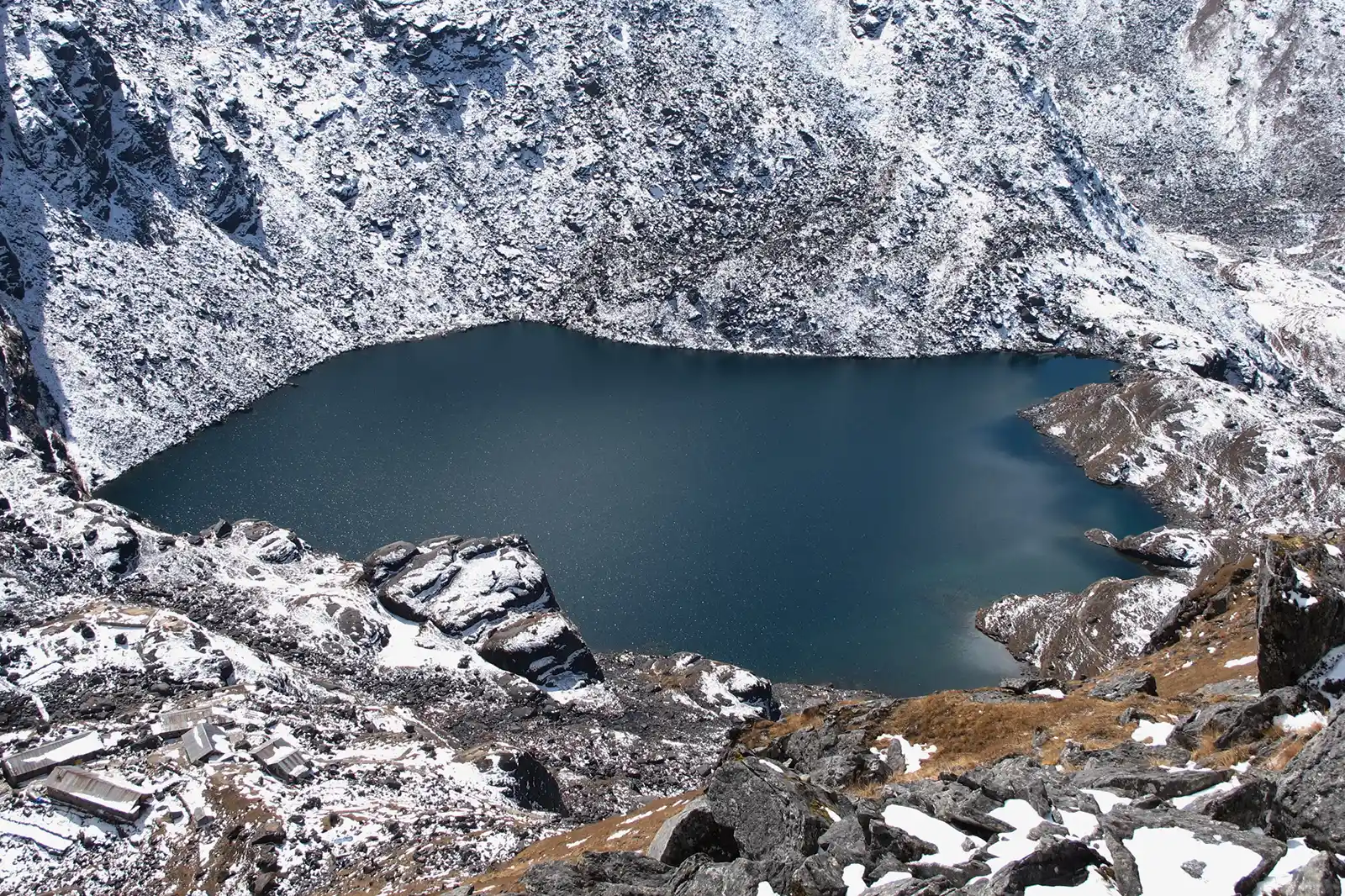
15. Gosainkunda Lake

Gosaikunda in Winter

One of the best places in our beautiful country is Gosaikunda Lake. Gosainkunda Lake has located at an altitude of about 4360m. Gosainkunda is considered Nepal’s most sought-after pilgrimage site. Gosaikunda is considered of Nepal’s most sought-after pilgrimage sites. The mountains mainly surround it, and a significant ensemble of nine other lakes accompany the Gosaikunda.

In August, Every year during Janai Purnima, hundreds of Hindu pilgrims visit here for a holy bath in the lake. The large rock at the center of the lake is said to be the remains of a Shiva shrine. It is also claimed that the channel carries water from the lake directly to the tank at the Kumbheshwar Temple in Patan in the Kathmandu valley.

Conclusion

There you have, a list of the 15 best destinations to explore in Nepal. And it is not the end of the list, you can add 100s more, and still, there will be many more places to add to your bucket list. When you come to Nepal on your next trip, do not forget to roam around these amazing spots.

And remember a major earthquake struck Nepal in 2015, also recognized as Nepal’s black day, causing extreme damage in Kathmandu and other areas of the country. The region explained above might not be the same as a lot of recondition might have changed the appearance of the scenic spot. Before visiting any place, international tourists are advised to hire a travel agency for a smoother experience.

How did Swayambhunath & Boudhanath get their names?

Do you know why the names Swayambhunath and Boudhanath end with – Nath?

If you notice the names of many things in Nepal, you will find that many names end with the word “Nath.”

The answer is not as straightforward as your tour guide will make out. In some places, it may be easy. But for Syawambhunath and Boudhanath, it’s an outright puzzle.

Everyone has a different interpretation, from tour guides to monks’ history teachers.

The real meaning of Nath.

The Sanskrit word Nath means “lord, master, protector.”

Nath is an Indian surname, commonly found among Bengali and Assamese Hindus.’ Nath’s community belongs to the Yogi-Nath group and is listed as another backward class in West Bengal and Assam.

From where does the term Nath come?

Its origins are linked with Adhinath’s name and are used by lord Shiva.

The Natha group (a Hindu sub-traditional group) started the system of Naming Nath

The establishment of the Natha distinct history began around the 8th and 9th centuries with a simple fisherman.

Is this the only mention of Nath or Natha in the world? No

Bodhisattva is worshipped as “Natha” in Srilanka. He is specified in Chola Literature (Tamil), which originated in South India in the 9th and 13th centuries. In this terminology, the Bodhisattva was also known as Natha-deva.

The most exciting thing is that the dates are aside from the name and terminology. They almost correspond to the origin of the Hindu group known as Natha. In the condition of a Bodhisattva, little else is known in connection with the name of Nepal. In conclusion, some yoga practitioners also maintain the term Nath, though it is said that it will come later. To make matters confusing, the Natha was a Practitioner of yoga.

Who was that, Natha??

Though their origin is about the 9th-10th century, they are primarily known for their rather out-of-the-box, challenging ways. They allowed all shady practices and stayed away from society’s learning to explore their inner power.

It seemed like a foreign culture, but Natha’s popularity grew, and they began forming monasteries. During this age, they developed a strong following and dedication to walking long distances for spiritual practices.

In Nepal, Natha is known as a Sadhu.

During this period, the sub-group of Nath became warriors in the Islamic invasion of India.

Natha mainly believes in extensive travels and searching for a higher level of spiritual power than others’ written doctrine.

Two branches consist of Sadhus and regular householders or workers who practice their beliefs at home. Sadus is also known for making a long-distance walk to Pashupatinath during the Shivaratri festival.

Natha and Buddhism.

If you ask historians about the Natha, you will get an answer that they were a part of Hindu culture that also believed in Buddhism. It is an understandable simplification.

Because of their extensive travels, Natha was documented in Buddhist texts in Tibet. But the Natha did not directly practice mainstream.

They do meditation or other activities to reach a higher understanding. However, some have delved deeper and come up with individual branches of Buddhism that Natha was meant to have practiced.

If we go into a more in-depth education of the Tibet doc, Matsyenranath is often referred to as Lui-pia and Nepal; he is a form of Bodhisattva. So there is, it seems, a connection.

In my view, the likely result is that they start practicing their form of Buddhism and exploring for higher spiritual power.

The Natha and Nepal.

The oldest religious site in Nepal is Swayambhunath. According to the Gopalarajavamsavali, it was founded at the beginning of the 5th century by the great-grandfather of King Manadeva, King Vasudeva.

Avalokiteshvara is represented by many Buddhist scriptures and statues.

The Real name of Swayambhunath.

The oldest religious site in Nepal is Swayambhunath. According to the Gopalarajavamsavali, it was founded by the great-grandfather of King Manadeva, King Vrsadeva, about the beginning of the 5th century. Mythology also says that Bodhisattva and Manjushree let the water out of a lake, and the Kathmandu valley comes out with a lotus blossom, becoming a “Self Awoken, Lord.” This is where the stupa is built. It thereby holds the title of Kathmandu’s first building.

The official name of Swayambhunath is Swayambhu Maha Chaitya, and the first recorded name was “Singru-Vihara-Chaitya-Bhatjarika.”

The real meaning of Swayambunath is” self-manifested, self-existing.”

The first written data of the stupa comes from King Manadeva, who had done it here in 640CE, so it predates the Natha.

The Seto Machchhendranath temple is located in Kathmandu’s Jana Bahal, and the Machchhendranath temple in South Patan is dedicated to Machchhendranath. There is a change in spelling due to different languages commonplace in Nepal, so it’s not an issue.

Though what about Natha?

According to the late historian, the only certification of the Natha is said to be an inscription at Swayambhunath.

For those wondering, I do not include Pashupatinath temple here as it was established in the 5th century. The likelihood is that the phrase Nath here is undoubtedly a direct link to lord Shiva as Adinath. At the same time, both Swayambhunath and Boudhanath have Buddhist points of origin.

How are the Natha and Swayambhunath related?

Natha and Swayambhunath are known as “lords.”One has Buddhist origins, and the other has a vague delving into Buddhism.

When was Swayambhu Maha Chaitya named Swayambhunath?

From the period of Natha, it was changed to Swayambhunath.

The real name of Boudhanath.

The great white stupa was established in the Licchavi period in 400 CE. The area was known as Boudha, and the city was known as Boudha.

The last name of Boudhanath is Khasi or Khasa Chatiya from the Newar Chronicles. There is no orientation to the Natha here. The link between the Swayambhunath and Boudhanath is that they are associated with Buddhism. Both names are endowed with Nath and fascinating the presence of an Ajima temple at both sites. Both Hindus and Buddhists respect Ajima, often cited as a Newar god.

When was Boudhanath built?

According to history, after unwittingly murdering his father, one king constructs the stupa.

When did the Nath get used?

This is the million-dollar question. Nobody seems talented enough to quote an orientation as to when these terms were first used in the Nepali memoir regarding Swayambhunath and Boudhanath. Again, the likes of Pashupatinath and Machchhendranath all make a judgment. But Swayambhunath and Boudhanath had different original names.

When and why were Swayambhunath and Boudhanath renamed?

As mentioned earlier, the answer is usually right there. But there is no evidence. Nobody seems to identify this.