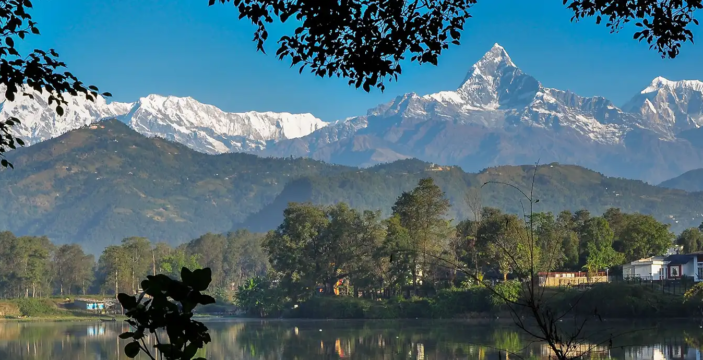
Le trek au Haut Dolpo

Dolpo est une des destinations plus intéressantes pour le trek au Népal pour de nombreuses raisons. Avec une superficie de 7889 kilomètres carrés, il est le plus grand district du Népal, et pourtant l’un des plus faibles densités de population. Il est riche en nature, il contient le lac le plus profond du Népal, le lac Phoksundo , qui est aussi le lac plus profond du monde de la haute altitude. Dolpo est parmi quelques districts qui se trouvent derrière la chaine d’Himalaya, l’abri de la mousson il pleut très peu. Les paysages sont désertiques.

A cause du climat rustique et des hautes montagnes la région est une des régions plus sauvage au Népal et pourtant le paysages sont fascinants. Il y a peu de gens qui vivent ou voyagent dans cette région. Une grande partie de Dolpo est réservé demande une permission spécial pour pouvoir entrer qui favorise la préservation de la culture unique du Dolpo.


Le village Dho Tarap est une habitation à l’ altitude la plus élevée dans le monde. Le monastère Shey Gumba est le plus important monastère du Népal. Dolpo est riche en flore et la faune aussi. On peut observer des animaux sauvages. Mouton bleu , ghoral , et même des guépards , et de nombreuses autres espèces. Dans Haut Dolpo il y a des plantes médicinales qui sont rares comme Yarsagumba (une demi plante exotique, mi-animal qui est considéré comme un puissant aphrodisiaque) Jatamasi , Panchaunle , Chimailo , et bien d’autres . Chaque année, en mai et Juin, le parc national de Shey Phoksundo ouvre ses portes aux chercheurs d’ Yarsagumba .


Mars à Septembre est le bon moment pour faire du trekking dans cette région. Après Septembre, il commence à neiger, et le trekking est possible seulement avec un bon équipement. De Novembre il est déconseillé de faire le trek. Le meilleur moment est de Mars à Mai, car il peut pleuvoir en Juin et Juillet.


Les moyens de communication dans la région sont très difficiles à obtenir. Les téléphones satellites fonctionnent partout, mais ils sont coûteux. Les réseaux nationaux de communication ne fonctionnent pas bien ici. Le trek commence officiellement à partir de l’aéroport de Ranjha , un petit aéroport au-dessus de la ville de Juphal et se termine à Juphal.

Haut Dolpo Iitinéraire

Journée 1 Kathmandu-Nepalgunj

Conduite ou vol jusqu’à Nepalgunj.Hôtel


Journée 2 Juphal-Chhepka         

Trek jusqu’à Kagbeni environs 3 heures. Pause déjeuner à Kagbeni et on continue jusqu’à Chhekpa via Sangta. Lodge/Sous la tente


Journée 3 Chhepka-Chunuwar

Trek jusqu’à Rechi environs 4 heures passant par Dhane et Kiptarung. Après le déjeuner à Rechi on continue jusqu’à Chunuwar en suivant la rivière Phoksundo et la fôret dense. Nuit à Lodge/ Sous la tente


Journée 4 Chunuwar-Ringmo

Trek d’environs 2h30 jusqu’au tour d’observation d’où on peut profiter une vue spectaculaire de cascade de Phoksundo. Une montée pour apercevoir le lac. Une descente d’une heure jusqu’au village Ringmo. Nuit à Sous la tente


Journée 5 Ringmo-Ruktang

Trek jusqu’à Choklapuk. Le début d’haut Dolpo commence aujourd’hui.Le village Ringmo est la frontier entre Haut et Bas Dolpo.. Nous arrivons à Choklapuk en traversant les montagnes et forêt pendant 5 heures.Déjeuner à Choklapuk on continue jusqu’à Ruktang. Nuit à Sous la tente


Journée 6 Ruktang-Base Camp

Nous portons notre piqnique et continuons le trek jusqu’à campe de base en passant par plusieurs cascades qui se jettent dans la rivière.Nous traversons plusieurs fois la rivière. 6h pour arriver au campe de base. Nuit à Sous la tente


Journée 7 Base Camp- Shey Gompa

Nous portons la piquenique pour la journée et continuons vers Shey Gompa, le plus grand stupa du Népal. La journée cruciale car nous passons un col le plus haut du circuit.Piquenique en route. Environs 7 heures de trek jusqu’au Base Camp. Nuit à Sous la tente


Journée 8 Shey Gompa-Saldang

Trek jusqu’au petit village Namjung, 7 heures de trek. Déjeuner à Namjung et on continue jusqu’à Saldang, 4 heures de trek. Autre option s’arrêter à Namjung. Nuit à Sous la tente


Journée 9 Saldang-Rhakyo

Trek jusqu’à Namdo, un petit village sur le chemin. Deux heures pour arriver à Namdo.Déjeuner à NamdoOn continue jusqu’à Rhakyo,cinq heures de trek. Cette partie du trek est la route commercial entre Tibet et Nepal. On peut croiser des caravanes des yacks et mullets. Nuit à Sous la tente


Journée 10 Rhakyo-High Camp

Nous suivons la rivière par un gorge. 6 heures de trek jusqu’à High Camp en altitude de 4850m. Nuit à Sous la tente


Journée 11 High Camp-Dho Tarap

Trek jusqu’à Jengla Pass,le dernier col à passer pour le circuit.5 heures de trek jusqu’au village Takshi . Déjeuner au village et une heure de trek jusuq’à Dho Tarap. Nuit à Sous la tente


Journée 12 Dho Tarap-Tangum

Trek jusqu’àTangum en passant par Lang and Tol Tol,. Déjeuner à Lang. 8 heures de trek. Nuit à Sous la tente


Journée 13 Tangum-Lashikyap   

Le trek continue par une vallée étroite Laini Odar en passant par la forêt de pin continuons jusqu’à Lashikyap village.

7 heures de trek. Nuit à Sous la tente


Journée 14 Lashikyap-Dunai

Trek jusqu’à Dunai, le centre départemenatl de Dolpa en passant par plusieurs villages Tarakot, Tarabagar, Sahar Tara and Tuppo Tara en route. 7h30 de trek. Nuit à Sous la tente


Journée 15 Dunai-Juphal

La dernière étape du trek commence par une piste jusqu’à Kalagauda et continuons par un chantier jusqu’à Juphal. 4 heures de trek. Nuit à Lodge/Sous la tente

Events of Visit Nepal Year 2020: From Mustang Ice Climbing to Skydiving in Syangboche

The Nepal Government is working hard to make Visit Nepal 2020 a successful event. For this purpose, various strategies and programs have been set up at the ministry level. Although there are many tourist attractions in Nepal, they have not been widely promoted around the world. The government plans to identify Nepal as the best destination during the Visit Nepal Year 2020, especially for adventure tourism. Various programs have been set up for this. Here are the ten main promotional programs forwarded by the Nepal government:

Ice Climbing festival in Manang

The Ice Climbing Festival is being organized in Manang, and the world’s best ice climbers participate. According to the Secretariat of the Visit Nepal Year, this event is held on 2-4 February. It plans to promote the festival as a whole in South Asia. It is expected that ice climbing in the mountains during winter will help in promoting Nepal as a brand country for this event.

Ice Hockey Match at Gokyo Lake

The ice hockey competition will be held at Gokyo Lake in Solukhumbu. In winter, when the water in the lake freezes, it turns into a field. An ice hockey game is planned for the same ground.

This competition will be organized in February 2020. Gokyo Lake is situated at a height of 4750 meters.

The International Hockey team of Finland has finalized its plans to come to Nepal for an ice hockey event. The team will fly to Lukla Airport and trek to Gokyo Lake.

Also, an ice skating event will be organized on the same lake. Skaters from America are invited to this event. The government believes that this event will play a significant role in promoting offseason trekking.

Mustang Trail Race

A high-altitude race competition will be held in Mustang, a beautiful land known as the Desert of Nepal. There will be eight events in this competition. The competition will run from 1-4 April. This event is believed to be significant in exposing Mustang to the world and bringing out the hidden beauty.

Sustainable Summit 2020

A mega event is being organized in 2020 to protect the environment and promote sustainable tourism. The Climate Alliance of Himalayan Communities plans to bring Alpine Clubs, Land and National Park Managers, conservation area engineers, pedestrians, and tourism professionals to this event. This event will discuss preserving the resources of sustainable tourism in the Himalayan region. Foreign speakers are invited to the event. The event is scheduled to be held from the 1st to the 5th of June.

World Trails Network Conference

A conference on trekking trails around the world was held in Nepal. It invites entrepreneurs from all over the world to promote and preserve the trails in the event. Held on September 3-7, the program is believed to be crucial for promoting trekking in Nepal.

 Karnali Kayak Race

A kayak race will be held on the Karnali River, known as the best river in the world. A kayak is scheduled to go from Rakam, Dailekh, to Bardiya. 20 to 25 national and international teams will be participating in this race. Each team will have five kayakers. Various events and kayak races will be held during this time. This event will help promote tourism in the Far West region. This competition is organized to attract tourists through water tourism. The secretariat stated that the race would be held in October.

Hot Air Balloon Festival

The Hot Air Balloon Festival will be held at Gautam Buddha International Airport in Lumbini. The event is being prepared for October 2020. The event is being organized to deliver the message that the new international airport has been constructed in Lumbini to tourists worldwide. The world’s ten best Hot Air Ballooners are invited to Nepal, and they will jump from the balloon to the ground in this event. The government believes in promoting Buddha’s birthplace, Lumbini, and contributes to mass tourism.

Mountain biking in Kali Gandaki Corridor

The Kaligandaki corridor is now under intense construction. This national pride project road will connect Nepal from north to south. A Mountain bike event is being organized at Kagabeni- Marpha-Tatopani-Kaligandaki River Corridor in Kaligandaki Corridor. Participants will be able to jump off bicycles in the deepest gorge in the world in the event held in December 2020.

Golden Trail Series

The world-famous Solomon Golden Trail World Series will be held in the Annapurna area of Nepal. The event, which will be held on October 9, is named the ‘Annapurna Trail Marathon.’ The 42 km long marathon is the Grand Final of the Golden Trail World Series. The top 10 runners from six qualifying races worldwide will participate in the event.

Skydiving in Syangboche

Youths are preparing to dive from the sky above Mount Everest, carrying the banner of Visit Nepal Year 2020. The event is being held at Syangboche in Solukhumbu. According to the Secretariat of Visit Nepal Year 2020, Sky Dive is planned to be documented in the video and picture with the logo of the Visit Nepal Year 2020. Famous skydivers from different countries, including the US, have been invited to this event. This event will be in October 2020.

Please enable JavaScript in your browser to complete this form.

Ghalegaun: The quintessential Gurung hospitality

The snow-capped mountains glittered in the sunlight. It was an amazing experience. We could see many peaks like Machhapuchhre, Lamjung Himal, Buddha Himal, Annapurna and Manaslu, among others. We could also see the beautiful Ghanpokhara village, perched on the small hillock, in the horizon.


— By Bishnu Bhattarai

Ghalegaun was one of the destinations I prepared five years ago on my bucket list. But I had been failing to manage time to visit this beautiful Gurung village despite getting many opportunities. So when Zimba dai, the former president of Nepal Mountaineering Association (NMA), asked me to join him for a two-night, three-day visit to Ghalegaun in the last week of October, I happily accepted.


Zimba Zangbu Sherpa, who chairs Khumbi-Ila Samrakshan Pratisthan – a non-profit-based non-government organization, was leading a group of travel writers to Ghalegaun with two objectives. One was to promote Ghalegaun news reports and write-ups in different mass media, and the other was to cover the familiarization trip of homestay operators of Salyan VDC of Kaski to Ghalegaun. Khumbu-Ila Samrakshan Pratisthan organized the fam trip.


On a fine winter morning, we left Kathmandu in a luxurious van. We were sixteen altogether. Most of us knew each other from four or five new faces. The journey was pleasing. We chatted like friends covering issues ranging from political developments to new Bollywood releases. Narayan dai, the famous face of News24 TV, was cracking jokes now and then. He pulled the legs of everyone, sparing not even our driver.


We reached Besishahar – the headquarters of Lamjung – where mouthwatering Thakali daal-bhaat was waiting for us. After having our lunch, we boarded an India-made SUV reserved for us. Two friends volunteered to get on the rooftop because the SUV did not have good seats. We began the journey on a windy, graveled road. Homestay operators from Salyan followed us in another SUV. The road passed through beautiful villages, lush-green forests, and neatly arranged terraces. As the road was full of bumps, we swayed right to the left and left to right many times. Not to mention our heads hitting the roof of our vehicle.


It was nearly five in the evening when we reached Ghalegaun. Once we got off the vehicle, we were greeted by beautiful Gurung women draped in their traditional attire with garlands. The first view of Ghalegaun was mesmerizing. We could see neatly arranged houses with stone and tin roofs. Smoke was billowing from the houses, an apparent sign that locals were preparing dinner.


The Ghalegaun Homestay Management Committee officials escorted us to a community hall in the middle of the village. There they offered us a steaming cup of tea, makai bhatmas, the popular combo of pop-corns and soybean, and gundruk (fermented lettuce) pickle. After devoured the snacks, the officials divided us into three groups and handed us over to our respective host families.


The real homestay experience begins here. Our host was a pleasing lady in her early 30s. She showed us to our rooms. There were four beds with neatly arranged bed sheets and warm blankets. By the time we had changed, our host had already prepared hot tea for us. She asked us to meet other family members who were busy preparing meals. We assembled around the fireplace and introduced ourselves to other family members. Zimba dai and three other friends were in the neighboring house. He invited us for some drinks and local snacks. The dry lamb meat prepared by his host was simply fantastic.

Our host called us for dinner at around seven. Rice, lettuce curry, gundruk pickle, and radish slices were neatly arranged on a bronze plate. We were served lamb curry and lentils in bronze bowls. We were seated near the fireplace on a woolen mattress called Radhe. The meal was simple but tasted great as all the ingredients were locally produced.


After dinner, our host escorted us to the community hall, where local artists performed traditional dances like Ghatu, Krishna Charitra, and Jhankri. The Ghats dance, performed by two young Gurung girls, was fantastic. It was a completely new experience for us. The artists even invited visitors to join them. It was a memorable experience. By performing the traditional dances for visitors, the locals are earning a livelihood and preserving the art handed over to them by their forefathers.

Our host escorted us back to the house after the cultural programs were over. We retired to bed early so we could wake up early in the morning to view the sunrise.

It was already five when we woke up in the morning. Snow-white mountains were already greeting us when we assembled in the courtyard. We hastily walked toward the view tower because we did not want to miss the sunrise. The golden sunlight greeted us a few minutes after we reached the view tower. The snow-capped mountains glittered in the sunlight. It was a fantastic experience. We could see many peaks like Machhapuchhre, Lamjung Himal, Buddha Himal, Annapurna, and Manaslu, among others. On the horizon, we could also see the beautiful Ghanpokhara village, perched on the small hillock.


After watching the sunrise and mountains from the view tower, we traveled to the other hillock, which housed Bhedi Goth – a community sheep shed. There were more than 300 sheep and goats. The community had hired four shepherds to look after the flock. The shepherds bring goats to lower altitudes when it is challenging to live in the highland during winter. We were lucky to find Bhedi Goth in Ghalegaun. We, however, could not arrange a time to visit a small tea garden managed by the local people and the Uttar Kanya temple.

When we returned to our house, we were offered millet bread, eggs, beans, and tea for breakfast. After breakfast, our host bade farewell to us by offering us tika and garland. They then escorted us to the bus park, where most of our team members had arrived. We then held a small interaction with the homestay operators of Salyan VDC, where they shared their experience of Ghalegaun. At around 11, we left Ghalegaun in the same creaking SUV for Besishahar. After spending the night in Besishahar, we left for Kathmandu early the following day, bringing lots of sweet memories from Ghalegaun.

Walking the Annpurna Dhaulagiri Eco Trail

In the Annapurna Region, one can enjoy views of numerous peaks like Dhaulagiri, Machhapuchhre, Nilgiri, Annapurna South, and Twelve Peak, among others.


— Ras Dhan Rai

When you are in Nepal, you can see magnificent views of snow-capped mountains in whichever part of the country you are. Many people worldwide have one desire – to see snow-capped mountains in the Himalayas. Many places in Nepal offer magnificent views of mountains, rivers, deep valleys, and lush green forests, among others.


In the Annapurna Region, one can enjoy views of numerous peaks like Dhaulagiri, Machhapuchhre, Nilgiri, Annapurna South, and Twelve Peak, among others. Many trekking trails in the region begin from Pokhara. Apart from natural beauty, culture, tradition, and lifestyle, different ethnic groups like Magar, Gurung, and Thakali enthrall foreign trekkers.


Annapurna-Dhaulagiri Eco Trek is one of the popular trekking trails in the Annapurna Region. The trek begins from Baskharka village of Myagdi district. The place can be reached after a hike of about one kilometer from Galteshwar near Beni. After a walk of about one kilometer, you cross the Kali Gandaki River, and after a trek of about three-four hours, you reach Baskharka. At Baskharka, you spend the night with local families. You eat what your hosts eat. Most of the people in the village are into farming. Orange farming is a favored occupation here. The place offers beautiful views of mountains and beautiful sceneries.

Trekking on the second day takes you to Nagi. The trek can be completed in around six-seven hours. People in Nagi village are very hospitable. Their language, culture, and behavior will attract you. From the village, you can see various mountain peaks like Annapurna South, Dhaulagiri, and Twelve Peak. Though the village is primarily undeveloped, you can buy souvenirs like a bag, cap, socks, and gloves prepared by local women.

Mohare is our destination for the third day. We see different vegetations as the trial progresses. Many wildflowers in their full bloom greet you. You reach Mohare Danda after crossing Hampal Danda and this place, you can see the beautiful view of the sunrise. The area provides perhaps the most beautiful mountain views. Various peaks like Machhapuchhre, Dhaulagiri, Annapurna South, and Twelve Peak, among others, glitter in the morning sun. You can even see Pokhara Valley far in the horizon. All lodges in Mohare Danda have Wi-Fi facilities.


From Mohare, your trek progresses toward Tikot village, and it is a beautiful village of Magar people. We can see many old houses in Tikot. In the village, one can experience the culture, tradition, and lifestyle of the Magar people. You can see traditional Magar dances during major festivals like Dashain and Tihar. After reaching Kopra Danda (3,600 meters) on the seventh day of trekking. There are good hotels in Kopra Danda. The place offers magnificent views of different mountain peaks like Annapurna South, Twelve Peak, Nilgiri, and Dhaulagiri, as well as beautiful villages. From Tikot, you descend to Beni via Bayale from where you can catch buses to Pokhara.

Canyoning in Nepal: Can you?

Canyoning, or canyoneering as it is called in the US, is an adventure sport that is fast developing as one of Nepal’s popular adventure tourism products. Canyoning means traveling through canyons using different techniques. It requires abseils and ropework, down-climbing, jumps, boulder hopping, and swims, among other skills. The thrill-seeker can enjoy Canyoning in Nepal waterfalls.

Canyoning is an adventure sport that utilizes abseiling, rock climbing, caving, swimming, hiking, and trekking. Most canyoners use at least one of these activities. Canyoning is fun for everyone because it takes you away to places far from the hustle and bustle of everyday life. Lush mountains, pristine waterfalls cascading down a rocky wall, and splashes of water on your face as you descend will give your body that much-needed adrenalin-pumping adventure. Canyoners first reach the top of the waterfall, which may require days of walking and climbing. They then fix ropes on the top of the waterfall, wear a canyoning harness, fix the rope to their harness, and abseil gradually. Many technical skills are required to avoid getting injured on the rocky surface.

The sport is believed to have been introduced to Nepal by visitors from Europe, especially France. European canyoners came to practice in the canyons in the Bhote Koshi River, which originated in Tibet in the 1990s. The canyons fascinated them, and they started coming to the place repeatedly. They even invited some local youth to try the sport. As the sport became popular, the French Embassy in Kathmandu sponsored two Nepali mountain guides – Rajesh Lama Tamang and Kabindra Lama – to take canyoning training in France. When they returned, they trained some more youth. These canyoning guides started exploring new canyoning sites and promoted them in the international market. The establishment of the Nepal Canyoning Association (NCA) in 2007 is regarded as a milestone for the expansion of canyoning in Nepal.

Canyoning should be done only under the supervision of trained guides. Canyoners need different equipment like a wetsuit, helmet, canyoning harness, waterproof rucksack, neoprene socks or booties, buoyancy aid, throw bag, elbow and knee guards, sports towel, an old pair of trainers, water bottle, and rugged protective case for your camera, phones or other gadgets if you intend to take them.

NCA has produced many canyoning guides and explored new canyoning sites since its establishment in 2007. Karna Lama, president of NCA, said 36 entry-level guides, 19 basic-level guides, nine advanced-level guides, and two instructors/guides had been produced so far. Similarly, it has explored 19 canyoning sites so far – five in Bhotekoshi river, nine in Marshyangdi Valley, two in Lwang Ghalel of Kaski, two in Kakani, one in Sunkoshi River near Timal village of Kavre, one in Pokali waterfall of Okhaldhunga and one in Phu village of Manang. Lunga waterfall in Phu village, which is situated at an altitude of 5215m, is regarded as one of the highest canyoning sites in the world. Similarly, Syange in Lamjung and Chamche Khola in Manang are very popular among canyoners. Canyoners also frequent canyoning sites in Bulbule, Chipla, Tatopani, Rendu, Syange, Jagat, and Sanchup.

Due to the lack of clear government rules and regulations, entrepreneurs organize canyoning trips through trekking agencies. “Though the government has introduced rules to register canyoning companies, entrepreneurs are reluctant to register because of some impractical provision,” Lama said. “The law requires canyoning companies to ensure canyoners for every event. That means the insurance premium required to pay will be higher than the fee we charge from canyoners.”

Lama said canyoning is not a new tourism business altogether. “We can say it is an additional product to trekking. Canyoners need to trek for many days to reach the canyoning sites. There is the possibility of promoting canyoning and trekking jointly,” he added. As most of the canyoning sites are located in the mid-hills, Lama said canyoning could be a vital tourism product to link the Himalayas with the mid-hills. Though the number of foreign tourists coming for canyoning in Nepal is unknown, Lama said around 600 foreign tourists come to enjoy canyoning in Nepal. According to Lama, September-May is the best time to enjoy canyoning in Nepal.

When you are in Nepal next time, make sure you put canyoning on your to-do list. You will not be disappointed.

Vibrant Thamel

Thamel, which has been in the limelight since the time of hippies in the 60s, continues to woo visitors. Every corner has different people from different parts of the world, carrying different stories of their own.

 — Pradip Karki

Thamel is one of the most popular destinations in Nepal and a tourist hotspot in Kathmandu Valley. As expected from many tourist areas, Thamel is full of stores selling clothes, jewelry, mandalas, trinkets, food stalls, tattoo shops, etc. Numerous gullies winding across Thamel and old Newari-style buildings give Thamel a unique Nepali touch and feel. It has also remained a popular tourist hangout since the hippie era when many tourists visit this place because of legally available marijuana and other drugs.

Nepal was one of the most popular stopovers on the famous hippie trail. The entry of hippies in the 60s brought Nepal to the limelight and opened up different business opportunities in Thamel. The best example of hippie influence can be seen in the clothes around here. Hippie clothing was often loose and made of natural fibers like cotton and hemp, very colorful, with floral and tie-dye patterns.

We can see most of the stores in Thamel full of clothes that match the hippie description. Also, hippies adored various jewelry, and we can see stalls with colorful jewelry like earrings, necklaces, rings, anklets, etc. We can see Tibetan influence in this jewelry. The place is, therefore, particular with the hippie and Nepali cultures intermixing for an authentic experience.

Thamel has also been considered a backpacker’s paradise with many budget hotels. Thamel has many stores selling mountaineering and trekking gear. Very often, it is also the first stop for many mountaineers. Accommodation is readily available here. The place has numerous stores, cafes, pubs, music stores, mandala shops, and gift shops to cater to the needs of tourists. Tourists also visit this place to get inked. Thamel is full of gullies and small streets. Each corner has fascinating stores, food, sound art, music, and an incredible sensory treat.

Many shops are selling both fake and authentic branded gear. You can find The North Face opposite Fire and Ice Café. Along with Fire and Ice, other beautiful cafes like the New Orleans Café, Northfield Café, and Black Olives, and bars like Funky Buddha, Tom and Jerry, Neon Pub, and J-Bar. There are also numerous bookstores like Paradise Book Store, Summit BookStore, Pilgrims Book House, etc. The stores here have various famous and rare books, travel books, travel guidebooks, travel journals, etc. Most of the stores also have provisions for trading books. Nightlife is also happening in Thamel, with many cafes providing live music.

Thamel has seen a rise and a fall in the number of tourists. But it has always remained the top destination for tourists. Marijuana is not legal anymore. So the authorities are trying to keep illegal activities under check. But still, we can see some trading going on. Thamel seems to entice everyone who visits this place, and they consider it beautiful, enchanting chaos. Most tourists here wear the local hippie clothes signifying the ease with which Thamel influences the visitors. The intermixing of humans, traffic, sellers, and rickshaws are always there, and most visitors need to take some time to immerse in it to enjoy this ever-bustling place thoroughly.

Although there are numerous stalls and shops, the price can be very high as it targets tourists. So, bargaining can be the best option. Despite that, some tourists in Thamel shared that they do not mind paying a little extra as they can see that these sellers are not wealthy, to begin with, and need what they can earn to sustain themselves.

Every turn usually has a music shop with music playing, which adds to the fantastic Thamel experience. In addition to the modern and meditation music from these stores, we can also see the street musicians of Thamel, the Gandharvas, playing the Sarangi and providing a cultural feel to the atmosphere. Thamel, therefore, has also become a place where researchers and music students come to complete their studies. They usually learn from skilled traditional folk musicians in Thamel who are adept in folk instruments like Sarangi, Madal, flute, etc.

Thamel, which has been in the limelight since hippies in the 60s, continues wooing visitors. Every corner has different people from different parts of the world, carrying different stories. Thamel is also one of the oldest trading places in Kathmandu, which the old Newari-style houses can see. Thamel provides a very enticing, compelling, and colorful experience. The nearness of Durbar Square, New Road, King’s Way, and the monkey temple make the place convenient. The area has been attracting various tourists who come here for adventurous, educational, or spiritual purposes and seem to enthrall all.


But like any other place, Thamel might not be suitable for anyone who cannot stand the crowd and chaos, vendors trying to sell, and a bit of traffic along the narrow streets.

Along with all these attractions, Thamel also sees illegal traders still trying to sell hashish, cocaine, and even more potent drugs. They usually come up to the tourists and whisper it out, but most are smart enough to ignore them. It is still straightforward to get hashish in Thamel, as it once was a fantastic hippie hangout place, but the security is very high, and sometimes tourists get caught with drugs. So like Dave from The Longest Way Home says in his excellent travel journal — Like all countries, Nepal has its good and bad sides. Enjoy Nepal for everything else!

Thrills in the air

I have traveled to several places and have done loads of things in my life. But this one was the most extreme thing I have ever experienced in my life so far. It was the ultimate thrill and the best experience. I would definitely recommend all to do both Zipline and Bungy when they are in Pokhara. Don’t miss the thrills in the air!

— By Rajiv Joshi

On my recent trip to Pokhara, the adventure capital of Nepal, the only objective was to try some new activities it has to offer. Though I have explored every aspect of Pokhara in my countless trips to lake city, I was still to experience the adventure tourism activities that Pokhara offers.
My initial plan was to paraglide and enjoy a bird’s eye view of Pokhara on board the ultralight flight. Zipline and Bungy jump was not on my bucket list. But I had to change the plan as Ms. Shiney Khetan, the executive director of Highground Adventures Nepal, the operator of both the activities, asked me to try these new adventures and made all the arrangements while I was on my way to Pokhara. When I reached their office to get the details, I was only thinking of doing the Zipline.
Bungy Jump! These two words can bring chills down the spine of anyone. I felt the same when I was first offered the opportunity to try it along with the Zipline.
I had never dared or dreamt of doing Bungy. But I was persuaded by Mr. Abhinav Churiwal of Highground Adventures to enjoy the jump without fear. Reluctantly, I booked the combo. I was told to report to their office early the following day.

With some mixed feelings, I reached the office on time. I was greeted by the staff and told to wait for a while as they were awaiting other clients to arrive. It rained the whole night, and the morning was cloudy. Despite this, I briefly got to see the tip of Machapuchhre from my hotel room. I was a little bit worried about the weather condition, and on top of that, the nervousness was killing me.
Two groups of people from different countries arrived after some time, and we were soon on board the bus that took us to Sarangkot, passing through the twists and turns up to the zipline station. I was disappointed to see the mountains covered by clouds.

The crew welcomed us all, gave some tips, and briefed us about safety procedures. The Zipline in Pokhara is 1,800 meters long and has a vertical drop of 600 meters. It starts from the top of Sarangkot hill and slides down to a maximum speed of up to 120 km per hour to the landing site at Hemja. According to the company, the Zipline is the longest, steepest, and fastest Zipline in the world.

After a test ride was made, we were informed to get ready. I was the first one to be called along with an Asian girl. We went up the ramp, hung and harnessed in our racks, and stretched our feet on the closed metal gates until the start of the ride. After some last-minute safety instructions by the crew, the countdown began, the gates opened, and the Zipline launched down the cliff at an extreme speed. The initial fly-down was a bit nerve-wracking. The creaking sound of the pulley hooked in the cable was added to the thrill. The blazing wind hitting my face speeding down with some shakes in between made it the ride of a lifetime.

Flying down, I could see the other side of Pokhara city open before me beneath the cloud, showing the stunning view of the surrounding hills and green forests. Very soon, I could see crew members waving a white flag. It was a signal to pull the cable, which applies brakes to the Zipline. I finally came to the base station. The ride may have lasted just two minutes, but it was enough to take my breath away. The experience was incredible!
The sight of the Bungy platform near the zipline base station hanging above the cliff sent shivers down my spine. After rest and sipping a cup of coffee, I was ready for another adventure – Bungy. The Bungy in Pokhara is only the second Bungy site in Nepal and the first tower Bungy in the country.

Though I was a bit hesitant, the ever-friendly crew got two other Bangladeshi tourists harnessed in no time and me. They then asked us to walk up the ramp of a large steel structure hanging from the cliff. Though views around Yamdi Khola below the Bungy ramp were beautiful, I was getting anxious and my legs trembling. Still, the crew was encouraging me and building some confidence in me. As the two Bangladeshi tourists were jumping before me, I had time to analyze their jumps and prepare myself for the thrill. The first guy was a bit hesitant and was pushed by the crew, while the second one made an easy jump. The intensity of those jumps, meanwhile, was making me nervous.
I was attached to the bungee cord and told to step on the edge. The crew prepared me for the jump with GoPro mounted on my helmet. I couldn’t look down. I felt the longer I stood on the edge, the harder it would be for me to take the plunge. There was no looking back. I spread my arms, and the countdown began – 5, 4, 3, 2, 1, and Go! With a slight push, I dived with my eyes opened and my hands spread like wings. The fall was swift. The freefall that lasted three seconds was the most gruesome second of my life.


The Bungy cord stretched to its limit and recoiled, pulling me up and then pushing me down. It was like being man-handled. I screamed from the top of my lungs with massive excitement as I bounced up and down, and the first word that came out of my mouth was: “Oh Sh*t….!”


After some bone stretching bounces and some uncontrollable spinning, the hustle finally stopped, and I took a deep breath. It was the only moment when I felt and enjoyed the jump.

Hanging upside down by the cable and slowly descending, I finally felt at peace. There was a small boat in a pond made on the banks of Yamdi, where I was supposed to be landing after the scariest flight of my life. A guy from the crew already on the boat unhooked me. That was when I felt; I had never dreamt of doing it. But I dared it, and ‘Yes! I did it.’ It was a feeling of accomplishment after the nerve-wracking descent.

I have traveled to several places and done many things in my life. But this one was the most powerful thing I have ever experienced in my life so far. It was the ultimate thrill and the best experience. I would recommend all to do both Zipline and Bungy when they are in Pokhara. Don’t miss the thrill!

La campagne “Visit Nepal 2020“– Une mission Pour accueillir 2 Millions de  voyageurs

Nous approchons prochainement de  La campagne “Visit Nepal 2020“. Le Tourisme est une activité qui relie le monde. C’est aussi l’échange d’expériences, de cultures, entre le  peuple, le gouvernement et encore, le tourisme est une activité majeure pour le développement de plusieurs pays. Un des pays de l’Asie du sud est  « Le Népal » avec un potentiel de tourisme très variés et que ce soient un voyage découvertes, de la culture et tradition ou un tourisme sportif. Le voyage au Népal n’est pas seulement un voyage comme les autres. Ce pays vous fascine, vous ouvre un nouveau monde et vous vous attachez. Ce ne serait pas étonnant de voir des voyageurs revenir assez souvent ou s’installer au Népal en profitant la vie sereine et la beauté naturelle.

Comment se prépare  Le  Népal  pour « Visit Nepal Year 2020»?

De nombreux guides sont formés pour mieux présenter le pays dans les sentiers de l’Himalaya et des lieux historiques. A part la promotion, le partenariat à l’étranger et la participation à différentes manifestations touristiques, le gouvernement applique une stratégie de développer de nouveaux produits. Ils sont classifiés en culture, villes et loisirs, le peuple et le patrimoine, les activités en plein air et d’aventure, la religion et les lieux de cultes et la nature et la vie sauvage. L’infrastructure comme le logement chez l’habitant sont mis en place pour le tourisme équitable. En outre, la qualité de service, le transport, la nourriture et  l’hébergement sont améliorés dans les lieux.

Comment pourriez-vous supporter la mission « Visit Nepal 2020 « comme voyageur?

Le Népal a commencé sa première l’année de Tourisme en 1998 et le deuxième en 2011.Depuis après neuf ans , Le gouvernement annonce  l’année de Tourisme en 2020. Le but de ce projet est d’accueillir 2 millions de voyageurs en 2020.

Le Népal est sur le point  d’atteindre son but par la promotion intense de ses richesses naturelles et des destinations majestueuses.

L’Année du Tourisme aurait du être célébrée en 2015. Suite au séisme le pays et le peuple a souffert et « Visit Nepal »  a été reporté pour l’an 2020.En regagnant l’esprit et la meilleure position parmi des destinations plus prisées, Le Népal relance sa mission touristique. Etant un voyageur, vous pouvez supporter le Népal et son projet « Visit Nepal 2020 ».

Voici les Cinq façons pour réaliser cette mission avec succès.

Achats des souvenirs fais par des locaux

De même que la culture et tradition, le Népal a  une tradition de sculpture en bois, en bronze et ce savoir faire est transféré de génération en génération. Depuis longtemps, le Népal est connu pour l’exportation des objets artisanaux comme les tapis, les arts sur papier népalais, les sculptures en bois et en métal. Au Népal il y 126 groupe ethniques avec leur propre tradition, culture et langue. Vous pouvez en trouver en grand magasins, mais vous aurez une meilleure satisfaction en achetant directement chez les artisans, en les voyant travailler. C’est une occasion de faire un échange et de découvrir leur savoir faire. Privilégier des artisans locaux aide le peuple à améliorer leur niveau de vie et bien sûr c’est une geste  humanitaire.

Publicité de bouche à oreille

Ce qui marche le mieux c’est une publicité de bouche à oreille. Si vous avez déjà voyagé au Népal et que vous soyez émerveillé par ce pays.  Grâce à votre partage d’expérience autour de vous, ils se sentiront déjà concerné et auront envie de voyager au Népal. Le Népal n’est  pas présent sur les, bandes d’annonces ou de publicité mais votre parole est beaucoup plus efficace que tout le reste. Partager vos expériences par des blogs de voyage, faire des vidéos, ou partager des photos. Par conséquent, partager vos expériences peut devenir motivant pour vos connaissances.

Privilégier des restaurants locaux

Chaque individu a son goût et la préférence vis à vis de la nourriture. Pour maintenir le standard de restauration, vous trouverez des hôtels internationaux et leur cuisine du pays. Tout de même nous vous conseillons de diversifier vos choix et la nourriture locale préparée par des locaux.  Vous hésiterez légèrement mais consommer chez des locaux  sera non seulement plus économique mais sera meilleur.

Pratiquer le tourisme durable

Nous pourrons  assurer le tourisme durable  en améliorant  en permanence nos secteurs. Pour cela, tout le monde doit se mettre ensemble pour le meilleur concept et le  réaliser. Par exemple, minimiser l’usage de plastique, appliquer l’habitue de bien mettre des ordures dans  la poubelle. Bien que le peuple rural ne soit pas bien éduqué, vous pouvez démontrer vos habitudes et votre  connaissance. Parce que le Népal est un pays naturel et il doit rester tel qu’il est.

Embaucher un guide ou porteur

C’est toujours préférable d’avoir un accompagnateur local quand vous êtes en trekking. Un guide local sera une grande source de connaissance quand vous voyagez dans un endroit inconnu.

La plupart des gens dans des collines ou montagnes sont moins éduqués. Ces gens utilisent leurs forces physiques et travaillent comme porteurs. Ils portent les bagages des touristes sur les chemins des trekkings. Ce n’est pas parce que vous n’êtes pas capable de le faire. Mais, cela donne effectivement du travail à beaucoup de gens nécessiteux.  Par conséquent c’est un moyen de les aider pendant la courte saison de trekking.

Nous espérons que la campagne « Visit Nepal 2020 » sera couronnée de succès.

Everest Base Camp Trek FAQs

Answers to Everest Base Camp Trek FAQs given by our guides:

I am Nima, a senior trekking and climbing guide at Peregrine Treks. I have summited Mount Everest, Mount Manaslu, and Mount Cho-Oyu twice. With my several years of experience in the Everest Region, I will answer a few questions which are given below:

When is the best time to trek to Everest Base Camp?

The trekking season for Everest Base Camp starts in mid-September and ends in May. October is usually the most significant time for this trek. The views are high, and the temperature is moderate with the warm sun above our heads. Besides crowd season, many trekkers enjoy the winter season (Dec-Feb). During this season, the trails are pretty silent, with fewer visitors.

Winters are much colder, or it’s close to freezing temperatures. If you are a winter trekker, ensure your body can cope with the temperature. Pack warm trekking clothes with thermals, a down jacket, a sleeping bag, etc.

March and April return with warm temperatures and a mass of expeditors marching to summit Mount Everest. Days and accommodations could get pretty busier and hazier. However, the weather is super suitable for magnificent mountain views.

How challenging is the trek? How many hours a day do I need to walk?

This is commonly asked in Everest Base Camp Trek FAQs. I consider the Everest Base Camp Trek moderate. An individual with a genuine personality and passion for completing the trek can quickly achieve success. Regarding the itinerary, we must walk for 7-8 hours to reach our daily destination. We even have a few rest days. On that day, we will be going on a hike. Depending on the elevation and challenges, we will walk for 3-4 hours on hike days.

Hence, Everest Base Camp Trek is not tricky if you thoroughly prepare yourself physically and mentally. 

Do I need any training before trekking to Everest Base Camp?

It depends on how seriously each individual takes this trek. Preparing yourself physically before you trek to EBC for fourteen long days is advisable. According to your current fitness level and medical conditions (if any), you can engage in regular light exercise and hike to the hills once a week. You can also do cycling or running to increase your leg stamina and body strength. Apart from exercise, never forget to eat healthily and sleep on time.

Is acclimatization necessary? What are the symptoms of altitude sickness?

Acclimatization is resting the body at a lower elevation to help it adapt to the environment. Every trekker and climber must prevent their bodies from attaining altitude sickness.

Altitude sickness or Acute Mountain Sickness (AMS) can vary from individual to individual. Any person, despite their age, physical status, or body size, can suffer from AMS. However, we have adequately designed our itinerary, including proper acclimatization days at a proper lower elevation.

The most common symptoms of AMS are:

  • Headache
  • Tiredness
  • Lack of sleep
  • Loss of appetite/nausea
  • Shortness of breath
  • Cough
  • Trembling of hands
  • Swelling of the hands and face

If you feel any symptoms mentioned above, please let us know immediately. We (trekking guides) have extensive first-aid training and can effectively monitor you.

Some tips:

  • Walk at a slow and steady pace.
  • Stay hydrated. Drink enough water/ fluid.
  • “Hike high and Sleep low,” meaning we will always hike to higher elevations and return lower to sleep. In such a case, we will get enough oxygen for the body to adapt.

Is there any provision for Emergency medical services?

Our guide will never leave on a trek without an essential medical kit. We cannot risk the health of any individuals when there are limited medical facilities on the route. Moreover, we also carry portable altitude chambers for those individuals suffering from AMS (Acute Mountain Sickness). When there is any evacuation due to extensive adverse health conditions, Peregrine Treks provides Emergency Helicopter Evacuation; an individual must consult the agency and appropriate insurance company.

What is the average size of the group?

Depending upon the season, groups can extend up to 12 trekkers. The group can consist of individuals from different nations. Trekking with a mixed group could be an excellent opportunity to make new friends and share more travel experiences.

How many staff do you provide?

We provide one trekking guide for every group and a porter for two trekkers. If the group exceeds five people, we provide one assistant guide. Besides, there will be a trek leader when there are more than ten members in a group.

I am Mingmar Sherpa, also a local resident of Everest Region. I have several years of trekking in my own home land, knowing the geography and culture better. Moreover, I have proficiency in Korean language which has always helped to in handling my Korean clients successfully. I am going to give Frequently Asked Questions (FAQs of Everest Base Camp Trek.)

Can I stay overnight at Everest Base Camp?

Everest Base Camp is the highest altitude we will gain on our trek, which is 5,364m. Due to the elevation, the temperature is extremely low, and our body will not get enough oxygen. Staying there overnight could result in AMS, HAPE, or HACE. Moreover, one needs a special permit to camp at EBC, which is very expensive. Hence, we do not suggest our client stay overnight at Everest Base Camp. Our Everest Base Camp trek does not stay overnight at base camp. Instead, we have a tea house to stay at Gorak Shep, a gateway to EBC.

What is the accommodation like?

Since our EBC trek is a tea house trek, you will stay at tea houses or mountain lodges daily. The tea houses are simple and have comfortable private and shared rooms. Some rooms have en suite bathrooms, whereas you must share bathrooms. We believe one should have a proper bed to sleep in no matter how long they walk during the day. So, we arrange the best possible accommodations for our guests.

What is the food like?

You might find a similar food menu on your trekking routes in tea houses. However, we guarantee that we will select the best tea houses to provide us with healthy, clean, and delicious foods. Some common foods on the menu are Nepali Daal Bhat Tarkari (lentil sauce- rice- veggies), momo, and Chowmean (Fried noodles). You can also find Wai-Wai or Rara (packaged crunchy noodles), which are delicious snacks. We advise you not to consume meats in higher elevations. There are no direct modes of transportation at a higher altitude, and it could take several days for a porter to carry meat. Most people use freezing beef, which could cause food poisoning. Hence, try to avoid meat if you can be healthy.

Where can I have a hot shower?

During the trek, you can find hot showers in the following locations: Ghat, Namche, Deboche, Dingboche, Lobuche, Dole, and Machhermo. Depending on availability, the tea house owners might charge you 300‑650 Nepali rupees.

Hello, I am Lhakpa from Solukhumbu region. Along with trekking, I am also a climbing guide. I am specialized in Mera, Lobuche and Island Peaks which are neighbouring peaks of EBC.

How often can I charge my phone and camera batteries?

On the way to EBC, you will find tea houses or mountain lodges with 24 hours of electricity. You can charge your electronics when you pause for a lunch break and reach the tea house for a night’s stay. Most of the places have two portal plug-ins. It is advisable to carry a universal adapter suitable for your gadget. Depending upon the distance and availability of the electricity facility, the charging stations might charge you some money. The cost can range from 200 to 300 NRS.

The following locations have electricity available:

  • Lukla
  • Ghat
  • Monjo
  • Namche
  • Deboche
  • Dingboche
  • Lobuche
  • Gorak Shep

Where is Wi-Fi available?

You can access Wi-Fi at Lukla, Namche, Dingboche, Lobuche, and Gorak Shep. However, some of them can charge you for Wi-Fi as well. 

Do you provide a porter, or should I carry my luggage?

As promised, Peregrine Treks will provide you with a porter while booking the trip. However, one porter in every group carries the luggage of two trekkers. The maximum weight one porter can have is 30kg. So, each trekker should not pack a bag of more than 15 kg. Still, you can ask for a private porter at an extra cost.

How do I pack ideally for the trek?

Packing for a trip is always a tricky task for humans. We usually get confused about what we need and what we want. Hence, follow these guidelines for packing things essential for the trek.

  • Trekking pole (one pair)
  • Hiking sandals (one pair)
  • Trekking boots (one pair)
  • A small pack of toiletries
  • Lots of sanitizers and wet and dry wipes are needed.
  • Down jacket (one)
  • Thermal set (one)
  • Trekking socks (three pairs)
  • Trekking pants (two pairs)
  • Quick-dry towel (one)
  • Woolen cap and gloves (one)
  • Personal first aid kit

Namaste! I am Krishna Regmi certified yoga trekking guide in Nepal. I have conducted yoga trek in various trekking destinations in Nepal.

What kind of shoes do I need?

Your legs are your assets. If you keep them happy during the trek, they will undoubtedly take you to EBC. Hence, we suggest you invest in good quality trekking shoes that perfectly fit your legs. Do not forget to gift your legs with quality socks to prevent the ankle from blisters from new shoes.

Is it culturally appropriate to wear shorts or leggings?

Every corner of Nepal is equally rich in its own culture and tradition. One common thing in every ethnic group is females cover their bodies appropriately. It applies to foreigners as well. However, there are no strict rules for wearing full-length clothing while trekking. We still suggest you wear knee-length pants and waist-level tops to be safe from people’s lousy targets.

Namaste, I am Sonam Sherpa, trekking guide is a profession that is carried out by my ancestors and now I am taking it as well. I am originally from Everest regions. I have summited Mt. Ama Dablam, Mt. Manaslu, and other trekking peaks. I am able to give answer of Frequently Asked Questions (FAQs) of Everest Base Camp Trek.

Why is tipping necessary? What is the standard rate of tipping?

Tipping reflects a kind gesture. Thank your guide and porter for keeping you safe and successfully taking you to your destination. The standard rate of tipping in trekking is generally 20% of your total trekking cost. However, it depends on how much you tip and whom you tip. We believe in appreciating the hard work performed by the staff and tipping them with your heart.

Where can I exchange my money?

Landing in Kathmandu, you will have a day to do your stuff, lie, change money, or go shopping. You can readily find money exchange shops in Thamel and another central tourist area in Kathmandu. There might be fewer chances of recovering money exchange offices in the Everest region. So, we suggest you exchange money in Kathmandu.

Related Post

Why Peregrine Treks?

Well, I have been working at Peregrine Treks for a long time. I have served numerous clients over the years; they were satisfied with the service. Peregrine Treks is best known for its accountability, trekking experienced guides, creating a flexible itinerary, and time-saving and optimizing expenses. All staff and members come together to ensure travel packages’ smooth and successful functioning. The friendly and caring nature of the Chairman to the guides and porters is very well appreciated.

Hence, choose what is best for you. Choose what is best in its field. No matter what, we welcome you to Nepal on your visit to Nepal Year 2020. Nepal is a beautiful country with diverse geography and cultures. Come and explore its beauty. Join us in making Visit Nepal Year 2020 successful.

About Us

Peregrine Treks and Tour has dedicated, passionate travel enthusiasts coming together and forming a team. Back at the office in Kathmandu, you will meet Mr. Pradip Karki, our Chairman. He does his best to help clients with bookings and inquiries. We have Ms. Jamuna Bhandari as the director. Apart from the board of directors, eight indoor members contribute to our agency’s smooth functioning and management. We have seven trekking guides. Among them, one is a professional yoga guide, whereas three are professional mountain climbing guides. Two tour guides are also enrolled with us.

Regarding trekking in Nepal, Peregrine Treks has expertise in leading the guests to complete the targeted destination. Among the trekking spots in Nepal, Everest Base Camp is the most popular and high-rated destination. Our trekking guides have maximum experience leading treks to Everest Base Camp. We have answered Everest Base Camp Trek FAQs raised worldwide in this context.

Please enable JavaScript in your browser to complete this form.