




Based on 14 reviews

Mount Kailash Trek via Simikot
The Sacred Kora Parikrama: A Journey of Devotion

Duration
19 Days

Meals
- Daily Breakfast
- 3-times meals during the trek

Accommodation
- 4-night hotel
- 14-nights eco-lodge

Activities
- Trekking
- Sightseeing
- Kora Parikrama
- Spiritual Trek
SAVE
US$ 880Price Starts From
US$ 4400
Overview of Mount Kailash Trek via Simikot
The Mount Kailash Trek via Simikot gives you a rare chance to reach one of the most sacred mountains in the world on foot. As you follow high altitude trails through the remote Humla region of Nepal, you encounter local culture firsthand. You enter Tibet to find peaceful tracks filled with a deep spiritual energy. Every person on this route learns about the Himalayan lifestyle by talking with locals and exploring the surroundings. These open trails link tiny settlements and provide an honest look at how people thrive in such distant locations.
Mount Kailash holds deep meaning for many different faiths. Hindus recognize the peak as the home of Lord Shiva. Buddhists honor it as the seat of Demchok, while Jains celebrate it as the place where Rishabhadeva achieves liberation. Followers of the Bon tradition regard the mountain as the spiritual center of the world. You move along the trail with care and mindfulness, letting your body adapt while your mind soaks in the sacred energy at every step.
Key Highlights
- You enjoy sweeping Himalayan vistas across Humla as you trek toward Mount Kailash.
- You engage with authentic local culture, visit villages, and observe traditional Tibetan-influenced life.
- You fly along scenic routes from Nepalgunj to Simikot and Hilsa to see panoramic aerial views of remote landscapes.
- You participate in a sacred pilgrimage to Mount Kailash and Lake Manasarovar to absorb their spiritual energy
- You complete the full Kailash Parikrama by trekking gradually around the mountain and ascending through the Dolma La Pass
- You travel in small groups led by expert local guides who provide cultural insights and navigation support.
The Journey and Experience of Mount Kailash trek via Simikot
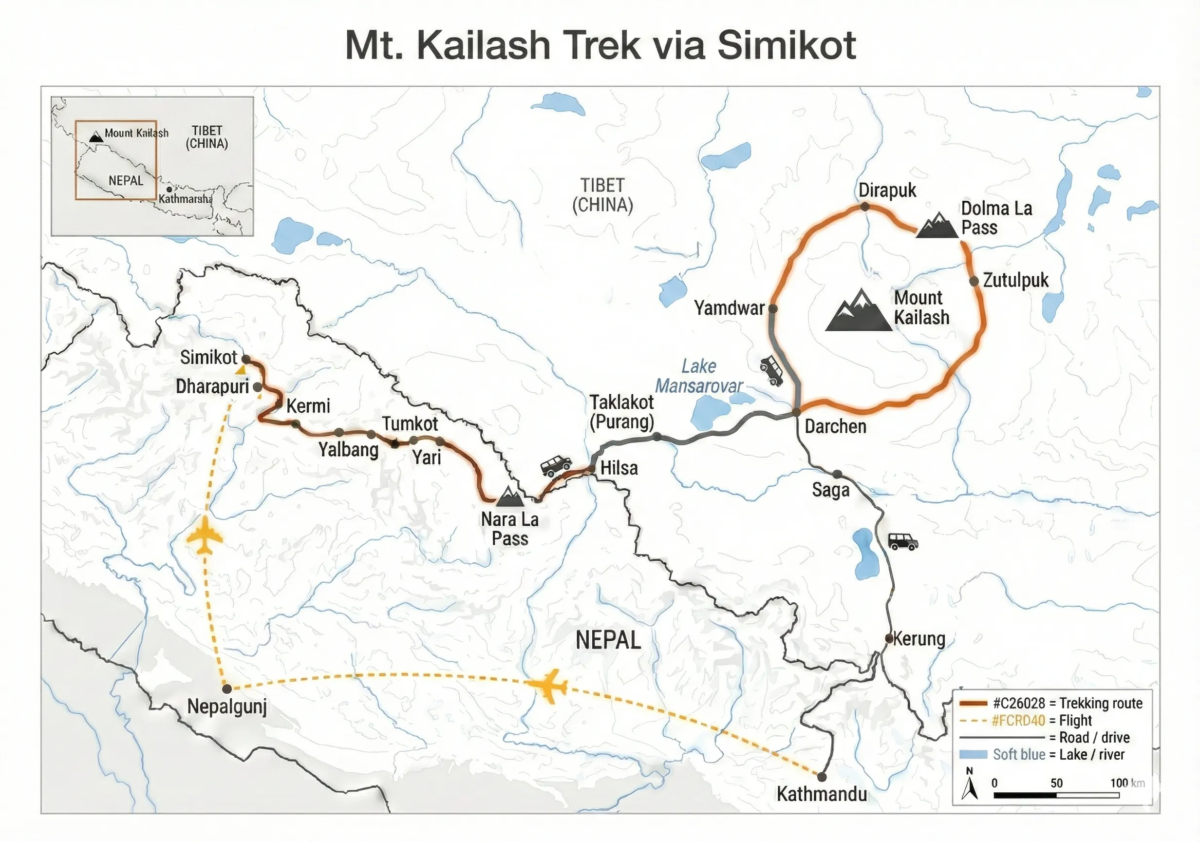
The tour starts in Nepal with flights to Nepalgunj and then onward to Simikot. From Simikot, the trek moves through river valleys, thick forested slopes, and high ridgelines. Villages such as Dharapori, Yalbang, Tumkot, and Hilsa reveal a Tibetan-influenced culture shaped by isolation, trade, and faith. Mani walls, prayer flags, chortens, and monasteries line the trail. These features distinguish this route from road access paths, giving the journey a unique character.
Crossing into Tibet at Hilsa opens the path to Lake Manasarovar and Darchen. From Darchen, pilgrims follow the Kailash Parikrama, a sacred three-day circuit around the mountain. Reaching Dolma La Pass at 5,630 meters is the defining moment for many travelers. The air thins and the slope sharpens, pushing both your body and mind. Every movement demands presence, merging a physical challenge with a sense of purpose and reflection.
Many travelers choose the Simikot route for an experience that feels real and unhurried. Walks stretch through the day, and nights settle quietly in modest lodges or guesthouses. The weather shifts suddenly, as the sun often gives way to clouds or wind without any warning. Moving slowly lets you notice small details, exchange smiles with villagers, and allow your body to adjust to the altitude naturally. Effort blends with observation to create a journey that challenges the body while it deepens the mind.
Pilgrims, photographers, and hikers find the route rewarding in ways that go far beyond the views. The trek tests your patience, requires steady effort, and invites respect for the fragile environment. Mountains stretch wide, and villages hum with life as each step carries its own sense of purpose. Traveling from Nepal’s hidden trails into the heart of Tibet, this trek blends adventure, culture, and quiet reflection. The pace allows you to feel the land underfoot and take in the journey rather than rush through it.
Quick Facts
- Duration: 18 to 22 days for the complete trek.
- Highest Point: Dolma La Pass at 5,630 meters.
- Best Season: May to September for stable weather.
- Trek Difficulty: Moderate to demanding.
- Group Size: Small groups, usually 6 to 12 trekkers.
- Starting Point: Simikot, Humla.
Detail Itinerary of Mount Kailash Trek via Simikot
Day 1: Arrival in Kathmandu
Welcome to Nepal! Kathmandu is the heart of Nepal and its capital, lying at about 1,350 m above sea level. A Peregrine guide will greet you at the airport and take you to your hotel in a private vehicle, where your trekking guide will be waiting. You can either rest for the day or stroll around the bustling streets of Thamel or any nearby attractions.
Logistics: Your guide will brief you on the Mount Kailash Trek via Simikot itinerary. They will also be collecting your passport for the Tibet group visa and processing permits for restricted areas. Make sure to double-check your gears and purchase any items that you are missing immediately in the city.
Kathmandu does not lie at a high enough altitude to cause acclimatization issues for most travelers, but you will soon be at a much higher altitude. Today’s preparation is to ensure you have all the essential gear in place and that your body is well-rested. You might enjoy a traditional Nepali dinner in the evening and an early bedtime.
Tip: Stay hydrated and avoid anything too spicy on the very first day to give your body time to adjust to a new environment.
Day 2: Kathmandu Sightseeing and Trip Preparation
Today, you will explore the capital city of Nepal, Kathmandu, and make final preparations for the trek. You will visit some of Kathmandu’s iconic cultural sites that showcase Nepal’s rich cultural heritage. You might see the historic “Bhaktapur Durbar Square”, the sacred Hindu temple of Pashupatinath, the Monkey Temple, Swayambhunath Temple, or the massive Buddhist shrine, Boudhanath.
After the city tour, you will focus on the logistics for the upcoming Mount Kailash Trek. Your guide will obtain the necessary permits and group Tibet visa if not already in hand. Keep extra passport photos and your travel documents ready, as they may come in handy.
Organize your duffel bag and make sure you have all the necessary gear, including sleeping bags, a down jacket, and water purification tablets. Pack light but thoroughly, as the trek will be in a remote place with few shops around. Check and organize everything for the trek by evening, and rest early to charge yourself for the start of your Mount Kailash Trek via Simikot.
Day 3: Fly from Kathmandu to Nepalgunj
Today’s journey takes you from Kathmandu to Nepalgunj, a city in the flat Terai near the Indian border. Have an early breakfast, then head to the airport for the short flight. As the plane descends, the green hills and distant Himalayan peaks give way to vast, sunlit plains, and the air grows noticeably warmer. In about an hour, you’ll land in Nepalgunj, sitting around 150 meters above sea level, where the humid, tropical climate feels very different from Kathmandu.
Logistics: In Nepalgunj, your guide meets you and drives you to the hotel. Spend the afternoon resting, exploring the streets, or visiting the local markets at your own pace.
Nepalgunj thrives as a trading center, with strong Indian influences in its food, clothing, and daily life. You can walk through the local market, filled with spice stalls, colorful textiles, and small food vendors. The town also has a small zoo and a few temples scattered around. The heat can be intense, so drink plenty of water and avoid overexertion. This stop mainly positions you for tomorrow’s flight to Simikot. All flights depart early, so plan for an early night.
Tip: Keep your day pack ready with essentials such as your passport, permits, camera, and a jacket. Rest well despite the warm climate, using a fan or air conditioning if available, as Simikot offers only basic facilities and limited comfort.
Day 4: Fly from Nepalgunj to Simikot and Trek to Dharapuri
Today, you leave before dawn and head to the airport for your flight to Simikot. The planes are small, often seating only 18 passengers, and pilots fly only in good weather, so that departure times can change. The 40- to 45-minute flight offers stunning views as the aircraft passes over deep river valleys and rugged mountain ridges. The Himalayas stretch across the horizon, creating a breathtaking backdrop for the journey.
Landing on Simikot’s short gravel runway is unforgettable. Stepping outside, you immediately notice the cooler, thinner mountain air. At roughly 2,950 meters above sea level, the altitude is a significant change from Nepalgunj. The scenery around the small town highlights the dramatic shift to the highlands, and the crisp air signals that you have reached the start of the trekking section.
After meeting your local trek crew in Simikot, you start the trekking section of the Mount Kailash Trek via Simikot. The trail climbs gently above the town, winding past wheat and barley fields on rocky ground. Within the first hour, you reach a small pass at about 3,150 meters. From there, you can see the surrounding peaks and the Humla Karnali River far below.
Take your time on this climb, as even a short ascent can leave you winded at this altitude. From the pass, the trail descends for roughly an hour through pine forests toward the village of Tuling, continuing onward to Majgaon.
The descent is enjoyable, but the rocky steps require careful footing. Along the way, you encounter local villagers of both Hindu and Buddhist heritage tending to cattle or carrying supplies, as no roads reach this remote area. The sights, sounds, and everyday rhythms of these communities make the first day of trekking vivid and memorable.
After descending to the valley floor, the trail levels and runs along the Karnali River. The path rises and falls gently, a type of terrain locals call “Nepali flat,” meaning it undulates without significant climbs or drops. You move through lush greenery and pass terraced fields of barley, buckwheat, and potatoes that provide for the nearby villages.
By early afternoon, after about four to five hours of walking, you reach Dharapuri at roughly 2,300 meters. This small settlement sits beside the river and offers a few simple lodges or campsites for overnight stays. Once you set up your tent or check into a teahouse, take some time to rest and listen to the nearby rushing river.
Tip: Although this first day involves a net loss in elevation, it still helps your body adjust to the altitude. The sun in the mountains is intense, so remember to drink plenty of water, wear a hat, and apply sunscreen while walking along the trail.
Day 5: Dharapuri to Kermi
You begin the day with an early start, heading west along the Karnali River Valley. The trail is mostly gentle, with only minor ups and downs. You walk for about five to six hours, covering a moderate level of difficulty. The scenery remains green and peaceful, with the river flowing alongside and small villages dotting the valley.
The trail follows the riverbank for most of the day, rising and falling gently in stretches of what locals call “Nepali flat.” The landscape slowly changes as the gorge tightens in places, with steep rocky slopes towering above—the Karnali River thunders below, carving its way through narrow channels. At times, the trail climbs above the river, giving expansive views of the water rushing through the gorges, then descends back to the flat riverside paths. Walking close to the river, you feel a refreshing breeze and hear the constant rush of water, adding a natural rhythm to the trek.
The trail takes you past small hamlets and terraced fields where locals grow barley, buckwheat, rice, and potatoes. Kermi, your stop for the day, is one of the first villages along the route with a predominantly Buddhist population. Stone chortens and colorful prayer flags mark the village, giving it a distinct spiritual character. You should arrive in the early to mid-afternoon, at about 2,860 meters above sea level.
Once in Kermi, take time to rest and recover from the walk. If you have the energy, you can make a short detour to the natural hot springs, about a 30-minute walk from the village. The warm water soothes tired muscles, a welcome relief after two days on the trail. Another option is to visit the two local monasteries. Laikyo Gompa dates back several centuries, while Lhundrup Choeling Gompa is newer, having been built within the last 100 years. Both attract very few visitors, so you can enjoy a quiet, authentic atmosphere. In the evening, you stay in either a tented camp, a simple homestay, or a teahouse. The night is calm, with the distant roar of the Karnali River and occasional calls of jackals from the surrounding hills.
Tip: Even though the village sits under 3,000 meters, temperatures drop at night, so layer up before sleeping. Use this relatively easy day to stretch and rest, letting your body acclimatize before the more challenging trails ahead.
Day 6: Kermi to Yalbang
You leave Kermi today and walk towards a more challenging section of the trail. The path climbs steadily out of the village. For about two hours, you pass through a relatively steep pass, climb out of the Kermi village, and gain several hundred meters in elevation.
The higher altitude makes your every step heavier than before. When you reach a small pass, stop and rest for a while. The view from there is spectacular. The Karnali gorge stretches toward Kermi, the river sparkling far below. The scenery shifts from lush valley to rugged highland terrain.
From the ridge, the trail drops to a large iron suspension bridge over the Salli Khola, or Salli River. The bridge sways as you cross, so step carefully. After the bridge, the path mostly descends or remains flat for the rest of the day. The most challenging climb is behind you. You walk through a quiet pine forest.
The Karnali River glimmers far below in the canyon. Along the trail, you may encounter caravans of mules or dzopas carrying goods. These pack animals have served local communities here for generations. Watch out for animals emerging from tight bends and give them enough space to pass safely.
By evening, you reach the village of Yalbang at around 2,879 meters. The town is home to Namkha Khyung Dzong Monastery, the largest in the region. About 130 monks live here. A massive rock at the entrance is inscribed with Tibetan mantras, greeting everyone who arrives. If time allows, visit the monastery for the afternoon prayer session around 4 PM.
Sit quietly at the back of the hall and listen as the monks chant the scriptures. The monastery also runs a small school and health clinic, making it a central part of village life. You stay in simple but comfortable accommodation, either in a tent or a basic lodge. The night air is colder and drier here, a clear sign that you are moving deeper into the trans-Himalayan terrain. The crisp evening highlights the area’s remoteness and the quiet rhythm of village life.
Tip: For a unique cultural and spiritual significance, visit the monastery’s prayer session in Yalbang village. Also, make sure to refill your water bottles and stay hydrated. You will trek to an even higher elevation tomorrow.
Day 7: Yalbang to Tumkot
You will continue on your trek to a more remote region along the Karnali River today. After leaving the village of Yalbang, the trek will be relatively flat and easy, taking you to a gentle path above the river, passing a small town called Yangar. The tricky part starts after leaving the village of Yangar. You will notice the lush pine forests giving way to more scrub and rocks, and the climate getting drier as you progress. You pass through a trail cut into a cliffside, making it look almost like a three-sided tunnel through the rocks, displaying the ingenuity of trail builders in these remote mountains.
After passing through these rocky sections, you cross a large wooden suspension bridge over the Karnali River to climb the barren hillside. The climb is not as steep as it was yesterday, but you see barely any green vegetation around here. Along the way, you might pass by Muchu village (lies slightly off the main route), which is one of the last sizeable villages before the border. There are some shops and a police checkpoint here, so if any member of the group needs supplies or needs to check in with authorities, we can stop for a short while. After Muchu village, you will reach Tumkot, which lies about 3,300 m above sea level. Tumkot is a small, scattered village home to Dhungkar Choezom Monastery, affiliated with the Sakya tradition of Tibetan Buddhism. This monastery is located at the top of the hill, overlooking the entire village, so visiting it requires a 20- to 30-minute uphill walk. If you have enough energy, you can climb up to the monastery and see its ancient artifacts while also receiving a blessing from the residing monks. It’s worth the effort.
Reaching and settling in Tumkot will have taken about 5 to 6 hours of trekking. The atmosphere here is a high-altitude desert with colder nights, clearer skies, and sparse vegetation. Your stay will be very simple here, likely in a camp or a rustic homestay.
Logistics: Tonight, your guide will check everybody’s health. If you have any feelings of altitude sickness or other health conditions, report immediately.
Tips: Wear extra layers and a warm hat to bed, as nights are colder here and there are few wood fires. Try to eat well and rest well too, as you will need energy for tomorrow’s high pass.
Day 8: Tumkot to Yari
You continue on the trail and follow the Karnali river, though it is now a small stream as you near its headwaters. Today, the trail begins on the gentler side, compared to the previous days, from Tumkot to Yari, for about 6 to 7 hours. Along the way, you will notice that the trees have almost disappeared, with only low juniper bushes and alpine scrub visible in the rocky hills, a typical high-altitude Tibetan-plateau-like terrain. Wear a sunhat and reapply sunscreen regularly, as the air is dry and the sun can be super-hot here.
After crossing through a windswept valley with sparse vegetation and animals like yaks and goats, you will arrive at Yari village, also known as Yari Valley near Thado Dunga, most likely mid-afternoon. The village of Yari is the last sizeable village before you arrive at the Tibetan border. You will find a Nepal Police checkpoint here, and possibly other customs officials, as this place has historically been a trade route into Tibet. In Yari, you will find a couple of stone houses, seasonal shops, and maybe some small tea houses for trekkers and traders to rest.
Logistics: Tonight might be your final night of camping or staying in a basic lodge in Nepal. Check that all your documents and gear are correctly organized for crossing the Tibet border tomorrow. Your guide will brief you about the crossing process and what to expect.
It is normal to feel a slight headache or trouble sleeping at altitudes over 3,600m. Drink plenty of warm fluids (ginger tea or soup can alleviate it to some degree). Avoid drinking alcoholic beverages entirely. Rest well tonight, as you will be crossing a 4,600 m pass tomorrow.
Tip: Add extra layers to your daypack and some snacks because tomorrow’s trek is going to be challenging. Layer up as the evening can be cold and often windy, and rest early tonight. The excitement builds up for the second phase of your Mount Kailash Trek via Simikot, which officially starts tomorrow, as you leave Nepal and enter Tibet.
Day 9: Yari to Hilsa via Nara La Pass
Today brings one of the hardest sections of the trek as you cross Nara La at 4,620 meters. You leave Yari before sunrise and begin the climb in the early morning light. The trail rises steadily at first, then steepens as it zigzags toward the pass. Loose gravel and exposed rock dominate the terrain. As you gain height, the valley behind you grows smaller. Brown, wind-shaped mountains surround the trail. Vegetation fades, and the landscape feels stark and open. The thin air slows your movement, so you keep a steady rhythm and take brief stops when needed. Careful pacing becomes essential as the altitude increases and the pass draws closer.
Near the top of Nara La, prayer flags come into view along with small piles of stones left as offerings by past travelers. When you reach the pass, the land opens in every direction. To the north, the brown hills of the Tibetan Plateau stretch far into the distance. Behind you, the valley drops sharply toward
Yari, with the village appearing small below and snow-covered peaks rising farther back. Strong winds sweep across the pass, so you do not linger long. After taking a few photos, you begin the descent. The trail drops in a long series of zigzags across loose gravel and rock. Careful foot placement matters here. The descent takes another few hours before you reach the bottom of the pass and more stable ground.
As you descend, the Humla Karnali River comes back into view below the trail. After about two hours, you reach Hilsa at roughly 3,647 meters. The settlement sits beside the river and consists of a few stone buildings and seasonal tents. This marks the end of the trekking section in Nepal. You stay overnight in very basic accommodation. The Chinese border lies just across the river, though you will cross it the following day.
Tip: Use the evening to rest after the long climb. Drink plenty of water and eat a warm meal. Keep your passport and documents ready for the morning border formalities.
Day 10: Cross into Tibet: Hilsa to Purang
Bid farewell to your Nepali team (if they are not continuing) and make preparations to cross the border early in the morning. Walk a short distance across the bridge from Hilsa to arrive at a Chinese immigration post. You will find that the infrastructure here, on the Tibetan side, is more advanced. The road condition is better, and there are more facilities.
Logistics: The Chinese official will check your visa and permits, which may take some time. You will also meet your Tibetan guide and driver here. You officially start your overland tour in Tibet.
After you receive the immigration officer’s okay to proceed in Tibet, you will take a short drive (about 1.5 to 2 hours, roughly 30km) to Purang, also known as Taklakot. The drive there offers a scenic view as you pass through the Karnali River gorge into the Tibetan plateau, with its smooth asphalt road and wide-open valleys surrounded by reddish-brown hills. Though Purang (3,772 m) is a small Tibetan town, it is an important trading hub in Tibet. Your stay will be at a guesthouse or a hotel, a luxurious stay to say the least, after the camping in the remote villages, so check in there. Rest in the afternoon and acclimatize to Tibet’s environment, as the air and climate there might feel drier and cooler than in Hilsa, which sits at a similar altitude.
If you still have energy, walk through Purang’s markets. During the summer months, the town stays busy with trade. Local Tibetans, Nepali traders, and Indian pilgrims move through the streets buying and selling goods: shops stock food, supplies, and everyday items for travelers and locals alike. You can also visit Purang Gompa, an old monastery known for its detailed Buddhist frescoes. The space feels quiet and focused. You can light a butter lamp and observe daily religious life without crowds.
Tip: Purang is also a good place to buy supplies for the coming days, including snacks, instant noodles, and drinks, as several small shops operate here. This short stay allows your body to adjust to conditions in Tibet. Eat lightly and avoid unnecessary exertion. At night, you sleep in a proper bed, a noticeable change after basic lodging. The rest helps prepare you for the drive to Lake Manasarovar the next day.
Day 11: Drive from Purang to Lake Mansarovar
Today, you will set out on a drive to one of the holiest lakes in the world, Lake Mansarovar. After breakfast, get ready for the road ahead. The lake is about 80 kilometers away, but the winding mountain roads make the drive at least 3 to 4 hours. You follow open, rugged terrain, climbing gradually toward a high pass at around 5,000 meters.
From here, you might catch your first distant view of Mount Kailash, its snow-capped dome rising above the plateau. To the side, Lake Rakshastal appears in deep blue, a striking contrast to the turquoise waters of Mansarovar just beyond. The scenery along the way provides a sense of the sacred landscape you are about to enter.
After descending from the pass, you arrive at the shores of Lake Mansarovar, sitting at about 4,558 meters above sea level. The lake is immense, and its waters shine a brilliant turquoise under the sun. Rolling hills surround the lake, and to the south, the majestic Gurla Mandhata Mountain rises to nearly 7,694 meters.
Many people consider Lake Mansarovar a spiritual milestone. Bathing in its icy waters is believed to wash away sins and bring blessings. Your destination for today is near Chiu Gompa, a small monastery perched on a hill beside the lake. From here, you can enjoy panoramic views of Mansarovar, making it an ideal spot to pause, reflect, and take in the sacred surroundings.
By afternoon, you arrive at a simple guesthouse near Lake Mansarovar. The rest of the day is meant to move at a slow pace so your body can adjust to the altitude. At 4,558 meters, the thin air can make even short walks tiring. Sip warm fluids and take gentle steps as you settle in. The lake itself radiates calm and peace. Spend time absorbing the view without pushing yourself too hard. The quiet waters and surrounding hills create a serene atmosphere that encourages rest and reflection.
Tip: Night temperatures drop sharply, even in summer, so wear thermal layers and a wool hat before sleeping. If you step outside, the sky stretches wide above the plateau. Stars shine clearly, creating a stunning and unforgettable display over the high mountains.
Day 12: Morning at Lake Mansarovar and Drive to Darchen
You wake to a breathtaking view of Lake Mansarovar as the early sun spreads a warm golden glow across its still waters. The calm scene sets a gentle tone for the morning, inviting quiet reflection. Many travelers gather at the lake to perform puja and offer prayers, while others sit silently, meditating by the shore.
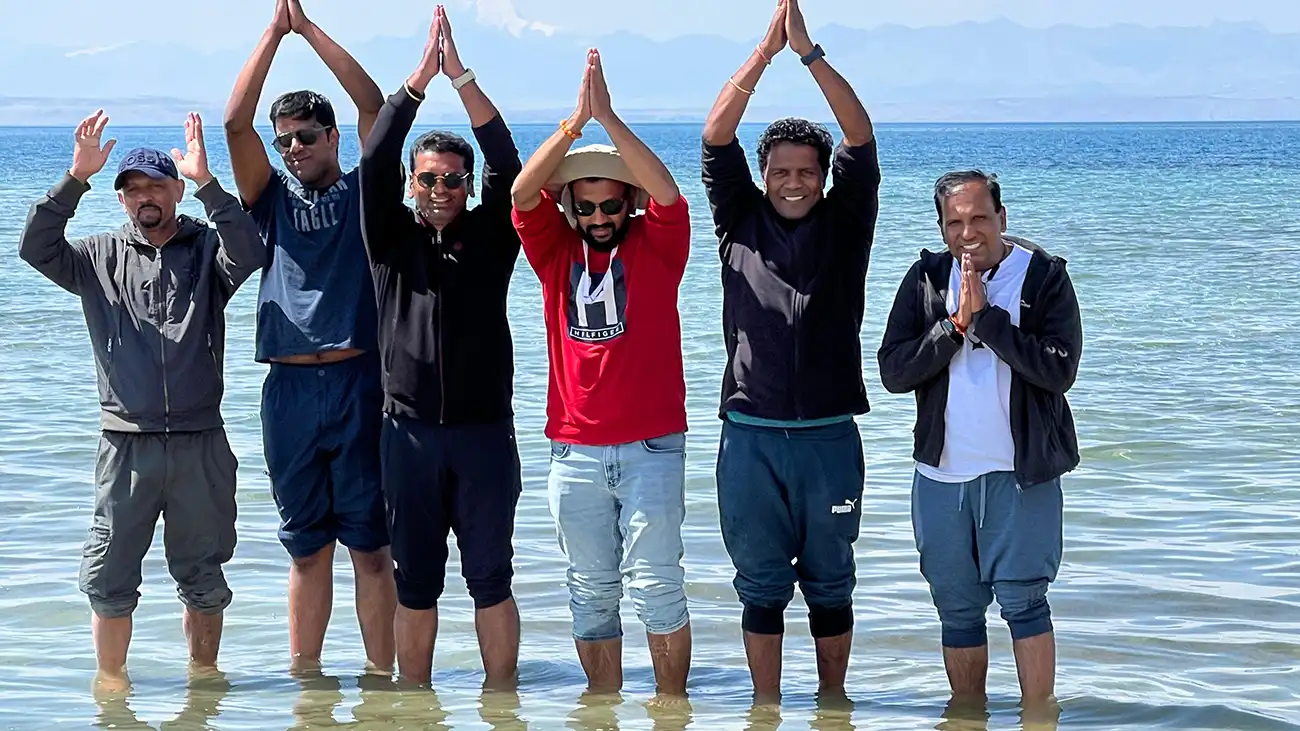
If your beliefs guide you, you may choose to enter the icy water. Do so carefully, as the lake is extremely cold year-round, and the high altitude increases the physical risks. Move slowly and remain aware of your body’s limits. Even without participating in religious rituals, the atmosphere is serene. Soft chanting from pilgrims often drifts across the water, and you can watch Tibetan locals making offerings along the shoreline. The combination of quiet devotion and natural beauty creates a powerful, unforgettable experience.
After a peaceful and serene morning, it is time to depart for Darchen, a town that lies at the foot of Mount Kailash. The drive covers about 40 km and takes roughly one hour. Darchen sits at 4,675 meters above sea level and serves as the starting point for the Mount Kailash trekking circuit, known as the “kora.” Originally a small nomadic campsite, Darchen has grown into a bustling town during the pilgrimage season, with several guesthouses visible.
When you arrive at Darchen, check into your guesthouse and take a moment to settle in. Signs of modern life become more visible compared to the remote areas near the lake, as cellphone signals appear, vehicles move along the streets, and pilgrims from many countries walk through the town. The mix of locals and visitors gives Darchen a lively, active feel without losing its unique character.
The rest of Day 12 remains free for acclimatization and preparation. Your body already adjusts to the high altitude, but the next three days will challenge you the most as you trek around Mount Kailash. Use this time to carefully organize your gear. Pack only what you need for the three-day kora, including water, snacks, extra layers, a camera, and basic first-aid supplies. Leave any extra luggage with the transport or at your hotel. Yak and porter services are available in Darchen, and your guide will likely arrange yaks to carry heavy gear during the trek.
Tip: In the evening, take a short walk around the town to keep your muscles active, but avoid pushing yourself too hard. Eat a hearty dinner and try to go to bed early. Excitement might make it hard to rest, but tomorrow you begin the kora around Mount Kailash, the highlight of your Simikot Kailash tour.
Day 13: Kailash Kora: Darchen to Dirapuk
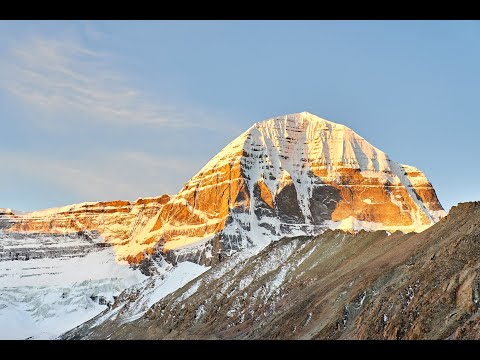
The Kailash Parikrama officially begins today. Tibetan tradition holds a belief that walking around Mount Kailash is a sacred act that brings spiritual reward to those who complete it. After an early breakfast, you drive about 15 minutes from Darchen to Tarboche, also called Yam Dwar. This point marks the start of the kora trail. Pilgrims often stop here to offer prayers before moving forward. The name Yam Dwar means “Gateway of the God of Death” and serves as the ceremonial entry to the sacred path.
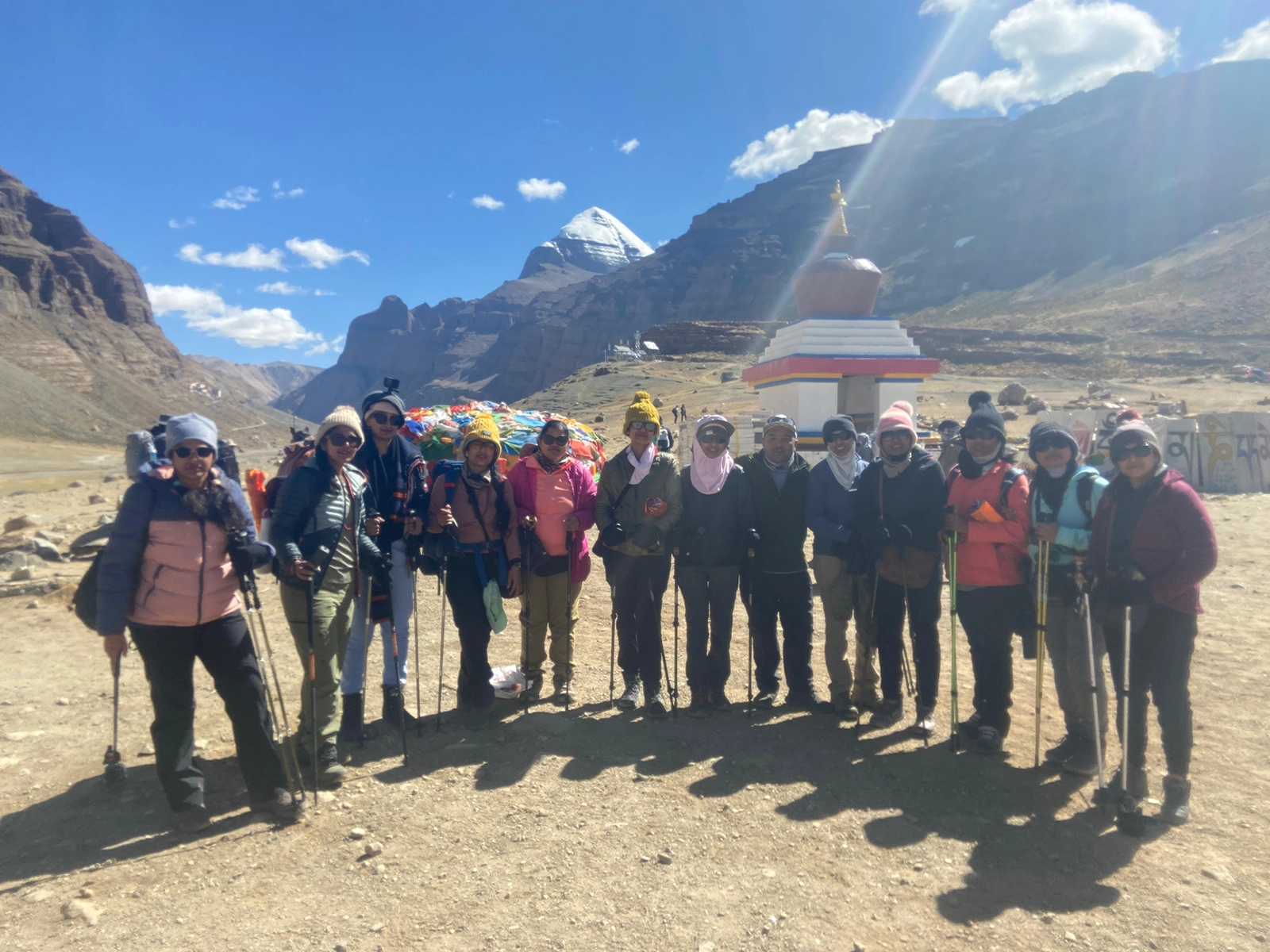
After arriving at Tarboche, you start the trek north along the Lha Chu River valley. The first day remains relatively easy, with gentle climbs and no steep sections, which gives your body time to adjust to the trail. The valley opens widely around you, and red and brown cliffs rise on both sides, revealing the landscape’s strength and scale.
Far above the trail, you notice Chhuku Gompa, a small monastery set on the hillside. The monastery acts as a clear marker, and you can pause for a short while to take in the view. Each step on the path feels purposeful, bringing you closer to Mount Kailash. You may catch sight of the west face of Mount Kailash and may feel excited, but hey, the real spectacle comes as you pass a bend and arrive at the Dirapuk area.
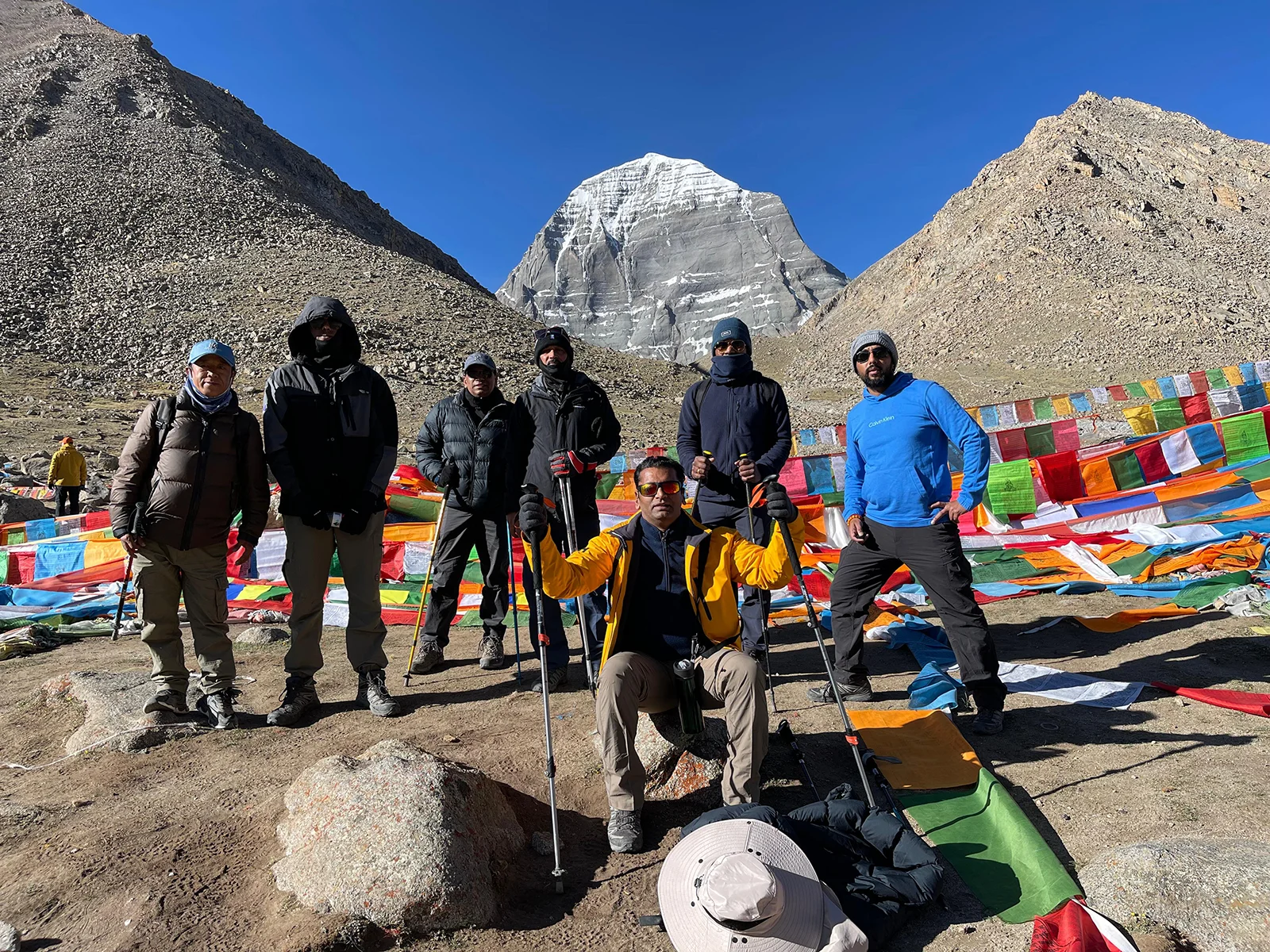
You reach Dirapuk in the evening after about five to six hours of trekking (around 11 to 12 kilometers in distance). The village sits at roughly 5,120 meters. Mount Kailash’s north face rises sharply nearby, often capped with snow, and a small stream runs through the village. The air feels thinner here, and you can notice the difference from lower elevations. You’ll be staying in a very basic guesthouse or fixed camp with dormitory-style beds, and shared pit toilets with minimal facilities. Mild headaches, shortness of breath, or tired legs are common at this height.
Tip: Even if you don’t feel very hungry, try to eat a little. Your body needs energy to cope with the high altitude. It’s very cold here, so tuck your water bottles inside your sleeping bag to keep them from freezing overnight. Later, if you can, step outside for a moment. Mount Kailash rises under a sky full of stars, quiet and majestic, a reminder of why this mountain has inspired reverence for centuries.
Day 14: Kailash Kora: Dirapuk to Zuthulpuk via Dolma-la Pass
Today is the most challenging part of the Mount Kailash Trek via Simikot. You start before dawn to climb toward Dolma-la pass, which sits around 5,650 meters. The trail rises steeply from Dirapuk, and even a steady pace feels tiring at this altitude. After a couple of hours, you reach a rocky area called Shiva-tsal. Pilgrims leave small offerings here, symbolizing letting go of the past.
From Shiva-tsal, the final push to the pass is very demanding. When you reach Dolma-la, prayer flags flutter in every direction. Take a short pause to feel the spiritual energy of the place. Dolma is the Tibetan name for the goddess Tara, and this spot holds deep significance. The air is thin and cold, so don’t linger too long, but absorb the view and the sense of achievement.
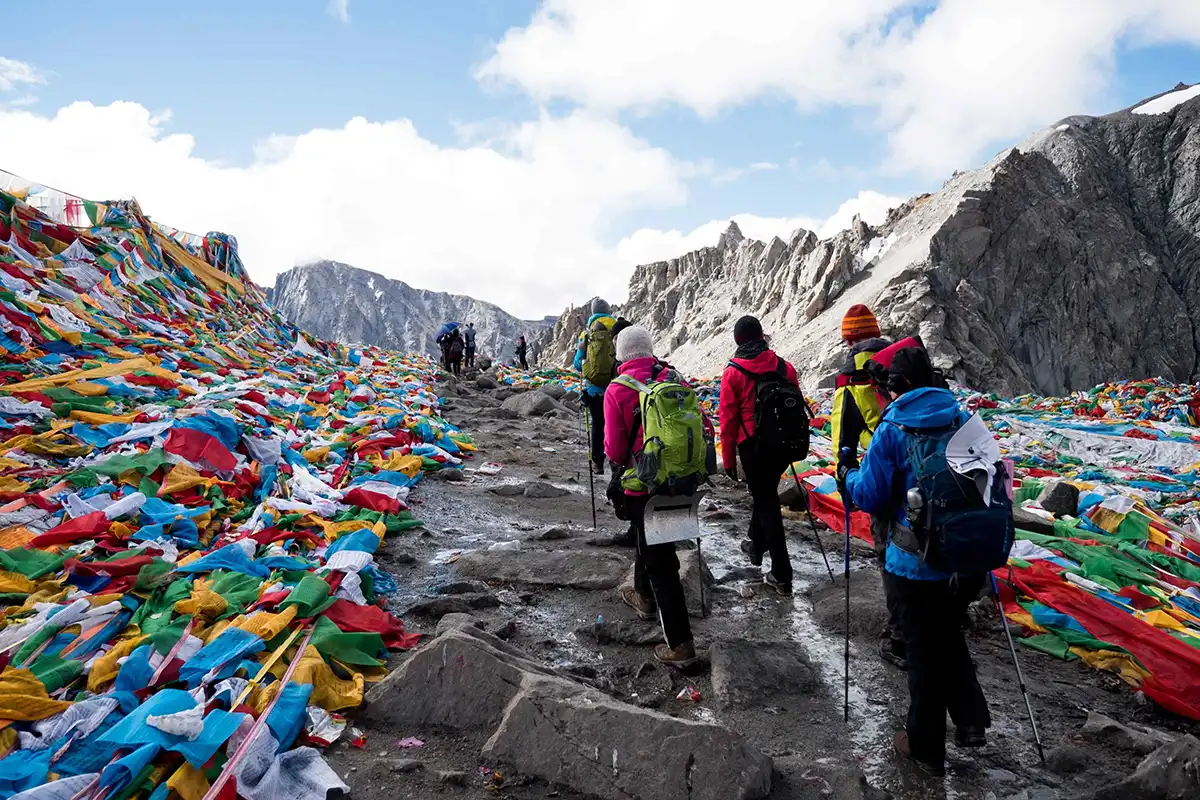
The trail drops sharply after the Dolma-la pass, and the footing can be tricky, so watch where you step. Not long after, you reach Gauri Kund, a small lake with deep green water, a sacred place to Hindus (said to be the bathing place of the Goddess Parvati). The path continues downward for several kilometers. Your legs will feel heavy, but take your time and focus on steady steps.
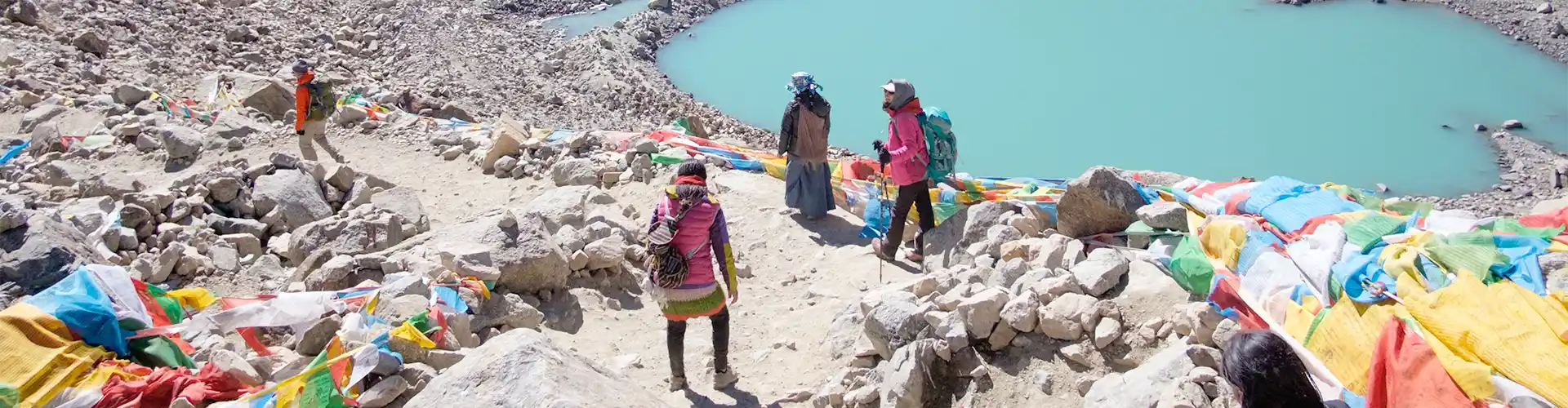
The higher-altitude strain slowly eases as the air becomes easier to breathe at lower elevations. By early to mid-afternoon, the trail flattens near a stream, and you arrive at Zuthulpuk at about 4,790 meters. This village is home to the “miracle cave” of Milarepa, with a small monastery built around it. Accommodation here is extremely simple, but after a day like this, comfort is secondary.
Tip: Keep drinking water and stay warm. You’ve crossed the hardest part of the trek, so take the evening to rest and reflect on what you’ve accomplished.
Day 15: Kailash Kora: Zuthulpuk to Darchen, Drive to Paryang
In the morning, you wake up with a sense of relief. The hardest part of the trek is behind you, and the feeling of accomplishment is strong. You and your fellow pilgrims get ready to finish the kora. From Zuthulpuk, the trail back toward Darchen is much easier. It takes about three to four hours to cover roughly 14 kilometers. Most of the path is flat or gently descending.
The route follows the river out of the valley, and the landscape gradually opens up. At one point, the canyon narrows. You pass many walls, which are low stone walls carved with prayers, and a few dry riverbeds. Later, the trail widens into the plains. Darchen comes back into view, and the distant Lake Manasarovar area appears once again, welcoming you toward the final stretch.
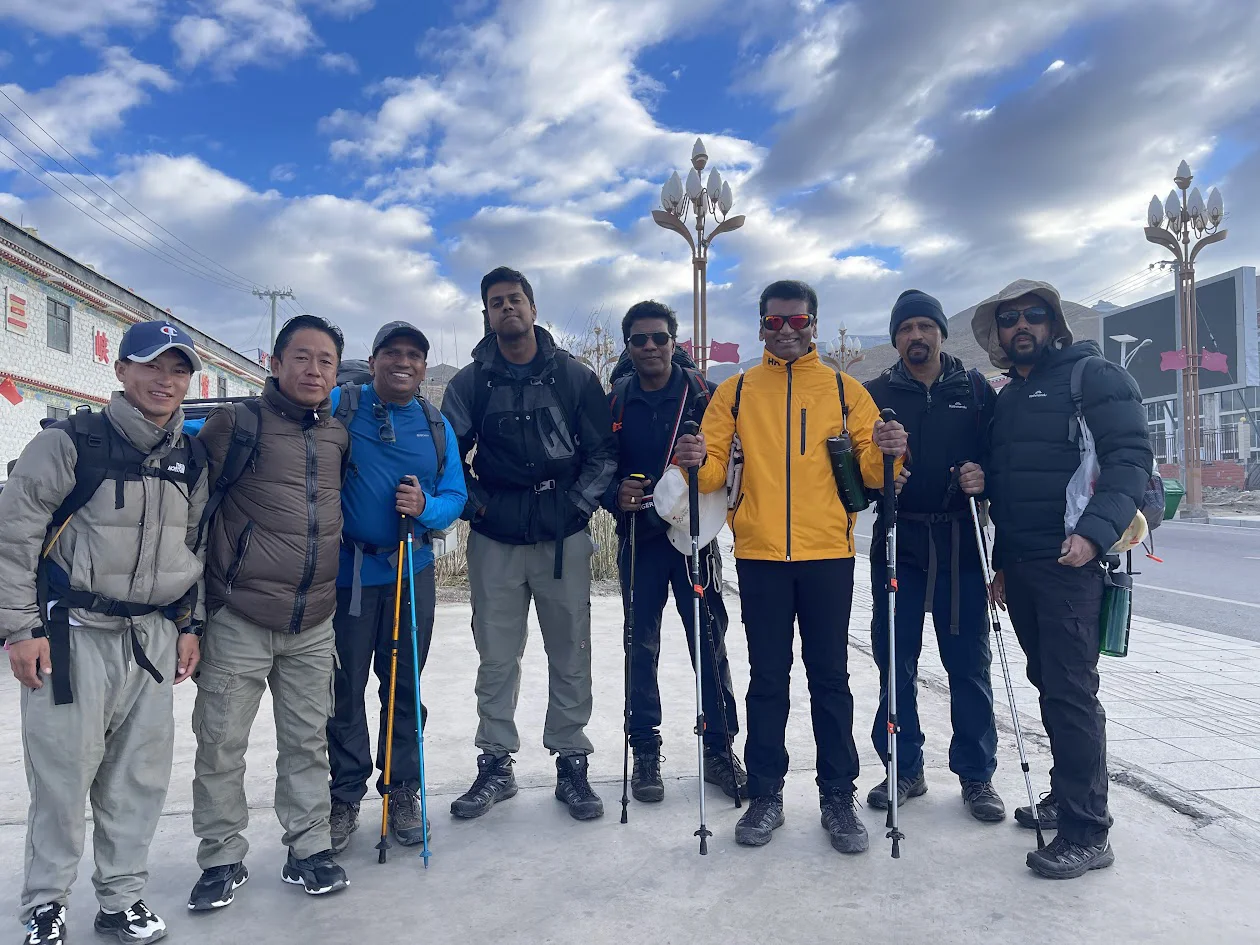
By late morning, you see the endpoint of the trek. It is usually marked by prayer flags or the spot where vehicles wait to pick up trekkers. With the kora complete, you meet your driver and get into the vehicle. After a short rest and perhaps a light lunch, the overland journey back toward Nepal begins. You drive northwest at first, retracing part of the route along the shores of Lake Manasarovar, then turn eastward.
The drive to Paryang is long, about 240 kilometers, but the roads are generally in good condition across the Tibetan plains. You will likely spend five to six hours on the road this afternoon. The route takes you across high plateaus and over one or two passes, including Mayum La at around 5,200 meters. Along the way, you pass the occasional nomadic camp and see herds of sheep, goats, and yaks grazing in the wide-open landscape.
Paryang sits at about 4,600 meters and serves as a convenient midway stop for travelers. You will arrive here in the early evening, ready to stretch your legs after the long drive. Accommodation is in a simple guesthouse. Since Paryang is lower than Lake Manasarovar and Mount Kailash, you may notice a little more ease in breathing. It is still high altitude, so take your time walking around.
Logistics: After several days of camping with very basic facilities, the guesthouse offers a small sense of comfort. You might have the chance for a basic shower or enjoy a slightly more varied dinner, which makes the evening feel like a well-earned pause before the next leg of your journey.
Tip: Take a break at the rest stops to stretch your legs and drink plenty of water during the long drive. As you leave the Kailash region behind, take a moment to reflect on everything you’ve experienced. Soon, you will approach the Nepal border and the next stage of your trip.
Day 16: Drive from Paryang to Saga
After breakfast, you set off again, heading east and then turning south across the Tibetan Plateau. Today’s destination is Saga, a relatively large town by Tibetan standards, about 250 kilometers from Paryang. The drive will take around five to six hours.
The journey offers wide, open views of Tibet’s rugged landscape. You pass stretches of dry grassland where nomadic herders tend yaks and sheep. In summer, you may spot black tents pitched near streams and see flocks grazing nearby. The scenery changes slowly, giving a clear sense of the vastness of the plateau as you make your way toward Saga.
The route takes you across the broad valley of the Brahmaputra River, which is called the Yarlung Tsangpo in Tibet. At one point, you cross a high bridge spanning this mighty river. After that, signs of habitation become more frequent, signaling that you are getting closer to Saga. Saga sits at about 4,400 meters and serves as a military and transport hub. After several days in remote areas, arriving here feels like stepping back into a more settled world. You’ll find shops, small restaurants, and even cellphone coverage. It’s a convenient place to rest, resupply, and prepare for the final stretch toward the Nepal border.
When you reach Saga, you check into a guesthouse or hotel. It is still basic, but a step up from the previous stops. The rest of the day is free to relax and recover from the long drive. Some travelers take the chance to have a refreshing shower or pick up fresh fruits and snacks for the next day. The air feels a little easier to breathe here since the altitude is lower than Kailash, though 4,400 meters is still high, so pace yourself.
Tip: If you are in the mood for something different, Saga may offer a bit more variety. You might find fresh vegetables or even a chilled soda. Enjoy the relative comfort. This is your last night in Tibet, so double-check your belongings and keep your travel documents ready. Tomorrow, you will leave China and cross back into Nepal.
Day 17: Drive from Saga to Gyirong Town
Today, you leave the high plateau and head down toward the greener border region. The drive from Saga to Gyirong, also spelled Kyirong, covers about 300 kilometers. It is a long day on the road, but one of the most scenic stretches of the journey. In the morning, you depart Saga and travel southwest toward the Nepal border.
The road winds over a series of mountain passes, so expect plenty of twists and turns. One of the highlights is the Lalung La pass, sitting at around 5,124 meters. If the weather is clear, the view from here is incredible. You can see the northern Himalayas, including Shishapangma, Tibet’s only eight-thousand-meter peak. On obvious days, even distant Mount Everest can peek above the smaller peaks.

Further along, you may spot Peiku Tso, a large alpine lake with striking blue waters. Snow-capped mountains rise behind it, creating picture-perfect scenery. There are plenty of roadside spots to stop and take photos, so be ready to capture some of the most memorable views of your journey.
As the drive continues, you begin descending from the dry, high-altitude plateau into lower, greener lands. The scenery changes quickly. Barren tundra and rocky slopes give way to forested hills and streams. You cross another high pass before the road winds down into the Gyirong Valley. The air becomes warmer and easier to breathe as trees appear along the hillsides and waterfalls tumble into the valleys below.
By late afternoon, you reach Gyirong Town, sitting at about 2,700 meters. After days spent above 4,000 meters, this feels almost tropical. You can relax a bit and enjoy the contrast in climate, greenery, and the slower pace of life in this border town.
Gyirong Town is the last settlement on the Chinese side and a key stop for travelers going to and from Nepal. You will likely stay at a local hotel here. After the sparse amenities of far-west Tibet, the comforts in Gyirong are very welcome. Electricity is usually available, hot water is often provided, and some hotels even offer Wi-Fi. The valley is green and humid, with pine forests lining the hillsides. It is a refreshing change after days in the dry plateau.
Logistics: Your guide will collect your Tibet Travel Permit and any remaining group visa paperwork in preparation for tomorrow’s border crossing.
Tip: This is your final night in Tibet. If you have any Chinese yuan left, you can use it to buy snacks or small souvenirs, since it won’t be accepted in Nepal. Make sure to pack your bags carefully, protecting fragile items for the bumpy roads ahead.
Day 18: Cross Border: Gyirong to Kathmandu
This morning, you travel from Gyirong Town to the Nepal-China border. The drive takes about 20 to 30 minutes along a winding road down to the Friendship Bridge. At the Chinese immigration post, you complete your exit formalities and say goodbye to your Tibetan guide and driver.
Next, you walk across the Friendship Bridge, which spans the Bhote Koshi River gorge. It is a symbolic moment, marking your return to Nepal. On the Nepal side, at Rasuwagadhi, sitting at around 1,800 meters, Nepali officials stamp your passport. Border procedures can take some time due to paperwork and queues, so patience is essential. Vehicles from Tibet cannot enter Nepal, so you will switch to a Nepali vehicle here for the rest of your journey.
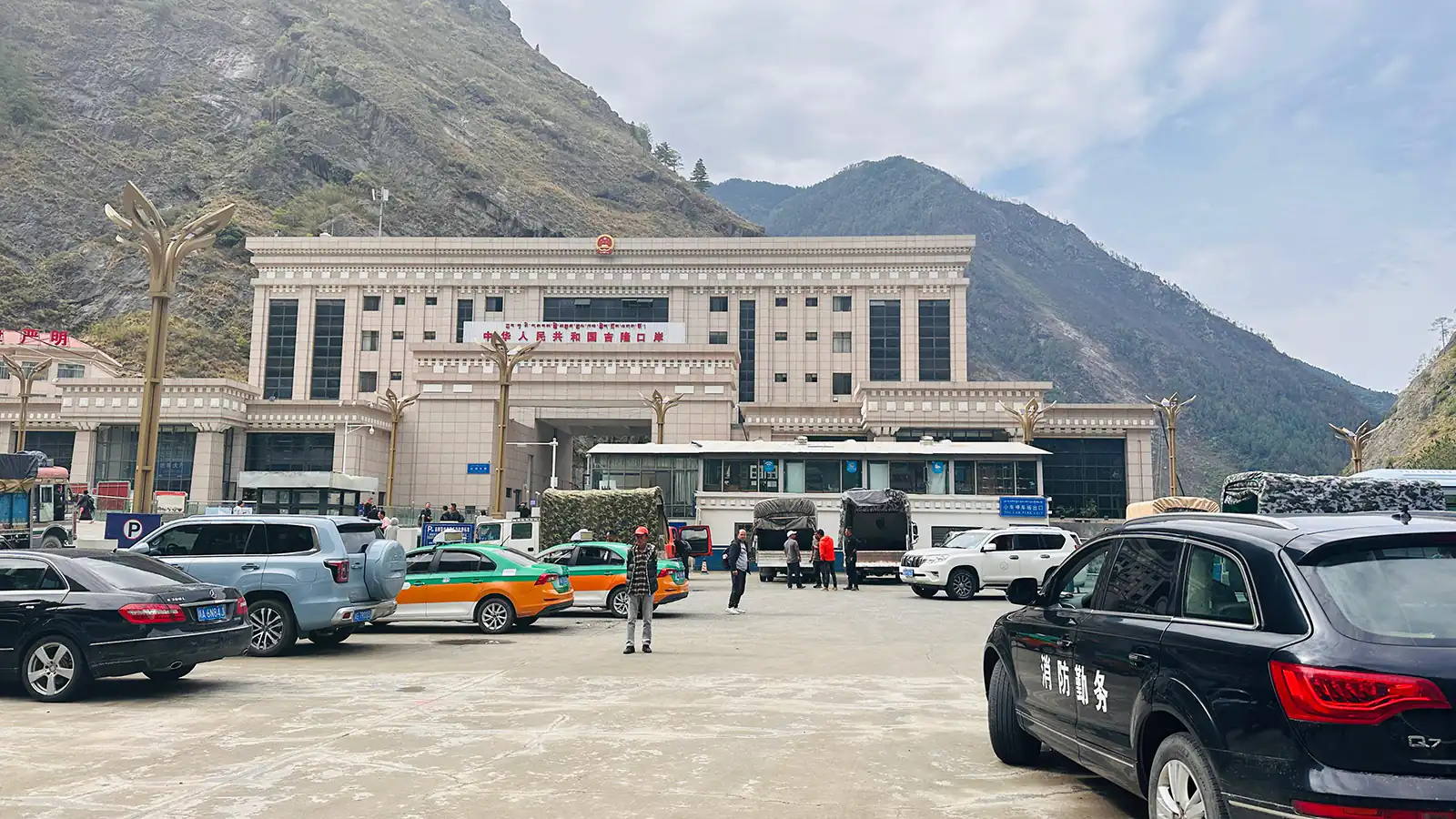
Once all border formalities are complete, you meet your Nepali driver and guide. From Rasuwagadhi, Kathmandu lies about 130 kilometers to the south. The distance may not seem far, but the road is narrow and mountainous, so the drive often takes 6 to 7 hours. You follow the Pasang Lhamu Highway through Langtang National Park, tracing the course of the Trishuli River.
The scenery is striking, with deep valleys, terraced hillsides, and small farming villages passing by as you descend. You will stop for lunch at a roadside town along the way. Afterward, the road continues through the foothills, with some rough patches and occasional traffic as you get closer to populated areas.
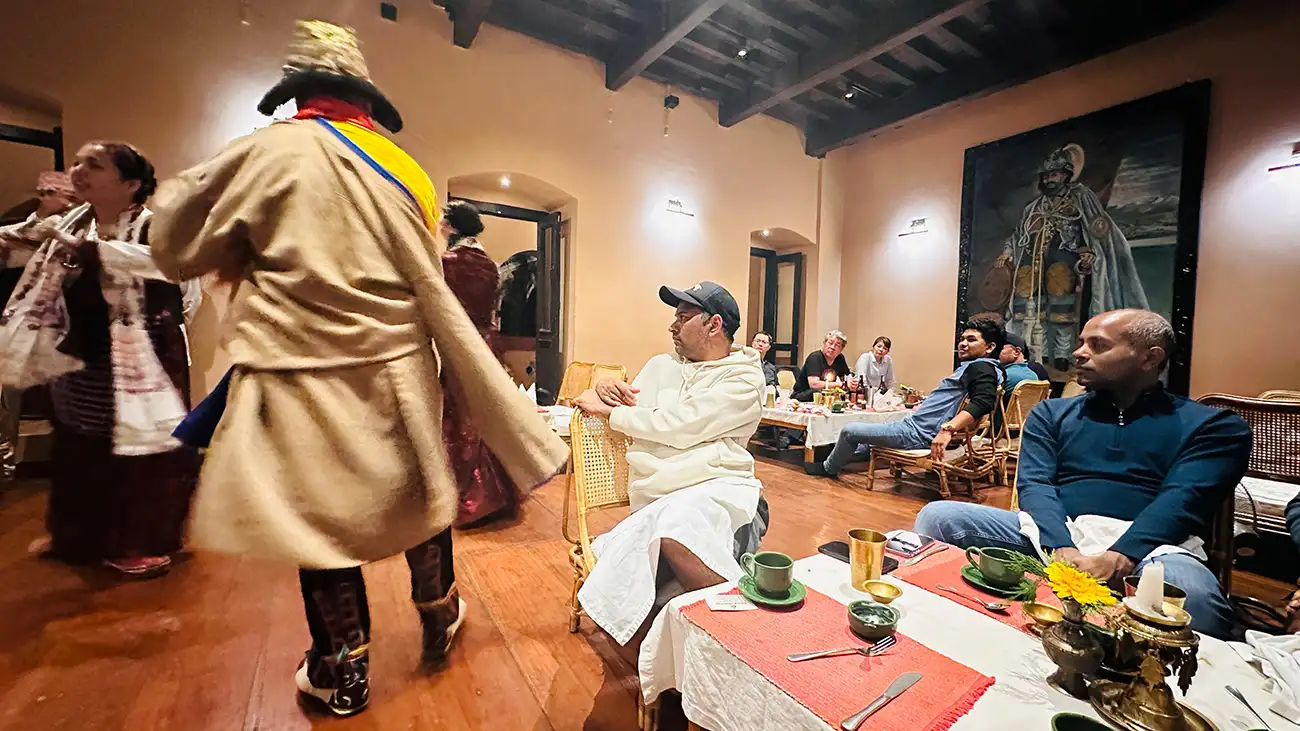
By late afternoon or evening, you reach the outskirts of Kathmandu Valley and then the city itself. Coming back to the city’s bustle can feel jarring after the quiet of the mountains. Once at your hotel, a hot shower and a soft bed will feel especially satisfying. In the evening, you might gather with your group for a well-deserved dinner to celebrate completing the trek.
Tip: The road from the border to Kathmandu is winding, so if you are prone to motion sickness, it’s wise to take precautions. Keep a light rain jacket handy as well in case of showers. Tonight, enjoy the comforts of the city. You have completed an epic journey that spanned the high Himalayas of both Nepal and Tibet.
Day 19: Departure from Kathmandu
Today marks the end of your 19-day Mount Kailash Trek via Simikot. If your schedule allows, you can use the morning to pick up any last-minute souvenirs or rest at your hotel. Take a moment to reflect on everything you’ve experienced.
It is hard to believe how much you have seen and done in less than three weeks. You visited remote villages in Nepal, crossed high Himalayan passes, and stood beside the sacred lakes and peaks of Tibet. Along the way, you encountered local cultures, traditions, and spiritual practices that make this trek truly unique. This final day is the perfect time to pause and appreciate the journey you have completed.
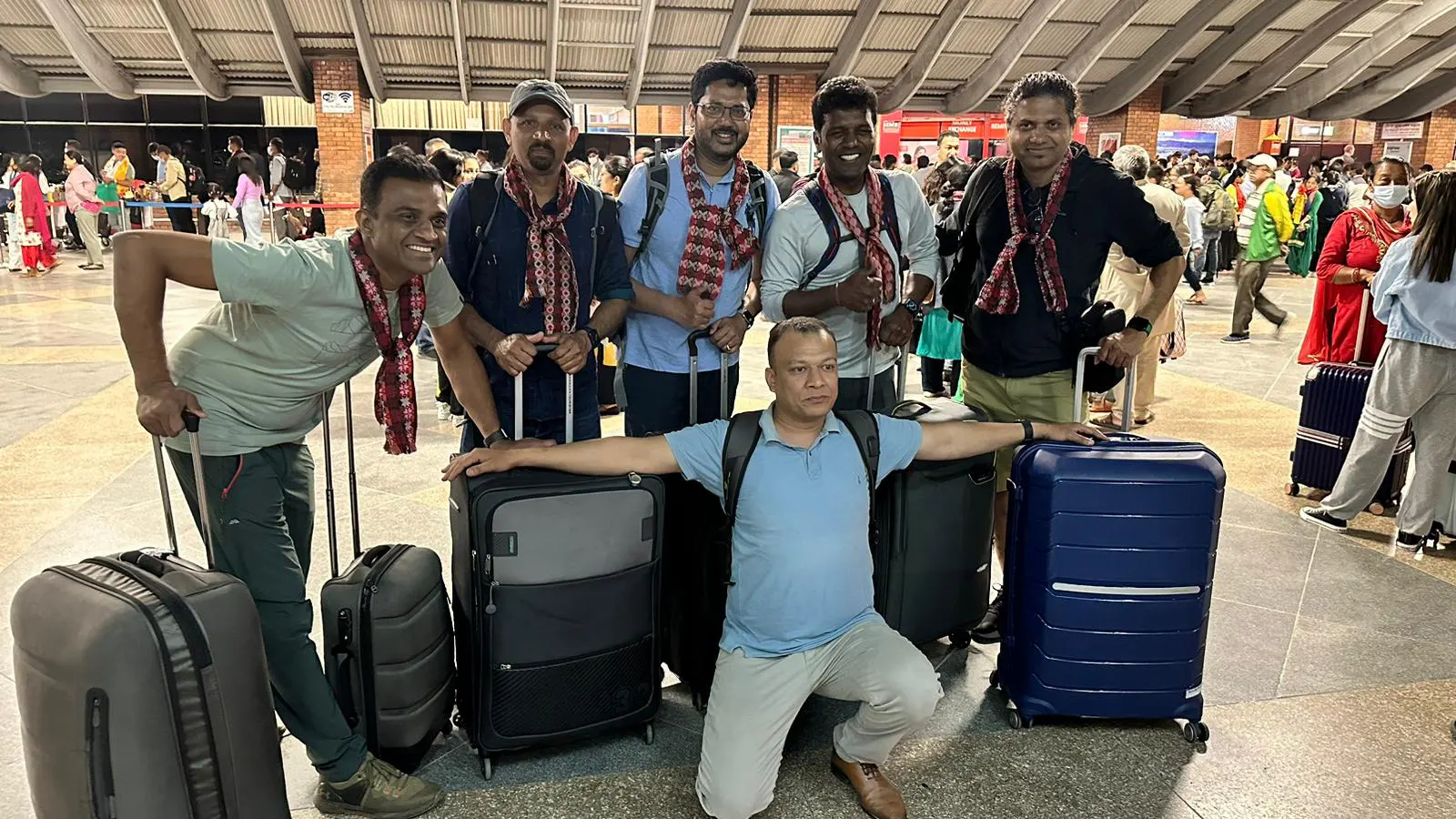
When it’s time for your flight, you will be taken to Tribhuwan International Airport, Kathmandu. Plan to arrive at least three hours before departure, as the airport can get busy. As you say goodbye to Nepal, carry with you all the memories of your adventure. Remember the challenge of the high passes, the quiet moments beside Lake Manasarovar, the awe of standing before Mount Kailash, and the companionship shared with fellow travelers and pilgrims. This journey through Nepal and Tibet will stay with you long after you leave.
Tip: Make sure to check that all your documents are there, and your things are not left behind in the hotel. Keep your documents and valuable souvenirs in your carry-on bag. With a heart full of adventure and spiritual enrichment, you depart Kathmandu, marking the end of this extraordinary tour.
Customize this trip with help from our local travel specialist that matches your interests.
Includes & Excludes
What is included?
- Pickups and drops from the airport and transfer to Hotel
- Hotels in Kathmandu, Nepalgunj, and Teahouse during the trek
- Sightseeing in Kathmandu valley by comfortable private vehicle
- Flight from Kathmandu – Nepalgunj -Simikot
- Assistance in acquiring for Chinese visa
- All necessary permit and entry fees (including Tibet Travel Permit)
- Tibet border (Zhang-Mu) – Kathmandu transportation by comfortable vehicle
- Hilsa, Kailash, Garuda valley, Zhang-Mu transfer driving by Private vehicles
- English-speaking trained guide
- Porter fee or horse from Simikot – Hilsa and during Kora
- Sleeping bag, down jacket, and duffle bag
- All applicable taxes and service charges
- Lake Manasorvar Kora bus fee
- All necessary paperwork
What is excluded?
- International airfares
- Chinese visa fee
- Accommodation for extra itinerary
- All travel insurance
- The extra cost in the event of a landslide for hiring additional transportation and porters
- Horse rental fee while on Parikrama (approx. Cost US $200) or personal porter (Approx. Cost US $100)
- Emergency evacuation costs. We recommend buying your insurance with a zero deductible.
- Personal expenses like phone calls, laundry, bar bills, photography charges, web usage, and Telephone Calls
Departure Dates
We also operate Private Trips.
Route Map
Trip Information
Cost and Payment Policy of Mount Kailash trek via Simikot
This section highlights the pricing and payment details for the Mount Kailash Trek via Simikot. We keep prices fully transparent and customize them based on group size to make planning easier.
Tour Cost per Person (USD):
- 2 Persons: USD 5,800 per person.
- 3 to 4 Persons: USD 4,400 per person.
- 5 to 10 Persons: USD 4,000 per person.
These prices cover the entire Mount Kailash Trek via Simikot tour as outlined in the itinerary. Larger groups benefit from lower per-person costs, while smaller groups incur higher per-person costs due to fixed logistics expenses.
Deposit Requirements and Payment Methods:
- Deposit Amount: USD 1,400 per person.
Paying the deposit secures your booking for the Mount Kailash Trek via Simikot and lets us arrange the necessary flights, permits, and logistics.
We accept secure international payments via
- Credit Card
- Online Bank Transfer
- SWIFT Bank Transfer.
After confirmation of your trek booking, we will send you the full payment instructions.
Cancellation Policy:
- From the booking date up to 7 days later, no cancellation charges apply, though bank fees may still apply.
- From the booking date up to 30 days before departure, the deposit becomes non-refundable.
- Within 30 days of the departure date: The full tour cost becomes non-refundable if you cancel or terminate your booking at this stage.
For group bookings, the size of your group may affect per-person pricing, so if a group member cancels, the cost for others may increase. Similarly, adding participants later may lower the per-person price. This policy ensures fair prices and keeps operations running smoothly for the Mount Kailash Trek via the Simikot route.
Accommodation Details of Mount Kailash trek via Simikot
Accommodations for the Mount Kailash Trek via Simikot prioritize comfort without complicating the experience. In small villages, you stay in welcoming and comfortable lodges. Larger towns offer greater comfort while still reflecting the local way of life. Nights bring quiet and a chance to feel the rhythm of the mountains.
Accommodation in Kathmandu and Nepalgunj:
- In Kathmandu, you stay at a 4-star hotel like The Everest Hotel or similar hotels. Rooms include private bathrooms, hot showers, Wi Fi, comfortable beds, and in-house dining. These hotels provide a Proper and standard place for you to rest and prepare for your upcoming Mount Kailash trek.
- In Nepalgunj, you stay at a 3-star hotel, such as Siddhartha Hotel, or a similar property. Rooms have attached bathrooms, air conditioning or simple electric fans, Wi, and restaurant amenities. This stop makes early flights to Simikot easier.
Guesthouses and Lodges along the Trek:
- During the Mount Kailash Trek via Simikot, you stay in local guesthouses or mountain lodges.
- Rooms are simple, usually twin sharing, with clean bedding.
- Bathrooms are mostly shared, and hot water availability, although limited, depends on location and weather.
- Electricity and charging exist for limited hours in remote villages.
These accommodations provide insights into how people live in rural areas and are the best possible options for staying along the Mount Kailash trek.
Accommodation in Tibet (Mansarovar and Kailash region):
- Lodging in Tibet includes basic hotels or guesthouses near Lake Manasarovar and in Darchen.
- Facilities are simple due to the high altitude and limited infrastructure.
- Some areas limit the usage of heating and hot water, but lodgings still ensure essential comfort.
Tent Options:
- Chinese government regulations prohibit the use of portable tents.
- All stays occur in approved hotels or guesthouses to ensure compliance and safety.
This setup ensures you feel secure while still preserving the authentic experience of the Mount Kailash Trek via Simikot.
Fitness and Difficulty of Mount Kailash trek via Simikot
The Mount Kailash Route via Simikot demands more effort than other road-based trips. There are long walking days on remote trails with rising altitude, so stamina is essential. This path is best for trekkers and pilgrims who are physically fit and have experience with multi-day hikes.
Required Fitness Level:
- This route requires strong stamina, good cardiovascular fitness, and sturdy legs.
- You walk every day on trails that rise and fall, often with uneven terrain. It is best to build fitness through regular walks, hikes, or aerobic exercise before the tour. This training improves comfort and safety during the Mount Kailash Trek via Simikot.
- You do not need technical climbing skills for this route, but you must stay alert and mentally flexible.
- Adapting to basic facilities and sudden weather changes is part of the experience.
Trek Grade:
The Mount Kailash Trek via Simikot falls into the moderate-to-strenuous category.
- The Simikot to Hilsa section involves long trekking days on remote trails
- The Kailash Parikrama is strenuous at higher altitudes, especially during the crossing of the Dolma La Pass.
Though the Tibet Kailash Trek demands more physical effort than other routes, its gradual pace helps travelers acclimate and offers an immersive trekking experience.
Daily Activity:
- You generally walk 5 to 7 hours daily. On longer days and in high altitude, like the Kailash Kora, the trek can go on for 7 to 8 hours.
- The itinerary includes rest breaks and acclimatization days to maintain steady progress with minimal fatigue.
Altitude Challenges:
Altitude is one of the significant aspects that make the Mount Kailash Trek via Simikot tour significantly more difficult.
- Trails rise from 3,000 meters in Simikot to the Tibetan Plateau.
- The highest point of this trek is at 5,630 meters at Dolma La Pass during the Kailash Parikrama.
You may experience altitude sickness, which can appear in the form of headaches, fatigue, or shortness of breath. Staying hydrated and following a steady acclimatization schedule can reduce the risks of altitude sickness. The itinerary allows gradual adaptation, which many trekkers find easier than arriving by road.
This sacred Mount Kailash Trek via Simikot makes all the preparations and challenges faced worthwhile, offering trekkers and pilgrims improved endurance, deeper spiritual connections, and a strong sense of achievement.
Best Time to Go on the Mount Kailash trek via Simikot
Choosing the right season makes a big difference for your safety and comfort, as well as the success of the Mount Kailash Trek via Simikot. Everything that determines the success of the trek depends on seasonal patterns, including trail conditions, weather, flights to Simikot, and accessibility in Tibet. We have broken down the trek’s seatrek’s patterns so you can plan carefully.
Spring Season (May to June):
Spring is one of the best times for the Mount Kailash Trek via Simikot.
- Skies are stable and mostly clear in Humla and western Tibet.
- Trails are dry and show blooming alpine flowers at lower elevations.
- Mountain views remain exceptional throughout the tour.
- Temperatures range from 10°C to 20°C at lower elevations and -5°C to 10°C at high altitudes (Kailash region).
Spring is a very desirable season, as it offers reliable weather for flights and trail conditions with comfortable daytime temperatures. That is why most trekkers and pilgrims prefer the spring season for the Tibet Pilgrimage Trek.
Summer and Monsoon Season (July to Early September):
The summer season overlaps with Nepal’s monsoon season, which remains viable for flexible travelers.
- You may see afternoon clouds and occasional rain in Nepal.
- Landscapes in Humla appear lush, though some sections get slippery.
- The Tibetan side remains drier than Nepal, with clearer weather around Mount Kailas.h
- Temperatures range from 15°C to 25°C at lower elevations and 0°C to 12°C at high altitudes.
Weather, such as rain, sometimes delays flights to Simikot. However, many pilgrims choose to trek during this season because of the Saga Dawa Festival, making this season a popular time for the Tibet Kailash Tour despite the challenges.
Autumn Season (Mid-September):
Early autumn provides another excellent window for the Mount Kailash Trek via Simikot.
- Clear sky and stable weather after the monsoon.
- Trails are dry, and the mountain air feels crisp
- You get sharp, unobstructed views of the Himalayan ranges and Mount Kailash.
- Temperatures range from 8°C to 18°C at lower elevations and -8°C to 8°C at high altitudes.
This period suits those trekkers seeking fewer crowds and cooler temperatures.
Winter Season (October to April – Not Recommended):
Winter is unsuitable for the Simikot Kailash trek.
- Heavy snowfall blocks passes and routes.
- Extreme cold weather in Tibet, especially in the Mount Kailash region.
- Flights to Simikot are often canceled, and border closures may occur.
- Temperatures can drop below -15°C in the Kailash region, making trekking unsafe.
Peak Trekking Periods:
- Best Overall: May to June
- Festival Season: Late May to July (Saga Dawa)
- Clear Weather Window: Early to mid-September
These periods are the most favorable time to plan your Mount Kailash trek via Simikot tour to improve safety, comfort, and the overall trekking experience on the trail.
Permits and Documentation for the Mount Kailash trek via Simikot
You must carry all necessary licenses for the Mount Kailash Trek via the Simikot route. As the trek crosses from Nepal to Tibet, all travelers must meet the entry requirements for both countries. Peregrine Treks and Tours handles the entire permit process so you can enjoy the trip worry-free.
Permit Requirements:
- Tibet Travel Permit (Arranged by Peregrine): Everyone entering Tibet needs this. Peregrine Treks and Tours handles the group’s application on your behalf. Authorities issue this permit only for organized, guided tours. You must provide a clear passport photo and a valid Chinese visa in advance. With this permit, you can travel within Lhasa, Lake Mansarovar, Darchen, and the Mount Kailash region.
- China Visa (Arranged by Travelers): Travelers must handle their own China visa applications from their home country or any place of residence. Some passport holders can enter China visa-free, though for a limited amount of time, so the visa requirements all depend on your nationality. Ensure your passport is valid for at least 6 months from your travel date. After you have your visa, Peregrine Treks and Tours uses it to process your Tibet travel permits.
- Special Permits (Nepal and Kailash Regions): Peregrine Treks and Tours arranges the Special Restricted Area Permit for the Humla region in Nepal and the Kailash Permit for Mount Kailash and Lake Manasarovar area. We include these permits in our tour, so travelers need not visit government offices.
- Nepal Visa (On Arrival): Most nationalities obtain a Nepal visa on arrival at the Tribhuvan International Airport, Kathmandu. Visa fees depend on the length of your stay. You will need a valid passport and a passport-sized photo for the process. This visa covers your stay in Nepal and after your Mount Kailash Trek via Simikot.
Summary of Responsibilities
- Handled by Peregrine: Peregrine Treks and Tours handles all required trekking permits, including the Tibet Travel Permit, Nepal Special Permits, and the Kailash Permit.
- Handled by the traveler: Travelers must arrange their own China visa if required and obtain a Nepal visa on arrival.
A straightforward, organized process helps travelers stay compliant and feel confident as they prepare for the Mount Kailash Trek via Simikot.
Flights and Transportation of Mount Kailash trek via Simikot
Reaching remote areas in Humla and western Tibet during the Mount Kailash Trek via Simikot requires careful transport planning. Peregrine Treks and Tours handles all flights and ground transportation, ensuring a smooth, well-coordinated tour from start to finish.
- Kathmandu to Nepalgunj to Simikot (included in the trek): Travelers fly from Kathmandu to Nepalgunj and continue to Simikot. Peregrine Treks and Tours organizes the flights and coordinates the timing. Using flights allows for more efficient travel and keeps the Mount Kailash Trek via Simikot on schedule. The itinerary adds extra days to handle unexpected weather delays.
- Hilsa Border Crossing to Tibet: Once you reach Hilsa, Peregrine Treks and Tours handles the border crossing process into Tibet. Our team handles immigration, local coordination, and onward transport. This smooth transition moves travelers from the Nepal section of the Mount Kailash trek into the Tibet portion of the tour.
- Jeep Transportation in Tibet (included): After crossing into Tibet, travelers continue by private jeep. The jeeps carry passengers to Lake Manasarovar, Darchen, and the Mount Kailash area. All vehicles comply with local regulations and can safely navigate high-altitude terrain. This arrangement keeps the Tibet pilgrimage trek smooth and secure.
- Alternative Transportation Options (Optional): Some travelers prefer to skip part of the trek and fly by helicopter from Simikot to Hilsa. This option depends on the weather and space availability. Another way to travel is from Syabrubesi to Kathmandu, either by road or by helicopter, offering flexibility to the tour.
Travelers can pick different transport options to manage their time or enjoy extra comfort. Those who want shorter walking days benefit the most. Peregrine Treks and Tours plans every transfer to ensure everyone’s schedule helps trekkers acclimate steadily to the high altitude. The team follows local rules to make sure the Mount Kailash Trek via Simikot runs smoothly.
Detailed Packing List of Mount Kailash trek via Simikot
Being well prepared makes the Mount Kailash Trek via Simikot safer and more comfortable. Trekkers face changing weather, high altitudes, and remote trails, so proper preparation is crucial. This guide breaks down essential gear by category to help travelers organize everything they need for the Mount Kailash Trek via Simikot.
Essential Gear:
- Comfortable trekking backpack (40-60 liters) to carry your gear.
- Bring a daypack for daily walks during the tour
- Trekking poles, a headlamp or torch, and extra batteries.
- Reusable water bottles
- Water purification tablets or filters.
- Sunscreen with a high SPF, lip balm, and UV-protective sunglasses.
- Personal first aid kit, toiletries, and quick-dry towels.
These gears are essential for the Mount Kailash Trek via Simikot.
Trekking Clothes:
- Moisture-wicking trekking shirts, both long-sleeved and short-sleeved
- Lightweight trekking pants.
- Thermal base layers
- Woolen or synthetic, comfortable trekking socks.
- Broken-in and sturdy trekking boots
- Camp shoes or sandals.
- Sun hat or a Cap
Travelers rely on layering to stay comfortable during the Tibet Kailash Trek. Temperatures can change quickly, so wearing multiple layers helps adjust to both cold mornings and warmer afternoons.
Cold-Weather Gear:
- An insulated down jacket or a synthetic jacket
- Fleece or warm mid-layer
- Windproof and waterproof jacket and trousers
- Warm gloves, a woolen hat or a beanie, and a neck gaiter.
The cold grows stronger near Lake Manasarovar and Darchen. It also becomes more noticeable during the Kailash Parikrama, so proper clothing is essential.
Documents and Money:
- Valid passport with a minimum of six months of validity
- Necessary visas (China Visa if required and Nepal Visa on arrival).
- Travel insurance covering high altitude trekking.
- Multiple passport-size photos.
- Printed and digital copies of permits.
- Cash in USD and small Nepali notes.
ATM access is minimal along the Mount Kailash Trek via Simikot, so travelers need to carry enough cash for their expenses. Planning helps avoid last-minute problems in remote areas.
This packing guide focuses on practical essentials for the Tibet Kailash pilgrimage. It equips trekkers to stay safe, organized, and comfortable throughout the journey, from Simikot to the sacred Mount Kailash. Proper preparation ensures that each day on the trek runs smoothly and allows travelers to focus on the experience rather than logistics.
Safety and Health of Mount Kailash trek via Simikot
Staying safe and healthy is the most important thing on the Mount Kailash Trek via Simikot. Trekkers face high altitudes, remote trails, and unpredictable weather. Careful planning and gradual acclimatization help reduce risks. Experienced guides provide support throughout the Tibet Kailash Trek, ensuring travelers can focus on the journey with confidence.
Altitude Sickness:
Altitude sickness is the primary health concern on the Mount Kailash Trek via Simikot. The trail climbs gradually from Simikot up to Dolma La Pass at 5,630 meters, giving your body time to adjust. Trekkers may notice headaches, nausea, fatigue, loss of appetite, or shortness of breath. Recognizing these symptoms early helps lower risks. Moving at a steady pace and staying hydrated are essential. Guides monitor the traveler’s every day and adjust the pace as needed to support safe acclimatization. Avoiding alcohol also reduces the chance of altitude-related problems during the Tibet pilgrimage trek.
Acclimatization Plan:
The Simikot Kailash tour follows a gradual ascent, allowing the body to adjust naturally to higher altitudes.
- Trekking days in Humla increase elevation step by step.
- Rest and buffer days give travelers extra time to adapt before reaching the higher Mount Kailash region.
- Guides check in with participants every day and adjust the pace as needed.
This careful approach makes the Kailash trek via Simikot easier to handle than faster road-based routes, while still offering a rich and immersive experience.
Emergency Support:
Support systems are in place throughout both the Nepal and Tibet sections of the trek to ensure traveler safety.
- Every participant must carry insurance that covers high-altitude emergencies.
- Guides are trained in emergency response and carry fully stocked first-aid kits at all times.
- Helicopter evacuation is available from the Nepal side when the weather allows. Our team closely coordinates with the pilot to ensure help can reach travelers quickly if needed.
- In Tibet, evacuation follows local rules. Travelers are taken by road or brought to approved medical facilities if an emergency occurs. Guides coordinate with authorities to ensure immediate assistance.
- During the Kailash Parikrama, oxygen is available to help anyone who experiences difficulty with the thin air.
These safety measures give travelers confidence and allow them to focus on the journey without worrying about unexpected health problems.
Cultural and Spiritual Notes of Mount Kailash trek via Simikot
The Mount Kailash Trek via Simikot holds deep cultural and spiritual meaning. The trek connects remote landscapes with ancient traditions and the living beliefs of communities in Nepal and Tibet. Learning about these traditions adds depth and understanding, making the Tibet Kailash Tour more meaningful.
Significance of Mount Kailash:
Mount Kailash attracts pilgrims from around the world for its spiritual power. People of different faiths see it in unique ways. Hindus consider it the sacred home of Lord Shiva. Buddhists honor it as the place where Chakrasamvara, or Demchok, resides. Jains honor it as the site where Rishabhadeva reached liberation. Followers of the Bon tradition treat it as the universe’s heart.
Pilgrims walk the Kailash Parikrama (Kora), circling the mountain with devotion. Completing a single circuit is believed to wash away past misdeeds, and multiple circuits bring deeper spiritual reward. For every pilgrim, this journey becomes a personal transformation, blending the physical challenge of the trail with reflection, faith, and a sense of connection to something greater.
Local festivals and Sacred Events:
Saga Dawa, held in May or June, is the most significant festival linked to Mount Kailash. It honors Buddha’s enlightenment and passing. Pilgrims fill the area around Kailash and Lake Mansarovar with prayers, rituals, and offerings. The atmosphere is filled with a powerful sense of spirituality from the devotion of the pilgrims and the monks.
Respectful Behavior and Cultural Etiquette
Travelers should respect local customs during the trek.
- Walk clockwise around the mountain during the Kailash Parikrama,
- Dress modestly, especially near monasteries and sacred sites
- Keep noise to a minimum to honor the holy surroundings.
- Take photographs only with permission.
- Refrain from touching prayer flags, mani stones, or other religious objects.
- Show respect to monks, pilgrims, and local communities to deepen your connection with the region.
Sticking to these practices shows respect for the spiritual traditions of the Tibet pilgrimage. It also allows travelers to connect more meaningfully with the people, culture, and sacred sites along the Mount Kailash Trek via Simikot.
Related Articles
Frequently Asked Questions
The trek follows Nepal’s remote Humla region and continues into Tibet, combining Himalayan trekking with a sacred pilgrimage. It allows gradual acclimatization and cultural immersion.
The trek is more challenging due to longer walking days and remote terrain. However, gradual altitude gain improves acclimatization compared with vehicle-supported routes.
The whole trek usually lasts 18 to 22 days, depending on weather, flights, and the group’s pace. Buffer days help manage delays.
Trekkers and pilgrims with good fitness and an interest in culture benefit most. It suits those seeking an authentic Tibet pilgrimage.
It helps, but it is not mandatory. Physical fitness and endurance matter more than technical skills. Mental preparation supports long walking days.
The highest point is Dolma La Pass at 5,630 meters. This is the most challenging segment.
Yes. We can adjust pace, group size, and services for private or group travel.
Reviews on Mount Kailash Trek via Simikot
5.0
A Bucket List Adventure Accomplished!
I have been dreaming of this trip for years, and Peregrine Treks delivered beyond my expectations. The Mt. Kailash Trek via Simikot was the perfect blend of rugged hiking in Nepal and the spiritual overland tour in Tibet. The flight to Simikot was thrilling, and the acclimatization schedule was spot on. Our guide, Pasang, was incredibly knowledgeable about the local culture. Seeing the North Face of Kailash for the first time is a memory I will cherish forever. Highly recommended!

Sarah Jenkins
Boulder, Colorado, USAAbsolutely Brilliant Organisation
My wife and I have just returned from the Mt. Kailash Trek via Simikot, and we are thoroughly impressed. The transition from the green hills of Humla to the arid Tibetan plateau was stark and beautiful. The team sorted all the complex permits for China without a hitch, which was a massive relief. The tea houses were basic but comfortable enough, and the food was surprisingly good. A splendid holiday for anyone who loves high-altitude trekking.
Alistair Cunningham
Bath, United KingdomIntense, Spiritual, and Absolutely Worth It
If you are looking for a real adventure, book the Mt. Kailash Trek via Simikot. It’s definitely not a walk in the park—the altitude at Dolma La Pass is no joke—but the support team took great care of us. I loved that we hiked across the border instead of just driving the whole way; it felt like a true expedition. The logistics were seamless, which is impressive given how remote these areas are. Five stars all the way.
Mike Thompson
Asheville, North Carolina, USAA Lovely and Deeply Moving Journey
I wasn’t sure if I could manage the high passes, but the pacing on this itinerary was excellent. Doing the Mt. Kailash Trek via Simikot allowed us to see parts of Nepal that very few tourists visit. The Kora itself was challenging, but the atmosphere with the pilgrims was simply electric. A massive thank you to the porters who were always smiling and helpful. It was a truly brilliant experience.
Eleanor Hastings
York, United KingdomPerfectly Organized Expedition
I appreciate efficiency, and this company knows how to run a complex trip. The Mt. Kailash Trek via Simikot requires many permits and precise timing, and everything worked exactly as the schedule said. The equipment provided was high quality, and the guide spoke good English. The landscape in Western Nepal is very wild and untouched. I am very satisfied with the professional service.
Klaus Müller
Hamburg, GermanyThe Landscape Was Magnificent
This was a very demanding but beautiful tour. We chose the Mt. Kailash Trek via Simikot because we wanted to walk more than drive. The hike up to Nara La Pass was steep, but the view was fantastic. The Tibetan part of the tour was very spiritual. The hotels in Purang were better than I expected. I recommend this for people who are fit and like nature.
Ingrid Weber
Munich, GermanyGreat Value and Professional Guide
We had a small group and a very experienced leader. The Mt. Kailash Trek via Simikot is not cheap, but for the service we received, it was worth the price. The crossing at Hilsa was an interesting experience. I liked that we had time to acclimatize in Simikot before going higher. A very serious and safe trekking company.
Hans Becker
Frankfurt, GermanyA Magical Experience in the Himalayas
It is difficult to describe the beauty of this place. The Mt. Kailash Trek via Simikot was a spiritual journey for me. Walking with the pilgrims around the mountain was very emotional. The team was very kind and attentive to our needs, especially when the altitude was high. The contrast between the Nepal side and the Tibet side is incredible. It was a voyage I will never forget.
Camille Dubois
Lyon, FranceUnforgettable Moments on the Kora
We wanted an adventure that was authentic, and we found it. The Mt. Kailash Trek via Simikot offers a unique way to enter Tibet. The villages in Humla are very traditional and charming. The crossing of the Dolma La pass was hard, but the feeling at the top was pure joy. The organization was superb from the beginning to the end. Merci beaucoup!
Antoine Moreau
Bordeaux, FranceThe Best Adventure of My Life
This trip was full of energy and passion! The Mt. Kailash Trek via Simikot is amazing. I loved the people in our group and the local guides were so friendly. The view of Lake Mansarovar with the mountain in the background is the most beautiful thing I have seen. It is a long journey, but every day brought something new. Highly recommended for adventure lovers.
Alejandro Garcia
Valencia, SpainBeautiful Mountains and Great People
I was worried about the cold, but the hospitality warmed my heart. The Mt. Kailash Trek via Simikot is tough, but the spiritual feeling helps you keep walking. The guide explained the history of the monasteries very well. I felt very safe the whole time. If you want to see the real Himalayas, you must do this trek.
Sofia Rodriguez
Seville, SpainVery Strong Trekking Route
This is a route for strong walkers. The Mt. Kailash Trek via Simikot tests your endurance, especially at the high passes. The logistics were handled very professionally, and the jeeps in Tibet were comfortable. We had no problems with the border crossing. The nature is harsh but very powerful. A serious trek for serious hikers.
Vladimir Ivanov
Saint Petersburg, RussiaHard Path But Worth It
The mountains here are unlike anywhere else. We booked the Mt. Kailash Trek via Simikot to see the holy mountain, and it was majestic. The trekking days in Nepal were long, but the air was fresh and clean. The guide helped us when the walking got difficult near Dirapuk. It is a great achievement to finish this tour.
Anastasia Volkova
Novosibirsk, RussiaRelated Packages
Destination
TibetDifficulty
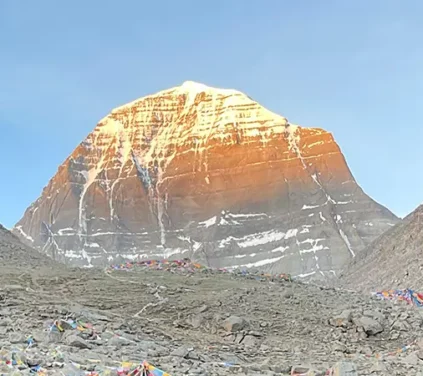
ModerateLuxury Kailash Mansarovar Yatra
 12 Days
US$ 5900
Destination
TibetDifficulty
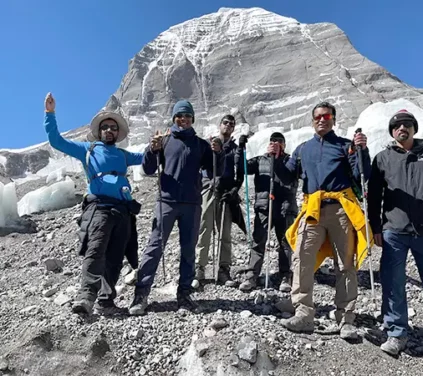
ModerateMount Kailash Trip from Lhasa
15 Days
US$ 2390
Destination
TibetDifficulty
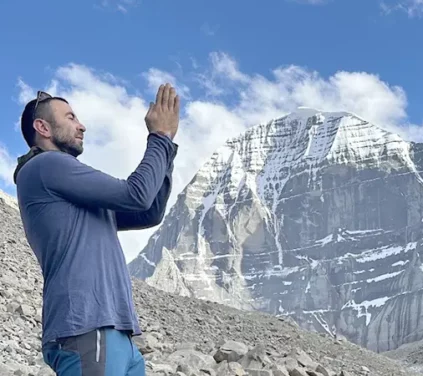
ModerateMount Kailash Tour from Nepal
10 Days
US$ 2500