


The Everest Base Camp Trek accommodation ranges from simple tea houses to high-end luxury lodges. Trekkers on this famous trail find options to match different comfort levels and budgets at each stop. Knowing what to expect at each type of lodging helps you prepare and enjoy a smooth stay in the Himalayas. This article breaks down the accommodation options – from basic tea houses to upscale lodges – so you can plan each night’s rest on your adventure.
Types of Everest Base Camp Trek Accommodation
Along the Everest trail, there are three main types of places to stay: tea houses, standard trekking lodges, and luxury lodges. Each offers a different level of comfort and facilities. Understanding these differences ensures you choose the right option for your needs each night.
Tea Houses
Tea houses are the most common form of accommodation on the Everest Base Camp trek. These family-run lodges are welcoming but straightforward. Most tea houses provide the essentials a trekker needs: a room with twin beds, hearty meals, and a community atmosphere. Staying in Everest Base Camp tea houses also offers a chance to meet locals and fellow trekkers in the cozy dining hall.
Key features of tea houses typically include: – Twin beds with a mattress, blankets, and pillows. – Shared bathroom facilities, often located outside the room. – A communal dining area where meals are served and trekkers socialize.
At lower elevations, tea houses may offer a few extra comforts, such as electrical outlets or Wi-Fi, for a small fee. As you climb higher, facilities become more basic with each gain in altitude. For example, in villages like Dingboche, electricity is usually solar-powered, and charging devices costs extra.
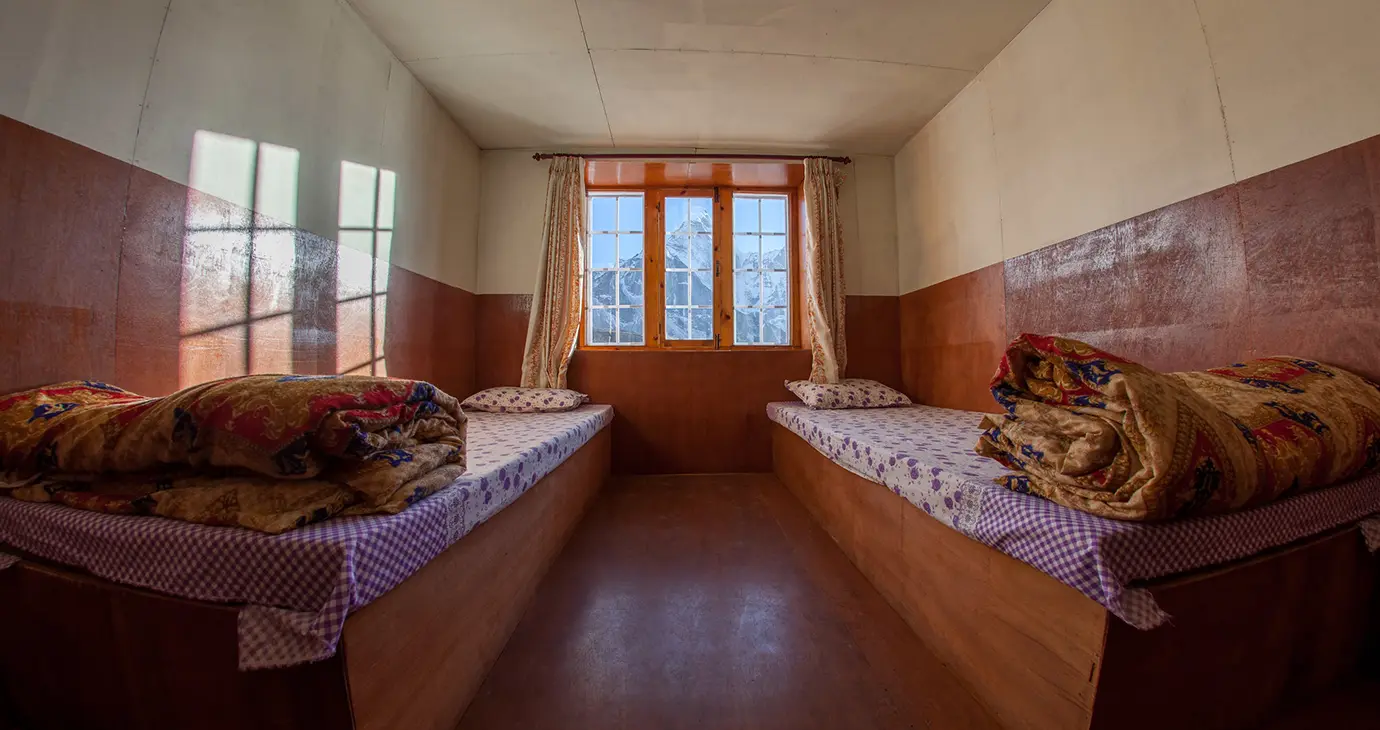
Hot showers are available at some tea houses for an additional fee, but at higher stops, these may be a bucket of heated water. Everest Base Camp rooms in tea houses are not heated, so nights get cold.
The walls are thin, which means you might hear your neighbors snoring or talking. Despite these limitations, tea houses are known for their warm hospitality. Owners often greet you with a smile and a hot cup of tea, making you feel at home even in the world’s highest mountains.
In the evenings, trekkers gather in the dining room around the stove to share meals and stories. By 9 or 10 PM, everyone heads to bed to rest for the next day.
Also see:
Standard Lodges
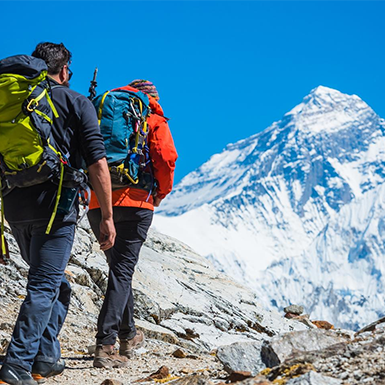
Standard trekking lodges offer a moderate step up in comfort from basic tea houses. You find these lodges in villages like Namche Bazaar, Tengboche, and Dingboche. They provide a mix of private space and added amenities without compromising the local character.
A standard lodge usually has: – Private or twin-share rooms, some with en-suite bathrooms (especially at lower elevations). – A heated dining room (often with a stove in the middle for warmth). – A broader menu that can include both Nepali dishes and simple Western food like pasta or pancakes.
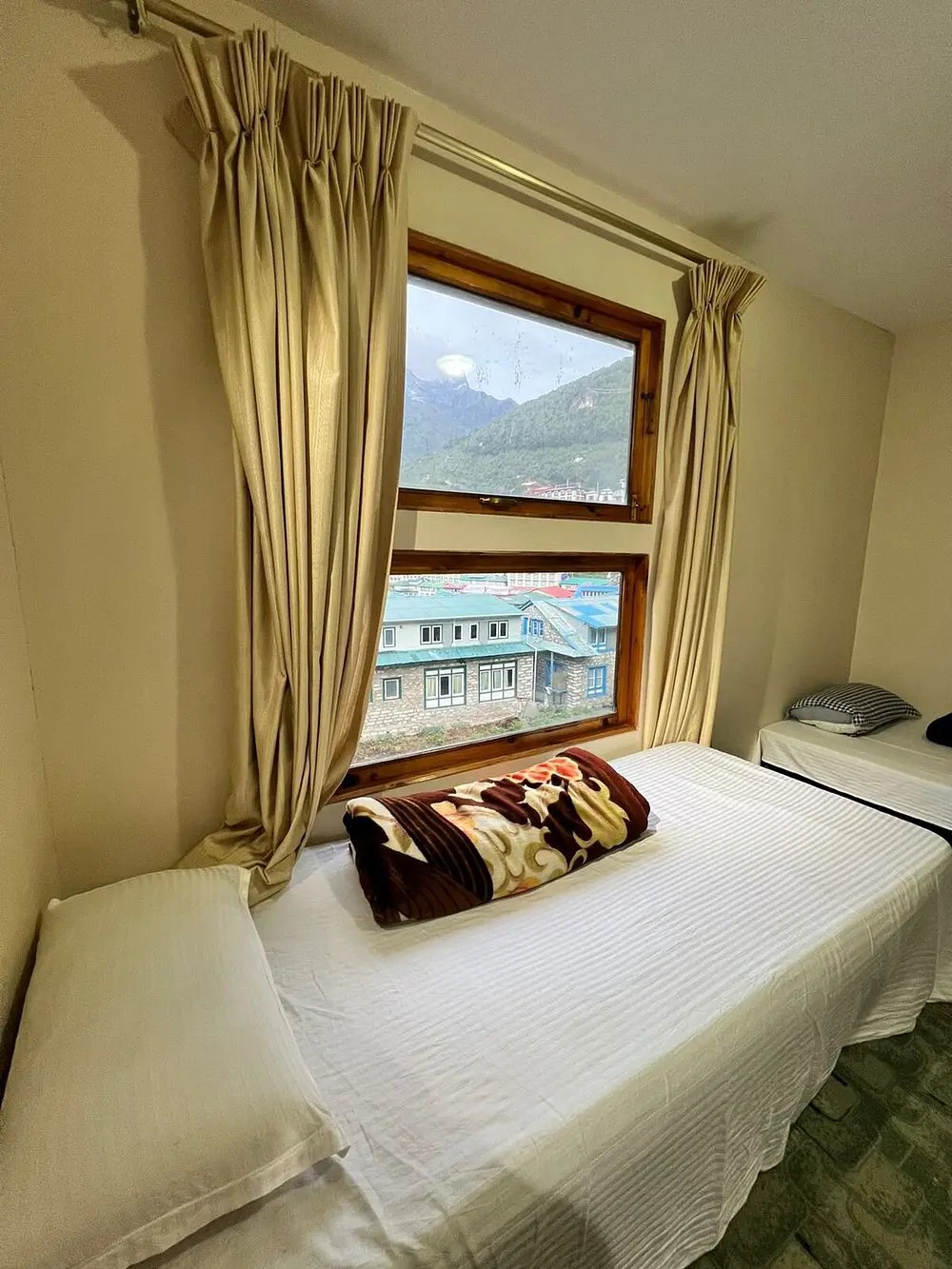
These lodges strike a balance between comfort and cost. In places such as Namche Bazaar (the largest town on the Everest Base Camp route), many Everest Base Camp lodges have electricity throughout the day, and some offer hot showers attached to rooms up to a certain altitude.
For instance, a lodge in Namche may offer rooms with attached bathrooms and even hot running water, which feels like a luxury after a few days on the trail. By the time you reach Tengboche or Dingboche, attached bathrooms become rarer. Instead, you will have shared toilets and a shower area, which may be available for a fee during limited hours.
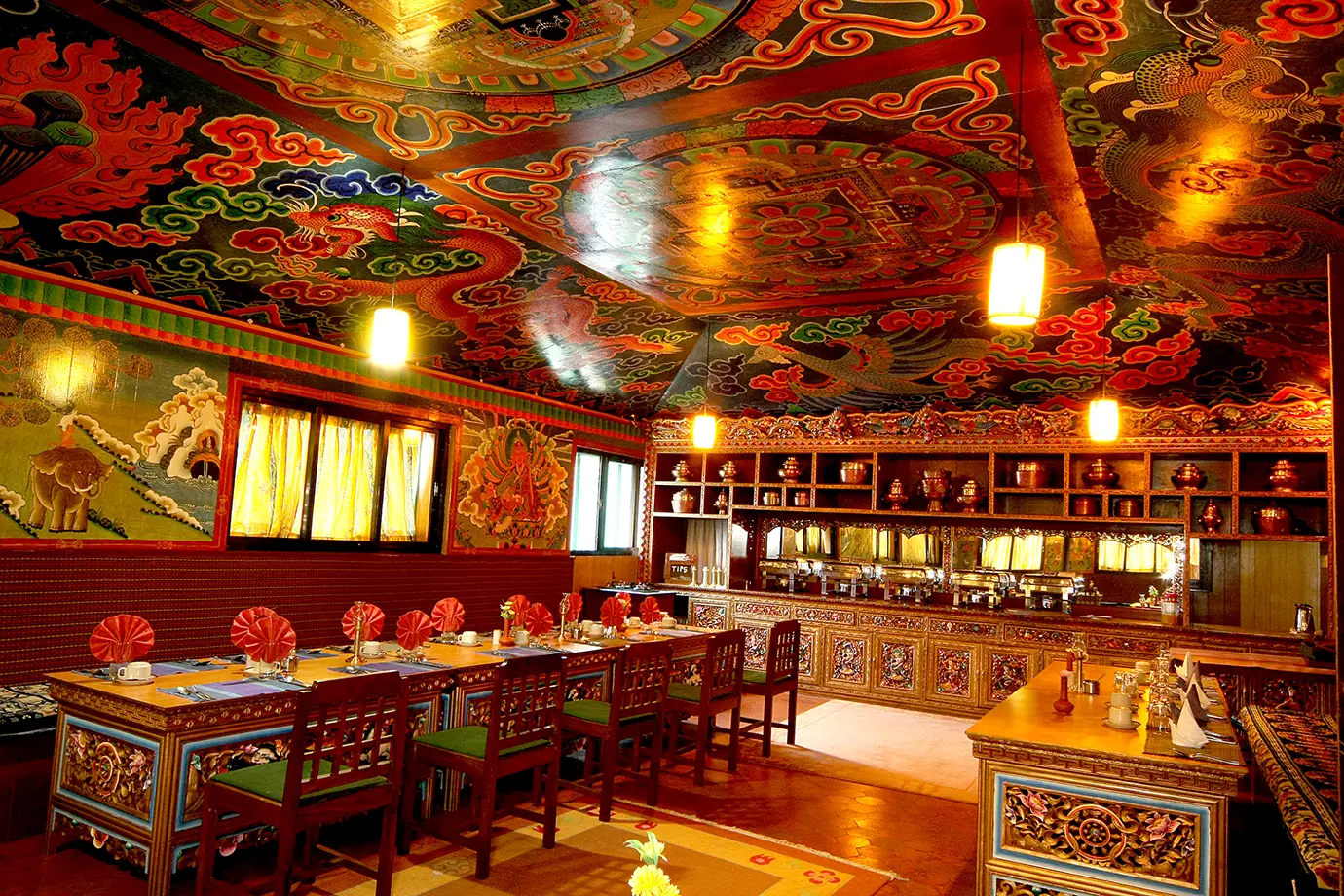
The dining areas in standard lodges tend to be more comfortable and sometimes decorated with traditional Sherpa designs or photographs of mountaineering. Many dining halls will have charging stations (or a power strip) available for a small fee, allowing you to charge your phone or camera. In the evenings, trekkers gather in these heated dining rooms to enjoy a warm meal and each other’s company.
You can order a variety of food — one night you might try dal bhat (the classic Nepali lentil-and-rice dish), and the next night perhaps fried noodles or even a slice of apple pie in Namche. The variety of food is greater at lower altitudes and gradually becomes simpler as you go higher. Even at Gorakshep, some menus still surprise you with items like pizza or momos. Standard lodges offer a degree of consistency and comfort that can be a welcome relief during challenging trekking days.
Luxury Lodges
For those seeking extra comfort during the adventure, luxury lodges are available at select points along the Everest Base Camp trail. Companies like Yeti Mountain Home, Luxury Himalaya Lodges, and Everest Summit Lodges operate high-end accommodations in villages such as Lukla, Phakding, Namche Bazaar, and Deboche. These EBC luxury lodges offer amenities comparable to boutique hotels, making them the most comfortable options in the region.
Features of luxury lodges include spacious private rooms with high-quality bedding, heating, and en-suite bathrooms. – Hot showers at any time, electric blankets or room heaters to stay warm, and sometimes even 24-hour electricity. Fine dining experiences with a broader menu selection, which may include fresh coffee, baked goods, and gourmet dinners. Some have a bar or lounge where you can relax in the evening. – Extra services like laundry, Wi-Fi access, and a higher staff-to-guest ratio for personalized service.
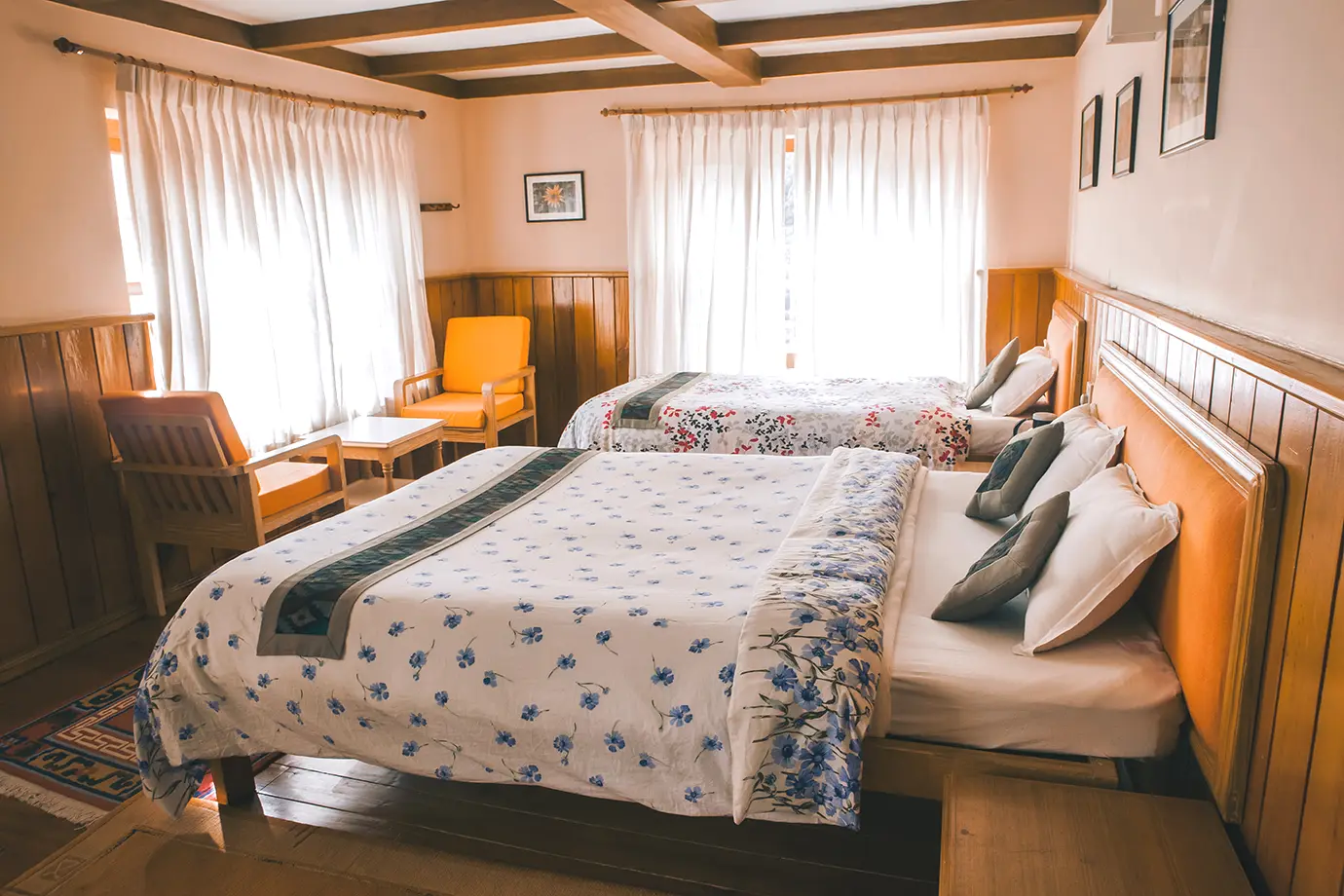
Luxury lodges come at a premium price, but they provide hotel-like comfort in remote mountain settings. After a long day of trekking, arriving at a heated room with a soft bed can feel heavenly. Instead of shivering under layers of blankets, you might find a cozy duvet and even a hot water bottle tucked in your bed.
The bathrooms in these lodges often have running hot water and Western-style toilets, which can be a welcome relief. In the dining room, you could be served a three-course meal, and breakfast might include eggs, toast, and freshly brewed coffee — a big step up from the basic fare higher on the trail.
Keep in mind that luxury lodges only operate in the lower elevations (below Deboche), so above Deboche, you will have to use standard tea houses. Many trekkers who opt for upscale lodges plan their itinerary to stay in these nicer places where possible, then switch to the best available standard lodges higher up. If your budget allows, incorporating a few luxury stays can make the trek significantly more comfortable without taking away from the adventure.
Also see:
- A complete guide to the Everest Base Camp Trek
- EBC trek permits and their cost
- Everest Base Camp Trek FAQs

Room Facilities and Amenities
No matter the type of Everest Base Camp trek accommodation you choose, rooms are generally small and simple. A typical room in a tea house or lodge has wooden walls, two single beds (or a double bed in some cases for couples), and maybe a small table or shelf. Everest Base Camp facilities in these rooms are minimal.
You can expect: – A bed with a foam mattress, a pillow, and a blanket. (At higher altitudes, lodges provide extra blankets, but it’s wise to have a quality sleeping bag rated for -10°C or lower for warmth.) – Hooks or nails on the wall to hang your jacket or damp clothes. – Possibly one overhead light bulb (electricity availability depends on the village and time of day). – In some places, an electrical outlet in the room; in many basic tea houses, you may have to charge devices in the dining hall and pay a fee.
Heating is generally not available in individual rooms, except in luxury lodges or a select few standard lodges that may offer a small heater for an additional charge. At night, indoor temperatures can drop below freezing at high elevations. Water bottles left out may freeze, so it’s best to keep your electronics and batteries in your sleeping bag to prevent them from losing charge in the cold.
Bathrooms vary by accommodation type. In tea houses and standard lodges above a certain altitude, expect shared bathrooms. These bathrooms might be inside the lodge or in an external building. They typically have squat toilets or occasionally Western-style toilets (usually up to Namche or Tengboche).
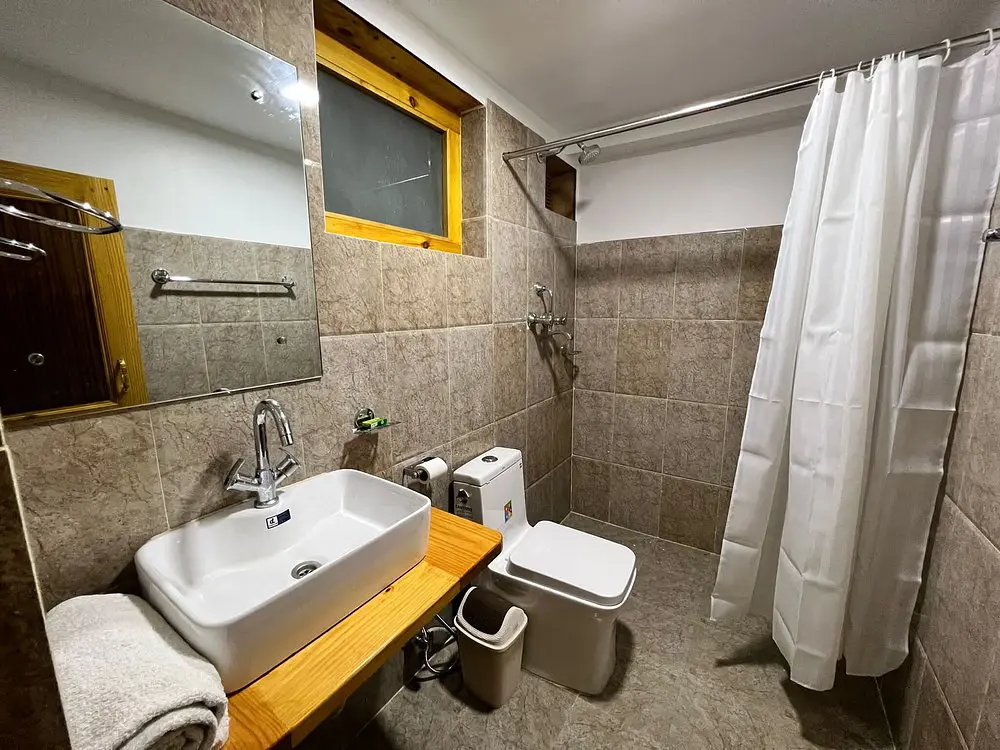
At very high altitudes, such as Gorakshep, toilets are often basic pit latrines or barrel toilets because the ground is frozen and plumbing is not feasible. Always carry your own toilet paper, as it’s rarely provided free of charge (you can purchase a roll at tea houses for a fee). Many toilets have a bucket of water and a scoop for manual flushing.
Hot shower facilities, where available, often consist of a simple shower head attached to a gas or solar heater. In colder villages, the “shower” might be a large bucket of water heated over a stove, along with a small basin to pour it over oneself. Trekkers usually pay \$5–\$10 for a hot shower.
As you go higher, some tea houses stop offering showers altogether to conserve fuel and because water sources can be frozen. It’s common for trekkers to skip showers for several days in the high-altitude part of the trek and make do with wet wipes. A helpful tip is to shower and clean up thoroughly during acclimatization days (such as in Namche or Dingboche), when you stay in one place for two nights, as it may be too cold or impractical to bathe beyond that point.
Electricity on the trail is a luxury in itself. Lower villages are connected to the hydroelectric grid or have generator power, so lights and charging points are available in the evenings. Higher up, power comes from solar panels or small generators, so electricity is limited and often turned off overnight.
Charging your phone, camera, or power bank might cost anywhere from a couple of hundred Nepali rupees (a few dollars) per device per hour. It’s smart to bring a power bank to reduce charging frequency. Likewise, carry a headlamp with extra batteries – you’ll need it to find your way around the lodge at night if the lights are out, and for any pre-dawn hikes like the climb to Kala Patthar.
Dining and Food
One of the highlights of the tea house experience is the communal dining hall. Every lodge, from the most basic to the more luxurious, has a central dining area where trekkers gather to eat and warm up. In the middle of the dining hall, there is usually a stove that serves as the primary heating source.
At lower elevations, it might burn wood. In higher villages above the tree line, the stove typically burns dried yak dung, a traditional fuel in the Himalayas. This stove is lit in the late afternoon and keeps the room cozy through the evening.
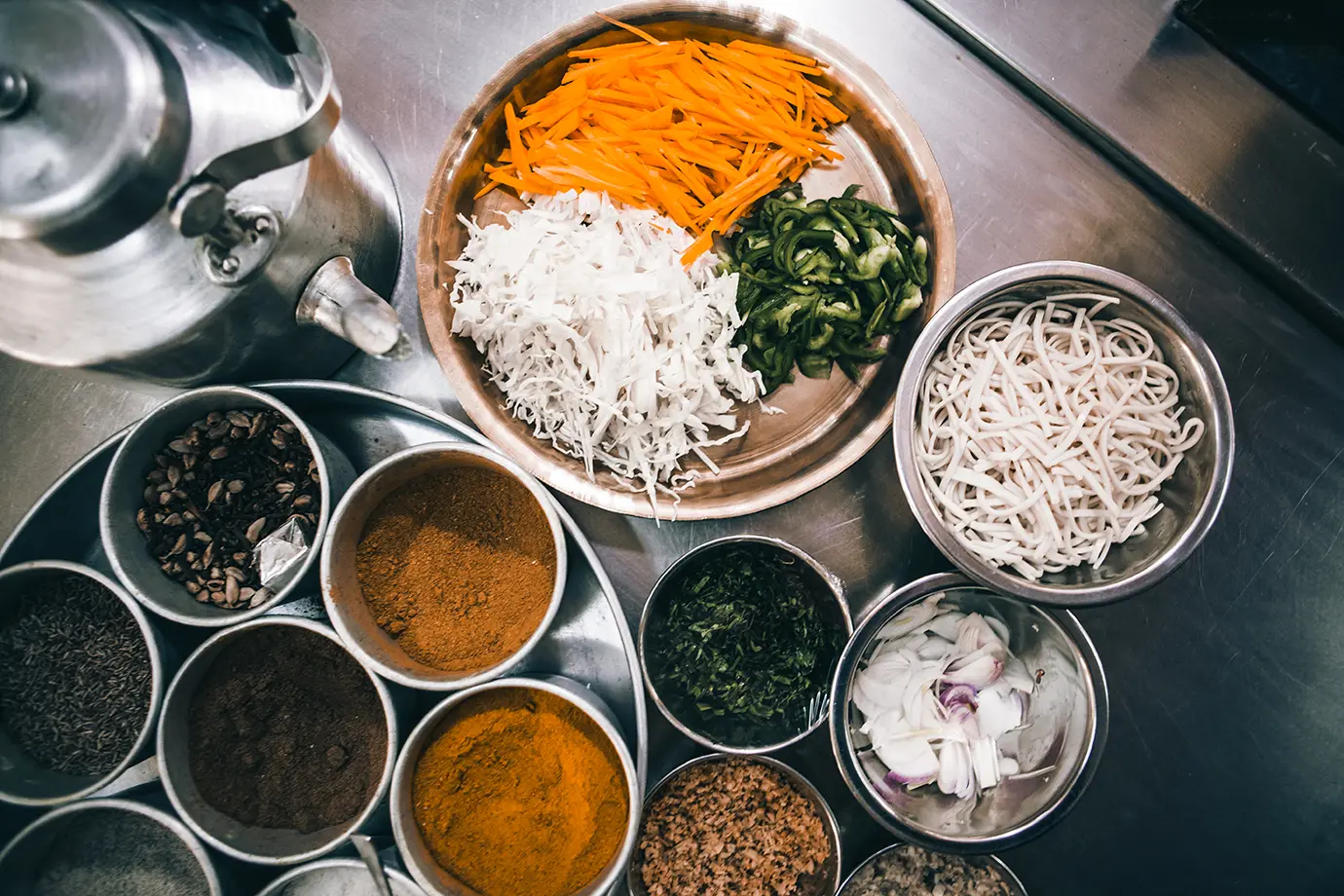
The menu at tea houses and trekking lodges is surprisingly extensive, especially in the lower and mid-altitudes. Everyday items you’ll find include: – Dal Bhat (lentil soup, rice, and vegetable curry) – Nepal’s staple meal, often with unlimited refills. – Noodle and rice dishes like fried rice, chow mein, or even simple pasta.
Soups such as garlic soup (popular for altitude acclimatization), noodle soup, or Sherpa stew. – Momos (steamed Nepali dumplings) for a hearty snack or side. – Breakfast items like porridge, muesli, pancakes, omelets, and toast with jam or honey.
While tea houses do offer meat items (chicken, yak meat, or canned tuna), many trekkers stick to vegetarian meals during the trek because beef has to be carried up from lower areas on foot (there’s no refrigeration on the trail).
By the time it reaches high villages, it may not be very fresh. Dal bhat is a favorite among guides and porters, and they often say, “Dal Bhat power, 24 hours!” because it’s nutritious and you can eat as much as you want.
Drinking water and hot beverages are also an essential part of your dining experience. You should drink plenty of fluids while trekking. Tea houses offer a variety of teas (black tea, ginger tea, lemon tea) and instant coffee. You can also get hot lemon drinks, hot chocolate, and occasionally herbal infusions.
It’s tradition for many trekkers to end the evening with a cup of hot ginger-lemon tea with honey to soothe their throats and aid in acclimatization. Bottled water is sold in every village, but the higher you go, the more expensive it gets (and plastic waste is a concern).
A better option is to buy boiled water from the kitchen or use purification tablets or a UV purifier in your own reusable bottle. Many trekkers fill their bottles with hot water at night (for a fee), which doubles as a hot water bottle in your sleeping bag and provides cool but safe drinking water the next day.
Keep in mind that as you ascend, the variety of food may decrease, and prices will increase. This is a normal aspect of trekking in the Everest region, as all supplies must be carried by porters or pack animals. A plate of fried rice that costs 600 NPR in Namche might cost 900 NPR in Lobuche.
Despite the higher prices relative to Nepal’s lowlands, remember that you’re paying for the privilege of having hot food in a remote location. The food is generally tasty and made to order, although it might take a while to prepare as everything is cooked from scratch on a simple stove. It’s wise to order your dinner as soon as you arrive at the lodge in the late afternoon, then relax and drink some tea while it’s being prepared.
Everest Base Camp Trek Accommodation by Location
Conditions and amenities change as you move higher. Here’s a brief look at lodging in key stops along the Everest Base Camp trail:
- Lukla to Phakding (2,600–2,800 m): Lower altitude villages with a range of standard and even luxury lodges. Rooms here often have attached bathrooms, electricity, and sometimes Wi-Fi. Some lodges even provide heated rooms and gourmet meals.
- Namche Bazaar (3,440 m): The biggest town on the route offers both standard lodges and a few luxury hotels. Many rooms have hot showers and Western toilets. Amenities such as Wi-Fi via Everest Link are available. Namche’s lodges fill up fast in peak season.
- Tengboche & Deboche (3,860–3,900 m): Accommodation becomes more basic. Tengboche has a couple of simple tea houses near its famous monastery. Deboche hosts one upscale lodge (an Everest Summit Lodge) amid otherwise standard tea houses. At this altitude, expect shared bathrooms and limited hot water.
- Dingboche (4,410 m): A high-altitude village where trekkers often spend an acclimatization day. Lodges in Dingboche are standard and quite basic — featuring thin plywood walls, unheated rooms, and showers heated only by solar or gas, if available. Electricity is limited, and Wi-Fi (if available) is very slow.
- Lobuche (4,910 m): By this point, tea houses are very basic and often crowded. If rooms are complete, you may need to share space or sleep in the dining hall. There’s no running water; any hot water for washing comes in a bucket for a fee. Toilets are usually squat-style or simple pit latrines.
- Gorakshep (5,164 m): The last stop before Base Camp has only a couple of rough lodges. Facilities are minimal, with no showers, heating, or insulation, resulting in sub-freezing indoor temperatures. Most trekkers stay here just one night to visit Everest Base Camp and hike up Kala Patthar, then descend to more comfortable altitudes the next day.
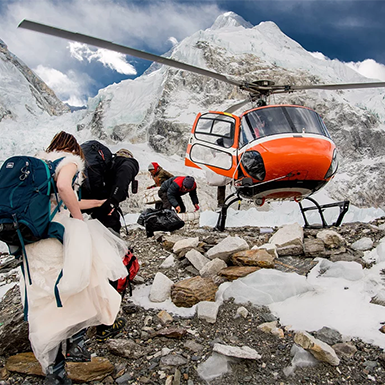
Everest Base Camp Trek with Helicopter Return
 11 Days
 Moderate to Challenging
Luxury Everest Base Camp Trek Accommodation Experience
Staying in luxury lodges in the Everest region can significantly enhance your trekking experience if comfort is a priority. While the trail itself and the daily hiking remain challenging, having a plush, warm bed and excellent service at day’s end means you recover better for the next day.
Trekkers opting for upscale Everest Base Camp lodges enjoy several perks: – You can take a hot shower every day (at least in the locations where luxury lodges exist), which helps you feel refreshed. – Meals at luxury lodges are often of higher quality, sometimes prepared by trained chefs.
You might enjoy fresh bakery items, good coffee, or even a glass of wine with dinner while taking in the view of snow-capped peaks. The rooms are quieter and more private. With proper insulation and heating, you will sleep warmer and more soundly, away from the noise of the dining hall or other trekkers. Customer service is attentive. The staff usually speaks good English and can cater to special requests when possible. If you have dietary restrictions or need extra blankets, they respond quickly.
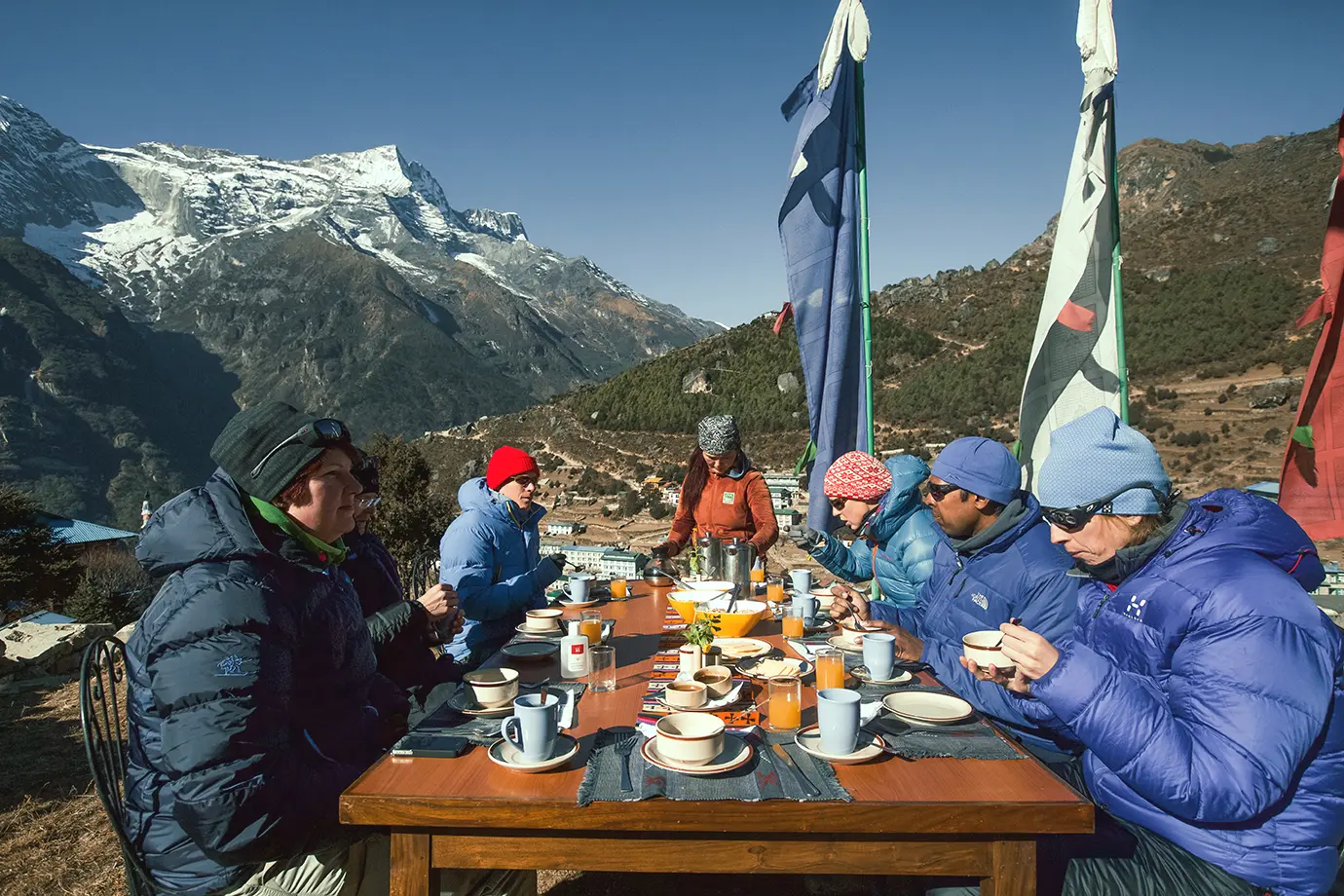
For instance, at a luxury lodge, you might be greeted with a warm towel and a welcome drink, enjoy a hot shower, and later have a multi-course dinner by a fireplace. In contrast, a basic tea house offers a simple, unheated room and a one-pot meal. These little comforts in luxury lodges can feel extremely rewarding after a long day on the trail.
Even if you choose the luxury route, it’s important to keep expectations realistic. Luxury in the Everest region is impressive given the remote location, but it’s not the same as a city hotel. There might be occasional power outages, or the Wi-Fi might be slow or unavailable.
Remember that everything in these lodges – from the building materials to the food – had to be either flown into Lukla or carried up by porters and yaks. What you’re paying for is not just the comfort, but also the logistical effort of having such facilities at altitude.
Many trekkers mix and match accommodation types. You could enjoy a couple of nights in luxury lodges (say, in Lukla and Namche) at the start when you’re gaining altitude, then switch to more standard lodges as you go higher.
On the way back down, those same luxury spots will feel even better after you’ve been up to Everest Base Camp with minimal creature comforts. By balancing your choices, you can keep the cost manageable while still indulging in some luxury.
Tips for Trekkers
Whether you plan to rough it in basic tea houses or splurge on high-end lodges, a few practical tips can improve your Everest Base Camp trek accommodation experience:
Carry a quality sleeping bag: Nights are cold, especially above 4,000 m. Even if blankets are provided, a sleeping bag rated to at least -10°C (14°F) will keep you warm and can supplement the bedding.
Book in advance during peak seasons: In the busy months of March to May and October to November, the popular lodges can fill up quickly. If you’re trekking with a guide, they usually call ahead to reserve rooms. Independent trekkers should consider calling ahead or arriving early in the day to secure a bed.
Bring enough cash (Nepali rupees): There are no ATMs once you start the trek (except one in Namche that is not always reliable). All accommodation, food, and services are paid in cash. Carry small bills to pay tea house owners, as they often have limited change for extensive notes.
Manage expectations at high altitude: Above 4,500 m, everything is fundamental. Don’t expect luxury amenities in places like Lobuche or Gorakshep. Focus on the fact that you have shelter and food in one of the most remote parts of the world.
Use a headlamp at night: Tea houses often switch off generators or lights by 9 or 10 PM to save energy. Having your own headlamp or flashlight is essential for finding your way to the bathroom in the dark or for early morning starts.
Pack earplugs: Walls are thin, and fellow trekkers might snore or talk late into the evening. Earplugs can help you get a better night’s sleep in a noisy lodge.
Bring hand sanitizer and toiletries, as bathrooms may not always have soap or toilet paper. Bring your own supply of toilet paper, hand sanitizer, and a quick-dry towel. Wet wipes are handy for cleaning up on days when you can’t shower.
Conclusion
The Everest Base Camp trek is not just about the stunning views and trails, but also about the places you rest and refuel each day. The range of Everest Base Camp trek accommodation — from rustic tea houses to upscale luxury lodges — means every traveler can find lodging that suits their comfort level and budget.
Tea houses offer an authentic experience, allowing you to enjoy Sherpa hospitality and meet fellow adventurers around the dining table. Standard lodges add a bit more comfort when you need it, and luxury lodges bring a touch of indulgence to the mountains. By knowing what to expect at each stop, packing appropriately, and planning, you ensure that each night on the trail is as enjoyable as the trek itself.
In the end, whether you are sipping tea by a stove in a simple lodge or relaxing under a thick duvet in a luxury room, you’ll find that the Himalayas have a way of making every accommodation feel special. Each night’s stay becomes part of the adventure, and a good rest will keep you energized for the journey toward Everest Base Camp.