

Based on 746 reviews
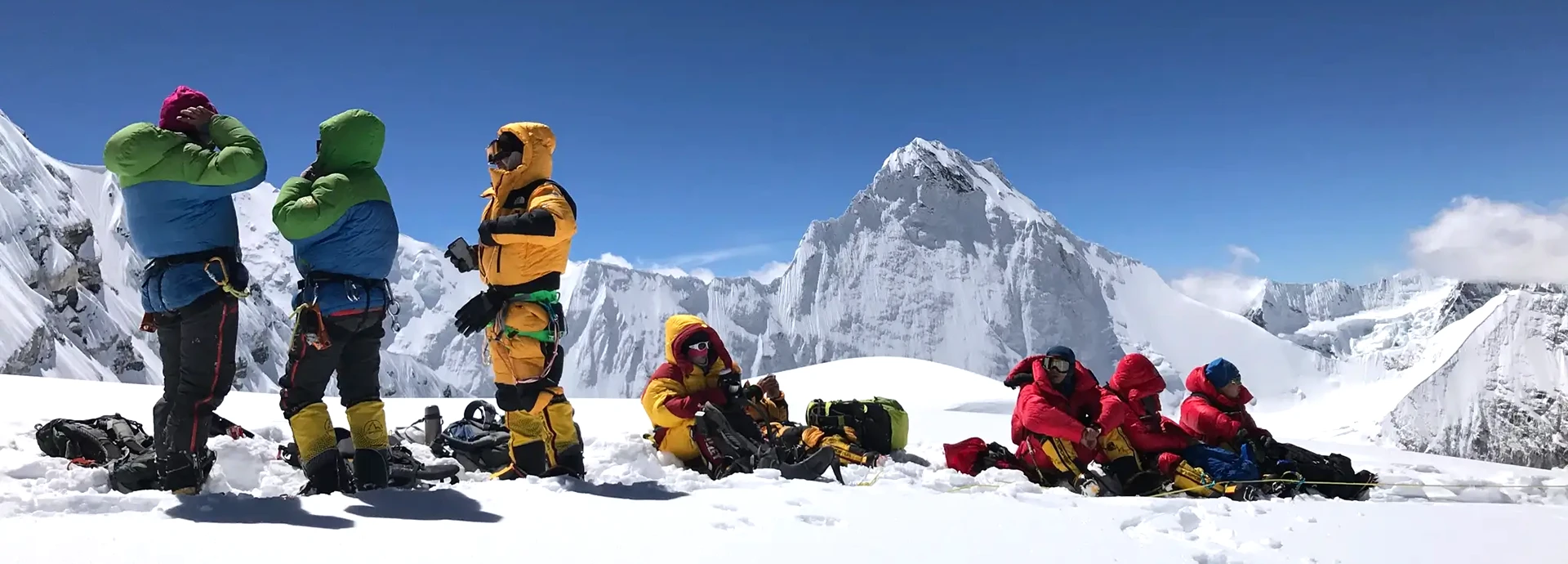
Ama Dablam Expedition
Technical rock, snow, and ice climbing expedition in the Everest region.

Duration
26 Days

Meals
- Daily Breakfast
- Lunch
- Dinner

Accommodation
- 3-star hotel in Kathmandu
- Lodge during trek
- Tent during climbing

Activities
- Expedition
- Trekking
- Sightseeing
SAVE
US$ 1300Price Starts From
US$ 6500
Overview of Ama Dablam Expedition
Ama Dablam Expedition gives you memories that last a lifetime. If nature provides a true sense of peace, then the Himalaya adventure magnifies and reflects that power at every step. These mountains hold a strong presence that you can feel as you move through the landscape. When you take on the Himalayan range in Nepal, you experience both challenge and achievement in a way few places can offer. Towering peaks in Nepal create some of the finest trekking experiences in the world. Among them, the Khumbu region stands out, where every trail delivers a raw and unforgettable thrill.
Ama Dablam Expedition Highlights
- Climb one of Nepal’s most beautiful technical peaks at 6,812 meters
- Parallel views of the world’s tallest mountain from 6812m above sea level
- Explore the rich cultural heritage of the Sherpa people
- Wander in the world’s best trekking place, i.e., the Sagarmatha region
- Actual mountain climbing experience, along with the thrill of hiking
- Witness rare flora and fauna in Sagarmatha National Park
During the Ama Dablam Expedition, you witness towering peaks like Mount Lhotse, Mount Makalu, Mount Cho Oyu, and Mount Everest rising across the skyline. Beyond the Himalayas, the region introduces you to a distinct Buddhist culture that thrives in the everyday lives of local people.
The local communities continue to follow centuries-old traditions and maintain a calm, grounded lifestyle within the mountains. As you move through the Khumbu, the landscape shifts constantly, while the region’s rich biodiversity keeps your attention at every step. Together, these elements create a well-defined experience that combines adventure, culture, and nature without losing its authenticity.
About Ama Dablam
Ama Dablam stands out as one of the most striking peaks in the Everest Region, often regarded as the most beautiful mountain in the world. Standing at an altitude of 6,812 meters, it sits roughly 20 kilometers from Mount Everest, yet it draws attention with its sharp lines and balanced form. Its southwest face resembles the sacred ornament box worn by Sherpa women, known as the Dablma, which gives the mountain both its name and cultural meaning. The climb follows a structured route with three main camps, including the Ama Dablam Base Camp, where each stop brings you deeper into the high-altitude environment. As you spend several nights in the mountains, you settle into a rhythm shaped by altitude, terrain, and daily progress.
The Ama Dablam expedition offers a solid rock-and-snow-climbing experience that tests both skill and endurance. Climbers rely on fixed ropes, crampons, and ice axes throughout the route, so the climb demands strong technical knowledge, good physical fitness, and training for beginners as well as experienced mountaineers. In 1961, Mike Gill, Barry Bishop, Mike Ward, and Wally Romanes made the first successful ascent of Ama Dablam peak from the Southwest Ridge, setting a historic route for future climbers
An Expedition Route
This 21-day itinerary follows a carefully structured route that supports proper acclimatization, climbing preparation, and a safe summit attempt. The journey begins in Kathmandu, where you spend time preparing before you fly to the remote mountain airstrip at Lukla. From Lukla, you begin the trek into the Everest region, first to Phakding and then to the well-known village of Namche. You pause in Namche for a rest day, allowing your body to adjust to the altitude and the changing terrain. After that, you continue the trail toward Dingboche, where you spend another important acclimatization stop before heading higher into the Khumbu. From Dingboche, you move toward the Ama Dablam Base Camp, where the expedition preparation phase begins in full.
We will stop at the base camp for a day or two for training and proper mountain climbing preparation. During these preparation days, the porters will set up camps and prepare your meals, allowing you to stay focused on the climb. When the weather stays stable, we move upward toward Camps 1 and 2 along the fixed route. Certified and experienced guides and Sherpas lead the entire ascent, fix ropes on the steep rocky areas, and support you while you climb those sections safely and steadily.
Finally, reaching the summit becomes the expedition’s ultimate goal. On the same day, we begin the descent and move back toward lower altitudes with steady control. We descend to base camp, continue down to Namche Bazaar, and then trek onward to Lukla. From Lukla, we take a flight back to Kathmandu, marking the end of the expedition.
Sitting at 8848 m, Mount Everest stands as the highest peak in the world and attracts trekkers from all over the world to the region. The steady flow of visitors has encouraged locals to build small tea houses that provide simple but comfortable shelter in the mountains. However, most of our nights during the expedition take place in tents at higher altitudes. This experience sets the stage for a closer look at the Ama Dablam Expedition.
Detail Itinerary of Ama Dablam Expedition
Day 1: Arrive in Kathmandu for the Ama Dablam Expedition
Altitude: 1,400 m (4,593 ft)
Meals: Welcome Dinner
Airport Pickup and Hotel Transfer
Our representative will greet you at the airport terminal and assist you with your private vehicle transfer to your hotel. The drive will take about 30 to 40 minutes, depending on the traffic conditions. You will be staying at a 3-star or similar accomodation. You have the rest of the afternoon free, so you can either relax and recover from your long journey or stroll around the area near your hotel.
Managing Your Free Time
Use the first hours to adjust to the time zone and organize small practical tasks.
- Currency Exchange: Authorized money changers in Thamel offer better rates than the airport.
- Local SIM Card: Buy a Ncell or Nepal Telecom SIM (recommended) for reliable data coverage on the Everest region trek. You need a passport photo and a photocopy of your passport.
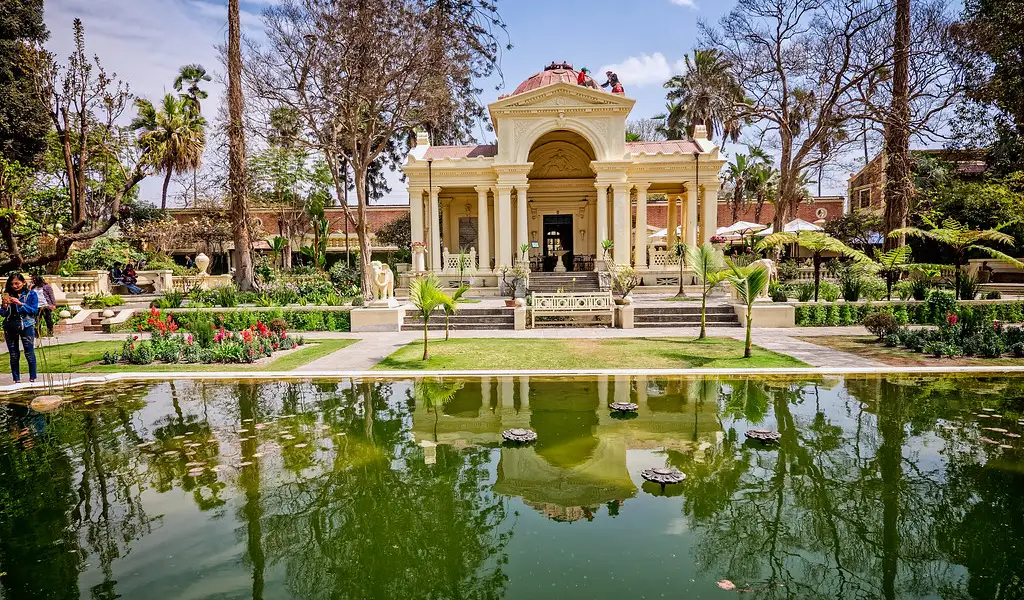
- Light Walk: Stroll from Thamel to the Garden of Dreams, a peaceful neo-classical garden with pavilions and a café. Entry costs 400 NPR. The calm setting helps you unwind before the mountain expedition.
Evening Briefing, Permit Check, and Welcome Dinner
At around 6:00 to 6:30 pm, we will meet you at your hotel for a detailed expedition briefing. The expedition leader will explain the full Ama Dablam itinerary, weather conditions, altitude safety guidelines, and the responsibilities of the Sherpa guide team. During the session, the operator will also collect passport copies to process and finalize your climbing permit through the Department of Tourism.
You will also meet your climbing guide and the expedition’s head Sherpa. Hence, if you have any questions or doubts, feel free to ask. After the briefing session, we have arranged a welcome dinner for everyone in a traditional Nepalese restaurant. Expect traditional Nepali food such as dal, bhat, and momo along with a short cultural performance. Integrate with fellow trekkers and teams to build team spirit, then return to your hotel for a bountiful rest. The next day involves sightseeing at some of Kathmandu’s famous landmarks and final gear checks.
Accommodation: Hotel Thamel Park or similar
Day 2: Kathmandu Sightseeing and Final Gear Preparation
Altitude: 1,400 m
Meals: Breakfast
Morning UNESCO Heritage Tour
After breakfast, between 7:00 and 9:00 am, your guide picks you up in a private vehicle for a tour of four UNESCO World Heritage Sites around Kathmandu. You move through the city at an easy pace, which also helps your body adjust to the new time zone. Meanwhile, in the back office, the team continues working on your Ama Dablam climbing permits to keep the expedition on track.
- Swayambhunath (Monkey Temple): To reach the Swayambhunath Stupa, you need to climb 365 steps. The white dome and the painted eyes of Buddha overlook the Kathmandu Valley. Spin prayer wheels clockwise. Troops of monkeys roam the area, but keep food out of sight.
- Pashupatinath Temple: Drive along the Bagmati River to the most sacred Hindu temple of Lord Shiva. Non-Hindus stay outside the main shrine. Observe the pagoda architecture, the open-air cremation ghats, and ash-covered sadhus.
- Boudhanath Stupa: Visit the largest spherical stupa in Nepal. Walk clockwise with Tibetan pilgrims and monks. Rooftop cafés around the stupa offer a good place for a lunch break. Try thukpa or Himalayan coffee with a view.
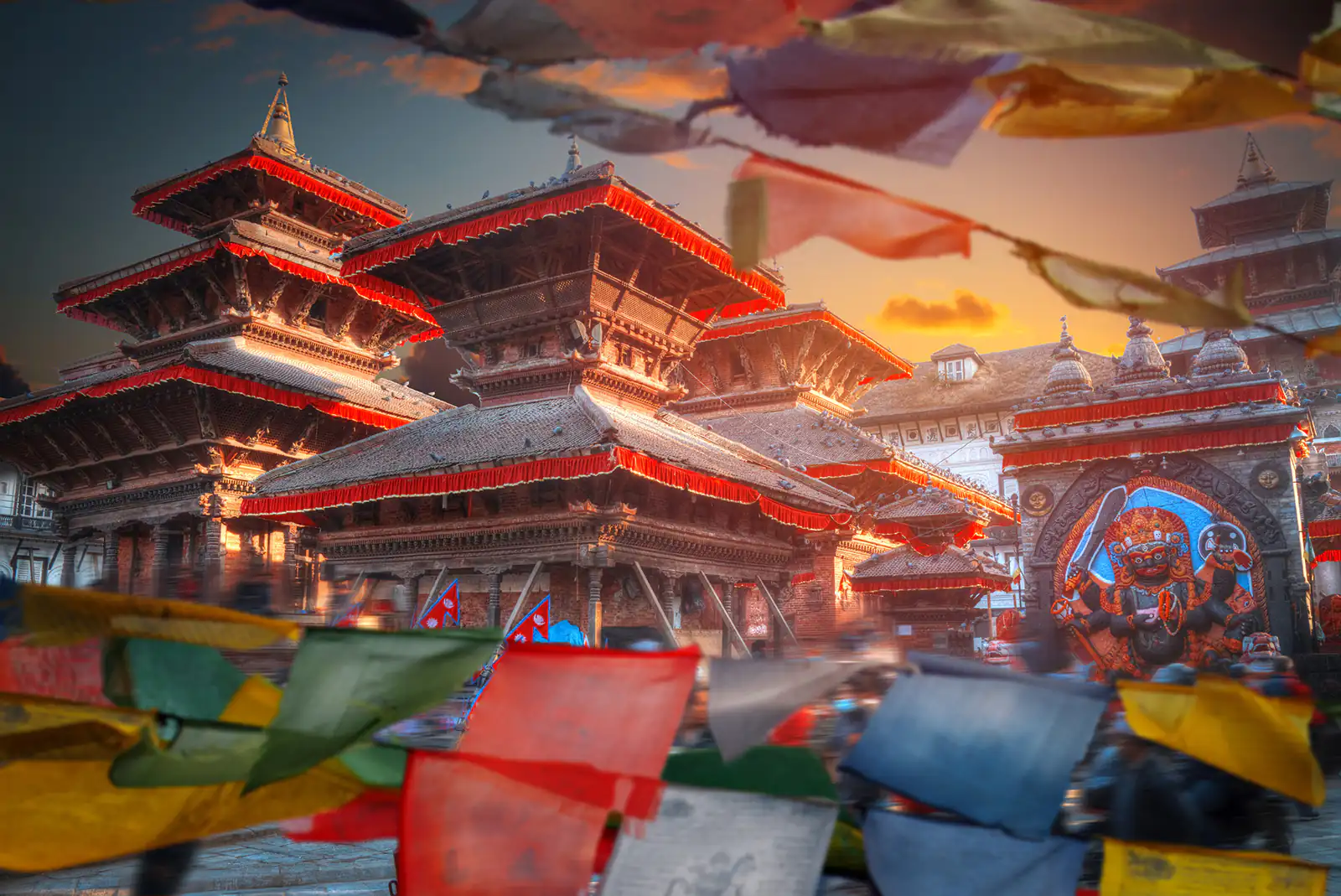
- Kathmandu Durbar Square: Explore the old royal palace complex. See the Taleju Temple, the Kal Bhairav statue, and the Kumari Bahal, home of the living goddess. Many structures still show damage from the 2015 earthquake.
Afternoon Gear Shopping in Thamel
You return to Thamel around 4:30 pm after the day’s sightseeing. Your guide then assists you with checking and buying any remaining gear for the Ama Dablam Expedition. Even if you already carry most of your equipment, the shops in Thamel make it easy to replace forgotten items or rent bulky gear if needed.
Look for:
- Down jackets and insulated pants
- Headlamps, spare batteries, and thick gloves
- Sturdy duffel bags that porters carry to the Ama Dablam base camp
- Crampons, ice axes, and harnesses (high-quality rentals available)
Reputable stores include Manakamana Trekking Store (WhatsApp +9779851095147) and Sonam Gears. Haggle politely; it is part of the shopping culture. You may be able to get a small-group discount if you take our name at the Manakamana Store.
Evening at Leisure
Dinner is not included, so you can choose from Thamel’s many restaurants based on what you feel like eating. You can stop by OR2K for a relaxed vegetarian meal, Yak & Yeti for a blend of Nepali and international flavors, or Roadhouse Cafe if you are craving a wood-fired pizza. After dinner, head back to the hotel and start packing your expedition duffel and daypack for the next morning. The hotel safely stores your city luggage while you are on the Ama Dablam Expedition.
Accommodation: Hotel Thamel Park or similar
Day 3: Fly to Lukla and Trek to Phakding – The Ama Dablam Base Camp Trek Begins
Altitude: Lukla 2,840 m | Phakding 2,550 m (8,366 ft)
Trek Duration: 3–4 hours
Meals: Breakfast, Lunch, Dinner
Kathmandu to Lukla Flight
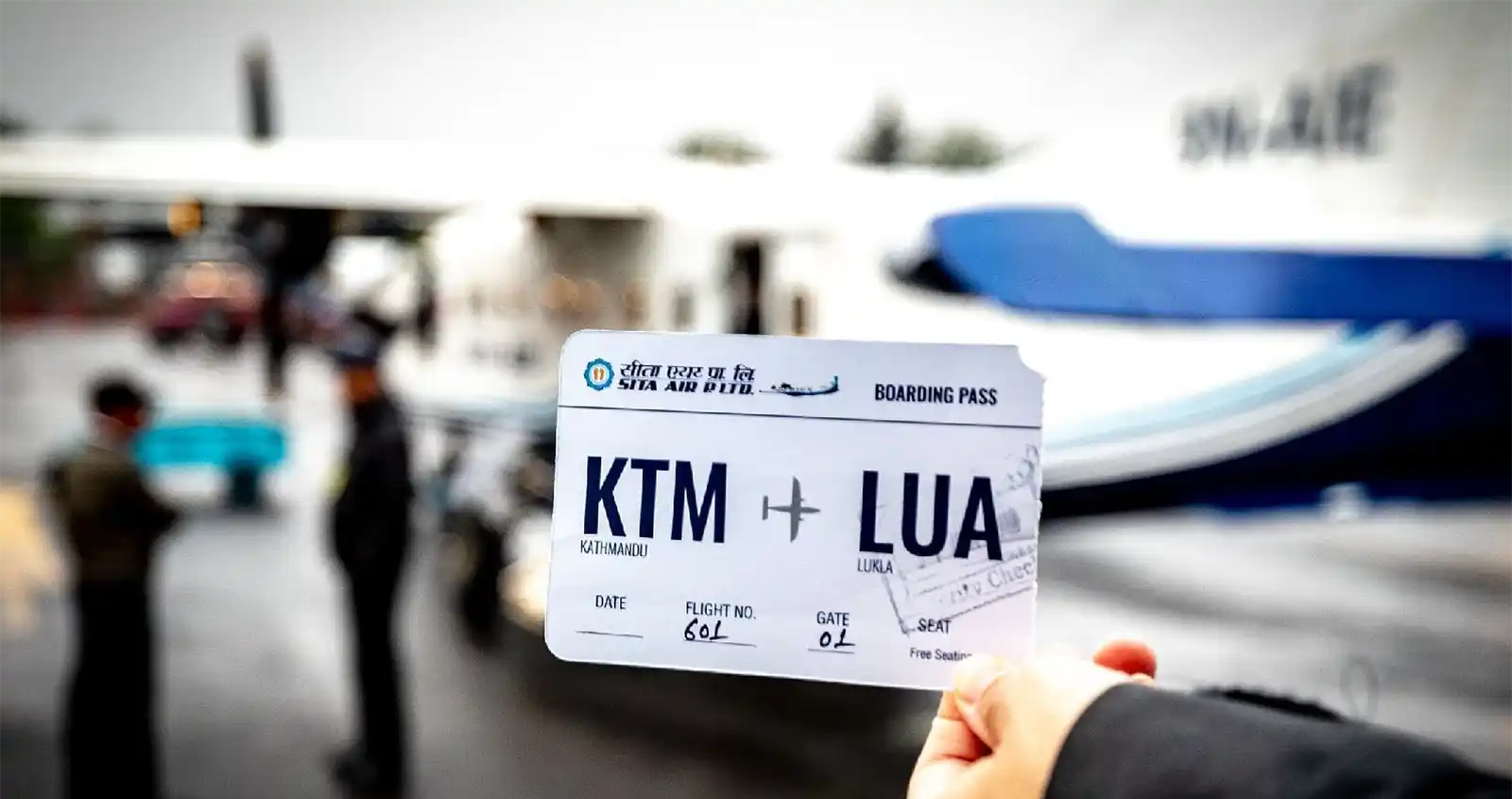
You wake early and either grab a packed breakfast or eat a light meal at the hotel before departure. Around 6:00 am, a vehicle takes you to the domestic terminal, depending on the flight schedule. Your guide handles the check-in while you wait in the departure lounge, keeping the process smooth and stress-free. You carry only your daypack with essentials like your passport, cash, water, a warm layer, and some snacks, so everything you need stays close at hand.
Soon after, you board a small Twin Otter or Dornier aircraft and settle in for the flight to Lukla. If you sit on the left side, you often catch the first clear views of the mountains. The 45-minute flight from Kathmandu brings you close to the high Himalayas, and on a clear day, you can spot Mount Everest and Mount Lhotse rising above the clouds before landing at Tenzing-Hillary Airport. The short, sloping runway adds a dramatic finish to the flight and sets the tone for the trek ahead.
Organizing the Team at Lukla
As soon as you step out of the plane, the crisp mountain air signals the beginning of your Everest region trek. You wait near the airstrip while the crew unloads the duffel bags and organizes the expedition equipment. Shortly after, you meet the porters who will carry the heavy loads. The team carefully sorts the hears into balanced packs. While this happens, you can relax with a cup of sweet tea at a nearby small shop.
Before setting off, your guide explains the walking plan for the day along with a few important trail rules. You always pass many walls and chortens on the left by walking clockwise, and you also give way to heavily loaded porters moving along the narrow paths.
Trekking from Lukla to Phakding
The first day’s walk begins gently as you leave Lukla. You pass through a narrow lane of shops and tea houses, go through the welcome gate, and then start a steady downhill walk on a wide, well-marked trail. The route follows the Dudh Koshi River valley, keeping the river close as you move forward.
- Chheplung (2,660 m): 30 minutes from Lukla. Stone houses and brightly painted chortens line the path. A sunny tea house courtyard makes a good first rest stop.
- Thado Koshi suspension bridge: After another hour, cross a long prayer-flag-draped bridge over a deep gorge. Hold the railings as the bridge sways.
- Ghat (2,530 m): Walk past a long mani wall carved with Tibetan mantras. The village smells of juniper incense.
- Phakding: The trail enters a pine forest and levels out. You reach the riverbank settlement in the early afternoon.
Afternoon at the Tea House
You will check into a basic but comfortable tea house where rooms usually have twin beds, foam mattresses, and either shared or attached bathrooms. It is relatively warm in the dining hall because a yak-dung stove is used. Refuel your energy with a warm meal after the walk.
Make the most of your time in the afternoon by taking a walk to a nearby monastery, from where you can watch the sunset light up the surrounding peaks. Don’t forget to drink plenty of water as hydration supports acclimatization. Back at the lodge, repack your gear and label your duffel for the next day, while also taking time to learn a few Sherpa phrases or speak with returning climbers whose advice often proves helpful.
Dinner and Overnight in Phakding
The meals in the high-altitude areas, like Phakding, typically include soup, a main dish such as dal bhat, momo, or pasta, and fruit for dessert, with dinner around 6:00 pm. Your guide will conduct a brief discussion about tomorrow’s hike to Namche Bazaar after dinner. Most trekkers head to bed early, lulled by the sound of the river. At this point, you are fully inside the Khumbu region, and the real Ama Dablam Expedition starts the following day.
Accommodation: Local Teahouse
Day 4: Trek to Namche Bazaar – Entering the Heart of the Khumbu
Altitude: Phakding 2,550 m → Namche Bazaar 3,440 m (11,286 ft)
Trek Duration: 5–6 hours
Meals: Breakfast, Lunch, Dinner
Morning Start from Phakding
You wake up early and have a warm breakfast at the tea house before setting off. Your porter loads the duffel bag while you pack your daypack with essentials like 2 liters of water, sunscreen, a rain jacket, and a camera. From Phakding, the trail continues north and follows the Dudh Koshi River upstream. You walk under pine trees, and the sound of rushing water stays with you the whole way.
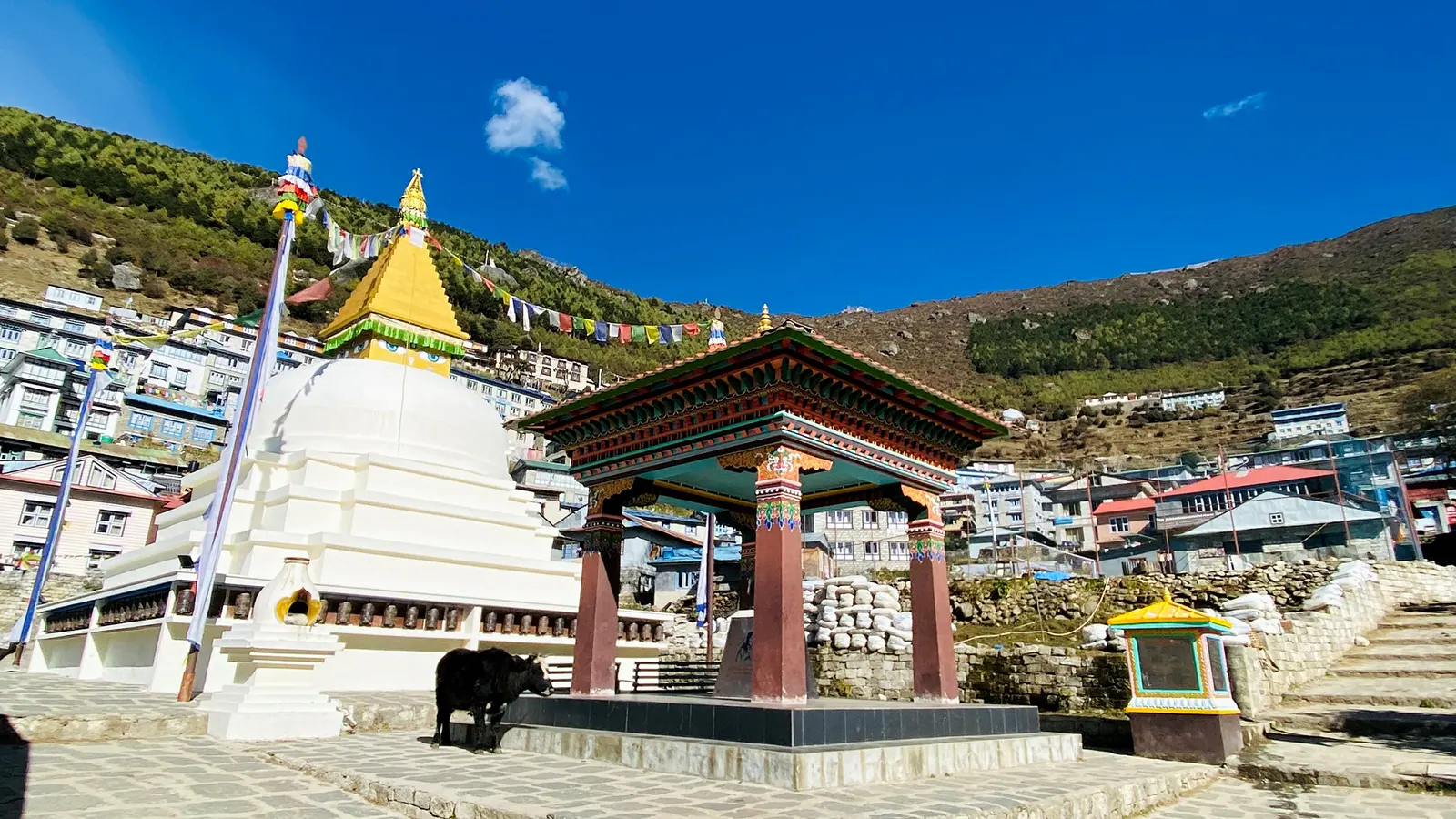
Key Stops on the Way to Namche Bazaar
The route today gains nearly 900 meters of elevation. The first two hours remain gentle, while the final stretch climbs steeply.
- Monjo (2,835 m): After about two hours, you reach the village of Monjo, the gateway to Sagarmatha National Park. Your guide presents the park permits at the checkpost. A short break here lets you use the toilet and refill your water bottles.
- Hillary Suspension Bridge: Descend briefly to cross one of the highest and longest suspension bridges in the Khumbu region. The bridge spans a deep canyon, where you can spota look at the milky glacier water far below. From the bridge’s far side, your ascent toward Namche begins.
- The Steep Climb (The Namche Hill): The trail switches back relentlessly through pine and rhododendron forest. Take slow, steady steps, pause often, and breathe deeply as the thin air here starts to test your fitness. Rest at the small tea shops on the way up. The first good view of Mount Everest appears at a clearing about two-thirds of the way up, if the weather cooperates. A small chorten marks the spot.
Reaching Namche Bazaar
You arrive at Namche Bazaar around lunchtime or early afternoon. This busy Sherpa trading town sits in a natural amphitheater carved into the hillside. You check into a comfortable lodge where a heated dining hall welcomes you in from the cold. Lunch is served soon after you settle in, giving you time to rest and recover from the climb.
Afternoon Rest and Orientation
Spend the afternoon in Namche resting your legs and letting your body adjust to the altitude. Drink plenty of water to support proper acclimatization. Later, you can take a short walk through the upper streets of Namche, where you will find gear shops, bakeries, and a small post office. The guide also offers simple advice on mild altitude symptoms, noting that a light headache is common and asking you to report it if it worsens.
Dinner and Group Briefing
The evening meals in the lodges of Namche are very generous, consisting of a soup, a main dish such as fried rice, pasta, or dal bhat, and a dessert. After having your dinner, the guide once again explains the acclimatization plan for the next day. After that, you can return to your room and rest.
Accommodation: Local Teahouse
Day 5: Acclimatization Day in Namche Bazaar – Essential Preparation for the Ama Dablam Expedition
Altitude: 3,440 m (day hike up to 3,880 m)
Meals: Breakfast, Lunch, Dinner
Why Acclimatization Matters Here
At 3,440 meters, the body needs time to adjust and produce more red blood cells. A rest day, combined with a short hike to a higher point, helps support proper acclimatization. The principle of “climb high, sleep low” guides this process and improves adaptation at altitude. This approach reduces the risk of altitude sickness as the Ama Dablam Base Camp trek continues into higher sections.
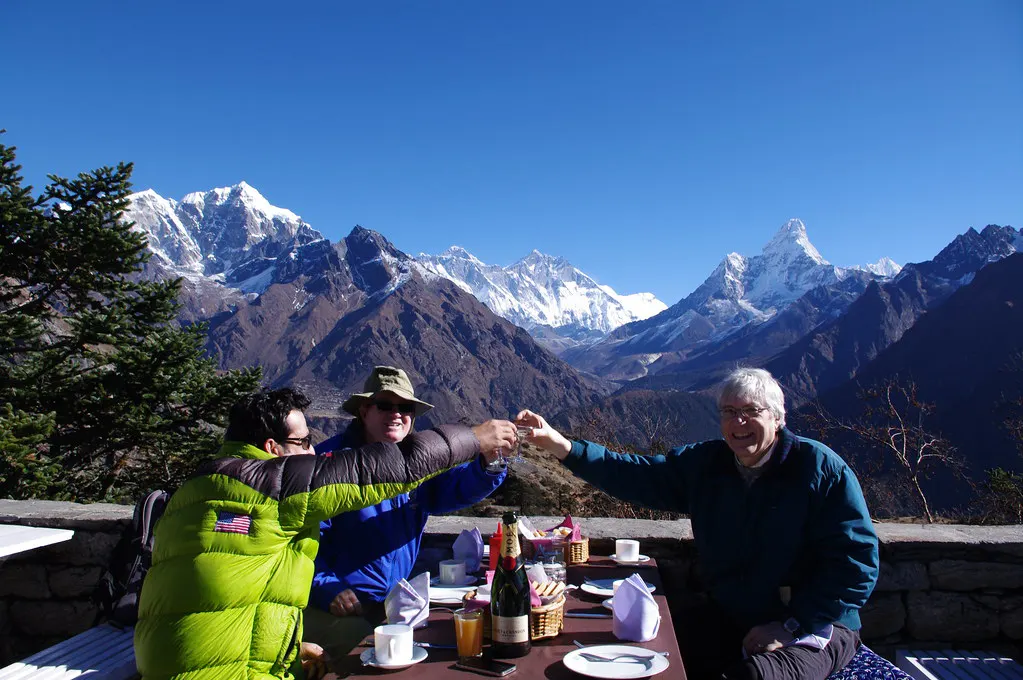
Morning Acclimatization Hike to Everest View Hotel
After having your breakfast, a morning walk leads you to the Everest View Hotel at 3,880 meters. The trail climbs steadily behind Namche Bazaar. The round trip usually takes around two to three hours, depending on walking speed and short stops along the way.
From the hotel’s terrace, a wide Himalayan panorama opens up. On a clear morning, Mount Everest, Lhotse, Nuptse, and the pyramid-shaped Ama Dablam appear in the distance. A hot drink fits perfectly here while taking in the view, and this spot remains a highlight for photographers along the route.
Visit to the Sherpa Museum and Hillary School
On the way back, a stop at the Sherpa Museum above the main town offers a closer look at Sherpa history, culture, and mountaineering achievements. The exhibits display traditional artifacts, historic photographs of early Everest summiteers, and a replica of a typical Sherpa home that reflects everyday life in the mountains. A short walk from there leads to the Hillary School, founded by Sir Edmund Hillary. The school continues to educate local children and stands as a lasting symbol of the strong community ties built during the early Everest expeditions.
Afternoon in Namche: Rest and Exploration
You return to the lodge for lunch, and the rest of the afternoon stays open for rest and easy activity. A walk to the Namche Bakery offers a quiet break with coffee and a slice of apple pie, a favorite among trekkers. Local gear shops also provide a chance to pick up any last-minute items needed for the climb. Later, a conversation with your Sherpa guide helps you understand the technical sections of Ama Dablam, and their firsthand advice prepares you mentally for the route ahead.
Evening Preparation
After dinner, you pack your duffel for the next stage of the trek. The guide confirms the route for the following day’s journey to Phortse, ensuring everyone is clear on the plan. You continue drinking water, as steady hydration helps the body adjust to the altitude. The day ends early with rest, preparing for the walk ahead
Accommodation: Local Teahouse
Day 6: Trek to Phortse – The Off-the-Beaten-Path Gateway to Ama Dablam
Altitude: Namche 3,440 m → Phortse 3,700 m (12,139 ft)
Trek Duration: 6 hours
Meals: Breakfast, Lunch, Dinner
Departing Namche for a Quieter Route
Energize your mind and body by having a solid breakfast at the teahouse. Today, instead of the main trail taken by most trekkers, you will take a different route to Phortse. It is a quieter alternative that avoids the crowds and offers continuous, stunning views of the valley and the towering profile of Ama Dablam.
Trekking Through Forest and Alpine Views
The trails traverse through thick pine, oak, and rhododendron forest. In spring, the path looks especially mesmerizing with Rhododendrons blooming in red and pink. The trail is relatively level at first, but then begins to rise and fall with gentle ups and downs. You will see the south face of Ama Dablam on the left in occasional clearings, motivating you to take another step toward it.
Along the trail, you pass through some small yak herder shelters and may even encounter herds of yak carrying loads to Phortse. If you see such a group, step aside and watch them pass by calmly. Take a short break midway at a small lodge, enjoying the peace and tranquility without the hubbub found on the main trail.
Arrival in Phortse Village
Phortse is a traditional Sherpa village located on a wide plateau. Trekkers can see the stone houses in the village with beautifully carved window frames lining the terraces. Most of the professional Sherpa experts and Everest summiteers are from this village. The village provides one of the amazing views of Ama Dablam and its surrounding peaks, making Phortse all the more appealing.
You arrive in Phortse by early afternoon and check into a local teahouse, where a hot lunch helps you recover after the trek. The afternoon is free to rest, or you can take a short walk through the village lanes at a relaxed pace. If your guide offers to translate, you may hear the locals’ stories and gain insight into daily life in the Khumbu. Visiting Phortse also supports a less-commercialized part of the region, offering a quiet, authentic glimpse into traditional Sherpa life away from the main trekking routes.
Acclimatization and Evening Meal
You spend the late afternoon hydrating and noting down your experiences, allowing your body to continue acclimatizing naturally at this altitude. Dinner is served in the lodge’s warm dining room, where nutritious meals help restore your energy for the next day’s walk to Dingboche. As the evening settles in, your guide may briefly explain the changing landscape ahead, where the trail gradually shifts from forested paths to a more open, dry alpine terrain.
Sleep comes easily in the tranquility of the Himalayas, with Ama Dablam standing just across the valley.
Accommodation: Local Teahouse
Day 7: Trek to Dingboche – The Landscape Opens Up
Altitude: Phortse 3,700 m → Dingboche 4,400 m (14,435 ft)
Trek Duration: 6 hours
Meals: Breakfast, Lunch, Dinner
Leaving Phortse for the Imja Khola Valley
Start with an early breakfast at the Phortse teahouse as the morning light touches the village. Your porter loads the duffel while you prepare a daypack with water, snacks, sun protection, and a warm layer. The trail then leads you into a quieter, more open landscape above the tree line, where the scenery gradually shifts into a drier alpine environment.
Walking Parallel to the Imja Khola River
The trail descends gently from Phortse to a small bridge over a stream, where the sound of flowing water follows you for a short while. It soon joins the main route from Tengboche and begins to contour high above the Imja Khola River, which glows a striking turquoise from glacial silt. As you continue, towering peaks like Ama Dablam, Lhotse, and Island Peak rise steadily on your left, guiding your path forward. The trail remains mostly flat or gradually uphill, making the first two hours a comfortable and scenic warm-up.
Steep Climb to Pangboche
The trail then climbs steeply toward Pangboche (3,930 m), demanding a steady pace as the air grows thinner and the ascent tests your lungs. Take it slow, rest when needed, and maintain a consistent rhythm as you gain height. By midday, you reach Pangboche, one of the highest permanent Sherpa settlements in the Khumbu, where stone houses cluster beneath the mountains. The village is also known for its historic monastery, which is said to house a yeti scalp and hand, and you may be able to view them if the lama is present.
Lunch Break in a Traditional Sherpa Village
Stop for lunch at a teahouse in Pangboche and enjoy a warm plate of dal bhat or a comforting bowl of noodle soup. As you eat, watch daily life unfold around the stone houses and nearby potato fields, where the rhythm of the village continues steadily. Many expedition Sherpas call Pangboche home, and their deep knowledge of Ama Dablam comes from generations of living in its shadow, shaping both their skill and connection to the mountains.
Final Push to Dingboche
After lunch, the trail climbs again as you gradually leave the last line of trees behind and step into thinner, sharper air. The landscape shifts into a high-altitude desert, where scrubby juniper bushes and wind-sculpted rocks replace the forest. With every rise, the views open wider and more dramatically. To the north, the massive wall of Lhotse-Nuptse dominates the skyline, while ahead the broad U-shaped valley of Dingboche slowly comes into view, signaling your approach to higher alpine terrain.
Arrive at Dingboche in the mid-afternoon as the village spreads across a wide, windy plain surrounded by stone-walled fields. Check into a lodge with a warm, insulated dining room where you can settle in after the walk. The rest of the afternoon is free for rest and hydration, helping your body adjust to the altitude. If you take a short walk around the village, you are rewarded with panoramic views of Ama Dablam, Taboche Peak, and even the distant outline of Makalu rising on the horizon.
Evening Briefing
Dinner includes warming soups, a main course, and tea served in the lodge’s dining room. Your guide then briefs you on the next day’s acclimatization hike and what to expect as you gain altitude. Since symptoms like headache or nausea can appear here, you are advised to report anything unusual immediately. Afterward, go to bed early, so your body has enough time to recover and adapt to the altitude.
Accommodation: Local Teahouse
Day 8: Acclimatization Day in Dingboche – Climb High, Sleep Low
Altitude: 4,400 m (day hike up to ~4,700 m)
Meals: Breakfast, Lunch, Dinner
Purpose of the Rest Day
At 4,400 meters, your body works hard to adapt to the thinning air, making each step and breath more demanding. An active rest day with a steady altitude gain helps stimulate red blood cell production, allowing your system to adjust more efficiently. This natural process is essential for a safe and successful Ama Dablam Expedition, as it strengthens your ability to perform at higher elevations.
Morning Acclimatization Hike
After a relaxed breakfast, set out on a hike to a high ridge or nearby hill above Dingboche, taking your time to maintain a steady rhythm. Popular options include Nagarjun Hill (around 5,100 m, though you do not need to reach the summit) or a smaller ridge close to the village. The climb takes about 1.5 to 2 hours, gaining roughly 300 to 400 meters in elevation on well-trodden paths that remain consistent but gradually steeper as you rise above the valley floor.
From the high point, a stunning 360-degree panorama opens up, revealing the vast scale of the Himalayas. To the east, Makalu (8,485 m) rises in the distance, while Cho Oyu (8,188 m) stands to the north. Closer to you, the sharp peak of Ama Dablam dominates the skyline above the Imja Valley, holding its unmistakable pyramid shape. Take 20 to 30 minutes to rest, capture photos, and absorb the view before beginning your descent.
Return to Dingboche
Walk back to the lodge in time for lunch, with the descent feeling noticeably quicker than the climb, usually taking about half the time. Once you return, drink at least one full bottle of water to rehydrate properly. At this altitude, consistent hydration is essential, helping reduce the risk of headaches and supporting recovery after the acclimatization hike.
Afternoon Rest and Preparation
Use the rest of the afternoon to relax by playing board games in the dining room, reading at one of the teahouses, which rent books and have a small library, or just updating your travel journal. If you don’t feel like doing any of this, you can just organize your expedition duffel for your next hike to the Ama Dablam Base Camp tomorrow. Make sure you confirm with the guide which items to put in your daypack and which go in the porter’s load.
Health Check
Your guide may check your oxygen saturation level using a pulse oximeter to monitor how your body is adapting to the altitude. At this elevation, a reading above 80% is generally considered normal for a well-acclimatized trekker. If the levels drop further or any symptoms appear, your guide will carefully adjust the plan to ensure proper rest and safe acclimatization.
Dinner and Tomorrow’s Plan
Eat a meal rich in carbohydrates to replenish your energy after today’s acclimatization hike. Listen carefully as your guide shares the map details for tomorrow’s trek to the base camp. Today will be your final night in a tea house, as from tomorrow you will be switching to tented camping. Get a good night’s sleep as the Ama Dablam expedition officially starts from tomorrow.
Accommodation: Local Teahouse
Day 9: Trek to Ama Dablam Base Camp – The Expedition Begins
Altitude: Dingboche 4,400 m → Ama Dablam Base Camp 4,570 m (14,993 ft)
Trek Duration: 4 to 5 hours
Meals: Breakfast, Lunch, Dinner
Departing the Main Trail
Wake up early for a substantial breakfast in Dingboche and take time to pack your bag carefully before leaving the lodge behind. Step out into the open valley and begin walking toward the ridge that separates Dingboche from the Ama Dablam massif. As the trail unfolds, you gradually leave the classic Everest Base Camp route behind and enter a more remote backcountry path, used primarily by Ama Dablam expedition teams, where the landscape feels quieter and increasingly isolated.
Trekking Along Yak Herder Settlements
The trail continues with a gradual ascent across grassy slopes dotted with scattered boulders. As you move forward, you pass simple yak herder shelters known as *goth*, where herders stay during the summer months and produce yak butter and cheese. Yaks graze quietly along the hillside, while the line of your climbing route, the southwest ridge of Ama Dablam, becomes more defined with every step. Ahead, Ama Dablam itself draws closer; its striking form increasingly dominant in the surrounding landscape.
Ascending the Valley Toward Ama Dablam
The trail then follows a side stream uphill, where the air grows thinner, but the gradient stays manageable. Move slowly and keep a steady breathing rhythm as you gain height. As you climb, look back to see Dingboche shrinking in the distance, with the massive north face of Taboche stretching across the opposite valley.
Soon, the path crests a small knoll and opens into a wide grassy basin that holds Ama Dablam Base Camp. Prayer flags flutter along the surrounding ridges, marking the climbers’ arrival point. Above you, the mountain’s hanging glacier, known as the ‘Dablam’ or sacred pendant, gleams on the southwest face. This close-up view of Ama Dablam brings a sharp sense of anticipation and energy to every climber.
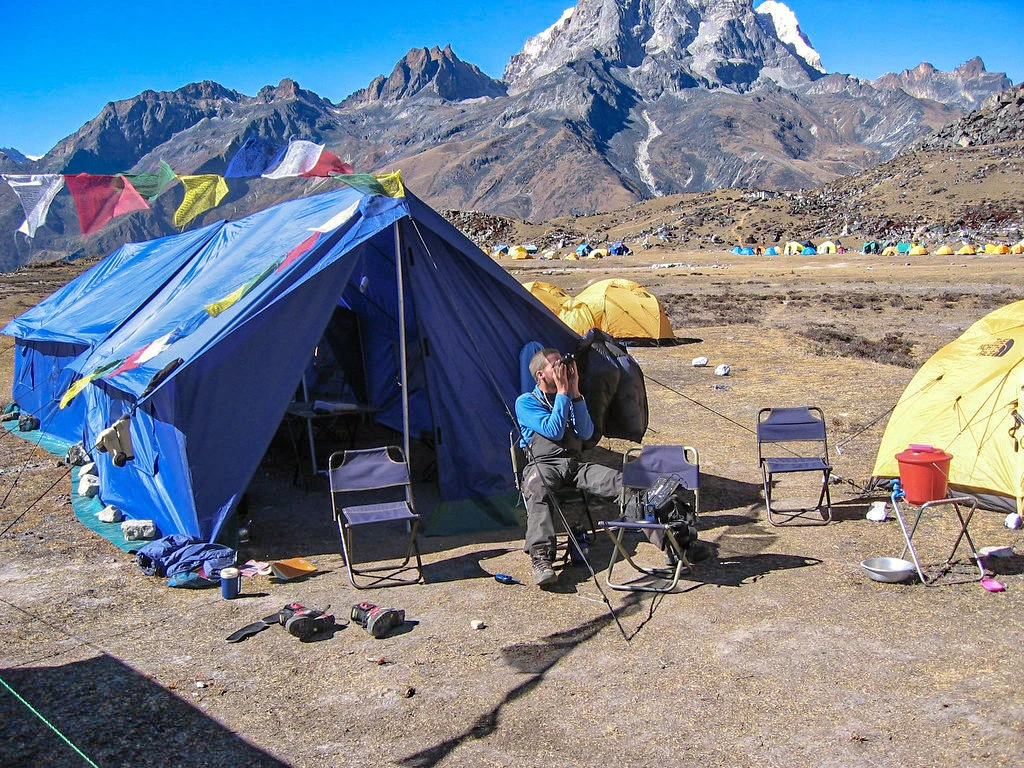
Arriving at Base Camp
You will reach the camp, which sits at 4,570 meters and is surrounded by rocky moraines, by the early afternoon. Your expedition team will be waiting there with all tents set up: a large dining tent, a kitchen tent, toilet tents, and personal sleeping tents, along with your duffel bag sitting near your assigned tent.
Settling In and First Camp Briefing
The rest of the afternoon is for you to settle into the camp, organize your personal gear, unpack your sleeping bags and pad, and change into camp clothes. By then, the Kitchen team will have prepared a warm, delicious meal for you. Afterward, the head Sherpa will lead everyone in performing a puja ceremony, on a site selection tour, and in discussing the camp rules, including water resources, toilet facilities, and waste management.
Exploring the Base Camp Area
Take a gentle walk around the camp perimeter to familiarize yourself with your surroundings, as this will be your home for the coming days. As you move slowly, take time to photograph the massive southwest pillar and the hanging glacier rising above camp. Drink plenty of water, since the dry high-altitude air can dehydrate you quickly. Afterward, rest and give your body time to adjust before the training sessions and climbing rotations begin.
Evening Meal and Celebration
Dinner in the expedition dining tent becomes a comforting ritual, with hot soup, a hearty main course, and a simple dessert served in the warmth of the shared space. The team gathers to mark a safe arrival, raising a cup of tea or a warm drink as the mood settles into quiet satisfaction. Your guide then reviews the plan for the next day’s rest and training, helping everyone prepare for the work ahead. As night falls, sleep comes early, with Ama Dablam standing silently above your tent under the dark mountain sky.
Accommodation: Tented Camp
Day 10: Rest Day and Technical Training at Ama Dablam Base Camp
Altitude: 4,570 m (14,993 ft)
Meals: Breakfast, Lunch, Dinner
Pre-Established Route and Camps
Before the climbing season begins, the expedition’s Sherpa team prepares the route by fixing ropes along the southwest ridge and setting up tents at Camp 1 and Camp 2. By the time you arrive at Ama Dablam Base Camp, the full climbing line is already in place, allowing for a smoother transition into the expedition phase. This preparation saves time and energy, so you can focus on acclimatization and refining your skills rather than carrying heavy loads or managing technical rope work.
Importance of a Full Rest Day
After the trek to base camp, your body needs time to recover from the sustained effort and altitude gain. A rest day allows your muscles to repair, supports red blood cell production, and improves mental clarity for the days ahead. Treat this as an active rest day and do not skip it, as proper recovery here plays a key role in safe and steady progress during the expedition.
Morning Leisure and Puja Ceremony
Wake without an alarm and enjoy a slow, unhurried breakfast in the dining tent as the morning settles over base camp. By mid-morning, the team gathers for a traditional puja ceremony, where the Sherpa crew builds a small stone altar, burns juniper, chants prayers, and tosses rice into the air. You place your climbing gear—ice axe, crampons, and harness—near the altar to receive a blessing, marking the start of the expedition on a spiritual note. A sacred red string is then tied for you to wear throughout the climb, symbolizing protection and intention. The ceremony brings the team together and shows deep respect for the mountain you are about to ascend.
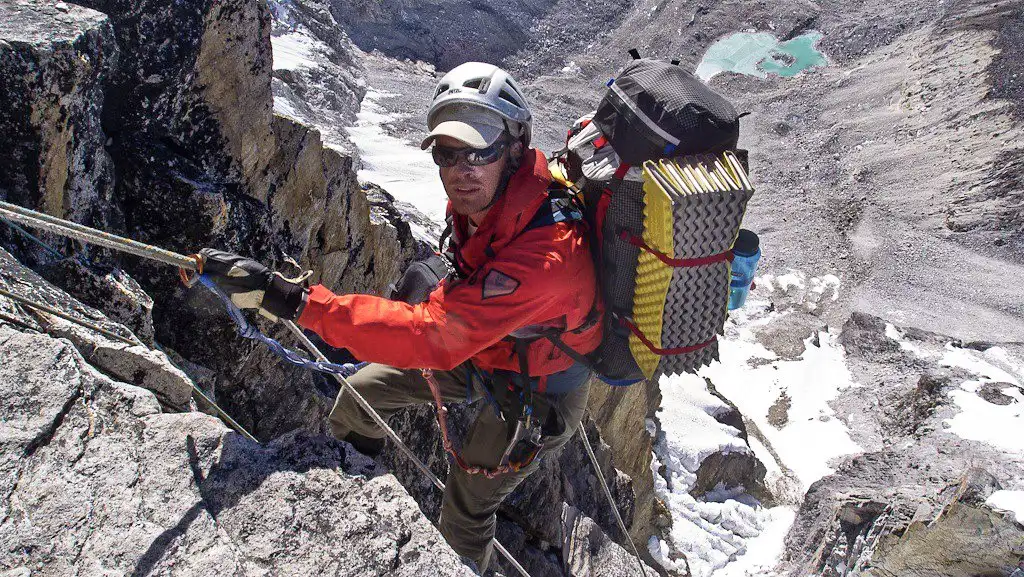
Afternoon Technical Training on Existing Fixed Lines
After lunch, join a hands-on training session led by the Sherpa instructors at a nearby practice site just a short walk from camp. Here, fixed ropes are already anchored to rock slabs, creating a controlled environment that mirrors the steeper sections of the Ama Dablam climbing route. This session allows you to become familiar with the terrain and refine your movement before heading higher on the mountain.
The session covers:
- Clipping into fixed ropes: Attach your ascender (jumar) and safety carabiner to the line. Practice smooth movement up and down the rope.
- Switching anchor points: Learn to pass an intermediate anchor without detaching from the safety system.
- Rappelling on a belay device: Control your descent with proper brake hand placement.
- Arm-wrap technique: Practice using the rope wrapped around your arm for friction as an emergency backup.
- Crampon work on granite slabs: Walk and climb short rocky sections in crampons to build confidence.
Spend about three hours working on the fixed lines, taking time to repeat each movement until it feels natural and controlled. Ask questions whenever needed so you build full confidence with the techniques. These same skills will be essential higher on the mountain, especially on the Yellow Tower and the steep sections above Camp 1 along the Ama Dablam route.
Evening Hydration and Rest
Drink plenty of water and eat a high-carbohydrate dinner to support recovery after the training session. Your guide reminds the group that proper hydration helps the body adjust to altitude more smoothly. As the evening winds down, pack a light daypack for tomorrow’s rotation hike and leave your main duffel securely in the base camp tent.
Accommodation: Tented Camp
Day 11: Rotation 1 – Touch Camp 1 and Return to Base Camp
Altitude: Base Camp 4,570 m → Camp 1 5,639 m → Return to Base Camp
Climb Duration: 4–5 hours up, 3 hours down
Maximum Altitude Reached: 5,639 m (18,500 ft)
Meals: Breakfast, Lunch, Dinner at Base Camp
Purpose of the First Rotation
Today, your body experiences its first exposure to the altitude of Camp 1, introducing you to the demands of climbing higher on the mountain. The ascent helps stimulate red blood cell production while giving you direct experience on the lower section of the Ama Dablam route. You carry only a light daypack and return to base camp for the night, following the “climb high, sleep low” approach that supports safe and effective acclimatization.
Morning Ascent to Yak Camp
Take an early breakfast in the base camp dining tent before setting out with a light daypack containing at least two liters of water, high-energy snacks, a warm jacket, and your camera. The trail crosses the grassy moraine above base camp and climbs steadily along a well-trodden path, with no technical gear needed for the first two to three hours. Move at a controlled, steady pace as you gain altitude and reach Yak Camp (5,182 m). Use this flat area for a 15-minute break to drink water and have a snack, while the views open up behind you, revealing Everest, Lhotse, and Makalu in the distance.
Clipping into the Fixed Ropes
Above Yak Camp, the terrain shifts into steep rock slabs where the route becomes more technical and exposed. Here, you put on your harness and clip into the fixed ropes that the Sherpa team has pre-installed along the southwest ridge. Attach your ascender and safety carabiner to the line, ensuring a secure connection before you begin moving. The rock is solid but angled, demanding precise and deliberate foot placement, while exposure increases noticeably on both sides of the ridge. Progress steadily from one anchor to the next, maintaining continuous protection without fully unclipping from the safety system. This section serves as a direct, real-world application of the skills you developed during training at base camp.
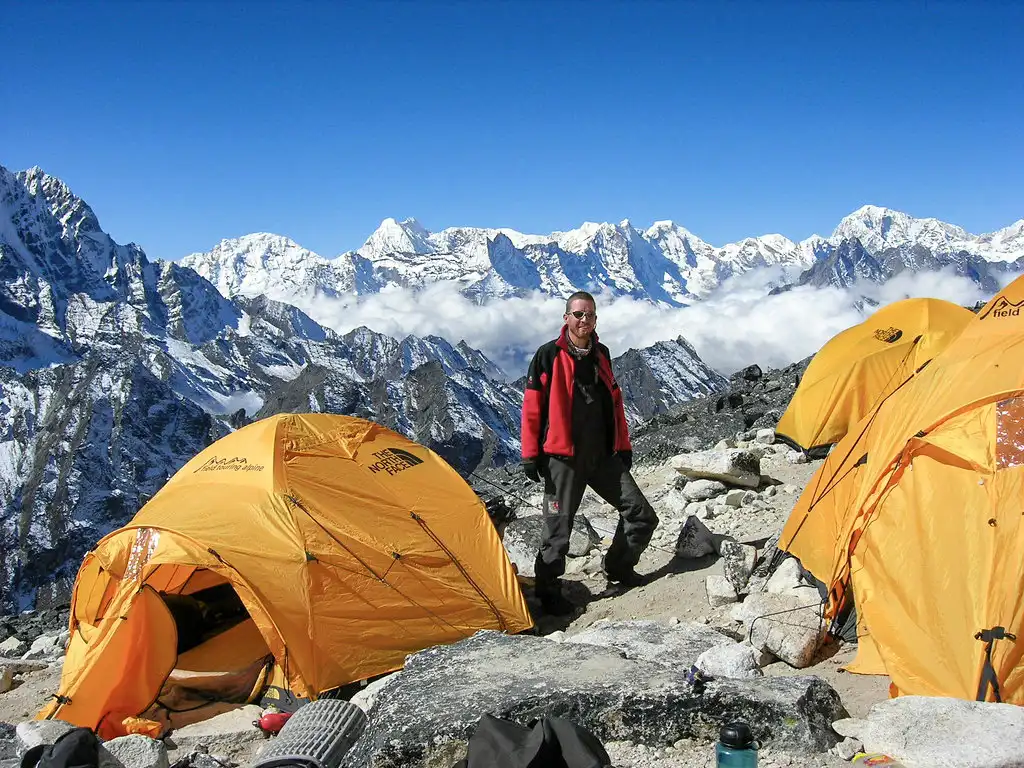
Arriving at Camp 1
After about two more hours of roped climbing, you reach Camp 1 at 5,639 meters. The tents already sit on narrow rocky platforms. Settle into a resting spot and take two to three hours at this altitude. Complete these essential tasks:
- Rest and hydrate (drink at least one full liter of water)
- Eat your packed lunch
- Familiarise yourself with the tent layout and camp boundaries
- Observe how your body feels at 5,639 m: a mild headache is normal, but report nausea or dizziness to your guide
- Check your pulse oximeter reading if the guide carries one (typical saturation is 70–85% here)
- Take photos of the ridge above and the valley below
Staying several hours at Camp 1 gives your body time to acclimate to the altitude change, which improves your acclimatization response later.
Descent to Base Camp
Begin your descent by early afternoon. Rappel or down-climb the same fixed rope sections with total focus. Most mountaineering accidents occur on the descent. Check each anchor and keep your brake hand secure. Walk carefully on the loose rock below Yak Camp. Reach base camp by late afternoon.
Evening Medical Check and Debrief
Hot dinner is ready in the dining tent. The expedition guide conducts a medical check on every climber, measuring oxygen saturation and asking about headache, appetite, and sleep. Report any unusual symptoms honestly. The guide monitors your condition overnight. This first rotation builds crucial mental confidence—you now know exactly what the route to Camp 1 looks and feels like.
Overnight at Base Camp (4,570 m)
Accommodation: Tented Camp
Day 12: Rest Day at Base Camp
Altitude: 4,570 m
Activity: Active Recovery
Meals: Breakfast, Lunch, Dinner at Base Camp
Why Rest Follows the Rotation
Your body needs time to adapt after yesterday’s exposure to 5,639 meters. New red blood cells form over 24 to 48 hours. A full rest day lets this process work. You also recover mental energy for the next, more demanding rotation.
Morning: Sleep and Hydrate
Sleep in. No alarm clock is set. Take a late breakfast in the dining tent. The sun warms the camp by mid-morning. Spend the early hours drinking water—aim for four to five liters throughout the entire day. Mild leg stretching or a short walk around the camp perimeter keeps blood flowing without tiring muscles.
Afternoon: Gear Check and Quiet Time
Use the afternoon for personal activities. Read a book, update your expedition journal, or photograph the mountain in changing light. Carry out a full gear inspection:
- Check the crampon fit on your boots and tighten any loose screws
- Inspect harness webbing for wear and carabiner gates for smooth action
- Test your headlamp and replace batteries if needed
- Re-pack your overnight duffel for tomorrow’s move to Camp 1
The dining tent provides a warm space to socialize with fellow climbers and Sherpa staff. Sharing stories strengthens team spirit.
Evening Briefing and Packing
After an early dinner, the guide holds a briefing for the second rotation. Tomorrow you climb to Camp 1 and sleep there. The guide reviews the packing list:
- Sleeping bag rated to -20 °C or warmer
- Down jacket and insulated pants
- Fresh base layers and socks
- Headlamp and spare batteries
- Personal toiletries and sunscreen
- Water bottles (insulated covers prevent freezing)
- High-calorie snacks for the climb
The guide also shares the latest weather forecast. A clear pattern is essential for the overnight camp and the later move to Camp 2. Pack your duffel bag before going to bed. Sleep early, even if you feel restless, to build reserves for the higher camp.
Overnight at Base Camp
Accommodation: Tented Camp
Day 13: Rotation 2 – Climb to Camp 1 and Overnight Stay
Altitude: Sleep at 5,639 m (18,500 ft)
Climb Duration: 4–5 hours
Meals: Breakfast at Base Camp, Lunch en Route, Dinner at Camp 1
Departure with a Heavier Load
Eat a substantial breakfast at base camp. Depart around 7:00 AM, carrying a heavier pack (15 to 18 kg) with all your overnight gear. The route to Yak Camp is now familiar, but the weight makes the climb more demanding. Maintain a slow, steady rhythm. Take a break every 45 to 60 minutes, even if you feel strong. This pacing conserves energy for the night ahead.
Ascent Through the Fixed Rope Section
Reach Yak Camp after two to three hours. Rest briefly, then put on your harness and clip into the fixed ropes. Climb the steep rock slabs with the same technical focus as before. The heavier pack shifts your center of gravity, so move deliberately on the narrower ledges. Arrive at Camp 1 by early afternoon.
Settling into Camp 1
Your tent is already pitched. The Sherpa team has placed sleeping pads inside. Organize your personal sleeping area immediately:
- Lay out the sleeping bag and let it loft fully
- Arrange essential items within reach: headlamp, water bottles, lip balm, and gloves
- Change into dry camp clothes and down booties to stop heat loss
- Place water bottles inside the sleeping bag later to prevent freezing
The kitchen crew serves a hot lunch or tea. Spend the rest of the afternoon inside your tent, resting and drinking constantly. Moving around at 5,639 meters feels taxing, so conserve your energy.
Evening Routine at High Altitude
Dinner arrives at your tent or in a small mess tent. Meals are simple and warm: noodles, soup, or freeze-dried curry. The temperature drops rapidly after sunset, often reaching -15°C or lower. Climb into your sleeping bag early.
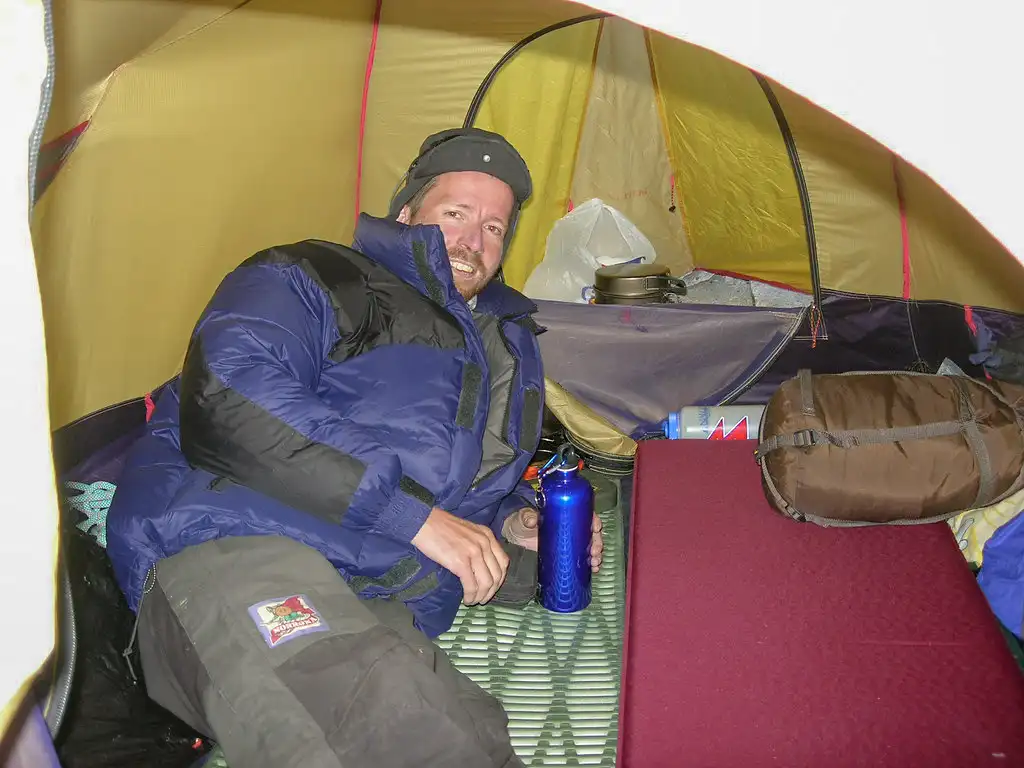
Sleeping at Altitude – What to Expect
Your first night above 5,500 meters brings several normal physical responses. Knowing them in advance reduces worry.
- Periodic breathing: Your breathing may pause for 10 to 15 seconds, followed by a sharp gasp. This Cheyne-Stokes respiration is common and not dangerous.
- Poor sleep quality: Even if you lie down for eight hours, you may only sleep for two to four. Rest remains beneficial.
- Mild headache: A slight headache is typical at this elevation. It usually fades by morning.
- Cold: Tent temperatures drop far below freezing. Wear a beanie and light gloves inside the sleeping bag.
- Frequent urination: The altitude triggers fluid loss. Use a designated pee bottle instead of stepping into the freezing night.
Coping Strategies
Keep your water bottle inside the sleeping bag to stop it from freezing. Do not stress about a lack of deep sleep; lying still and breathing calmly aids recovery. If you need help or feel unwell, call for your Sherpa guide immediately.
Why Sleeping at Camp 1 Matters
Spending the night at altitude is the single most powerful tool for acclimatization. Your body adapts during the overnight hours, even if sleep quality is poor. This experience also prepares you mentally for Camp 2 later. A successful night here confirms that your body can handle the higher push.
Overnight at Camp 1 (5,639 m)
Accommodation: Tented Camp
Day 14: Descend from Camp 1 to Base Camp and Begin Recovery
Altitude: Camp 1 5,639 m → Base Camp 4,570 m
Descent Duration: 3–4 hours
Meals: Breakfast at Camp 1, Lunch at Base Camp, Dinner at Base Camp
Waking Up After the First High-Altitude Night
Let your body wake naturally. No alarm clock sounds. The Sherpa kitchen crew brings hot tea and a simple breakfast—oatmeal, muesli, or porridge—directly to your tent. The morning air at 5,639 meters feels thin and cold. Move slowly as you sit up and start packing personal gear. Your duffel contains the sleeping bag, down suit, toiletries, and water bottles. The support team manages all group tents and cooking equipment.
Departure from Camp 1
Finish packing by mid-morning. Put on your harness and climbing boots. Before leaving the camp, look up the southwest ridge toward Camp 2. The route you will later climb stands clearly visible. Prepare mentally for what lies ahead. Then clip into the fixed ropes at the edge of camp and begin the descent.
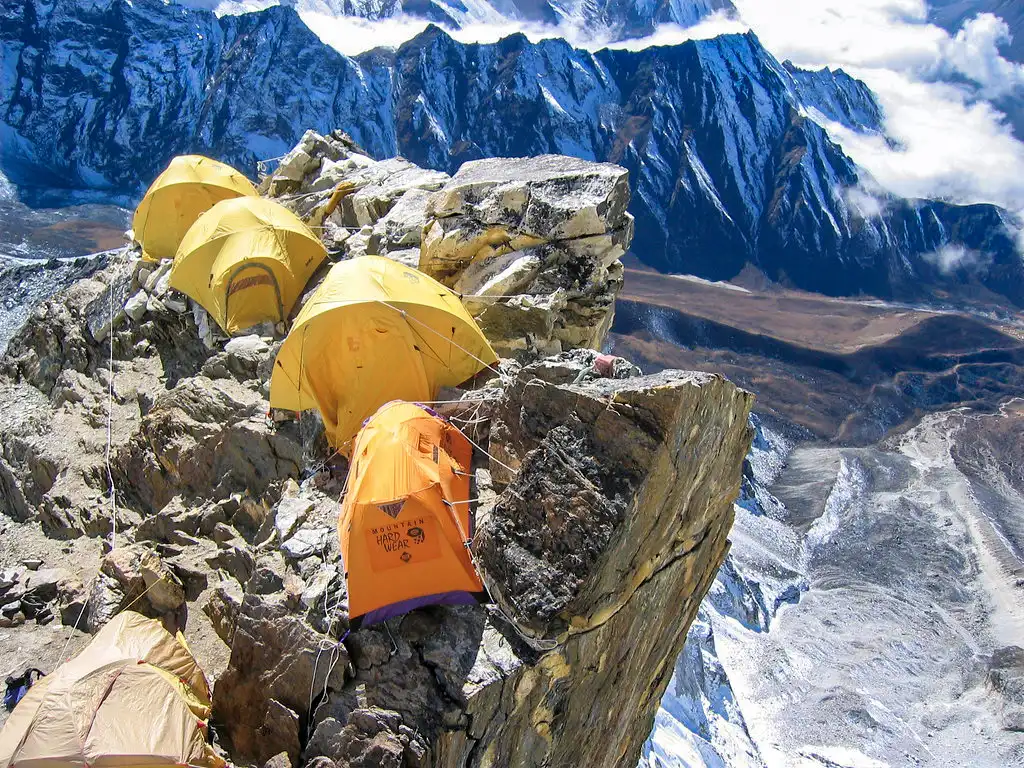
Concentrated Descent Through Fixed Ropes
Rappel or down-climb each fixed rope segment with full focus. A night of poor sleep at altitude can slow reaction times, so move deliberately. Check every carabiner lock and anchor point. Keep your brake hand firm and your eyes on the rock in front of you. The steep slabs that tested you on the way up now require equal respect. Accidents occur more often on descent than ascent, so maintain your safety rhythm until you step off the ropes at Yak Camp.
Final Walk to Base Camp
Below Yak Camp, remove your harness and walk the rocky trail to base camp. The air gains density with every step down, and energy often returns. Arrive back at base camp by early afternoon, roughly three to four hours after leaving Camp 1.
Afternoon Recovery at Base Camp
Enter the dining tent for a hot lunch and warm greetings from the crew. Now you can fully appreciate the comforts of 4,570 meters. A few suggestions for the afternoon:
- Take a solar shower if the sun is strong and the camp offers one. Clean skin lifts morale.
- Change into dry, soft camp clothes and down booties.
- Let the guide conduct a medical check. Oxygen saturation should climb back to 85–90%. Report any lingering altitude symptoms honestly.
- Share your Camp 1 sleep experience with the team. The guide notes who slept well and who struggled, adjusting the plan if needed.
The Rest Block Begins
Today launches a two-to-three-day recovery window before the next rotation. Your body will now super-compensate: red blood cell counts rise, muscles repair, and energy stores refill. Use this time wisely. You have earned the rest.
Evening Relaxation
Dinner is relaxed and unhurried. After the meal, the dining tent may host a movie on a small screen, a card game, or simply a quiet conversation. The guide previews the Camp 2 rotation without putting pressure on. Sleep comes easily at base camp after two nights of altitude work.
Overnight at Base Camp (4,570 m)
Accommodation: Tented Camp
Day 15: Full Rest Day at Base Camp
Altitude: 4,570 m
Activity: Complete Rest and Preparation
Meals: Breakfast, Lunch, Dinner at Base Camp
Full Recovery Mode
Sleep in again. The whole day is dedicated to rest and light preparation. Your body is now adapting deeply after the overnight at Camp 1. Avoid any strenuous movement. The goal is to emerge from this rest block feeling physically fresh and mentally sharp for the critical Camp 2 rotation.
Morning Hydration and Gentle Movement
After a late breakfast in the dining tent, make hydration your primary job. Drink at least three to four liters of water spread across the day. Take a short walk around the camp perimeter for 10 to 15 minutes to keep circulation active. Stop often to look at Ama Dablam’s magnificent southwest face. Study the ridge line you will soon climb higher on.
Gear and Packing Organization
Return to your tent and lay out all equipment for the upcoming two-day rotation to Camp 1 and Camp 2. Check every item:
- Climbing gear: Harness, ascender, descender, carabiners, slings, crampons, ice axe.
- Clothing: Down suit or heavy down jacket and pants, fresh base layers, insulated mittens, spare socks, balaclava.
- Sleeping system: Sleeping bag, liner, pad.
- Essentials: Headlamp with new batteries, glacier glasses, ski goggles, SPF 50+ sunscreen, lip balm, a small personal first-aid kit, and snacks.
- Hydration: Insulated water bottles and a pee bottle for the high camp.
Pack your duffel so that the items you need urgently are at the top.
Afternoon Briefing for the Yellow Tower
After lunch, the guide holds a detailed briefing inside the dining tent. The focus is the technical crux of the Ama Dablam Expedition: the Yellow Tower. Using printed photos or a tablet, the guide walks you through each pitch. They explain handhold patterns, fixed rope lines, and exposure levels. Participants ask questions and share tips. This visual rehearsal reduces anxiety and builds muscle memory before you ever touch the rock.
Weather Forecast and Go/No-Go Decision
The guide presents the latest satellite weather report. Ama Dablam summit windows last only a few days each season. The team confirms the decision to rotate to Camp 1 tomorrow and to touch Camp 2 the next day. If the weather threatens, the plan may be adjusted by one day.
Evening Routine
Dinner is served early. You eat a high-carbohydrate meal to store energy. After dinner, place your packed duffel by the tent door. Climb into your sleeping bag early, even if sleep takes time to arrive. Tomorrow you move back up to 5,639 meters.
Acclimatization Status
By now, your body should feel comfortable at 5,600 m during the day. The upcoming rotation to Camp 2 tests your adaptation at nearly 6,000 m. This well-paced schedule gives you the best possible foundation.
Overnight at Base Camp
Accommodation: Tented Camp
Day 16: Rotation 3 – Climb to Camp 1 and Overnight
Climb Duration: 4–5 hours
Altitude: Sleep at 5,639 m
Meals: Breakfast at Base Camp, Lunch at Camp 1, Dinner at Camp 1
Third Ascent of the Familiar Route
Wake early and take a solid breakfast at the base camp dining tent. Depart by 6:00 or 7:00 AM. Today you carry your overnight duffel once again—a load of 15-18 kg. The trail to Yak Camp feels almost routine now. Your lungs and legs work more efficiently thanks to multiple previous exposures. Reach Yak Camp after about two hours at a steady pace.
Efficient Movement on Fixed Ropes
Put on your harness and clip into the fixed lines above Yak Camp. The rock slabs, now climbed for the third time, allow smoother movement. Your hands find the anchors faster. Foot placements feel secure. This growing confidence saves mental energy for the more demanding climb to Camp 2 tomorrow. Still, do not rush. Maintain the same safety habits: always clipped in, always checking your partner.
Arrival at Camp 1
Reach Camp 1 by early afternoon. The tents, already pitched, welcome you back to 5,639 meters. Store your duffel inside your assigned tent and arrange your sleeping system immediately. The afternoon sun may warm the tent enough for a brief rest without your down jacket. However, the temperature drops sharply as soon as the sun dips behind the ridge.
Afternoon Priorities
A hot lunch is served. Use the afternoon for these essential tasks:
- Hydrate deeply. Aim for two to three liters before sleep.
- Rest inside your tent to minimize oxygen demand.
- Check your gear for tomorrow’s push to Camp 2: crampons sharp, ascender functioning, headlamp ready.
- Discuss the timetable with your Sherpa. The climb to Camp 2 and the Yellow Tower requires an early start.
Evening Meal and Early Rest
The kitchen crew provides a light but warm dinner—noodles, soup, or a simple curry. The air temperature falls far below freezing. Change into your sleeping clothes, put on a beanie and light gloves, and slide into your sleeping bag by 7:00 or 8:00 PM. Place your water bottles inside the bag to stop them from freezing.
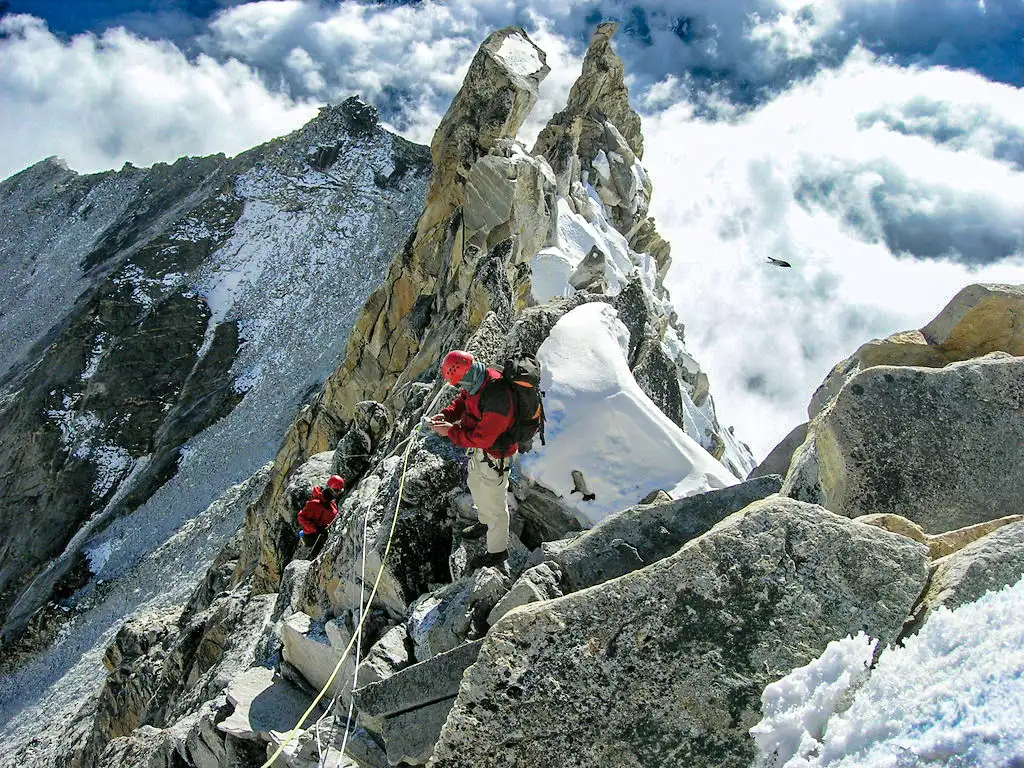
Mental Rehearsal Before Sleep
As you lie in the dark, mentally walk through the Yellow Tower pitches the guide described in the briefing. Visualize clipping each anchor, moving your feet deliberately, and staying calm in the exposure. This quiet rehearsal wires your brain for success. Do not worry if sleep comes in fragments—rest alone aids altitude adjustment.
Overnight at Camp 1 (5,639 m)
Accommodation: Tented Camp
Day 17: Rotation 3 – Touch Camp 2 and Return to Camp 1
Altitude: Camp 1 5,639 m → Camp 2 5,944 m → Return to Camp 1
Climb Duration: 4–6 hours up, 3–4 hours down
Maximum Altitude Reached: 5,944 m (19,501 ft)
Meals: Breakfast at Camp 1, Snacks on Route, Dinner at Camp 1
Climbing the Technical Crux of the Ama Dablam Expedition
Wake early at Camp 1 for a light breakfast. Today, you tackle the most demanding climbing of the entire Ama Dablam Expedition. The route from Camp 1 to Camp 2 traverses the famous Yellow Tower, the crux pitch of the southwest ridge. Fixed ropes already protect every meter of this section.
The Yellow Tower (5,900 m)
Step out of Camp 1 and clip into the fixed line immediately. The rock steepens fast. The Yellow Tower demands solid rock climbing technique, equivalent to 5.6–5.7 on the Yosemite Decimal System. Move with a heavy pack while maintaining balance on small edges.
Your Sherpa guide stays close and offers precise instructions: “Left foot on that edge, right hand to the crack, now pull with your jumar.” Trust the rope and breathe steadily—take two to three breaths per move. The exposure is extreme, with thousands of meters of air falling away beneath you. Focus on one meter at a time. Pull yourself up using the ascender, find footholds, and reset your grip. Climbing through this pitch at nearly 6,000 meters is a pure test of mental strength and technical skill.
Beyond the Yellow Tower
After clearing the crux, the route continues over mixed rock and snow. Fixed ropes remain your constant companion. The ridge stays narrow and exposed, but the angle eases slightly. Continue upward for another one to two hours. The silhouette of Camp 2 eventually appears ahead, perched on a knife-edge section of the ridge.
Arriving at Camp 2
Reach Camp 2 at 5,944 meters by late morning or midday. Tents sit on small platforms with jaw-dropping views of Everest, Lhotse, and Makalu. This is a touch-and-go rotation, not an overnight stay. Spend two to three hours here:
- Rest and hydrate (drink 1 to 1.5 liters of water)
- Eat packed snacks or a light lunch
- Let your body register the 5,944 m altitude—critical for acclimatization
- Check pulse oximeter readings (expect 60–70% SpO2)
- Practice camp procedures you will use during the summit push
- Mentally map the upper route toward the summit
- Take photographs and absorb the setting
Why Not Sleep at Camp 2 Today
The “climb high, sleep low” principle guides this decision. Touching 5,944 meters and descending to sleep at 5,639 meters better stimulates adaptation than an immediate overnight at the higher camp. The approach reduces the risk of altitude sickness and increases the summit success rate.
Descent to Camp 1
Begin the descent by early afternoon. Rappel or down-climb the Yellow Tower with total concentration. Fatigue from the climb makes this the most dangerous part of the day. Move slowly, check each anchor, and keep your brake hand firm. Arrive back at Camp 1 after three to four hours.
Evening Debrief
Hot dinner at Camp 1 restores energy. The guide conducts medical checks and asks about your experience at Yellow Tower. Share any concerns openly. Pack gear for tomorrow’s descent to base camp. This rotation confirms that you can climb the technical crux—confidence soars.
Overnight at Camp 1 (5,639 m)
Accommodation: Tented Camp
Day 18: Descend to Base Camp and Begin Extended Rest
Descent Duration: 3–4 hours
Altitude: Return to 4,570 m
Meals: Breakfast at Camp 1, Lunch at Base Camp, Dinner at Base Camp
Leaving the High Camps
Take a leisurely breakfast at Camp 1. Pack all personal gear. The Sherpa team handles group equipment and tents. Depart mid-morning after everyone is ready. Today, you leave the upper mountain and return to the comfort of base camp for a critical extended rest block.
Careful Descent Through the Fixed Ropes
Clip into the fixed ropes one final time for this rotation. Rappel the steeper sections and down-climb the slabs with deliberate movements. Multiple days of climbing have tired your muscles, so maintain full concentration. The descent to Yak Camp feels faster now. Remove your harness and walk the rocky trail back to base camp.
Arrival at Base Camp
Reach base camp by early afternoon. The support crew welcomes you with hot lunch and fresh drinks. Check into your familiar tent and change into clean, dry clothes. A pulse oximeter check should show readings returning to 85–90%. Report any persistent altitude symptoms to the guide immediately.
The Critical Rest Block (Days 18–19)
The next two days are non-negotiable recovery before the summit push. Your body has completed three rotations and covered 5,944 meters. Now it must super-compensate. During this period:
- Hemoglobin levels peak, maximizing oxygen transport
- Muscle glycogen stores refill completely
- Mental fatigue clears
- Energy reserves are built for the 12–16-hour summit day
Do nothing strenuous. Stay horizontal as much as possible. Drink four to five liters of water daily. Eat high-carbohydrate meals. Let your body rebuild.
Evening Relaxation
Dinner is a relaxed, happy affair. Card games, movies, or simple conversation fill the dining tent. The guide shares a rough outline of the summit push schedule without adding pressure. Sleep deeply at 4,570 meters.
Overnight at Base Camp
Accommodation: Tented Camp
Day 19: Pre-Summit Rest and Final Preparation at Base Camp
Altitude: 4,570 m
Activity: Final Rest and Summit Readiness
Meals: Breakfast, Lunch, Dinner at Base Camp
Full Rest and Hydration
Today is the last full rest day before the Ama Dablam summit push. Sleep in and take a late breakfast. Drink water continuously—aim for four to five liters by evening. Walk only short distances inside camp. Avoid any activity that raises your heart rate or depletes energy.
Weather Window Decision
The expedition leader reviews multiple professional forecasts (Mountain-Forecast.com, NOAA, and local Sherpa knowledge). The summit window decision is made today based on three firm criteria:
- Wind speed at 6,800 m must stay below 30 km/h
- No precipitation forecast for the summit day
- Clear visibility is predicted for the early morning hours
- Full team acclimatization confirmed by medical checks
If the weather aligns, the summit push begins tomorrow. If the forecast shows marginal conditions, the team uses the contingency buffer and waits an extra day. Safety always guides the final call.
Final Gear Inspection and Packing
Lay out all your summit gear on your sleeping bag. Inspect each item critically:
- Technical gear: Crampons sharp and fitted, ice axe leash secure, harness with no frays, ascender and descender functioning, carabiners locking smoothly.
- Clothing: Down suit or heaviest down jacket and pants, fresh base layers, insulated mittens, spare liner gloves, balaclava, warm beanie, ski goggles.
- Essentials: Headlamp with brand-new batteries (spare set in pocket), glacier glasses, sunscreen SPF 50+, lip balm, small personal first aid kit, high-calorie summit snacks (chocolate, nuts, energy gels), insulated water bottles, pee bottle.
- Sentimental items: Summit flag, photos, or small tokens.
Pack the duffel so that summit-day items sit at the very top. Your pack weight for the climb to Camp 2 remains manageable; the Sherpa team carries the group’s supplies.
Medical Check
The guide checks oxygen saturation, blood pressure, and overall condition. Be honest about any lingering headache, cough, or fatigue. A minor issue at base camp can become a major problem at 6,800 m. The guide decides if any climber needs extra rest.
Summit Briefing
After lunch, the entire team gathers in the dining tent for the final summit briefing. The guide uses photos and maps to cover every phase:
- Departure schedule: Plan to leave Camp 2 between 1:00 and 3:00 AM.
- Route description: Upper snow slopes, the Mushroom Ridge traverse, the final summit ridge.
- Turnaround time: A strict deadline—if you have not reached the summit by a set hour, you must descend regardless of distance remaining.
- Emergency protocols: Radio communication, oxygen availability, and evacuation steps.
- Sherpa assignments: Each climber confirms their climbing Sherpa partner.
Ask every question that remains in your mind. Knowing the plan reduces anxiety.
Evening Routine
Eat an early dinner (4:30–5:00 PM) rich in carbohydrates. Return to your tent and do a final double-check of your packed duffel. Place it by the tent door. Climb into your sleeping bag by 7:00 or 8:00 PM, even if sleep does not arrive immediately. Tomorrow you begin the summit push—the ultimate goal of the Ama Dablam Expedition.
Overnight at Base Camp
Accommodation: Tented Camp
Day 20: Move to Camp 1, Then Camp 2
Altitude: End at 5,944 m (Camp 2)
Climb Duration: 5–6 hours Base Camp to Camp 1, 4–5 hours Camp 1 to Camp 2
Meals: Breakfast at Base Camp, Lunch at Camp 1, Dinner at Camp 2
The Summit Push Begins
Wake early inside the base camp tent. Eat a hearty breakfast to load energy. Pack your duffel with all summit gear. Depart base camp as the morning light touches the peaks, carrying a heavier load for the multi-day push. The trail to Camp 1 is now very familiar—this is your fourth ascent of the route. Move efficiently, taking fewer rest breaks. Arrive at Camp 1 by early afternoon.
Brief Rest at Camp 1
Stop at Camp 1 for a light lunch and hydration. Repack essential items for the climb to Camp 2. Do not linger long. The goal is to reach Camp 2 with daylight and energy to prepare for summit night.
Afternoon Climb Through the Yellow Tower
Leave Camp 1 and clip into the fixed ropes. The route climbs immediately into the Yellow Tower, the technical crux of the entire Ama Dablam Expedition. You climbed this section once before on Day 17. The second passage feels more confident. Find footholds and handholds with less hesitation. Pull smoothly on the ascender. Breathe steadily through the exposure. Your Sherpa guide offers quiet reminders. The lack of surprise makes the crux shorter than the first time.
Clear the Yellow Tower and continue over mixed rock and snow. Camp 2 appears on the narrow ridge ahead. Arrive mid-afternoon. Settle into your tent at 5,944 meters.
Critical Summit Preparations at Camp 2
The afternoon and evening at Camp 2 are dedicated to readiness. Organize every piece of summit gear before darkness falls:
- Lay out all warm clothing layers for quick access in the freezing dawn.
- Attach crampons to boots and check the fit.
- Check the ice axe leash and harness webbing.
- Insert fresh batteries into the headlamp and keep a spare set in your pocket.
- Prepare an insulated thermos for a hot drink.
- Place high-calorie snacks and a camera in an accessible pocket.
Drink continuously throughout the evening. Aim for three to four liters before rest. The immense altitude and dry air rapidly dehydrates. The kitchen crew serves a light, warm dinner.
Sleeping at Camp 2
Temperatures drop to deep negatives as soon as the sun sets. Slide into your sleeping bag wearing a beanie and gloves. Understand that real sleep will be limited. Periodic breathing, thin air, cold, and pre-summit excitement all work against deep rest. Expect only a few hours of actual sleep. Do not stress about wakefulness—lying still with closed eyes still provides valuable recovery. Your body will run on adrenaline and accumulated acclimatization. You are as ready as possible.
Overnight at Camp 2 (5,944 m) – Summit Eve
Accommodation: Tented Camp
Day 21: Summit Day – Camp 2 to the Summit of Ama Dablam and Return
Summit Altitude: 6,812 m (22,349 ft)
Duration: 10–14 hours round trip from Camp 2
Descent to: Camp 2 or Camp 1, depending on energy
Meals: Light Breakfast at Camp 2, Snacks During Climb, Dinner at Camp
Waking and Preparing in Darkness
Your Sherpa wakes the team while the sky remains fully dark. Inside the tent, begin melting snow for water. Dressing takes a long time in extreme cold. Pull on layer after layer: base garments, fleece, down suit, wind shell, insulated mittens, warm hat, balaclava, and ski goggles. Check every buckle and zipper.
Eat a quick breakfast of hot tea and oatmeal or energy bars. Force yourself to eat even when you’re not hungry. Your body needs every calorie for the hours ahead. Fill the insulated thermos and water bottles with hot water. Complete a final gear check: harness on, crampons in hand, headlamp working, ascender accessible.
Departure and the Steep Couloir
Clip into the fixed rope outside Camp 2 and begin climbing upward in the beam of your headlamp. The route climbs steep snow and ice immediately. The couloir angles reach 60 to 70 degrees. Front-point with crampons, using the fixed rope for security. Breathe deliberately—two to three breaths per step, pressure-breathing from the diaphragm. Rest every few minutes by leaning on the ice axe and catching your breath.
The cold bites hard. Fingers and toes need constant wiggling to maintain blood flow. Leg muscles burn. The altitude above 6,200 meters makes every movement feel slow and heavy. Mental discipline keeps each step coming.
Dawn on the Mushroom Ridge
As the night recedes, dawn breaks across the Himalayas. Golden light hits Everest, Lhotse, Makalu, and Cho Oyu. The sunrise provides an electric boost of motivation. You now traverse the iconic Mushroom Ridge. The ridge is knife-sharp, with massive drops on both sides. Some sections force climbers to straddle the corniced snow. Fixed ropes run along the entire crest. Maintain three points of contact always. Focus only on the immediate next step, not the vast emptiness below. The exposure is extreme, but the rope holds firm. Your Sherpa stays close, guiding each placement.
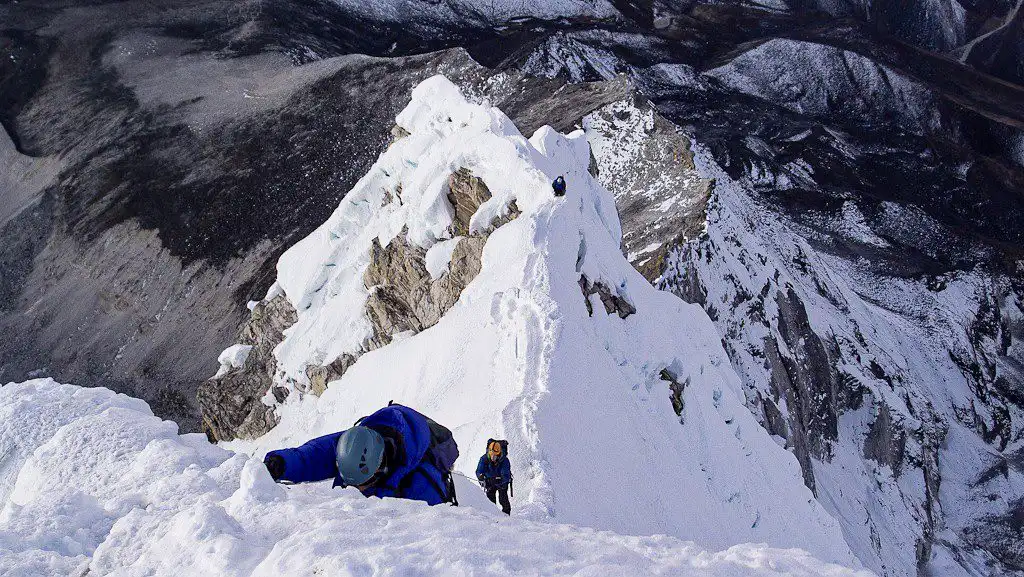
The Final Summit Ridge
Beyond the mushroom, the ridge continues as a moderate-angled but extremely high traverse. Altitude passes 6,600 meters. Oxygen saturation drops to half its sea-level value. Every forward meter costs willpower. Keep the turnaround time in your awareness. Your guide monitors speed, weather, and each climber’s condition.
The Summit of Ama Dablam
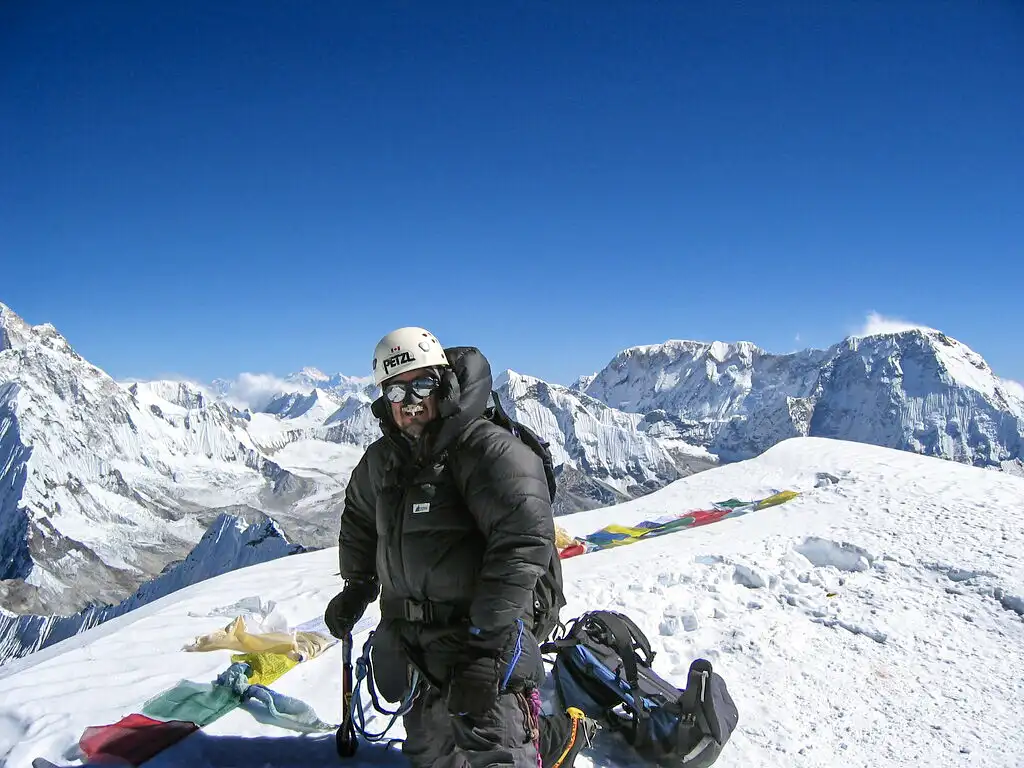
You step onto the summit platform. Prayer flags snap in the thin wind. The view stretches across the entire Khumbu: Everest, Lhotse, Nuptse, Makalu, Cho Oyu, Baruntse, and the valleys far below. Sign the summit register if it is available. Take team photos, solo summit shots, and a moment of silent gratitude. Embrace your Sherpa partner—the moment is shared.
Stay only a short while—a maximum of 15 to 20 minutes. The extreme cold and altitude demand a timely departure. Remember the mantra: the summit is only the halfway point. The descent is the real challenge.
The Dangerous Descent
Begin the downward journey with full concentration. Fatigue clouds judgment, and the overwhelming emotion of success can breed complacency. Most mountaineering accidents happen during descent. Reverse the summit ridge traverse carefully. Rappel the Mushroom Ridge section with total attention. Down-climb the steep couloir while testing each foothold. Return to Camp 2 by mid-afternoon.
Arrival at Camp 2 and Decision
Collapse into the tent at Camp 2. Drink hot liquids and eat something light. Remove crampons and wet outer layers. The guide performs a thorough medical check, inspecting fingers, toes, nose, and cheeks for frostbite. Oxygen saturation is measured. Now the team faces a critical choice:
- Option A: Sleep at Camp 2. Choose this if the team is completely exhausted. A night at 5,944 m remains physically taxing but conserves energy.
- Option B: Descend to Camp 1. Choose this if the team still has some reserve. Better sleep quality at 5,639 m aids faster recovery. The extra effort now pays dividends tomorrow.
Strong teams often push through fatigue and drop to Camp 1 for a quicker return to safety and comfort.
Overnight at Camp 2 (5,944 m) or Camp 1 (5,639 m)
Accommodation: Tented Camp
Day 22: Descend to Base Camp – Celebration and Rest
Descent Duration: 3–4 hours from Camp 1, or 6–7 hours from Camp 2
Altitude: Return to 4,570 m
Meals: Breakfast at Camp, Lunch at Base Camp, Celebration Dinner at Base Camp
Morning at the High Camp
Wake naturally. No alarm is set. Your body has reached the summit of Ama Dablam and needs deep rest. Eat a hot breakfast at whichever camp you slept. Pack personal gear for the final time. The Sherpa team manages tents and group equipment.
Final Descent of the Southwest Ridge
Clip into the fixed ropes for the last rappels and downclimbs of the expedition. The rock, snow, and ice that once seemed terrifying now feel like an old acquaintance. Still, maintain total focus. Arrive at the bottom of the technical section and walk the rocky trail through Yak Camp. Base camp appears ahead, draped in prayer flags.
Hero’s Welcome at Base Camp
The support crew meets you with hot drinks, wide smiles, and genuine congratulations. A special hot lunch waits in the dining tent. Take a solar shower if conditions allow. Change into clean, soft clothes. Collapse in your tent and rest with the deep satisfaction of a goal achieved.
Afternoon Medical Check and Recovery
The guide examines each climber thoroughly. Check for frostbite, dehydration, and overall condition. Many climbers lose a noticeable amount of weight during the summit push—proper nutrition becomes a priority now. Begin sorting gear and packing non-essential items.
Evening Summit Celebration
As darkness falls, the dining tent transforms into a celebration hall. The kitchen crew prepares the best meal of the entire Ama Dablam Expedition. Enjoy traditional Sherpa dishes, local drinks, and a festive atmosphere. The expedition leader distributes summit certificates to each climber. The group gathers for photos, storytelling, and laughter.
A crucial cultural tradition takes place: the Sherpa summit bonus. Each climber provides a customary bonus to their climbing Sherpa and support staff. The amount ranges from several hundred dollars per Sherpa, reflecting their extraordinary effort, skill, and risk. Hand over the bonus with sincere thanks. This practice honors the partnership that made the summit possible.
Overnight at Base Camp (4,570 m)
Accommodation: Tented Camp
Day 23: Contingency Day or Trek to Namche Bazaar
Altitude: Base Camp 4,570 m → Namche Bazaar 3,440 m (if trekking out)
Trek Duration: 6–7 hours to Namche (if descending)
Meals: Breakfast, Lunch, Dinner
Flexibility for Safety and Success
Every Ama Dablam Expedition itinerary reserves a contingency day at this stage. The mountain decides the exact use of this day.
If the Summit Is Complete
The team enjoys a relaxed morning at base camp. A late breakfast and final photographs of Ama Dablam fill the early hours. Some climbers choose to begin the trek out immediately, shortening the return journey. The route to Namche Bazaar descends through Pangboche and Tengboche, covering six to seven hours of walking. Reaching the thicker air of Namche feels restorative. Hot showers, bakeries, and internet connections welcome tired bodies. Those who remain at base camp use the day for extra rest, packing, and quiet celebration.
If the weather delays the Summit
The day transforms into a second summit window. The expedition leader constantly monitors updated forecasts. If conditions improve, the team may launch a delayed summit push, following the same Camp 2-to-summit schedule. Safety and acclimatization status guide every decision. No summit attempt proceeds unless wind, visibility, and team health all align.
Overnight at Base Camp or Namche Bazaar
Accommodation: Local Teahouse
Day 24: Trek to Lukla
Altitude: Descend to 2,850 m
Trek Duration: 6–7 hours from Namche
Meals: Breakfast, Lunch, Dinner
Final Day of Trekking
The last walking day of the Ama Dablam Expedition takes you from Namche Bazaar back to Lukla. The trail retraces the familiar path along the Dudh Koshi River valley. Descend the long switchback hill below Namche, cross the high suspension bridges, and pass through Monjo. The air feels rich and warm compared to the high camps. Legs move with renewed energy as the altitude drops.
Stop for lunch at Phakding or a riverside tea house. The final two hours of walking lead gently uphill to the welcome gate of Lukla. Arrive in the late afternoon. Check into a lodge near the airstrip.
Evening Team Closure
The final dinner with the entire crew takes place in Lukla. Share memories with your Sherpa guide, porters, and kitchen staff. Distribute tips to the support team this evening. The gesture honors their hard work and is deeply appreciated. Pack duffel bags for the morning flight. Keep your daypack with a passport, money, and a warm layer. Sleep comes easily at 2,850 meters.
Overnight in Lukla
Accommodation: Local Teahouse
Day 25: Fly to Kathmandu and Farewell Dinner
Flight Duration: 45 minutes
Altitude: Kathmandu 1,400 m
Meals: Breakfast, Farewell Dinner
Return Flight to Kathmandu
Wake early and walk the short distance to Tenzing-Hillary Airport. The guide handles check-in while you wait in the small terminal. Board a Twin Otter or Dornier aircraft for the scenic flight back to Kathmandu. The mountains recede through the window, leaving lasting images of the Khumbu. Land at the domestic terminal after 45 minutes. A private vehicle transfers you to the hotel in Thamel.
Free Afternoon in the City
The rest of the day is completely open. Take a long, hot shower. Visit a café with strong coffee and reliable wifi. Walk through Thamel for last-minute souvenir shopping—prayer flags, pashmina shawls, singing bowls, and handmade paper crafts fill the shops. A massage or spa visit soothes tired trekking muscles.
Farewell Dinner
In the evening, the entire team gathers for a farewell dinner at a traditional Nepalese restaurant. The expedition leader offers a short speech celebrating the successful Ama Dablam Expedition. Summit certificates are presented if not distributed earlier. Enjoy a final Nepali meal, exchange contact details with fellow climbers, and relive the summit moments one last time. The dinner marks the official end of the expedition.
Overnight in Kathmandu
Accommodation: Hotel Thamel Park
Day 26: Departure from Nepal
Altitude: 1,400 m
Meals: Breakfast
Final Morning in Kathmandu
Take a relaxed breakfast at the hotel. Check out by the standard time. The hotel stores luggage if your flight departs later in the day. Use the remaining hours for a last walk through Thamel or a visit to a nearby garden for quiet reflection.
Airport Transfer
A Peregrine Treks representative picks you up according to your flight schedule. The private vehicle navigates Kathmandu’s streets to Tribhuvan International Airport. Arrive with enough time for check-in and security procedures. Say goodbye to Nepal with the memory of standing atop Ama Dablam.
End of the Expedition
The 26-day Ama Dablam Expedition concludes here. You carry home more than a summit certificate. The experience of climbing one of the world’s most beautiful peaks, the bonds with your team, and the respect for the mountains remain with you forever. Safe travels.
Customize this trip with help from our local travel specialist that matches your interests.
Includes & Excludes
What is included?
Pre-Expedition (Kathmandu)
✅ 3 nights hotel accommodation (3-star, twin-sharing, breakfast included)
✅ Expedition briefing with lead guide and Sirdar
✅ Gear check and rental arrangements assistance
✅ Permit processing and government liaison coordination
Permits & Government Fees
✅ Ama Dablam climbing permit (Nepal Mountaineering Association)
✅ Sagarmatha National Park entry permit
✅ TIMS card (Trekking Information Management System)
✅ Liaison officer fee and expenses (government requirement)
✅ Garbage deposit (refundable upon proper waste removal)
Transportation
✅ Kathmandu ↔ Lukla round-trip flights (client + 30kg gear allowance)
✅ Airport transfers in Kathmandu (arrival and departure)
✅ Yak/porter transport: Lukla → Base Camp (30kg per person)
Base Camp Services
✅ Fully catered base camp — breakfast, lunch, dinner
✅ Dining tent with tables, chairs, heater
✅ Individual sleeping tents (2-person tents, 1 person occupancy)
✅ Toilet tent with supplies
✅ Kitchen tent with professional cook and kitchen staff
✅ Solar panel for device charging
✅ Boiled drinking water at Base Camp (unlimited)
✅ Base Camp internet when satellite connection available (intermittent)
Climbing Support
✅ 2:1 Climber and Climbing Sherpa ratio — one dedicated Sherpa for 2 climbers
✅ Experienced Sirdar (expedition climbing leader)
✅ Route fixing — all camps and technical sections
✅ High-altitude tents at Camps 1 & 2
✅ Group climbing equipment — ropes, ice screws, snow stakes, anchors
✅ Cooking gas and stoves for high camps
✅ High-altitude food — freeze-dried meals, energy bars, hot drinks
✅ Sherpa insurance — medical, accident, life insurance for all staff
✅ Sherpa wages and equipment — fair compensation and proper gear
Safety & Medical
✅ Group medical kit — Diamox, Dexamethasone, painkillers, antibiotics, first aid
✅ Gamow bag — portable altitude chamber for emergency AMS treatment
✅ Pulse oximeter for daily altitude monitoring
✅ Satellite phone at Base Camp — emergency use included, personal calls extra
✅ Weather forecasting service — professional mountain forecasts
✅ Helicopter evacuation coordination — logistics and communication (insurance required, see exclusions)
Teahouse Accommodation During Trek
✅ Twin-sharing rooms during trek (Lukla → Base Camp and return)
✅ 3 meals per day during the trekking phase
Post-Expedition
✅ Farewell dinner in Kathmandu at a traditional Nepali restaurant
What is excluded?
Major Expenses You Should Budget For
❌ International flights to/from Kathmandu
❌ Nepal visa — $30 USD (15 days) or $50 USD (30 days), obtainable on arrival
❌ Meals in Kathmandu — budget $25-40 USD/day
❌ Personal trekking and climbing gear (see equipment list above)
❌ Personal travel insurance with helicopter rescue coverage up to 7,000m — approximately $200-400 USD (MANDATORY)
❌ Excess baggage fees if over airline weight limits
In-Country Extras
❌ Alcoholic beverages
❌ Personal snacks and energy food (available for purchase in Kathmandu before trek)
❌ Hot showers at teahouses — $3-5 USD each
❌ WiFi at teahouses — $5-10 USD/day
❌ Personal satellite phone calls beyond emergencies
❌ Laundry service
❌ Battery charging at teahouses — $3-5 USD per device
❌ Extra hotel nights in Kathmandu if needed — $40-80 USD/night
Sherpa Tips & Bonuses (Customary & Expected)
❌ Summit bonus for Climbing Sherpa: $500-800 USD (mandatory if you summit — this is standard industry practice and culturally expected)
❌ Tips for base camp staff: $200-400 USD total (cook, kitchen helpers, base camp manager — divide among team)
❌ Tips for trek porters/guides: $50-100 USD
Why summit bonuses matter: Our Sherpas risk their lives fixing ropes, breaking trail, and guiding you to the summit. The summit bonus is not optional—it’s an essential part of their compensation and reflects the extraordinary effort and risk they undertake on your behalf.
Optional Add-Ons
❌ Pre-expedition acclimatization trek (Gokyo, EBC) — from $1,200
❌ Pre-expedition climbing course (Island Peak) — from $2,400
❌ Single room supplement (Kathmandu & trekking lodges) — $500
❌ Helicopter return from Base Camp to Kathmandu — $4,500 (cost shared among group)
Total Estimated Additional Costs Beyond Expedition Fee:
Budget: $1,500-2,500 USD (depending on personal spending habits, tips, and optional activities)
Departure Dates
We also operate Private Trips.
Route Map

Trip Information
About Ama Dablam: The Matterhorn of the Himalayas
Few mountains stop people in their tracks the way Ama Dablam does. Trekkers approaching Everest Base Camp often round a corner somewhere above Namche Bazaar, look up, and simply stop walking. The mountain demands attention. It’s a perfectly symmetrical pyramid that rises so sharply from the valley floor, its ridges so dramatic and its hanging glacier so striking, that even experienced Himalayan climbers pause to stare. Sir Edmund Hillary called it “one of the most beautiful mountains in the world.” Mountaineers who have stood on the summit of Everest describe Ama Dablam as a more satisfying climb. It is not the tallest mountain in Nepal, or the most famous, but it may well be the most beautiful — and among the most technically demanding objectives a mountaineer can choose anywhere on Earth.
The Name: What “Ama Dablam” Means
The mountain’s name comes from the Sherpa language and carries deep cultural meaning rooted in the lives of the Khumbu Valley communities who have lived beneath it for generations.
Ama translates as “mother.” Dablam refers to the traditional double-pendant ornament worn by Sherpa women — a sacred jewelry box passed down through generations, containing precious family relics and religious objects, worn close to the heart as both adornment and spiritual protection.
The two long ridges that extend from the summit represent a mother’s protective arms, stretched wide to embrace. The hanging glacier — the extraordinary shelf of ice suspended below the upper mountain on the southwest face — is the Dablam pendant itself, gleaming silver against the rock. Together, the image is of a mother holding her children close, arms outstretched, her sacred ornament visible against her chest.
This is not simply a poetic interpretation. For the Sherpa people of the Khumbu, the mountain is a living presence — a guardian and a mother watching over the valley. The name is not a label applied from the outside. It is an identity given by the people who have lived in Ama Dablam’s shadow for centuries.
Geography: Where Ama Dablam Stands
Ama Dablam rises to 6,812 meters (22,349 feet) above sea level in Nepal’s Sagarmatha (Everest) region, in the Solukhumbu district of northeastern Nepal. It sits approximately 20 kilometers southwest of Mount Everest, where the Khumbu and Imja Valleys converge.
This location makes Ama Dablam one of the most visible and photographed mountains in the entire Himalayan range. It dominates the skyline throughout the classic Everest Base Camp trek — visible from Namche Bazaar, Tengboche Monastery, Dingboche, and the approaches to Everest Base Camp itself. Visitors who have never heard the name recognize the peak immediately upon seeing it: nothing else in the landscape looks quite like it.
The mountain belongs to the Mahalangur Himal sub-range of the Himalayas, the same chain that includes Everest, Lhotse, Makalu, and Cho Oyu. From the summit of Ama Dablam, six of the world’s fourteen 8,000m peaks are visible simultaneously — a panorama that no photograph fully captures.
The southwest face — the route by which all commercial expeditions climb — presents a nearly vertical wall of rock interrupted by the hanging Dablam glacier and defended by the two famous technical sections: the Yellow Tower and the Grey Tower. The hanging glacier, known locally simply as “the Dablam,” is not only the mountain’s most iconic visual feature but also one of its primary objective hazards.
Climbing History: Who Climbed Ama Dablam First
The First Ascent — March 13, 1961
Ama Dablam was first summited on March 13, 1961, by a four-member team via the Southwest Ridge — the same route used by all commercial expeditions today. The climbers were:
- Mike Gill (New Zealand)
- Barry Bishop (United States)
- Mike Ward (United Kingdom)
- Wally Romanes (New Zealand)
The first ascent team was not a standalone climbing expedition. They were participants in Sir Edmund Hillary’s Silver Hut Expedition (1960–61), a year-long scientific research project studying human physiology at high altitude. The team had spent the Himalayan winter at a research station at approximately 5,800 meters — far longer at extreme altitude than any climbers before them. By the time they turned their attention to Ama Dablam, their acclimatization was extraordinary, and they moved through the technical sections of the southwest ridge with a speed and confidence that would not be replicated for years.
The 1961 route they established remains the standard today. Every climber who has stood on Ama Dablam’s summit since has followed the line these four men traced more than six decades ago.
Notable Subsequent Ascents
The decades following the first ascent saw Ama Dablam earn a reputation as one of the finest technical climbs in the Himalayas, attracting accomplished alpinists seeking something different from the altitude-focused 8,000m peak circuit.
1979 — First Alpine-Style Ascent: American climber Jeff Lowe completed the first ascent without fixed ropes, established camps, or supplemental oxygen — what alpinists call “alpine style.” Lowe climbed the southwest ridge in a continuous push from the base, carrying everything he needed and fixing nothing. It remains one of the most celebrated achievements on the mountain, demonstrating that Ama Dablam could be climbed not just by expedition-scale teams but by a single skilled alpinist moving fast and light.
1985 — First Winter Ascent: Carlos Buhler and Michael Kennedy completed the first winter ascent, establishing Ama Dablam’s credentials as a year-round objective for the most committed climbers — though winter conditions (temperatures below -40°C, sustained high winds) make the mountain a fundamentally different challenge from the autumn and spring seasons.2004 — First Solo Ascent in Record Time: In 2004, a solo climber completed the first unaccompanied summit in just 8 hours and 40 minutes round trip from Base Camp — a time that illustrates what elite conditioning and exceptional acclimatization can achieve on a mountain where most expeditions require 3-4 days above Base Camp for the summit push.
Modern Era: Ama Dablam has now seen well over a thousand ascents via the southwest ridge. It has attracted some of the world’s finest climbers, including multiple attempts and successes by Himalayan legends across several generations. The mountain rewards technical skill and penalizes hubris consistently — its success rate of approximately 60-70% for permitted expeditions remains lower than many 8,000m peaks, despite the lower altitude, because the technical demands filter out underprepared climbers regardless of fitness or altitude tolerance.
The 2006 Tragedy: Why We Use a 2-Camp System
No account of Ama Dablam is complete without acknowledging what happened on October 27, 2006.
Multiple expedition teams had established Camp 3 at the traditional location at approximately 6,300 meters, directly beneath the hanging Dablam glacier. Without warning, a massive serac — a tower or shelf of glacier ice — broke from the glacier above and collapsed onto the camp. The icefall killed six climbers, including several professional guides with decades of Himalayan experience. It was one of the deadliest single incidents in the mountain’s history.
The tragedy reframed how responsible operators approach Ama Dablam. The Camp 3 location had always sat beneath a known objective hazard — the glacier is visible from Base Camp, and experienced climbers had expressed concern about it for years. The 2006 collapse transformed that concern into operational policy for safety-conscious operators.
At Peregrine, we permanently eliminated Camp 3 from our route in response to this event. Our 2-camp system pushes from Camp 2 (5,944m) directly to the summit (6,812m), requiring a longer summit day of 6-8 hours compared to 4-5 hours from the traditional Camp 3 position — but completely removing the serac hazard from our route. No summit is worth a preventable risk of this kind. Our acclimatization schedule is specifically designed to prepare clients for the longer direct push, and our data shows no reduction in summit rates from the operational change.
We believe every person considering an Ama Dablam expedition should know this history before booking. It is why the question “Does this operator use 2 camps or 3?” matters when comparing expedition companies. Ask it directly.
Why Ama Dablam is Called “The Matterhorn of the Himalayas”
The comparison to Switzerland’s Matterhorn is not purely visual, though visually the resemblance is striking. Both peaks present a near-symmetrical pyramid shape with dramatic ridges dropping sharply from a pointed summit — the kind of mountain outline that the human eye instinctively recognizes as beautiful and that artists and photographers have tried to capture for generations.
But the comparison runs deeper than aesthetics. Like the Matterhorn, Ama Dablam occupies a particular place in the hierarchy of mountaineering objectives — not the highest peak in its range, not the most famous name in the world, but arguably the most compelling and technically rewarding climb available to experienced alpinists who want something more demanding than a high-altitude slog. Both mountains built their reputations on difficulty, beauty, and the particular satisfaction they offer to technical climbers.
The differences are equally instructive. Ama Dablam is:
- Nearly 2,335 meters higher than the Matterhorn (6,812m vs 4,477m)
- Significantly more technical — 5.6-5.7 YDS rock and AI2-3 ice versus the Matterhorn’s 5.4 rock on the Hörnli Ridge
- Far more objectively hazardous — the hanging glacier, rockfall potential, and genuine high-altitude physiology add risk categories that simply do not exist on the Matterhorn
- Far less crowded — Ama Dablam receives approximately 300-400 permitted climbers per year compared to thousands on the Matterhorn in a busy summer season
In short, the Matterhorn is the Ama Dablam of the Alps. The mountain in the Himalayas came first. The comparison is a compliment to Switzerland’s famous peak, not the other way around.
Spiritual Significance: Ama Dablam and the Sherpa People
For the Sherpa communities of the Khumbu Valley, Ama Dablam is not simply a mountain. It is a presence, a guardian, and a sacred place whose spiritual dimension shapes how every serious expedition approaches the climb.
The Puja Ceremony
Before any climbing, a Sherpa will set foot above Base Camp, a Puja ceremony must be performed. Led by a Buddhist lama — a monk, often from Tengboche Monastery — the ritual typically takes two to three hours and involves constructing a stone altar decorated with juniper branches, prayer flags, rice, food offerings, and personal climbing equipment placed nearby to receive the blessing.
The ceremony serves a specific purpose: it formally requests permission from the mountain’s spiritual guardians to pass through their domain. It acknowledges that the mountain is not simply a physical object to be conquered but a living sacred presence to be approached with humility and respect. Climbers receive a sacred red string, worn on the wrist throughout the expedition as a mark of blessing and protection.
No Sherpa will climb without this ceremony being properly completed. It is not superstition — it is faith, community, and the expression of a relationship with the natural world that has sustained Sherpa culture in the world’s highest mountains for many generations. At Peregrine, our Puja ceremonies are genuine religious observances, conducted properly and respectfully — not abbreviated performances for tourist consumption.
Tengboche Monastery and the Mountain’s Gaze
Ama Dablam is directly visible from Tengboche Monastery, the most important Buddhist monastery in the Khumbu region, situated at 3,867 meters above sea level. The relationship between the monastery and the mountain runs through Sherpa spiritual life: monks pray facing the peaks, the mountains are understood to observe the monastery, and the spiritual energy of the place is understood to flow between them.
Tengboche was founded in 1916 and rebuilt after fires in 1934 and 1989. It remains the spiritual heart of Khumbu, and any serious trek or expedition in this region should include time there — not simply as a tourist site but as an encounter with a living religious tradition that shapes everything that happens on these mountains.
Respect in Practice
When climbing on Ama Dablam, the Sherpa cultural relationship with the mountain has practical expressions that all clients should observe: do not litter on the route or at camps, do not damage prayer flags or chortens encountered on the approach trek, treat the mountain’s body — its rocks, ice, and snow — as belonging to the mountain rather than as material to be used or discarded, and carry out everything you carry in.
These are not arbitrary rules. They are the expression of a worldview in which human beings are guests on the mountain, not owners of it.
Ama Dablam Today: Statistics and Context
By the Numbers
- Summit altitude: 6,812m / 22,349ft
- Location: Solukhumbu district, Sagarmatha zone, Nepal
- Coordinates: 27°51′43″N 86°51′32″E
- Permit authority: Nepal Mountaineering Association (NMA)
- Permit cost: USD 400 per person (autumn and spring seasons), USD 200 (winter)
- Annual permitted attempts: Approximately 300-400 climbers (autumn and spring combined)
- Industry average success rate: 60-70%
- Standard route: Southwest Ridge (the only commercially guided route)
- First ascent date: March 13, 1961
- Ranking: Among the top 3 most popular permitted peaks in Nepal
Popularity vs. Difficulty
Ama Dablam’s combination of technical difficulty and extraordinary beauty makes it unusual among popular Himalayan objectives. Most of Nepal’s most-climbed peaks — Mera Peak, Island Peak, Lobuche East — are accessible to fit trekkers with basic mountaineering training. Ama Dablam genuinely is not. Its 60-70% success rate reflects real technical filtering: climbers who arrive underprepared, regardless of fitness level or altitude tolerance, do not reach the summit.
This dynamic creates a particular culture on the mountain. The Base Camp community during autumn and spring seasons is generally composed of experienced alpinists from around the world — many of them veterans of multiple Himalayan expeditions, often with 8,000m summits on their resume. The conversation at meals tends toward routes, conditions, and climbing history rather than the trekking questions more common at Everest Base Camp. It is a mountaineer’s mountain, and it feels like one from the first day at Base Camp.
Environmental Responsibility on Ama Dablam
The growing popularity of Himalayan climbing has created significant environmental pressures on every major route in Nepal, and Ama Dablam is no exception. The specific challenges include:
Human waste: Concentrated at the fixed camp locations, human waste accumulation has become a documented environmental problem on the southwest ridge. The NMA’s garbage deposit system — refunded to operators who demonstrate proper waste removal — is one mechanism addressing this, but compliance is inconsistent across the industry.
Fixed-rope debris: Multiple seasons of rope installation leave redundant, deteriorating ropes on the route. Some operators remove their ropes post-season; others do not. The accumulation of abandoned rope on technical terrain causes environmental damage and poses potential safety hazards for subsequent seasons.
Climate change: The Dablam glacier — the hanging ice shelf that defines the mountain’s silhouette and gives it its name — is retreating. Long-term temperature increases are altering glacier stability throughout the Khumbu, affecting both the aesthetic character of these mountains and the objective hazard profiles of the routes.
Expedition pressure: More teams, more clients, and more support staff mean greater impact at Base Camp and along approach routes. Camp waste, fuel canisters, food packaging, and human waste require active management.
Our Environmental Commitment
At Peregrine Treks & Tours, we operate under a strict Leave No Trace framework:
- All expedition waste — food packaging, fuel canisters, human waste, equipment — is packed out of Base Camp and high camps at expedition’s end
- We pay the NMA garbage deposit and fulfill its requirements, returning with documentation of waste removed
- Our fixed ropes are removed from the route at season’s end, where conditions permit
- We use biodegradable soaps and cleaning products at Base Camp
- We discourage single-use plastic — clients are provided with water purification options and encouraged to use reusable bottles throughout the expedition
- We actively support local community environmental initiatives in the Khumbu region through our operational relationships with Sherpa communities
The mountains we climb belong to the communities who live beneath them and to future generations of climbers and travelers. We aim to leave Ama Dablam exactly as we found it — except for the footprints in the snow, which the next storm will erase.
What Ama Dablam Gives You
Technical climbers endlessly debate the great routes of the Himalayas. Everest for altitude, Makalu for difficulty, K2 for danger, Dhaulagiri for wildness. But something about Ama Dablam places it in a category slightly apart from this conversation.
It is the right size. At 6,812m, it is high enough to demand genuine acclimatization, serious preparation, and physiological respect — but not so high that the human body simply shuts down and survival becomes the primary goal. The technical demands are real: the Yellow Tower is a genuine rock-climbing crux, the Mushroom Ridge provides genuine alpine exposure, and the summit push is a genuine 10-14-hour effort. But the route is comprehensible, the camps are established and familiar, and a well-prepared climber arrives at the summit with something in reserve — the ability to actually look around, to see what they’ve climbed from, to feel something other than simple relief at survival.
That 360° summit view — Everest, Lhotse, Makalu, Cho Oyu, Baruntse, and the valleys falling thousands of meters below — seen from a mountain you earned through technical competence rather than altitude endurance alone, is what experienced climbers mean when they call Ama Dablam one of the finest mountaineering objectives in the world.
That view, and what you learned about yourself on the way to it, will still be with you long after the summit certificate has found its frame.
Technical Difficulty & Prerequisites
Understanding the Challenge: This Is NOT a Trekking Peak
Ama Dablam (6,812m / 22,349ft) is often called “the most beautiful mountain in the world,” but don’t let its aesthetic appeal fool you. This is serious Himalayan mountaineering that demands advanced technical skills, extensive high-altitude experience, and unwavering mental fortitude.
While peaks like Island Peak and Mera Peak are classified as “trekking peaks” with moderate technical sections, Ama Dablam is a full mountaineering expedition where every meter above Base Camp requires competent climbing skills. The southwest ridge route—the standard and only commercially guided route—combines sustained technical rock climbing, steep ice and mixed terrain, extreme exposure, and the physiological challenges of altitude above 6,000 meters.
The bottom line: If you’re asking whether you’re ready for Ama Dablam, you need to honestly assess both your technical climbing ability and your high-altitude experience. Both must be at an advanced level.
Difficulty Rating: Advanced Technical
Official Grading:
- Alpine Grade: AD+ to D (Fairly Difficult to Difficult)
- Rock Climbing: 5.6-5.7 YDS (UIAA V- to V) at altitude
- Ice Climbing: AI2-3 (Scottish Grade II-III equivalent)
- Snow/Ice Slopes: 50-70° sustained sections
- Altitude: High (6,000-6,812m) — significant physiological challenge
- Commitment: Very High — multi-day technical climbing at altitude with limited escape options
Why These Grades Are Deceptive
The technical grades might seem moderate to experienced alpine climbers, but consider these critical factors:
- Altitude Effect: A 5.6 rock move at 6,000m feels like 5.9+ at sea level. Your strength, endurance, and mental clarity are all significantly degraded.
- Sustained Exposure: Unlike a single crux pitch on an alpine route, Ama Dablam demands technical precision for multiple consecutive days. Fatigue accumulates.
- Objective Hazards: Rockfall, icefall from the hanging Dablam glacier, sudden weather changes, and the consequences of even minor mistakes at this altitude are severe.
- Heavy Load: You’ll be climbing with a 15-20kg pack containing technical gear, high-altitude clothing, water, and emergency supplies.
Reality check: Experienced Everest summiters have failed on Ama Dablam due to inadequate technical climbing skills. Conversely, strong alpine climbers have struggled with the altitude. You need both skill sets in equal measure.
Essential Technical Prerequisites
Before you even consider booking an Ama Dablam expedition, you must honestly answer “YES” to every single item in this checklist. If you can’t, you’re not ready—and attempting the climb would endanger both yourself and your team.
High-Altitude Experience (Non-Negotiable)
✅ Minimum Requirement: At least ONE successful summit above 6,000m within the past 24 months
- Acceptable peaks: Island Peak (6,189m), Mera Peak (6,476m), Lobuche East (6,119m), Aconcagua (6,961m), or equivalent
- Why this matters: We need proof you can acclimatize properly, function at altitude, and handle multi-day expeditions
✅ Strongly Recommended: Two or more 6,000m+ summits, OR one 7,000m+ summit
- Ideal preparation peaks: Aconcagua, Chimborazo (6,263m), Denali (6,190m), or peaks in the Pamir/Tien Shan ranges
✅ Acclimatization Track Record: You must have successfully acclimatized to at least 5,500m without severe altitude sickness
- Red flag: If you’ve experienced HACE (High Altitude Cerebral Edema) or HAPE (High Altitude Pulmonary Edema) on previous climbs, you need medical clearance before attempting Ama Dablam
Rock Climbing Skills
✅ Minimum Standard: Comfortable seconding 5.7 YDS (UIAA V) in an outdoor alpine environment
What this means: You can confidently follow a lead climber on moderately difficult rock terrain while wearing a heavy pack and mountaineering boots
✅ Ideal Standard: Leading 5.6-5.7 YDS outdoors, OR seconding 5.8-5.9
The Yellow Tower Test: The crux pitch on Ama Dablam is a near-vertical rock section at approximately 5,900m. If you struggle on the outdoor 5.7 rock at sea level, you will almost certainly struggle on the Yellow Tower at altitude.
✅ Fixed Rope Proficiency: You must be fast and efficient ascending and descending fixed ropes using a jumar/ascender
Not just competent—fast: On summit day, you’ll jumar 400+ vertical meters. Speed = safety (less exposure to rockfall, weather windows)
Ice & Mixed Climbing Skills
✅ Minimum Ice Climbing Experience: Scottish Grade II-III or WI2-3 in winter conditions
What this means: Comfortable climbing 60-70° ice slopes with ice axe and crampons, placing ice screws, building anchors
✅ Mixed Terrain: Experience on rock/ice/snow combination routes where you switch between crampon techniques
Why this matters: Much of the upper Ama Dablam route is mixed—you’ll be front-pointing on ice, then stepping onto rock, constantly adapting your technique
✅ Steep Snow Slopes: Confident front-pointing up sustained 50-70° snow/névé slopes
Self-arrest capability: Can you self-arrest on steep, hard snow if you slip? This could save your life.
Physical Fitness Requirements
Cardiovascular Endurance:
- Sustained aerobic effort for 6-8 hours without significant fatigue
- Ability to complete back-to-back long efforts with minimal drop in performance
Muscular Strength:
- Leg strength for 10-14-hour climbing days on summit push
- Upper body strength for pulling yourself up fixed ropes with a heavy pack for hours
- Core stability for moving safely on exposed ridges
Mental Toughness:
- Previous experience pushing through serious physical discomfort
- Ability to make rational decisions under stress and fatigue
- Willingness to turn around if conditions or your body say “no.”
Self-Assessment: Are You Ready for Ama Dablam?
Technical Skills Checklist
Answer honestly. You need “YES” to ALL of these:
- Have you summited at least one 6,000m peak (Island Peak, Mera, Lobuche)?
- Can you confidently second 5.7-5.8 rock climbs outdoors?
- Have you climbed Scottish Grade III ice or harder?
- Are you comfortable on 60°+ snow/ice slopes with crampons?
- Can you efficiently ascend and descend fixed ropes with a jumar?
- Have you rappelled in exposed alpine terrain?
- Do you have experience with glacier travel and crevasse rescue?
- Can you function well after 10+ hour climbing days?
- Have you acclimatized successfully above 5,000m before?
Physical Fitness Tests
Complete these 4 weeks before your expedition:
Test 1: Climb stairs for 60 minutes with a 15 kg pack without stopping. Can you do it?
Test 2: Hike 8+ hours (vertical gain 1,200m+) on consecutive days. How did Day 2 feel?
Test 3: Rock gym: Climb 10 pitches (any grade) in 3 hours. Energy level afterward?
If you struggled with any test, contact us for a personalized training plan.
Recommended Preparation Climbs
Before Ama Dablam, we strongly recommend:
Option A (Nepal-based preparation):
- Island Peak (6,189m) – Perfect Ama Dablam preparation
- Lobuche East (6,119m) – Altitude + technical skills
Option B (International preparation):
- Aconcagua (6,961m) – Altitude endurance
- Alpine rock/ice course (Chamonix, Ecuador, etc.)
Minimum: One successful 6,000m summit within 12 months before Ama Dablam
✅ You’re Likely Ready If:
- You’ve summited 2+ peaks above 6,000m without serious altitude issues
- You regularly climb outdoor rock (5.6-5.7+) and ice (Grade II-III+)
- You can hike 8+ hours with a 15 kg pack on consecutive days without excessive fatigue
- You’ve completed alpine climbs requiring technical rope work and exposed scrambling
- You understand and accept the risks
⚠️ You’re Borderline Ready If:
- Your highest summit was 5,500-6,000m, but it was recent and successful
- You have strong rock skills but limited ice experience (or vice versa)
- You’re very fit but haven’t climbed multi-day technical routes before
Our Recommendation: Complete Island Peak or Lobuche East as a “test run” 3-6 months before Ama Dablam.
❌ You’re NOT Ready If:
- Your highest summit is below 5,500m
- You have minimal rock or ice climbing experience
- You’ve never used crampons on steep terrain
- You don’t understand fixed rope systems (jumar, rappel)
- You’ve had serious altitude sickness (HACE/HAPE) without medical clearance
The Southwest Ridge Route: Camp by Camp
Ama Dablam Base Camp (4,570m)
Location: Grassy moraine below the dramatic southwest face
Facilities: Dining tent with tables and a heater, individual sleeping tents, a toilet tent, and a solar panel for charging
Duration: 5-7 days for pre-climb acclimatization and training
What you’ll do:
- Rope skills training and fixed-line practice
- Ice climbing technique refresher
- Gear organization and camp familiarization
- Medical baseline checks (SpO2, heart rate monitoring)
- Traditional Sherpa Puja ceremony led by a Buddhist lama
- Rest and mental preparation
Yak Camp / Advanced Base Camp (5,182m) – Optional
Location: Simple intermediate camp used for acclimatization rotations
Climbing time from BC: 4-6 hours
Purpose: Some teams use this for rotation climbs to adapt to altitude gradually
Water availability: Limited, which is why many teams don’t establish this camp
Camp 1 (5,700m) – The Rocky Perch
Location: Narrow rocky ledge carved into the southwest ridge
Climbing time from BC: 5-7 hours
Elevation gain: +1,130m from Base Camp
Route Description:
- Begin with scrambling on loose, rocky terrain
- Transition to fixed lines on increasingly exposed ridge
- Moderate rock climbing (Class 3-4) with heavy pack
- Sustained exposure on both sides of the ridge
Challenges:
- Loose rock requires careful foot placement
- Increasing altitude effects (headache, breathlessness are common)
- Exposure to afternoon weather changes
- Heavy pack on technical terrain
Camp Setup:
- Tent platforms carved and leveled into rock
- Limited space (10-12 tents maximum)
- Magnificent views down-valley and of the surrounding peaks
- Cold, windy conditions are typical
Camp 2 (6,000m) – The Ice Balcony
Location: Ice and snow platform positioned strategically below the hanging Dablam glacier
Climbing time from C1: 4-6 hours
Elevation gain: +300m from Camp 1
Route Description — This is the Technical Crux:
The Yellow Tower (5,900m):
- Near-vertical rock pitch rated 5.6-5.7 YDS
- Fixed rope in place, but requires confident rock climbing
- Approximately 40-50 meters of sustained climbing
- Crux of the entire route for many climbers
- Performed with a heavy pack at nearly 6,000m altitude
The Grey Tower:
- Mixed rock and ice climbing
- Sections up to 60° on ice and snow
- Transition between crampon techniques and rock moves
- Fixed ropes on steepest sections
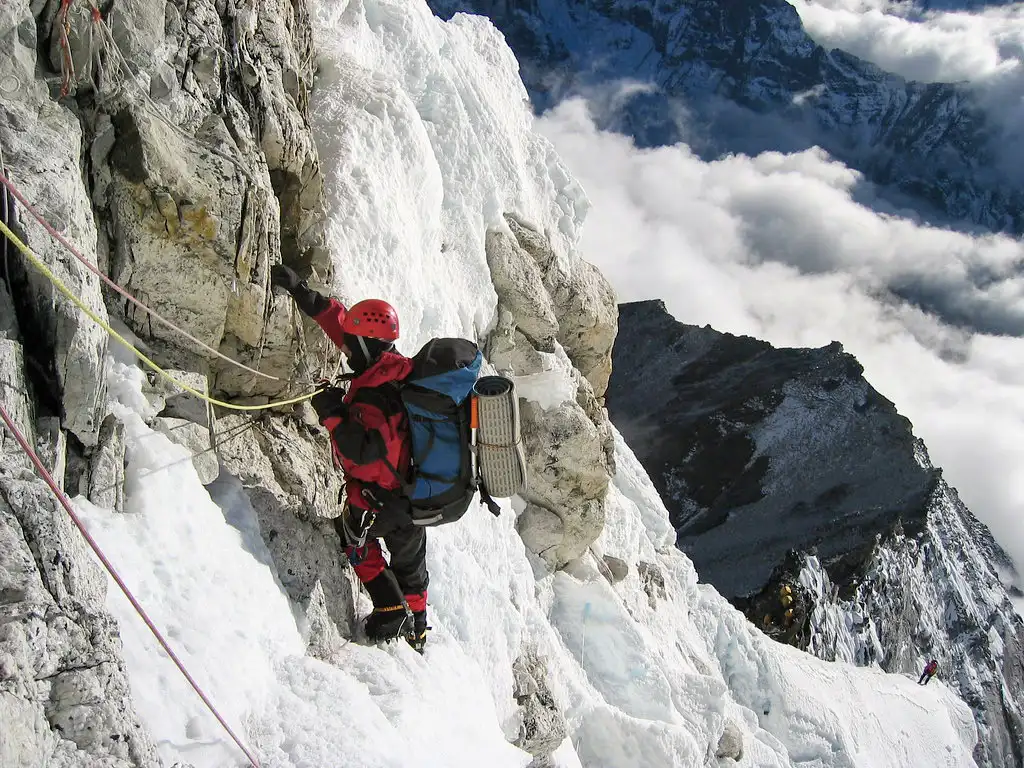
Exposed Ridge Traverse:
- Knife-edge sections with dramatic exposure
- 2,000+ meter drops on either side
- Mental challenge is as significant as physical challenge
Challenges:
- Technical rock climbing at extreme altitude
- Sustained exposure and concentration required
- Weather exposure (wind, cold)
- Thin air makes every move harder
Camp 2 Setup:
- The Sherpa team carefully prepared the ice platform
- Space for 8-10 tents maximum
- Exposed to wind
- Temperatures: -15 to -25°C at night
- Magnificent views of Everest, Lhotse, Makalu
IMPORTANT SAFETY NOTE:
We use a 2-camp system (Camps 1 and 2 only), deliberately skipping the traditional Camp 3 location. In October 2006, a massive serac collapse from the Dablam hanging glacier killed six climbers at Camp 3. Our system eliminates this objective hazard while allowing for a faster, safer summit push directly from Camp 2.
Summit Push (6,812m / 22,349ft)
Starting time: 2:00-3:00 AM from Camp 2
Duration: 6-8 hours ascent, 4-6 hours descent
Total climbing time: 10-14 hours
Route Description:
Pre-Dawn Departure:
- Leave Camp 2 by headlamp in extreme cold
- Temperatures: -20 to -30°C (wind chill can reach -50°C)
- Each climber is paired with a personal Sherpa
Steep Snow/Ice Couloir:
- Sustained 60-70° climbing
- Front-pointing on hard snow and ice
- Fixed ropes on steepest sections
- Dawn breaks during this section (spectacular)
Mushroom Ridge:
- Iconic corniced ridge section
- Knife-edge with extreme exposure
- Most photographed section of the climb
- Requires absolute focus and precision
- Some sections require straddling the ridge
Summit Ridge Traverse:
- Final push to the summit
- Moderate angle, but at maximum altitude
- Every step requires concentration
- Oxygen saturation is typically 60-70% of sea level
The Summit (6,812m):
- Prayer flags and summit register
- 360° panorama: Everest, Lhotse, Makalu, Cho Oyu, Pumori
- 15-20 minutes maximum (cold, altitude, weather)
- Photos, celebration, gratitude
Descent:
- Return same route to Camp 2 (4-6 hours)
- Most accidents happen on descent (fatigue + complacency)
- Sherpa maintains vigilance and monitors your condition
- Overnight at Camp 2
- Next day: Descend to Base Camp
Safety First: Peregrine’s Ama Dablam Safety Protocols
At Peregrine Treks & Tours, your safety is our absolute priority. We employ comprehensive safety systems that exceed industry standards.
2:1 Sherpa-to-Climber Ratio
Every client is paired with an experienced climbing Sherpa who:
✅ Fixes ropes and establishes camps ahead of your arrival
✅ Monitors your health and acclimatization daily with a pulse oximeter
✅ Makes real-time route and weather decisions based on decades of experience
✅ Provides technical assistance on crux sections (Yellow Tower, exposed ridges)
✅ Carries emergency equipment (radio, first aid, oxygen for emergencies only)
✅ Stays with you from Base Camp to the summit and back
Why 2:1 matters: Unlike group ratios (3:1 or 4:1), our system ensures personalized attention, better safety margins, and higher success rates.
Pre-Summit Safety Checks
Daily Health Monitoring:
- Mandatory oxygen saturation (SpO2) checks at each camp
- Heart rate and respiratory rate monitoring
- Symptoms assessment using Lake Louise AMS scoring
- Sleep quality and appetite tracking
Weather Window Verification:
- Professional forecasting via Mountain-Forecast.com
- NOAA GFS model consultation
- Local Sherpa weather intelligence from the Khumbu region
- Real-time reports from other teams on the mountain
Go/No-Go Decision Protocol:
- Made 24-48 hours before summit push
- Based on: wind speed (<30 km/h required), precipitation forecast, visibility, team acclimatization status
- Conservative approach: if in doubt, we wait
Emergency Protocols
Communication:
- Satellite phone at Base Camp (operational 24/7)
- VHF radios were carried to Camp 2
- Emergency contact with the Kathmandu office
- Direct coordination with [VERIFY: CIWEC Clinic or similar]
Medical Preparedness:
- Comprehensive medical kit with altitude medications (Diamox, Dexamethasone, Nifedipine)
- Gamow bag (portable altitude chamber) at Base Camp for severe AMS/HACE treatment
- Pulse oximeters at all camps
- All Sherpas are trained in Wilderness First Responder (WFR) protocols
Evacuation Coordination:
- Helicopter on standby in Lukla during summit window
- Pre-arranged evacuation routes and LZ (landing zone) coordinates
- Direct partnership with helicopter rescue companies
- Insurance requirement: All clients must have coverage up to 7,000m
Altitude Illness Response:
- Mild AMS: Monitor closely, adjust schedule, increase hydration
- Moderate AMS: Immediate descent to lower camp
- Severe AMS/HACE/HAPE: Emergency descent to BC + helicopter evacuation if needed
The 2-Camp System: Safer Than Traditional 3-Camp
Unlike many operators who use the traditional 3-camp system, Peregrine establishes only Camps 1 and 2.
Why we skip Camp 3:
The traditional Camp 3 location (approximately 6,300m) sits directly below the hanging Dablam glacier. On October 27, 2006, a massive serac collapse sent thousands of tons of ice crashing onto Camp 3, killing six experienced climbers, including several guides.
Our safer approach:
✅ Eliminates objective serac hazard completely
✅ Faster summit push from Camp 2 (6,000m) to the summit
✅ Fewer nights at extreme altitude (better recovery, less physiological stress)
✅ One less camp to establish and stock (more efficient logistics)
✅ Proven track record with [VERIFY: X successful summits] using this system
The trade-off:
Summit day is longer (6-8 hours vs 4-5 hours from Camp 3), but we believe the safety benefit far outweighs this. Our climbers are well-acclimatized and prepared for the longer push.
Acclimatization Strategy: Our Proven Rotation Protocol
Proper acclimatization is the single most important factor for summit success and safety. We follow a conservative, time-tested rotation schedule.
Our commitment: We never rush acclimatization. Your safety and long-term health are more important than any summit deadline.
Ama Dablam Equipment List
Technical Climbing Gear (Essential)
Protection & Safety:
- Climbing harness (lightweight alpine model)
- Helmet (UIAA/CE certified for climbing, not just trekking)
- 2x locking carabiners (HMS/pear-shaped for belay)
- 4x non-locking carabiners
- 2x 60cm sewn slings
- 1x 120cm sewn sling
- Prusik cord (6mm diameter, 1.5m length) for emergency ascent
- Figure-8 descender or ATC belay device
- Ascender/jumar (Petzl Ascension or equivalent) for fixed ropes
- Descender for rappelling (Petzl GriGri recommended for backup safety)
Ice & Snow Equipment:
- Crampons (12-point, anti-balling plates, UIAA certified)
- 1x Technical ice axe (55-65cm length, curved pick for steep ice)
- 1x General mountaineering axe (65-75cm, optional but recommended)
- Snow bar/picket (optional, for emergency anchors)
Footwear:
- Double mountaineering boots (rated -40°C minimum, examples: La Sportiva G2 SM, Scarpa Phantom 8000)
- Gaiters (must fit over double boots)
- Down booties or insulated camp shoes
Clothing Layers:
- Moisture-wicking base layers, top & bottom (2 sets — merino wool or synthetic)
- Insulating mid-layer (fleece jacket or light synthetic puffy)
- Down jacket (800-fill minimum, hooded, rated -30°C — example: Mountain Hardwear Absolute Zero)
- Hardshell jacket (Gore-Tex or equivalent, pit zips essential)
- Hardshell pants (full side-zips for putting on over boots/crampons)
- Insulated pants (Primaloft or down, for summit day and camps)
- Soft-shell pants (for climbing, breathable)
- Lightweight trekking pants (for lower altitude approach)
- Expedition gloves: liner gloves (2 pairs), soft-shell gloves (1 pair), insulated mitts (1 pair)
Head & Face Protection:
- Balaclava or buff (windproof fabric)
- Warm beanie
- Sun hat with brim (for lower elevations)
- Glacier glasses (Category 4, with side shields)
- Ski goggles (for summit day windstorms)
Camp & Sleep:
- Sleeping bag (-25°C comfort rating minimum; -30°C for winter expeditions)
- Sleeping pad (closed-cell foam + inflatable recommended for warmth and comfort)
- Headlamp with red light function (spare batteries in cold-safe storage)
- Pee bottle (wide-mouth 1L Nalgene, clearly labeled!)
Personal Items:
- Sunscreen SPF 50+
- Lip balm SPF 30+ (multiple — dry air at altitude destroys lips)
- Personal medications (bring 2x what you think you’ll need)
- Water bottles (1L wide-mouth Nalgene, 2x minimum)
- Water purification (tablets or SteriPEN as backup)
- Stuff sacks / dry bags (organize gear by day/purpose)
- Camera (optional, must be cold-weather tested)
- Personal first aid items
What Peregrine Provides
Group Climbing Equipment:
- Fixed ropes for all technical sections
- Ice screws, snow stakes, and pickets for anchors
- Route-fixing equipment
Camps & Kitchen:
- High-altitude tents (Camps 1 & 2)
- Base camp tents (dining, sleeping, toilet, kitchen)
- Cooking gas and stoves (all camps)
- Cooking equipment and utensils
Safety & Medical:
- Group medical kit (comprehensive altitude medications)
- Satellite phone for emergencies
- VHF radios for camp-to-camp communication
Rental Options in Kathmandu
We can arrange rental of the following items in Kathmandu:
- Down jacket: USD $3-5/day (total ~$50-100 for expedition)
- Sleeping bag: USD $3-5/day (total ~$50-100)
- Crampons: USD $2/day (total ~$35-50)
- Ice axes: USD $2/day (total ~$35-50)
- Double boots: USD $5/day, limited availability (rental boots often a poor fit)
Deposit typically required: USD $50-100 or passport hold (returned upon gear return)
Important Note: Rental gear quality varies significantly in Kathmandu. For critical technical items (harness, belay devices, crampons that fit your boots precisely), we strongly recommend bringing your own. Your life depends on gear that fits and functions properly.
Best Season for Ama Dablam Expedition
Autumn Season (October – November) ⭐ RECOMMENDED
Weather: Clear, stable, cold — the most reliable season
Temperature:
- Daytime at altitude: -10 to -20°C
- Nighttime at camps: -20 to -35°C
- Wind: Generally moderate (20-40 km/h at summit)
Advantages: ✅ Crystal-clear visibility (80-90% clear days)
✅ Stable weather patterns with long summit windows
✅ Dry rock conditions (better climbing on Yellow Tower)
✅ Post-monsoon air clarity (best for photography)
✅ Well-established fixed ropes (route fixing completed early October)
Disadvantages:
❌ Colder temperatures require better cold-weather gear
❌ More teams on the mountain (though still far less crowded than Everest)
❌ Higher demand = book earlier
Success Rate: Approximately 75-80% in good weather years
Best Months:
- October: Peak climbing month, most stable weather
- November: Very good conditions, fewer crowds, colder nights
Spring Season (April – May)
Weather: Warmer but more variable
Temperature:
- Daytime at altitude: -5 to -15°C
- Nighttime at camps: -15 to -25°C
Advantages:
✅ Warmer climbing conditions (more comfortable)
✅ Longer daylight hours
✅ Good rock conditions (less ice/snow on technical sections)
✅ Slightly fewer teams than autumn
Disadvantages:
❌ More afternoon clouds and weather variability
❌ Higher avalanche risk as the season progresses (May)
❌ Potential bottlenecks at Yellow Tower when multiple teams coincide
❌ Pre-monsoon haze can reduce visibility
Success Rate: Approximately 65-75% (weather is more unpredictable)
Best Months:
- Late April: Good balance of weather and warmth
- Early May: Warmer but increasing afternoon instability
Winter Season (December – February)
Weather: Very cold, mostly clear
Temperature: Extreme cold (-15 to -30°C day, -30 to -45°C night at camps)
Only for experienced winter mountaineers. Most teahouses closed, extreme cold requires specialized gear, and shorter days.
Not offered as standard expeditions — contact us for custom winter attempts.
Monsoon Season (June – September)
NOT RECOMMENDED for Ama Dablam. Heavy precipitation, poor visibility, dangerous route conditions, and high objective hazard (rockfall, icefall)—permits are available but extremely rare attempts.
Peregrine Recommendation
First-time Ama Dablam climbers: October-November (weather reliability maximizes your investment and safety)
Experienced climbers comfortable with variable conditions: April-May (warmer, less crowded, acceptable weather windows)
Weather Forecasting & Summit Window
We utilize professional weather forecasting to time your summit push:
Data Sources:
- Mountain-Forecast.com — 6-day detailed altitude-specific forecasts
- NOAA GFS models — global atmospheric modeling
- Local Sherpa intelligence — decades of pattern recognition from the Khumbu region
- Real-time reports — communication with other teams on the mountain
Summit Window Decision Made 24-48 Hours in Advance Based On:
- Wind speed <30 km/h at summit elevation
- No precipitation forecast for the 48-hour window
- Clear visibility forecast
- Team acclimatization status and health
- Jet stream position
Our conservative approach: If forecasts show marginal conditions, we wait. Your safety and the quality of your summit experience are more important than hitting an arbitrary date.
Last Updated: 01 May 2026
Next Scheduled Update: 01 May 2027
Ama Dablam Expedition | Peregrine Treks & Tours | Kathmandu, Nepal
Licensed by Nepal Mountaineering Association | Nepal Tourism Board Registered
Member: Trekking Agencies Association of Nepal (TAAN)
Frequently Asked Questions
SECTION 1: DIFFICULTY & EXPERIENCE
Ama Dablam is technically harder but physiologically easier than Everest. Ama Dablam demands advanced rock and ice climbing skills — 5.6-5.7 YDS rock, 60-70° ice, and sustained technical sections, including the infamous Yellow Tower — that Everest simply does not require.
By contrast, Everest’s extreme altitude (8,849m vs 6,812m) makes it far more physiologically demanding. A critical insight many climbers miss: experienced Everest summiters regularly fail on Ama Dablam because they underestimate the technical requirements. Conversely, strong alpine rock climbers sometimes misjudge the altitude challenge. You need both skill sets — technical climbing ability AND high-altitude experience — in equal measure to stand a realistic chance of summiting.
Yes, absolutely — this is non-negotiable. The minimum requirement is at least one successful summit above 6,000m within the past 24 months. Acceptable preparation peaks include Island Peak (6,189m), Mera Peak (6,476m), Lobuche East (6,119m), or Aconcagua (6,961m).
We strongly recommend completing two or more 6,000m+ summits before booking. If your highest summit is below 5,500m, if you have no rock or ice climbing experience, or if you have previously suffered HACE or HAPE, you are not yet ready for Ama Dablam. Contact us, and we will help you build a proper preparation pathway — typically beginning with Island Peak and then Lobuche East — before attempting Ama Dablam.
You must be comfortable seconding 5.7 YDS (UIAA Grade V) in an outdoor alpine environment while wearing mountaineering boots and carrying a 15-20kg pack. The Yellow Tower — the crux pitch of the entire route — is graded 5.6-5.7 YDS and is climbed at approximately 5,900m altitude, where thin air makes every move feel significantly harder. The critical test: if you struggle on outdoor 5.7 rock at sea level, you will almost certainly fail on the Yellow Tower at altitude. Beyond raw grade, you need fast and efficient fixed rope proficiency using a jumar/ascender. On summit day, you will ascend 400+ meters of fixed rope. Speed equals safety — slow climbers face greater exposure to weather, rockfall, and exhaustion.
The difference is enormous. Island Peak (6,189m) and Mera Peak (6,476m) are classified as “trekking peaks” — their technical sections are short and manageable for fit trekkers with basic mountaineering skills. Ama Dablam (6,812m) is a full technical mountaineering expedition where every meter above Base Camp requires competent climbing. The Yellow Tower alone is a near-vertical 40-50 meter rock pitch at almost 6,000m. Island Peak and Mera serve as excellent preparation climbs for Ama Dablam — we strongly recommend completing one of them 6-12 months before your Ama Dablam expedition.
The industry average summit success rate for Ama Dablam is approximately 60-70%, reflecting the mountain’s genuine technical difficulty and the impact of weather windows. Our success rate is 80%, which is higher than the industry average, which we attribute to our conservative multi-rotation acclimatization schedule, experienced Sherpa team with 5+ Ama Dablam summits each, 2:1 climber-to-Sherpa ratio, and careful client vetting. Weather and individual acclimatization ultimately determine outcomes, but proper preparation and patient scheduling dramatically improve your chances.
SECTION 2: THE CLIMBING ROUTE
The Yellow Tower is the most famous and technically demanding section of the entire Ama Dablam southwest ridge route. Located at approximately 5,900m between Camp 1 and Camp 2, it is a near-vertical rock pitch graded 5.6-5.7 YDS — roughly 40-50 meters of sustained climbing on yellow-colored rock that gives it its name.
Fixed ropes protect the entire pitch, but you must find independent footholds and handholds while pulling yourself up with your jumar and carrying a heavy pack at altitude. The exposure is extreme, with thousands of meters of air falling away below. Your climbing Sherpa stays close throughout, offering guidance on hand and foot placements. Most climbers report the Yellow Tower as the most mentally challenging moment of the expedition — the combination of technical difficulty, altitude, and pure exposure tests everything you have practiced.
The Mushroom Ridge is the iconic corniced knife-edge ridge section climbed during the final summit push between Camp 2 and the summit. Situated above 6,500m, the ridge earns its name from the mushroom-shaped cornices that hang over the edge. Some sections require climbers to straddle the ridge itself, with vertical drops of 2,000+ meters on either side.
Fixed ropes run along the entire crest for protection, but the psychological challenge is intense. The Mushroom Ridge is the most photographed section of the climb and produces the defining images of an Ama Dablam expedition. Dawn typically breaks over the Himalayas as climbers traverse this section — the sunrise illuminating Everest, Lhotse, and Makalu has reduced more than one experienced mountaineer to tears.
Safety. The traditional Camp 3 position sits directly below the hanging Dablam glacier at approximately 6,300m. On October 27, 2006, a massive serac collapse from that glacier sent thousands of tons of ice crashing onto Camp 3, killing six experienced climbers, including several professional guides. We permanently eliminated Camp 3 from our route in response to this tragedy.
Our 2-camp system pushes from Camp 2 (5,944m) directly to the summit (6,812m), which requires a longer summit day of 6-8 hours — compared to 4-5 hours from the traditional Camp 3 — but completely removes the objective hazard of serac fall from our route. Our acclimatization schedule is specifically designed to prepare climbers for this longer summit push, and our data shows no reduction in summit success rates from the change. Safety is never compromised for convenience.
Our 26-day itinerary includes three dedicated rotation climbs before the summit push — a significantly more conservative schedule than many operators use. Rotation 1 (Day 11) touches Camp 1 at 5,639m and returns to Base Camp the same day. Rotation 2 (Day 13) involves sleeping overnight at Camp 1 — the single most important acclimatization step, as sleeping at altitude drives stronger physiological adaptation than climbing higher during the day. Rotation 3 (Days 16-17) involves sleeping at Camp 1 again, then touching Camp 2 at 5,944m before returning to sleep at Camp 1. This means you have touched Camp 2 three days before you attempt the summit — and know every meter of the Yellow Tower before summit day. The extended rest periods between rotations allow your body to super-compensate. This schedule meaningfully improves your summit success rate compared to rushed single-rotation itineraries.
Your Sherpa wakes you between 1:00 and 2:00 AM at Camp 2. After a light breakfast of hot tea and oatmeal, you depart in darkness between 2:00 and 3:00 AM. The first section climbs a steep 60-70° snow and ice couloir by headlamp, in temperatures ranging from -25 to 35°C. Dawn breaks around 5:30-6:00 AM as you approach the Mushroom Ridge, and the sunrise views of Everest, Lhotse, Makalu, and Cho Oyu provide a powerful boost of motivation. Expect to reach the summit between 9:00 and 11:00 AM.
You spend 15-20 minutes at the top — no more, as cold and altitude demand a swift departure — then descend back to Camp 2 or Camp 1. The round-trip from Camp 2 takes 10-14 hours. Summit day is the longest and most demanding effort of the entire expedition, which is why our 26-day schedule ensures you arrive fully acclimatized and rested.
SECTION 3: ALTITUDE & SAFETY
Dangers on Ama Dablam fall into two categories. Objective hazards — those posed by the mountain environment — include rockfall (particularly dangerous on warm afternoons when ice holding stones together melts), icefall from the hanging Dablam glacier, sudden weather deterioration, and avalanche risk in certain conditions.
Subjective hazards — those posed by human decisions — include insufficient technical climbing skills, rushing the acclimatization schedule, fatigue-induced errors on descent, and poor decision-making at altitude. Our safety systems are designed to minimize both. Route timing avoids afternoon rockfall risk, our 2-camp system eliminates the serac hazard, our conservative acclimatization schedule reduces AMS risk, and our strict turnaround times prevent summit fever from leading to poor decisions.
We follow a tiered response protocol based on symptom severity. For mild AMS — headache, slight nausea, fatigue — we monitor closely, adjust the schedule, increase hydration, and may administer Diamox. We delay any upward movement until symptoms resolve.
For moderate AMS — worsening symptoms, vomiting, difficulty sleeping — we require immediate descent to a lower camp, administer medication, and maintain continuous monitoring. For severe AMS, HACE (High Altitude Cerebral Edema), or HAPE (High Altitude Pulmonary Edema) — confusion, loss of coordination, severe difficulty breathing — we initiate emergency descent to Base Camp, deploy our Gamow bag (portable altitude chamber) if needed, and coordinate helicopter evacuation.
We carry a comprehensive medical kit, including Diamox, Dexamethasone, and Nifedipine, at Base Camp at all times. Every client must hold travel insurance covering helicopter rescue up to 7,000m — evacuation costs can exceed USD 10,000, and you are financially responsible for this.
No. Ama Dablam at 6,812m is climbed without supplemental oxygen, as is standard practice among all legitimate expedition operators. The altitude, while genuinely challenging, is manageable for properly acclimatized climbers who follow a conservative rotation schedule. We do carry emergency oxygen at Base Camp for medical emergencies such as severe HAPE — but this is for emergency descent and evacuation protocol, not for climbing use. If you believe you need oxygen at 6,800m, it is a clear signal that you are not sufficiently acclimatized and should not be attempting the summit. Our acclimatization schedule is specifically designed to ensure your body has adapted adequately before the summit push.
We operate a 2:1 climber-to-Sherpa ratio — meaning one dedicated climbing Sherpa for every two climbers — for the summit push from Base Camp to the top. This is stronger than the 3:1 or 4:1 ratios commonly used by lower-cost operators. Additionally, we employ a Sirdar (expedition climbing leader) and multiple support Sherpas who handle route fixing, camp establishment, load carrying, and Base Camp management. The 2:1 ratio during technical sections ensures personalized attention and monitoring, faster safety decision-making, and stronger technical assistance at the crux sections. Well-supported climbers summit more often and descend more safely.
Our Base Camp maintains a comprehensive safety and medical infrastructure. This includes: a Gamow bag (portable altitude chamber that simulates descent by increasing atmospheric pressure), a complete medical kit with altitude medications including Diamox, Dexamethasone, and Nifedipine, pulse oximeters for daily oxygen saturation monitoring at all camps, a satellite phone for 24/7 emergency communication with our Kathmandu office, VHF radios carried to Camp 2 for camp-to-camp communication, and pre-arranged helicopter evacuation coordination with Lukla on standby during summit window periods. Every climbing Sherpa completes Wilderness First Responder (WFR) medical training. All clients must carry mandatory insurance covering helicopter rescue to 7,000m before we permit them on the mountain.
SECTION 4: COST & LOGISTICS
The fee covers pre-expedition hotel in Kathmandu (3 nights, 3-star, twin-sharing, breakfast included), expedition briefing and gear check, all permits (Ama Dablam climbing permit from Nepal Mountaineering Association, Sagarmatha National Park entry, liaison officer fee, garbage deposit), round-trip Kathmandu-Lukla flights with 30kg gear allowance, yak/porter transport from Lukla to Base Camp, fully catered Base Camp (three meals daily), individual sleeping tents, dining tent with heater, toilet tent, kitchen staff, solar charging, boiled drinking water, and intermittent internet.
Climbing support includes a 2:1 Sherpa ratio, an experienced Sirdar, pre-fixed route ropes on all camps, high-altitude tents at Camps 1 and 2, group climbing equipment (ropes, ice screws, snow stakes), high-altitude food, Sherpa insurance, wages, and equipment. Safety equipment includes a Gamow bag, a group medical kit, a pulse oximeter, and a satellite phone for emergency use. Full itemized breakdown is available in the Includes & Excludes section above.
Budget an additional USD 1,500-2,500 beyond the expedition fee. Major expenses not included are: Nepal visa ($30-50 on arrival), international flights, meals in Kathmandu ($25-40/day), personal trekking and climbing gear, and mandatory travel insurance covering helicopter rescue up to 7,000m ($200-400).
A summit bonus for your climbing Sherpa is customary and expected ($500-800 if you summit — this is not optional; it honors extraordinary effort and risk), plus tips for Base Camp staff ($200-400 total) and trek porters ($50-100). In-country extras include hot showers at teahouses ($3-5 each), WiFi ($5-10/day), battery charging ($3-5), and personal snacks. Optional extras include a single room supplement ($500), a helicopter return from Base Camp to Kathmandu ($4,500, shared among the group), and pre-expedition preparation climbs starting at $1,200.
Yes, Kathmandu has a well-established rental market in Thamel. You can rent down jackets ($3-5/day), sleeping bags ($3-5/day), crampons ($2/day), ice axes ($2/day), and double mountaineering boots ($5/day, though availability is limited). We can arrange these rentals through trusted shops and recommend Manakamana Trekking Store.
However, we strongly advise bringing your own harness, belay device, ascender, descender, carabiners, and crampons. For critical technical items where exact fit and reliable function are life-safety concerns, rental gear of unknown service history is a risk not worth taking. Your harness, crampons, and ascender should be equipment you know and trust. We recommend renting only larger soft goods, such as the down jacket or sleeping bag.
There are no refunds for summit failures caused by weather, personal health issues, insufficient acclimatization, or any voluntary decision to turn around. All expedition costs — permits, Sherpa wages, logistics, flights, food, equipment — are incurred from the moment the expedition launches and cannot be recovered regardless of summit outcome. The expedition fee covers the attempt and professional support, not a guaranteed summit. We strongly recommend comprehensive travel insurance that covers both trip cancellation before departure (for illness or injury) and trip interruption during the expedition. This insurance can reimburse you for costs if you must abandon the expedition for medical reasons. No Himalayan operator can guarantee a summit — the mountain, the weather, and your body make that decision together.
SECTION 5: PERMITS & REGULATIONS
No. The Nepal Mountaineering Association (NMA) requires all Ama Dablam expeditions to be organized through a licensed expedition company and to include a government-appointed liaison officer. Unguided and solo permits are not issued for Ama Dablam.
Beyond the legal requirement, the technical nature of the southwest ridge route — with sustained fixed-rope climbing, technical crux sections, and serious objective hazards — makes unguided attempts on this mountain genuinely dangerous. All fixed ropes on the mountain are installed and maintained by expedition Sherpa teams. Without guide support, you cannot access the fixed ropes that make the route navigable.
Several permits are required and are all included in your expedition fee. The Ama Dablam Climbing Permit is issued by the Nepal Mountaineering Association (NMA) at a cost of $400 USD per person for the autumn and spring seasons. The Sagarmatha National Park Entry Permit grants access to the Khumbu region and Ama Dablam.
A government liaison officer is mandatory for all NMA-permitted expeditions. A refundable garbage deposit is required to ensure compliance with waste management requirements. All permit processing and liaison officer coordination are handled by our Kathmandu office — you do not need to arrange either independently.
SECTION 6: PRACTICAL PREPARATION
Training must cover four areas simultaneously. For cardiovascular fitness, build to 90-120 minutes of sustained zone 2 training (hiking, cycling, swimming) five days per week, with weekly sessions wearing a weighted pack (15-20kg). For strength, prioritize leg endurance (weighted step-ups, lunges, squats) and grip strength for fixed rope work.
For technical skills, climb outdoors regularly on rock and ice — aim to climb 5.7+ outdoor rock at least monthly and complete at least one ice climbing course if you have limited ice experience. For altitude preparation, consider a pre-expedition trip to a 5,000m+ altitude environment 4-6 months before departure. Four weeks before departure, run three specific self-assessment tests: carry 15kg upstairs for 60 consecutive minutes, hike 8+ hours with 1,200m elevation gain on consecutive days, and climb 10 pitches in a rock gym within 3 hours.
Yes, and we actively encourage this as a preparation or reward strategy. Popular combinations include Island Peak (6,189m) before Ama Dablam — adding approximately 10 days — which serves as both acclimatization and technical skills preparation, and meaningfully increases your Ama Dablam success rate. Lobuche East (6,119m), after Ama Dablam, adds 7 days and allows a second 6,000m+ summit while already acclimatized. Adding the Everest Base Camp Trek as a pre-expedition acclimatization option adds 5 days and helps you arrive at Ama Dablam Base Camp better adapted to the Khumbu altitude. We can design any combination itinerary with custom pricing — contact us directly to discuss your specific goals and timeline.
Autumn (October-November) is our primary recommended season. Clear skies, stable high-pressure systems, and dry rock conditions combine to produce the highest summit success rates — approximately 75-80% in a good weather year. Temperatures are colder (-10 to -20°C at altitude during the day, -20 to -35°C at night), which requires better cold-weather gear but produces superior visibility and photography.
Spring (April-May) is warmer (-5 to -15°C during the day), which makes climbing more comfortable, but brings greater weather variability, more afternoon cloud build-up, and slightly higher avalanche risk as the season progresses into May. Spring success rates average 65-75%. First-time Ama Dablam climbers should strongly prefer October-November for weather reliability. Experienced climbers comfortable with variable conditions may prefer spring’s warmer temperatures.
We are a Kathmandu-based company with direct ownership of all expedition logistics — no Western middlemen, no added markup, and no third-party operators between you and your mountain. Our office is in Thamel, Kathmandu. You meet your climbing Sherpa in person before departing for the mountain.
Every climbing Sherpa on our team has a minimum of five Ama Dablam summits and multiple Everest summits (8,849m) — they know every meter of this route through direct, repeated experience, not theory. Our 26-day itinerary is designed conservatively with three full rotation cycles rather than the rushed one or two rotations some operators use, which directly improves your summit success rate.
We operate a 2:1 climber-to-Sherpa ratio for technical sections, above the industry standard. Our 2-camp system — eliminating the dangerous Camp 3 below the hanging glacier — reflects a safety philosophy, not a cost-cutting decision. We pay our Sherpa team above NMA-standard wages and provide comprehensive insurance because motivated and well-supported Sherpas make better decisions for your safety.
Reviews on Ama Dablam Expedition
5.0
Related Packages
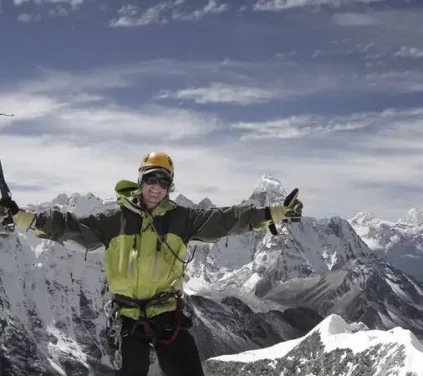
Destination
NepalDifficulty
DifficultIsland Peak Climbing with Everest Base Camp Trek
 19 Days
US$ 2790
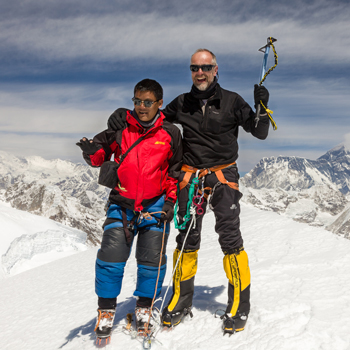
Destination
NepalDifficulty
DifficultMera Peak Climbing
18 Days
US$ 2590
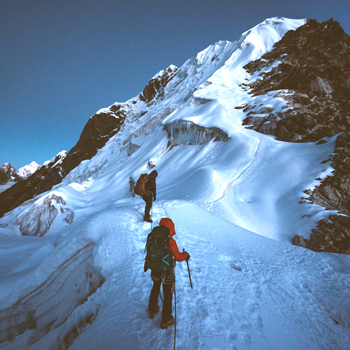
Destination
NepalDifficulty
DifficultLobuche Peak Climbing
19 Days
US$ 3650