



Based on 5 reviews
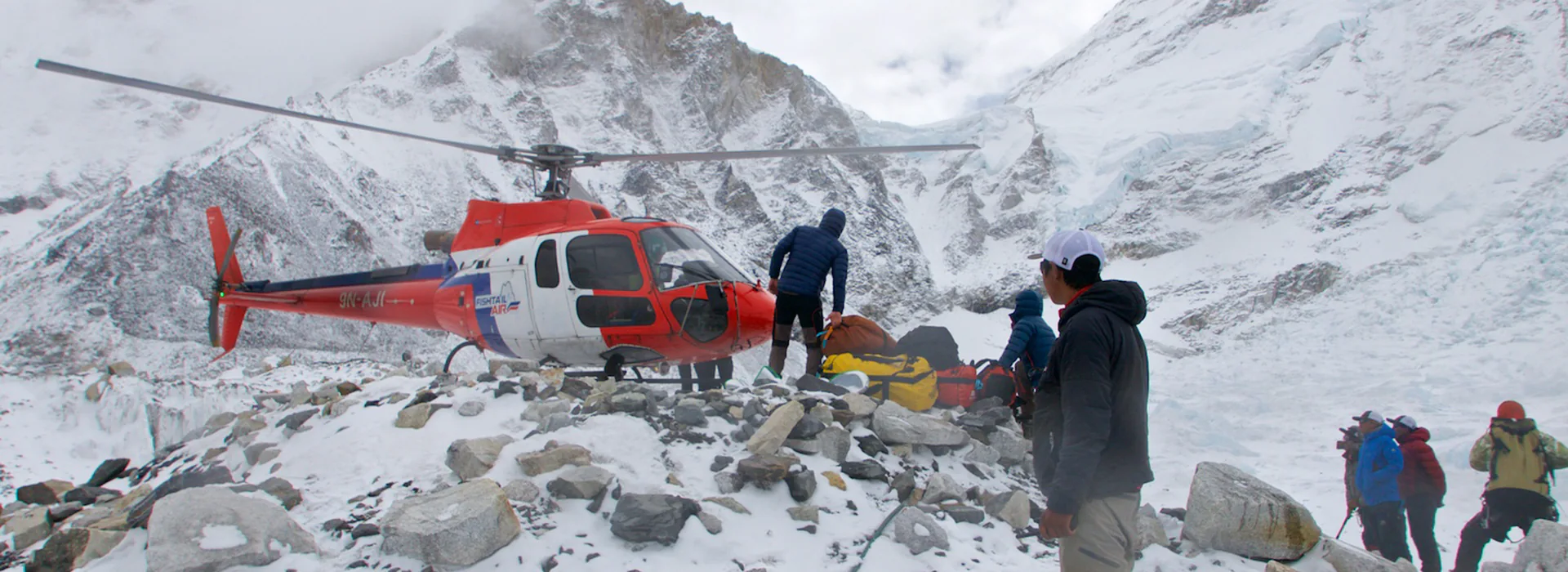
Everest Base Camp Trek with Helicopter Return
Feel the Luxury and Shorten your Everest Base Camp Trek with Helicopter Return

Duration
11 Days

Meals
- 09 Dinners
- 08 Lunches
- 10 Breakfasts

Accommodation
- 02 nights hotel
- 09 nights eco-lodge

Activities
- Trek to EBC
- Flyback by Heli
- Sightseeing
SAVE
US$ 578Price Starts From
US$ 2890
Overview of Everest Base Camp Trek with Helicopter Return
The Everest Base Camp Trek with Helicopter Return covers 65 kilometers on foot and ends with a scenic helicopter flight from Gorakshep (5,170m) back to Kathmandu. You trek the full classic route through the Khumbu Valley — Lukla, Namche Bazaar, Tengboche, Dingboche, Lobuche, and Gorakshep — reaching both Everest Base Camp (5,364m) and the Kala Patthar summit viewpoint (5,545m). The helicopter replaces the 3-day return trek, cutting total trip duration from 15 days to 11 days without removing a single highlight from the ascent.
This is the same trail that Edmund Hillary and Tenzing Norgay walked in 1953. You follow the Dudh Koshi River through Sagarmatha National Park, cross steel suspension bridges draped in prayer flags, pass through rhododendron forests that bloom crimson in spring, and walk alongside the Khumbu Glacier into the shadow of the world’s highest peak. The only difference from the standard trek is how you return — and that difference saves your knees, your schedule, and your energy for the journey home.
Everest Base Camp Trek with Helicopter Return Highlights
- Delving into the rich cultural tapestry and age-old traditions of the Kathmandu Valley.
- Journeying as one family, guided by our seasoned team of experts and support crew.
- Marveling at the untouched splendor of peaks like Mt. Everest, Mt. Lhotse, and Mt. Cho Oyu.
- Immersing oneself in the tales and lore of the Himalayas, enriched by the vibrant narratives of the Sherpas.
- Engaging in commerce at Namche Bazaar, a pivotal trading hub for the Sherpa community.
- Relishing the comforts and delectable cuisine offered by top-tier hotels and lodges.
- Experiencing the exhilaration and sense of accomplishment as you climb towards the base camp.
- Enjoying unparalleled flight experiences, both to Lukla and the helicopter return from Kala Patthar.
Scaling the heights to reach the Everest Base Camp is a monumental accomplishment, given that Mt. Everest stands as the tallest peak in the world. The exhilarating expedition commences in Lukla, leading adventurers through dense forests, past traditional Sherpa settlements, and amidst serene green woodlands. As you trek, you’re flanked by deep gorges and swift rivers, starkly contrasting the stark, frigid terrain shadowed by the colossal mountain ranges. This journey not only challenges one’s physical limits but also offers a unique insight into the rustic, mountainous lifestyle of the Nepalese.
Quick Facts
- Duration: 11 days (Kathmandu to Kathmandu), 8 trekking days + 1 helicopter return day
- Trip style: Private departure — you choose your start date
- Total trekking distance: 65 km one way (vs. 130 km round trip on the standard trek)
- Highest point: Kala Patthar at 5,545m (18,192 ft)
- Difficulty: Moderate to challenging — suitable for fit beginners with preparation
- Acclimatization days: 2 (Namche Bazaar and Dingboche)
- Best seasons: Spring (March–May) and Autumn (September–November)
- Price: US$ 2,890 per person (includes all permits, meals, accommodation, flights, and chartered helicopter)
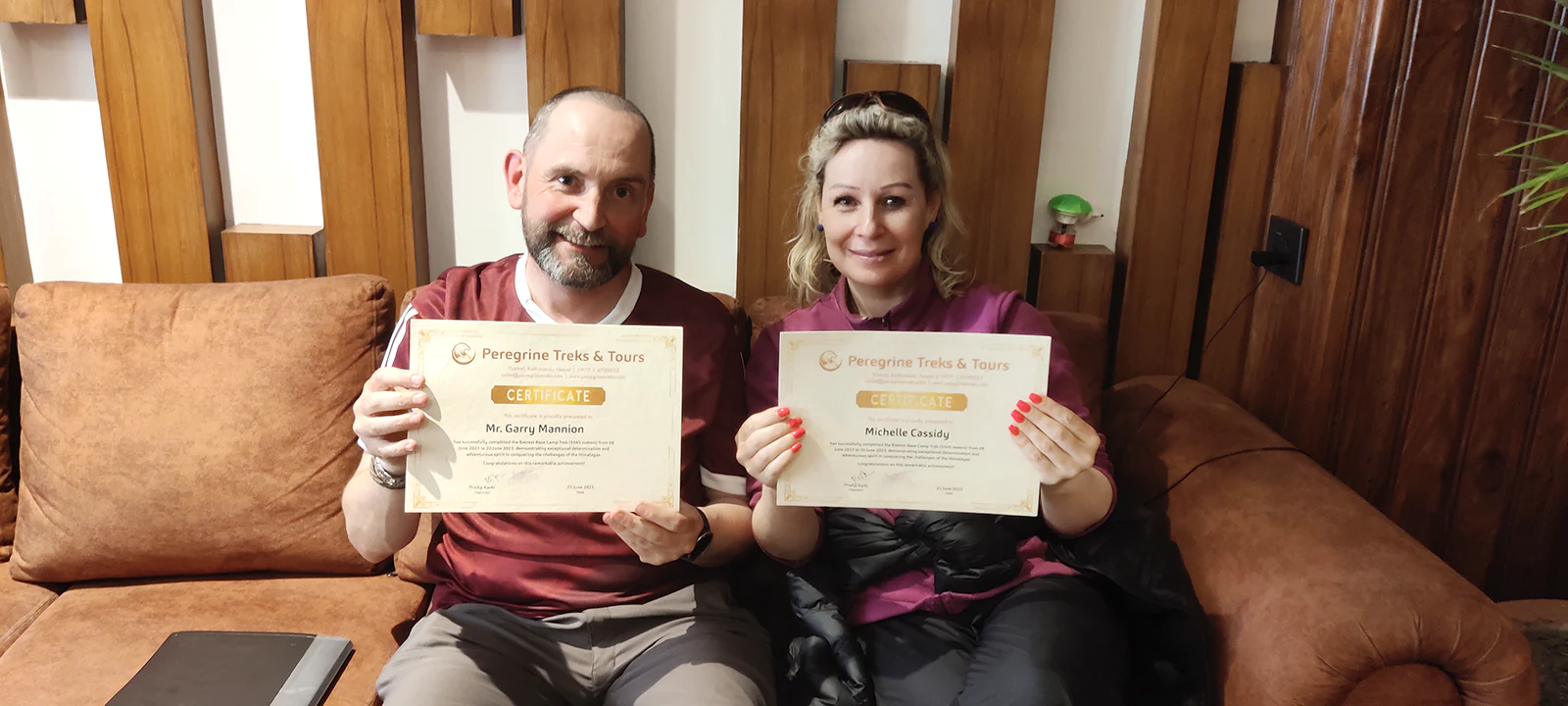
Every booking includes airport transfers, a two-night stay at The Everest Hotel in Kathmandu with breakfast, the Kathmandu–Lukla flight, all Sagarmatha National Park permits and TIMS documentation, three meals daily on the trek, an experienced guide, porters at a 2:1 ratio, a comprehensive first-aid kit, and the chartered helicopter from Gorakshep to Kathmandu. An official Peregrine EBC completion certificate is presented on your final evening in Kathmandu.
Who This Trek Is Designed For?
The helicopter return makes the full EBC experience accessible to trekkers who cannot commit to a 15-day itinerary. Working professionals with tight vacation windows choose this package because 11 days, including arrival and departure, fit within a standard two-week leave. Trekkers over 50 and those with previous knee or joint concerns prefer this itinerary because the 4,000-meter descent — the section that causes the most physical strain on the entire route — is replaced by a comfortable flight. Families with older children (12 and above) also favor this package because it removes the monotony and fatigue of retracing the same trail downhill. This is not a shortcut. You earn every meter of altitude on foot. The helicopter simply replaces the repetitive return journey with an aerial perspective that most trekkers never experience. We operate this trek as a private departure tailored to your schedule. You choose your start date, and we build the logistics around it. There is no waiting for a group to fill.
What You Will See Along the Route?
The Khumbu Valley presents one of the most dramatic mountain panoramas anywhere on Earth. From the trail, you will see Mount Everest (8,849m), Lhotse (8,516m), Nuptse (7,855m), Ama Dablam (6,856m), Pumori (7,161m), Thamserku (6,723m), Lingtren (6,749m), Cholatse (6,335m), and Kongde Ri (6,011m) — all without technical climbing equipment. On a clear morning at Kala Patthar, the sunrise lights up the Everest summit pyramid in gold while the Khumbu Icefall glistens below.
From the helicopter, the perspective shifts entirely. The Khumbu Glacier stretches out beneath you like a frozen river of white and gray. The trail you spent eight days walking appears as a thin thread through the valley. Terraced farmlands, Sherpa villages, and deep river gorges unfold in a continuous sweep that ground-level trekking simply cannot replicate.
Detail Itinerary of Everest Base Camp Trek with Helicopter Return
Day 01: Arrival in Kathmandu (1,400m
When you land at Tribhuvan International Airport, our representative will greet you after customs and assist you with transferring you to The Everest Hotel, a 5-star property in Kathmandu with sweeping views of the Kathmandu Valley. If you prefer a different hotel, we have alternatives ready for your request.
In the evening, we hold a briefing session at the hotel. Your lead guide, a certified Khumbu-born guide with extensive Everest region experience, introduces himself and walks you through each day of the itinerary. He checks your gear carefully to ensure you have everything for high altitude. He also gives you final packing advice and explains how to stay safe on the trail. Also, please submit your travel insurance details tonight. This is mandatory. We verify that your policy covers helicopter evacuation up to 6,000 meters.
If you arrive early, our team can arrange a half-day sightseeing tour of Kathmandu Durbar Square, Swayambhunath Stupa, or Boudhanath Stupa. Let us know your arrival time in advance. We recommend arriving a day early if you are flying from Europe or America. This gives your body time to recover before the trek starts. Tonight is your last chance to purchase or rent missing trekking gear. Thamel district, a 10-minute drive from the hotel, has dozens of gear shops open until 9 PM.
Elevation: 1400m
Accommodation: The Everest Hotel, Kathmandu (5-star)
Meal: Not included (dinner available at hotel)
Day 02: Fly to Lukla, trek to Phakding (2,610m)
You will fly from Kathmandu to Lukla this morning. The scenic flight takes 35 to 45 minutes. Snowy peaks fill your window.
Important flight note: Flights to Lukla are weather-dependent. During peak season (October–November), your flight may depart from Ramechhap (Manthali) instead of Kathmandu. This requires a 4-hour drive in the early morning. We handle all logistics and confirm your departure point the evening before.
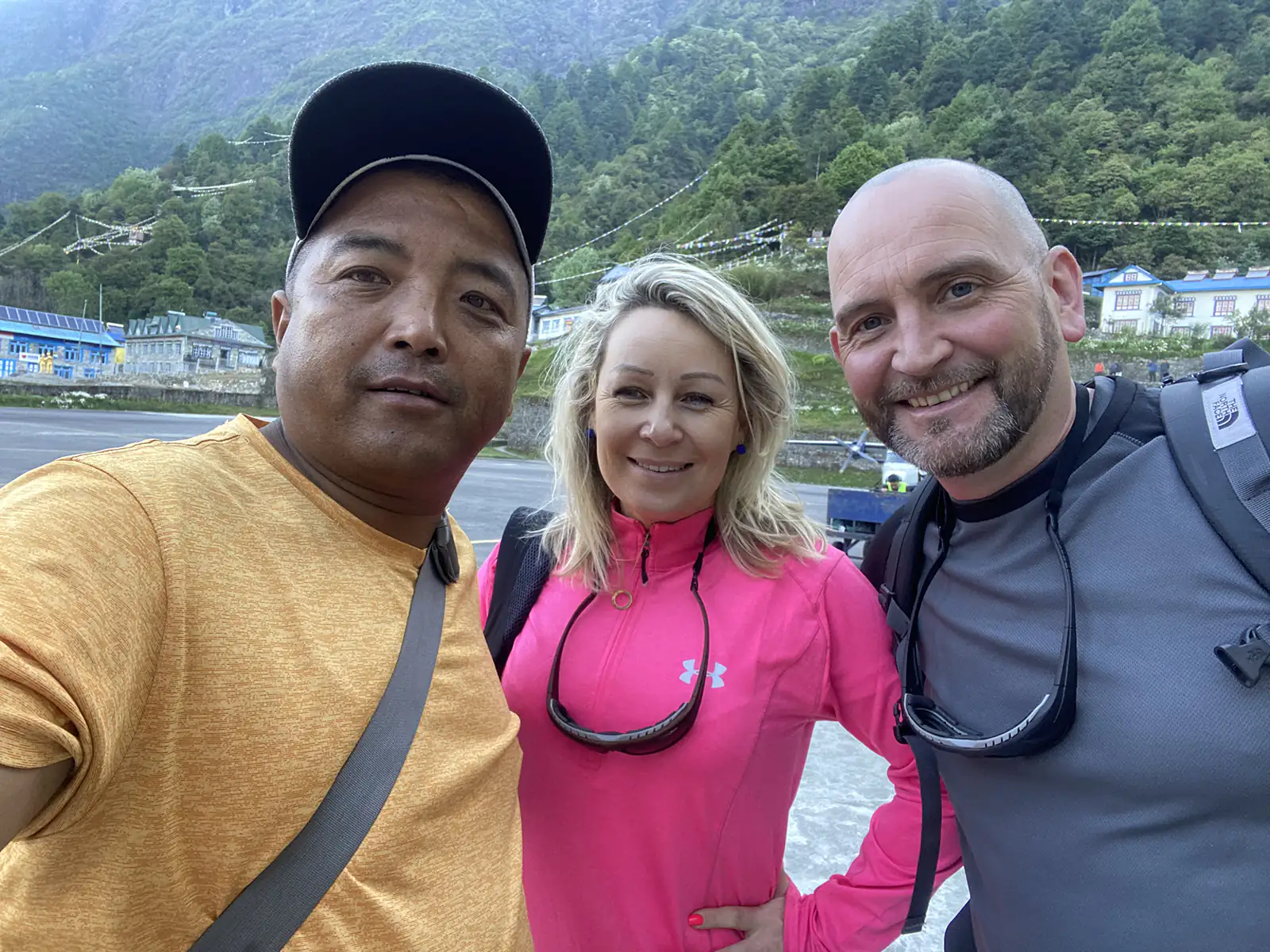
You land at Lukla (2,860m), a hillside airstrip carved into the mountains. Here, you meet your porters and assistant guide. They have already organized your duffel bags. You only carry a light daypack.
The trek starts gently. After leaving Lukla, you pass through Cheplung village. From here, you see the sacred peak of Khumbila (5,761m). This mountain is never climbed out of respect for local beliefs. The trail follows the Dudh Koshi River. You cross small suspension bridges and walk through quiet pine forests. The sound of the river keeps you company.
When you reach Phakding (2,610m), a clear view of Kusum Kanguru peak greets you. The village has many comfortable teahouse lodges. This first day is short and easy. The trail is mostly downhill with a few short ascents. Use this time to find your trekking rhythm and test your gear. At this altitude, the oxygen level drops to about 74% of what you breathe at sea level. You will notice slightly deeper breathing during short climbs. This is normal — your body is adjusting. Free WiFi and free device charging are available in Phakding lodges. It is a good moment to send some messages home before connectivity becomes limited.
Luxury upgrade note: You can stay at Yeti Mountain Home, Phakding — heated room, attached bathroom, hot shower, free WiFi.
Quick Facts:
- Oxygen level: ~74% of sea level
- Distance:5 km / 4.7 miles
- Walking time: 3–4 hours
- Terrain: Mostly downhill, river valley trail
Elevation: 2610m
Accommodation: Teahouse lodge (Luxury: Yeti Mountain Home)
Meal: Breakfast, Lunch, Dinner
Day 03: Trek to Namche Bazaar (3,440m)
Today is the hardest day of the first half. You walk 5 to 6 hours, with a steep uphill push in the final 2 hours to Namche Bazaar. You leave Phakding and soon cross a high suspension bridge over the icy Dudh Koshi River. The trail then climbs through pine forests and open ridges. You get splendid views of Mt. Nupla (5,885m) and Kongde Ri (6,093m). Along the way, you see Mani stones carved with the sacred mantra Om Mani Padme Hum. These stones remind you that you walk through sacred Sherpa land. At a bend in the trail, the imposing Mt. Thamserku (6,623m) appears ahead. The view motivates you to keep moving.
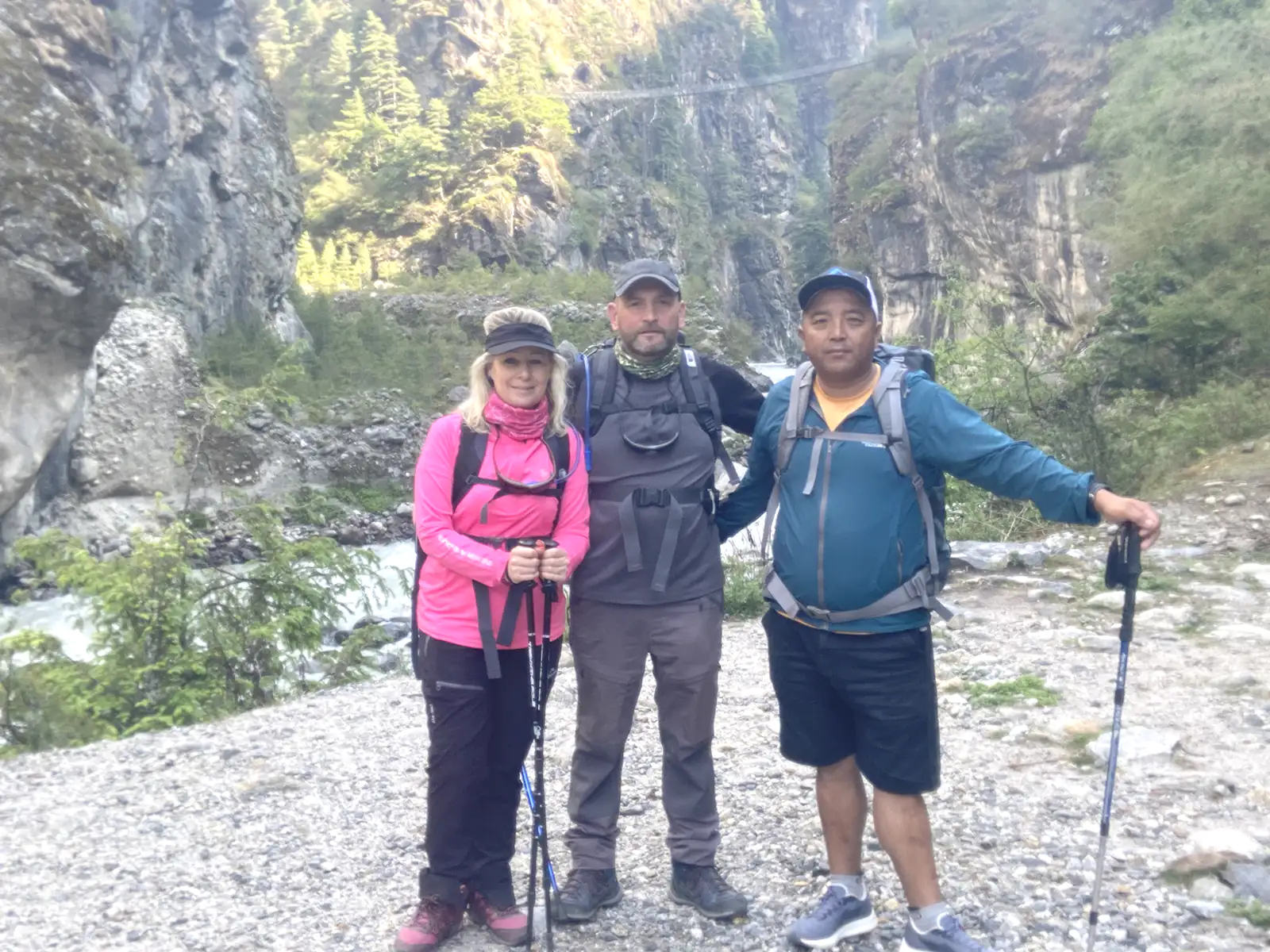
You enter Sagarmatha National Park at Monjo. Your guide handles the permit registration. Keep your passport easily accessible for the checkpoint. After Monjo, the valley narrows. You cross the Bhote Koshi River and begin the final steep switchback climb to Namche. The trail gains approximately 600 meters in 3 kilometers. This is the first real physical test of the trek. Walk slowly on this climb. Drink at least 3 liters of water today. If you feel a headache starting, tell your guide immediately. When you crest the ridge, Namche Bazaar suddenly unfolds. Colorful buildings form an amphitheater carved into the mountainside. The effort feels worth it.
If the sky is clear, you might see Mt. Everest for the first time from a viewpoint on the trail. Namche is the Sherpa capital and the region’s largest trading hub. You spend two nights here to properly acclimatize. Free WiFi and charging are available in Namche lodges. This is the last settlement with reliable internet. Beyond here, WiFi costs US$ 5–7 per day at lodges. Namche has the last ATMs on the trail. Withdraw enough cash here for extras like hot showers, charging, and drinks. Lodges higher up accept only cash.
Luxury upgrade note: You can stay at Yeti Mountain Home, Namche — a heated room, an attached bathroom, a hot shower, free WiFi, and a dining room with panoramic mountain views.
Quick Facts:
- Oxygen level: ~70% of sea level
- Elevation gain: +830m
- Distance: 11 km / 6.8 miles
- Walking time: 5–6 hours
- Terrain: Forest trail, river crossings, steep final ascent
Elevation: 3440m
Accommodation: Teahouse lodge (Luxury: Yeti Mountain Home)
Meal: Breakfast, Lunch, Dinner
Day 04: Acclimatization day in Namche Bazaar (3,440m)
This is not a rest day. Your body is adjusting to breathing at 70% of sea-level oxygen. To adapt properly, you need to climb higher during the day and return to Namche to sleep. This “climb high, sleep low” method is the most effective way to prepare for the thinner air ahead.
Your main acclimatization hike takes you to Syangboche (3,880m) and Khumjung Village. You gain 440 meters above your sleeping altitude. Spending 2–3 hours at this height trains your red blood cells to carry oxygen more efficiently. The round trip to Khumjung via Syangboche takes 3–4 hours. The trail passes the Khumjung School, founded by Edmund Hillary in 1961. From here, you get direct views of Everest, Lhotse, Ama Dablam, and Thamserku. You may also visit the Everest View Hotel, the world’s highest-altitude hotel, and enjoy tea with a mountain panorama.
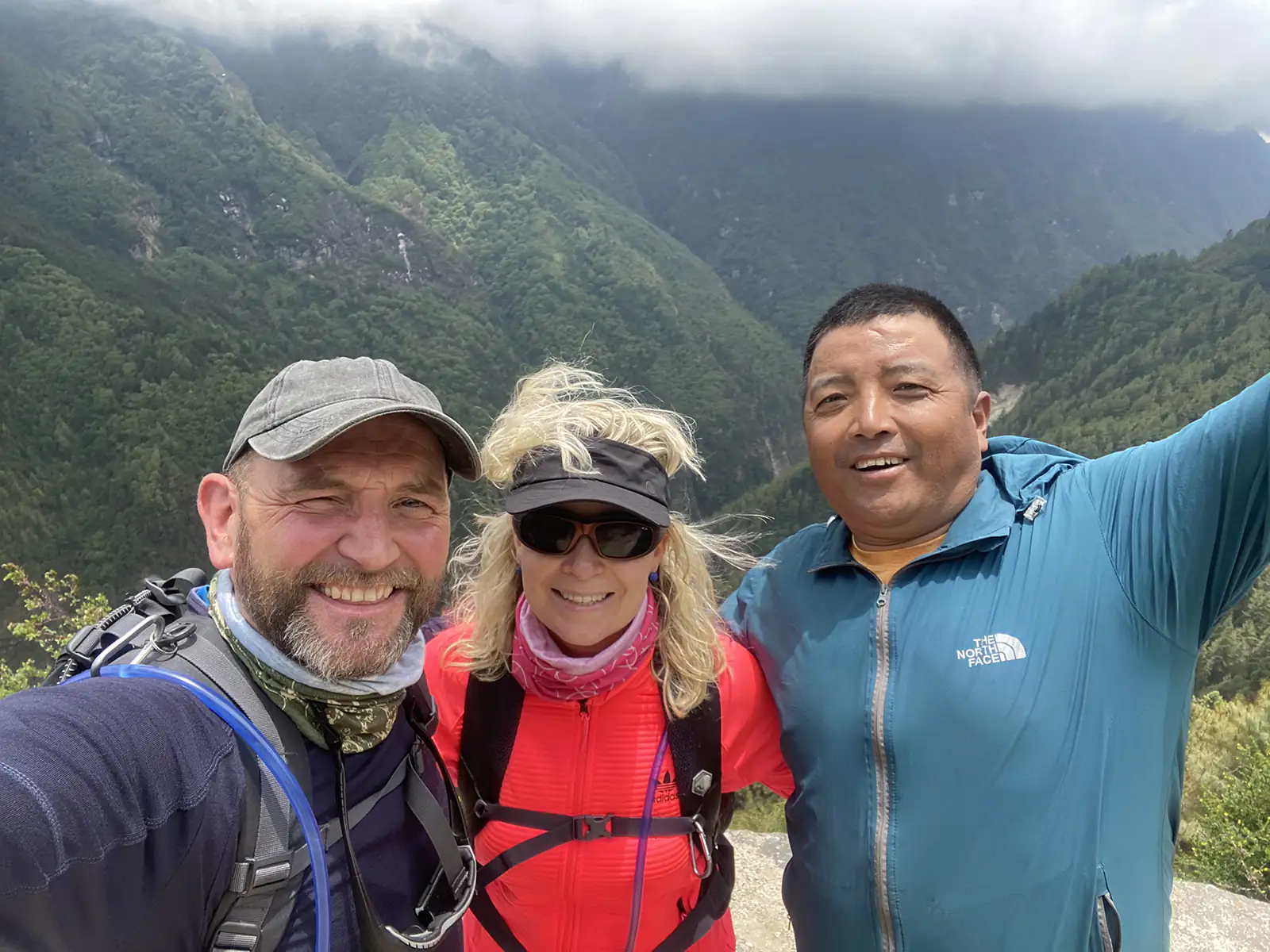
An early morning option is a sunrise hike within Sagarmatha National Park. The light hitting Everest and the surrounding peaks is worth the early start. Your guide measures your oxygen saturation (SpO2) this evening using a pulse oximeter. A normal reading at this altitude is 88–92%. Readings below 85% may require an adjusted pace for the following days.
If you prefer a shorter walk, explore Namche’s Sherpa Culture Museum. It documents the history of Everest expeditions and traditional Sherpa life. Namche also has bakeries, coffee houses, and a lively Saturday market. Use this day to shop for last-minute trekking items.
Luxury upgrade note: You can stay at Hotel Everest View in Syangboche — the world’s highest-altitude hotel. Wake up to Everest directly outside your window. Heated rooms, attached bathroom, hot shower, free WiFi.
Quick Facts:
- Sleeping altitude: 3,440m / 11,286 ft
- Acclimatization hike altitude: 3,880m / 12,730 ft (Syangboche)
- Oxygen level: ~67–70% of sea level
- Walking time: 3–4 hours (optional)
Elevation: 3880m
Accommodation: Teahouse lodge (Luxury: Hotel Everest View, Syangboche)
Meal: Breakfast, Lunch, Dinner
Day 05: Trek to Tengboche (3,870m)
Today’s trek takes you from Namche to Tengboche, offering continuous views of the mountains. Everest, Lhotse, and Ama Dablam dominate the skyline. The trail descends steeply for 600 meters to the Dudh Koshi River at Phungi Thanga. You cross a suspension bridge, then start a steady 600-meter climb through rhododendron forests. The total elevation change is deceptive — you lose and regain significant altitude. Walk at a steady pace and take breaks.
If you are trekking in April or May, the rhododendron forests between Sanasa and Tengboche are in full bloom. Red, pink, and white flowers carpet the trail. You pass through several Sherpa villages along the way. The path eventually opens onto a ridge, revealing Tengboche Monastery, the largest and most important monastery in the Khumbu region.
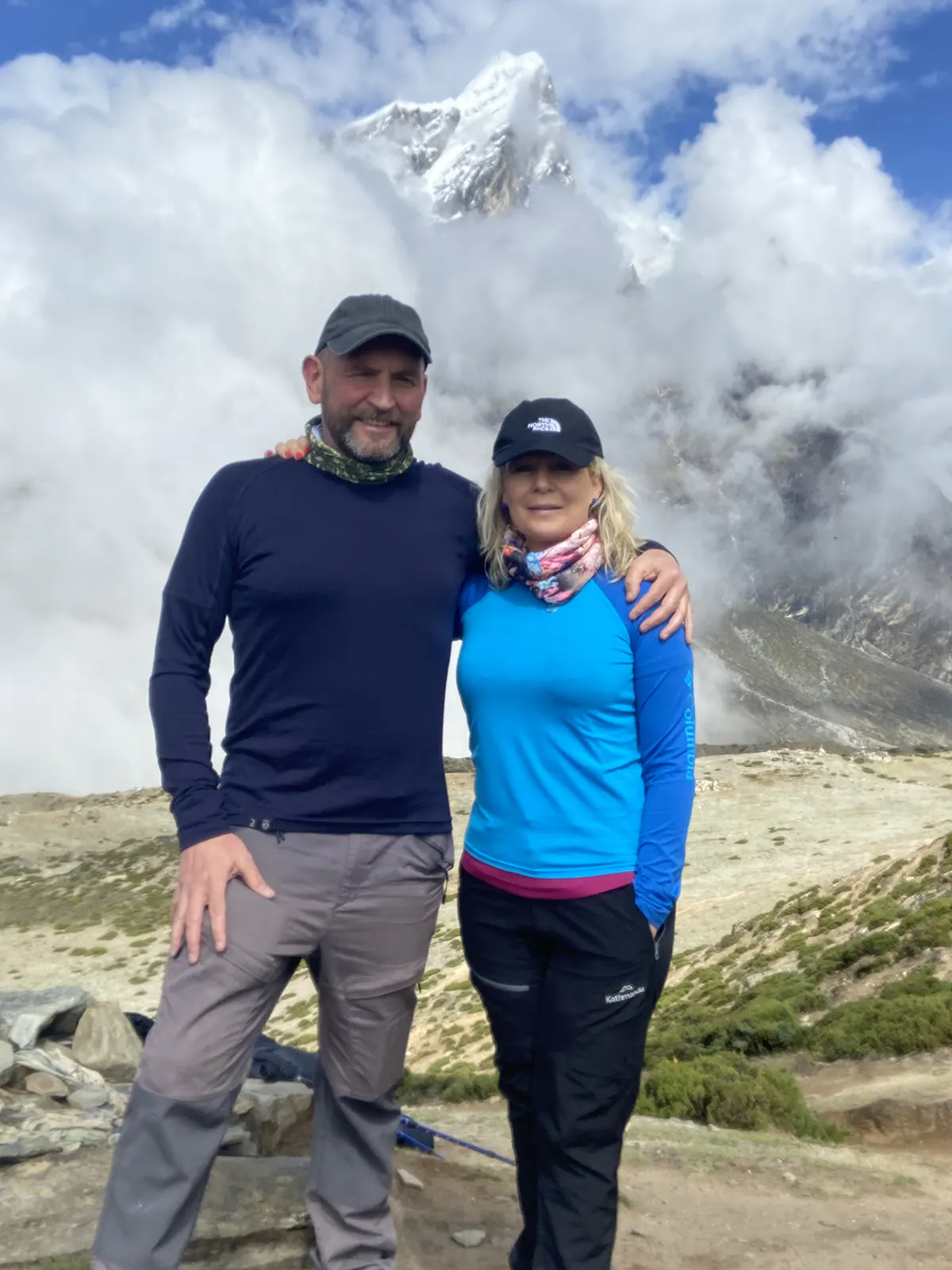
If timing aligns, attend the evening prayer ceremony (usually around 3–4 PM). The deep chanting of monks against the backdrop of Ama Dablam is one of the most memorable cultural experiences on the trek. Photography is not permitted inside the monastery. Mobile signal (NTC) is available in Tengboche. Lodges offer WiFi for US$5–7. Device charging costs US$4–5.
Luxury upgrade note: You can stay at Rivendell Lodge in Deboche, a 15-minute walk below Tengboche in a sheltered forest location. Heated rooms, attached bathroom, hot shower, free WiFi. We chose Deboche for its superior comfort and quieter setting.
Quick Facts:
- Oxygen level: ~64% of sea level
- Elevation gain: +430m net (with 600m descent and 600m ascent)
- Distance: 10 km / 6.2 miles
- Walking time: 5–6 hours
- Terrain: Descent to river, steep forest climb, monastery ridge
Elevation: 3870m
Accommodation: Teahouse lodge (Luxury: Rivendell Lodge, Deboche)
Meal: Breakfast, Lunch, Dinner
Day 06: Trek to Dingboche (4,360m)
You will cross 4,000 meters today for the first time. Above this altitude, your body absorbs oxygen less efficiently. Walk 20–30% slower than you did below Namche. Your guide sets the pace. The trail descends steeply along the Imja Khola, a tributary of the Dudh Koshi River. You then climb gradually toward Pangboche village. From here, Ama Dablam stands directly across the valley, offering one of the trek’s finest views.
In Pangboche, you can visit the Pangboche Gompa, believed to be the oldest monastery in the Khumbu, dating back to the 17th century. Buddhist pilgrims, Mani walls, and smaller shrines line the route. The landscape changes as you approach Dingboche. Stone walls crisscross the valley floor, protecting crops of buckwheat, barley, and potatoes from cold winds and wandering animals. This “Summer Valley” feels open and peaceful.
Drink at least 3–4 liters of water today. At this altitude, dehydration can accelerate and mimic the symptoms of altitude sickness. Eat even if you have little appetite. After arriving, rest for an hour, then take a short 20-minute walk around the village. Sitting still after a long trek at this altitude slows acclimatization. Keep your circulation active. Nighttime temperatures in Dingboche drop to –5°C to –10°C. Use your sleeping bag liner and wear thermal layers to bed. Sporadic mobile data (NTC) is available. Lodges charge US$ 5–7 for WiFi.
Luxury upgrade note: You can stay at Hotel Good Luck or a similar property — a private room with an attached bathroom, a hot shower, and an electric blanket for warmth.
Quick Facts:
- Oxygen level: ~59% of sea level
- Elevation gain: +490m
- Distance: 9 km / 5.6 miles
- Walking time: 5–6 hours
- Terrain: River valley descent, gradual alpine climb
Elevation: 4360m
Accommodation: Teahouse lodge (Luxury: Hotel Good Luck or similar)
Meal: Breakfast, Lunch, Dinner
Day 07: Acclimatization day in Dingboche (4,360m)
Today follows the same “climb high, sleep low” principle as your Namche acclimatization day. You hike to Nagarjun Hill, reaching an elevation of approximately 4,700 meters. That is 340 meters above your sleeping altitude. You spend 30–60 minutes at the high point, then descend to Dingboche for the night. This trains your body to function in even thinner air ahead. From Nagarjun Hill, you see peaks not visible from the main trail: Makalu (8,485m, the world’s 5th highest mountain), the full south face of Lhotse, Island Peak (Imja Tse), and the Amphu Laptsa pass. The panorama is worth every step.
Dingboche itself warrants exploration. Stone walls cross the valley floor, protecting crops of buckwheat, barley, and potatoes from cold winds. You can also visit Nangar Dzong, an ancient Buddhist heritage site, for a shorter cultural walk. Your guide conducts a second SpO2 check this evening using a pulse oximeter. This reading, compared with your Namche measurement, shows how your body is adapting. Your guide discusses the results with you and adjusts the pace for the next day if needed.
After the acclimatization hike, spend the afternoon resting. Read, write, or play cards in the lodge common room. Stay hydrated and avoid alcohol entirely. Even one drink at this altitude significantly impairs acclimatization. Tonight, your guide will brief you on the high-altitude section ahead, as from tomorrow, you will be sleeping above 4,900m. He explains what to expect physically and what symptoms to report immediately.
Quick Facts:
- Sleeping altitude: 4,360m / 14,304 ft
- Acclimatization hike altitude: ~4,700m / 15,420 ft (Nagarjun Hill)
- Oxygen level: ~59% of sea level
- Walking time: 3–4 hours (hike to Nagarjun and back)
Elevation: 1700m
Accommodation: Teahouse lodge (Luxury: Hotel Good Luck or similar)
Meal: Breakfast, Lunch, Dinner
Day 08: Trek to Lobuche (4,940m)
You leave Dingboche and begin the high-altitude (4,900 meters) phase of the trek. The air contains only 56% of sea-level oxygen. Every step requires more effort than before. Walk slowly, breathe deliberately, and do not push through headaches — report them to your guide. The trail climbs gradually above the valley floor. Cholatse and Tawache peaks stand sentinel to your left and right. Ahead, you see Khumbutse and Lingtren, peaks of the Mahalangur Himalayan range.
Between Dughla and Lobuche, the trail passes the Thukla memorial site. Stone cairns and prayer flags stand here in honor of climbers who lost their lives during Everest expeditions, including Scott Fischer (1996) and Babu Chiri Sherpa. This section feels quiet and reflective, naturally inviting a pause to pay respect.
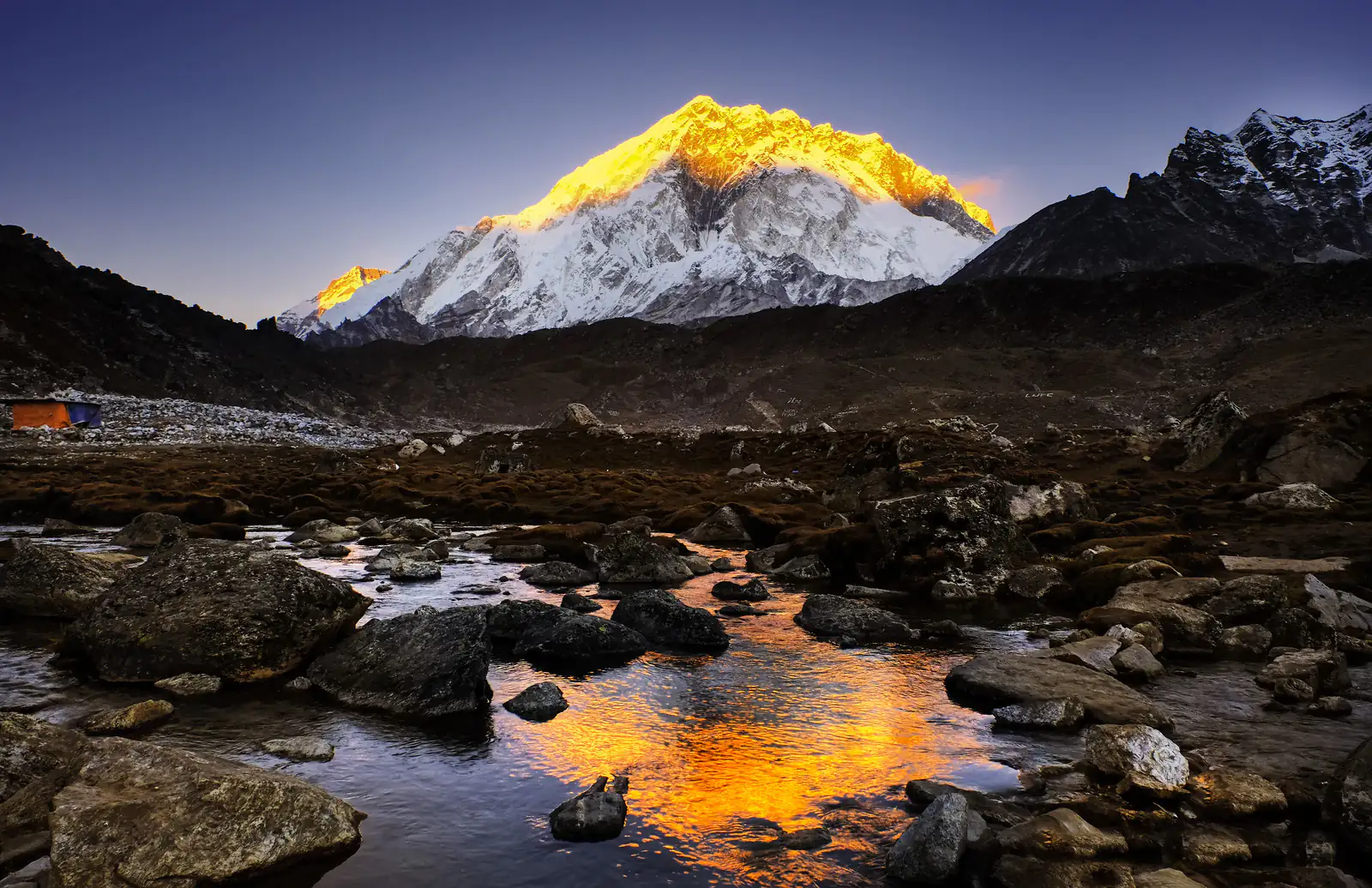
After crossing Thukla Pass, the trail gradually levels out onto a moraine ridge. The landscape opens wide, and Pumori comes into view ahead. By late afternoon, the setting sun casts a golden glow across its face, while Mt. Nuptse rises sharply to the right, guiding the path forward.
You arrive at Lobuche, a small, wind-exposed settlement with basic lodge facilities. Night temperatures often drop to –10°C to –15°C, so it helps to keep your water bottle inside your sleeping bag to prevent freezing. Mobile data is unreliable here, and even if WiFi is available at the lodge, it usually costs US$6–7, while device charging costs around US$4–5.
Luxury upgrade note: You can stay at the New EBC Hotel — a private room with an attached bathroom. Due to the extreme altitude, running hot water may not be available. Hot water is provided in a bucket for washing.
Quick Facts:
- Oxygen level: ~56% of sea level
- Elevation gain: +580m
- Distance: 7 km / 4.3 miles
- Walking time: 5–6 hours
- Terrain: Rocky moraine trail, Thukla Pass, glacier edge
Elevation: 4940m
Accommodation: Teahouse lodge (Luxury: New EBC Hotel)
Meal: Breakfast, Lunch, Dinner
Day 09: Trek to Gorakshep (5,170m) and Everest Base Camp (5,364m)
This is the longest and most demanding day of the trek. You cover around 13 kilometers at elevations between 4,940m and 5,364m, where oxygen levels drop to roughly 53–54% of sea level. An early start around 5:30–6:00 am helps make better use of daylight and keeps the pace steady.
From Lobuche, the trail gradually climbs along the edge of the Khumbu Glacier. After about three hours of walking, you reach Gorakshep at 5,170m, a small settlement with only a few basic lodges. This serves as the last overnight stop before Everest Base Camp, so you leave your main packs here and continue with only essentials for the final stretch.
From Gorakshep, the route to Everest Base Camp crosses the lateral moraine of the Khumbu Glacier. The trail winds through a stark landscape of gray rock, ice, and frozen meltwater pools. Although the path itself is not steep, the altitude makes the walk physically draining. The round trip usually takes 2 to 2.5 hours each way, depending on pace and conditions.
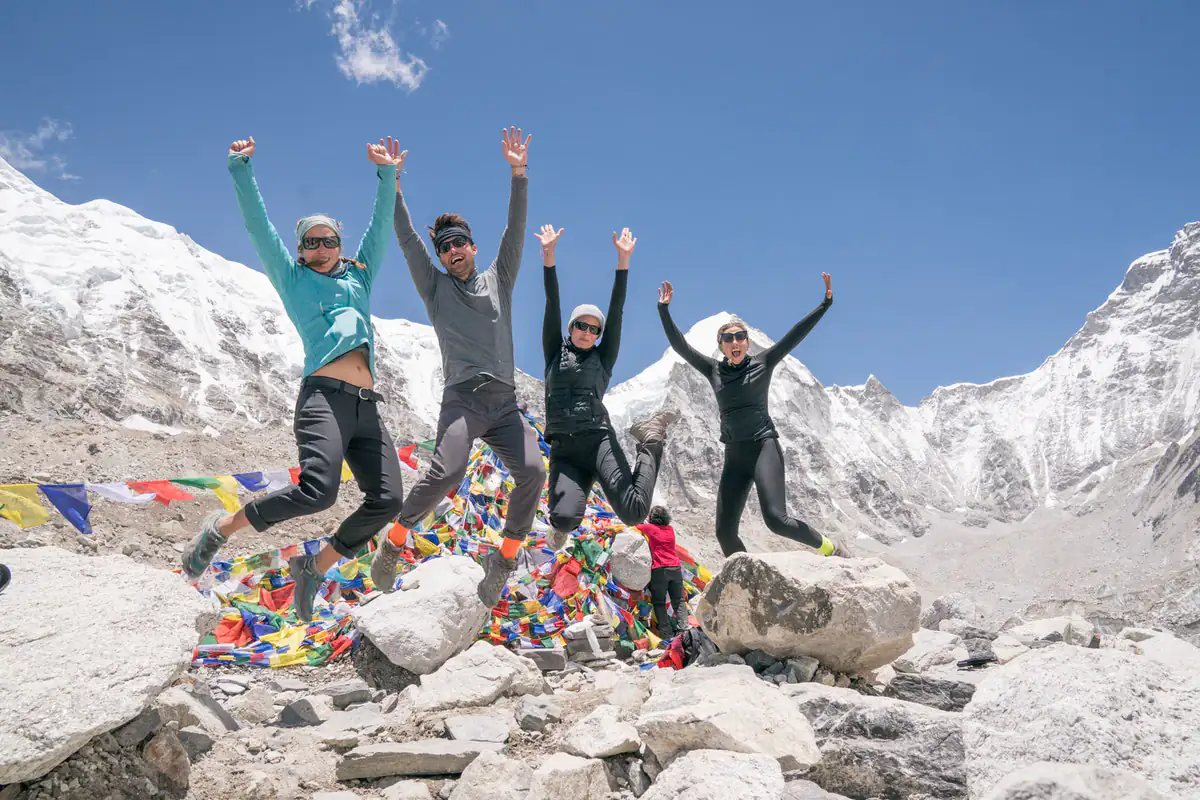
Everest Base Camp is not a single fixed location. It is a sprawling area of rocks and ice at the foot of the Khumbu Icefall. During climbing season (April–May), you see colorful expedition tents, prayer flags, and the gear of summit-bound teams. Outside climbing season, the camp is empty, but the Icefall and the south face of Everest remain. Standing at 5,364 meters with the Khumbu Icefall cracking and groaning above you — this is why you came. Take your photographs, but also stand still for a few minutes. Listen to the glacier. Feel the cold. This is the closest most people will ever stand to the summit of Everest.
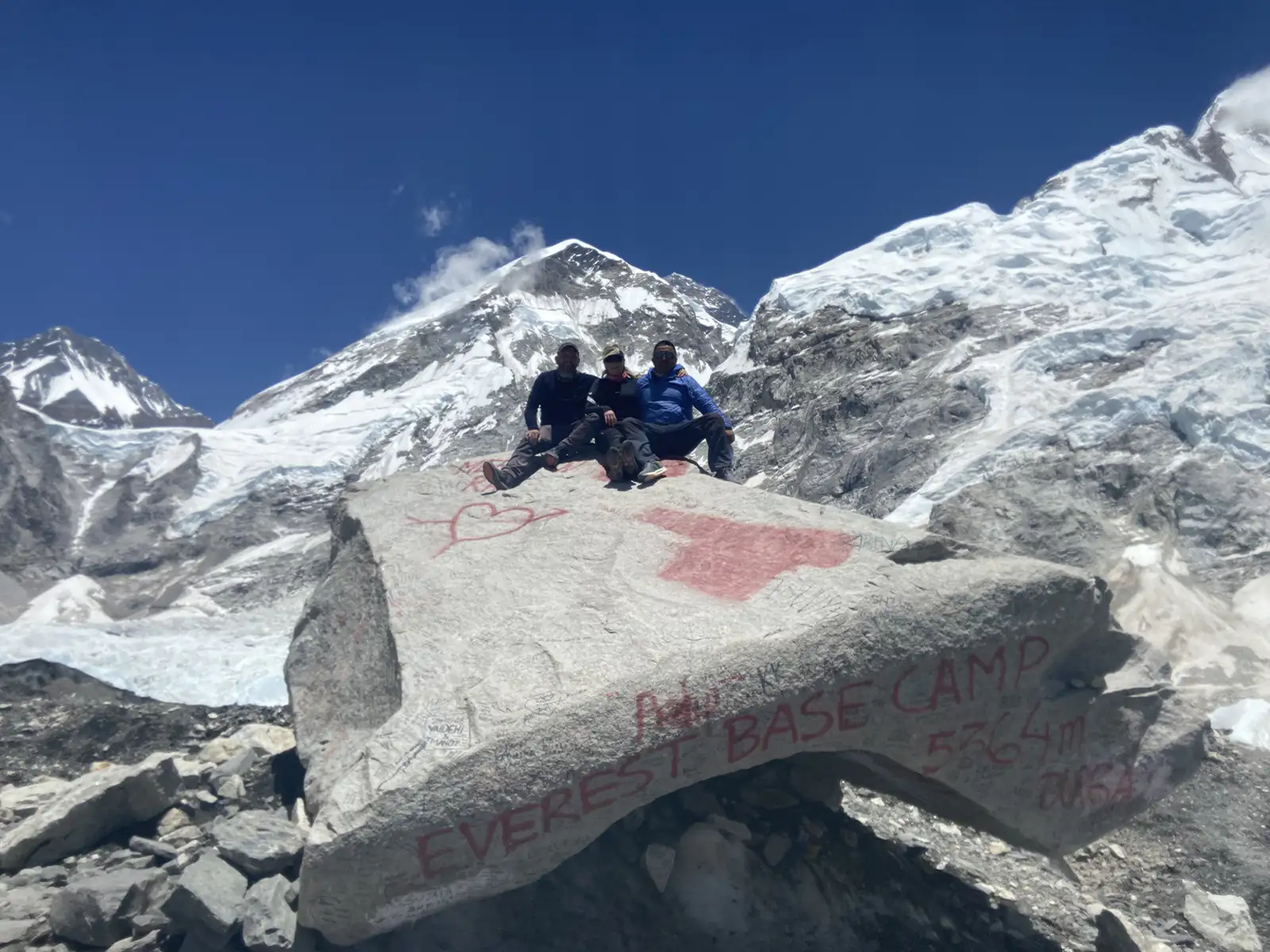
Do not linger at EBC for more than 60–90 minutes. The return to Gorakshep takes 2 hours, and you need to arrive before dark. Your guide manages the timeline. Gorakshep lodges are basic. Expect cold rooms, shared facilities, and limited menu options. This is the highest overnight point on the trek. Celebrate the day quietly, drink warm fluids, and rest.
Luxury upgrade note: You can stay at Himalaya Lodge, Gorakshep — electric blanket provided, hot water in a bucket for washing. At 5,170m, accommodation is in shared rooms due to limited infrastructure. Even the luxury option is basic by lowland standards.
Quick Facts:
- Oxygen level: 53–54% of sea level
- Elevation gain: +424m (to EBC)
- Distance: 13 km round trip (Lobuche → Gorakshep → EBC → Gorakshep)
- Walking time: 7–8 hours total
- Terrain: Glacier moraine, rocky trail, high altitude
Elevation: 5364m
Accommodation: Basic teahouse lodge (Luxury: Himalaya Lodge)
Meal: Breakfast, Lunch, Dinner
Day 10: Kala Patthar sunrise (5,545m) and helicopter return to Kathmandu
You wake at 4:00–4:30 AM. It is dark and cold. You pull on your warmest layers, switch on your headlamp, and begin the final climb of the trek. The hike to Kala Patthar takes 2–3 hours. The final 200 meters are steep and fully exposed to the wind. At 5,545 meters, the air contains only 52% of sea-level oxygen. Every few steps, you stop to catch your breath. This is physically the hardest climb of the entire journey. Then the sun rises. The first light hits the summit pyramid of Everest, painting it gold. The entire Khumbu Glacier glows beneath you.
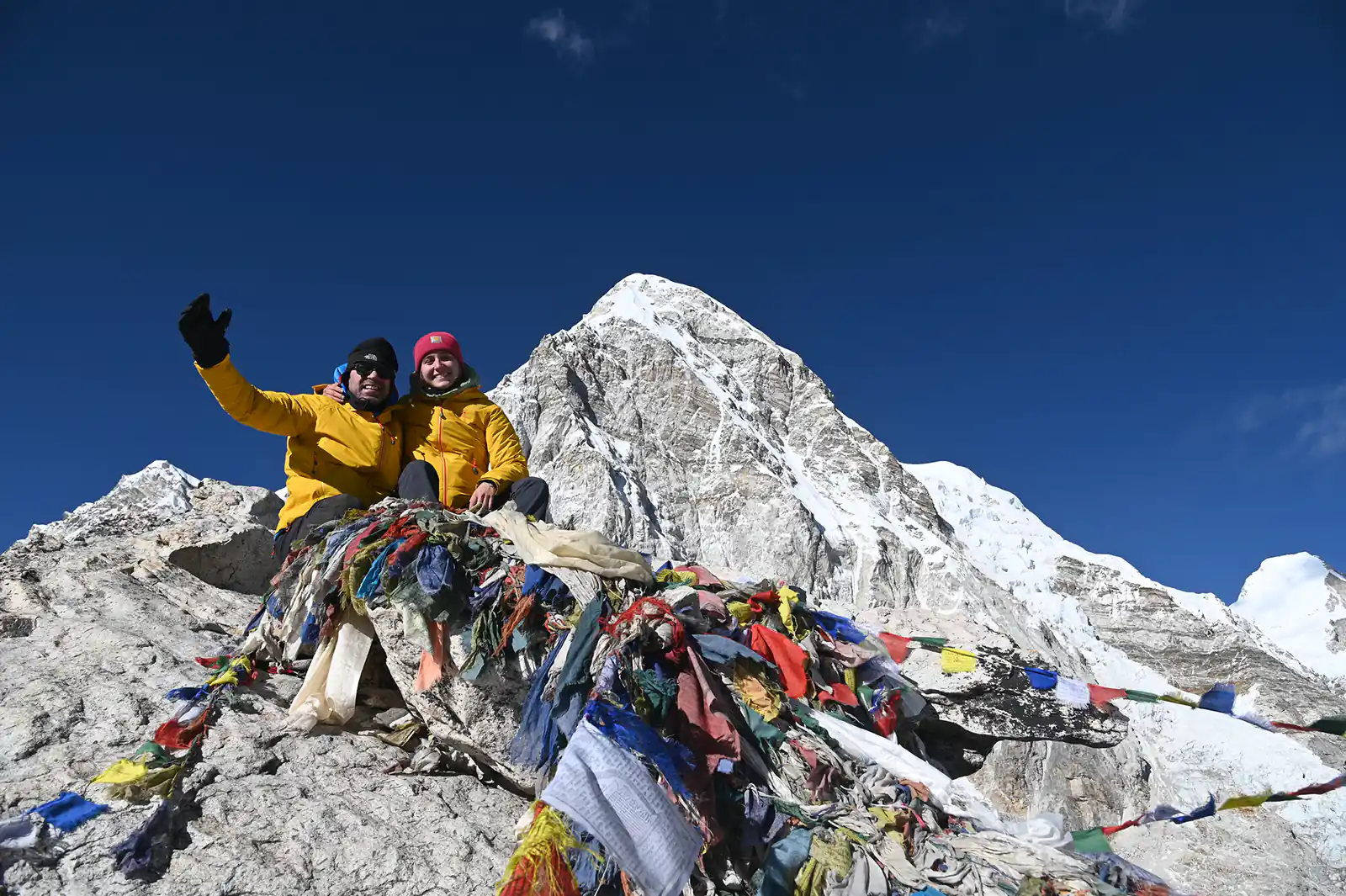
From the summit, you see a 360-degree panorama: Everest (8,849m), Nuptse (7,855m), Changtse (7,550m), Pumori (7,161m), Lingtren (6,749m), and the glacier flowing south. This is the definitive Everest viewpoint — the photograph you have seen a thousand times was taken from where you are standing. After 30–45 minutes at the top, you descend to Gorakshep. A late breakfast waits. You pack your gear one final time.
The helicopter departs from the Gorakshep helipad. As you lift off, the Khumbu Glacier spreads out below. You fly south over the moraine fields of Lobuche, the valley of Dingboche, the ridgeline of Tengboche, and the rooftops of Namche Bazaar. The entire trail you trekked over eight days passes beneath you in minutes. The flight continues over terraced farmlands, river gorges, and forested ridges before descending into the Kathmandu Valley.
Total flight time: approximately 45 minutes.
Upon landing in Kathmandu, our vehicle transfers you to The Everest Hotel. The rest of the day is free. Most trekkers spend the evening celebrating over dinner in Thamel. This evening, your guide presents your official Peregrine EBC completion certificate.
Quick Facts:
- Oxygen level: ~52% of sea level
- Walking time: 2–3 hours up, 1.5 hours down to Gorakshep
- Helicopter flight: ~45 minutes to Kathmandu
Elevation: 5545m
Accommodation: The Everest Hotel, Kathmandu
Meal: Breakfast, Dinner (lunch in Kathmandu at own expense)
Day 11: Departure from Kathmandu
Your final morning starts with breakfast at The Everest Hotel. If your flight departs later in the day, you have a free window to pick up a few souvenirs in Thamel. Our representative picks you up from the hotel and drives you to Tribhuvan International Airport. Transfer time is approximately 30 minutes, depending on traffic. We recommend arriving at the airport at least two hours before your flight. If your departure flight is in the afternoon or evening, we can arrange a half-day sightseeing tour of Pashupatinath, Boudhanath, or Patan Durbar Square at additional cost. Let us know in advance. You arrived in Kathmandu 11 days ago as a visitor. You leave as someone who stood at the foot of the highest mountain on Earth — and flew over it.
Safe travels!
Elevation: 1400m
Accommodation: N/A (departure day)
Meal: Breakfast
Customize this trip with help from our local travel specialist that matches your interests.
Includes & Excludes
What is included?
- Personalized pick-up and drop-off services at domestic and international airports via private vehicles.
- The Everest Hotel in Kathmandu, complete with a bed and breakfast plan
- A scenic flight from Kathmandu to Lukla, including all airport taxes.
- Exclusive chartered helicopter service from Gorakshep, tailored to the itinerary.
- Gourmet meals thrice daily at lodges during the trek.
- Expert guidance from our seasoned trekking guides, complemented by dedicated porters at a 2:1 guest-to-porter ratio.
- Comprehensive coverage for our guides and porters, including competitive wages, comfortable accommodation, and insurance throughout the trek.
- All-inclusive Everest Base Camp Trek with Helicopter Return, featuring a helicopter return tour, complete with Sagarmatha National Park Permit, local taxes, TIMS, and all associated documentation.
- A well-equipped first aid medical kit for the trekkers’ and our crew’s safety and well-being.
- All applicable government levies, VAT, and our signature office service charge.
What is excluded?
- Meals in Kathmandu, except breakfast.
- Additional hotel stays in Kathmandu beyond the itinerary for any unforeseen reasons.
- International flight fares, travel insurance premiums, and visa processing fees.
- Personal expenditures include phone bills, laundry services, bar tabs, beverages, and hot showers while in the trekking regions.
- Gratuities for guides, porters, and drivers.
- Any other expenses not explicitly mentioned in our package’s ‘included’ section.
Departure Dates
We also operate Private Trips.
Route Map
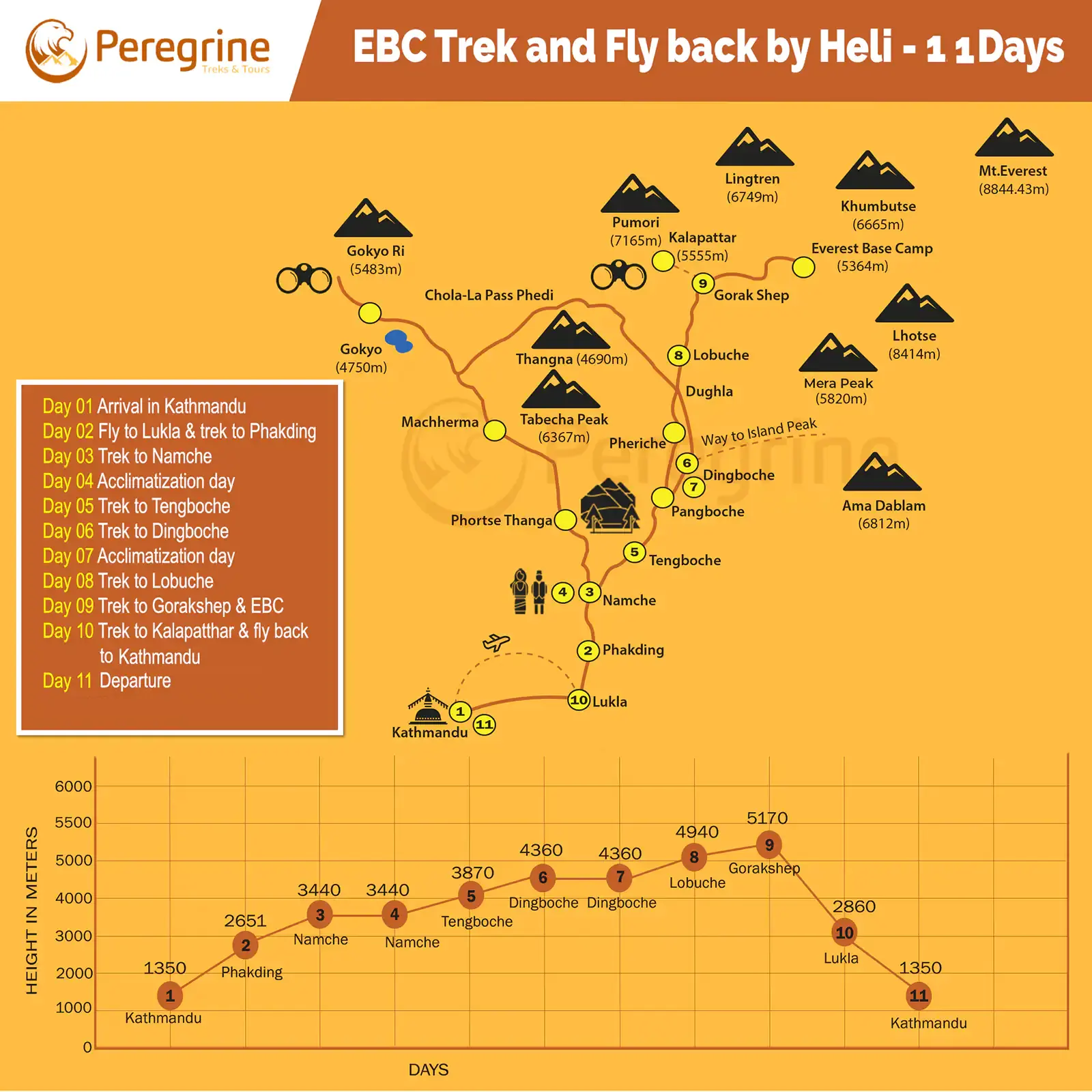
The Everest Base Camp Trek with Helicopter Return Map offers a unique and efficient way to experience the awe-inspiring Himalayas. This carefully designed map guides trekkers through the iconic Everest region. It incorporates a helicopter return option, providing an unforgettable journey that combines the thrill of trekking with the convenience of a breathtaking aerial experience. With clear trail markings, elevation details, and highlighted points of interest, this map ensures seamless navigation. From setting foot on Everest Base Camp to soaring above its majestic peaks, trekkers can savor the best of both worlds while immersing themselves in the region’s natural beauty and cultural richness.
Good To Know
Elevate your trekking experience with our Luxury Accommodation Upgrade. While our standard package offers comfortable lodgings with attached bathrooms up to Namche Bazaar (followed by standard teahouses with shared facilities thereafter), our Luxury option ensures superior comfort, warmth, and privacy throughout 90% of your journey. By choosing this upgrade in the Everest Base Camp Trek with Helicopter Return package, you will stay in the region’s finest lodges, featuring heated rooms, en-suite bathrooms, and modern amenities to help you rest and recover better after each day’s hike.
What to Expect with the Luxury Upgrade:
- Phakding – Yeti Mountain Home Start your trek in style. Enjoy a spacious room with an attached bathroom and a hot water shower. The lodge offers free WiFi to keep you connected and heated rooms to ensure a cozy night’s sleep, even in the chill.
- Namche Bazaar – Yeti Mountain Home. In the Sherpa capital, relax in premium comfort. This lodge provides heated rooms, free WiFi, and a private attached bathroom with a hot shower. It is the perfect sanctuary to recharge after the steep climb up to Namche.
- Syangboche (Acclimatization Day) – Hotel Everest View Stay at one of the world’s highest hotels. Famous for its panoramic views of Mt. Everest, this hotel features heated rooms, free WiFi, and attached bathrooms with hot showers. Enjoy the luxury of waking up to Everest right outside your window.
- Deboche (Replacing Tengboche) – Rivendell Lodge. We chose Deboche for its sheltered location and superior comfort. Rivendell Lodge offers a serene atmosphere with heated rooms, free WiFi, and private attached bathrooms with hot showers, a significant upgrade from the basic teahouses often found in Tengboche.
- Dingboche – Hotel Good Luck (or similar). As the altitude increases, warmth becomes a priority. You will stay in a high-standard room with an attached bathroom and a hot-water shower. To ensure you stay warm in the thinning air, electric blankets are provided for your bed.
- Lobuche – New EBC Hotel. Even at this high elevation, we prioritize your privacy. You will have a private room with an attached bathroom. Please note that due to the extreme altitude, running hot water may not be available; instead, hot water is provided in a bucket for washing.
- Gorakshep – Himalaya Lodge Note on High Altitude: At 5,164m, infrastructure is extremely limited. While this is the highest point on the trek, we ensure the highest level of comfort. You will be provided with an electric blanket to combat the freezing temperatures and hot water in a bucket for washing. Accommodation here is in a common room due to the scarcity of lodges at this height.
Why Upgrade?
The Luxury option is perfect for trekkers who value a hot shower, a warm bed, and a private bathroom after a long hiking day. Proper rest and warmth significantly aid acclimatization, making your journey to Everest Base Camp not just successful, but enjoyable.
How to Book the Luxury Upgrade
- Start Booking: Click the Book Now
- Select Trip Details: Choose your preferred Departure Date, Package, and Payment Option.
- Enter Details: Fill in the required Buyer and Participant Information.
- Choose the Upgrade: In the Add-Ons section, check the Luxury Accommodation box.
- Insurance: Select your insurance preference (Add Insurance or Continue Without).
- Payment: Choose your payment method (e.g., Bank Transfer or Credit/Debit Card).
- Finalize: Click Confirm Booking to secure your luxury trek.
An Everest Base Camp Trek with Helicopter Return requires careful planning and packing. Here’s a comprehensive packing list to ensure you’re well-prepared for the trek and the helicopter ride:
Clothing:
1. Base Layers:
- Moisture-wicking thermal tops and bottoms (2-3 pairs)
- Underwear (5-7 pairs)
2. Mid Layers:
- Fleece or lightweight down jacket
- Trekking shirts (short and long-sleeved, 3-4)
- Trekking trousers (2 pairs)
3. Outer Layers:
- Waterproof and windproof jacket (with hood)
- Waterproof trekking pants
- Down jacket (for colder temperatures at higher altitudes)
4. Footwear:
- Trekking boots (well broken in)
- Sandals or comfortable shoes (for evenings)
- Woolen or thermal socks (5-7 pairs)
- Gaiters (for snow or rain)
5. Head and Hand Gear:
- Warm beanie or hat
- Sun hat or cap
- Buff or neck gaiter
- Sunglasses with UV protection
- Lightweight gloves
- Insulated gloves or mittens
Gear and Equipment:
1. Backpack:
- Duffle Bag (Peregrine Treks will provide this)
- 15-20 Liter backpack
- Rain cover for the backpack
2. Sleeping:
- 4-season sleeping bag
- Sleeping bag liner (optional)
3. Trekking:
- Adjustable trekking poles
- Headlamp with extra batteries
4. Helicopter Ride:
- Earplugs (helicopters can be loud)
- Compact camera or phone (for aerial shots)
Personal Items:
1. Toiletries:
- Toothbrush and toothpaste
- Biodegradable soap and shampoo
- Face and body wipes
- Hand sanitizer
- Sunscreen and lip balm with SPF
- Quick-drying towel
- Toilet paper and a pee funnel for women
2. First Aid and Medications:
- Personal medications
- Diamox (for altitude sickness, consult with a doctor)
- Pain relievers
- Band-aids and blister plasters
- Antiseptic wipes
- Throat lozenges
- Water purification tablets or a water filter
3. Miscellaneous:
- Water bottles or hydration bladder (at least 1L capacity)
- Snacks (energy bars, trail mix, etc.)
- Portable charger or power bank
- Camera, memory cards, and extra batteries
- Notebook and pen
- Swiss army knife or multitool
- Ziplock bags (for waste and organizing)
- Cash (small denominations)
4. Documents:
- Passport and photocopies
- Trekking permits
- Travel insurance documents
- Emergency contact information
5. Optional:
- Reading materials or e-books
- Playing cards or travel games
- Trekking map
- Compass or GPS
Remember, while packing, it’s essential to consider the weight as you’ll be trekking with your backpack. The helicopter ride might have weight restrictions, so checking with the helicopter company in advance is a good idea. Always prioritize essential items and consider the season and expected weather conditions during your trek.
Trekking Gear Essentials
Ensuring the right trekking gear essentials are paramount when embarking on the Luxury Everest Base Camp Trek with Helicopter Return. Sturdy and comfortable trekking boots provide the foundation for a successful journey, paired with moisture-wicking clothing that facilitates layering to adapt to changing temperatures. Weather-appropriate outerwear, including a reliable jacket and rain gear, safeguards against the Himalayan elements, while sunglasses and a wide-brimmed hat offer essential sun protection. Trekking poles enhance stability on challenging terrains, and a well-designed backpack with proper weight distribution is indispensable for carrying essentials. Equipped with a basic first aid kit and necessary medications, trekkers can confidently navigate the trails and fully embrace the luxury and adventure of this extraordinary trek.
Helicopter Journey Considerations
When undertaking the Luxury Everest Base Camp Trek with Helicopter Return, factoring in the helicopter journey aspects is essential. As you transition from trekking to soaring, a windproof jacket and gloves are vital for warmth and comfort during the helicopter flight. This enables you to appreciate the awe-inspiring aerial vistas in the utmost luxury. Don’t forget to capture these extraordinary moments with a camera, preserving memories of this unique experience for a lifetime. Pack a few light snacks and water for the flight, ensuring you’re well-prepared for the exhilarating trekking adventure and the awe-inspiring helicopter journey.
Packing Lightly
Packing lightly is a cardinal principle when preparing for the Luxury Everest Base Camp Trek with Helicopter Return. Streamlining your belongings to the essentials ensures freedom of movement and convenience throughout the journey. Opt for multifunctional clothing items that serve multiple purposes and consider each piece’s versatility. By minimizing unnecessary items, you reduce your weight and enhance your overall trekking experience. This allows you to fully appreciate the luxury and grandeur of the Himalayas without unnecessary encumbrance.
Using Quality Equipment and Clothing
Using quality equipment and clothing is paramount when embarking on the Luxury Everest Base Camp Trek with Helicopter Return. Reliable and durable gear enhances your comfort and safety and contributes to the overall enjoyment of the journey. Investing in well-constructed trekking boots, moisture-wicking clothing, and sturdy trekking poles ensures you’re well prepared to navigate the Himalayas’ varied terrain and ever-changing weather. Choosing trusted brands and thoroughly testing your equipment before the trek guarantees optimal performance and resilience, allowing you to fully immerse yourself in this unique trek’s luxury and adventure.
Where to Buy Trekking Gear
When considering where to purchase trekking gear, options abound. You can buy in your home country or explore Thamel, a renowned trekking hub in Kathmandu. At the same time, it is recommended that you purchase quality clothing in your home country or from reputable shops in Thamel. Trekking essentials like poles, headlamps, and water bottles can be bought from local markets. The estimated cost for obtaining all required clothing and equipment in Nepal typically ranges from USD 500 to 800 per person. Choosing between your home country and the bustling markets of Thamel ultimately ensures your Luxury Everest Base Camp Trek with Helicopter Return.
Additional Tips for a Successful Trek
Additional tips can make all the difference for a successful Luxury Everest Base Camp Trek with Helicopter Return. Keeping an eye on local weather forecasts helps you pack appropriately for the changing conditions of the Himalayas. Adhering to local cultural norms and dress codes shows respect for the communities you encounter along the journey. Staying well-hydrated, fueling your body with nutritious meals, and listening to your body’s signals contribute to your overall well-being. Lastly, having essential travel documents and permits readily accessible ensures smooth passage. It lets you focus on embracing the luxurious adventure and breathtaking vistas this extraordinary trek offers.
The Everest Base Camp Trek with Helicopter Return is rated moderate to challenging. You walk an average of 5 to 7 hours per day across mountain terrain. The trail features steep climbs, rocky descents, suspension bridge crossings, and sections through glacier moraine. No ropes, crampons, or technical climbing skills are required at any point.
The most physically demanding days are Day 03 (a steep climb to Namche), Day 09 (a long day to Gorakshep and EBC), and Day 10 (a pre-dawn climb to Kala Patthar at 5,545m). The altitude — not the terrain — is the primary challenge above Dingboche. Walking at 4,900 meters feels roughly twice as hard as walking at sea level, even on flat ground. If you can hike for 5 hours carrying a light daypack and climb 800 meters of elevation in a single day, you are fit enough for this trek. If you are unsure, start training 12 weeks before departure using our physical preparation guide above.
Nepal’s currency is the Nepali Rupee (NPR). US dollars are widely accepted for trekking-related payments, but lodges and shops on the trail use Nepali Rupees for small purchases. You can exchange currency at banks and licensed money changers in Kathmandu and at the airport. Namche Bazaar has the last ATMs on the trail. Withdraw enough cash in Namche to cover personal expenses for the remaining days — WiFi, charging, hot showers, drinks, and tips. Lodges above Namche accept only cash. We accept payments in USD, GBP, EUR, AUD, and CAD. Bank transfers avoid the 4% credit card processing fee.
Nepal uses 230V electricity at 50Hz frequency. Power outlets are typically Type C, D, and M. Bring a universal adapter to charge your devices. Check that your charger is rated for 230V input — most modern phone and laptop chargers are dual voltage (100–240V), but older devices may not be.
No vaccinations are legally required to enter Nepal. However, we recommend consulting your doctor about Hepatitis A, Typhoid, and Tetanus vaccinations before traveling. Depending on your itinerary and activities, your doctor may also suggest Rabies and Japanese Encephalitis vaccines. Bring any personal prescription medications in their original packaging with a doctor’s letter.
Most nationalities can obtain a visa on arrival at Tribhuvan International Airport. Tourist visa fees are US$ 30 for 15 days, US$ 50 for 30 days, and US$ 125 for 90 days. To save time at immigration, fill out the online visa application form at www.nepalimmigration.gov.np before your flight. Bring a passport-sized photo and the exact visa fee in US dollars. Citizens of certain countries must obtain a visa from the nearest Nepalese embassy before traveling. Check the Nepal Immigration website for the current list.
To secure your Everest Base Camp Trek with Helicopter Return booking, a 30% deposit of the total cost is required. The remaining balance is due 30 days before your arrival in Kathmandu. We accept bank transfers in USD, GBP, EUR, AUD, and CAD — bank transfers avoid the credit card processing fee. We also accept Visa, MasterCard, American Express, and other major credit cards. A 4% credit card processing fee applies and is not included in the listed trek cost.
We recommend purchasing a Nepali SIM card at Kathmandu Airport on arrival. Nepal Telecom (NTC) offers the best coverage in the Everest region. NCELL is the alternative, but its signal is weaker above Namche. Airport staff help you activate your SIM and choose a data plan. eSIMs are also available at Kathmandu Airport. On the trail, free WiFi is available in Phakding and Namche Bazaar. From Tengboche onward, lodges charge US$ 5–7 per day for WiFi access. This WiFi works only within the lodge premises and can be slow. Mobile data (NTC) is available in Lukla, Namche, and Tengboche, and is available sporadically in Dingboche. In Lobuche and Gorakshep, mobile data is generally unavailable.
Device charging is free in Phakding and Namche Bazaar. From Tengboche onward, lodges charge US$ 4–5 per device charge. Bring a portable power bank (10,000–20,000 mAh) to reduce charging costs and ensure your devices stay powered between lodges. Solar chargers are less reliable due to variable weather conditions above 4,000 meters.
We recommend carrying a reusable water bottle, water purification tablets, or a portable water filter. Boiled water is available at lodges for a small fee. Bottled water is available at all stops but costs US$ 2–4 per liter and generates plastic waste. Purifying your own water is cheaper, lighter, and better for the environment. Drink at least 3 to 4 liters per day above 3,500 meters to stay properly hydrated.
The Everest Base Camp Trek with Helicopter Return passes through the homeland of the Sherpa people, a community known worldwide for mountaineering expertise and deep Buddhist faith. You encounter Mani stones, prayer wheels, and colorful prayer flags throughout the trail. Tengboche Monastery, the Khumbu’s most important spiritual site, hosts daily prayer ceremonies. Your guide shares stories and context at each cultural landmark.
The trail passes through Sagarmatha National Park, a UNESCO World Heritage Site. Vegetation zones shift as you climb: subtropical forests below 3,000 meters give way to pine and rhododendron forests, which transition to alpine scrub and eventually bare glacial moraine above 4,500 meters. Wildlife sightings are possible, though not guaranteed — the park is home to the Himalayan tahr, the Himalayan monal (Nepal’s national bird), musk deer, and the elusive snow leopard. Always walk to the left of Mani stones and prayer wheels (keeping them on your right). This follows Buddhist tradition. Remove your shoes before entering monasteries. Ask before photographing people or religious sites.
Trip Information
The Everest Base Camp Trek with Helicopter Return isn’t just your usual walk in the mountains; it’s like stepping into the very heart of the Himalayas. On this journey, you’ll be surrounded by stunning views, get to know the local Sherpa community, and challenge yourself near the sky-touching peaks.
But here’s the best part: instead of walking back, you get to hop on a helicopter! Imagine flying over those vast mountains and seeing the winding paths you trekked. This mix of adventure and a touch of luxury makes the EBC Trek with Helicopter Return a truly one-of-a-kind experience.
The Adventure Awaits
The Himalayas, a vast and majestic mountain range, has always been a siren call for those with a spirit of adventure. These mountains, towering peaks, and deep valleys have been the backdrop for countless tales of exploration, conquest, and spiritual awakening. For many, the Himalayas represent the ultimate frontier, a place where one can test their limits against the raw power of nature and find a deeper connection with the world around them.
The Luxury Everest Base Camp Trek with Helicopter Return showcases the magnetic charm of these peaks. This trek is not just a physical journey but a deep dive into the heart of the Himalayas. As trekkers make their way through rugged terrain, they encounter a constantly changing tapestry of landscapes, from dense forests to glacial expanses. Every step on this trail brings a sense of accomplishment, a feeling of being one with the mountains, and the thrill of venturing into the unknown.
But what truly sets the Helicopter Trek to Everest apart from other treks is the unique blend of experiences it offers. While the journey to the base camp immerses one in the rich tapestry of nature and culture the region offers, the helicopter return adds a touch of luxury and a different perspective to the adventure. Imagine, after days of challenging trekking, being whisked away into the skies, getting a bird’s-eye view of the very trails you conquered, and seeing the vastness of the Himalayas unfold beneath you.
Your Safety Is Not Negotiable
At Peregrine Treks, our motto is simple: Safety over adventure. This is not a marketing line. It is a principle we enforce on every departure, even when it is inconvenient, even when it changes your plans, and even when it means telling you something you do not want to hear.
Here is what that looks like in practice.
Your trekking guide has full authority to alter the itinerary, slow the pace, skip a summit attempt, or turn the group around at any point during the trek. We will back that decision every single time — no exceptions — because our guides have spent years reading the mountain, and they understand the difference between discomfort and danger. The Himalayas do not negotiate, and neither do we when your life is at stake.
In Kathmandu, we are flexible. You want to change your hotel, adjust your sightseeing schedule, extend a city day — no problem. But once the trek begins, your guide’s word on safety is final. If the weather closes in at Lobuche and the guide says we hold for a day, we hold. If your oxygen saturation drops below safe levels at Dingboche, we descend — even if you feel fine. If the wind at Kala Patthar is dangerously high on summit morning, we wait for the next window, or we skip it.
We have had trekkers disagree with these calls. Some have been frustrated in the moment. But every single one of them came home safe. That matters more to us than a five-star review. We would rather lose a booking than lose a trekker.
This approach is built into every layer of our operation. Our guides are certified wilderness first responders, trained not just to treat altitude sickness but to recognize the early warning signs hours before symptoms become critical. They carry pulse oximeters and measure every group member’s oxygen saturation twice daily from Namche Bazaar onward. We carry a comprehensive first-aid kit that includes medications for AMS, gastrointestinal distress, wound care, and pain management.
Our Kathmandu office maintains open communication with the guide team throughout the trek via local phone networks, and we carry the insurance and logistical readiness for emergency helicopter evacuation from any point on the route.
You are not walking into the Himalayas alone. You are walking with a team that has made it its life’s work to bring you home safely.
How Acclimatization Protects You:
Altitude sickness is the primary safety concern on any trek above 3,500 meters. Our 11-day itinerary includes two dedicated acclimatization days — one at Namche Bazaar (3,440m) and one at Dingboche (4,360m). These are not rest days. On each acclimatization day, you hike to a higher elevation and return to sleep at a lower altitude. This “climb high, sleep low” protocol is the gold standard for high-altitude adaptation.
At Namche Bazaar, the acclimatization hike goes to Khumjung Village and the Everest View Hotel at Syangboche (3,880m). You gain roughly 450 meters during the day and return to Namche for the night. At Dingboche, the acclimatization hike ascends Nagarjun Hill, reaching approximately 4,700 meters before descending. Both exercises measurably reduce the risk of Acute Mountain Sickness on the subsequent trekking days above 4,900 meters.
We do not rush acclimatization to save a day. Other operators compress the itinerary to offer a “faster” trek. We keep two full acclimatization days because we have seen what happens when operators cut corners at altitude, and we will not repeat their mistakes with our clients.
Experience You Can Trust:
Our guides are not only well-versed in the Everest region but also certified wilderness first responders, equipped to handle medical emergencies. Their training fully ensures the highest level of competence and preparedness. Furthermore, they possess an intimate understanding of the local terrain, weather patterns, and potential hazards, allowing them to navigate the trails and make informed, confident decisions.
Safety Gear at the Ready:
We provide a comprehensive first-aid kit containing essential medications and supplies for minor injuries and illnesses. Additionally, we can access pulse oximeters to monitor oxygen saturation levels, a crucial indicator of altitude acclimatization. Depending on weather conditions, we recommend personal gear like headlamps for low-light visibility or trekking poles for added stability.
Communication is Key:
Throughout the trek, we maintain open communication channels. Our guides are equipped with local phones, ensuring constant contact with our base camp and emergency medical services in case of unforeseen circumstances. We also encourage clear communication between you and your guide, and prompt reporting of any health concerns or physical limitations.
Helicopter Evacuation:
While highly unlikely, we prioritize your well-being by including helicopter evacuation coverage in our package. This provides peace of mind, knowing that a swift and safe evacuation to a medical facility is readily available in the event of a severe medical emergency.
Pre-Departure Briefing:
Before starting the trek, we conduct a thorough pre-departure briefing. This session covers essential information on the itinerary, safety protocols, proper use of first-aid kits, and what to expect regarding altitude and weather conditions. We encourage open communication during this briefing and address any questions or concerns you may have.
Your Safety is Our Commitment:
By prioritizing these safety measures, Peregrine Treks strives to create an environment where you can fully immerse yourself in the majesty of the Himalayas, confident that your well-being is in the hands of experienced professionals. Book your Everest Base Camp Trek with Helicopter Return today and start on a safe and unforgettable adventure!
Why Luxury Everest Base Camp Trek with Helicopter Return?
Mountains have always fascinated us, with Mount Everest reigning supreme. Its towering presence and tales of human conquest make it iconic. The Luxury Everest Base Camp Trek with Helicopter Return, set in the shadow of Everest, epitomizes adventure and the pursuit of the extraordinary.
The Allure of Everest
At 8,848 meters, Mount Everest is more than a peak; it’s a testament to nature’s might and human tenacity. Its history is rich with stories of triumphs and heartbreaks, elevating it from a mere mountain to a symbol of human challenge. For many, being near Everest is a lifelong dream. The Everest Base Camp Helicopter Return brings this dream to life, offering an intimate experience of Everest without the risks of summiting.
‘Everest’ is synonymous with awe and challenge. Its unpredictable conditions make it a climber’s ultimate test. Yet, the Everest Base Camp with Helicopter Return offers a safer yet thrilling experience. As trekkers near the base camp, breathtaking views of Everest greet them. The helicopter’s return adds a touch of luxury, offering a bird’s-eye view of the traversed landscapes.
A Journey to the Rooftop of the World
The Everest Base Camp Trek with Helicopter Return is more than a trek; it’s a historical journey. Each step echoes the endeavors of past mountaineers, making the trek a living museum of mountaineering tales.
The Himalayas’ beauty is unmatched, and this trek immerses participants in it. The hike presents varied scenery, from verdant woods to highland fields and charming hamlets to icy stretches. These ever-changing, vast landscapes remind trekkers of nature’s grandeur and of our fleeting presence within it.
Beyond the physical, the trek is a spiritual odyssey. The Himalayas’ vastness prompts introspection and connection. The panoramic vistas, pure air, and the achievement of reaching the base camp combine to make the Luxury Everest Base Camp Trek Helicopter Return a transformative, soulful journey to the world’s rooftop.
Sherpa Culture and Hospitality
Amidst the grandeur of the Himalayas, the Sherpa community has flourished, becoming an integral part of the Luxury Everest Base Camp Trek with Helicopter Return experience. Known worldwide for their unmatched mountaineering expertise, Sherpas are also the custodians of a rich cultural heritage deeply rooted in Tibetan Buddhism. As the trek participants traverse the trails, they encounter quaint Sherpa villages where the harmonious blend of nature and culture is palpable. The musical chimes of prayer wheels and the vibrant hues of prayer flags are familiar sights, symbolizing blessings and goodwill.
The traditional stone dwellings, ancient monasteries, and the omnipresent mountain backdrop paint a picture of serenity. However, the real essence of the Sherpa culture lies in their unparalleled hospitality. As trekkers navigate the Everest Base Camp Trek with Helicopter Return, they are often invited into Sherpa homes, where stories, legends, and traditional meals are generously shared. This cultural immersion transforms the trek from a mere adventure to a profound journey of understanding and connection.
The tales of mountain legends, the lively Sherpa festivals, and their deep spiritual practices provide trekkers with a unique perspective on life in the high Himalayas. Engaging with the Sherpa community during the Everest Base Camp Trek Helicopter Return enriches the experience, making it a holistic journey that touches both the heart and soul.
Flora and Fauna En Route
The Everest Base Camp Trek with Helicopter Return is not just a showcase of towering peaks; it’s a journey through diverse ecosystems teeming with life. As trekkers embark on this adventure, they traverse lush rhododendron forests that burst into a riot of color during the blooming season, enhancing the trek’s visual appeal.
The region’s biodiversity is truly astounding. Rare and majestic creatures like the snow leopard, the vibrant Himalayan monal, and the Himalayan Tahr can be spotted along the trails, adding a touch of wilderness magic to the Everest Base Camp Helicopter Return. The sheer joy of possibly catching a glimpse of a snow leopard in its natural habitat or observing a monal in all its splendor is a bonus for nature enthusiasts.
As the altitude increases, the landscape transforms. Dense woodlands transition into alpine meadows and eventually into stark, glacial terrains. Each zone, with its distinct flora and fauna, offers a fresh perspective on the adaptability of life in the Himalayas. The Everest Base Camp, Trek Helicopter Return, is not just a trek; it’s a celebration of nature in all its forms.
What Sets This Package Apart
Peregrine Treks operates from Kathmandu, not through a Western booking agency. When you book with us, there is no middleman markup. Your trek fee goes directly toward guide salaries, lodge bookings, permits, and helicopter charter — not toward a commission layer in London, Sydney, or New York.
Our trekking guides hold Trekking Guide certifications with a minimum of 3 years’ experience in the Khumbu Region and are trained as wilderness first responders. They are Khumbu locals who grew up in the Everest region and know the trail, the weather patterns, and the lodge owners by name. This matters when weather delays a flight, when a room needs to be arranged on short notice, or when a group member shows early signs of altitude sickness at 4,900 meters.
We also offer a luxury lodge upgrade for trekkers who want heated rooms, attached bathrooms, and hot showers throughout the trek. The standard package includes comfortable teahouses with attached bathrooms up to Namche Bazaar, followed by standard shared-facility lodges at higher elevations. The luxury upgrade places you in properties like Yeti Mountain Home (Phakding and Namche), Hotel Everest View (Syangboche), and Rivendell Lodge (Deboche) — the finest accommodations available in the Khumbu.
The Helicopter Return Experience
On Day 10, after completing the pre-dawn hike to Kala Patthar for sunrise, you descend to Gorakshep and board a shared helicopter for the flight back to Kathmandu. We work with multiple helicopter operators across Nepal and select the company that provides the fastest, safest service for each departure based on aircraft availability, pilot experience, and current operational conditions. Every aircraft we charter is rated for high-altitude operations above 7,000 meters with full panoramic window visibility.
The flight from Gorakshep to Kathmandu takes approximately 1 hour and 15 minutes. You fly over the terrain you trekked — the moraine fields of Lobuche, the green valley of Dingboche, the monastery at Tengboche, and the rooftops of Namche Bazaar — before descending through the middle hills into the Kathmandu Valley. The weather is the only variable. Helicopter flights require clear visibility and minimal wind. If conditions prevent departure on the scheduled morning, we hold at Gorakshep and attempt the flight on the next available window. We recommend building one buffer day into your international travel plans for this reason. We will never pressure a pilot to fly in marginal conditions.
Which Everest Base Camp Trek Is Right for You?
Not every trekker needs the same itinerary. We offer three versions of the Everest Base Camp Trek, each tailored to a different schedule, budget, and comfort level. This comparison helps you choose.
| Feature | Everest Base Camp Trek | EBC Trek with Helicopter Return | Luxury EBC Trek with Helicopter Return |
| Duration | 15 days | 11 days | 13 days |
| Trekking distance | 130 km (round trip on foot) | 65 km (one way, helicopter return) | 65 km (one way, helicopter return) |
| Return method | Trek back to Lukla on foot | Helicopter from Gorakshep to Kathmandu | Helicopter from Gorakshep to Kathmandu |
| Accommodation | Standard teahouses | Standard teahouses with luxury upgrade available | Premium lodges throughout the trek |
| Acclimatization days | 2 (Namche and Dingboche) | 2 (Namche and Dingboche) | 2 (Namche and Dingboche) |
| Highest point | Kala Patthar, 5,545m | Kala Patthar, 5,545m | Kala Patthar, 5,545m |
| Meals | Three meals daily on trek | Three meals daily on trek | Three meals daily, upgraded menu |
| Price | US$ 1,850 | US$ 2,890 | US$ 4,900 |
| Best for | Trekkers with 2+ weeks and flexible schedules | Working professionals, trekkers over 50, families with limited time | Comfort-first trekkers, celebration trips, honeymoons |
All three packages follow the same classic route from Lukla to Everest Base Camp and Kala Patthar. The trail, the mountains, and the cultural experiences are identical. The differences are in how you return and where you sleep. The Everest Base Camp Trek with Helicopter Return is the most popular choice for trekkers who want the full experience without the 3-day return walk. You save time, protect your knees from the 4,000-meter descent, and gain an aerial perspective of the Khumbu Valley that trekkers on the standard route never see. Not sure which package fits your situation? Contact us with your available dates, fitness level, and preferences. We recommend the right option for you.
Best Time for Everest Base Camp Trek with Helicopter Return
The Everest region is accessible most of the year, but weather conditions vary dramatically by season. The best months for the Everest Base Camp Trek with Helicopter Return are October, November, December, April, May, and June. These months offer the clearest skies, the most stable weather for helicopter flights, and the most comfortable trekking temperatures.
| Month | Daytime Temp (EBC) | Night Temp (EBC) | Sky Conditions | Trail Conditions | Crowds | Rating |
| January | –8°C to –14°C | –20°C to –25°C | Clear | Snow above Lobuche, icy trails | Very low | Not recommended |
| February | –5°C to –10°C | –15°C to –20°C | Mostly clear | Snow possible, cold mornings | Low | Possible for experienced trekkers |
| March | –2°C to –6°C | –10°C to –15°C | Good, some haze | Trails clearing | Moderate | Good — early spring season |
| April | 2°C to 5°C | –5°C to –10°C | Excellent | Dry trails, rhododendrons blooming | High | Excellent — peak spring |
| May | 4°C to 8°C | –3°C to –7°C | Good, pre-monsoon haze by late May | Dry, stable | High | Good — Everest climbing season visible at EBC |
| June | 5°C to 10°C | 0°C to –5°C | Cloudy, monsoon begins | Rain below 4,000m, leeches possible | Very low | Not recommended |
| July | 5°C to 10°C | 0°C to –3°C | Heavy cloud, rain | Slippery trails, landslide risk | Very low | Not recommended |
| August | 5°C to 10°C | 0°C to –3°C | Heavy cloud, rain | Wet, muddy trails | Very low | Not recommended |
| September | 3°C to 7°C | –3°C to –8°C | Clearing by late month | Trails drying | Low to moderate | Late September possible |
| October | 0°C to 5°C | –7°C to –12°C | Excellent, crystal clear | Dry, stable, best visibility | Very high | Best month — peak autumn |
| November | –3°C to 0°C | –10°C to –15°C | Excellent, cold, and clear | Dry, cold nights | High | Excellent — fewer crowds than October |
| December | –7°C to –12°C | –18°C to –22°C | Clear | Snow above Dingboche, very cold | Low | Possible but extremely cold |
Spring Season (March–May)
Spring is warm and green. Temperatures at lower altitudes reach 15–20°C during the day. Rhododendron forests bloom in April and May, turning the trail between Namche and Tengboche into corridors of red, pink, and white flowers. Skies are generally clear in March and April. By late May, pre-monsoon haze can reduce visibility on mountains in the afternoons, but mornings remain sharp. April and May are also the Everest climbing season — if your trek falls during this window, you may see expedition teams and their colorful tents at base camp. Helicopter flights are reliable in the spring. Clear mornings and moderate winds make this an ideal season for the Everest Base Camp Trek with Helicopter Return.
Autumn Season (September–November)
Autumn is the most popular trekking season in Nepal. The monsoon ends in late September, washing dust and haze from the atmosphere. October and November offer the clearest mountain views of the year. Temperatures are cool but manageable. Trails are dry and stable.
October is the busiest month on the Everest trail. Lodges fill quickly, and the trail can feel crowded between Namche and Dingboche. November offers similar visibility with fewer trekkers and colder nights. Both months are excellent for the helicopter return — clear skies and calm winds mean minimal flight delays.
Winter and Monsoon (December–February, June–August)
Winter trekking is possible but harsh. Temperatures above 4,000 meters drop below –15°C at night. Snow can block trails above Lobuche. Fewer lodges remain open, and helicopter flights face a higher risk of cancellation due to wind.
Monsoon months (June–August) bring heavy rain below 4,000 meters, cloud-covered mountains, slippery trails, and leech encounters in the forests. Mountain views are rare. We do not recommend the Everest Base Camp Trek with Helicopter Return during the monsoon season.
Preparing for the Trek
Physical Fitness
The Everest Base Camp Trek with Helicopter Return is rated moderate to challenging. You walk 5 to 7 hours per day across mountain terrain at altitudes reaching 5,545 meters. No technical climbing skills are required, but cardiovascular fitness and leg strength determine how much you enjoy the experience. You do not need to be an athlete. But you need to be honest about your current fitness level. Start preparing at least 12 weeks before departure.
Weeks 1–4: Build Your Base
Walk, jog, or cycle for 30-45 minutes, 4 times per week. The goal is to build a consistent aerobic habit. Add 2 strength sessions per week focusing on your legs: squats, lunges, calf raises, and step-ups. Stretch for 10 minutes after every session. If you have access to a stair machine, use it — stair climbing is the closest gym exercise to trekking uphill.
Weeks 5–8: Increase Intensity
Extend your cardio sessions to 45-60 minutes. Start including hill walks or prolonged stair climbing with a 5-8 kg backpack. This simulates the weight of your daypack on the trail. Do back-to-back training days at least once per week — for example, a long walk on Saturday followed by another on Sunday. Consecutive training days teach your body to perform when already fatigued, which is exactly what happens on consecutive trekking days above 4,000 meters.
Weeks 9–12: Peak Training
Do 2 to 3 long hikes on weekends, each lasting 3 to 5 hours, wearing your actual trekking boots and carrying your daypack. Include at least one hike with 800 to 1,000 meters of elevation gain in a single day. Continue your strength work during the week. In the final week before departure, taper your training — light walks only, no intense sessions.
Fitness Benchmarks Before Departure
Before you leave for Nepal, you should be able to:
- Walk uphill for 5 hours carrying a 5 kg daypack without excessive fatigue
- Climb 800 meters of elevation gain in a single day hike
- Complete back-to-back 4-hour walking days without significant soreness on day three
If you cannot meet these benchmarks, start your preparation earlier. Alternatively, consider our 15-day standard Everest Base Camp Trek, which covers less distance per day and allows a gentler pace.
Mental Preparation
Physical fitness gets you to Everest Base Camp. Mental fitness gets you to Kala Patthar. The days above 4,900 meters are slow, cold, and physically uncomfortable. You will feel short of breath doing simple tasks. Your appetite may decrease. Sleep at high altitude is often broken. These are normal responses to thin air, not signs of anything wrong. Knowing this in advance — and accepting the discomfort as part of the experience — makes a significant difference. Patience and steady determination matter more than speed.
Packing Essentials
Packing for the Everest Base Camp Trek with Helicopter Return is a delicate balance between preparedness and practicality. Layered clothing is essential, allowing trekkers to adjust to fluctuating temperatures. Sturdy trekking boots are necessary, ensuring comfort and safety on varied terrains. A comprehensive first-aid kit can be a lifesaver, addressing minor injuries or ailments. Additionally, securing permits required in advance will ensure a hassle-free journey. While it’s tempting to pack for every scenario, it’s vital to remember the importance of traveling light. After all, the Everest Base Camp Trek with Helicopter Return is about enjoying the journey and not being burdened by excess baggage.
Our Altitude Sickness Response Protocol
Acute Mountain Sickness (AMS) is the primary health risk on any trek above 3,500 meters. Our itinerary, acclimatization schedule, and twice-daily monitoring are designed to prevent it. But if symptoms appear, we follow a clear, practiced protocol.
Mild Symptoms
Headache, nausea, poor sleep, mild dizziness, or loss of appetite.
Your guide conducts a symptom assessment and measures your SpO2 levels. You rest at your current altitude and increase fluid intake. If appropriate, the guide administers medication — typically Diamox (acetazolamide) or paracetamol. Your SpO2 is rechecked every 2 hours. If symptoms do not improve within 12 hours, you descend to the previous night’s sleeping altitude.
Moderate Symptoms
Persistent vomiting, severe headache not relieved by medication, significant fatigue, loss of coordination, or difficulty walking in a straight line. You descend immediately, at least 500 meters below your current altitude. The guide accompanies you while the rest of the group continues with the assistant guide or remains in place. SpO2 monitoring continues throughout the descent. Our Kathmandu office has been contacted, and the helicopter evacuation is on standby.
Severe Symptoms
Confusion, inability to walk without assistance, fluid in the lungs (crackling sound when breathing, persistent wet cough), blue lips or fingertips. We activate emergency helicopter evacuation immediately. The guide administers supplemental oxygen if available and keeps you warm and hydrated until the helicopter arrives. You are transported to a medical facility in Kathmandu — typically CIWEC Hospital or Grande International Hospital, both equipped for altitude-related emergencies. Our team coordinates directly with your insurance provider for evacuation and treatment costs.
Prevention Is Our Priority
This protocol exists as a safety net. Our primary goal is to prevent altitude sickness from developing in the first place. Two acclimatization days, controlled daily altitude gains, twice-daily SpO2 monitoring, and a guide trained to recognize early warning signs all work together to keep you safe. On the Everest Base Camp Trek with Helicopter Return, your guide has full authority to adjust the itinerary at any point — slowing the pace, adding a rest stop, or holding at a lower altitude for an extra night — if he judges that a trekker’s body needs more time to adapt.
Travel Insurance Requirements
Travel insurance is mandatory for the Everest Base Camp Trek with Helicopter Return. We verify your policy details during the Day 01 briefing in Kathmandu. If your coverage does not meet the minimum requirements listed below, we will help you purchase an appropriate policy before the trek begins.
Minimum Coverage Required
Your travel insurance policy must include:
- Emergency helicopter evacuation at altitudes up to 6,000 meters
- Coverage for high-altitude trekking above 5,000 meters (some standard policies exclude activity above 3,000 or 4,000 meters — check your policy wording carefully)
- Medical treatment and hospitalization in Nepal
- Emergency repatriation to your home country
Recommended Additional Coverage
We strongly recommend policies that also cover:
- Trip cancellation and interruption (protects your payment if you cannot travel)
- Trip delay (covers additional accommodation and meals if the Lukla flight is canceled due to weather)
- Lost, stolen, or delayed baggage
- Personal liability
Policy Tips
Read your policy document before you leave home. Check whether it specifically names “trekking above 5,000 meters” or “helicopter evacuation” in the covered activities section. Some insurers classify trekking above certain altitudes as a “hazardous activity” and require an additional premium or rider. Contact your provider and confirm in writing that your specific trek is covered. Carry a printed copy of your insurance policy and your insurer’s 24-hour emergency contact number in your daypack. Store a digital copy on your phone and share a copy with your emergency contact at home.
What to Budget for Extras
Your trek fee covers accommodation, meals, permits, flights, guides, porters, and the chartered helicopter. However, some personal expenses on the trail are not included. Knowing these costs in advance helps you plan and avoid surprises.
| Item | Estimated Cost | Where Available |
| WiFi at lodges | US$ 5–7 per day | Tengboche onward (free in Phakding and Namche) |
| Device charging | US$ 4–5 per charge | All lodges (free in Phakding and Namche) |
| Hot shower | US$ 3–5 per shower | Lodges below Dingboche (limited above) |
| Bottled water (1 liter) | US$ 2–4 | All lodges, prices rise with altitude |
| Soft drinks | US$ 3–5 | All lodges |
| Beer | US$ 5–7 | Available at most lodges (not recommended above 4,000m) |
| Electric blanket rental | US$ 15–20 per night | Select lodges above Dingboche |
| Laundry | US$ 5–8 per load | Namche Bazaar only |
| Satellite phone call | US$ 4–8 per minute | Select lodges |
| Kathmandu meals (lunch and dinner) | US$ 15–25 per meal | Days 01, 10, and 11 |
Suggested Tips
Tipping is not mandatory on the Everest Base Camp Trek with Helicopter Return, but it is customary in Nepal and appreciated by the team that supports your journey. These are suggestions based on industry norms for an 11-day trek.
- Lead trekking guide: US$ 300–500 total
- Assistant guide (if applicable): US$ 200–300 total
- Porters: US$ 150–250 total, per porter
- Drivers: US$ 5–10 per transfer
Tips can be given in US dollars, Nepali rupees, or any major currency, such as Euros, GBP, AUD, CAD, etc. Many trekkers pool tips and present them as a group on the final trekking day or at the farewell dinner in Kathmandu.
Total Extra Budget
We suggest carrying US$ 300–500 in cash for personal expenses during the trek. Bring small-denomination bills — US$1, US$ 5, and US$ 10 notes, or equivalent Nepali Rupees. No ATMs exist beyond Namche Bazaar. The last reliable ATM withdrawal point is in Namche on Day 03.
Distance and Duration Details for the Luxury Everest Base Camp Trek with Helicopter Return
Starting the Everest Base Camp Trek with a helicopter return involves covering approximately 13 to 15 kilometers per day over 5 to 6 hours. Due to its extended duration and rugged terrain, this trek is known for its challenging nature, requiring not only endurance but also careful planning. The entire route to Everest Base Camp is about 130 kilometers, making preparation essential for a successful journey. Equipping yourself with the right gear and ensuring good physical fitness will help you navigate the iconic trail with greater ease and enjoyment. Proper preparation allows you to fully experience this trek’s breathtaking views and memorable moments.
Detailed Itinerary Breakdown
Lukla to Phakding
- Starting Elevation: 9,100 ft / 2,800 m
- Ending Elevation: 8,563 ft / 2,610 m
- Oxygen Levels: Starting at 72% and ending at 74% of sea level
- Distance: 4.66 mi / 7.5 km
- Duration: 3 hours
Phakding to Namche Bazaar
- Starting Elevation: 8,563 ft / 2,610 m
- Ending Elevation: 11,286 ft / 3,440 m (Namche Bazaar)
- Oxygen Levels: Starting at 74% and ending at 70% of sea level
- Distance: 5 miles / 8.0 km
- Duration: 6 hours
Namche Bazaar to Deboche/Tengboche
- Starting Elevation: 11,290 ft / 3,440 m
- Ending Elevation: 12,687 ft / 3,867 m
- Elevation Gain: +1,397 ft / 427 m
- Oxygen Levels: Starting at 67% and ending at 64% of sea level
- Distance: 5.72 mi / 9.2 km
- Duration: 6 hours
Tengboche/Deboche to Dingboche
- Starting Elevation: 12,697 ft / 3,870 m
- Ending Elevation: 14,469 ft / 4,410 m
- Elevation Gain: +1,772 ft / 540 m
- Oxygen Levels: Starting at 64% and ending at 59% of sea level
- Distance: 6.71 mi / 10.8 km
- Duration: 5.5 hours
Dingboche to Lobuche
- Starting Elevation: 14,469 ft / 4,410 m
- Ending Elevation: 16,109 ft / 4,910 m
- Elevation Gain: +2,008 ft / 612 m (Net Gain: 1,640 ft / 500 m)
- Distance: 4.9 mi / 7.9 km
- Duration: 5 hours
Lobuche to Gorakshep
- Starting Elevation: 16,142 ft / 4,920 m
- Ending Elevation: 16,863 ft / 5,140 m
- Elevation Gain: +721 ft / 220 m
- Oxygen Levels: Starting at 56% and ending at 54% of sea level
- Distance: 2.67 mi / 4.3 km
- Duration: 3 hours
Gorakshep to Everest Base Camp (EBC)
- Starting Elevation: 16,863 ft / 5,140 m
- Ending Elevation: 17,598 ft / 5,364 m
- Elevation Gain: +735 ft / 224 m
- Oxygen Levels: Starting at 54% and ending at 53% of sea level
- Distance: 2.17 mi / 3.5 km
- Duration: 2 hours to reach EBC (4.5 hours round trip)
Ensuring you are adequately prepared, both physically and mentally, for the trek will help you enjoy this once-in-a-lifetime journey to Everest Base Camp, taking in some of the most stunning landscapes in the Himalayas and creating lasting memories.
The Trip: Step-by-Step
Everest Base Camp Trek with Helicopter Return is a transformative experience. It offers trekkers a blend of adventure, culture, and natural beauty. Each segment of the journey offers unique highlights, ensuring the trek remains etched in memory for a lifetime.
Setting Off: Kathmandu to Lukla
The adventure starts with a flight from the bustling city of Kathmandu to Lukla. This flight is often dubbed one of the most exhilarating in the world, offering passengers breathtaking views of the Himalayan range. Lukla, perched high in the mountains, is more than just an airport; it’s the gateway to the Everest region. As trekkers set foot here, the crisp mountain air and the scenic beauty set the tone for the epic journey ahead on the Everest Base Camp Trek return by helicopter.
Exploring Namche Bazaar
Namche Bazaar, often called the Sherpa capital, is a melting pot of cultures. As trekkers enter this bustling town, they are greeted by a symphony of sounds, from traders haggling to trekkers sharing tales. The city, with its winding paths and colorful markets, offers a glimpse into the daily life of the Sherpa community. But beyond commerce, Namche Bazaar is a vantage point, offering trekkers panoramic views of the snow-capped peaks, further enhancing the Everest Base Camp Trek with Helicopter Return experience.
The Ascent to Everest Base Camp
From Namche, the trail becomes a visual treat. Trekkers navigate through a myriad of terrains, each with its unique charm. The dense rhododendron forests, with their vibrant blooms, give way to glacial moraines as one ascends. With every step, the majestic peaks of the Himalayas seem to come closer, offering trekkers a constantly evolving backdrop. The culmination of this ascent is the Everest Base Camp, a place that symbolizes human ambition and endurance. Standing there, one can’t help but feel a deep sense of accomplishment.
The Thrilling Helicopter Return
The Everest Base Camp Trek with Helicopter Return adds a touch of luxury to the adventure. After days of challenging trekking, the helicopter ride is not just a mode of return but a reward. As trekkers soar above the landscapes they’ve just navigated, they get a bird’s-eye view of the region’s vastness. This aerial perspective, combined with the thrill of flying amidst the towering peaks, ensures the return journey is as memorable as the trek.
Safety Precautions and Tips
Safety must always be a priority, particularly in demanding landscapes like Everest. Staying informed and vigilant can turn a potentially risky journey into a memorable expedition.
Altitude sickness is a genuine concern, and trekkers should be vigilant about its symptoms. Acclimatizing, staying hydrated, and listening to one’s body is essential. Pushing oneself too hard can be detrimental.
Another crucial tip is to trek at a pace that feels comfortable. It’s not a race; it’s a journey to be savored. Hiring a local guide can be invaluable for those unfamiliar with the region. They ensure you stay on the right path and enrich the trekking experience by sharing insights into the region’s history, culture, and legends.
Conclusion: A Trek Worth Every Step
The Luxury Everest Base Camp Trek with Helicopter Return is not just a physical journey; it’s an odyssey of the soul. It challenges trekkers, pushes their limits, and offers them nothing short of magical views. Every step taken, every hurdle overcome, and every interaction along the way adds depth to the experience. The blend of natural beauty, cultural immersion, and the thrill of adventure makes this trek genuinely unparalleled. For those who trek on it, it’s not just about reaching the base camp or enjoying a helicopter ride; it’s about discovering oneself amidst the grandeur of the Himalayas.
Additional Information
We are trying to provide accurate information on this website. However, please feel free to call or email us with further queries. You can talk with us at +9779851052413 (Mobile/WhatsApp/Viber/Telegram) and +1 315 388 6163. There is no time limit on ringing those numbers.
Related Articles
Frequently Asked Questions
The Everest Base Camp Trek with Helicopter Return is an 11-day trekking package that takes you along the full classic route from Lukla to Everest Base Camp (5,364m) and Kala Patthar (5,545m), then flies you back to Kathmandu by chartered helicopter instead of trekking the return trail on foot. You cover 65 km on foot and approximately 150 km by air. The helicopter replaces the 3-day return trek, saving time and eliminating the physical strain of a 4,000-meter descent.
While the trek to Everest Base Camp can take about 14 days, the helicopter return reduces the descent time to just a few hours. The journey, including acclimatization days, usually lasts 9 days, with 2 days for arrival and departure, for a total of 11 days.
Yes. Our 11-day itinerary includes 8 trekking days, 2 dedicated acclimatization days, and a helicopter return on Day 10. You cover the full classic route to EBC and Kala Patthar without skipping any section of the ascent. The helicopter replaces only the return walk from Gorakshep to Lukla — a trail you have already seen on the way up. Two acclimatization days (Namche and Dingboche) ensure safe altitude adaptation.
Yes. Our safety record reflects our priority. Every departure follows a structured safety protocol: two acclimatization days, twice-daily SpO2 monitoring, guides trained as wilderness first responders, comprehensive first-aid kits, constant communication with our Kathmandu office, and logistical readiness for emergency helicopter evacuation at any point on the route. Our guides have full authority to alter the itinerary for safety reasons. We do not compromise on safety for any reason.
The route to Everest Base Camp is identical. Both treks follow the same trail from Lukla through Namche, Tengboche, Dingboche, Lobuche, and Gorakshep to EBC and Kala Patthar. The only difference is the return. The standard 15-day trek retraces the same trail back to Lukla over 3 days. The helicopter version takes approximately 45 minutes from Gorakshep to Kathmandu. You see the same mountains, visit the same villages, and reach the same base camp.
The Everest Base Camp sits at an altitude of 5,364 meters (17,598 feet), and Kalapatthar lies at 5,545 meters (18,192 feet). This is the highest point trekkers reach before taking the helicopter return.
Helicopter operators typically allow 10-12 kg of luggage per person in the cabin. Your main duffel bag and daypack travel with you. If the group’s total weight exceeds the aircraft limit, a second shuttle flight may be arranged. We confirm the exact weight allowance with the charter company before your departure day and advise you accordingly.
We hold at Gorakshep and attempt the flight on the next available clear window. Helicopter flights require good visibility and minimal wind. In rare cases, weather delays can last 1 to 2 days. We recommend building one buffer day into your international travel plans. We will never pressure a pilot to fly in marginal conditions. Your safety comes first.
Yes. Travel insurance is mandatory. Your policy must cover emergency helicopter evacuation up to 6,000 meters and high-altitude trekking above 5,000 meters. We verify your insurance details during the Day 01 briefing. Standard travel insurance policies often exclude high-altitude trekking — check your policy wording carefully and confirm coverage with your insurer before traveling.
Absolutely! The helicopter’s return only affects your descent. The ascent will still involve trekking through local villages, interacting with the Sherpa community, and experiencing their rich culture.
Rapid altitude changes can increase the risk of altitude sickness. While helicopters are pressurized, it’s essential to stay hydrated, avoid alcohol before the flight, and discuss any health concerns with your guide or doctor. Always consult Peregrine Treks and Tours for the most up-to-date, detailed answers tailored to your specific trip.
Yes. We arrange additional hotel nights at The Everest Hotel or an alternative property at your request. Many trekkers arrive 1 to 2 days early to recover from jet lag or explore Kathmandu. After the trek, extra days allow for sightseeing in Bhaktapur, a sunrise trip to Nagarkot, or relaxation and spa recovery before your flight home.
Very safe. We charter helicopters rated for high-altitude operations above 7,000 meters. We work with multiple helicopter operators across Nepal and select the company that provides the fastest, safest service for each departure based on aircraft availability, pilot experience, and current conditions. All flights operate in accordance with the Civil Aviation Authority of Nepal’s regulations. We will never pressure a pilot to fly in marginal weather.
The helicopter departs from Gorakshep (5,170m). On Day 10, you hike to Kala Patthar (5,545m) for sunrise, descend to Gorakshep for breakfast, and then board the helicopter from the Gorakshep helipad.
Yes, if you are physically fit. The trek is rated moderate to challenging. You walk 5 to 7 hours daily on mountain trails at altitudes up to 5,545m. For technical climbing, ropes and crampons are required. We recommend at least 12 weeks of cardiovascular and strength training before departure. Our two acclimatization days, experienced guides, and twice-daily health monitoring significantly reduce altitude-related risks. Many of our clients are first-time trekkers.
Reviews on Everest Base Camp Trek with Helicopter Return
5.0
Incredible Everest Base Camp Trek with Helicopter Return
We had a fantastic trip to Everest Base Camp Trek with helicopter return! Our guide Mingmar was knowledgeable, helpful, & funny and helped us navigate the local culture, a challenging trail, & a fantastic adventure. The trekking was tricky and ended with a challenging hike up to a beautiful morning view of Everest and a scenic ride back to Lukla.
I highly recommend Peregrine Treks to everyone planning to Nepal for Everest Base Camp Trek with Helicopter Return tour.

Marcel Vogler
GermanyEverest Base Camp Helicopter Trek
I just completed this 11-day Everest Base Camp Trek with Helicopter return. Peregrine Treks and Expedition organized the trip very well. Being a regular trekker, I found the trek challenging at some sections, but all the tiredness and stress went away by the breathtaking views of the Himalayas on reaching EBC. During the entire trek, I found myself safe with the guide and porters provided by the Peregrine Treks. They were very friendly and helpful throughout the trek. On the 10th day, I flew back to Kathmandu via Helicopter from Gorakshep. The views of the stunning snow-capped mountains from the helicopter were just exquisite. I am very thankful to Peregrine Treks and the team for making my trip successful.
Robert S. Thompkins
United StatesMemorable EBC Heli Trek
I had an incredible trekking with Peregrine Treks. The views during the trek seem out of this world, and you come away amazed. Everything was handled with complete care, and our lead guide Dawa Sherpa was knowledgeable and helpful at every stage. He constantly checked to ensure you were doing alright, and if people became sick, he looked after you. I can’t say enough about Dawa and his team of assistant guides and porters if you can ask him.
Accommodation during the Luxury Everest Base Camp Trek with Helicopter Return package is simple but best, and the foods are hygienic. We were lucky enough to be put in with a great group of mixed ages and countries of origin, and we all became quick friends. If you have been thinking about this trip, lock it in. Trust me, you won’t be disappointed with Peregrine Treks and Tours with an experienced and trained guide.
Nea Kauppi
FinlandComplecated but Highly Recommended Trek
We recently completed this Luxury Everest Base Camp Trek with Helicopter Return with Peregrine Treks. We had several complications with the flights and the itinerary due to terrible weather, but the organization handled them satisfactorily. The Everest Base Camp Helicopter Trek is a lovely path, but it isn’t easy. The ascent over Dingboche was a near-death experience. Overall, we are pleased with the firm and the organization. Thank you, Guide Nima and the entire Nepalese crew members and our beloved trekkers from different countries. We won’t get any hassles flying back from Gorak Shep to Kathmandu.
Martha F. Gower
Baldwin Park, United StatesRelated Packages
Destination
NepalDifficulty
ModerateLuxury Everest Base Camp Trek
 16 Days
US$ 3840
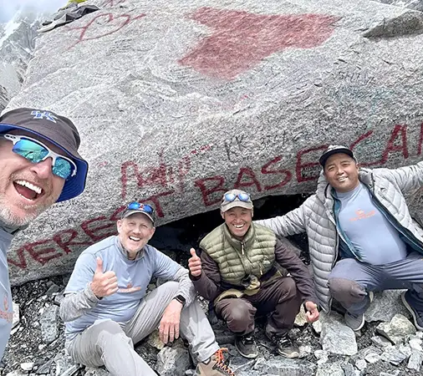
Destination
NepalDifficulty
ModerateLuxury Everest Base Camp Trek with Helicopter Return
13 Days
US$ 4900
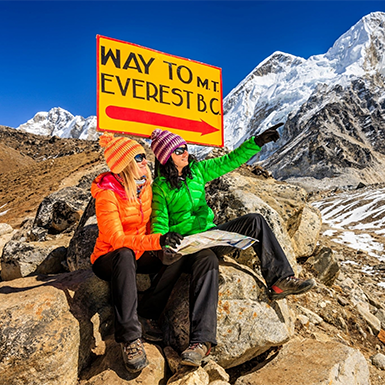
Destination
NepalDifficulty
ModerateEverest Base Camp Trek
15 Days
US$ 1850