


Armenia Tour Packages
Destination
Difficulty

Destination
Difficulty
Destination
Difficulty
Armenia Tour Packages Travel Information
Armenia rewards the traveler who goes beyond the capital. Yerevan moves at an easy, walkable pace. The pink tuff-stone architecture along Northern Avenue looks unlike any city in the Caucasus or the Middle East. The country’s real depth lies in its monasteries: rock-cut chambers where priests hold morning liturgy by candlelight. Canyon-edge fortresses stand where they were built before the First Crusade. A mountain tramway 5,752 meters long crosses the Vorotan gorge to a working 9th-century monastery.
Armenia holds two headline distinctions that shape how visitors connect with it. First, it adopted Christianity as its state religion in 301 AD — the first country in the world to do so. Second, the Areni-1 cave in Vayots Dzor province contains the oldest known winery on earth, dated to approximately 4100 BC. Wine and faith are built into the geology of the place.
Peregrine Treks and Tours designs private Armenia tour packages around both. Every itinerary runs with a dedicated English-speaking driver-guide, a private vehicle, and pre-arranged logistics at each site.
Essential Travel Information for Armenia
Do I Need a Visa to Visit Armenia?
Citizens of the United States, most EU member states, the United Kingdom, and GCC nations enter Armenia without a visa for up to 180 days. Other nationalities can apply for an e-visa through the official portal at evisa.mfa.am. Processing takes approximately 3 business days. The fee is AMD 3,000 for a 21-day stay or AMD 15,000 for a 120-day stay.
Apply before you travel, not on arrival. Print the approved e-visa and carry a physical copy at immigration.
When Is the Best Time to Visit Armenia?
May through June and September through October are the two optimal windows. Temperatures run between 20°C and 28°C, skies stay clear, and all road access to mountain sites remains fully open. Autumn wine festivals in the Areni village area (typically in October) add a specific cultural reason to visit in the fall.
July and August bring intense heat to Yerevan, often exceeding 35°C. High-altitude escapes to Lake Sevan (1,900 meters) and Dilijan’s forested valleys stay significantly cooler. Winter suits travelers who want snow-draped monastery photography and empty sites, but some mountain roads slow considerably after snowfall.
| Season | Yerevan | Best For |
|---|---|---|
| May–June | 20–28°C | Wildflowers, clear Ararat views, all sites open |
| July–August | 30–38°C | Lake Sevan, swimming, mountain hiking, wine country |
| September–October | 18–26°C | Autumn color, wine festivals, and comfortable city walking |
| November–March | 0–10°C | Empty monasteries, winter photography, Tsaghkadzor skiing |
What Currency and Language Does Armenia Use?
Armenia uses the Armenian Dram (AMD). Central Yerevan accepts cards at most hotels, restaurants, and larger shops. Cash is required for marshrutka (shared minibus) fares, small artisan workshops, and open-air markets such as the Vernissage flea market.
Ameriabank ATMs in Yerevan consistently levy low surcharges on foreign cards. Withdraw enough Dram before leaving the capital for multi-day regional trips — ATMs become scarce in rural areas.
Armenian is the official language. Russian remains widely spoken across the country. English is common among young adults and hospitality staff in Yerevan, but limited outside the capital. Your Peregrine driver-guide covers all language gaps throughout the trip.
How Do I Get Around in Yerevan?
Uber does not operate in Armenia. Download GG Taxi or Yandex GO before you land. Both apps show estimated fares before you confirm, follow metered pricing, and cover Yerevan and most regional towns. GG Taxi has shorter average wait times in the city center.
Set up your account and link a payment card before your flight. Without a working app at the airport, unofficial taxi counters charge significantly inflated rates.
What Are Armenia’s UNESCO World Heritage Sites?
Armenia holds three UNESCO World Heritage Sites, and Peregrine’s itineraries connect all three:
Monastery of Geghard and the Upper Azat Valley (inscribed 2000): A partially rock-cut monastery complex in the Azat gorge, with carved interior chambers and spring water channels cut into the stone floors. Paired with the Temple of Garni on most day-trip circuits.
Cathedral and Churches of Echmiadzin and the Archaeological Site of Zvartnots (inscribed 2000): Etchmiadzin is the seat of the Armenian Apostolic Church — the mother church of Armenian Christianity, founded by Gregory the Illuminator in the early 4th century. Zvartnots is the ruin of a 7th-century cathedral destroyed by an earthquake in the 10th century.
Monasteries of Haghpat and Sanahin (inscribed 1996, extended 2000): Two 10th-century monastery complexes in the Debed Canyon of Lori Province, in the green forested north. Both are working religious sites with significant surviving medieval stone architecture.
Armenia Tour Packages: Which Itinerary Fits Your Trip?
Peregrine offers three private Armenia itineraries. Each builds on a different time budget and travel priority.
Package 1: 5-Day Yerevan and Highlights Express
Best for: Short-break travelers, stopover extensions, first-time Caucasus visitors with limited time.
Five days based entirely in Yerevan gives you the capital without rushing, plus the two most accessible UNESCO-adjacent day trips from the city. You sleep in one place, eliminate packing days, and use the capital as a base for each excursion.
Route: Yerevan, 4 nights.
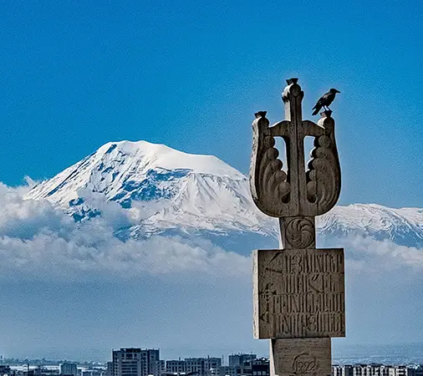
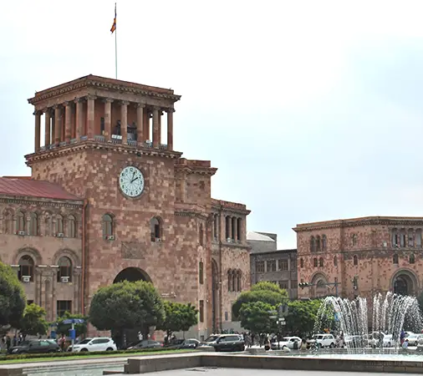
Core experiences: Republic Square and the Cascade Complex (572 steps or free interior escalators, views of Mount Ararat on clear days). The Matenadaran, the world’s largest repository of Armenian manuscripts — over 23,000 manuscripts from the 5th to 19th centuries housed in a gray basalt Soviet-era building on Mashtots Avenue. The Vernissage weekend market for handmade carpets, lacework, and carved wooden backgammon sets.
A day trip east to the Temple of Garni (24 Ionic columns, 6.54 meters tall, built around 77 AD — the only standing Greco-Roman temple in the former Soviet Union) and Geghard Monastery (UNESCO-listed, partly carved into cliff rock). A second day trip south to Khor Virap monastery (approximately 40 km from Yerevan, with Mount Ararat filling the entire southern horizon across the Turkish border) and Noravank monastery (a 13th-century complex set inside a red-rock canyon in Vayots Dzor).
Accommodation: 4-star boutique properties such as Republica Hotel Yerevan or Tufenkian Historic Yerevan Hotel, both within walking distance of Republic Square and the Old Quarter.
Package 2: 7-Day Best of Armenia Premium Tour
Best for: Comprehensive first-time visitors, culture-focused travelers who want geographic range without excessive driving.
Seven days cover three distinct zones. Each defines the country’s character differently: the capital and its day-trip circuit, the high-altitude Caucasus lakeshores, and the forested national park valleys of the north.
Route: Yerevan (3 nights) → Dilijan (2 nights) → Yerevan (1 night).
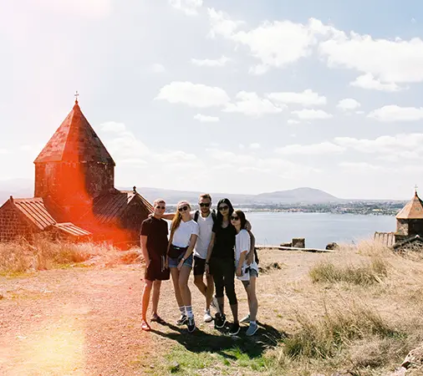
Core experiences: Days 1–3 follow the same Yerevan day-trip circuit as the Express tour, including Garni, Geghard, Khor Virap, and Noravank. Day 4 heads north to Lake Sevan (the largest lake in Armenia and the entire Caucasus region, at 1,900 meters above sea level, with a surface area of 1,241 square kilometers). Sevanavank monastery, founded in 874 AD, stands on a peninsula above the lake — formerly an island before Soviet water management projects lowered the lake level by roughly 20 meters.
Days 5–6 are based in Dilijan, the mountain town called “Armenian Switzerland” for its dense forests of beech, oak, and hornbeam. Haghartsin Monastery sits 18 km northeast of Dilijan in the forest and dates from the 10th through the 13th centuries. The town’s own Sharambeyan Street preserves a 19th-century lane of stone houses with wooden balconies, where active craftspeople work in ground-floor workshops.
Accommodation: Central boutique hotels in Yerevan, plus a premium nature property in Dilijan, such as the Tufenkian Old Dilijan Complex, built from reclaimed stone in the style of traditional Armenian mountain architecture.
Package 3: 10-Day Grand Armenia and Tatev Heritage Tour
Best for: Travelers wanting Armenia’s full geographic and historical range, including the deep south.
Ten days unlocks Syunik Province — Armenia’s southernmost region — which most short-trip visitors never reach. Syunik looks unlike anywhere else in the country: deep gorges, dramatic cliff monasteries, and the remarkable Wings of Tatev aerial tramway.
Route: Yerevan (3 nights) → Goris (1 night) → Jermuk (1 night) → Dilijan (2 nights) → Yerevan (2 nights).
Wings of Tatev: The cable car holds the Guinness World Record for the world’s longest non-stop reversible aerial tramway, at 5,752 meters. It opened in October 2010 and crosses the Vorotan gorge at up to 320 meters above the river below. The 11- to 15-minute crossing replaces a 40-minute drive down steep switchback roads. At the far end sits Tatev Monastery, a 9th-century complex on a basalt plateau above the gorge. The cable car operates roughly every 20 minutes in peak season — arrive early to avoid waits of 30 to 60 minutes on busy weekends.
Areni and the Vayots Dzor wine region: The route south from Yerevan passes through Vayots Dzor, where the Areni-1 cave contains the world’s oldest known winery, dating to approximately 4100 BC (roughly 6,100 years ago). Archaeologists found a complete production installation: a clay treading basin, fermentation jars buried in the floor, and preserved grape seeds of Vitis vinifera — the modern wine grape species. The Areni Noir grape, grown in the vineyards directly below the cave today, is believed to be a descendant of those ancient cultivars.
Jermuk: A thermal spa town at 2,080 meters above sea level in the Vardenis mountain range, known for its mineral water springs and the Arpa River gorge waterfall. The town offers natural thermal pools and a calmer pace between the intensity of Tatev and Dilijan.
Accommodation: Premium regional properties, including Mirhav Hotel in Goris (contemporary design in a historic canyon town) and Jermuk Hotel and Spa, plus the same Dilijan and Yerevan properties used in Package 2.
Armenia Travel Guides
The following articles prepare you for the practical realities of travel in Armenia:
10 Essential Things to Know Before Visiting Armenia: Covers taxi apps (GG Taxi and Yandex GO), the cash-versus-card split, the pulpulak public drinking fountains that make bottled water unnecessary in Yerevan, monastery dress codes, tipping norms, the closed Turkish and Azerbaijani borders, SIM card options at Zvartnots Airport, and the optimal travel seasons.
The Ultimate 7-Day Armenia Itinerary: A day-by-day routing guide connecting Yerevan, Khor Virap, Garni, Geghard, Lake Sevan, and Dilijan National Park, with specific driving times, site entry logistics, and the sensory detail that helps you plan the right pace for each location.
What to Eat in Armenia — A Food and Wine Guide: Armenia’s food revolves around khorovats (charcoal-grilled pork and lamb), tolma (grape-leaf or vegetable wraps stuffed with seasoned meat and rice), and lavash — the UNESCO-recognized flatbread (Intangible Cultural Heritage, 2014) baked by women against the walls of a conical clay tonir oven. The guide also covers the Areni wine region, the duduk instrument, and where to find genuine Armenian cognac rather than tourist imitations.
5 Must-See Monasteries in Armenia: The practical differences between Echmiadzin (the Vatican of Armenia, mother church of the Apostolic faith), Geghard (partly carved into cliff rock, UNESCO-listed), Khor Virap (closest monastery to Mount Ararat, site of Gregory the Illuminator’s 13-year imprisonment), Tatev (9th-century cliff-edge complex accessed by the world-record tramway), and Sevanavank (peninsula monastery above Lake Sevan, founded 874 AD).
Why Travel to Armenia with Peregrine Treks and Tours?
Private Vehicles and English-Speaking Guides
Every Peregrine Armenia package operates privately. No shared coaches, no fixed departure times, no strangers in your vehicle. Your driver-guide speaks fluent English and handles all logistics. Pre-booked entry slots, restaurant reservations, and practical knowledge about which monastery is best at dawn and which road needs a four-wheel drive after rain.
Handpicked Boutique Accommodation
Peregrine selects 4-star boutique hotels that reflect Armenian stone architecture and local hospitality — not international chain properties that look identical in every country. Properties like the Tufenkian Historic Yerevan Hotel occupy converted Soviet-era buildings with Armenian carpet collections, exposed tuff-stone walls, and rooftop views over the city. Accommodation in Dilijan and Goris follows the same principle: regional character over generic comfort.
Flexible Itineraries
All three packages above represent starting frameworks. Peregrine adapts every itinerary to your travel dates, party size, physical preferences, and specific interests. A traveler focused on wine can spend an extra day in Vayots Dzor. A traveler interested in early Christian architecture can add the Debed Canyon monasteries of Haghpat and Sanahin in Lori Province. Contact the team with your dates and priorities, and Peregrine builds the plan from there.
Frequently Asked Questions About Armenia Tours
How many days do I need for a first trip to Armenia?
Five days cover Yerevan and both essential day trips (the Garni/Geghard circuit and the Khor Virap/Noravank circuit). Seven days adds Lake Sevan and Dilijan, giving you a meaningful geographic range. Ten days reach Tatev in the south and let you properly pace the wine region. First-time visitors typically find seven days the right balance between depth and manageability.
Is Armenia safe to travel to?
Armenia is safe for tourists in all major destinations covered by Peregrine’s itineraries. Yerevan has a low street-crime rate and well-lit tourist areas. The U.S. State Department currently lists Armenia at Level 2 (Exercise Increased Caution). The concern is specific border zones near Azerbaijan — primarily east of Vardenis and east of Goris. All sites on Peregrine’s itineraries, including Tatev and the town of Goris, fall well outside restricted areas.
What is the Wings of Tatev cable car?
Wings of Tatev is the world’s longest non-stop reversible aerial tramway, at 5,752 meters. It holds the Guinness World Record set in October 2010. The crossing takes 11 to 15 minutes and travels up to 320 meters above the Vorotan River gorge. It connects the village of Halidzor to Tatev Monastery, replacing a 40-minute drive down steep switchback roads. Every fifth visitor to Armenia includes the cable car in their trip.
Can I visit Armenia and Georgia together?
Yes. The two countries connect easily by road through the Bagratashen border crossing, about 180 km north of Yerevan. Most travelers combine four to five days in Armenia with four to five days in Georgia, using Tbilisi as the Georgian base. Peregrine operates private tours in the Caucasus, covering both countries. Ask about the combined route when you contact the team.
What is the food like in Armenia?
Armenian food is built around charcoal grilling, fresh herbs, and bread. Khorovats — grilled pork or lamb, cooked over wood fire — is the center of every significant meal. Tolma appears in two forms: grape-leaf wraps in spring, or hollowed vegetables stuffed with seasoned meat in summer. Lavash, the thin flatbread baked in a clay tandoor oven, accompanies every meal and was recognized by UNESCO in 2014 as an Intangible Cultural Heritage. Armenian wine, led by the Areni Noir grape from Vayots Dzor, is serious, high-altitude, and distinct from anything you find in Western Europe.
How to Book Your Armenia Tour
All packages are priced on request. Contact Peregrine Treks and Tours with your travel dates, party size, and the package that interests you. The team confirms availability, prepares a full cost breakdown, and holds your dates while you review.
A 30% deposit secures the booking. The balance is due 60 days before departure. A full refund applies for cancellations made 60 or more days before departure. A 50% refund applies for cancellations 30 to 59 days before departure. Travel insurance is mandatory and covers force-majeure cancellations.
- Email: sales@peregrinetreks.com
- WhatsApp: +977 985 105 2413