


Nepal has no single best time to visit because it has multiple climates. The country holds at least four distinct climate systems. The subtropical Terai lowlands, the mild mid-hills, the high Himalaya, and the trans-Himalayan rain shadow of Mustang and Dolpo each run on their own calendar. The two headline trekking windows are spring (March to May) and autumn (September to November). But the right answer for you depends on where you are going and what you are going there to do.
The rest of this page breaks the question down properly by region, trek, month, and traveler type. One counterintuitive fact sets the tone for everything below. When monsoon rain washes out most of Nepal from June to August, Mustang and Dolpo sit dry behind the Himalayan wall. The “worst” months for Everest are among the best months for Upper Mustang. No single-answer guide can hold that truth. A region-by-region guide can.
| Season | Months | Best For | Watch Out For |
|---|---|---|---|
| Spring | March to May | Trekking, rhododendron bloom, peak climbing | Building haze by May, pre-monsoon heat in Terai |
| Monsoon | June to August | Mustang, Dolpo, lush green hills, budget travel | Rain, leeches, flight delays, and landslide risk on highways |
| Autumn | September to November | Clearest skies, all major treks, festivals | Peak crowds, booked-out lodges, festival closures |
| Winter | December to February | Mountain flights, photography, Chitwan safaris, luxury tours | Cold at altitude, snow closing high passes |
Why Nepal Has No Single Climate
Nepal rises from about 60 meters above sea level in the Terai to 8,849 meters at Everest’s summit within a strip barely 200 km wide. No other country on earth packs that much vertical change into so little horizontal distance. The result is four climate systems stacked on top of each other, each experiencing the same calendar month in completely different ways.
The Four Climate Zones
The Terai lowlands run along the southern border with India at 60 to 300 meters. The climate is subtropical, close to that of northern India. Chitwan, Bardiya, Lumbini, and Janakpur all sit here. Winters are mild and dry. Pre-monsoon months become genuinely hot, with temperatures above 35 degrees Celsius. Monsoon brings heavy rain and a risk of flooding.
The mid-hills hold Kathmandu (about 1,400 meters) and Pokhara (about 820 meters). Temperatures stay moderate year-round. Winters are cool but rarely freezing in the valley bottoms. Monsoon afternoons bring predictable rain, usually clearing by morning.
The high Himalaya covers the trekking country above roughly 3,000 meters: the Everest region, the Annapurna Sanctuary, Langtang, and the climbing peaks. Temperatures drop hard with altitude. Winters bring deep cold and snow-closed passes. The monsoon wraps the peaks in cloud for weeks.
The trans-Himalayan rain shadow lies north of the main Himalayan wall, in Upper Mustang and Dolpo. The mountains block the monsoon almost completely. The zone is a high-altitude desert, dry when the rest of Nepal is soaked, and bitterly cold in winter.
How Altitude Changes Everything
Temperature drops roughly 6.5 degrees Celsius for every 1,000 meters you climb. The rule explains why the same day in January feels completely different across Nepal. Kathmandu, at 1,400 meters, sits at a mild 18 degrees by mid-morning. Namche Bazaar at 3,440 meters holds near freezing. Everest Base Camp at 5,364 meters sinks to minus 15 or colder overnight.
Season tells you the weather pattern. Altitude tells you the temperature. You need both numbers to plan a trip to Nepal, and most seasonal guides only give you one. When you read “October is warm and clear,” ask: warm at what altitude? October is T-shirt weather in Kathmandu, fleece weather in Namche, and down-jacket weather at Base Camp, all on the same afternoon.
The One Fact Most Guides Get Wrong
Mustang and Dolpo can be more accessible during the monsoon than the rest of Nepal. The Himalayan wall wrings the rain out of the monsoon clouds before they cross, leaving both regions dry through June, July, and August. While trekkers cancel Everest plans over washed-out trails and grounded Lukla flights, Upper Mustang’s trails stay open, dusty, and quiet.
The pattern flips the standard advice on its head. If your only travel window falls in July, do not write off Nepal. Point yourself at the rain shadow instead.
Nepal Weather by Season
Spring (March to May)
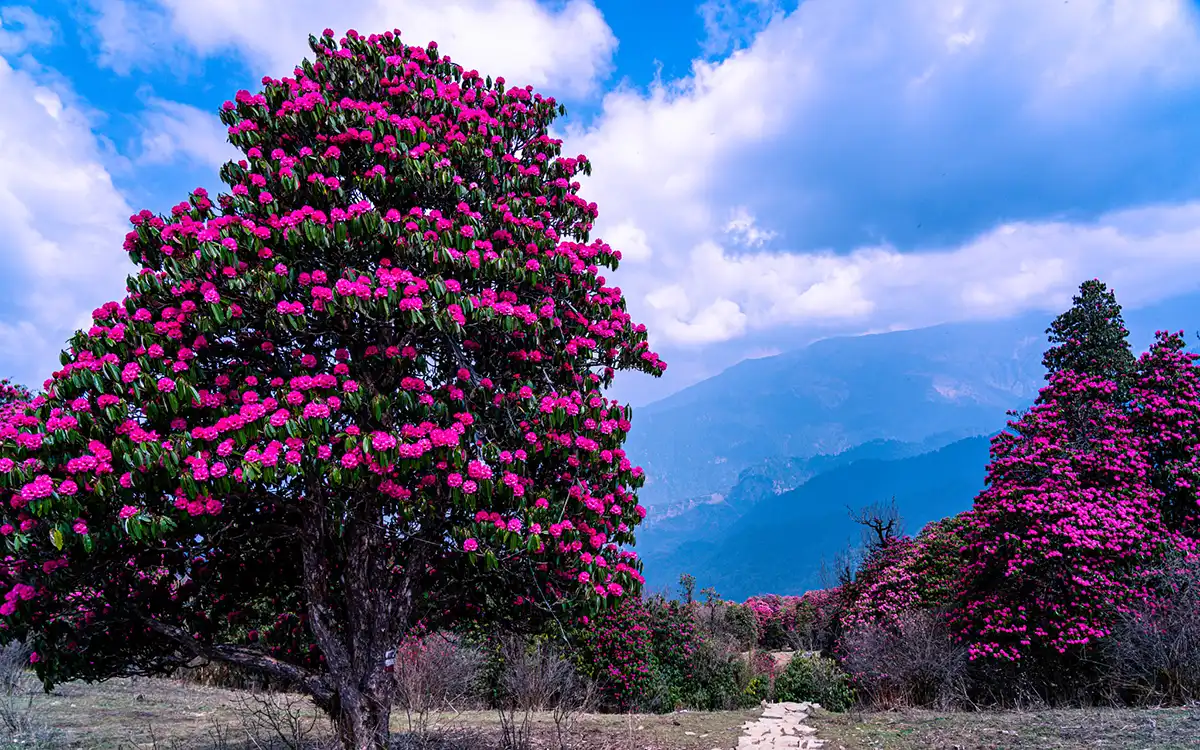
Spring is Nepal’s second-best trekking season and its most colorful. Temperatures climb steadily from March, snow melts off the mid-altitude trails, and the rhododendron forests below 3,500 meters turn entire hillsides red and pink. Our guides typically see the first reliable bloom on the Annapurna foothill trails in the last week of March. The timing shifts by a week or two each year.
March and April deliver the best balance of warmth and visibility. By May, pre-monsoon haze builds in the lower valleys and daytime heat presses hard on the Terai. High-altitude views stay good longer than mid-hill views, so treks that climb fast suffer less from the May haze than low routes do.
Spring is also the main expedition season. Everest summit attempts run in May, and the Khumbu fills with climbing traffic alongside the trekkers.
Monsoon (June to August)
The monsoon arrives from the southeast in June and dominates through August, sometimes stretching into September. Rain falls hardest at night and in the afternoons. Mornings can open clear and green. The hills turn a saturated, terraced green that no other season produces, and the waterfalls run at full volume.
The honest costs: trails turn muddy, and leeches thrive on lowland and mid-hill routes. Mountain views hide behind clouds for days, and Lukla flights face frequent delays. Highway travel carries genuine landslide risk, especially on the Prithvi Highway and the roads into the far west.
The honest opportunities: Mustang and Dolpo are at their best. Hotel rates drop across the country. Kathmandu’s UNESCO sites go quiet. Rafting rivers run high and fast for experienced paddlers. Green-season photography of rice terraces has no rival month.
Autumn (September to November)
Autumn is Nepal’s headline season and earns it. The retreating monsoon washes the dust out of the air, leaving the clearest, most stable skies of the year. October and November deliver the mountain views the postcards promise, day after day. Temperatures sit in the comfortable middle at every altitude band.
The cost is the company. October is the busiest month on the Everest and Annapurna trails. Teahouses fill, Lukla flights book out weeks in advance, and popular viewpoints draw a crowd at sunrise. Book flights, lodges, and permits well in advance for October dates.
Autumn also hosts Nepal’s two biggest festivals, Dashain and Tihar, which shift annually according to the lunar calendar and usually fall between late September and mid-November. The overlap shapes logistics in ways covered in the festival section below.
Winter (December to February)
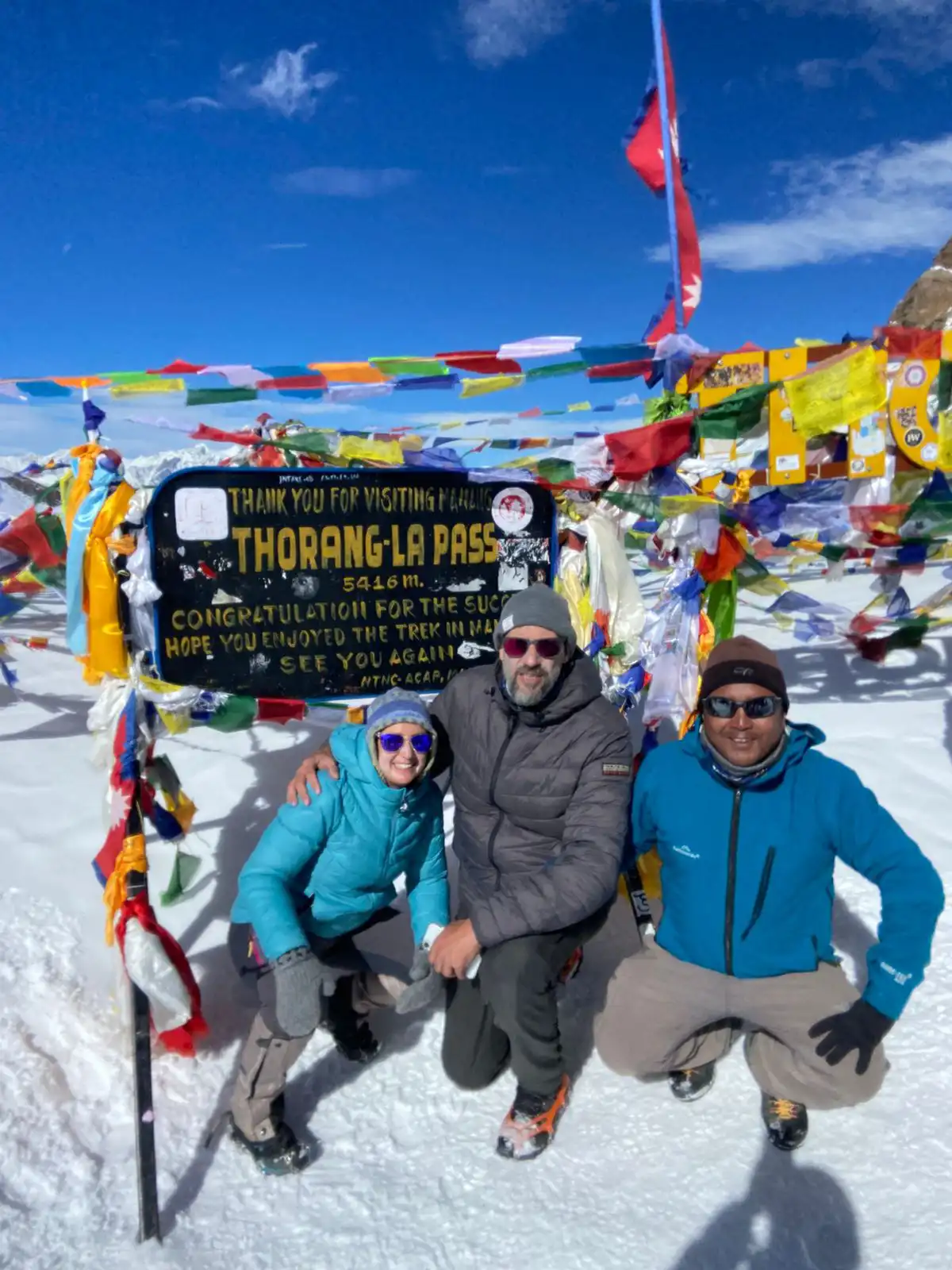
Winter is Nepal’s most misunderstood season. Most guides frame it purely as a trekking off-season, and at high altitude, the warning holds. Nights above 4,000 meters drop below minus 20 degrees Celsius. Snow closes the high passes, including Thorong La on the Annapurna Circuit, in most years.
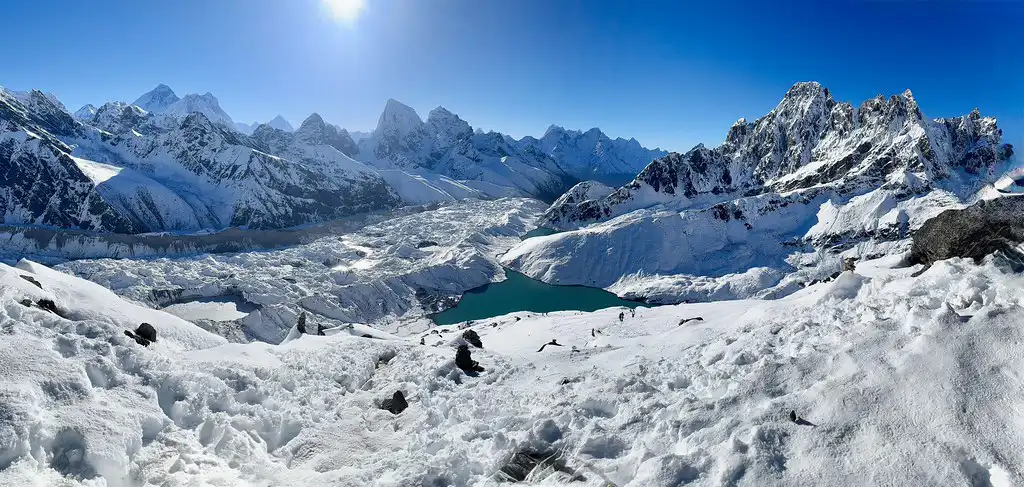
But winter air is the clearest of the entire year. The mountains stand sharper in January than in any other month. Mountain flights and helicopter tours are at their best. Kathmandu’s UNESCO squares go quiet, and the light for photography turns hard and clean. Down in the Terai, Chitwan and Bardiya sit at their absolute best, with mild days, cut grass, and wildlife concentrated near water.
For a luxury lodge itinerary, a heli-tour, or a photography trip, winter is often the best season, not the worst. The same holds for a first cultural visit without trekking ambitions. Low-altitude treks below 3,500 meters, including much of the Annapurna foothills, remain entirely workable with the right layers.
Spring vs. Autumn: The Head-to-Head
| Factor | Spring (Mar–May) | Autumn (Sep–Nov) |
|---|---|---|
| Sky clarity | Good early, hazier by May | Best of the year, especially Oct–Nov |
| Temperatures | Warming, mild at altitude | Cooling, comfortable at altitude |
| Trail color | Rhododendron bloom below 3,500 m | Golden harvest terraces, clear peaks |
| Crowds | Busy, below autumn’s peak | Heaviest of the year in October |
| Festivals | Holi, Buddha Jayanti | Dashain, Tihar |
| Expedition traffic | Heavy in the Khumbu (May summits) | Lighter |
| Best for | Flower color, warmth, and climbing | Maximum visibility, classic conditions |
Neither season is wrong. Autumn wins on visibility. Spring wins on color and warmth. Crowds are the tiebreaker for many travelers, and spring carries fewer of them.
The Weeks to Avoid, Named Plainly
Two specific windows undercut most trips, and naming them beats vague warnings. Late June to early September hides the mountains behind monsoon cloud on all the classic routes, with only the rain-shadow regions exempt. From late April to late May, pre-monsoon haze layers over the mid-hill viewpoints. Treks that stay below 3,000 meters lose their long views even under rain-free skies.
One more window deserves a flag for logistics rather than weather. The main Dashain days empty Nepal’s transport system as the whole country travels home, and domestic flights sell out weeks ahead. Travel through the festival gladly, but book around it deliberately.
Nepal Month-by-Month
January
January is Nepal’s coldest month. Kathmandu days reach 17 to 18 degrees under clear skies, dropping near 2 degrees overnight. High passes sit closed under snow, and teahouses above 4,000 meters run skeleton operations or close entirely. Mountain visibility is superb. The Terai sits at its most comfortable, with Chitwan days near 22 degrees and the grasslands freshly cut for wildlife viewing.
Best for: Chitwan and Bardiya safaris, mountain flights, heli-tours, Kathmandu Valley culture, and low-altitude treks. Wait if: your heart is set on a high-pass trek.
February
February holds winter’s clarity while the cold begins to ease. Late February opens the earliest edge of the spring trekking window at lower altitudes. Losar, the Tibetan New Year, falls in this period in most years and fills Boudhanath with ceremony. Best for: quiet trails, photography, culture, and Terai wildlife. Wait if: you want warm teahouse nights above 4,000 meters.
March
March opens the main spring season. Rhododendrons begin blooming on the mid-hill trails, snow releases the mid-altitude routes, and temperatures turn genuinely pleasant. Holi, the festival of colors, falls in March in most years. Best for: all major treks, flower color, and comfortable climbing conditions. Wait if: you want the year’s absolute clearest air, which belongs to autumn and winter.
April
April is spring’s peak month. The bloom reaches its height, days run warm at every altitude, and the Everest expedition teams move up the Khumbu toward their May summit windows. Haze begins building in the low valleys late in the month, softening the long views from mid-hill ridges. High routes stay sharp longer.
Nepali New Year falls in mid-April on the Bikram Sambat calendar. Bhaktapur’s Bisket Jatra chariot festival is the valley’s wildest street celebration. Best for: every major trek, Mera and Island Peak, the full spring experience. Wait if: Terai heat bothers you, since Chitwan climbs past 35 degrees.
May
May splits in two. High routes stay excellent through mid-month, while lower elevations turn hot and hazy. Everest summit pushes cluster in May’s weather windows. Buddha Jayanti, the Buddha’s birthday, usually falls in May and makes Lumbini its center. Best for: high-altitude treks, expedition watching, Upper Mustang as the rain shadow’s season opens. Wait if: you want crisp views at mid-hill elevations.
June
June brings the monsoon’s arrival, usually mid-month. Rain builds from the southeast, trails soften, and cloud claims the peaks. Early June can still offer decent trekking days before the rain settles in, a narrow window that experienced trekkers sometimes take advantage of. Mustang’s season runs at full strength, with Lo Manthang’s trails dry and warm.
Best for: Upper Mustang, Dolpo, green-season photography, budget travel. Wait if: you want mountain views on the classic routes.
July
July is the wettest month across most of Nepal. Leeches own the mid-hill trails, highways face landslide risk, and Lukla flights face regular delays. Behind the wall, Mustang stays dry and warm. The Tiji festival in Lo Manthang falls in this broad season in some years. Best for: rain-shadow treks, deep-green hill photography, and empty UNESCO sites. Wait if: your trip depends on flights running to schedule.
August
August continues the monsoon at nearly July’s intensity. Teej, the women’s festival, often falls in the August-to-September window and turns Pashupatinath red with saris. Best for: Mustang, Dolpo, cultural travel with flexible plans. Wait if: this is your only Nepal trip, and mountain views are the point.
September
September is a transition. The monsoon usually retreats in the second half, though recent years have seen it linger later [confirm against current-season patterns]. Late September can deliver freshly washed skies with pre-peak crowds, one of the year’s quiet bargains. Indra Jatra fills Kathmandu’s Durbar Square with masked dance in this window. Best for: gamblers on early clarity, festival photography. Wait, if you need guaranteed dry trails, which month serves better?
October
October is the single most popular month to visit Nepal, and the reputation is earned. Stable skies, comfortable temperatures at every altitude, and dry trails combine into the classic Nepal experience. Kathmandu sits at a latitude of 25 degrees. Namche holds a crisp 12. Base Camp afternoons stay workable, and the peaks stand cut-glass sharp from dawn.
Dashain and Tihar frequently fall in October, layering festival life onto peak season. The overlap cuts both ways: marigold-draped villages and lamplit evenings on one side, packed flights and closed banks on the other. Best for: everything. Wait if: crowds ruin trails for you, in which case, take November or spring.
November
November holds October’s clarity with thinning crowds and deepening cold at altitude. Early November treks run nearly as well as October’s, and many of our guides name it their favorite trekking month for exactly that balance. By late month, high passes begin closing, and teahouse operators at the highest lodges start descending for winter.
Best for: clear-sky treks with more solitude, photography, and Chitwan as the Terai cools into its prime. Wait if: you are chasing the high passes late in the month.
December
December opens winter. High routes close, but the air turns crystalline, and the Terai hits its stride. Kathmandu days stay sunny and mild. Best for: mountain flights, luxury tours, wildlife safaris, low treks, and quiet culture. Wait if: high-altitude trekking is the trip’s core.
Regional Weather Guide
Kathmandu Valley
Kathmandu is accessible and worthwhile in every month of the year. The valley sits at roughly 1,400 meters with a mild mid-hill climate. Winter days are sunny, with temperatures between 17 and 19 degrees. Monsoon rain falls mostly in predictable afternoon and evening bursts. The UNESCO sites, Durbar Square, Boudhanath, Swayambhunath, and Pashupatinath, never close due to weather. Winter offers the quietest visits and the sharpest mountain views from the valley rim.
Everest Region (Khumbu)
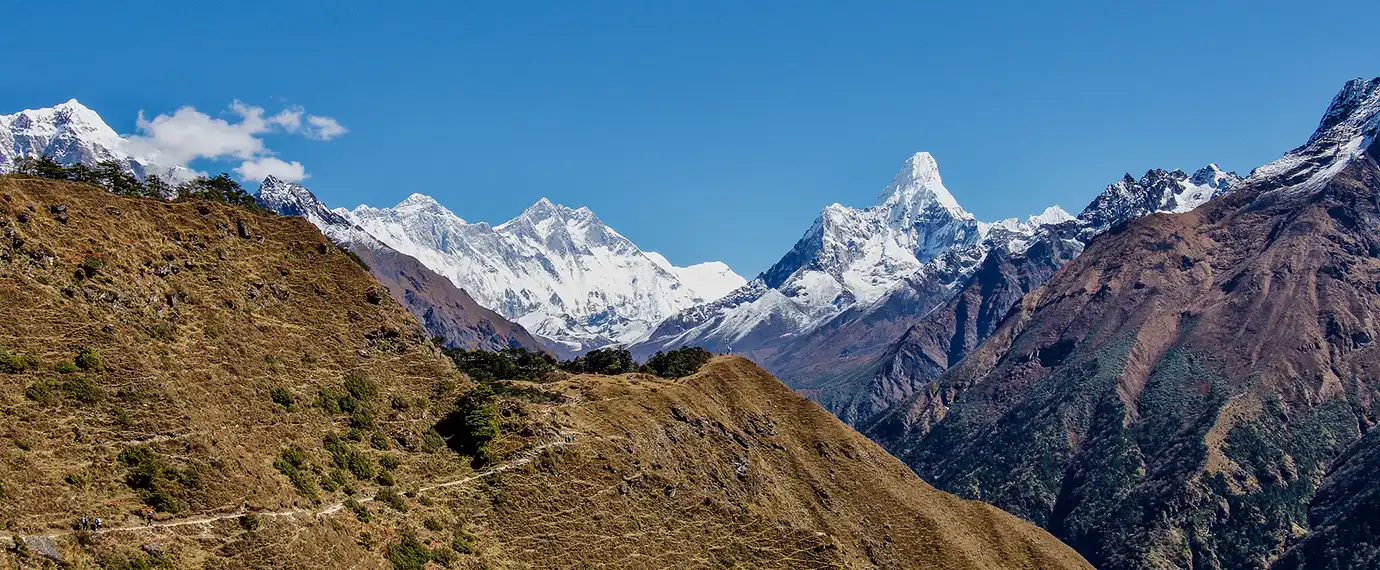
The Everest region runs best from March to May and late September to November. Everything in the Khumbu depends on the Lukla flight, and Lukla depends on the weather. Autumn brings the most stable flying conditions. Monsoon brings the least, with multi-day groundings common. Build at least two buffer days into any Everest itinerary in every season, since even October throws the occasional fog morning at the runway.
Winter trekking to Base Camp is possible for well-equipped, experienced trekkers, but nights below-20 °C and short days demand respect. The highest passes, including Cho La and Kongma La, close under winter snow. Namche Bazaar and the lower valley stay open and quiet through winter. The lower Khumbu makes a workable winter compromise for cold-hardy travelers.
Annapurna Region
The Annapurna region is more forgiving than the Everest region at a comparable trek quality. Road access from Pokhara removes the flight-weather lottery entirely. Annapurna Base Camp tops out at 4,130 meters, well below Everest Base Camp’s 5,364, which extends its comfortable season deeper into winter. The Annapurna Circuit’s Thorong La pass at 5,416 meters follows high-Himalaya rules and closes in most winters.
Langtang
Langtang runs on mid-hill and high-Himalaya rules, best in spring and autumn. Its advantage is access. The trailhead sits a day’s drive from Kathmandu with no flight involved. Lower sections stay workable at the season edges when higher regions have closed, making Langtang a strong shoulder-season and short-window choice.
Mustang
Upper Mustang’s season runs from May through October, directly through the monsoon that shuts down the rest of the country. The rain shadow keeps the region dry while Nepal’s hills flood. Winter closes Mustang with cold and snow on the access passes, and many residents historically descend for the season. The region requires a restricted-area permit arranged through a registered operator. The Tiji festival in Lo Manthang, on lunar timing, is the season’s cultural anchor.
Dolpo
Dolpo shares Mustang’s rain-shadow climate, with more challenging logistics. The accessible window is short, roughly June to September, because high passes guard every route in. Flights to Juphal, restricted-area permits, and full camping support are all part of the equation. Dolpo rewards the effort with Nepal’s remotest trekking, but it is a committed expedition, not a casual add-on.
Chitwan National Park
Chitwan is best from October to March, when the Terai turns mild and wildlife viewing peaks. The annual grass cutting in late winter opens sightlines across the grasslands, and animals concentrate near water as the dry season deepens. One-horned rhinos are seen year-round. April to June turns hot past 35 degrees. The monsoon brings a risk of flooding and reduced access from June to September.
Bardiya National Park
Bardiya follows Chitwan’s calendar, with fewer vehicles and a stronger reputation for tiger sightings. The park sits in the far western Terai, a longer trip from Kathmandu, which keeps visitor numbers low. February to April offers the best tiger odds as water sources shrink and cats move predictably. For travelers who want wilder and quieter, Bardiya is the answer to Chitwan’s crowds.
Lumbini
Lumbini, the birthplace of the Buddha, is most comfortable from October to February. The Terai heat builds sharply from March. Buddha Jayanti, usually in May, brings the year’s largest pilgrimage crowds in the hottest season. Pilgrims accept the trade-off. Casual visitors should weigh it.
Pokhara
Pokhara works year-round as a lakeside base. Autumn mornings deliver the Annapurna range mirrored in Phewa Lake, with Machhapuchhre’s fishtail summit the postcard centerpiece. The monsoon brings lush greenery and dramatic clouds, often hiding the mountains. Winter days stay mild at the lake’s 820-meter elevation, and the Sarangkot sunrise viewpoint earns its dawn alarm from October through March.
Paragliding conditions run best from October to April, when thermals stay reliable, and the launch site at Sarangkot fills with wings every clear morning.
Rara Lake and the Far West
Rara Lake, Nepal’s largest, sits at 2,990 meters in the far west, best visited from September to November and April to May. Access runs through flights to remote airstrips or long overland drives on roads that suffer badly in the monsoon. Almost no mainstream guide covers the region, and almost no crowds reach it. Karnali Province rewards self-sufficient travelers with Nepal as it looked decades ago.
Best Time for Each Trek
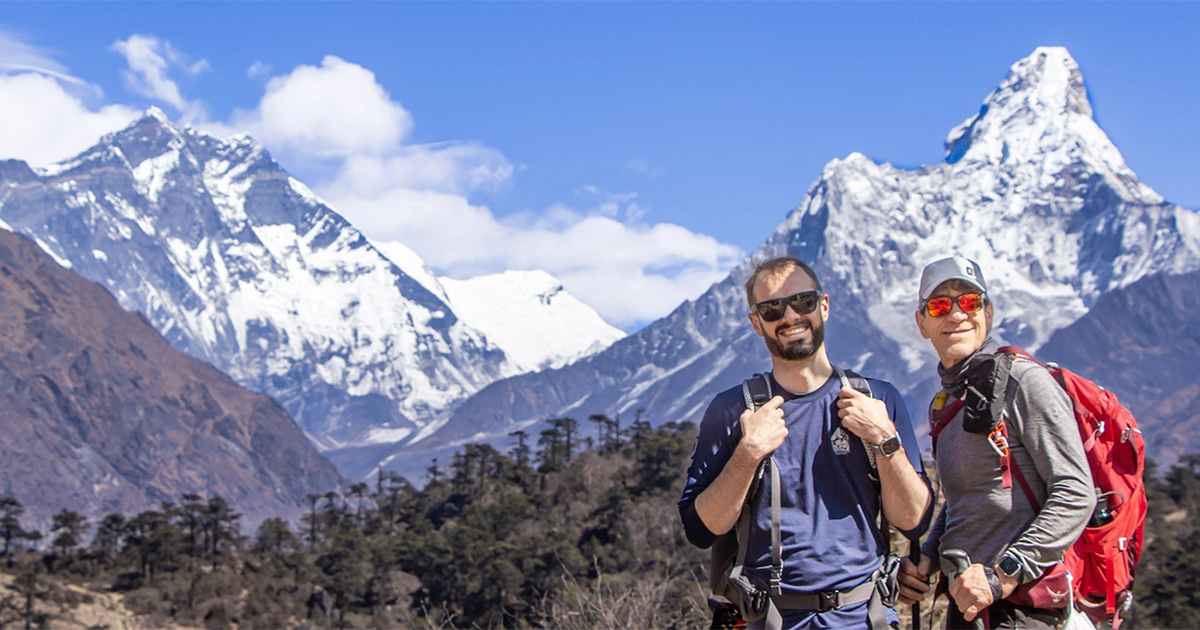
Everest Base Camp Trek
The best months for Everest Base Camp are March, April, October, and November. October leads in sky stability. April leads with warmth and expedition atmosphere. Winter attempts suit only experienced, fully equipped trekkers. Monsoon attempts face grounded flights and hidden mountains, and we advise against them.
Annapurna Base Camp Trek
Annapurna Base Camp runs well from March to May and September to November. Its lower 4,130-meter maximum gives it a longer workable season than Everest. Clear winter spells can open the Sanctuary for well-prepared trekkers in December and January, an option Everest Base Camp cannot match as comfortably.
Annapurna Circuit Trek
The Circuit is best in October and November, rather than in March and April. Everything hinges on Thorong La at 5,416 meters. The pass closes under winter snow in most years and becomes dangerous during storms in any season. Cross early in the day, always, every month.
Manaslu Circuit Trek
Manaslu runs best from September to November and from March to May. The Larkya La pass at 5,106 meters follows the same rules as Thorong La. The restricted-area permit requires a registered guide and a minimum group size, so build the paperwork into your timeline.
Langtang Valley Trek
Langtang works from March to May and September to November, with workable shoulder weeks on either side. The valley’s moderate maximum altitude and road access make it the most flexible of the major treks for tight schedules and edge-season dates.
Upper Mustang Trek
Upper Mustang is best from May through October, including the monsoon months that close the rest of Nepal. June and July, disastrous elsewhere, are prime time here. The restricted-area permit is mandatory and arranged through a registered operator.
Mardi Himal Trek
Mardi Himal runs well from March to May and September to December. The trek’s moderate high point near 4,500 meters keeps it open later into early winter than the big-pass routes. Its short length suits tight itineraries.
Gokyo Lakes Trek
Gokyo follows the Everest region rules: March to May and October to November. The lakes freeze in winter into a stark, beautiful stillness that rewards cold-hardy trekkers on clear December days. But the Cho La link to the Base Camp trail closes when it snows.
Mera Peak and Island Peak
Both trekking peaks climb best in April to May and October to November. Stable weather windows matter more on summit days than on trekking days, and both seasons deliver them. Spring offers slightly warmer summit nights. Autumn offers clearer summit views. The Nepal Mountaineering Association governs the climbing permits for both.
Best Time by Travel Style
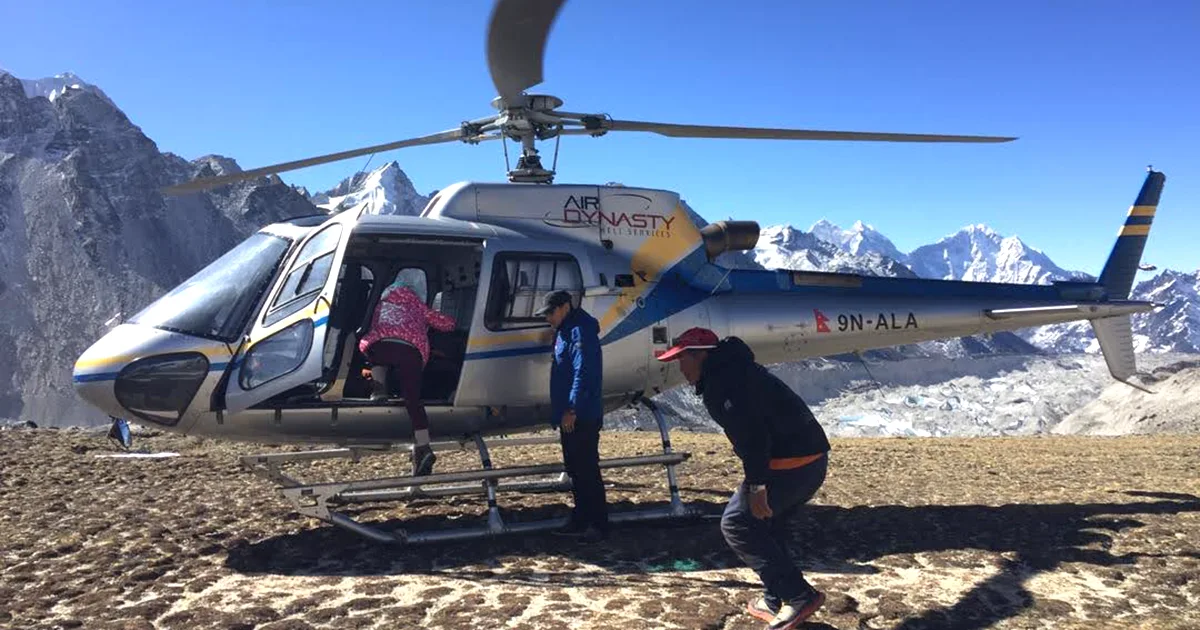
Luxury Tours and Helicopter Trips
Winter is the insider’s season for luxury Nepal. December to February delivers the year’s clearest air for Everest mountain flights and heli-tours to Base Camp or the Annapurna Sanctuary. Lodges sit quiet, UNESCO courtyards empty out, and the light turns sharp. Autumn works equally well at higher occupancy. A lodge-based luxury circuit of Kathmandu, Pokhara, and Chitwan runs beautifully in any winter month.
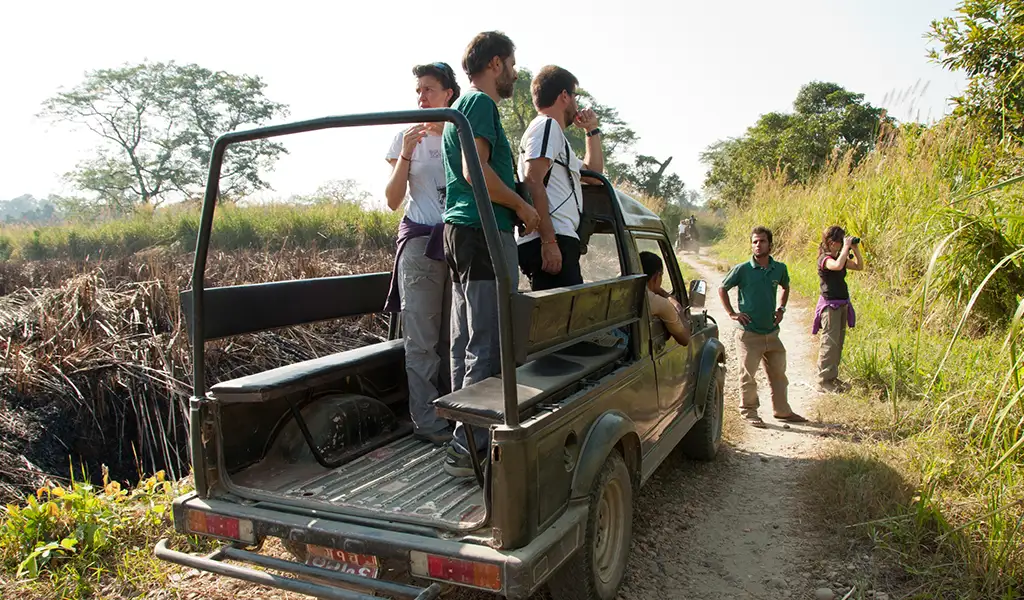
Wildlife Safaris
October to March is the wildlife window, with February to April the tiger sweet spot in Bardiya. Grass cutting opens the sightlines, dry-season water concentrates the animals, and Terai temperatures sit in the comfortable twenties. Bird watching peaks from November to February when winter migrants join the resident species, pushing Chitwan’s bird list past 500.
Honeymoons
October, November, and February to April are best for honeymoons. The formula pairs clear mountain mornings in Pokhara, quiet luxury lodges, and a Chitwan safari finish. Winter honeymoons trade a little warmth for empty viewpoints and the year’s best mountain-flight conditions, a trade many couples take gladly.
Families
March to April and October to November suit families best. Moderate temperatures suit all ages, and low-altitude itineraries in Kathmandu, Pokhara, and Chitwan avoid altitude concerns entirely. The Terai’s winter mildness makes December and January genuinely good for wildlife-focused family trips.
Photography
For mountain clarity, shoot from October to February. For color, shoot late March to April when rhododendrons flood the hillsides, or monsoon for saturated green terraces under dramatic clouds. Festival photography peaks in the autumn Dashain-Tihar window. The clearest single stretch of the year usually falls in the weeks after the monsoon fully retreats.
Adventure Sports
Rafting runs best in October to November and March to April, when rivers carry strong but manageable flows. Monsoon rafting suits experts only. Paragliding in Pokhara flies best from October to April. Bungee jumping and canyoning run year-round except in heavy rain. Mountain biking and motorbike touring follow trekking seasons, with the Mustang road circuit best from May to October, per the rain-shadow rules.
Budget Travelers
Monsoon is Nepal’s honest budget season. Rates drop, rooms sit empty, and negotiating power shifts to you from June through early September. Pair the savings with rain-shadow trekking or a culture-focused itinerary, and the season becomes a genuine strategy rather than a compromise. December and January outside the holiday weeks run cheaply as well.
Digital Nomads
October to April works best for remote workers. Kathmandu and Pokhara hold reliable fiber connections, mild daytime temperatures, and cafe culture built for laptops. Monsoon power cuts have decreased sharply from past years. Winter mornings in unheated buildings run cold, so factor a heater into any long stay from December to February.
Seniors
October, November, March, and April offer seniors the gentlest conditions: moderate temperatures, dry trails, and stable flight schedules. Low-altitude itineraries remove altitude risk entirely. For any trekking ambition, the Annapurna foothills and Langtang’s lower valley offer genuine Himalayan scenery below 3,500 meters. A private itinerary sets the daily pace to your liking.
First-Time Visitors
October, November, March, and April give first-time visitors the fewest ways for a trip to go wrong. Flights run to schedule, trails sit dry, and the mountains show up for the photos that motivated the trip. A first itinerary pairing Kathmandu’s UNESCO sites, Pokhara’s lakeside, and either a short trek or a Chitwan safari fits any of these months without compromise.
The deeper advice for a first trip: pick the month for your headline activity, not for the country. A first-timer chasing Everest views books in October or April. A first-timer built around wildlife books in January. A first-timer with only a July window books Mustang, not disappointment. The region-first logic that runs throughout this page matters most on the trip when expectations are highest.
Nepal’s Festival Calendar and How It Affects Travel
Why Nepal’s Festival Dates Change Every Year
Nepal’s festivals follow the Bikram Sambat lunar calendar, so every major festival shifts by one to four weeks in Gregorian terms each year. Any guide that prints a fixed date for Dashain or Tihar is wrong by the following year. The honest approach is to learn each festival’s seasonal window first. Then, verify the exact current-year dates with the Nepal Tourism Board’s calendar or with us before booking around them.
Dashain and Tihar
Dashain is Nepal’s biggest festival, a roughly 15-day celebration honoring the goddess Durga, usually falling between late September and late October. Tihar, the festival of lights, follows a few weeks later, usually in the October-to-November window. The five days honor crows, dogs, cows, and the bond between brothers and sisters. Both shift annually.
The practical impact on travelers is real. Banks and government offices close for the main Dashain days. Domestic flights and buses book out as the whole country travels home. Guide and porter availability tightens, since many take family leave for Tika, the festival’s central blessing day. Book transport and trek staff early for any itinerary crossing these windows.
The reward is equally real. Kathmandu’s courtyards fill with family ceremony, bamboo swings rise in village fields, and Tihar’s oil lamps line every doorstep after dark. Trekking through hill villages during Tihar, with marigold garlands on the trail and lamplight in the teahouses, ranks among Nepal’s finest travel experiences.
The Other Major Festivals
Holi splashes color across the country in the February-to-March window, celebrated a day apart in the hills and the Terai. Losar, the Tibetan New Year, fills Boudhanath with ceremony, usually in February. Buddha Jayanti marks the Buddha’s birthday, usually in May, centered on Lumbini and Swayambhunath. Teej turns Pashupatinath red with women’s saris in the August-to-September window. Indra Jatra brings masked dance and the living goddess Kumari’s chariot to Kathmandu’s Durbar Square, usually in September. Tiji, Lo Manthang’s three-day masked festival, anchors Upper Mustang’s season on its own lunar timing. Every date shifts annually [verify all against the current-year calendar].
Combining a Trek with a Festival
The classic combination finishes a trek a few days before the main Tika days of Dashain, then descends into the family celebrations. Autumn trekkers get the pairing almost automatically in many years, since the festivals sit inside the peak season. Tell us what matters to you about the festival when booking. We sequence the itinerary around the verified current-year dates rather than leaving the overlap to luck.
When to Travel to Nepal by Road
Overland travel follows its own seasonal rules, and most guides never mention them. Nepal’s highways are the trip for road-trippers and motorbike tourers, and the monsoon is their enemy. Landslides close sections of the Prithvi Highway between Kathmandu and Pokhara during most monsoons, sometimes for hours, sometimes for days. Roads into the far west suffer worse.
October to April is the honest overland window. Surfaces run dry, slide risk drops to normal, and mountain views ride along with you. The Mustang road circuit instead follows rain-shadow rules and runs well from May to October, another case where the standard calendar flips.
If your itinerary depends on a specific overland day during the monsoon, build a buffer day behind it. Our drivers work these highways year-round and reroute around closures, but no operator controls a hillside.
What to Pack by Season
Spring and Autumn
- Layered clothing: T-shirts to fleece to a light down jacket for altitude
- A shell jacket for wind and surprise showers
- Broken-in trekking boots and camp shoes
- Sun protection: high-SPF cream, lip balm, sunglasses, brimmed hat
- A three-season sleeping bag for teahouse nights above 3,000 meters
- Water purification tablets or a filter
Monsoon
- A genuinely waterproof shell, not water-resistant
- Quick-dry everything, cotton stays wet for days
- Leech socks or high gaiters for lowland and mid-hill trails
- Dry bags for electronics and documents
- Sandals that handle mud for village evenings
- Insect repellent for the Terai
Winter
- A serious down jacket rated for real cold, not a fashion puffer
- A four-season sleeping bag rated to minus 15 or lower for altitude
- Insulated gloves, a warm hat, and a buff for wind
- Thermal base layers, top and bottom
- Microspikes for icy trail sections above 3,500 meters
- Lighter layers for the Terai, where winter days sit near 22 degrees
Frequently Asked Questions
What is the best time to visit Nepal?
October to November offers Nepal’s most reliable combination of clear skies, dry trails, and comfortable temperatures, with March to May a close second. But the best time genuinely depends on your destination. Mustang and Dolpo peak during the monsoon, Chitwan peaks in winter, and mountain flights fly clearest from December to February.
Can you trek in Nepal during the monsoon?
Yes, in the right regions. Upper Mustang and Dolpo sit in a rain shadow behind the Himalaya and stay dry through the monsoon, making June to August their prime season. Classic routes like Everest and Annapurna suffer muddy trails, leeches, hidden views, and flight delays, so we advise against them in these months.
Is Everest Base Camp possible in winter?
Yes, for experienced, well-equipped trekkers. December to February brings the year’s clearest air and empty trails. But nights below minus 20 degrees, short daylight, and icy sections demand a four-season bag, serious down layers, and microspikes. The highest side passes close under the snow. First-time trekkers should choose spring or autumn.
When is Dashain and Tihar?
Both festivals follow the lunar Bikram Sambat calendar and shift every year. Dashain usually falls between late September and late October, with Tihar following a few weeks later in the October-to-November window. Verify the exact current-year dates before booking, since banks close, flights fill, and guide availability tightens around the main festival days.
What is the coldest month in Nepal?
January. Kathmandu stays mild with sunny days near 17 degrees. High-altitude nights drop below minus 20 degrees Celsius, and the high passes sit closed under snow. The same month delivers the year’s clearest mountain air, which makes January the best month for Everest mountain flights and helicopter tours.
Is October too crowded for Everest Base Camp?
October is the busiest month on the trail, and the crowds are real. Teahouses fill, Lukla flights book out weeks ahead, and Kala Patthar holds a sunrise crowd. The weather justifies the demand. For similar conditions with more space, take late November or April instead, or book October well in advance and accept the company.
Why is Mustang dry when the rest of Nepal is wet?
The Himalayan wall blocks the monsoon. Rain clouds moving up from the south drop their moisture on the mountains’ southern slopes and arrive over Mustang nearly empty. The result is a high-altitude desert that stays dry through June, July, and August while the rest of the country floods. The standard seasonal advice flips completely.
When can you see the Himalayas most clearly?
From late autumn through winter, roughly late October to February, after the monsoon has washed the atmosphere clean and before spring haze builds. Early mornings beat afternoons in every season, since valley haze and cloud build through the day. For photography, the weeks right after the monsoon’s retreat are the single best window.
What is the best time for a Nepal honeymoon?
October to November and February to April. Clear mountain mornings in Pokhara, quiet luxury lodges, and a Chitwan safari make the classic pairing. Winter honeymoons in December and January trade a few degrees of warmth for empty viewpoints and the year’s best mountain-flight visibility. Many couples happily make the trade.
What is the best time to visit Chitwan National Park?
October to March. The Terai turns mild, the annual grass cutting opens sightlines across the grasslands, and animals concentrate near shrinking water sources. Rhino sightings run reliably year-round. April to June turns uncomfortably hot, and monsoon flooding limits access from June to September.
What is the cheapest time to visit Nepal?
Monsoon, from June through early September. Hotel rates drop across the country, flights run cheaper, and negotiating room opens everywhere. Pair the savings with a rain-shadow trek in Mustang or a culture-focused itinerary in Kathmandu and Pokhara. The low season becomes a genuine strategy rather than a compromise.
How far in advance should I book for October?
Three to six months for anything involving the Everest region. Lukla flights, popular teahouses, and experienced guides book out first. Annapurna itineraries with road access carry slightly more flexibility. But October remains Nepal’s peak-demand month across the board, and late planners pay for it with compromises.
Plan Your Nepal Trip Around the Right Season
Nepal rewards travelers who match the region to the month, and that’s exactly what we do. Peregrine has planned Nepal trips from our Kathmandu head office since 2002 and is registered with the Nepal Tourism Board, TAAN, and the NMA. Tell us your travel dates, and we’ll honestly tell you what those dates can deliver, which region they fit best, and what to book first.