


The standard advice reads: visit the Maldives in the dry season, December through April, and skip the monsoon. It is roughly correct and almost useless for planning a real trip. The best time to visit the Maldives is not just one week. It is five different answers, one each for divers, honeymooners, families, wellness travelers, and budget-conscious couples. The dry season alone spans five months and four price tiers.
The wet season brings manta rays, whale sharks, and rates 30 to 40 percent lower. Christmas week costs three times as much as February. A single week in late September can be the best value of the year. By the end of this guide, you will know which monsoon to target, which month fits your trip, which marine-life windows to book against, and which value weeks justify shifting your dates. Peregrine books the Maldives across every month of the year, so the desk tracks real resort conditions, transfer reliability, and value windows from client trips, not from a weather app.
Here is the honest answer. There is no single best time, only the best time for your kind of trip. So this guide breaks each one out.
The Two Monsoons: What Actually Changes
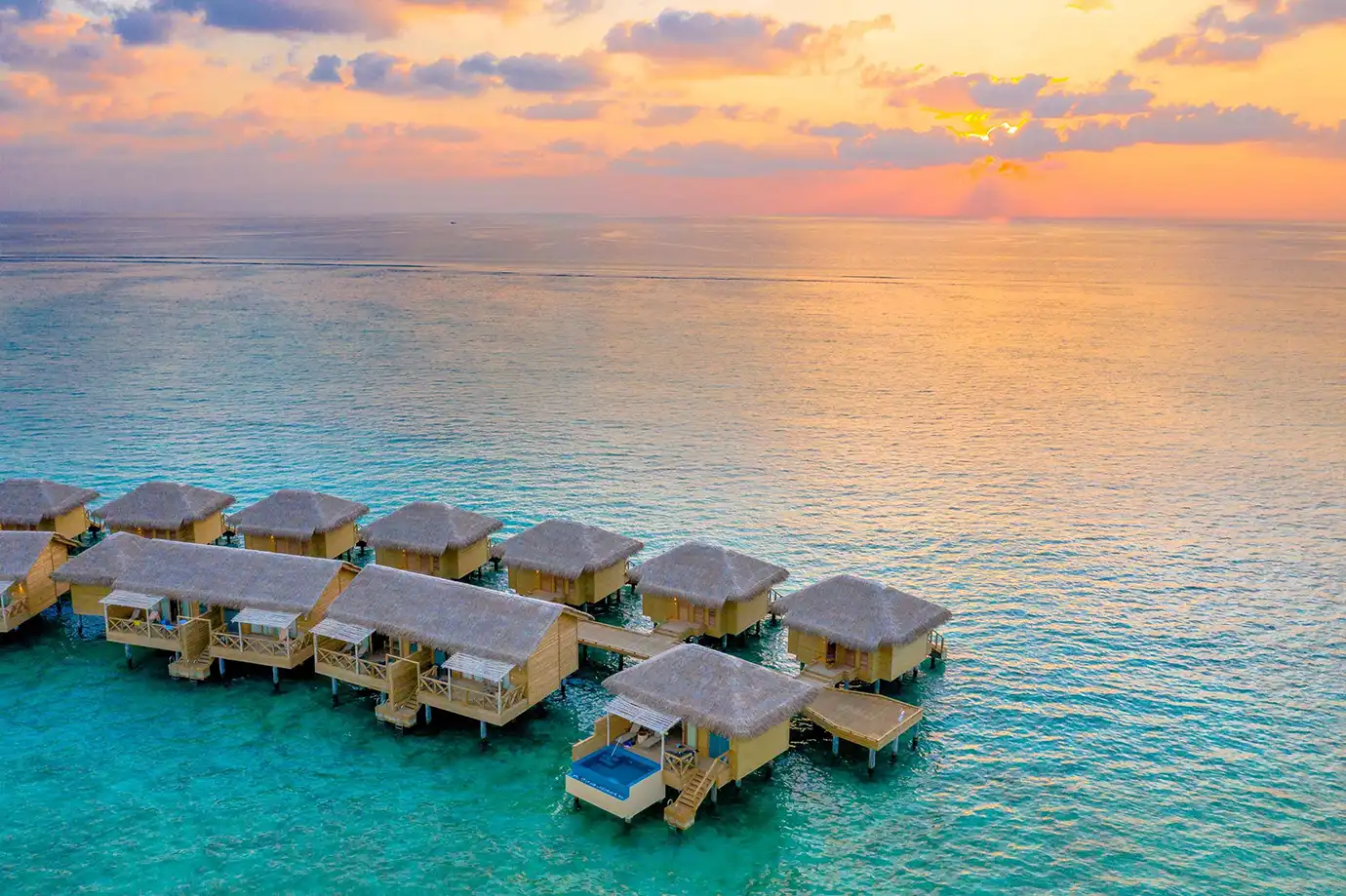
The Maldives has two seasons, not four, and both come down to which way the wind blows. According to historical climate tracking from the Maldives Meteorological Service, the dry Northeast Monsoon runs from December to April, while the wet Southwest Monsoon runs from May to November.
The temperature barely moves between them. What changes are rain, sea state, and underwater visibility? Here is how each season actually feels.
The Northeast Monsoon, or Iruvai, from December to April
The dry season is what the whole industry plans around, and locals call it Iruvai. Winds come from the northeast, skies stay mostly clear, and rain drops to about 2 to 5 days a month. Air runs about 26 to 32°C (roughly 79 to 90°F) by day, cooling a little overnight. Water sits around 27 to 29°C. Underwater visibility peaks at 25 to 40 meters, the best diving of the year. Seas stay calm on the eastern side of the atolls.
The Southwest Monsoon, or Hulhangu, from May to November
The wet season, called Hulhangu, flips the wind to the southwest and brings more cloud and rain. Peak wet months like June, July, and October see 10 to 18 rain days.
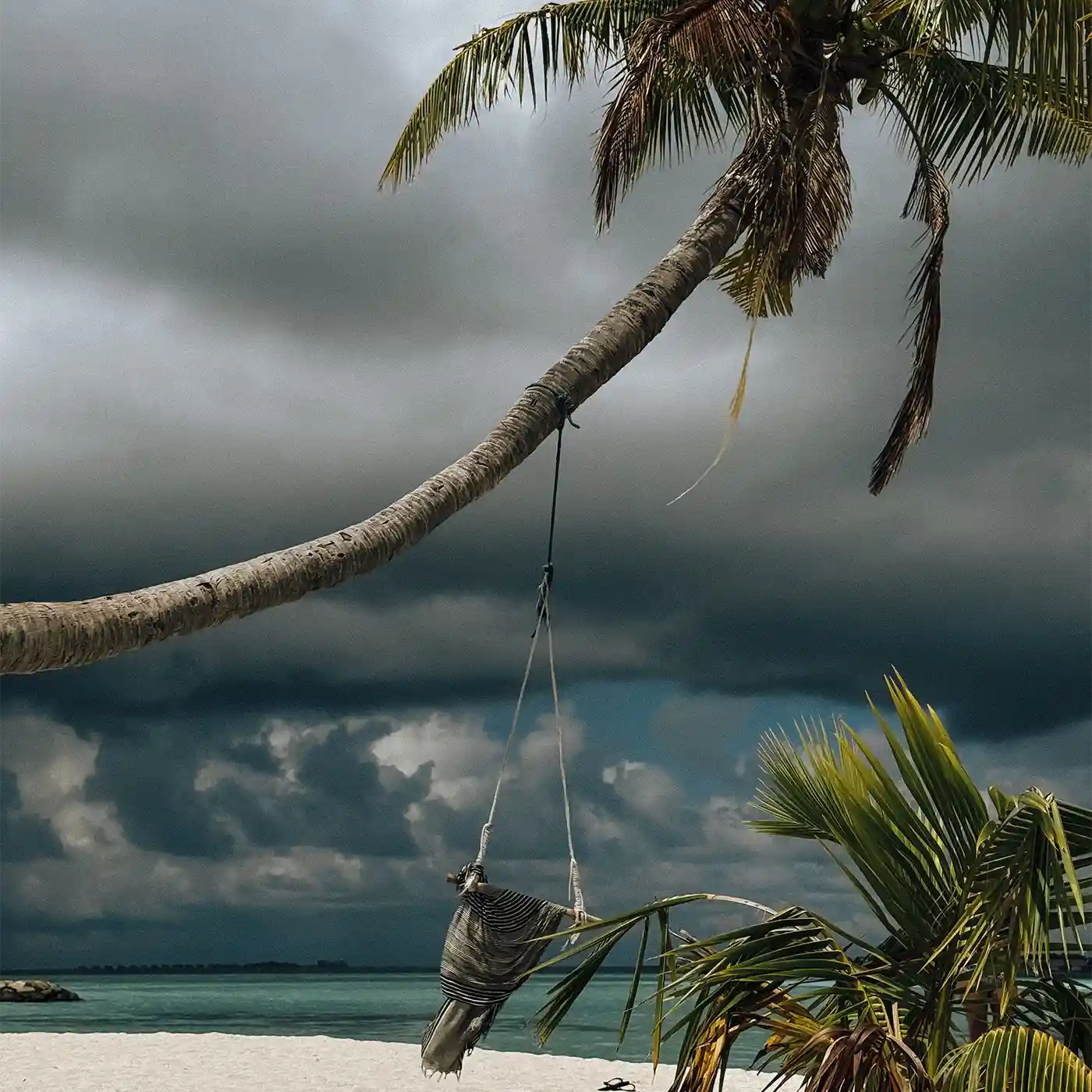
Here is the part most guides get wrong. Those rainy days are not all-day washouts. A Maldives monsoon storm usually lasts 45 minutes to 2 hours, then clears, and a single rain day often still holds 4 to 6 hours of sun. Air temperatures are about 25-31°C, nearly the same as in the dry season, with higher humidity. Water runs a touch warmer at 28 to 30°C. Visibility drops to 15-25 meters, fine for snorkeling and shallow dives, but tighter for deep wall dives.
What a Rain Day Actually Looks Like
A wet-season rain day is not a lost day, and knowing that changes how you plan. A typical day opens sunny, clouds build by early afternoon, a storm rolls through for an hour or two, and the sky clears again by evening.
You still snorkel in the morning, still take the sunset cruise, still eat dinner under the open sky most nights. Plan your water activities for the mornings and keep the spa or a long lunch for the afternoon, and the rain rarely costs you anything. Full washout days do happen, but they are the exception, not the rule.
The Regional Nuance
The Maldives stretches about 870 kilometers north to south, so the weather shifts with latitude. Northern atolls enter the dry season earliest and hold it longest.
Northern atolls like Baa, Raa, and Lhaviyani stay drier later into November and dry out earlier in April. Central atolls around Malé and Ari set the standard timings. Southern atolls like Gaafu and Addu dry out later and feel the southwest monsoon more strongly. If your dates fall in a transition month, pick a northern atoll for the better odds.
The Transition Weeks
Two short transition windows carry mixed weather and strong value. Late April into early May sees the dry season winding down with the odd early storm.
Late October into mid-November sees the wet season pulling back with a few lingering wet days. Both windows are priced low and often deliver good weather, as long as you accept that one or two days could turn wet.
The Cyclone Question
Cyclones are not a real worry in the Maldives. The country sits near the equator, below the main Indian Ocean cyclone belt, so tropical cyclones strike very rarely, less than once a decade.
Southwest monsoon storms are not cyclones. The islands are flat and low, so even a normal storm can look dramatic from your villa, but genuine cyclones are not the operational risk here.
Month-by-Month Maldives Weather
Here is the Maldives weather by month, with the numbers that actually shape a trip. The figures are long-term averages, so any given year can run wetter or drier than the norm.
Use each month’s best-fit note and price tier to line the season up with your trip.
January
Peak dry season and reliably clear. Air runs 26 to 30°C, water around 27°C, with just 3 to 5 rain days and visibility of 30 to 40 meters. Seas stay calm across every atoll.
Pricing sits at peak. January suits honeymooners, divers, and families with school-holiday flexibility. Expect near-constant sun and excellent diving. Chinese New Year, which falls in late January or February depending on the year, adds a premium at some resorts. Book lower-luxury islands 4 to 6 months out.
February
The single best all-around month for most travelers. Air runs 26 to 30°C, water 27°C, with only 2 to 4 rain days, the driest month of the year, and visibility of 30 to 40 meters. Seas are calm.
Pricing is peaking but easing from January. February fits nearly every traveler. You get near-perfect weather with fewer crowds and less price pressure than at Christmas or New Year’s. Book 3 to 5 months out.
March
Excellent weather with a warming trend. Air runs 27 to 31°C, water 28°C, with 4 to 6 rain days and visibility of 30 to 35 meters. Seas stay calm to mild.
Pricing holds at peak, close to February. March suits all travelers, and especially divers chasing whale sharks in Ari Atoll. The third week can bring a little early southwest influence in central and southern atolls, but the month is generally reliable. Book 3 to 4 months out.
April
The last month of dependable dry weather is a sweet spot. Air warms to 28 to 32°C, water 29°C, with 5 to 8 rain days and visibility of 25 to 35 meters. Seas stay mild.
Pricing drops to the high shoulder, about 15-25 percent below February levels. April suits value-minded honeymooners, divers, and first-timers. The first three weeks run excellently, with the odd afternoon storm creeping in during the last week. Book 2 to 4 months out.
May
A transition month as the southwest monsoon sets in. Air runs 27 to 30°C, water 29°C, with 10 to 14 rain days and visibility of 20 to 30 meters. Seas run mild to moderate.
Pricing falls to the shoulder, about 25-35 percent below the peak. May suits budget-minded couples and divers chasing the start of Baa Atoll manta season. Expect shorter storms broken up by sunny spells, and pick a northern atoll for drier odds. Book 2 to 3 months out.
June
The southwest monsoon is fully in, and so is manta season. Air runs 26 to 29°C, water 29°C, with 14 to 17 rain days and visibility of 15 to 25 meters. Seas run moderately.
Pricing is low, about 30-40 percent below peak. June suits manta fans, budget repeat visitors, and wellness stays built around indoor programs. Baa mantas show reliably, though surface weather varies, so book a resort with a strong spa and dining indoors. Book 1 to 3 months out.
July
Peak wet season, and the best month for Baa manta photography. Air runs 26 to 29°C, water 29°C, with 14 to 18 rainy days and visibility of 15 to 22 meters. Seas run moderate, occasionally rough.
Pricing stays low. July suits divers set on mantas and budget travelers who accept weather swings. Expect some full washouts, some thot sunny ones, and high humidity throughout. Book 1 to 2 months out.
August
Still wet, easing a little toward the month-end. Air runs 26 to 29°C, water 29°C, with 12 to 16 rain days and visibility of 18 to 25 meters. Seas run moderately.
Pricing is low but firms up with European summer demand. August suits European families on summer leave, manta divers, and budget travelers. Early August often runs wetter than late August, and the family surge fills some resorts. Book 2 to 4 months out for European-market islands.
September
Wet season continuing, then easing in the final week. Air runs 27 to 30°C, water 29°C, with 12 to 15 rain days and visibility of 18 to 25 meters. Seas run moderately.
Pricing is low. September suits manta divers, value-seeking wellness travelers, and budget honeymooners. The last week often strings together three or four sunny days, one of the best value stretches of the year. Book 1 to 2 months out.
October
A transition month as the monsoon retreats. Air runs 27 to 30°C, water 29°C, with 10 to 14 rain days and visibility of 20 to 28 meters. Seas run moderate, easing.
Pricing sits at the shoulder, about 20 to 30 percent below peak. October suits value honeymooners, divers, and first-timers who accept some variance. Northern atolls like Baa, Lhaviyani, and Raa dry out first, often delivering reliable weather in the second half, while southern atolls lag. Book 2 to 3 months out.
November
The high-value shoulder month most travelers underrate. Air runs 27 to 30°C, water 28°C, with 7 to 11 rain days and visibility of 25 to 32 meters. Seas run calm to mild.
Pricing is high-shoulder, about 1- 2% below peak. November fits nearly every traveler. The first week runs variable, but the second half often delivers real dry-season weather, and Baa manta season makes its last stand. Book late-November dates 3 to 5 months out.
December
Dry season is back, with a holiday spike at the end. Air runs 26 to 30°C, water 27°C, with 4 to 8 rain days and visibility of 28 to 38 meters. Seas are calm.
Early December prices are at a peak, while prices from December 20 to January 5 jump to 40 to 60 percent above February levels. December suits honeymooners, families on school leave, and divers. The weather is excellent, but demand is heavy. Book the holidays 6 to 9 months out, and early December 3 to 5 months out.
Have you fixed dates already? Our Maldives desk can tell you what to expect for that week and provide a quote within 24 hours.
Marine Life Calendar: When to Book Against Species
For divers and snorkelers, the marine-life windows matter more than the surface weather. Time your trip to the animal you most want to see, and book the atoll that reaches it.
No operator can guarantee a sighting, so treat any “guaranteed” promise as a red flag.
Baa Atoll Manta Rays, May to November
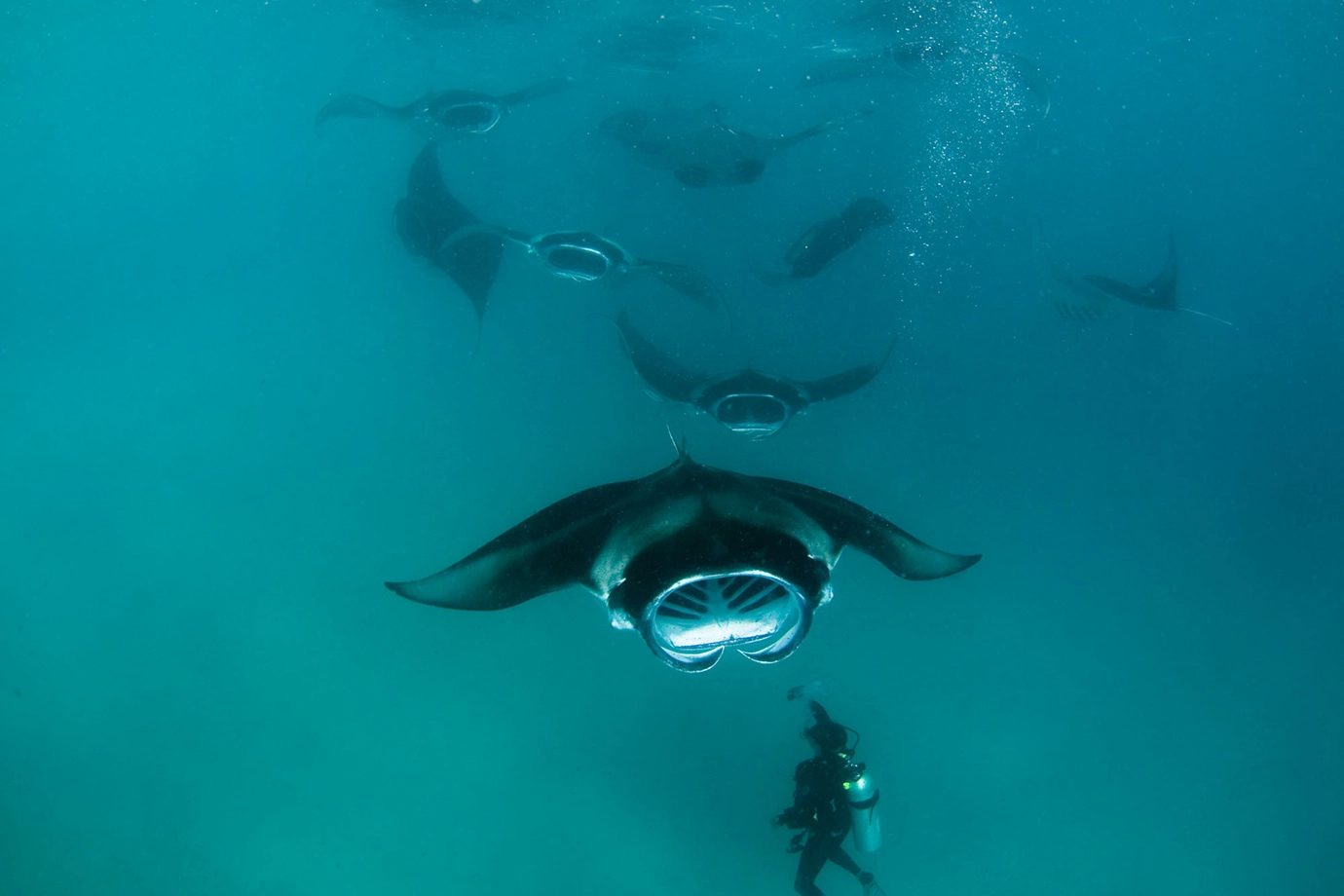
Hanifaru Bay in Baa Atoll hosts one of the largest manta gatherings on Earth. From May to November, plankton blooms draw 50 to 200 mantas on peak days at a UNESCO World Biosphere Reserve with permit-controlled, snorkel-only access.
June through October is the strongest window, with July and August the statistical peak. Trips run for 60 to 90 minutes on-site, at about $150 to $300 per person from Baa resorts. Milaidhoo, Amilla, Vakkaru, and Anantara Kihavah all sit 15 to 30 minutes away. Book Baa during manta season, 3-5 months out.
South Ari Atoll Whale Sharks, Year-Round
Whale sharks patrol the southern edge of South Ari Atoll all year, with November to April the strongest window when calmer seas make spotting easier. According to the Maldives Whale Shark Research Program, encounters are swim-with, not deep dives.
Resorts like Vakarufalhi, Lily Beach, and Kandima run dedicated whale-shark excursions lasting 3 to 5 hours at about $150 to $350 per person. Sightings are never guaranteed, so plan two trips if the shark is your priority.
Other Shark Encounters
Fuvahmulah, in the deep south, is a different kind of trip, built for serious divers. It offers tiger sharks and thresher sharks year-round, with occasional whale sharks.
Reef sharks, the white-tip and black-tip kind, show up year-round at every atoll. They are not a booking-window decision, just a normal part of any house reef.
Bioluminescence, the Sea of Stars
The glowing blue “sea of stars” comes from tiny plankton that light up when the water moves. Sightings occur on many Maldivian beaches, but they vary widely from night to night.
June through October, during the southwest monsoon, brings the most reports, since the season feeds the plankton. New-moon nights with dark skies give the best odds. No resort can promise it, so ask the resort’s marine biologist about recent sightings, and look to the Baa and Raa Atoll islands for the steadier chances.
Coral Spawning and Turtles
Mass coral spawning occurs in the Baa and North Malé Atolls around October and November, tied to the lunar cycle, and marine biologist night dives during these windows are a rare treat. Divers with a specific interest can time a trip to them.
Green and hawksbill turtles are present year-round, with a slight peak from March to October. Snorkel trips at resorts with strong house reefs turn up turtles on 60 to 80 percent of outings. Spinner dolphins appear year-round, and sunset cruises spot them on 70 to 80 percent of departures at the better marine resorts.
Chasing a specific species? Tell our Maldives desk whether it is Baa mantas or Ari whale sharks, and the team books the atoll and window that fit.
The Value Windows: When to Save Without Compromising
For travelers who can shift their dates by one to three weeks, real savings are possible without sacrificing good weather. Four specific windows offer the best mix of price and sun exposure.
Here is where the value lies, and the promotions are worth watching.
The Four Value Windows
Not every shoulder week is equal. These four genuinely deliver:
- Late April, the 15th to 30th: dry weather holds 80 to 85 percent of the time, at rates 15 to 25 percent below February. The best price-to-weather combination of the year.
- Second half of September: the monsoon eases with dry stretches between storms, at rates 30 to 40 percent below peak, and manta season is still running.
- Second half of November: dry season sets in, at rates 20 to 30 percent below December, with weather 80 to 90 percent reliable.
- Early December, the 1st to 15th: full dry-season weather, 85 to 95 percent reliable, at rates 25 to 40 percent below the Christmas spike. The best value window for peak-quality weather.
Promotions Worth More Than a Discount
In shoulder months, resorts often add value rather than cutting rates, and the extras can beat a cash discount. Common offers include:
- A free half-board or all-inclusive upgrade
- A complimentary night, like stay 5 pay 4 or stay 7 pay 6
- A free seaplane transfer for longer stays
- A villa-category upgrade at check-in
- A spa treatment credit per room
A free half-board upgrade on a 7-night couple’s stay is worth about $1,500 to $3,000 at this tier, often more than the equivalent discount.
The Peak Weeks to Avoid on a Budget
A few windows spike hard and carry minimum-stay rules. Skip these if budget matters:
- December 20 to January 5, at 40 to 60 percent above February
- Chinese New Year, which falls between late January and mid-February each year, is in high demand at China-focused resorts.
- Easter week, which moves each year, is at 20 to 30 percent above normal
- Mid-July to the end of August, at a premium at European-market resorts despite the wet season
The Booking Strategy
Two approaches work, depending on what is fixed. If your dates are fixed, stay flexible on the property and take whichever island has the best promotion that week.
If your property is fixed, stay flexible on dates and watch the value windows for availability. Peregrine’s Maldives desk tracks partner-property rates month to month and can flag the best booking dates for a specific island.
For current value-window promotions across our partner resorts, our Maldives desk sends quotes with the promotion detail within 24 hours.
How the Season Shapes Your Arrival Day
The season affects your transfer more than your beach time does, so plan your arrival day around it. Before flying, ensure you complete the mandatory arrival declaration on the official Maldives Immigration IMUGA portal within 96 hours of departure to avoid delays at Malé customs. Seaplanes fly only in daylight, roughly 6 a.m. to 3:30 p.m., and pause during heavy storms, so wet-season arrivals carry a small risk of delay.
In the dry season, seaplane and speedboat transfers run smoothly and on schedule, and a mid-afternoon flight arrival still reaches the island by evening. In the wet season, aim for a morning international arrival so a weather delay still leaves daylight to fly.
A speedboat resort in North or South Malé sidesteps the issue entirely, since boats run day or night in any season. For a far atoll in the wet season, build a buffer into your arrival, and never book a tight same-day onward connection.
One more wet-season tip. Pack a change of clothes and your camera in your cabin bag, not the checked case. Seaplane luggage travels separately and can reach your villa an hour after you do, so keep your essentials on hand for a damp transfer.
Packing for Any Maldives Month
What you pack changes more with the season than with the temperature, since the heat barely moves while the rain does. Start with a base layer that works every month, then add for your season.
Here is the packing list, built around the weather logic above.
The Year-Round Base
Pack these for any Maldives trip, in any month:
- Reef-safe mineral sunscreen, non-nano, 100 to 150 ml
- A UV-rated long-sleeve rash guard, SPF 50
- Two swimsuits at least, three for stays over five nights
- A packable sun hat and polarized sunglasses
- Aloe vera gel for after the sun
- Insect repellent with 25 to 30 percent DEET, since some islands have mosquitoes year-round
- A universal Type G, D, and J plug adapter
Dry Season Extras, December to April
Add a little sun protection for the brightest months:
- One long-sleeve linen shirt for evenings
- An extra swimsuit, since dry-season UV runs strongest
- Higher-SPF sunscreen for the peak UV of February and March
Wet Season Extras, May to November
The section most guides skip. Southwest monsoon travelers should add:
- A compact packable rain jacket, better than a poncho, for the short storms
- A waterproof phone pouch for boat spray on transfers
- Two extra lightweight outfits, since humidity slows drying
- A small, quick-dry towel for the villa deck after a shower
- Motion-sickness tablets for choppier boat transfers
- Grippier reef shoes for wet pool and villa decks
For Marine-Life Trips
If you are chasing mantas or whale sharks, add a few specifics:
- A prescription mask,k if you need one, since resorts rarely stock them
- Your own snorkel and mask, since resort gear varies
- A waterproof action camera
- A hair tie or swim cap for long swimsessions
What to Skip
Leave these at home to keep under the seaplane limit:
- Formal wear beyond one smart-casual set
- Extra pairs of jeans, too hot in any month
- Beach towels, since resorts provide them
- A big first-aid kit, since resort clinics stock the basics
The Seaplane Baggage Rule
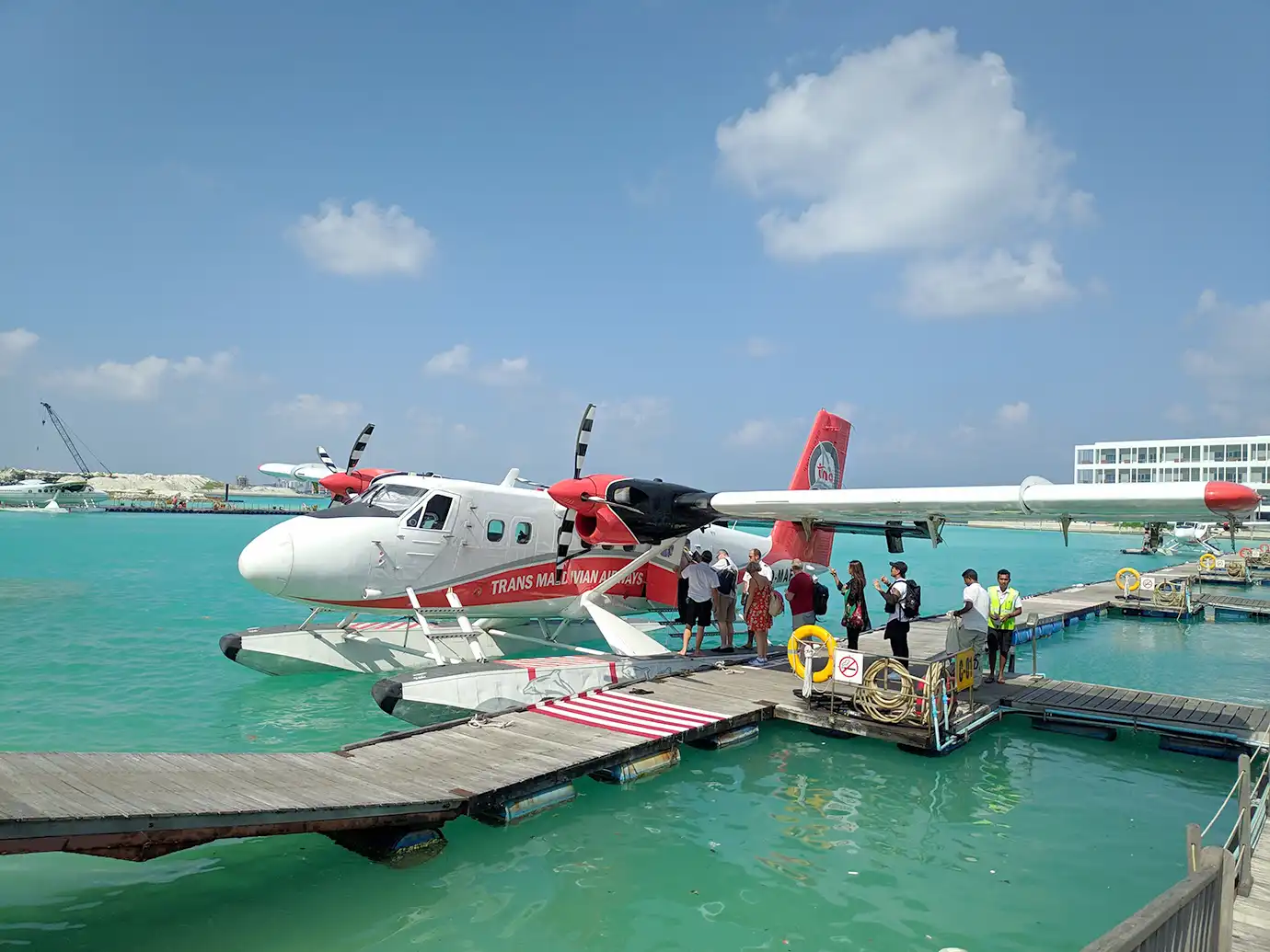
Seaplanes operated by Trans Maldivian Airways cap checked baggage at 20 kg and cabin bags at 5 kg, charging roughly $5 per extra kilo at the terminal. Pack under 20 kg to keep your transfer smooth and avoid fees.
For couples, share one 20 kg case rather than two lighter ones, which helps both the seaplane and your villa storage. Resorts already provide robes, slippers, a hair dryer, snorkel gear, beach towels, and non-motorized water sports, so skip all of those.
The Best Time to Visit the Maldives for Your Trip Type
The best time to visit the Maldives depends entirely on what kind of trip you want. Here is the traveler’s short version so you can jump straight to your month.
Match your priority to the window and book against it:
- Honeymooners: February for the best all-around weather, or late November and early December for the same weather at lower rates
- Divers after visibility: January and February, when underwater visibility hits 30 to 40 meters
- Manta fans: June through October in Baa Atoll, with July and August the peak
- Whale shark seekers: November through April in South Ari Atoll
- Families on school leave: February, early April, or early December to dodge the worst holiday premiums
- Budget travelers: late September, the single best value stretch of the year
- Wellness travelers: June through September, when low rates pair with indoor-friendly programs
Frequently Asked Questions
Can I visit the Maldives during the monsoon season and still have a good trip?
Yes, for most travelers. Southwest monsoon storms usually last under two hours and then clear, so a rainy day often still holds several hours of sun. You also get rates 30 to 40 percent lower, warmer water, and an active manta season in Baa. Divers accept slightly lower visibility in exchange for savings. If you need guaranteed all-day sun and flat seas, book the dry season instead. For value, the wet season is a smart, underrated choice.
Which single month is the best all-around option?
February. It is the driest month of the year, with 2 to 4 rainy days, calm seas, and visibility of 30 to 40 meters. The weather is near-perfect for every activity, from diving to sunset cruises. Prices sit high but ease off the Christmas and New Year peak, and the crowds thin a little, too. If you want one safe month with no real weather gamble, February is it. Book three to five months ahead.
Do resorts close during the wet season?
No, resorts stay open year-round. The Maldives is a year-round destination, and wet-season closures are rare, usually due to planned renovations rather than weather. You get the same villas, dining, spa, and dive centers, often at much lower rates. A few seasonal restaurants or activities may run reduced hours at quieter times. Check with your advisor if a specific restaurant or excursion matters to you, but the resort itself will be open.
What happens if my seaplane transfer is delayed by weather?
The resort reschedules you to the next available flight and looks after you in the meantime. Seaplanes fly in daylight only and pause during heavy storms, so wet-season transfers occasionally slip by an hour or two. If a delay pushes past the daylight cutoff, the resort arranges an overnight in Malé, though the cost may fall to you. Build a buffer into your arrival day, and never book a tight same-day onward connection, especially in the wet season.
Is the water still warm during the cooler months?
Yes, the sea stays warm all year. Water temperature ranges only from about 27°C in the dry season to 30°C in the wet season, so it never feels cold. The Maldives has very little seasonal swing, since it sits near the equator. You can snorkel and swim comfortably in any month without a wetsuit, though some divers wear a thin shorty for longer dives. The air stays warm too, rarely dropping below 24°C even overnight.
When can I see manta rays and whale sharks on the same trip?
November is your best shot at both. Baa Atoll manta season runs into November, and South Ari whale sharks are active from November onward, so a two-atoll trip that month can catch each. Book a Baa resort for the mantas and add a South Ari stay or excursion for the sharks. Neither sighting is ever guaranteed, so give yourself a few days and two trips per species. Your advisor can sequence the atolls to fit both windows.
Are there hurricane or cyclone risks?
Very rarely. The Maldives sits near the equator, below the main Indian Ocean cyclone belt, so tropical cyclones strike less than once a decade. The storms you may see in the wet season are ordinary monsoon squalls, not cyclones, and they pass in an hour or two. The islands are flat and low, so that a normal storm can look dramatic from a villa, but the genuine cyclone risk that shapes travel to other regions does not really apply here.
Does snorkeling and diving stay good during the wet season?
Yes, with a small trade-off. Underwater visibility drops from the dry-season 30 to 40 meters to about 15 to 25 meters in the wet season, which is still fine for house-reef snorkeling and shallower dives. Deep wall dives that need long sightlines suffer more. The upside is warmer water and manta season in Baa. If crystal visibility is your top priority, book January or February. For everything else, wet-season diving works well.
Which weeks are the busiest to avoid for peace?
Christmas and New Year, roughly December 20 to January 5, are the busiest and priciest of the year. Chinese New Year, in late January or February, depending on the year, packs China-focused resorts. Easter week and the European summer holidays from mid-July to late August fill family resorts, making for a quieter, cheaper trip with similar weather; target early December, February, or late April. Boutique islands stay calm year-round, but these peak weeks are the ones to sidestep.
What is the coldest the Maldives gets?
About 24°C overnight, which is the practical floor. Daytime highs sit between 26 and 32°C in every month, and the sea never drops below about 27°C. The Maldives has no cold season, since it lies just north of the equator. The only real variation is rain and humidity, not temperature. Pack for warm, humid weather in any month, and bring one light layer only for breezy evenings or strong air-conditioning, not for genuine cold.
Plan Your Trip Around the Right Month
You now know which month fits your trip, which weeks deliver value against fixed dates, and which marine-life windows to book against. The next step is turning a month into a real quote.
Send Peregrine your dates or target window, and the Maldives desk will tell you what to expect that week, flag any promotions running, and provide written quotes for partner resorts. We reply within 24 hours by email or WhatsApp, with a real advisor who tracks these rates month to month. Our offices in Kathmandu and Muscat support the wider region. Every month is bookable for someone, and now you know which one is yours.