


Is a luxury Nepal tour worth the price? The honest answer depends on who you are and what you value. A luxury Nepal tour costs 2 to 3 times as much as a standard package. For some travelers, the premium buys comfort, safety, private access, and depth that changes the entire trip. For others, a well-planned standard tour delivers everything they need. Nepal now holds genuine world-class luxury infrastructure alongside its famous budget backpacker scene.
The luxury layer focuses on access, expert guidance, comfort, and meaningful experience — not just expensive beds. A heritage hotel with 450+ medieval woodcarvings differs from a generic 5-star chain in every measurable way. The article breaks down the real cost, the real value, and where the premium genuinely pays for itself. It also covers where the upgrade adds little return — because not every traveler needs the same experience level.
Quick Answer
A luxury Nepal tour delivers strong value for travelers who want 5-star hotels, private guides, premium vehicles, flexible pacing, and smooth logistics. The premium cost primarily funds better accommodation, expert private guiding, time savings, enhanced safety, and frictionless daily logistics. Budget travelers who prefer simple guesthouses and group tours may not need the upgrade.
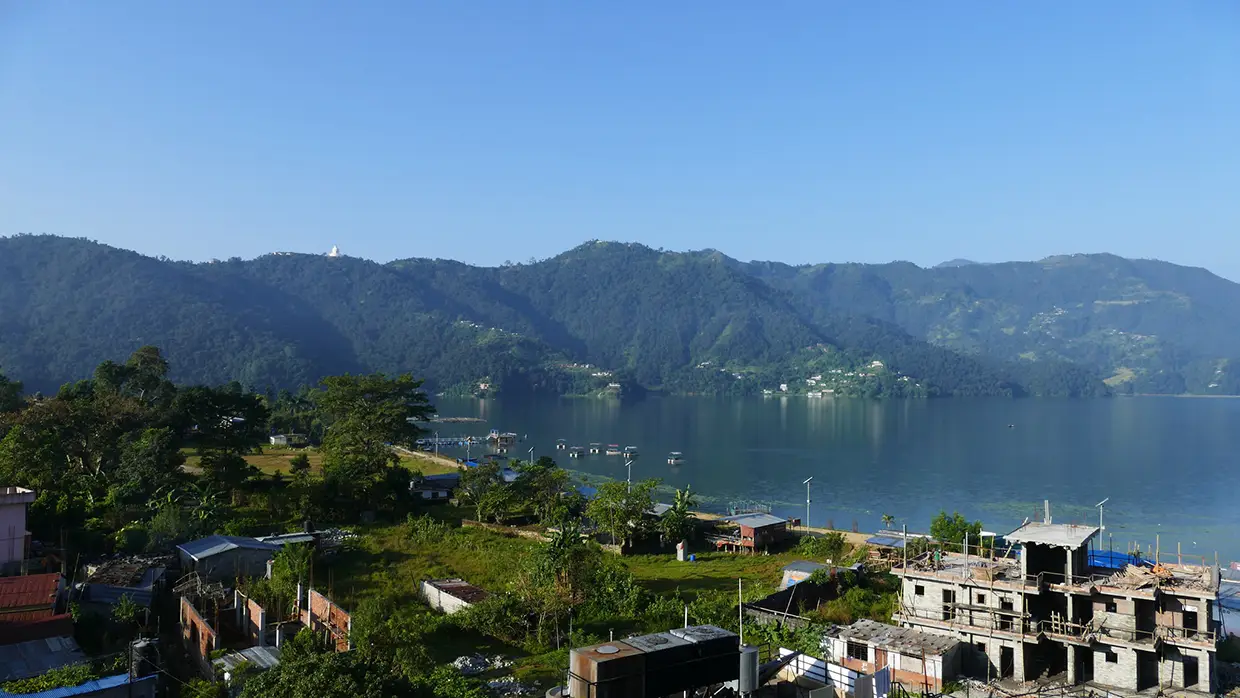
Quick Summary: Standard vs Luxury Nepal Tour
| Factor | Standard Nepal Tour | Luxury Nepal Tour |
| Daily cost per person | $80–$150 | $300–$600+ |
| Guide quality | Group guide or basic escort | Licensed private specialist or cultural historian |
| Hotel | 2 to 3-star guesthouse | Heritage boutique or 5-star property |
| Transport | Shared bus or basic car | Private air-conditioned luxury vehicle |
| Temple access | Peak hour with crowds | Curated timing, early access, private pacing |
| Trekking support | Basic teahouse, shared guide | Private crew, luxury lodge, helicopter option |
| Emergency support | Minimal or absent | 24/7 agency backup, satellite communication |
| Cultural depth | Surface sightseeing | Expert storytelling, private cultural access |
| Flexibility | Fixed group schedule | Fully personalized daily itinerary |
| Value for money | Good for budget travelers | Excellent for experience depth |
What Makes a Nepal Tour Luxury?
Luxury in Nepal differs from luxury in Dubai or Paris. It means preservation, access, expertise, and smooth logistics — not marble lobbies. A luxury Nepal tour package delivers five core pillars that standard tours do not reach.
Five Pillars of Luxury Nepal Travel
| Pillar | What It Means | Why It Matters |
| Private expert guiding | Licensed specialist or historian, 1:1 or 1:2 ratio | Transforms sightseeing into deep cultural immersion |
| Curated accommodation | Heritage hotels, 5-star properties, luxury trek lodges | Better rest, atmosphere, and service quality |
| Smooth logistics | Private vehicles, VIP airport handling, domestic flights | Removes friction and recovers wasted time |
| Flexible pacing | Personalized daily schedule adjusted to energy and weather | Prevents fatigue, rushed visits, and missed experiences |
| Safety and contingency | 24/7 agency backup, satellite phone, oxygen, insurance | A safety net worth thousands if ever needed |
Not every region in Nepal has international 5-star hotels. Mountain areas face infrastructure limits regardless of price. Some roads stay rough. Weather affects all flights and helicopters. A higher price cannot remove every Himalayan travel challenge. Understanding these limits helps you set realistic expectations before deciding whether the upgrade fits your needs.
The Real Daily Rate — What Does a Luxury Nepal Tour Cost?
The cost breaks down into six main categories. Each line item shows exactly where the premium goes compared to a standard tour.
Cost Per Day Breakdown
| Cost Item | Standard Tour | Luxury Tour | What the Premium Buys |
| Accommodation | $30–$80/night | $250–$600/night | En-suite, heating, heritage architecture, spa access |
| Guide | $30–$50/day | $80–$200/day | Private specialist, 1:1 ratio, cultural depth |
| Vehicle | $20–$60/day | $70–$150/day | Private AC vehicle, flexible stops, privacy |
| Meals | $20–$40/day | $60–$150/day | Curated dining, dietary handling, and fine restaurants |
| Transport/flights | $20–$100 | $200–$3,000+ | Domestic flights, private helicopter, VIP airport handling |
| Emergency coverage | Minimal | Included | Satellite communication, oxygen, and evacuation insurance |
Total Package Cost Ranges
| Tour Style | Duration | Cost Per Person | Best For |
| Comfort private tour | 7–10 days | $1,200–$2,500 | Value-focused travelers |
| Luxury private tour | 7–10 days | $3,500–$6,000 | Couples, families, seniors |
| Ultra-luxury with a helicopter | 10–14 days | $6,000–$10,000+ | High-net-worth travelers |
| Luxury trek add-on | 7–12 days | $2,500–$8,000 | Active luxury trekkers |
Why Booking Locally Saves 20–40%
A Kathmandu-based licensed operator charges 20-40% less than a Western agency for the same experience. The hotels, guides, vehicles, and itinerary remain identical. The difference comes from overhead — local operators do not carry international office costs, multi-tier commissions, or brand marketing budgets that Western agencies pass to you.
What You Actually Pay For — Transparent Inclusions Comparison
The real gap between a luxury and standard Nepal tour shows up in every daily detail. Each line item below changes the experience in measurable ways.
| Category | Standard Tour | Luxury Tour |
| Hotel | 2–3 star, shared bathroom possible | 5-star or heritage, en-suite, heated rooms |
| Breakfast | Basic or not included | Premium breakfast daily |
| Lunch and dinner | Not included | Curated dining options available or included |
| Airport transfer | Shared or self-arranged | Private VIP with meet-and-greet at airside |
| Vehicle | Basic car or shared bus | Premium private AC vehicle with Wi-Fi |
| Guide | Group guide, basic facts | Private licensed specialist with cultural depth |
| Permits | Sometimes extra cost | Fully included in the package |
| Emergency plan | Minimal or none | 24/7 backup, satellite communication, oxygen |
| Helicopter contingency | Not available | Available as an option or included in some packages |
| Forced shopping stops | Common | Never included |
| Hidden altitude extras | Showers $5–$8, charging $3–$5, water $1–$3/L | Included or minimized |
Hidden Costs of a Standard Nepal Tour
Standard tours accumulate real hidden costs. Hot showers above Namche run $5–$8 per bucket. Device charging runs $3–$5 per hour. Bottled water adds $100+ over a full trek at $1–$3 per liter. Forced shopping stops give guides commissions at your expense. The ultimate hidden cost: emergency helicopter evacuation called without proper protocol — denied by insurance, costing $5,000–$10,000 out of pocket. These hidden costs narrow the price gap between standard and luxury far more than most travelers realize.
Where the Luxury Premium Yields Real Returns
Accommodation — Sleep Quality as a Safety Factor
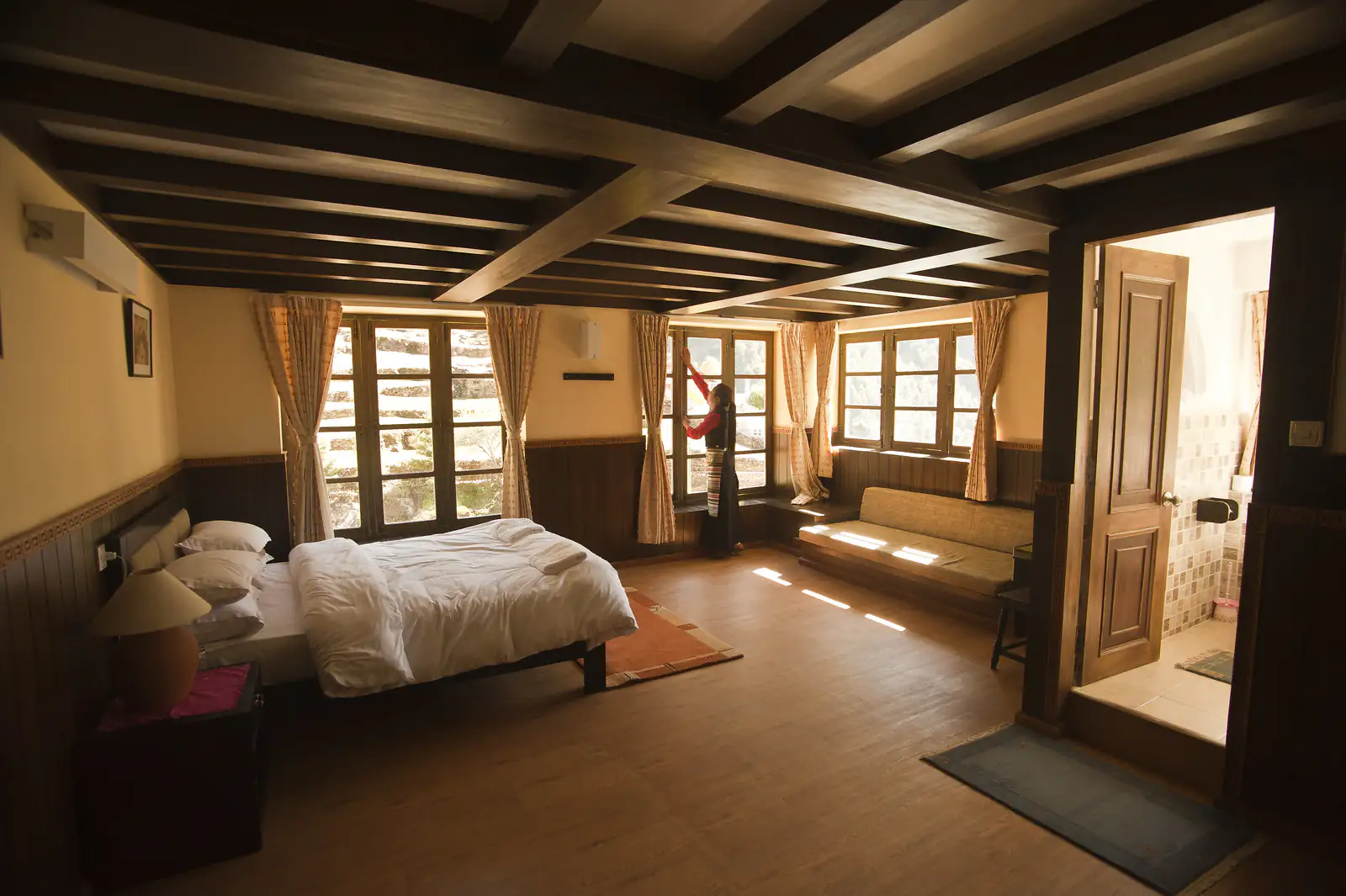
In luxury lodges at altitude, heated rooms, en-suite showers, and electric blankets directly improve sleep quality. Better sleep at 3,500–4,500 m correlates with better physical performance and lower rates of altitude sickness. A cold, noisy teahouse at 4,000 m affects the next day’s trekking performance far more than most travelers realize.
Private Guiding — The Single Line Item That Justifies the Price
A private luxury guide works as a cultural historian, naturalist, or high-altitude specialist at a 1:1 or 1:2 ratio. On treks, the guide performs daily SpO₂ monitoring using a pulse oximeter and keeps a written health log. Every site visit shifts from a quick photo stop into genuine cultural understanding.
The Luxury Guide as Health Sentinel
On a luxury trek, the guide monitors oxygen saturation levels daily. A trekker whose SpO₂ dropped from 92% to 78% between Gokyo and Thangnak received immediate supplemental oxygen and descended safely before developing high-altitude pulmonary edema. On budget treks, guides often lack medical training or any monitoring equipment.
Time Savings — The Invisible ROI
Standard domestic flights to Lukla often involve 5-hour road detours to Ramechhap and weather delays. Private helicopter charters reclaim 2 to 3 full vacation days. VIP airport handling reduces immigration time to minutes. For travelers with limited vacation days, these time savings add genuine value that standard packages cannot match.
The Time-Value Calculation
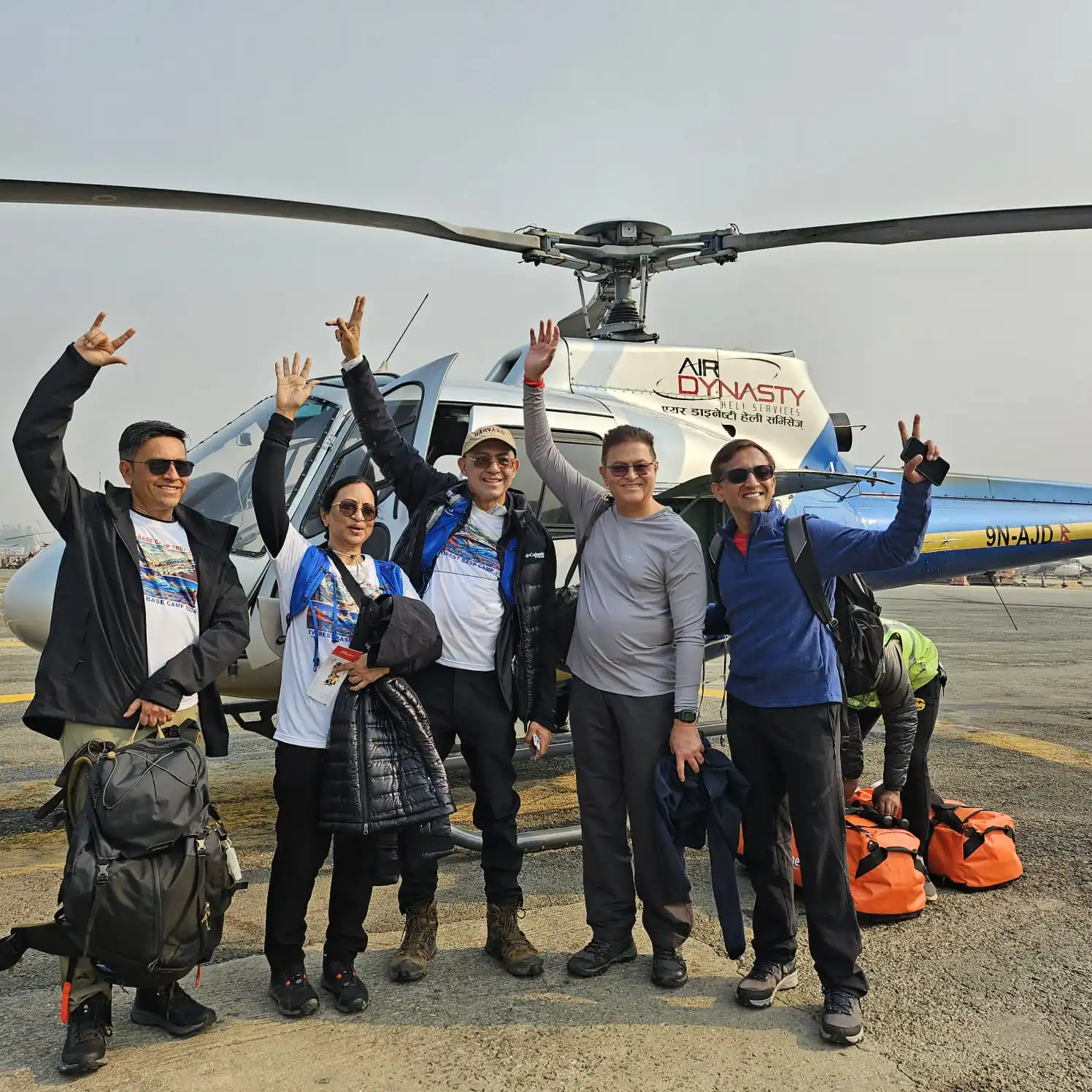
A private Everest helicopter return costs approximately $2,500 more than walking the descent. The helicopter saves 4 full walking days. For a professional earning $500/day, the time value alone covers the cost. For a traveler with knee concerns, it protects long-term health. For a honeymoon couple, it turns a grueling descent into a champagne flight over the Khumbu Icefall.
Safety and Contingency — The Unseen Insurance
Luxury treks carry dedicated oxygen concentrators, Gamow bags, and Garmin InReach satellite communication. Mandatory helicopter evacuation insurance covering altitude up to 6,000 m stays included. A single uninsured helicopter rescue costs $5,000–$10,000—the premium for the luxury cover kicks in before you ever need it.
Is a Luxury Nepal Trek Worth the Extra Cost?
Trekking amplifies the gap between standard and luxury. The differences show up in sleep quality, meal variety, medical support, and daily flexibility.
| Factor | Standard Teahouse Trek | Luxury Nepal Trek |
| Accommodation | Basic shared teahouse room | Luxury lodge or premium teahouse, heated |
| Sleep quality | Cold, noisy, thin walls | Heated, quiet, en-suite shower |
| Meals | Repetitive dal bhat, variable hygiene | Chef-prepared, dietary handling, organic options |
| Guide | Licensed but shared with the group | Private specialist with medical training |
| Porter ratio | 1 porter per 2 guests | Dedicated personal porter |
| Medical equipment | Basic first-aid kit | Pulse oximeter, oxygen, satellite phone, Gamow bag |
| Flexibility | Fixed group pace, set schedule | Adjustable daily distance and rest stops |
| Helicopter return | Not included | Available — saves 2–4 descent days |
| Total cost | $700–$2,000 | $2,500–$8,000+ |
When a Luxury Trek Delivers the Strongest Value
| Traveler Type | Why the Luxury Trek Upgrade Pays Off |
| Time-limited professionals | Helicopter return saves 3–4 descent days on Everest and Annapurna treks |
| Travelers with knee concerns | Eliminates painful descent on rough terrain for long-term health protection |
| Couples and honeymooners | Privacy, heated rooms, and champagne at altitude |
| First-time Himalayan trekkers | Full safety support, expert guidance, and flexible pacing builds confidence |
| .Senior active travelers | Better rest, medical monitoring, and adjustable pace throughout the route |
| Travelers combining Nepal with Bhutan | Efficiency and seamless cross-border logistics from one operator |
Luxury Nepal Hotels — Worth the Upgrade?
Hotel tiers in Nepal span a wide range. The gap between a $40 guesthouse and a $400 heritage hotel shows up in sleep, service, atmosphere, and cultural access.
| Hotel Tier | Price Per Night | Best For | What You Gain |
| Budget guesthouse | $15–$50 | Backpackers | Basic sleep only |
| Mid-range hotel | $80–$150 | Standard travelers | Comfort, breakfast, hot water |
| 4-star international | $150–$300 | Business travelers | Amenities, consistency, pool |
| Heritage boutique (Dwarika’s) | $250–$500 | Culture lovers | Living museum, atmosphere, artisan access |
| 5-star resort (Hyatt, Soaltee) | $200–$400 | Comfort seekers | International standard, pool, spa |
| Luxury trek lodge | $150–$400/night | Trekking guests | Heated rooms, en-suite, mountain views |
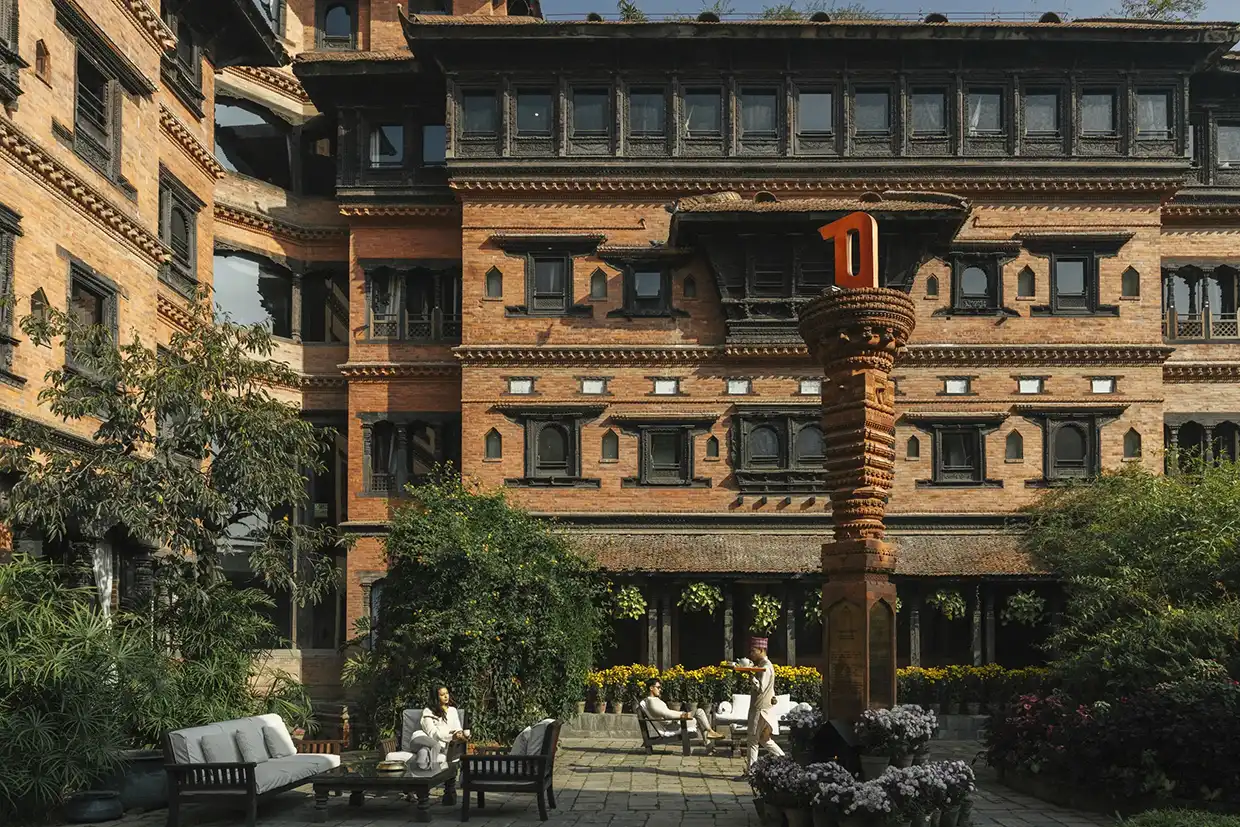
Dwarika’s: A Hotel That Justifies the Price Through Heritage
Dwarika’s Heritage Hotel holds over 450 cataloged 13th-century Newar woodcarvings embedded in its architecture. Each brick comes from demolished heritage structures across the Kathmandu Valley. Guests receive a private museum tour from the master carver — an experience unavailable to any day visitor. No other 5-star hotel in South Asia offers this level of living heritage immersion at a comparable price point.
Nepal Luxury Tour Value vs Global Destinations
Nepal stands out clearly against competing global luxury destinations. The same $5,000 buys far more here than in Switzerland, the Maldives, or East Africa.
| Destination | 10-Day Luxury Cost (pp) | Unique Offer | Nepal Value Comparison |
| Nepal | $3,500–$7,000 | Heritage, Himalayas, culture, wildlife, spirituality | Best value per experience globally |
| Rajasthan, India | $4,000–$8,000 | Palace hotels, desert, history | Similar price, less dramatic mountain scenery |
| Bali, Indonesia | $3,000–$6,000 | Wellness, beaches, temples | Less cultural depth at the same price |
| Maldives | $5,000–$15,000 | Overwater bungalows, beach | No cultural or mountain dimension |
| Bhutan | $4,500–$9,000 | Carbon neutral, unique Vajrayana culture | Excellent but more expensive |
| Swiss Alps | $8,000–$15,000 | Mountain scenery, precision logistics | 2 to 3 times the Nepal cost for comparable views |
| African Safari | $5,000–$12,000 | Wildlife, lodge experience | Higher cost, different type of experience |
Nepal punches well above its price point across every category. Heritage access, mountain scenery, cultural depth, and 5-star hotels all deliver strong returns at $3,500–$7,000 per person for 10 days.
Who Gets the Best Value From a Luxury Nepal Tour?
| Traveler Type | Value Rating | Key Benefit |
| Couples and honeymooners | ★★★★★ | Privacy, romance, rooftop dinners, and helicopter options |
| Senior travelers | ★★★★★ | Comfort, flexible pace, medical monitoring, better rest |
| Busy professionals | ★★★★★ | Time recovery, helicopter returns, zero logistics stress |
| First-time Nepal visitors | ★★★★★ | Expert guidance transforms a confusing city into a meaningful experience |
| Culture collectors | ★★★★★ | Private heritage access, specialist guides, artisan studios |
| Families with children | ★★★★ | Flexible timing, private vehicle, safer logistics |
| Photography travelers | ★★★★ | Curated timing, golden hour access, and helicopter viewpoints |
| Budget backpackers | ★ | Nepal works brilliantly on a budget — no upgrade needed |
| Solo adventure trekkers | ★★ | Standard teahouse trekking delivers a strong solo experience |
The luxury upgrade delivers the strongest return for couples, seniors, professionals, and first-time visitors. Solo backpackers and long-term travelers already have time on their side — the standard experience serves them well.
When a Luxury Nepal Tour Is NOT Worth the Price — The Honest Warning
Honest analysis demands an honest warning. The premium does not suit every traveler. Here are the scenarios where the upgrade adds little return.
| Scenario | Why Luxury May Not Add Value |
| Budget backpackers | Nepal on a budget works exceptionally well — with great guesthouses, strong trails, and a friendly culture. |
| Long-term sabbatical travelers | Flexible months reduce time pressure—the time savings of luxury matter less. |
| Solo adventure trekkers | Standard teahouse trekking delivers a strong, social solo experience |
| Travelers are comfortable with basic hotels | Simple Nepali lodges offer genuine warmth, character, and local connection |
| Very short city transfers only | A premium vehicle adds minimal value over a 20-minute airport transfer |
| Remote mountain areas only | True luxury infrastructure does not exist everywhere in Nepal’s highlands |
If you value budget travel, flexible independence, and simple accommodation, Nepal rewards that style beautifully. Spending more does not always improve a trip that already works well at a lower cost.
Sample 10-Day Luxury Nepal Tour Itinerary
| Day | Experience | Accommodation |
| Day 1 | Arrival, heritage hotel check-in, welcome tea ceremony | Dwarika’s Heritage Hotel, Kathmandu |
| Day 2 | Private Kathmandu UNESCO heritage tour with specialist guide | Dwarika’s Heritage Hotel |
| Day 3 | Patan and Bhaktapur private cultural tour, artisan studio | Dwarika’s Heritage Hotel |
| Day 4 | Everest mountain flight, afternoon spa treatment | Dwarika’s Heritage Hotel |
| Day 5 | Fly to Pokhara, luxury lakeside resort check-in | Luxury Pokhara resort |
| Day 6 | Sarangkot sunrise, private Phewa Lake boat, free afternoon | Luxury Pokhara resort |
| Day 7 | Drive or fly to Chitwan, premium jungle lodge check-in | Luxury Chitwan lodge |
| Day 8 | Full-day private safari with senior naturalist | Luxury Chitwan lodge |
| Day 9 | Fly to Kathmandu, farewell dinner at a heritage venue | Luxury Kathmandu hotel |
| Day 10 | Private departure transfer | — |
Estimated Cost Per Person — 10-Day Luxury Tour
| Component | Estimated Range (USD) |
| Heritage and 5-star hotels (9 nights) | $2,000–$4,000 |
| Private specialist guide (8 days) | $800–$1,500 |
| Private vehicle throughout | $500–$900 |
| Domestic flights (2) | $300–$500 |
| Everest mountain flight | $180–$250 |
| Chitwan Premium Safari | $300–$600 |
| Curated meals and dining | $400–$800 |
| Permits and entrance fees | $100–$200 |
| TOTAL PER PERSON | $4,500–$8,500 |
How to Get the Best Value on a Luxury Nepal Tour
| Strategy | Details |
| Book through a Kathmandu-based operator | Save 20–40% vs Western agencies for identical quality and service |
| Travel in the best season | October–November or March–April for optimal weather |
| Use heritage over chain hotels | Dwarika’s over Marriott — same price but far more character and value |
| Add a helicopter only where it saves time | For descent shortcuts, not just scenic flights |
| Request early and late access at heritage sites | Boudhanath at dusk, Pashupatinath at dawn — fewer crowds, better light |
| Book 4–6 months ahead | Heritage hotels sell out during the October and November peak weeks |
| Focus on depth, not breadth | 3 experiences done well beat 8 rushed stops every time |
| Travel as a couple or small group | Per-person cost drops significantly with 2–4 travelers |
Is Responsible Luxury Possible in Nepal?
A well-structured luxury tour funds a fairer local economy. The premium price pays better wages, supports artisan communities, and funds conservation.
| Principle | What It Means |
| Book local | Use Kathmandu-based licensed operators — more income stays in Nepal |
| Fair wages | Luxury guides earn $80–$200/day with insurance. Budget operators pay $25–$40 with nothing. |
| Artisan support | Buy directly from verified craftspeople and studios |
| Respect sacred spaces | Dress modestly, follow etiquette, and ask before photographing rituals |
| Porter welfare | Choose operators following IPPG guidelines — strict weight limits, proper gear, and insurance. |
| Eco-conscious | Use refillable bottles, minimize plastic, and carry waste out from treks |
| Community-first | Choose heritage properties and locally owned lodges over international chains. |
Economic Ethics of the Luxury Premium
A luxury Nepal operator pays guides $80–$200 per day with gear, insurance, and training. A budget operator may pay $25–$40 per day with nothing. The luxury premium directly funds a fairer, more sustainable local travel economy. Choosing the premium tier means choosing better conditions for the people who make the experience possible.
How to Judge If a Luxury Nepal Tour Is Overpriced
Not every expensive tour delivers genuine value. Use these red flags to separate real quality from inflated pricing.
| Red Flag | Better Alternative |
| Vague ‘luxury hotel’ without naming properties | Demand specific hotel names and room categories |
| ‘5-star hotel’ without confirming room type | Standard rooms differ from suites — confirm the exact category |
| Unclear helicopter terms — shared or private? | Confirm: shared vs private, landing point, weather policy, refund terms |
| Forced shopping stops in the itinerary | Reject any tour including compulsory shopping visits |
| No named guide or guide credentials | Request the guide name, license number, and experience level |
| Meals listed as ‘included’ without detail | Confirm exactly which meals — breakfast only or full board? |
| No direct local operator contact | Verify the booking connects to the on-ground Nepal team |
Direct Booking vs Western Reseller
Booking through a Kathmandu-based operator and a Western reseller led to different outcomes in price, communication, and control.
| Factor | Direct Nepal Operator | Western Reseller |
| Price transparency | Clear direct cost structure | May include hidden markup layers |
| Communication | Directly with the on-ground team | Multiple layers of communication |
| Customization speed | Fast — build bespoke itineraries directly | Slower — relayed through an intermediary |
| Hotel control | Better — direct property relationships | Limited — depends on partner operator |
| Problem solving | Immediate local response in-country | Delayed — coordination across time zones |
| Local knowledge | Stronger — daily on-ground experience | Depends entirely on partner quality |
| Overall value | Higher control and transparency | Less transparent pricing structure |
Frequently Asked Questions
Q: Is a luxury Nepal tour worth the price?
A: Yes, for travelers who value 5-star hotels, private specialist guides, premium vehicles, flexible pacing, and smooth logistics. The luxury tier delivers strong value for couples, families, seniors, honeymooners, and busy professionals. Budget travelers who prefer simple hotels and group tours may not need the upgrade. The answer depends entirely on your travel style and priorities.
Q: How much does a luxury Nepal tour cost per day?
A: A genuine luxury Nepal tour runs between $300 and $600 per person per day. The daily rate covers private guiding, heritage or 5-star hotels, private vehicles, most meals, and 24/7 agency support. Helicopter add-ons and suite upgrades further raise the cost.
Q: What does a luxury Nepal tour package include?
A: Premium hotels, private airport transfers, AC private vehicles, a licensed specialist guide, curated sightseeing, daily breakfast, entrance fees, and domestic flights. Some packages add Chitwan safari, spa treatments, helicopter tours, or mountain flights, depending on the itinerary.
Q: Why do luxury Nepal tours cost more than standard tours?
A: Better hotels, private vehicles, experienced specialist guides, curated routes, domestic flights, and premium safety support all drive up the price. The cost also funds flexibility, time savings, and emergency contingency that standard tours do not include.
Q: Is a luxury Nepal trek worth the extra cost?
A: Yes, for specific profiles. Luxury trekking delivers private porter ratios, heated accommodation, chef-prepared meals, satellite communication, daily medical monitoring, flexible pacing, and helicopter return options. Couples, seniors, and first-time Himalayan trekkers gain the most from the upgrade.
Q: Which route offers the best value?
A: Kathmandu, Pokhara, and Chitwan combined give the strongest overall value. The route covers UNESCO World Heritage Sites, Himalayan mountain views, lakeside relaxation, a premium jungle safari, and luxury hotels throughout all three destinations.
Q: How much does an Everest helicopter tour add to the cost?
A: Shared Everest helicopter tours start around $1,240–$1,300 per person. Private charters reach $5,800–$6,500+ per helicopter. Confirm landing details, weather cancellation policy, and refund terms before committing.
Q: How does Nepal compare to other luxury destinations?
A: Nepal delivers exceptional value. A 10-day luxury tour here costs $3,500–$7,000 per person — less than in Switzerland, Bhutan, Kenya, or the Maldives — while offering UNESCO World Heritage Sites, dramatic Himalayan scenery, rich culture, and genuine exclusivity.
Q: Should I book directly or through a Western agency?
A: Booking through a licensed Kathmandu-based operator typically saves 20–40% for the identical experience. Hotels, guides, vehicles, and the itinerary stay the same. The savings come from eliminating international overhead and multi-tier commissions.
Q: Who should NOT book a luxury Nepal tour?
A: Budget backpackers, long-term travelers with flexible months, solo adventure trekkers who enjoy basic teahouse culture, and travelers who prefer simple hotels and public transport. Nepal works brilliantly on a budget for these profiles — spending more does not always improve a trip that already delivers strong value at a lower cost.
Final Verdict: Is a Luxury Nepal Tour Worth the Price?
For most travelers reading this analysis — yes. The premium offers five things no standard tour delivers: private, expert access, genuine comfort, meaningful safety, and time efficiency, all of which shift a trip from surface sightseeing into a defining experience. Nepal’s luxury tier punches above its weight compared to every global competitor. At $3,500–$7,000 for 10 days, the value per experience stands unmatched.
The real risk does not come from spending too much. The real risk comes from spending too little on a major trip and leaving Nepal knowing you missed what makes the country extraordinary.
Ready to see exactly what a luxury Nepal tour costs for your specific dates, group size, and travel style? Peregrine Treks and Tours builds personalized private Nepal itineraries with transparent pricing and direct local expertise. Contact us for a transparent cost-to-value breakdown tailored to your trip.