


There are four ways to travel from Kathmandu to Pokhara, and this guide honestly compares them. The flight takes 25 to 30 minutes. The tourist bus takes 6 to 8 hours and costs a fraction of the fare. A private car takes 5 to 7 hours, with full flexibility, and the local bus is the cheapest option. The right choice depends on your time, your budget, your group size, and one factor most articles skip. How much weather-cancellation risk can your schedule absorb?
I have made this trip more times than I can count, by every one of these options. Here is what each one is actually like.
Kathmandu to Pokhara — The Quick Answer
Fly if your time is tight and your itinerary has a spare day built in. Take the tourist bus if budget matters more than hours. Hire a private car if you are three or more people with trekking luggage. The road covers about 200 km on the Prithvi Highway, while the flight crosses the same gap in under half an hour.
| Option | Time | Approximate Cost Per Person | Best For |
|---|---|---|---|
| Domestic flight | 25–30 min airborne, about 2 hours door to door | USD 75–150 | Tight schedules, solo travelers and couples, next-day trek starts |
| Tourist bus | 6–8 hours | USD 10–25 depending on seat class | Budget travelers with a flexible day |
| Private car or jeep | 5–7 hours | USD 120–200 per vehicle, not per person | Groups of 3–5, families, heavy trek luggage, a Bandipur stop |
| Local bus | 7–9 hours | USD 4–8 | Experienced budget travelers only |
Fares shift by season and airline, so treat these as current ranges and confirm exact prices when you book.
One recommendation before the details. For most first-time visitors starting a Pokhara or Annapurna trek, flying is the best option. The condition is a buffer day in Pokhara before the trek begins. The flight carries a real risk of weather-related cancellation. If your schedule cannot hold a buffer day, the tourist bus is the safer logistical choice.
Option 1: The Flight — 25 to 30 Minutes
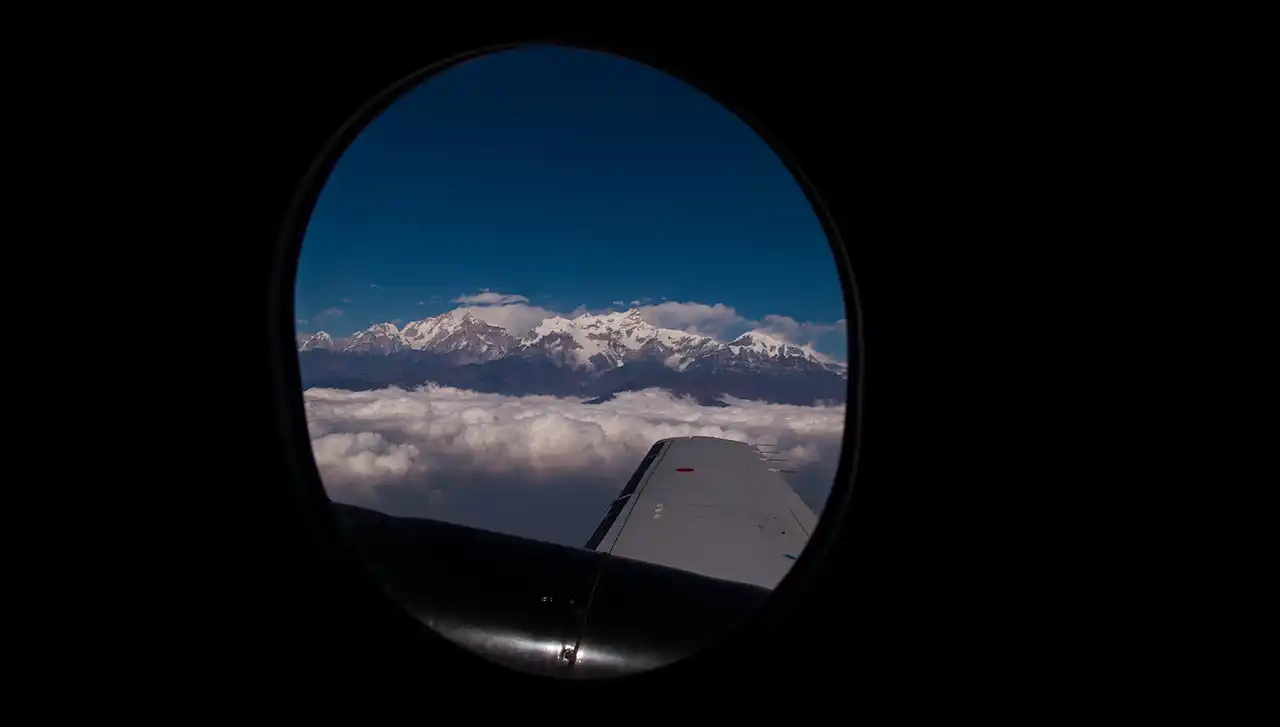
The Kathmandu-to-Pokhara flight is the fastest option by a wide margin. It covers in half an hour what the road takes all day to do. Buddha Air, Yeti Airlines, and Shree Airlines operate multiple daily departures from the domestic terminal at Tribhuvan International Airport. On a clear morning, it is also the best mountain viewing you can buy for the price of a domestic ticket.
What the Flight Is Like
Plan about 2 hours door-to-door, from your Thamel hotel to a Lakeside hotel in Pokhara. The domestic terminal sits separately from the international terminal at Tribhuvan, and the drive from Thamel takes 20 to 30 minutes in normal traffic. Check in 45 to 60 minutes before departure and carry your passport, which is required for foreigners on domestic flights.
Sit on the right side of the aircraft flying toward Pokhara. The Ganesh, Manaslu, and Annapurna ranges line up along that window on clear days, with Machhapuchhre sharpening into view on the descent. Flights land at Pokhara International Airport, about 3 km east of Lakeside, and the taxi to your hotel takes 10 to 15 minutes.
Checked baggage allowances range from 15 to 20 kg, plus a small carry-on, depending on the airline. A packed trekking duffel usually fits inside the limit, though carrying both a duffel and a full city bag can trigger excess charges.
Flight Cost and Booking
Expect USD 100 to 130 per person one way, with the higher end applying in October, November, and the spring months. Domestic fares in Nepal are not fixed like international fares, and the price quoted today can change by the time of booking. Book 3 to 7 days in advance during peak season. Same-day seats are often available in quieter months.
We book the flight for every Pokhara-based package at the time of confirmation, so package trekkers never have to handle it separately.
The Weather-Cancellation Risk — Read Before You Book
The Kathmandu-to-Pokhara flight is regularly canceled due to weather, and the risk varies sharply by season. Cloud, rain, and valley fog ground domestic flights in Nepal, and no airline on this route is immune. Understanding when the risk peaks is the difference between a smooth transfer and a broken itinerary.
| Season | Flight Reliability | Road Risk | Our Recommendation |
|---|---|---|---|
| October–November | Excellent, clear mornings are the norm | Low after the monsoon ends | Fly, with a buffer day |
| December–February | Good morning, after the fog clears | Low, cold mornings | Fly mid-morning or later |
| March–May | Very good | Low to moderate | Fly, with a buffer day |
| June–September (monsoon) | Poor, cancellations are common | Landslide risk on the highway | Bus or car, flexible schedule |
Monsoon is the worst window. Cloud builds throughout the day, so morning departures operate most often, while afternoon flights fail most often. Some monsoon weeks see disruptions for several days in a row. Winter brings a different problem, since dense Kathmandu Valley fog can hold every early departure on the ground until mid-morning.
Now the rule that matters most. Never schedule this flight for the morning your trek begins. A cancellation on that day leaves you stranded in Kathmandu while your guide waits at the trailhead and your first teahouse has an empty room. Every Peregrine itinerary that uses this flight includes at least one buffer night in Pokhara before the trek starts, without exception.
If your flight is canceled, three fallbacks are available. You can wait for a later same-day seat, which sometimes works but often fails. You can take the tourist bus, which leaves around 7 am. Or you can hire a private car and drive the same day. We coordinate all of this for package trekkers, so no one has to handle a cancellation alone.
Option 2: The Tourist Bus — 6 to 8 Hours
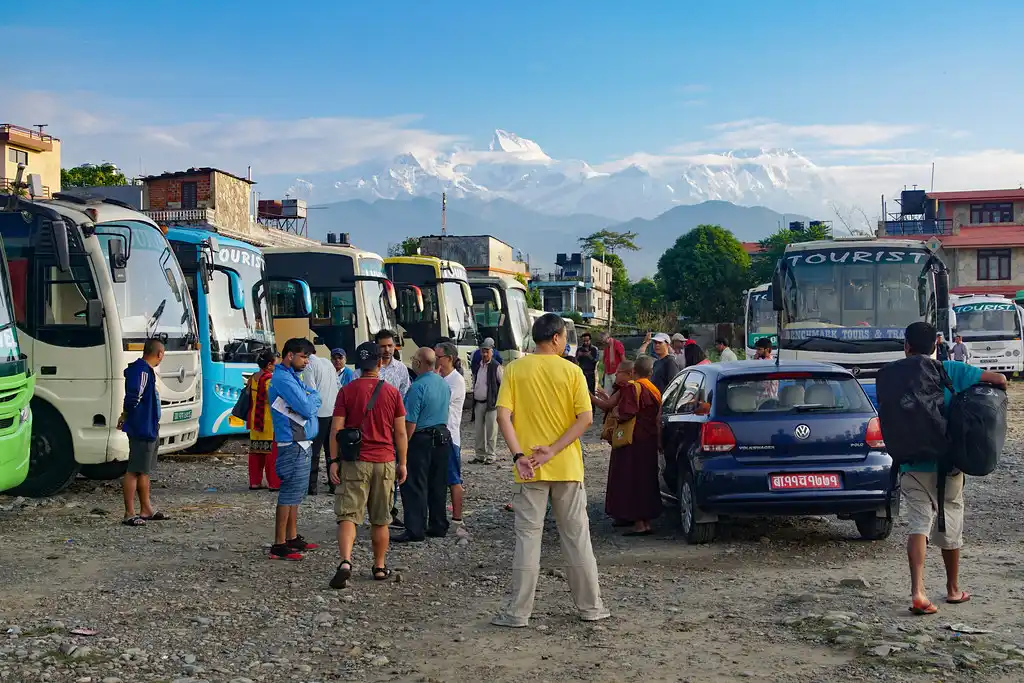
The tourist bus is the most popular budget option between Kathmandu and Pokhara. For travelers with a full day to spare, it is the right choice, not a fallback. Air-conditioned coaches leave every morning, run the full Prithvi Highway, and drop you at the tourist bus park a short hop from Lakeside.
What the Prithvi Highway Is Actually Like
The road runs about 200 km and sets its own pace, regardless of the timetable. Out of Kathmandu, the highway drops off the valley rim through Naubise in a chain of tight switchbacks. From there, it follows the Trishuli River past Malekhu, famous for its roadside fish stalls. The river section decides your day. When traffic through the Kalanki exit is heavy, the first 30 km alone can eat an hour.
Mugling marks the halfway point and the lowest altitude of the trip. Buses stop here for 20 to 30 minutes at riverside restaurants serving dal bhat and fresh fish from the Trishuli. After Mugling, the road climbs gently through Damauli, and Machhapuchhre appears on the horizon and keeps growing until Pokhara.
Two honest caveats belong here. Sections of the highway have been under construction for years, and work zones can stretch the trip to over 8 hours on a bad day. During the monsoon, landslides can close the road for hours, which is the route’s main seasonal risk.
Tourist Bus Practical Details
Buses depart from the Sorhakhutte tourist bus area near Thamel at around 7 am. Plan an early hotel breakfast or grab something at the stand. Standard tourist buses cost roughly USD 10-15 and have reclining seats. VIP or sofa buses cost USD 19-25 and offer wider seats and more legroom. The small upgrade is worth it on an 8-hour day.
Arrival is at the Pokhara tourist bus park near Prithvi Chowk. Lakeside hotels are a 5- to 10-minute taxi ride away. Luggage goes in the lower hold with no meaningful weight limit, which makes the bus friendlier to bulky duffels than the flight.
Book a day or three in advance during peak season through any hotel or travel agency in Kathmandu. If you’re prone to motion sickness, sit near the front and take medication before departure. The switchback section between Naubise and Mugling is where most passengers feel it.
Why We Do Not Use the Night Bus
An overnight bus runs this route, and we never use it for package trekkers. Night driving on a winding mountain highway has a poorer safety record than daytime driving. Arrival lands at 4 to 5 am, leaving trekkers outside locked Lakeside hotels in the dark with their luggage. Our packages use the morning flight or a private car during the day instead.
Option 3: Private Car or Jeep — 5 to 7 Hours
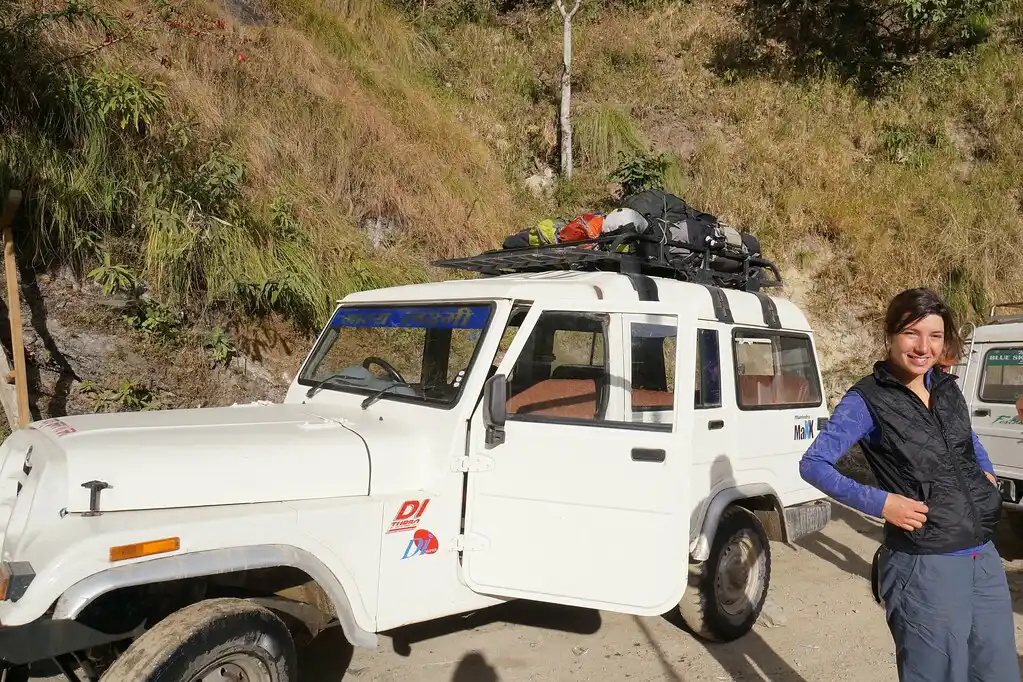
A private car covers Kathmandu to Pokhara in 5 to 7 hours and turns the transfer into your own schedule. The vehicle costs USD 120-200 regardless of passenger count. A group of three or more often pays less per person than the flight. The real advantages are luggage space, door-to-door pickup, and the option to stop at Bandipur.
Who are the Private Car Suits
Groups of three to five get the best value, since the price is per vehicle. A sedan carries 3 to 4 passengers with light luggage. A jeep or SUV carries 4 to 5 with full trekking loads. A group heading out for 14 days with two duffels each should book the jeep without debate.
The car leaves your hotel whenever you choose, stops for photos when the views open up after Damauli, and has lunch wherever the group prefers. One honest note keeps expectations straight. The car uses the same Prithvi Highway as every bus, so construction zones and monsoon landslides delay it just the same. Speed is not the reason to book it. Control is.
Families also do well here. Six to eight bus hours with young children is a long ask, while a private car breaks down wherever the children need it.
The Bandipur Stop — The Detour Worth Taking
Bandipur is a preserved Newari hilltop town on a ridge above the highway, and a private car can reach it, while a tourist bus cannot. The detour adds a short climb from the Dumre junction and about 30 to 45 minutes of extra driving. Give the town 90 minutes, and it repays every one of them.
The main street runs between carved wooden merchant houses from the era when Bandipur controlled the hill trade routes. Cafes and teahouses fill the old shopfronts, with a fraction of Lakeside’s crowds. Walk 15 minutes above town to the viewpoint, and the Annapurna range spreads across the horizon, with Machhapuchhre at its center. Few mountain views in Nepal beat it without a trek.
We include the Bandipur stop as a standard enhancement on private car transfers for Pokhara-bound packages. It converts a transit day into a real experience day at almost no extra cost.
Option 4: The Local Bus/Van — 7 to 9 Hours
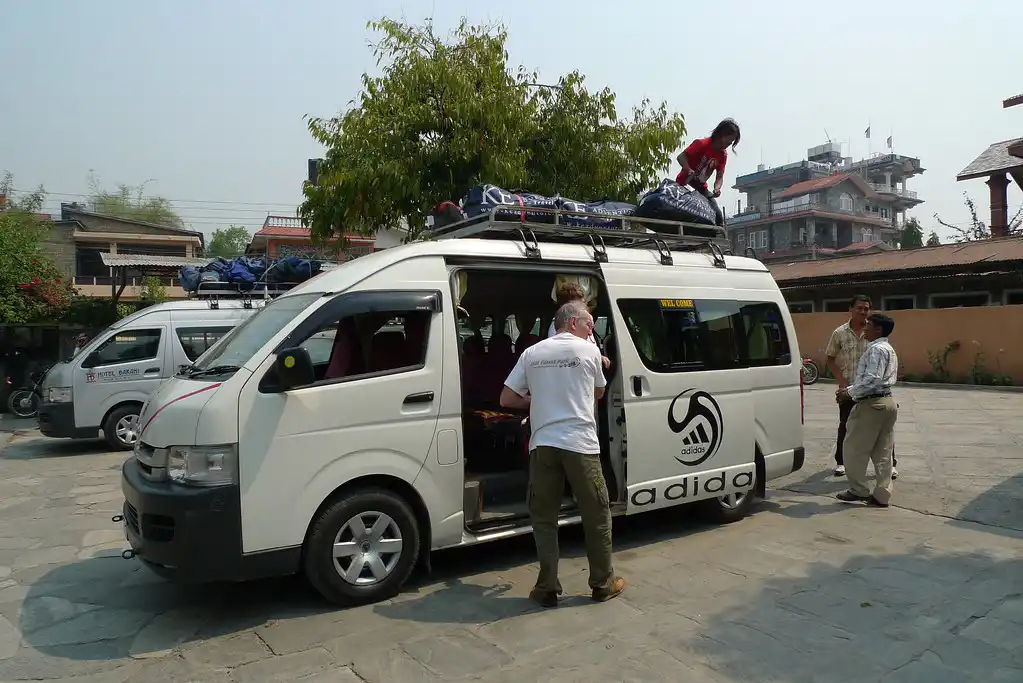
The local bus is the cheapest way from Kathmandu to Pokhara, at USD 8-10, and it suits a specific type of traveler. Buses depart throughout the day from Gongabu Bus Park, also called New Bus Park, and stop frequently along the entire highway for local passengers.
The trip runs 7 to 9 hours and often longer. Seating is standard local benches, and luggage space is tight. Arrival is at Pokhara’s main bus park rather than Lakeside, so add a taxi at the end. Travelers who know Nepali public transport and carry one small bag manage it fine and save real money.
First-time visitors to Nepal, trekkers with duffels, and anyone on a schedule should choose another option. Nothing about the local bus is unsafe by Nepali standards. It is simply slow, crowded, and wrong for heavy luggage.
Which Option Is Right for You?
Match the transfer to your schedule, group, and trek date rather than picking based on price alone. The flight wins on time, the tourist bus on cost, and the private car on groups with gear. Here is the direct recommendation for each situation.
Take the Flight If
- Your trek starts soon after arrival, and a buffer night in Pokhara is confirmed.d
- You travel solo or as a couple with manageable luggage
- Your dates fall in October, November, or the spring months, which is when cancellations are rare
- Your whole Nepal trip runs 10 days or fewer,wer and every day counts
One hard condition applies. Do not book the flight without a buffer day before you start. Cancellations happen regularly, and without the buffer, a single canceled morning disrupts the entire downstream schedule.
Take the Tourist Bus If
- Budget is your primary constraint.
- You have a full day free and want to see the Trishuli Valley up close.l
- Your trek starts 2 or more days after you reach Pokhara
- You travel during the monsoon, when the road beats the sky for reliability
Take a Private Car If
- Your group is 3 or more, which makes the per-person cost competitive with flying.
- You carry serious trekking luggage, meaning duffels, poles, and extra gear
- You want the Bandipur stop as a half-day experience
- You travel with children or anyone who cannot sit on a full bus for a day
Skip the Local Bus If
- You are visiting Nepal for the first time
- You carry more than one small bag
- You need to arrive by a fixed time
- You are unfamiliar with the local Nepali bus systems
We arrange every Kathmandu-to-Pokhara transfer for package trekkers. Write to sales@peregrinetreks.com or WhatsApp +977 985 105 2413 to confirm which option your itinerary includes.
Kathmandu to Pokhara for Trekkers
Trekkers face two questions that the general traveler does not: how the transfer aligns with the trek start date, and how luggage is handled. Both have clean answers, and both shape which option you should book. Every Annapurna-region trek begins with this transfer, so getting it right protects the whole trip.
The Buffer Day Rule
Arrive in Pokhara at least one full day before your trek starts, never the same morning. A weather cancellation with a next-morning trek start is unrecoverable within a normal schedule. The guide is committed, the porters are booked, and the Day 1 teahouse holds your room while you sit in Kathmandu.
A buffer day costs you one relaxed Lakeside afternoon. A missing buffer day can cost the final days of the trek itself. We build the buffer into every Annapurna and Pokhara-based package as a planning standard, not an optional extra.
How the Luggage Works
Split your bags three ways, and the whole system runs smoothly. Your trekking duffel flies with you or rides in the car boot, then travels with the porters from Pokhara. Your city bag, with your laptop and valuables, stays in storage at your Kathmandu hotel. Your daypack rides with you as carry-on. When done this way, the duffel usually fits within the 15-20 kg flight allowance. Trying to carry both the duffel and a full city bag is what triggers excess baggage fees at the domestic counter.
Which Treks Start From Pokhara
Upper Mustang deserves its own note. The route needs a second weather-dependent flight from Pokhara to Jomsom, so the buffer logic applies twice. We scheduled that itinerary with margins on both flights. About the New Pokhara International Airport. All Kathmandu to Pokhara flights now land at Pokhara International Airport, the city’s new airport about 3 km east of Lakeside. The old airfield closer to town no longer handles this route.
A taxi to Lakeside costs a few hundred rupees and takes 10 to 15 minutes, or our ground team meets package trekkers at arrivals. Set expectations honestly. The building is new, but the facilities remain basic, with limited food options and no lounge comforts, so plan to pass through rather than linger. The airport handles a steady domestic schedule, while international service remains limited, and Kathmandu remains the entry point for nearly all overseas arrivals.
| Trek | Onward Transfer From Pokhara | Buffer Day Needed |
|---|---|---|
| Annapurna Base Camp | Road to Nayapul or Ghandruk | Yes |
| Ghorepani Poon Hill | Road to Nayapul | Yes |
| Mardi Himal | Short road transfer to the trailhead | Yes |
| Annapurna Circuit | Road to Besisahar or Chamje | Yes |
| Nar Phu Valley | Road to Besisahar | Yes |
| Upper Mustang | Second flight, Pokhara to Jomsom | Yes, doubly so |
Best Time to Travel From Kathmandu to Pokhara
October to November and March to May are the best months for this trip by any option. Both windows bring clear flying weather and a dry, stable highway. Winter works well once the morning fog lifts. Monsoon, from June to September, is when the choice of transport matters most.
In the monsoon, flight cancellations become common, and highway landslides become possible, so build slack into whichever option you pick. We lean monsoon transfers toward the road with flexible timing, and we never schedule a trek start on the same day as a monsoon flight. In peak months, the only real planning pressure is demand, so book flights, buses, and rooms in Pokhara ahead of time.
Frequently Asked Questions,
How far is Kathmandu from Pokhara?
The road distance from Kathmandu to Pokhara is about 200 km along the Prithvi Highway. The straight-line distance is much shorter, which is why the flight takes only 25 to 30 minutes. By road, plan 6 to 8 hours on the tourist bus and 5 to 7 hours by private car.
How long does the Kathmandu to Pokhara flight take?
The flight takes 25 to 30 minutes. Door-to-door, from a Thamel hotel through check-in, the flight, and the taxi to Lakeside, plan about 2 hours. The next-fastest option is a private car, at 5 to 7 hours, so the flight saves most of a day.
Is the Kathmandu-to-Pokhara flight reliable?
Reliability depends on the season. In October, November, and spring, clear mornings are the norm, and cancellations are uncommon. During the monsoon, a nd regularly, rain can be completely canceled, sometimes for consecutive days. Winter fog can hold early departures until mid-morning. The rule that protects your plans is simple. Keep one buffer night in Pokhara before any trek starts.
Is the Kathmandu-to-Pokhara bus safe?
The tourist bus is a standard mountain-highway trip by Nepali travel norms, run daily by operators with long experience on this exact road. The highway is winding and shared with trucks, and monsoon landslides are the main seasonal risk. Sit near the front if you are prone to motion sickness. Daytime tourist buses are the sensible road option, and we avoid the night bus entirely.
What is the best way to get from Kathmandu to Pokhara?
For most visitors, the best way from Kathmandu to Pokhara is the flight, paired with a buffer night before any trek start. Groups of three or more with trekking luggage do better in a private car, ideally with the Bandipur stop. Budget travelers with a free day should take the tourist bus. First-time visitors should skip the local bus.
How much does the Kathmandu to Pokhara flight cost?
Fares run about USD 75 to 150 per person one way, with Buddha Air, Yeti Airlines, and Shree Airlines serving the route. Prices peak in October and November and ease in quieter months. Fares move with demand, so confirm the current price when booking. Package trekkers with us have the flight booked as part of the itinerary.
What happens if my flight is canceled?
Three fallbacks exist after a weather cancellation. Wait for a later same-day seat, which is never guaranteed in poor weather. Take the tourist bus, which departs around 7 am. Or hire a private car the same day. We manage the rebooking and road fallback for package trekkers, and the buffer night in Pokhara means a cancellation delays your afternoon, not your trek.
Does Pokhara have a new airport?
Yes, Pokhara International Airport now handles all flights on this route, sitting about 3 km east of Lakeside. The old airport near town no longer serves the Kathmandu connection. The new terminal is functional but basic, with limited food and no lounge facilities. International service remains limited, so overseas travelers still arrive in Nepal through Kathmandu.
We Handle Your Kathmandu to Pokhara Transfer
Every Peregrine package built around Pokhara or the Annapurna region includes this transfer as a confirmed element. The flight is booked with the package confirmation, and the buffer night is included in the itinerary by default. The private car with the Bandipur stop is available as an upgrade on request.
Please tell us your dates and your trek, and we will confirm the right transfer for your itinerary within one working day.