


You have narrowed your Maldives all inclusive resorts shortlist to three or four properties. Each one offers half-board, full-board, and an all-inclusive tier priced 30 to 90 percent above the room rate. In the booking flow, the upgrade looks like a no-brainer. It rarely is that simple.
A Maldives all inclusive resorts is a financial product, not a lifestyle — so this cost breakdown treats it like one. You get the real math, the hidden extras, and the kind of resort where the upgrade actually pays off.
By the end, you will answer four questions. What “Premium Dine-Around” really means. Which extras still cost money after you upgrade?. Whether all-inclusive works for the math of your trip. And which value-luxury resorts deliver it best?
Peregrine’s Maldives desk runs this same math on every inquiry, and often books half-board over all-inclusive when the guest profile favors it. We are not here to sell you the biggest plan.
Here is the honest thesis. All-inclusive at this tier wins for maybe 6 travelers in 10. So this guide tells you which 6.
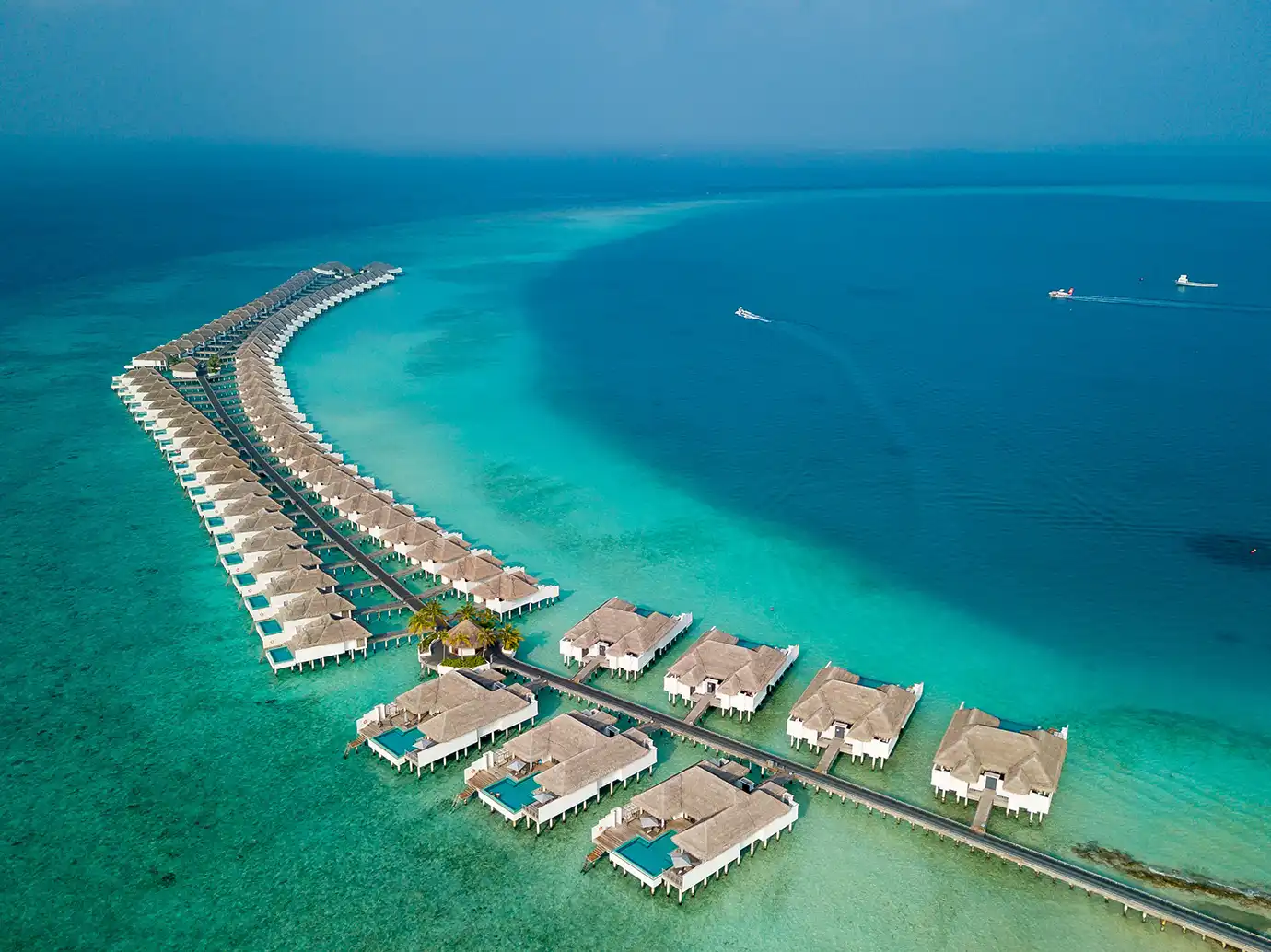
What Maldives All-Inclusive Luxury Resorts Actually Include
All-inclusive means different things at different resorts, so pin down the plan before you compare prices. The word covers everything from a basic buffet-and-beer deal to a full dine-around with premium spirits.
Read the inclusion list, not the marketing name. Here is how the plans actually stack up.
The Board Plans in Plain English
Five board plans show up across Maldives resorts, and the gaps between them are big:
- Room-only: bed only, all food and drink billed a la carte. Common at ultra-luxe resorts.
- Bed and breakfast: breakfast at the main restaurant, everything else à la carte. Rare at this tier.
- Half-board: breakfast plus dinner at the main restaurant. Drinks and specialty restaurants cost extra.
- Full-board: breakfast, lunch, and dinner at the main restaurant. Drinks still cost extra.
- All-inclusive: full-board plus a set drinks package plus some non-motorized activities. The details vary a lot.
The Three Tiers of the Maldives All Inclusive Resorts
Here is the part most readers came for. All-inclusive splits into three real tiers, and the difference between them is wide.
Standard all-inclusive covers the main buffet for all three meals, house wine and beer during meal hours, and basic spirits at set times—no specialty restaurants. Snorkel gear is included, but motorized sports and excursions cost extra.
Premium all-inclusive adds one or two specialty restaurants, a better wine list, mid-tier spirits, and a daily-refilled minibar. In-villa dining is included, and a snorkel excursion or two may be as well.
Premium Dine-Around is the tier the keyword usually means. You eat at any restaurant on the island, drink premium spirits off a higher wine list, and order 24-hour room service. The minibar runs unlimited, and a sunset dolphin cruise plus one snorkel safari are often included.
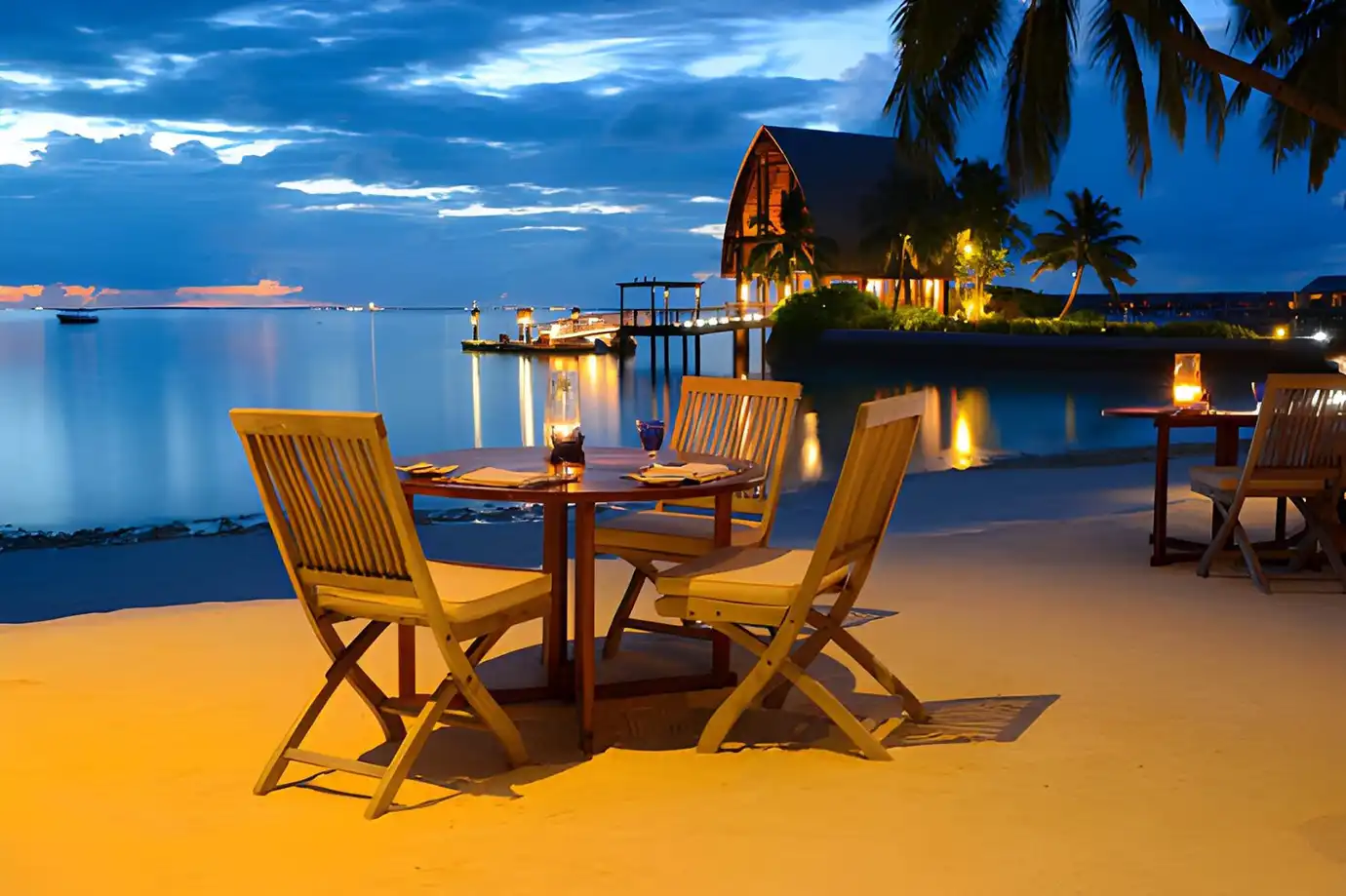
What Premium Dine-Around Still Leaves Out
Even the top plan leaves whole categories of budget for these, no matter which resort you pick:
- Motorized water sports: jet ski, seabob, parasailing
- Diving and PADI courses
- Wine pairings above the house list on tasting menus
- Champagne outside set hours
- Spa treatments, sometimes with a 10 to 20 percent discount
- Private excursions: sandbank picnic, sunset dhoni charter, private snorkel guide
- Seaplane or speedboat transfers
- Green tax, service charge, and GST
Decode the Marketing Names
Ignore the label and read the list. “Ultra all-inclusive,” “gold plan,” “platinum plan,” and “unlimited experiences” are marketing names, not standard tiers.
Two resorts can sell a “platinum” plan with completely different contents. Peregrine’s Maldives desk cross-checks the actual inclusion list of every property before quoting a plan.
The Real Out-of-Pocket Extras
Maldives all inclusive resorts do not mean all-inclusive. Several categories still land on your final bill, and a few of them are large. Budget for the certain ones from the start.
Here is what still costs money, sorted by how likely you are to pay it.
The Certain Extras
Every all-inclusive guest pays these, so build them in first:
- Transfers: seaplane or speedboat, about $250 to $800 per person round trip, never included
- Green tax: $12 per person per night, charged at checkout
- Service charge of 10 percent and GST of 17 percent on any extras you buy, so a $200 spa treatment becomes about $257
- Diving: about $90 to $180 a dive, with a Discover Scuba session near $250 anan d Open Water certification costing $800 to $1,000
- Motorized water sports: jet ski about $100 to $150 per half hour, seabob $80 to $120, parasailing $150 to $200 per person
The Likely Extras
Most guests hit these, though they vary by resort:
- Sandbank picnic: about $400 to $800 per couple
- Sunset dolphin cruise: about $80 to $150 per person, though some Premium Dine-Around plans include one
- Private snorkel guide: about $100 to $200 a session
- Hanifaru Bay manta trip in Baa Atoll, June to November: about $150 to $300 per person
- Spa: a 60-minute massage runs about $180 to $300, with some plans giving a small discount or one short treatment
- Fine-dining supplements: wine pairings and underwater restaurants like Ithaa, 5.8 Undersea, or Subsix add about $250 to $650 per person
- Photography package: about $250 to $650 a session, never included
The Occasional Extras
Budget for one or two of these, depending on your plans:
- Premium minibar items: champagne splits and top-shelf spirits above the plan
- In-villa dining fee: some resorts add $15 to $25 per room-service delivery, even on all-inclusive
- Gala dinner supplements: Christmas Eve, New Year’s Eve, and some Eid dinners add $100 to $400 per person,n even inside Premium Dine-Around
- Kids club premium sessions: cooking classes and marine-biology sessions often add $40 to $100
The Total Extras Reality
Add it up before you go. For a 5-night Premium Dine-Around stay at this tier, realistic extra spend runs about $400 to $1,200 per couple. For 7 nights, about $700 to $1,800.
Plan a dive day, a spa treatment, and one signature excursion, and you should assume the higher end.
All-Inclusive vs Half-Board: The Head-to-Head Math
The upgrade is worth it only when the plan gap costs less than what you would spend a la carte. So do the math honestly, and let it decide instead of the brochure.
Start by throwing out the extras that cost the same either way. A dive, a spa treatment, and a sandbank picnic cost the same on half-board or all-inclusive, so they don’t factor into the decision. The real comparison is one clean question. Does the upgrade cost less than the food and drink it replaces?
So compare two numbers. The upgrade cost is the all-inclusive rate minus the half-board rate. And you’re likely to spend à la carte on lunches, drinks, and specialty dinners if you stay on half-board. The upgrade wins when it costs less than that food-and-drink spend.
Worked Example 1: Honeymoon Couple, 5 Nights, Baa Atoll
For a couple who drinks wine with dinner, the upgrade usually wins. Here is the shape of it, using planning ranges rather than a live quote.
The Premium Dine-Around upgrade adds roughly $250 to $350 per couple per night, so about $1,250 to $1,750 across five nights.
On half-board, the food and drink you would buy runs higher: a daily lunch near $60, wine each evening near $90, a few poolside drinks near $40, and three specialty dinners at $120 to $250 each above the included main-restaurant dinner. Across five nights, roughly $1,500 to $2,300.
Verdict: the upgrade usually costs less than the food and drink, so Premium Dine-Around wins, often by $250 to $700. Drink more, and it wins by more.
Worked Example 2: Family of Four, 7 Nights, South Ari Atoll
For a family, the upgrade is bigger, but so is the food and drink, so all-inclusive usually still wins. The margin is tighter than parents expect, and it turns on how much the kids order.
The upgrade to Premium All-Inclusive for four guests adds roughly $400 to $550 per family per night, so about $2,800 to $3,850 across seven nights.
On half-board, the family’s food and drink runs about the same or more: lunches near $80 a day, kids’ juice, soda, and ice cream near $60 a day, four specialty dinners near $300 each, an adult wine or two each night, and poolside snacks. Across seven nights, roughly $2,800 to $3,900.
Verdict: all-inclusive usually wins for families, though often by a modest margin. The less you want to track the kids’ all-day ordering, the better the upgrade looks.
Worked Example 3: Non-Drinking Couple, 4 Nights, Malé Atoll
For a non-drinking couple on a short stay, half-board usually wins. The alcohol savings that drive most all-inclusive value are not there.
The upgrade for two guests adds roughly $200 to $280 per couple per night, so about $800 to $1,120 across four nights.
On half-board, the food and drink you would buy is light: lunches near $45 a day, two specialty dinners near $150 each, soft drinks near $25 a day, and no alcohol. Across four nights, roughly $600 to $800.
Verdict: the upgrade costs more than the food and drink it replaces, so half-board wins for this profile. Add a pre-paid dining voucher instead if the resort offers one.
When All-Inclusive Almost Always Wins
Some profiles make the upgrade an easy yes:
- Stays of five nights or more
- Couples who drink two or more drinks a day
- Families with children under 12
- Guests who like a casual, order-anything rhythm
- Guests who value price certainty over flexibility
When Half-Board Almost Always Wins
Other profiles point the other way:
- Stays of three to four nights
- Non-drinkers
- Foodies who plan several tasting-menu dinners at full price
- Guests who skip resort meals for a local-island lunch
- Ultra-luxe stays where a la carte quality beats the all-inclusive kitchen
The Hidden Value: Price Certainty
Money is only one lens. The other is how the plan changes the way you spend your days, and generic comparisons miss it.
Price certainty buys peace of mind, and on a honeymoon or a family trip, that is worth real money.

What Price Certainty Actually Buys
Picture two guests with $8,000 set aside for the stay. On half-board, they do quite a bit of eating at every meal: order the second bottle or not, book the specialty restaurant tonight or not.
On Premium Dine-Around, the same couple with the same budget stops watching the check. They order the bottle, book the restaurant, and add the dive. The checkout total lands in a similar place, but the trip feels different.
Why Honeymoons Favor It
A once-in-a-lifetime trip should not come with a running tab. All-inclusive removes 30 to 40 small-money decisions over a 5-night stay.
The drop in decision-load is worth more than the few dollars either way. Honeymooners rarely regret the upgrade.
Why Families Favor It
Kids order all day: juice, ice cream, a mid-morning snack, and another soda. On half-board, parents track every order and start saying no by day three.
On an all-inclusive, the kids order, and the parents relax. The stress relief is real, and it rarely shows up in a spreadsheet.

Why Ultra-Luxe Guests Often Skip It
At the very top, a la carte cooking beats even the best all-inclusive kitchen. Guests paying $4,000 a night for a villa usually want full flexibility, not a plan.
Those travelers are not the audience for this article, but the point holds. The higher the kitchen, the weaker the all-inclusive case.
The Behavior Effect
Paying up front quietly changes how you feel about spending. With the tab settled before you arrive, the cost signal fades,s and most guests relax more.
The same total spend feels better when it is not metered meal by meal. Some of that comfort is exactly what you pay for.
Property Examples: Where Value-Luxury All-Inclusive Delivers
Real resorts make the point better than theory. Here are properties in the higher-mid-range to lower-luxury bracket where an all-inclusive plan tends to be worth the price. Confirm the current plan and inclusions for any property before you book, as resorts often revise them.
Each one pairs a genuine dine-around with a real reef or dive program.
Niva Dhigali, Raa Atoll
Niva Dhigali, formerly Dhigali, is a strong value-luxury pick reached by a 40-minute seaplane. Its Premium All-Inclusive plan runs a real dine-around across several specialty restaurants.
The plan covers meals, house wine, mid-tier spirits, non-motorized water sports, and, on longer stays, a dolphin cruise and a snorkeling safari. Diving, motorized sports, and spa stay extra. Best for couples and small families on 5 to 7 nights who want an excellent house reef.
Sun Siyam Olhuveli, South Malé Atoll
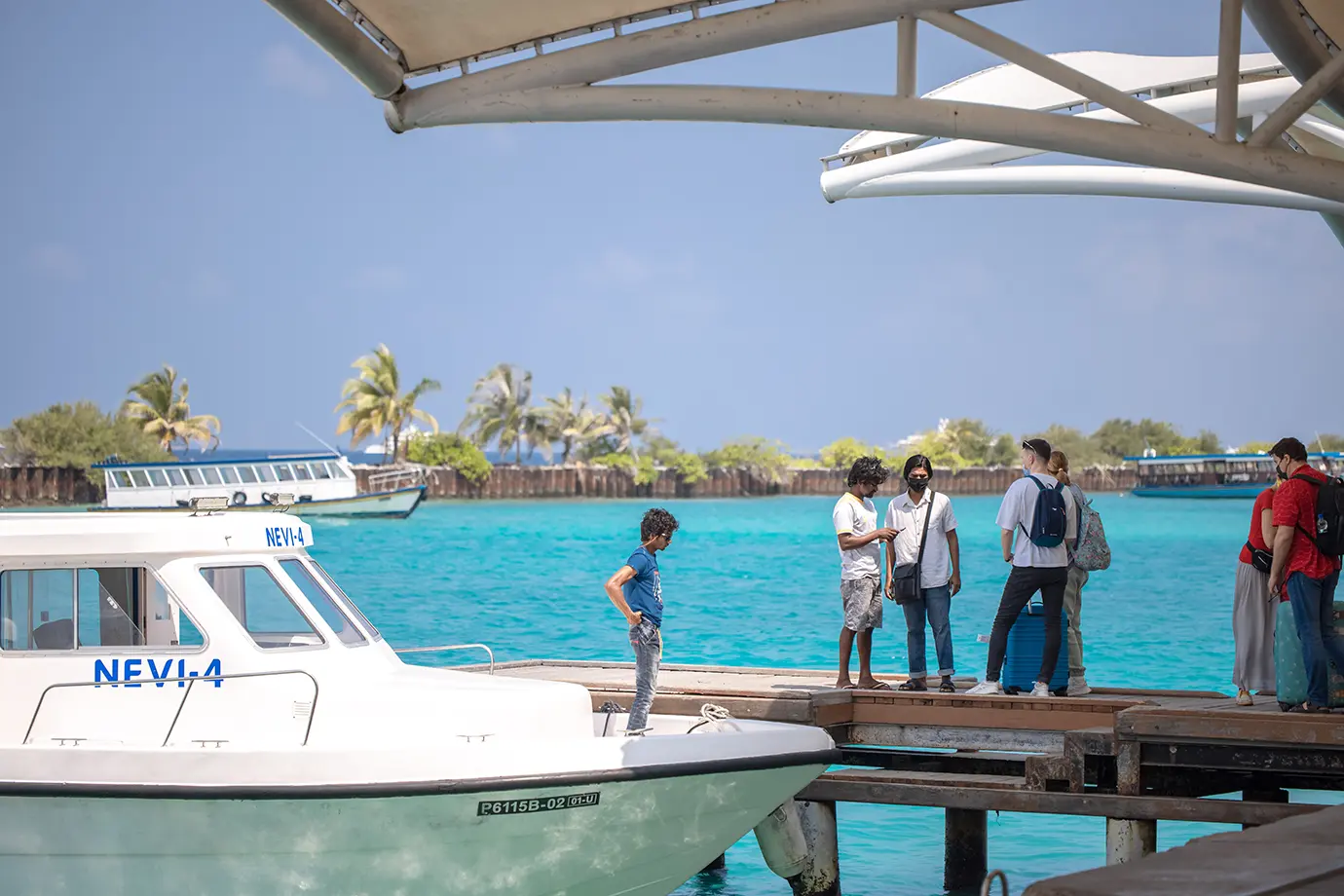
Sun Siyam Olhuveli sits a 40-minute speedboat from Malé, so there is no seaplane cutoff to plan around. The large, multi-restaurant resort runs a premium all-inclusive plan with dine-around, premium spirits, and daily minibar refills.
The speedboat access is the real edge for short stays and late arrivals. Diving, spa, and private excursions are extra. Best for couples on 3 to 5 nights and anyone who wants an easy transfer.
Kandima Maldives, Dhaalu Atoll
Kandima is a big, energetic resort with the feel of a small town and a long list of restaurants and bars. It’s an all-inclusive plan that spans several venues, which suits guests who prefer variety over intimacy.
House drinks and some activities are included, while signature dining, diving, and spa cost extra—best for families, groups of friends, and active travelers.
Kuramathi Maldives, Rasdhoo Atoll
Kuramathi is a large island resort with its own natural sandbank and a wide range of villas, reached by a 20-minute seaplane. Its plans deliver strong value at the higher villa categories.
A good house reef and a marine biologist program add substance to a stay—best for families, multi-generational groups, and long-stay travelers.
Furaveri Maldives, Raa Atoll
Furaveri, a 45-minute seaplane from Malé, has moved up toward the lower-luxury tier with refreshed overwater villas. Its all-inclusive premium plan suits a quiet, longer stay.
A healthy house reef and a calm atoll are the draws. Best for honeymooners who want privacy without ultra-luxe pricing.
Fushifaru Maldives, Lhaviyani Atoll
Fushifaru is a boutique 49-villa island with a high service ratio and a 40-minute seaplane transfer. Its premium all-inclusive plan fits a slower, more private trip.
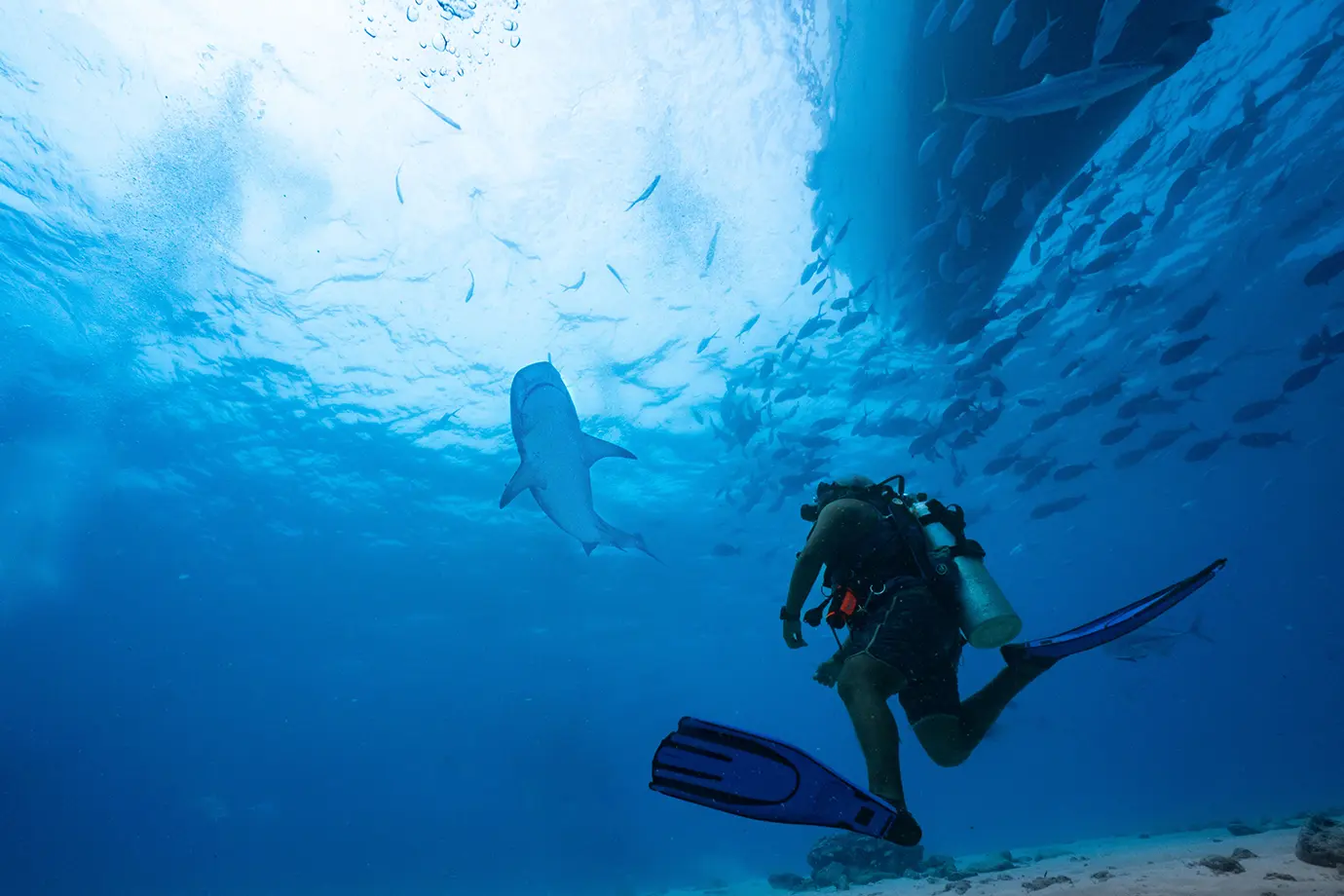
The real prize is dive access to Fushifaru Thila, one of the best manta cleaning stations in the country. Best for divers and honeymooners who want a small-island feel.
What the Best Value Resorts Share
The resorts worth an all-inclusive upgrade share a pattern. Each sits in the higher mid-range to lower-luxury band and offers a true dine-around, not a single restaurant dressed up as one.
Each has a marine biologist or serious dive program and has seen recent investment. Peregrine keeps direct partnerships with resorts like these, so match the specific plan to your dates with the team.
Where All-Inclusive Rarely Pays Off
Skip the all-inclusive upgrade at certain kinds of resorts:
- Ultra-luxe islands, where à la carte quality beats the plan
- Very small resorts, where two or three restaurants cannot support a real dine-around
- Adults-only resorts that pile a heavy single supplement onto the plan
- Any resort calling two restaurants a “dine-around”
How to Choose the Right Plan for Your Trip
You can settle the decision in five questions. Answer them honestly, and the plan picks itself.
Run the filter, then check the property details before you commit.
The Five-Question Filter
Score your trip against these five:
- How many nights? Five or more favors are all-inclusive.
- Do you drink alcohol daily? Yes, favors all-inclusive.
- How many children share the room? Any child favors an all-inclusive environment.
- Do you plan to dive or participate in motorized sports? Yes, weakens the case, since those extras stay out of pocket either way.
- Do you want price certainty? Ye,s favors all-inclusive at any length.
Three or more yes answers across points 1, 2, 3, and 5: book Premium Dine-Around. Mostly points 4 and 5: book half-board, and add a pre-paid dining voucher if the resort offers one.
The Property-Level Check
Even after you pick a plan, check three details on the specific resort:
- How many restaurants does the dine-around really include?s. Fewer than three defeats the point at this tier.
- Which wine and spirit brands sit on the list? Search the actual names against the resort’s inclusion sheet.
- Which excursions does the plan include? One sunset cruise plus one snorkel safari is standard, and less is a downgrade.
How Peregrine Books It
Peregrine’s Maldives desk runs this same five-question filter and property check on every inquiry. When all-inclusive does not win the math, the team says so and books half-board with à la carte guidance instead.
When a resort’s all-inclusive plan is weaker than its half-board-plus-specialty pattern, the team recommends against the upgrade, even when the resort quotes it as its best value.
Costs to Budget Even on All-Inclusive
All-inclusive still leaves a few certain costs, so plan for them, and the checkout holds no surprises. Keep the extras modes,t and the price-certainty logic still works.
Here is what to set aside.
The Non-Negotiable Extras
Three costs sit outside every plan: your seaplane or speedboat transfer, the green tax of $12 per person per night, and the 10 percent service charge plus 17 percent GST on anything you buy beyond the plan.
Build these in before you compare rates, since they apply no matter which boarplansan you choose.
The Two-Item Rule
Do not overbudget extras, or you cancel out the reason you went all-inclusive. For a 5-night stay, plan one dive experience, one spa treatment, or one big offshore excursion, not all three.
For a 7-night stay, plan two of the three. Anything more and half-board may have been the better buy.
The Tipping Framework
Tips are not required on all-inclusive, but they are appreciated. A simple guide:
- Villa host: $5 to $10 a day
- Dive instructor: $10 to $20 a dive
- Specialty restaurant team: a $10 to $20 gesture at the end of the stay
- Housekeeping: $20 to $30 total at checkout
For a 5-night couple’s stay, budget roughly $100 to $200 in total tips.
Want the numbers for your exact dates? Our Maldives desk compares the plans for your shortlist and replies within 24 hours.
Peregrine’s Value-Luxury Maldives Packages
Peregrine builds each Maldives holiday package around the right plan, not the biggest one. Every quote runs the half-board versus all-inclusive math for your profile before the team recommends a board plan.
All partner resorts sit in the higher mid-range to lower-luxury band and offer a real dine-around at their all-inclusive tier.
The Package Range
A handful of package shapes cover most travelers. Confirm current names and inclusions with the team, since resorts adjust plans by season:
- A 5-night value-luxury all-inclusive on a speedboat atoll, ideal for short honeymoons and first visits
- A 7-night Baa Atoll Premium Dine-Around timed to the June-to-November manta window
- A 7-night Ari Atoll dive-focused trip on half-board plus a pre-paid dive package, since all-inclusive does not win that math
- A 10-night two-island split that mixes a value all-inclusive resort with a boutique lower-luxury stay
- A 7-night family all-inclusive with a kids club, kids’ meals, and soft drinks included.d
What Peregrine Adds Beyond an OTA
A specialist earns its place by focusing on details that an online booking site cannot match. You get partner pricing that the aggregators do not see, villa upgrades negotiated at booking, and transfers timed against the seaplane cutoff.
You also get 24-hour advisor support during the stay and honest advice on when to skip the all-inclusive upgrade. Ask the Maldives desk to run the math on your dates.
Frequently Asked Questions
Are all-inclusive resorts in the Maldives worth it for a 3-night stay?
Usually not. On three nights, the plan upgrade rarely beats what you would spend a la carte, unless you drink heavily. Short stays also mean fewer meals to spread the cost over. Half-board plus a couple of specialty dinners is often cheaper and gives you more flexibility. The exception is a family with young children, where all-day kids’ ordering can still tip the math toward all-inclusive, even on a short stay.
What is the difference between Premium All-Inclusive and Premium Dine-Around?
The dine-around scope. Premium all-inclusive usually includes one or two specialty restaurants in addition to the main buffet, mid-tier spirits, and a daily minibar. Premium Dine-Around opens every restaurant on the island, adds premium spirits and a better wine list, and often includes 24-hour room service and a couple of excursions. Premium Dine-Around costs more but suits foodies who want variety. Read the inclusion list, since resorts label these tiers inconsistently.
Can I switch from half-board to all-inclusive after arrival?
Sometimes, but it costs more than pre-booking. Many resorts let you upgrade at check-in, though the walk-up rate runs higher than the package rate your operator locks in advance. Some resorts require the same board plan for the whole stay and will not prorate a mid-stay switch. Decide before you travel, and let your Peregrine advisor confirm the resort’s upgrade rules so you are not caught off guard at the desk.
Are diving costs ever included in all-inclusive plans?
Rarely. Diving sits outside even Premium Dine-Around plans at this tier, so budget about $90 to $180 a dive separately. A few resorts bundle a discounted dive package you can pre-pay, which is worth asking about if you plan several dives. If diving is central to your trip, half-board plus a pre-paid dive package is often smarter than an all-inclusive plan you will not fully use.
What alcohol brands are usually included at this tier?
It depends on the plan level. Standard plans pour house wine, beer, and basic spirits. Premium plans add mid-tier names like Bombay Sapphire, Bacardi, and Jack Daniel’s. Premium Dine-Around adds premium spirits such as Hendrick’s, Grey Goose, and some single malts, plus a wider wine list. Brands vary by resort, so check the actual list against the plan name rather than trusting the “premium” label.
Do all-inclusive plans include kids’ meals and drinks?
Usually, yes,s at family resorts. Most family-friendly all-inclusive plans cover children’s meals and non-alcoholic drinks, which is exactly where the plan pays off for parents. Kids order juice, soda, and ice cream all day, and those charges add up fast on a half-board basis. Check whether the kids club’s premium sessions, like cooking classes, carry a separate fee, since those often sit outside the plan even when meals are included.
Are excursions like sandbank picnics ever included?
Rarely the big ones. A sunset dolphin cruise and one snorkel safari are often included on Premium Dine-Around plans. A private sandbank picnic, a manta trip, or a private snorkel guide almost always costs extra, at about $150 to $800, depending on the outing. Budget for one signature excursion per trip and treat anything included as a bonus rather than the reason you upgraded.
What happens on peak dates like Christmas and New Year’s?
Your plan still applies, but supplements stack on top of it. Most resorts add a compulsory gala dinner on Christmas Eve and New Year’s Eve, priced at about $100 to $400 per person, even when included in a Premium Dine-Around plan. Peak dates also carry higher room rates and minimum-stay rules. Read the festive supplement list before booking December dates, since the “all-inclusive” label does not cover the mandatory holiday dinners.
Can I bring my own alcohol to save money?
No. The Maldives bans alcohol imports, and customs at Malé will confiscate any bottles in your luggage, including those that are duty-free. Alcohol is served only on resort islands, and you cannot carry it in from home or a stopover. If drinks are a big part of your trip, an all-inclusive plan is the way to control costs, not a suitcase full of duty-free items that never make it past the airport.
How does all-inclusive work on a two-island split?
You choose a plan per resort, not one plan for the whole trip. A common split runs an all-inclusive value resort for one half and a half-board boutique stay for the other, so each leg gets the board plan that fits it. Transfers between islands are separate and usually need a seaplane or a Malé connection. Let your operator sequence the plans and transfers so the two legs line up cleanly.
Book the Plan That Fits Your Trip
You now have what you need to answer the real question. Not whether all-inclusive is good, but whether it is good for your trip. The math, the extras, and your profile all point to an answer.
Send Peregrine your shortlist and dates, and the Maldives desk will run the half-board versus all-inclusive math for each resort, including the cases where we tell you to skip the upgrade. We reply within 24 hours by email or WhatsApp, with a real advisor on the line. Our offices in Kathmandu and Muscat support the region end-to-end. The right plan is the one that fits your trip, and now you can spot it.