


A combined Mount Kenya trek and Maasai Mara safari is East Africa’s most compelling combined itinerary. It suits travelers who want both alpine adventure and Big Five wildlife in one trip. The standard plan runs 10 days. Spend 5 to 6 days on Mount Kenya via the Sirimon–Chogoria traverse to Point Lenana (4,985 m). Add a rest day, then 3 nights in the Maasai Mara. July to October aligns the dry mountain trekking window with the Great Migration river crossings. Before your trek, check the Kenya Wildlife Service Mount Kenya visitor information for current park entry fees, access details, and visitor guidance.
The trip works because Mount Kenya and the Maasai Mara sit within a single-country logistics loop. Both share the same international airport (Nairobi JKIA), the same operator networks, and connecting internal flights that eliminate long overland transfers.
Peregrine Treks and Tours books both segments as a single private package. You get continuous guide support, gear storage between phases, and airport-to-airport coordination.
The physical shift is dramatic. You spend the first week at 3,000 to 4,985 meters in freezing pre-dawn temperatures on a scrambling summit ridge. Days later, you sit in a 4×4 Land Cruiser on the open savannah at 1,500 meters, watching lion prides in warm afternoon sun.
Why Combine Mount Kenya Trekking With a Maasai Mara Safari?
Combining Mount Kenya and the Maasai Mara offers two distinct Kenyan experiences on a single flight ticket. You get high-altitude alpine trekking, Point Lenana at sunrise, and the exceptional scenery of the Sirimon–Chogoria traverse. Then you shift into vehicle-based wildlife viewing with lions, cheetahs, leopards, and (in season) the wildebeest migration on the Mara River. Our 6-Day Mount Kenya Trek via the Sirimon–Chogoria Route includes an acclimatization day at Shipton’s Camp and a descent through the Gorges Valley.
The trip solves the two most common problems when planning a trip to Kenya. First, most safari-only visitors regret not seeing the mountains — Kenya’s highlands are the country’s most photogenic terrain.
Second, most trekking-only visitors regret not doing a safari. You already flew to East Africa, so the marginal cost of adding 3 nights in the Mara is small compared to the total trip cost.
The two segments also balance each other physically. Mount Kenya is genuinely demanding — you climb 3,000+ meters vertically in 5 days, sleep at 4,300 meters, and summit at 4,985 meters. The Maasai Mara is completely sedentary — game drives are all vehicle-based, and evenings are spent at comfortable camps.
What Is the Ideal Itinerary Duration?
A well-planned Mount Kenya trek and Maasai Mara safari combination takes 10 to 12 days in total, including international arrival and departure days. The 10-day Version is the minimum functional length. Twelve days adds an important rest day between the mountain and the Mara. The extra time in the Mara covers a full-day picnic drive and a Maasai village visit.
The Standard 10-Day Itinerary
- Day 1: Arrive at Jomo Kenyatta International Airport (JKIA), Nairobi. Transfer to hotel. Rest.
- Day 2: Drive to Nanyuki (approximately 3 hours from Nairobi). Pre-trek briefing and gear check. Overnight at a Nanyuki lodge.
- Day 3: Sirimon Gate to Old Moses Camp (3,387 m). 9 km trek.
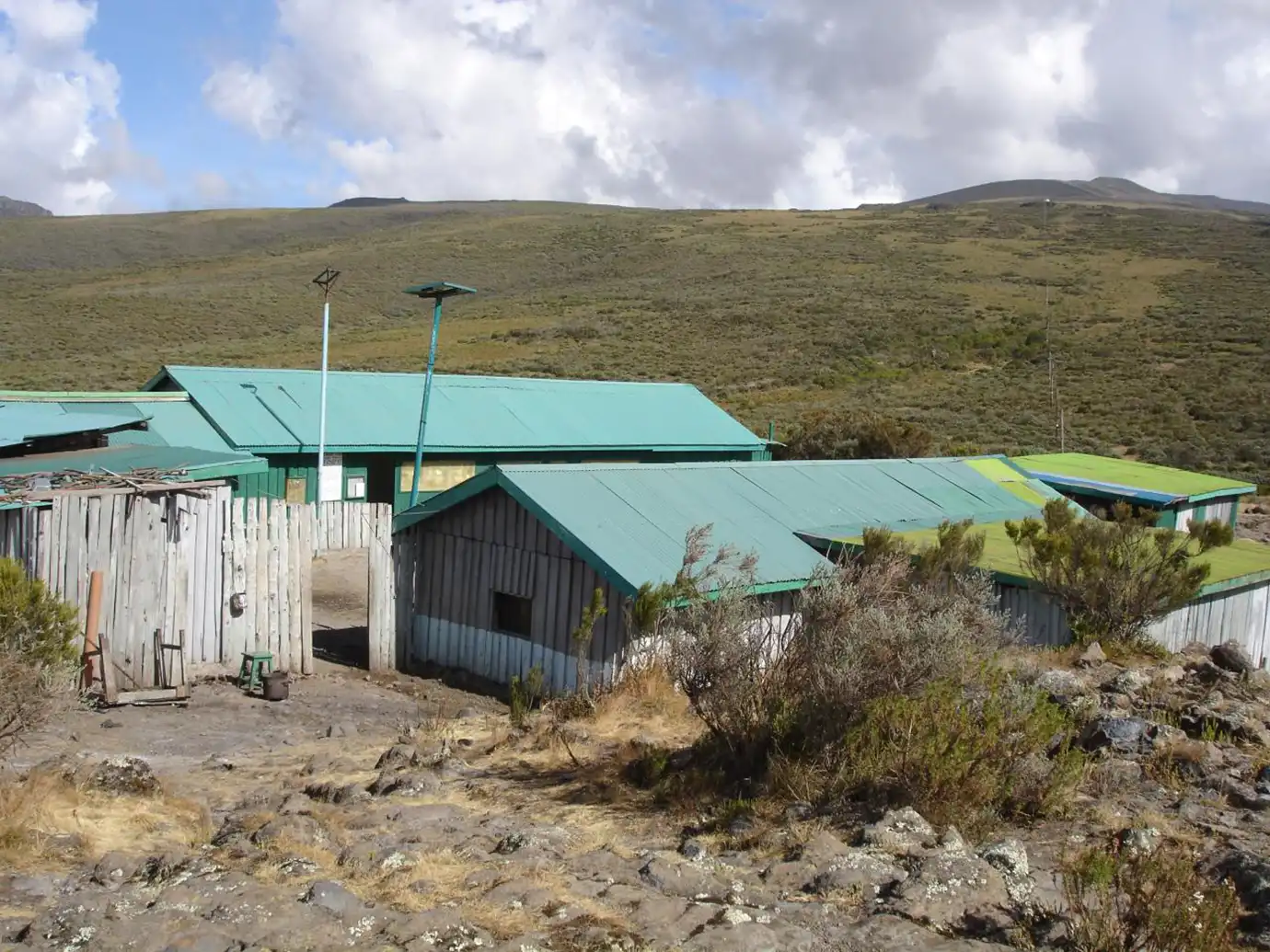
- Day 4: Old Moses to Shipton’s Camp (4,255 m). 14 km trek.
- Day 5: Summit Point Lenana (4,985 m) at sunrise. Descend to Mintos Camp (4,297 m) via top col.
- Day 6: Mintos to Chogoria Bandas via Lake Ellis and the Gorges Valley. 18 km descent.
- Day 7: Chogoria Gate transfer to Wilson Airport in Nairobi. Fly Wilson → Maasai Mara (approximately 60 minutes). Afternoon game drive. Overnight at Mara camp.
- Day 8: Full-day Maasai Mara game drive with bush picnic lunch.
- Day 9: Sunrise game drive. Afternoon Maasai village visit. Final sunset drive.
- Day 10: Flight from Mara airstrip to Wilson Airport. Transfer to JKIA for international departure.
The 12-Day Version
The 12-day variation adds two nights that materially improve the trip. Day 7 becomes a full rest day at a spa lodge near Nanyuki or Nairobi — recovery from the mountain matters. Day 8 flies to the Mara. The Mara stay extends to 4 nights (Days 8-11), with Day 12 as the departure day.
The extra rest day is not optional for older or less-fit trekkers. Coming off Point Lenana straight into a bumpy 4×4 flight and afternoon safari game drive is a physical shock. Knees are still stiff from the summit descent.
How Do You Time the Trip for Both Segments?
July through October is the only window that aligns both segments in their peak conditions. Mount Kenya is in its second dry season (drier trails, clearer summit views), and the Maasai Mara migration river crossings peak from mid-July through late September. The single best week for the combination is typically late August or early September.
Why July to October Beats Every Other Window
Mount Kenya’s two dry seasons are January–February and July–October. The Maasai Mara has a longer green season, but the migration river crossings only occur when the wildebeest herd is in the northern Mara. For more background on the seasonal wildlife movement, read Kenya’s Great Migration information from the official tourism board.
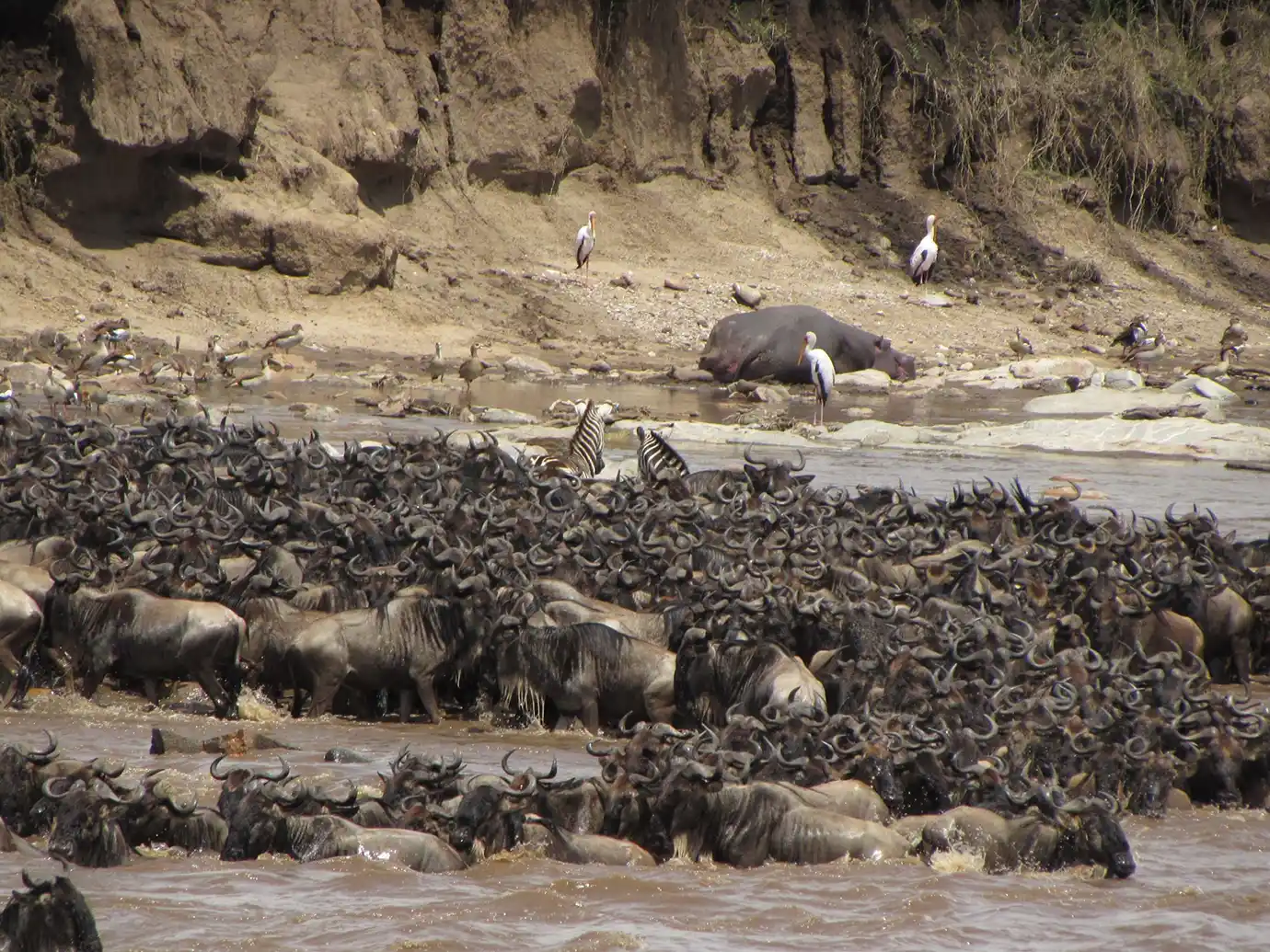
The window runs from mid-July through October. The overlap leaves July to October as the only viable combined window.
January–February works for Mount Kenya but misses the migration entirely. The Mara is still worth visiting in these months for predators and resident wildlife. Calving season is close by in Tanzania’s Serengeti. But the crossings are absent.
March through May is the long rains. Trails on Mount Kenya turn to deep mud, particularly on Naro Moru’s Vertical Bog. The Mara is green and quiet with low tourist numbers, but the mountain phase becomes miserable and dangerous.
Booking Lead Time
Book July to September combinations 9 to 12 months in advance. Mara migration season is Kenya’s peak tourism period, and the best camps fill fast. Mount Kenya hut bookings are less competitive, but should still be locked in 4 to 6 months in advance. October travel books slightly later — 6 to 9 months out is workable.
What Route Structure Works Best?
The recommended route runs Nairobi → Mount Kenya (via Nanyuki) → Maasai Mara (via Wilson Airport) → Nairobi. Point Lenana is the trekking summit reached via the Sirimon–Chogoria traverse. The Maasai Mara segment uses direct light aircraft from Wilson Airport to a Mara airstrip. Flying eliminates the 5- to 6-hour road transfer that would otherwise consume a full day.
Mount Kenya Phase Routing
- Ascend via Sirimon Route (northwest side, gradual profile, best for acclimatization)
- Summit Point Lenana at 4,985 m at sunrise
- Descend via Chogoria Route (southeast side, most scenic — Lake Ellis, Gorges Valley, Lake Michaelson)
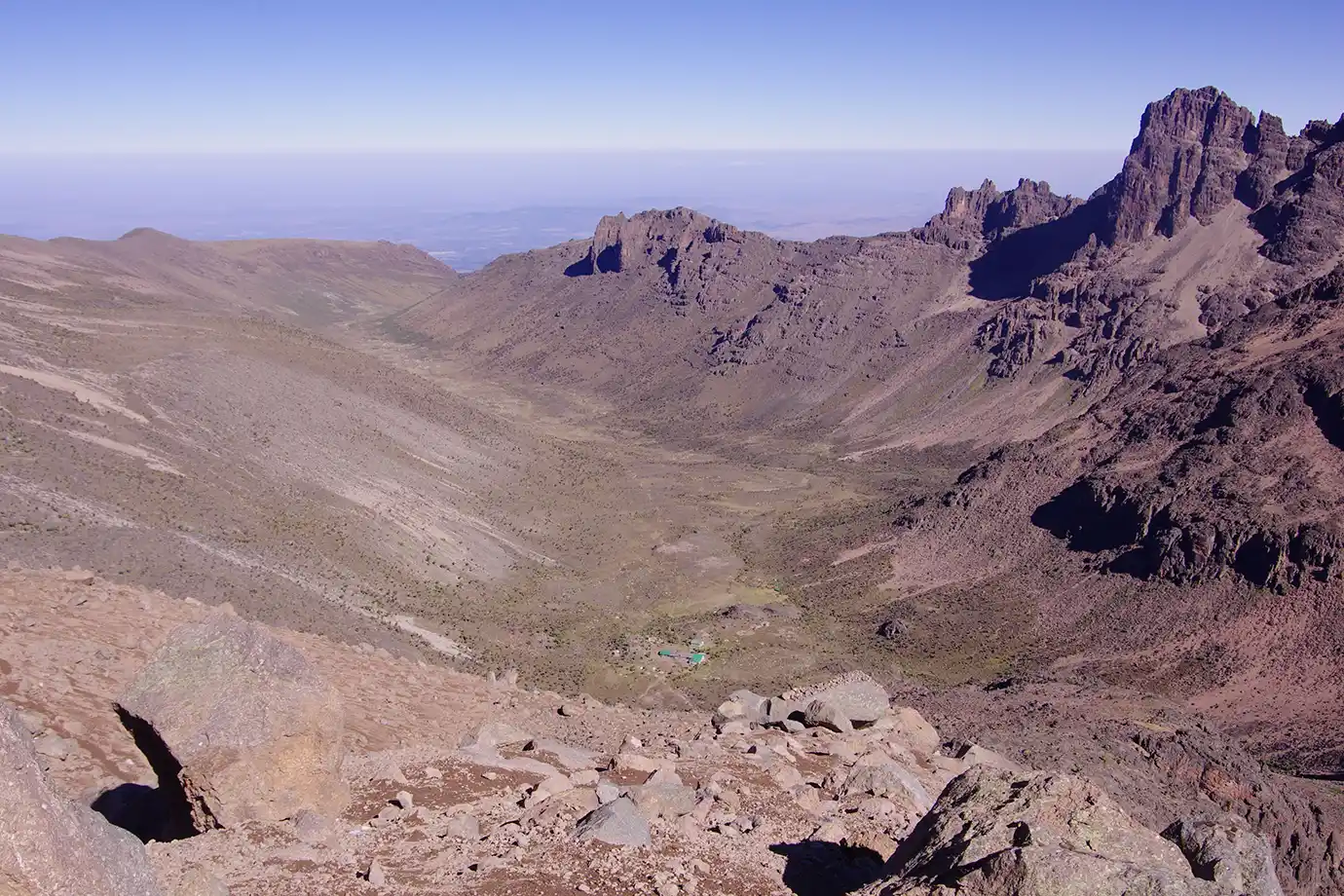
The Sirimon–Chogoria traverse is the recommended Mount Kenya route for a first-time visitor with 5 days on the mountain. Ascending Sirimon uses the mountain’s most gradual acclimatization profile. Descending Chogoria offers the mountain’s best scenery once your body is fully acclimatized to altitude.
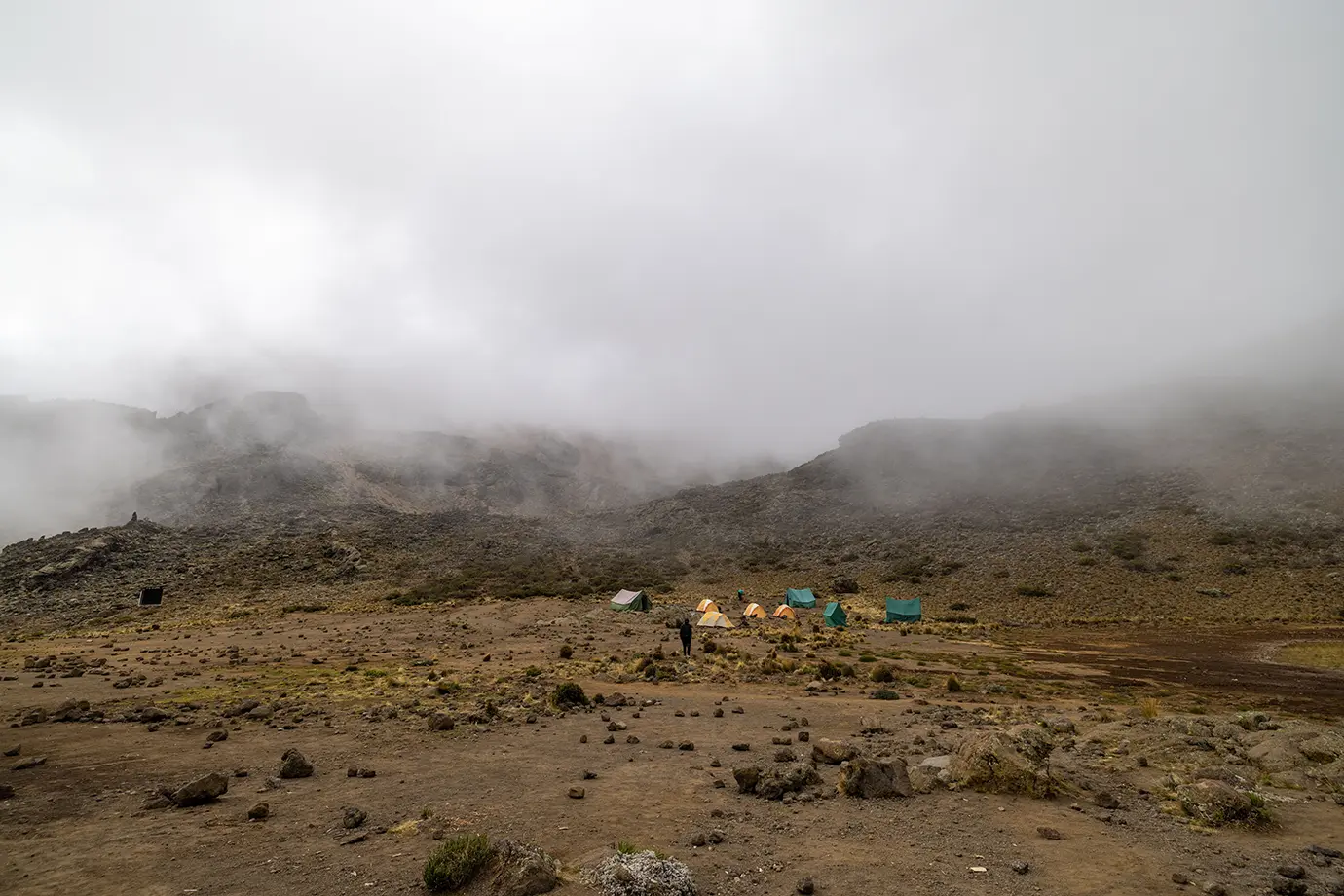
Transition From Mountain to Mara
After exiting at Chogoria Gate, transfer by road to Nairobi. The drive from Chogoria takes approximately 4 to 5 hours to reach Wilson Airport, Nairobi’s domestic aviation hub.
Wilson Airport is a separate facility from Jomo Kenyatta International Airport (JKIA). The two airports are 20 to 45 minutes apart depending on Nairobi traffic. Do not confuse them — arriving at JKIA for a departure from Wilson Airport has cost many travelers their safari flight.
From Wilson, take a scheduled flight to a Maasai Mara airstrip. AirKenya, Safarilink, and Governors Aviation all fly the route in 45 to 60 minutes. Common airstrips include Keekorok (central reserve), Ol Kiombo (eastern conservancies), Musiara (Governors Camp area), and Kichwa Tembo (northern conservancies).
Maasai Mara Phase
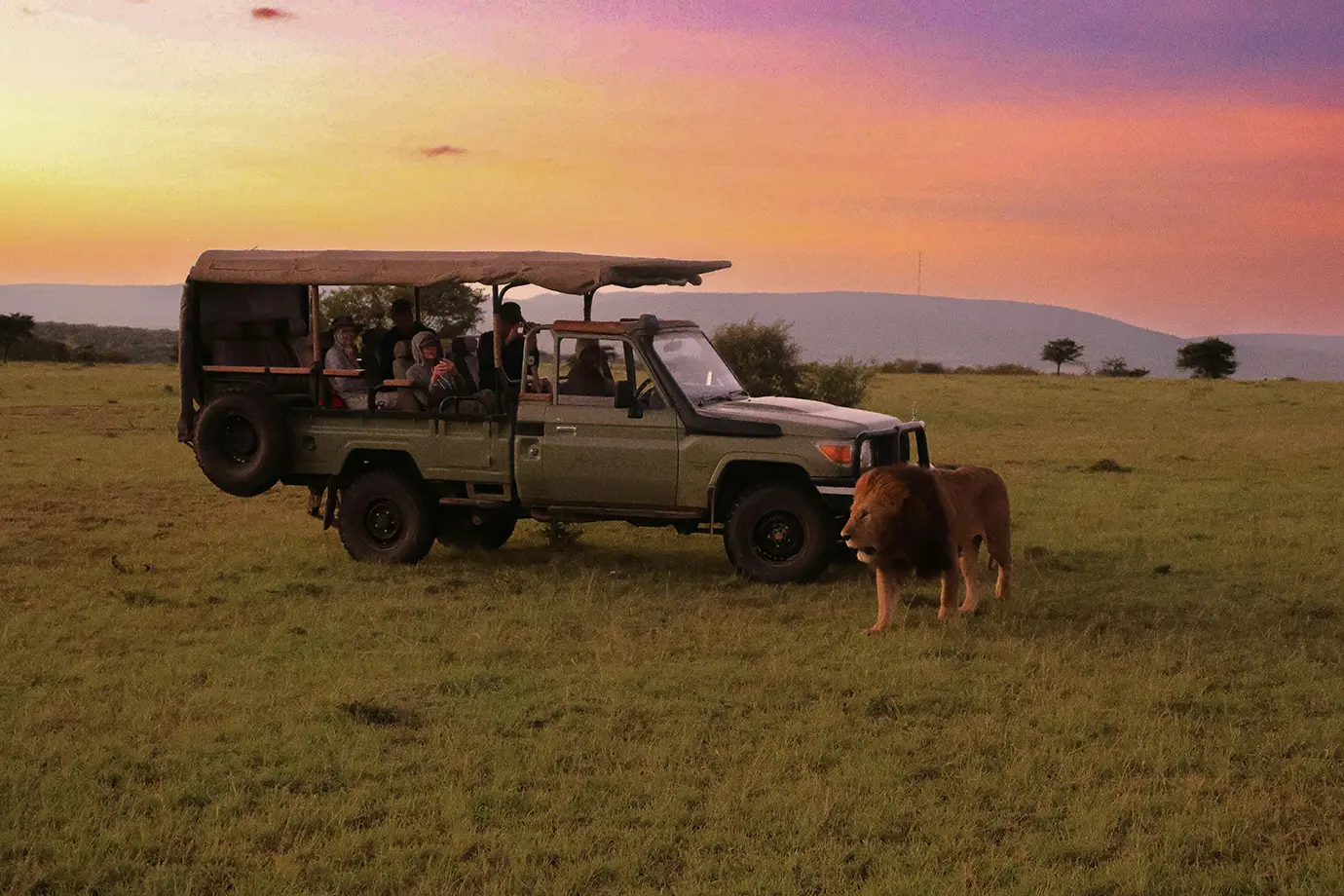
Three nights at a handpicked 4-star boutique camp inside or bordering the reserve. Full-day and half-day game drives are conducted in a private 4×4 Land Cruiser with a pop-up roof and a dedicated, licensed driver-guide.
Gear Storage and Packing Logistics
You need two distinct kits: mountain gear for Mount Kenya and safari gear for the Maasai Mara. Managing both without lugging a mountain of luggage across the country is solvable, but it requires planning.
The Split-Packing Strategy
Pack two separate soft-sided duffel bags: one mountain kit, one safari kit. Fly into JKIA with both. Before your Mount Kenya trek departure, leave the safari kit at your Nairobi hotel or at your operator’s office for safekeeping. Most reputable operators (Peregrine included) provide free gear storage between trip phases as standard service.
Take only your mountain kit to Nanyuki and up the mountain. Return from the mountain to Nairobi or directly to Wilson Airport. Collect your safari kit before boarding the Mara flight. Camp laundry in the Mara handles anything you were unable to wash on the mountain.
Mount Kenya Packing Essentials
- Waterproof hiking boots (broken in over a minimum of 50 km of prior use)
- Gaiters (essential regardless of route — moorland moisture is universal)
- Trekking poles (both, not just one)
- 4-season sleeping bag rated to -10°C
- Insulated jacket (down 700-fill or synthetic equivalent)
- Thermal base layers, mid-layer fleece, waterproof shell
- Insulated and liner gloves
- Warm beanie plus wide-brim sun hat
- Headlamp with spare batteries (summit day starts pre-dawn)
- 3-liter water capacity minimum
- High-SPF sunscreen and lip balm
Maasai Mara Safari Packing Essentials
- Neutral-colored clothing only (khaki, tan, olive) — dark blue and black attract tsetse flies.
- Light layered clothing for warm days and cool dawn drives
- Wide-brim sun hat
- Camera with 200-400mm telephoto zoom lens
- Binoculars (8×42 or 10×42)
- Comfortable closed-toe walking shoes
- Insect repellent with DEET at 30-50 percent concentration
- Crisp USD bills from 2009 series or newer for tips
What Not to Bring
Camouflage clothing is illegal in Kenya. Do not pack any camouflage patterns — shirts, trousers, bags, or hats — as customs officers may confiscate them at the airport. Plastic bags are subject to restrictions in Kenya (neighboring Tanzania has an outright ban since 2019). Use fabric, canvas, or mesh bags to organize your duffel.
Hard-shell suitcases cannot be used on Mount Kenya (porters carry soft duffels only) and are difficult to load onto light aircraft to the Mara. Pack in soft duffels throughout.
What Fitness Level Do You Need?
The combined trip requires above-average fitness for the Mount Kenya phase. The Maasai Mara phase requires no physical fitness at all beyond climbing into a 4×4. Your fitness threshold is set entirely by the mountain segment.
Mount Kenya Fitness Requirements
You should be comfortable walking 6 to 8 hours per day at a moderate pace with a light daypack (maximum 10 kg). Cardiovascular fitness matters more than raw strength. Regular hill walking, stair climbing, running, or cycling for at least 3 months before departure builds the aerobic base needed for altitude work.
Prior high-altitude experience is helpful but not required. Sirimon’s gradual profile handles most fit first-time altitude trekkers well. If you have never slept above 3,000 meters, consider a shorter acclimatization trek first. Aberdare National Park’s Elephant Hill (3,590 m) is an accessible 2-day preparation trek 3 hours from Nairobi.
Age and Health Considerations
Well-conditioned trekkers between 15 and 65 complete Mount Kenya every season. Age itself is not the limiting factor — fitness and altitude tolerance are. Trekkers with a history of cardiovascular disease, uncontrolled hypertension, or chronic respiratory conditions should consult a physician before booking.
Consider adding an acclimatization night at Shipton’s Camp if you are over 60 or new to high altitude. The result is a 6-day Mount Kenya schedule instead of 5. The additional cost is modest, and summit success rates rise above 95 percent with the extra day.
Practical Health and Safety Requirements
Vaccinations
Consult a travel medicine clinic at least 4 to 6 weeks before departure. Yellow Fever vaccination is required if you arrive from a Yellow Fever endemic country. The Kenya-recommended list includes routine boosters (tetanus, hepatitis A, typhoid) and destination-specific vaccinations based on your medical history.
Malaria Prophylaxis
Anti-malarial prophylaxis is recommended for the Maasai Mara segment. Mount Kenya above 2,500 meters is largely malaria-free, but the Nairobi transit and Mara segments require coverage. Common prescriptions include atovaquone-proguanil (Malarone), doxycycline, and mefloquine — your doctor selects based on side-effect tolerance.
Altitude Medication
Discuss acetazolamide (Diamox) prophylaxis with your doctor for the Mount Kenya segment. It is not required, but many trekkers take it for the days above 4,000 meters. The standard preventive dose is 125 mg twice daily starting 24 hours before altitude gain.
Travel Insurance
Comprehensive travel insurance covering high-altitude trekking to 5,000 meters and emergency medical evacuation is mandatory. AMREF Flying Doctors is the standard evacuation service across Kenya, covering both Mount Kenya and the Maasai Mara. Confirm that your policy explicitly covers both altitude trekking and evacuation from remote wildlife areas before departure.
Kenya Entry Requirements
All international visitors require a Kenya Electronic Travel Authorization (eTA), which must be applied for online at etakenya.go.ke. The standard eTA fee is $30 USD. Processing typically takes 24 to 72 hours, but apply at least 7 days before travel to account for possible portal delays.
Your passport must be valid for 6 months beyond your return date. Keep at least two blank pages available for entry and exit stamps.
Yellow Fever certificate requirements depend on your travel history. Arrivals or transits through a Yellow Fever-endemic country lasting more than 12 hours require the physical international yellow booklet as proof of vaccination. Most visitors need an approved Kenya eTA before travel. Check the official application site for eligibility, exemptions, fees, and processing guidance.
Frequently Asked Questions
How much does a combined Mount Kenya and Maasai Mara trip cost?
A 10-day private Mount Kenya trek and Maasai Mara safari combination typically ranges from $4,500 to $7,500 per person. Group size, season, and accommodation tier drive the variation. The mountain segment runs approximately $1,800 to $2,500 per person for a 5-day Sirimon–Chogoria private trek. All park fees, huts, guide, porters, and chef are included. The Mara segment adds $2,000 to $3,500 per person for 3 nights at a boutique camp, including a private vehicle, guide, and internal flights.
Can you do Mount Kenya and the Maasai Mara without flying between them?
Technically yes, but the road transfer from Nanyuki to the Maasai Mara takes 10 to 12 hours by road. It consumes a full trip day plus part of a second. Flying via Wilson Airport in Nairobi (Chogoria → Nairobi road, then Wilson → Mara flight) is faster, less exhausting, and only marginally more expensive. Nearly all combined trips use internal flights for the mountain-to-Mara transition.
Is 10 days enough for both Mount Kenya and the Maasai Mara?
Yes, 10 days is functional but tight. The 10-day plan spends 5 days on Mount Kenya, 3 nights in the Mara, and 2 days on arrival and departure logistics. Adding a rest day between the mountain and the Mara (11 or 12 days total) significantly improves the trip—both Trekkers over 50 and those seeking a fuller Mara experience with 4 game-drive days benefit.
What is the best month for a combined Mount Kenya and Mara trip?
Late August through mid-September is the optimal month. Mount Kenya is in its dry season with firm trails and clear summit views. Wildebeest migration river crossings peak during this window. Weather is stable in both locations. Late September and October also work well, with slightly cooler mountain temperatures and continuing migration activity. July and early August work, but crossings can be less predictable.
Do you need a guide for both segments?
Yes. Kenya Wildlife Service regulations require a licensed mountain guide for all Mount Kenya climbs — independent trekking is not permitted above the park gates. Maasai Mara game drives require a licensed driver-guide with a park-registered vehicle. A single Kenya operator (like Peregrine) coordinates both—you have continuous professional support throughout, from JKIA arrival to JKIA departure, with no gaps between phases.
| Book Your Combined Kenya Trek and Safari With Peregrine.
Ready to plan your Mount Kenya trek and Maasai Mara safari? Contact our travel team to request a private itinerary and a detailed quote based on your dates, group size, and accommodation preferences. Email: sales@peregrinetreks.com WhatsApp: +977 985 105 2413 Web: peregrinetreks.com |