


The right Nepal itinerary depends on one question before anything else. Do you want to trek, or not? A cultural trip through Kathmandu, Pokhara, and Chitwan works well in 5 to 7 days. Add a proper Himalayan trek, and you need 10 to 14 days, sometimes more. Most first-time visitors find 10 to 12 days the sweet spot. On this page, I walk you through every duration from 5 days to 3 weeks, show you exactly what fits at each length, and tell you honestly what does not.
I have planned and led these routes for years from our office in Kathmandu. I have sat through Lukla flight delays, timed the Prithvi Highway in monsoon traffic, and watched clients try to squeeze Everest Base Camp into a week. Let me save you from the mistakes I see most often.
How Many Days Do You Need in Nepal?
You need at least 5 days for a real Nepal trip, 10 to 12 days for the ideal first visit, and 14 days or more if a full trek is on your list. Anything shorter than 5 days turns into an airport-and-hotel exercise. Anything longer than 3 weeks starts repeating experiences unless you add a second region or country.
Here is how each bracket actually plays out on the ground.
The Honest Minimum: 5 Days
Five days give you Kathmandu and Pokhara, nothing more. You land, spend two days in the Kathmandu Valley, take the 25-minute flight to Pokhara, enjoy two days by Phewa Lake, and fly home.
Even at this pace, the trip feels complete rather than rushed, because both cities reward short stays. You can stand at Boudhanath at dusk while hundreds of locals walk the kora, then watch sunrise hit the Annapurna range from Sarangkot two mornings later. What does not fit in 5 days: Chitwan, any overnight trek, and Lumbini. Trying to add any of them means spending a third of your trip in a vehicle.
The Sweet Spot: 10 to 12 Days
Ten to 12 days is the length our Kathmandu-based planners recommend to almost every first-time visitor. You get the full cultural triangle of Kathmandu, Pokhara, and Chitwan, plus either a short trek like Poon Hill or a compressed Annapurna Base Camp route.
The math works cleanly. Three days in the Kathmandu Valley, two in Chitwan, two in Pokhara, and three to five on a trail. You also gain a buffer day, which matters more in Nepal than almost anywhere else because mountain weather delays domestic flights.
When You Need 2 Weeks or More
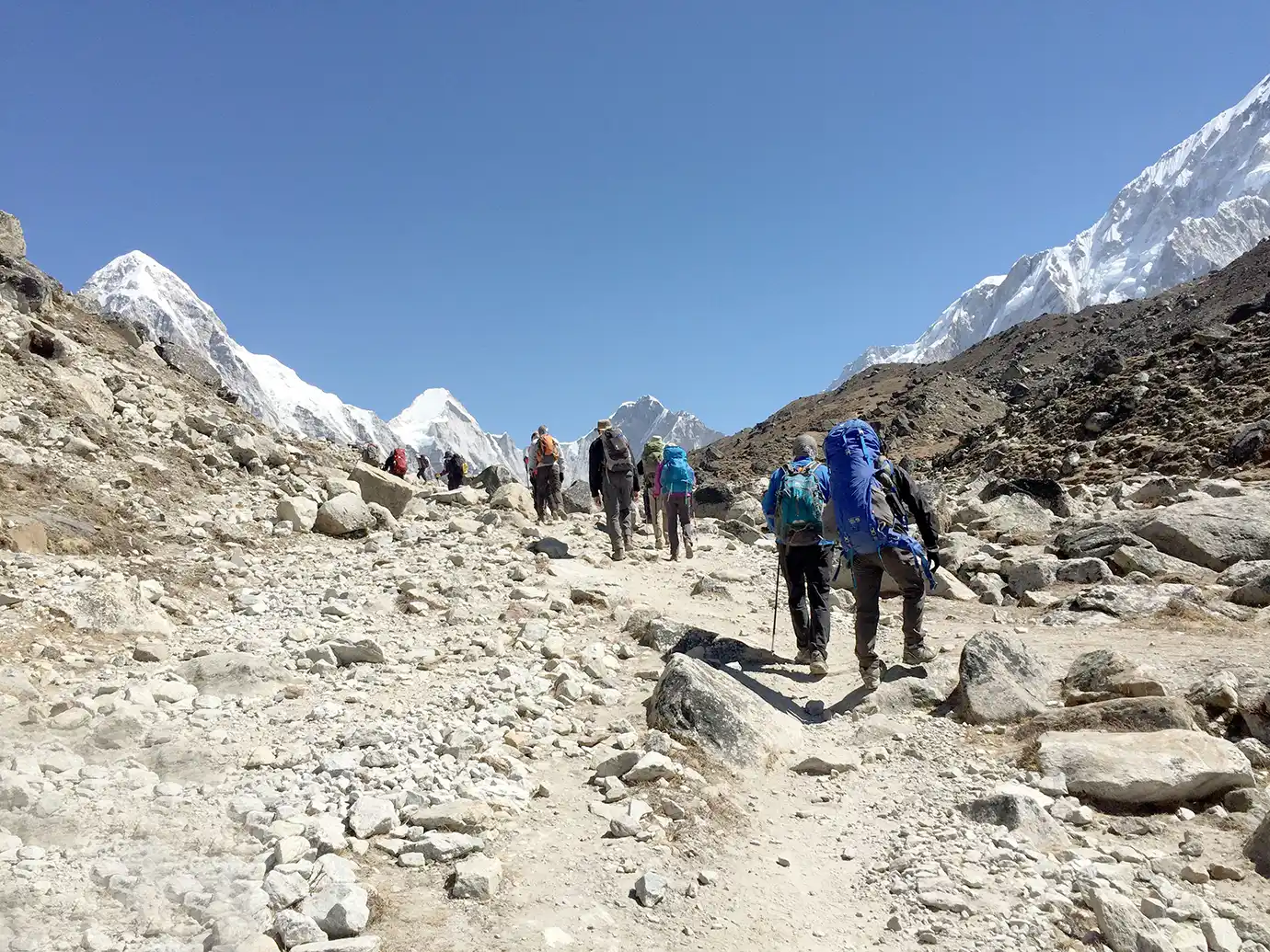
Two weeks or more become necessary the moment Everest Base Camp is included in your plan. The trek alone needs 12 to 14 days from Kathmandu back to Kathmandu, including the Lukla flights and two acclimatization days. Add even minimal city time, and you are at 15 to 16 days.
Three weeks are enough to do everything properly. A full trek, the complete cultural circuit, Chitwan, and still a spare day or two. Some travelers use the third week for Bhutan or Tibet instead, which I cover further down.
| Duration | What Realistically Fits | What Does Not Fit |
|---|---|---|
| 5 days | Kathmandu + Pokhara | Chitwan, any overnight trek |
| 7 days | Kathmandu + Pokhara + Chitwan, or a Poon Hill trek instead of Chitwan | Both Chitwan and a trek |
| 8 days | Cultural core + Poon Hill, or Mardi Himal, with tight city time | ABC, EBC |
| 10 days | Cultural core + a fast ABC route, or all three cities + Poon Hill | EBC |
| 12 days | Comfortable ABC + cultural core, or a very tight EBC with no city time | EBC plus meaningful sightseeing |
| 14 days | EBC + one or two city days, or ABC + the full cultural circuit | EBC plus the full circuit |
| 3 weeks | EBC or Annapurna Circuit + full circuit + Chitwan, or a Bhutan/Tibet extension | Very little |



Choosing the Right Nepal Itinerary: Trek or No Trek?
Deciding whether to trek shapes every other choice in your Nepal itinerary. A trek is not an afternoon activity you slot in. Even the shortest worthwhile route, Ghorepani Poon Hill, takes 3 to 4 full days on the trail plus transport to the trailhead.
So decide this first, before you look at any day-by-day plan. If the answer is yes, pick your trek and build the rest of the trip around it. If the answer is no, you have far more freedom, and honestly, a no-trek Nepal trip is underrated. Rhino tracking in Chitwan, sunrise at Sarangkot, and the temple squares of the Kathmandu Valley need no hiking boots.
For a time split on a no-trek trip, I recommend 40 percent Kathmandu Valley, 30 percent Pokhara, and 30 percent Chitwan. Kathmandu gets the largest share because Bhaktapur, Patan, Boudhanath, Pashupatinath, and Swayambhunath are five separate half-day visits, not one.
The single biggest mistake I see in first-time plans is trying to fit a major trek and full cultural sightseeing into 10 days. One of them always gets butchered. Pick your priority and protect it.
Nepal Itineraries by Duration
Below are realistic skeletons for each length. Every plan starts and ends in Kathmandu, because nearly all international flights use Tribhuvan International Airport. I keep these at the routing level; our full duration-specific guides then break down each day in detail.
Nepal Itinerary for 5 Days
A 5-day Nepal itinerary covers only Kathmandu and Pokhara, connected by a short domestic flight. Skip Chitwan, skip trekking, and the trip feels relaxed rather than crammed.
- Arrive Kathmandu, evening walk through Thamel and Kathmandu Durbar Square.
- Bhaktapur in the morning, Boudhanath and Pashupatinath in the afternoon
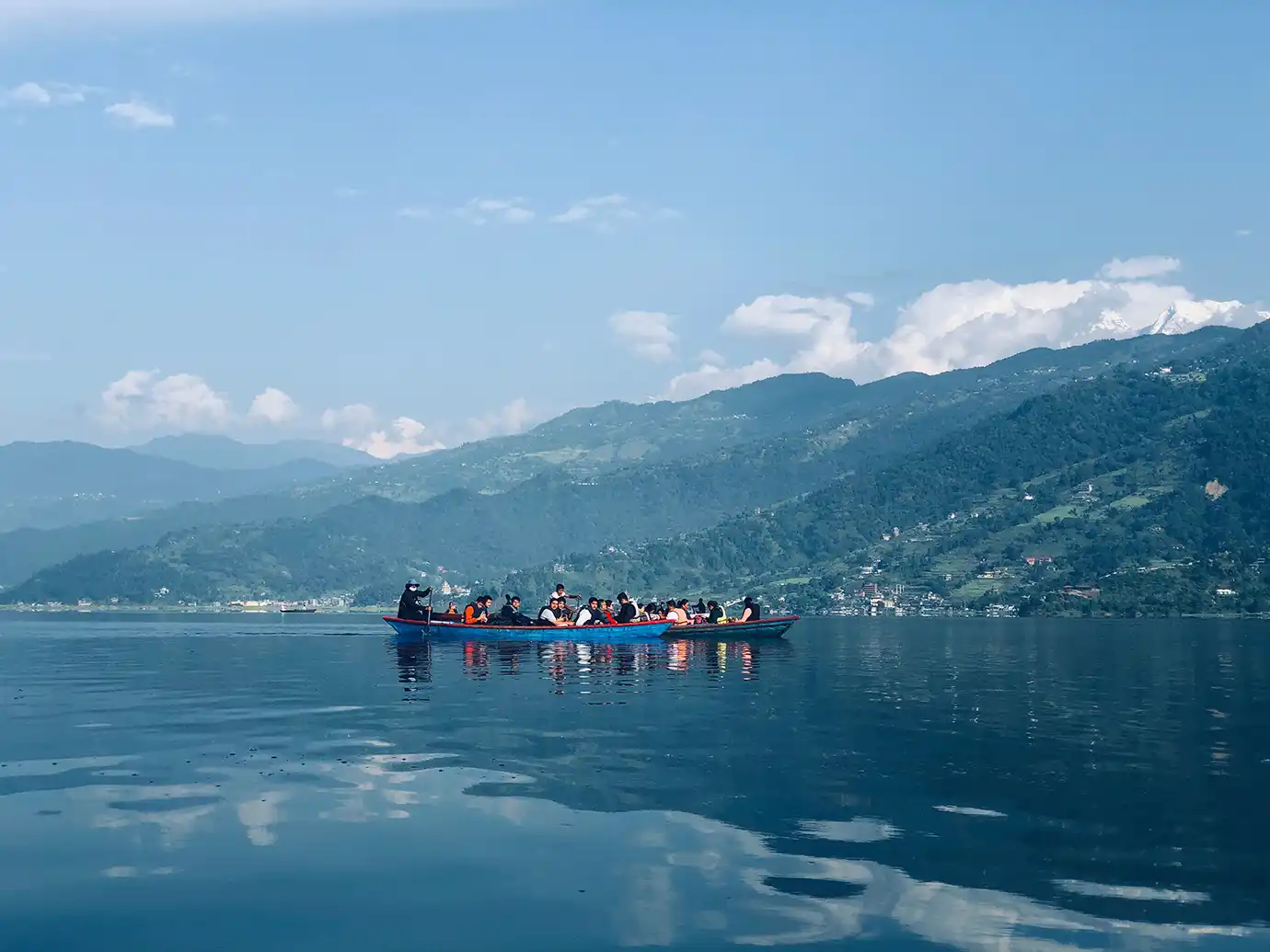
- Fly to Pokhara, boat on Phewa Lake, walk the lakeside at sunset
- Sarangkot sunrise, World Peace Pagoda, Gupteshwor Cave
- Morning flight to Kathmandu, connect to your international departure
Left out on purpose: everything south of the Kathmandu-Pokhara line. The drive to Chitwan and back would eat up 10 to 12 hours you do not have.
Nepal Itinerary for 7 Days
Seven days forces one clear choice: add Chitwan, or swap it for a Poon Hill trek. You cannot do both without turning the week into a transport marathon.
The Chitwan version runs Kathmandu (2 days), drive to Chitwan (5 to 6 hours), safari days (2), drive to Pokhara (2 to 3 hours), Pokhara (2 days), fly back. The trek version replaces the Chitwan block with 3 days on the Poon Hill trail out of Pokhara, reaching the 3,210-meter viewpoint for sunrise over Dhaulagiri and Annapurna South.
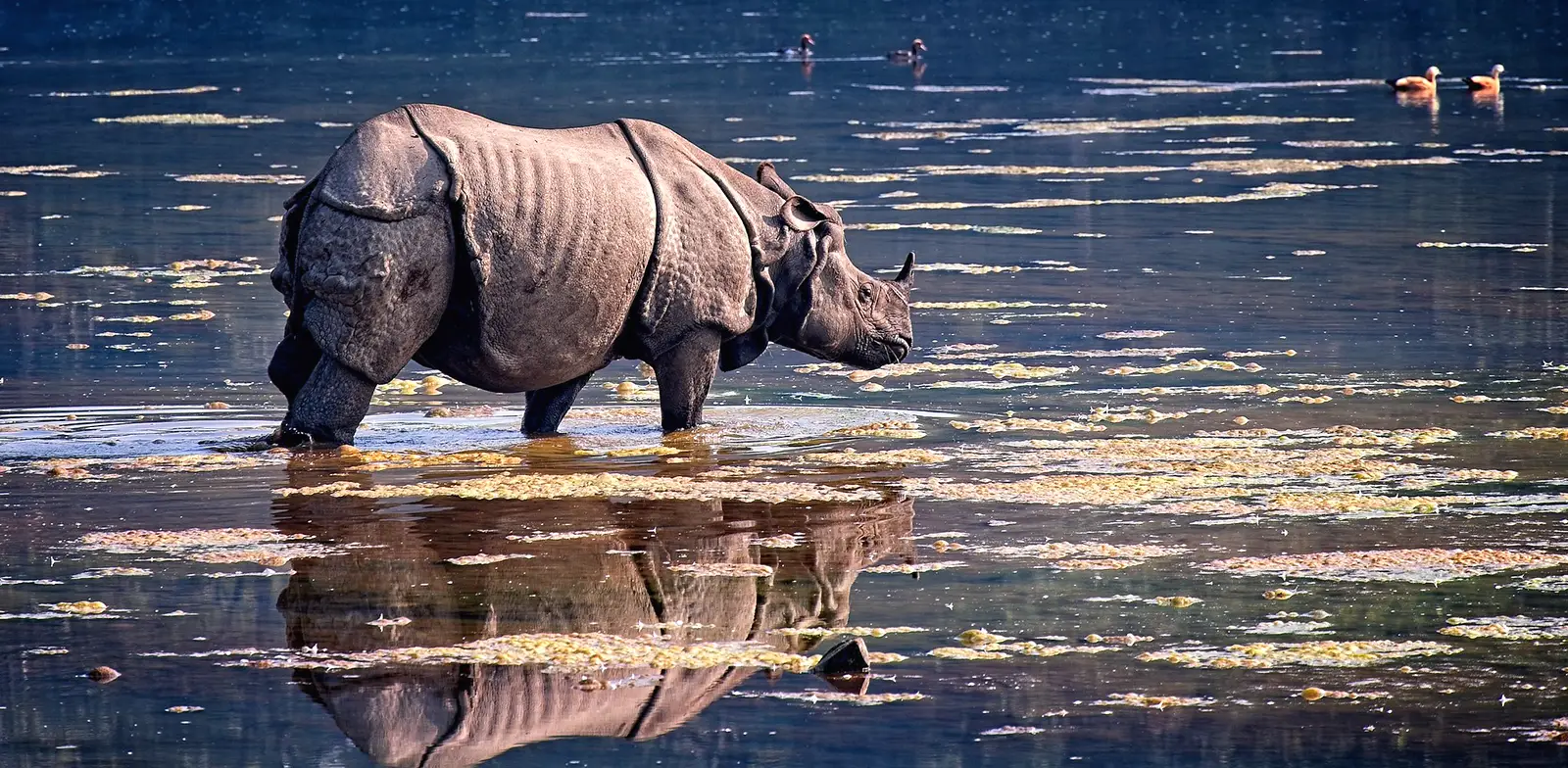
My honest advice for wildlife lovers: take the Chitwan version. Dawn on the Rapti riverbank, mist on the water, and a one-horned rhino grazing 40 meters away beats a rushed trek.
Nepal Itinerary for 8 Days
Eight days is the shortest duration during which a genuine trek and real city time coexist. You get the full Poon Hill loop with comfortable margins, or a fast Mardi Himal route for bigger mountain scenery.
A typical shape: two days in Kathmandu, fly to Pokhara, four days trekking, one final Pokhara or Kathmandu day before departure. Mardi Himal climbs through rhododendron forest to High Camp at 3,580 meters, and strong walkers reach the base camp viewpoint at 4,500 meters on a pre-dawn push.
Left out: Chitwan and Lumbini. The extra day beyond the 7-day plan goes toward the trail, not to a new destination.
Nepal Itinerary for 10 Days
Ten days is the realistic minimum for combining Annapurna Base Camp with city time. A fast ABC route takes 7 days on the trail, which leaves 3 days for Kathmandu and Pokhara. Alternatively, keep the trek short with Poon Hill and enjoy the full Kathmandu-Chitwan-Pokhara circuit at a humane pace.
The ABC version is a proper physical commitment. You climb to 4,130 meters at the base camp, sleeping in teahouses the whole way, with 5 to 7 hours of walking most days.
What still does not fit: Everest Base Camp. Anyone who tells you EBC works inside a 10-day total trip is ignoring the 12 to 14 days the trek itself requires. I have had to talk clients out of this plan every single season.
Nepal Itinerary for 12 Days
Twelve days gives you Annapurna Base Camp at a comfortable pace, plus the cultural core, and it is the length I book most often for first-timers. A standard shape: three days in Kathmandu, fly to Pokhara, 8-day ABC route through Ghorepani and Poon Hill, one recovery day by the lake.
The longer ABC route matters for more than comfort. Extra nights at a moderate altitude cut your risk of altitude sickness, and the Poon Hill sunrise becomes a bonus rather than a separate trip.
Twelve days can technically hold a stripped-down EBC with zero city time and zero buffer. I do not sell that version because a single weather delay at Lukla can derail the whole plan.
Nepal Itinerary for 14 Days
Fourteen days is the “does everything properly” length for trekkers, and the honest minimum for Everest Base Camp done right. The trek runs 12 to 14 days from Kathmandu back to Kathmandu, with acclimatization nights in Namche Bazaar at 3,440 meters and Dingboche at 4,410 meters.
A typical EBC fortnight: one Kathmandu day, fly to Lukla, 8 days up through Namche, Tengboche, and Gorak Shep to base camp at 5,364 meters, 3 days back down, fly out, one spare day in Kathmandu. Sunrise from Kala Patthar at 5,545 meters, with Everest glowing gold across the Khumbu Glacier, is the payoff for every cold night.
Non-trekkers can spend the same 14 days on the full cultural circuit plus Lumbini, Bandipur, and Nagarkot, with no day exceeding 4 hours of driving.
Nepal Itinerary for 3 Weeks
Three weeks remove nearly every trade-off in Nepal trip planning. You can complete Everest Base Camp or the longer Annapurna Circuit, still see Kathmandu, Pokhara, and Chitwan without rushing, and keep two genuine buffer days.
One popular shape: days 1 to 3 in the Kathmandu Valley; days 4 to 17 at EBC; days 18 to 19 in Chitwan; days 20 to 21 in Pokhara; then home. Another swaps the second week of trekking for a 5-day Bhutan extension out of Kathmandu.
At this length, the risk flips from cramming to drifting. Keep a structure, or the spare days evaporate in Thamel cafes. Pleasant, but not what you flew across the world for.
Nepal Itineraries by Traveler Type
Your travel style shapes the itinerary as much as your number of days does. The same 10 days look completely different for a honeymoon couple and a wildlife photographer. Here is how we adjust the framework above for the travelers we plan for most often.
First-time visitors. Take the 10- to 12-day structure with Kathmandu, Pokhara, Chitwan, and Poon Hill. It samples all four of Nepal’s core experiences: temples, lakes, jungle, and trail, without betting your whole trip on one of them.
Luxury travelers. Fly every internal leg, base yourself at heritage properties like Dwarika’s in Kathmandu and a lakeside resort in Pokhara, and swap the EBC trek for a helicopter day tour with a Syangboche breakfast—ten days to deliver the country in full comfort this way.
Families. Build around Chitwan, where jeep safaris and elephant-viewing hold children’s attention better than temple circuits do. Keep drives under 4 hours by splitting the Kathmandu-Chitwan leg with a night in Bandipur. Poon Hill works for hiking families with kids from about age 8, since the teahouse stages stay short.
Honeymooners. Pokhara earns the extra nights here. Add a Sarangkot sunrise, a private Phewa Lake boat at dusk, and two quiet days at a hillside lodge after any trekking. A 9- to 11-day pace with more two-night stays beats a faster circuit.
Trekking-focused travelers. Reverse the usual ratio. Give the cities one day each and spend everything else on the trail, which puts a full ABC inside 10 days or an EBC inside 1 day. Details on each route sit in the trek extension section below.
Wildlife travelers. Pair Chitwan’s rhinos with Bardia National Park in the far west if you have 12 or more days. Bardia sees a fraction of Chitwan’s visitors and offers Nepal’s best wild tiger sightings. The trade-off is a long travel day or a domestic flight to Nepalgunj.
Pilgrimage travelers. Route Kathmandu’s Pashupatinath and Boudhanath, then Lumbini, the birthplace of the Buddha, with two nights to see the monastic zone properly. Janakpur’s Janaki Mandir serves as a Hindu circuit anchor for travelers coming from or continuing to India.
Photographers. Chase light, not coverage. Plan Sarangkot and Nagarkot for sunrise, Bhaktapur’s squares for late afternoon, and build the trek around Poon Hill or Mardi Himal, where dawn panoramas arrive without EBC’s time commitment. October and November give the cleanest post-monsoon air.
Which Trek Extension Fits Your Nepal Itinerary?
Match the trek to your total trip length, not the other way around. Every trek below starts from either Kathmandu or Pokhara, and each needs specific permits that we arrange for our clients before departure.
Ghorepani Poon Hill Trek
Poon Hill is the shortest worthwhile trek in Nepal, requiring 3 to 4 trail days and fitting any itinerary of 7 days or longer. The route climbs stone staircases through Ulleri and rhododendron forest to Ghorepani, then a 45-minute pre-dawn walk brings you to the 3,210-meter viewpoint.
Expect the company at the top. On clear autumn mornings, I have counted more than 200 people waiting for the light to hit Dhaulagiri. Go anyway, because the view earns the crow—permits: TIMS card and the Annapurna Conservation Area Permit.
Mardi Himal Trek
Mardi Himal requires 4 to 5 days on the trail and fits an 8- to 10-day itinerary. The route stays on a quiet ridge east of the Annapurna Sanctuary, so you trade teahouse variety for solitude and a straight-on view of Machhapuchhre.
Nights at High Camp, 3,580 meters, get cold even in spring, so bring a sleeping bag rated to minus 10 degrees Celsius. Same permits as Poon Hill.
Langtang Valley Trek
Langtang runs for 7 to 8 days and suits travelers based in Kathmandu, since the trailhead at Syabrubesi is a 7 to 8-hour drive north rather than a flight away. You walk up a glacial valley to Kyanjin Gompa at 3,870 meters, with an optional climb of Kyanjin Ri at 4,773 meters.
Flight-free access makes Langtang the most delay-proof major trek in Nepal. No Lukla, no weather lottery. Permits: TIMS card and the Langtang National Park entry permit.
Annapurna Base Camp Trek
Annapurna Base Camp takes 7 to 12 days total, depending on the route and pace, and fits into a 10 to 12-day itinerary. The trail ends inside a ring of peaks at 4,130 meters, where Annapurna I’s south face rises nearly 3,000 vertical meters above the teahouses.
Choose the longer route if you can. The extra days through Ghorepani add the Poon Hill sunrise and gentler altitude gain—permits: TIMS card and the Annapurna Conservation Area Permit.
Everest Base Camp Trek
Everest Base Camp needs 12 to 14 total days from Kathmandu and only fits itineraries of 14 days or more. The route follows the Dudh Koshi valley from Lukla through Namche Bazaar and Tengboche to base camp at 5,364 meters, with two built-in acclimatization days.
Build one extra buffer day into any EBC plan for Lukla flight delays. Morning clouds regularly close that runway, and I have watched fully booked groups lose 24 hours in the Lukla waiting room—permits: Sagarmatha National Park entry permit and the Khumbu Pasang Lhamu Rural Municipality permit.
Chitwan Safari Extension
Chitwan is the adventure add-on for non-trekkers, requiring 2 to 3 days and fitting into any 7-day or longer itinerary. The park protects around 700 one-horned rhinos plus Bengal tigers, gharial crocodiles, and more than 500 bird species.
Book two nights minimum. Wildlife moves at dawn and dusk, so a single night gives you exactly one good viewing window. The drive from Kathmandu takes 5 to 6 hours, and Pokhara is just 2 to 3 hours farther on, making Chitwan a natural midpoint.
| Trek | Trail Days | Max Altitude | Difficulty | Fits the Itineraries of |
|---|---|---|---|---|
| Poon Hill | 3–4 | 3,210 m | Easy–moderate | 7+ days |
| Mardi Himal | 4–5 | 4,500 m | Moderate | 8+ days |
| Langtang Valley | 7–8 | 4,773 m | Moderate | 10+ days |
| Annapurna Base Camp | 7–12 | 4,130 m | Moderate–hard | 10+ days |
| Everest Base Camp | 12–14 | 5,545 m | Hard | 14+ days |
| Chitwan safari | 2–3 | Lowland | Easy | 7+ days |
Beyond the Big Three: Other Places Worth Your Days
Kathmandu, Pokhara, and Chitwan anchor almost every Nepal itinerary, but five smaller stops reward the extra time when you have it.
Lumbini, the birthplace of the Buddha, sits near the Indian border. Fly from Kathmandu to Bhairahawa in 35 minutes, then drive 22 kilometers, and give it one full day for the Maya Devi Temple and the international monastery zone. Bandipur, a preserved Newari hilltop town, sits just off the Kathmandu-Pokhara highway above Dumre and makes a perfect overnight break in the drive between the two cities.
Nagarkot, at 2,175 meters on the valley rim, delivers a Himalayan sunrise 90 minutes from Kathmandu, and Dhulikhel offers a quieter version of the same view with better old-town walking. Janakpur, in the southeastern plains, centers on the Janaki Mandir and suits pilgrimage-focused trips.
Two places demand serious extra commitment. Rara Lake, Nepal’s largest at 2,990 meters, requires two flights and 4 to 6 days. Upper Mustang requires a restricted-area permit and 10 to 12 days for the walled city of Lo Manthang. Both belong in a second Nepal trip, not a first one.
Should You Combine Nepal With Bhutan or Tibet?
Combine countries only when your Nepal core is already 8 days or longer. A two-country trip built on a rushed Nepal base disappoints on both sides of the border.
Nepal + Bhutan Itinerary
Nepal and Bhutan pair naturally because the Kathmandu-Paro flight takes just over an hour and passes Everest on clear days. Sit on the left side flying to Paro for the mountain views.
Plan 12 to 14 days total: 7 to 8 in Nepal, 5 to 6 in Bhutan, covering Paro, Thimphu, and the Tiger’s Nest monastery hike. Bhutan runs its own visa and daily tariff system, fully separate from Nepal’s, and the visa must be arranged through a registered tour operator before you fly. We handle both countries in a single booking, eliminating paperwork friction.
Nepal + Tibet Itinerary
Nepal and Tibet are connected by a 90-minute flight from Kathmandu to Lhasa or an overland route via the Gyirong border. Plan 13 to 16 days total, with 7 to 8 in Nepal and 6 to 8 covering Lhasa, Gyantse, and Shigatse.
The paperwork needs real lead time. Tibet requires a Tibet Travel Permit arranged through a registered agency, and travelers entering from Kathmandu use a group visa issued by the Chinese embassy there, which typically takes 3 working days. Start the process 3 to 4 weeks before travel, and set aside 3 spare days in Kathmandu before the Lhasa flight.
Nepal + India Itinerary
India connects most naturally through Lumbini, which sits an hour from the Sunauli border crossing. Varanasi lies a day’s drive beyond, and direct flights link Kathmandu with Delhi in under 2 hours. Add 5 to 7 days for a meaningful India segment and sort your Indian visa online before departure.
How Do You Get Around Nepal?
Four transport options cover nearly every Nepal itinerary: tourist buses, private vehicles, domestic flights, and helicopters. Distances look short on the map, but the roads are slow, so always plan by hours, not kilometers.
The Kathmandu-Pokhara corridor clearly illustrates the trade-off. The flight takes 25 minutes. The same 200 kilometers by road takes 6 to 8 hours on the Prithvi Highway, sharing lanes with freight trucks the entire way. Tourist buses leave Kathmandu around 7 am daily and remain the budget standard, while a private vehicle covers the same route, with stops at Manakamana or Bandipur as per your schedule.
Domestic flights save enormous time but depend on mountain weather, especially the Lukla route. Never book a domestic flight landing in Kathmandu the same day as your international departure. Keep at least one clear night between them.
Helicopters change what fits in a short trip. An Everest Base Camp helicopter day tour, with a landing near Kala Patthar and breakfast at a Syangboche hotel, puts the Khumbu in front of clients who lack the two weeks the trek demands.
| Option | Kathmandu–Pokhara Time | Comfort | Best For |
|---|---|---|---|
| Tourist bus | 6–8 hours | Basic, air-conditioned | Budget travelers with time |
| Private vehicle | 6–7 hours | High, flexible stops | Families, small groups |
| Domestic flight | 25 minutes | High, weather-dependent | Short itineraries |
| Helicopter | On demand | Premium | Time-critical or luxury plans |
Which Season Should Shape Your Itinerary?
Season should change the shape of your Nepal itinerary, not cancel it. Autumn, from late September through November, brings the clearest mountain views and suits every plan on this page. Spring, March through May, matches it closely and adds rhododendron bloom across the mid-hills, at their best on the Poon Hill and Langtang trails.
Monsoon, June through mid-September, argues for a culture-and-wildlife itinerary. Trails get leech-heavy, and the peaks hide in the clouds, but Kathmandu’s courtyards, Lumbini, and a green Chitwan still work well between showers. Winter, December through February, favors cultural circuits and low-altitude treks like Poon Hill, while the high passes and base camps turn seriously cold.
Our complete seasonal guide covers month-by-month conditions and festival dates. For itinerary planning, remember one rule. The worse the season for trekking, the better the case for the no-trek circuit.
Common Mistakes First-Time Nepal Planners Make
I review hundreds of draft plans every year, and the same six errors keep appearing.
- Underestimating trek length. EBC needs 12 to 14 days total, ABC needs 7 to 12, no exceptions worth taking.
- Skipping the Lukla buffer day. Weather closes that runway often enough that a zero-buffer EBC plan gambles your international flight.
- Stacking too many destinations. Five places in 7 days means 5 half-days lost to vehicles.
- Booking domestic and international flights on the same day. One cloud bank in the hill,s and the connection collapses.
- Ignoring festival dates. Dashain and Tihar wonderfully transform the country, but also close offices and increase transport congestion.
- Treating acclimatization days as optional. Those “rest” days at Namche and Dingboche are what get you to base camp healthy.
Every one of these is avoidable with 15 minutes of honest planning, or with a planner who will tell you no when a plan does not fit.
Frequently Asked Questions
How many days do you need in Nepal?
You need at least 5 days for Kathmandu and Pokhara, 7 days to add Chitwan or a short trek, and 10 to 12 days for the ideal first-timer combination of the cultural circuit plus a trek. Everest Base Camp pushes the requirement to 14 days or more. 10 to 12 days fully satisfy most first visits.
Is 10 days enough for Nepal?
Yes, 10 days is enough for an excellent trip to Nepal, and it is the most popular length we book. It covers Kathmandu, Pokhara, and Chitwan with a Poon Hill trek, or the cultural core plus a fast Annapurna Base Camp route. It is not enough for Everest Base Camp, which needs 12 to 14 days for the trek alone.
What is the minimum time for Everest Base Camp?
The Everest Base Camp trek needs 12 to 14 days from Kathmandu to Kathmandu. The figure includes the Lukla flights, roughly 11 days of walking, and two acclimatization days at Namche Bazaar and Dingboche. Add one buffer day for Lukla weather delays, so a safe total itinerary runs 15 to 16 days with minimal city time.
Can I plan a Nepal itinerary without trekking?
Absolutely, and no-trek itineraries are among the most enjoyable trips we run. A 7- to 10-day circuit covers the Kathmandu Valley’s temple towns, Chitwan’s rhinos and tigers, Pokhara’s lakeside, and a sunrise at Sarangkot or Nagarkot. You still see the high Himalaya clearly, just from viewpoints reached by road rather than trail.
Should I do the trek first or the sightseeing first?
Trek first, sightsee after. Starting the trek early in your trip leaves your city days as a natural buffer, so a weather delay at Lukla or a slow day on the trail costs you a temple visit rather than your international flight. Recovery also feels better this way, with hot showers and good restaurants waiting at the end.
Do I need a guide for trekking in Nepal?
Nepal requires foreign trekkers to use a licensed guide in most major trekking regions, including the Annapurna and Langtang areas, under rules introduced by the Nepal Tourism Board. Beyond the requirement, a good guide handles permits, teahouse bookings in peak season, and altitude monitoring. Rules shift, so confirm current requirements for your specific route when you book.
Let Us Build Your Nepal Itinerary
You now know what fits your dates and what does not. The next step is turning a duration into a real, booked trip with flights held, teahouses reserved, and permits arranged.=
Please tell us how many days you have and what matters most to you: mountains, wildlife, culture, or comfort. Our Kathmandu team has built departures at every length on this page, and we will send you a day-by-day plan matched to your dates within one working day. If your dates genuinely cannot hold the trip you want, we will say so and show you the version that works.