


Away from Oman’s coastal cities and Muscat, much of the country’s charm lies inland, in villages where traditions remain alive, and in forts that once guarded thriving towns and trade routes. Visiting Oman’s Traditional Villages and Forts feels like stepping back in time, when mudbrick houses were once among date palms, narrow lanes lined with flowing falaj channels, and stone fortifications that rise proudly over the landscape.
These places reveal the skill, culture, and resilience of the Omani people. Below are some of the most notable forts and villages that showcase Oman’s rich heritage.
Nizwa – The Pearl of Islam
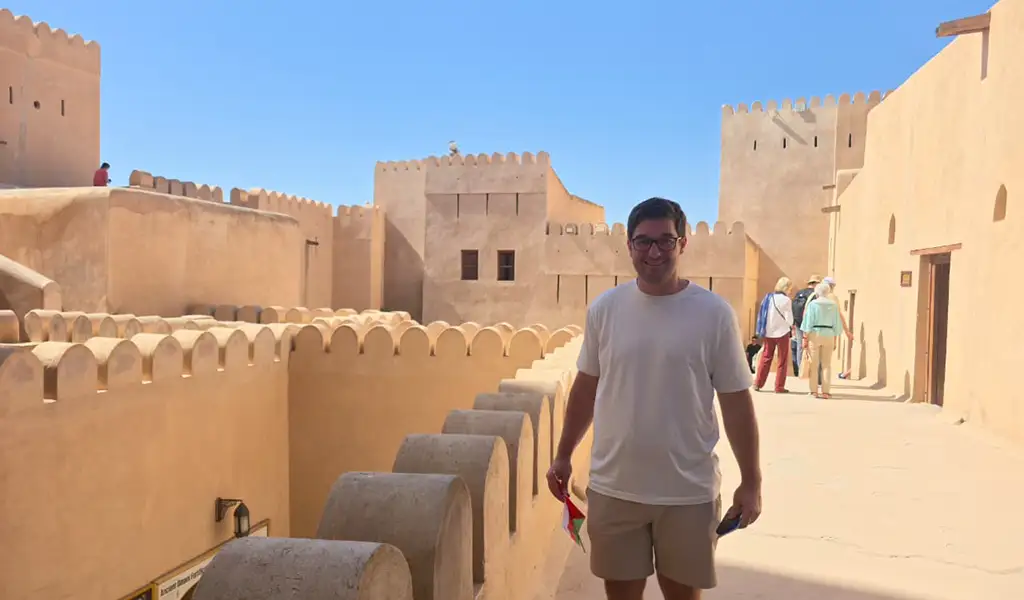
Any conversation about Oman’s historic towns begins with Nizwa, a former capital during the 6th and 7th centuries and a long-time center of Islamic learning. Today, Nizwa is best known for its massive round-tower fort and lively souq. Nizwa Fort, finished around 1650 by Imam Sultan bin Saif Al Yarubi, draws visitors from all over. Its circular central tower rises roughly 34 meters (112 ft) and spans over 45 meters, giving it an unmistakable presence.
Built on the foundation of a 12th-century castle, the Yarubid renovation gave it the strong, clever design seen today. Inside, you can explore narrow staircases, hidden doors, and “murder holes”, an opening through which defenders could pour boiling date syrup or water on attackers. From the top, the view stretches across a sea of date palms, the domed Sultan Qaboos Mosque, and the surrounding mountains.
Across the fort is the Nizwa souq, and although some parts incorporate modern elements, it retains the overall look and feel of a traditional Omani market. Here, you can find silverware, especially the iconic Omani Khanjars (daggers), alongside fresh produce and livestock.
On Fridays, the cattle market is bustling with farmers bidding furiously during the auction, accompanied by goats, creating a lively, colorful scene. You will also feel the flavor of ancient Nizwa, a walled city with flourishing commerce and knowledge, as you wander the alleys and past restored gates. Its long-standing reputation as an intellectual hub earned it the nickname “Pearl of Islam,” and even today, the town mixes historic charm with a gentle, bustling energy.




Bahla – Fort of Thousand Tales
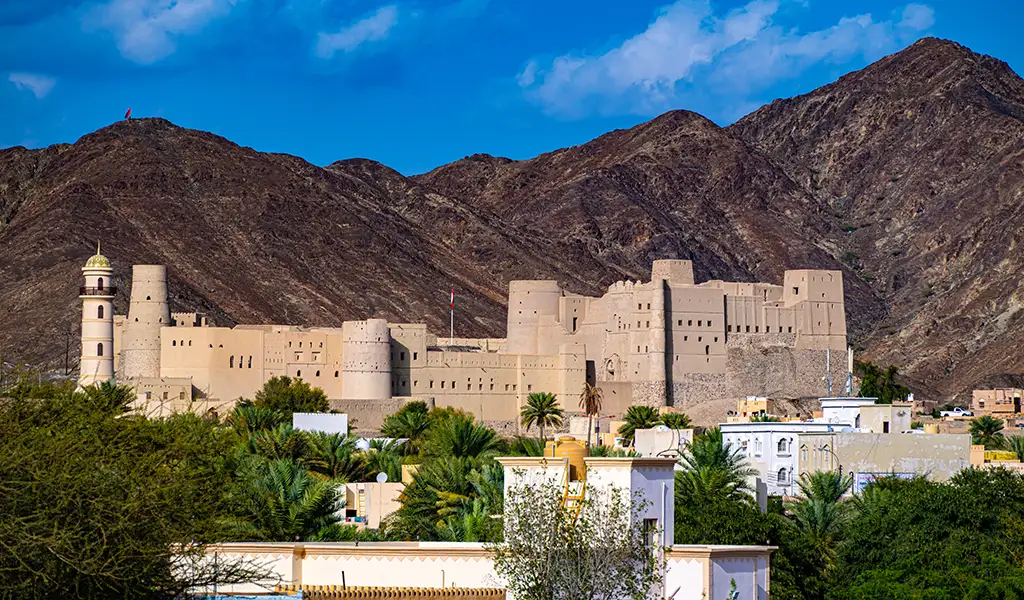
A short drive west of Nizwa brings you to Bahla, a town wrapped in old stories and home to Oman’s only UNESCO-listed fort. Bahla Fort is enormous. If you count the remains of the old city wall that once extended from it, the mudbrick defenses run for roughly 13 kilometers. The fort’s earliest sections date back at least to the 13th century, when the Banu Nabhan tribe ruled the area. Over the centuries, the complex continued to grow, evolving into the maze of courtyards, towers, and passageways you see today.
When UNESCO named it a World Heritage Site in 1987, the fort was in ruins. Years of careful restoration followed, and by the 2010s, it finally reopened in the impressive state visitors can enjoy now. You can climb its watchtowers, wander through echoing corridors, and look out over a vast stretch of palm groves. The scale alone is stunning, but Bahla also possesses a particular atmosphere that extends beyond its architecture.
The town has a long-standing reputation in Omani folklore as a place where jinn, spirits, roam. Stories of sorcerers, strange happenings, and mischievous jinn have been told here for generations. Whether that comes from Bahla’s deep history or its pottery tradition is anyone’s guess.
The town is famous for its pottery, and some say that long ago, people attributed the craftsmanship to magic. Near the fort, the old souq continues to sell Bahla pottery, fired in traditional ovens. The shelves of clay pots and the smell of earth and smoke add to the town’s quiet, slightly mysterious charm.
Jabrin (Jabreen) Castle – A Place of Learning
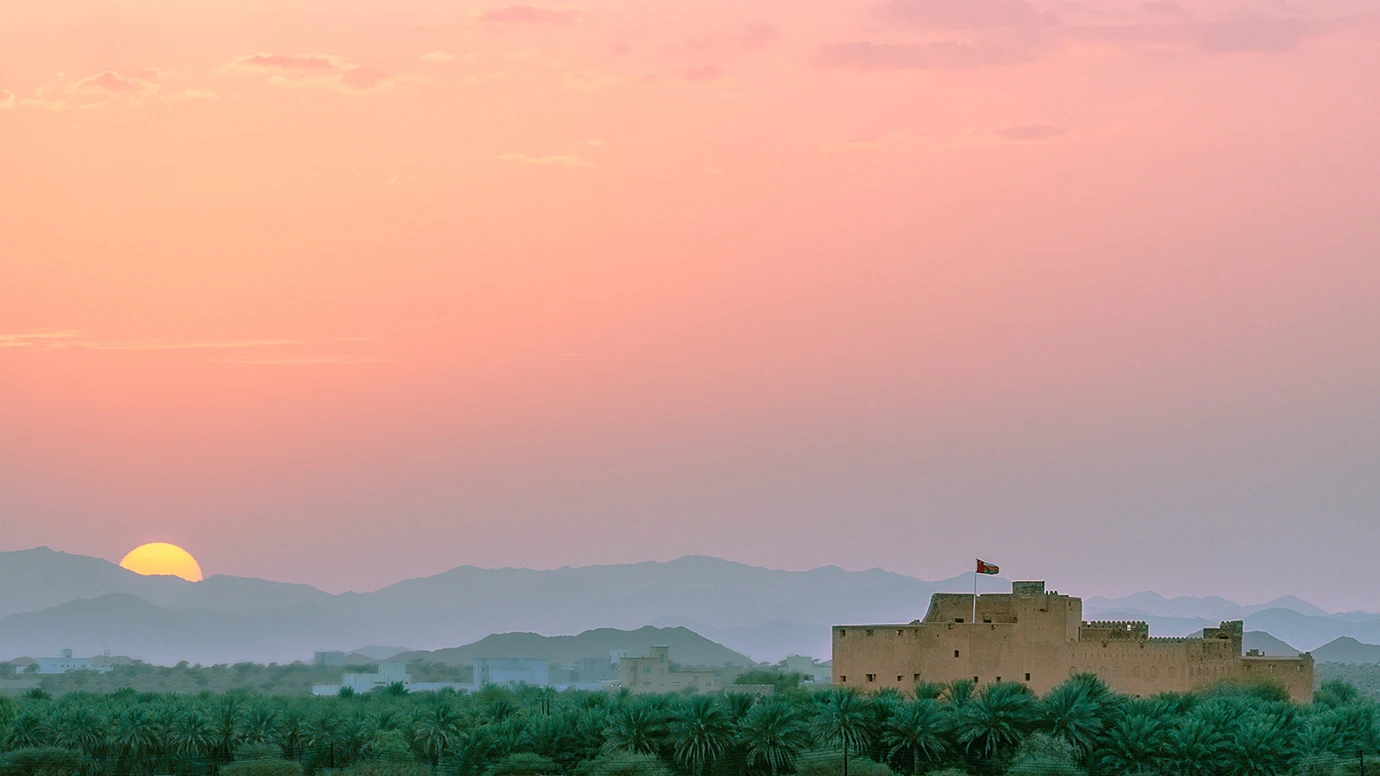
Not far from Bahla rises a very different kind of stronghold: Jabrin Castle. Built in 1675 by Imam Bil’arab bin Sultan, it served primarily as a royal residence and a place of learning, rather than a battlefield fort. Many travelers consider it one of the most elegant historic buildings in Oman. The structure spans three stories in a long, rectangular shape, and its standout feature is the series of painted wooden ceilings adorned with delicate floral patterns and Arabic calligraphy.
Walking through the rooms, the majlis, bedrooms, the date store, the library, you can almost picture the cultured life that once unfolded here. The Imam was known as a patron of scholars and artists, and Jabrin reportedly welcomed poets, theologians, and thinkers who gathered to discuss religion, science, and philosophy.
The castle also holds some clever architectural touches. One of the most intriguing is the “sun and moon room,” designed with ventilation and openings that kept it calm in the day and naturally lit at night. There are also defensive elements, such as murder holes and a few fortified corners, but overall, the castle feels serene rather than warlike.
When you climb up to the rooftop, the peaceful atmosphere gives way to a reminder of why the site mattered: the surrounding plains and palm groves unfold in every direction, making it easy to see anyone approaching from miles away. Jabreen is currently open to visitors, and many also explore it with the help of guides or audio tours. Its warm earthen walls, elegant interiors, and soft natural light make it a favorite stop for photographers and anyone drawn to Oman’s quieter, more cultured past.
Mountain Villages – Misfah Al Abriyyin and Al Hamra
Misfah Al Abriyyin – A Living Mountain Village
Misfah Al Abriyyin feels like a picture that has come to life. Stone and mud houses cling to the canyon edge while green terraces of banana, mango, and papaya trees wrap the village. Ancient falaj channels carry water down the slopes, and you hear them as you move through the narrow lanes. You can see centuries-old carved wooden doors, now rare. You might pass an older woman in traditional dress carrying fodder or tending a small plot.
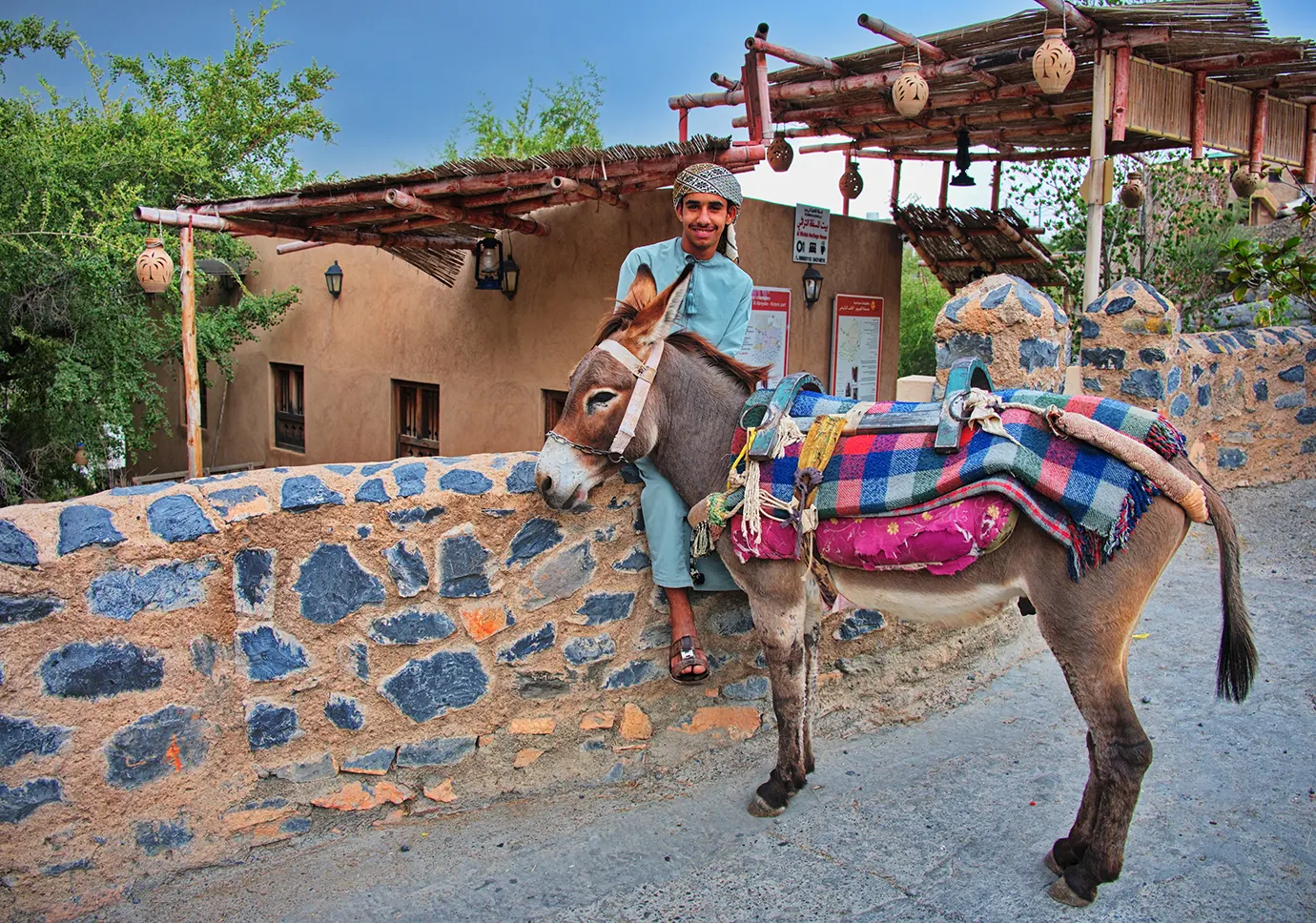
Local people welcome visitors gently. A few historic homes now host simple guesthouses or coffee shops where you can stay overnight or savor Omani coffee while taking in the views from the terraces. The Abriyyin tribe keeps a close watch on the village’s heritage, and since people still live here, respect for private areas is crucial. Stand on a terrace at sunset, and you will remember the light for years.
Al Hamra – Mudbrick Architecture and Trade History
Just below Misfah, Al Hamra presents a different side of traditional life. Tall, multi-storey mudbrick houses line narrow lanes, showcasing Yemeni influences that reflect the country’s old trade links. Many families moved to modern homes nearby, leaving several houses empty, but a few owners restored their properties. Bait Al Safah stands as one of the best examples. Inside this large traditional house, local women demonstrate milling flour with grindstones, weaving, making coffee, and baking flatbread in a clay oven.
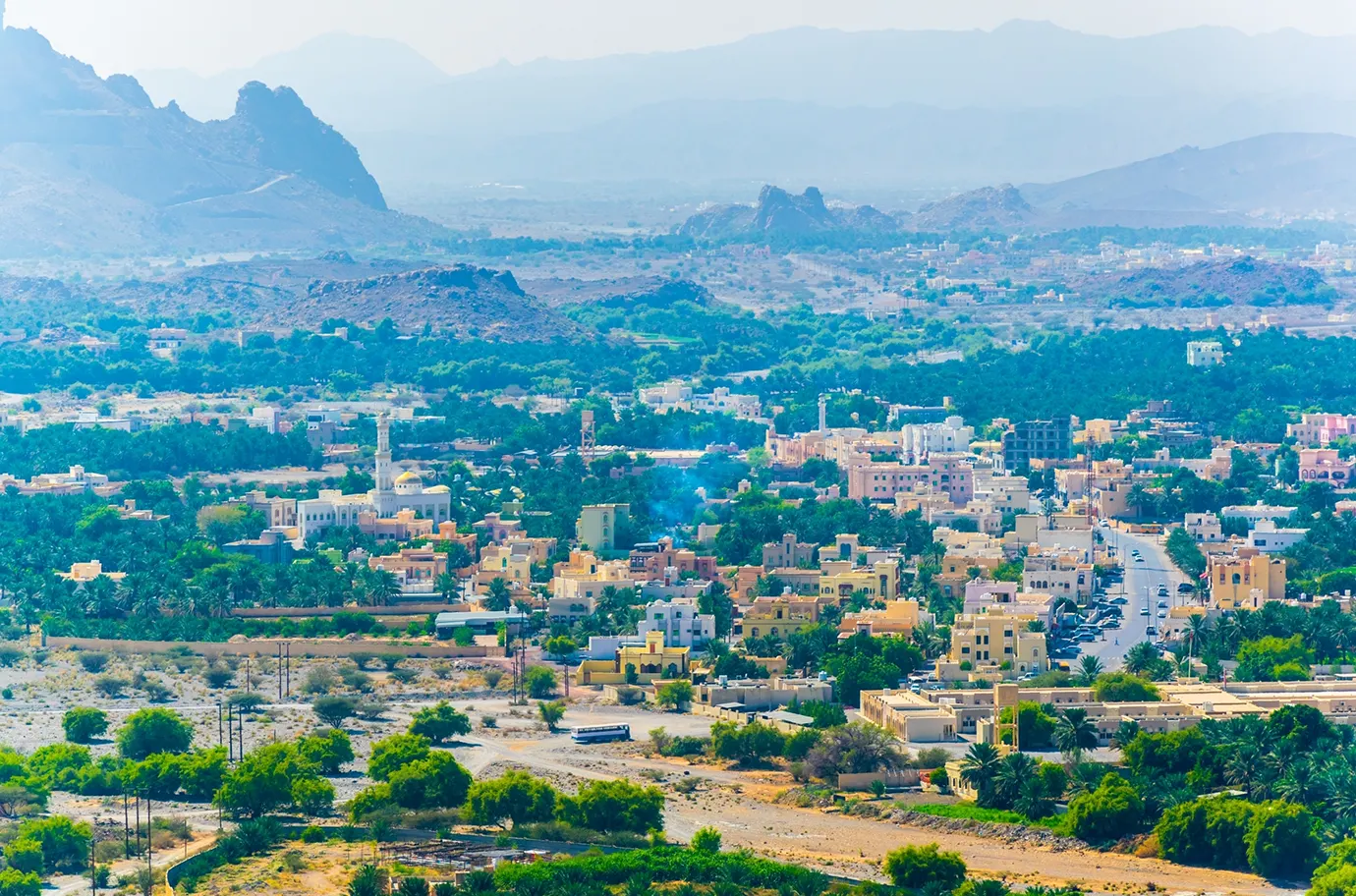
You can try some of these tasks yourself and taste bread hot from the oven. Al Hamra grew from wealth in trade and date farming, while Misfah built its life on terraced agriculture; thus, the two places together represent different roots of Omani village life.
Coastal Forts and Historic Villages
Along the coast, you find historic settlements with their own stories. Sur grew from a dhow-building village into a busy town, and Sunaysilah Fort looks over the lagoon where artisans once launched their wooden boats. Down in Dhofar, the city of Taqah features a small castle that once housed the local governor, now offering visitors a glimpse into life in the region a century ago.
In Al Batinah, Nakhal, and Rustaq, forts and settlements demonstrate their connection to water and agriculture. Nakhal Fort sits on a rocky outcrop, with the mountains behind it and expansive date gardens below, which draw water from hot springs. You can walk through Nakhal’s restored rooms, see old cannons, and enjoy the view over the green plain.
Rustaq Fort dates back to before the advent of Islam and later served as the base of Imam Ahmed bin Said, who founded the Al Said dynasty. Rustaq’s large mudbrick bulk and four watchtowers still dominate the valley, and local teams are working to restore parts for visitors. These forts and their neighboring towns grew wherever springs or falaj channels made settlement possible.
Preservation and Tourism in Oman’s Traditional Villages and Forts
Oman invests time and money in protecting these places because they are essential. The government and local communities restore Nizwa, Bahla, Jabrin, Nakhal, and other forts, add signs and simple exhibits, and arrange guides for visitors. Modest entry fees help pay for upkeep. Villages like Misfah and parts of Al Hamra follow clear paths for tourists, allowing families to maintain their privacy, and local guide groups help ensure that tourism benefits the community. When visitors follow dress and photo guidelines and treat homes and prayer spaces with respect and care, tourism helps preserve these places.
Conclusion: Why Oman’s Traditional Villages and Forts Matter
The villages and forts of Oman offer a profound glimpse into the way of life that still survives here. The forts display military skill, defense, and the leadership choices of past centuries, while the villages tell quiet stories of farming, crafts, life, and faith, as well as the relationships they have with their land and water. If you walk down an old alley, climb a fort tower at dusk, and listen to the water running in a falaj, you step into a history that still breathes.
From Bahla’s massive walls to Misfah’s serene terraces, each place carries its own unique atmosphere. Together, they show how people shaped rich lives across deserts, mountains, and coasts. These sites can also be a highlight of your trip, offering a profound understanding of Oman’s natural beauty, and many travelers share this sentiment. So, if you don’t want to miss out on Oman’s heart, you should not skip them. These places keep Oman’s story alive for anyone willing to go a little off the main roads and meet the past in person.