


Kathmandu packs seven UNESCO World Heritage monument zones into one compact valley. The things to do in Kathmandu run far deeper than a temple checklist. The city is a center of commerce and an active pilgrimage site for two religions. It stages every Everest and Annapurna trek. And it holds Newar craftsmanship refined over a thousand years. Even a single spare day here rewards you.
The guide below is organized around what you actually need to decide, not a flat list of attractions. How many days do you have? Which UNESCO sites genuinely differ from each other? What sits inside Kathmandu, what sits in the wider valley, and what is a true day trip? We answer those questions in that order. Then we hand you routed itineraries for 1, 2, 3, and 5 days, plus a plan for the spare day around a trek.
One point of authority worth stating plainly. Peregrine is headquartered in Kathmandu. Our guides walk these squares and ghats every working week. The routing advice, timing notes, and access rules below come from that daily operation, not from a research desk abroad.
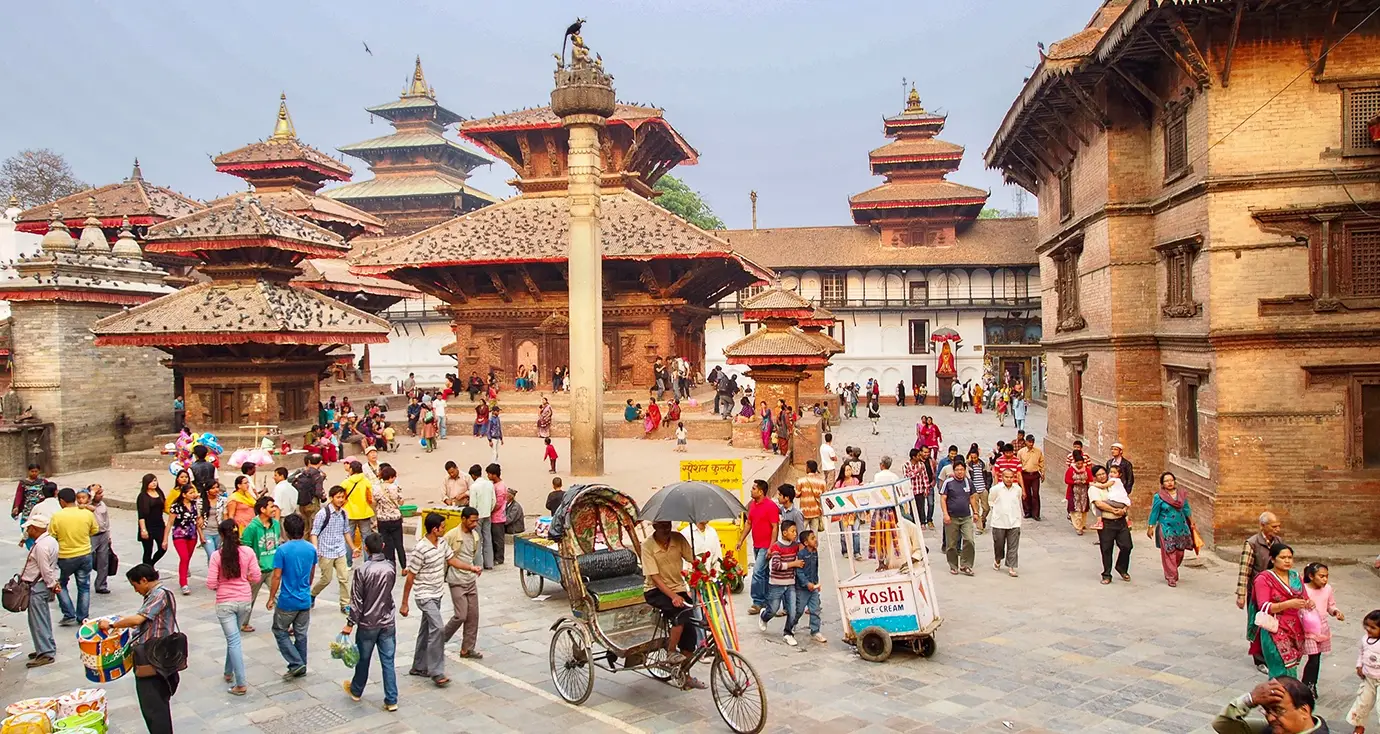
Why Visit Kathmandu
A Living Heritage City, Not a Museum
Kathmandu’s UNESCO sites are working places first and attractions second. Morning worshippers circle Boudhanath before the tour buses arrive. Cremations proceed at Pashupatinath regardless of who watches. The Kumari, a living goddess, still looks out from her carved window on Durbar Square. Nothing here is preserved behind glass. The heritage runs on its own schedule, and you fit into it, not the other way around.
The Gateway to the Himalaya
Every Everest Base Camp trek, every Annapurna circuit, and every expedition to Nepal’s 8,000-meter giants start and end in Kathmandu. Tribhuvan International Airport connects the flights to Lukla and Pokhara. Thamel outfits the gear. The city’s hotels absorb the pre-trek nerves and the post-trek showers. For tens of thousands of trekkers a year, Kathmandu is the first and last chapter of the mountain story. The guide below treats that role seriously.
A Genuine Crossroads of Two Faiths
Hinduism and Buddhism share the valley without sharing walls. Pashupatinath anchors Nepal’s Hindu devotion on the Bagmati River. Boudhanath anchors the Tibetan Buddhist community three kilometers away. Swayambhunath houses shrines of both faiths on a single hilltop, worshipped by both communities at once. Few cities on earth let you walk between two living religious worlds in a single morning.
Kathmandu at a Glance
| Fact | Detail |
|---|---|
| Elevation | Roughly 1,400 meters |
| Valley UNESCO monument zones | Seven, inscribed together in 1979 |
| Typical visit length | 2 to 3 days, plus trek staging days |
| Main visitor neighborhood | Thamel |
| Historic core | Kathmandu Durbar Square and the old bazaar lanes |
| Airport | Tribhuvan International (KTM), 6 km from Thamel |
| Best season | October to April (see our Best Time to Visit Nepal guide) |
Understanding the Valley: Three Royal Cities, Not One
Kathmandu, Patan, and Bhaktapur are three historically separate royal cities, not three neighborhoods of the same town. For centuries, rival Malla kings ruled their cities from their own palace squares, competing to build the finest temples and courtyards. Urban growth has since merged the valley into one continuous city. But the three Durbar Squares remain distinct, each with its own character, its own ticket, and its own pace.
The distinction matters for planning. Patan sits about 5 km south of central Kathmandu, across the Bagmati River, reachable in 20 to 30 minutes by taxi, depending on traffic. Bhaktapur is about 13 km east, a 40- to 60-minute drive. Treat Patan as a half-day extension, and Bhaktapur as a half- to full-day on its own, and both reward the time.
The Seven UNESCO Sites, and How They Genuinely Differ
The Kathmandu Valley’s UNESCO listing covers seven monument zones. Most guides present them as an interchangeable list of temples. They are not. Each serves a different purpose, imposes different rules, and rewards a different kind of visit. The honest breakdown follows.
Kathmandu Durbar Square
Kathmandu Durbar Square is the old royal heart of the capital, a plaza of pagoda temples, courtyards, and the Hanuman Dhoka palace complex. The square took heavy damage in the 2015 earthquake, and reconstruction has restored most major structures, though some work continues. A foreign visitor ticket applies at the entry points.
The square’s most singular tradition is the Kumari Ghar, home of the Kumari, a young girl worshipped as a living goddess. She appears briefly at her carved wooden window on some days. Photography of the Kumari herself is prohibited, a rule that is strictly enforced and worth respecting.
Our guides take you to Durbar Square first thing in the morning, before tour groups arrive around 10 AM. The light is better, the sweepers are still working the flagstones, and the square belongs to locals heading to work through it.
Pashupatinath Temple: What Non-Hindus Can and Cannot Do
Pashupatinath is Nepal’s holiest Hindu site, a sprawling temple complex on the Bagmati River where cremations take place daily on the riverside ghats. The access rules for non-Hindus are specific, frequently misreported, and worth stating plainly.
Non-Hindus cannot enter the main Pashupatinath temple itself. The rule is absolute and enforced at the gates. What non-Hindus can do is walk the wider complex. The cremation ghats are observed from the eastern bank of the river, across the water from the platforms. The viewing terraces there are the standard, accepted vantage point, used daily by visitors and accepted by the families below. A foreign visitor entry fee applies to the complex.
Conduct matters more here than anywhere else in Kathmandu. Cremations are funerals. Real families are grieving on those platforms. Keep your voice low, keep a respectful distance, and keep your camera pointed away from mourners’ faces. Photographing the wider scene from across the river is generally accepted. Photographing grief up close is not. If a ceremony is underway directly opposite you, the kind thing is often tto lower the camera.
Sadhus, Hindu holy men in ochre robes and painted faces, gather in the complex and often invite photos in exchange for a small tip. The exchange is understood on both sides. Agree on the amount before shooting.
Allow 1 to 2 hours. Early morning and late afternoon bring the most temple activity. Maha Shivaratri, the great night of Shiva, falls in the February-to-March window on the lunar calendar. The festival draws hundreds of thousands of pilgrims and transforms the site entirely.
Boudhanath Stupa
Boudhanath is one of the largest stupas in the world and the living center of Nepal’s Tibetan Buddhist community. The great white dome rises from a ring of monasteries, prayer-wheel arcades, and rooftop cafes. Pilgrims circle the stupa clockwise at all hours, spinning the prayer wheels as they go. Join the flow in the same direction, always clockwise, and the circuit takes about 15 minutes at a pilgrim’s pace.
The rhythm here is the attraction. Come at dusk, when the butter lamps flicker on. The crowd thickens with monks and elderly Tibetan devotees, and the murmur of mantras rises around the dome. The west-facing side of the stupa catches the best late-afternoon light for photographs. A foreign visitor entry fee applies at the gates.
The rooftop cafes ringing the stupa serve the classic eye-level view of the gilded spire and its painted Buddha eyes. Order a tea, take the corner table, and give the place an unhurried hour.
The stupa’s spire cracked in the 2015 earthquake. The local community rebuilt it within two years, funded largely by Buddhist donations rather than state money. The repair speaks to what Boudhanath is: not a monument maintained for visitors, but a living center its own community refuses to let fall.
Swayambhunath: The Monkey Temple
Swayambhunath crowns a hilltop west of the city center, reached by a steep stone staircase of 365 steps from the eastern base. The climb takes 10 to 15 minutes at a steady pace. It earns you the valley’s classic panorama, the city spreading below, and the Himalaya on the northern horizon on clear days. A vehicle road reaches a western entrance with far fewer steps, a genuine option for anyone avoiding the staircase.
The site’s age is genuinely disputed across sources. Some date the foundation to the 5th century. Others describe worship on the hill stretching back 2,000 years or more. We state the uncertainty honestly rather than picking a number. What is certain: Swayambhunath ranks among the oldest religious sites in Nepal, sacred to Buddhists and Hindus alike. Its white dome and painted eyes are among the most recognized images in the country.
The resident rhesus monkeys give the site its nickname, and it’s one practical warning. They are bold, quick, and entirely willing to snatch food, water bottles, and loose sunglasses. Carry nothing loosely and feed nothing deliberately. A foreign visitor fee applies at the entrances. Sunset from the upper platform, with the valley lights coming on below, is the best free show in Kathmandu.
Patan Durbar Square
Patan Durbar Square, in the separate historic city of Patan, holds the valley’s finest concentration of Newar craftsmanship. The stone Krishna Mandir, the golden-doored royal palace, and the courtyards of the Patan Museum reward slower looking than any other square in the valley. The museum itself, housed in the restored palace, ranks among the best in South Asia for its bronze and gilt-copper sacred art. It earns a full hour.
Patan carries a quieter, more artisanal character than Kathmandu’s square. Metalworkers still hammer in the surrounding lanes, and the Mahaboudha and Golden Temple side alleys reward wandering. Combine the square, the museum, and a courtyard lunch into a half-day.
Bhaktapur Durbar Square
Bhaktapur is the best-preserved of the three royal cities and the one that feels most like stepping back several centuries. Cars are restricted in the old core, the pace slows, and daily life proceeds around the temples rather than past them. Potters throw and sun-dry their work in Pottery Square. The 55-Window Palace and the five-story Nyatapola Temple, Nepal’s tallest pagoda, anchor the monumental core.
Bhaktapur charges the valley’s highest entry fee for foreign visitors. The ticket funds the preservation that keeps the city as it is. Give Bhaktapur a minimum of half a day, a full day if the pace catches you. Taste the juju dhau, the “king curd,” a rich local yogurt served in clay bowls and found only here at its best.
What our guides say: with time for only one square beyond Kathmandu’s own, take Bhaktapur when atmosphere matters most. Take Patan when museum-quality art matters more. The two answers are honestly different for different travelers.
Changu Narayan
Changu Narayan is the valley’s most overlooked UNESCO site and its oldest temple. The hilltop Vishnu temple northeast of Bhaktapur holds inscriptions dating to the 5th century. The two-tiered pagoda holds some of Nepal’s earliest stone carvings, and the courtyard stays quiet even in peak season. Pair it with Bhaktapur or a Nagarkot trip, since all three sit along the same eastern arc.
Beyond the UNESCO List
Budhanilkantha Temple
Budhanilkantha, at the valley’s northern edge below Shivapuri, holds a five-meter stone Vishnu reclining on a bed of carved serpents in a sacred pond. The image was carved in the Licchavi period and remains an active pilgrimage site. Non-Hindus view the statue from the surrounding walkway rather than the inner sanctum. Mornings bring the most worship activity. Entry is free, and the visit takes 30 to 45 minutes, plus a 30- to 40-minute drive from Thamel.
Kopan Monastery
Kopan is a working Tibetan Buddhist monastery on a hilltop north of Boudhanath, known worldwide for meditation courses open to foreigners. Day visitors can walk the gardens and attend some sessions when courses permit. The view back over the valley from the garden wall is quietly spectacular. Combine Kopan with a morning at Boudhanath, since the two are 20 minutes apart.
Garden of Dreams
The Garden of Dreams is a restored Edwardian-style walled garden at Thamel’s edge, and it earns its keep as the city’s best pause button. Fountains, lawns, and pavilion verandas replace the traffic noise the moment the gate closes behind you. A modest entry fee applies. Come in the late afternoon with a book, or take the garden cafe’s shaded table between sightseeing blocks.
Narayanhiti Palace Museum
Narayanhiti was the royal palace until Nepal’s monarchy ended. It now opens as a museum preserving the state rooms and the grounds where the 2001 royal family massacre occurred. The tour is sober, strange, and genuinely revealing about Nepal’s recent history. Cameras are deposited at the entrance. Check the current opening days before you go, since the museum operates on a limited schedule.
Markets and Neighborhoods
Thamel
Thamel is the visitor hub: trekking-gear shops, restaurants, bars, bookstores, and hotels packed into a dense grid of lanes. Every trek stage here. Gear shopping runs from genuine branded equipment to convincing fakes, and the honest rule is that prices reflect which one you are holding. Bargain politely, compare across shops, and buy boots at home rather than here. Thamel stays lively past midnight and is generally safe on the main lanes at night, with normal city awareness.
Beyond gear, Thamel holds the city’s densest concentration of bookshops, several of them excellent on Himalayan history and mountaineering. An hour in the used-book stacks, trading finished paperbacks against the next trek’s reading, is a small Kathmandu tradition worth keeping.
Asan Bazaar and Indra Chowk
Asan is the real market, a working bazaar where the valley has traded spices, textiles, and kitchenware for centuries. The lane runs from Indra Chowk toward Asan Chowk through a continuous crush of shoppers, porters, and motorbikes. Come in the morning, keep your bag in front of you, and buy your spices here, not in Thamel. The walk from Durbar Square through Indra Chowk to Asan is the best free cultural experience in central Kathmandu.
Small shrines interrupt the commerce every few meters along the route, and the Annapurna Temple at Asan Chowk anchors the market’s daily devotion. Watch shoppers touch the shrine in passing without breaking stride. Commerce and worship share the lane completely, which is the whole city in one image.
Freak Street
Freak Street, south of Durbar Square, was the hippie-trail address of the 1960s and 70s. The scene moved to Thamel decades ago, but the street keeps a low-key charm, a few old cafes, and far thinner crowds. Worth a 20-minute detour from the square for the history alone.
What to Buy in Kathmandu
Kathmandu’s crafts run deeper than the souvenir rack, and knowing the real categories helps you spend well.
Singing bowls are the classic purchase. Hand-hammered bowls carry irregular surfaces and complex, sustained tones. Machine-made bowls look smooth and sound thin. Play several side by side in the shop, and the difference teaches itself in two minutes.
Thangka paintings are Buddhist scroll paintings produced in studios around Boudhanath and Patan. Quality spans student practice work to museum-grade commissions, and price reflects the detail in the faces and goldwork. A reputable studio explains the iconography while you browse, which is half the value of buying one.
Pashmina ranges from genuine Himalayan goat wool to acrylic with a label. Real pashmina feels warm within seconds of touching your skin and creases softly rather than springing back. Buy from established shops rather than street stalls when the label matters to you.
Khukuri knives, Nepal’s curved-bladed knives, are sold everywhere, from tourist trinket grade to working tools. Check your home country’s import rules before buying one, and pack any blades in checked luggage.
Tea and spices from Asan Bazaar cost a fraction of the prices in Thamel for the same goods. Ilam black tea from Nepal’s eastern hills makes the best light souvenir in the city.
Bargaining is expected in markets and tourist shops, and the polite version works best. Offer around two-thirds of the first price, keep it friendly, and let silence do some of the work. Fixed-price craft cooperatives around Patan skip the dance entirely and channel more money to the makers, a trade many travelers prefer.
What to Eat in Kathmandu
Kathmandu’s food story splits into two threads: the everyday Nepali table and the older, deeper Newar cuisine of the valley itself.
Momo are Nepal’s beloved dumplings, steamed or fried, filled with buffalo, chicken, or vegetables, and served with a tomato-sesame achar for dipping. Every neighborhood has a contender for the best plate in the city, and the debate never ends. Eat them everywhere.
Dal bhat is the national daily meal: rice, lentil soup, seasonal vegetables, and pickles, refilled until you surrender. Trekkers learn the phrase “dal bhat power, 24 hours” within a day of arrival, and the joke holds
Newari cuisine is the valley’s own tradition and the one visitors most often miss. Order yomari, a steamed rice-flour dumpling filled with molasses and sesame. Add bara, a savory lentil patty sometimes topped with egg or minced meat. Finish with choila, spiced grilled buffalo served with beaten rice. Newari restaurants in Patan and around Kathmandu’s old town serve full tasting sets, and one Newari dinner belongs on every itinerary.
Juju dhau, Bhaktapur’s clay-bowl king curd, closes the list. Eat it in Bhaktapur, where it is thickest and best.
Rooftop restaurants around Thamel and above the Durbar Squares serve dinner with views. Street food is generally safe when it is hot, fresh, and served in busy places. Choose stalls with turnover, drink bottled or purified water, and your stomach will thank you before your trek.
Adventure and Scenic Options
The Everest Mountain Flight
The Everest scenic flight is the answer to “Can I see Everest without trekking?”: yes. Fixed-wing flights depart Kathmandu in the early morning and cruise east along the Himalayan chain. Every passenger gets a window seat view of Everest, Lhotse, and the great eastern peaks. The flight returns in roughly an hour. Flights operate on visibility and may be canceled or delayed in poor weather, so schedule the flight early in your stay, with a spare morning built in. Winter and autumn mornings deliver the clearest air, per the seasonal logic in our Best Time to Visit Nepal guide.
Helicopter Tours
Helicopter tours go where fixed-wing aircraft cannot: landing at Everest Base Camp, side viewpoints, breakfast flights to Hotel Everest View, and Annapurna sanctuary circuits. A heli-tour compresses a two-week trek’s scenery into a morning, and winter’s clear air makes it the premium season for exactly this. Ask us to match a route to your dates.
Hiking From the City
Shivapuri National Park rises directly from the valley’s northern rim. Day hikes run from Budhanilkantha to the Shivapuri peak or along the quieter Nagi Gompa monastery trail. The Champadevi hike on the southwestern rim climbs through a pine forest to a stupa-topped summit with views of the valley and the Himalayas. Both are honest half- to full-day hikes on real trails, and both make excellent acclimatization legs before a bigger trek.
Day Trips From Kathmandu
The valley rim holds three genuine day trips, each answering a different need.
| Day Trip | Distance and Time | Main Draw | Best For |
|---|---|---|---|
| Nagarkot | ~32 km, 1.5–2 hours | Sunrise Himalaya panorama | Overnight sunrise stays |
| Dhulikhel | ~30 km, 1.5 hours | Newar hill town plus mountain views | Quieter, more local feel |
| Chandragiri Hills | ~16 km to base, cable car up | Easiest mountain viewpoint | Half-day trips, limited mobility |
Nagarkot is the classic sunrise viewpoint, a ridge-top village facing the central and eastern Himalaya. On clear mornings, the panorama runs from the Annapurnas to, on the best days, a distant point of Everest. The view depends entirely on clear air, so autumn and winter mornings deliver, and monsoon mornings mostly do not. Stay overnight to catch the sunrise rather than drive up in the dark.
Dhulikhel offers a similar mountain panorama, set within a genuine old Newar town, with temple squares and working streets that Nagarkot lacks. Choose Dhulikhel when you want the view plus a place, not just a viewpoint.
Chandragiri Hills runs a cable car from the valley’s southwestern edge to a 2,500-meter summit with mountain views and a hilltop temple. It is the easiest mountain viewpoint in the valley, workable in a single morning with no hiking. For travelers with limited time or mobility, it is the right answer.
Kathmandu Itineraries by Duration
One Day in Kathmandu
One well-routed day covers four major sites by clustering them geographically and beating the crowds to the first. Start at Kathmandu Durbar Square at 8 AM, before the tour groups. Walk north through Indra Chowk and Asan Bazaar while the market runs at full morning pace. Taxi to Swayambhunath before midday, climb the steps, and take the valley panorama.
After lunch, cross the city to the east to Boudhanath, timing your arrival for late-afternoon light on the stupa’s west face. Finish at Pashupatinath as the day cools and evening worship builds, observing the ghats respectfully from the eastern bank. The east-side pairing of Boudhanath and Pashupatinath, just 10 minutes apart by taxi, is the routing trick that makes one day work. Kathmandu traffic punishes backtracking, so the day runs west in the morning and east in the afternoon, never both twice.
Two Days in Kathmandu
Day one runs the one-day core above at a gentler pace. Day two crosses the river to Patan for the morning: the Durbar Square, the Patan Museum’s hour of sacred art, and the metalworking lanes. Return for an afternoon in the Garden of Dreams or the Thamel gear streets, then close with a Newari tasting dinner. Two days turn the highlight reel into an actual visit.
Three Days in Kathmandu
Day three adds Bhaktapur as a half-to-full day, with Changu Narayan as the connoisseur’s add-on along the same eastern road. Fit the Everest mountain flight into whichever morning dawns clearest, and let the flight’s early finish feed straight into the Bhaktapur drive. Three days cover all three royal cities, the two great stupas, Pashupatinath, and a mountain view, which is the complete Kathmandu.
Five Days in Kathmandu
Five days adds breathing room and range. Spend the night in Nagarkot or Dhulikhel for the sunrise panorama. Add a Shivapuri or Champadevi hike. Book a morning meditation session at Kopan, a thangka-painting or pottery workshop, and unhurried market time in Asan. Five days suit travelers making Kathmandu the trip rather than the gateway, and the city holds the attention easily.
The Pre-Trek or Post-Trek Day
A spare day around a trek is its own planning problem, and almost no guide addresses it. Here is how we route it for our own trekkers.
The day before flying to Lukla: keep it light and useful. Final gear checks in Thamel take the morning, and buy nothing heavy you must then carry. Spend the afternoon at Boudhanath, the calmest major site and a fitting threshold to the Buddhist Khumbu. Eat a familiar dinner, skip the late night, and sleep early, since Lukla flights leave at dawn.
The day after a trek: your legs want flat ground, and your appetite wants everything. Sleep in. Take the Garden of Dreams or a rooftop cafe in the morning, then a long Newari lunch. A massage fills the afternoon, and Thamel supplies every style. If energy returns by evening, take Swayambhunath at sunset. It is the gentlest of the major sites and the best place to look back north toward where you walked.
Kathmandu by Traveler Type
With children: Bhaktapur is the valley’s best family stop. Pottery Square offers hands-on wheel demonstrations, the plazas invite running, and no traffic enters the core. Swayambhunath’s monkeys entertain reliably, with the standard food-snatching caution. The Chandragiri cable car turns a mountain view into a ride. Keep site days short and fold in the Garden of Dreams as a decompression stop.
On a budget: the old-city walk from Durbar Square through Indra Chowk to Asan costs nothing and beats most paid attractions. Swayambhunath and Boudhanath charge modest fees, and each takes half a day. Eat momo and dal bhat in local places at local prices, sleep in Thamel’s guesthouse tier, and Kathmandu becomes one of Asia’s cheapest heritage capitals.
Luxury travelers: the valley holds genuine heritage hotels, restored Rana palaces, and Newar mansions that make accommodation a form of sightseeing. Pair one with private guiding, a helicopter morning in the mountains, and dinner at the top Newari tasting houses. Winter suits the style best, per the clear-air logic in our Best Time to Visit Nepal guide.
Solo travelers: Kathmandu is an easy city to travel solo. Thamel’s cafe and guesthouse culture makes company optional rather than absent. Day tours fill gaps between independent wandering and the city’s compact clusters, where you can walk safely in daylight. Solo women report that the usual South Asia awareness rules apply, with Thamel’s main lanes comfortable into the evening.
Festivals Worth Planning Around
Kathmandu’s festivals run on the lunar calendar and shift every year, so verify current dates before booking around any of them. Our Best Time to Visit Nepal guide covers the national calendar in full. Three notes belong here specifically.
Indra Jatra is Kathmandu’s own festival, usually falling in September [verify current date]. The Newar celebration brings masked dance, towering chariots, and the Kumari’s rare public procession through the old city. Durbar Square becomes the stage, and no other week shows the square’s living purpose so completely.
Maha Shivaratri brings hundreds of thousands of pilgrims and sadhus to Pashupatinath on Shiva’s great night, usually in the February-to-March window [verify current date]. Visit during it only deliberately, for the spectacle, and expect crowds unlike any other day of the year.
Dashain and Tihar, the national festivals of the autumn window, quiet the city’s offices and fill its homes. Tihar’s lamp-lit evenings make Kathmandu’s old lanes glow, and both festivals reward visitors who plan their transport early to avoid the holiday rush.
Practical Tips From Our Home City
Etiquette: dress so that shoulders and knees are covered at religious sites. Walk clockwise around stupas and shrines. Remove shoes where locals do. Ask before photographing people, always agree on a tip with sadhus before shooting, and keep the camera down near active cremations and mourners at Pashupatinath.
Getting around: taxis are everywhere, and meters are rare, so agree on the fare before getting in. Ride-hailing apps operate in the city and eliminate the need for negotiation. Central Kathmandu rewards walking, but distances deceive, and traffic is loud, so pair walking cores with taxi hops between clusters.
Air and dust: Kathmandu’s air quality is poor in the dry months, and many locals wear masks on heavy days. Sensitive travelers should pack a quality mask for street days and plan for the Garden of Dreams or a rooftop above the dust when it builds up.
Money: ATMs are common across Thamel and the city. Cash rules in markets and taxis. Cards work in hotels and better restaurants.
Safety: Kathmandu is a safe city by any regional standard. Watch bags in crowded bazaars, use normal night awareness in Thamel, and mind the traffic above all, since vehicles concede nothing to pedestrians.
Rainy days: monsoon afternoons suit the Patan Museum, Narayanhiti Palace, or a momo-making class. The cafe terraces of Boudhanath work too, where rain on the dome is its own show.
How Kathmandu Fits Into a Longer Nepal Trip
Most visitors thread Kathmandu into a bigger route, and the standard patterns are worth naming.
The trekking sandwich is the classic shape. Two nights on arrival cover the headline sites and gear checks. The trek is followed by one or two recovery nights before flying home. The itineraries above map directly onto it. Route the packed sightseeing before the trek only if your schedule forces it, since post-trek days can better absorb delays.
The culture circuit pairs Kathmandu with Pokhara and Chitwan into Nepal’s classic ten-day loop. Kathmandu takes the first three days, Pokhara the lakeside middle, and Chitwan the wildlife finish. The circuit runs beautifully in winter, when the valley’s air is clearest, and the Terai is at its best.
The single-city trip treats Kathmandu as the whole destination, and the five-day itinerary above proves the city holds it. Add Nagarkot or Dhulikhel for the mountain morning, and the trip wants for nothing.
Whichever shape fits, book the Everest mountain flight early in the stay rather than the last morning. Weather cancels flights, and an early booking leaves mornings behind it to rebook into.
Frequently Asked Questions
How many days do you need in Kathmandu?
Two to three days are enough to cover the city’s essentials well. One well-routed day handles the four headline sites. Three days add Patan and Bhaktapur, the two other royal cities. Five days add a Nagarkot sunrise, a valley hike, and workshop time. Trekkers should add a light staging day before the mountains and a recovery day after.
Is Pashupatinath open to non-Hindus?
Partly. Non-Hindus cannot enter the main temple itself, a rule enforced at the gates without exception. Non-Hindus can walk the wider riverside complex. The cremation ghats are observed respectfully from the eastern bank of the Bagmati, the standard visitor vantage point. An entry fee applies to the complex.
What are the UNESCO sites in Kathmandu?
The Kathmandu Valley’s UNESCO listing covers seven monument zones: Kathmandu Durbar Square, Patan Durbar Square, Bhaktapur Durbar Square, Swayambhunath, Boudhanath, Pashupatinath, and Changu Narayan. They are genuinely different experiences, spanning royal plazas, Buddhist stupas, a Hindu cremation complex, and the valley’s oldest hilltop temple.
Is Kathmandu worth visiting, or just a stopover?
Worth visiting in its own right. The valley holds seven UNESCO World Heritage Sites, three historic royal cities, two of the world’s great stupas, and a food culture that most visitors never fully encounter. Trekkers who treat it as an airport with hotels miss one of Asia’s densest heritage cities. Give it two full days minimum.
Can you see the Himalayas from Kathmandu?
Sometimes from the city itself on clear winter mornings, reliably from the valley-rim viewpoints. Nagarkot and Dhulikhel deliver full Himalayan panoramas at sunrise in the clear months, October to April. The Everest scenic flight guarantees a window seat in about an hour, weather permitting, with no trekking required.
What food should I try in Kathmandu?
Start with momo, Nepal’s dumplings, from any busy neighborhood spot. Eat one full dal bhat, the national rice-and-lentil meal. Then go deeper into Newar cuisine: yomari, bara, and choila at a Newari restaurant in Patan or the old town. Finish with juju dhau, the clay-bowl king curd, eaten in Bhaktapur, where it is best.
Is Thamel safe at night?
Yes, on the main lanes, with normal city awareness. Thamel stays busy past midnight with restaurants, bars, and returning trekkers. Keep valuables to a minimum and use a trusted taxi or ride-hailing app for late crossings to other neighborhoods. Mind the motorbikes that thread the lanes at all hours.
What should I do with one spare day before flying to Lukla?
Keep it light. Finish gear checks in Thamel in the morning without buying anything heavy. Spend a calm afternoon at Boudhanath, eat a familiar early dinner, and go to bed early, since Lukla flights depart at dawn. Save the packed sightseeing day for after the trek, when your schedule no longer depends on mountain weather.
Plan Your Kathmandu Days With the Team That Lives Here
Peregrine has planned Nepal trips from our Kathmandu head office since 2002 and is registered with the Nepal Tourism Board, TAAN, and the NMA. Our guides walk these squares every week, and we build private sightseeing days around the routing, timing, and etiquette knowledge in this guide. Tell us your dates, your pace, and what pulls you most, temples, food, mountains, or all three, and we send back a day-by-day plan.