


Pokhara gives you three things at once. A calm lake at 822 meters, adrenaline sports launched from the hills above it, and clear views of the Annapurna range behind everything. Almost every one of the best things to do in Pokhara fits inside that triangle of lake, adventure, and mountain views. The city is also the gateway to the Annapurna trekking region, so thousands of trekkers pass through before and after routes like Annapurna Base Camp and Poon Hill. Use this guide to plan both kinds of visits.
Our team is based in Nepal and sends trekkers through Pokhara year-round. What follows is how we actually plan the city for our own guests.
Why Visit Pokhara
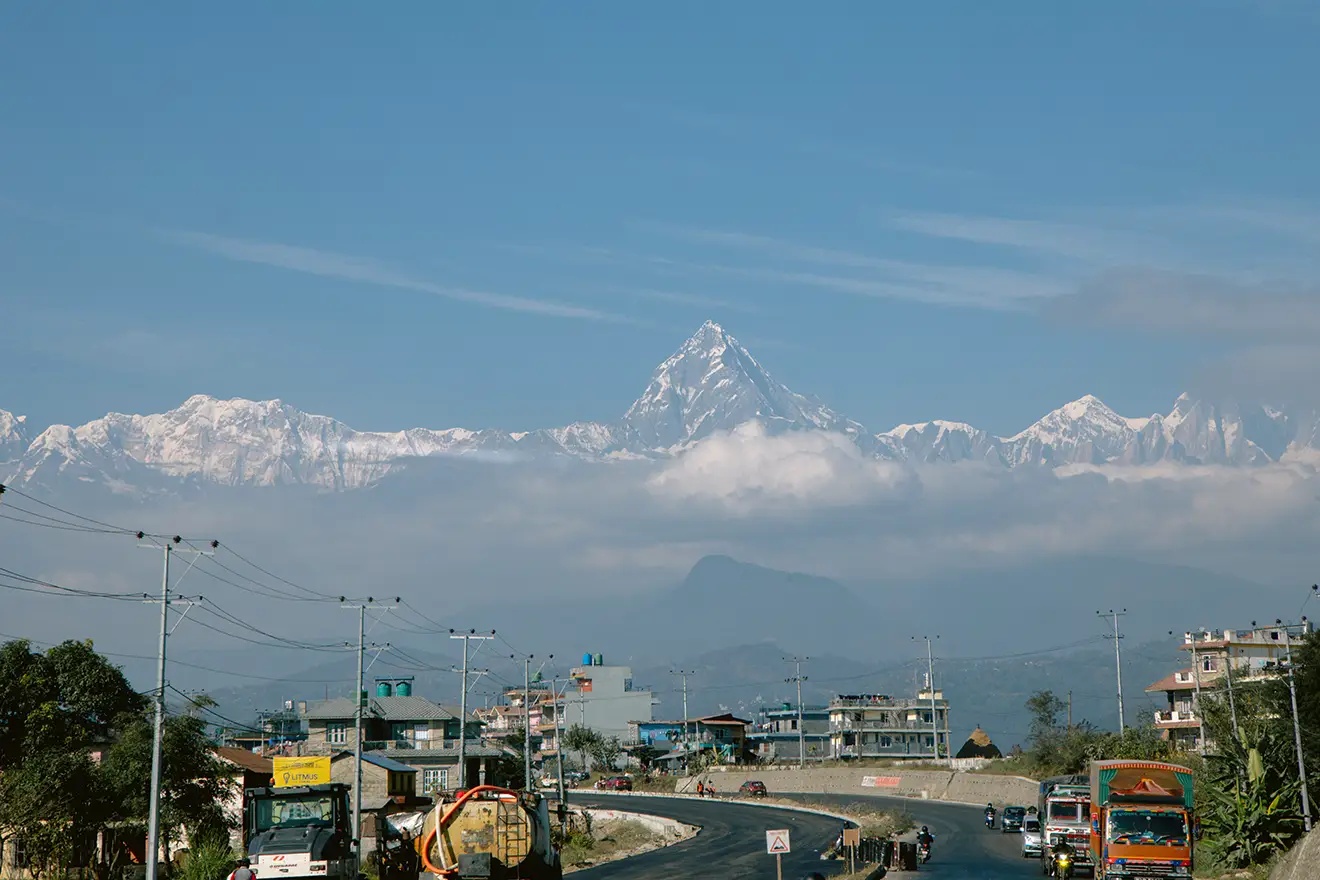
Pokhara is worth visiting because it combines Nepal’s best mountain views with its easiest pace. You can watch sunrise over an 8,000-meter peak, paraglide before lunch, and eat dinner beside a lake, all in one day. No other city in Nepal packs that range into such a small area.
The Gateway to the Annapurna Range
Every major Annapurna trek starts or ends near Pokhara. Annapurna Base Camp, the Annapurna Circuit, Mardi Himal, and Ghorepani Poon Hill all use the city as their staging point. Trekking permits, gear shops, guides, and transport to trailheads such as Nayapul and Kande are all available here.
Even without hiking, the mountains come to you. On a clear morning, you can see Machhapuchhre, the fishtail-shaped peak, from the middle of town. Dhaulagiri and Annapurna South appear from higher viewpoints like Sarangkot.
Nepal’s Adventure Sports Capital
Pokhara is the country’s main hub for paragliding, ziplining, ultralight flights, and bungee jumping. The geography does the work. Warm valley air rises off Phewa Lake, hits the Sarangkot ridge, and creates reliable lift that paragliders fly on for 20 to 40 minutes at a time.
Most launch sites sit within 30 to 45 minutes of Lakeside by taxi. You can book an activity at breakfast and be back at your hotel before mid-afternoon.
A Genuinely Different Pace Than Kathmandu
Kathmandu rewards a heritage-circuit mindset. You move between UNESCO sites through dense, loud streets. Pokhara works the opposite way. The main tourist strip, Lakeside, runs flat along the water for about 3 kilometers, and you can walk most of it in under an hour.
Traffic is lighter, the air is cleaner, and evenings are quiet by Kathmandu standards. Many travelers plan two days here and stay four.



Pokhara at a Glance
Pokhara sits at an elevation of 822 meters in Kaski District, Gandaki Province, about 200 kilometers west of Kathmandu. The drive takes 6 to 8 hours, depending on road conditions. Flights take about 25 minutes.
| Fact | Detail |
|---|---|
| Elevation | 822 m (Lakeside area) |
| Main tourist district | Lakeside, along Phewa Lake’s eastern shore |
| Typical visit length | 2 to 4 days, or 1 rest day around a trek |
| Best months | October to November and March to April |
| Getting there | 25-minute flight or 6 to 8-hour drive from Kathmandu |
| Altitude concern | None. The valley is far too low for altitude sickness |
Understanding Pokhara’s Geography
Think of the city in three bands. Phewa Lake and the Lakeside strip sit at the center, and almost every hotel, restaurant, and booking office is here. The Sarangkot ridge rises to the north, holding the sunrise viewpoint and the paragliding launch. The airport, Davis Falls, and Gupteshwor Cave sit to the south, about 10 to 15 minutes from Lakeside by taxi.
Learn those three bands, and the whole city becomes easy to plan. Lake activities need no transport at all. The northern ridge can be reached by taxi, on foot, or by cable car. The southern cluster is a short taxi ride that covers three attractions in a single loop.
Top Things to Do in Pokhara
Start with the lake, then the viewpoints, then pick one adventure sport. Those three choices form the core of any visit to Pokhara. Everything below is organized around that triangle, with caves, temples, and quieter lakes filling out the edges.
On and Around Phewa Lake
Phewa Lake is Nepal’s second-largest lake and the reason Pokhara exists as a tourist city. The water reflects Machhapuchhre on still mornings, which is when you should visit. By late morning, haze and boat traffic soften the view.
Boating on Phewa Lake
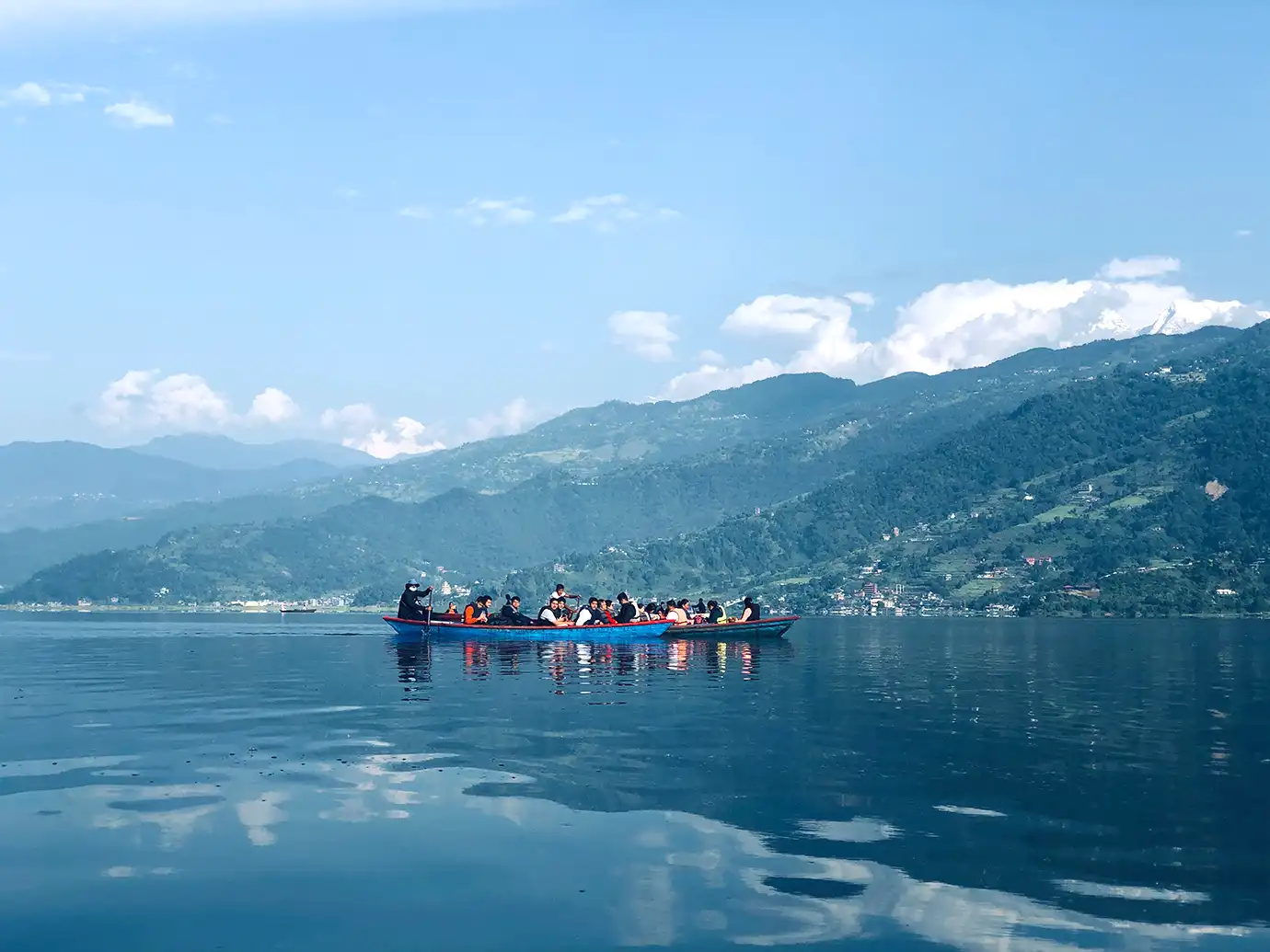
Hire a wooden rowboat, called a doonga, from the ghats along Lakeside. You can row yourself or pay a little more for a boatman. Boats also come with optional life jackets, and you should wear one because the lake reaches depths of around 20 meters.
Go between 7 and 9 in the morning. The water is calmest then, the light is best for photos, and the afternoon wind has not yet picked up. One hour on the water is enough for most people.
Tal Barahi Temple
Tal Barahi is a small two-story pagoda temple on an island in the middle of Phewa Lake. It honors the goddess Barahi and stays busy with Nepali worshippers, especially on Saturdays. Shared boats shuttle visitors from Barahi Ghat, and the crossing takes about 10 minutes each way.
Dress modestly and remove your shoes before entering the shrine area. Saturday mornings are the most atmospheric time, though also the most crowded.
Lakeside Pokhara
Lakeside is the tourist district itself, a walkable strip of restaurants, gear shops, cafés, and bars along the eastern shore. From Hallan Chowk, the central junction, you can walk to most hotels and boat docks in 10 to 20 minutes. Yes, it is touristy. It is also relaxed, safe, and genuinely pleasant in the evening.
The strip works as your base camp. Book activities here, rent or buy trekking gear here, and come back here to eat every night.
Sarangkot and Mountain Viewpoints
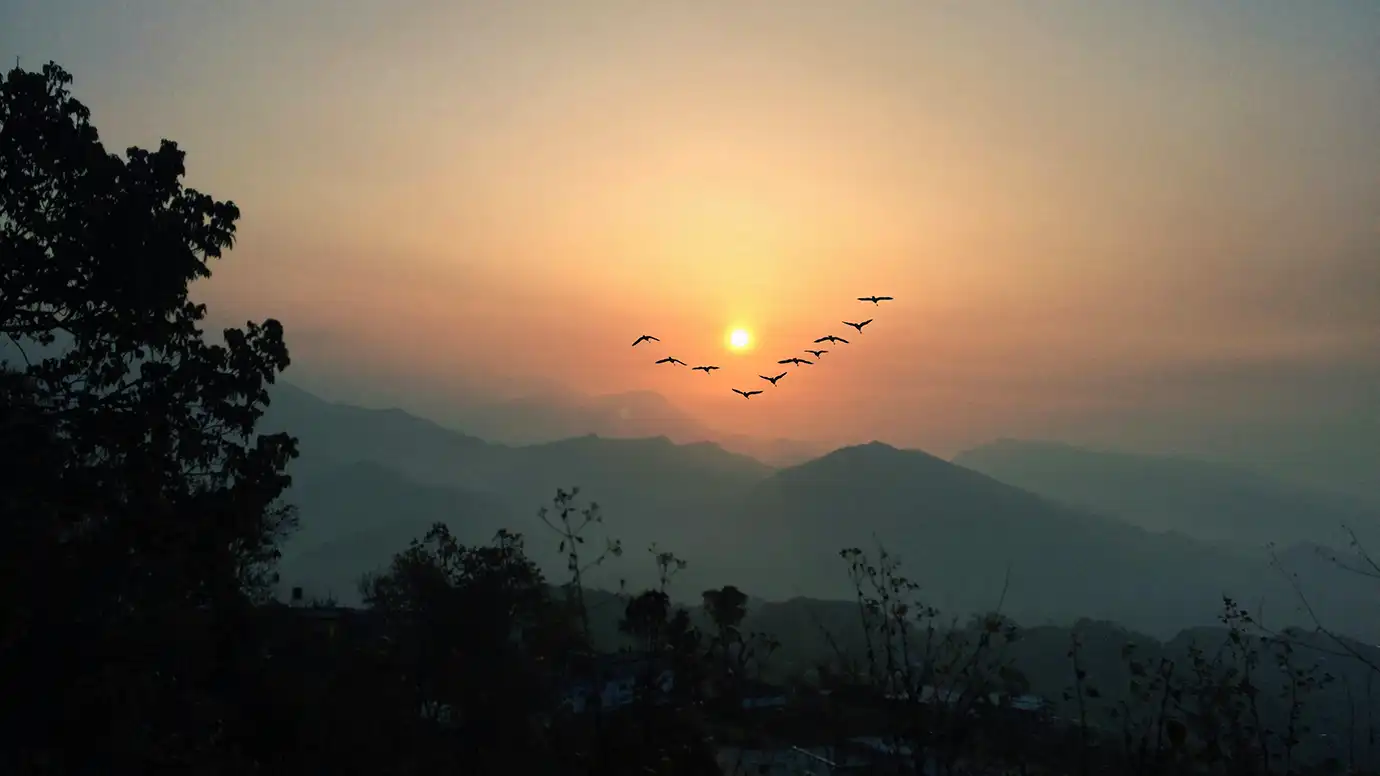
Sarangkot is the classic Pokhara viewpoint, a ridge at about 1,600 meters northwest of the lake. From the top, you look across at Dhaulagiri, Annapurna South, Machhapuchhre, Annapurna II through IV, and Lamjung Himal. You cannot see Everest from here. The Annapurna range fills the horizon instead.
Sarangkot Sunrise
Sunrise is when Sarangkot earns its reputation. The first light hits Dhaulagiri and Annapurna South, then works its way east across the range while the valley below stays dark. In peak season, arrive at the viewing area by 5:15 in the morning to get a clear spot before the crowd builds.
Check the forecast the night before. On a cloudy morning,g the mountains never appear, and the trip is not worth the early alarm. Autumn and spring mornings give you the best odds.
Sarangkot View Tower
The paid-view tower at the summit offers an unobstructed 360-degree platform above the rooftops and trees. The western rail is usually less crowded than the eastern side, where most groups cluster. If the main deck fills up, walk 5 minutes along the ridge path for quieter angles on the same range.
Annapurna Cable Car
The Annapurna Cable Car opened in February 2022 and changed how people reach Sarangkot. It runs about 2.3 kilometers from Sedi Bagar, near the northern end of Lakeside, up to the ridge in 9 to 10 minutes. Before the cable car, your only options were a 45-minute winding drive or a 2- to 3-hour hike.
Each option gives you a different experience, not just a different speed. Here is the honest comparison most guides skip.
| Method | Time | Relative Cost | The Experience |
|---|---|---|---|
| Hike | 2 to 3 hours up | Free | A real workout through villages and terraced fields. Start by 3:30 am for sunrise, so most hikers go up the afternoon before and stay overnight |
| Taxi or private car | About 45 minutes | Moderate | The standard sunrise option. Leave Lakeside by 4:30 am in peak season. The road is winding and rough in places |
| Cable car | 9 to 10 minutes | Highest per person | Effortless and scenic, gliding over forest and farmland. The queue for sunrise builds fastest between 5:30 and 6 am, so ride early or expect a wait |
Our guides usually recommend the taxi for sunrise and the cable car for a relaxed daytime visit. If your knees are good and your schedule is flexible, the overnight hike is the most memorable of the three.
Adventure Sports
Pokhara offers seven main airborne and adrenaline activities, and they suit very different people. Paragliding is the signature experience. The zipline delivers the sharpest 2-minute thrill. The ultralight flight takes you closest to the peaks. Use the table below to pick, then book with a licensed operator once you arrive.
Paragliding
Tandem paragliding from Sarangkot is the single most popular adventure activity in Pokhara. You run a few steps off the launch slope with a certified pilot strapped behind you, and the ridge lift does the rest. Standard flights last 20 to 30 minutes, with longer cross-country options of 45 minutes or more.
Flights land at Pame or Khapaudi, beside Phewa Lake. Wear closed shoes and a windproof layer, because the air at flying height is noticeably cooler than Lakeside. Mornings between 9:30 and noon usually offer the smoothest air.
Zipline
The Pokhara zipline drops from near Sarangkot toward the valley floor at speeds over 100 kilometers per hour. The ride lasts under 2 minutes, and the vertical drop of roughly 600 meters makes it one of the steepest lines anywhere. Book it if you want maximum intensity for minimum time commitment.
Bungee Jumping
Pokhara’s bungee runs from a purpose-built tower over a pond, with a free fall of around 70 to 80 meters. It suits travelers who want the classic bungee experience without having to travel to the older Bhote Koshi site east of Kathmandu. Weight limits and health restrictions apply, so declare any heart or blood pressure conditions honestly.
Ultralight Flight
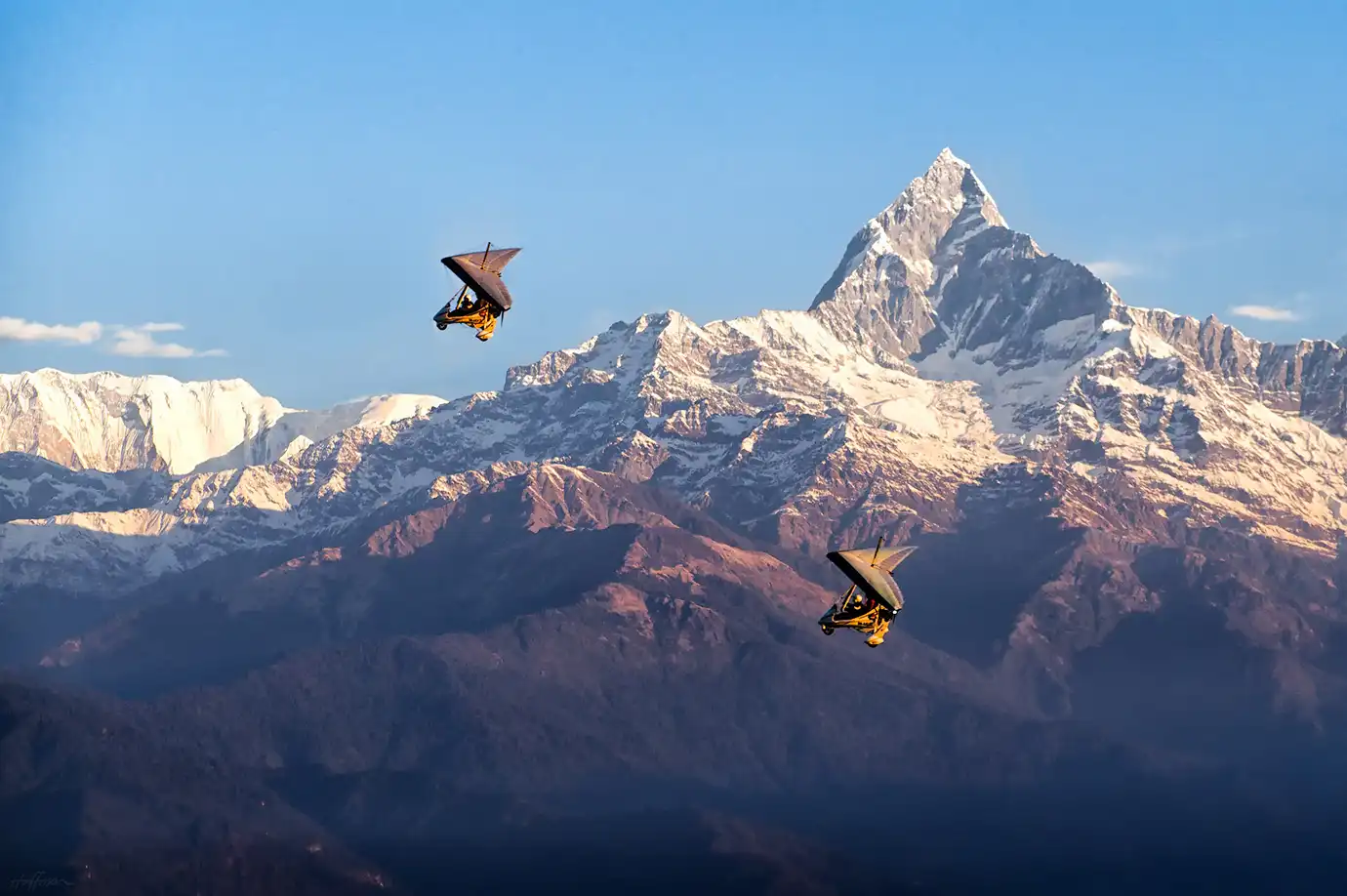
An ultralight is a tiny, open, two-seat aircraft that takes you toward the Annapurna range itself. Flights depart from Pokhara’s airport and last 15 to 90 minutes, depending on the route. On the longer flights, you fly close enough to Machhapuchhre to pick out individual snow ridges. Early morning slots have the calmest, clearest air.
Hot Air Balloon
Balloon flights lift off near the valley floor at dawn and drift with the wind for about an hour. The pace is slow and silent, which makes this the best airborne option for photographers and nervous flyers. Balloons only fly in stable conditions, so build a spare morning into your plan.
Helicopter Tours and Mountain Flights
Helicopter tours from Pokhara can land you at Annapurna Base Camp for breakfast and return you within 3 to 4 hours. Fixed-wing mountain flights loop the Annapurna and Dhaulagiri ranges without landing. Both suit travelers who want close contact with the mountains without trekking days. Note that Everest-specific scenic flights depart from Kathmandu, not Pokhara.
Choosing Your Adventure
| Activity | Duration | Thrill Level | Weather Sensitivity | Typical Minimum Age |
|---|---|---|---|---|
| Paragliding | 20 to 40 min | High | Very high, needs clear stable air | Around 5 with a pilot, operators vary |
| Zipline | Under 2 min | Very high | Moderate | Around 10 to 12 |
| Bungee | Seconds of free fall | Very high | Low | 16 to 18, weight limits apply |
| Ultralight | 15 to 90 min | Moderate | Very high | Small children are allowed with some operators |
| Hot air balloon | About 60 min | Low | Very high | Suitable for most ages |
| Helicopter tour | 3 to 4 hours door to door | Low | High | All ages |
| Mountain flight | About 1 hour | Low | High | All ages |
Prices change often in Pokhara, sometimes season to season. Confirm current rates directly with operators when you book, and treat any figure you read online as a rough guide only.
Natural Wonders
Pokhara’s southern edge holds a cluster of caves and a famous waterfall, all within a 15-minute taxi ride of Lakeside. Visit Davis Falls and Gupteshwor Cave together, because they are physically connected in a way most guides never explain properly.
Davis Falls
Davis Falls, known locally as Patale Chhango or “the waterfall to the underworld,” is a stream that vanishes straight into the ground. Water released from the Phewa Lake dam plunges into a rock pit and disappears down an underground tunnel roughly 150 meters long. The name comes from July 1961, when a Swiss tourist, Mrs. Davis, drowned here after a sudden surge of water.
The falls change character completely with the season. During the monsoon, from June to September, the flow is thunderous, and the spray reaches the viewing rails. In late winter and spring, the falls can shrink to a trickle, so set your expectations accordingly.
Gupteshwor Mahadev Cave
Gupteshwor Mahadev Cave sits directly across the road from Davis Falls, and the two share the same water. The stream that vanishes at the falls flows underground into this cave system, and in the inner chamber,r you can watch it pour through the rock. Standing inside the hill, hearing the same water you saw disappear across the street, is one of Pokhara’s strangest experiences.
The cave is also a working Hindu shrine. A spiral staircase leads down to a chamber housing a naturally formed Shivalinga, a stone formation worshipped as the god Shiva, tended daily by priests. Sources disagree on the cave’s full length, with figures ranging from about 2,000 to 2,950 meters, though the section open to visitors is far shorter. The floor stays wet year-round, so wear shoes with a real grip. The inner section closes during heavy monsoon flow.
Mahendra Cave and Bat Cave
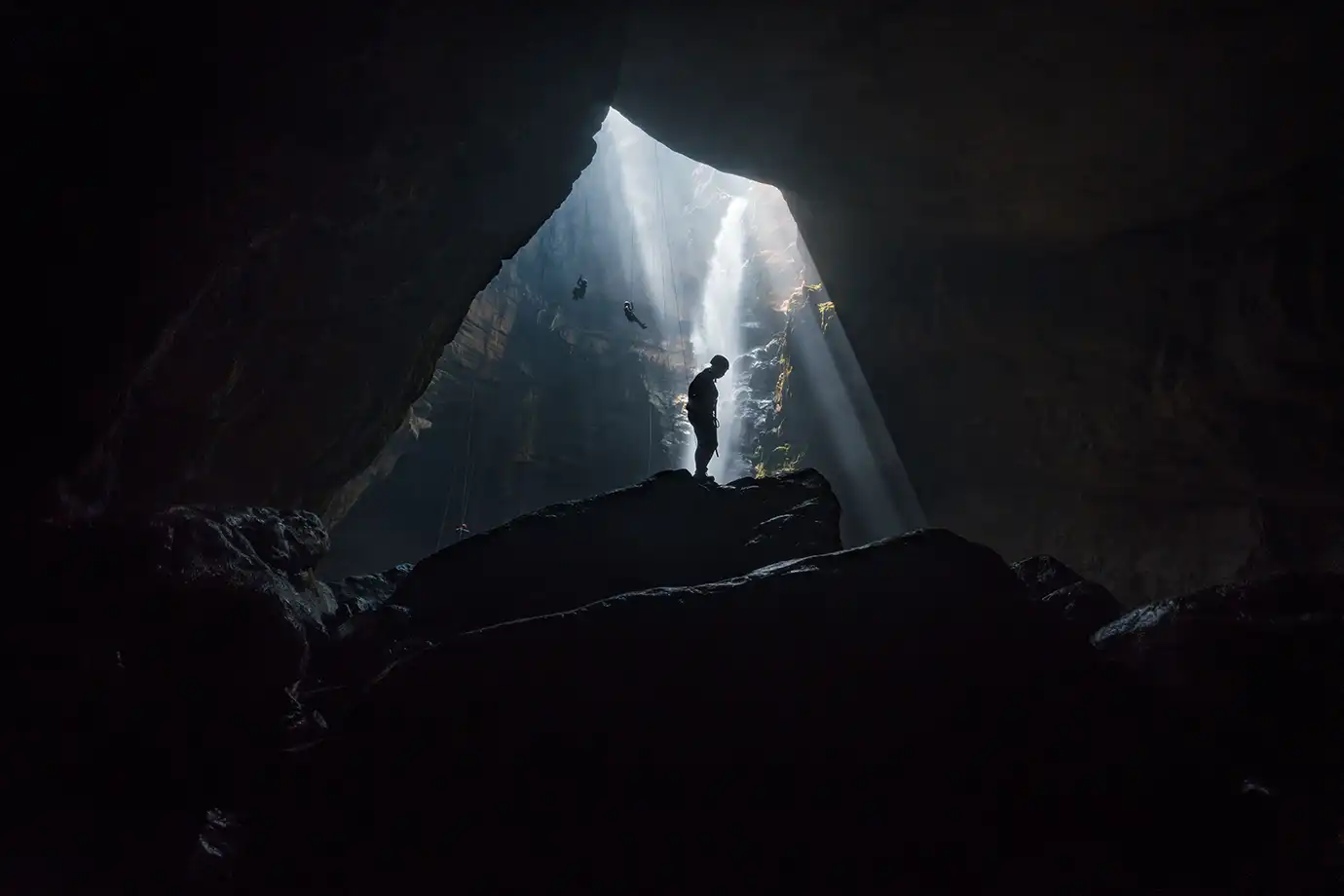
Mahendra Cave and the nearby Bat Cave sit on the northern side of town, about 25 minutes from Lakeside. Mahendra Cave is a broad limestone cavern with electric lighting and easy walkways. The Bat Cave, a 10-minute walk away, houses thousands of horseshoe bats clustered on the ceiling, and the narrow exit squeeze is a small adventure in itself. Bring a headlamp for the Bat Cave, because the fixed lighting is minimal.
Seti River Gorge
The Seti River cuts through Pokhara in a gorge so narrow and deep that the city barely notices it. At points, the milky-white river runs more than 40 meters below street level through a slot only a few meters wide. The easiest viewing spot is the bridge at K.I. Singh Pul near Mahendra Cave, which pairs naturally with a cave visit.
Culture and Spirituality
Pokhara’s cultural sites are quieter than Kathmandu’s, but three of them justify a visit. The World Peace Pagoda delivers the city’s best sunset view. The International Mountain Museum gives trekkers a genuine context for the peaks above them. The Tibetan settlements carry a living history most visitors never hear.
World Peace Pagoda
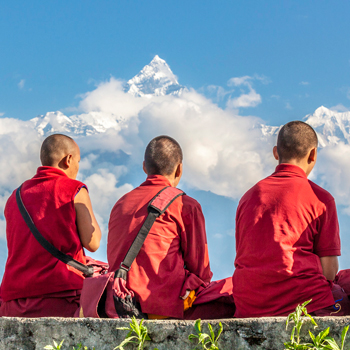
The World Peace Pagoda, also called Shanti Stupa, is a white Buddhist monument on the forested ridge south of Phewa Lake, at an elevation of about 1,100 meters on Anadu Hill. Japanese Buddhist monks of the Nipponzan Myohoji order completed it in 1973 as one of a series of peace pagodas built around the world. Four gilded Buddha statues face the cardinal directions.
From the terrace, you see the whole triangle at once, with the lake below, Lakeside across the water, and the Annapurna range behind. Come for late afternoon and stay for sunset, when the light falls on the mountains rather than behind them. Walk quietly and dress respectfully, because monks live and pray on site.
Bindhyabasini Temple
Bindhyabasini is Pokhara’s oldest and most important Hindu temple, set on a small hill in the old bazaar area north of Lakeside. The white shikhara-style shrine honors the goddess Bhagwati, and Saturday mornings bring animal sacrifices, ringing bells, and long family queues. Visit between 7 and 9 am to see the temple as locals use it, then walk the old bazaar below for a side of Pokhara that Lakeside never shows.
Pumdikot Shiva Statue
Pumdikot Hill, on the same ridgeline as the World Peace Pagoda, holds a 51-foot statue of Shiva seated above a large white dome. The site is newer and less visited than the pagoda, and the view back across the lake to the Annapurna range is just as good. A rough road reaches the top, and a walking trail connects it with the pagoda in about an hour.
International Mountain Museum
The International Mountain Museum, near the airport, documents Nepal’s peaks, climbers, and mountain peoples. Exhibits cover the first ascents of the 8,000-meter giants, historic climbing gear, and the cultures of the Sherpa, Gurung, and Thakali communities. Plan 1.5 to 2 hours. If you visit before an Annapurna trek, the geology and culture halls will sharpen your understanding of everything you see on the trail.
The Tibetan Settlements
Pokhara hosts Tibetan communities who arrived as refugees after 1959, and two settlements welcome visitors. Tashi Ling, near Davis Falls, and Tashi Palkhel, north of town at Hemja, both center on monasteries, carpet-weaving workshops, and small markets. Buying a hand-knotted carpet or sitting in on afternoon prayers supports families directly.
Come with genuine curiosity rather than a camera-first attitude. Ask before photographing people, and take time to talk. The older generation’s stories of crossing the Himalaya on foot are the real reason to visit.
The Quieter Lakes
Begnas Lake and Rupa Lake offer the Phewa experience without the crowds, about 30 to 45 minutes east of the city. Choose them when Lakeside starts to feel busy.
Begnas Lake
Begnas is the second lake of the Pokhara valley, ringed by forested hills and paddy fields instead of hotels. Rowboats are cheaper than on Phewa, the water is cleaner, and fresh fish restaurants line the small bazaar near the dam. Locals swim here in a way they rarely do at Phewa. Half a day covers it, or stay overnight in one of the quiet hillside lodges for a slower reset.
Rupa Lake
Rupa sits on a ridge east of Begnas and sees a fraction of its visitors. The lake is smaller and marshier, which makes it better for birdwatching than boating. Combine both lakes with the viewpoint at Sundari Danda on the ridge between them, which overlooks them both.
Hiking Near Pokhara
You do not need a multi-day trek to walk in the Annapurna foothills. Several genuine hikes start within an hour of the city and return you to a hot shower the same night or after one overnight in a village.
Australian Camp and Dhampus
Australian Camp is a grassy ridge campsite at about 2,060 meters with a wide-open Annapurna panorama. Drive 45 minutes to Kande, then hike for 1.5 to 2 hours up a stone-staircase trail. Most walkers continue for 45 minutes to Dhampus, a Gurung village at about 1,650 meters, and then descend to the road at Phedi.
Done as an overnight, with sunset and sunrise from the ridge, the loop is the single best short taste of Annapurna trekking that exists. Done as a day hike, it still beats any viewpoint you can drive to.
Naudanda and Panchase
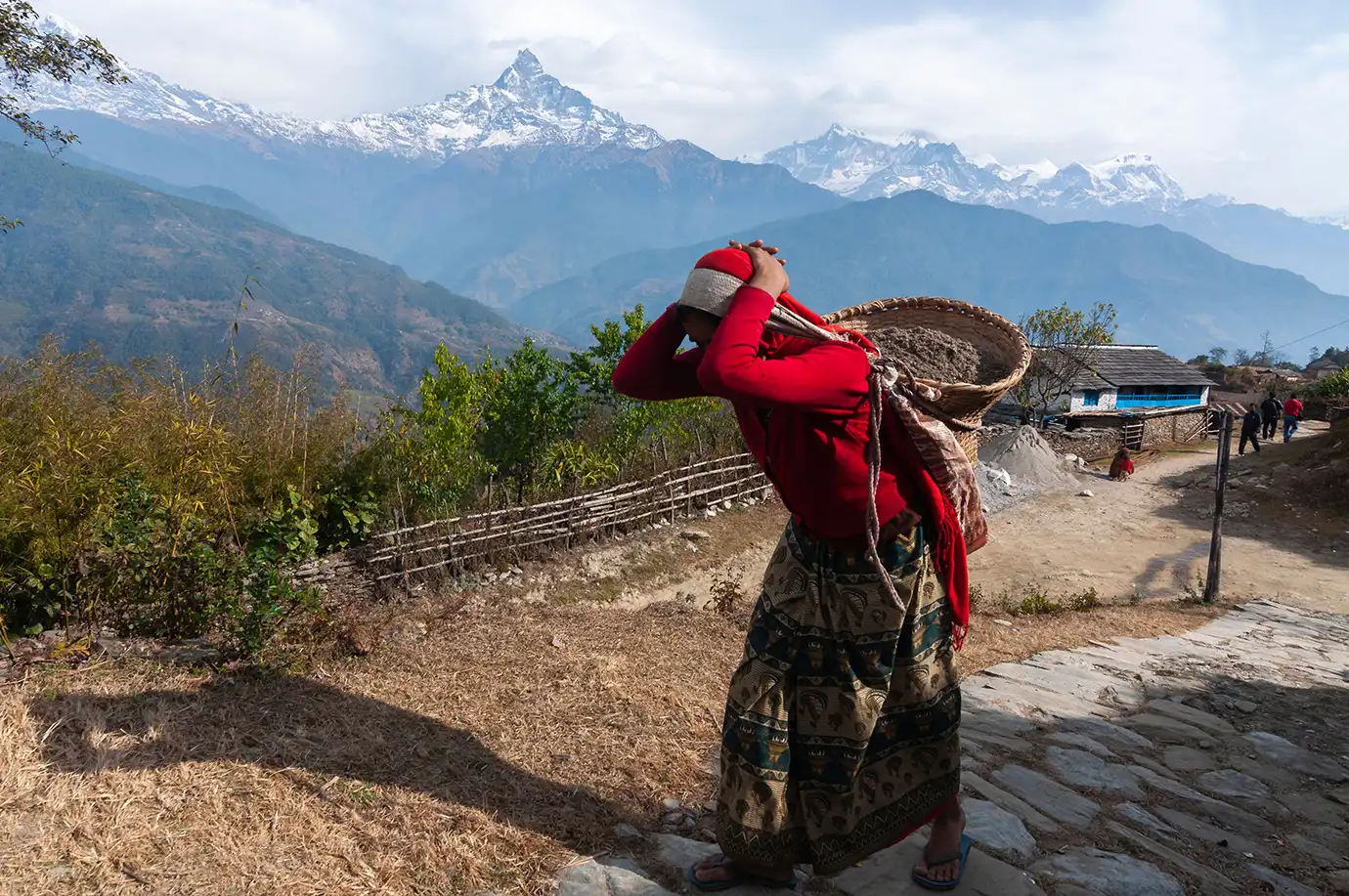
Naudanda is a ridge-top bazaar on the Sarangkot ridgeline, reachable by a half-day walk west from Sarangkot itself with constant mountain views. Panchase is the bigger commitment, a forested 2,500-meter peak southwest of the lake, usually hiked over 2 to 3 days through Bhumdi village. Panchase offers rhododendron forests in spring and a summit panorama from Dhaulagiri to Manaslu, with a fraction of the foot traffic of the main trails.
The Shanti Stupa Hike
The walking route to the World Peace Pagoda starts with a rowboat across Phewa Lake, then climbs a forest staircase trail for 45 minutes to an hour. The path is steep but short, shaded most of the way, and delivers you to the pagoda terrace with the view as your reward. Descend by the trail toward Davis Falls to link the pagoda, the falls, and Gupteshwor Cave into one excellent half-day on foot.
Cycling Around Pokhara
Rental shops in Lakeside hire mountain bikes by the day. The flat lakeshore road toward Pame makes an easy 2-hour ride, while the climbs toward Sarangkot or Begnas suit fit riders only. Ride early, because traffic and heat both build from mid-morning.
Pokhara Itineraries by Duration
Match your plan to your days, not to a generic list. A 1-day visitor, a 3-day visitor, and a trekker with a rest day need different cities.
One Day in Pokhara
Win one day, run the classic loop. Sarangkot for sunrise by taxi or cable car, breakfast in Lakeside, then an hour boating on Phewa Lake. After lunch, taxi to the southern cluster for Davis Falls, Gupteshwor Cave, and the Tibetan settlement at Tashi Ling. Finish with dinner on the Lakeside strip. The day is full but never rushed.
Two Days in Pokhara
Day one follows the one-day loop above. Day two adds one adventure sport in the morning, with paragliding as the default choice. The boat-and-hike route up to the World Peace Pagoda for sunset—two days cover every headline attraction without repeating anything.
Three Days in Pokhara
Day three gets you out of the city. Choose between a Begnas Lake half-day with a fish lunch, or the Australian Camp day hike for a real trail under your boots. Photographers should pick Begnas, walkers should pick the ridge.
Four Days in Pokhara
With four days, convert the Australian Camp hike into an overnight with a Dhampus descent, or add Bandipur as a day trip. Slot in the International Mountain Museum, a massage or yoga session in Lakeside, and a slow café morning. Four days is the point where Pokhara stops being a checklist and starts being a holiday.
The Pre-Trek and Post-Trek Day
Pokhara is the staging city for the Annapurna region, and a rest day here has a job to do. Plan it deliberately.
Before a trek, keep your legs fresh and your admin tight. Confirm your permits, weigh your duffel, and buy forgotten items in Lakeside, where gear shops stock everything from trekking poles to water purification tablets. Add one easy activity, ideally the boat across Phewa or the Mountain Museum, and sleep early. Skip Sarangkot sunrise; you see better views on the trail within two days, and a 4:30 am start is poor preparation. for the trek
After a trek, flip the logic. Book a lakeview room, eat the meal you fantasized about on the trail, and get a massage for your calves and shoulders. Post-trek is also the perfect time for paragliding or an ultralight flight, because you now know those peaks by name, and the view means more. Our guides meet Annapurna trekkers in Pokhara the day before departure, and the calm groups are always the ones who treat this day as part of the trek itself.
Day Trips from Pokhara
Four destinations reward a full day from the city, each with a different character.
| Day Trip | Travel Time One Way | Main Draw |
|---|---|---|
| Begnas and Rupa Lakes | 45 minutes | Quiet lakes, fresh fish, birdlife |
| Bandipur | 2.5 to 3 hours | Preserved Newar hill town, car-free bazaar |
| Ghandruk | 2 to 3 hours drive plus short walks | Large Gurung village, Annapurna South up close |
| Kushma | About 2 hours | Suspension bridges and Nepal’s highest bungee gorge |
Bandipur suits culture-focused travelers, with its slate-paved 18th-century bazaar and traditional Newar townhouses now run as guesthouses. Ghandruk suits mountain-focused travelers who want village life and huge close-range peaks without committing to a trek. Kushma, above the Kali Gandaki gorge, has become Nepal’s bridge-and-bungee capital and suits adrenaline travelers who have already ticked Pokhara’s own activities. Muktinath, the high pilgrimage temple at 3,800 meters, is technically reachable by road but makes a punishing single day, so treat it as an overnight or fly via Jomsom instead.
Best Things to Do by Season
Pokhara’s activities depend more on clear skies than on warm weather, so the season shapes your plan. October, November, March, and April deliver the most reliable mountain views and flying conditions, matching the best trekking windows across Nepal.
Autumn brings the cleanest post-monsoon air and the busiest viewpoints, so book paragliding and hotels ahead. Spring brings rhododendron blooms to the Panchase and Australian Camp trails, with slightly hazier afternoons. Winter stays mild by mountain standards at this altitude, with cold mornings, clear skies, and thin crowds; only the Sarangkot sunrise requires a real down jacket. Monsoon, from June to September, grounds most flights and hides the peaks, but it is the one season when Davis Falls runs at full thunder, and the paddy-green valley has its own appeal for photographers who accept the rain.
Travel Tips
A few practical points smooth every Pokhara visit.
Getting around is simple. Lakeside itself is entirely walkable, taxis handle everything else, and no ride within the city should take more than 30 minutes. Agree on taxi fares before you get in, because meters are rarely used. The airport sits only 10 minutes from most Lakeside hotels.
For adventure sports, choose licensed operators and reward caution. A company that cancels your flight for marginal weather is protecting you, not inconveniencing you. Ask how long the operator has flown in Pokhara, confirm your pilot’s certification, and never pressure anyone to fly in gray conditions.
Respect local etiquette at religious sites. Remove shoes at temples, walk clockwise around Buddhist monuments, ask before photographing people, and cover shoulders and knees at shrines. Small courtesies open doors here, and a few words of Nepali, even just namaste and dhanyabad, change how people receive you.
Carry cash for small purchases, boat hires, and entrance fees, as cards are mainly accepted at larger restaurants and hotels. ATMs are common along Lakeside.
Frequently Asked Questions
How many days do you need in Pokhara?
Two full days cover Pokhara’s headline attractions, including Sarangkot sunrise, Phewa Lake, one adventure sport, the Davis Falls and Gupteshwor Cave pair, and the World Peace Pagoda. Three to four days let you add a day trip, a foothill hike, or genuine downtime. Trekkers should add at least one rest day on either side of their route.
Is paragliding in Pokhara safe?
Paragliding in Pokhara has a strong safety record when you fly with licensed operators and certified tandem pilots. The main risk factor is weather, so reputable companies cancel or delay flights in unstable conditions. Book with an established operator, follow your pilot’s instructions exactly, and treat a weather cancellation as good judgment rather than bad luck.
Should I take the cable car or go to Sarangkot by road?
Take a pre-dawn taxi to catch the sunrise, since the cable car queue builds up fastest between 5:30 and 6 am. Take the cable car for a relaxed daytime or sunset visit, when its 9- to 10-minute ride beats the 45-minute winding drive. Hike up the afternoon before and stay overnight if you want the most rewarding version of Sarangkot.
Can you see Everest from Pokhara?
No. Everest sits far to the east and is not visible from Pokhara or Sarangkot. What you see instead is the Annapurna massif, along with Dhaulagiri, Machhapuchhre, Lamjung Himal, and, on clear days, Manaslu. For Everest views, take a mountain flight from Kathmandu or trek in the Khumbu region.
What should I do in Pokhara before an Annapurna trek?
Keep your pre-trek day easy and practical. Confirm permits, finish gear shopping in Lakeside, and pack your trek duffel properly. Add one gentle activity, such as boating on Phewa Lake or the International Mountain Museum, eat a solid dinner, and sleep early. Save the Sarangkot sunrise and the adventure sports for your return, when the views will mean more.
Is Pokhara worth visiting if I am not trekking?
Yes. Pokhara stands on its own as a lake, adventure, and mountain-view destination, and many visitors never set foot on a trail. You can watch 8,000-meter peaks at sunrise, paraglide, boat, explore caves and temples, and eat well beside the water, all without a single trekking day. Non-trekkers should still plan around clear-sky seasons for the mountain views.
Plan Your Pokhara Visit
Pokhara rewards planning is built around its triangle of lake, adventure, and mountain views, and around the season you arrive. If you want the city woven into an Annapurna trek, or shaped into its own private itinerary, our Nepal-based team plans both every week of the year. Tell us your dates and your pace, and we will build the rest around them.