


Oman has many wadis, or river valleys, hidden among the mountains, and Wadi Bani Khalid is the most beautiful among them. A clear stream flows through the rock, forming natural pools where you can swim, and palm trees line the water, with small patches of greenery that give the valley a peaceful, almost magical feel. It feels like a secret desert oasis. You can relax, take a dip in the cool water, and watch local village life unfold nearby. This spot offers a genuine sense of Oman’s natural beauty and serenity.
Geography and Location of Wadi Bani Khalid
Wadi Bani Khalid lies approximately 200 km southeast of Muscat, a roughly three-hour drive through the Eastern Hajar Mountains. It sits close to the edge of the Wahiba Sands, so travelers often combine a stop here with a desert trip. The wadi gets its name from the Bani Khalid tribe, and you’ll see villages like Mibam and Harat Bidah hidden in the valley. Water flows here all year, thanks to springs from the cliffs above, so even during dry months, the pools stay full. Locals use it as a water source, and visitors can enjoy it any time.
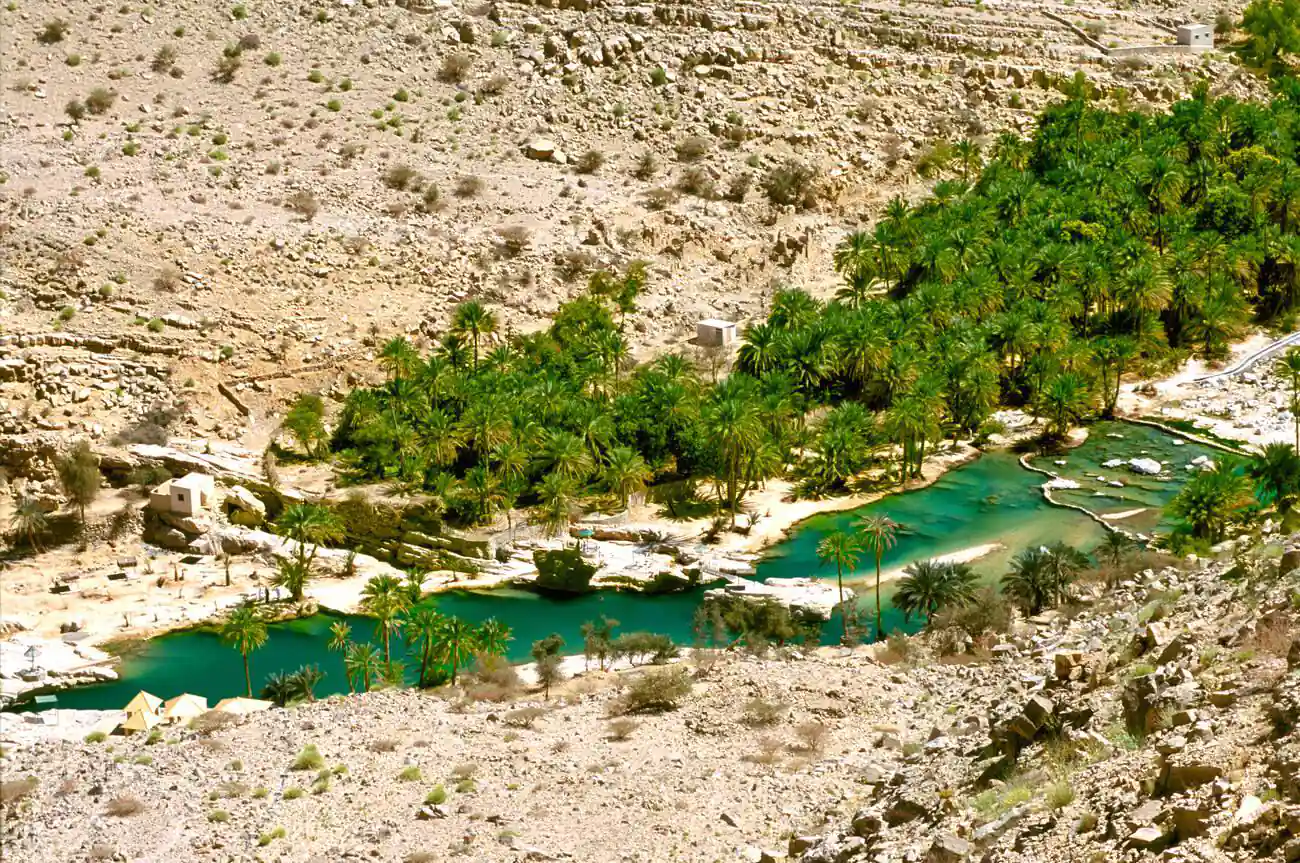
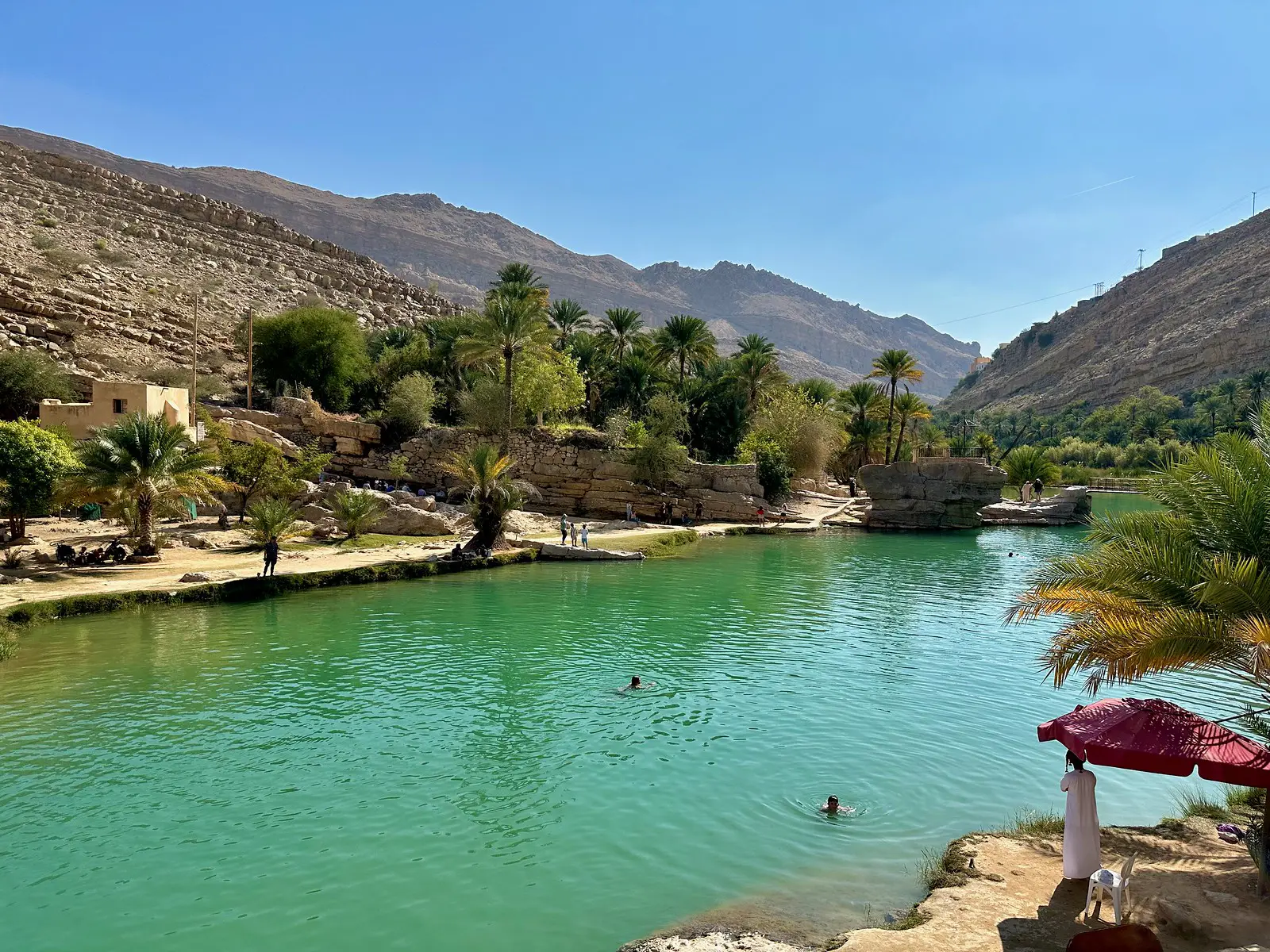
High canyon walls and slow, winding streams surround the wadi’s pools. You can park near the lower pools and walk just five to ten minutes along a short path and some rocks to reach the first large pool. Palm trees and reeds grow at one end of the pool, while the canyons at the other end reflect the canyon walls beautifully in the emerald green pool. It feels calm and fresh, a cool oasis in the mountains. People come here to swim, dip their feet, or sit and watch the water. It’s easy to see why it’s one of Oman’s favorite natural spots.
Swimming and Recreation at Wadi Bani Khalid
Wadi Bani Khalid is essentially a natural waterpark, with many visitors coming prepared to swim. The clear water here lets you see fish darting here and there. Some areas stay shallow, perfect for wading or for kids, while other spots get pretty deep. Many visitors enjoy jumping from low cliffs or rocks; you’ll often see local teens clambering up and leaping into the pools.
If you want to join, make sure you check the depth and any obstacles first. The largest pool flows gently into a second one through a narrow channel, and you can either swim or walk between them, depending on the water level. Floating in the calm water and gazing up at the towering canyon walls creates a magical experience.
A fun little surprise here is the Garra rufa fish, sometimes called “doctor fish.” If you sit near the edges and remain still, they will gently nibble on your feet, providing a natural pedicure. It can feel ticklish at first, and most people find it amusing.
Even if you don’t want to swim, the area is great for picnics or just relaxing. Shaded spots and small shelters are near the first pool, where local families often take out mats and enjoy snacks by the water, especially on weekends. Visiting on a weekday can give you more quiet moments, with large stretches of the pools all to yourself. At the same time, weekends have a livelier, friendlier atmosphere with families enjoying the wadi.



Muqal Cave: The Hidden Adventure of Wadi Bani Khalid
If you’re up for a bit of adventure, Wadi Bani Khalid has a hidden gem – Muqal Cave. You’ll find it upstream from the main pools; to reach it, you’ll need to scramble and wade. From the second pool, follow a rough trail on the left side of the wadi, climbing over boulders. After a few minutes, you’ll enter narrower stretches of the wadi where you may need to wade or swim through smaller pools. About 20–30 minutes from the main area, you’ll see the cave entrance – a dark opening in the cliff with cool water flowing from it.
Inside, the cave feels completely different. It’s pitch dark without a flashlight, and the underground stream can reach chest height in places. Stalactites hang from the ceiling, and the walls are very smooth, as the waters here have polished them over eons. Exploring deeper is a mini-spelunking experience, best done with a guide or a companion for safety, as the rocks can get slippery and the path isn’t obvious. Many visitors decide to stay near the entrance, where they can enjoy the shade, the cool water, and the gentle sound of dripping water. Always follow local advice, as sudden rain can cause flash floods; avoid venturing far if the weather looks uncertain.
Local Life and Culture
Permanent water has allowed villages around Wadi Bani Khalid to thrive for generations. On the drive in, you’ll pass lush date plantations and see falaj channels twisting across the ground, carrying water to fields. The village of Bidiyah (not the one in the desert) is one of the larger settlements in the area. You’ll likely notice mosque domes peeking above clusters of palm trees.
You will see local people growing fruits such as dates, bananas, and mangos, and raising some livestock. Near the main pool, residents run simple cafés offering basic meals, including rice with curry, sandwiches, cold drinks, and ice cream. It’s nothing fancy, but a cold soda or fresh coconut after a swim feels perfect, and your visit helps support the local community.
The people here belong to the Bani Khalid tribe, one of Oman’s oldest and most historic tribes. They are welcoming and used to visitors. You may spot boys jumping into the water to show off or groups of girls having a picnic on the banks, dressed modestly and usually not swimming in public. Respecting local customs matters: wearing a t-shirt and shorts over swimwear, especially for women, is recommended. Bikinis without cover-ups can be offensive, especially in a public area, not a resort. There are specific signs reminding visitors to dress modestly and take care not to litter. As more tourists arrive, properly disposing of your trash helps keep the wadi as beautiful as nature intended.
Best Time to Visit Wadi Bani Khalid
You can visit Wadi Bani Khalid at any time of year, but the best experience is during the cooler months, from October to April, when the air feels comfortable. Even in the summer, the pools are cooler than the desert, but the midday heat can be intense. You will find shade only outside the trees or in the cave, and the rocks quickly become hot.
Practical Travel Tips for Wadi Bani Khalid
If you travel in summer, plan to go in the morning or late afternoon and bring sun protection. Wear sturdy shoes that can get wet; water shoes or sports sandals are ideal, as the rocks can be rough or slippery. Flip-flops can easily slip off or get stuck in mud. Weekdays tend to be quieter, while Fridays and Saturdays bring more local visitors. During Ramadan, the wadi may be very calm, as locals refrain from eating, drinking, or swimming during daylight hours. Dressing modestly shows respect in all seasons. Lifeguards are sometimes present at the main pool on busy days, but you must take responsibility for your own safety – the pools don’t have roped-off areas or formal supervision.
Photography is welcome, and the green pools, date palms, and canyon walls make stunning shots. If you want to photograph people, ask politely or be discreet. You can often capture beautiful images just by focusing on nature. Sunrise can be especially magical, with sunlight filtering into the valley. However, the early morning water may feel chilly until the sun warms it by mid-morning.
Wadi Bani Khalid vs Other Wadis in Oman
Compared to other wadis, such as Wadi Shab and Wadi Tiwi, Wadi Ban Khalid is more accessible and offers an atmospheric setting where you can relax with your family or on your own. You do not need a long hike or a boat to enjoy its pool. The pools are large, open, and inviting, making them ideal for swimming or simply sitting by the water, and they offer basic facilities, including bathrooms and a small café. Wadi Shab offers a more active experience.
You need to hike for about 45 minutes, and the main attraction is a hidden cave waterfall that you reach by swimming through a narrow gorge. Wadi Tiwi takes you through narrow canyons, terraced farms, and turquoise pools along a winding path. If you have time, visiting more than one wadi gives a fuller picture of Oman’s stunning natural diversity. However, if you can only choose one for a laid-back swim and picnic, Wadi Bani Khalid is the easiest and most rewarding option.
Why Wadi Bani Khalid Is a Must-Visit in Oman
Wadi Bani Khalid, one of Eastern Oman’s hidden gems, truly lives up to its description. It’s a true oasis, not just a phrase. As you swim in the clear, cool water, with dragonflies flitting around and the fronds of date palms swaying in the breeze, it’s easy to forget that just a few miles away, there is the magnificent desert. That sharp contrast between the lush wadi and the golden sands of Wahiba makes Oman feel surprisingly varied.
The wadi isn’t just about scenery. You’ll often see local families enjoying the pools, tending to their gardens, or going about their daily lives, which gives a glimpse of how important this place is to the community. It is an easy adventure, as you don’t need any climbing gear or special preparation. So, sit back, jump into the fun, and enjoy yourself thoroughly. Please spend some time swimming or exploring the pools to make it one of the trip’s highlights. Wadi Bani Khalid shows Oman at its best: welcoming, surprisingly lush, and wonderfully calming.