

Based on 746 reviews

India and Nepal Tour
Explore the Heritage, Culture, and Natural Beauty of India and Nepal

Duration
13 Days

Meals
- 12 Breakfast
- 2 Lunch
- 2 Dinner

Accommodation
- 4 star/5 star hotels and resorts

Activities
- Safari
- Sightseeing
- Mountain Flight
SAVE
US$ 2900Price Starts From
US$ 14500
Overview of India and Nepal Tour
This 13-day India and Nepal Tour combines India’s Golden Triangle with Nepal’s scenic beauty. Visit the iconic Taj Mahal and Amber Fort to appreciate the Mughal and Rajput architecture in India. You will savor traditional cuisines and gain a sense of India’s rich heritage.
In Nepal, you will visit UNESCO World Heritage Sites, relax in the lakeside city, and experience wildlife. You can fly over the giant Himalayan peaks and enjoy Nepal’s natural beauty.
The tour includes comfortable accommodation. Private transportation and local expert guides enhance the tour’s overall experience. Anyone from solo travelers to couples to families can embark on this tour without stress. The tour in India and Nepal provides a beautiful South Asian experience.
From marveling at the exquisite marble of the Taj Mahal to spotting rhinos in the Chitwan National Park and taking in stunning mountain views, this tour offers many unforgettable experiences. You can enjoy culture, nature, and adventure altogether in this tour.
Trip Highlights of the 13-Day India and Nepal Tour Package
- Visit the Golden Triangle of India. Explore Delhi, Agra, and Jaipur, featuring highlights such as the Taj Mahal, Mughal forts, and royal palaces.
- Scenic mountain flight over Mount Everest and the surrounding peaks.
- Experience a wildlife adventure in Chitwan with a jeep safari to spot one-horned rhinos, deer, exotic birds, and more.
- Visit sacred Hindu temples, Buddhist stupas, bustling markets, and enjoy a traditional Tharu dance performance.
- Enjoy the sunrise view from Sarangkot and the sunset over the Rapti River.
- Luxury accommodation, private transportation, and domestic flights
Detail Itinerary of India and Nepal Tour
Day 1: Arrival in Delhi, India
Welcome to India! Your guide will meet you at Delhi International Airport and welcome you with a marigold garland. They will take you to your hotel in a private air-conditioned vehicle. After checking into the hotel, spend the day to your liking. If you arrive early, you can explore the streets nearby and enjoy the first glimpse of India. You will stay overnight in Delhi.
Accommodation: ITC Welcome Hotel Sheraton or similar
Meal: Not Included
Day 2: Old and New Delhi Sightseeing
The tour begins in Old Delhi at Chandni Chowk. Established by Emperor Shah Jahan, Chandni Chowk is a market with immense historical significance. Visit the market filled with many colorful shops, spice stalls, and sweet vendors, giving an authentic glimpse into the life of Old Delhi. You can stop for photos at the Red Fort, a 17th-century Mughal fortress that was once the seat of Power. Then, continue to Raj Ghat, the black marble platform cremation site of Mahatma Gandhi, with an eternal flame.
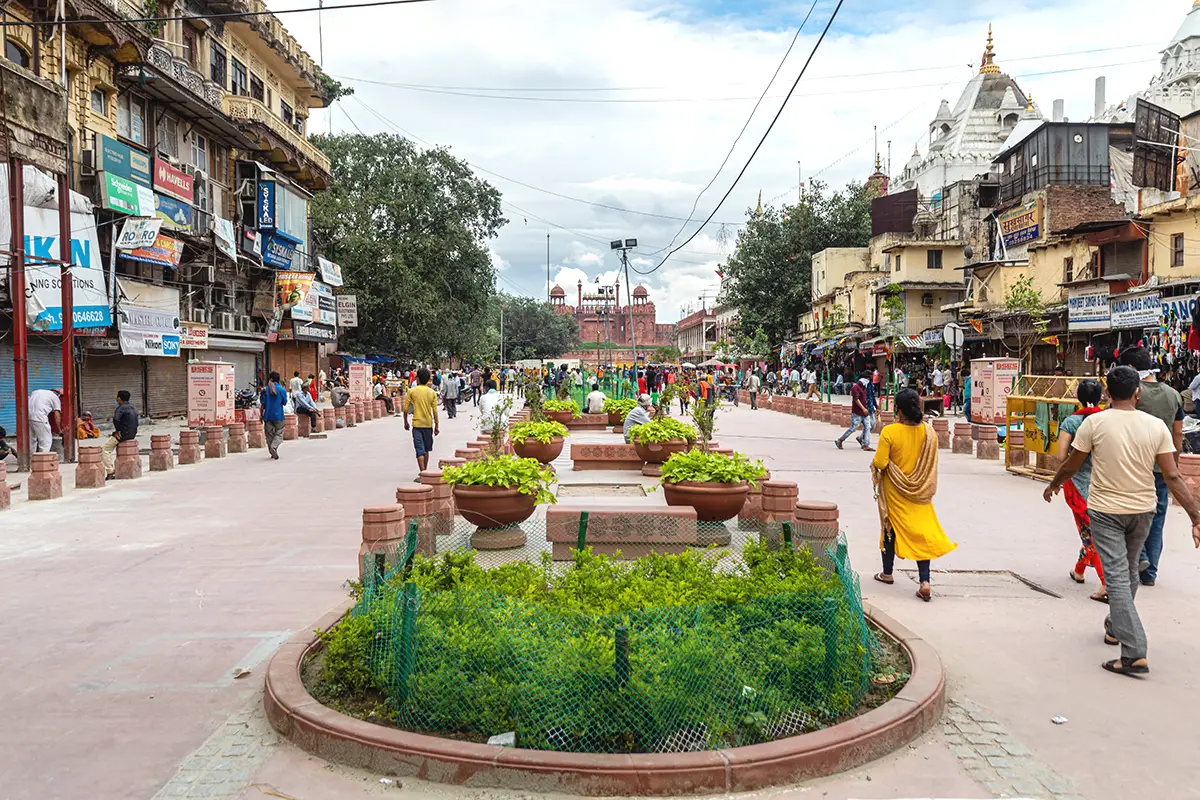
Then, you will visit New Delhi. New Delhi is famous for its colonial architecture and broad avenues. You can see the Birla Mandir, dedicated to Vishnu and Lakshmi. Birla Mandir, also known as Lakshmi Narayan Temple, is renowned for its intricate carvings and serene gardens. You will drive along Rajpath to see the 42m high stone arch, India Gate. India built the Gate in honor of the Indian soldiers lost in World War I. Rashtrapati Bhawan/President’s Palace and Parliament House are iconic government buildings.
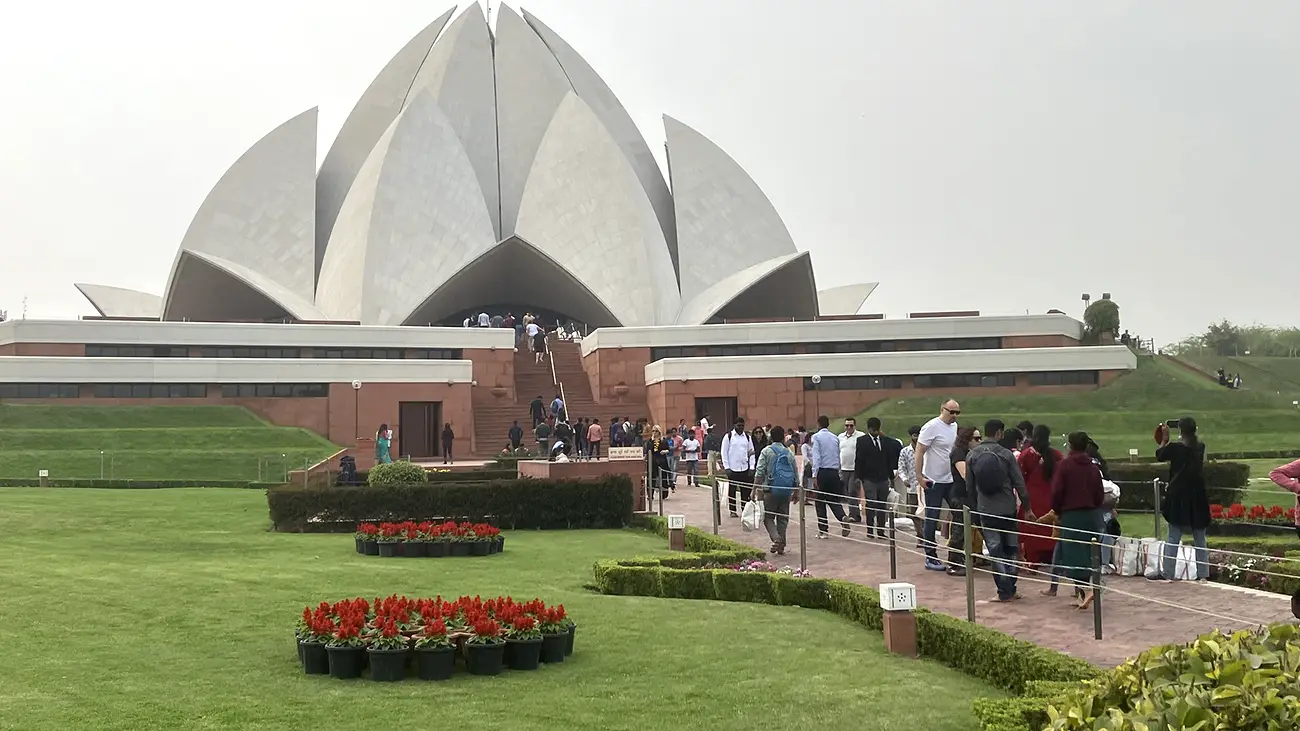
Then, visit the historic stepwell hidden among Connaught Place’s modern buildings, Agrasen Ki Baoli. Continue to the Bahá’í House of Worship, Lotus Temple. It has a white marble interior and is open to all faiths. It is closed on Mondays, so make sure you avoid the day. Your final stop of the day is Qutub Minar, a 12th-century 73m minaret listed as a UNESCO World Heritage Site. It features the ruins of India’s first mosque and the Iron Pillar of Ashoka, which surrounds it.
After a full day of sightseeing, return to your hotel and spend the night in Delhi.
Accommodation: ITC Welcome Hotel Sheraton or similar
Meal: Breakfast
Day 3: Delhi to Agra (Approximately 225 km/4 hours)
Have an early breakfast and leave the city to go to Agra. Hop on a private car and enjoy a glimpse of India’s rural landscape and small towns. A 4-hour drive will take you to the magnificent city of Agra.
After resting at your hotel, begin your tour with the Agra Fort. Emperor Akbar built this massive red sandstone fortress in the 16th century. Enter the fort through the Amar Singh Gate and explore royal pavilions, audience halls, and mosques inside the fort. Diwan-i-Am (Hall of Public Audience), Diwan-i-Khas (Hall of Private Audience), the elegant Khas Mahal, and Musamman Burj, where Shah Jahan’s son imprisoned him, are the key highlights in this 2.5km long wall. You can also see the Taj Mahal from certain parts of the gate.
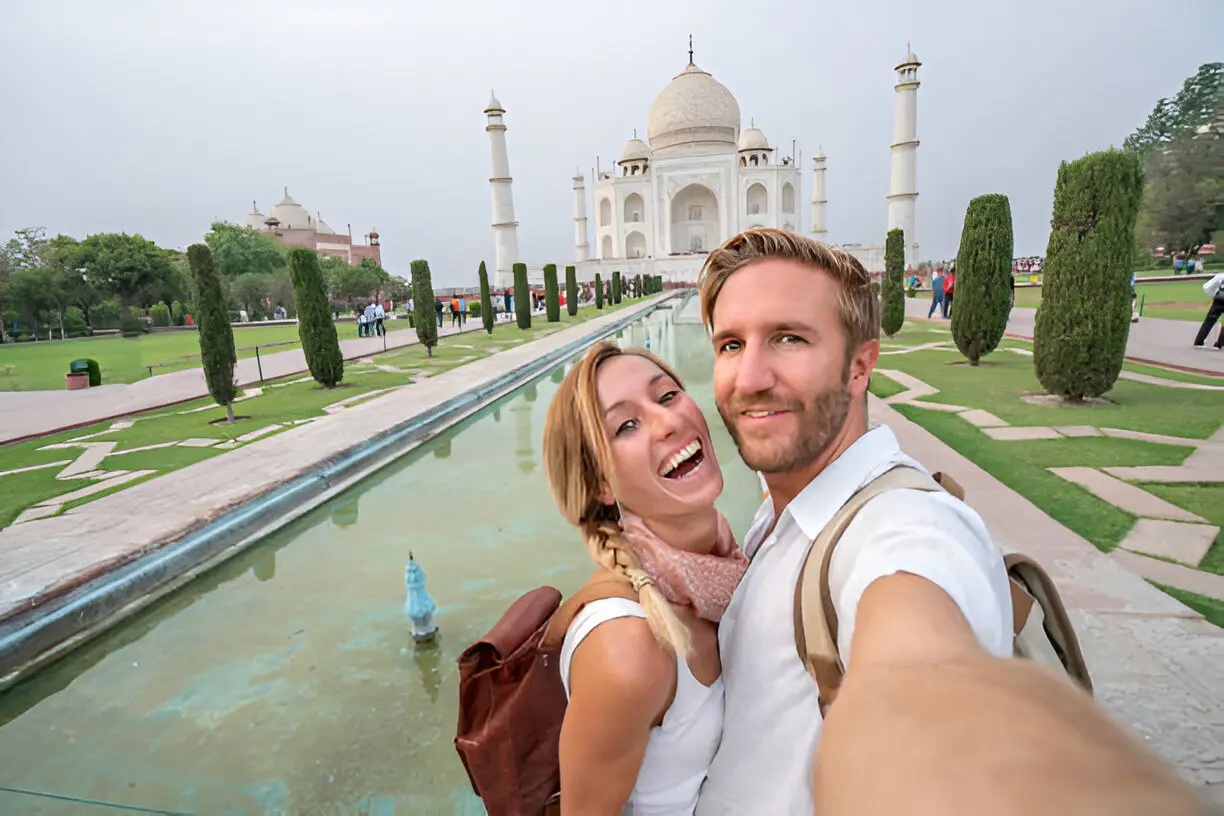
Visit the Taj Mahal in the evening to make your trip truly memorable. The white marble soaks up the afternoon sun and changes colors as the sunset approaches, making the view even more beautiful. Shah Jahan built this white marble mausoleum in 1653 to commemorate his beloved wife, Empress Mumtaz Mahal. Walk through the beautiful Mughal gardens and admire the perfect symmetry of the Mahal in the long water channel.
Take a close look at the pietra dura stone inlay work and experience the splendor of the Taj Mahal. You can stop by the marble inlay workshop to watch artisans practicing the centuries-old craft that is a hallmark of the Taj Mahal. You can also stop at the handicraft center, which features Agra’s famous woven goods and rugs. Return to your hotel and spend the night in Agra.
Accommodation: ITC Mughal or Trident Agra or similar
Meal: Breakfast
Day 4: Agra to Jaipur Drive and Abhaneri (Approximately 150km/5hours)
Learn more about the Taj Mahal today, then depart from Agra. You will drive to Jaipur, also known as the Pink City, today. You will stop at Fatehpur Sikri and Abhaneri en route.
Fatehpur Sikri was once the imperial capital of Emperor Akbar and was built entirely of red sandstone. People abandoned it after 14 years due to a water shortage. You can visit its courtyards and palaces with your guide. The city highlights are Jama Masjid, Panch Mahal, and the Tomb of Salim Chisti.
The Jama Masjid is one of India’s largest mosques. The Panch Mahal is five-storey tall, and the Tomb of Salim Chisti is made of white marble, honoring the Sufi saint who blessed Akbar. Visit the Buland Darwaja or the Gate of Victory at the entrance. Fatehpur Sikri takes you back to the Mughal era during the late 1500s.
Then you will drive to Abhaneri, a small village known for its stepwell, Chand Baori. The driver will assist with entry, but the tour doesn’t involve a guide. This stepwell is India’s deepest at 20m underground, with 3,500 perfectly symmetrical narrow steps across 13 tiers. You can descend a little to notice the temperature drop. The Harshat Mata Temple, the temple of the goddess of joy and happiness, stands on the opposite side of the stepwell.
Resume your drive to Jaipur and arrive by late afternoon. Jaipur is the capital of Rajasthan and the first planned city of India. You are free to do anything you like in the evening in Jaipur. You can visit famous markets like Bapu and Johari Bazaars to shop for textiles and jewelry. Stay overnight in Jaipur.
Accommodation: ITC Rajputana or Radisson Jaipur or similar
Meal: Breakfast
Day 5: Jaipur Sightseeing, Then Evening Drive to Delhi
Today is your Jaipur city tour. The tour starts with a drive to the nearby hilltop of Amber Fort, where you can look over the beautiful Maota Lake. You will change vehicles at the base of the hill and board a jeep to cross the ramparts and reach the main entrance.
You will transmigrate into the era of the Maharajas within this fort while exploring its grand courtyards, audience halls, and royal palaces. Sheesh Mahal, the Palace of Mirrors, with thousands of tiny mirrors decorating it, and Ganesh Pol are the two main highlights inside the fort. You can enjoy the surrounding desert fields from the fort.

You will stop at Panna Meena ka Kund on the way back. This 16th-century stepwell is famous for its geometric staircases. Visit the local handicraft center where artisans create Jaipur’s historical jewelry, carpets, and blue pottery. You can shop for souvenirs and learn the traditional craftsmanship here.
Then, continue to Jal Mahal, also known as the Water Palace, to admire its architecture situated in the middle of Man Sagar Lake. You will visit the City Palace, a luxurious royal residence that blends Mughal and Rajasthani architectural styles.
Explore the palace’s courtyards, museums, and exhibits. The key highlights are Mubarak Mahal, Diwan-i-am, Diwan-i-Khas, and Peacock Gate. The City Palace Museum exhibits the two largest silver urns, used by the British to transport Ganges water to England.
Jantar Mantar is an 18th-century observatory by Maharaja Jai Singh II. It is also the largest stone sundial in the world. People in ancient times used these instruments for astronomical calculations and navigation.
After the City Palace, you’ll visit the Palace of Winds, Hawa Mahal. This five-story, pink sandstone, iconic landmark features 953 lattice windows, which were used by royal women to watch the street festivals. You can visit it and enjoy the bustling city view.
After Hawa Mahal, you can visit the local markets and shop for gemstones, textiles, and handicrafts. The guide will recommend reputable shops and accompany you to the bazaar.
Take a vehicle to Delhi in the evening to return to the city. The drive is about 5-6hours long with a few stops for restrooms or refreshments. You’ll arrive in Delhi late at night. Check in at your hotel in Delhi and rest well.
Accommodation: ITC Welcome Hotel Sheraton or similar
Day 6: Fly from Delhi to Kathmandu, Nepal
Today, you will board a flight to Kathmandu, Nepal. Arrive at least three hours before departing for airport formalities.
You will arrive at Tribhuwan International Airport in Kathmandu after about 1.5 hours of flight. Finish your visa process and meet your Nepal representative at the airport. Your guide welcomes you to the country and drives you to your hotel.
You will get your first city view when you get to your hotel. Check into your hotel and rest well, or explore the city. The day is yours to enjoy.
You can take a short walk in Thamel or visit cafes and restaurants. Buy a local SIM card or exchange currency today.
Return to your hotel and stay overnight in Kathmandu.
Accommodation: Kathmandu Guest House or The Everest Hotel or similar
Meal: Breakfast
Day 7: Everest Scenic Flight & Kathmandu Valley Sightseeing
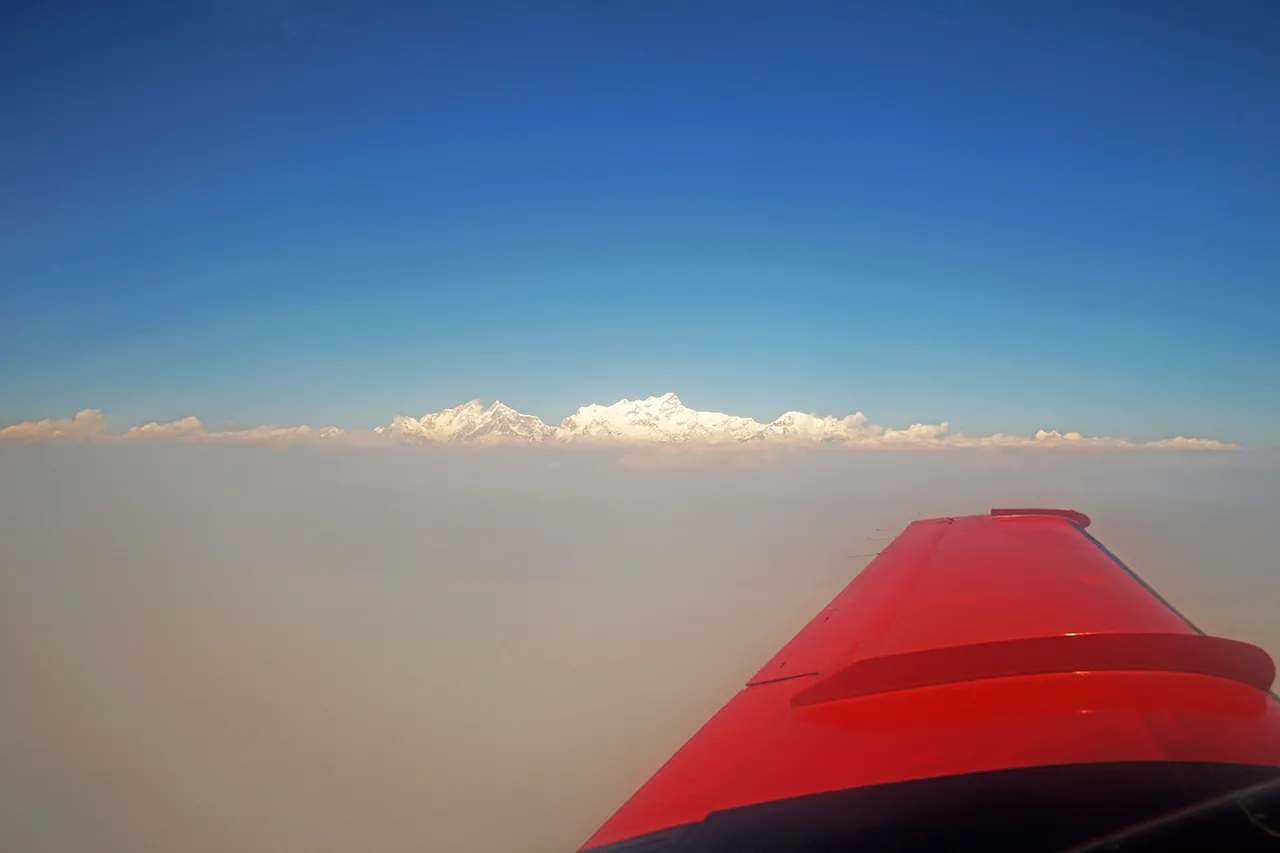
You can take an optional flight to the Himalayas. This optional flight departs in the early morning and flies over the Himalayan range, offering views of the highest peaks, including Mount Everest. Lhotse, Makalu, and more. Each passenger gets a window seat for exceptional aerial views. The airline crews will highlight the major peaks so you don’t miss anything. After returning, have your breakfast and begin your Kathmandu Valley Sightseeing.
You will begin with a drive to Bhaktapur, a UNESCO World Heritage Site. This city is also known as a living museum. You can visit the Durbar Square and explore the 55-Window Palace, Nyatapola Temple, and the Peacock window. The city is known for its traditional Newari craftsmanship and the king curd yogurt, juju dhau.
Then you will visit the sacred Hindu Temple Pashupatinath. This temple, located on the banks of the Bagmati River, is not open to people of different faiths; however, you can observe rituals, Sadhus, and the cremation process from the riverside terraces. Your guide will share their insights on the significance of this holy temple and river.
Then you will continue to the Bouddhanath Stupa, the largest Buddhist stupa in the world. This pilgrimage is a key site for Tibetan Buddhists. You can explore the stupa and the nearby markets, and experience the spiritual atmosphere of the site. Walk clockwise, spin the prayer wheels, and enjoy the air filled with the scent of incense.

You will then visit the Monkey Temple, also known as the Swayambhunath Stupa. Swayambhunath sits on a hilltop offering panoramic views of the entire city of Kathmandu. You can drive to the entrance or climb 365 steps to reach the stupa’s entrance. You can explore the main stupa and the surrounding shrines while the guide explains the site’s importance.
You will enjoy the perfect blend of Hinduism and Buddhism in the historical capital of Nepal, Kathmandu. Return to your hotel in the evening and spend the night in Kathmandu.
Accommodation: Kathmandu Guest House or The Everest Hotel or similar
Meal: Breakfast
Day 8: Fly to Pokhara + Lakeside Leisure
Today, you leave Kathmandu and fly to the beautiful city of Pokhara. This short flight of around 25 minutes offers excellent mountain views and takes you to the adventure hub of Nepal. Try sitting on the right side of the place for the best views of the Annapurna and Manaslu ranges.
Your guide will wait at the airport and drive you to the hotel. Phewa Lake is the main highlight of the city. Pokhara sits at around 827m and is more relaxed than Kathmandu. Check into your hotel and enjoy the day to your liking. You can stroll around the lakeside area or even go boating in Phewa Lake. The lakeside has many cafes, restaurants, and shops., You can stop for dinner in one of these restaurants and see reflections of the Annapurna range on the water. Rent a small wooden boat and visit the Tal Barahi Temple a small lake island. This two-storey Durga temple sits on a small island in the middle of the lake.
Enjoy the evening in this serene city. Rest overnight in Pokhara.
Accommodation: Hotel Waterfront or similar
Meal: Breakfast
Day 9: Pokhara Sunrise and City Tour
Your day begins with an early morning drive to the Sarangkot Viewpoint. You will reach the famous viewpoint after a 30-minute drive, followed by a short walk. Enjoy the sunrise over the Annapurna range from here. The golden and pink hues hit the snowy white mountains, creating a memorable and stunning sunrise view. You will also see Annapurna I, Machhapuchhre, and Annapurna South from here. Return to your hotel for breakfast after absorbing this incredible view.

After breakfast, explore the beautiful city. If you missed yesterday, you can go boating on Phewa Lake today. Enjoy the calm water and visit the Tal Barahi Temple if you wish. You can see Machhapuchhre’s reflection on the lake and the paragliders above Sarangkot.
Then you will continue to Devi’s Fall, where the Pardi Khola stream flows strongly into an underground gorge. Locals believe the water from these falls goes directly into the afterworld. Then, you will go to the Gupteshwor Mahadev Cave, the longest cave in Nepal. This cave houses a sacred Shiva shrine within the cave, offering a glimpse of the Devi’s falls. The limestone walls drip, creating a slippery path. Make sure to wear Saturday shoes for protection.
You will stop at Tibetan settlements like Tashi Ling or Chhorepatan Tibetan Village. Visit the monastery, watch artisans making hand-woven carpets, and visit the handicraft shops for Tibetan jewelry, prayer flags, and unique souvenirs. You will get an insight into Tibetan culture and resilience here.
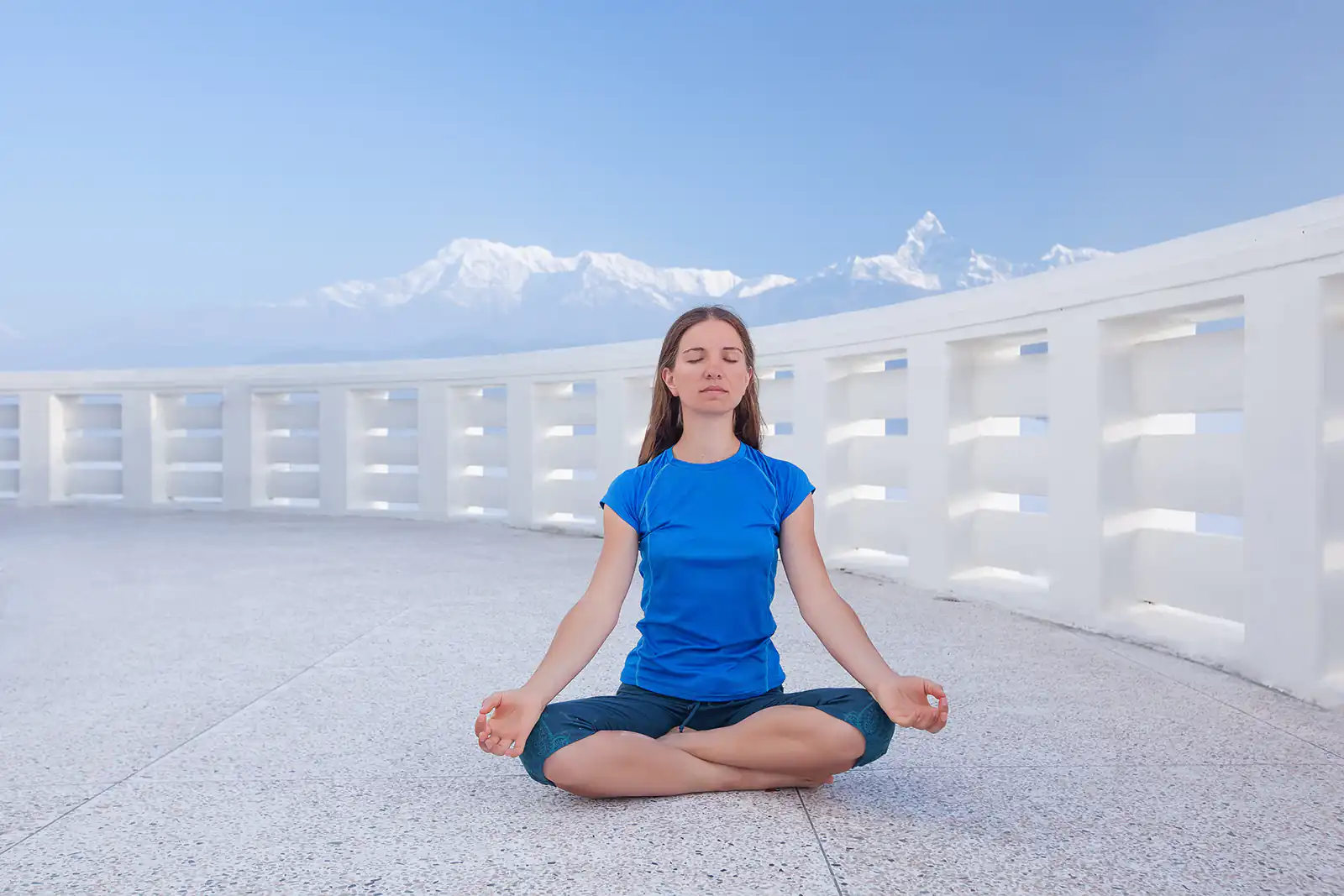
Take a break for lunch, then continue to the World Peace Pagoda or the Shanti Stupa. This white stupa sits on a hill south of Phewa Lake. You can take a short 45-minute forest hike or a 20-minute drive to this stupa. Enjoy the views of the beautiful Annapurna range, Pokhara city, and Phewa Lake. Experience a spiritual atmosphere by paying respect to the Buddha statues.
You can then go to an optional spot, Pumdikot Viewpoint. You can visit Pumdikot Hill to see the large Shiva statue, enjoy excellent city views, and take in the Himalayan range. You can witness the city turn orange as the sunset approaches.
Return to your hotel and rest for the night in Pokhara.
Accommodation: Hotel Waterfront or similar
Meal: Breakfast
Day 10: Fly to Chitwan & Begin Jungle Adventure
After breakfast, board a short 20-minute flight to Chitwan. You will notice a transition from the Himalaya hills to the flat plains in Terai. A representative will be waiting for you at Bharatpur Airport or Meghauli Airstrip. Ty will drive you to Sauraha, the gateway to Chitwan National Park, and help you check into your lodge., The warm and tropical weather gives you a break from the cool mountain weather.
Enjoy a Nepali or continental lunch with views of lush gardens and occasional monkeys, deer, and birds.
You will go on a village walk or an ox-cart ride to a nearby Tharu village. The Tharu people are the indigenous group of the area, known for their connection to nature. You will walk through the mud-and-thatch houses, see traditional farming techniques, and learn about the locals’ daily life. The people coexist with the wildlife, making the place a new experience.
You will head to the Rapti River during sunset to watch the sunset over the horizon. You will see birds and crocodiles in the Rapti.
Return to your hotel for dinner with a Tharu cultural dance performance. Dancers dance in their traditional attire to the ethnic tick dances and folk routines. Learn the community’s heritage and join in for the final dance to end the night with memories.
After dinner, enjoy by the fireplace or at the bar and listen to the jungle sounds. Rest overnight in Chitwan.
Accommodation: Hotel Parkland or similar
Meal: Breakfast, Lunch, and Dinner
Day 11: Wildlife Safari in Chitwan National Park
You will ride in a 4WD open jeep with your naturalist guide for a safari in the Chitwan National Park. Chitwan National Park is Nepal’s first and most famous wildlife reserve. You can find sal forest, grasslands, riverine wetlands, and various species.
You may spot a one-horned rhinoceros grazing or enjoying the mud pools. Look for spotted deer, sambar deer, hog deer, wild boars, and langur monkeys. You may even see the rare Bengal tiger or leopard if you’re lucky.
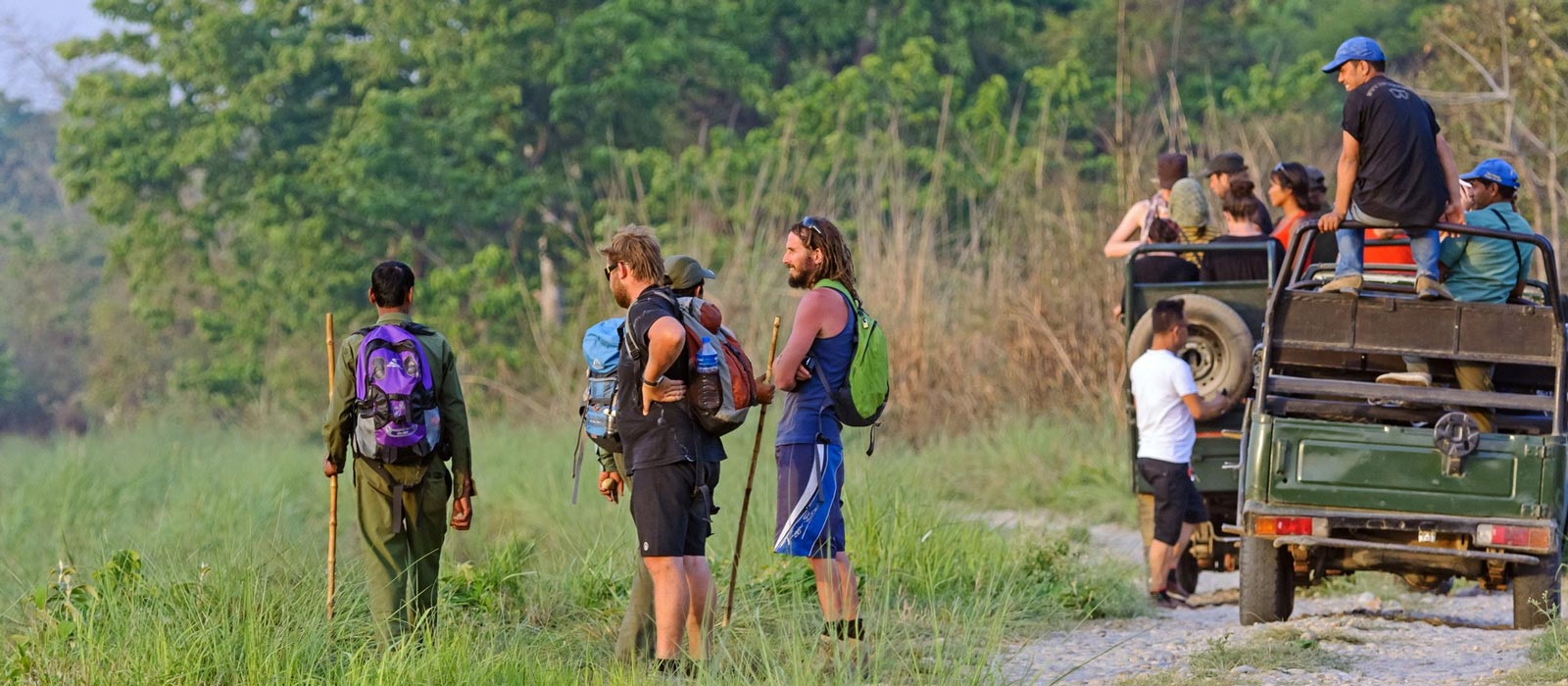
Over 500 species of birds inhabit Chitwan, including kingfishers, eagles, peacocks, and mynah birds. You may also see mugger crocodiles or the endangered gharials on the riverbanks or in the water. You will enjoy the drive on the bumpy roads through the tall grasses.
Return to your lodge for lunch and get some rest. You can go swimming or relax after the half-day safari.
The afternoon starts with a canoe ride in the Rapti River. Look for crocodiles on the banks and river birds, such as storks and kingfishers. You may even spot the Gangetic dolphin if you’re lucky. The canoe ride lasts approximately 30-45 minutes, providing a peaceful experience.
Then, continue to the Elephant Breeding Centre to learn about the efforts of the local government to conserve and breed Asian elephants. You get to see elephants up close and talk to mahouts about their care and behavior. We don’t include elephant-back rides to emphasize our commitment to ethical wildlife practices and responsible tourism.
Return to your hotel as the jungle cools and jungle sounds linger in the air. Relax in the evening and rest overnight in Chitwan while enjoying the final night in this serene wilderness.
Accommodation: Hotel Parkland or similar
Meal: Breakfast, Lunch, and Dinner
Day 12: Return to Kathmandu and Free Time
Today you will return to Kathmandu. You can join an optional early bird-watching walk with the lodge’s naturalist or simply relax in the morning. Look out for woodpeckers, parakeets, and hornbills while on the walk.
Board a flight to Kathmandu from Bharatpur airport and return to the capital. A representative will drive you back to your hotel in Kathmandu. You can spend the day as you like.
You can shop in the Thamel area for souvenirs such as pashmina shawls, singing bowls, prayer flags, thangka paintings, and Nepali tea.
If you missed any key heritage sites, you can go sightseeing today. You may go to Patan Durbar Square or the Pashupatinath Temple.
You can get an Ayurvedic Spa, a traditional massage, or relax in a cafe to enjoy Kathmandu one last time.
You may go for a farewell dinner and enjoy a traditional Nepali meal to celebrate your trip. Rest overnight in Kathmandu.
Accommodation: The Everest Hotel or similar
Meal: Breakfast
Day 13: Departure from Kathmandu
Today is your final day in Kathmandu. You can enjoy leisure time in your hotel for last-minute planning or relaxing.
We will drive you to the airport at least 3 hours before departure to ensure you have enough time for airport formalities. Reflect on your trip from the rich architecture of India’s Golden Triangle to Nepal’s lush green jungles and mountains.
Thank you for choosing us for your trip. Safe travels. We hope to hear from you in the future.
Meal: Breakfast
Customize this trip with help from our local travel specialist that matches your interests.
Includes & Excludes
What is included?
Accommodation:
- 12 nights in deluxe 4-star or 5-star hotels and resorts on a twin-sharing or single room basis.
Meals:
- Daily breakfast throughout the tour.
- All meals (breakfast, lunch, and dinner) are included during the stay in Chitwan.
Transportation:
- Private air-conditioned vehicles for all transfers and sightseeing.
- International flight from Delhi (India) to Kathmandu (Nepal).
- Domestic flights within Nepal as per the itinerary.
Activities & Sightseeing:
- Entrance fees for all scheduled monuments, temples, and heritage sites.
- Experienced English-speaking local guides.
- Jungle safari in Chitwan (Jeep safari, canoe ride, and Tharu cultural show).
Everest Mountain Flight: (subject to clear weather)
Miscellaneous:
- Bottled water during sightseeing and transfers.
- All applicable government taxes, permits, and service charges.
What is excluded?
International Flights:
- Flights to Delhi (arrival) and from Kathmandu (departure), except the Delhi–Kathmandu flight mentioned earlier.
Meals:
- Lunches and dinners are not included (except during the stay in Chitwan).
Visas:
- Visa fees for both India and Nepal are not included.
Insurance:
- Travel insurance is mandatory but not included in the package.
Personal Expenses:
- Tips for guides and drivers.
- Bar bills, drinks, and snacks.
- Camera and video entrance fees at monuments.
- Laundry, phone calls, and other personal costs.
Optional Activities:
- Charges for extra activities not listed in the itinerary (e.g., Hot Air Balloon in Jaipur, Paragliding in Pokhara).
Unforeseen Costs:
- Expenses due to flight delays, cancellations, strikes, natural disasters, or other uncontrollable events.
Departure Dates
We also operate Private Trips.
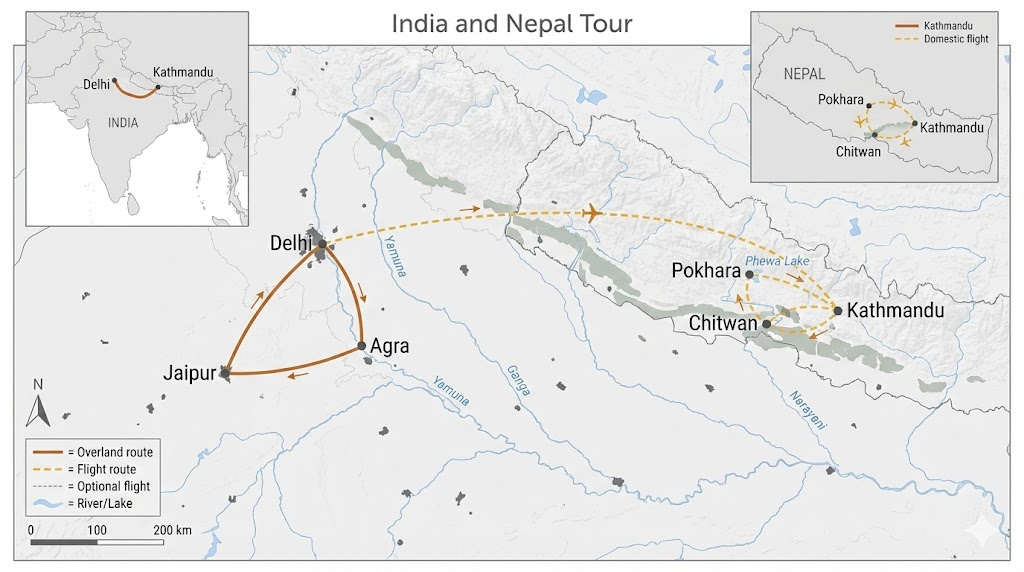
Route Map
Good To Know
You will stay in deluxe hotels and a jungle lodge. We ensure your comfort and safety with a good location while you choose your accommodation. You get en-suite rooms, hot showers, air conditioning, WIFI, and on-site restaurants.
We provide twin rooms, but you can upgrade to a private room. Solo travelers pay for single supplements for private rooms. You will stay in 3-4-star hotels in cities and a resort-style lodge in Chitwan. These hotels are not basic guesthouses and offer modern facilities.
We can arrange a 5-star heritage hotel, suites, or boutiques for additional cost.
Hotels in each city (subject to availability):
- Delhi: ITC Welcome Hotel Sheraton/ The Metropolitan Hotel & Spa
- Agra: ITC Mughal/ Trident Agra
- Jaipur: ITC Rajputana/ Radisson Jaipur
- Kathmandu: Kathmandu Guest House/ The Everest Hotel
- Pokhara: Waterfront Resort/ Hotel Moonlight Resort
- Chitwan: Green Park Chitwan/ Jagatpur Lodge
If these hotels are unavailable, we will provide an equivalent alternative. We also arrange upgrades and special requests on request.
We recommend bringing binoculars for wildlife and mountain views, a local SIM or a portable WIFI device, an eye mask/earplugs, and a lightweight daypack for the excursion. Don’t forget SPF 30+ sunscreen and lip balm.
Clothes: 5-7 breathable shorts, 2-3 lightweight long pants or knee-length skirts, a fleece or jacket, and a lightweight rain jacket/umbrella. Comfortable walking shoes, flip-flops, sunhat, sunglasses, scarf, socks, and undergarments.
Travel Essentials: Passport and copies, printed e-visa, and travel insurance details. Bring your wallet with cards, USD cash, a money belt/hidden pouch, and 2-4 passport-sized photos.
Electronics: Your smartphone and a charger with a power bank. Bring a universal travel adapter of 220V, adjusting to type C/D/M. You can bring your camera with extra memory cards and batteries for pictures. Bring a small flashlight/headlamp.
Health and Toiletries: Bring enough personal medication and feminine hygiene products. Pack basic toiletries like toothpaste, deodorant, and a toothbrush.
Chitwan Safari: Avoid bright colors. Bring earth tones, lightweight long sleeves, and long pants for sun and insect protection. Closed-toe sneakers or light hiking shoes for footwear. Sunhat, insect repellent, water bottle, binoculars, camera, and a light jacket for chilly mornings.
Kathmandu Mountain flights: A light jacket or fleece for an early morning flight, and a good camera and sunglasses for snow glare. Avoid bulky clothes so you can move easily.
Temple: Wear modest clothes to cover shoulders and knees, and bring a scarf/shawl for a quick cover. Bring slip-on shoes and socks if you don’t like walking barefoot, and use small plastic bags for shoes and avoid leather
Market Tours and City Walks: Comfortable walking shoes, a daypack, and a money belt.
Sarangkot Sunrise: Wear a lightweight jacket and warm hat/gloves, and bring a flashlight or phone torch.
Reduce Plastic Waste: Single-use plastics destroy the earth, so avoid using them. Avoid buying bottled water; use a reusable water bottle and refill it as you go. Use a tote bag as an alternative to plastic bags when buying stuff.
Wildlife Conservation Efforts in Chitwan: Don’t make noise, ask the guide to disturb the animals, touch, or feed them. Chitwan National Park is a wildlife preservation area. Your permit and park fees directly fund anti-poaching efforts in the region.
Local communities: We prioritize eco-friendly lodges and activities with minimal environmental impact. Supporting local artisans, dining at small family restaurants, and joining cultural activities are simple ways to give back to the communities you visit. The simple steps will protect natural habitats, support local livelihoods, and keep these destinations thriving for future generations.
You will visit many picturesque places during the tour. These places are beautiful and hold centuries-old traditional and cultural values. You can capture the moments, but respect local customs. Get consent from people before photographing them, avoid clicking sensitive places like cremation sites and temple interiors, and don’t disturb the wildlife.
Sunsets and sunrises are the best for landscape and cultural scenes. Charge your phone at night and carry a power bank and memory card to capture every moment. If you share your photos on social media, avoid posting in real time for safety and privacy.
Diwali: Diwali falls in October/November. Diyas decorate Delhi and Jaipur with colorful decorations, festive markets, and fireworks. This festival of lights brings a joyful atmosphere and lots of traditional sweets.
Tihar: Tihar falls at the same time as Diwali. It is also a festival of lights, but it is native to Nepal. This 5-day festival honors cows, dogs, oxen, crows, and finally, the bond between siblings. People decorate their houses with marigold garlands, and the streets are lively.
Holi: Holi falls in March and is the beginning of spring. It is a festival of colors with people celebrating by smearing colors on each other. People splash water and dance to festive music while enjoying traditional sweets. While both countries celebrate it, Jaipur and Agra are more popular for their grand Holi celebration.
Buddha Jayanti: People chant mantras, decorate stupas with prayer flags, and reflect on the Buddhist teachings. Bouddhanath and Swayambhunath have crowds of devotees with butter lamps filling the air.
India: Try street foods like chaat, golgappa, and hot jalebis in Delhi. Delhi is known for its Mughlai dishes like butter chicken, biryani, and kebabs. For drinks, you can try masala chai and lassi. Agra has similar Mughlai flavors. You can try Petha, candies made from ash gourd, the region’s specialty. You can dine on a rooftop with a view of the Taj Mahal. Jaipur serves traditional Rajasthani thali like Dal Baati Churma, Gatte ki sabzi, ker sangri, etc. Laal Maas, spicy mutton curry, is Jaipur’s signature dish. Try onion kachori and ghewar sweet for snacks.
Nepal:
- Try Newari platter with chatamari, bara, and choila in Kathmandu. You can also have momo, thukpa, and the traditional Nepali staple meal, Dal Bhaat.
- Pokhara serves Thakali Khana Set with rich flavors, buckwheat porridge, and dhido. The city is known for its fresh grilled fish from Phewa Lake. You can also opt for international cuisines in the lakeside cafes.
- Lodges in Chitwan serve buffets with Nepali, Indian, and continental dishes. You can try local Tharu flavors like chicken/fish curry and bagiya.
There are options for vegetarians, non-vegetarians, vegans, people with allergies, gluten-free, and any dietary restrictions. Spice levels are adjustable, so let the restaurant and your guide know your preference.
India: Many empires have ruled over the city of Delhi. The city has many layers, from Indraprastha of the Mahabharata to the Mughal capital of Shahjahanabad and the British-built New Delhi. These empires reflected their influence through the different architecture of the city. You can see this blend in the Qutub Minar from the Sultanate era, the Red Fort and the Jama Masjid from the Mughal era, and the India Gate from the colonial period in India.
Agra was the jewel of the prime Mughal Empire. Emperor Akbar built the Agra Fort and Fatehpur Sikri and made Agra the capital of the Empire. His grandson, Shah Jahan, built the legendary Taj Mahal. This monument is still a symbol of love.
Jaipur is India’s first planned city. It was founded in 1727 and designed on Vastu principles. Jaipur represents Rajput pride and artistry. Also known as Pink City, Jaipur has many grand palaces and forts like the City Palace and Amber Fort.
Nepal: The Kathmandu Valley includes Nepal’s three central urban districts: Kathmandu, Bhaktapur, and Lalitpur. It has been a cultural crossroads for over 2000 years. The Malla Kings built the Durbar Square across the valley, pagoda temples, and woodcarvings. The valley honors Hinduism and Buddhism, with people of all faiths living peacefully.
Pokhara was a trade hub between India and Tibet. At present, it’s a serene city with the Annapurna range surrounding it. Many internationally celebrated Gurkha soldiers from the Gurung and Magar communities are also ethnically from this region.
Chitwan served as the royal hunting ground in ancient Nepal. It is the first national park in Nepal and is also a UNESCO site. It is home to the Tharu people and has much wildlife. The Tharu people are known for their unique culture and connection to the jungle environment.
You can request additional add-ons for an extra charge. These are subject to availability, but we try our best to provide them.
Everest Base Camp Helicopter Tour: Take a helicopter flight from Kathmandu and land on Everest Base Camp or Kala Patthar viewpoint. This flight offers close-up views of Mount Everest and other giant peaks.
Extra Nights and Extensions: You can add nights in any city. We can also arrange extra destination extensions in India and Nepal.
Accommodation Upgrades: Upgrade your accommodation to 5-star hotels or heritage boutique properties for a luxurious experience.
Adventure Activities: You can go paragliding and on ultralight flights in Pokhara, white-water rafting on the Trishuli River, and bungee jumping outside Kathmandu.
Cultural Experiences: Learn the cultural and traditional significance of the two countries. You can enjoy traditional dance shows, join workshops, or even take cooking classes.
Trip Information
Group Size and Private Tour Policy
This tour is private, so you have a dedicated guide and transport.
- Group Size: Minimum 1 and maximum 12 per group. We can arrange for a larger group at your request.
- Solo Travelers: You will pay about $1800 for 13 days for single supplements, like a private room.
- Who can join: We recommend people between 18 and 65 for the tour. Families, honeymooners, and seniors with basic fitness can join the tour. We will adjust the space for kids and older travelers.
- Language: English is the default language for the tour. You may request other languages like French, German, Spanish, etc. Guides with specific language knowledge may cost you extra and not be available in all cases.
As it is private, we can customize the tour per your request. You might start early, add kid-friendly activities, and more.
Best Time to Travel
We offer the tour all year round. However, the ideal seasons for the India and Nepal tour are Autumn and Spring.
Autumn (September to November): It is the best season for the tour. The sky is clear after the monsoon, and visibility is excellent. We recommend booking early for better availability in this peak season.
Weather: India has an average temperature of 12-30°C in all three cities. For Nepal, Kathmandu has 10-20°C, Pokhara has 15-25°C, and Chitwan has 20-28°C.
Highlights: Days are sunny and dry. Festivals like Diwali in India and Dashain-Tihar make the environment lively.
Spring (March to May): It is also an excellent touring season with warm and pleasant weather. Flowers are blooming and forests are green.
Weather: India has 20-30°C in March and 30-35°C in May. In Nepal, Kathmandu and Pokhara have an average of 15-25°C, while Chitwan can rise to 35°C.
Highlights: Rhododendrons are in full bloom in Nepal, and both countries feel lively with the Holi festival in March. Mornings are clear with afternoon clouds in late spring.
Shoulder Period: The shoulder seasons have fewer crowds with suitable but unpredictable weather.
Late February and early December: India has 10-25°C, and Kathmandu, Pokhara, and Chitwan in Nepal have 8-18°C, 12-22°C, and 18-25°C, respectively. This period offers fewer tourists, good weather, and lower hotel rates. Late February is like early spring with clear skies and mild temperatures. Early December is cool and dry, with fog or haze in India during early mornings and clear days. It is ideal for travelers wanting comfortable weather with fewer crowds.
Early June and late November: Early June in India is humid with temperatures above 35°C, and late November has temperatures of 15-25°C. Early June averages 25-28°C in Pokhara and Kathmandu, with Chitwan rising to 30°C+. Late November has 8-18°C in Kathmandu, 12-22°C in Pokhara, and 20-25°C in Chitwan. Early June is hot and humid with pre-monsoon conditions. It is still mostly dry, but it would be a good option if you could handle the heat. Late November has excellent mountain visibility and pleasant days with colder evenings in Nepal. India may get haze or winter fog after sunset.
Winter (December to February): It is an excellent time for sightseeing in India due to cool and comfortable weather with fewer tourists.
Weather: India has 5-20°C with cold mornings and pleasant afternoons. Nepal has 5-18°C in Kathmandu, 8-20°C in Pokhara, and 15-25°C in Chitwan.
Highlights: Clear mountain views and fewer crowds. Nights are near freezing in Nepal, and there are possible flight delays. Bring warm layers for the cold days.
Monsoon (June-August): The least popular time to go on an India-Nepal tour. It brings heavy rain with lush greenery.
Weather: With heavy showers, India is hot and humid at 30-35°C. Nepal gets frequent rain, low visibility in the mountains, muddy trails in Chitwan, and leeches in the forest area.
Highlights: Full waterfalls, green landscapes, and fewer crowds with hotel discounts. Ideal for those who want a peaceful tour.
Practical Travel Information
Currency And Payments:
India: The currency is INR (Indian Rupee). Withdraw or exchange cash after arrival in India. 1USD≈80INR. There are many ATMs in the city. Carry small denominations for tips and markets.
Nepal: Nepal uses the NPR (Nepali Rupee) as currency. 1USD≈130NPR. ATMs are available widely in Pokhara and Kathmandu. Bring cash to Chitwan if ATMs are not available. Tourist areas accept US dollars for larger payments.
Card: Most hotels and upscale restaurants accept Visa and Mastercard. Some places charge 3-4% for card use.
Budget: Local meals cost about $5-$10, while upscale dining costs $15-$20 per meal. Souvenirs and snacks are affordable. Budget accordingly.
Language
India: Most people use Hindi and English. You can say “Namaste” to greet and “Shukriya” to thank you.
Nepal: Nepali is the primary language, and English is used daily in tourism. Say “Namaste” to greet and “Dhanyabad” to thank you.
Our guides are fluent in English. We provide a multilingual guide on request.
Visa Requirements
India: Apply online for an e-Visa of 30 or 90 days. Apply at least 3 weeks before the tour date and make sure your passport has 6 months’ validity and two blank pages remaining.
Nepal: Get a visa on arrival at the airport. Pay $30 for 15 15-day visa and $50 for a 30-day visa. Bring cash (USD or NPR) and a passport photo.
Check the official Government website of each country for current rules and requirements.
Health and Safety
Vaccines: We recommend a Hepatitis A, Typhoid, and a Tetanus shot. Consult your doctor about the Malaria shot.
Water and Food: Drink bottled/filtered water. Avoid raw food and ice in smaller restaurants. Only eat well-cooked meals to avoid any stomach bugs.
Medications: Bring personal medicines, a basic first-aid kit, insect repellent, and diarrhea/motion sickness tablets
Altitude: No altitude risk on this tour.
General Safety: Keep your valuables safe and don’t flash your cash, especially in markets. Beware of scammers and follow the guide’s instructions. We advise modest clothes in religious sites.
Emergency: Both countries use 112 as the emergency number. We will also provide 24/7 local emergency contact numbers.
Female travelers: Both countries are generally safe for women. Don’t go out at night and avoid walking alone. We can arrange a female guide if you want.
LGBTQ+ travelers: Nepal is a progressive country for queer people, and India has decriminalized homosexuality. It is still better to avoid PDA for safety. You will likely not face any problems, but you may attract attention.
Booking Information
Contact information:
We arrange a phone or Zoom call if you prefer to speak directly. You can also use our Live chat feature to chat with the representatives in real time.
- Email: sales@peregrinetreks.com
- Phone: +977-9851052413
How to Book
Booking is easy with us; visit our website, find the tour package, and book your tour. Select your preferred tour date, group size, and add-ons. Fill the form and finish your booking. You can also use our live chat feature on the website for immediate help.
Fill in your details like name, email, and contact information. Ensure your email is correct to get an instant booking confirmation email. Choose a payment method after booking confirmation. We accept credit cards with Mastercard, American Express, and Visa. We also accept bank transfers and PayPal. We will get back to you within 24 hours to confirm details, answer any queries, and introduce your travel coordinator.
Payment Terms and Conditions
You must deposit 20-25% of the tour cost to secure your booking. We use this deposit to cover the initial reservations and permits, making it non-refundable. Clear the remaining balance at least 30 days before the tour departure date. You must pay the entire tour upfront if you book just 30 days before departure.
You can pay with international bank transfers in USD, major credit and debit cards, and PayPal. Card transactions may include a small service charge.
After booking processing, we will send you a payment invoice and schedule. After confirming your booking, we will send all pre-trip documents like hotel details, domestic flight e-tickets, and a detailed packing list. Pay the remaining balance in time to avoid any risk of tour cancellation.
Cancellation Policy
Plans can change, so we aim to make our cancellation policy fair. We require a written cancellation request. We will process any applicable refunds within 14 business days.
If you cancel more than 60 days before the tour, we will refund you the full amount you paid, except the non-refundable deposit. For cancellations made 30 to 60 days before the departure, you get a 50% refund on the total tour cost, as we would have already used it for the reservation on your behalf. If you cancel within 30 days, we won’t provide any refunds as we pre-pay for most arrangements. Note that we don’t refund the deposit, and we don’t apply any extra cancellation fee.
You also have the option to postpone the tour instead of canceling it. We don’t charge any additional cost. We provide the available dates without any hidden price differences. We will refund the entire amount if we cancel the trip due to unforeseen circumstances. For safety, buy travel insurance that covers trip cancellations.
Connectivity and Technology
Mobile and Data: Buy a tourist SIM card from Airtel, Jio, or Vodafone at the airport in India. It will cost you about $10 for a 30-day pack with calls and data. You need your passport and photo. For Nepal, get an NCell or NTC SIM at Kathmandu airport. It costs about $6-$20 for 15-20GB of data.
WIFI: All hotels provide fast and free WIFI. Many cafes in tourist areas also have WIFI
Electricity and Charging: India uses Type D, and Nepal uses Type C/D/M, so bring a universal adapter. Carry a power bank so you avoid the risk of no connectivity.
Security: Avoid sensitive transactions in public unless you’re using a VPN. Use your hotel WIFI or mobile data for banking when necessary.
Cultural Etiquettes
- “Namaste” is a standard greeting in both India and Nepal. Join both hands and say “Namaste” with a slight bow to greet.
- Avoid showing skin, especially at religious sites. Women should avoid low-cut tops or short skirts, and men should avoid being shirtless and wearing short pants. Carry a light scarf ot shawl for temples and mosque visits.
- Remove your footwear before entering temples, mosques, and monasteries. Respect the rituals, avoid touching the offerings and shrines, and follow the guide’s instructions. Walk and spin the prayer wheels clockwise in the stupa. Avoid pointing fingers at anything and avoid pointing fear at altars or Buddha statues. Cover your arms, legs, and hair (for women) when visiting mosques. Most religious sites don’t allow taking pictures, so ask first.
- Avoid using your left hand if you’re using your hands to eat. The restaurants provide utensils, so use them if you don’t want to use your hands.
- Avoid Public display of affection. You can hold hands, but hugging and kissing will bring uncomfortable stares in public. Speak in a moderate volume and don’t disturb the locals.
- While bargaining is normal, keep it polite. Don’t ask for discounts in government or fixed-price stores.
- Avoid touching people’s heads or pointing fingers/feet at people or shrines. Carry small denominations for easier transactions and dispose of your trash properly. If you are unsure what to do, follow your guide’s lead.
Tipping Guidelines
Tipping is customary in the tourism industry in both India and Nepal. It is a good way to show appreciation for the staff’s service.
Tip about $8-$15 daily per traveler for tour guides. Tip on the last day in each country. You can tip higher if you liked the service. For local/special guides, you can tip about $3-5 per traveler. For drivers, we recommend tipping $5-$10 daily per traveler at the end of their service, i.e., their final transfer. You can tip $1-2 per bag to porters/bellhops and housekeeping. If your bill doesn’t include a service charge, you can tip 5-10%. You don’t need to tip in street stalls or basic cafes.
Tips: Use local currency and small bills when tipping. You don’t need to tip in markets, fixed-priced shops, or public officials.
Pre-Trip Preparation
Essential Apps and tools: WhatsApp is used to communicate with the team. Download Hindi and Nepali offline using Google Translate. Use XE Currency for quick currency conversion, and offline maps like Google Maps or Maps.me—a gallery backup like Google Photos and a journaling app.
Language: Both countries use “Namaste” to greet people and “Dhanyabad” to say thank you. You can ask the price by saying “Kitne ka he?” in Hindi and “Kati ho?” in Nepali.
Money and Health: Bring enough personal medicines for the trek. Carry some USD bills to exchange in Nepal. Your bank may block your transactions due to suspicion, so inform them. Try adjusting your sleeping schedule and drinking plenty of fluids to avoid jet lag.
Frequently Asked Questions
Our India and Nepal tour is a 13-day private trip through India’s Golden Triangle: Delhi, Agra, Jaipur, and Nepal’s Kathmandu, Pokhara, and Chitwan. You will visit iconic monuments like the Taj Mahal, the Amber Fort, and an ancient temple, get scenic Himalayan views, and go on a wildlife safari. The tour perfectly blends history, culture, nature, and local experiences.
The package includes 12 nights in deluxe hotels with twin-sharing or single rooms. You get a daily breakfast throughout the tour and all meals in Chitwan with bottled water during sightseeing and drives. The package also includes domestic flights in Nepal and international flights from Delhi to Kathmandu. We handle all entrance fees for the scheduled monuments and site visits. English-speaking local guides will follow you to every site. If the weather is clear, you will enjoy a flight over Everest, a jeep safari, a canoe ride, and a Tharu culture show in Chitwan. The package included all applicable taxes, permits, and service charges.
The package doesn’t include international flights to Delhi or Kathmandu. Except for the lost, lunches and dinners don’t come with the package. You must manage your visa for India and Nepal and purchase travel insurance. The package doesn’t cover personal expenses like camera/video fees, drinks, snacks, and unforeseen costs like delays and natural disasters. You must pay extra for activities like a hot air balloon ride in Jaipur or paragliding in Pokhara.
Yes, most travelers need visas for a Nepal and India tour. Most travelers can apply online for an e-Tourist Visa before traveling to India. It is valid for 30 days or more.
Most people can get a visa upon arrival in Nepal at the Kathmandu airport. Pay $30 for 15 days and fill out the form.
Your passport should have at least 6 months of validity and two blank pages. We will guide you on both visas.
October to March is the ideal touring time with comfortable weather and views. November offers clear Himalayan views and many festivals. December to January has cold days. Nepal is frigid, so pack layers. February to March is pleasant. Flowers are in full bloom, and forests are lush with clear visibility and lovely weather. We recommend skipping summer and monsoon as they bring extreme heat and heavy rainfall in both countries.
You will stay in comfortable hotels throughout the tour. You will stay in 4-star properties in cities like Delhi, Agra, Jaipur, Kathmandu, and Pokhara. These hotels provide WIFI, A/c or heating, and private bathrooms. In Chitwan, you will stay in a resort-style jungle lodge with en-suite baths, mosquito nets, and rustic charm. These lodges have a swimming pool and offer cultural programs.
All rooms are twin-sharing. We provide single rooms or double beds upon request, but it may cost you extra. These properties are safe, clean, comfortable, and near the key attractions. We can upgrade the accommodation to luxury or boutique hotels if you want.
Yes, the tour suits any age and group and is not physically demanding. It involves light walking at monuments and markets, with a few steep steps at forts and temples. Jeep safari and canoe rides can be bumpy and are not ideal for infants/toddlers. We can adjust the pace or skip challenging parts if you want. The altitude is minimal, with the highest being Kathmandu at 1400m. There is no trekking or hiking, so the tour is easily manageable. Let us know if you have any health or mobility issues so we can assist.
Pack light and comfortable clothes. Light cotton is for warm days, layers for winter, and modest attire at temples/cultural sites. Pack comfortable walking shoes and sandals. Add a sunhat, sunglasses, sunscreen, insect repellent, travel adapter, reusable water bottle, and any personal medicines. You can bring a small daypack, a rain jacket, swimwear, and a scarf. You can do your laundry at most hotels. We will provide a complete packing list before the tour.
Yes, you will have licensed and English-speaking guides. You will get three guides, one for Delhi, Agra, and Jaipur. A different guide will lead you to Kathmandu, Pokhara, and Chitwan with a nature specialist guide for a Jeep safari. Your guides will handle your entry tickets, share the history and culture of the palace, and assist with logistics. You can request guides who speak other languages at an extra cost.
We use a private AC car for all road journeys and sightseeing. You will drive in a jeep during the safari. We will use airways from Delhi to Kathmandu, Kathmandu to Pokhara, and Chitwan to Kathmandu. For an authentic experience, you can use a rickshaw in New Delhi, a canoe in Chitwan, and a boat in Pokhara.
You get breakfast in every hotel throughout the tour. For other meals, you’re free to eat what you like. However, the package includes all meals while in Chitwan. We accommodate any dietary restrictions. We arrange vegetarian, vegan, gluten-free, and other nutritional restriction meals with prior notice.
Chitwan National Park is famous for the Greater One-horned rhinoceros. Other wildlife includes deer (spotted, sambar, and barking), and monkeys (rhesus macaques or langurs). You can spot mugger crocodiles and gharials, elephants, leopards, Bengal tigers, sloth bears, and other animals like wild boars, jungle cats or civets, and pythons. There are over 500 species of birds in this park, like peacocks, hornbills, kingfishers, storks, crocodile birds, Bengal florican, paradise flycatcher, and many egrets, herons, and jungle fowl. Some of these animals are rare, while others are common, with spotting being random.
Yes, the mountain flight is weather-dependent. These flights only operate in clear weather for safety and clear visibility. You can only go on these flights in the mornings, as mornings are more stable than afternoons or middays.
Since the tour is private, you can customize it as you like. We will try our best to accommodate your requests.
You can add extra days, upgrade hotels, adjust activities, or include locations like Varanasi and Lumbini. Let us know your plans before the tour so we can arrange them. During the trip, you can ask to modify daily plans and use the time to be alone or have extra experiences like workshops or a helicopter ride.
Minor changes are usually fine, but significant changes will cost you extra.
While not mandatory, we highly recommend good travel insurance. It is for your safety and financial security. Make sure your policy includes medical emergencies, evacuation, and trip cancellations.
Most evenings, you will get free time after sightseeing. We include afternoons and evening schedules in Pokhara and Kathmandu for shopping or relaxation. You will have free time after lunch in Chitwan, and the afternoon schedule starts. Some days have early starts, but overall, the itinerary gives you enough free time to explore the place yourself and shop in different regions.
Remove your shoes/hat before entering cultural sites like temples and monasteries. Dress modestly and ask permission before clicking pictures of the religious sites or other people. When receiving or giving items, use your right hand and avoid any public display of affection.
The domestic flights are generally reliable during peak season. There may be some delays due to the weather, but we schedule the flights in the mornings when disruptions are less frequent. The itinerary includes buffer days so the delays won’t affect the tour schedule.
Reviews on India and Nepal Tour
5.0