


Kenya Tour Packages
We are currently updating our trip offerings. Please check back soon for new and exciting adventures.
Kenya Tour Packages Travel Information
Kenya tour packages open the door to a country of extraordinary range on the equator in East Africa — snow-capped peaks, open savanna, Indian Ocean coastline, the Great Rift Valley, montane forest, and coral reefs, all packed into 580,000 square kilometers.
For trekkers, Kenya offers Africa’s second-highest peak: Mount Kenya, rising to 5,199 m at its technical summit (Batian), with the trekking summit, Point Lenana, at 4,985 m — no ropes, no crampons, no climbing experience required. The route crosses five ecological zones, from bamboo forest to glacial rock at the peak.
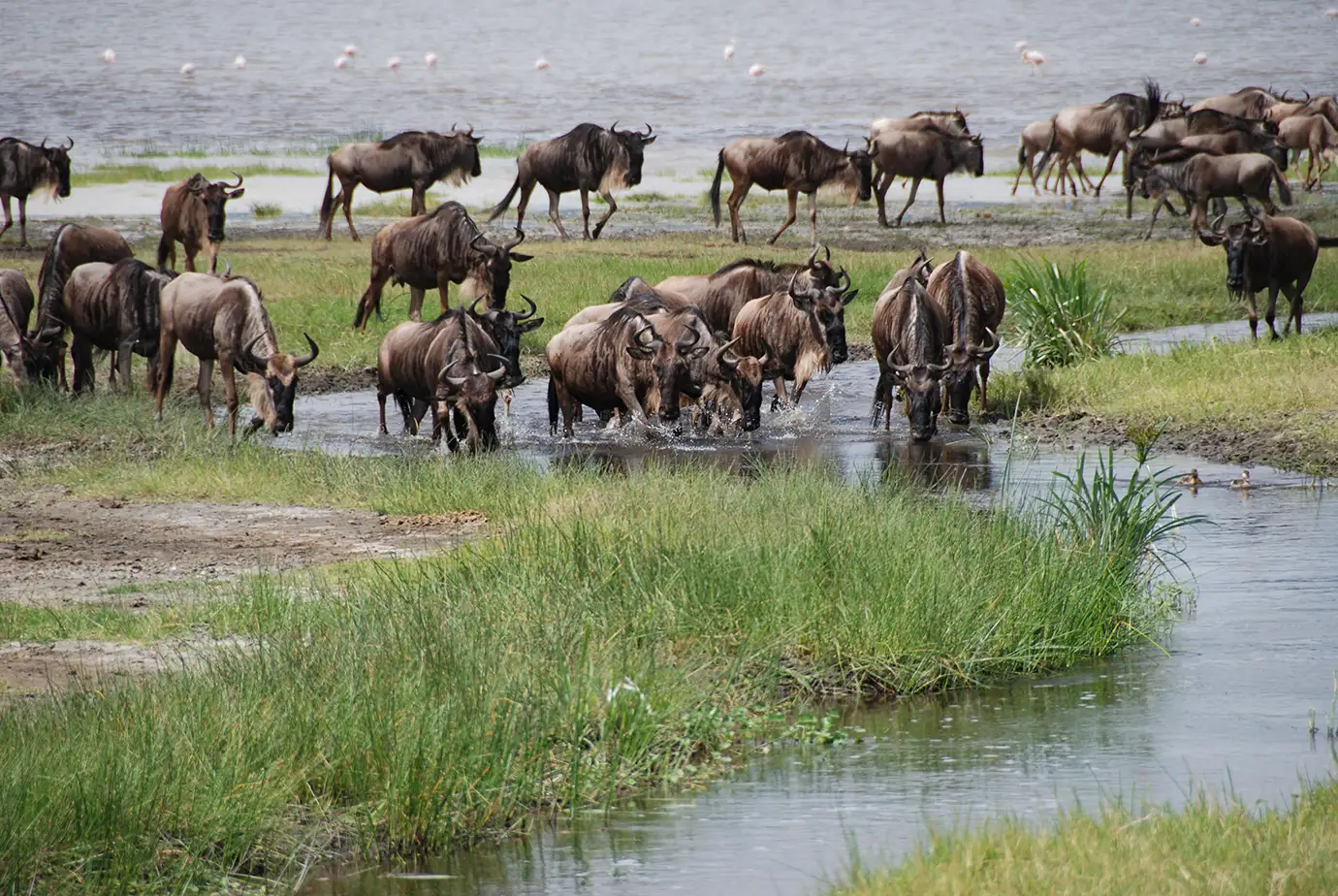
For wildlife travelers, Kenya is home to 23 national parks, 28 national reserves, and over 140 private conservancies. The Masai Mara hosts the Great Wildebeest Migration between July and October — over 1.5 million animals crossing the Mara River from Tanzania’s Serengeti. Amboseli offers elephant herds against the backdrop of Kilimanjaro. Lake Nakuru is home to both black and white rhinos.
Kenya is also a proven launchpad for dual-summit expeditions. Trekkers first climb Mount Kenya for pre-acclimatization, cross the border into Tanzania at Namanga, and summit Kilimanjaro’s Uhuru Peak (5,895 m) on the same 12-day trip. The Mount Kenya phase raises Kilimanjaro summit success rates to above 95%.
Peregrine operates Kenya tour packages across the full range — from focused mountain treks to multi-peak expeditions with optional safari extensions.
| Information | Detail |
|---|---|
| Destination | Kenya, East Africa |
| Package Types | Mountain trekking, multi-peak expeditions, safari add-ons |
| Featured Mountain | Mount Kenya — Point Lenana, 4,985 m |
| Trek Duration | 4 to 12 days, depending on route and combination |
| Safari Options | Masai Mara, Amboseli, Lake Nakuru, Samburu |
| Group Style | Private departures + scheduled join-in dates |
| Entry Requirements | Kenya eTA — apply online before travel |
| Best Months | January–March, July–October |
| Airport | Jomo Kenyatta International Airport (NBO), Nairobi |
Our Kenya Tour Packages
Mount Kenya Trekking Packages
Mount Kenya is a UNESCO World Heritage Site and Africa’s second-highest mountain. Point Lenana (4,985 m) is the highest trekking summit — reachable without any technical climbing equipment. Peregrine runs two primary Mount Kenya routes.
6-Day Mount Kenya Trek — Sirimon to Chogoria Route
The complete Mount Kenya experience. Ascend the drier Sirimon Route from the northwest—Summit Point Lenana at sunrise. Descend the dramatic Chogoria Route to the east through the Gorges Valley — famous for sheer basalt cliffs, glacial tarns, and Vivienne Falls.
A dedicated acclimatization day at Shipton’s Camp (4,236 m) pushes the summit success rate to approximately 95%.
| Item | Detail |
|---|---|
| Duration | 6 days / 5 nights |
| Summit | Point Lenana — 4,985 m |
| Route | Sirimon (ascent) → Chogoria (descent) |
| Difficulty | Challenging — non-technical |
| Accommodation | Mountain huts, wilderness tents, log cabins (Meru Bandas) |
4-Day Mount Kenya Trek — Sirimon Route
A shorter option for experienced trekkers with prior exposure to altitude. Ascend and descend the Sirimon Route. No acclimatization day — the condensed schedule requires strong fitness and altitude tolerance.
| Item | Detail |
|---|---|
| Duration | 4 days / 3 nights |
| Summit | Point Lenana — 4,985 m |
| Route | Sirimon (up and down) |
| Difficulty | Challenging — faster altitude gain, no acclimatization day |
| Accommodation | Mountain huts |
Multi-Peak Expedition Packages
12-Day Mount Kenya and Kilimanjaro Twin Summit Trek
The ultimate East African mountain expedition. Summit both of Africa’s highest trekking peaks in a single trip — Point Lenana (4,985 m) on Mount Kenya and Uhuru Peak (5,895 m) on Kilimanjaro.
Climbing Mount Kenya first gives your body three days above 3,000 m before Kilimanjaro. The pre-acclimatization effect raises the summit success rate on Kilimanjaro to above 95%. The package includes a private cross-border vehicle transfer from Nairobi to Moshi via the Namanga border.
| Item | Detail |
|---|---|
| Duration | 12 days / 11 nights |
| Summit 1 | Point Lenana — 4,985 m (Day 3) |
| Summit 2 | Uhuru Peak — 5,895 m (Day 9) |
| Routes | Sirimon (Mount Kenya) + Machame (Kilimanjaro) |
| Countries | Kenya + Tanzania |
| Accommodation | Hotels (Nairobi and Moshi) + mountain huts and tents |
Safari and Cultural Add-Ons
Kenya’s wildlife reserves rank among the best on the African continent. Peregrine offers post-trek safari extensions that pair naturally with any Mount Kenya package. All safari add-ons include a private 4×4 vehicle, a licensed driver-guide, park fees, and lodge or tented camp accommodation.
Masai Mara Safari Extension (3–4 Days)
Kenya’s most famous wildlife reserve, forming the northern section of the Serengeti–Mara ecosystem. The Great Wildebeest Migration crosses the Mara River between July and October. Big Five sightings (lion, leopard, elephant, buffalo, rhino) are reliable year-round. Hot air balloon safaris operate at dawn over the open plains.
Amboseli Safari Extension (2–3 Days)
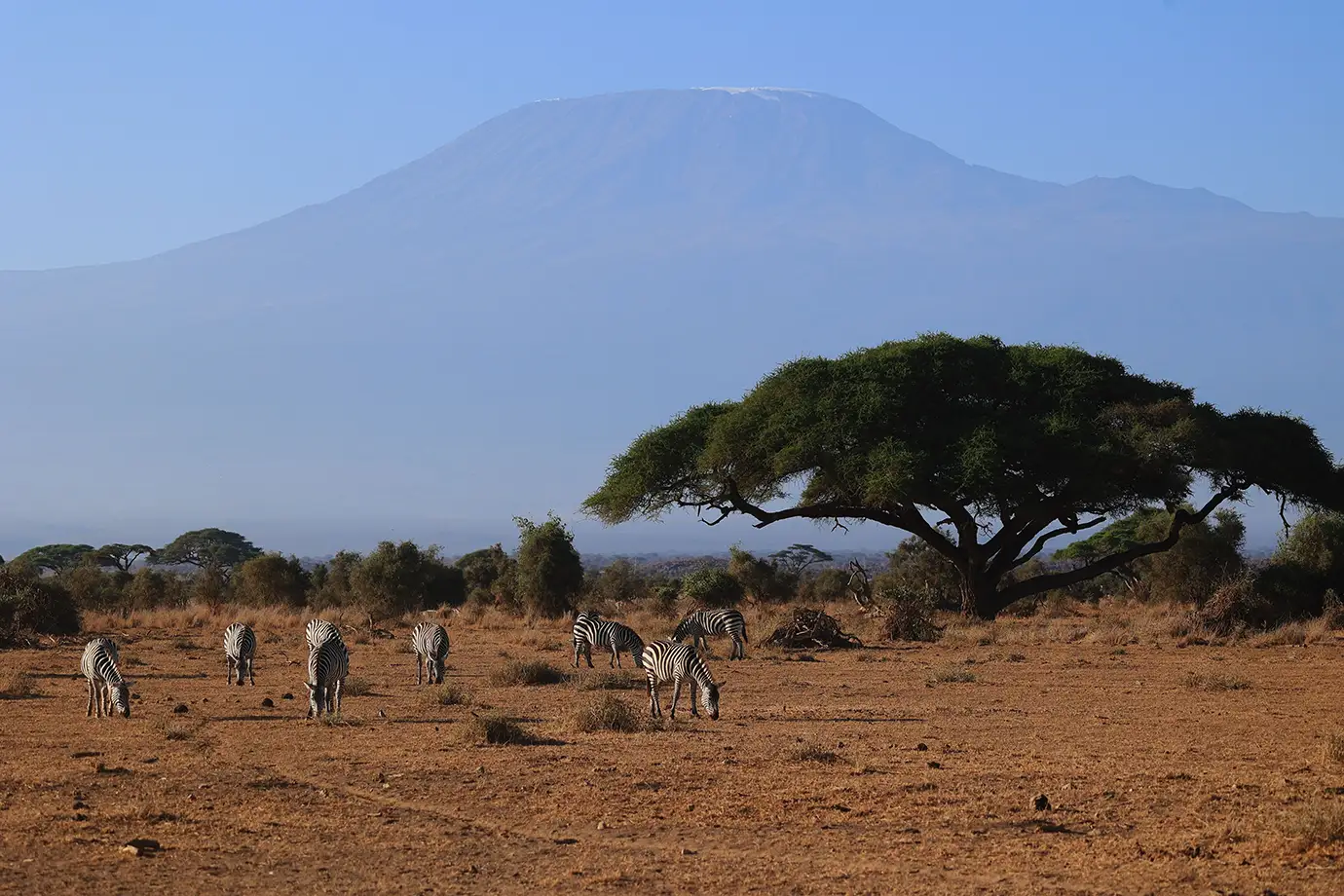
Large elephant herds roam the dry lake beds below Kilimanjaro’s snow-capped dome — one of the most photographed wildlife scenes in Africa. Amboseli sits 230 km southeast of Nairobi. The park is compact (392 km²) and productive for photography.
Lake Nakuru Day Trip or Overnight
A Rift Valley soda lake famous for flamingo concentrations and one of Kenya’s most reliable rhinoceros sanctuaries. Both black and white rhinos are present. Lake Nakuru sits 160 km northwest of Nairobi — an easy day trip or overnight addition.
Samburu and Laikipia Extension (3–4 Days)
Northern Kenya’s semi-arid reserves on the Ewaso Nyiro River. Samburu is home to the “Special Five” — species found nowhere else in southern Kenya: Grevy’s zebra, reticulated giraffe, gerenuk, beisa oryx, and Somali ostrich. The Laikipia plateau north of Mount Kenya offers private conservancy experiences with walking safaris, horseback rides, and night game drives.
When Is the Best Time to Visit Kenya?
Kenya’s highland and mountain areas share two dry seasons that align with the best trekking and safari windows.
January to March: The short dry season. Clear skies on Mount Kenya, excellent summit visibility, and fewer trekkers on the mountain. Amboseli elephant photography is at its best. The Masai Mara wildlife concentrates near permanent water sources.
July to October: The long dry season and peak safari season. The Great Wildebeest Migration crosses the Mara River. Mount Kenya trails are dry and stable. Kilimanjaro conditions are equally favorable — ideal for the dual-summit combo.
April, May, and November are the long and short rainy seasons. Heavy rain makes mountain trails dangerously muddy and reduces wildlife visibility in the parks. Avoid these months for both trekking and safari.
| Season | Months | Trekking | Safari | Crowds |
|---|---|---|---|---|
| Short Dry | Jan–Mar | Excellent | Very Good | Low–Moderate |
| Long Rains | Apr–May | Not Recommended | Poor | Very Low |
| Long Dry | Jul–Oct | Excellent | Excellent (Migration) | Peak |
| Short Rains | Nov | Not Recommended | Fair | Low |
| Shoulder | Jun, Dec | Good | Good | Moderate |
How to Get to Kenya
Jomo Kenyatta International Airport (NBO) in Nairobi is Kenya’s main international gateway. Direct flights connect Nairobi to London, Amsterdam, Paris, Dubai, Istanbul, Doha, Mumbai, Guangzhou, and New York (via seasonal routes). Flight time from major European hubs is 8–9 hours.
All Peregrine Kenya tour packages include private airport pickup from NBO. Your driver meets you at arrivals with a name board and transfers you directly to your Nairobi hotel or staging point.
Visa and Entry Requirements
Kenya requires an Electronic Travel Authorization (eTA) for all international visitors. Apply online at etakenya.go.ke before departure. The processing fee is USD 30. Processing takes 1–3 business days. Apply at least 2 weeks before travel.
Your passport must have at least 6 months’ validity remaining from the date of entry and at least one blank page for the entry stamp. For dual-summit packages entering Tanzania, you also need a separate Tanzania e-Visa. A Yellow Fever vaccination certificate is mandatory when crossing from Kenya into Tanzania at the Namanga border.
Health and Vaccinations
Yellow Fever: Required if entering Tanzania from Kenya, or if arriving in Kenya from an endemic country. Get vaccinated at least 10 days before travel.
Malaria: Nairobi sits at 1,700 m with low malaria risk. Safari areas carry a moderate risk. Mount Kenya above the forest zone has zero risk. Consult a travel medicine clinic for prophylaxis recommendations.
Recommended vaccines: Hepatitis A, Typhoid, Tetanus. Consult a travel medicine clinic at least 6 weeks before departure.
What Is Included in Every Peregrine Kenya Package?
- Private airport transfers from NBO to your Nairobi hotel and back
- All Kenya Wildlife Service (KWS) park entrance fees, camping fees, and mountain hut fees
- Licensed, English-speaking lead mountain guide (first-aid and altitude certified)
- Full porter and mountain cook team — porters carry your main duffel (up to 15 kg)
- Three hot meals daily on the mountain, prepared from fresh ingredients
- Boiled and purified drinking water throughout the trek
- Mountain accommodation: bunkhouse huts, wilderness tents, and/or log cabins
- Pulse oximeter, health monitoring, and emergency first aid kit
- Rescue protocol coordination with KWS rangers
- Pre-trek briefing and full gear check with your lead guide
What is not included:
- International flights
- Kenya eTA (USD 30)
- Tanzania e-Visa (for dual-summit packages)
- Personal trekking gear (sleeping bag, boots, poles, clothing)
- Travel insurance covering high-altitude trekking and medical evacuation — mandatory
- Crew gratuities
- Pre/post-trek hotel nights in Nairobi (unless specified)
- Safari extensions (priced separately)
Read More: How Much Does It Cost to Climb Mount Kenya?
Why Book Kenya Tour Packages With Peregrine?
Peregrine Treks and Tours operates mountain expeditions across Nepal, Tibet, Bhutan, and East Africa. The company holds active operator licenses with both the Kenya Wildlife Service (KWS) and the Tanzania National Parks Authority (TANAPA).
Experienced mountain crews. Peregrine’s East African guides are licensed, first-aid certified, and altitude-trained. Cook and porter teams are contracted and insured — not day-hired at the trailhead gate.
Private groups by default. Every Peregrine Kenya package runs as a private departure — your group, your guide, your schedule. No sharing camps with strangers. Join-in scheduled departures are available for solo trekkers and pairs.
Safety infrastructure. Emergency oxygen cylinders and pulse oximeters are carried on every trek. Guides log oxygen saturation readings twice daily. Established rescue protocols connect directly to KWS ranger stations.
Cross-border expertise. The Nairobi-to-Moshi transfer through the Namanga border — including eTA verification, e-Visa check, Yellow Fever certificate inspection, and luggage handling — is managed by the Peregrine ground team.
Flexible itinerary building. Add safari extensions, rest days, cultural excursions, or combine Mount Kenya with Kilimanjaro in a single booking. Peregrine builds the itinerary around your dates, fitness level, and interests.
Booking and Cancellation
How to Reserve
Contact Peregrine Treks at sales@peregrinetreks.com or through the booking form on peregrinetreks.com. We confirm availability and send your full trip details within 24–48 hours.
A 30% deposit secures your dates. The remaining balance is due 45–60 days before departure (varies by package). Private groups of 3 or more trekkers receive a group pricing discount. Solo trekkers can join scheduled departures — contact us for available dates.
Cancellation Policy
- Cancellations made 60 days or more before departure: full deposit refund
- Cancellations made 30 to 59 days before departure: 50% of the total package cost refunded
- Cancellations made fewer than 30 days before departure: no refund
Travel insurance covering trip cancellation is strongly recommended. KWS park fees are paid in advance and are non-refundable by the park authority.
Ready to Plan Your Kenya Trek?
Contact Peregrine Treks and Tours: sales@peregrinetreks.com
Visit peregrinetreks.com to view the full package details and start the booking process.
Frequently Asked Questions
Do I need climbing experience for Mount Kenya?
No. Point Lenana (4,985 m) is a trekking peak — not a technical climb. No ropes, crampons, or prior mountaineering experience required. You need strong cardiovascular fitness and the ability to walk for 5–8 hours per day for 5 or 6 consecutive days.
Can I combine Mount Kenya with a safari?
Yes. Peregrine offers post-trek safari extensions to the Masai Mara, Amboseli, Lake Nakuru, and Samburu. Safari add-ons are priced separately and include private vehicle, licensed driver-guide, park fees, and lodge or tented camp accommodation. The most popular combination is a 6-day Mount Kenya trek followed by a 3-day Masai Mara safari.
Is Kenya safe for tourists?
Kenya is a well-established tourism destination receiving over 2 million international visitors annually. Nairobi is a modern capital city with standard urban safety considerations. Safari areas and national parks are very safe, with licensed guides and a strong ranger presence.
Do I need a visa to visit Kenya?
Kenya requires an Electronic Travel Authorization (eTA) for all international visitors — not a traditional visa. Apply online at etakenya.go.ke before departure. The fee is USD 30. Processing takes 1–3 business days. Kenya no longer issues visas on arrival.
What is the best month to trek Mount Kenya?
January to March and July to October offer the driest trails and clearest summit views. January to March is quieter with fewer trekkers. July and August are peak season. Avoid April, May, and November — heavy rains make the forest trails muddy and dangerous.
Can I do Mount Kenya and Kilimanjaro in one trip?
Yes. Peregrine’s 12-day combo package covers both summits. You climb Mount Kenya first (3 days), transfer to Tanzania via the Namanga border, and climb Kilimanjaro via the Machame Route (6 days on the mountain). Climbing Mount Kenya first pre-acclimatizes your body and raises your Kilimanjaro summit success rate to above 95%.