


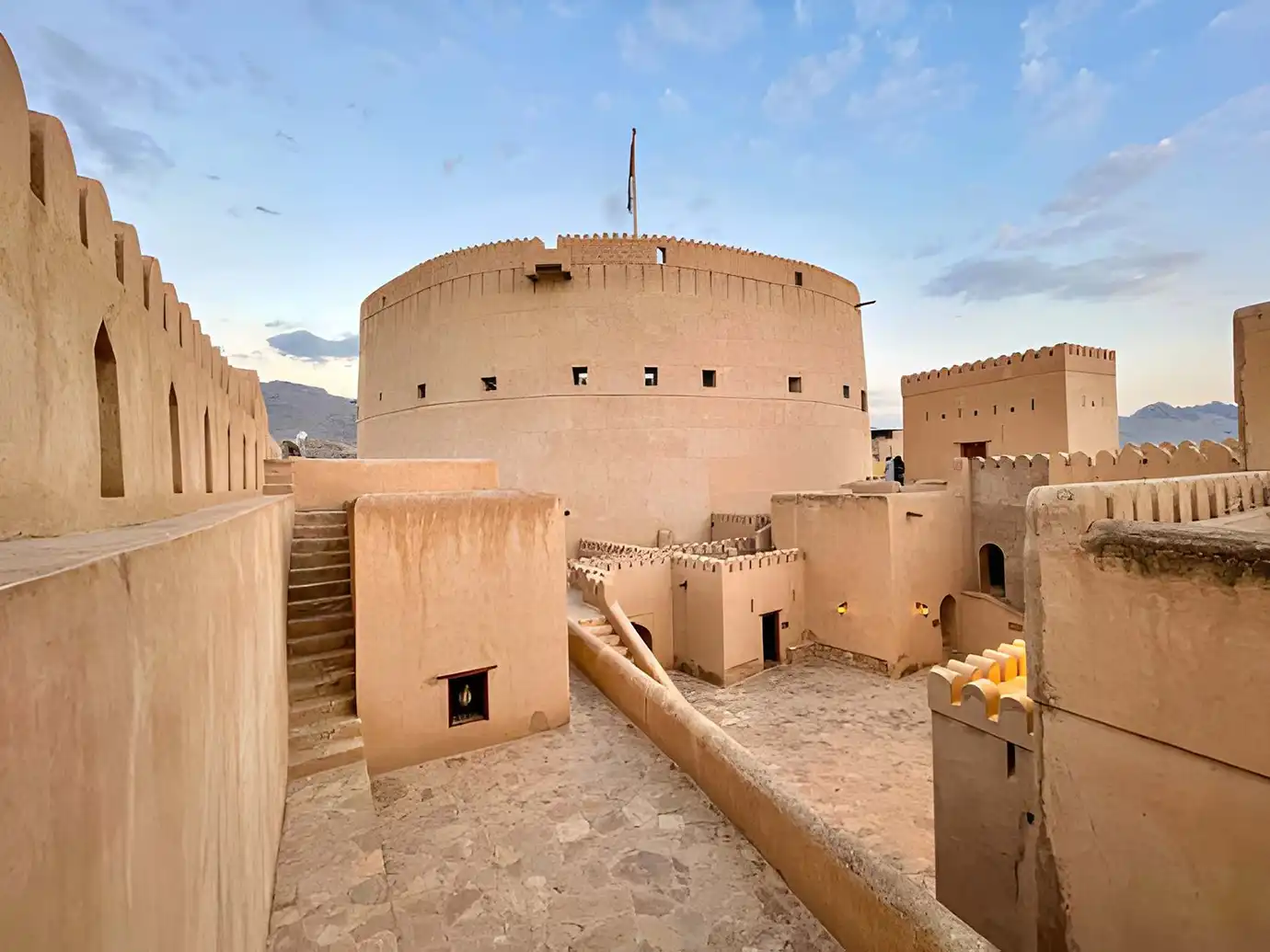
Picture the 400-year-old mud walls of Nizwa Fort at sunrise. Seven days later, picture the reef 16 feet below your overwater villa in Baa Atoll—same Trip. Our Oman and Maldives travel guide plans that contrast, as one journey: desert first, ocean last. You get real Arabian culture, then total rest on the reef, on a single long-haul ticket. By the end, you will have made four decisions: your flight corridor, the split of the day between the two countries, the season that suits both, and the cultural prep for the Oman half.
Peregrine runs a full office in Muscat with Omani driver-guides on the ground, and that team coordinates every Oman leg we book. If you would rather hand over the logistics, our 10-Day Oman and Maldives Luxury Package has them pre-built, covered near the end.
How to Use This Oman and Maldives Travel Guide
Work the four decisions in order, because each one sets up the next. Get the corridor and pacing right, and the season and packing follow.
First, choose your flight route, as there is no direct flight from Muscat to Malé. Second, split your days between stone and sea. Third, choose a window that keeps both countries cool and dry. Fourth, familiarize yourself with Oman’s cultural code before you fly.
One rule anchors the Trip. Oman comes first for weight and activity, and the Maldives comes last for recovery.
The Stone and Sea Concept: Why This Combo Works
The combo works because the two halves pull in opposite directions. Oman gives you weight, the geological kind and the historical kind. The Maldives takes it all away.
Oman is dense. You get 5,000 years of copper trade, Portuguese-era coastal forts, frankincense routes that reached Rome, and mountains that rise 3,000 meters off the plain. The country asks for energy and rewards it.
The Maldives gives the opposite. No history to tour, no terrain to climb, just reef, villa, and time. It is the exact corrective the Arabian half needs.
What Oman Delivers
Oman is the activity half, and almost none of it is crowded. You get forts, souks, mountains, and empty desert in one compact country.
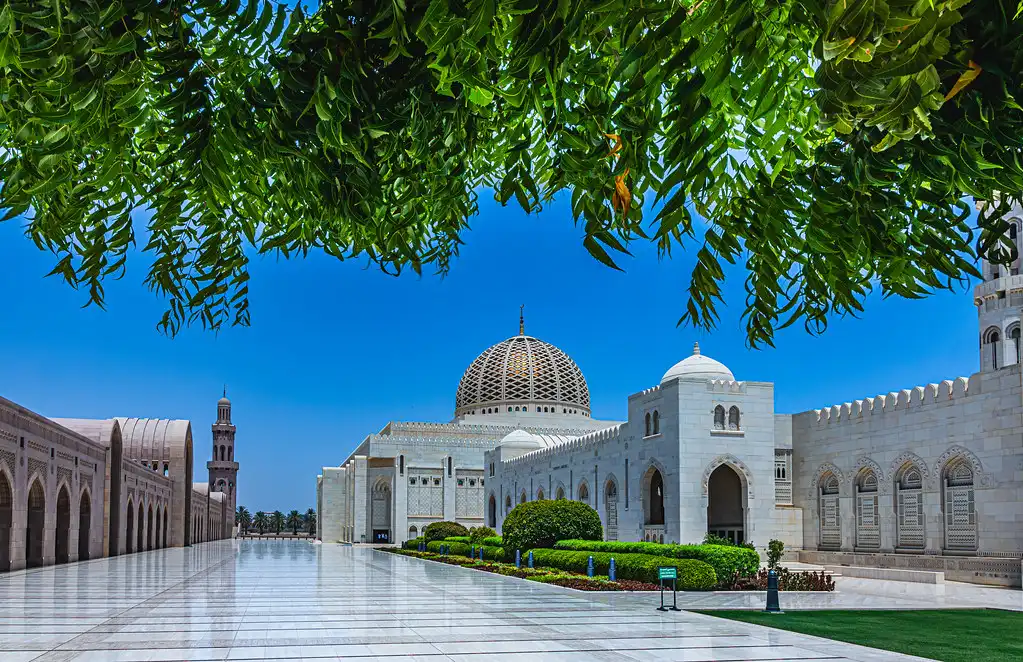
The highlights run deep: Nizwa Fort and its souk, the UNESCO fort at Bahla, the mountain villages of Jebel Akhdar, an overnight camp in Wahiba Sands, and the freshwater pools of Wadi Bani Khalid. Muscat adds the Sultan Qaboos Grand Mosque, the Royal Opera House, and Mutrah Souk. The Musandam fjords add a dhow cruise in the far north.
What the Maldives Delivers
The Maldives is the recovery half, and it does nothing better than nothing. You stop, and the reef does the rest.
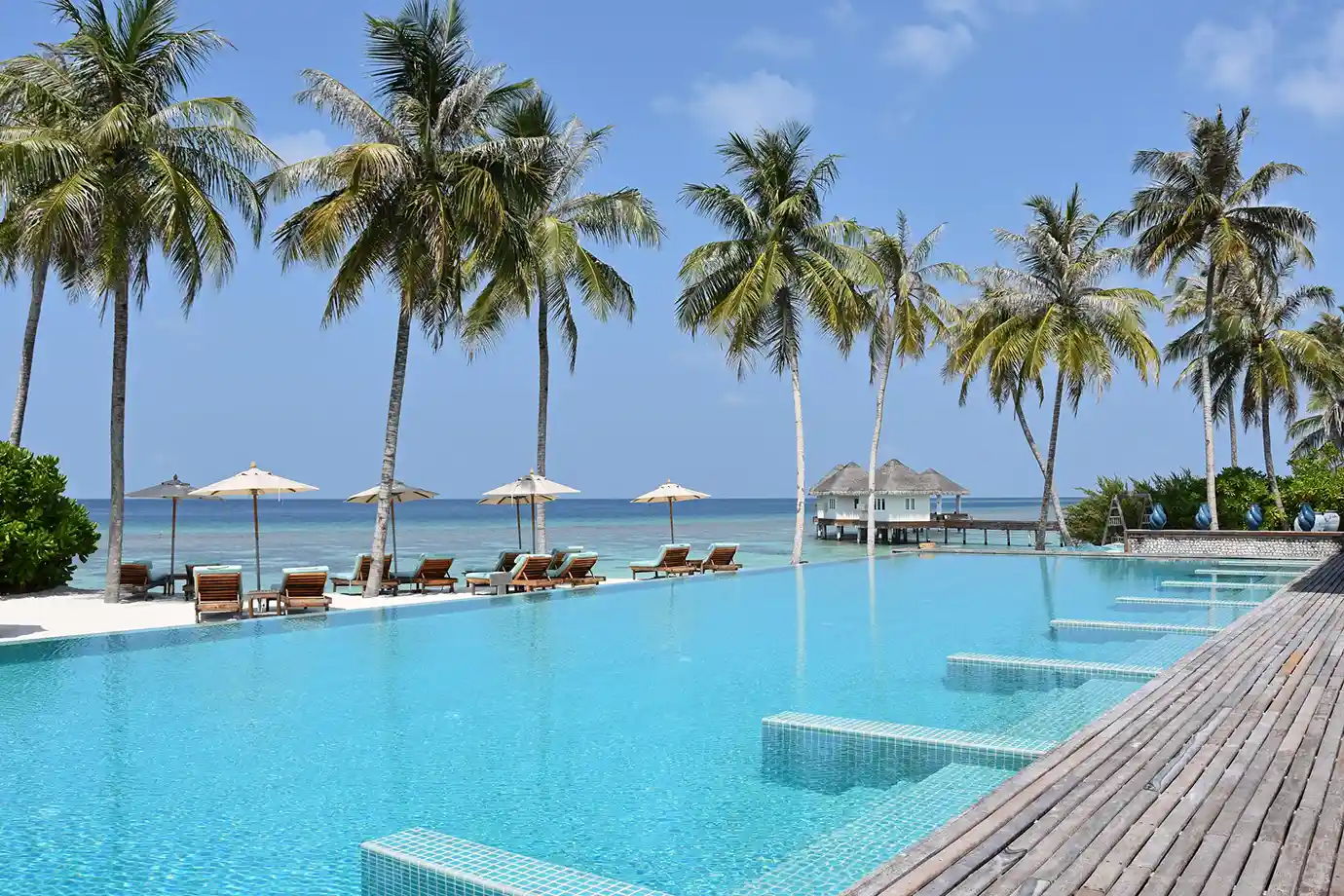
You get house-reef snorkeling from your villa steps, marine-biologist reef safaris, and an overwater villa for total privacy. Manta rays gather in Baa Atoll from June through November, and whale sharks patrol Ari Atoll year-round. A half-board or all-inclusive plan removes all the small decisions.

Why Stone Then Sea, Not Sea Then Stone
Run Oman first for three reasons. Its forts, dune climbs, and mosque tours all reward a rested traveler, so the effort is best left at the start.
Most GCC residents can reach Oman for a long weekend, but rarely the Maldives, so the harder-won half sits at the front. And ending on a Maldivian island closes the Trip on its highest sensory note, which is the part memory keeps.
Who the Combo Suits Best
The combo fits travelers who want a story with an arc, not just a beach. Honeymooners and milestone couples lead the list.
GCC residents extending a regional trip fit well. So do Europeans who want more than a Dubai stopover, and repeat Maldives visitors adding a first trip to Arabia. Small groups of four to eight can share a private guide in Oman and take separate villas in the Maldives.
Who Should Skip It
Some travelers should pick one country. Skip the combo if you cannot handle heat, since the Oman window runs only from October to April.
Skip it if you have fewer than nine nights, because the two halves need room. And skip it if you want Dubai-style malls and nightlife, because Oman is deliberately not that.
How Many Days to Spend in Each Country
Pacing decides whether the Trip feels rich or rushed. Give Oman too little, and it shrinks to a two-day drive-through.
Match the framework to your leave, then hold the order. Oman first, Maldives last.
The 10-Day Framework: The Balanced Combo
Six nights in Oman, four nights in the Maldives. For most first-time combo travelers, this is the flagship pace.
Oman covers Muscat, Nizwa, and the interior, a Wahiba Sands desert night, a Jebel Akhdar mountain night, and a coastal or Musandam finish. The Maldives fits a premium mid-range or lower-luxury resort in Baa or Ari Atoll by seaplane. Best for honeymooners, milestone couples, and anyone doing the combo for the first time.
The 7-Day Framework: The Compressed Combo
Four nights in Oman, three nights in the Maldives—best for GCC residents who cannot take a longer leave.
Oman covers Muscat, a day trip to Nizwa, and one overnight at Wahiba Sands. The Maldives sits in the North or South Malé Atoll, reached by speedboat, which skips the seaplane cutoff. You give up Jebel Akhdar, Musandam, and a full interior loop at this length.
The 14-Day Framework: The Full Trip
Eight or nine nights in Oman, five or six nights in the Maldives. For retirees, milestone anniversaries, and small groups, this is the whole story.
Oman adds Musandam’s fjords and, in the July to September Khareef season only, a fly-in to green Salalah. The Maldives adds a two-island split. Nothing is rushed.
Why the Order Matters: Oman Always First
Keep Oman first for the same three reasons. The active half needs your energy; GCC travel patterns favor Oman-first routing, and the reef makes for a better finish.
How to Split the Oman Days
Build the Oman leg up as nights allow:
- 4 nights: Muscat 2, Wahiba Sands 1, Nizwa and the interior 1
- 6 nights: add Jebel Akhdar 1 and a Wadi Shab or Sur coast night 1
- 8 nights: add Musandam 2 via Khasab
- Salalah: a fly-in add-on for 14-day trips, July to September only
What Not to Do
Skip Salalah from December to February, since the Khareef mist that makes it green runs from June to September. Skip driving from Muscat to Salalah on a combo trip, because the road runs about 1,000 km. And skip basing the whole Oman leg in Muscat, since the country’s real character sits inland.
Not sure how to split your days? Tell our Muscat team your dates, and we will size the Trip around them.
Flying Between Muscat and Malé
No direct Muscat-to-Malé flight operates at the moment. Here is how to travel from Oman to the Maldives without losing a day: every routing goes through one Gulf hub, and the whole journey runs about 8 to 10 hours, including the layover.
Get the corridor and timing right, and your Maldives arrival day stays smooth. Get it wrong, and you lose a day to a Malé overnight.
The One-Stop Reality
Plan on one stop between MCT and MLE. Oman Air used to run a nonstop service, but it was discontinued, so do not count on a direct flight unless the airline revives it.
The three practical corridors are Abu Dhabi on Etihad, Dubai on Emirates or flydubai, and Doha on Qatar Airways. Flights to Abu Dhabi on Etihad are often the fastest single-carrier option, at around 8 hours 15 minutes total.
Corridor Comparison
Pick your hub by priority:
- Via Abu Dhabi on Etihad: often fastest, single-carrier ticket, bags checked through
- Via Dubai on Emirates or flydubai: highest frequency and usually the best fares
- Via Doha on Qatar Airways: clean single-carrier ticketing, good for a Doha stopover
- Via Colombo on SriLankan: only worth it if you fold Sri Lanka into the Trip
Fares and Booking Strategy
Muscat to Malé economy fares on a one-stop ticket usually run in the mid-three-digit-dollar range one way, especially during the December to March peak. Business class runs about two to three times as much as economy.
Book 60 to 90 days out for high season. Our Muscat office prices the corridor inside the 10-day package so the legs line up.
Ticketing Strategy for Combo Trips
Book Muscat to Malé to your home city as a single multi-city ticket, not two return tickets. Etihad, Emirates, Qatar Airways, and Oman Air all handle the build.
A single itinerary also protects your baggage and your connection if a leg slips. Peregrine coordinates the ticketing so the seaplane window still works.
Matching the Seaplane Cutoff
Seaplane transfers in the Maldives operate only in daylight, roughly 06:00 to 15:30. Your Malé arrival needs to land at least two hours before that cutoff.
So choose a morning departure from Muscat and a midday arrival in Malé. A late-afternoon arrival pushes you into an unplanned Malé overnight. A speedboat resort in North or South Malé avoids the problem, since boats run at night. Our Muscat office checks every booking against the seaplane window before ticketing.
Airport Logistics: MCT and MLE
Muscat International (MCT) sits about 32 km from the city center, 25 to 35 minutes by road. The terminal was rebuilt in 2018, handles transit well, and has a Primeclass lounge for premium travelers.
Velana International (MLE) sits on its own island, linked to Malé by the Sinamalé Bridge, with the seaplane terminal inside the airport complex. Resort teams meet you in the arrivals hall.
Visa and Entry Requirements
Entry to both countries is straightforward, and most travelers do not pay for an Oman visa at all. Sort your documents a week ahead, and immigration takes minutes.
Oman Entry: Visa-Free for Most, e-Visa for Some
Most Western visitors enter Oman visa-free. Passport holders from the US, UK, Canada, Australia, and most EU and Schengen countries are eligible for a 14-day visa-free stay with no e-visa required and no fee. GCC nationals never need a visa.
For longer stays or for other nationalities, apply for the e-visa on the Royal Oman Police portal. The tourist e-visa costs about $52 for a 30-day single-entry visa or about $130 for a 1-year multi-entry visa. Your passport must remain valid for 6 months after entry.
Maldives Visa on Arrival
The Maldives grants a free 30-day visa on arrival to most passports, with no advance application. Entry is not granted on Israeli passports as of 2026.
You need a passport valid at least one month beyond arrival, a confirmed resort booking, and an onward ticket. Complete the online Traveler Declaration within 96 hours of landing, which generates a QR code for Malé immigration.
Documentation Checklist
Carry these for both legs:
- Passport with six months’ validity and two blank pages
- Oman e-visa printout, if your nationality requires one
- Maldives Traveler Declaration QR code
- Confirmed hotel bookings for both countries
- A return or onward flight ticket
- Travel insurance certificate
- Yellow fever certificate, only if you arrive from an endemic country
Alcohol and Restricted Items
Do not carry alcohol from Muscat duty-free into the Maldives, because Malé customs will confiscate it. The Maldives bans alcohol imports outright, and it is served only on resort islands.
Oman allows a duty-free alcohol allowance of about two liters per non-Muslim adult, though you should check the current figure. Vaping products and some prescription medicines carry restrictions in Oman, so confirm before you pack.
Departure Fees
Both airports charge fees that sit inside your ticket price, so you rarely pay them at the desk. The Maldives charges foreign economy passengers a $50 departure tax plus a $50 airport development fee, $for a total of $100 and more in business class.
Oman runs a standard exit process at Muscat with no separate tourist departure tax. Book your return seaplane to reach Malé at least two hours before your international flight.
Cultural Etiquette: Two Countries, Two Codes
The combo hits two very different cultural registers in ten days, and a little prep keeps you comfortable in both. Oman runs conservatively and is courteous. Maldives resorts run relaxed and international.
Oman’s Register
Oman is one of the warmest countries in the Gulf and one of the more modest in dress and public conduct. Both are true at once. Travelers who prepare read as respectful.
Dress for Mosques, Forts, and Souks
At the Sultan Qaboos Grand Mosque in Muscat, women cover their shoulders, arms to the wrists, ankles, and hair, and a headscarf is provided if you forget one. Men wear long trousers and covered shoulders. Non-Muslim visitors are welcome outside prayer times, and photography is allowed.
At forts like Nizwa and Bahla and in the souks, modest dress is expected but relaxed. Long, light fabric over the shoulders and knees works for the heat. Ask before photographing local people, especially women, and expect friendly bargaining in the souk.
Public Behavior in Oman
Keep public affection minimal: holding hands is fine, but more is not. Drink only inside licensed hotels and resorts, never in public.
During Ramadan, do not eat, drink, or smoke in public in daylight, though hotels still serve non-Muslim guests indoors. Ramadan shifts about 11 days earlier each year, so check the exact dates for your travel year before booking.
The Maldives Register
Resort islands run to international standards, so swimwear at the pool, alcohol at the bar, and smart-casual dinners are all normal. No religious observance is asked of guests.
Inhabited local islands run to Maldivian standards, since the country is fully Muslim. If you take a local-island excursion, cover your shoulders and knees in public, and leave alcohol at the resort. For a resort-only stay in the Maldives, no special prep is needed.
Working with Omani Guides and Drivers
Peregrine’s Oman guides and drivers are Omani nationals who speak fluent English. Accept the coffee, called kahwa, when it is offered, since sharing it is part of the welcome.
Tips are appreciated at the end of the Trip, roughly $15 to $20 a day for your guide and about half that for your driver on a 10-day itinerary.
When to Go: Seasonal Alignment
The combo works from mid-October through mid-April, when both countries stay cool and dry. Aim for that window, and you get comfortable Oman days and reliable Maldives sun at once.
Oman is the limiting factor, since its summers are brutal. The Maldives is pleasant most of the year,r but best in the same months.
The Window
Mid-October to mid-April is the sweet spot. Oman drops below 32°C by day, coastal humidity clears, and interior mornings turn cool. The Maldives sits in its December to April dry season, and the overlap runs late October to early April.
Month-by-Month Guidance
Each month has its own trade-off:
- Late October: Oman cools fast, and the Maldives leaves the wet season. Good value on both.
- November: fine weather in Oman; the Maldives dry season sets in. Strong shoulder value.
- December: peak in both, with 40-60 percent holiday premiums. Book by August.
- January: both at their best, with a Chinese New Year premium at some Maldives resorts. Great for whale sharks and mantas.
- February: the single best month. Both countries peak, and prices ease from January.
- March: Oman starts to warm, and the Maldives stays dry—a strong option.
- April: late-season value, but the Oman interior heats up fast after mid-month.
- May to September: Oman runs 40 to 48°C and drops out. The exception is Salalah, green and cool under the Khareef monsoon, an entirely different trip.
Weather Nuance to Pack For
Pack for the range in Oman, because the interior and coast differ. Jebel Akhdar sits at 2,000 meters and can be near freezing on December and January nights, so bring a fleece.
Coastal Muscat and Musandam stay 20 to 28°C by day through winter. The Maldives has warm, humid weather year-round, with shorter storms during the May to November wet season.
Premium Dates to Book Early or Avoid
Christmas and New Year in the Maldives carry the steepest premiums and minimum stays. Chinese New Year runs high at China-focused resorts.
The two Eid holidays in Oman bring premium coastal pricing and busier interior sites; their dates shift each year, so confirm them for your travel year.
Building Your Oman Segment
The Oman half needs a real route, because most travelers underestimate the country’s scale. Plan it as a loop from Muscat through the interior, not a set of day trips from the capital.
Here is what to include as your nights grow.
Muscat, Two Nights
Base in Muscat for the culture and the coast. Visit the Sultan Qaboos Grand Mosque in the morning, before its 11:00 non-Muslim visitor window closes, then the Mutrah Corniche and Souk.
Add the Royal Opera House and the Bait Al Zubair museum for context on Omani life. Coastal hotels in Al Mouj, Shatti Al Qurum, or Bandar Jissah make easy bases, and the Grand Hyatt Muscat is a proven pick.
Nizwa and the Interior, One Night
Nizwa is the old capital and the gateway to the interior. Climb Nizwa Fort in the morning, then work the souk, where a Friday livestock auction draws a crowd worth planning around.
Add the UNESCO World Heritage sites in Oman fort at Bahla, Jabrin Castle, and the mountain village of Misfat Al Abriyeen with its pre-Islamic falaj water channels. A heritage inn like the Golden Tulip Nizwa suits the night.
Jebel Akhdar, One Night
Jebel Akhdar, the Green Mountain, sits on a plateau at 2,000 meters where the air turns cool. Terraced villages grow pomegranates, roses, and walnuts along the ridgelines.
Walk to Diana’s Point and the abandoned village of Wadi Bani Habib. Alila Jabal Akhdar and Anantara Al Jabal Al Akhdar both sit at the target tier and hang right over the canyon.

Wahiba Sands, One Night
A desert night is non-negotiable for a first trip to Oman. Drive the dunes in late afternoon, sleep at a proper desert camp with private bathrooms, and climb a dune at sunrise.
Skip the budget tent camps at this trip tier and choose a camp like Desert Nights Camp among the 30-meter dunes. The return route can pause at the freshwater pools of Wadi Bani Khalid for a swim.
The Coast, One Optional Night
Add a coastal night on a six-night Oman leg for a change of pace. Sur still builds wooden dhows by hand, and the Ras Al Jinz reserve protects nesting green turtles year-round, with a peak from July to October.
Wadi Shab rewards a short hike and a swim into a hidden cave pool. A coastal base near Sur ties it together.
Musandam, Two Optional Nights
Musandam is the far northern exclave, all cliffs and fjords, often called the Norway of Arabia. Cruise the fjords by dhow with snorkeling and dolphins alongside.
Base in Khasab, reached by a short domestic flight on Oman Air or Salam Air, or a drive through the UAE. Add it to an eight-night Oman leg.
Building Your Maldives Segment
The Maldives half should be quiet, because you arrive already full of activity. Spend the recovery budget here and keep the plan light.
Match the atoll and villa to a short, restful stay.
Resort Tier for the Combo
Target premium mid-range to lower luxury, roughly $700 to $1,600 per villa per night. The Oman leg has already spent your culture budget, so the Maldives leg spends the recovery budget.
You do not need the $15,000-a-night island to rest well. The water is the same blue at every tier.
Atoll Choice by Stay Length
Pick your atoll by nights and pacing. For a four-night stay, a Baa Atoll resort shines from October to April for coral and June to November for mantas, and Ari Atoll runs strong year-round for whale sharks, both by seaplane.
For a three-night stay on the compressed combo, choose North or South Malé Atoll, where a speedboat removes the seaplane cutoff. For six nights or more, split between two islands, one for the reef and one for privacy. Peregrine matches the exact resort to your dates.
Resort Style to Match a Combo Trip
Choose calm over busy, since the combo crowd arrives activity-tired. Private-pool villas beat standard overwater rooms for real quiet.
Adults-only or small islands suit honeymooners, and resorts with strong marine-biologist programs beat big kids-club resorts for this audience, unless you travel with children.
Villa Type
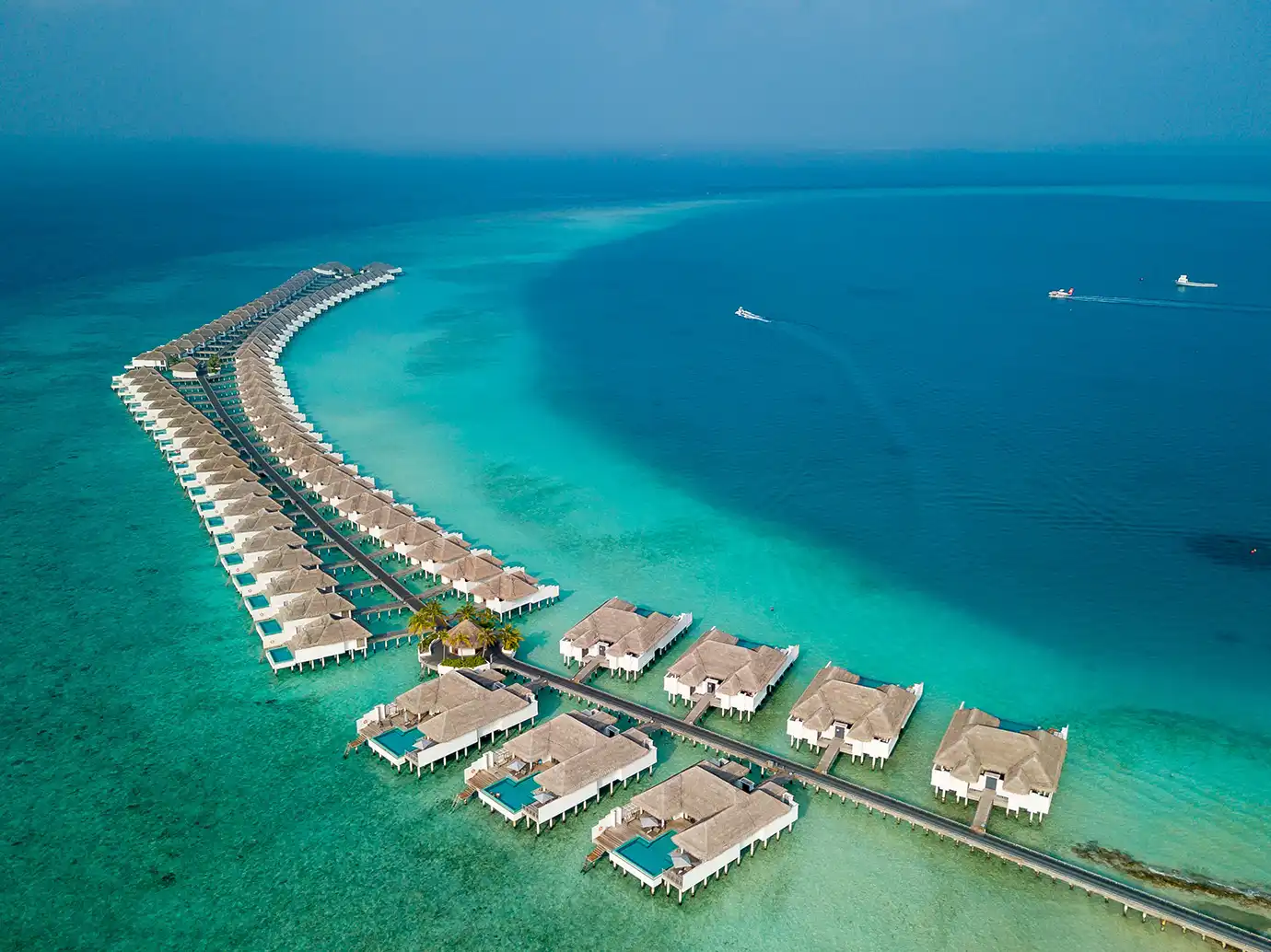
A beach villa with a plunge pool is private, cheaper, and perfect for stargazing after the desert. An overwater villa is the postcard and earns its premium for at least part of the stay.
On a five-night leg, split the villa: three nights on the beach, two over the water.
What to Book in Advance
Book little, because overbooking the Maldives defeats the point. Reserve one signature dinner per couple for every three nights, one marine-biologist reef safari, and one sunset or dolphin cruise.
Leave the rest open. For deeper help choosing an island, see our standalone Maldives luxury tour guide.
Peregrine’s Muscat Office: The Local Authority
Peregrine’s strongest asset on this Trip is a real office in Muscat, staffed by Omani nationals. Local presence is what separates a smooth Oman leg from a string of hopeful bookings.
What Local Presence Changes
Ground problems get solved in real time. A vehicle issue on the Nizwa-to-Wahiba road requires a replacement in a couple of hours, not a call-center ticket.
Cultural context comes from Omani guides whose own families have used the falaj channels at Nizwa, not from a memorized tourist script. And safety on desert and mountain segments follows Omani licensing standards, with vehicles carrying satellite communication and camps holding current permits.
How the Combo Is Run
The Muscat office coordinates the entire Oman segment and schedules your MCT departure to align with the Maldives seaplane cutoff. Our Maldives team then handles the resort transfer and stay.
One booking, two ground teams, and a single advisor as your point of contact. Property partners across Muscat, Nizwa, Jebel Akhdar, and Wahiba are inspected by the local team, not booked sight unseen.
Costs and Budgeting Framework
Luxury here costs less than the ultra-luxe headlines suggest, and the split between the two countries is predictable. Plan in three buckets, and the final bill holds no surprises.
The Three Cost Buckets
Break down your budget into accommodation, flights, and on-the-ground spending. Accommodation is the biggest, split between an Oman heritage stay and a Maldives villa.
Flights cover the long-haul and the one-stop Muscat-to-Malé corridor. On-ground spend covers your private Oman guide-driver, meals outside the resort inclusions, tips, and the upgrades you talk yourself into.
Rough Split for the 10-Day Trip
On the 10-day flagship, expect roughly 30 to 35 percent on Oman, 50 to 55 percent on the Maldives, and 12 to 18 percent on flights. Oman carries more weight than a Sri Lanka combo, because guide-driver and heritage-property rates run higher.
The Maldives still takes the largest single share, since villas and seaplanes are not cheap.
Where All-Inclusive Saves
All-inclusive pays off in the Maldives for stays of four nights or more, especially for travelers who drink alcohol. On the Oman side, skip full board, since meals at heritage properties, desert camps, and Muscat restaurants are included in the Trip.
Taxes and Service Charges
Both countries add tax on top of the listed prices. Omani hotels add about 5 percent VAT, a 4 percent tourism tax, and a 5 percent municipality tax, plus a service charge, so budget close to 20 percent on the room.
The Maldives adds a $ 12-per-person-per-night green tax, a 10 percent service charge, and 17 percent GST, and most resorts fold the last two into your quoted rate.
Contingency
Keep 15 to 20 percent of your on-ground budget in reserve. A villa upgrade in Baa Atoll, a private dhow charter in Musandam, or a guided wadi swim will tempt you once you are there.
For current pricing on the 10-day package, our Muscat and Maldives teams reply within 24 hours.
Peregrine’s 10-Day Oman and Maldives Luxury Package
Our flagship runs six nights in Oman and four in the Maldives, pre-set to the October to April window. A private Omani driver-guide runs the Oman leg, and the MCT departure is timed to the Maldives seaplane cutoff.
It is the fastest way to visit both countries without having to plan a thing.
What’s Included
The package is built to cover the route end-to-end:
- Muscat airport meet-and-greet
- Six nights across Muscat, the interior, Jebel Akhdar, Wahiba Sands, and the coast
- A private Omani driver-guide throughout
- A season-appropriate vehicle, with 4WD for the desert
- Entries and transfers for the Grand Mosque, Nizwa Fort, Bahla Fort, and the Wahiba Desert camp
- A stop at the Wadi Bani Khalid pools
- The one-stop Muscat to Malé flight
- Four nights at a premium mid-range or lower-luxury Maldives resort
- Seaplane transfers to and from the resort
- An overwater villa on half-board or all-inclusive
- 24-hour advisor support via WhatsApp
Who It Fits
The 10-day package suits travelers with a 10 or 11-day window who want both countries handled. Honeymooners, milestone couples, and GCC residents seeking a regional-plus-recovery trip are the core audience.
Repeat Maldives visitors adding a first Arabian trip fit well, as do small groups of four to eight.
What Does Not Fit
Travelers with only seven days should take the compressed combo instead. Anyone set on Salalah needs the July-to-September window and a separate itinerary.
Travelers chasing ultra-luxe Maldives islands can upgrade, but the base package targets premium mid-range to lower luxury.
Customization Points
The package flexes without breaking the timeline. Common changes include a private-pool overwater villa, a two-night Musandam extension, and a Maldives resort-tier upgrade.
You can add a Salalah fly-in for summer travelers or a two-island Maldives split on a 12-day version. To see the full itinerary and inclusions, ask our Muscat team for the 10-Day Oman and Maldives Luxury Package. Want the 14-day version with Musandam or Salalah? We can build that too.
Frequently Asked Questions
Can I do this Trip in reverse, Maldives first and Oman second?
You can, but we do not recommend it. Oman rewards a rested traveler with early fort visits, dune climbs, and mosque tours that all take energy. Ending on the reef also closes the Trip on its highest note. Most GCC and European routings reach Oman easily, too, so Oman-first avoids a backtrack. Save the Maldives for last, and the holiday ends with pure rest rather than an early start.
Is 7 days enough for both countries?
Yes, if you keep it tight. A compressed combo of four nights in Oman and three nights in the Maldives covers Muscat, a day in Nizwa, one desert night, and a restful island stay. It suits GCC residents on limited leave. You give up Jebel Akhdar, Musandam, and a full interior loop at this length. If those matter, step up to the 10-day flagship, which adds the mountain and a fuller Oman circuit.
Do I need two separate visas?
Usually just one, and often none for Oman. Most Western passport holders get a 14-day visa-free stay in Oman with no fee, and GCC nationals need nothing. Other nationalities apply for the Oman e-visa online. The Maldives grants a free visa on arrival, with an online Traveler Declaration filed within 96 hours of landing. Sort out any Oman e-visa a week in advance and complete the Maldives declaration a day or two before travel.
Are direct flights from Muscat to Malé available?
Not right now. Oman Air used to run nonstop, but that service was discontinued, so plan on one stop through a Gulf hub. Etihad via Abu Dhabi is often the fastest single-carrier option at around eight hours total, while Emirates or flydubai via Dubai usually offer the best fares and frequency. Book a morning Muscat departure so your Malé arrival still catches the daylight seaplane window.
Is Oman safe for couples and solo travelers?
Very. Oman is one of the safest countries in the region, with low crime and a calm, welcoming culture. Couples and solo travelers, including women, generally report feeling comfortable, especially with modest dress at heritage and religious sites. Roads are excellent, and Peregrine’s Omani driver-guides handle the interior and desert legs. Normal travel sense applies, but Oman rarely gives cause for worry.
Can I drink alcohol in Oman?
Yes, within limits. Licensed hotels and resorts serve alcohol to non-Muslim guests so that you can enjoy a drink with dinner at your hotel. Public drinking is not allowed, and you cannot buy alcohol in ordinary shops. Do not carry duty-free alcohol onward into the Maldives, since Malé customs will take it. On the Maldives resort half, alcohol flows freely at bars and restaurants.
What if my Trip falls during Ramadan?
The Trip still works, with small adjustments in Oman. During daylight in Ramadan, avoid eating, drinking, or smoking in public, though hotels serve non-Muslim guests indoors. Some sites keep shorter hours, and the mood is quieter and more reflective. The Maldives resort half runs as normal, with full food and alcohol service. Ramadan shifts by about 11 days each year, so check the exact dates for your travel year.
Can families with young children do this Trip?
Yes, though older children get more from the Oman half. Fort visits, desert drives, and early starts suit kids who handle a full day out. Toddlers may find the Oman leg tiring, so consider a shorter interior loop and a longer, calmer island stay. The Maldives is easy for all ages; many resorts run kids’ programs. Tell your advisor the ages and the route adjustments.
Do I need special clothing for the Grand Mosque?
Yes, the Sultan Qaboos Grand Mosque has a firm dress code. Women cover their shoulders, arms to the wrists, ankles, and hair; a scarf is available at the entrance if you forget. Men wear long trousers and a top that covers the shoulders. Non-Muslim visitors are welcome outside prayer times, usually in the mornings before 11:00. One modest outfit in light fabric is required for the mosque, the forts, and any Maldives local island visit.
How far in advance should I book?
Book four to six months out, and earlier for the December-to-March peak. Heritage properties, desert camps, seaplane resorts, and premium-cabin seats sell out first. Christmas, New Year, and Chinese New Year need six to twelve months and carry surcharges. Shoulder months like late October, November, and April can work on shorter notice. For a specific villa or a Musandam extension, book early, since space is thin.
Plan Your Desert-to-Ocean Trip
You now have the four decisions that make the combo work: the flight corridor, the day split, the season, and the cultural prep for Oman. The next step is turning them into dates.
Send Peregrine your rough plans, and our Muscat office will size the Oman leg, time the one-stop flight to protect your seaplane connection, and hand the Maldives stay to our island team as a single coordinated booking. We reply within 24 hours by email or WhatsApp, with a real advisor on the line. Our Muscat office runs every Oman trip on the ground, and our wider teams cover the region from Kathmandu. If you would rather skip the planning, the 10-Day Oman and Maldives Luxury Package has every logistic pre-built. The stone comes first. The sea comes last.