

Based on 746 reviews

Sri Lanka Luxury Safari

Duration
9 Days

Meals
- Breakfast: 9
- Lunch: 4
- Dinner: 7

Accommodation
- Leopard Trails Wilpattu
- Uga Ulagalla
- Cultural Triangle lodge
- Wild Coast Tented Lodge
- Yala camp
- Cape Weligama

Activities
- Safari
- Sightseeing
Overview of Sri Lanka Luxury Safari
The Wild Sri Lanka Luxury Safari is a 9-day private wildlife circuit built around three of the island’s greatest sights. You track the leopard, you watch the elephant gathering, and you search for the blue whale.
You follow the Sri Lankan leopard through wild, uncrowded Wilpattu and through Yala, which holds the world’s highest recorded leopard density. You then witness the gathering at Minneriya or Kaudulla, where Asian elephants mass by the hundred in the dry season.
You reach the south coast and head out from Mirissa for the blue whale, the largest animal that has ever lived. You travel by private vehicle, riding in your own jeep with a naturalist-tracker. You sleep in luxury tented camps such as Leopard Trails and Wild Coast Tented Lodge.
The optimal sightings occur in separate seasons, so the best months balance them, and no sighting is ever certain. The circuit pairs naturally with a Maldives finish.
Can You See a Leopard, an Elephant, and a Blue Whale in Sri Lanka in One Trip?
Yes. A single nine-day circuit can take in the Sri Lankan leopard, the Asian elephant gathering, and migratory blue whales. Sri Lanka’s compact marine and terrestrial ecosystems place all three within a tight loop. Leopards live in Yala and Wilpattu, elephants gather in their hundreds at Minneriya, and blue whales pass off Mirissa.
The three peaks are at their best in different seasons, so the best window is a balance among them. A good operator plans around that calendar rather than promising every sighting.
Core Trip Facts
| Fact | Detail |
|---|---|
| Duration | 9 days / 8 nights |
| Style | Wildlife and nature, luxury, private. Naturalist-led, for 1 to 6 guests |
| Wildlife focus | Leopard, Asian elephant (The Gathering), and blue whale, plus sloth bear, crocodile, and 200+ birds |
| Parks and sites | Wilpattu, Minneriya / Kaudulla / Eco Park, Yala (Block 1), and the Mirissa whale grounds |
| Group size | Private departures, with your own jeep and naturalist-tracker |
| Physical grade | Moderate. Early 5:00 to 5:30 a.m. starts, bumpy 4×4 tracks up to four hours, and a possibly choppy whale boat |
| Best season | Season-dependent. Broadly, February to April for whales and leopards, August to September for the gathering |
| Start/end | Colombo (CMB) to Colombo (CMB) |
| Accommodation | Luxury tented camps and lodges, such as Leopard Trails, Wild Coast Tented Lodge, and Cape Weligama |
| Departures | Private daily departures, subject to park seasons |
| Customization | Add a Maldives finish, the Cultural Triangle, Sinharaja, Bundala birding, or extra days in any park. |
The circuit is arranged after a private consultation and is never sold from a fixed shelf. We tailor the route and camps to your travel month and interests.
Detail Itinerary of Sri Lanka Luxury Safari
Day 1 — Arrive Colombo, and Drive North to Wilpattu
Arrive at Bandaranaike International Airport and meet your dedicated private chauffeur directly past the arrival gates. Your driver provides chilled water and cold towels, then steers your private vehicle north toward the dry zone.
Within an hour, the city thins into coconut estates, roadside fruit stalls, and the flat green of paddy. The drive to Wilpattu runs around three and a half hours, and the country grows wilder with every mile, until the tar gives way to a red dirt track and the gate of Leopard Trails appears among the trees.
The camp meets you the old way, with a welcome drink in the shade and a quiet hand with your bags. Your tent is canvas but far from rough, with a proper bed, crisp linen, an en-suite bathroom, and air-conditioning against the dry-zone heat. The wilderness presses right up to the veranda, and the only sounds are birdsong and the distant whoop of a langur.
As the light softens, your resident naturalist sits with you over tea and lays out the plan. You hear how the team reads Wilpattu, where the leopards have been moving, and which villas are holding water this week. Dinner is fresh Sri Lankan rice and curry under the stars, and you turn in early, because the first drive leaves in the dark.
Night falls fast and completely out here, with no town glow for fifty miles. The dark fills with sound, the saw of insects, the far call of a nightjar, the occasional crash of something large in the scrub, and you fall asleep already half in the wild.
Drive: Colombo (CMB) to Wilpattu, around 3.5 hours by private car
Today: Arrival, settling in, and an evening wildlife briefing with your naturalist
Meals: Dinner at camp
Overnight: Leopard Trails Wilpattu
Accommodation: Leopard Trails Wilpattu
Meal: Dinner at camp
Day 2 — A Full Day in Wild, Quiet Wilpattu
The jeep pulls out before sunrise, headlamps catching the eyeshine of a spotted deer at the track edge, and the cold air smells of dust and crushed leaves. Wilpattu is Sri Lanka’s largest park, and it wears its size in silence. You can drive for an hour without meeting another vehicle, which is the whole point of starting here. Your tracker reads the road like a page, pausing at a fresh pugmark pressed into the sand, listening for the alarm call that betrays a moving cat.
The villus opens the forest at intervals, wide natural lakes ringed with pale sand where buffalo wallow and painted storks stalk the shallows. A sloth bear may shuffle across a clearing in search of palu fruit, black and shaggy and surprisingly quick. The leopards here are wilder and warier than Yala’s, so a sighting feels earned, a long body flowing off a branch or a face watching you from the scrub before it melts away.
Mid-morning, you stop at the edge of a valley for a bush breakfast, the camp’s hampers unpacked on a folding table while a sea eagle turns overhead. You rest through the white heat of midday back at camp, then head out again as the light goes gold and the animals stir. Evening returns you to the firepit, a drink in hand, trading the day’s sightings with your guide before dinner.
Game drives: Pre-dawn and late-afternoon private 4×4 drives in Wilpattu
Today: Tracking leopard and sloth bear among the villus, with a lakeside bush breakfast
Meals: Breakfast, lunch, and dinner
Overnight: Leopard Trails Wilpattu
Accommodation: Leopard Trails Wilpattu
Meal: Breakfast, lunch, and dinner
Day 3 — A Dawn Drive, Then East to the Elephant Country
You take one more dawn drive through Wilpattu while the air is still cool, hoping for the leopard the park has been hiding, then return to break camp after breakfast. The car turns toward the Cultural Triangle, a run of roughly three hours through tank country, where ancient reservoirs built by kings still water the land. Egrets ride the backs of working buffalo, and the great dome of a dagoba rises white above the treeline as you near Habarana.
The transfer is part of the safari, not a gap in it. Local markets and active temples flank the roadside, with schoolchildren in white walking the verges, and your guide keeps up a quiet running commentary on the country you cross.
After lunch and a rest at your lodge, the afternoon belongs to the elephants. Your naturalist makes the call on the day, choosing between Minneriya, Kaudulla, and Hurulu Eco Park based on where the water has dropped and where the herds have moved. You enter the park as the heat eases, and the grass plains around the tank come alive.
The first elephants emerge from the treeline in ones and twos, then in family groups, drifting down to the water to drink, bathe, and roll in the mud. By late afternoon, the numbers build, and the light turns the dust to gold behind them. You watch from a respectful distance as calves shelter beneath their mothers and young bulls test their strength, and the scale of it settles on you slowly.
Drive: Wilpattu to the Cultural Triangle / Habarana, around 3 hours
Today: A final Wilpattu dawn drive, then a late-afternoon elephant safari at the naturalist’s chosen park
Meals: Breakfast, lunch, and dinner
Overnight: Uga Ulagalla, Water Garden Sigiriya, or Jetwing Vil Uyana
Day 4 — Sigiriya at First Light, and a Second Look at the Herds
Those who want it rise before dawn for Sigiriya, the fifth-century rock fortress that lifts two hundred meters above the plain. You climb through the lion’s paws and the mirror wall as the mist burns off the jungle below, and the old frescoes glow in the early sun. The view from the summit takes in the whole green sweep of the country you are crossing.
Back at the lodge, the day bends to your pace. You can take a second elephant drive in the afternoon, when a different park or a shifted herd often rewards the patient, or you can simply rest. The Cultural Triangle lodges are built for slow hours, with pools set among paddy and forest, and you feel the safari rhythm settle into your body.
If you stay in, the grounds themselves repay attention. A grey hornbill calls from a flame tree, a monitor lizard suns itself by the water, and the afternoon drifts toward another quiet dinner under the stars.
Rest days earn their place on a safari this active. The body needs the pause before the long drive south and the dense leopard days to come, and the Cultural Triangle is the gentlest place to take it.
Today: Optional Sigiriya sunrise climb, then a second elephant drive or a slow day at leisure
Meals: Breakfast and dinner
Overnight: Cultural Triangle lodge
Day 5 — South to Yala, the Densest Leopard Land
Today covers ground, so you choose your way south. The five-to-six-hour drive to the Yala region reveals changing scenery, and some travelers enjoy it, while others take a domestic flight or a helicopter transfer to save time and get an extra drive. We lay out both honestly and let you decide.
By road, the country shifts from tank plains to the dry southeastern scrub, with glimpses of the coast as you near the park. You reach camp in the afternoon, whether the cocoon tents of Wild Coast Tented Lodge above a wild beach or the mobile camp of Leopard Trails beside the densest leopard habitat on earth.
Settling in is its own pleasure. You unpack into canvas luxury, take a cool drink as the heat fades, and meet your Yala naturalist for the evening briefing. You hear which leopards the trackers know by sight, how the team avoids the midday scrum, and where the early light will put you tomorrow.
The southeast feels different the moment you arrive, drier and harder-edged, with the salt of the sea already on the wind. Yala carries a charge that Wilpattu does not, the sense of a park where the cat is close and the odds run with you.
Drive: Cultural Triangle to Yala, around 5 to 6 hours by road, or a domestic flight
Today: Transfer south, settle into camp, and have an evening briefing
Meals: Breakfast and dinner
Overnight: Wild Coast Tented Lodge or Leopard Trails Yala
Day 6 — A Full Day in Yala’s Block 1
You leave camp in the dark, because the first hour after the gate opens is the finest of the day. Yala’s Block 1 holds the world’s highest recorded leopard density, and the trackers work it with a decade of mapped territories in their heads. They read fresh pugmarks in the track, the rasp of a peacock’s alarm, the way a herd of deer all turn to face the same patch of scrub.
The reward, when it comes, is a Sri Lankan leopard in the open, draped along a warm rock or padding down the track ahead of the jeep with the unbothered ease of an animal that fears nothing. Your private jeep means you can hold position for the light and the photograph rather than queue. When a sighting draws a crowd, your guide moves you on to a quieter zone, because the experience matters more than the tick.
The park gives far more than leopards. Elephants cross the plains, crocodiles bask at the waterholes, and the lagoons fill with painted storks and pelicans. A waterhole bush breakfast breaks the morning, then you rest through the heat and head out again for the long golden light of the afternoon drive.
By the end of the day, the park has shown you its rhythm. Mornings belong to predators on the move, midday to the shimmer of heat and the still waterholes, and late afternoon to the long shadows when the leopards stir again. You learn to read the day the way the animals do.
Game drives: Pre-dawn and afternoon private drives in Yala Block 1
Today: Tracking leopard in the world’s densest leopard habitat, with a waterhole bush breakfast
Meals: Breakfast, lunch, and dinner
Overnight: Yala camp
Day 7 — A Last Dawn Drive, Then the Indian Ocean
You take one final dawn drive in Yala, a last cast for the cat or the sloth bear, and the early light makes even the familiar plains feel new. The trackers often save a surprise for the last morning, a tusker at a waterhole or a leopard cub watching from a culvert, and you carry the image with you as you leave the park.
After breakfast, the car turns for the south coast, a run of around two and a half hours along the edge of the island. The dry scrub gives way to coconut and rubber, fishing boats appear on the lagoons, and then the Indian Ocean opens out ahead, wide and bright and blue.
You reach the clifftop villas of Cape Weligama by early afternoon, where the land falls away to the sea, and a crescent pool hangs above the water. The wild week loosens its grip. You swim, you rest, you watch the sun drop into the ocean, and you ready yourself for an early start on the water.
Leaving a park always carries a small ache, the pull of one more drive and one more chance. The coast answers it in its own way, trading the tension of the hunt for the wide ease of the sea, and the change does you good.
Drive: Yala to the south coast, around 2.5 hours
Today: A final Yala dawn drive, then an afternoon by the Indian Ocean
Meals: Breakfast and dinner
Overnight: Cape Weligama or a south-coast property
Day 8 — Dawn on the Water, in Search of the Blue Whale
You leave in the dark for Mirissa harbor, because the sea is calmest in the early hours and the whales feed close to the deep water offshore. A marine guide briefs you on the boat, and you motor out past Dondra Head toward the submarine canyon, where cold, nutrient-rich water rises, and the krill gathers. Spinner dolphins often find the boat first, riding the bow in long silver arcs.
Then someone spots the blow, a tall column of vapor hanging over the water, and the boat eases closer, engines idled and patience held. A blue whale surfaces in sections, the long slate-blue back rolling on and on, and finally the flukes lift and slide under as it sounds. The scale of the largest animal that ever lived does not fit in a photograph, and the whole boat goes quiet.
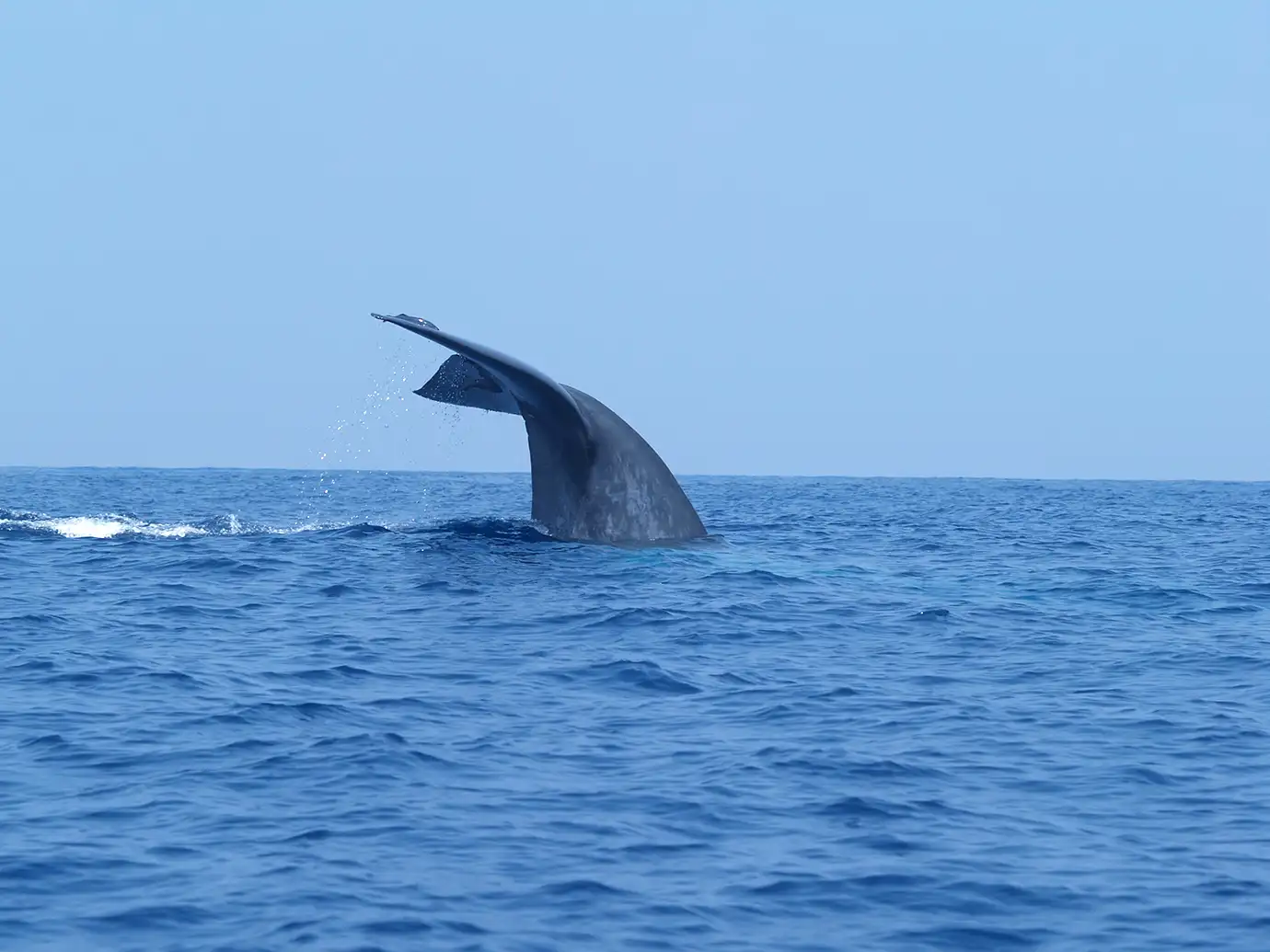
Some mornings, the sea stays empty because the ocean keeps its own counsel, and no sighting is ever promised. The boat respects the code throughout, keeping distance and never chasing. Back ashore by midday, you rest, or you drive twenty minutes to wander the ramparts of Galle Fort, a Dutch-colonial old town of churches, lighthouses, and sea walls.
The fort makes a fitting counterpoint to the wild week. You walk cobbled lanes between old merchant houses, watch local boys leap from the ramparts into the sea, and end the afternoon with a cold drink as the light turns the walls amber.
Today: An early ethical blue whale boat from Mirissa with a marine guide, then rest or a visit to Galle Fort
Meals: Breakfast
Overnight: South-coast property
Day 9 — A Last Coast Morning, Then Home or the Maldives
The final morning is slow and yours. You take a last swim, a long breakfast above the ocean, and a quiet hour with the sound of the surf before the car arrives. The week of early starts, dust, and wild animals has done its work, and you leave lighter than you came.
The drive to Colombo airport runs around two and a half to three hours along the southern expressway. We time it to your flight, with a comfortable buffer, and your specialist stays reachable to the gate.
Those not ready for the world hop instead to the Maldives for a few days of reef and sand, a soft saltwater coda to the wild. We arrange the connection and the seaplane, so the safari flows straight into the stillness.
Drive: South coast to Colombo (CMB), around 2.5 to 3 hours, or onward to the Maldives
Today: A relaxed coast morning, then departure or a Maldives extension
Meals: Breakfast
Overnight: Onward travel, or your chosen extension
The park order and the elephant park follow the season’s water and herd movement, not a fixed map. We build dawn and dusk drives, when predators are active, and a weather buffer around the early whale boat.
Customize this trip with help from our local travel specialist that matches your interests.
Includes & Excludes
What is included?
- 8 nights at luxury tented camps and lodges as stated, from canvas glamping to boutique resorts
- All private 4×4 game drives in your own jeep, with a dedicated resident naturalist-tracker
- All national park entrance fees, environmental levies, and tracker tips for the listed parks
- An ethical whale-watching excursion from Mirissa with a marine guide, in season
- All transfers in a private, air-conditioned vehicle with a dedicated chauffeur
- Full board at the safari camps, meals as marked elsewhere, bottled water, and field refreshments
- Park and conservation contributions, and 24-hour local support
What is excluded?
- International flights to and from Colombo
- Sri Lanka ETA (free for 40 nationalities since May 2026, others pay a modest fee)
- Travel insurance, which is mandatory
- Optional domestic flights or helicopter transfers between regions
- Gratuities for the chauffeur and camp staff, and alcoholic drinks unless stated
- Camera or video permits where applicable, personal expenses, and any Maldives extension
We also operate Private Trips.
Trip Information
Why a Sri Lanka Luxury Safari Delivers the Trifecta
Three apex experiences sit within reach in one compact week: the leopard, the elephant gathering, and the blue whale. Few destinations on earth hold all three so close together.
The leopards are special for a clear reason. The Sri Lankan leopard is the island’s apex predator, with no tigers or lions above it in the food chain. It moves boldly and is often active by day.
The honest qualifier becomes the backbone of this page. The three peaks are in different seasons, so we solve the calendar rather than gloss over it. We present the trifecta as remarkable, never as a promise.
The three animals also tell three different stories of the island. The leopard is the forest’s quiet king. The gathering is the dry season made visible. The blue whale is the deep ocean brought close to shore. Together, they read like a portrait of wild Sri Lanka.
Sri Lanka offers one of Asia’s most remarkable combinations of wildlife. Travelers track leopards, watch wild elephants, and search for blue whales within one carefully planned circuit.
How a Sri Lanka Safari Differs From an African One
Many of our guests are African safari veterans, so here is the honest comparison. Sri Lanka trades the open savanna for a compact, varied mosaic, all within short transfers.
You move through dry forest, villus and tanks, coastal scrub, and the edge of the Indian Ocean. Leopard sightings feel more intimate among the trees, and elephant viewing shifts with the water.
The island also adds a marine layer that most land safaris lack, out on the whale grounds. The luxury value sits in the guiding, the timing, and the camps, not in scale.
The transfers stay short by African standards, too. You move between three wildlife zones and the coast inside one compact island, not across vast distances. More time with animals and less time in transit is the quiet luxury here.
The wildlife itself rewards a different kind of looking. You trade the long-lens scale of the savanna for intimacy. A leopard sits a few meters up a tree, a herd fills a tank at dusk, and a whale surfaces near the boat. Closeness, not distance, defines the Sri Lankan safari.
The Wildlife: What You Will See
Sri Lanka is home to a dense, varied array of animals across a small island. Density is high, the odds are good, and still, no sighting is ever certain on a given day.
The island packs an outsized cast into a small space. Dry forest, wetland, scrub, and ocean each hold their own animals, and the circuit threads all four inside nine days. You meet far more than the famous three along the way.
The Sri Lankan leopard
The Sri Lankan leopard (Panthera pardus kotiya) is an endemic subspecies of the island’s apex predator—Yala’s Block 1 is the world’s highest recorded leopard density.
Wilpattu offers wilder, quieter sightings among its villus, the natural sand-rimmed lakes that give the park its character.
Yala draws more visitors than any other park for this reason. Wilpattu rewards patience instead, with a lonelier kind of sighting and far fewer jeeps to share it with.
Both parks run their own cat character. Yala’s leopards have grown accustomed to vehicles and often ignore them, resulting in long, open sightings. Wilpattu’s are shyer and quicker, so a clear look there feels like a gift you worked for.
The Asian elephant and The Gathering
The Gathering at Minneriya or Kaudulla is the largest seasonal congregation of Asian elephants on earth. Herds mass in the hundreds around the receding reservoir through the dry months.
You watch mothers with calves, sparring juveniles, and the slow evening descent to the water at golden hour.
The count can pass three hundred elephants on a strong evening. Few wildlife events anywhere match it for the sheer mass of a single species in one place.
The blue whale
The blue whale is the largest animal that has ever lived, and it passes the deep water off Mirissa in season. Sperm whales and spinner dolphins share the same grounds.
A resident population of blue whales lingers in these warm waters for much of the year. The submarine canyon off Dondra Head sits among the largest in the Indian Ocean, which is why the giants feed so close to shore.
Sightings run high in the right season, often well above eight mornings in ten, though the sea sets the terms. Some days, the whales stay far out or stay down, and the honest operators say so rather than chase.
Beyond the big three
Sloth bear, mugger crocodile, spotted deer, and water buffalo all share these parks. Over 200 bird species live here too, including many endemics such as the Sri Lankan junglefowl and the grey hornbill.
The dry-zone forest also shelters the star tortoise, ruddy mongoose, and painted-lip lizards. Birders often add dozens of species in a single morning around the tanks, from painted storks to sea eagles.
The reptiles earn their own attention. Mugger crocodiles bask along the waterholes, water monitors patrol the banks, and a python crossing a track stops every jeep. The dry zone teems with life at every scale.
Route Overview and Logic
The circuit runs in a tight loop. Colombo to Wilpattu first, then the Cultural Triangle for the gathering. Yala comes next, then Mirissa and the south coast, and a return to Colombo.
The order has a purpose. You start at Wilpattu in the northwest for wild, uncrowded leopards, then move to the north-central tanks for the gathering, with an optional Sigiriya morning. You cross to Yala in the southeast for the highest leopard density, then finish on the south coast for whales and rest.
The honest catch is one long leg. The drive from the Cultural Triangle to Yala takes five to six hours by road. We offer a domestic flight or a helicopter transfer to cut that haul and buy you an extra game drive, and we say so plainly.
We also built the loop to put the light where it matters. Dawn and dusk drives bracket the wildlife days, and the long road legs fall in the flat heat of midday. The plan protects your best hours for the animals.
The loop also keeps the long drives to a minimum. Wilpattu sits a short run from the airport, the Cultural Triangle and Yala chain through the interior, and the coast closes the circle near Colombo. You cross the island once, not back and forth.
Highlights and Experiences
A handful of moments define this circuit, and we protect each one inside a private, naturalist-led plan. None of them is a quick photo stop, and none is rushed to fit a fixed schedule. We would rather give one sighting its full time than race past three.
- Track the Sri Lankan leopard in Yala’s Block 1, the world’s densest leopard habitat.
- Find leopard and sloth bear in wild, uncrowded Wilpattu, among the villus
- Witness The Gathering, hundreds of elephants massing at Minneriya or Kaudulla at golden hour
- Head out from Mirissa for the blue whale, the largest animal that has ever lived
- Ride in your own modified 4×4 with a dedicated naturalist-tracker on every drive
- Sleep under canvas in air-conditioned luxury tents at the edge of the wild
- Finish on a clifftop coast, with Galle Fort and a Maldives extension within reach
Where You Stay
The camp is part of the safari, so we match each property to the region and the guest. Every base below is a genuine wildlife address, not a roadside hotel.
The Cultural Triangle lodges deserve a word of their own. Uga Ulagalla spreads across a fochieftain’s estate near Anuradhapura. Water Garden Sigiriya hides among ponds beneath the great rock. Jetwing Vil Uyana sits on an artificial wetland that draws its own wildlife. Each makes a calm, green base for the gathering and an optional Sigiriya dawn.
- Wilpattu (Leopard Trails): Luxury air-conditioned canvas tents with private en-suite bathrooms and hot showers, set in a quiet buffer zone.
- Cultural Triangle (Uga Ulagalla, Water Garden Sigiriya, or Jetwing Vil Uyana): Premium, eco-centric boutique resorts placed for the seasonal elephant drives and an optional Sigiriya morning.
- Yala (Wild Coast Tented Lodge or Leopard Trails Yala): High-end cocoon-style tents where the dry forest meets the Indian Ocean beach, or a mobile camp beside the densest leopard habitat.
- South coast (Cape Weligama): Private clifftop villas above the Indian Ocean, an easy launch for the whale boat with Galle nearby.
Leopard Trails, in Wilpattu and Yala
Leopard Trails runs intimate tented camps in the buffer zones of both Wilpattu and Yala. The tents are air-conditioned canvas with en-suite bathrooms and hot showers, comfortable without losing the wild.
The rangers are the heart of the place. They train through a decade-old in-house program modeled on African ranger courses, and their knowledge of the parks runs deep. Guest numbers stay small so that the camp can feel almost private.
Both camps sit in the buffer zones just outside the park gates, so your transfer to the first sighting stays short. Children are welcome, and a junior-ranger program keeps younger guests busy between drives.
Wild Coast Tented Lodge, on the edge of Yala
Wild Coast Tented Lodge sits where the jungle of Yala meets a wild Indian Ocean beach. The cocoon-shaped tents are scattered around waterholes, each with air conditioning, earthy tones, and a private deck for watching the animals come to drink.
A Relais & Chateaux property, it pairs serious game drives with serious cooking. It suits the guest who wants design and comfort at the door of the densest leopard park.
The cocoon tents scatter around a cluster of waterholes laid out in the leopard’s paw. You watch animals come to drink from your own deck, and the kitchen carries a serious reputation of its own.
Cape Weligama, above the south coast
Cape Weligama crowns a headland that rises thirty-six meters above the Indian Ocean, west of Mirissa and a short drive from Galle. Clifftop villas look out to sea, and a long crescent pool hangs over the water.
The setting makes an easy launch for the early whale boat and a soft landing after the dust of the parks. It suits the guest who wants the wild week to end on a high, calm coast.
A long crescent infinity pool reaches toward the horizon, and the villas step down the headland for privacy. Galle Fort sits a short drive west, an easy afternoon of Dutch-colonial streets, ramparts, and sea air.
Operator-Grade Field Intelligence
Most safari pages list three parks and stop. The sections below carry the field knowledge that separates a real wildlife week from a checklist, and that a private naturalist brings to every drive.
The Leopard-Tree Code: Reading the Signs
A great tracker finds cats by reading the forest, not by luck. Fresh claw marks score the smooth pink bark of a palu tree where a leopard has climbed. A patch of scraped, scent-marked earth marks a territory boundary.
The alarm calls give the residents. A spotted deer’langur’sbark or a langur’s coughing call signals a moving cat, and a good guide turns toward it at once. Our teams know individual leopard trees and territories across years of patient mapping, which is why a private naturalist finds animals a casual driver misses.
You learn to watch the supporting cast, too. A troop of langurs falling silent, a peacock freezing mid-step, a herd of deer all turned one way. The forest names the leopard long before you see it, if you can read it.
The trackers carry years of this in their heads. They know which trees a particular cat favors, which water it drinks at dawn, and which track it crosses at dusk. Working knowledge like that is not in any public guidebook, and it is the real reason a private team out-finds the crGathering’s Hidden Choreography
The Gathering is not a random crowd. Matriarchs coordinate the afternoon descent to the water through low infrasonic rumbles that travel through the ground as much as the air.
A good guide can have you feel the faint vibration through the jeep before the herd appears. The eastern shoreline usually makes the prime observation line, where the late sun backlights the elephants and the dust. The park itself shifts between Minneriya, Kaudulla, and Eco Park as the water moves, which is why we follow the elephants on the day.
The herd arrives in a loose order that repeats most evenings. Older females lead, calves stay tucked at the center, and young bulls test each other at the edges. A guide who knows the families can tell you who is who and what usually comes next.
The afternoon light does half the work. The low sun throws the dust into gold behind the herds and rims every elephant in fire. The late drive beats the early one here for that reason. We timed your arrival for that hour at Whale’s.
The Blue Whale’s Breath: The Art of Spotting Giants
You often smell the blow before you see the whale, a brief musk of seawater and krill on the wind. The spout itself is the first clear sign, a tall vertical column that stands apart from the shorter, bushier blow of a sperm whale.
The oceanography explains why the whales are here. A submarine canyon drops close to shore off Mirissa, and cold, deep, indigo water rises against it and concentrates the krill the whales feed on. Reading that water is a real marine craft is what makes a marine guide’s morning.
Timing the surfacings is a skill in itself. A blue whale breathes several times at the surface, then arches and dives for ten minutes or more before it shows again. A good marine guide reads that rhythm and sets the boat where the whale will rise, never on top of it.
The supporting cast keeps the wait alive. Spinner dolphins ride the bow in their hundreds, and flying fish skip the swell. A sperm whale or a pod of pilot whales can appear between blue whale sightings. The ocean rarely stays empty for long.
The Night Safari That Reveals Another World
Some camps can arrange a legal night drive on designated estate roads in the buffer zones. A spotlight there opens a world that the day never shows. Eyeshine catches a fishing cwater’s edge. A grey slender loris freezes in a fork of branches, or a pangolin shuffles past in its armor.
A nightjar clicks overhead, and the forest sounds entirely different in the dark. We treat the night drive as an extra to ask about by camp and season, never as a fixed promise, because legality and availability change.
Nocturnal Sri Lanka runs on a different cast entirely. The fishing cat hunts the water margins, the slender loris creeps along branches after insects, and owls and nightjars own the air. A single night drive can reset how you picture the same forest by day.
Yala vs Wilpattu for Leopards: The Honest Call
Both parks reward you, but they reward you differently. Yala’s Block 1 has the world’s highest leopard density and the best single chance of a sighting. Still, it draws crowds, and a kill can pull a jeep scrum.
Wilpattu is larger, wilder, and far quieter, with lower density but a purer feel among its villus. The insider move is to do both, Wilpattu for the wild and the silence, Yala for the odds. Naming the trade-off honestly is the whole point of a specialist.
Crowds aside, the two parks feel different. Yala is open and dramatic, with rock outcrops, lagoons, and leopards that pose in the sun. Wilpattu is closed and secretive, all forest and still water, where a sighting comes quietly and unshared.
Logistics favor doing both as well. Wilpattu opens the circuit in the northwest, and Yala anchors the southeast before the coast, so the two parks bookend the trip without backtracking.
The Gathering: Timing and the Flexible Park
The Gathering is water-driven, and it peaks in the dry middle of the year. The window runs roughly from July to October, with a high point in August and September. The elephants move between Minneriya, Kaudulla, and Eco Park depending on where the water and fresh grass are.
A good operator follows the elephants on the day rather than locking one park into the contract. We choose the park each afternoon based on the latest water levels and herd reports, which is how you land in front of the largest herds.
Water level is the single best predictor of the herds. As the tanks shrink through the dry months, fresh grass grows on the exposed bed, and the elephants follow it down. A wet year can scatter them, and a dry one can pull hundreds into a single sweep of shoreline.
We watch the reports all season and choose on the day, not in the brochure. Some evenings, Minneriya holds the crowd; other evenings, Kaudulla or the Eco Park does, and chasing the right one is the guide’s job, not yours.
Private Game Drives vs a Shared Jeep Seat
The guide and the private jeep change everything about a safari. A senior tracker reads alarm calls, fresh pugmarks, and radio traffic to find cats and to steer clear of the tourist scrum.
A private jeep means you position yourself for the light and the sighting rather than queue in a line of engines. Compare that with a shared seat on a packed vehicle, where you go where the group goes. The difference is the core of the luxury here, and the reason the circuit out-delivers a budget safari.
The radio network matters as much as the tracker. Guides share sightings discreetly, so a cat found in one corner of the park can be reached before it moves on. A private jeep lets you act on that the moment it comes, rather than wait for a fixed group route.
The guide also reads the scene for you in real time. A shift in a deer’s posture, a fresh track, a distant alarm call all feed a decision a packed jeep never makes. You are buying judgment as much as access.
Safari Ethics and the Yala Crowding Problem
Block 1 can get crowded, and a leopard at a kill sometimes draws a scrum of jeeps. We name the problem because serious wildlife travelers already know it exists.
A responsible operator behaves differently. We keep our distance, limit time at a sighting, and never block animals’ paths. We stay on the track and move to quieter zones or to Wilpattu when the scrum builds. Honesty about crowding, paired with how we avoid it, is rare and earns trust.
We limit our own footprint at every sighting. We watch quietly, keep voices low, idle the engine where allowed, and leave before the animal feels pressed. Good wildlife viewing should leave no mark on the day, and that discipline is part of what a private operator gives you.
Crowding, not the animals, is the real risk at the popular parks. We ease it by using quieter zones and quieter parks, and by timing drives to miss the convoys where we can.
What You Will Actually See: Realistic Expectations
Density is high, and the odds are genuinely good, but wildlife is wild, and no single day comes with a guarantee. We set that expectation early, on purpose.
We also set the upside generously. Beyond the headline three, you can expect sloth bears, crocodiles, buffalo, hundreds of birds, and big, dramatic skies. A week measured by the whole, not by a checklist, is the week that sends people home happy.
Photographers tend to leave happiest of all. The light, the dust, the open plains, and the sheer variety give you far more to work with than a single leopard frame. We would rather you come hoping to read a wild place than to tick a fixed list.
We brief you honestly before you travel. Some weeks are quiet, some are extraordinary, and the same park can do both inside a fortnight. Going in with open eyes is what turns a wild week into a great one.
The Sri Lankan Leopard, Explained
The Sri Lankan leopard (Panthera pardus kotiya) is an endemic subspecies found only on the island. It runs larger than many mainland cousins, in part because it sits alone at the top of the food chain.
With no tigers or lions to compete with, it behaves more boldly and more often by day than leopards elsewhere. An apex cat on an island of its own makes Sri Lanka one of the world’s best places, actually, to watch a leopard.
Researchers have studied these cats for decades, and the trackers add their own knowledge, individuals’ running. Named leopards hold known territories, and their cubs grow up on the same ground. A sighting here often comes with a story your guide can tell you.
The subspecies sits on the IUCN Red List as endangered, with a wild population thought to number in the hundreds. Seeing one carries weight for that reason, and the parks that protect them make it all possible.
Best Time and the Seasonality Puzzle
The truth is the heart of this trip: the three peaks do not fully overlap. No single week delivers all three at their absolute best, so we help you choose the trade-off that fits you.
We would rather have this conversation early than oversell a month. The right window depends on which of the three matters most to you, and on how you feel about crowds, heat, and the sea. We map your priorities to the calendar.
- Yala leopards: Best roughly from February to July, the dry months. Block 1 usually closes around September to mid-October due to drought, so verify yearly.
- The Gathering (Minneriya or Kaudulla): Peaks in the dry mid-year, around August to September. Water-driven, and the exact park shifts year to year.
- Blue whales (Mirissa): Best roughly December to April, calmest and clearest early in the year. Off-season in mid-year, when the whales move to the East Coast.
The Two Honest Windows
February to April aligns strong Mirissa whale sightings with good Yala leopard sightings, while the gathering is present but not yet at its peak. August to September gives the gathering at full force, but Mirissa runs off-season for whales, and Yala’s may be closing.
The whales do not vanish in mid-year. They move to the east coast off Trincomalee, roughly May to September, so an August trip can still find them on a different shore.
Our Recommendation
For the classic Mirissa-based circuit, February to April is the best all-round window. You get whales and leopards at strength, with the gathering as a bonus rather than the headline.
For the gathering at its peak, travel in August or September. We then plan an east-coast whale day off Trincomalee, or replace the marine section with Galle, Bundala birding, or the Sinharaja rainforest. Pretending all three peak at once is the fastest way to lose a serious traveler, so we never do it.
The good news is that any month still gives a strong trip. The parks hold leopards and elephants year-round, and only the absolute peaks move. We shape the circuit around what your month does best, and we tell you honestly what it does not.
Park closures and the gathering’s location shift every year. We confirm the current park calendar before we quote a month.
Each animal answers to a different driver. The leopards follow the dry season and the falling water. The gathering follows the shrinking tanks, and the whales follow the calm seas and the krill. No single calendar lines all three up at once, which is exactly why the choice is real and worth making with help.
Physical Grade, Pace, and Suitability
The grade is moderate, and the effort is endurance rather than exertion. You face 5:00 to 5:30 a.m. starts, long 4×4 drives on rough tracks for up to four hours, heat and dust, and a possibly choppy whale boat. Walking stays minimal.
The pace is active and early. Dawn and dusk drives bracket each safari day, with rest through the midday heat, and the south-coast finish builds in real recovery.
The circuit suits couples, photographers, first-time safari-goers, and families with older children. Some camps set a minimum age, so ask us about each one. We flag the early starts, the long transfers, and the motion of the whale boat clearly, so nobody is caught off guard.
Comfort still runs through the hard edges. Air-conditioned tents, cool plunge pools, and long midday rests offset the heat and the early alarms. You work for the sightings, but you recover in real comfort between them.
Safari Ethics and Conservation
Responsible wildlife viewing sits at the center of this trip, not at the edge. Our rules at a sighting are simple and firm. Keep distance, limit time, and never block an animal’s stay off the verges and observe the park speed limits.
We choose quieter zones to avoid the scrum, and we use licensed naturalists on every drive. On the water, the whale code holds: no chasing, a respectful distance, engines idled, and limited guests at the bow.
The trip supports park and community conservation, and we are a member of the National Inbound Travel Association. We are glad to share specific partners and contributions when you enquire, and we keep those details up to date rather than vague.
Conservation here is practical, not decorative. Park fees fund the wardens, and the anti-poaching patrols, and responsible operators keep pressure off the most fragile sightings. The leopard and the elephant both face real threats from habitat loss and human-wildlife conflict, so how a safari operates matters to the animals that are observed.
We favor camps that give back to their land and their communities. Local employment, careful water and waste management, and support for wildlife research all weigh into which partners we use. A trip that leaves the parks stronger is the only kind worth selling.
Your presence helps quietly, too. Tourism gives these parks an economic value that argues for their protection, against the pressure of farming and development. A well-run safari is part of the case for keeping the wild wild.
Visa and Entry
Most travelers need a Sri Lanka ETA before arrival. Verify your specific passport entry rules directly via the official electronic travel authorization portal.
Apply early, allow 24 to 48 hours, and carry six months of passport validity. Visa rules change, so we confirm the current position with you before you fly.
We handle the practical side with you as part of the booking. We point you to the official portal, flag the documents each traveler needs, and check the latest entry rules as departure approaches. Nothing about the paperwork should slow your arrival.
Who This Safari Is For, and Isn’t It
The circuit fits a clear kind of traveler. It suits wildlife lovers and photographers, as well as African safari veterans seeking an Asian wildlife story. Couples, families with older children, and culture or beach travelers who are adding a wild week fit well, too.
It fits some travelers poorly, and we would rather say so. Guests who dislike early starts, long drives, heat, or rough tracks will struggle. Anyone wanting a guaranteed checklist, or prone to seasickness and unwilling to take medication, should think twice. Budget, nightlife, and beach-only travelers will be happier elsewhere.
We say this plainly because fit matters more than a sale. A traveler who wants the wild on its own terms will love this circuit, and one who wants a fixed checklist will not. Knowing who you are saves everyone disappointment.
The Peregrine Difference
We design this Sri Lanka Luxury Safari around your travel month and interests, based on a private consultation, rather than selling a fixed departure. A specialist confirms the right park calendar for your dates and matches the camps to it.
The naturalist is the proof of the safari. We work with licensed trackers and guides whose years in the field and park knowledge are the real authority behind every sighting.
A single specialist owns your trip from the first call to the return trip to the airport. We handle the transfers, the camp confirmations, the park permits, and the quiet logistics, so your only job is to watch the wild.
We also plan for what can go wrong on a wild trip. A flooded track, a closed park block, a rough sea, a shifted herd, each one has a backup already thought through. Flexibility built in advance is what keeps a fixed itinerary from breaking on contact with nature.
Our roots are in expedition logistics, not in selling rooms. We have run remote, weather-bound trips for years, and that habit of planning for the unexpected carries straight into a Sri Lankan safari. You feel it in how smoothly the hard days go.
About This Guide and Naturalist Review
We write this guide from direct field knowledge of these parks and Peregrine’s from a brochure. Peregrine’s senior wildlife travel team plans and runs this circuit through the season.
A senior naturalist guide reviews the wildlife and ethics claims on this page for accuracy before publication. Every species note, season, and park detail here reflects that review.
We also keep the page current. Park calendars, gatherings, and their locations change each year, so we check them against official and on-the-ground sources and update them as needed.
Written by: Peregrine senior wildlife travel team
Reviewed by: A senior licensed naturalist guide
Last reviewed: June 2026
Comparison and Adjacency
The safari pairs cleanly with the rest of a Sri Lanka and Maldives trip. Each add-on below keeps one team and one plan from start to finish.
| Add-on/pairing | Best for | Extra days |
|---|---|---|
| Maldives finish | Beach rest after the safari | 3–5 |
| Cultural Triangle extension | Sigiriya, Dambulla, and heritage | 2–3 |
| Sinharaja rainforest | Birds and rainforest ecology | 2–3 |
| Ayurveda wellness close | Rest and reset after the wild | 5–7 |
| Galle and the south coast | Heritage and beach | 1–3 |
Booking and Cancellation
We keep this process simple and free of any pricing, in line with house policy. The safari is arranged after a private consultation and is never sold from a shelf.
How to enquire
Send an inquiry with your dates and your wildlife interests. A specialist then confirms the best park calendar for your month and matches the camps. You confirm your booking and send a copy of your passport, a photo, and your flight details. We issue your final itinerary, camp confirmations, safari schedule, and pre-trip field notes, and you arrive ready to begin.
The pre-trip notes are worth reading twice. They cover what to pack for dust and early cold. They explain how to steady a camera on a moving jeep and what each park asks of its visitors. A prepared guest sees more, so we set you up before you land.
Cancellation
We state the deposit, the balance deadline, and the cancellation tiers in writing at the time of booking. Tented camps and seasonal departures charge strict peak terms, which we clearly flag. A whale-watching weather-cancellation note and a force majeure clause apply, and we recommend mandatory travel insurance that covers cancellation and medical care.
Plan Your Wild Sri Lanka Safari
The Wild Sri Lanka Luxury Safari gives wildlife travelers a rare week in the Indian Ocean. Leopard, elephant, and blue whale come in one compact, private circuit. With naturalist-led game drives, luxury tented camps, and an honest read of the seasons that govern every sighting, it is a trifecta safari done right.
It is wild, comfortable, and clear about what nature can and cannot promise. Speak with a wildlife specialist to match the circuit to your travel month and your interests, with no pricing pressure and no obligation.
Email: sales@peregrinetreks.com
WhatsApp: +977 985 105 2413
Frequently Asked Questions
Yes, and Sri Lanka is one of the few places on earth where the three sit within a single week. Leopards live in Yala and Wilpattu, elephants gather in their hundreds at Minneriya, and blue whales pass off Mirissa. The catch is that the three peaks are in different seasons, so the best window balances them rather than promising every sighting.
February to April is the best all-round window, with strong Mirissa whale sightings, good Yala leopard sightings, and the gathering present but not at its peak. For the gathering at full force, travel from August to September, then plan an east-coast whale day off Trincomalee or swap in Galle, Bundala, or Sinharaja. No single week delivers all three at absolute peak.
Yala’s Block 1 has the world’s highest recorded leopard density and the best single chance of a sighting, but it draws crowds. Wilpattu is larger, wilder, and far quieter, with a purer feel among its villus. We usually recommend both, Wilpattu for the wild and Yala for the odds.
The odds are genuinely good, especially in Yala’s Block 1 with a senior tracker and a private jeep. Still, wildlife is wild, and no operator can promise a sighting on a given day. We use early starts, mapped territories, and quiet zones to give you the best honest chance.
Yes, the tented camps on this circuit use air-conditioned canvas tents with en-suite bathrooms and hot showers. You sleep in real comfort at the edge of the wild, with proper beds and crisp linen. The wilderness is at the door, but the night is cool and quiet.
Yes, we use marine guides who follow the whale-watching code: no chasing, maintaining a respectful distance, keeping engines idled, and limiting guests at the bow. We start early for calm seas and a better experience for the whales and for you. No boat can promise a sighting, and we never pretend otherwise.
Yes, it suits families with older children who can handle early starts and long drives. The camps run engaging junior-ranger activities, and a private jeep keeps the day flexible around younger guests. Some camps set a minimum age, so tell us their ages, and we’ll match them with the right ones.
The sea is calmest at dawn, which is why boats leave early, but it can still get choppy offshore. Guests prone to motion sickness should take medication before boarding. We build a weather buffer around the whale in the morning, so we can move it if the sea turns.
Reviews on Sri Lanka Luxury Safari
5.0