


Climbing Mount Kenya costs between USD 1,000 and USD 2,500 per person for a fully guided 4- to 6-day trek, depending on group size, route, and service level. The final number depends on three main cost blocks: Kenya Wildlife Service (KWS) park fees, mountain crew wages, and ground transport from Nairobi. Solo climbers pay significantly more per person than groups of three or four.
The breakdown below covers every expense you need to budget — from government park fees and crew tipping down to gear rental and medical insurance. All figures reflect current KWS rates and standard operator pricing for international (non-resident) trekkers.
Mount Kenya climbing cost
Kenya Wildlife Service classifies Mount Kenya National Park as a “Wilderness Park” category. Non-resident adult visitors currently pay USD 52 per person per day. Each fee covers a 24-hour period from the time of entry. Fees are paid electronically through the KWS eCitizen portal — cash is no longer accepted at any gate.
| Visitor Category | Adult (per day) | Child (per day) |
|---|---|---|
| Non-Resident (International) | USD 52 | USD 26 |
| African Citizen (Non-East African) | USD 35 | USD 18 |
| East African Citizen | KES 500 | KES 300 |
| Kenya Resident | KES 700 | KES 350 |
Children aged 5 and under enter free of charge. Fees are per person, per 24-hour period.
How Park Fees Add Up Over a Full Trek
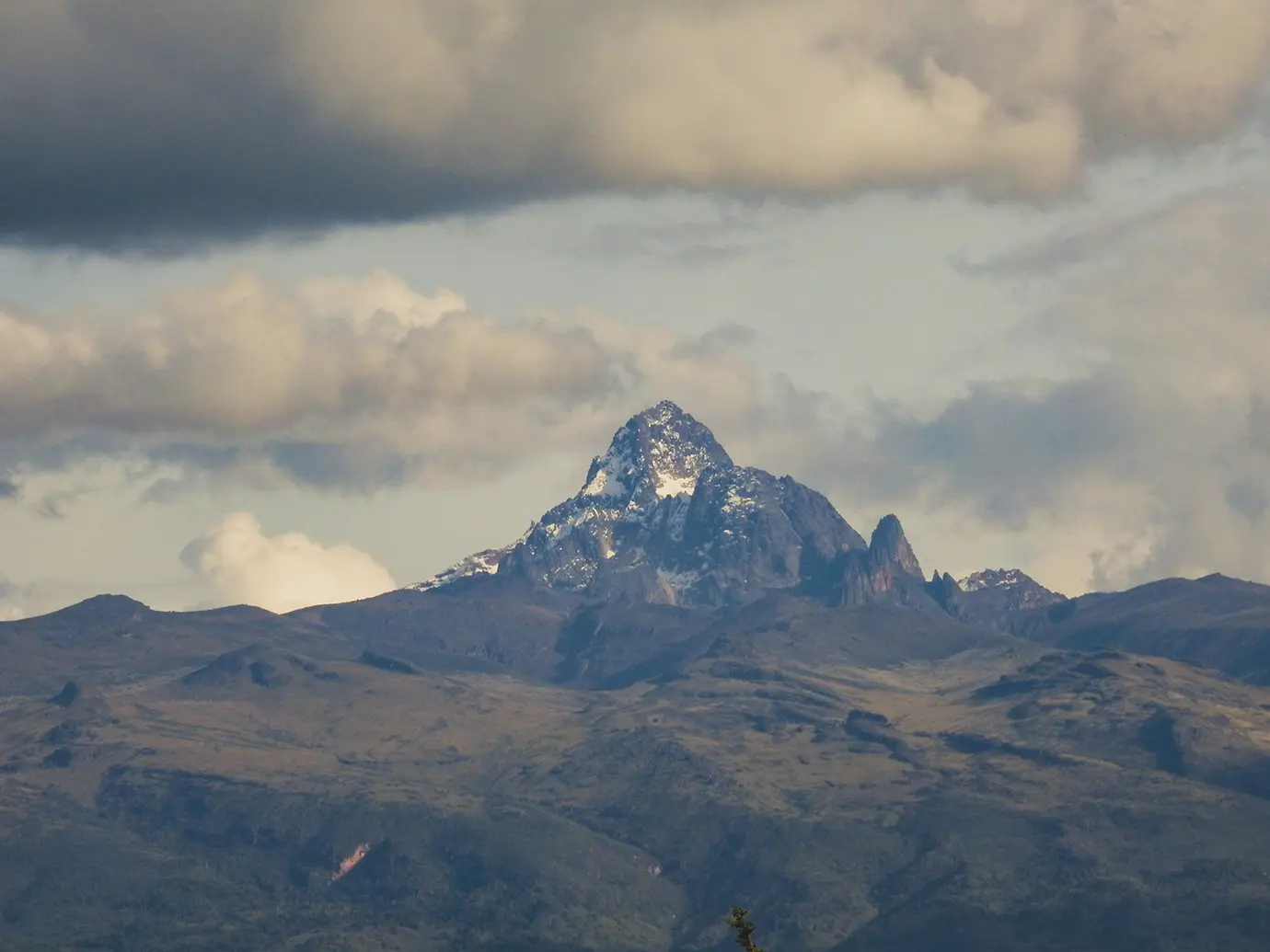
A standard 4-day Sirimon or Naro Moru route costs a non-resident trekker USD 208 in park entry fees alone (4 days × USD 52). A 6-day Sirimon–Chogoria traverse pushes park fees to USD 312 (6 × USD 52).
Mountain hut fees and camping fees add to the park entry cost. KWS charges separate fees for use of Old Moses, Shipton’s Camp, and other bunkhouse facilities. Your tour operator includes these in the package price and handles the eCitizen booking process for you.
How Much Do Mountain Guides, Cooks, and Porters Cost?
Licensed mountain guides, cooks, and porters form the backbone of every Mount Kenya trek. Their daily wages are set by industry standards negotiated between licensed operators and the Kenya Professional Safari Guides Association. You do not hire crew independently — your tour operator contracts and pays them directly as part of your package.
| Crew Role | Typical Daily Wage (USD) | Notes |
|---|---|---|
| Lead Mountain Guide | 25–35 | Licensed, first-aid certified, altitude-trained |
| Assistant Guide | 18–25 | Required for groups of 4+ trekkers |
| Mountain Cook | 18–25 | Prepares three hot meals daily at altitude |
| Porter | 12–18 | Carries up to 15 kg per trekker’s duffel |
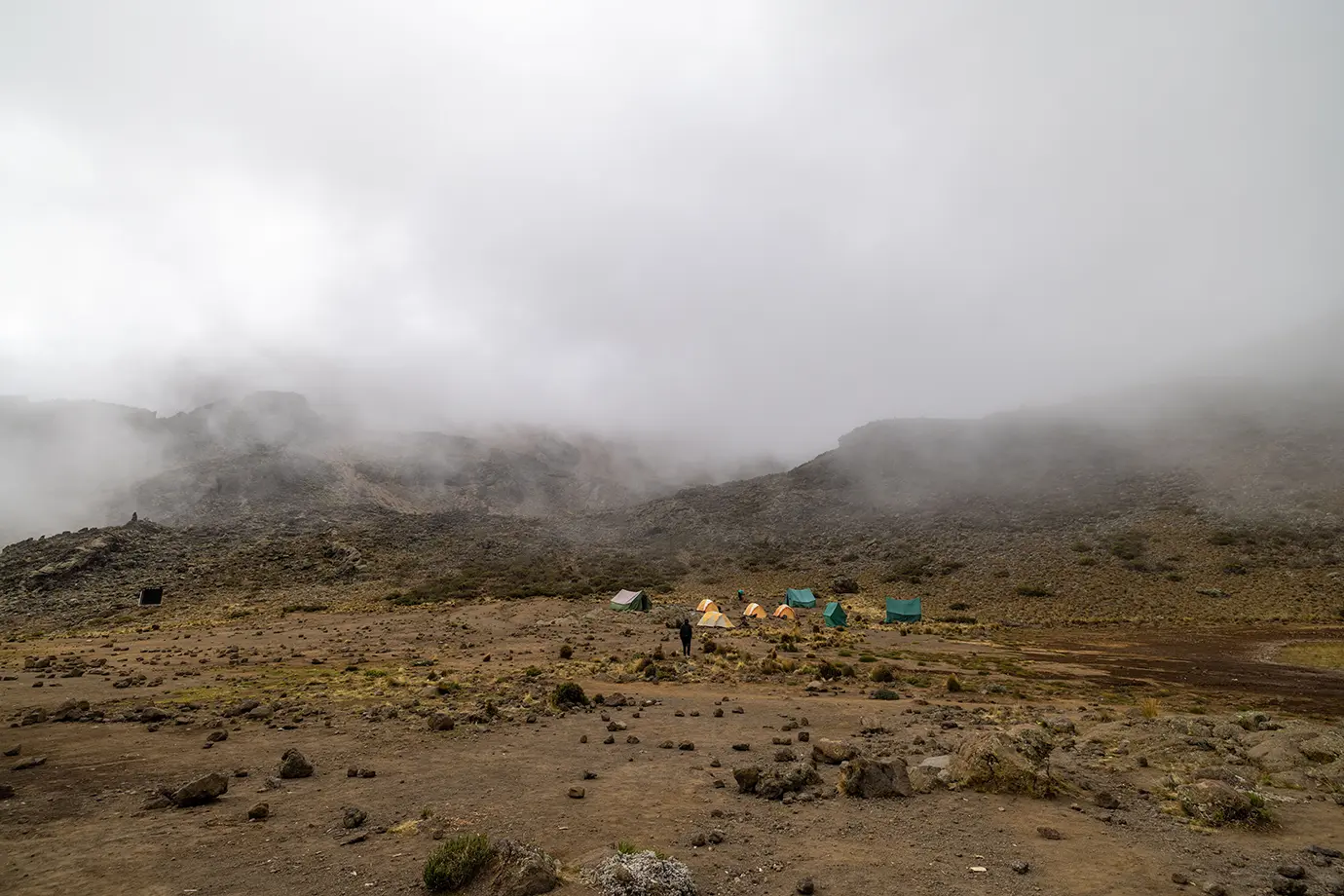
A typical 6-day trek for two trekkers requires a lead guide, a cook, and two to three porters. Crew wages for that team total roughly USD 500–700 for the full trek — built into your package cost, not paid separately.
Solo trekkers still need a minimum crew of one guide, one cook, and one porter. The per-person crew cost is higher because there are fewer people to share the fixed crew overhead.
How Does Group Size Affect the Price?
Group size is the single biggest factor in the per-person cost of a Mount Kenya trek. Fixed costs — vehicle transport, crew wages, park registration, cooking equipment — stay roughly the same whether one person or four people share them.
Solo Trekker
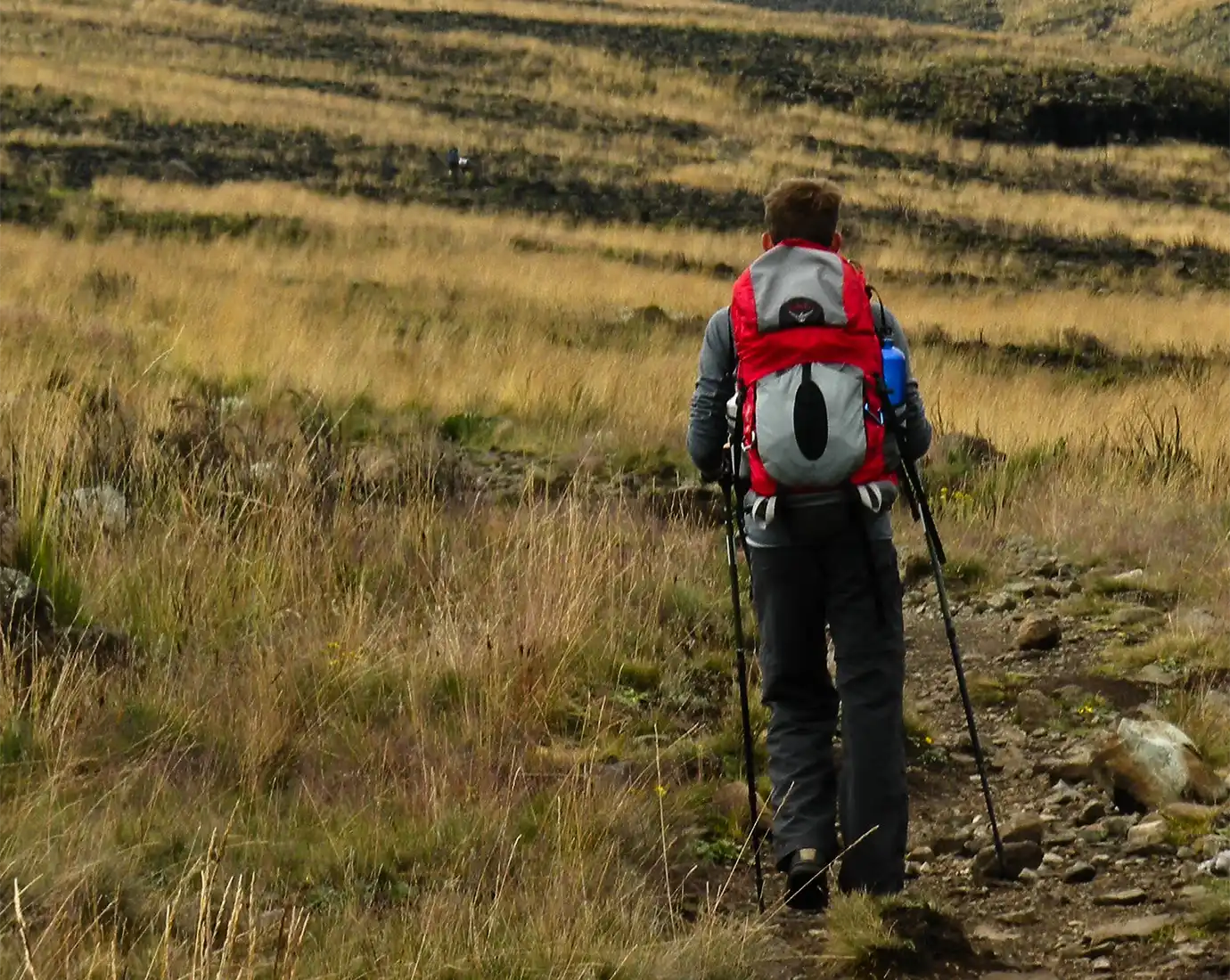
A solo trekker on a 5- to 6-day route typically pays USD 1,800 to USD 2,500 per person. You bear the full cost of the guide, cook, porter, vehicle, and camp equipment alone.
Two Trekkers
A pair on the same route typically pays USD 1,300-1,800 per person. Splitting the vehicle, crew wages, and camp equipment between two people drops the per-person cost by roughly 25–30% compared to going solo.
Group of 3–4 Trekkers
Groups of three or four typically pay USD 1,000 to USD 1,500 per person for a fully guided 5- to 6-day trek. An additional assistant guide joins the team at this size. But the fixed costs split four ways more than offset the added cost of the crew member.
Join-In Groups (Scheduled Departures)
Some operators, including Peregrine, offer scheduled join-in departures where solo travelers or pairs join a small group. Join-in pricing typically falls between USD 1,100 and USD 1,600 per person — close to the private group rate, as the fixed costs are spread across 4–8 trekkers.
What Hidden Costs Should You Budget For?
The package price from most operators covers park fees, crew, transport, meals, and accommodation on the mountain. But several expenses sit outside the standard package. Budget for these separately.
Tipping the Mountain Crew
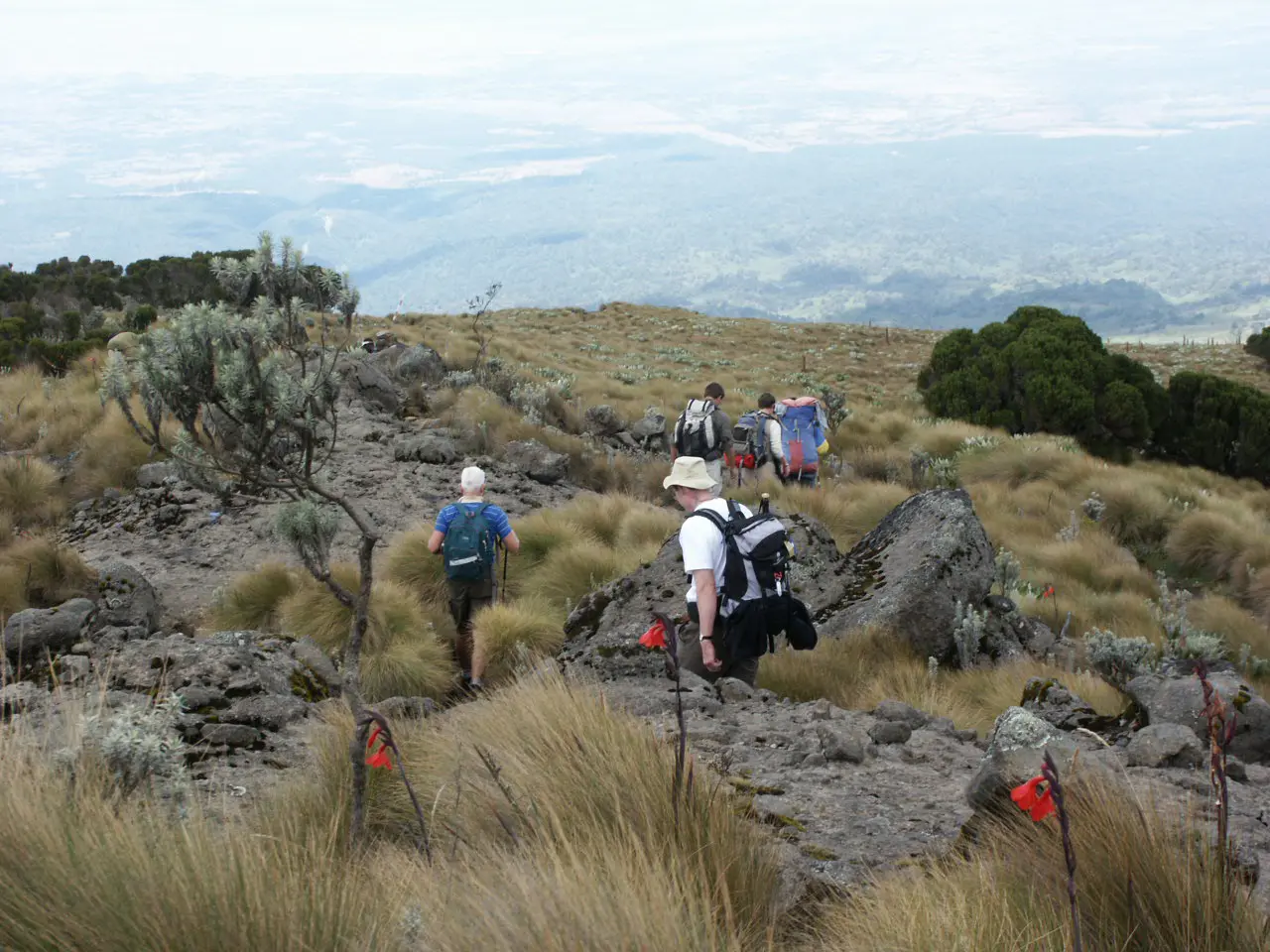
Tipping is a firmly established practice in East African mountain trekking. Mountain guides, cooks, and porters earn modest daily wages. Tips represent a significant portion of their income.
Standard tipping guidelines for Mount Kenya:
- Lead Guide: USD 15–20 per day
- Cook: USD 10–15 per day
- Porter: USD 8–10 per day (per porter)
For a 6-day trek with a lead guide, cook, and two porters, total tips run approximately USD 250–350 per group. Solo trekkers pay the same crew tip amounts — the per-person tipping cost does not decrease for smaller groups.
Most operators organize a group tipping ceremony at the final camp. Bring the full amount in cash — either USD or Kenyan shillings works. Small bills are easier to distribute.
Kenya Electronic Travel Authorization (eTA)
All international visitors need a Kenya eTA before arrival. The standard processing fee is USD 30, payable online at etakenya.go.ke. Processing takes 1–3 business days. Expedited processing costs an additional USD 100. Apply at least 2 weeks before travel.
Travel and Medical Insurance
Every reputable Mount Kenya operator requires proof of travel insurance covering high-altitude trekking up to 5,000 meters and emergency medical evacuation. Standard travel insurance policies often cap altitude coverage at 3,000 m — check yours carefully.
A policy covering high-altitude trekking and helicopter evacuation in Kenya typically costs USD 50–150 for a 2-week trip, depending on your home country and provider.
Gear Rental
You need a sleeping bag rated to -10°C (14°F), trekking poles, waterproof hiking boots, and technical layering clothing. If you do not own this gear, most Nanyuki and Chogoria operators rent the essentials:
- Sleeping bag (-10°C rated): USD 5–10 per day
- Trekking poles (pair): USD 3–5 per day
- Down jacket: USD 5–8 per day
- Waterproof shell jacket: USD 3–5 per day
A full 6-day gear rental package typically costs USD 60–120 total. Inspect all rental gear thoroughly before leaving town — especially the sleeping bag warmth rating and zipper condition.
Pre- and Post-Trek Accommodation in Nairobi
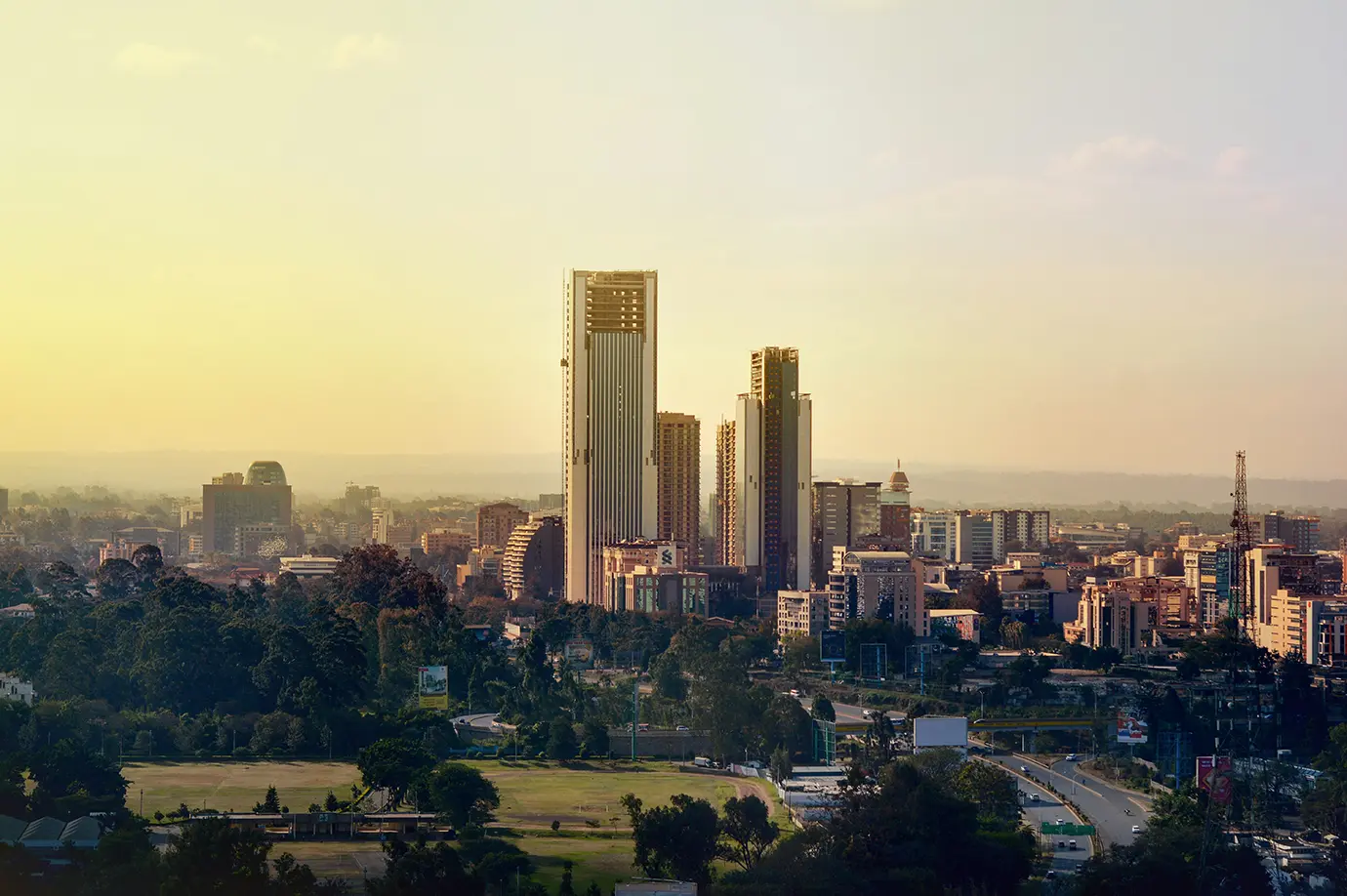
Most Mount Kenya packages do not include hotel nights in Nairobi. Budget USD 40–120 per night depending on your standard. Mid-range options near the city center or along Mombasa Road (close to JKIA airport) run USD 50–80 per night.
What Does an All-Inclusive Mount Kenya Package Include?
A well-structured, all-inclusive package covers all operational costs from your Nairobi hotel pickup to your Nairobi drop-off after the trek. Here is what a standard Peregrine Treks package includes:
- Private return vehicle transfers from Nairobi to the trailhead gate and back
- All KWS park entrance fees, mountain hut fees, and camping fees for the full trek duration
- Licensed lead mountain guide and assistant guide (for groups of 4+)
- Full porter team — each porter carries up to 15 kg of your gear in a soft duffel bag
- Dedicated mountain cook preparing three hot meals daily
- Boiled and purified drinking water throughout the trek
- Accommodation on the mountain: bunkhouse huts and/or wilderness tents depending on the route
- Pulse oximeter health monitoring and emergency first aid kit
- Rescue protocol coordination with KWS rangers
What sits outside the package:
- International flights to Kenya
- Kenya eTA (USD 30)
- Pre/post-trek hotel in Nairobi
- Personal trekking gear (sleeping bag, boots, poles, clothing)
- Travel insurance covering high-altitude trekking to 5,000 m
- Crew tips (USD 250–350 per group for a 6-day trek)
- Personal snacks and alcoholic beverages
Why Does Booking a Package Save Money?
Booking through a licensed operator like Peregrine Treks is almost always cheaper than organizing a Mount Kenya climb independently — and significantly safer.
The DIY Cost Trap
Independent trekkers must arrange each component separately: KWS park fees through the eCitizen portal; individual crew contracts with freelance guides and porters; private vehicle hire from Nairobi; food procurement and cooking equipment; and emergency safety gear. Each of these carries its own markup when purchased individually.
Freelance guides at the trailhead gates charge daily rates comparable to what operators pay — but without the volume discounts, established crew relationships, or safety infrastructure. Independent trekkers also carry full liability for porter welfare, rescue coordination, and medical emergencies.
What Operators Provide That DIY Cannot
Licensed operators carry emergency oxygen, pulse oximeters, and established rescue protocols. They hold KWS operator licenses that allow priority gate registration. Crew members are contracted, insured, and trained — not day-hired strangers at the gate.
The cost difference between a package and a fully itemized DIY attempt is typically USD 50–150 for a 6-day trek. The safety, reliability, and logistical simplicity of the package more than justify that margin.
How Does Mount Kenya Compare to Kilimanjaro in Cost?
Mount Kenya is substantially cheaper than Mount Kilimanjaro. The primary reason is park fees. Tanzania National Parks (TANAPA) charges significantly higher daily rates for Kilimanjaro than KWS charges for Mount Kenya. Kilimanjaro park fees alone often exceed USD 1,000 for a 6- to 8-day trek. Mount Kenya park fees for the same duration run USD 260–310.
| Cost Component | Mt Kenya (6-Day) | Kilimanjaro (8-Day) | Crew Tipping | Summit Altitude |
|---|---|---|---|---|
| Park Entry Fees | ~USD 310 | ~USD 1,000+ | ||
| Package Price (group of 2) | USD 1,300–1,800 | USD 2,500–4,500 | ||
| Crew Tipping (per person) | ~USD 120–150 | ~USD 200–300 | ||
| Summit Altitude | 4,985 m | 5,895 m |
Many experienced trekkers climb Mount Kenya first as a pre-acclimatization phase before Kilimanjaro. Peregrine offers a 12-day Mount Kenya + Kilimanjaro combo package that covers both summits in a single expedition.
Frequently Asked Questions
How much does it cost to climb Mount Kenya for one person?
A solo trekker pays between USD 1,800 and USD 2,500 for a fully guided 5- to 6-day trek, including park fees, crew, transport, meals, and mountain accommodation. Solo pricing is higher because fixed costs (vehicle, guide, cook, porter) are not shared with other trekkers. Joining a scheduled group departure drops the cost to USD 1,100–1,600 per person.
Are Mount Kenya park fees included in tour packages?
Yes. All reputable operators include KWS park entry fees, mountain hut fees, and camping fees in the package price. Your operator handles the eCitizen booking and payment process on your behalf. You do not need to buy park tickets separately.
How much should I tip the mountain crew on Mount Kenya?
Budget approximately USD 15–20 per day total, split across the lead guide, cook, and porters. For a 6-day trek, total crew tips typically run USD 250–350 per group. Tips are given in cash (USD or Kenyan shillings) at a group ceremony organized at the final camp.
Do I need travel insurance for Mount Kenya?
Yes. Every licensed Mount Kenya operator requires proof of travel insurance that explicitly covers high-altitude trekking up to 5,000 meters and emergency medical evacuation. Standard travel insurance policies often limit altitude coverage to 3,000 m — read your policy carefully and upgrade if needed. A high-altitude trekking policy for a 2-week trip typically costs USD 50–150.
Is Mount Kenya cheaper than Kilimanjaro?
Significantly cheaper. A fully guided 6-day Mount Kenya trek costs USD 1,000–1,800 per person (group of 2+). A comparable 8-day Kilimanjaro trek runs USD 2,500–4,500. The main cost difference is park fees — Tanzania charges substantially more for access to Kilimanjaro than Kenya charges for access to Mount Kenya.
Can I rent trekking gear in Kenya?
Yes. Gear rental shops operate in Nanyuki (for the Sirimon Route) and near Chogoria town (for the Chogoria Route). Sleeping bags, trekking poles, down jackets, and waterproof shells are available. A full 6-day rental package costs USD 60–120. Inspect all rental gear thoroughly before leaving town — especially the sleeping bag warmth rating and zipper condition.