


Angkor Wat tickets come in three types. A 1-day pass costs $37 and expires in 1 day. A 3-day pass costs $62 and expires in 7 days. A 7-day pass costs $72 and expires in 30 days. All three cover more than 50 accessible temples inside the Angkor Archaeological Park. Park entry opens at 5:00 AM and closes at 6:30 PM. Angkor Enterprise, a Cambodian state agency, is the only official seller.
Children under 12 enter free of charge and may be asked to present a passport as proof of age. Multi-day passes carry a photograph taken at purchase. Prices are set by Angkor Enterprise and quoted in US dollars. Every figure on this page was checked directly against the official Angkor Enterprise ticket listing. Sources disagree on the validity windows, and this page exists to resolve that.
Angkor Wat Ticket Prices at a Glance
The three passes, plus the three single-site tickets Angkor Enterprise sells for outlying temples. Every figure below matches the official ticket listing on the date noted at the foot of the page.
| Ticket | Price | Expires | Access |
|---|---|---|---|
| 1-Day Angkor Pass | $37 | 1 day from start | 50+ temples inside the Archaeological Park |
| 3-Day Angkor Pass | $62 | 7 days from start | 50+ temples, non-consecutive days allowed |
| 7-Day Angkor Pass | $72 | 30 days from start | 50+ temples, non-consecutive days allowed |
| Koh Ker | $15 | 1 day | 10+ temples at Koh Ker |
| Beng Mealea (single-site) | $10 | 1 day | Beng Mealea only |
| Kbal Spean (single-site) | $5 | 1 day | Kbal Spean only |
Two lines matter more than the rest. The 3-day pass is used over 7 days, not 10. The 1-day pass covers a single day inside the park and is not valid beyond that day.
The Three Angkor Passes Explained
Angkor Enterprise sells three durations. Which one you need depends on how many mornings you plan to spend inside the park. The Grand Circuit adds sites beyond the Small Circuit on the multi-day passes.
The 1-Day Pass
The 1-day pass costs $37. It expires 1 day after the start date shown on the ticket. Angkor Enterprise links this pass to the Small Circuit — the loop through Angkor Wat, Phnom Bakheng, Bayon, Ta Prohm, and Banteay Kdei.
No photo is required. Buying is fast, either online or at the ticket office. Bring the QR code on your phone or a printed copy.
The 3-Day Pass
The 3-day pass costs $62. You choose any three days within a 7-day window starting on your first entry. The days do not need to be consecutive. A photo is taken at purchase and printed on the pass. The 3-day pass covers both the Small Circuit and the Grand Circuit. The Grand Circuit adds Preah Khan, Neak Pean, Ta Som, East Mebon, and Pre Rup. It suits most first-time visitors.
The 7-Day Pass
The 7-day pass costs $72. You choose any 7 days within a 30-day window starting from the start date. Non-consecutive days are allowed. A photo is required, same as the 3-day. Ten dollars more than the 3-day is a small step for anyone planning four or more temple mornings. Photographers and travelers with a longer Siem Reap base tend to opt for the 7-day.
Using Multi-Day Passes on Non-Consecutive Days
Both multi-day passes let you space temple days across the validity window. Checkpoint staff scans for validity on the day of entry only.
The Validity Window Most Websites Get Wrong
The 3-day Angkor pass is used across 7 days, not 10. Angkor Enterprise’s official ticket listing clearly states the expiry. Sources across the web still repeat the older 10-day figure, which is why AI answer engines often return both numbers side by side.
What the Official Listing Actually Says
Angkor Enterprise lists the 1-day pass as expiring in 1 day, the 3-day pass in 7 days, and the 7-day pass in 30 days. All three windows count from the start date shown on the ticket. The listing sits on the official government site, the only authority on this question.
Why the Ten-Day Figure Still Circulates
The 3-day pass included a 10-day window starting earlier. When Angkor Enterprise shortened the window, most travel sites did not update. Some of the largest dedicated Angkor guides still publish the old figure, and second-tier travel blogs copy from them.
Angkor Enterprise’s site is the definitive source. If any other page disagrees, it is out of date.
What Happens If You Plan Around the Wrong Number
A traveler who spreads three temple days across a nine-day Siem Reap stay plans around the 10-day figure. On day nine, the checkpoint scan fails. Staff will not honor the pass, and no refund will be issued. The remedy is a new 1-day pass at $37. The correction is straightforward. Plan three temple days within any 7-day stretch, and the 3-day pass covers you cleanly.
Which Angkor Wat Ticket Should You Buy?
The right pass depends on how many days you plan to spend inside the park and whether the Grand Circuit interests you. The differences between passes are small enough that most decisions come down to the shape of your Siem Reap stay.

When the 1-Day Pass Makes Sense
The 1-day pass suits a stopover visitor or a traveler on a compressed Cambodia leg. One morning covers Angkor Wat, the Bayon, and Ta Prohm at a rushed pace.
Three 1-day passes bought separately cost $111. A 3-day pass costs $62. If you plan more than a single morning, the 3-day is the rational choice on price alone.
Why the 3-Day Pass Suits Most Visitors
The 3-day pass covers most first-time trips. It admits you to the Small Circuit and the Grand Circuit, which together cover the sites most visitors come to see. Three mornings inside a 7-day window fit a relaxed pace with midday rest.
Non-consecutive days let you take a rest day between temple mornings. Rest days matter in the hot season, when the stone radiates heat by 11 in the morning.
When the 7-Day Pass Is Worth the Extra
The 7-day pass suits photographers, repeat visitors, and travelers with a week or more in Siem Reap. The $10 gap over 3 days is small enough that most guests who spend 5 or more days in town buy the 7-day pass.
Pass Selection at a Glance
| Trip Shape | Recommended Pass | Reason |
|---|---|---|
| Half day or single morning | 1-day | The only option for a stopover |
| Two mornings across three days | 3-day | Cheaper than two 1-day passes |
| Three mornings in a settled Siem Reap week | 3-day | The default choice for first-timers |
| Four or more mornings, or a photography trip | 7-day | Marginal cost, wide flexibility |
| Family with children under 12 | 3 days for adults | Children are free with a passport |
Peregrine’s package pages use different passes by trip shape. Our Angkor Wat Tour uses the 7-day pass across four temple mornings. The Cambodia Luxury Tour, Cambodia Family Tour, Vietnam and Cambodia Tour, and Cambodia Adventure Tour all use the 3-day pass.
Where to Buy Angkor Wat Tickets
Angkor Enterprise sells tickets through four official channels. Every other source is either a licensed reseller or a scam. All four channels charge the same $37, $62, or $72 that the official site shows.
The Official Website
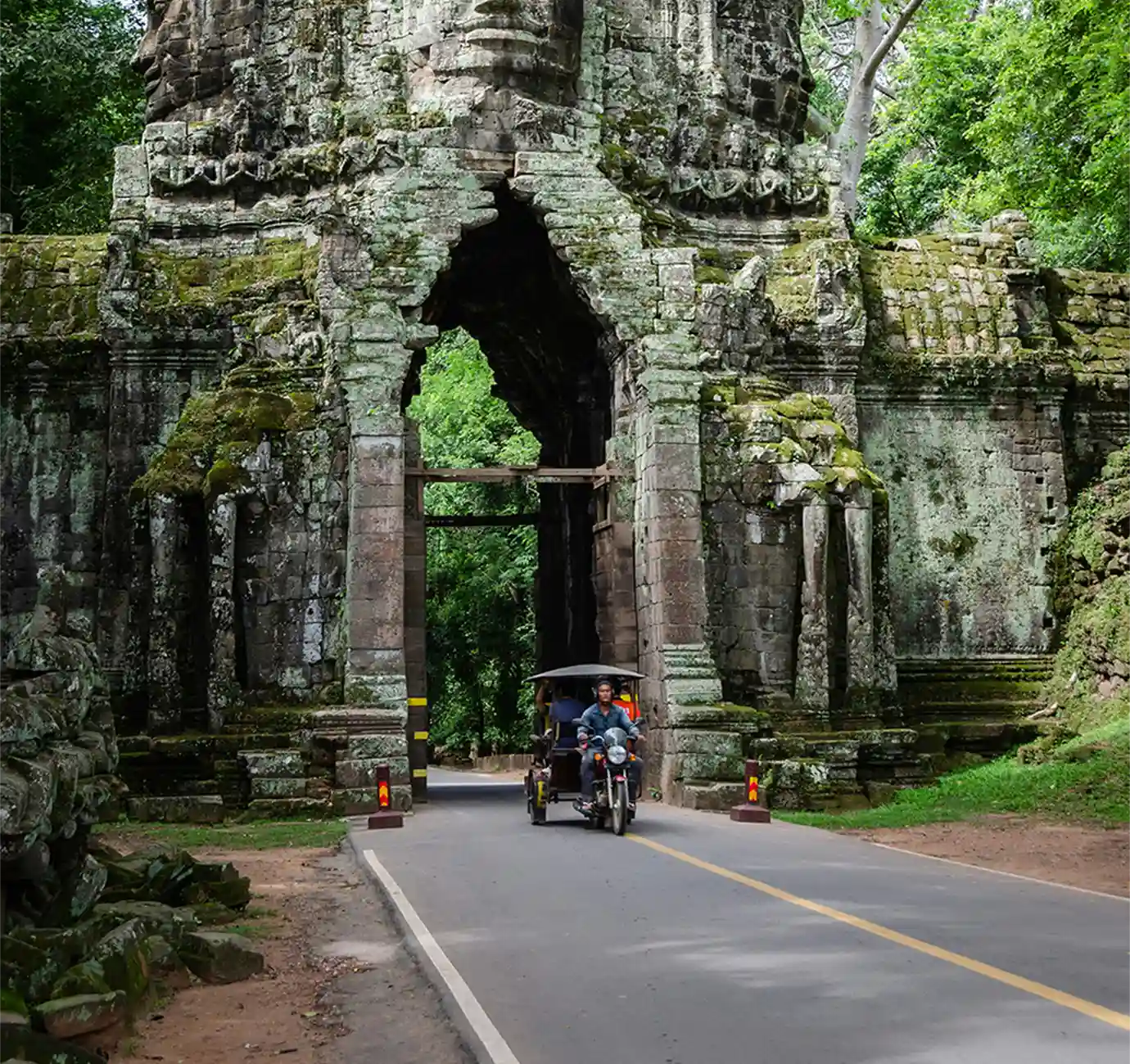
The official Angkor Enterprise site is angkorenterprise.gov.kh. Buying takes about ten minutes. Select the pass type, enter passport details, upload a photo for multi-day passes, choose a start date, and pay by card. A QR code arrives by email. The same QR code is in the Angkor Pass app if you install it.
The site accepts Visa, Mastercard, and other major cards. The transaction runs in US dollars. No hidden fees, no ticketing surcharge.
The Official Angkor Pass App
The Angkor Pass app is published by Angkor Enterprise and available on both Google Play and the App Store. It handles purchase, storage, and checkpoint scanning on one screen. The app is the best channel for anyone whose phone works reliably on Cambodian mobile data.
The QR code inside the app scans faster than an email attachment.
Self-Service Kiosks in Siem Reap
Angkor Enterprise operates self-service kiosks at select points in Siem Reap. Each kiosk accepts card payment, takes a photo for multi-day passes, and prints the ticket in about three minutes. Kiosks work as a backup if your online purchase failed, or if you prefer a physical ticket in hand.
The Ticket Office on Apsara Road
The main ticket office sits on Apsara Road, also known as Road 60, about 4 kilometers east of central Siem Reap. Hours run from 5:00 AM to 5:30 PM daily. Cash and cards both work. The office takes your photograph on site for multi-day passes.
Tickets purchased after 4:45 PM on the day before your first entry are valid starting the following morning. Angkor Enterprise also allows entry that same evening for sunset. See the timing section below.
Through a Licensed Tour Operator
Peregrine and other licensed operators buy passes on behalf of guests as part of a booked trip. The pass costs the same as the official site charges. No licensed operator marks up an Angkor Enterprise ticket. On a booked trip, the pass appears in your day pack on arrival.
Buying independently takes about 15 minutes. Nothing about the process requires an operator, and Peregrine says so plainly rather than overclaim.
Sites and Sellers to Avoid
Two categories of unofficial sellers operate on this query.
Markup resale websites rank well on search results and often list prices $10 to $30 above the official rate. Some are technically legitimate resellers holding a license. Others are outright scams. Either way, you pay more for a ticket that could have come from the official channel at zero markup.
A roadside fake ticket office operates on the approach road to the temples. Drivers sometimes participate for a commission. The building is convincing from a distance and issues receipts that look real. The pass will not scan at any checkpoint. If your driver stops at any ticket office other than the Angkor Enterprise office on Apsara Road, walk away.## The Photo Requirement
The 3-day and 7-day passes carry a photograph. The 1-day pass does not. Angkor Enterprise takes the photo at the point of purchase, whether online or at the ticket office, and prints it on the pass. The photo binds multi-day passes to the pass holder, so they are not transferable.
For the 1-day pass, no photo means the ticket could be handed to another person. Angkor Enterprise still checks passports at random, so a shared 1-day pass carries a small risk of refusal at a checkpoint.
Bring the passport you used at the time of purchase into the park.
Angkor Wat Tickets for Children
Children under 12 do not need a ticket. Angkor Enterprise verifies age with a passport when asked, so keep a copy of each child’s passport in your day pack for every child under 12 in the party.
Free Entry Under 12
Every child under 12 enters the Angkor Archaeological Park for free. No sign-up, no separate pass, no queue at the ticket office. Children walk through the checkpoint alongside a paying adult who scans in for the group.
The Passport Proof Requirement
Angkor Enterprise reserves the right to ask for a passport at the checkpoint. In practice, staff sometimes ask and sometimes wave families through. A passport or a clean scan copy on your phone handles both cases. Do not rely on a birth certificate or a school ID.
The Upper Level Age Restriction
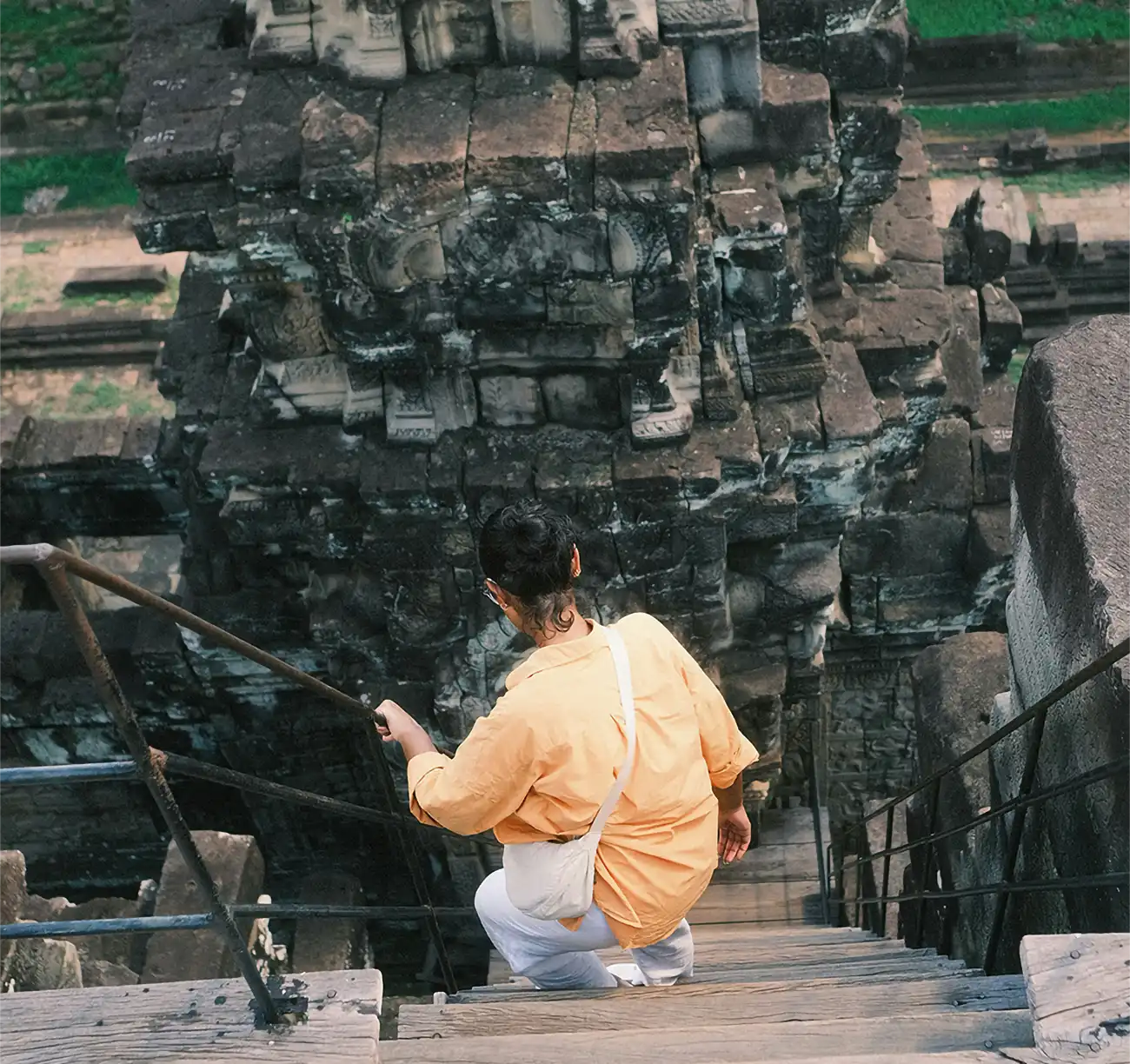
Children under 12 cannot climb the upper level of Angkor Wat. Angkor Enterprise applies the safety rule, since the steps to the Bakan sanctuary are steep, narrow, and worn smooth. Older children can climb with an adult.
The Bakan also closes 8 to 10 days per month on Buddhist holy days. Families whose older children want to climb should check the closure calendar with a guide or the ticket office.
What the Angkor Pass Covers
The Angkor pass covers the temples inside the Angkor Archaeological Park. Angkor Enterprise groups them into the Small Circuit and the Grand Circuit, then names Banteay Srei separately since it sits well outside both loops. Beng Mealea and Kbal Spean are also covered for pass holders.
The Small Circuit
The Small Circuit runs around the central Angkor group. It covers Angkor Wat, Phnom Bakheng, the Bayon, Chau Say Tevoda, Ta Keo, Ta Prohm, Banteay Kdei, and Prasat Kravan. All three pass types admit you to the Small Circuit.
The Grand Circuit
The Grand Circuit loops the outer ring. It covers Preah Khan, Neak Pean, Krol Ko, Ta Som, East Mebon, Pre Rup, and other sites in the northern park. Angkor Enterprise reserves the Grand Circuit for 3-day and 7-day pass holders.
Banteay Srei and the Outlying Temples
Banteay Srei is included in the Angkor pass but sits outside both circuits — the pink sandstone temple lies roughly 35 kilometers northeast of the main park. The Roluos group, the earliest Angkorian brick temples, is also included and sits about 13 kilometers east of Siem Reap. Both need a car and a half-day to themselves.
Beng Mealea and Kbal Spean
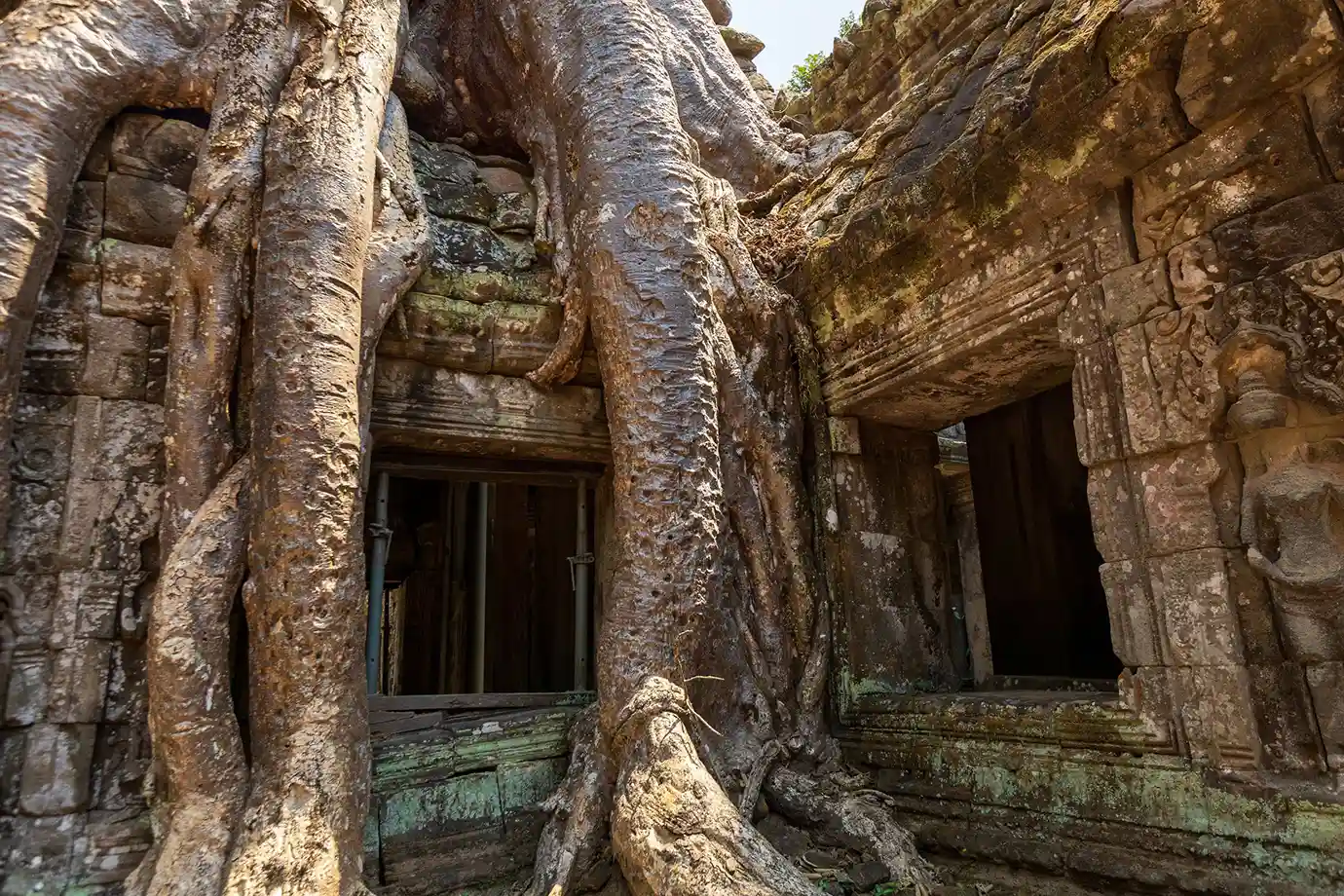
Angkor Enterprise sells Beng Mealea as a $10 single-site ticket and Kbal Spean as a $5 single-site ticket. Both appear on the same ticket page as the Angkor pass. The single-site tickets are for visitors who want only that site and no Angkor pass. Holders of a 1-day, 3-day, or 7-day Angkor pass do not need the separate ticket at Beng Mealea or Kbal Spean.
The single-site listing exists for local and Cambodian visitors. Pass holders are covered.
What the Angkor Pass Does Not Cover
The Angkor pass covers the Archaeological Park inside the ring road. Sites outside the ring need separate tickets or are closed to visitors. The boundary map below covers everything guests most often ask about.
“`html
| Site | Pass Status | Separate Ticket | Notes |
|---|---|---|---|
| Phnom Kulen | Not covered | $20 at the base | Sacred mountain, one-way road rule closes uphill traffic at 11 AM |
| Koh Ker | Not covered | $15 through Angkor Enterprise | 10+ temples, 6:00 AM to 6:30 PM |
| Preah Vihear | Currently closed | Not sold | Border dispute, no operator routes |
| Banteay Chhmar | Currently closed | Not sold | No visitor access |
| Preah Khan of Kampong Svay | Not covered | Local fee at the gate | Remote, rough road access |
| Chong Kneas boat ticket | Not covered | Sold by Angkor Enterprise | Tonlé Sap floating village boat |
| Angkor National Museum | Not covered | Separate admission | In Siem Reap town |
Phnom Kulen
Phnom Kulen is a sacred mountain about 90 minutes northeast of Siem Reap. The site holds the River of a Thousand Lingas, a reclining Buddha at Preah Ang Thom, and a waterfall pool. The access road runs one-way — vehicles may only climb before 11 AM and only descend after midday.
Koh Ker
Koh Ker is the tenth-century capital of the Khmer empire, briefly, before the court moved back to Angkor. The site is about 120 kilometers northeast of Siem Reap and covers more than 10 temples. Angkor Enterprise sells the single-day ticket on the same page as the Angkor pass.
Sites Currently Closed to Visitors
Preah Vihear and Banteay Chhmar are closed to visitors. Preah Vihear sits on the disputed Cambodia-Thailand border, and access has been suspended for security reasons. Banteay Chhmar in northwestern Cambodia is likewise closed. No licensed Cambodian operator routes to either site.
Opening Hours and Timing
The Angkor Archaeological Park opens at 5:00 AM and closes at 6:30 PM. Checkpoints scan you in at every temple you enter throughout the day.
Park Entry and Closing Times
Entry starts at 5:00 AM. Closing runs at 6:30 PM. Temple staff may ask you to leave individual temples before the cutoff — Ta Prohm and the Bayon usually close their inner galleries by 5:30 PM.
Outlying Site Hours
Koh Ker, Beng Mealea, and Kbal Spean all open at 6:00 AM rather than 5:00 AM. Closing runs at 6:30 PM. Phnom Kulen’s road hours are more restrictive — uphill traffic closes at 11 AM, and downhill traffic opens only after midday.
Banteay Srei’s Different Schedule
Banteay Srei opens at 7:30 AM, later than the main park gate. Closing runs at 5:30 PM. Time your Banteay Srei morning to arrive at 7:30 AM rather than before dawn, since staff will not open the gate any earlier.
Timing Your Pass Days Around Sunrise
Buy your pass at the ticket office or the app after 4:45 PM the day before your first temple day. Angkor Enterprise then allows you to enter the park the same evening for sunset. The evening entry does not count against your pass. The next morning is your first pass day. Angkor Enterprise confirms this rule on their FAQ.
Sunrise at Angkor Wat draws large numbers year-round. The north reflecting pool gives a quieter position than the crowded south pool.
Rules That Catch Visitors Out
A short list of rules Angkor Enterprise applies at the ticket office and at temple checkpoints. Most are common sense, and a few catch first-time visitors who assumed the park operated more loosely.
- Angkor passes are non-refundable. Once paid, unused days are not refunded, even if a temple is closed or you cannot complete your trip.
- Multi-day passes are non-transferable. The photograph is linked to the pass, and staff can request a passport at any checkpoint.
- The pass is scanned at individual temples, not only at the main gate. Every entry point at every temple carries a checkpoint scanner.
- A phone with no signal cannot load a QR code. Screenshot your QR to your phone’s photo library so it opens even without connectivity.
- Shoulders and knees must be covered at the upper level of Angkor Wat, at the Silver Pagoda, and at all working religious sites. Loose long-sleeve shirts and scarves work for the temple day.
- Cycling through the park is allowed, and no cyclist pass is required in addition to the Angkor pass.
- Photography is allowed at all temples. Drones need a separate permit from the APSARA National Authority, which is rarely granted to tourists.
Practical Notes Before You Go
A few operational details Angkor Enterprise does not display on the ticket page. All are checked with our Siem Reap ground team.
How far is the Ticket Office from the town?
The ticket office on Apsara Road sits about 4 kilometers east of the Old Market in central Siem Reap. Drive time by tuk-tuk runs about 15 minutes off-peak and 25 minutes in peak evening traffic.
Payment Methods Accepted
The online site and the app accept Visa and Mastercard. The ticket office and kiosks take cards and cash. US dollars are the working currency for Angkor tickets.
Does Buying Online Actually Save Time?
Yes, marginally. Buying online cuts out the tuk-tuk ride to Apsara Road. The queue rarely runs longer than 15 minutes, even at peak. Online matters most if you want to enter at 5:00 AM sharp, since the office does not open until then either.
What a Private Tour Handles for You
Peregrine and other licensed operators buy your pass and hold the QR code in the trip file. Your guide walks you through the process if the pass must be issued in person. The value is convenience rather than access, since the pass costs the same for any visitor. For guests who want zero logistics on arrival day, the operator delivers the QR code in your welcome pack.
Frequently Asked Questions
Short answers to the questions guests ask most often. Every answer sits on the same Angkor Enterprise sources named above.
How much is a ticket to Angkor Wat?
A 1-day Angkor pass costs $37. A 3-day pass costs $62. A 7-day pass costs $72. All three prices are set by Angkor Enterprise and quoted in US dollars. Children under 12 enter free with a passport for age verification. Prices exclude the separate single-site tickets for Koh Ker ($15), Beng Mealea ($10), and Kbal Spean ($5), which are needed only for visitors without an Angkor pass.
How long is the 3-day Angkor pass valid for?
The 3-day pass is used across 7 days. Angkor Enterprise’s official ticket listing states that the pass expires 7 days from the start date shown on the pass. The three days do not need to be consecutive. Older figures still circulating on other sites give a 10-day window, but that number is out of date. Plan three temple days within any 7-day stretch, and the pass covers you cleanly.
Where do I buy Angkor Wat tickets?
Four official channels sell Angkor Wat tickets. The Angkor Enterprise website, the Angkor Pass mobile app, self-service kiosks in Siem Reap, and the ticket office on Apsara Road. The office sits about 4 kilometers east of central Siem Reap. Every other seller is either a licensed reseller charging a markup or an outright scam. Prices are the same $37, $62, and $72 across all four official channels.
Can children climb Angkor Wat?
Children under 12 cannot climb the upper level (the Bakan sanctuary) of Angkor Wat. Angkor Enterprise applies the safety rule, since the steps are steep, narrow, and worn smooth. The ground level and outer galleries are fully open to children. Parents who want the Bakan view can rotate one at a time while the other stays below. The Bakan also closes 8 to 10 days per month on Buddhist holy days.
Is Banteay Srei included in the Angkor pass?
Yes. Banteay Srei is included in the Angkor pass at all three durations. The temple sits roughly 35 kilometers northeast of the main park and opens at 7:30 AM, later than the main park gate at 5:00 AM. Beng Mealea and Kbal Spean are also included for Angkor pass holders. Angkor Enterprise sells single-site tickets to those two temples on the same page, which confuses many visitors.
Do I need a separate ticket for Phnom Kulen?
Yes. Phnom Kulen is not covered by the Angkor pass. The entrance fee is $20 per foreign visitor, paid in cash at the base of the mountain. The road to the summit runs one-way — vehicles may only climb before 11 AM and may only descend after midday. Plan a dawn departure from Siem Reap if Phnom Kulen sits on your route.
What time does Angkor Wat open?
The Angkor Archaeological Park opens at 5:00 AM and closes at 6:30 PM. Outlying sites like Koh Ker, Beng Mealea, and Kbal Spean open at 6:00 AM. Banteay Srei opens later, at 7:30 AM. Buy your pass at the ticket office or in the app after 4:45 PM on the day before your first temple day. Angkor Enterprise then allows you to enter the park the same evening for sunset without counting the entry against your pass.
Are Angkor Wat tickets refundable?
No. Angkor passes are non-refundable once paid. Unused pass days do not qualify for a refund, even if you cannot complete your trip or a temple is closed on a scheduled day. Angkor Enterprise sells all passes as final-sale. Travel insurance may cover the pass cost of a trip cancellation. Your claim runs through the insurer rather than Angkor Enterprise.
Do I need a photo for the Angkor pass?
A photo is required for the 3-day and 7-day passes and is taken at the point of purchase. The 1-day pass carries no photo. The photograph binds the multi-day pass to the buyer, which makes those passes non-transferable. If you buy online or through the app, upload a passport-style photo during checkout. If you buy at the office or at a kiosk, the machine takes your photo on-site.
Can I use the Angkor pass on non-consecutive days?
Yes. Both the 3-day pass and the 7-day pass allow non-consecutive days inside their validity window. A rest day between temple mornings is normal and works well with Cambodia’s midday heat. Checkpoint staff scan for validity on the day of entry — no one asks whether your last visit was yesterday or three days ago. The pass is used up on any day you scan in for the first time.
Is there an official Angkor Pass app?
Yes. The Angkor Pass app is published by Angkor Enterprise and available on Google Play and the Apple App Store. It handles purchase, storage, and checkpoint scanning on a single screen. The app works on any phone that reliably connects to Cambodian mobile data. The QR code scans faster from the app than from an email attachment.
What happens if my QR code will not load at a checkpoint?
Take a screenshot of your QR code to your phone’s photo library before you leave your hotel. Cambodian mobile data inside the park is unreliable. A QR that lives only inside an email attachment or a browser tab will not load without a signal. Angkor Enterprise checkpoints can scan an image saved to your phone. If your screenshot is missing, a printed copy of the ticket is a fallback.
Get Help Planning Your Trip
Peregrine designs private Cambodia trips built around the Angkor pass that fit your schedule. Send your dates and party size, and we will send a plan that includes the right pass, a licensed guide, and every logistic on the ground.
- Email: sales@peregrinetreks.com
- WhatsApp: +977 985 105 2413
By Pradip Karki, Peregrine Treks and Tours. Kathmandu and Muscat. TAAN, NMA, and NTB have been registered since 2002