


Siem Reap holds far more than Angkor. Beyond the temples, you find a contemporary circus where trained acrobats tell Cambodian stories through physical performance. You find craft workshops where stone carvers reproduce temple reliefs by hand. You find a lake that expands to six times its size every monsoon, with stilt villages rising above the water on poles. A full Siem Reap stay needs a minimum of four days — three for the temples, one for everything else. Five days adds a proper day trip.
Most things to do in Siem Reap sit within a 20-minute tuk-tuk ride of the Old Market. A few — the silk farm, the day trips — need a car and a morning. All of them earn their time because they offer the specific detail that a generic Angkor visit lacks.
How Many Days in Siem Reap — the Honest Answer
Four days is the right answer for a first visit. Three days cover the temple circuits on a three-day Angkor pass. One day covers the non-temple activities — Phare, Artisans Angkor, a cooking class, a market walk, or a Tonlé Sap boat trip. Five days add a full-day trip to Beng Mealea, Phnom Kulen, or Banteay Srei, combined with a visit to the Landmine Museum.
More than five days suits photographers working in the temples under different light conditions. Repeat visitors with a specific temple agenda and families needing a slower pace also benefit. For most first-time visitors, four is the number.
The Angkor Temples — What Gets Its Own Article and What Does Not
The temples are covered in depth in the Angkor Wat Tickets article, which carries the pass types, validity windows, circuits, and sunrise timing. Here is the compressed version for planning purposes.
The Small Circuit — One Full Morning
The Small Circuit covers Angkor Wat, Angkor Thom with the Bayon face towers, Ta Prohm with its strangler figs pulling stone apart, and the Baphuon. Start at five-thirty for sunrise at the north reflecting pool. Finish by noon. The circuit runs roughly 17 kilometers by tuk-tuk.
The Grand Circuit — a Second Full Day
The Grand Circuit extends north and east to Preah Khan, Neak Pean on its raised reservoir walkway, Ta Som, East Mebon, and Pre Rup. Pre Rup is one of the strongest sunset viewpoints in the complex — the terraced levels face west, and the sandstone catches the last light — a full second-temple day.
Banteay Srei — the Third Day’s Highlight
Banteay Srei sits roughly 35 kilometers northeast of the main complex. The pink sandstone carving is the finest at any Angkorian site. The lintels above the sanctuary doorways depict scenes from the Ramayana and Mahabharata with a level of detail and depth that nothing in the main complex matches. The temple is small enough to walk through in 45 minutes, but the carvings reward close reading. Arrive before nine to beat the coach groups that roll in by mid-morning.
The Outlying Sites — for a Day Trip
Beng Mealea sits roughly 65 kilometers east, about 90 minutes by car. The temple is unrestored, with collapsed galleries consumed by forest, and a boardwalk system that makes it feel more like an exploration than a tour. Phnom Kulen, the sacred mountain, is about 50 kilometers north and takes a full day to see the riverbed carvings, the reclining Buddha, and the waterfall. Koh Ker, roughly 120 kilometers to the north, features a stepped pyramid and satellite temples in a forested setting with few other visitors.
Phare, the Cambodian Circus
Phare is the most distinctive evening in Siem Reap and the one activity that first-time visitors most consistently remember. Performances run nightly at eight under a big red top near the town center. The show lasts one hour, and the front rows sit close enough to feel the performers’ landing.
What the Performance Actually Is
Phare is not a traditional circus. Each show tells a different Cambodian story drawn from folklore, recent history, or modern life. Acrobatics, theater, dance, and live music on traditional instruments carry the narrative. No spoken dialogue, which means the language barrier is zero. The physical skill is high. The performers train at the Phare Ponleu Selpak arts school in Battambang, and the precision shows.
The big top is intimate. The stage fills your field of vision from most seats. One show followed a rural community as it balanced modernity against Buddhist values, told entirely through aerial work and synchronized tumbling. The drummer set the pace. The acrobats told the story. The whole room held still when a performer climbed a free-standing pole and balanced at the top, arms wide. The silence lasted what felt like a full minute.
The Social Enterprise Behind It
Phare Ponleu Selpak was founded by nine young Cambodians returning from a refugee camp after the Khmer Rouge period. The arts school in Battambang provides training to disadvantaged children and young adults. Ticket revenue funds the school and its outreach programs directly. The performers are graduates or current students.
Performances run nightly year-round at eight in the evening. A seasonal matinee at five runs several times a week during the cool, dry season. Book ahead for December and January, when the peak-season crowds fill the tent. Walk-in seats are usually available outside peak months. Children from about age six upward respond well to the physicality and the storytelling. The show works for mixed audiences, not just families.
Artisans Angkor — Craft Workshops and the Silk Farm
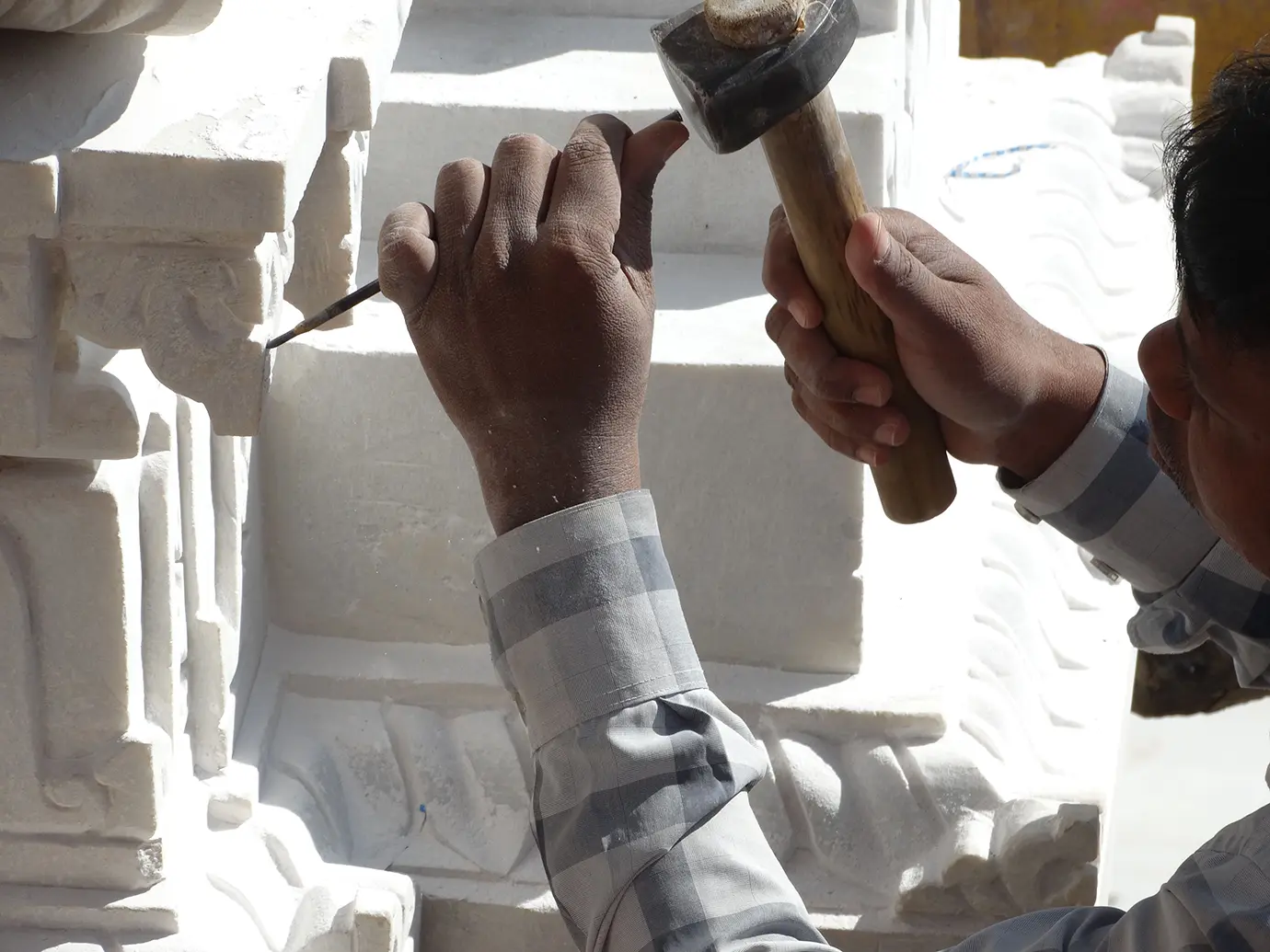
Artisans Angkor is a social enterprise that employs rural Cambodians in traditional crafts—stone carving, wood carving, lacquerwork, silk weaving, and silversmithing. The production workshop in central Siem Reap and the silk farm outside town are both open to visitors without charge.
The Workshop in Siem Reap
The main workshop sits in central Siem Reap near the river. Visitors walk through the production floors. Stone carvers work on temple reproductions. Weavers run thread on hand looms. Lacquer artists apply finish coats to decorative bowls. The self-guided walk takes 30 to 45 minutes. The attached shop sells finished pieces at production quality rather than market souvenir pricing. Expect craft prices, not bargain prices.
The Silk Farm at Puok
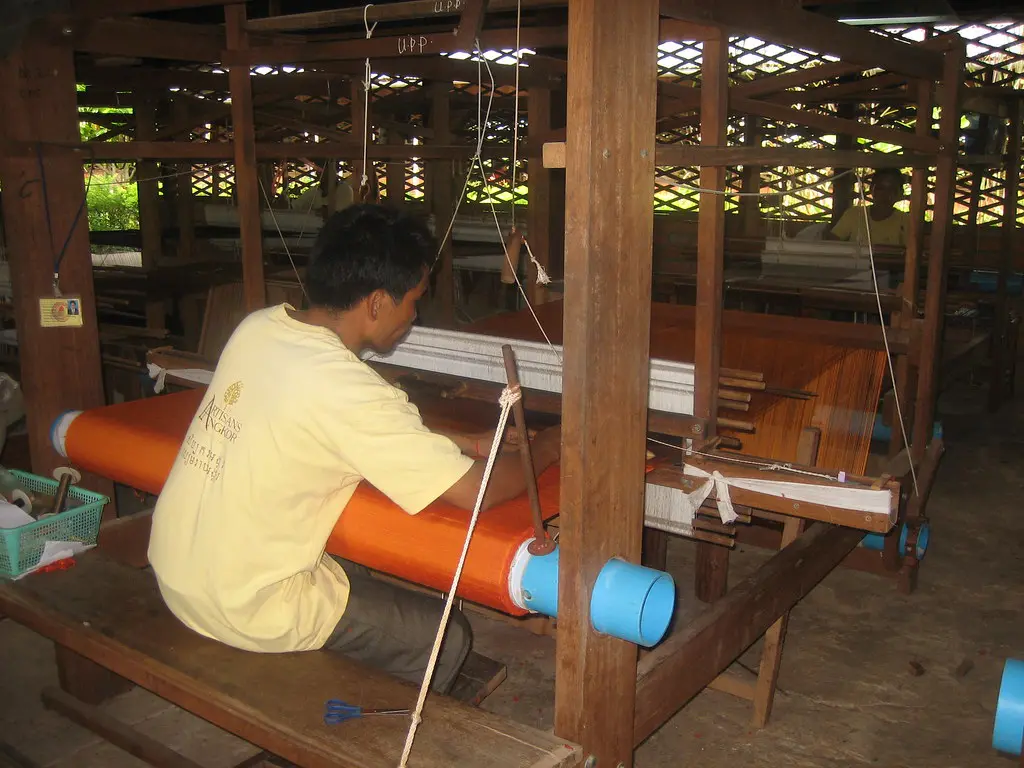
The silk farm sits roughly 16 kilometers west of Siem Reap near the village of Puok. A shuttle runs from the town workshop. The farm covers the full silk production cycle: silkworm cultivation, cocoon harvesting, thread preparation, natural dyeing, and hand-loom weaving. A guided visit takes about two hours.
The dyeing process is worth watching closely. Natural plant dyes produce the colors — turmeric for yellow, indigo leaves for blue, and probut bark for a deep red. Unwinding a single continuous thread from a boiled cocoon onto a spinning frame is among the most striking manufacturing steps a non-specialist can see. The thread is almost invisible until the frame fills.
Tonlé Sap Floating Villages
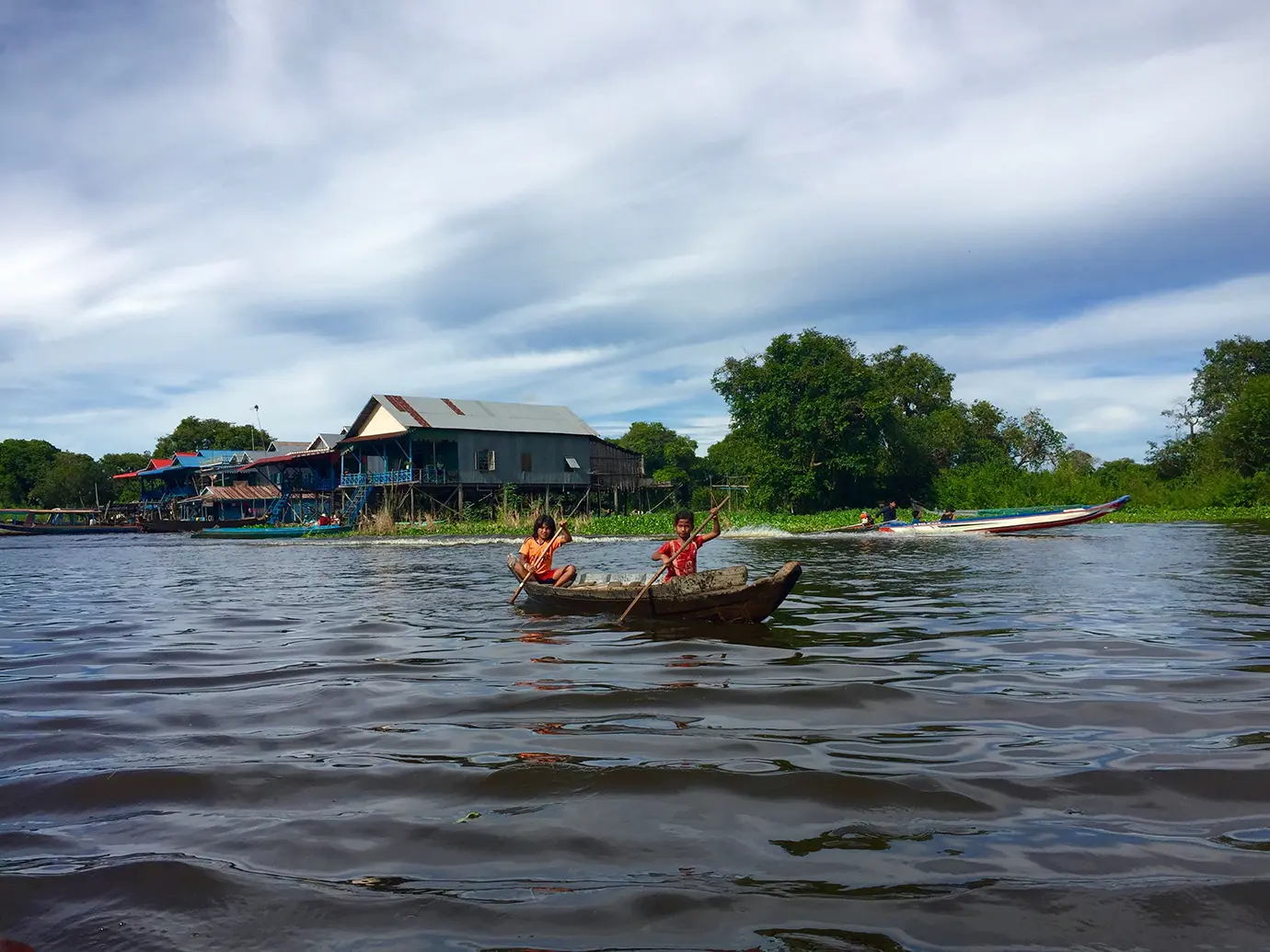
The Tonlé Sap is Southeast Asia’s largest freshwater lake. During the wet season, the Mekong backs up, reversing the river’s flow and expanding the lake from roughly 2,700 square kilometers to over 10,000 square kilometers. The floating villages — communities built on stilts or floating platforms — rise and fall with the water. Two villages are accessible from Siem Reap, each offering a different experience.
Kampong Phluk vs. Kampong Khleang
| Category | Kampong Phluk | Kampong Khleang |
|---|---|---|
| Distance from Siem Reap | About 16 km | About 35 km |
| Visitor numbers | Higher | Significantly lower |
| Organization | Well-structured for visitors | More independent |
| Best season | Wet season for the flooded forest | Wet season preferred |
| Who it suits | First-time visitors, families | Repeat visitors, independent travelers |
Kampong Phluk is the more organized option. The pier logistics are smooth, and the boat ride into the village is shorter. In the dry season, the houses stand on exposed stilts above mud and dry ground — visually striking but a different experience from the wet months. In the wet season from June to October, the lake rises, and the flooded forest becomes navigable by small boat. Trees stand in water to their upper branches, and the light filtering through the canopy is unlike anything at the temples. The smell of the lake at high water is strong — silt, fresh vegetation, and fish drying on nearby racks.
Kampong Khleang sees fewer visitors and gives a less stage-managed picture of lake life. Fishing nets dry on poles. Boats load at working piers. The drive from Siem Reap is longer, and the access road can be rough in the peak wet season. Better for travelers who want a quieter and less mediated visit.
A Note on School-Visit Stops
Some Tonlé Sap operators include a stop at a floating school or orphanage as part of the village trip, often with a donation request. Child welfare organizations widely criticize the practice of visiting orphanages and schools as tourist activities in Cambodia. Some facilities marketed as orphanages house children placed there by families responding to economic incentives. Peregrine does not include school or orphanage stops on any Tonlé Sap itinerary.
Cooking Classes — What Makes One Worth Your Morning
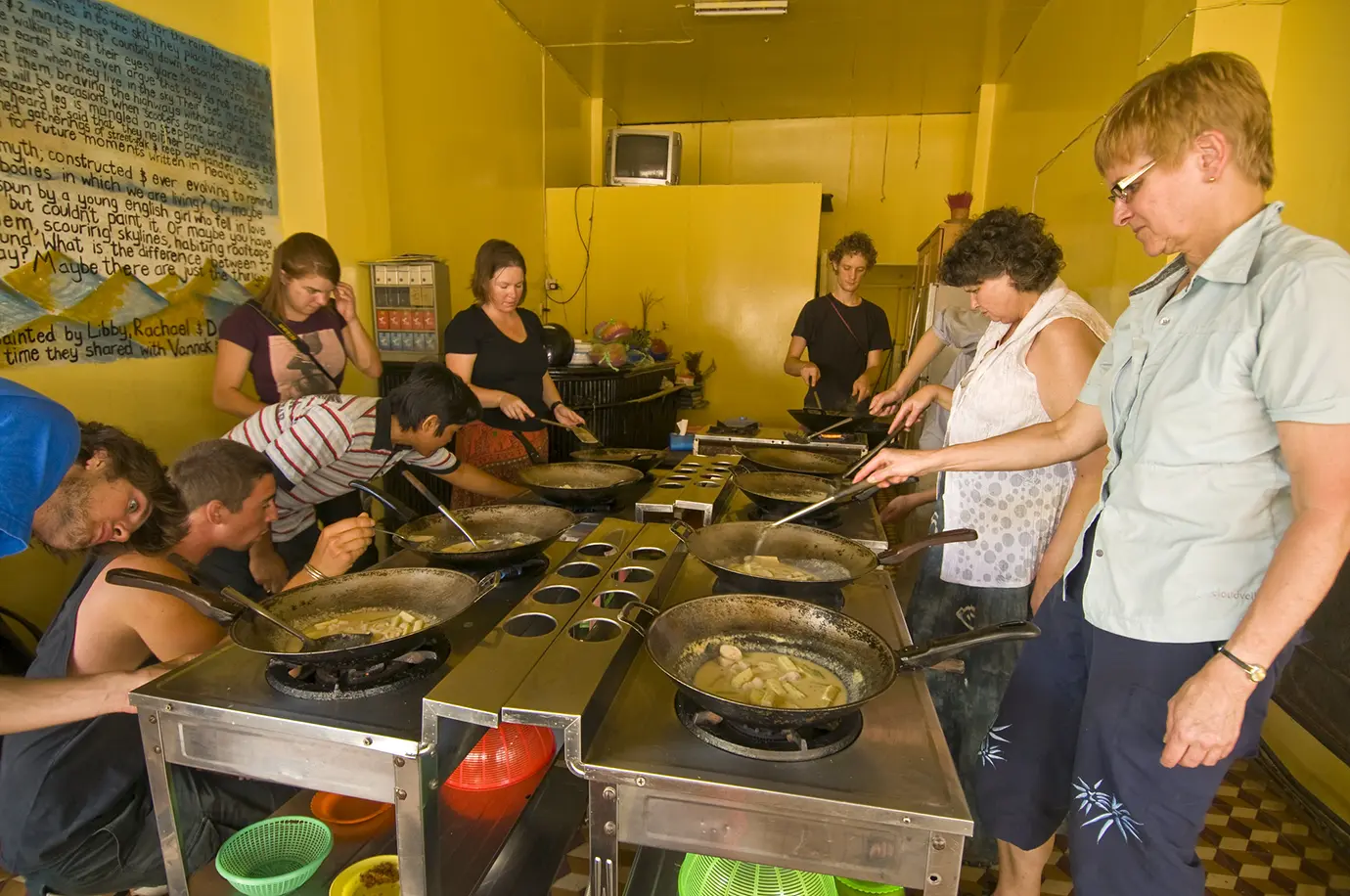
A good cooking class in Siem Reap starts at a market, not a kitchen. The market tour is where the class comes to life. You identify kroeung paste ingredients, watch the morning produce arrive, and learn what fresh galangal smells like when you snap it.
What to Look for When Booking
Four things separate a worthwhile class from a demonstration.
- A guided tour of Phsar Chas or a local wet market before the cooking begins
- A small group — eight participants or fewer gives genuine hands-on time
- Named dishes you would want to cook again: amok (fish steamed in coconut and kroeung paste in a banana leaf cup), lok lak (stir-fried beef with lime and pepper dipping sauce), bai sach chrouk (pork with broken rice, the standard Cambodian breakfast), and bok l’hong (green papaya salad)
- A written recipe card to take home
Without the market tour, the class is just a cooking demonstration in a tourist kitchen. With it, you leave understanding something about how Cambodian food actually works.
Dishes to Learn While You Are There
Amok is the national dish. Fish or chicken steamed in a thick coconut curry made from kroeung — a paste of lemongrass, turmeric, galangal, and kaffir lime — served in a banana leaf bowl. The texture sits between a custard and a curry.
Lok lak is fast-cooked beef tossed in a hot wok and served with a dipping sauce of lime juice and black pepper. The cooking takes three minutes. The sauce takes ten seconds.
Bai sach chrouk is what Cambodians eat for breakfast — thinly sliced pork grilled slowly over coals, laid on broken rice, with pickled vegetables on the side. Simple and hard to improve on.
Countryside Cycling and E-Bikes
The countryside north and west of Siem Reap is flat, quiet, and accessible by bicycle. The roads through working villages offer a picture of rural Cambodian life that no tuk-tuk ride to Angkor can provide.
The Route and What You See
The primary cycling area runs through village lanes and rice-field paths, roughly 5 to 15 kilometers from the town center. The terrain is flat with no significant hills. You pass wooden stilt houses, morning markets setting up under tarpaulins, monks on alms rounds, and irrigation channels lined with sugar palms. The ground smells of wet earth and woodsmoke in the early hours.
Early morning, from six to nine, is the best window. The villages are active, the air is cool, and the light sits low across the paddy. Late afternoon, from four to six, is the second window, when the heat eases, and the sky softens.
E-bikes are a strong option for travelers who want the countryside experience without sustained effort in the heat. The standard e-bikes are pedal-assist rather than throttle-powered — they support your pedaling but do not replace it. A half-day route covers roughly 15 to 20 kilometers in three to four hours, including stops. The cool dry season is the most comfortable window. The green season gives vivid green fields but muddier paths.
Kulen Elephant Forest
Kulen Elephant Forest is an observation-based elephant sanctuary roughly an hour’s drive from Siem Reap. Retired elephants from the logging and tourism industries live in a forested reserve. Visitors walk with rangers and observe the herd moving, foraging, and interacting up close: no riding, chaining, or performance at any point.
What the Visit Is
The visit runs for half a day. You walk on forest trails alongside the rangers and keep a respectful distance from the animals. You hear them before you see them. Branches crack, and the low rumble of communication between herd members carries through the undergrowth. The elephants are not performing. They are eating and moving on their own schedule.
The No-Riding Standard
Elephant riding causes documented physical and psychological harm. The observation-only model at Kulen Elephant Forest is the standard recommended by welfare organizations. Peregrine does not include elephant riding on any Cambodia itinerary.
Museums — Two Worth Your Time
The Angkor National Museum
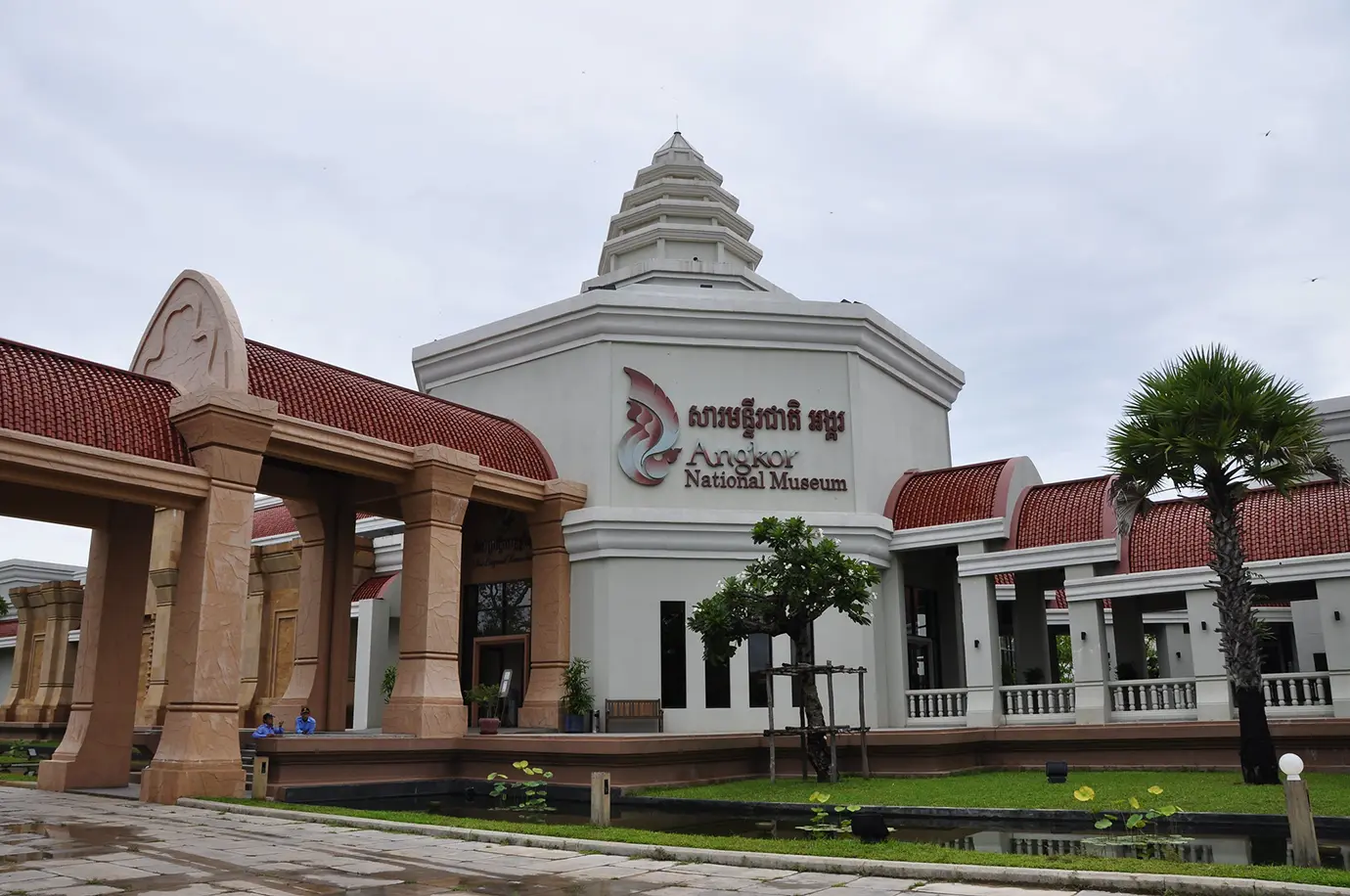
The Angkor National Museum on Charles de Gaulle Boulevard is the most comprehensive overview of Khmer history and temple construction in Cambodia. Visiting before the temples rather than after deepens the experience considerably. The museum covers the historical chronology, the religious context, the hydraulic engineering of the Angkor reservoir system, and the sculptural development across centuries.
Allow two to three hours. Audio guides are available. The Gallery of a Thousand Buddhas is one of the most striking rooms in any Southeast Asian museum. Buddha images spanning multiple centuries line the hall, arranged so you can read the stylistic evolution from one end to the other. The museum is air-conditioned, which makes it a practical midday stop during the hot season.
The Landmine Museum
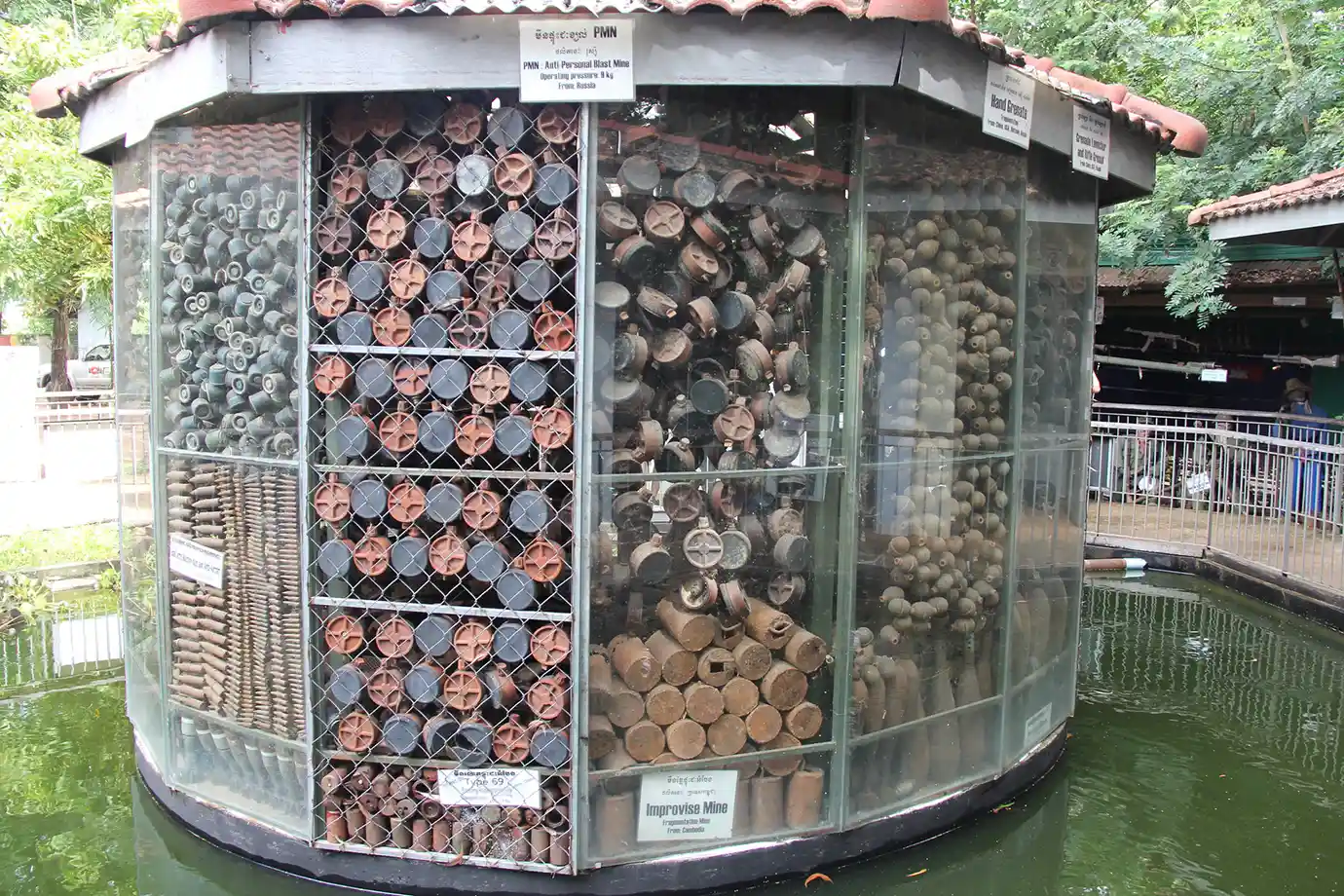
The Cambodian Landmine Museum sits roughly 25 kilometers from Siem Reap on the road toward Banteay Srei. Aki Ra, a former child soldier forced to lay mines during the conflict period, founded it. He has since spent his life clearing the ordnance he and others placed.
The museum displays defused landmines, unexploded ordnance, and the tools used for manual clearance. A relief center for children affected by mine accidents operates on the same site. Entry is by donation. Allow one to two hours. Pair the visit with a morning trip to Banteay Srei, since both sit on the same road heading north out of town.
Markets and Shopping in Siem Reap
Old Market (Phsar Chas)
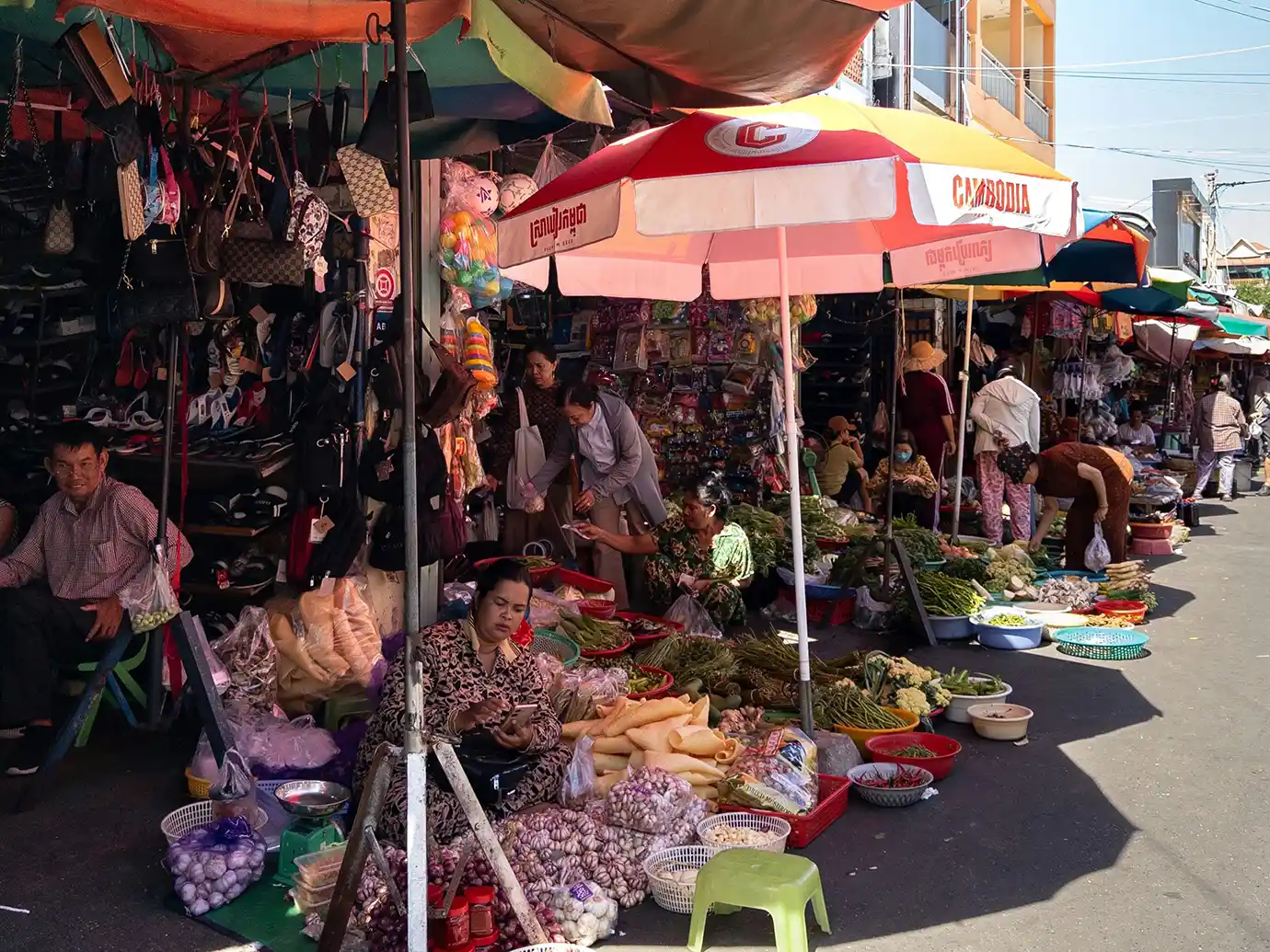
The Old Market near the river is the most authentic of Siem Reap’s three main shopping areas. The inner wet-market section serves local buyers — fresh produce, fish laid on ice, dried spices stacked in cones, household goods in narrow stalls. Walking through it is worth the time, even if you buy nothing. The outer stalls and surrounding lanes sell clothing, scarves, carvings, and silver.
What to look for: Kampot pepper from the southern province, distinguishable from mass-produced pepper by a lighter color and a sharper, more complex aroma. Hand-woven silk scarves with the slight texture irregularity of real loom work, not the flat perfection of synthetic imitations. Lacquerwork showing visible brush strokes and slight depth in the lacquer layers.
What to skip: mass-produced t-shirts and replica temple figurines, which are almost entirely imported rather than locally made.
Angkor Night Market
The Angkor Night Market is a purpose-built evening market, more polished and less chaotic than the Old Market. A reasonable mix of craft items, clothing, and food stalls. Best for an evening browse rather than serious shopping. Open nightly from early evening.
Made in Cambodia Market
A weekend market focused on locally produced goods — food products, fair-trade craft, and clothing from Cambodian-owned brands. A better option than the Old Market for buyers seeking contemporary Cambodian design with verified local provenance. Smaller selection, but what is there is genuinely from the country.
Pub Street — What It Is and the Quieter Alternative
Pub Street Honestly
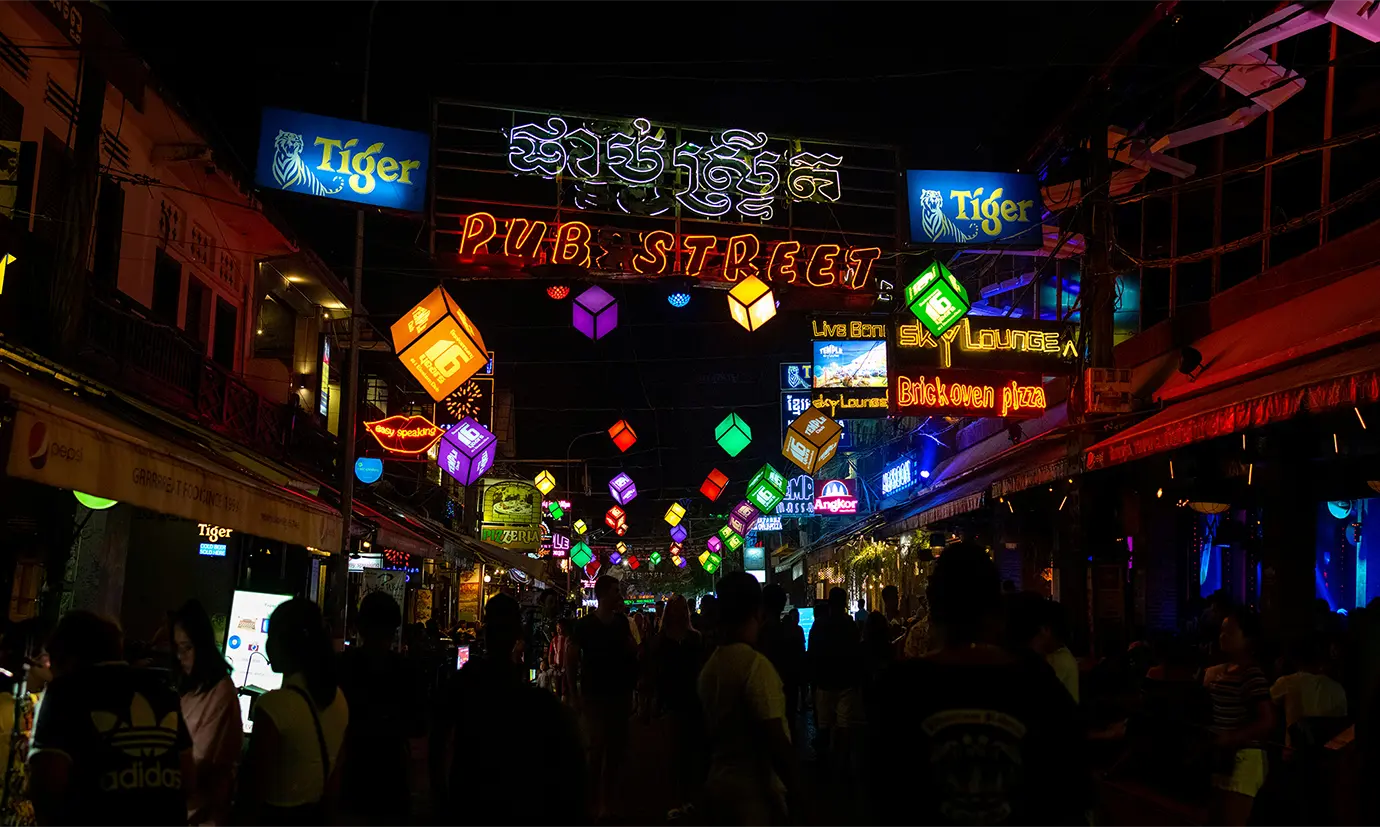
Pub Street is Siem Reap’s high-density tourist bar zone. Loud music from about eight in the evening, cheap cocktails, and a heavy backpacker energy. Fine for one evening if you want it. Not a representation of Cambodian nightlife. Follow the standard bag-awareness precautions — crowd density increases the risk of petty theft.
The Quieter Alternative — Alley West and the River Road
Alley West, a smaller cluster of bars and restaurants a short walk from Pub Street, runs significantly quieter—with smaller establishments, locally owned in several cases, and lower music volume. The Pokambor Avenue riverside strip has restaurants and bars facing the Siem Reap river. The evening atmosphere rewards a slow meal more than a rushed crawl.
Day Trips from Siem Reap
| Destination | Distance | Drive Time | What You See | Who It Suits | Duration |
|---|---|---|---|---|---|
| Beng Mealea | About 65 km east | 90 minutes | Unrestored jungle ruin, boardwalks | All visitors are good for children | Full morning |
| Banteay Srei | About 35 km northeast | 45 minutes | Finest Angkorian stone carving | Carving and art lovers | Half day |
| Phnom Kulen | About 50 km north | 1 hour | Sacred mountain, river carvings, waterfall | Families, nature, and history combined | Full day |
| Koh Ker | About 120 km north | 2.5 hours | Stepped pyramid, remote temple cluster | Second-visit travelers | Full day |
Beng Mealea
Beng Mealea is the most visually distinctive temple experience outside the main Angkor complex. The temple has never been restored. Galleries have collapsed into rubble. Trees grow through doorways. A boardwalk system threads through the ruins, making the whole visit feel like an exploration. Children respond better to the walkway format than to intact temples — the collapsed scale and the forest setting hold their attention. Depart at six and arrive before the coach tours reach the site.
Phnom Kulen
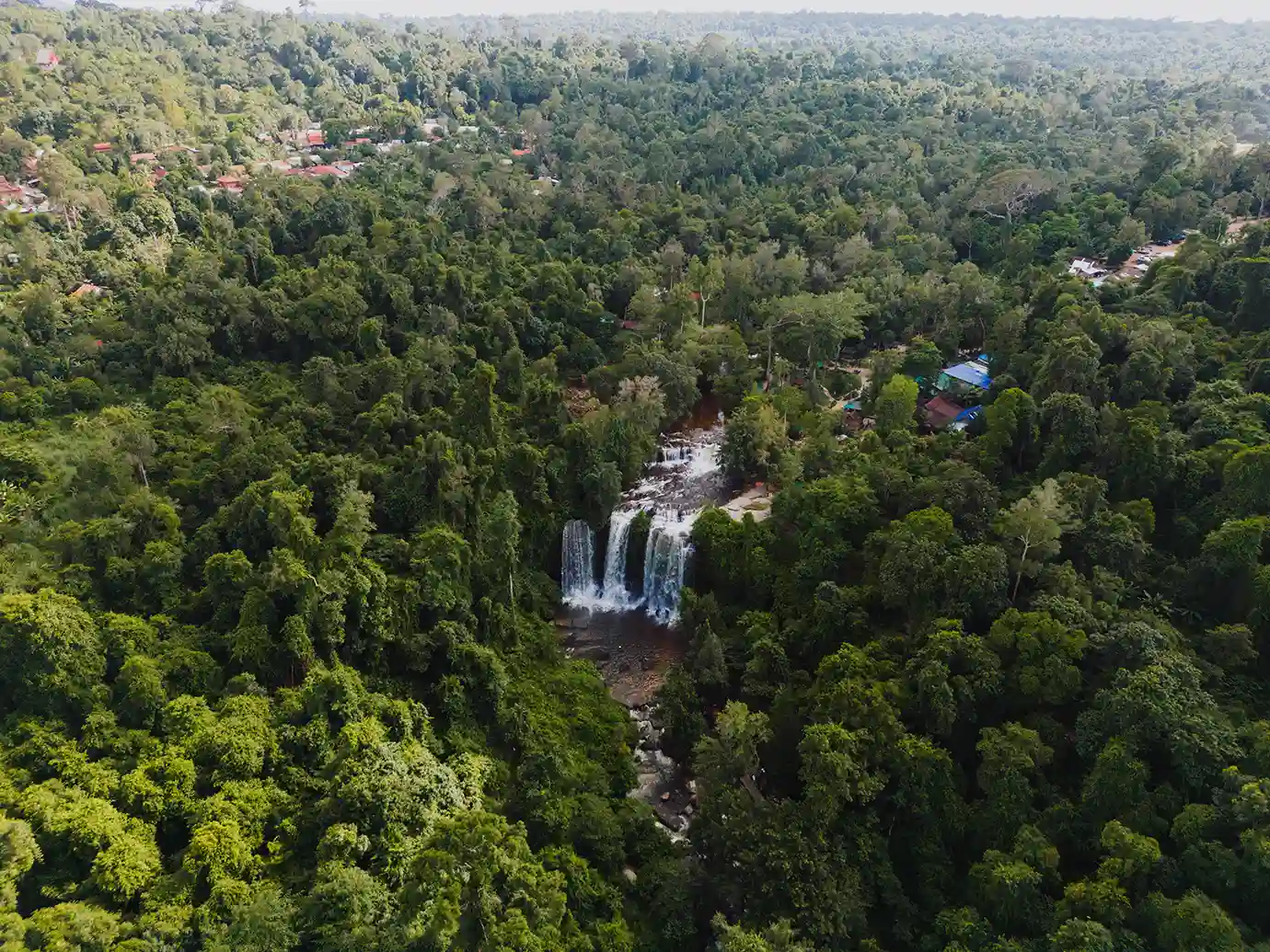
Phnom Kulen is the mountain where Jayavarman II declared the beginning of the Khmer Empire, making it the historical origin point of everything at Angkor. The river of a thousand lingas features ritual symbols carved directly into the riverbed. The carvings blessed the water flowing downstream to Angkor’s reservoirs, making it one of the most specific sacred sites in Southeast Asia. A reclining Buddha carved into sandstone sits near the summit. The waterfall below the carvings makes a strong midday swimming stop for families. Allow a full day and carry the entry fee, which is separate from the Angkor pass.
Koh Ker
Koh Ker is the most ambitious day trip — roughly 120 kilometers north, making the round trip about five hours of driving. The centerpiece is Prasat Thom, a seven-tiered sandstone pyramid roughly 35 meters high with a climbable staircase. The surrounding temples sit in a forest with few other visitors. The five-hour drive makes it better suited to a second visit or to a dedicated temple enthusiast. A first-timer with three temple days ahead has better options closer.
Practicalities — Getting Around and How Long to Allow
The Airport — Farther Than You Think
The Siem Reap Angkor International Airport sits roughly 40 kilometers from the town center, making the transfer 45 minutes to an hour by private car. Many older guides and travel forums still refer to the former in-town airport. Plan for a longer transfer than older sources suggest. Tuk-tuks are not practical for the 40-kilometer distance. A private car arranged through your hotel or operator is the standard transfer.
Getting Around Siem Reap Town
Tuk-tuk is the standard option for in-town trips and temple runs. Agree on the fare before departure. A short town trip costs a few dollars. A tuk-tuk from the Old Market area to Angkor Wat takes roughly 20 to 25 minutes.
Ride-hailing apps, including PassApp, offer pre-agreed fares that remove the negotiation step. Coverage in Siem Reap varies. Worth trying for solo travelers.
Bicycle rental works well for the Old Market area and the first stretch of countryside routes. Not practical for Angkor, where the distances and heat make a bicycle a different activity category from a leisure ride.
Motorbike rental is the highest-risk mode of transport a tourist can choose in Cambodia. Peregrine does not recommend it.
Frequently Asked Questions
What is there to do in Siem Reap besides the temples?
Phare, the Cambodian Circus, runs nightly with acrobatics, theater, and live music. Artisans Angkor opens its stone-carving and silk-weaving workshops to visitors. The Tonlé Sap floating villages are accessible by boat. Cooking classes start at the market and cover dishes like amok and lok lak. Countryside cycling, the Angkor National Museum, and the Landmine Museum round out a full non-temple day.
How many days should I spend in Siem Reap?
Four days minimum for a first visit — three for the temple circuits on a three-day Angkor pass, one for non-temple activities. Five days adds a proper day trip to Beng Mealea, Phnom Kulen, or Banteay Srei. More than five days suits photographers, repeat visitors, or families needing a slower pace.
Is Phare Circus worth going to?
Yes. Phare is a contemporary circus combining acrobatics, live music, and Cambodian storytelling. The performers train at the Phare Ponleu Selpak arts school in Battambang, and the physical skill level is high. Shows run nightly at eight and last about one hour. Book ahead for December and January when peak-season crowds fill the intimate big top.
What is Artisans Angkor?
Artisans Angkor is a social enterprise employing rural Cambodians in traditional crafts. The workshop in central Siem Reap and the silk farm at Puok are both open to visitors with no entry charge. The workshop takes 30 to 45 minutes. The silk farm takes about two hours and covers the full production cycle from silkworm to finished fabric.
Which floating village is best — Kampong Phluk or Kampong Khleang?
Kampong Phluk for first-time visitors — better organized, shorter boat ride, accessible year-round. Kampong Khleang is for travelers wanting a quieter, less structured experience. Both differ by season. The wet season from June to October brings the flooded forest to full water levels. Dry season shows the stilts exposed above ground. Each version is worth seeing.
What is the best day trip from Siem Reap?
Beng Mealea, for most first-time visitors, is an unrestored jungle ruin unlike anything in the main complex, roughly 90 minutes by car. Banteay Srei, about 45 minutes away, is for travelers seeking the finest Angkorian stone carving. Phnom Kulen for a full day of sacred history, river carvings, and a waterfall. Koh Ker for second visits or dedicated temple specialists.
How far is Siem Reap airport from the town center?
The Siem Reap Angkor International Airport sits roughly 40 kilometers from the town center. The transfer takes 45 minutes to an hour by private car. Many older guides still reference the previous in-town airport, which is now closed. Plan for a longer airport run than older sources suggest.
Is Beng Mealea worth the drive from Siem Reap?
Yes. The collapsed galleries, forest-consumed stonework, and boardwalk system make it the most visually distinctive temple experience outside the main Angkor complex. Allow a full morning and depart early at six to arrive before the coach tours. The boardwalk format works well for children, who respond to the exploration feel more than to intact temples.