


Armenian food runs on fire, bread, and patience. Meat cooks over open coals, bread bakes against the wall of a clay pit oven, and wine has been made here for more than 6,000 years. Knowing what to eat in Armenia changes the trip. Order well, and you eat like a local family. Order badly, and you get a tourist menu.
Below you will find the dishes that matter, the bread that anchors every table, the world’s oldest winery, and an honest answer for vegetarians.
What Food Is Armenia Known For?
Armenia is known for khorovats, its charcoal barbecue, and lavash, a paper-thin flatbread baked in a clay pit oven. Meals are built around grilled meat, fresh herbs, local cheeses, and walnuts. Wine and brandy both carry serious history here. Armenia is home to the world’s oldest known winery, dating to roughly 4100 BC. Armenian cooking is aromatic rather than hot. Tarragon, coriander, mint, and dried sumac appear constantly.
Portions run large. Two people ordering three dishes plus bread will usually end up with too much food.
The Essential Armenian Dishes
Khorovats — Armenian Barbecue
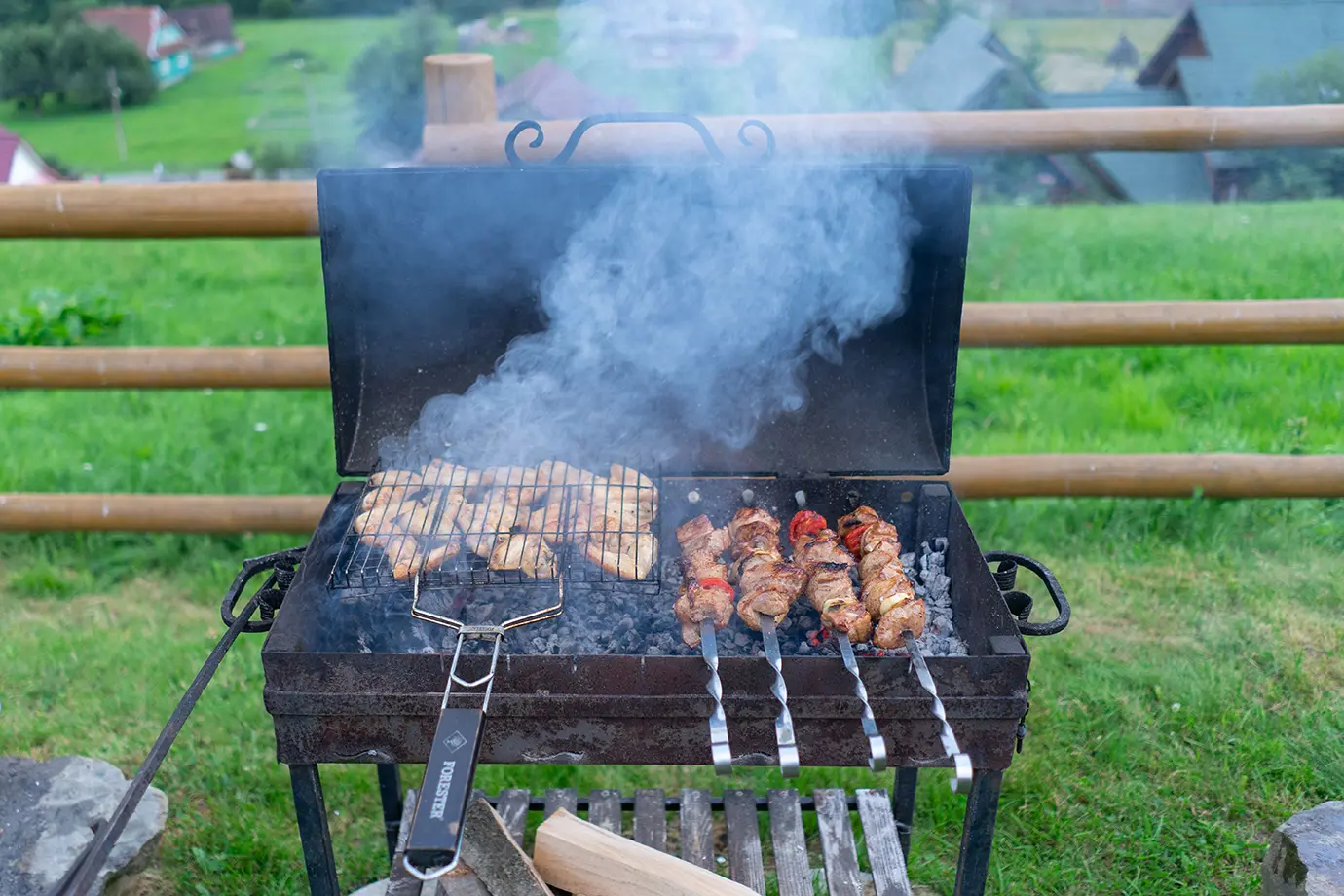
Khorovats is Armenia’s national dish and its most social one. Large cuts of pork, lamb, beef, or chicken are marinated, threaded onto flat metal skewers called shampoor, and grilled slowly over open coals. Vine cuttings are the traditional fuel, and they leave a faint sweetness in the meat.
Pork loin is the local favorite. Ask for khozi mis if you want what Armenians actually order.
Grilled vegetables cook on the same coals. Eggplant, peppers, and tomatoes come off the skewer, get peeled, and turn into a smoky mash called khorovats salad.
Where to eat it: Proshian Street in Yerevan is the city’s barbecue row. Locals call it Barbecue Street, and grills line both sides.
Order tan alongside it. Cold salted yogurt drink cuts the fat better than beer.
Tolma — Stuffed Grape Leaves
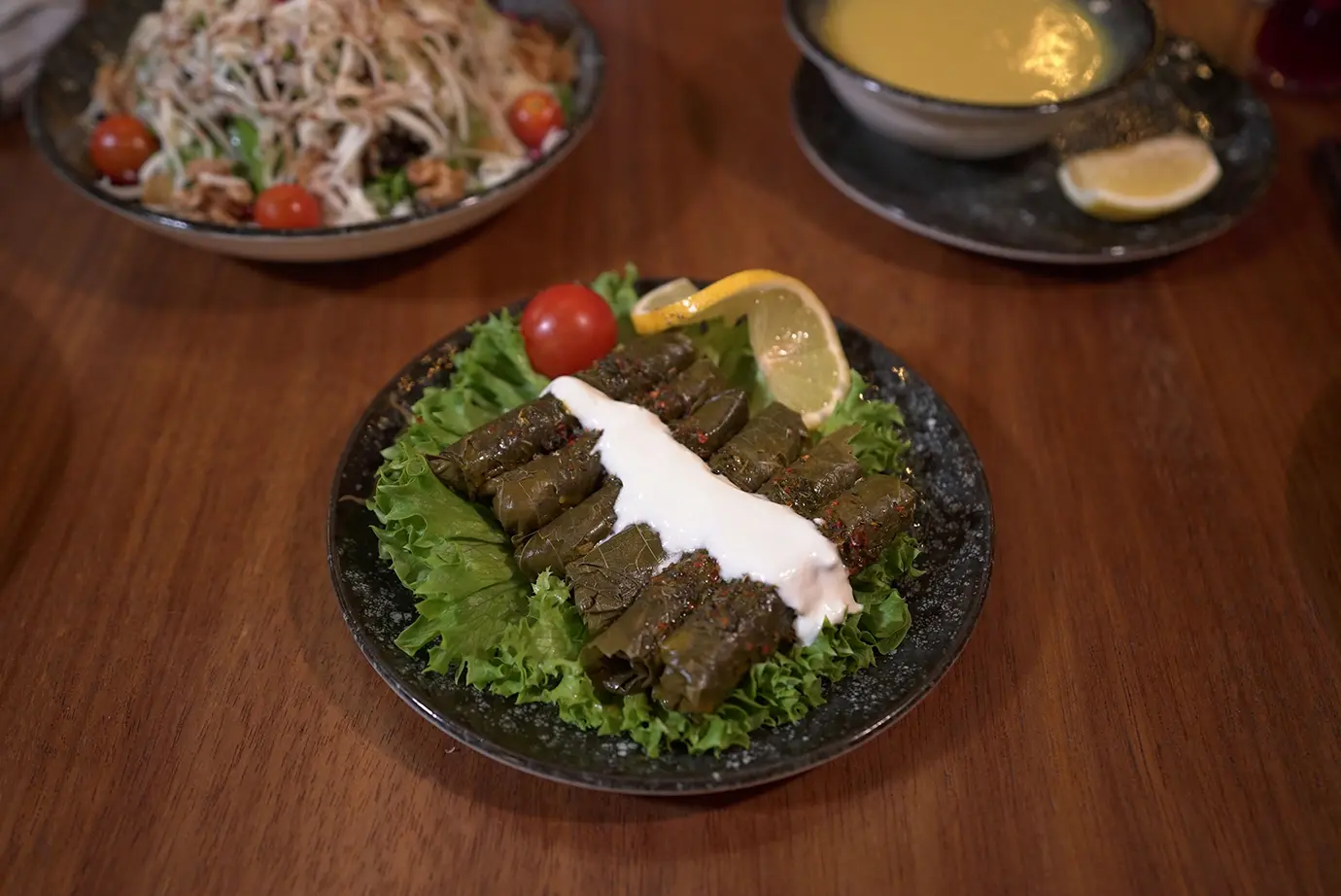
Tolma is minced meat and rice wrapped in grape leaves, then slowly simmered. Cabbage leaves, peppers, eggplant, and tomatoes all work as alternative wrappers. Armenians serve it with a garlic yogurt sauce called matsun.
Summer versions use fresh grape leaves. Winter versions use leaves preserved in brine, which taste sharper.
There is a second version worth knowing about, and vegetarians should read the next section for it.
Tolma freezes well and turns up at every celebration. The Tolma Festival is held annually in Armenia, usually in the Ararat Valley.
Ghapama — The Stuffed Pumpkin
Ghapama is a whole pumpkin hollowed out, stuffed with rice, dried fruit, nuts, and honey, then baked until the shell softens. Apricots, raisins, prunes, walnuts, and almonds all go inside. The dish arrives whole at the table and gets cut open in front of everyone.
Ghapama is festive rather than daily. Families make it to the New Year, weddings, and harvest gatherings.
A well-known Armenian children’s song is about ghapama. Ask your guide to sing it and see what happens.
Restaurants need advance notice. The pumpkin takes hours to bake, so order it a day ahead.
Other Dishes Worth Ordering
- Basturma — air-cured beef coated in a fenugreek and garlic paste, sliced paper-thin
- Sujukh — spiced dry-cured sausage, eaten with bread and eggs
- Aveluk — dried mountain sorrel, braided and aged, cooked into a sour, earthy stew
- Jingalov hats — flatbread packed with up to twenty wild herbs, from Artsakh
- Khash — a winter soup of boiled cow’s hoof, eaten at dawn with garlic and dried lavash
- Gata — a sweet layered pastry, often sold at monastery gates
- Sweet sujukh — walnuts threaded on a string and dipped in thickened grape juice
Khash deserves a warning. Armenians eat it at 07:00 in winter with vodka; it is an acquired taste rather than a casual lunch.
Lavash: The Bread of Life
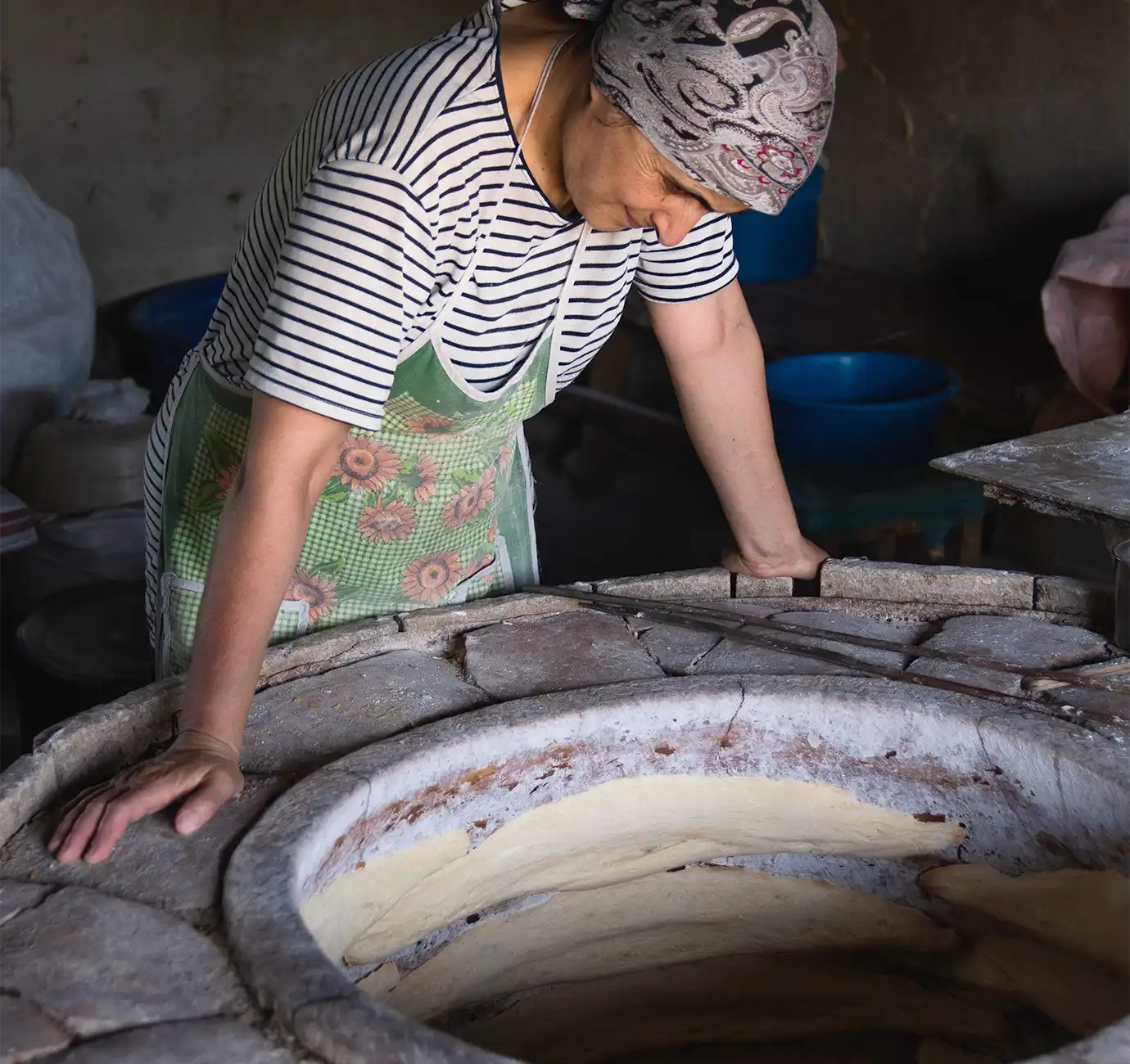
Lavash is a soft, paper-thin flatbread baked against the wall of a tonir, a clay oven sunk into the ground. UNESCO added lavash to its Representative List of Intangible Cultural Heritage in 2014. The bread appears at almost every Armenian meal, and no table is considered complete without it.
How Lavash Is Made
A simple dough of wheat flour and water gets kneaded, divided, and rolled into thin sheets.
The baker stretches each sheet over an oval cushion, then slaps it against the hot inner wall of the tonir.
Baking takes 30 seconds to one minute. The baker reaches into the pit and peels the bread off the wall by hand.
Women traditionally bake lavash in small groups. UNESCO’s citation specifically notes how the shared work strengthens family and community ties.
Why Lavash Matters Beyond Food
Dried lavash keeps for up to six months. Armenian households store sheets of it and rehydrate them with a sprinkle of water.
At weddings, lavash is draped over the shoulders of the bride and groom. The gesture asks for fertility and prosperity.
Archaeologists have found evidence of lavash baking in the Armenian Highlands from the third millennium BC.
How to Eat It
Lavash works as a utensil more than a side dish. Wrap it around khorovats. Fill it with cheese and herbs for breakfast. Tear it and dip it into soups.
Ask for brtuj, a lavash wrap with fresh herbs, cheese, and sometimes walnuts. Simple and excellent.
Many tour itineraries include a lavash baking demonstration near Garni. Watching a baker reach into a 300°C pit is worth the stop.
The World’s Oldest Winery: Areni-1
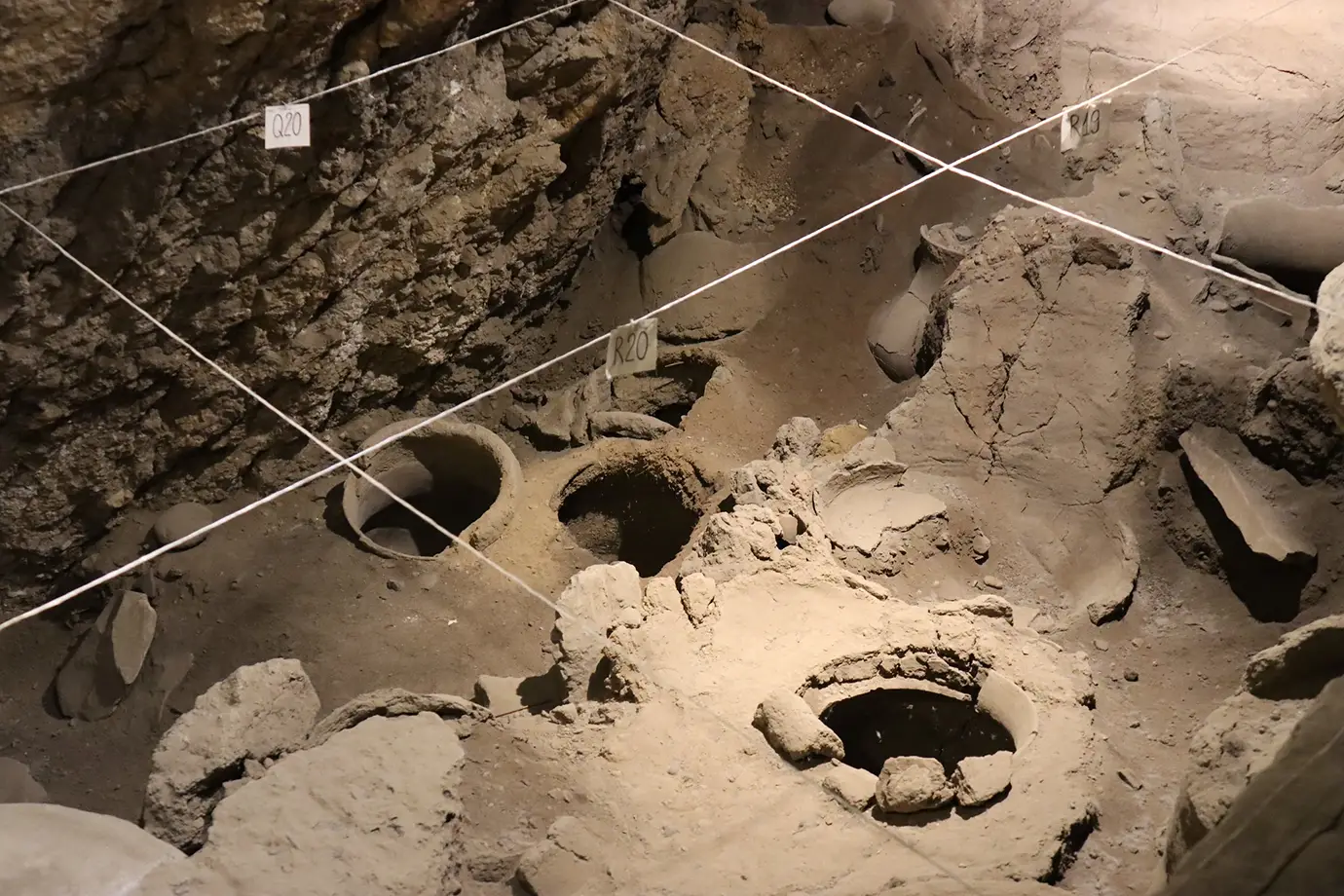
Archaeologists discovered the world’s oldest known winery inside the Areni-1 cave in Armenia’s Vayots Dzor province. The installation dates to roughly 4100 BC, making it about 6,100 years old. A wine press, fermentation vats, storage jars, drinking cups, and desiccated grapevines all survived together as part of a complete production setup.
What They Found
Excavations began in 2007 under a joint Armenian, American, and Irish team. Work concluded in 2010.
The site holds a shallow clay basin about one meter long, used for stomping grapes. Juice drained into a 60-centimeter vat below.
Chemical analysis found malvidin, the pigment that gives red wine its color. The wine was probably closer to a modern Merlot than anything sweet.
The previous record holder, a winery in the West Bank, is at least a thousand years younger.
The Shoe
Seven months before the winery came to light, the same cave produced the world’s oldest leather shoe.
The Areni-1 shoe dates to about 5,500 years ago. Archaeologist Diana Zardaryan found it in 2008, upside down in a shallow pit beneath a broken ceramic bowl.
Grass was stuffed inside it. Nobody knows whether for warmth or to hold the shape.
Cool, dry, stable cave conditions preserved it almost perfectly. The shoe now sits in the History Museum of Armenia on Republic Square in Yerevan.
Why the Wine Was Made
The press and jars sat among dozens of grave sites. Archaeologists believe the wine served funeral and ceremonial purposes rather than daily drinking.
The cave served as both a burial ground and a workshop.
Visiting Today
Areni-1 cave sits near the village of Areni, roughly 110 kilometers south of Yerevan. The site fits naturally into a day trip with Khor Virap and Noravank.
The cave interior is modest. Manage expectations, since the significance outweighs the spectacle.
Areni village runs working wineries that you can taste at. The Areni Wine Festival takes place each autumn, usually in October.
What Armenian Wine Should You Drink?
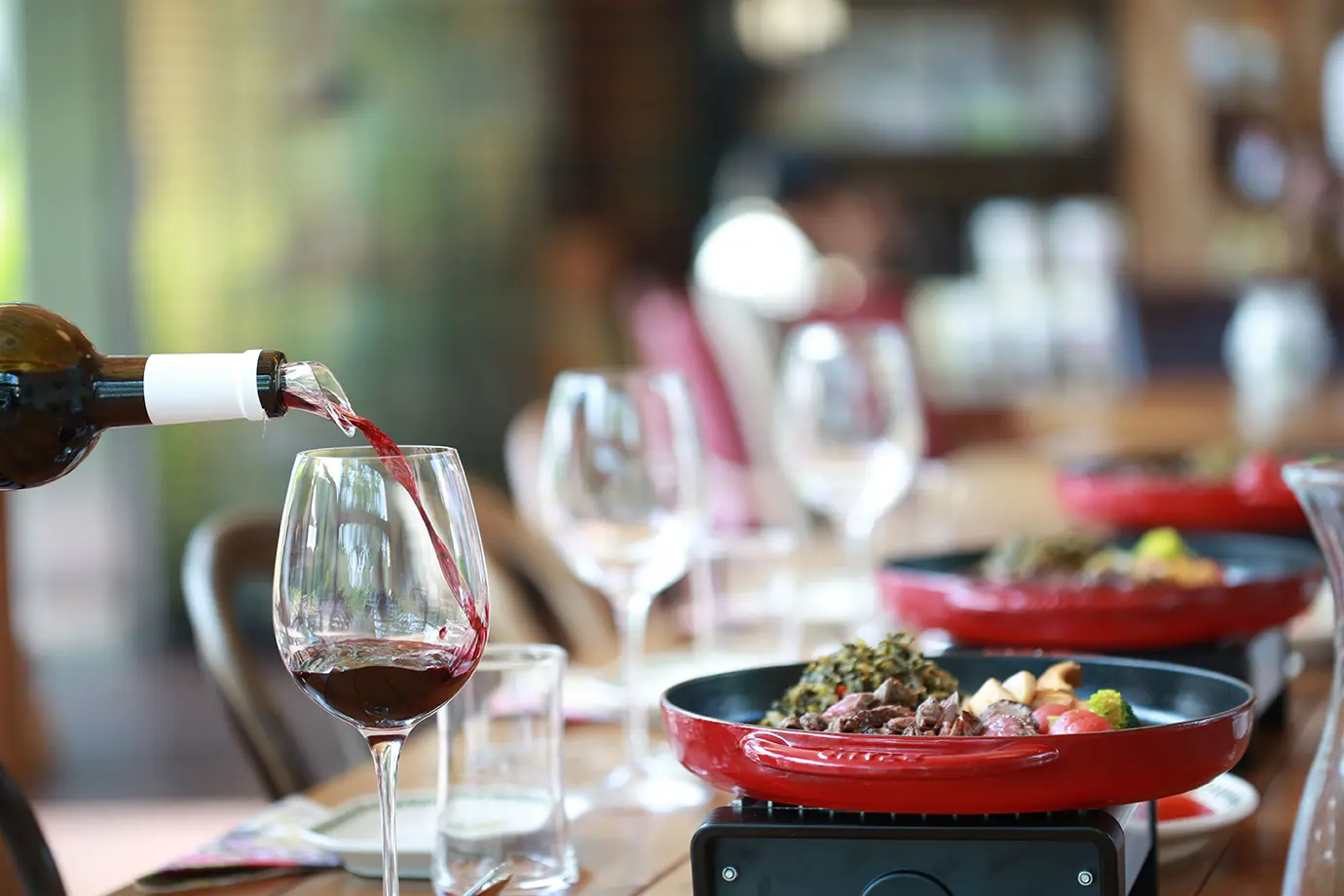
Order Areni Noir for red and Voskehat for white. Both are indigenous Armenian grapes with no widely planted equivalent elsewhere. Areni Noir produces a medium-bodied red with bright acidity and red fruit. Voskehat, sometimes called the queen of Armenian grapes, gives a textured, mineral white.
Armenia’s wine industry collapsed under Soviet policy, which pushed the country toward brandy production instead. Serious winemaking restarted only in recent decades.
Vayots Dzor is the main wine region. Areni village anchors it.
Do not skip the brandy. Armenian brandy, locally called konyak, carries a genuine international reputation. Ararat is the best-known producer, and the Yerevan Brandy Company runs tours and tastings in the capital.
Ask for a five- or ten-year expression. Both drink well without being expensive.
Armenian Coffee, Not Tea
Armenia is a coffee-drinking country. Soorj, Armenian coffee, is finely ground, brewed unfiltered in a small long-handled pot, and served in a demitasse cup. The style closely resembles Turkish and Greek coffee, though no one in Armenia would describe it that way.
Grounds settle at the bottom. Drink down to the sludge and stop.
Order it sweet, medium, or plain. Specify when you order, since sugar goes in during brewing rather than after.
The Cup Reading
Turning the cup over and reading the grounds is a genuine tradition, not a tourist act.
Armenians flip the finished cup onto the saucer, wait for it to cool, then interpret the patterns. Ask an older Armenian to read yours, and you will get a story.
Tea exists but sits in the background. Herbal mountain teas, especially thyme and rose hip, are common in rural guesthouses.
The Modern Cafe Scene
Yerevan has developed a serious specialty coffee culture. Espresso bars, flat whites, and single-origin beans are all easy to find in the center.
Armenians treat cafes as extensions of the living room. People sit for hours over one cup, and nobody rushes them.
Is Armenia Good for Vegetarians?
Traditional rural Armenian food is heavily meat-based, and vegetarians should plan accordingly outside the capital. Yerevan is a different story, with a strong cafe scene, dedicated vegetarian restaurants, excellent local cheeses, and outstanding produce. The Armenian Apostolic fasting calendar also produces genuinely vegan traditional dishes.
The Key Word: Pasuts
Ask for pasuts tolma, the fasting version. Instead of meat, the grape or cabbage leaves hold beans, lentils, chickpeas, and cracked wheat.
Pasuts tolma is fully vegan and completely traditional. Every serious Armenian restaurant makes it.
Orthodox fasting periods run for weeks at a time. As a result, restaurants keep meat-free dishes available year-round
Reliable Vegetarian Orders
- Pasuts tolma — the fasting version of stuffed leaves, vegan
- Jingalov hats — flatbread stuffed with wild herbs, vegan
- Aveluk salad — mountain sorrel with walnuts and garlic
- Ghapama — pumpkin with rice, fruit, and nuts, vegetarian and sometimes vegan
- Eech — a bulgur salad similar to tabbouleh
- Mante without meat — some restaurants make a cheese version
- Lavash with cheese and herbs — the standard Armenian breakfast
Cheese and Produce
Armenian cheeses reward exploration. Try chanakh, a salty, brined cheese, and lori, a milder, firmer cheese. cheese
Summer produce is exceptional. Armenian apricots, tomatoes, and cherries are grown in volcanic soil at an altitude and taste like it.
Yerevan’s GUM covered market sells dried fruit, nuts, spices, and cheeses. Vendors offer samples freely.
Practical Warnings
Confirm that bean and vegetable dishes are cooked without meat stock. Ask directly rather than assuming.
Rural guesthouses in Syunik, Tavush, and Lori may struggle with vegetarian requests. Tell your operator or guesthouse in advance, and they will prepare properly.
Vegans should avoid anything with matsun, the local yogurt, which appears in more sauces than menus suggest.
Practical Dining Tips for Armenia
Restaurants serve continuously from midday until late. Dinner at 21:00 is normal, especially in summer. Reservations are rarely needed at restaurants outside the top ones in Yerevan.
Check the bill before tipping. Yerevan restaurants often add a 10 percent service charge. Where none appears, 10 percent is customary.
Tap water is safe everywhere in Armenia. Yerevan holds hundreds of pulpulaks, public drinking fountains fed by mountain springs. Carry a refillable bottle and use it.
Order fewer dishes than you think. Armenian portions are generous, and hosts consider an under-filled table a failure.
Say yes to the toast. Armenian meals run on toasts, usually starting with the parents and ending with peace. Wait for the first one before drinking.
Eat the fish at Lake Sevan. Ishkhan, the Sevan trout, exists nowhere else on earth. Grilled or tonir-baked, both excellent.
Buy food to take home. Dried apricots, sujukh, basturma, and Armenian spice blends all travel well. GUM market and Vernissage both stock them.
Frequently Asked Questions
What is the national dish of Armenia?
Khorovats, Armenian charcoal barbecue, is generally considered the national dish. Marinated pork, lamb, beef, or chicken cooks on flat metal skewers over open coals, often fueled by vine cuttings. Lavash, the UNESCO-listed flatbread, holds equal cultural weight and appears at essentially every meal. Many Armenians would name both together rather than choosing one.
Is Armenia really the home of the world’s oldest winery?
Yes. Archaeologists discovered a complete winemaking installation inside the Areni-1 cave in Vayots Dzor, dated to roughly 4100 BC and about 6,100 years old. The find included a grape press, fermentation vats, storage jars, and drinking cups. The previous record holder, in the West Bank, is at least a thousand years younger.
What is lavash, and why is it important?
Lavash is a soft, paper-thin flatbread baked against the wall of a tonir, a clay oven sunk into the ground. Baking takes 30 seconds to a minute. UNESCO inscribed lavash on its Intangible Cultural Heritage list in 2014. Dried lavash keeps for six months, and at weddings it is draped over the shoulders of the bride and groom.
Do Armenians drink coffee or tea?
Armenia is firmly a coffee country. Soorj, the local unfiltered coffee, is brewed in a small long-handled pot and served in demitasse cups with the grounds settling at the bottom. Reading the grounds afterward is a genuine tradition. Tea exists but plays a minor role, mostly as herbal mountain infusions in rural guesthouses.
Can vegetarians eat well in Armenia?
Yerevan is easy, with dedicated vegetarian restaurants and a strong cafe scene. Rural areas are harder, since traditional village cooking is meat-heavy. Ask for pasuts tolma, the vegan fasting version of stuffed leaves, available all year thanks to the Orthodox fasting calendar. Jingalov hats and aveluk salad are also reliably meat-free.
Should I try Armenian brandy?
Yes. Armenian brandy, locally called konyak, carries a long international reputation and remains the country’s best-known drink export. Ararat is the flagship producer, and the Yerevan Brandy Company offers factory tours with tastings in the capital. Ask for a five or ten-year expression, both of which drink well without costing much.