


Azerbaijani food is built on saffron rice, slow-braised lamb, hand-folded dumplings, and fire-roasted kebabs. The cuisine sits at the crossroads of Persian, Turkish, and Caucasian cooking, but the flavors are entirely its own. Two dishes — plov and dushbara — anchor every serious meal, and tea anchors everything else.
What Is Azerbaijani Food Like?
Azerbaijani cuisine centers on slow-cooked meat, fragrant rice, and a deep use of dried fruits, herbs, and spices. Saffron appears in rice dishes, broths, and even pastry. Lamb is the dominant protein, though chicken and beef are also common. Fresh herbs — dill, mint, tarragon, coriander — arrive on a separate plate alongside almost every main course, not as a garnish.
The flavor register runs warm rather than hot. Azerbaijani cooking rarely uses chili heat. Instead, spice comes from saffron, cinnamon, turmeric, and dried barberries. Sweet and savory share the same dish in Azerbaijani cooking. Lamb cooks with apricot. Chicken arrives with dried plum. Rice is layered with walnuts. Centuries of Persian culinary influence explain this combination.
What Are the Must-Try Azerbaijani Food Dishes?
Plov — The Dish That Defines the Country
Plov — also called pilaf — is the national dish of Azerbaijan, and the country takes it more seriously than anywhere else in the region. Azerbaijani cooks recognize more than 200 distinct varieties. Every region and most home co-ops have a signature version.
The defining technique separates Azerbaijani plov from all its neighbors. The rice cooks separately from the accompaniments, called ashgara. Basmati rice is parboiled, then steamed over low heat with saffron and butter until each grain is separate, fluffy, and golden. The ashgara — braised lamb, dried fruits, caramelized onion, or seasonal vegetables — arrives on the side or layered on top.
The crust matters. At the bottom of the pot sits the gazmag — a crispy crust layer. It is made from lavash flatbread, egg-and-yogurt dough, or sliced potatoes drenched in butter. When the plov is served, the gazmag comes out in a sheet, crackled and golden, and everyone fights for a piece.
The peak version is shah plov — “king’s pilaf.” Saffron rice, braised meat, and dried fruits go inside a sealed lavash crust. The lavash bakes into a golden pastry dome around the whole filling. Restaurants in Baku require 24-hour advance ordering for shah plov, and it arrives at the table looking like a small drum. Break the crust at the table.
Order plov anywhere in Azerbaijan. A first encounter is usually a simpler version — saffron rice mounded alongside braised lamb and onion. Gazmag comes on the side. Even that version earns every meal.
Dushbara — Baku’s Defining Soup
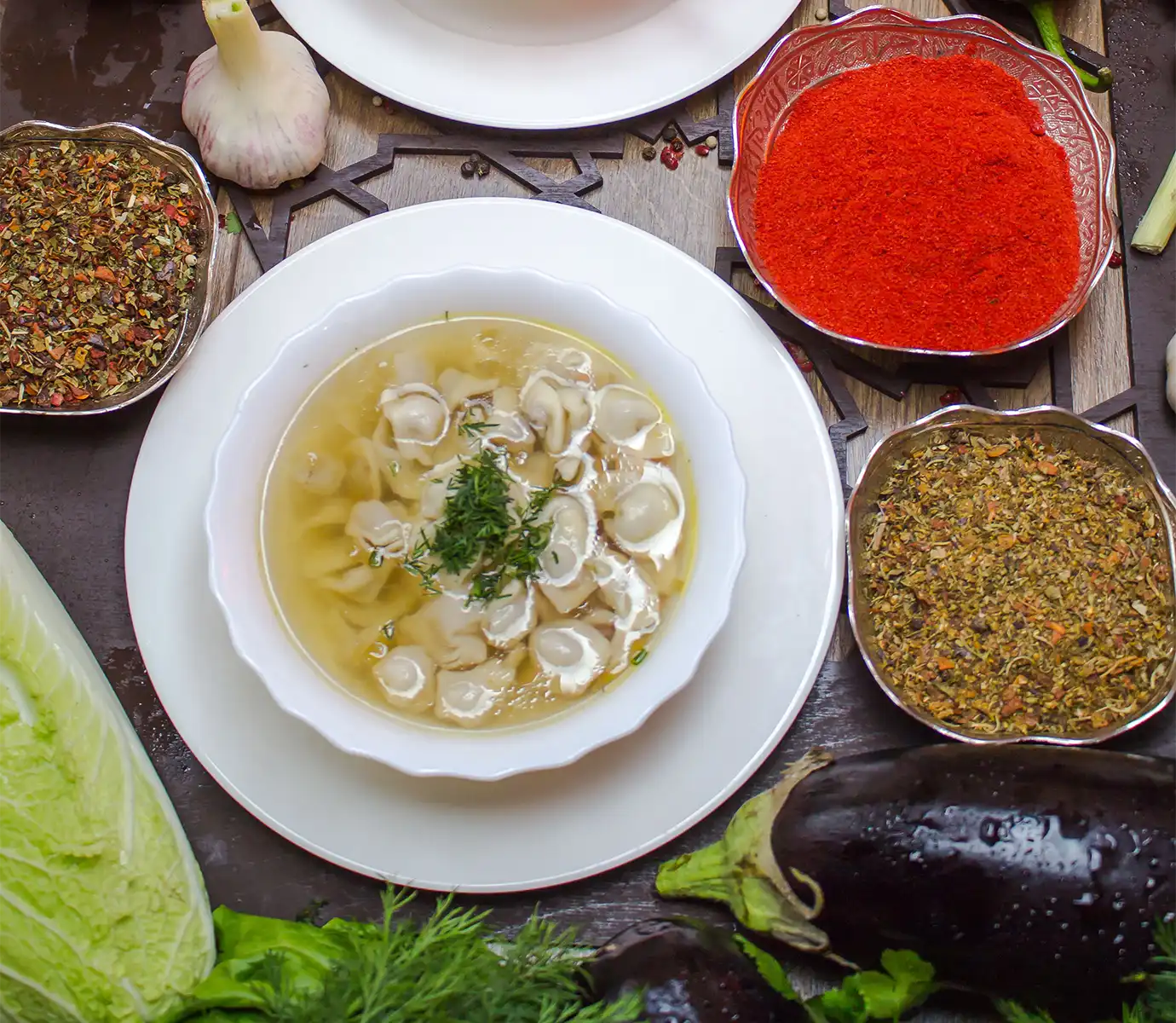
Dushbara is the soup that proves Azerbaijani cooking rewards patience. A classic Baku recipe starts with a lamb broth, simmered from lamb bones until the liquid runs clear and aromatic. Into that broth drop tiny dumplings: thin wrappers of unleavened dough. Each holds minced lamb, onion, black pepper, and sometimes a pinch of turmeric.
The dumplings are very small. Traditional Azerbaijani cooking holds that a skilled cook can fit ten dushbara in a single tablespoon. At any good restaurant, you will receive a bowl of 25 to 30 dumplings floating in a clear, deep-flavored broth.
Eat it with vinegar. Red wine vinegar mixed with crushed garlic arrives as a condiment. A tablespoon stirred into the bowl cuts through the richness of the lamb and lifts the whole dish. Dried mint is sprinkled on top. The vinegar-garlic combination is not optional in Azerbaijani households.
Dushbara is native to Baku. You find it across the country, but the capital remains its home.
Dolma — The UNESCO-Listed Stuffed Dish
Azerbaijani dolma carries official cultural weight. UNESCO inscribed the country’s dolma-making and sharing tradition on the Representative List of Intangible Cultural Heritage in 2017.
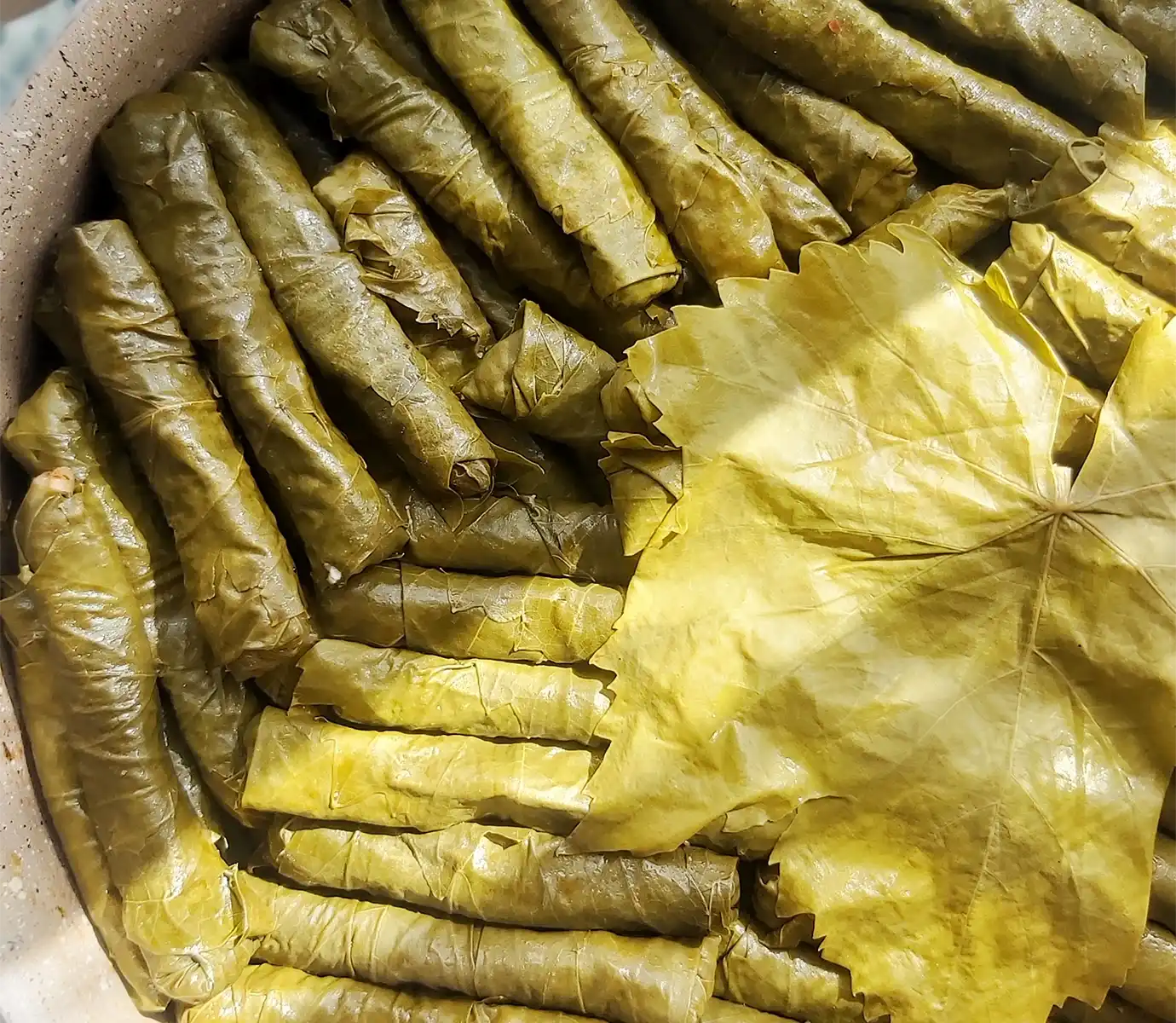
The word dolma derives from the Turkic doldurma, meaning “to stuff.” The concept runs wide. Fresh grape leaves come in spring, stuffed with ground lamb, rice, onion, and herbs, then simmered in a pot until tender. Summer brings tomatoes, peppers, and eggplant — each hollowed and filled with the same base mixture. Autumn produces cabbage dolma and quince dolma.
Yarpaq dolmasi — grape-leaf dolma — is the form most visitors encounter first. The leaves are soft, slightly tangy, and packed tightly around a rice-and-meat filling. They arrive at the table warm, drizzled with butter, often accompanied by a cold yogurt dip.
More than 30 regional varieties exist across Azerbaijan. The cooking does not change much — the wrapping material does.
Lavangi — The Walnut-Stuffed Whole Bird
Lavangi is a dish most visitors miss. It originates from the Talysh region in southern Azerbaijan and appears on menus at restaurants in Baku’s Old City.
A whole chicken — or sometimes fish — is stuffed with a dense walnut paste. The filling also contains caramelized onion, dried barberries, and fresh herbs. The stuffed bird roasts slowly until the walnut filling has absorbed the fat from the bird and the skin has crisped.
The filling comes out dark, nutty, and slightly sweet from the barberries. The contrast with the crispy skin and the succulent meat underneath makes lavangi one of the most complex dishes in the Azerbaijani repertoire. Order it when you see it. Not every restaurant offers it.
Kebabs — Grilled Meat in Three Formats
Kebabs appear on every menu in Azerbaijan, from street stalls to formal restaurants. Three formats dominate:
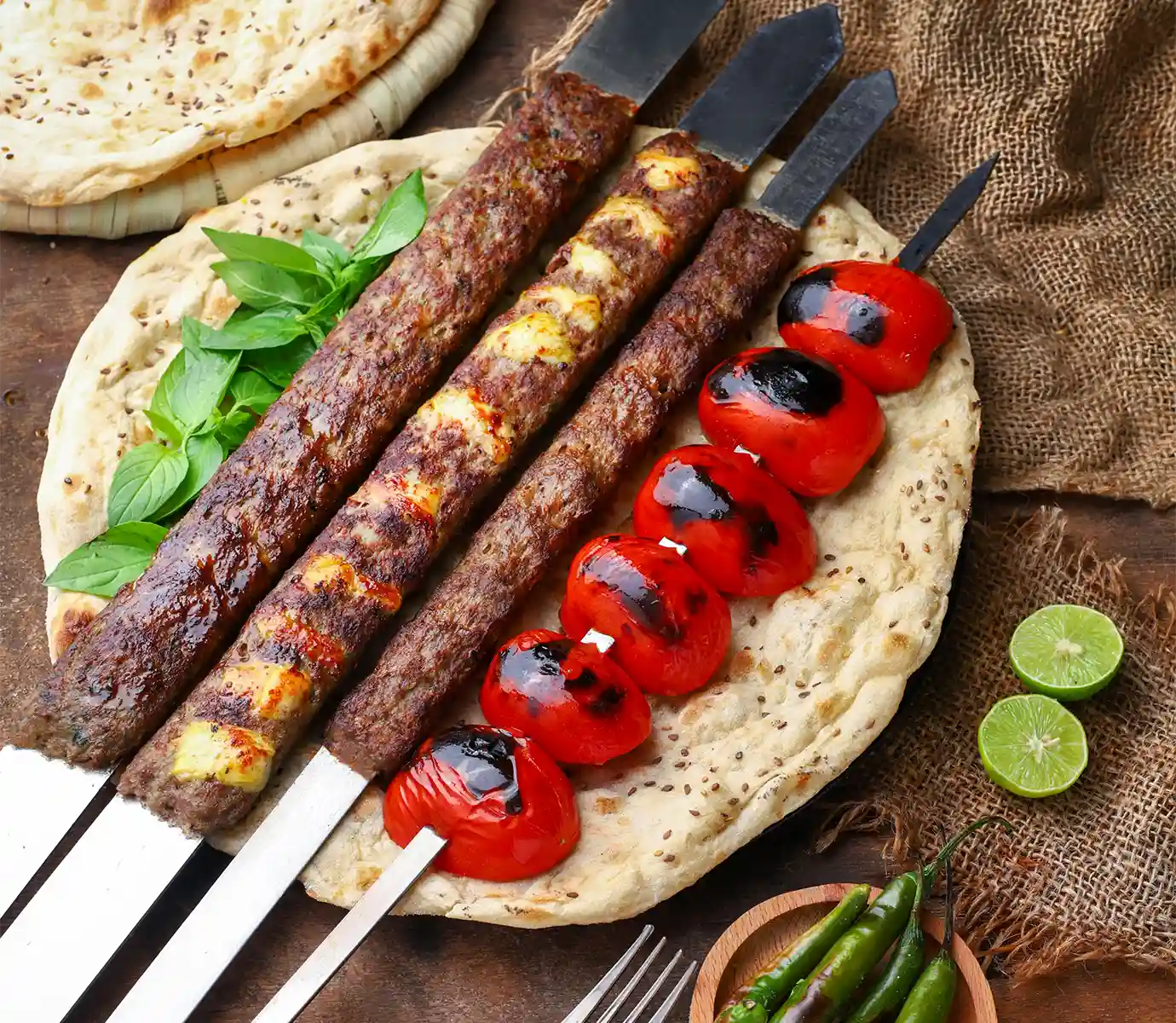
Lule kebab is minced lamb mixed with onion, black pepper, and herbs, pressed around a flat metal skewer, and grilled over charcoal. The meat is dense and fatty. It arrives wrapped in lavash with fresh herbs and a tomato-onion salad.
Tike kebab uses cubed lamb on a skewer, marinated simply in onion juice, salt, and black pepper before grilling. The cut is usually from the leg or shoulder, with a piece of fat between each cube of meat. The fat bastes the meat as it cooks.
Shish kebab follows the same principle as tike but often features mixed meats or alternating lamb and vegetable pieces.
All three versions are cooked over real charcoal. The smoke is part of the flavor. Eat kebabs at street level or at simple neighborhood restaurants, not in hotel dining rooms — the informal setting yields better results.
Piti — The Sheki Clay-Pot Stew
Piti is the regional dish of Sheki in northwestern Azerbaijan, and it does not travel well. You need to eat it in Sheki.
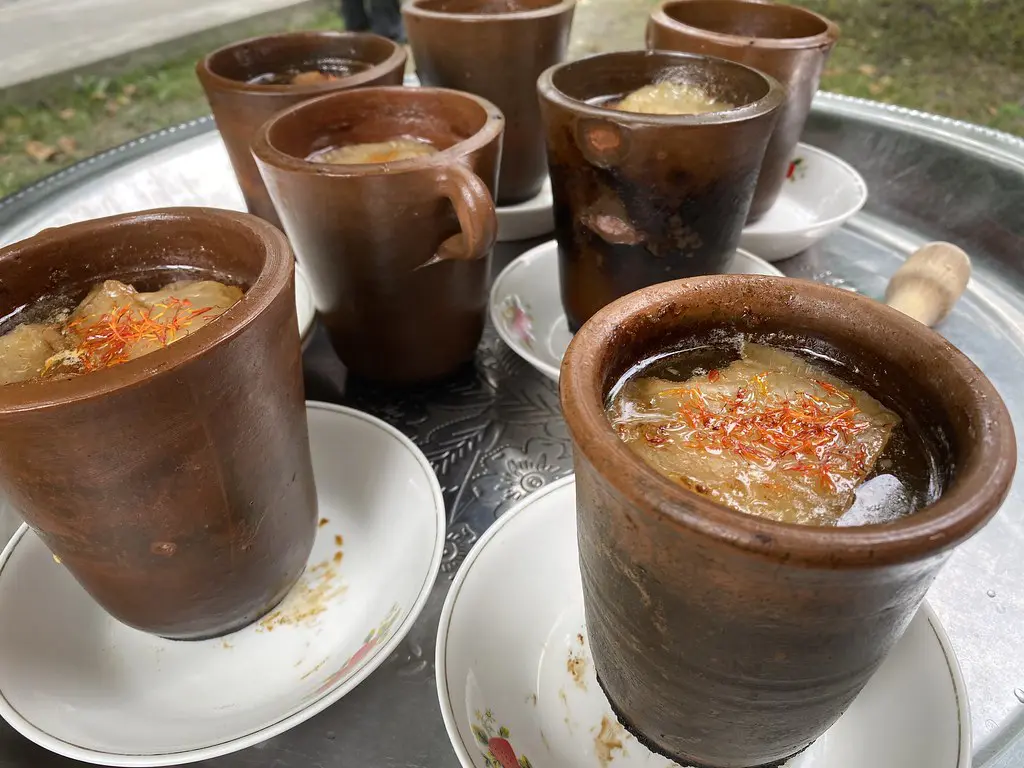
The stew bakes for at least 4 hours in a small individual clay pot. The ingredients are simple: fatty lamb on the bone, whole chickpeas, dried chestnuts, sour plums, and saffron-tinted broth—a layer of fat seals the top of the pot. The pot arrives sealed, still bubbling.
The traditional method opens the pot in two stages. First, break the seal and pour the broth into a separate bowl. Drink the broth first — it is the essence of the whole dish, rich with lamb fat, saffron, and plum acidity. Then eat the meat and chickpeas from the pot with bread.
Piti requires advance ordering at any restaurant. A minimum four-hour preparation window means same-day walk-ins often miss out. Tell your restaurant in the morning if you want piti for dinner.
Can Vegetarians Eat Well? Azerbaijani Food Options for Plant-Based Travelers
Azerbaijan is a meat-centric country, and vegetarians face real limitations. The honest answer is that the cuisine does not naturally accommodate a plant-based diet at the main course level. Most soups and stews use lamb broth as their base, and even apparently vegetable dishes often contain rendered fat.
Still, three categories work reliably:
Kuku is the most useful option. An Azerbaijani kuku is a thick, baked egg dish — closer to a Persian frittata than a Western omelet— packed with fresh herbs, greens, or seasonal vegetables. Herb kuku (sabzi kuku) loads dill, parsley, coriander, and fenugreek into beaten eggs and bakes the whole thing until set. It is filling, flavorful, and genuinely vegetarian.
Shepherd’s Salad appears on the salad menu—diced tomatoes, cucumbers, and onions in a simple dressing of sunflower oil and red wine vinegar. Add fresh herbs from the herb plate that arrives alongside most meals.
Bread, cheese, and herbs form a legitimate meal in Azerbaijani tea culture. Fresh lavash, a plate of fresh herbs (tarragon, basil, dill, mint), and local white cheese made from sheep’s or cow’s milk is how many Azerbaijanis start breakfast. Order this at any tea house or basic restaurant, and you have a solid vegetarian option.
Restaurants in Baku catering to international visitors offer more flexibility. Outside Baku — in Sheki, Gabala, or rural areas — vegetarian options shrink considerably. Communicate your restrictions clearly before ordering, and ask specifically whether a dish contains broth or animal fat.
How Does Tea Culture Work in Azerbaijan?
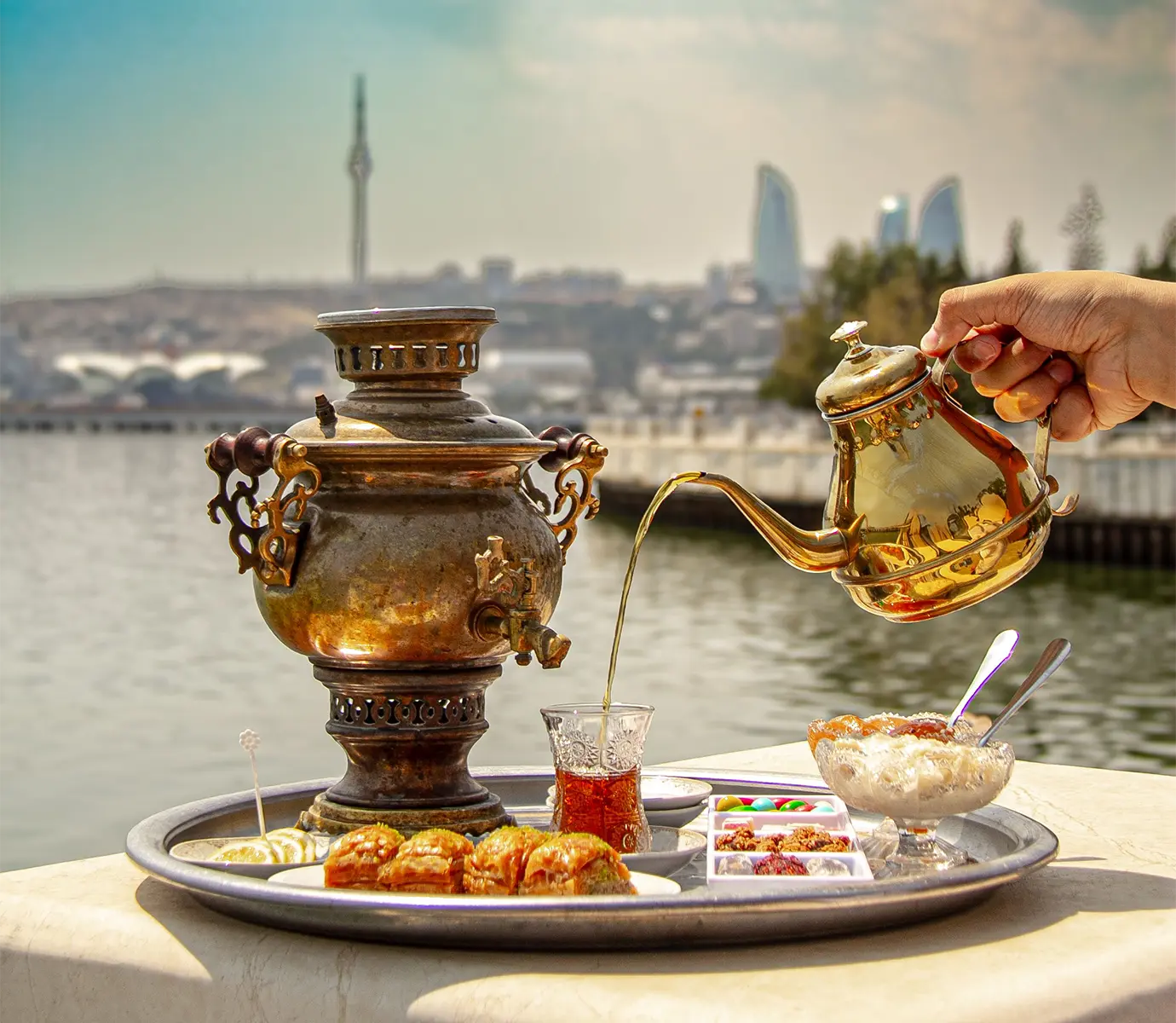
Tea in Azerbaijan is not a beverage choice — it is a social institution. No guest enters an Azerbaijani home without tea being offered immediately. Refusing is considered rude. Accepting and holding the glass is enough, even if you take only a few sips.
Black tea, brewed strong and served hot, arrives in the armudu — a pear-shaped glass with a narrow waist and wider base. The shape is functional: the narrow midsection concentrates heat at the bottom while the rim cools enough for comfortable sipping. You hold the glass at the narrow waist. The armudu is made from glass, porcelain, or silver, and no Azerbaijani home is considered properly equipped without a set.
No milk. Azerbaijanis do not add milk to tea. Sugar arrives separately as hard lump sugar cubes, not granulated. The traditional method is called “through sugar.” Hold a sugar cube between your teeth. Sip the tea through it, rather than dissolving the sugar in the glass. Medieval rulers feared poison in their drinks. Dunking sugar was believed to reveal any contaminant — the theory being that poison would react with the sweetener. The method outlasted the reason.
Jam accompanies tea — but not stirred in. Small individual bowls arrive alongside the glass, filled with preserves: fig, strawberry, mulberry, walnut, and quince are common. You eat a spoonful of jam between sips of plain tea, rather than sweetening the tea directly. The jam bowls are intricate, often crystal, and the preserves are made with whole fruit to preserve their structure.
Tea also arrives at the end of meals, not before. Azerbaijani meals close with tea, sweets, and conversation. If tea arrives at the start of a restaurant meal before you have ordered food, you are in a traditional setting. Treat the tea as an opening hospitality gesture, not a signal that food is coming.
What Is Thyme Tea in Azerbaijan?
Thyme tea is dried wild thyme steeped in hot water. It is a regional alternative to black tea, particularly in rural areas and mountain villages. It is lighter and herbal, with a slightly floral note. Restaurants in Sheki and Gabala often offer it alongside black tea. Ask for “keklik otu” (wild thyme) if it is not on the menu.
Is Halal Food Available in Azerbaijan?
Halal food is the norm across Azerbaijan. The country has a Muslim-majority population, and standard Azerbaijani cooking — lamb, beef, chicken — is halal by default in most restaurants and markets. You do not need to search for halal certification in everyday eating contexts.
Pork is largely absent from traditional Azerbaijani cuisine and menus. Restaurants catering to Russian or European visitors may stock it, but in traditional Azerbaijani restaurants, you will not encounter pork.
Can You Drink Alcohol in Azerbaijan?
Azerbaijan is constitutionally a secular state, and alcohol is legal and widely available. Most restaurants in Baku, Sheki, and Gabala serve alcohol. Supermarkets sell beer, wine, and spirits without restriction. The legal drinking age is 18.
The domestic beer is Xirdalan, a golden lager now produced by Carlsberg Azerbaijan. It is 4.8% ABV, mild, and widely available on tap and in bottles. Order it cold.
Azerbaijan has a wine-producing history going back over 2,000 years, with production concentrated in the Ganja and Shamakhi regions. Local wines are available in restaurants in Baku, though quality varies. Ask a server for a recommendation rather than picking blind from a wine list.
Vodka — called araq locally — appears at formal dinners, particularly in traditional households and rural areas. Do not refuse a toast from a host if you drink at all. Refusing the first toast can cause genuine offense.
Observant Muslims in Azerbaijan do not drink. The tea house offers plenty of good company if you prefer to skip alcohol entirely on your trip.
Azerbaijani Food: Sweets and Pastries Worth Trying
Three sweets stand above the rest for first-time visitors:
Sheki halva is not what most Western visitors picture when they hear “halva.” It is a layered confection made from rice flour, saffron, and butter, pressed into thin sheets, with crushed hazelnuts and cinnamon between each layer. The result is crumbly, subtly sweet, and nothing like sesame halva. Buy it in Sheki from a dedicated halva shop.
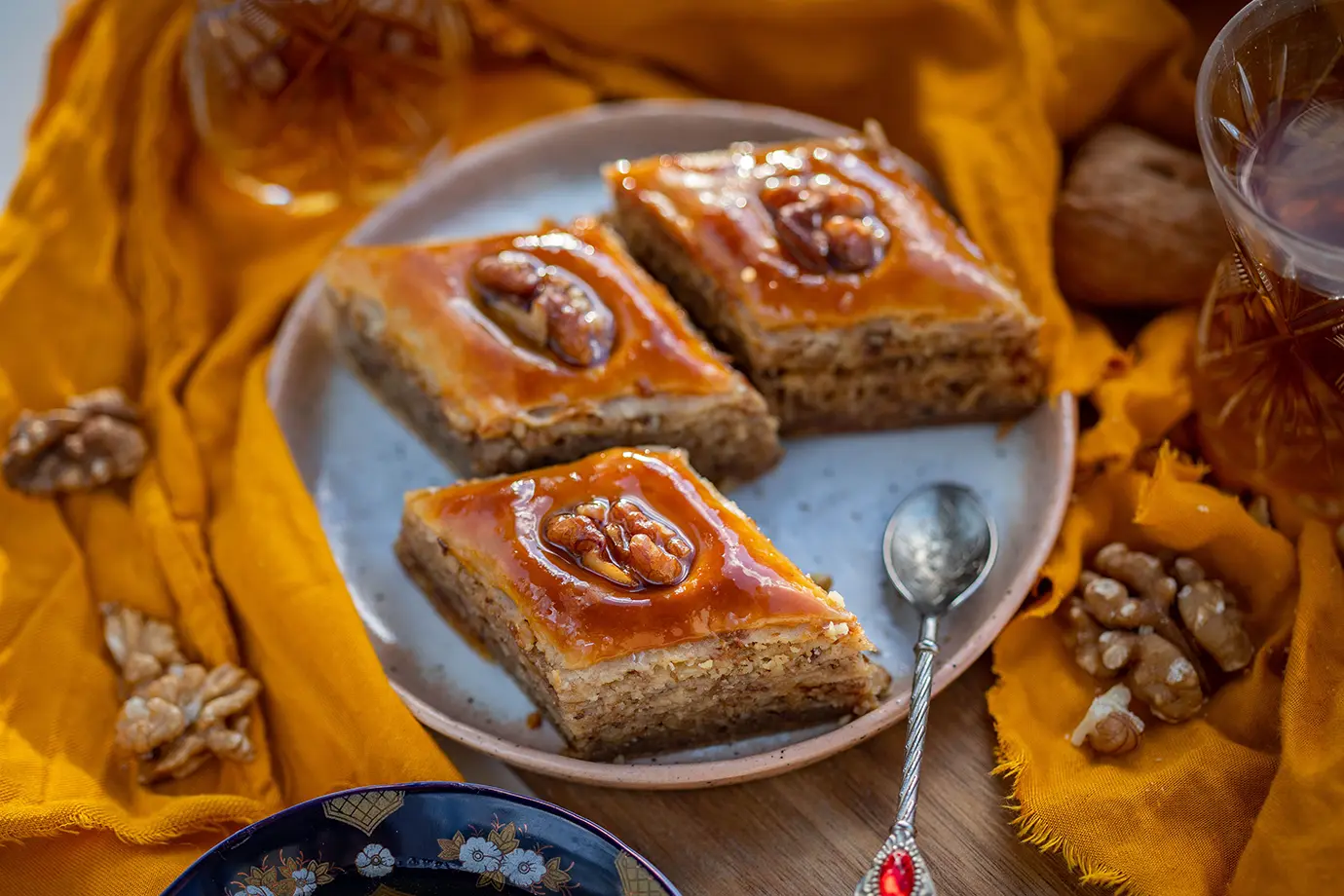
Pakhlava is the Azerbaijani take on baklava — a diamond-shaped pastry layered with walnuts, saffron, and cardamom, soaked in a sugar syrup. It appears at weddings, Nowruz (the spring new year), and in every bakery window. The Azerbaijani version uses cardamom more heavily than Turkish or Greek varieties.
Shekerbura is a crescent-shaped pastry filled with ground hazelnuts or walnuts and cardamom. The dough is crimped by hand in a distinctive pattern. It is a Nowruz specialty, but it is available year-round at bakeries in Baku’s Old City.
What Is a Typical Azerbaijani Meal Structure?
A traditional Azerbaijani meal runs in a specific order that differs from Western expectations.
Tea and bread arrive first, alongside a plate of fresh herbs, raw spring onions, and white cheese. Not a snack — an opening of hospitality that signals the household is ready to receive you properly.
Cold dishes and salads come next: shepherd’s salad, pickle salad, and spreads. Soups follow — dushbara in Baku, piti in Sheki, bozbash (a lamb and chickpea broth) in other regions.
Main courses arrive after the soup: kebabs or a braised meat dish, alongside bread or plov. Plov, when it appears, is traditionally the final savory course and arrives with ceremony, especially at weddings and large gatherings.
The meal closes with tea, pakhlava or shekerbura, and more conversation.
Practical Dining Tips for Visiting Azerbaijan
Azerbaijani food rewards advance planning for certain dishes — piti and shah plov both require ordering hours ahead.
Order ahead for certain dishes. Piti in Sheki requires at least 4 hours’ advance notice. Shah plov in Baku requires 24 hours. Tell your guide or your restaurant at the beginning of the day when you want these.
The herb plate is not a decoration. The pile of fresh tarragon, basil, dill, mint, and spring onions that arrives alongside most meals is meant to be eaten. Tear herbs directly and eat them between bites of meat or with bread.
Cash is useful at smaller restaurants and tea houses. Larger restaurants in Baku accept cards. Tea houses, market stalls, and family restaurants outside Baku prefer cash. Carry Azerbaijani Manat.
Tea houses (chaykhana) are social spaces. Historically, a place for men to gather and drink tea, play backgammon, and talk. Women are welcome in most modern chaykhanas, particularly in Baku and tourist areas. Outside Baku, a chaykhana may still operate on traditional lines — read the room before you sit.
Portion sizes are generous. A single plov at a Baku restaurant often serves two people. A bowl of dushbara is filling. Order conservatively until you know the portion standard at a given restaurant.
Frequently Asked Questions About Azerbaijani Food
What is the national dish of Azerbaijan?
Plov is the national dish, and the centerpiece of Azerbaijani food — saffron rice steamed separately from its accompaniments, served with braised lamb and a crispy bottom crust called gazmag.
Is Azerbaijani food spicy?
Azerbaijani food is not hot-spicy in the chili sense. Heat from chili peppers is minimal. Flavor complexity comes from saffron, cinnamon, turmeric, dried barberries, and fresh herbs. Some dishes carry a sharp acidity from dried fruits or vinegar-based condiments, but nothing in standard Azerbaijani cooking will challenge a low-heat tolerance.
Is Azerbaijan good for vegetarians?
Azerbaijan is not an easy destination for strict vegetarians or vegans. The cuisine is built on lamb, and many vegetable dishes use lamb broth or fat in their preparation. Reliable options include kuku (baked herb and egg dishes), shepherd’s salad, fresh salad with cheese and herbs, and some rice preparations. In Baku, international restaurant options considerably expand the choices. In rural areas and smaller cities, communicate your restrictions clearly and ask about broth content before ordering.
What should I drink in Azerbaijan if I don’t drink alcohol?
Black tea is the country’s primary beverage and is entirely appropriate for every occasion. Ayran — a cold, slightly salty yogurt drink — is available at most restaurants. Freshly pressed pomegranate juice appears at juice stands in Baku’s Old City. Sherbet — a sweet fruit juice drink served at celebrations — is common at traditional restaurants.
When is Nowruz, and why does it matter for food?
Nowruz is the Azerbaijani new year celebration, tied to the spring equinox and typically falling around March 20 to 21. Food is central to the holiday. Pakhlava, shekerbura, and gogal are the three traditional Nowruz sweets. Gogal is a saffron pastry filled with anise and caraway. All three are baked in every household in the weeks leading up to the holiday. If you visit in March, the bakery windows will be full of all three. Buy them from a bakery that makes them by hand.
To build a private Azerbaijan tour package that includes the best Azerbaijani food experiences — from shah plov in Baku to piti in Sheki — contact the Peregrine team directly.