


The best time to visit Cambodia is from November to February. Morning temperatures sit in the low 20s, rain is rare, and every road and ferry route runs reliably. But those four months are also Cambodia’s busiest and most expensive. The honest answer is more layered than the standard recommendation.
The cool dry season gives the most comfortable weather. The hot season from March to May brings empty temples and punishing heat. The green season from June to October delivers the lowest crowds, the fullest Angkor moat, and afternoon rain that clears in two hours. Every season works. The question is which trade-off suits you.
The Best Time to Visit Cambodia — and What It Costs You
November to February is the right answer for most travelers. Temperatures range from 22°C to 32°C. Rain is negligible. Island ferries run on schedule. Roads in the northeast are dry and fast. The cost is crowds. December and January bring the highest visitor numbers of the year to Angkor, and popular Siem Reap hotels fill up months in advance.
March to May is the hot season. Daytime temperatures exceed 35°C and reach 40°C in April. The temples hold fewer visitors than any other window. A structured day — temples before nine, pool through the afternoon, activity again after four — makes the heat workable rather than unbearable.
June to October is the green season. Rain arrives in hard afternoon bursts lasting one to three hours, then stops. Mornings are clear. The Angkor moat and reflecting pools fill to their deepest level, producing reflections that do not exist from November to May. Visitor numbers drop sharply. The trade-offs are real: island ferries cancel in heavy swell, northeast roads soften, and snorkeling visibility drops. For flexible travelers who accept those limits, the green season offers Cambodia at its quietest and most photogenic.
Cambodia’s Three Seasons Explained
Cool and Dry Season (November to February)
The cool dry season is the most comfortable time to visit Cambodia. Daytime highs sit between 30°C and 32°C, and early mornings drop to 22°C. Humidity is below 65 percent. Rainfall barely registers — January averages under 10 mm for the entire month.
You feel the difference at the temples before eight in the morning. The sandstone at Angkor holds the night’s cold. The light runs low and golden across the causeways. By ten, the sun hardens, and the stone begins to radiate heat upward. By one, most visitors have retreated to air conditioning or a pool.
Angkor’s sunrise point draws heavy crowds from December through January. Coaches arrive by seven. Popular Siem Reap hotels need three months of lead time for bookings in the December and January peak. February eases the pressure slightly while keeping the same climate.
Island crossings from the Sihanoukville pier to Koh Rong Sanloem run calmly and reliably throughout. Road conditions everywhere are good. The Tonlé Sap is receding from its wet-season peak but is still high enough for worthwhile floating-village visits in November and December.
Hot Season (March to May)
The hot season is the most physically demanding time to visit Cambodia. Daytime temperatures climb past 35°C in March and push toward 40°C by mid-April. Humidity rises through the period, turning dry heat into heavy, wet heat by late April. May brings the first significant rains, temporarily breaking the heat before the monsoon pattern settles.
Do not write off the hot season. The temples carry the lowest foreign visitor numbers of the year outside mid-April. A sunrise entry at five, two circuits finished by nine, then a covered activity or a pool until four — the structure makes it workable. Banteay Srei sits 35 kilometers northeast of Angkor. Do it in the first two hours of daylight, before the stone begins radiating the previous day’s stored heat.
Khmer New Year falls in mid-April, set by the lunar calendar. For roughly one week, domestic travel surges sharply. Angkor, the coast, and the islands see compressed Cambodian family crowds. Businesses close. Transport fills. Outside the festival week, April has the lowest foreign visitor count of the year.
March is the most manageable hot-season month. The heat is building, but not yet brutal. The coast around Kampot and Kep stays warm rather than oppressive.
Green Season (June to October)
Rain in Cambodia during the monsoon is not what most travelers expect. It rains hard, usually in the afternoon, for one to three hours. Then it stops. Mornings are typically clear and fully usable. Temperatures range from 25°C to 34°C, with humidity above 70 percent.
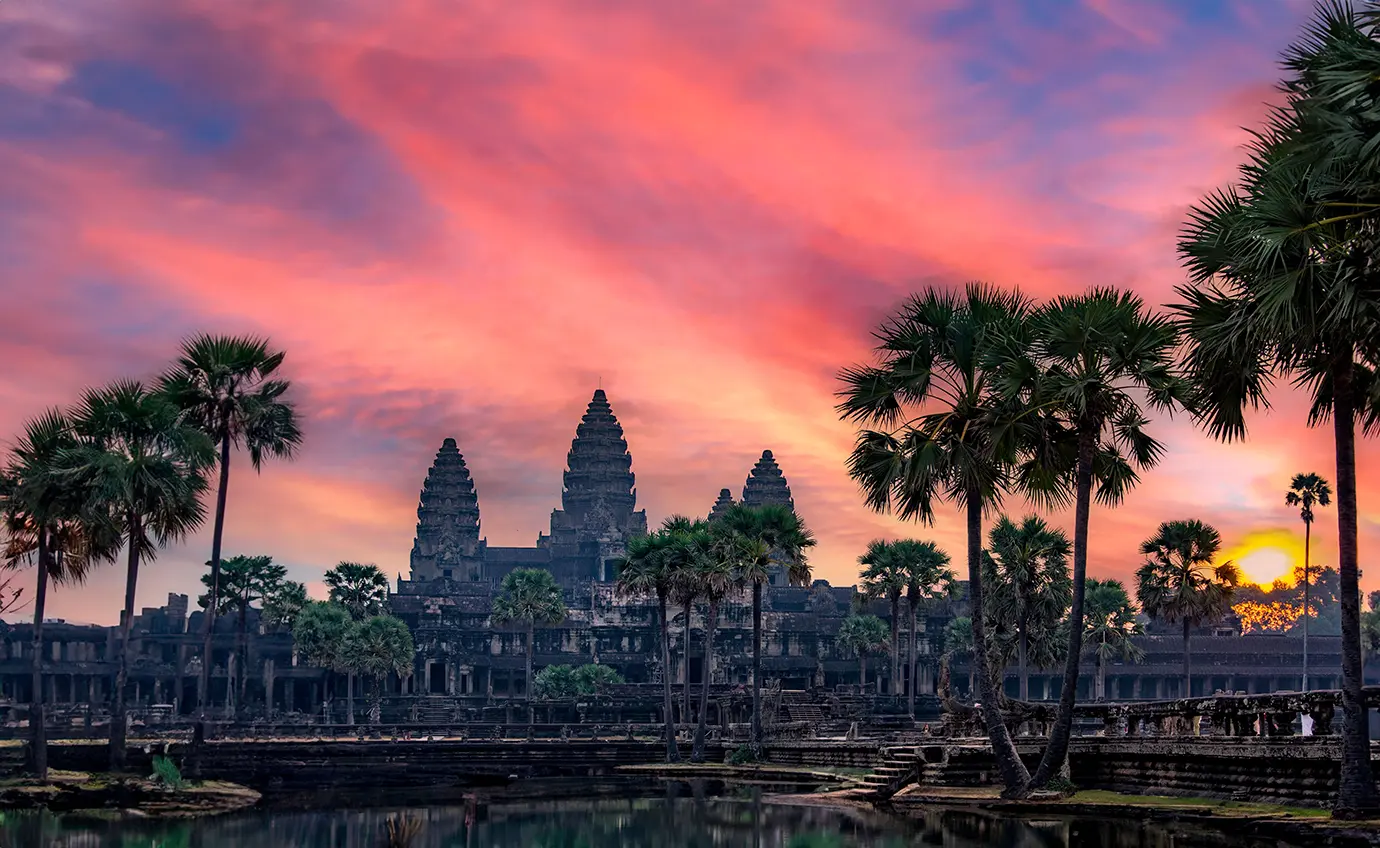
The Angkor moat fills to its deepest level by August. The tower reflections in the water are sharper and more complete than at any other time of year. The countryside turns a deep, saturated green within weeks of the first rains. Visitor numbers drop to a fraction of peak-season levels. Accommodation is easier to book, and rates often fall.
The costs are real and should not be softened. Road conditions on the Mondulkiri route and some Cardamom approaches become difficult from July through September. Island ferries from the Sihanoukville pier cancel frequently in August and September. Sustained swell from the southwest monsoon pushes across the Gulf of Thailand. Snorkeling visibility drops to poor. Some minor temple sites outside the main Angkor complex may have restricted access.
October is the transition month. The rains taper. Visitor numbers remain low. The countryside is still vividly green. When the Water Festival falls in October, Phnom Penh fills with boat races and riverfront crowds. Plan around the event rather than avoiding it.
Cambodia Weather Month by Month
| Month | Temp Range (°C) | Rainfall | Humidity | Visitor Numbers | Sea Conditions | Notes |
|---|---|---|---|---|---|---|
| November | 22–31 | Low | Moderate | High (rising) | Calm | First cool month, still some green |
| December | 22–32 | Very low | Low | Peak | Calm | Busiest month, book ahead |
| January | 22–32 | Very low | Low | Peak | Calm | Coolest mornings, most crowded |
| February | 23–33 | Very low | Low–Moderate | High | Calm | Peak weather, crowds easing |
| March | 24–35 | Low | Moderate | Moderate–Low | Calm | Heat building, temples quieter |
| April | 25–36 | Low–Moderate | High | Low (except Khmer New Year) | Moderate | Hottest month, domestic surge mid-month |
| May | 25–34 | Moderate | High | Low | Moderate–Rough | First rains, heat breaks |
| June | 24–33 | High | High | Low | Rough | Full monsoon, afternoon rain, and moat filling |
| July | 24–33 | High | High | Low | Rough | Quiet temples, roads softening |
| August | 24–33 | Very high | Very high | Low | Rough | Northeast roads are difficult, and Tonlé Sap is expanding |
| September | 24–32 | Very high | Very high | Low | Rough | Wettest month, lake at peak |
| October | 24–32 | Moderate–High | High | Low–Moderate | Moderate–Rough | Rains easing, Water Festival possible |
November is one of the strongest months for flexible travelers. Visitor numbers sit below the December and January peak. The countryside retains some green from the wet season. The Tonlé Sap is still high enough for atmospheric floating-village visits.
December is the peak. Angkor’s sunrise draw is competitive by seven in the morning. Accommodation in Siem Reap needs to be booked three months in advance for popular properties. The reward is genuinely the most comfortable temperatures of the year.
January continues the peak. The first week of January often carries the highest single-week visitor count at Angkor. Arriving after the tenth gives slightly easier conditions. Mornings are the coolest of any month, dropping to 22°C before dawn.
February offers the best balance of peak-season weather without peak-season crowds. Visitor numbers begin to ease from mid-month while the climate remains comfortable. A strong choice for first-timers with flexible dates.
March brings the heat but also the quiet. Angkor at sunrise is noticeably emptier than it has been in any month since the previous May. The coast around Kampot and Kep is warm but still pleasant.
April is the hardest month. Temperatures can exceed 39°C. Khmer New Year in mid-April brings the only domestic travel surge that genuinely reverses the low-crowd advantage. Outside the festival week, foreign visitor numbers are at their annual floor.
May is the transition. The first significant rains arrive in the second half of the month. The heat breaks sharply on rainy days. Visitor numbers sit at their annual low. The atmosphere at the temples is genuinely quiet.
June marks the full monsoon. The afternoon rain pattern establishes itself. Mornings are typically clear. The moat at Angkor begins filling to its deepest level, creating reflections that photographers plan entire trips around.
July and August are the wettest months. Northeast roads to Mondulkiri can require extended transfer times or a four-wheel drive. The Tonlé Sap expands dramatically, and the flooded forest at Kampong Phluk becomes navigable by small boat — an experience that does not exist in the dry season when the forest floor is dry land.
September is the wettest single month. The Tonlé Sap reaches its maximum extent, expanding from roughly 2,700 square kilometers in the dry season to well over 10,000 square kilometers. Island ferry cancellations are at their most frequent. Not recommended for fixed-itinerary travelers.
October begins the return. Rains reduce. The Water Festival — Bon Om Touk — may fall here or in early November, depending on the lunar calendar. Phnom Penh accommodation books out months ahead for the festival weekend. The boat races on the Tonlé Sap river mark the reversal of the water flow, a natural event that Cambodians have celebrated for centuries.
Best Time to Visit Cambodia by Region
Siem Reap and the Angkor Temples
November to February give the most comfortable temple mornings. March brings mild temperatures and manageable heat if you start at five and finish by nine. Avoid mid-April if you want the low-crowd advantage, since Khmer New Year brings a domestic surge.
June through September offer the lowest crowds and the moat at full water. A photographer who shoots between five and nine in the morning will find conditions unlike those of the dry season. Accept the afternoon rain, and the reward is real. The stone at Angkor holds heat from the previous afternoon. In the hot season, temple surfaces feel warmer than the surrounding air each morning. The stone holds yesterday’s heat, and the effect catches first-time visitors off guard.
December and January require the most advanced booking for accommodation in Siem Reap. The temple entry strategy at five in the morning extends the usable window regardless of season.
Phnom Penh
Phnom Penh is manageable year-round. The Royal Palace, the National Museum, and Tuol Sleng are all covered or air-conditioned spaces that work in any weather. Two events matter here. The Water Festival in October or November packs the riverfront and stretches accommodation. The Khmer New Year in mid-April leads to business closures, affecting access to restaurants and markets.
Kampot, Kep, and the South Coast
November to May gives the most comfortable conditions on the south coast. Kampot pepper farms harvest in the dry-season months, making a farm visit between December and March the most informative. The Kep crab market operates year-round, but supply is most reliable, and the market is busiest from November to April. The Bokor plateau above Kampot sits at roughly 1,000 meters. Temperatures run several degrees cooler than the coast, making it a useful midday escape in the hotter months.
The Islands — Koh Rong and Koh Rong Sanloem
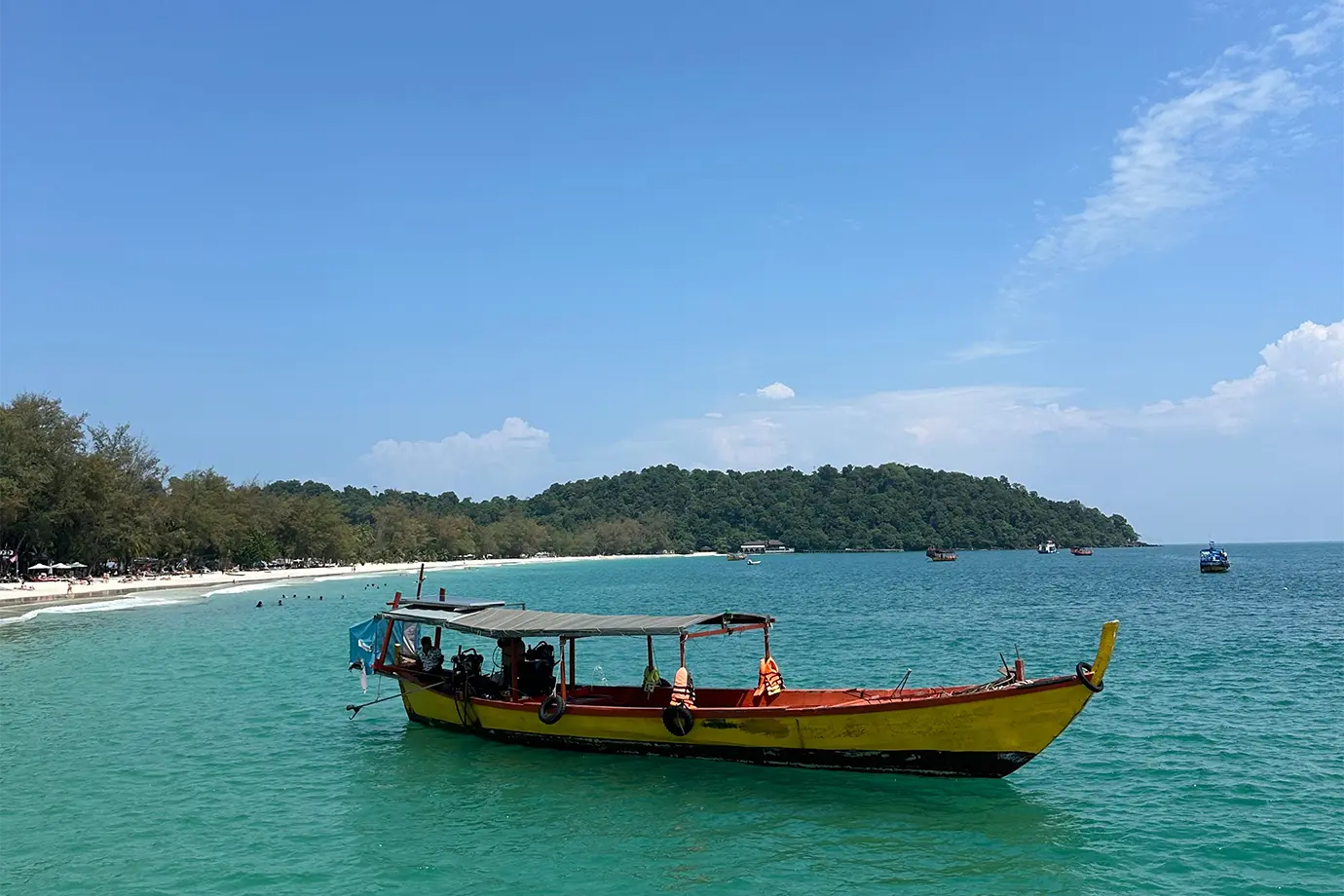
The islands are the most time-sensitive region in Cambodia. Reliable access is available only from November to May. Ferries from the Sihanoukville pier to Koh Rong Sanloem take roughly 45 minutes in calm conditions. From June onward, the southwest monsoon pushes sustained swell across the Gulf of Thailand. Crossings are frequently canceled in August and September.
Do not book fixed island accommodation between June and September without accepting the risk of cancellation and having a mainland fallback. Snorkeling visibility is best from December to March. Koh Rong Sanloem consistently offers cleaner water and a calmer atmosphere than Koh Rong at any time of year.
The Cardamom Mountains and Koh Kong
The Cardamoms are specifically interesting in the green season. The rainforest is at its most alive. Wildlife activity increases. The Tatai river runs deeper, and the forest canopy closes overhead with a density it lacks in the drier months. October and November offer the best of both — accessible roads and a green, full forest.
The main highway from Phnom Penh is good year-round. The final approach to some eco-lodge areas around Tatai can become difficult in the peak wet season. Ask your operator about access before booking between July and September.
Mondulkiri and the Northeast Highlands
Mondulkiri sits at roughly 800 meters above sea level and runs cooler than the lowlands year-round. The cool dry season is comfortable, but the hillsides are brown and dry. The green season from June to October is when the northeast looks its best. Elephant sanctuaries, waterfalls, and highland forests are all at their most photogenic.
The cost is road access. The route from Phnom Penh to Sen Monorom runs about seven hours in the dry season. From July to September, the final sections require a four-wheel drive, and the transfer can add two or more hours. October and March offer the practical compromise — accessible roads, greening hillsides, comfortable temperatures.
The Tonlé Sap and Floating Villages — Why Season Matters More Here Than Anywhere Else
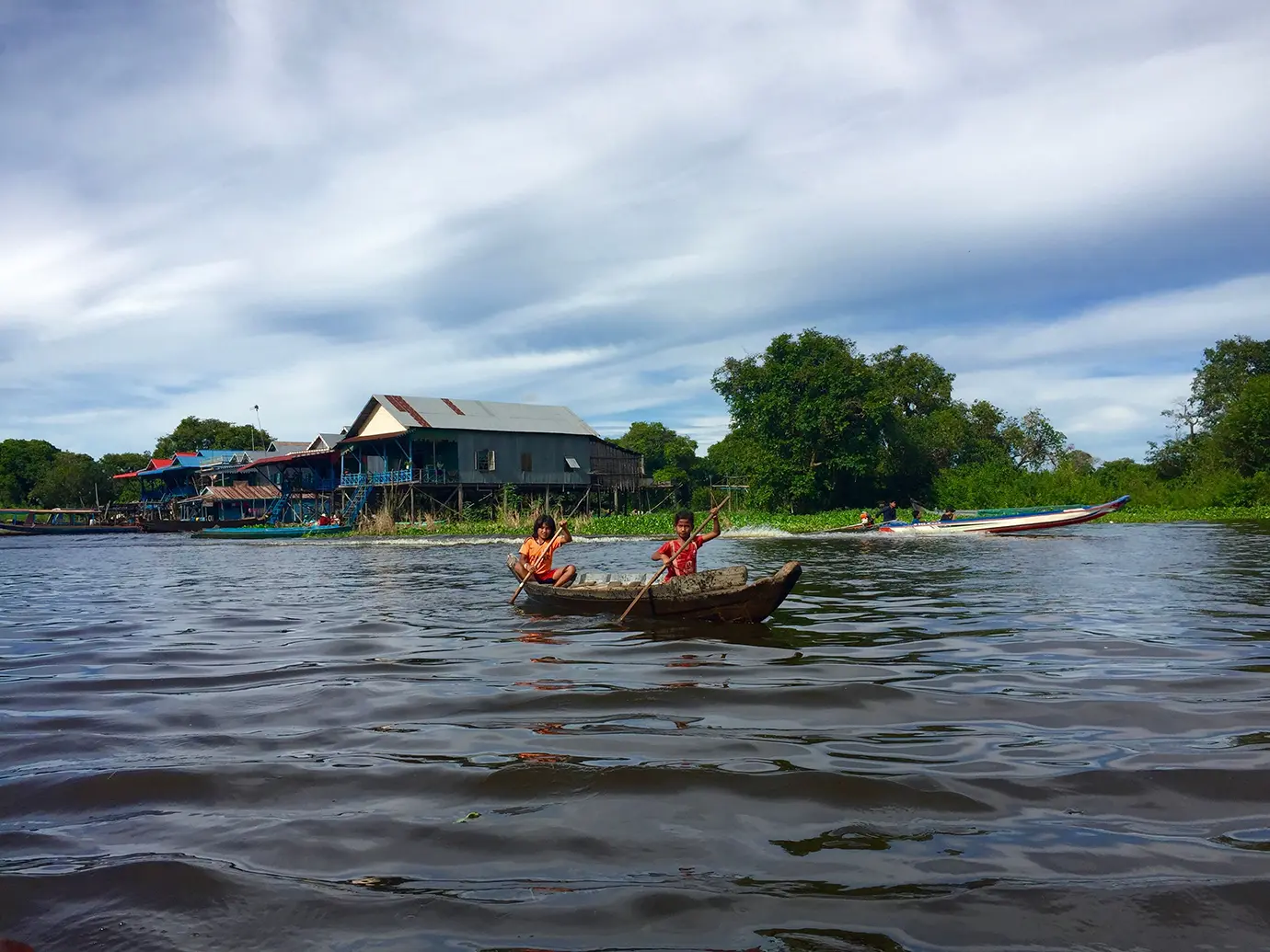
The Tonlé Sap is Southeast Asia’s largest freshwater lake, and it behaves unlike any other body of water in the region. During the wet season, the Mekong backs up, reversing the Tonlé Sap River’s flow. The lake floods, increasing its area from roughly 2,700 square kilometers to over 10,000 square kilometers. In the dry season, the flow reverses again and the lake drains.
In the dry months, the floating villages at Kampong Phluk stand on tall stilts above dry or muddy ground. The boat trip is shorter, and the “floating” quality is muted. Access roads are easy. The visit is still worthwhile, but it is a different experience.
In the wet months from July to September, the houses float on open water. The flooded forest at Kampong Phluk — inundated trees standing in water to their upper branches — becomes navigable by a small boat. The smell of the lake at high water is strong, a mix of silt, fresh vegetation, and fish drying on racks. Experienced travelers specifically time their visit around peak water. Access roads may be affected, but the approach to the boat from the pier is longer and more atmospheric.
Kampong Phluk is the more organized option for most visitors. Kampong Khleang is more remote and sees fewer visitors. Kampong Phluk works year-round. Kampong Khleang is best reached in the dry season, when its access road is reliable.
Island Ferries and Sea Conditions — What the Cancellation Risk Looks Like
Most Cambodia travel guides mention that ferries can be disrupted in the wet season. Few give you enough detail to plan around it.
Boats run from the Sihanoukville pier to Koh Rong and Koh Rong Sanloem. The crossing takes about 45 minutes in normal conditions. From November to May, cancellations are uncommon. From June to October, they become increasingly frequent. August and September are the worst months.
A cancellation means one of two things. You are stranded at the pier waiting for the next departure, or you forfeit a night of island accommodation. The cause is sustained southwest winds pushing across the Gulf of Thailand, not simply rain at the pier. A clear sky at the dock does not mean the crossing will run.
The planning rule is simple. Do not book non-refundable island accommodation between June and September without a contingency plan. Build a buffer night in Kampot or Kep on the mainland side. Koh Russey, which sits closer to the pier, may run when the longer Koh Rong crossing is canceled — check with your operator.
Festivals and What They Mean for Your Trip
The Khmer New Year (Mid-April)
The Khmer New Year is the most important holiday in the Cambodian calendar. It runs for three days in mid-April, set by the lunar calendar, and the country largely shuts down. Families travel home to their provinces. Domestic tourism surges. Angkor, the coast, and the islands all see concentrated Cambodian family crowds. Some restaurants and shops close for the core festival period.
Two ways to approach it. If you want the low-crowd hot-season advantage, arrive before April 10 or after April 20. You get quiet temples and empty roads. If you want the festival itself, plan to be in Siem Reap or Phnom Penh during the core days. Water-throwing celebrations and street food fill the towns. Book accommodation three to four months ahead.
Water Festival — Bon Om Touk (October or November)
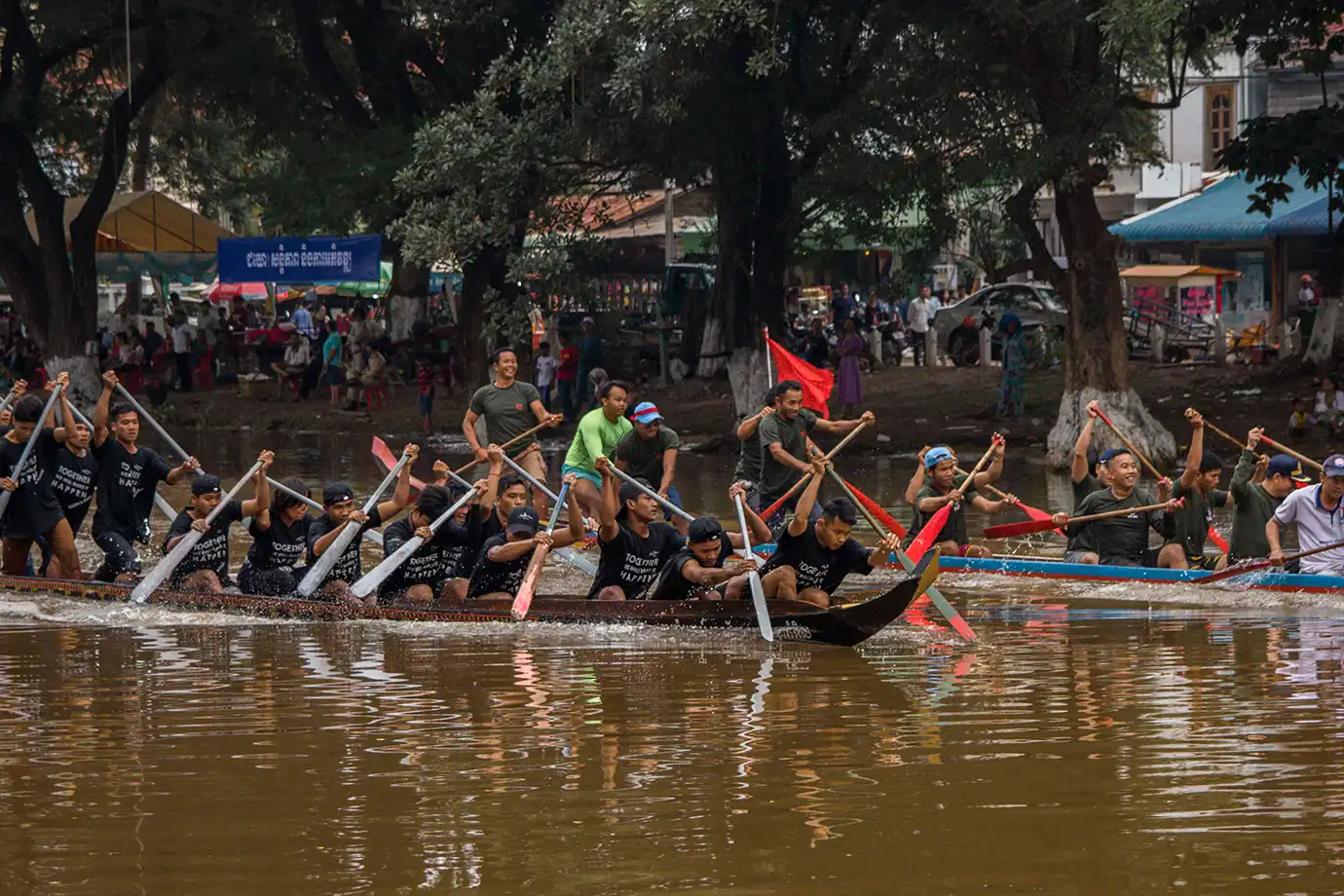
The Water Festival marks the reversal of the Tonlé Sap River’s flow. Boat races run for three days on the river in Phnom Penh, with enormous evening crowds packing the waterfront. The date shifts with the lunar calendar, falling around the full moon in late October or early November.
Phnom Penh accommodation books out months ahead for the Water Festival weekend. The riverfront is impassable by vehicle during the races. For a traveler who wants to see the country’s most spectacular public celebration, the effort is worth it. For a traveler on a structured itinerary with fixed hotels, the disruption needs advance planning.
Best Time to Visit Cambodia by Interest
Best Time for Photography
Two distinct windows serve different photographic goals. November to February gives clear skies, sharp golden morning light, and reliable access everywhere. June to September gives dramatic pre-storm skies, the full Angkor moat, the flooded forest at Kampong Phluk, and saturated green across the countryside.
The light at Angkor between five-thirty and seven in the cool season runs golden and almost flat — ideal for tower reflections. In the green season, the clouds building before an afternoon storm create skies with depth and drama that the dry season cannot match.
Best Time for Temple Comfort
November to February for the full combination of comfortable temperatures and reliable access. March for quiet temples at a manageable heat level. For someone who cares only about crowd levels, May, June, and September deliver the lowest visitor numbers of the year. The temples never close due to rain.
Best Time for Swimming and Snorkeling
November to May for the islands. December to March offers the clearest water visibility. Outside the calm window, sea conditions are unreliable, and visibility drops. The Kampot and Kep coastline faces the Gulf of Thailand and carries calmer conditions than the open sea around the islands.
Best Time for Lowest Crowds
May to September, with May and September as the strongest individual months. May gives low crowds and the first cooling rains. September brings low water levels, and the Tonlé Sap is at its most spectacular. Both avoid the worst of the mid-monsoon road and ferry disruption. The months suit experienced and flexible travelers who want Cambodia without the crowd penalty.
Practical Planning Notes by Trip Length
A five to seven-day trip focused on Siem Reap works in any season. Adjust the daily schedule to the heat rather than changing the plan. The three-day Angkor pass costs less than two one-day passes and spreads temple visits across the week.
A ten to twelve-day trip adds to the coast or the Cardamoms, and the season should influence the choice. A ten-day trip in June should not include the islands. A ten-day trip in January can confidently include the coast, but you will find the northeast highlands brown rather than green.
A fourteen-day trip or longer absorbs seasonal trade-offs more easily. A few rain-affected afternoons or a canceled ferry crossing will not break a three-week itinerary. The specific risks to manage are the Water Festival accommodation in Phnom Penh and the road conditions in the northeast in August and September.
Frequently Asked Questions
What is the best time to visit Cambodia?
November to February is the most comfortable window, with temperatures between 22°C and 32°C, minimal rain, and calm seas for the islands. Those months also bring the highest visitor numbers and the highest accommodation rates. For quieter travel, March and October to early November offer strong alternatives with workable trade-offs.
When is the rainy season in Cambodia?
The rainy season runs from June to October. Rain falls in afternoon bursts lasting one to three hours, not all day. Mornings are typically clear and fully usable. The real limitations are island ferry cancellations and difficult road conditions in the northeast, both of which are concentrated in August and September.
Is Cambodia worth visiting in the rainy season?
Yes, for flexible travelers. The Angkor moat and reflecting pools reach their deepest level, producing reflections absent from November to May. Visitor numbers drop to a fraction of peak season. The flooded forest at Kampong Phluk is navigable only during the wet months. The trade-offs are island ferry disruptions, reduced snorkeling visibility, and rougher roads in the eastern provinces.
When is Cambodia least crowded?
May to September, with May and September as the standout months. May brings the first cooling rains and the lowest visitor numbers of the year. September delivers the Tonlé Sap at its maximum extent and genuinely empty temples. Both avoid the worst mid-monsoon road conditions.
Can I visit Cambodia in April?
Yes. April is the hottest month, with temperatures reaching 39°C. Start temple visits at five in the morning and finish by nine. Retreat to a pool or a covered activity in the middle of the day. Khmer New Year in mid-April brings domestic crowds and some closures. Outside the festival week, foreign visitor numbers are at their annual floor.
Is November a good time to visit Cambodia?
November is one of the strongest months, particularly the second half. The cool dry season is beginning. The countryside retains greenery from the wet season. Visitor numbers are lower than in December and January. The Tonlé Sap is still high enough for atmospheric floating-village visits. A strong choice for travelers with flexibility in November.
Which month has the best weather for the Cambodian islands?
December to March gives the combination of calm seas, clear water, and reliable ferry crossings. November and April are both workable. May begins the transition. From June to October, ferry services become unreliable, and snorkeling visibility drops to poor. Do not book fixed island accommodation between June and September without a mainland contingency.
How far ahead should I book for December and January?
At least three months for popular Siem Reap properties in the December and January peak window. The Water Festival period in Phnom Penh — which falls in October or November — requires similar booking. Outside those two windows, Cambodia is flexible, and most properties can accommodate shorter lead times.