


A seven-day Cambodia itinerary covers Angkor and one other destination well. Ten days adds either the southern coast or the Cardamom rainforest. Fourteen days cover the country properly, or pair Cambodia with Vietnam. The right length depends on what you want. The best way to choose is by knowing what each block of days buys you.
Most Cambodia planning guides treat each trip length as a separate article with no connection to the others. You search for a seven-day plan and get one page. You search for a ten-day plan and get a different page, often from the same site, written by a different author. Nobody helps you decide between the two.
Here is the connected version. Start with how many days you have. Work through the trade-offs. Land on the route that fits your priorities rather than someone else’s default.
Cambodia at a Glance
Cambodia is a compact country, roughly the size of Oklahoma or England and Wales combined. Four main regions shape every itinerary.
| Region | What It Holds | Getting There |
|---|---|---|
| The Temple North | Angkor Wat, Siem Reap, Tonlé Sap, Battambang | Siem Reap Angkor International Airport, about 40 km from town |
| The Capital | Royal Palace, National Museum, Tuol Sleng, Silk Island | Techo International Airport, opened on the southwest edge of the city |
| The Southern Coast | Kampot pepper farms, Kep crab market, Bokor plateau, Koh Rong Sanloem | Three hours by car from Phnom Penh |
| The Remote East and Southwest | Kratie dolphins, Mondulkiri elephants, Cardamom rainforest, Tatai river | Four to seven hours by car from the capital |
Two international airports serve the country. Techo International Airport replaced the former Phnom Penh airport and sits further from the center. Siem Reap Angkor International sits roughly 40 kilometers from town. Allow 45 minutes for the transfer, not the 15 minutes older guides still quote.
How Many Days Do You Need in Cambodia?
Most first-time visitors need ten days to see Cambodia properly. Five days cover the temples and little else. Seven adds Phnom Penh. Ten adds the coast or the rainforest. Below that, you are choosing what to cut rather than what to include.
The Honest Minimum — Five Days
Five days will only give you Angkor and Siem Reap. You get three temple days, a Tonlé Sap boat morning, a cooking class, and an evening at Phare, the Cambodian Circus. You do not see the capital, the coast, or the countryside. For a traveler adding Cambodia to a longer Southeast Asia trip, five days works. As a standalone holiday after a long-haul flight, it feels short.
The Sweet Spot for First-Timers — Ten to Twelve Days
Ten days is how long it takes to stop feeling rushed in Cambodia. You get three proper temple days and two nights in Phnom Penh. A genuine second week opens up on the coast or in the Cardamoms. Twelve days adds breathing room and a possible island leg.
When You Genuinely Need Two Weeks or More
Two weeks lets you cover the country from north to south, add Battambang or the eastern provinces, or pair Cambodia with Vietnam. Three weeks is realistic if you want the Mondulkiri highlands and the southern coast. A full two-country route through Vietnam and Cambodia also fits without rushing.
| Duration | What Fits | What You Miss |
|---|---|---|
| 5 days | Angkor and Siem Reap | Everything south of the Tonlé Sap |
| 7 days | Angkor plus Phnom Penh | The coast, the islands, the rainforest |
| 10 days | Angkor, Phnom Penh, plus the coast or Cardamoms | The other coast or Cardamoms |
| 12 days | The full arc, including the islands | The remote east |
| 14 days | The whole country of Cambodia, plus Vietnam | Nothing major |
How Long You Actually Need at Angkor
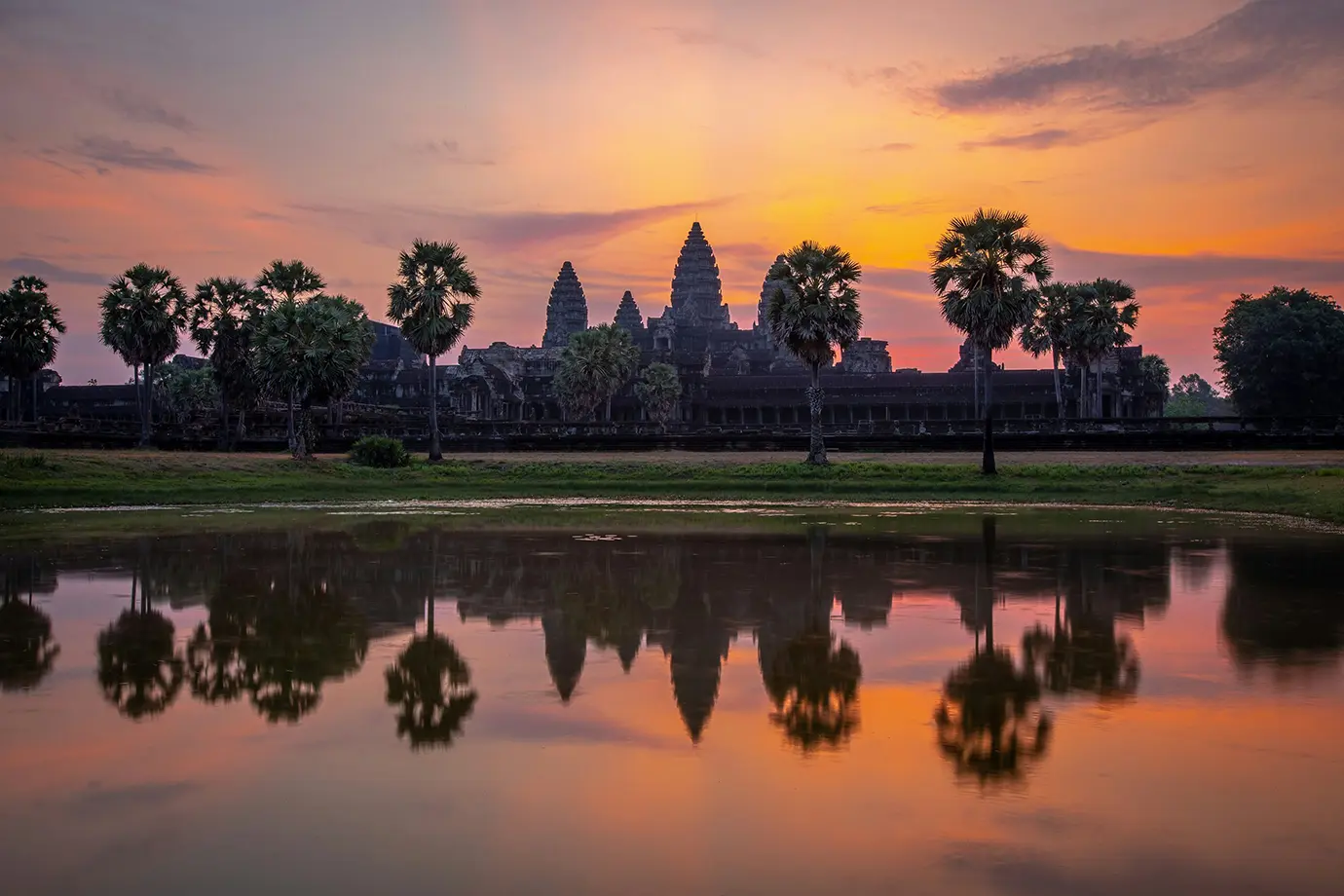
Three temple days is the right answer for anyone who has flown long-haul to see Angkor. Two days is the number every competing guide recommends. It is also the worst deal.
Why Two Days Is the Wrong Answer
Two temple days means two circuits crammed into two mornings with one sunrise. You rush Angkor Wat, the Bayon, and Ta Prohm on day one. You squeeze Banteay Srei, the Grand Circuit, and Pre Rup into day two. Every stop feels hurried. The midday heat catches you while you’re still walking. And you pay more for the privilege.
The Pass Arithmetic
Angkor Enterprise sells three passes. A one-day pass costs $37 and expires the same day. A three-day pass costs $62 and gives you any three days within a seven-day window. A seven-day pass costs $72 and gives you any seven days within thirty.
Two temple days require two separate one-day passes at $37 each. The total is $74. Three temple days on a three-day pass cost $62.
Three temple days cost $12 less than two. You get 50 percent more temple time and pay less. The three-day pass also lets you spread your visits over a full week so that you can take a rest day between circuits.
We verified these figures directly against the official Angkor Enterprise ticket listing. A one-day pass expires at the end of the day it is used, so two temple days cannot share a single pass. Prices are in US dollars and may change.
When Four Temple Days Are Worth It
Four days justify the $72 seven-day pass if you want to visit Beng Mealea, Phnom Kulen, or a second sunrise. Photographers and repeat visitors often find the fourth day the most rewarding. The major crowds are behind you, and the late-afternoon light on sandstone rewards patience.
Choosing the Right Cambodia Itinerary
The single biggest decision is not where to go but how to split your time. Siem Reap pulls hard, and most planners give it too many days at the expense of everything south of it.
Temples, Coast or Rainforest — the Shape-Defining Decision
Every Cambodia itinerary falls into one of three shapes. A temple-heavy trip weighted to Siem Reap. A broad north-to-south arc through the temples, the capital, and the coast. Or a wildlife and nature route through Kratie, Mondulkiri, and the Cardamoms. Your shape determines your route, your pacing, and your pass choice.
How Much Time Should Siem Reap Get Against Everything Else
Three nights in Siem Reap are enough for three proper temple days, a Tonlé Sap morning, a cooking class, and an evening at Phare. Four nights adds Beng Mealea and Phnom Kulen. Beyond four, you are taking days from places that need them more.
The one mistake most first-time planners make: trying to fit Siem Reap, Phnom Penh, and the coast into seven days. The arithmetic does not work. Siem Reap needs three nights minimum. Phnom Penh needs two. The coast needs two. The transfers between them consume at least two half-days. Seven days minus seven nights of accommodation minus two half-days of travel leaves you rushing everything.
Cambodia Itineraries by Duration
Cambodia Itinerary for 5 Days
Five days works only as a temple-focused trip from a single base in Siem Reap: no packing, no internal flights, no second city.
- Day 1 — Arrive in Siem Reap. Transfer from the airport, about 45 minutes. Rest. Evening orientation walk.
- Day 2 — Sunrise at Angkor Wat, then Angkor Thom for the Bayon and Ta Prohm. Midday break. Pre Rup at sunset.
- Day 3 — Banteay Srei in the morning, then the Grand Circuit. Afternoon cooking class.
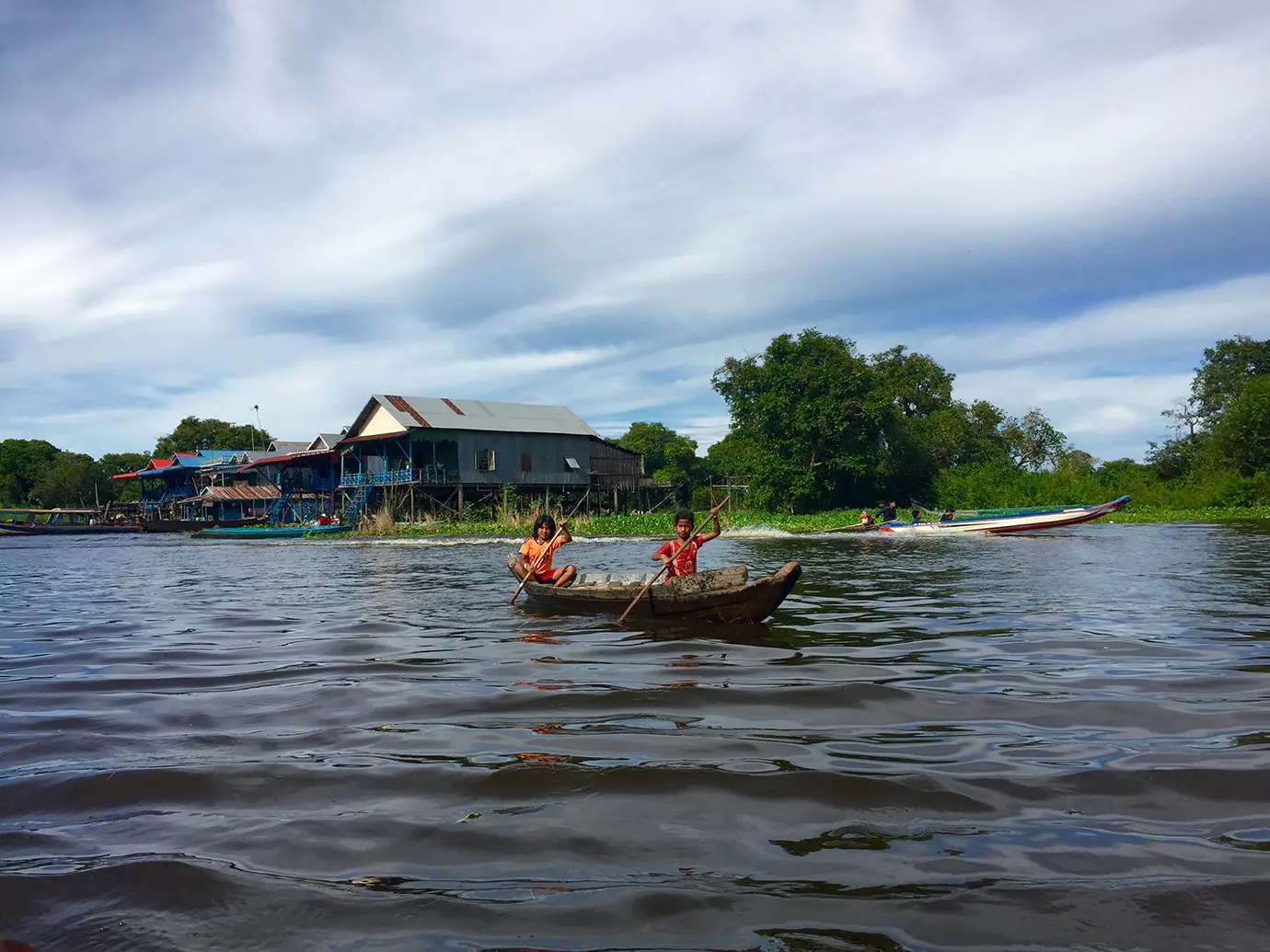
- Day 4 — Tonlé Sap boat through Kampong Phluk. Artisans Angkor workshops. Phare in the evening.
- Day 5 — Free morning. Transfer for your afternoon flight.
A five-day trip uses the three-day Angkor pass. You leave out Phnom Penh, the coast, and anything south of the lake.
Cambodia Itinerary for 7 Days
Seven days adds Phnom Penh to the temple core. You fly south on day four and spend two nights in the capital. The coast stays out.
- Day 1 — Arrive in Siem Reap. Settle in.
- Day 2 — Angkor Wat sunrise, Angkor Thom, Ta Prohm. Evening at Phare.
- Day 3 — Banteay Srei, Grand Circuit. Sunset at Pre Rup.
- Day 4 — Tonlé Sap morning. Afternoon flight to Techo International Airport, about 50 minutes—Mekong sunset cruise.
- Day 5 — Royal Palace, National Museum. Afternoon at Tuol Sleng and Choeung Ek.
- Day 6 — Silk Island cycling. Free afternoon.
- Day 7 — Transfer to Techo International Airport for departure.
What the Seven-Day Route Leaves Out
Kampot, Kep, the islands, the Cardamoms, Battambang, and the eastern provinces. A seven-day Cambodia itinerary that claims to include the coast is not being honest about the transfer arithmetic. The drive from Phnom Penh to Kep alone takes about three hours, and the ferry to Koh Rong Sanloem adds another two. You lose a full day each way.
Cambodia Itinerary for 10 Days
Ten days is when Cambodia opens up. You get the temple core, the capital, and one of two second-week options. The choice between them is the single most consequential decision a ten-day planner makes.
- Day 1 — Arrive in Siem Reap.
- Day 2 — Angkor Wat, Angkor Thom, Ta Prohm.
- Day 3 — Banteay Srei, Grand Circuit.
- Day 4 — Tonlé Sap. Afternoon flight to Phnom Penh.
- Day 5 — Royal Palace, Tuol Sleng, Choeung Ek.
- Days 6–9 — Coast or Cardamoms (see below).
- Day 10 — Transfer to Techo International for departure.
The Ten-Day Fork — Coast or Cardamoms
Your second week takes one of two paths. Both are good. Neither is better. They suit different travelers.
| Factor | Coast Route (Kampot, Kep, island) | Cardamom Route (Tatai River) |
|---|---|---|
| Pace | Relaxed, beach-weighted | Active, forest-weighted |
| Highlights | Pepper farms, crab market, snorkeling, and an island beach | Kayaking, waterfall, ranger patrol, night spotting |
| Best for | Couples, families, and first-timers want variety | Wildlife lovers, active travelers, repeat visitors |
| Transfer cost | Two drives plus a ferry each way | One drive plus a river boat |
| Season sensitivity | High — ferries cancel in heavy swell | Moderate — rain makes the forest lusher, and falls more strongly |
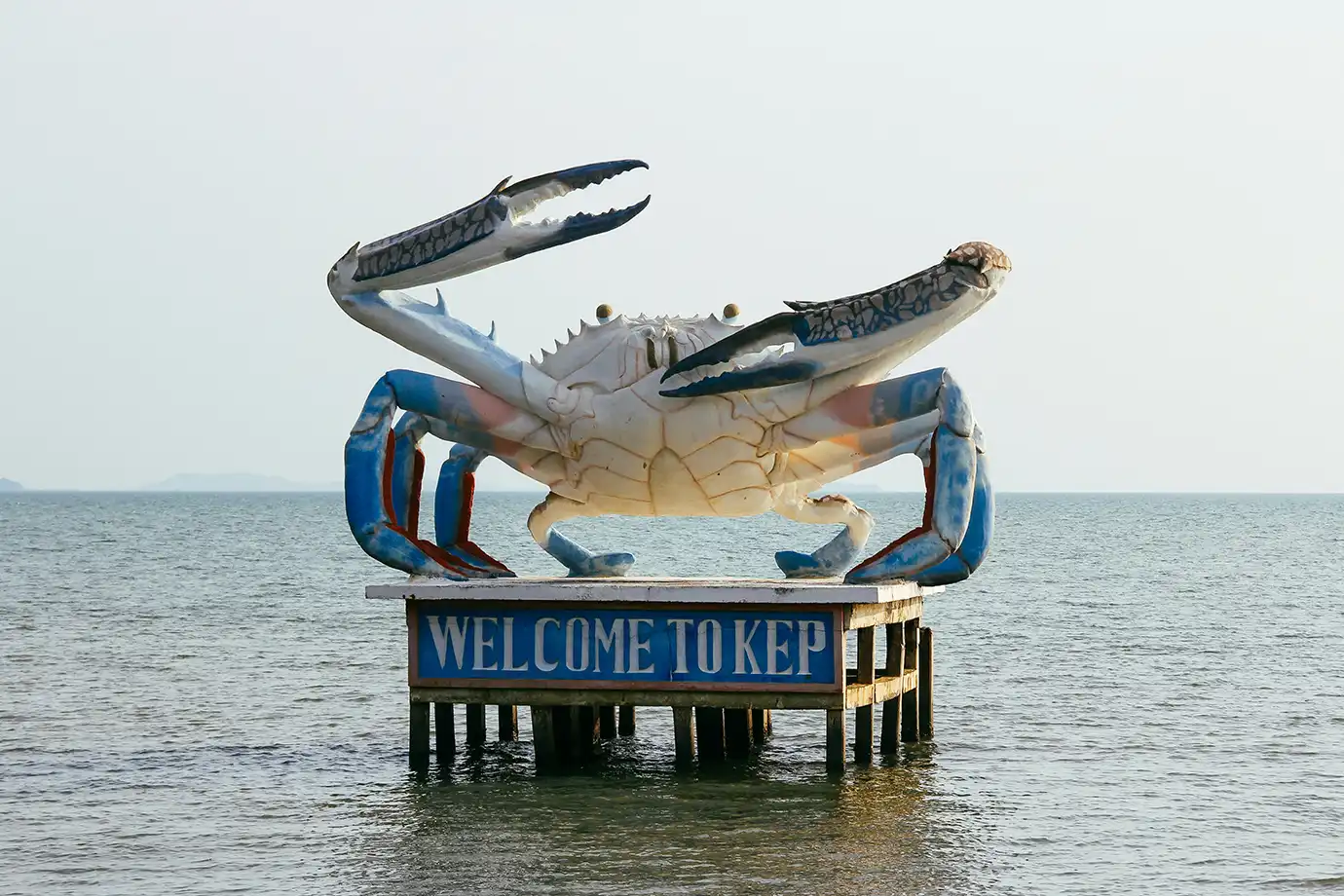
The coastal route runs from Phnom Penh to Kampot for pepper and Bokor, then to Kep for the crab market, then a ferry to Koh Rong Sanloem. You need at least four days, including transfers.
The Cardamoms route runs from Phnom Penh to the Tatai River, where a floating lodge sits inside the Southern Cardamom rainforest. You kayak, swim at the waterfall, and join a Wildlife Alliance ranger team on a working patrol. Three nights cover it properly.
Cambodia Itinerary for 12 Days
Twelve days lets you take the coast route at a proper pace. Add a second island night and give Kep a full afternoon. Build in a rest day between the capital and the south. Families with children should treat twelve rather than ten as the working minimum.
Cambodia Itinerary for 14 Days
Fourteen days cover the country from north to south without compromise. Siem Reap gets three nights, Phnom Penh two, and the coast or the Cardamoms three. Room remains for Battambang, the eastern provinces, or extra island time.
The Alternative — Fourteen Days Across Cambodia and Vietnam
A two-week Cambodia itinerary also converts cleanly into a two-country trip. Fly from Ho Chi Minh City to Siem Reap, about 1 hour 15 minutes on Air Cambodia or Vietnam Airlines. Eight nights in Vietnam and five in Cambodia, split evenly, giving both countries room. The land border between Vietnam and Cambodia at Bavet operates normally. The closed crossings are on the Thai frontier, not the Vietnamese.
Cambodia Itinerary for 3 Weeks
Three weeks lets you add the coast and the Cardamoms together. Fill the remaining days with Kratie, Mondulkiri, or a full Vietnam pairing. At three weeks, nothing gets cut, and nothing gets rushed.
Cambodia Itineraries by Traveler Type
Best Cambodia Itinerary for First-Time Visitors
Start with ten days. —Angkoror three, Phnom Penh for two, and the coast for the coastal route is more accessible than the Cardas and provides vit among the amon amp, th yd the and the water. Add the three-day Angkor pass.
Luxury Cambodia Itinerary
Ten days with upgraded properties at every stop. Floating tented villas on the Tatai river, a restored modernist hotel on the Kep seafront, and a riverside boutique in Siem Reap. Private guides, private boats, and a private car throughout. The Cardamom Route works better than the coast for a luxury trip because the lodges are the experience, not just the base.
Family Cambodia Itinerary
Nine to twelve days with temple mornings capped before the heat, pool afternoons protected, and the islands as the closer. Children under 12 enter Angkor Park free of charge with a passport. They cannot climb the upper level of Angkor Wat. Tuol Sleng and Choeung Ek fall outside the standard family plan and are offered as an optional half-day for adults.
Honeymoon Cambodia Itinerary
Ten days weighted to the coast. Three temple days, one night in Phnom Penh, then four nights split between Kep and an island. Sunset river cruises, spa time, and a pepper-farm walk replace the museum circuit.
Adventure and Wildlife Itinerary
Eleven days running east and south. Angkor as the opener, then Kratie for the Mekong dolphins, Mondulkiri for retired elephants at an observation-only sanctuary, and the Cardamoms for the ranger patrol. The driving is long and honest. Budget roughly 26 hours of road time across the full trip.

Beach and Island Itinerary
Eight to ten days, ending on Koh Rong Sanloem. Boats leave from the pier in Sihanoukville, which is used strictly as a transit point. The crossing takes about 45 minutes. Green-season swell reduces visibility and occasionally cancels ferries.
Second-Visit Itinerary
Skip Angkor and Phnom Penh entirely. Fly to Siem Reap, drive east to Sambor Prei Kuk and Kratie, south to Mondulkiri, then west through Phnom Penh to the Cardamoms. Seven to ten days of places the first trip never reaches.
Should First-Timers Include Phnom Penh?
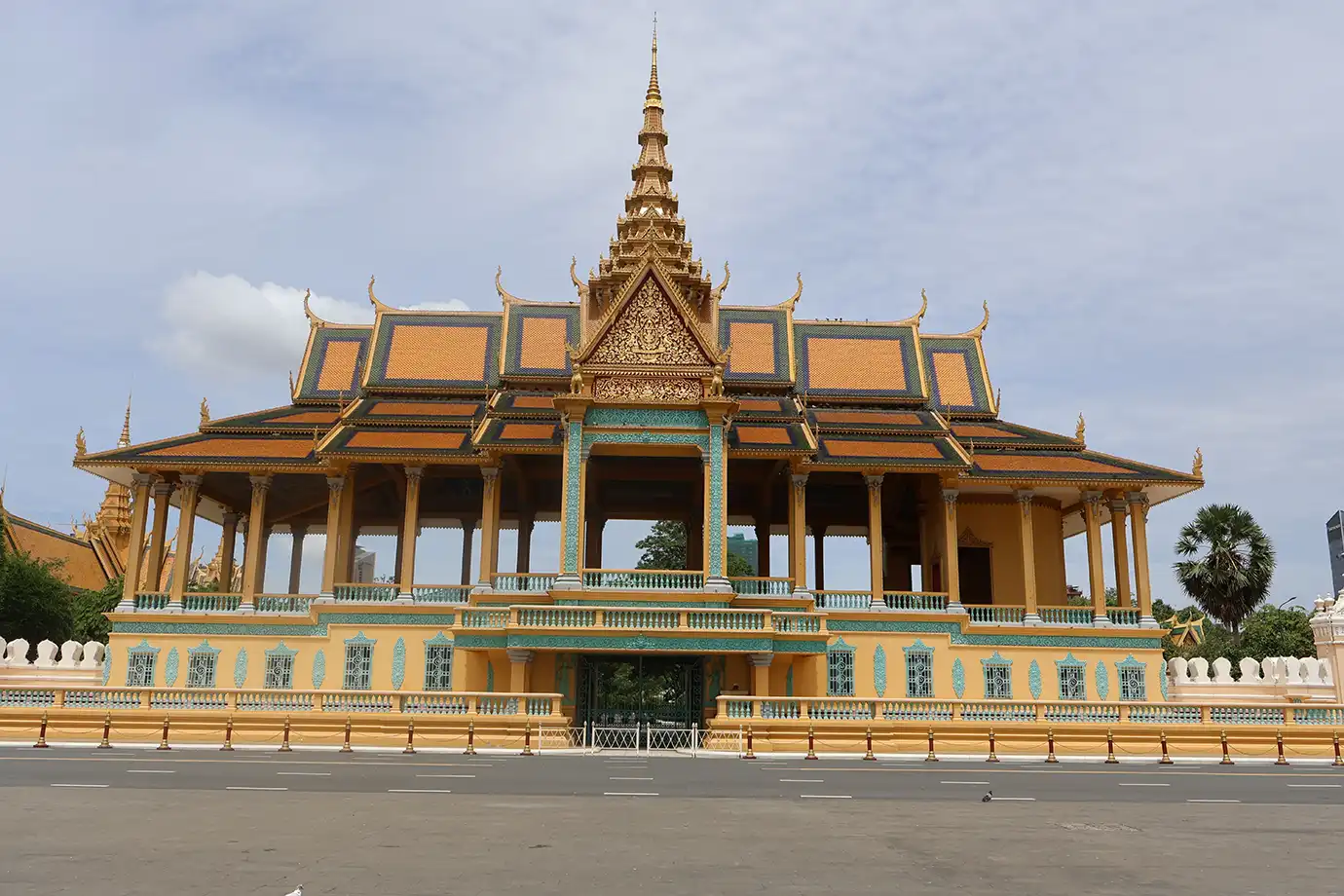
Yes. Skipping Phnom Penh saves two days but loses the Royal Palace, the National Museum, and the difficult history at Tuol Sleng and Choeung Ek. You also lose the Mekong waterfront, Silk Island, and the country’s strongest restaurant scene.
The Case for Two Nights
Two nights give a full day for the palace, the museum, and the genocide sites, plus a half-day for Silk Island or the markets. The capital explains what the temples alone cannot. Cambodia’s modern story lives in Phnom Penh, not in Siem Reap.
The Case Against
Travelers with fewer than seven days face a genuine trade-off. Every night in Phnom Penh is a night taken from the temples. If you have only five days, stay in Siem Reap and return to the capital on a second trip.
What You Lose If You Skip It
You lose the Royal Palace, the Silver Pagoda, the National Museum, Tuol Sleng, and Choeung Ek. You also miss the Mekong waterfront, Silk Island, and the colonial streetscape. You also lose the natural transit point for the coast and the south.
Where to Fly and Where to Drive
Getting between Cambodia’s main destinations takes longer than most guides admit. Honest times matter because they change how your itinerary actually works.
Domestic Flights
Air Cambodia operates the Siem Reap- Phnom Penh route, with flights averaging about 50 minutes. Frequency is low, with roughly 13 departures per week, most of which are clustered in the afternoon. No morning flights run on many days, which limits how you plan Day 4 of a seven- or ten-day plan.
Private Car Transfers
Private cars with a driver are the standard for touring beyond the two main cities. Roads between Siem Reap and Phnom Penh are good. Roads east of the Mekong and into the Cardamoms are slower, rougher, and season-dependent.
The Airports — What Changed
Techo International Airport replaced the former Phnom Penh International Airport. It sits further from the city center. Allow 45 minutes to an hour for the transfer, rather than the 20 minutes quoted by older guides.
Siem Reap Angkor International Airport sits about 40 kilometers from town on a new road. The old in-town airport is closed. The transfer takes 45 minutes to an hour, depending on traffic.
| Route | Mode | Approximate Time |
|---|---|---|
| Siem Reap to Phnom Penh | Flight | 50 minutes |
| Siem Reap to Phnom Penh | Private car | 4.5 to 5 hours |
| Phnom Penh to Kampot | Private car | About 3 hours |
| Phnom Penh to Tatai (Cardamoms) | Private car | About 5 hours |
| Kep to Sihanoukville pier | Private car | About 2 hours |
| Sihanoukville to Koh Rong Sanloem | Fast boat | About 45 minutes |
| Ho Chi Minh City to Siem Reap | Flight | About 1 hour 15 |
| Siem Reap airport to town | Private car | 45 minutes to 1 hour |
Combining Cambodia With Other Countries
Cambodia and Vietnam
The strongest two-country pairing in the region. Fly from Ho Chi Minh City to Siem Reap in about 1 hour and 15 minutes. Fourteen days split well between the two, with eight nights in Vietnam and five in Cambodia. The Vietnam-Cambodia land border at Bavet operates normally.
Cambodia and Thailand — the Current Position
Thai land crossings near the disputed frontier have been closed since mid-last year. Preah Vihear temple is closed to visitors. Do not plan an overland route from Thailand to Cambodia through these crossings. Air connections between Bangkok and Siem Reap remain available and are the only current option.
Cambodia and Laos
Fly from Siem Reap to Luang Prabang via a connection. Direct flights are limited and seasonal. Allow at least 12 days for a meaningful Cambodia-Laos combination, and check visa requirements for both countries before booking.
Seasonal Considerations for Your Itinerary
November through February is the most comfortable window. Dry skies, cooler mornings, and calm seas for the island crossings. It is also the busiest season at Angkor.
March through May brings intense heat. Temple mornings need to start early and finish by 11. Pool afternoons are not optional.
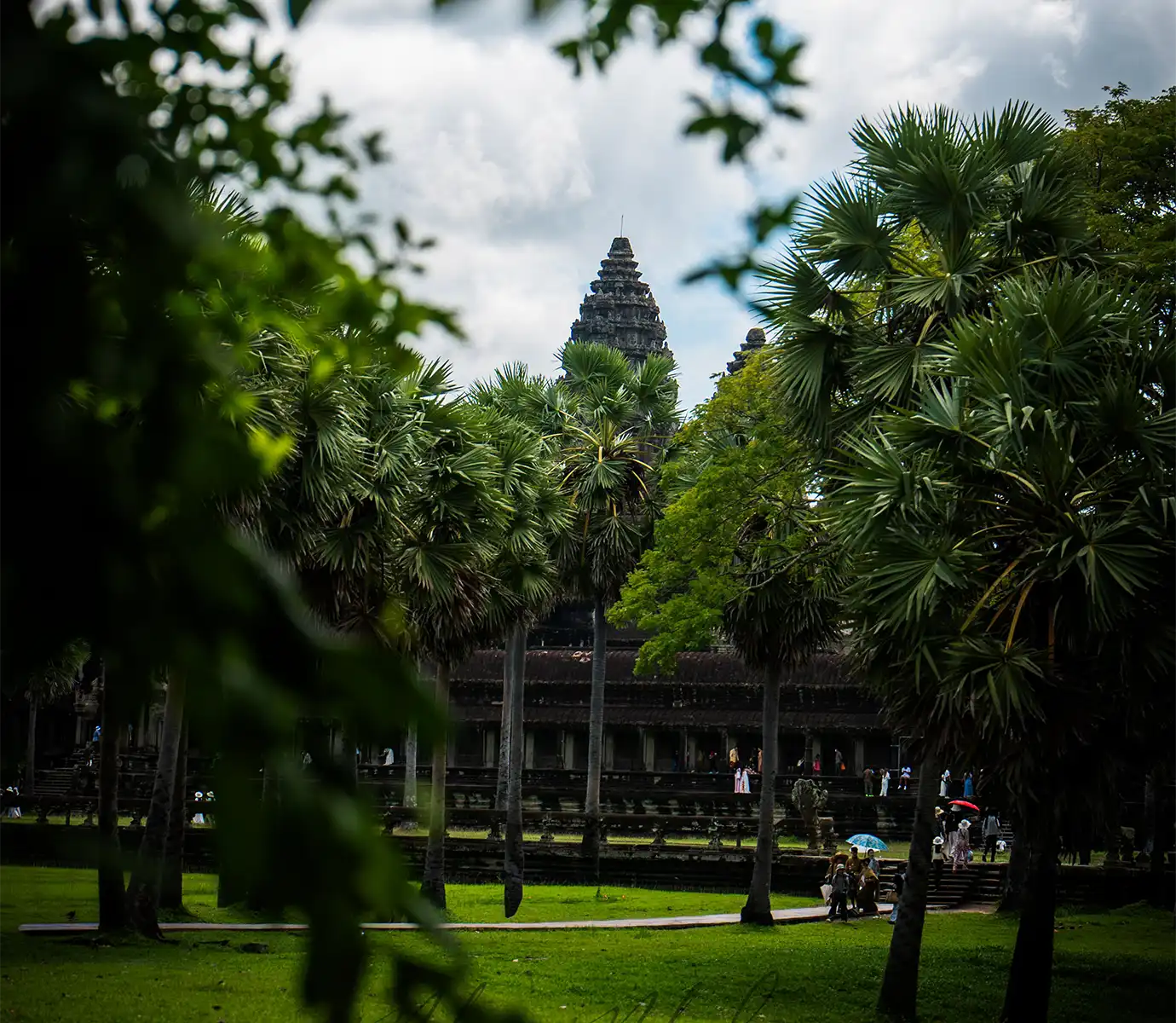
June through October is the green season. Rain falls in afternoon bursts rather than all day. Angkor draws fewer visitors. The moat and reflecting pools stand full, which improves the sunrise. Island ferries become less reliable, and snorkeling visibility drops. Road conditions in the eastern provinces deteriorate. The season should influence the shape of your itinerary. Leave the island leg out of a green-season plan unless you build in a buffer day for ferry cancellations. The Cardamoms work year-round, with the falls running strongest in the wet months.
What to Cut When You Lose a Day
Lose a day and triage in this order, cutting from the bottom first.
- The island leg goes first. It costs a full day each way in transfers.
- Silk Island in Phnom Penh. A nice half-day, not essential.
- One of the two second-week options. Choose coast or Cardamoms and commit rather than rushing both.
- One temple day, dropping from three to two. Do this only as a last resort and switch to two one-day passes.
- One night in Phnom Penh. Compress the palace, museum, and genocide sites into a single day if you must.
Never cut: the three-night Siem Reap base. Angkor is why you came. Rushing it is the most expensive mistake on the trip.
Common Cambodia Itinerary Mistakes
Buying two separate one-day Angkor passes. Two days at $37 each cost $74. A three-day pass costs $62 and gives you an extra weekday at a temple. The one-day pass expires on the same day, so you cannot split it across two days.
Fitting the coast into seven days. The drive from Phnom Penh to the pier alone eats half a day. Adding island transfers on top compresses everything else beyond comfort.
Treating the island transfer as a short morning. Kep to the Sihanoukville pier is roughly two hours by car. The fast boat is another 45 minutes. You lose a full half-day going and coming.
Planning around the wrong Angkor pass validity window. The three-day pass expires seven days after its start date, not ten, as many older guides still state. A traveler spreading three temple days across nine days arrives at a checkpoint holding a dead pass.
Booking domestic flights too tightly. Siem Reap to Phnom Penh flights cluster in the afternoon and operate at a low frequency. Leave a full buffer between a domestic arrival and an international departure from Techo.
Assuming Thai overland crossings are available. The crossings near the disputed frontier are closed. Preah Vihear is closed. Do not build a route through them.
Suggested Tour Packages
Each of the itineraries above maps to a Peregrine private tour, fully operated by a licensed guide, with named hotels and all transfers arranged.
- Angkor Wat Tour, 6 days — the five-day temple core with a sixth day for Beng Mealea and Phnom Kulen
- Cambodia Luxury Tour, 10 days — the Cardamoms route with upgraded lodges and a Kep finish
- Cambodia Family Tour, 9 days — temple mornings capped, pool afternoons protected, island closing
- Cambodia Adventure Tour, 11 days — the eastern arc through Kratie, Mondulkiri, and the Cardamoms
- Vietnam and Cambodia Tour, 14 days — Hanoi to Angkor to Phnom Penh in one arc
We can also build a custom Cambodia itinerary around your dates, priorities, and group size. Please tell us how many days you have and what matters most to you, and we will build the route and price it for your party.
Let Us Build Your Cambodia Itinerary
You know the shape you want. We know the roads, the guides, the hotels, and the ferry schedules. Send us your travel dates and the number of days you can spare, and we will return a detailed day-by-day plan built for your group. Private, fully operated, with all transfers, passes, and entrance fees handled.
Reach us at sales@peregrinetreks.com or message us on WhatsApp at +977 985 105 2413. Please tell us the length and the shape, and we will do the rest.
Frequently Asked Questions
How many days do you need in Cambodia?
Ten days is the sweet spot for a first visit. You get three proper temple days at Angkor, two nights in Phnom Penh, and a second week on the coast or in the Cardamoms. Seven days’ work if you cut the south entirely, five days cover the temples, and nothing else.
Is 7 days enough for Cambodia?
Seven days is enough for Angkor and Phnom Penh, but not for the coast or the islands. You get three temple days and two nights in the capital. Any itinerary claiming seven days also includes the coast is hiding the transfer time, which costs a full day each way.
How many days should I spend at Angkor Wat?
Three. A three-day Angkor pass costs $62 and covers any three days within seven days. Two days require two single-day passes at $37 each, for a total of $74. Three days gives you more temple time for less money. Spread the visits across your stay, with rest days between circuits.
What is the best Cambodia itinerary for first-timers?
Start with ten days. Fly into Siem Reap for three nights at Angkor. Fly to Phnom Penh for two nights, covering the Royal Palace and the genocide sites. Then head south to the coast for pepper farms, crab at Kep, and an island. Buy the three-day Angkor pass.
Should I include Phnom Penh in my Cambodia itinerary?
Yes, unless you have fewer than seven days. Two nights give you the Royal Palace, the National Museum, Tuol Sleng, and Choeung Ek. Cambodia’s modern story lives in the capital, not in Siem Reap. Skipping it saves two days but leaves a gap in your understanding of the country.
How do I get from Siem Reap to Phnom Penh?
Fly or drive. Air Cambodia operates the route in about 50 minutes, with most departures in the afternoon. A private car takes 4.5 to 5 hours on a good road. Both airports have changed. Techo International replaced the old Phnom Penh airport. Siem Reap Angkor International sits about 40 km from town.
Should I combine Cambodia with Vietnam?
A combination of Cambodia and Vietnam works well for fourteen days. Fly from Ho Chi Minh City to Siem Reap, about 1 hour and 15 minutes on Air Cambodia or Vietnam Airlines. Eight nights in Vietnam and five in Cambodia are split evenly. The Vietnam-Cambodia land border operates normally. The Thai frontier crossings do not.
Can you see Cambodia in a week?
You can see Angkor and Phnom Penh in a week. You cannot see the coast, the islands, the Cardamom rainforest, or any of the eastern provinces. A seven-day Cambodia itinerary is a temple-and-capital trip. Plan it that way rather than padding it with stops that the schedule cannot absorb.
Which Angkor pass should I buy?
Buy the three-day pass for most trips. It costs $62 and covers any three days within a seven-day window. The one-day pass at $37 is valid only at transit stops. The seven-day pass at $72 suits photographers or travelers visiting four or more temples in a day. Two separate one-day passes cost $74, which is $12 more than three full days.
Is the green season a bad time for Cambodia?
No. Rain falls in afternoon bursts rather than all day. Angkor draws fewer visitors, and the moat and reflecting pools stand full for the first time in months. Island ferries become less reliable, and roads in the eastern provinces soften, so weight your itinerary toward temples and cities rather than the islands. The Cardamoms work year-round.