


The Dead Sea Jordan sits more than 430 meters below sea level on the border between Jordan and Israel — the lowest exposed land surface on Earth. Its water contains roughly 34 percent salt, nearly ten times the ocean’s concentration, which makes floating effortless and the water unlike anything you will encounter elsewhere. The eastern Jordanian shore holds the best resort infrastructure and the most direct access from Amman and Petra. The high salt concentration makes the water denser than ordinary seawater, thereby increasing buoyancy. Learn more in NOAA’s explanation of the Dead Sea’s unusual water properties.
What Makes the Dead Sea Different From Every Other Body of Water
The Dead Sea’s extreme salt concentration — approximately 34 percent compared to the ocean’s 3.5 percent — makes the water so dense that the human body floats effortlessly. At more than 430 meters below sea level, atmospheric pressure is higher than at sea level, increasing the partial pressure of oxygen. The surface drops by roughly one meter every year.
No fish, no seaweed, no marine life — hence the name. The minerals that exclude life also draw visitors: 21 identifiable minerals are present in the water, 12 of which are found in no other body of water on Earth.
Key Dead Sea Facts
| Elevation | More than 430 meters below sea level (declining ~1 m/year) |
| Salt Content | ~34% (ocean averages 3.5%) |
| Length | Approximately 50 km |
| Width | Approximately 15 km |
| Historical Max Depth | Over 300 meters (northern basin) |
| From Amman | 60 km — approximately 1 hour by car |
| From Petra | 165 km — approximately 2 hours by car |
| Water Temperature | 24 degrees C in winter / 32 degrees C in summer |
| Key Minerals | Magnesium, bromide, potassium, calcium, iodine — 12 found nowhere else |
What Does Floating in the Dead Sea Actually Feel Like?
Floating in the Dead Sea is disorienting before it is relaxing. You step into what looks like calm water and find that it holds you immediately — not below the surface but on top of it. Your legs rise without any effort. Attempting to stand upright is harder than floating, because the water actively pushes you toward horizontal.
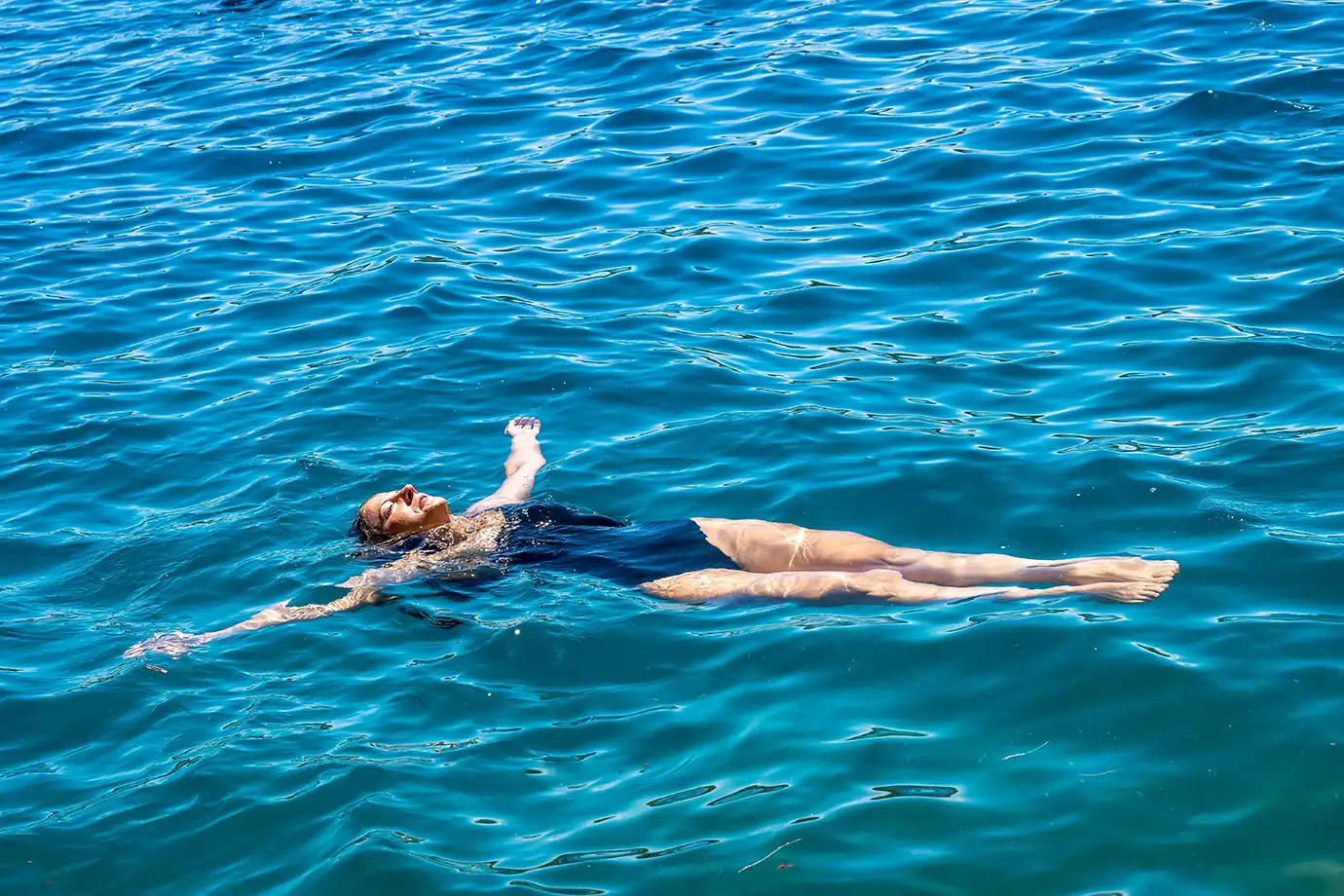
The surface of the water has a distinctly oily texture. Magnesium chloride makes up the majority of the dissolved mineral content, and it gives the brine a viscosity that ordinary ocean water does not have. Run your hand through it and the water feels slightly thicker than expected.
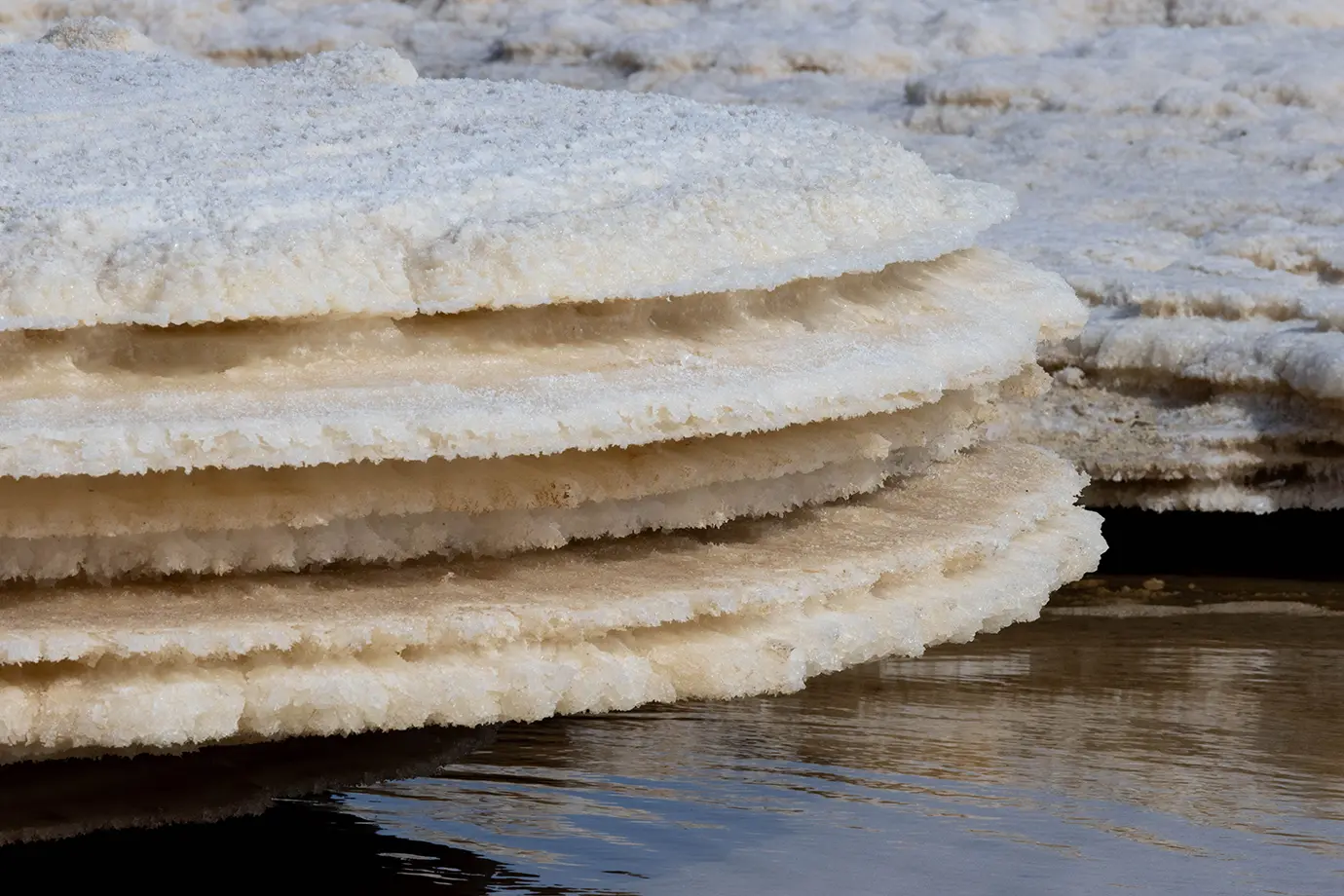
The smell is mineral-sharp and slightly sulfurous, particularly near the mud deposits along the shore. Standing in shallow water, the salt crystals that have formed on the rocky bottom are visible beneath your feet — dense white formations that crunch when you step on them.
The air at the Dead Sea carries more oxygen per breath than air at sea level, because the atmospheric pressure at 430+ meters below sea level is higher. Researchers have documented significant improvements in blood oxygen levels for patients with lung conditions during extended stays.
One thing no article prepares you for: any cut, any shaving nick, or any minor skin abrasion stings intensely the moment the water touches it. The pain is immediate and sharp. Do not shave on the morning of your Dead Sea visit.
The Dead Sea Mud Treatment — How to Do It Correctly
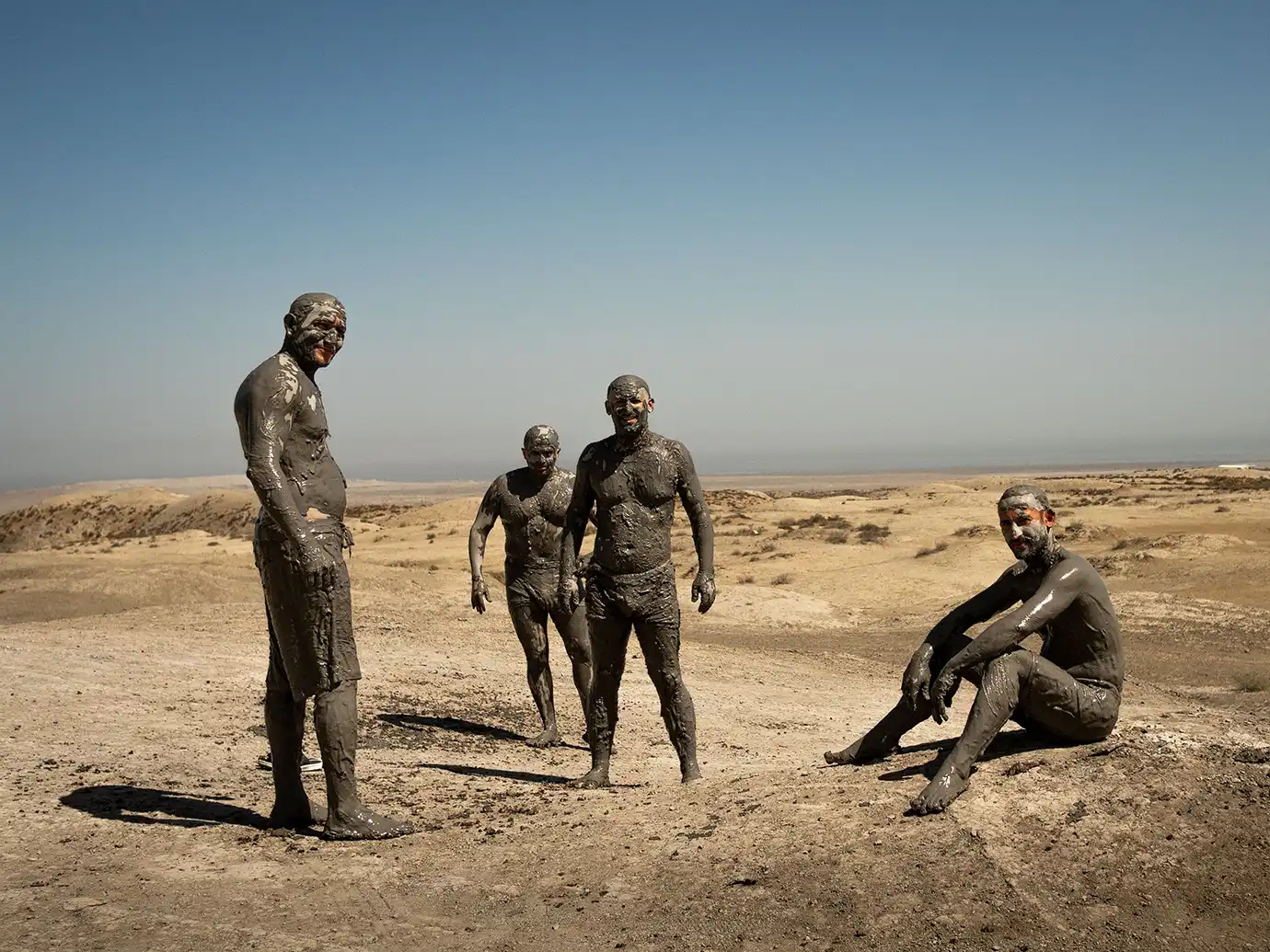
Dead Sea mud is available directly from the shore at most resort beaches, and applying it yourself costs nothing beyond the resort entry fee. The mud forms naturally in deposits along the water’s edge, dark grey-black in color and fine-textured.
Where to Collect the Mud
Most resort beaches maintain a designated mud collection point near the water. Your hotel will indicate the best spot on arrival. The mud is free to use — resort guests scoop it up by hand.
How to Apply It
Cover your skin completely and let the mud dry in the sun for 10 to 15 minutes. The minerals draw out impurities through the skin as the mud dries and contracts. Apply a thick, even coat — thin layers dry too quickly before the minerals have time to work.
How to Rinse Correctly
Rinse the mud off first in the Dead Sea water, not at the freshwater shower station. The mineral-rich brine rinses cleanly and helps the minerals absorb further as you wash the mud off. Then use the freshwater shower station to remove the salt and any remaining residue. Going straight to the freshwater shower leaves a salty, uncomfortable film on your skin.
What the Minerals Are Doing
Magnesium has been shown to have anti-inflammatory properties and to support skin barrier function. Bromide has a calming effect on the nervous system and is used medically for its muscle-relaxing properties. Potassium helps retain moisture in skin cells. Calcium supports skin renewal and cell metabolism. After a proper mud treatment and float, skin feels noticeably softer, tighter, and cleaner.
Dead Sea Safety — What First-Timers Must Know
Limit Your Time in the Water
Stay in the water for 15 to 20 minutes per session. Beyond that, the salt begins to dehydrate skin tissue from the outside. Get out, rinse, rest, and re-enter for a second float if you want — but respect the limit.
Do Not Shave 24 Hours Before
Any cut or recently shaved area in contact with 34 percent salt water stings immediately and intensely. Even a small shaving nick will force you out of the water. Shave the night before at the earliest.
Never Get Water in Your Eyes
Dead Sea water in the eyes causes immediate, severe burning. Keep your head above the water at all times. If water enters your eyes, go directly to the freshwater shower station and rinse thoroughly for several minutes. Do not rub — rinse open under running fresh water.
The Dehydration Risk Is Higher Than You Expect
The combination of intense heat, low elevation, high atmospheric pressure, and salt exposure dehydrates your body faster than normal beach conditions. Drink at least 3 liters of water per day. Summer temperatures regularly exceed 40 degrees C in the basin.
Dead Sea Day Trip vs Overnight Stay — Which Is Right for You?
A day trip from Amman gives you 3 to 4 hours at the water — enough for a full float, the mud treatment, and lunch at the resort. Most resorts offer day-use packages that include beach and pool access.
An overnight stay delivers a fundamentally different experience. The Dead Sea at sunrise, when the air is cool, the water is still, and the light is golden on the surrounding hills, is quieter and more striking than the midday version that day-trippers see. A full day gives you spa access, a proper sunset from the water’s edge, and the ability to pace the float and mud sessions without rushing.
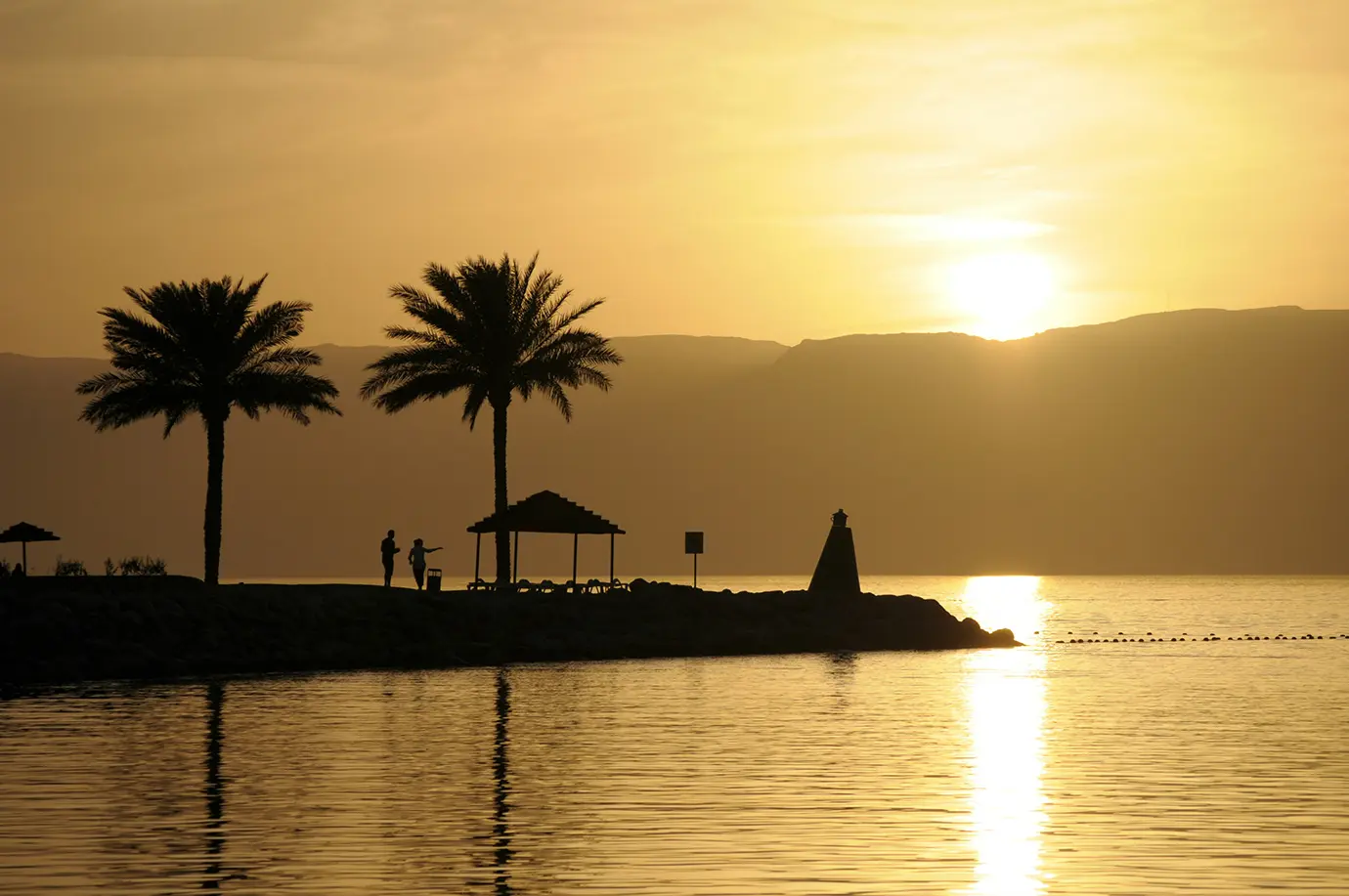
For most first-time visitors to Jordan, one night at a Dead Sea resort is the right call. Two nights are not excessive if wellness and relaxation are priorities.
Best Dead Sea Resorts on the Jordan Side
The Jordanian shore has four major resort properties that meet most visitors’ needs. All sit within a few kilometers of each other on the northeastern shore, with direct beach access to the Dead Sea.
Kempinski Hotel Ishtar Dead Sea
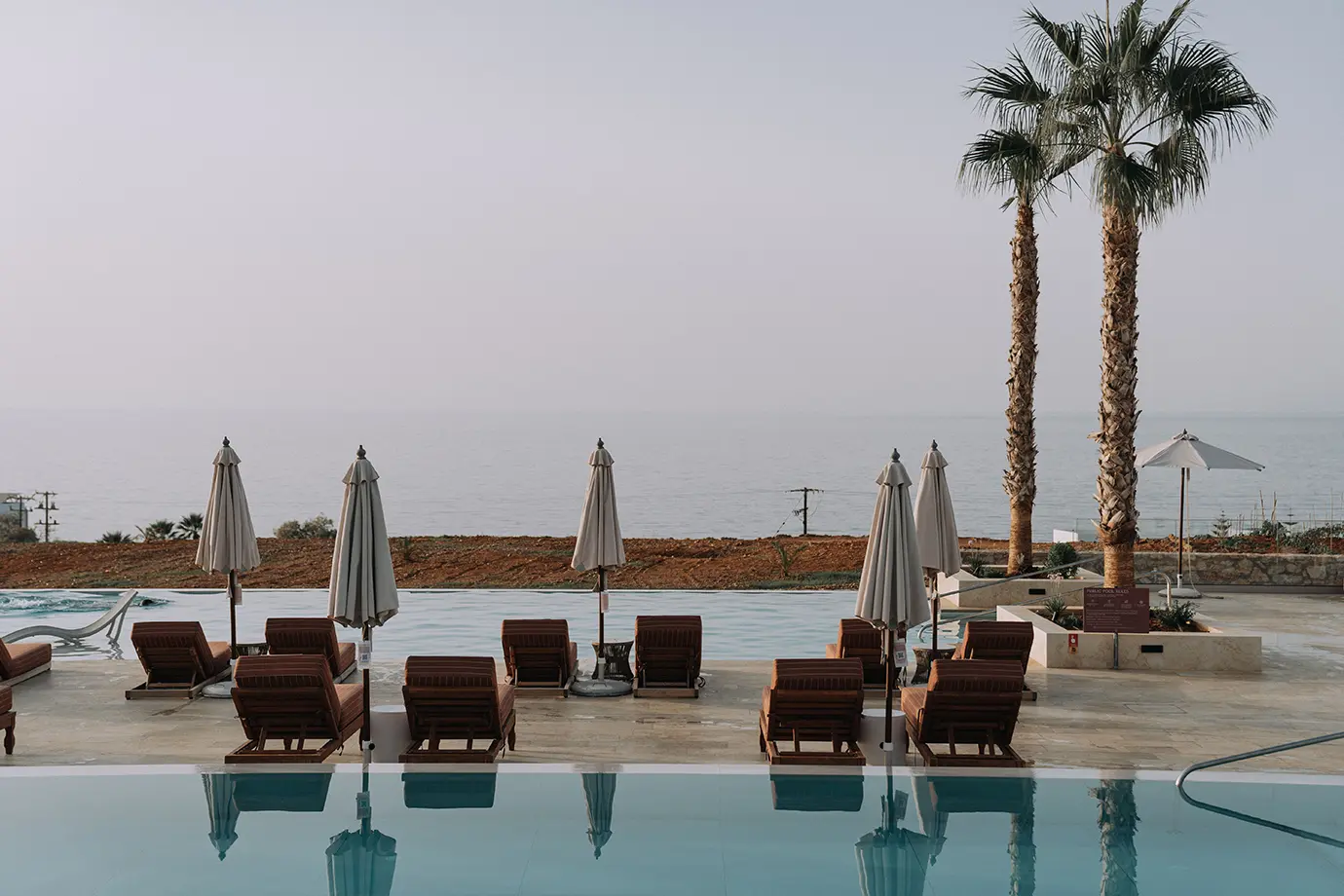
The Kempinski is the largest and most comprehensively appointed resort on the Jordanian shore. Multiple pools, a private beach, a full-service spa, and a wide range of dining options make it the strongest choice for visitors seeking the complete resort experience. The beach setup — loungers, umbrellas, access to the mud deposits, and freshwater showers — is well-organized.
Movenpick Resort and Spa Dead Sea — ZARA Spa
The Movenpick’s ZARA Spa carries a strong regional reputation and has won multiple awards for its Dead Sea mineral treatment programs. The resort is slightly smaller than the Kempinski, which gives it a more contained feel. For visitors prioritizing the spa experience, the Movenpick is the stronger choice.
Hilton Dead Sea Resort and Spa
The Hilton sits between the Kempinski and the Movenpick in terms of scale. Well-maintained and efficiently run, it offers direct access to the Dead Sea and a full-service spa without the larger resort’s footprint—a reliable, high-quality stay without the Kempinski’s full resort program.
Holiday Inn Resort Dead Sea
The Holiday Inn is the most family-oriented of the four major properties. Children’s pool facilities are more extensive than at the other resorts, and the property is designed with families in mind — activities, dining formats, and room configurations all skew toward multi-generational groups.
Is the Dead Sea Shrinking?
Yes. The Dead Sea loses approximately one meter of surface level every year. The primary cause is the diversion of over 90 percent of the Jordan River’s original flow before it reaches the Dead Sea. Historically, the river delivered 1.3 billion cubic meters of water annually. Today it contributes less than 100 million cubic meters per year.
The surface area has shrunk by more than 30 percent since the 1960s, from approximately 950 km2 to an estimated 620-670 km2. Shorelines that once sat at the water’s edge are now exposed salt flats. Over 6,000 sinkholes have formed around the perimeter as underground salt layers dissolve. Satellite images show how the Dead Sea has changed as its water level has fallen. See NASA’s Dead Sea satellite image and environmental explanation for a visual record of this change.
A joint Red Sea-Dead Sea Water Conveyance project was proposed, and a 2013 agreement set the framework, but Jordan abandoned the joint initiative in 2021 amid disagreements. Jordan continues to pursue its own national water projects. For visitors, the water’s mineral composition and buoyancy are unchanged.
Getting to the Dead Sea from Amman and Petra
From Amman:
The Dead Sea is 60 km from central Amman. By private car, the drive takes approximately one hour. The route descends more than 1,200 meters of altitude from Amman’s plateau to the Dead Sea basin. The route via Madaba and Mount Nebo adds 20 to 30 minutes but passes two of Jordan’s most significant historical sites.
From Petra:
The Dead Sea is approximately 165 km from Wadi Musa (Petra’s main town). By private car, the drive takes roughly 2 hours via the Desert Highway north. Most Jordan itineraries route Petra first, then the Dead Sea, then Amman. If you want to extend your trip to the Red Sea, read our Aqaba Jordan travel guide for information about beaches, snorkeling, diving, and resort stays.
When Is the Best Time to Visit the Dead Sea?
The Dead Sea is a year-round destination. Spring (March-May) and autumn (October-November) are the optimal windows: temperatures range from 22 to 32 degrees C, the water is warm, and humidity is lower than in summer.
Summer (June-September) temperatures regularly exceed 40°C by midday, but resort stays with pool access and air-conditioned rooms make it manageable. Winter (December-February) is the least crowded and most atmospheric season — clear air, low-angle golden light, and a warm Dead Sea against cool air. Planning to visit more than one destination? Read our best time to visit Jordan guide for month-by-month weather advice for Petra, Wadi Rum, Amman, and the Dead Sea.
Frequently Asked Questions
Can you really float in the Dead Sea without swimming?
Yes. The 34 percent salt concentration makes the water approximately 24 percent denser than the human body. You do not need to swim — you stand in shallow water, lean back, and the water holds you on the surface. Most visitors find standing up from the float more difficult than floating itself. Keep your arms out to the sides for balance and let the water do the rest.
Is it safe to swim in the Dead Sea?
Float, yes. Swim in the traditional sense — no. The water is too dense and buoyant for effective swimming strokes, and keeping your face above the water at all times is a firm safety requirement. The salt concentration is harmful if swallowed or inhaled, and water in the eyes causes immediate painful burning. Limit your time to 15-20 minutes per session.
How long does it take to get to the Dead Sea from Amman?
The drive from central Amman to the Dead Sea resort area takes approximately one hour by private car (60 km). The road descends more than 1,200 meters in altitude during the journey. Most Peregrine Jordan packages arrange the transfer as a private-vehicle journey, often including stops at Madaba and Mount Nebo along the way.
Is a Dead Sea day trip worth it, or is an overnight stay better?
Both options are valid, but they deliver different experiences. A day trip gives 3 to 4 hours at the water. An overnight stay adds the sunrise and sunset experiences, full spa access, and a relaxed pace. For most first-time visitors to Jordan, one night at a resort is the stronger choice.
What should I bring to the Dead Sea?
Bring a dark-coloured swimsuit (mineral-rich water stains light fabrics), reef or water shoes for the rocky salt-crystal shore, SPF 50+ sunscreen applied before you reach the water, a full water bottle, and a small bottle of fresh water to rinse your eyes if needed. Leave contact lenses at the hotel. Bring cash for resort incidentals, as ATM access near the resort strip is limited.
| Book a Dead Sea Tour with Peregrine
Private vehicles. 4-5 star resorts. Jordan Pass included. WhatsApp: +977 985 105 2413 Email: sales@peregrinetreks.com Web: www.peregrinetreks.com Response within 24 hours. All itineraries are customizable. |