


The best time to visit Jordan is March to May and September to November. Spring delivers wildflowers on the highland plateaus, comfortable walking temperatures at Petra, and Wadi Rum nights cool enough to sleep without difficulty. Autumn is slightly less crowded and equally comfortable. Winter is quiet, cold, and good value. Summer is manageable only with very early starts and strategic shade.
The Quick Answer — When Is the Best Time to Visit Jordan?
March to May and September to November are the two optimal windows. Spring is the better of the two: temperatures at Petra sit between 19°C and 30°C, Wadi Rum averages 21°C to 32°C, and the Dead Sea is warm without the humidity that builds in summer. Autumn sees slightly fewer visitors than spring. Winter is genuinely cold at Petra’s 900-meter elevation but clear and rewarding. Summer works only for travelers prepared to start at sunrise and finish by 11:00.
Jordan Weather by Month
All temperatures below are approximate monthly averages based on historical climate data. Heat waves in July and August can push highs in Wadi Rum and the Dead Sea several degrees above these averages. For additional reference, consult the Jordan Department of Statistics monthly temperature data, which provides historical averages by month and weather station.
| Month | Amman | Petra | Wadi Rum | Dead Sea | Rain |
|---|---|---|---|---|---|
| January | 12 / 4°C | 15 / 2°C | 16 / 4°C | 19 / 12°C | Moderate |
| February | 14 / 5°C | 16 / 4°C | 17 / 5°C | 21 / 13°C | Moderate |
| March | 18 / 8°C | 19 / 7°C | 21 / 8°C | 24 / 16°C | Light |
| April | 24 / 12°C | 25 / 11°C | 27 / 12°C | 30 / 20°C | Rare |
| May | 28 / 16°C | 29 / 15°C | 31 / 16°C | 34 / 23°C | None |
| June | 32 / 20°C | 33 / 19°C | 35 / 20°C | 38 / 26°C | None |
| July | 32 / 22°C | 35 / 21°C | 37 / 22°C | 40 / 28°C | None |
| August | 33 / 22°C | 35 / 21°C | 37 / 22°C | 40 / 27°C | None |
| September | 30 / 18°C | 32 / 17°C | 33 / 18°C | 36 / 24°C | None |
| October | 26 / 14°C | 27 / 13°C | 29 / 14°C | 31 / 22°C | Rare |
| November | 19 / 10°C | 21 / 8°C | 22 / 9°C | 25 / 17°C | Light |
| December | 13 / 5°C | 15 / 4°C | 16 / 5°C | 20 / 13°C | Moderate |
Spring (March–May) — The Best Season Overall
Spring is the most consistently rewarding season to visit Jordan. March through May delivers comfortable daytime temperatures at every major site, dry weather, good light for photography, and wildflowers across the northern highlands and the King’s Highway plateau.
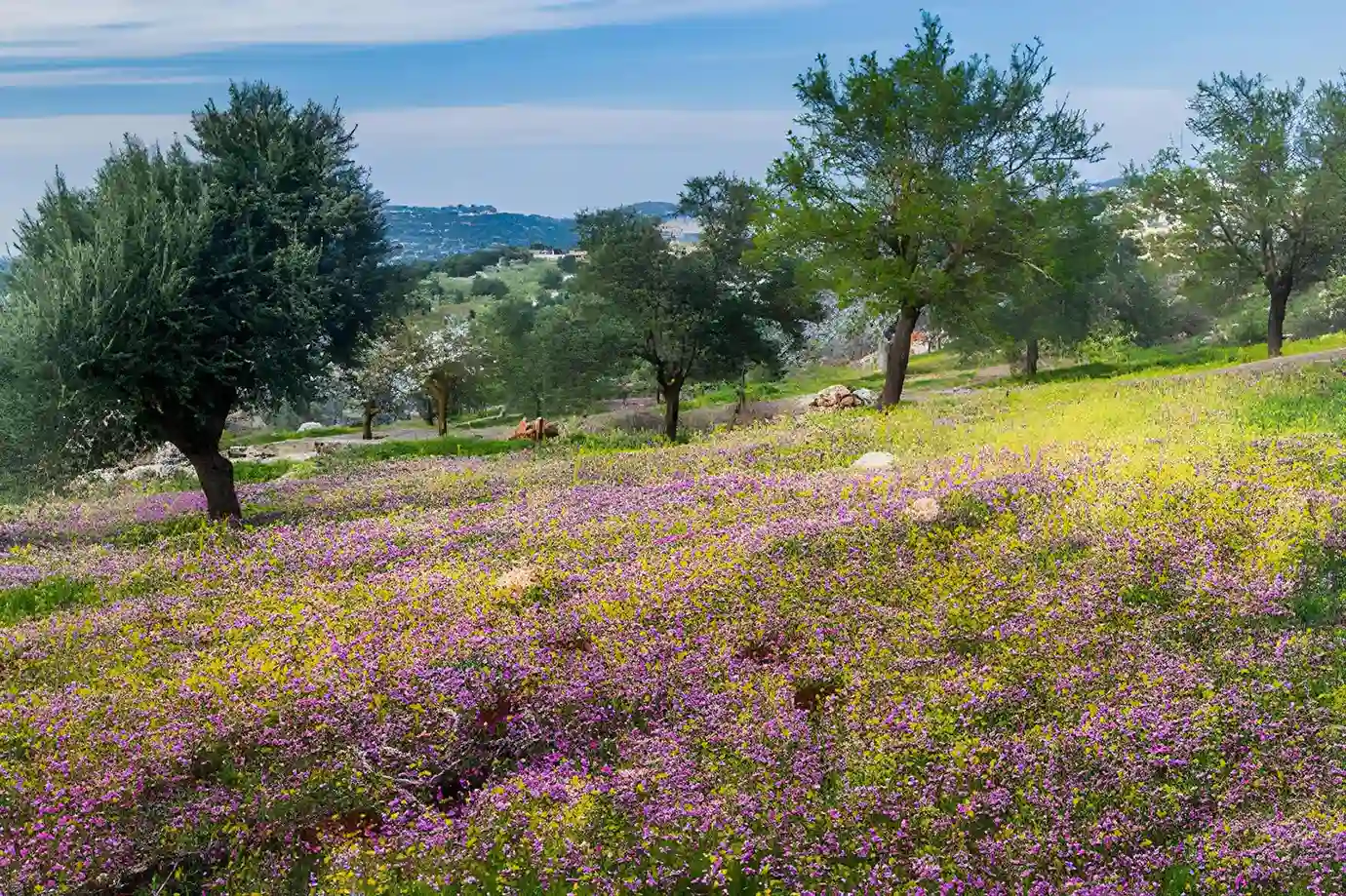
March is the softest entry into the season. Petra sits at around 19°C by day and can drop to 7°C at night — carry a light layer for the early morning walk through the Siq. The site is not yet at peak crowds, the light in the canyon is clear and cool, and the Monastery trail is manageable without extreme heat concerns.
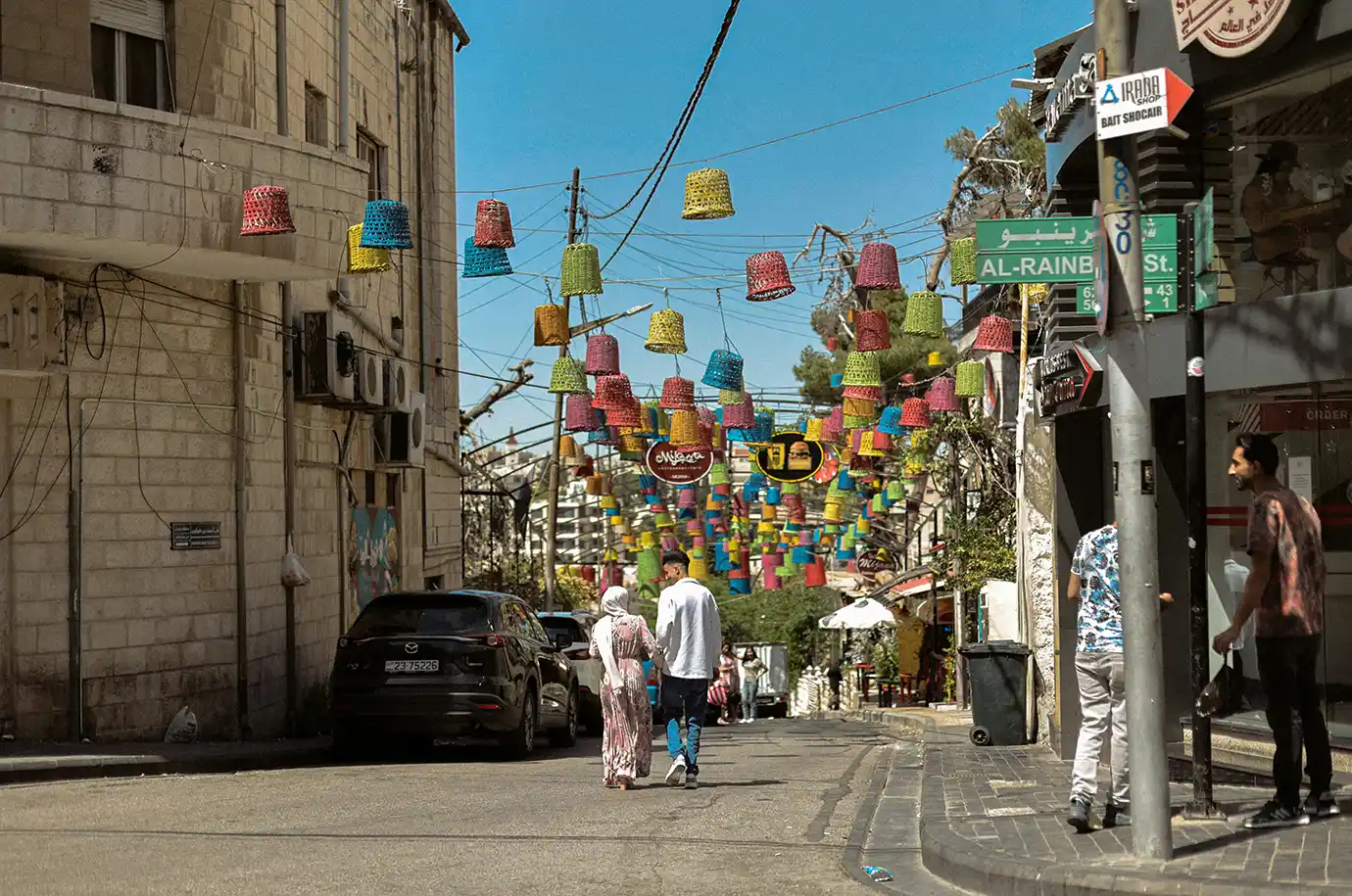
April is the prime month. Temperatures at Petra reach 25°C, wildflowers peak around Wadi Dana and Ajloun, and Amman is pleasant enough to walk the Citadel and Rainbow Street without discomfort. Wadi Rum averages 27°C by day with cool nights around 12°C — ideal for the overnight desert camp experience. Petra’s official visitor information also recommends spring and autumn for visiting Petra, when temperatures are generally suitable for outdoor sightseeing.
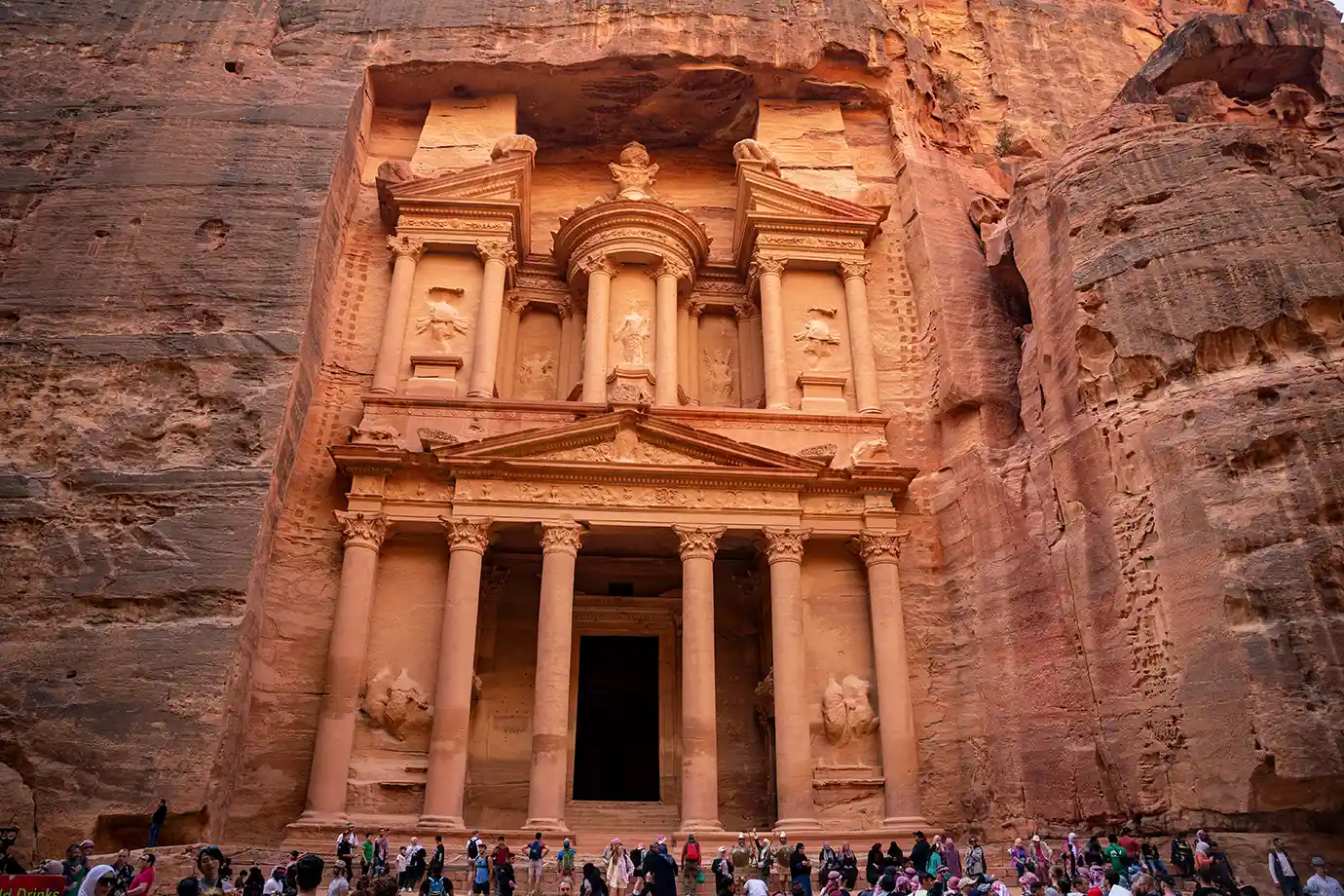
Book spring travel well in advance. Petra entrance numbers peak in April, and top Wadi Rum camps sell out weeks ahead.
May marks the end of the prime spring window. Temperatures climb noticeably by mid-month. Petra highs approach 29°C, and Wadi Rum pushes past 31°C. Early starts become more important, but conditions remain good throughout the first three weeks of May.
Autumn (September–November) — The Second-Best Window
Autumn is the second-best season and, for travelers who dislike crowds, sometimes the better choice. September still carries the warmth of summer — Petra hovers around 32°C — but the worst of the heat has passed, and the light starts to soften.
October is the standout autumn month. Temperatures at Petra drop to 27°C, Wadi Rum averages 29°C, and the Dead Sea settles at a comfortable 31°C. Rain is still rare. Crowds are measurably lower than in April, and the light in Wadi Rum during October afternoons is exceptional for photography.
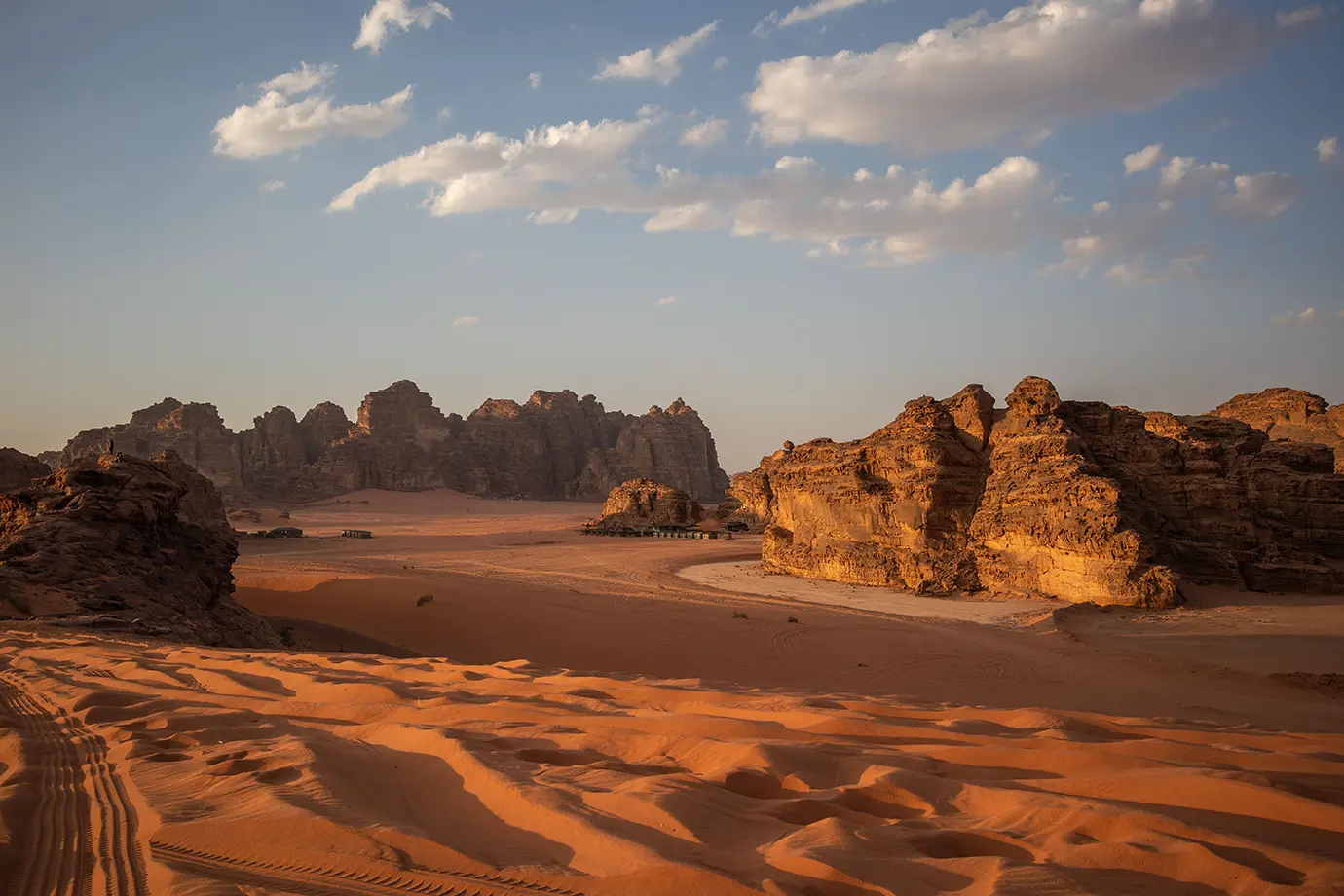
November brings a faster cooldown. Petra drops to 21°C by day but can reach 8°C overnight. At 900 meters elevation, an 8°C night in November requires a warm layer in the tent. The Monastery hike is still very comfortable in early November before the cold fully sets in.
Winter (December–February) — Quiet, Cold, and Good Value
Winter in Jordan is cold in Petra and Amman, which are at high elevations. Temperatures at Petra can drop below 5°C at night in January and February, and occasional snowfall makes some trails slippery. The Monastery trail in light snow carries real risk — the rock steps are cut stone, not gripped, and the descent is steep.
The practical trade-off is genuine. Winter is Jordan’s low season. Site queues essentially disappear. Petra at 09:00 in January is a different experience from Petra at 09:00 in April — the canyon is quiet, the Siq light is extraordinary in the low winter sun, and you can stand at the Treasury without navigating a crowd.
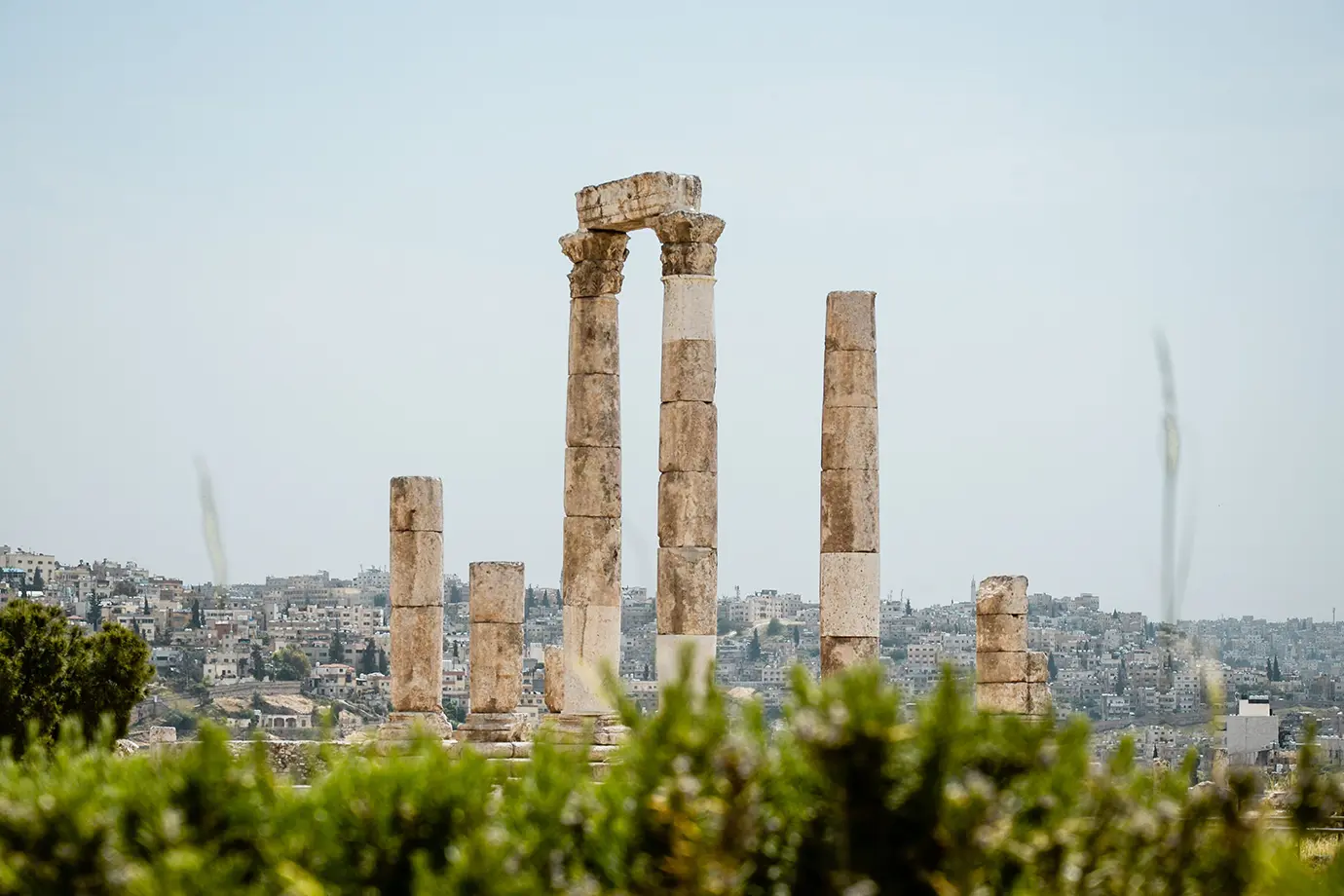
The Dead Sea is the winter exception. Water temperature stays around 20°C even in January. Floating in warm, mineral-rich water on a clear winter day, with the surrounding hills sharp and clear, is a genuinely pleasant cold-season experience.
Summer (June–August) — Only for Early Risers
Summer is the hardest season to visit Jordan’s desert sites. Wadi Rum averages 35–37°C by day in July and August, with heat waves pushing beyond 40°C. Petra reaches 35°C by early afternoon. The Monastery climb at noon in August is a genuine health risk.
The Summer Workaround at Petra
Arriving at Petra at 06:00 when the site opens gives you the full Siq and Treasury experience in genuinely beautiful conditions. The light is cool, the canyon is mostly empty, and the temperature at 07:00 is still manageable. Plan to cover the Treasury, Street of Facades, and Royal Tombs before 10:30, then return to your hotel by 11:00. Petra’s opening hours change by season and during Ramadan. Check the official Jordan Pass opening hours before choosing your arrival time.
Do not attempt a full day at Petra in summer without this strategy. Heat exhaustion is a real risk for visitors arriving at 10:00 in July expecting a normal walking day.
The Dead Sea in Summer
The Dead Sea is the strongest summer option in Jordan. The water reaches 32°C — warm, mineral-rich, and genuinely refreshing when the air temperature above is 40°C. Resort pools, air-conditioned rooms, and spa facilities make a Dead Sea resort a logical summer base. Limit outdoor exposure to early morning and late afternoon.

Wadi Rum in Summer
Avoid daytime Wadi Rum in July and August. A Jeep tour at 35–37°C in an open vehicle with full desert exposure is exhausting and potentially dangerous. The only practical summer option is an overnight stay arriving in camp by late afternoon, spending the evening and night in the desert, and departing by 09:00 before the heat builds. The overnight experience in summer — the zarb dinner, the Milky Way, the cool night air — is excellent. The daytime Jeep tour in peak heat is not.
Ramadan — What Changes for Tourists
Ramadan is the Islamic month of fasting. Its dates shift approximately 11 days earlier each year, so it falls in different calendar months depending on the year. Check the current year’s Islamic calendar before booking if you are sensitive to the changes it brings.
Most restaurants in tourist areas remain open during daylight hours for non-Muslim visitors, but some local establishments close until Iftar — the sunset meal that breaks the fast. Hotel restaurants operate normally throughout Ramadan.
The Iftar atmosphere is worth experiencing. At sunset, streets fill with families, and restaurants that have been quiet all day become suddenly loud and festive. Eating Iftar at a traditional Jordanian restaurant or at a Wadi Rum camp is culturally memorable rather than inconvenient
Best Time to Visit Jordan by Activity
| Activity | Best Months |
|---|---|
| Petra full-day hiking | March–May; September–November |
| Petra summer early-morning visit | June–August (arrive 06:00; finish by 11:00) |
| Wadi Rum overnight camp | October–May |
| Dead Sea relaxation | Year-round; least humid October–May |
| Red Sea diving, Aqaba | Year-round; best visibility October–May |
| Jerash day trip | March–May; September–November |
| King’s Highway road trip | March–May; September–November |
| Hot air balloon, Wadi Rum | October–May (seasonal operators) |
| Dead Sea resort stay | Year-round |
| Jordan Pass purchase | Before arriving in Jordan (any time) |
Crowds and Costs — Peak vs Shoulder vs Off-Season
Peak season (March–May and October) brings the highest visitor numbers to Petra and Wadi Rum. The Treasury plaza can hold several hundred people by 10:00 in April. Top Wadi Rum camps book out weeks in advance. Book well in advance and aim for an early-morning arrival at all major sites.
Shoulder season (November and February–March) offers a strong balance. Crowds drop noticeably from October’s peak, weather is still acceptable, and hotel rates begin to ease. March is the sweet spot of the shoulder — rapidly warming but not yet peak-crowded.
Low season (December and January) delivers the lowest prices and the fewest visitors. Petra in January is genuinely quiet. Wadi Rum camp rates drop significantly. The trade-off is cold: plan for sub-5°C nights in Petra and Amman, carry a proper winter layer for Wadi Rum, and check for flash-flood risk on the King’s Highway during periods of heavy rain.
Summer (June–August) is paradoxically less crowded than spring at Petra, because most Western and South Asian tourists avoid it. Dead Sea resorts fill with regional visitors. Budget for the most aggressive early starts and midday rest periods.
Frequently Asked Questions
What is the best month to visit Jordan?
April is the single best month for most visitors. Temperatures are comfortable across all sites — 25°C at Petra, 27°C at Wadi Rum, 30°C at the Dead Sea — wildflowers cover the highland plateaus, and the weather is reliably dry. October is the best autumn equivalent: similar temperatures, slightly lower crowds than April, and outstanding afternoon light in Wadi Rum.
Is Jordan too hot to visit in summer?
Jordan is manageable in summer with the right approach, but it is not the right season for most itineraries. Wadi Rum daytime temperatures average 35–37°C in July and August, with heat waves above 40°C. Petra in the afternoon is uncomfortable and potentially dangerous. The Dead Sea is the exception — floating in 32°C water on a summer day is genuinely pleasant. Build every summer Jordan Itinerary around 06:00 starts, with a midday rest at your hotel.
Does it rain in Jordan during the summer?
No. Jordan receives essentially zero rainfall from June through September. All four major destinations — Amman, Petra, Wadi Rum, and the Dead Sea — are reliably dry across these months. Rain falls mainly between November and March, concentrated in January and February. Spring rain is possible in March and fades almost entirely by April. You can choose any Jordan tour package according to your preferences.
Is Jordan cold in winter?
Yes — at elevation. Petra sits at 900 meters above sea level, and Amman at 750–900 meters. Both experience genuine cold in December, January, and February, with overnight temperatures regularly falling to 3°C-5°C and occasional snow at Petra. The Dead Sea and Wadi Rum are significantly milder in winter, with daytime temperatures around 19–20°C and 16°C, respectively. Pack a proper winter layer for any visit from December to February.