Jabal Akhdar is part of the Al Hajar Mountains, which are composed of limestone and dolomite and feature steep canyons and slopes that form a crescent shape across northern Oman. The Jabal Akhdar plateau area centers around the village of Saiq and its surrounding settlements. Its high elevation gives it a very different climate from Muscat or Nizwa below.
In the summer, while Muscat can reach over 40°C, Jabal Akhdar remains comfortable, with daytime temperatures around 25°C and cooling at night. The nights in winter can be chilly, especially in December and January, with temperatures sometimes dropping to freezing, and light snow is occasionally visible at the highest points.
The area receives more rainfall than the lowlands, with occasional showers and sometimes hail. This moisture helps keep the land green, supporting juniper, wild olive, and other shrubs, as well as the cultivated terraces that remain lush for much of the year.
History and Access to Jabal Akhdar
For many years, Jabal Akhdar stayed isolated from the others. The steep slopes kept villages hidden, reachable only by challenging donkey trails. In the late 1950s, the mountains became the site of a rebellion against the Sultan during the Jabal Akhdar War, which lasted from 1954 to 1959. Rebels used the rugged terrain as a natural fortress, holding out until British forces helped suppress them.
After that, and for much of the 20th century, access remained limited, partly due to military reasons and partly because of the poor road infrastructure. A proper road up the mountain did not appear until the 2000s. Even to this day, visitors still have to pass through a police checkpoint, though it serves no specific purpose or restriction. It is to ensure that only 4×4 vehicles are allowed to drive up to the base in Birkat al Mouz for safety reasons.
The paved road, completed around 2006, winds up with hairpin bends and guardrails, making it one of Oman’s most scenic drives. What once took a full day of trekking now requires just a 30 to 40-minute ride from the foothills to Saiq. With easy access to Jabal Akhdar now, it has only recently come onto the tourism radar. Hence, the environment here remains beautiful and pristine.



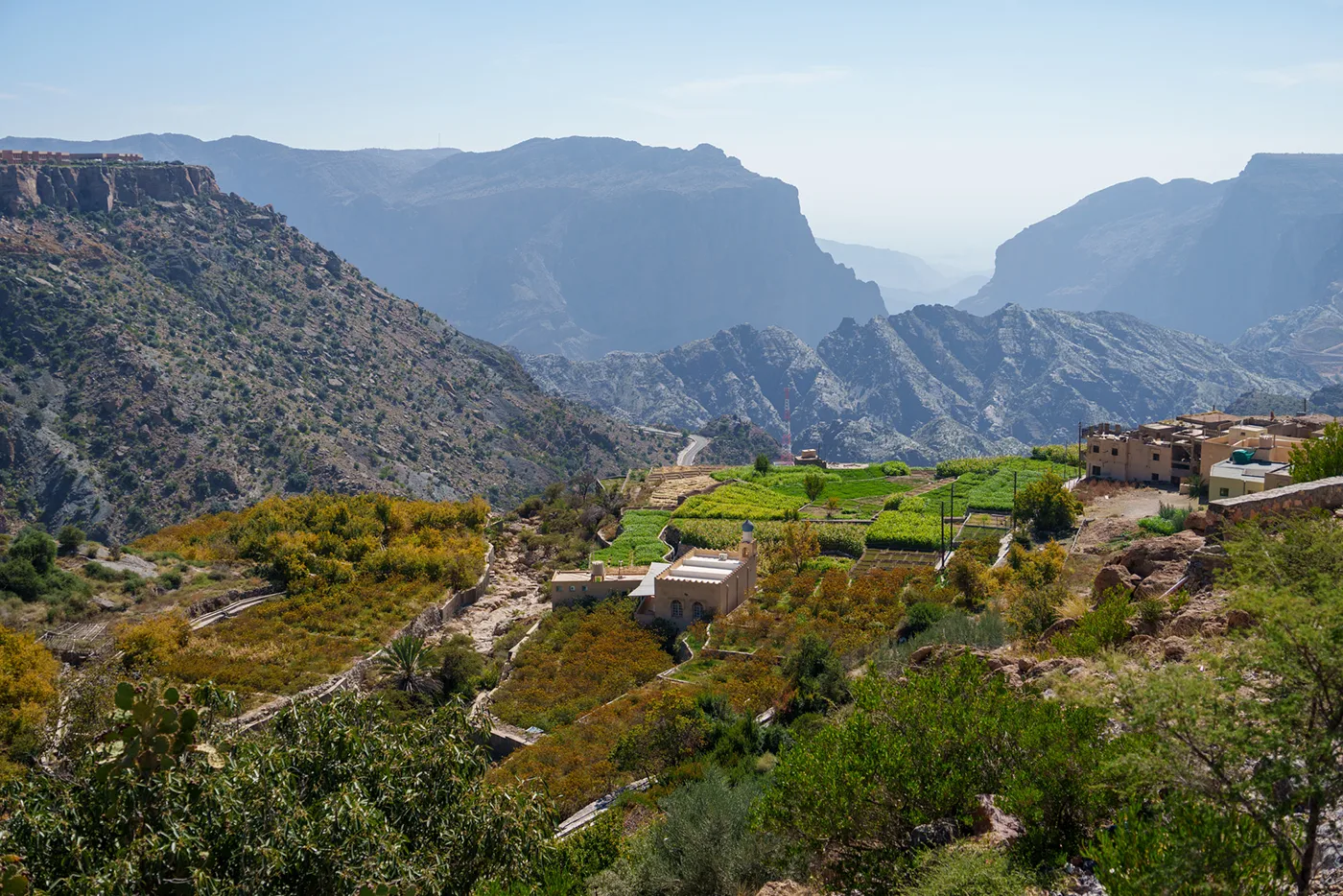
Terraced Agriculture in Jabal Akhdar
The first thing you will notice in Jabal Akhdar is the terraced field, a step-like cultivation done on the slopes. Farmers have built these terraced fields for centuries to cultivate crops on steep land. The most famous product here is the pomegranate. The pomegranate boasts bright ruby seeds with a perfect balance of sweet and tart flavors, making it the best in Oman.
If your visit falls in late summer, it will be harvest season, and you might see orchards heavy with fruit and farmers carrying baskets full of pomegranates. This region also grows apricots, peaches, grapes, figs, pears, and almonds. The cooler mountain climate lets farmers grow fruits that cannot survive in the hot lowlands. Many orchards feature stone fences and intricate irrigation channels, known as falaj, which bring water from nearby sources.
The most magical crop of the Jabal Akhdar region is, without a doubt, the damask rose. From March to April, the terraced fields around villages like Al Ayn and Shirayjah turn pink with thousands of blooming damask roses. The best time to see them is early morning, when dew clings to the petals.
Locals use these roses to make rosewater, a cherished ingredient in Omani perfume, cosmetics, and cooking. You may spot small stone huts with copper pots and a fire burning inside; these are rosewater distilleries. Farmers fill a pot with petals and water, heat it for hours, and collect the condensed steam as pure rosewater.
If you visit during the season, villagers often invite you to watch the process and sell some fresh rosewater. Even outside rose season, you can usually buy rosewater and dried rosebuds at the local market in Saiq.
Villages and Traditional Life in Jabal Akhdar
Jabal Akhdar is home to numerous small villages, built from stone or mud brick, each with one or two mosques. Saiq is the main town. It features a police station, a small hospital, several hotels, and a souq where locals sell fruits, vegetables, and other goods. The town acts as the plateau’s hub. The smaller villages tucked along the edges of the wadis reveal their authentic charm.
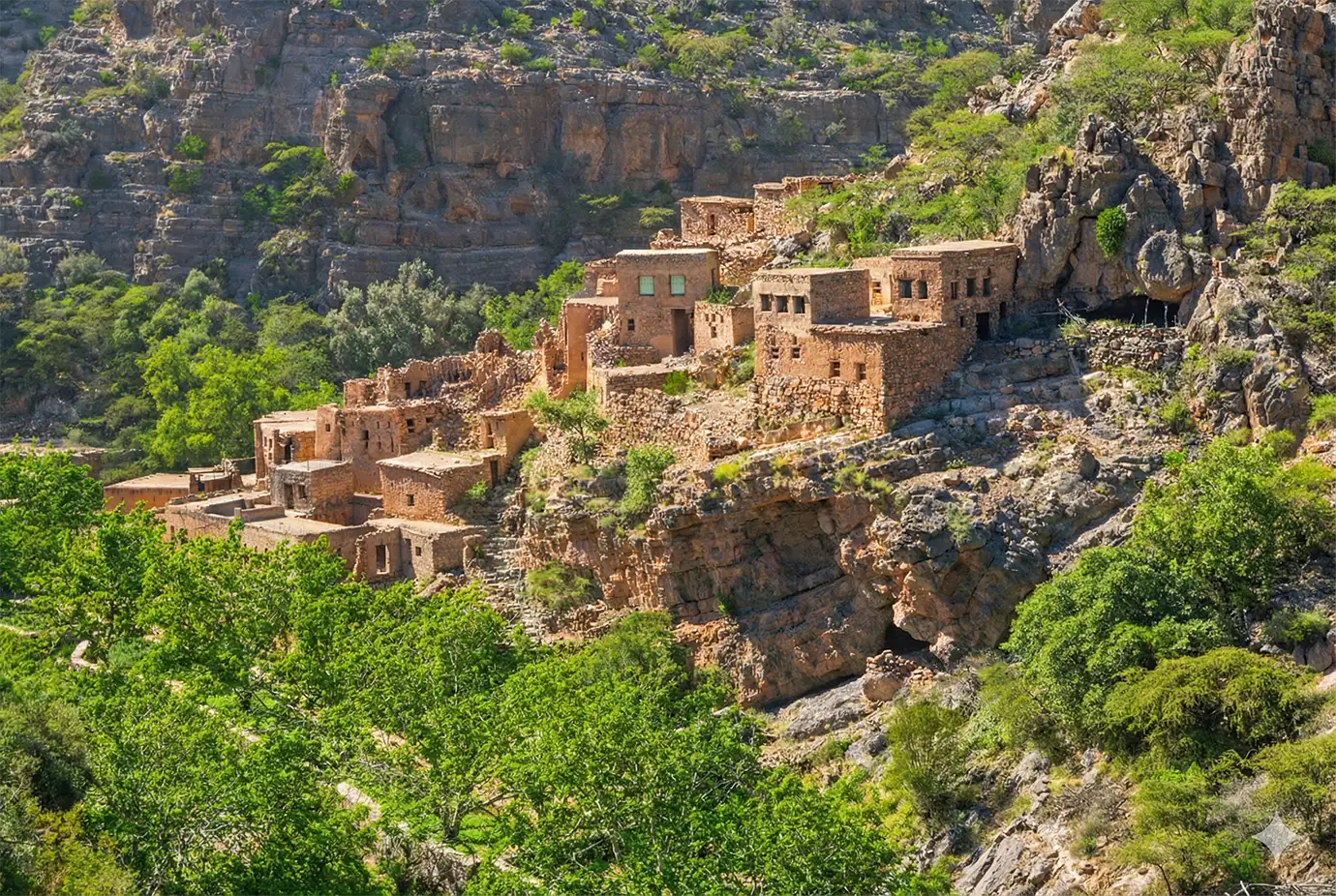
In Wadi Bani Habib, you will be following a stone staircase down into a valley dotted with walnut trees and old homes. Some houses still stand two stories tall, built from stone and mud with wooden beams holding them together. Families lived here until the 1980s, then moved to newer houses nearby.
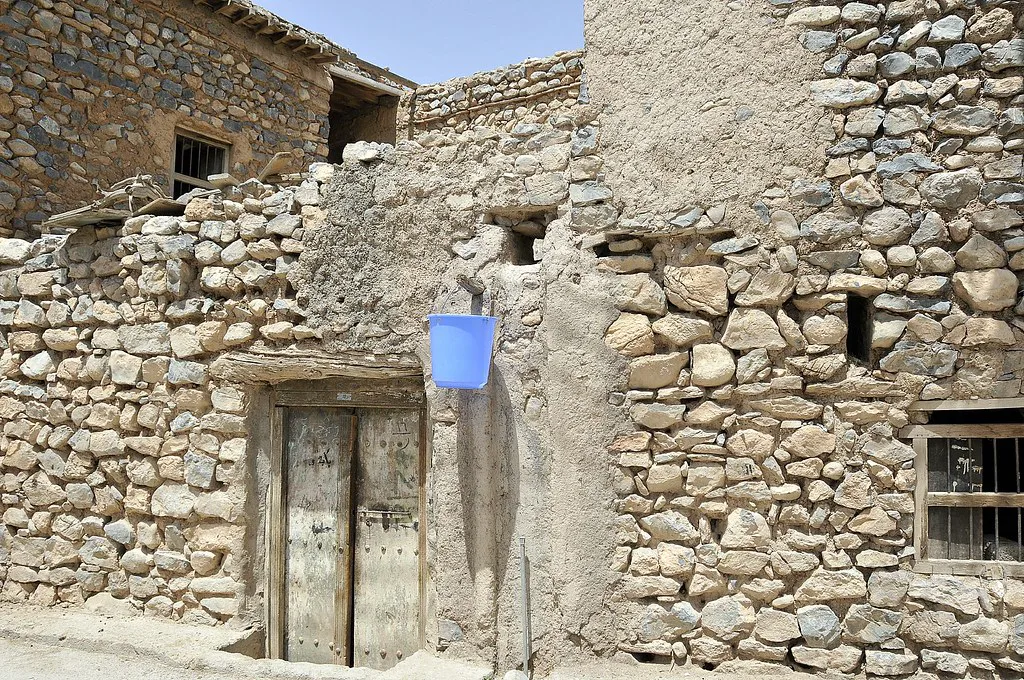
Walking through the village feels like stepping back in time. Empty doorways, fallen roofs, and narrow lanes show how people farmed the terraces below and lived quietly for generations. Photographers often linger to capture the timeless feel of the place.
Villages like Al Aqar, Al Ayn, and Shirayjah, known as the Rose Villages, still have residents. People grow crops, raise goats and cows, and are also now involved in tourism. Women wear bright dresses and headscarves as they work in fields or spread rose petals to dry. Men prune pomegranate trees, repair falaj irrigation channels, and care for orchards.
Visitors get a strong sense of Omani hospitality as locals often greet you, offer you fruit, or strike up a friendly conversation. It would be wise to learn a few basic Arabic words for greetings, such as “Salaam alaikum” for hello and “Shukran” for thank you, which makes it easier to connect with others. Many younger villagers speak some English, making it easy and enjoyable to converse with them about life on the mountain.
Things to Do in Jabal Akhdar
Jabal Akhdar is the perfect place for anyone who enjoys walking in nature and taking in expansive, breathtaking views. The Ministry of Tourism has marked several trails. One popular route, called the “Village Walk,” links Al Ayn and Ash Shirayjah and passes through terraced fields and along dramatic cliffs. It’s an easy walk that usually takes one to two hours.
For more adventure, you can follow the Wadi Bani Habib trail beyond the abandoned village. The path requires some scrambling through the valley, but it rewards you with lush orchards and leads up to another town. Bring water and sturdy shoes, as the mountain is incredible, but the sun can still be intense.
If you prefer a less tiring option, consider driving up to Diana’s Point. The viewpoint is named after Princess Diana, after her 1986 visit, during which she reportedly enjoyed a picnic here. The spot sits near the Alila Jabal Akhdar Resort.
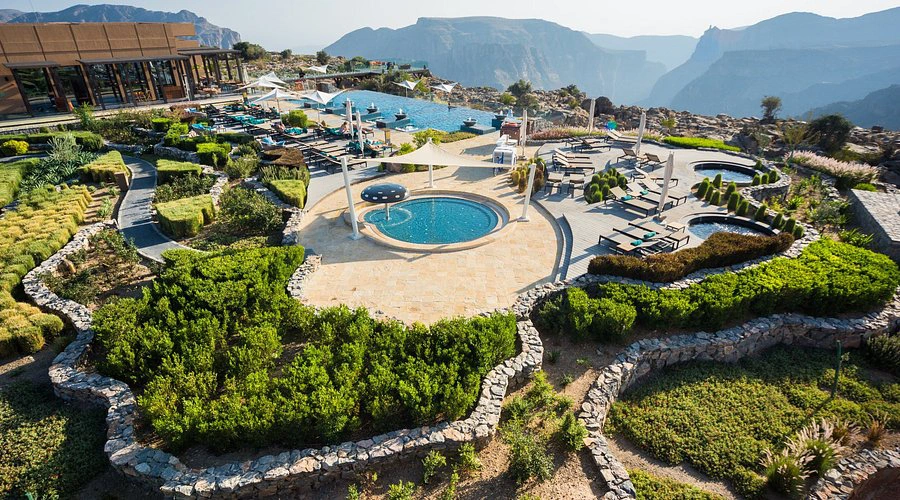
Even if you’re not staying at the resort, you can usually access the terrace through a restaurant reservation or arrangement. The view is spectacular: a massive canyon stretches before you, cliffs layered with rock formations, and terraced villages scattered in the distance. Sunset turns the cliffs a glowing orange, and the scale of the landscape is awe-inspiring. It’s one of Oman’s best viewpoints and a perfect spot for photos or a quiet, romantic moment.
Jabal Akhdar now boasts two luxury resorts, Alila and Anantara, which blend seamlessly into the mountain scenery with stone-clad buildings rather than tall towers. They provide jobs for locals and have added a few upscale dining options for visitors. There’s also a small government-run guesthouse and some local homestays, giving travelers options for different budgets as tourism in the area grows.
Flora and Fauna
The Jabal Akhdar mountain is full of life beyond its fruit orchards, where flora such as Juniper trees and wild herbs like oregano and thyme grow, and you can often catch their scent while walking. In spring, colorful wildflowers dot the slopes, adding bursts of color.
Watch for birds too; Eurasian kestrels hover overhead, and the bright Indian roller may perch on a nearby branch. Mountain foxes and wild goats roam the area, although they remain hidden and are difficult to spot. At night, the clear skies and minimal light pollution make stargazing a genuinely magical experience.
Practical Tips for Visiting
A 4×4 vehicle is most suitable for reaching Jabal Akhdar. The steep roads can overheat smaller cars, and the police checkpoint at Birkat al Mouz checks that your vehicle is suitable for the road. Tourists can easily pass through if their car meets the requirements. Bring a light jacket or shawl even in warmer months because evenings can get surprisingly chilly, especially with a breeze.
Saiq has a few small shops for snacks, but don’t expect big supermarkets on the mountain, so pack anything special you might need. Keep your camera ready – the views and lighting here make for stunning photos. If you visit in March or April during rose season, consider going to the rose villages on a weekday morning to see locals picking roses; weekends can get busier with local visitors.
Why Jabal Akhdar Is Special
In a country renowned for its deserts and coastline, Jabal Akhdar reveals a different side of Oman, its highland heart. Here, traditions continue to thrive. You can see water flowing through falaj irrigation channels, and mountain farmers still work their terraces much like their ancestors did, though with modern touches.
The terraces are both beautiful and practical, shaped by generations of experience in growing crops on steep slopes. Visiting Jabal Akhdar allows you to breathe in fresh mountain air, take in expansive valleys that make you feel wonderfully small, and experience a slower, simpler pace of life.
It doesn’t matter if you have come for a day trip to escape the heat or to spend a few nights and experience the peace; Jabal Akhdar offers moments that are refreshing and leave a lasting impression. Many travelers arrive expecting dry rocks and rugged scenery but find lush terraces and thriving villages instead. The Green Mountain often becomes a highlight of their Oman trip, not an exciting one, though, but with peaceful views and scenic charm.
As development continues carefully, the mountain’s environment and culture remain protected. Visiting here offers a memorable experience and allows you to support local communities while sharing their Green Mountain heritage with the world.