


A Japan cherry blossom tour is the most rewarding trip in the country’s calendar and the hardest one to plan. Peak bloom lasts only four to seven days in each city. The forecast arrives in January, about six weeks before the earliest trees open. Hotels sell out in autumn for a trip you cannot date precisely until late winter. You commit to fixed travel dates against a moving target and hope the mankai, or full bloom, lands while you are there.
Here is what this guide gives you. You will learn how the sakura front sweeps across Japan. You will see which viewing spots deliver the classic images. You will learn how to book against peak-season demand without gambling the whole trip. And you will know what to do if your dates miss the peak in your target city.
One honest thesis runs through all of it. A well-timed sakura trip ranks among the great travel experiences anywhere. A mistimed one is still a fine Japan trip, because the flowers are not the only reason spring here is worth the flight. The pages below tilt the odds toward the first outcome and soften the second. Start with the geography of the bloom.
Japan Cherry Blossom Tour at a Glance
Here is the short version of a cherry blossom tour in Japan. Tokyo and Kyoto peak in the last week of March into the first week of April. The bloom starts earlier in the south and ends later in the north. Each city holds full bloom for only four to seven days.
- Tokyo and Kyoto peak: last week of March to first week of April
- Southern peak (Kyushu): mid-to-late March
- Northern peak (Tohoku): mid-to-late April
- Hokkaido peak: late April to early May
- Full bloom per city: four to seven days
- Top viewing spots: Shinjuku Gyoen, Meguro River, Philosopher’s Path, Mount Yoshino, Hirosaki Castle
- Book hotels: six to nine months ahead for peak week
- Best backup if you miss the peak: Tohoku (Hirosaki, Kakunodate) or late-blooming yaezakura
Read the timing right, and you catch a full canopy in bloom. Read it wrong,g and you still get petals on the water, quiet temples, and fresh spring green.
How the Sakura Front Moves Across Japan
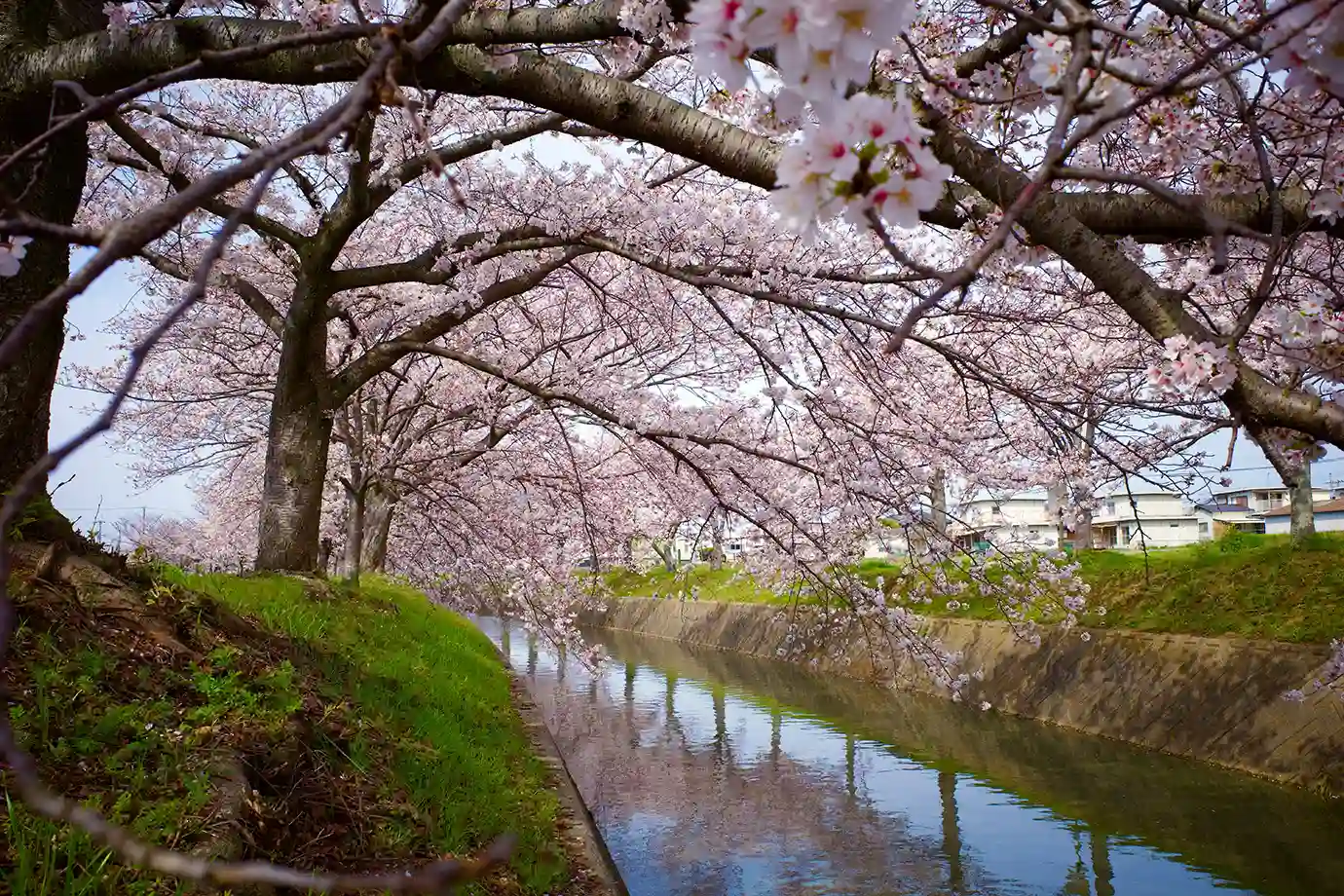
Cherry blossoms bloom across Japan from south to north over roughly six to eight weeks. The wave starts in Kyushu in mid-to-late March. It reaches Tokyo and Kyoto in the last week of March. It finishes in Hokkaido in early May. Knowing this pattern is the key to timing a sakura trip well.
What Is the Sakura Zensen (Bloom Front)?
The sakura zensen is the blossom front, the line that tracks the bloom as it climbs the country. Somei-yoshino is the dominant tree, a single variety that blooms in near-unison in each area. It opens after a cold winter followed by a warm early spring. Fukuoka and Kagoshima open first, usually the third week of March. Kyoto, Osaka, and Tokyo follow about a week later. Tohoku peaks two to three weeks after that. Hokkaido brings up the rear.
How Long Does Peak Bloom Last?
Peak bloom, called mankai, lasts about four to seven days in each city. First bloom, called kaika, comes when the reference tree opens its first five or six flowers. Full bloom follows roughly five days to a week later. Petals then start to fall as sakura-fubuki, or blossom snow, over three to four more days. The full viewable window per tree runs about ten days, less if rain or strong wind arrives.
Typical Bloom Timing by Region
Use these typical ranges to plan, then check the current year’s forecast before you lock dates. The windows below reflect normal years. Warm or cold spells can move them by a week in either direction.
| Region | Main cities | Typical peak window |
|---|---|---|
| Okinawa | Naha | February (kanhizakura, a deeper-pink species) |
| Kyushu | Fukuoka, Kumamoto, Kagoshima | Third to fourth week of March |
| Kansai | Kyoto, Osaka, Nara | Last week of March to first week of April |
| Kanto | Tokyo, Kamakura | Last week of March to first week of April |
| Chubu | Kanazawa, Takayama | First to second week of April |
| Tohoku | Sendai, Hirosaki, Kakunodate | Mid-to-late April |
| Hokkaido | Sapporo, Matsumae | Late April to early May |
What Shifts the Bloom Earlier or Later?
Temperature drives everything. Warm winters and early spring warmth speed up the bloom. Cold snaps hold it back. Warmer winters in recent decades have nudged the average bloom earlier across much of Japan. Forecasters issue initial estimates in early January and refine them every 1 to 2 weeks through March.
Why Two-City Trips Rarely Catch Both Peaks
Tokyo and Kyoto usually bloom within three to five days of each other, but rarely on the same day. A ten-day trip across both cities tends to catch the peak in one and either the early bloom or the falling petals in the other. The trip is still worth taking. Falling petals have their own beauty. Just do not expect a full canopy in both places at once.
Want a Japan trip timed to peak bloom, with a guide who tracks the forecast as it updates? Our Japan team can plan around the current-year forecast for you.
How the Sakura Forecast Works
The sakura forecast predicts two dates for each city: first bloom and full bloom. Private weather companies publish it, not the government. You will watch it from about January onward as your travel dates approach. Learning to read it turns a guessing game into a planned decision.
Who Publishes the Forecast?
Three private companies publish the forecasts that Japan follows. The Japan Meteorological Corporation, known as JMC and behind the tenki.jp site, is cited most often by international media. Weathernews runs its own nationwide tracking with strong regional detail. Weather Map is the third major source. The Japan Meteorological Agency, or JMA, stopped issuing its own blossom forecast years ago. Do not confuse JMA with JMC. The names look alike, but only the private firms forecast the bloom now.
When Do Forecasts Come Out?
First forecasts are released in early to mid-January. Updates continue every one to two weeks through March. Peak-week accuracy usually settles by early March. Any date you see before January is a historical average, not a real forecast for that year.
What the Forecast Actually Predicts
Each city gets two target dates. Kaika is first bloom, when the reference tree opens its first few flowers. Mankai is full bloom, when about eight in ten buds are open. Full bloom is the date you plan around. Many forecasts also flag the expected bloom length and the likely start of petal fall.
How Accurate Is the Forecast?
January forecasts land within about three to seven days of the real peak. February forecasts tighten to two to four days. Early March forecasts usually sit within one to two days. Book flexible-date rooms early if your plans can move. Lock your final dates in mid-to-late February for the best mix of accuracy and availability.
Ready to plan a sakura trip? Peak-week ryokan can sell out more than six months ahead. Ask our Japan team about dates and availability.
The Best Cherry Blossom Viewing Spots in Tokyo
Tokyo’s best sakura spots range from calm garden lawns to lantern-lit canals. Four stand out for most travelers. Each suits a different kind of day, so pick one based on the mood you want and the crowds you can handle.
Shinjuku Gyoen: Best for a Full Day of Hanami
Shinjuku Gyoen is the safest pick if your dates are uncertain. The garden spans about 58 hectares, with more than a thousand cherry trees across over a dozen varieties. Because the varieties open at different times, blossoms are visible here over a three-to-four-week window, longer than at any other Tokyo spot. Lawns give you room to sit and slow down.
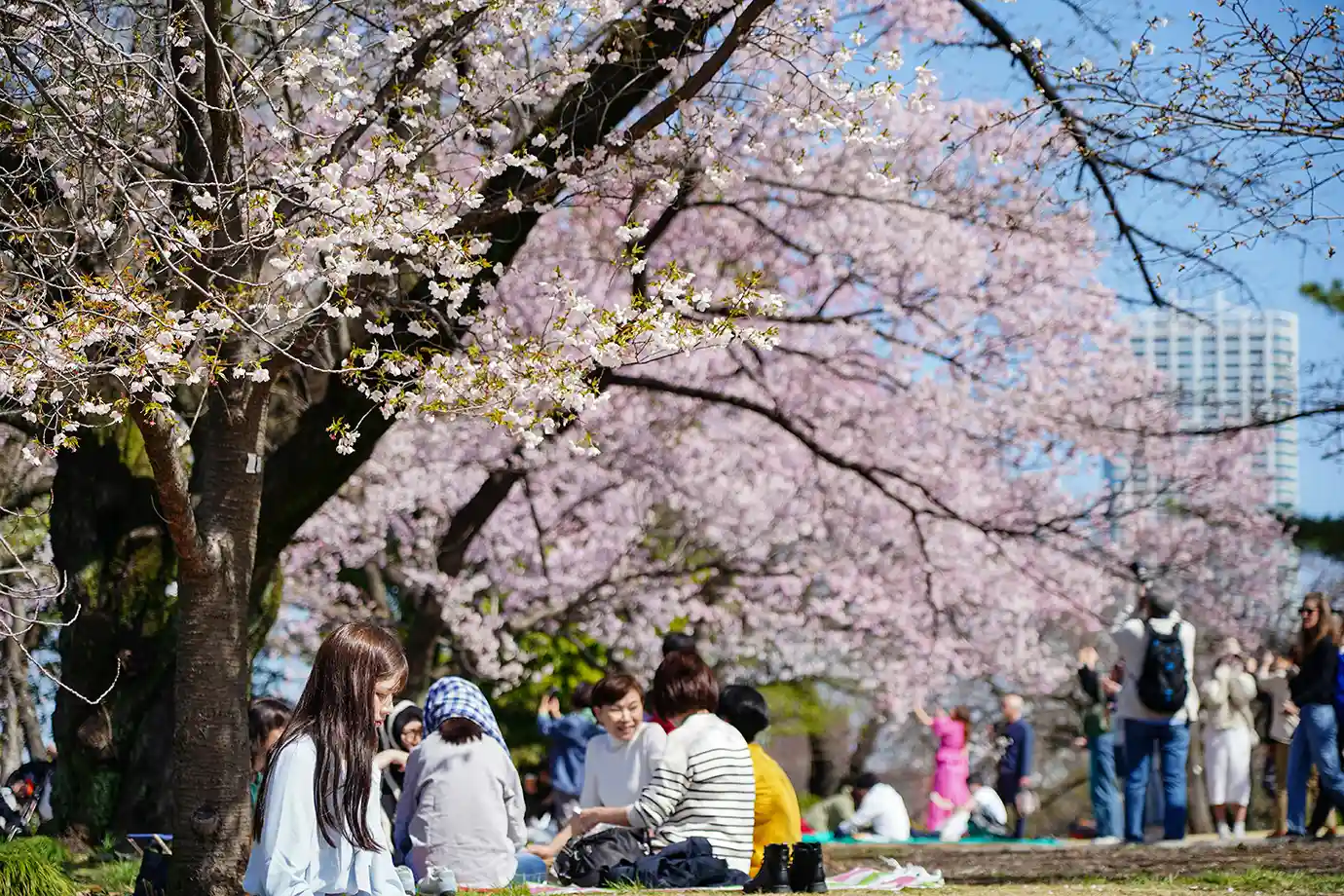
Getting there: Shinjuku Gyoenmae Station on the Marunouchi Line. The park may use timed-entry tickets on the busiest peak weekends. A small admission fee applies, and alcohol is not allowed inside.
Best timing: arrive at opening, around nine in the morning, on a weekday.
Meguro River: Best for Peak-Week Atmosphere
Meguro River delivers the postcard tunnel of blossoms. About 800 cherry trees line four kilometers of the channel, and at peak, the branches meet overhead. Paper lanterns light the trees at night for yozakura, the evening viewing. Cafes and bars along the water serve sakura-themed drinks and snacks.
Getting there: Naka-Meguro Station. No entry fee. Expect crowds on peak weekends, shoulder-to-shoulder.
Best timing: a weekday afternoon or evening. Skip Sunday afternoon at peak.
Chidorigafuchi Moat: Best for Photographs
Chidorigafuchi gives you the classic reflection shot. Cherry trees line the old moat beside the Imperial Palace grounds, their branches leaning over the water. You can rent a rowboat and drift under the blossoms during peak. Lanterns light the trees at night, doubling them in the water.
Getting there: Kudanshita Station. Picnics are not allowed here, unlike most spots. Rowboat queues can run for one to two hours at peak times.
Best timing: early morning or dusk for photos.
Ueno Park: Best for Traditional Hanami
Ueno Park is where traditional hanami parties take place. More than a thousand cherry trees line the central path, and groups gather on blue tarps beneath them. Crowd-management rules have trimmed some of the picnic sprawl in recent years. The park sits next to the Tokyo National Museum so that you can pair flowers with art.
Getting there: Ueno Station. Free entry. Very crowded on peak weekends.
Best timing: a weekday morning, museum in the afternoon.
More Tokyo Spots Worth Knowing
A few other spots earn a mention if your schedule allows. Yasukuni Shrine holds Tokyo’s official reference tree, so the city’s full-bloom call comes from here. Rikugien is known for a large weeping cherry, or shidarezakura. Sumida River frames blossoms with the Tokyo Skytree behind them. Aoyama Cemetery offers a quieter walk, and Inokashira Park in Kichijoji is well-suited for families, with a boat pond at its center.
The Best Cherry Blossom Viewing Spots in Kyoto
Kyoto trades Tokyo’s scale for atmosphere. Temple gates, weeping cherries, and canal paths define the sakura here. Four spots capture the range, from a slow walk to a lit temple stage.
Philosopher’s Path: A Walking Route
Philosopher’s Path is the walk to plan a morning around. The two-kilometer stone path follows a canal lined with about 400 cherry trees, linking Ginkaku-ji and Nanzen-ji. When the petals fall, they carpet the canal in pink. The linear route spreads people out, so it feels calmer than its fame suggests.
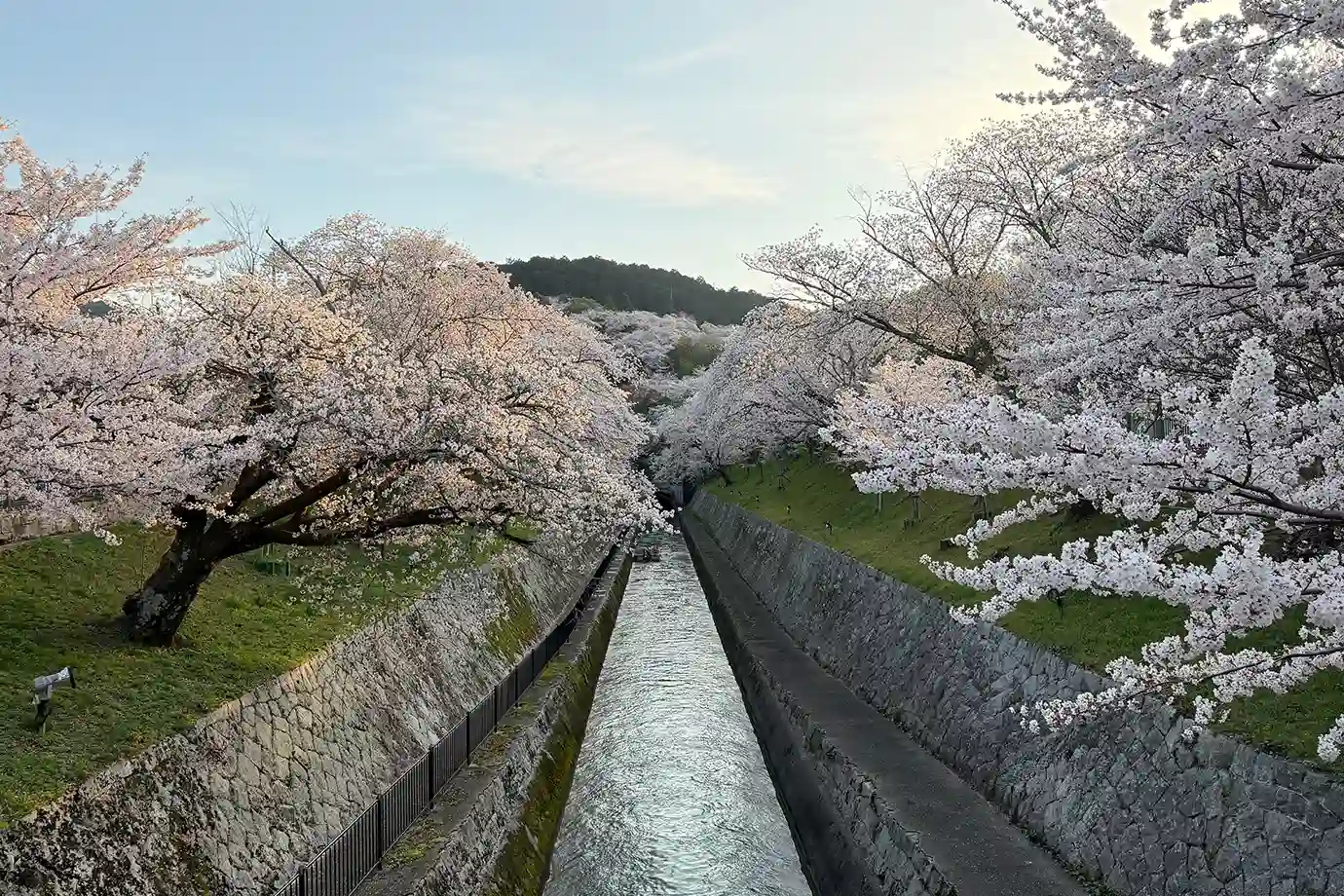
Getting there: bus to the Ginkaku-ji Michi stop—no entry fee.
Best timing: about seven in the morning, before the crowds. An evening walk with dinner near Nanzen-ji also works.
Maruyama Park: Best for Classic Kyoto Hanami
Maruyama Park centers on one famous weeping cherry, lit at night. Kyoto’s traditional hanami gatherings happen here, with food stalls under the trees. The park sits beside Yasaka Shrine and a short walk from Gion.
Getting there: walk from Gion, or take a bus to the Gion stop. Free entry.
Best timing: dusk for the lit weeping tree, then dinner in Gion.
Kiyomizu-dera: Best for a Temple-and-Sakura Frame
Kiyomizu-dera pairs blossoms with its famous wooden stage. Cherry trees fill the slope below the temple, and evening illuminations run during the sakura and autumn seasons only. The view of the temple in full bloom is one of Kyoto’s most recognized images.
Getting there: walk up through Higashiyama. An entry fee applies, and timed visits help during peak times. Best timing: dawn for empty photos, or the evening illumination for a different scene.
Arashiyama: Best for Blossoms and Scenery Together
Arashiyama combines sakura with mountains, rivers, and bamboo groves. Cherry trees frame the Togetsukyo Bridge and dot the slopes across the Katsura River. A wider mix of trees means the area peaks a little earlier and later than central Kyoto.
Getting there: JR Sagano Line or the Randen tram. Plan a full day.
Best timing: go early to reach the bamboo grove before the crowds.
More Kyoto Spots Worth Knowing
Kyoto rewards a longer list. Heian Shrine hides about 500 weeping cherries in a walled garden behind the main hall. Toji Temple sets a weeping cherry against its five-story pagoda. Daigo-ji carries centuries of sakura history. Ninna-ji grows the late-blooming Omuro-zakura, which can push your viewing window a week or more past the main bloom.
Beyond Tokyo and Kyoto: Regional Sakura Spots
The bloom does not stop at the two big cities. If you want density, samurai streets, or a May window, the regions deliver. These spots also give late arrivals a real second chance at peak.
Mount Yoshino: Best for Sheer Density
Mount Yoshino is the most storied sakura site in Japan. About 30,000 cherry trees cover the mountainside in four elevation bands: Shimo, Naka, Kami, and Oku Senbon. Each band peaks a few days apart, so the whole mountain stays in bloom across roughly two weeks. It is hard to reach and packed at peak times, but nothing else in Japan matches its scale.
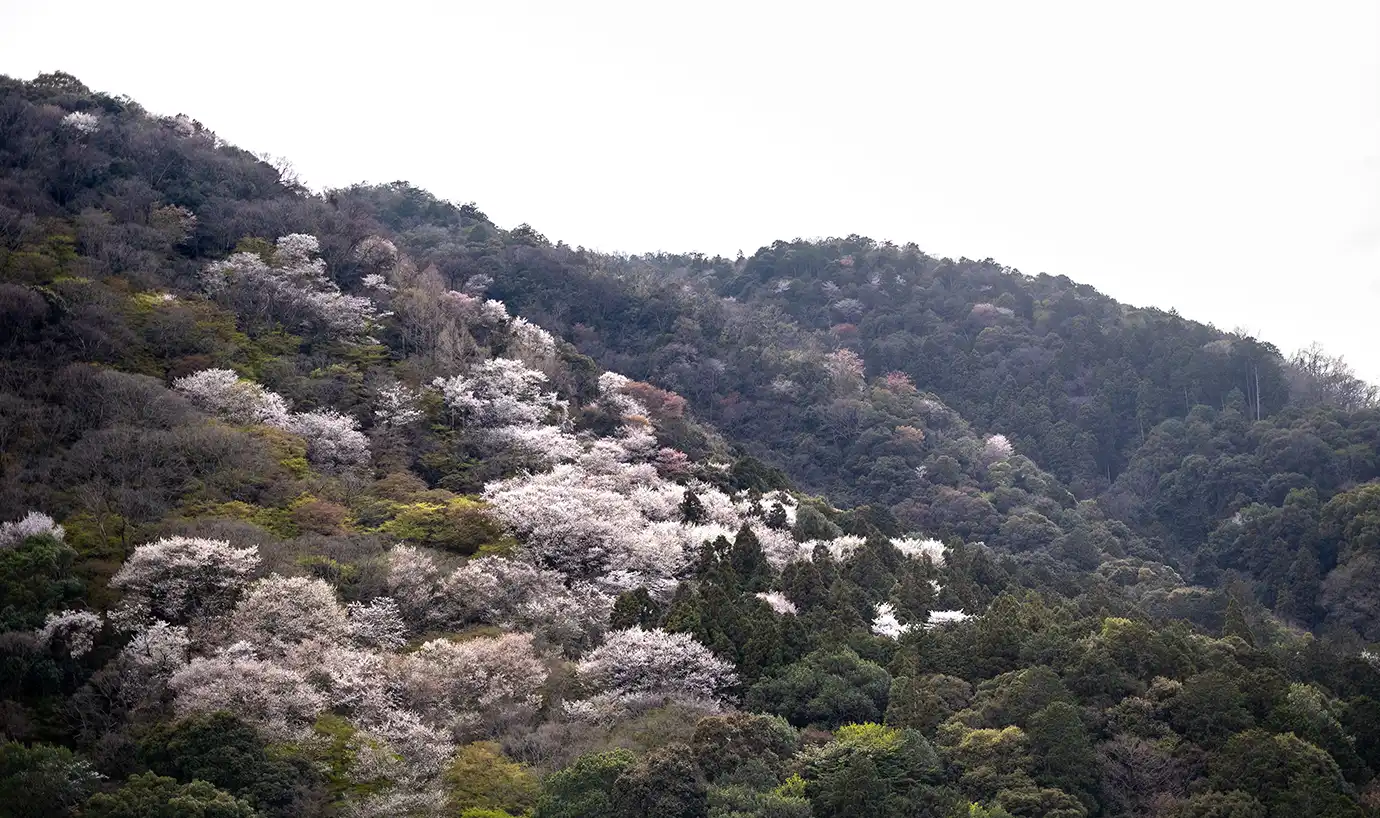
Getting there: train from Kyoto or Osaka to Yoshino Station, about ninety minutes each way. Plan at least a full day, or stay overnight at a mountain ryokan during peak week.
Best timing: early April for the lower bands; mid-April for the upper bands. Go on a weekday.
Hirosaki Castle: Best for Northern Sakura
Hirosaki Castle is the top pick if your dates fall too late for Tokyo. About 2,600 cherry trees ring the moat and castle grounds, and rowboats drift through petal-covered water. The Hirosaki Cherry Blossom Festival runs from late April into early May in most years. The park peaks two to three weeks after Tokyo.
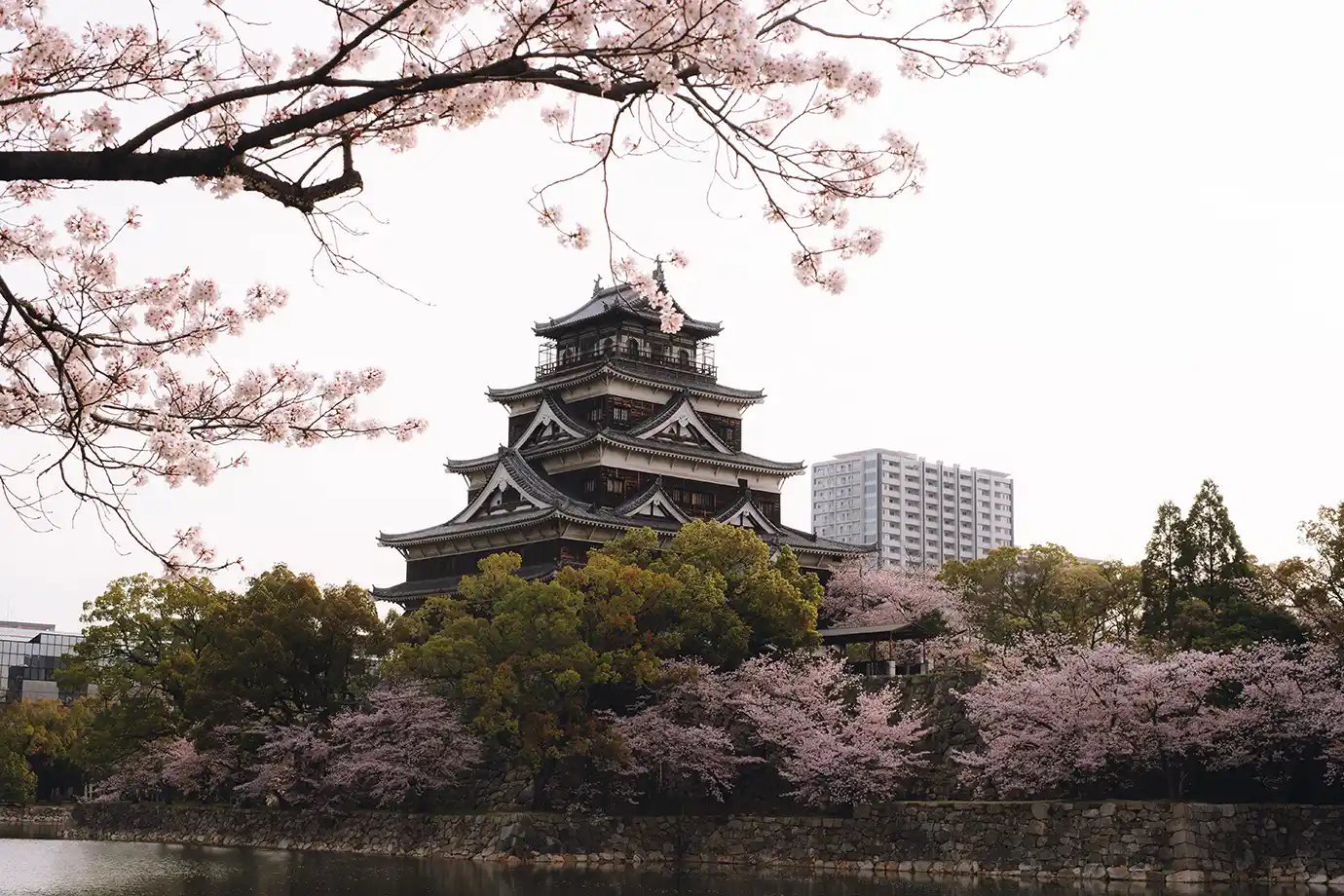
Getting there: Shinkansen from Tokyo to Shin-Aomori, about three and a half hours, then a local train to Hirosaki. Plan an overnight.
Best timing: late April in a typical year. Check the current forecast.
Kakunodate: Best for Samurai-District Sakura
Kakunodate pairs sakura with preserved samurai streets. Weeping cherries hang over the lanes of the old district, their pink against dark wooden walls. It sees fewer visitors than Hirosaki and offers a very different look.
Getting there: Shinkansen from Tokyo, about three hours. It pairs well with Hirosaki on a Tohoku circuit.
Best timing: late April.
Matsumae Castle: Best for the Last Bloom of the Season
Matsumae Castle closes the national season. Japan’s northernmost castle stands among about 10,000 cherry trees in some 250 varieties, which peak from late April into mid-May. It is the strongest option for a first-half-of-May trip.
Getting there: ferry from Aomori or a drive from Hakodate, so budget real Hokkaido time.
Best timing: late April into Golden Week, though expect holiday crowds if your window includes it.
Takato Castle Park: Best for Alpine Sakura
Takato Castle Park grows a cherry you will not see in the cities. About 1,500 Takato Kohigan trees carry deeper-pink flowers, and the park ranks among Japan’s three greatest sakura sites alongside Yoshino and Hirosaki. It peaks in mid-April.
Getting there: Shinkansen to Kofu, then a local train and bus, roughly four hours from Tokyo in total.
Best timing: mid-April, on a weekday.
A few more are worth a detour. Kenrokuen in Kanazawa is a superb garden setting in early April. Himeji Castle frames its white keep with blossoms in late March. Miharu Takizakura in Fukushima is a single weeping cherry over a thousand years old, ranked a national treasure.
Want a Mount Yoshino or Hirosaki leg added to your sakura trip? Our team can arrange the trains and ryokan around your dates.
If You Miss the Peak: What to Do
Missing peak bloom is common, and it is not the end of the trip. You have four solid ways to see still blossoms, and one clear thing to avoid. Plan for the possibility, and you protect the whole trip.
Chase the Late-Blooming Yaezakura
Yaezakura are multi-petaled cherries that bloom one to two weeks after the main somei-yoshino. Kyoto’s Ninna-ji Omuro-zakura, several Tokyo temple grounds, and gardens across Kansai carry good numbers of them. If your Tokyo or Kyoto dates land in the second week of April, yaezakura is your window.
Move North With the Bloom
The most underused fix is simple. Follow the front north. Dates in the second and third weeks of April point to Tohoku, so aim for Hirosaki, Kakunodate, or Sendai. A trip that runs into May can include Hokkaido, with stops in Matsumae or Sapporo. The bloom keeps climbing, and a flexible plan can climb with it.
The Fresh-Green Alternative
Arrive after peak, and the same spots turn to shinryoku, the fresh spring green. Kyoto in mid-April, with new maple leaves and quiet temples after the sakura rush, is one of the year’s underrated windows. It is a different experience, not a failed one.
The Sakura-Fubuki Consolation
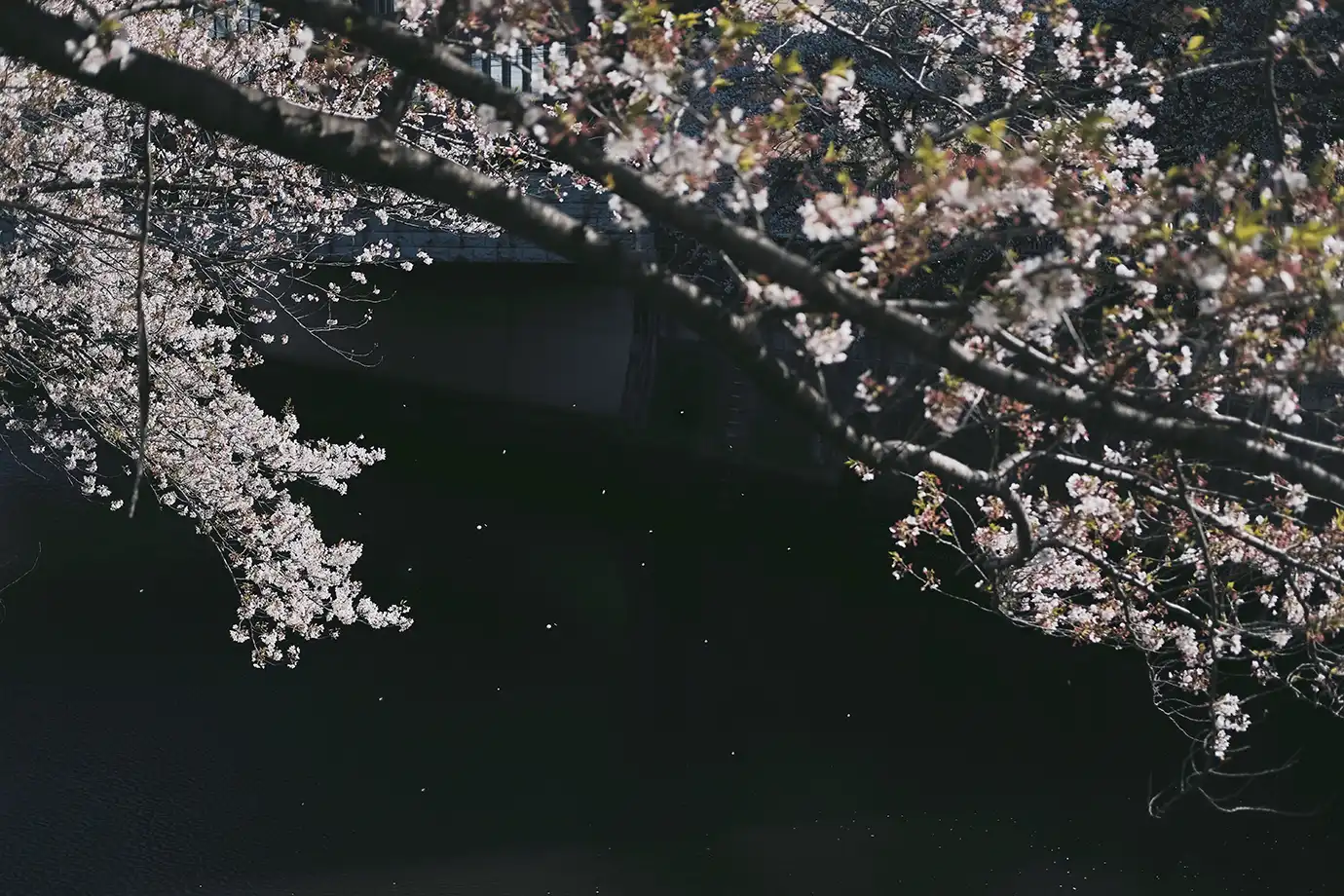
Land five to eight days after peak, and you catch sakura-fubuki, the blossom snow. Petals drift down, rivers carry pink carpets, and garden paths turn soft with fallen flowers. Many photographers rate this stretch above full bloom for the images it gives.
What Not to Do
Do not try to chase the bloom with last-minute Shinkansen dashes between Tokyo and Kyoto. Peak-week reserved seats are usually gone. And do not cancel the trip because you missed the peak. Spring in Japan is worth the flight either way.
How to Book a Sakura Trip Without Overpaying
Booking well is what separates a smooth sakura trip from a stressful one. The rule is simple. Reserve rooms and trains early, keep your dates flexible where you can, and know that peak week costs more for a reason.
When to Book Hotels and Ryokan
Sakura-week hotels in Tokyo and Kyoto sell out four to six months ahead. Top ryokan, machiya stays in Gion, and Yoshino mountain inns go six to nine months out. Book by early autumn for the following spring. Wait past the New Year and your central options thin fast.
Booking for Flexible Dates
The forecast is not reliable six to nine months out, so protect your options. Choose rooms with generous cancellation policies. Refundable rates cost more than non-refundable ones, but they let you shift dates in February when the forecast tightens. Treat the extra as insurance on the trip’s whole point.
Shinkansen Reservations
Reserve your Shinkansen seats as soon as your dates allow. The booking window opens thirty days before travel. During peak periods, unreserved cars fill up, and people stand for hours between Tokyo and Kyoto. A reserved seat spares you that.
The Peak-Season Premium
Room rates during peak sakura week climb well above normal in Tokyo and Kyoto. In sakura-specialist spots like Yoshino and Hirosaki, they climb higher still, sometimes near double the off-peak rate. It is not a trick. Inventory is scarce and sells at what the market will pay. Budget for it or shift to a quieter week.
Traveling the Week Before or After Peak
Shifting your week saves money and crowds. Travel the week before peak, in early-to-mid March for Tokyo and Kyoto, and you get quiet cities but buds that have not opened. Travel the week after, in mid-April, and you get sakura-fubuki and yaezakura instead of the main show. Both weeks run noticeably cheaper than peak.
When a Guided Tour Earns Its Place
A guided sakura tour is worth it when you cannot afford to gamble the trip. A good operator tracks the moving forecast, pre-books restaurants and trains, and adjusts the route as the bloom shifts. For first-time sakura travelers, that trade buys certainty of outcome. If Peregrine runs a sakura package for your dates, it is one way to hand off the timing risk.
Ready to lock in a sakura trip? Ask about Peregrine’s Japan cherry blossom tour and hold your peak-week dates before they sell out.
A Sakura Trip Itinerary Framework
Here is how a sakura trip fits together over 10 days to 2 weeks. Treat these as frames, not fixed plans. Match the route to the bloom’s expected location within your travel window.
The 10-Day Sakura Route
- Days 1 to 4: Tokyo, with peak viewing at Shinjuku Gyoen, Meguro River, Chidorigafuchi, and Ueno
- Day 5: a Chidorigafuchi rowboat morning or a Kamakura sakura day trip
- Days 6 to 7: Shinkansen to Kyoto, then Higashiyama and Philosopher’s Path
- Day 8: Arashiyama, or a full-day Mount Yoshino trip with an overnight if you can
- Day 9: Osaka, then depart from Kansai Airport
- Day 10: Departure
The Tohoku-Extended Route (12 to 14 Days)
Add Hirosaki and Kakunodate to the front or back of the trip, depending on your target peak. Late-April travelers whose Tokyo dates are already past peak should put Tohoku at the end. The northern bloom buys you a second peak after the cities have finished.
The Yoshino-Centered Trip
Photography-first travelers should build around Mount Yoshino. A three-day Yoshino segment with an overnight at a mountain ryokan delivers scenes no city can match. Book the ryokan six to nine months ahead because peak-week rooms on the mountain fill up early.
Frequently Asked Questions
When do cherry blossoms bloom in Japan?
Cherry blossoms bloom from south to north over about six to eight weeks. Kyushu opens first in mid-to-late March. Tokyo, Kyoto, and Osaka peak in the last week of March into early April. Tohoku follows in mid-to-late April, and Hokkaido closes the season from late April into early May. Check the current-year forecast before you fix dates.
What is the best place to see cherry blossoms in Japan?
There is no single best place, only the best fit for your dates and style. Shinjuku Gyoen suits a calm full-day hanami in Tokyo. Meguro River gives the postcard canopy. Kyoto’s Philosopher’s Path is the classic walk. Mount Yoshino offers unmatched density. Hirosaki Castle is the top choice if your trip falls in late April.
How long does cherry blossom season last?
In any one city, full bloom lasts only about four to seven days. First bloom to full bloom takes roughly five days to a week, and petals fall over three to four days after that. Across the whole country, though, the season stretches near two months as the bloom moves north from Kyushu to Hokkaido.
How far in advance should I book a trip to Japan to see the cherry blossoms?
Book central hotels in Tokyo and Kyoto four to six months ahead for peak week. Top ryokan and Yoshino mountain inns need six to nine months. Aim to reserve by early autumn for the following spring. Choose refundable rates so you can shift dates in February, when the forecast finally tightens to within a few days.
What happens if I miss the peak bloom?
You still have good options. Late-blooming yaezakura open one to two weeks after the main bloom in the same regions. You can move north to Tohoku or Hokkaido, where the bloom arrives later. Arrive just after peak, and you catch sakura-fubuki, the falling-petal phase many photographers prefer. A mistimed sakura trip is still a strong Japan trip.
Should I book a cherry blossom tour or plan it myself?
Plan it yourself if you enjoy the logistics and can watch the forecast closely. Book a guided Japan cherry blossom tour if you want to hand off the timing risk. A good operator tracks the forecast, holds peak-week rooms and train seats, and adjusts the route as the bloom shifts. For a first sakura trip, that certainty is often worth the premium.
Not sure your dates will hit peak? Talk to our Japan team about flexible booking and a route built for Japan Tour Packages.