


A 10-day Japan itinerary gives a first-time visitor enough time to see Tokyo, Mount Fuji, Kyoto, and Osaka without turning the trip into a race. Here is the route at a glance.
Itinerary at a glance:
- Days 1–3: Tokyo (arrival, city highlights, optional day trip)
- Day 4: Mount Fuji and Hakone (overnight in a traditional ryokan)
- Days 5–7: Kyoto (temples, gardens, Arashiyama, Fushimi Inari)
- Days 8–9: Osaka (food culture, optional Nara day trip)
- Day 10: Departure from Kansai International Airport
You have ten days of leave and one shot at a first trip to Japan. Every guide online pushes a different set of cities. Half of them stack Nikko, Hiroshima, and Takayama on top of the big four. You end up planning transit instead of a vacation.
A better plan moves less—four bases, in one clean line: Tokyo, Hakone, Kyoto, Osaka. You unpack four times, not six. You ride fast trains between them and still get real time in each place.
By the end, you will know four things. Which cities to include, and which to skip. How to move between them without losing half a day in stations. What each city gives you that the others do not. And how to build each day so temple fatigue does not hit by day six.
Peregrine’s Japan desk arranges the moving parts on this Tokyo, Kyoto, Osaka itinerary. It books ryokan and bullet train seats and sets up hotel-to-hotel luggage forwarding. The trip stays organized, but it stays yours.
The short version: ten days in Japan works well for a first trip if you commit to four bases and slow down. The order below puts Tokyo first and Osaka last for good reasons.
Why This 10-Day Japan Itinerary Works: The Four-Base Logic
Four bases beat six on a 10-day trip. Tokyo, Hakone, Kyoto, and Osaka each earn their nights. The route runs in a near-straight line, so you rarely backtrack. You trade two extra cities for deeper time, fewer packing mornings, and a rested arrival in Kyoto.
Why Four Bases, Not Six
Most 10-day plans online bolt on Hiroshima, Nikko, Kanazawa, or Takayama. Each add-on means another check-in, another packing morning, and two to three more hours on a train. Four bases buy that time back. You see each city past its top three sights, move luggage four times, and give Kyoto and Tokyo the three nights each needs.
Why Tokyo First
Tokyo absorbs a jet-lagged arrival better than anywhere else in Japan. After 12 to 14 hours in the air, you want clear signage, trains that run to the minute, and food at any hour. Kyoto’s temples and Osaka’s late-night food streets ask more than day-one energy allows. Three nights also protect your body clock. First-timers hit their worst fatigue on the second and third mornings, and Tokyo bends around that with museums and parks.
Why Hakone in the Middle
Hakone splits the long Tokyo-to-Kyoto ride into two easy legs and gives you your first night at a ryokan. You get hot-spring bathing, a chance at Mount Fuji, and a slower day before Kyoto’s dense schedule. Skip it, and the straight Tokyo-to-Kyoto bullet train lands you tired. Stop in Hakone, and you’ll reach Kyoto rested, one onsen soak already behind you.
Why Kyoto Gets Three Nights
Kyoto rewards three full days and punishes anything less. Give one day to eastern Kyoto around Kiyomizu-dera and Gion. Give one to the northwest, from Kinkaku-ji to the Arashiyama bamboo grove. Give the third to Fushimi Inari and southern Kyoto, or trade it for a day trip to Nara. Cut a day, and you start dropping the exact sights you came to see.
Why Osaka Closes the Trip
Osaka sends you home without a backtrack. Kansai International Airport sits right there, so you fly out from where you finish. Osaka also lowers the intensity after Kyoto. The trip ends on the easy notes of Dotonbori, hot kushikatsu, and okonomiyaki off the griddle.
When to Change the Route
The four-base spine flexes for longer or shorter Japan Tour Packages. For a 7-day trip, drop Osaka and give Tokyo a fourth night. For 11 or 12 days, add a day in Kamakura or a stop in Takayama. For 14 days, add two nights in Kanazawa between Kyoto and Osaka. Add to the ends. Do not squeeze the core.
Days 1–3: Tokyo
Spend your first three nights in Tokyo to beat jet lag on familiar ground. Day one is arrival and a slow evening. Day two covers Meiji Jingu, Harajuku, and Shibuya. Day three takes in old Asakusa and Senso-ji, with an optional day trip to Kamakura for those staying longer.
Day 1: Arrival and Recovery
Most long-haul flights land at Narita or Haneda in the afternoon or early evening. From Narita, the Narita Express reaches Shinjuku, Tokyo Station, and Shibuya in about 60 to 80 minutes. From Haneda, the monorail plus a JR connection puts you in central Tokyo in 30 to 45 minutes. If you land after 9 p.m. or carry heavy bags, book a private car.
Base yourself in Shinjuku, Ginza, or Shibuya for easy access to trains, and keep the first night light. A short walk through Shinjuku’s lit streets, a bowl of ramen, and an early night beat one rushed sight. Jet lag waits until you sit down. Eat, wash, sleep.
Day 2: Central Tokyo
Start slow at Meiji Jingu, a Shinto shrine set inside a planted forest that walls out the city within a minute of leaving the street. The gravel path and tall cedars go quickly. Give it two to three hours with Yoyogi Park next door.
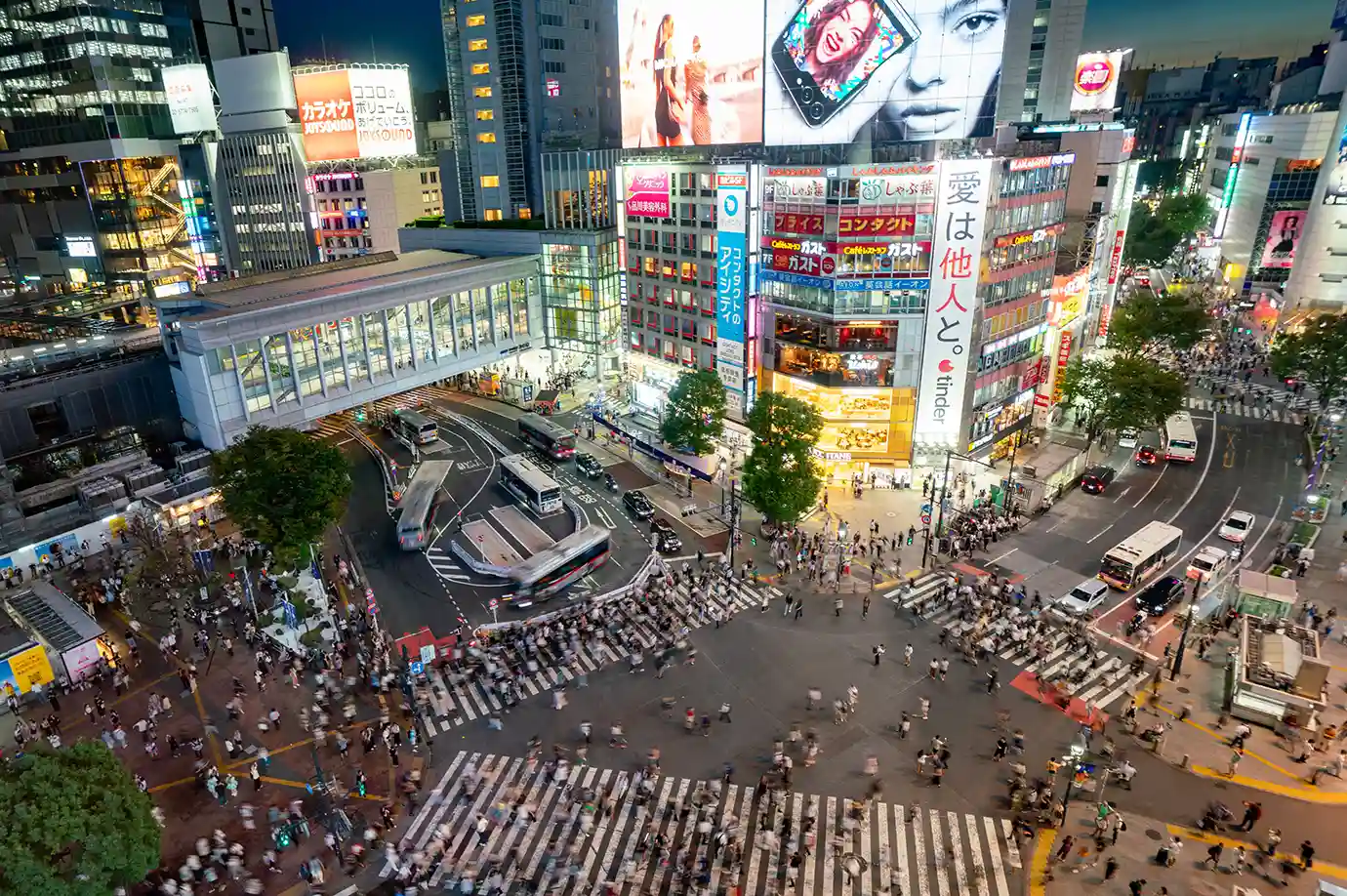
Walk into Harajuku and along Omotesando for lunch and people-watching. By mid-afternoon, cross to Shibuya for the famous scramble crossing, where the crowds pour off every corner at once. Book the open-air rooftop deck at Shibuya Sky in advance for the dusk view. Close the night in Shinjuku’s Omoide Yokocho, a lane of tiny grill counters thick with yakitori smoke.
Day 3: Old Tokyo and an Optional Day Trip
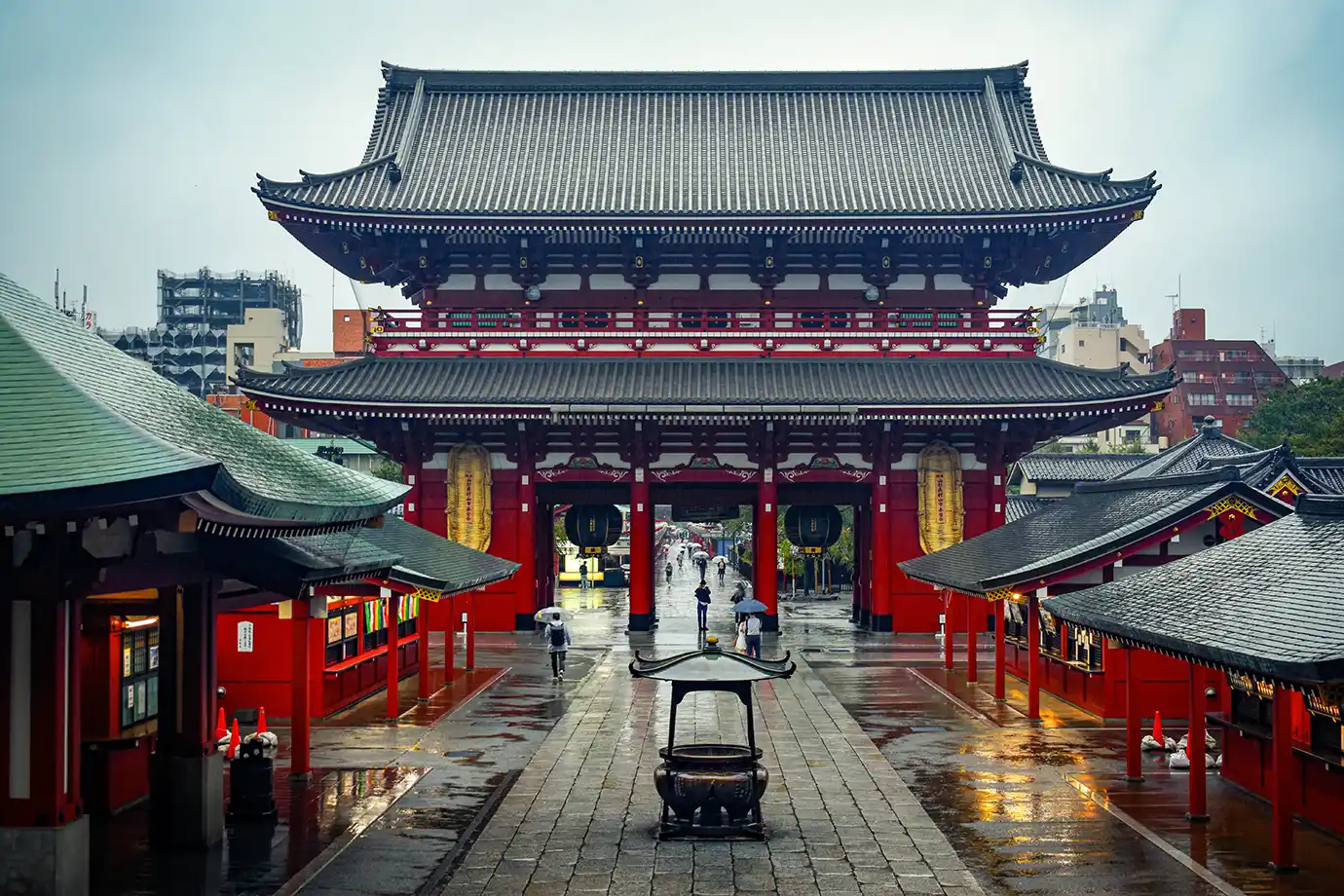
Give the morning to Asakusa and Senso-ji, Tokyo’s oldest temple, founded in the seventh century. Walk in under the Kaminarimon gate and its giant red lantern. Then head down Nakamise, a 250-meter lane of rice crackers and paper fans. Three hours cover the temple, the stalls, and the Sumida riverbank.
The afternoon splits by taste. Art lovers should book tickets to teamLab Planets or teamLab Borderless, two large digital art venues that sell out weeks in advance during peak season. History-minded travelers can spend two hours in the Tokyo National Museum in Ueno Park. Families often prefer Odaiba’s waterfront.
Should You Take a Day Trip from Tokyo?
Only on a longer trip. Kamakura is the pick, an hour south by JR, with its bronze Great Buddha, Zen temples, and a slow seaside pace. Save it for trips of 11 days or more. Nikko’s shrines are stunning, but they’re two hours away, so skip Nikko unless you have 12 days or more.
Getting Around Tokyo
Tokyo’s trains reach everywhere, and a prepaid IC card is all you need to ride them.
| From | To | Line | Time |
|---|---|---|---|
| Shinjuku | Shibuya | Yamanote | 7 min |
| Shibuya | Harajuku | Yamanote | 3 min |
| Ginza | Asakusa | Ginza Line | 20 min |
| Shinjuku | Ueno | Chuo + Yamanote | 25 min |
| Tokyo Station | Odaiba | Yurikamome | 25 min |
Tap a Suica or Pasmo card at any gate. Both work on every metro line, JR train, and city bus, as well as lockers, vending machines, and convenience stores.
Where to Stay in Tokyo
Pick your Tokyo base based on the pace you want. Shinjuku sits on the busiest transit hub and suits jet-lagged nights when you want food and light at any hour. Ginza runs quieter and is high-end. Shibuya skews young and loud. Marunouchi, beside Tokyo Station, makes your onward bullet train easy. Peregrine books partner properties in each district.
Day 4: Mount Fuji and Hakone
Take the Odakyu Romancecar from Shinjuku straight to Hakone-Yumoto in about 85 minutes, then ride the mountain loop and sleep in a ryokan. Hakone gives you your first onsen, a shot at Mount Fuji on a clear day, and a calm reset before Kyoto.
Getting from Tokyo to Hakone
Two routes work. The Odakyu Romancecar is the simple one, a reserved-seat limited express from Shinjuku to Hakone-Yumoto in about 85 minutes with no transfer. The other is a short bullet train ride from Tokyo Station to Odawara in about 35 minutes, followed by a 15-minute local line to Hakone-Yumoto. For a first-timer with luggage, the direct Romancecar wins.
How the Hakone Loop Works
Hakone runs as a loop of small mountain transport, and a Hakone Free Pass covers it all. Drop your bags at the ryokan or in a Hakone-Yumoto station locker, then work the circuit:
- Ride the Hakone Tozan railway up to Gora, a switchback line that reverses direction three times as it climbs.
- Take the cable car from Gora up to Sounzan, about 10 minutes.
- Board the ropeway over Owakudani, a live volcanic valley where sulfur steam hisses from the hillside and the air smells of struck matches.
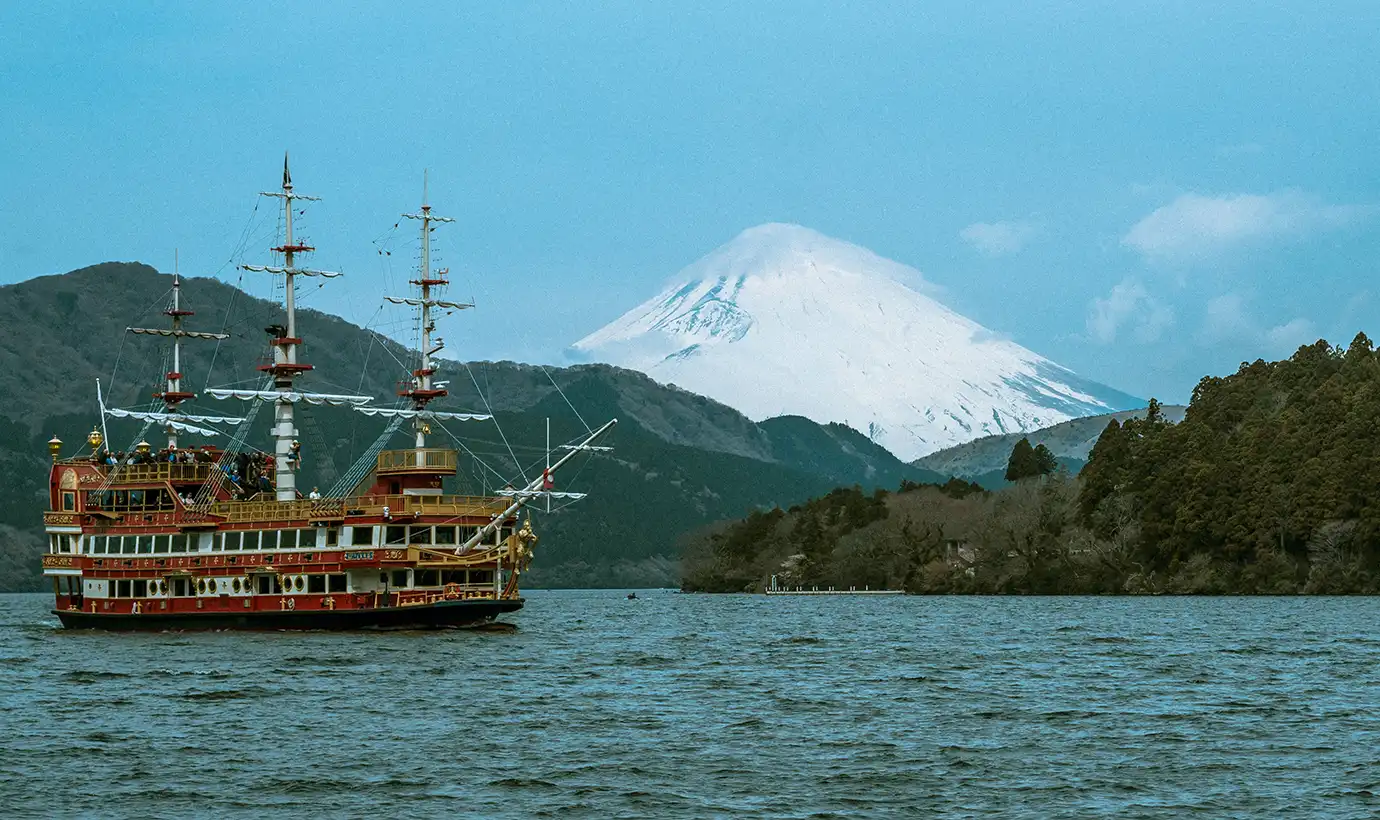
- Drop down to Lake Ashi and cross by sightseeing boat to Motohakone, about 30 minutes on the water.
- Return to Hakone-Yumoto by bus in roughly 45 minutes.
The full loop takes five to seven hours with stops. Owakudani and the ropeway close when volcanic gas readings run high, so check the status in the morning you go.
Will You Actually See Mount Fuji?
Be honest with yourself. Fuji hides more often than it shows. The best odds come from Owakudani and the Motohakone shore of Lake Ashi, on clear, dry winter mornings from November through February. Summer heat haze from June through August is the worst. No guide can promise a sighting, so treat a clear Fuji as a gift, not a plan.
The Ryokan Night
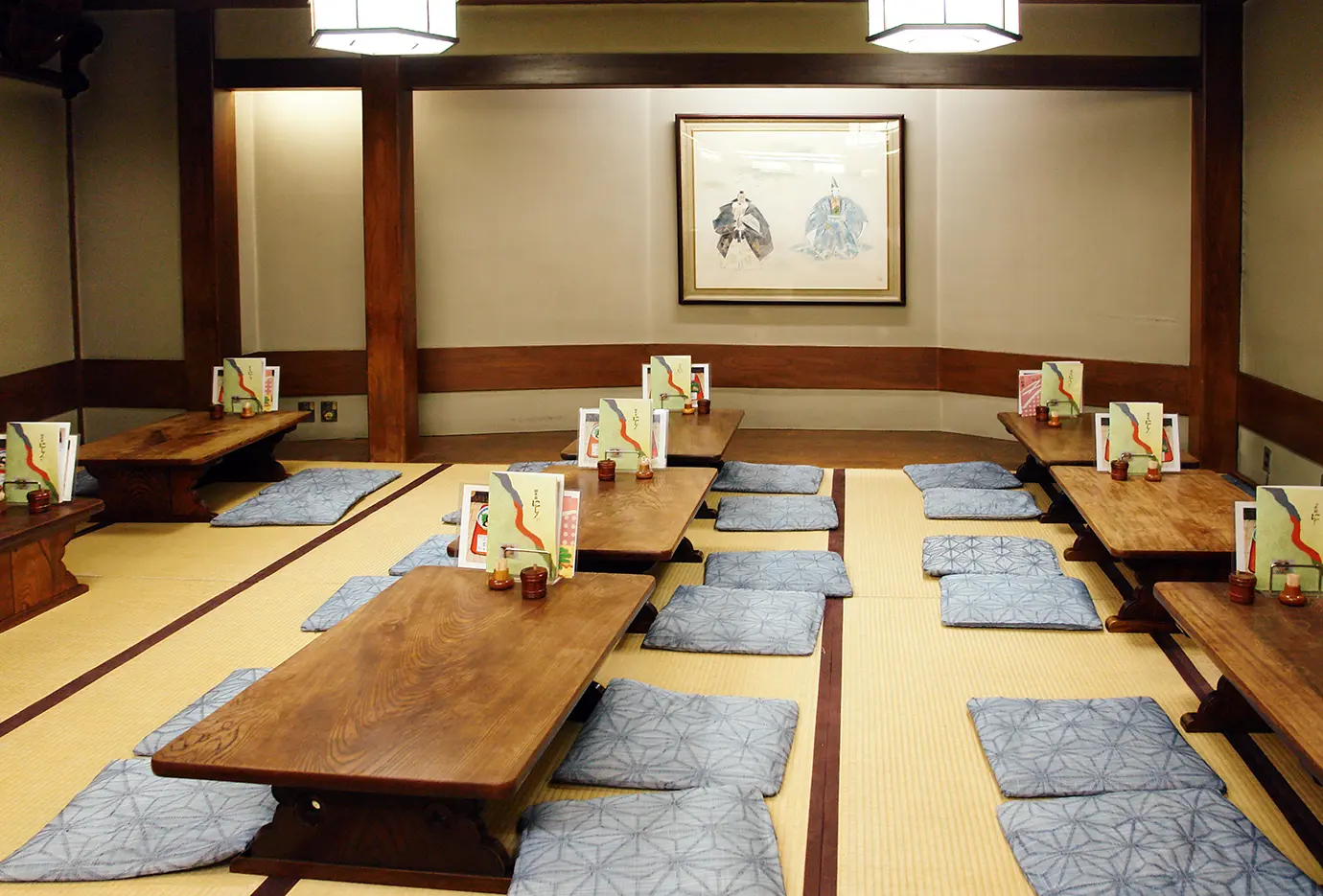
The Hakone night is centered on a ryokan, a traditional inn, and is the cultural high point of the first half of the trip. Your room has tatami-mat floors, a low table, and a folded cotton yukata robe for dinner and the baths. Dinner is kaiseki, a set of 8 to 12 small seasonal courses served in order. Breakfast is grilled fish, rice, and pickles.
The onsen is the point. Before you get in, sit at the washing station, soap up, and rinse off completely. No swimwear goes in the water, no towel touches it, and long hair goes up. Many inns now welcome guests with tattoos, but confirm at the time of booking. Peregrine reserves a partner ryokan in Hakone, where peak-season rooms often need operator access.
Getting to Kyoto the Next Morning
Ride the 15-minute local line back down to Odawara. Then catch a Hikari bullet train to Kyoto in a little over two hours. Choose the Hikari over the faster Nozomi if you hold a rail pass, since the standard pass does not cover Nozomi. You reach Kyoto by early afternoon, bags already sent ahead.
Days 5–7: Kyoto
Give Kyoto three full days from a base near Kyoto Station or in Higashiyama. Day five walks in eastern Kyoto and Gion. Day six covers Kinkaku-ji and Arashiyama. Day seven takes on Fushimi Inari or a Nara day trip. Start each morning early to beat the crowds.
Setting Up in Kyoto
Base near Kyoto Station or in the Higashiyama temple district. Kyoto Station puts you one train from Osaka and Nara and close to Fushimi Inari. Higashiyama trades transit speed for stone lanes and temples within a morning walk. Peregrine’s partner hotels are located in both areas, and some travelers split their stay between a modern hotel and a Kyoto machiya townhouse.
Day 5: Eastern Kyoto
Start at Kiyomizu-dera by 8 a.m., before the tour buses. The temple’s broad wooden veranda stands on tall pillars over a green hillside, and the early light keeps the crowds thin. Walk down the preserved slopes of Sannenzaka and Ninenzaka, past wooden shopfronts selling pickles and pottery.
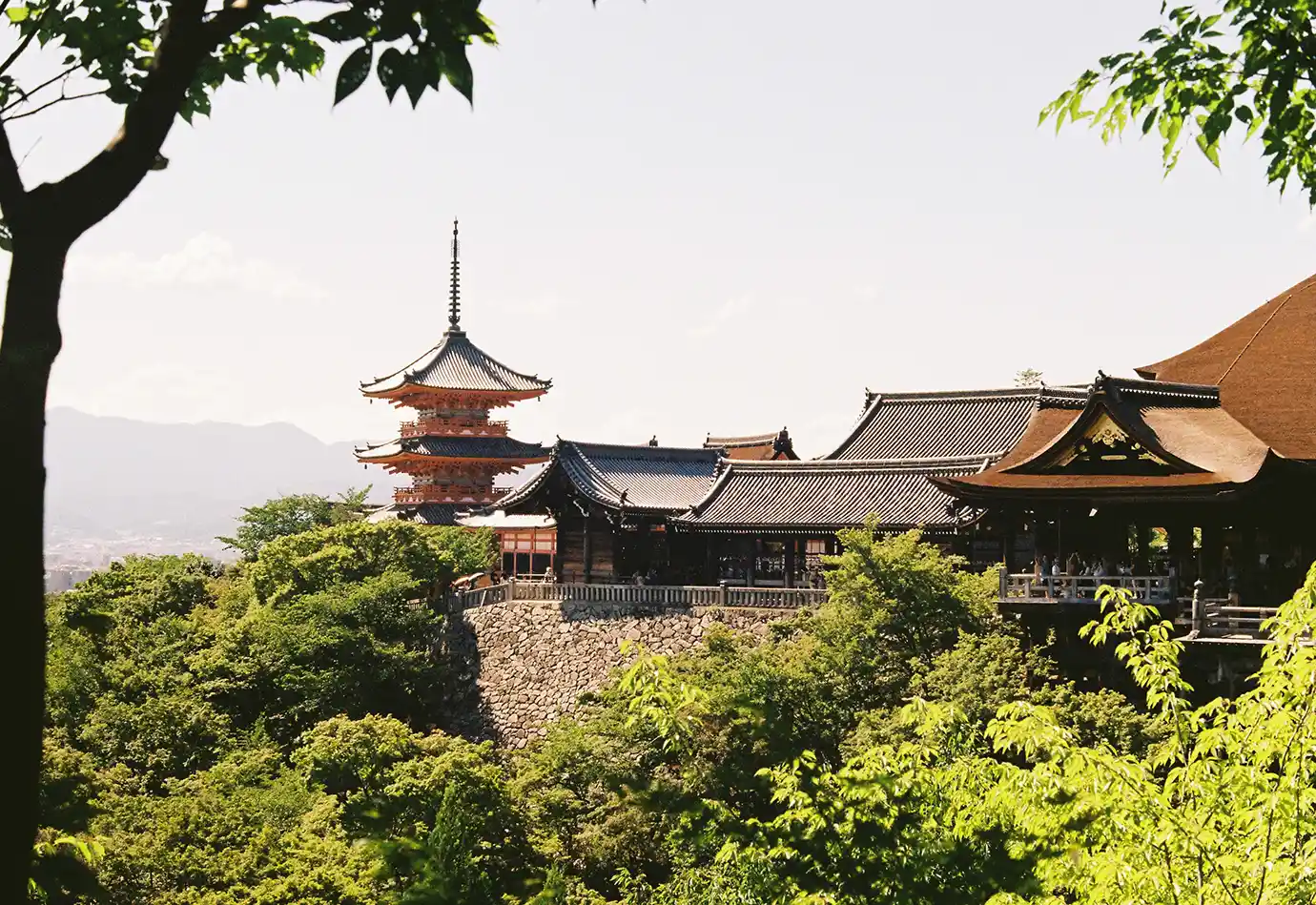
Midday brings Yasaka Shrine and lunch in Gion. Spend the afternoon on Gion’s lanes and Hanamikoji Street, where you may glimpse a maiko hurrying to an appointment at dusk. Photos of geiko and maiko are restricted on the private streets. End with dinner along Pontocho, a narrow lantern-lit alley by the Kamo River.
Day 6: Northwest Kyoto and Arashiyama
Open the day at Kinkaku-ji, the gold-leafed pavilion mirrored in its pond. One honest fact: the temple opens at 9 a.m. and offers no early or private entry. Aim for the opening bell and expect company. Ryoan-ji and its raked-gravel Zen garden sit a short ride away.
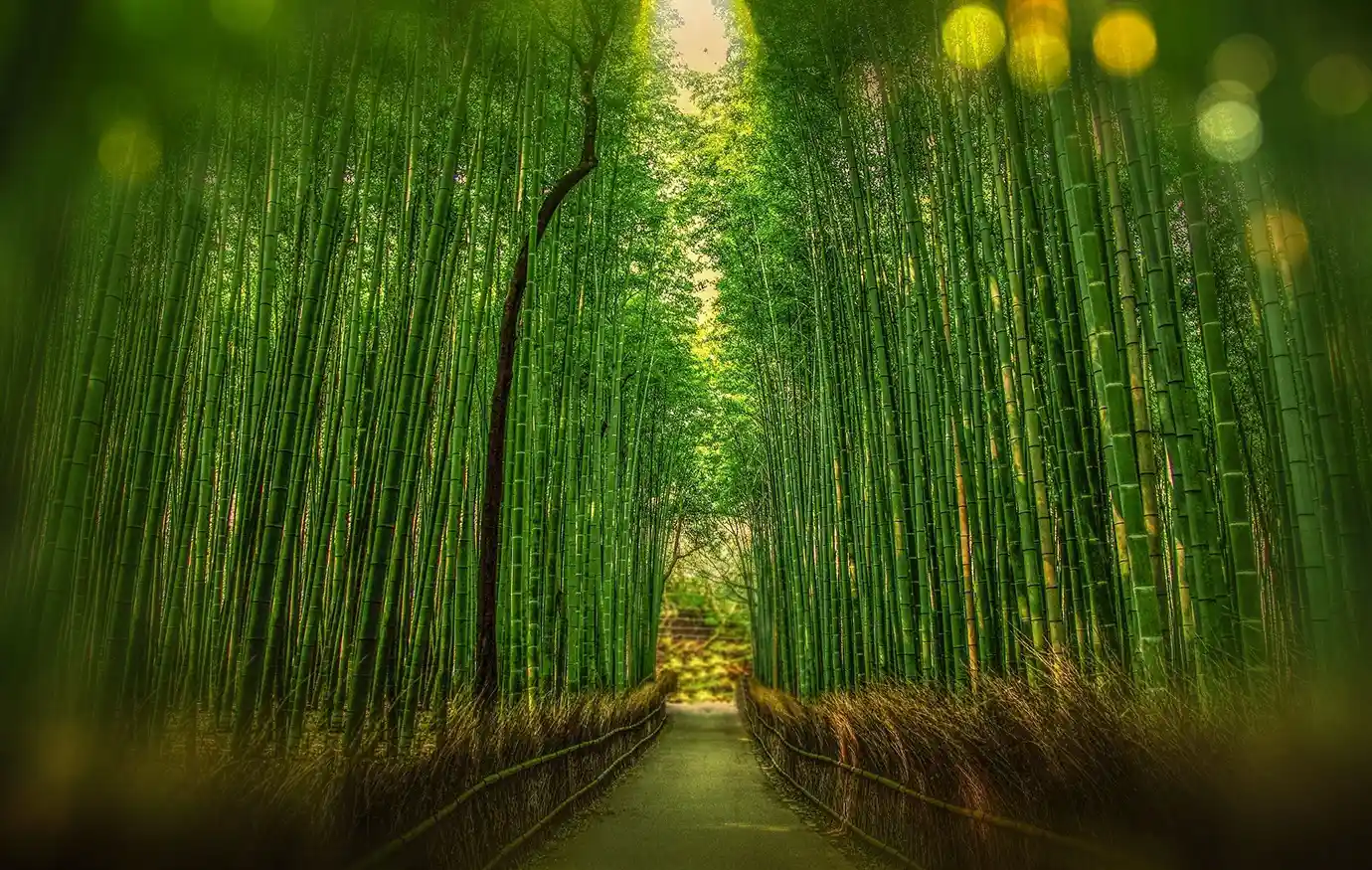
Move to Arashiyama by late morning. The bamboo grove is shorter and busier than the photos suggest, so walk it before the mid-morning crush. Tenryu-ji’s pond garden earns an hour, and the Togetsukyo Bridge gives a wide river view. Ride the JR Sagano line back to central Kyoto in about 15 minutes.
Day 7: Fushimi Inari or a Nara Day Trip
Two strong choices here. For Kyoto depth, start at Fushimi Inari Shrine, five minutes by train from Kyoto Station, and open around the clock at no charge. Arrive by 7 to 8 a.m., and the tunnels of vermilion torii gates stand almost empty. The climb to the summit and back runs two to three hours. Most visitors turn around at the first viewpoint after 45 minutes.
For a change of scene, take the 45-minute train to Nara instead. Nara Park houses Todai-ji Temple and its 15-meter-tall bronze Great Buddha, one of the largest in the world. Hundreds of tame deer roam the grounds, bowing for crackers and sometimes nipping. Some travelers do both, hitting Fushimi Inari at 7 a.m. and reaching Nara by 11.
Which Kyoto Experience Should You Book?
Book just one. Kyoto is where a single reserved experience lands hardest, and two in three days start to feel over-scheduled. A tea ceremony runs 60 to 90 minutes and teaches the slow order of whisking matcha. A kaiseki dinner at a serious Kyoto house is a seasonal, multi-course meal worth reserving a month ahead. Peregrine’s desk holds booking access for tea houses, top kaiseki tables, and maiko evenings.
Getting Around Kyoto
Kyoto’s city buses reach every major temple, and mapping apps read the routes well. Trains are faster where they run: five minutes to Fushimi Inari on the JR Nara line, 15 minutes to Arashiyama on the JR Sagano line. By day six, temple fatigue is real, so leave one afternoon loose.
Days 8–9: Osaka
Ride the JR Special Rapid from Kyoto to Osaka in under 30 minutes and stay in Namba or Umeda. Day eight covers Osaka Castle, Kuromon Market, and the neon of Dotonbori. Day nine flexes to a Nara day trip, more Osaka, or a run out to Himeji Castle.
Getting from Kyoto to Osaka
The JR Special Rapid Service links Kyoto Station and Osaka Station in about 25 to 30 minutes. It beats a bullet train that saves little on such a short leg—base in Namba for the food streets, or Umeda for a faster airport run on departure day.
Day 8: Osaka Castle and Dotonbori
Give the morning to Osaka Castle, whose stone walls and wide moat are the real draw, even if you skip the museum inside. At midday, graze Kuromon Ichiba Market, where vendors grill scallops, torch fatty tuna, and hand you skewers to eat on the spot.
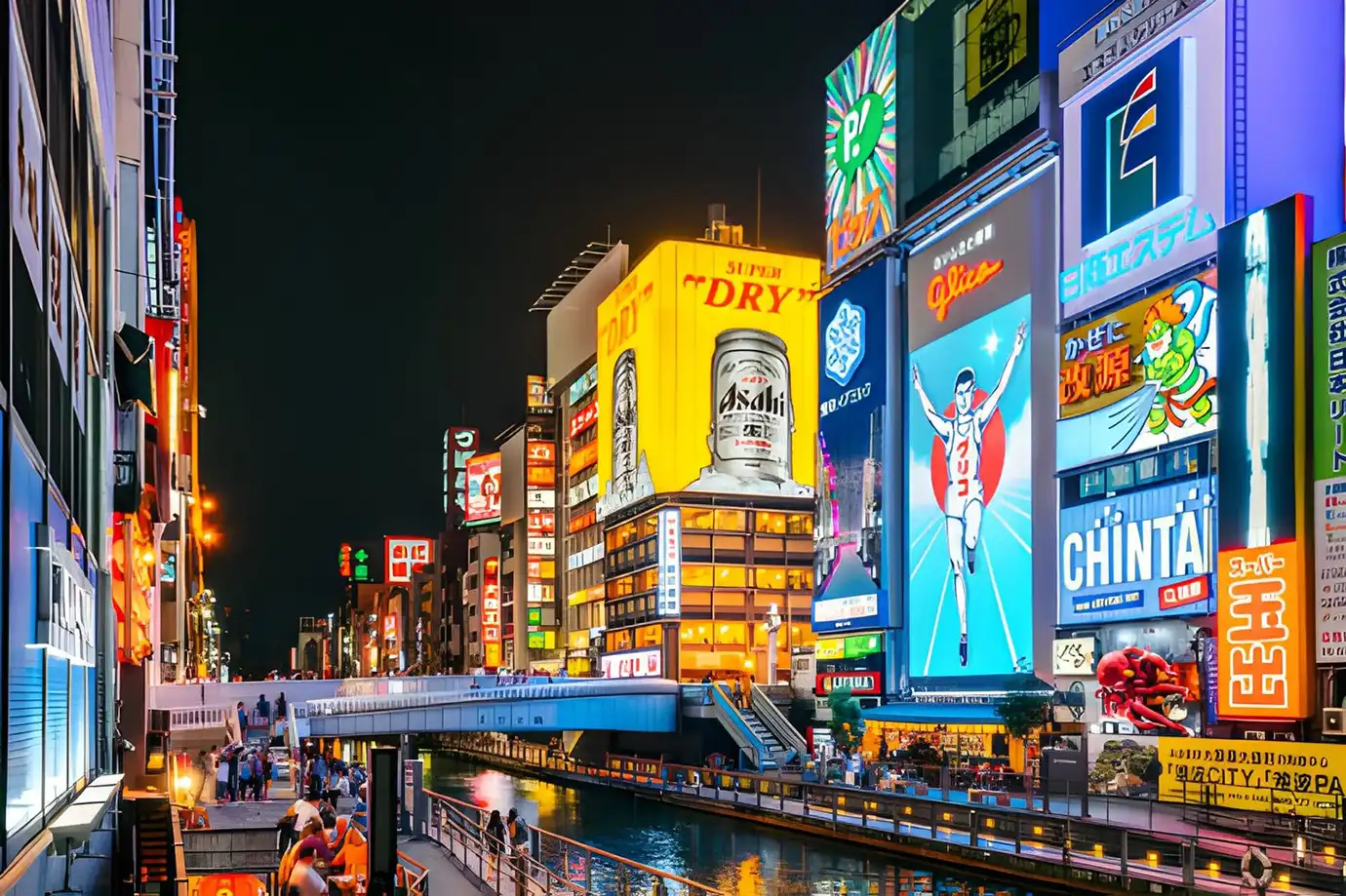
Evening belongs to Dotonbori. The canal glows with neon, the Glico running-man sign flashes overhead, and the smell of grilling batter fills the air. Eat kushikatsu, deep-fried skewers with one firm rule: no double-dipping in the shared sauce. Try takoyaki, hot octopus dumplings, and okonomiyaki, a savory pancake flipped in front of you. Stay three or four hours and let the night run.
Day 9: How to Spend Your Last Full Day
The last full day bends to your group. If you skipped Nara, take it now, 40 minutes from Namba on the Kintetsu line, for the Great Buddha and the deer. Families and repeat Asia travelers may prefer a full day at Universal Studios Japan or a visit to the giant tank at the Osaka Aquarium. History fans should ride 45 minutes to Himeji, home to Japan’s finest surviving castle, a white keep that has stood for four centuries. Kobe, 25 minutes out, makes an easy half-day for beef and hillside views.
What Should You Eat in Osaka?
Osaka is Japan’s kitchen, and a few dishes are non-negotiable. Takoyaki and okonomiyaki lead the list, both born here, and kushikatsu is the local bar food. Crab houses in Dotonbori hang giant moving crab signs over the street. A Kobe or Wagyu beef dinner, seared on a teppan griddle in front of you, is the splurge meal. Eat standing, eat walking, and skip one formal dinner for the stalls.
Day 10: Departure from Kansai
Fly home from Kansai International Airport, a 40- to 50-minute train ride from central Osaka. Match your morning to your flight time. Arrive at the airport three hours before an international departure, and leave souvenir shopping for the terminal if your bags allow.
Getting to Kansai Airport
From Namba, the Nankai Rapid Limited Express reaches Kansai International in about 40 minutes. From Umeda or Shin-Osaka, the JR Haruka limited express takes about 50 minutes. Airport buses run from major hotels for travelers with heavy bags, and a private car suits very early or very late flights. Ending in Osaka is deliberate, so a return through Tokyo adds most of a travel day you do not need.
Timing Your Last Morning
Shape the morning around your departure. For a morning flight, eat breakfast and head straight to the airport. For an early-afternoon flight, fit a short shop along Shinsaibashi first. For an evening flight, take a half-day, maybe the Osaka Castle grounds, then ride out. Give yourself three hours at the airport, since security lines back up at peak times.
Transportation Strategy: Rail Pass, IC Cards, and Luggage
For this four-base route, skip the Japan Rail Pass and buy point-to-point bullet train tickets instead. Use a Suica or Pasmo IC card for all local trains. Forward your suitcases from hotel to hotel so you can ride the fast trains hands-free.
Should You Buy the Japan Rail Pass?
For this exact 10-day route, no. The Japan Rail Pass was repriced sharply upward a couple of years back, and it now costs more than the individual tickets for this route. You take only two real bullet train legs, the Tokyo area to Kyoto and Kyoto to Osaka, plus light local use. Point-to-point tickets cover it for less than the cost of a 7-day pass.
When the Rail Pass Does Win
The math flips the moment you add distance. A pass earns its keep on trips that fold in Hiroshima and Miyajima, a Nikko day trip, or western add-ons like Kanazawa and Takayama. For the tight four-base route, those long rides never come. One more note: the standard pass does not cover the fastest Nozomi and Mizuho trains, so plan on the slightly slower Hikari.
Why IC Cards Are the Easiest Way to Ride
A prepaid IC card is the single best travel tool in Japan. Suica, Pasmo, and ICOCA all work nationwide across metro lines, JR trains, city buses, lockers, and vending machines. Tap in, tap out, top up at any machine. After a temporary shortage, standard cards are back in stock at major stations, and Welcome Suica cards remain available at airports.
Booking Bullet Train Seats
Reserve your bullet train seats a couple of weeks ahead for peak seasons, and a few days ahead of time any time you travel as a family. Station machines sell tickets in English, and online systems let you book early and scan at the gate. Reserved seats cost a little more and are worth it during cherry blossom and autumn weeks.
Luggage Forwarding, LocalJapan’s
Japan’s overnight luggage service, takkyubin, moves your suitcases from hotel to hotel while you travel light. Hand your bags to the front desk before early afternoon, and they will arrive at the next hotel the following day. On this route, forward luggage from Tokyo to Kyoto overnight, so you carry only an overnight bag to the ryokan, then forward it again from Kyoto to Osaka. Peregrine coordinates forwarding on every booking as standard.
When Private Transfers Are Worth It
Public transit here is so good that most first-timers never need a private car. Still, a booked driver earns its cost in a few cases. A late-night airport landing with heavy bags. A full day of Kyoto temples for travelers with limited mobility. Multi-generation trips where pacing varies. For everyone else, the trains win on speed and price.
When Is the Best Time to Visit Japan?
The best time for a first trip to Japan is one of two windows. Spring brings cherry blossoms in late March and early April. Autumn foliage is present from late October to late November. Both bring the finest weather and the biggest crowds. For value and space, aim for late May, early December, or deep winter.
The Four Seasons at a Glance
| Season | Months | Weather | Crowds |
|---|---|---|---|
| Spring | Mar–May | Mild days, cool nights, cherry blossoms late Mar–early Apr | Very high at peak bloom |
| Summer | Jun–Aug | Rainy season to mid-Jul, then hot and humid | Moderate, heavy domestic travel |
| Autumn | Sep–Nov | Cool and clear, foliage late Oct–late Nov | High in foliage weeks |
| Winter | Dec–Feb | Cold, dry, clear skies, best Fuji views | Lowest, best value |
Spring and autumn are the headline seasons for good reason. Days sit in the mild teens to low twenties Celsius, and the scenery peaks. You pay for it in crowds and booking pressure.
When to Book Against the Peaks
Book far ahead for the busy windows. Cherry blossom weeks in late March and early April need six to twelve months of lead time for good hotels. Golden Week, a cluster of national holidays in late April and early May, empties the offices and fills the trains. Avoid it or book very early. Autumn foliage in November requires six to nine months’ notice, and Christmas Day closes many restaurants.
The Value Windows
For fewer people and softer rates, target the shoulder dates. Late May and early June, after the blossoms and before the rains, give mild days and thin crowds. Early December brings clear skies, the best odds for Fuji, and holiday lights. Deep winter, from mid-January to mid-February, is the quietest stretch of all.
How Cherry Blossom Timing Works
Cherry blossoms open on a moving schedule, depending on the weather each year. As a rule, Tokyo, Kyoto, and Osaka bloom from the last week of March into the first week or two of April. Full bloom follows the first flowers by about a week, and the show lasts only one to two weeks. Book with a three- to four-day buffer around any forecast, since a warm spell or a hard rain shifts the peak.
How Autumn Color Moves
Autumn color runs downhill from the mountains to the cities. Higher areas turn in late October. Kyoto’s temple maples peak in the second half of November, and Tokyo and Osaka follow into early December. For a 10-day autumn trip, the back half of November gives the best odds of peak color in Kyoto and Osaka.
How to Think About Your Japan Budget
Plan your Japan budget in three buckets: accommodation, transport, and on-the-ground spending. Rooms take the biggest share and swing the widest between a 4-star hotel and a luxury ryokan. Bullet trains and forwarding come next, and daily meals and experiences fill the rest. Set your hotel tier first, since it moves the total more than anything else.
Where Meals Fit
Japanese hotels rarely offer all-inclusive plans, so meals are charged separately. Better hotels include breakfast, and a ryokan builds dinner and breakfast into the room. Street food costs little for how good it is, while a top sushi omakase or serious kaiseki is a real expense.
Where to Save
Trim the budget without hurting the trip. Skip the rail pass on this route and buy point-to-point tickets. Lean on trains over private cars in the cities. Take hotel breakfasts when included and keep lunches casual. Choose a mid-tier ryokan over the flagship for the night in Hakone. And shift your dates off the cherry blossom and foliage peaks, when rooms cost the most.
Where to Splurge
Put the money where the memory sticks. One serious kaiseki dinner in Kyoto anchors the whole trip. A ryokan with a private open-air bath makes for a perfect night in Hakone. A single cultural booking, a tea ceremony, or a maiko evening, buys something no photo captures. For current availability and an itemized reply from Peregrine’s Japan desk, please allow one business day.
How Peregrine Plans This Trip
Peregrine’s Japan desk handles the parts of this route that need local access. You keep your freedom on the ground while the logistics run behind the scenes.
What the Desk Handles
Three things, mainly. First, rooms: partner hotels and ryokan across the four cities, including high-demand inns that need operator relationships in peak seasons. Second, rail and bags: every bullet train leg, seat reservations, and the luggage forwarding that ties the hotels together. Third, culture: tea ceremonies, top kaiseki tables, and maiko evenings, all of which reward advance access. Travelers pairing Japan with Nepal, Bhutan, or Southeast Asia can bundle those routes into a single booking through Peregrine’s Kathmandu and Muscat offices.
Frequently Asked Questions
Is 10 Days Enough for a First Trip to Japan?
Yes. Ten days is enough to see Tokyo, Mount Fuji, Kyoto, and Osaka at a comfortable pace on a first visit. The trick is limiting yourself to four bases instead of chasing six or seven cities. You get full days in each place, only four hotel changes, and Slack to shake off jet lag.
Do I Need to Buy the Japan Rail Pass?
Not for this route. With only two real bullet train legs and light local travel, point-to-point tickets cost less than a 7-day rail pass. The pass was repriced at a much higher price a couple of years back. Buy it only if you add long-distance hops like Hiroshima or Kanazawa. For local trains, a Suica or Pasmo IC card is all you need.
Do I Need to Speak Japanese to Travel in Japan?
No. You can travel this whole route in English alone. Major stations, trains, and tourist sites carry English signs, and translation apps handle menus and directions. A few polite words, like arigatou for “thank you” and sumimasen for “excuse me, go a long way. Hotel and restaurant staff usually speak enough English to help.
Can I Use Credit Cards Everywhere in Japan?
Mostly, but carry cash too. Cards are accepted at hotels, department stores, chain restaurants, and most city shops, and cashless payments now account for more than half of all transactions. Small family restaurants, older temples, rural stalls, and some ticket machines still want cash or an IC card. Keep some yen on hand and top up your IC card for the gaps.
What Are the Onsen Rules for People with Tattoos?
Policies vary by bath. Traditionally, many onsen barred tattoos over an old link to organized crime, but attitudes are easing, and plenty now welcome inked guests. Small tattoos can be hidden with a cover patch. Where a public bath still refuses, book a private family bath, called kashikiri, or a room with its own open-air tub.
When Should I Book a 10-Day Trip to Japan?
Book 6 to 12 months in advance for peak seasons. Cherry blossom weeks in late March and early April, and autumn foliage in November, fill the best hotels and ryokan first. For quieter months like late May or deep winter, 2 to 4 months is usually enough. Lock your ryokan and cultural experiences early, since those hold the least inventory.
Start Planning Your Route
You now have the outline of a first trip to Japan. Four bases in a line. Three nights each in Tokyo and Kyoto, one onsen night in Hakone, and an easy Osaka finish that flies you home without a backtrack. You know when to book against the blossom and foliage peaks, and why point-to-point tickets beat the rail pass on this route.
The next step is to date Peregrine’s Japan desk, your travel window, and your pace. The team comes back with hotels across the four cities, a rail plan, and luggage forwarding as standard. Ask about a 10-day trip to Japan, or share your own must-see list and shape the route to fit it.