


Jerash is one of the best-preserved Roman-era cities outside of Europe. The ruins of Jerash, one of Jordan’s most important archaeological sites, sit 48 km north of Amman in the green highlands of northern Jordan. At its peak in the 2nd and 3rd centuries CE, the city had a population of approximately 25,000. Gerasa (as the Romans called it) was a member of the Decapolis, a group of ten Roman cities in the Eastern Mediterranean.
The city fell into decline after a series of earthquakes and the shift of trade routes. Centuries of sand and soil covered the ruins. The preservation is a direct result of that burial. When archaeologists began excavation in the 1920s, they found streets, theaters, temples, and plazas in remarkable condition.
Today, Jerash is the second-most-visited archaeological site in Jordan after Petra. Entry is included in the Jordan Pass. A visit takes two and a half to three hours at a comfortable pace.
Key Jerash Facts
| Detail | Information |
|---|---|
| Location | 48 km north of Amman, northern Jordan |
| Drive from Amman | Approximately 1 hour by private car |
| Entry | Included in all Jordan Pass tiers |
| Site area | Approximately 50 hectares |
| Opening hours | Generally 08:00 to 18:00 (summer) and 08:00 to 16:00 (winter). Check the latest Jerash opening hours and visitor information before your visit. |
| Best time to visit | Arrive before 10:00 for fewer crowds and cooler conditions |
| Time needed | 2.5 to 3 hours for a thorough visit. 1.5 hours minimum. |
| Facilities | Visitor center, restrooms, small cafe near the entrance |
What to See at Jerash — The Full Circuit
The main walking circuit at Jerash follows a logical path from south to north. Start at Hadrian’s Arch outside the city walls and work your way through the Hippodrome, the Oval Plaza, the Cardo Maximus, and the temples. The path is mostly flat. The ground is uneven stone in places. Comfortable walking shoes are essential.
Hadrian’s Arch
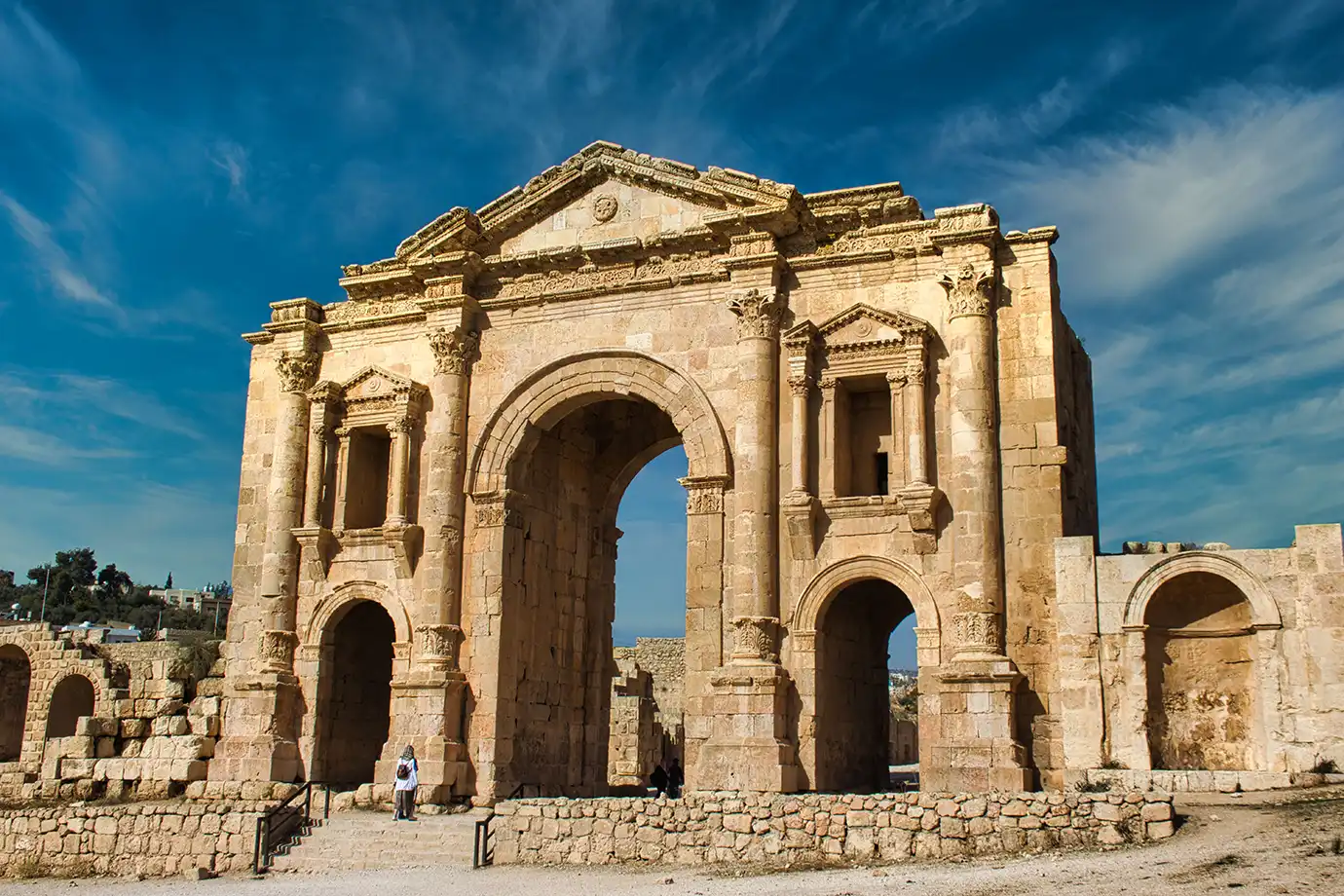
Hadrian’s Arch is the first major structure you see. Roman builders erected the triple-arched gateway in 129 CE to honor Emperor Hadrian’s visit to Gerasa. The reconstructed Arch stands approximately 21 meters tall. The central archway alone is about 11 meters high and nearly 6 meters wide. Four Corinthian columns frame the facade on each side.
The Arch was not part of the city walls. Planners intended it as the entrance to a new southern quarter. The expansion never happened. The Arch stands 460 meters south of the actual city gate, which makes it feel like an advance announcement of what lies ahead.
The Oval Plaza
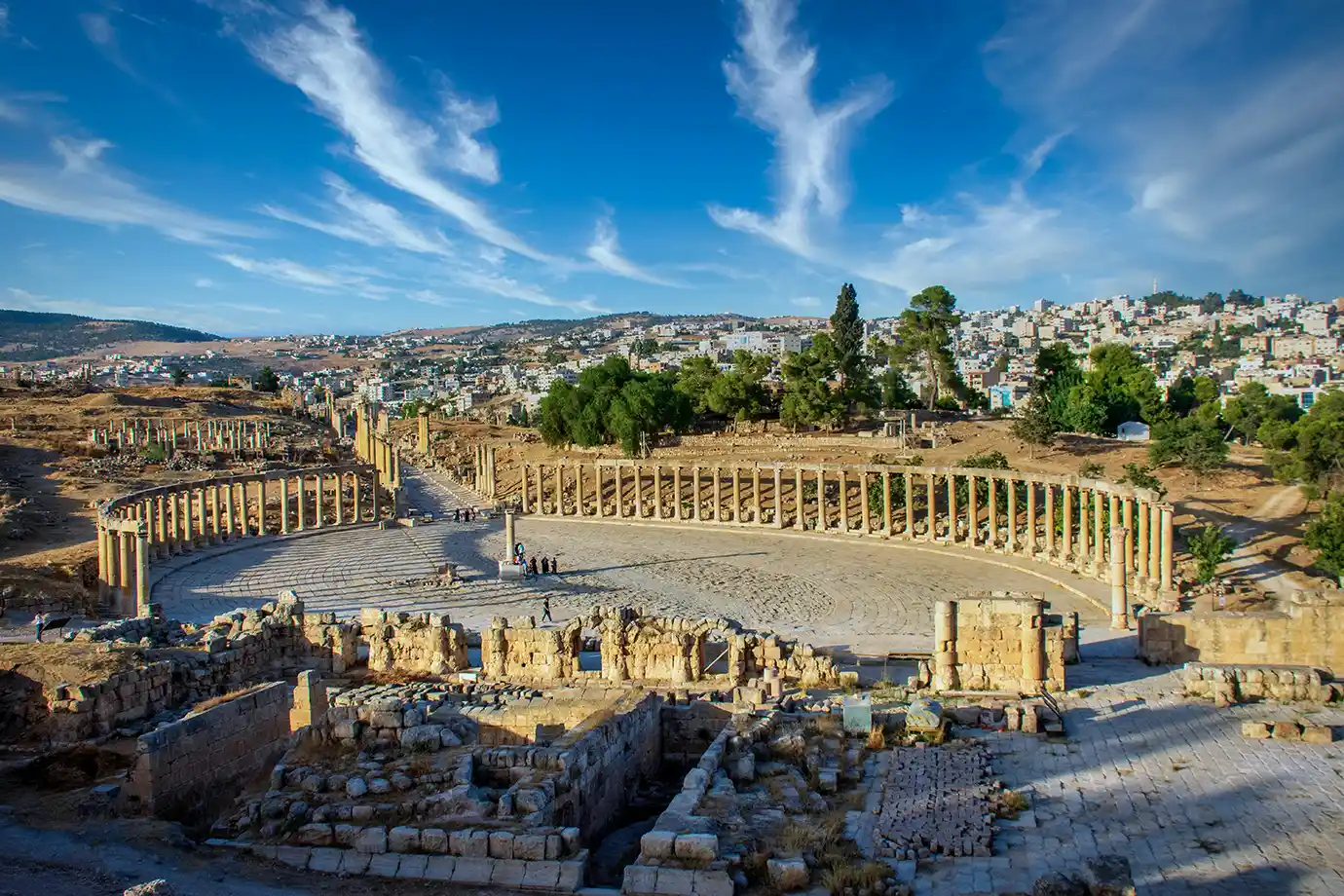
The Oval Plaza is the visual centerpiece of Jerash. An elliptical colonnaded forum measuring approximately 90 by 80 meters, the Oval Plaza has no parallel anywhere in the Roman world. Standard Roman forums are rectangular. The reason for the oval shape at Jerash remains unexplained.
Fifty-six Ionic columns ring the plaza on both sides. The original Roman paving stones remain underfoot. A raised central column once held a statue. The plaza connects the main Cardo (north-south street) with the Temple of Zeus to the south.
Walk to the center and look in every direction. The columns, the paving, and the surrounding temples create one of the most complete Roman urban spaces surviving anywhere.
The Cardo Maximus
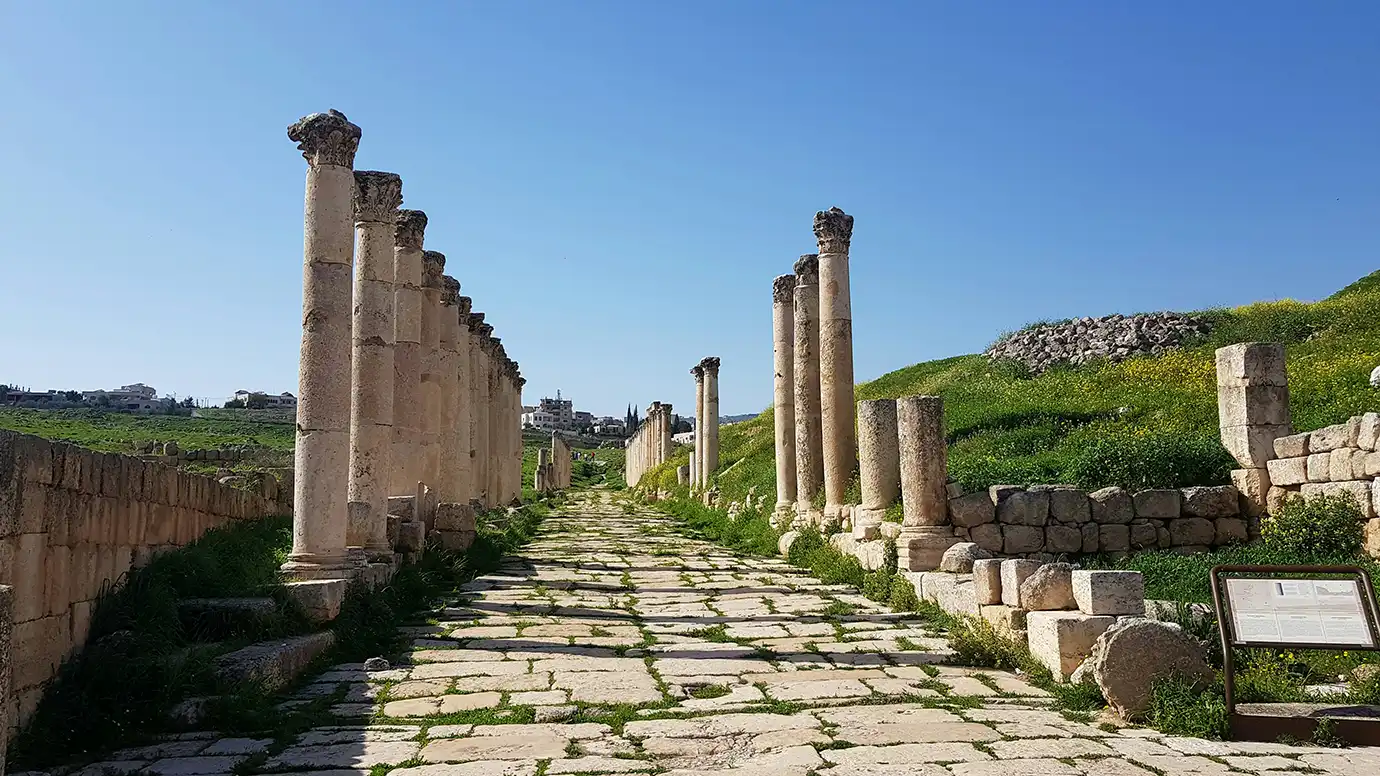
The Cardo Maximus runs north from the Oval Plaza through the center of the city. The colonnaded main street stretches more than 600 meters. Columns line both sides. Chariot wheel ruts are still visible in the original stone paving.
Beneath the street, a complete Roman drainage system runs the full length. Maintenance holes are visible at intervals. The engineering that kept Gerasa’s streets dry 1,900 years ago is still legible in the stonework.
Two major cross streets (the North and South Decumanus) intersect the Cardo. Tetrapylon structures (four-columned monuments) mark the intersections. Walk the full length of the Cardo slowly. The street itself tells the story of Roman urban planning better than any museum display.
The South Theatre
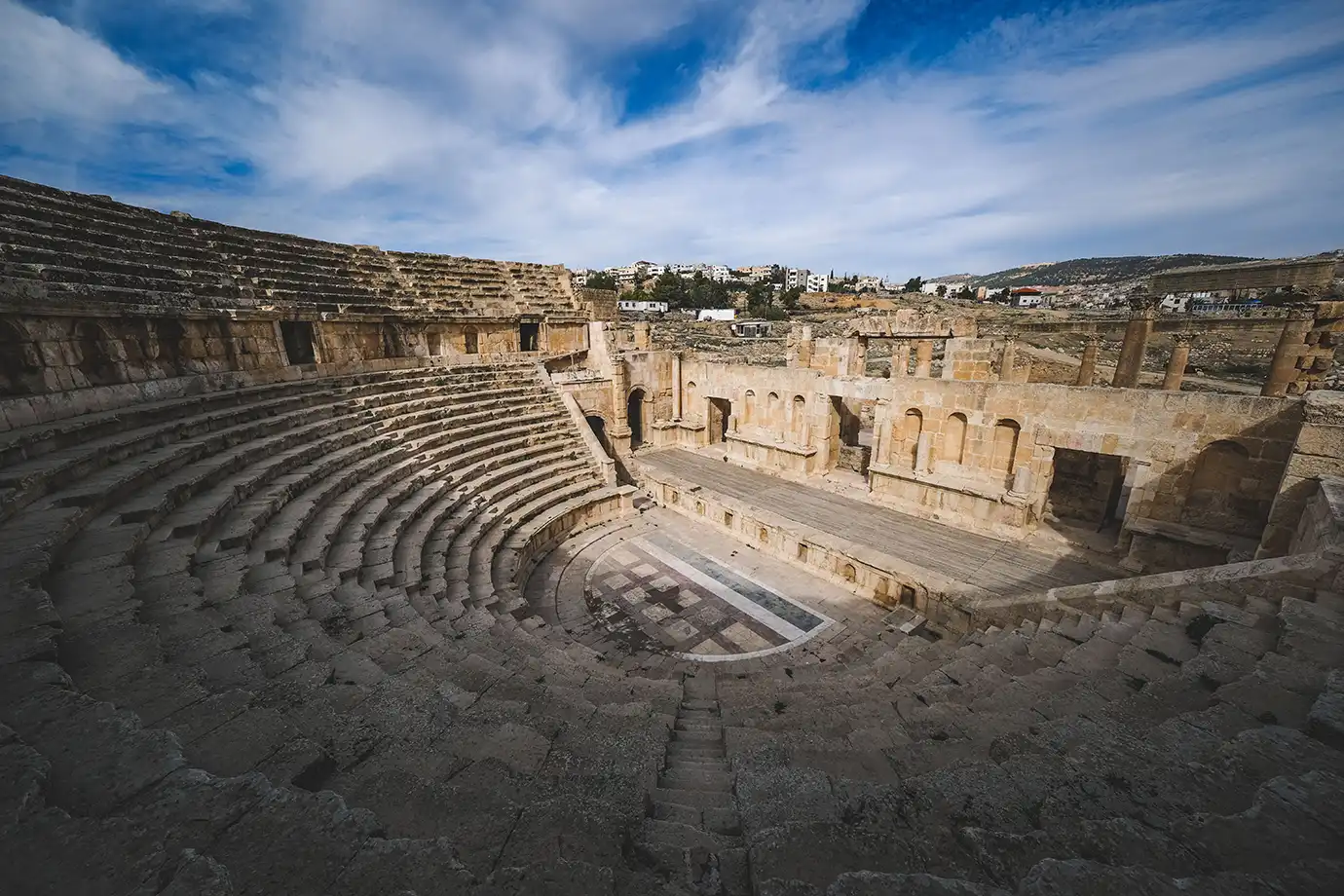
The South Theatre seats approximately 3,000. Roman builders carved it into a hillside in the 1st century CE. The theater is the best-preserved performance space at Jerash and continues to host events during the annual Jerash Festival of Culture and Arts each summer.
Stand in the center of the orchestra circle and speak at normal volume. Your voice reaches the top row without amplification. The acoustics remain fully intact. The design directs sound upward through the curved seating in a way that modern audio engineers still study.
The South Theatre is also the most atmospheric stop at Jerash. Visit in the morning, when the light fills the seating bowl, and the stone is cool. By early afternoon, the white limestone radiates heat.
The North Theatre
The North Theatre is smaller than its southern counterpart and seats approximately 1,600. The theater is better preserved in several structural details. The stage building retains more of its original stone decoration. Fewer visitors reach the North Theatre because it sits at the far end of the circuit.
Allow 15 minutes. The North Theatre rewards the walk.
The Temple of Artemis
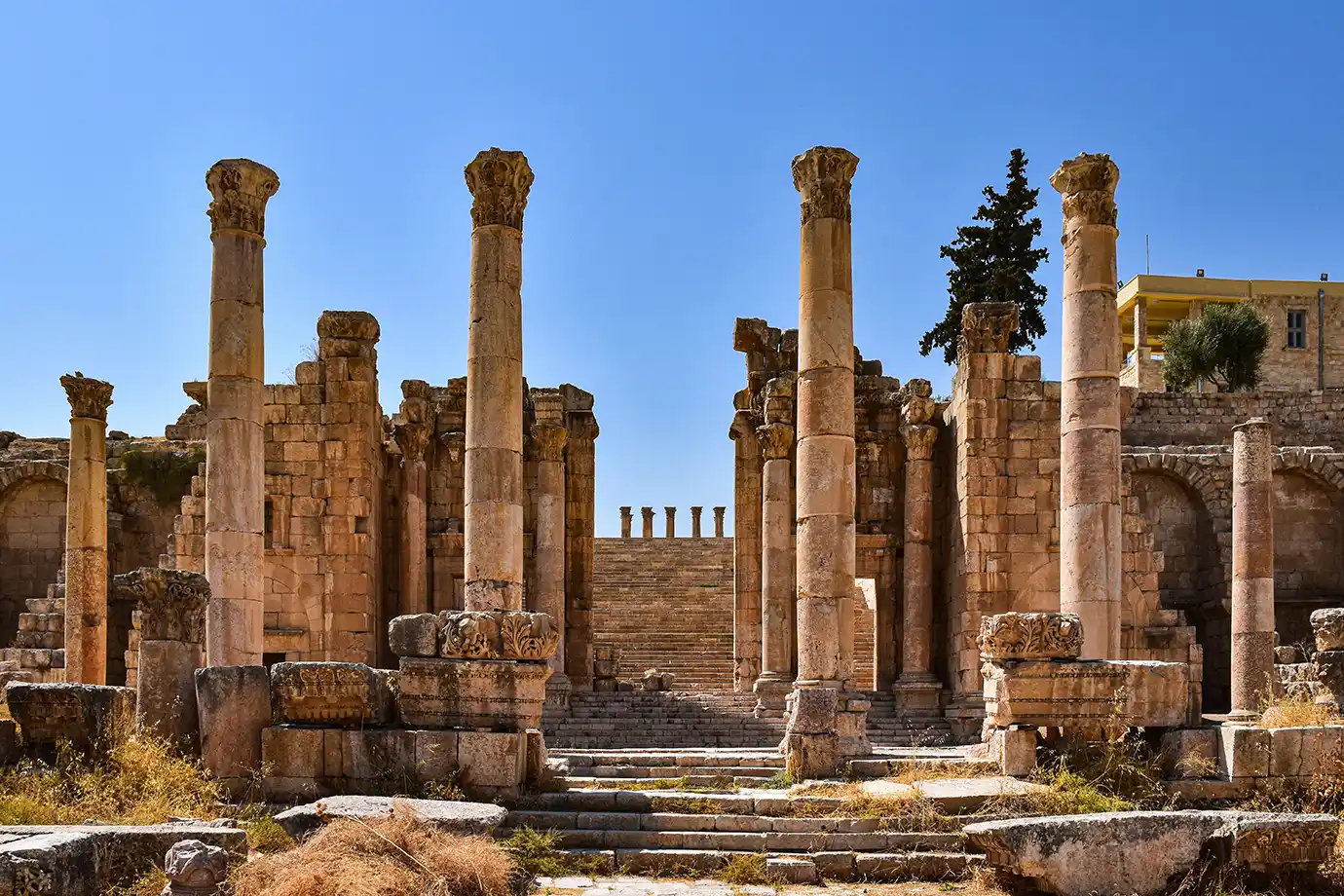
Artemis was the patron goddess of Gerasa. The Temple of Artemis sits on a raised platform reached by a monumental staircase. Several of the original Corinthian columns still stand, each rising more than 12 meters. The columns are so precisely balanced that a thin object (a key or a coin) placed at the base moves visibly with the wind. Guides demonstrate the sway regularly.
The temple precinct was the religious heart of Gerasa. The scale of the staircase and the columned courtyard give a sense of the city’s wealth and ambition during the 2nd century CE.
The Nymphaeum
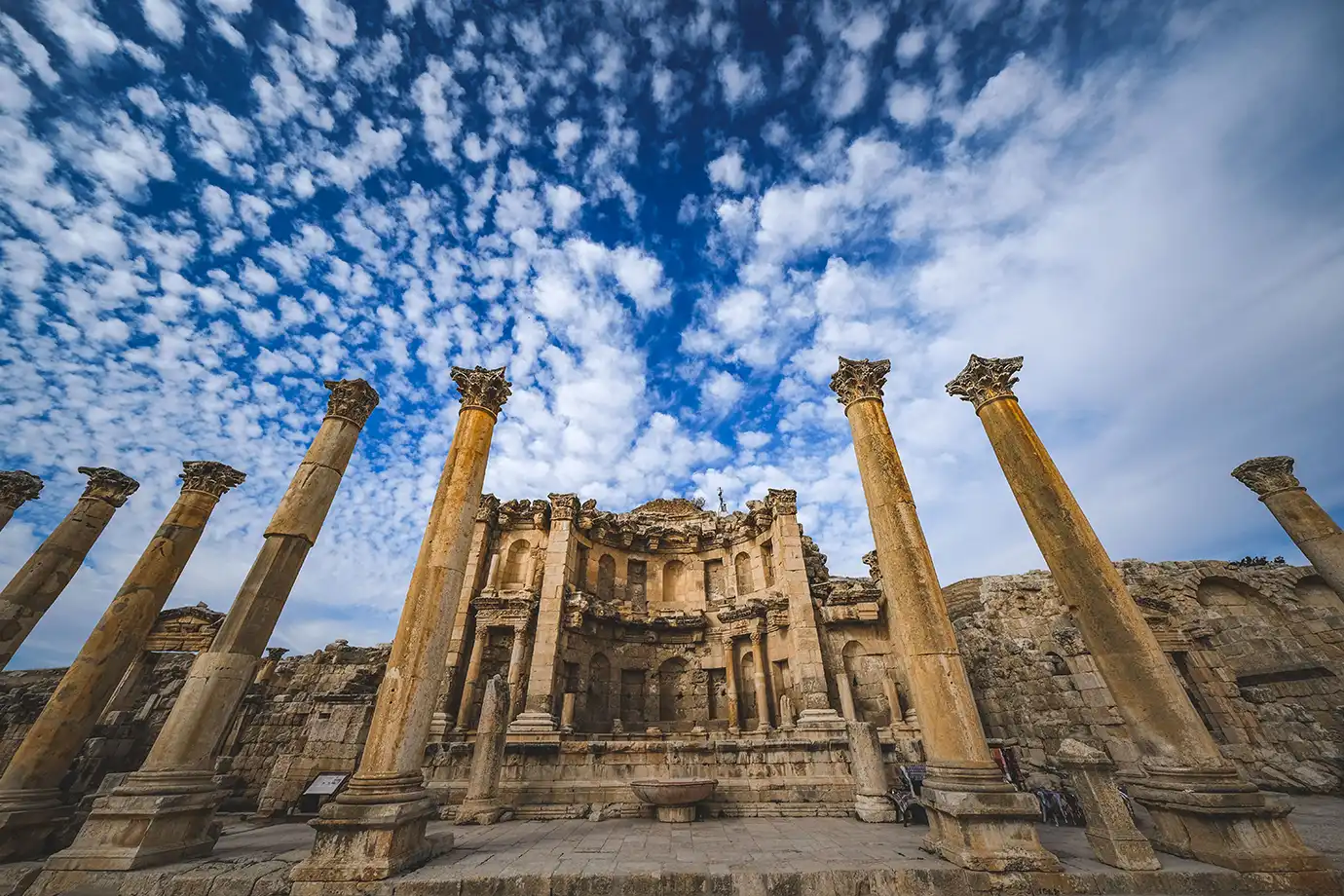
The Nymphaeum is a 2nd-century CE ornamental public fountain. The semicircular facade originally featured two stories of carved niches, columns, and marble facing. Water flowed from carved lion heads into a large basin. The lower level retains much of its structure. The upper level is partially collapsed.
The Nymphaeum sits along the Cardo Maximus and marks the intersection with the path to the Temple of Artemis. Allow 10 minutes.
The Hippodrome and the RACE Chariot Show
The Hippodrome sits south of the city walls, between Hadrian’s Arch and the South Gate. The arena originally measured 245 meters long and 52 meters wide and could seat approximately 15,000 spectators for chariot races.
The Roman Army and Chariot Experience (RACE) runs a performance in the Hippodrome featuring soldiers in Roman armor, gladiator demonstrations, and chariot races. The show lasts about 30 minutes. Confirm the schedule and availability at the Jerash entrance on the day of your visit. The show is a separate ticket from the Jordan Pass entry.
How Long Should You Spend at Jerash?
A thorough visit to Jerash takes two and a half to three hours. The main circuit covers Hadrian’s Arch, the Hippodrome, the Oval Plaza, and the Cardo Maximus. The South Theatre, Temple of Artemis, North Theatre, and Nymphaeum complete the loop. A rushed visit can cover the highlights in 90 minutes, but you lose the details.
The site covers approximately 50 hectares. Walking the full circuit at a steady pace without stopping takes about 45 minutes. Add time for the South Theatre acoustics test, the Temple of Artemis column demonstration, and the Cardo Maximus wheel ruts. Bring water. Shade is limited outside the theaters and the visitor center.
How Do You Get to Jerash from Amman?
Jerash sits 48 km north of Amman. A private car covers the distance in approximately one hour. The road is well-maintained and passes through rolling green hills, a different feel from the desert that dominates southern Jordan.
Private car or taxi. The standard option for most visitors. Peregrine includes the Jerash transfer in all Jordan packages that cover the site.
JETT bus. The JETT bus service runs from Amman’s Tabarbour station to Jerash. Confirm schedules directly with JETT, as departure times change seasonally.
Day trip timing. Most travelers visit Jerash as a half-day trip from Amman. Depart Amman by 08:00. Arrive by 09:00. Spend two and a half to three hours at the site. Return to Amman for lunch or continue to Ajloun Castle in the afternoon.
How Does Jerash Compare to Petra?
Jerash and Petra are both on the Jordan Pass, but the experiences are completely different. Comparing them is like comparing a Roman city to a Nabataean carved mountain. Both are worth visiting. Neither replaces the other.
Jerash is a Roman urban plan. Streets, forums, theaters, temples, and public fountains follow the standard Roman grid. The stone is limestone, pale and clean. The setting is open, flat, and green.
Petra is a Nabataean carved city. Facades are cut directly into sandstone cliffs. The setting is a narrow canyon and a hidden valley. The stone is red, pink, and orange. The Treasury, the Monastery, and the Siq have no Roman parallel.
Most Jordan itineraries include both. Jerash appears on Days 1 or 2 (near Amman). Petra appears on Days 3 to 5 (in the south), often followed by a relaxing stay at the Dead Sea in Jordan. Travelers who visit only one miss half the story of ancient Jordan.—Travelers who visit only one miss half the story of ancient Jordan.
Practical Tips for Visiting Jerash
Arrive early. The site opens at 08:00 in summer and the same in winter (with earlier closing). Arriving before 10:00 gives you cooler conditions, softer light for photographs, and smaller crowds. For a broader overview of seasonal weather and travel conditions across the country, read our guide to the best time to visit Jordan.
Bring water and sun protection. Shade is limited to the theaters, the visitor center, and a few trees near the Temple of Artemis. The limestone reflects heat aggressively. A wide-brimmed hat and SPF 50 sunscreen are essential from April through October.
Wear comfortable shoes. The ground is uneven stone throughout. The Cardo Maximus paving stones are original Roman work, worn smooth in places and rough in others. Sandals are not suitable.
Allow time for details. The chariot ruts in the Cardo, the drainage maintenance holes, the acoustics in the South Theatre, and the swaying columns at the Temple of Artemis are the details that make Jerash exceptional—rushing through misses all of them.
Can You Combine Jerash with Ajloun Castle?
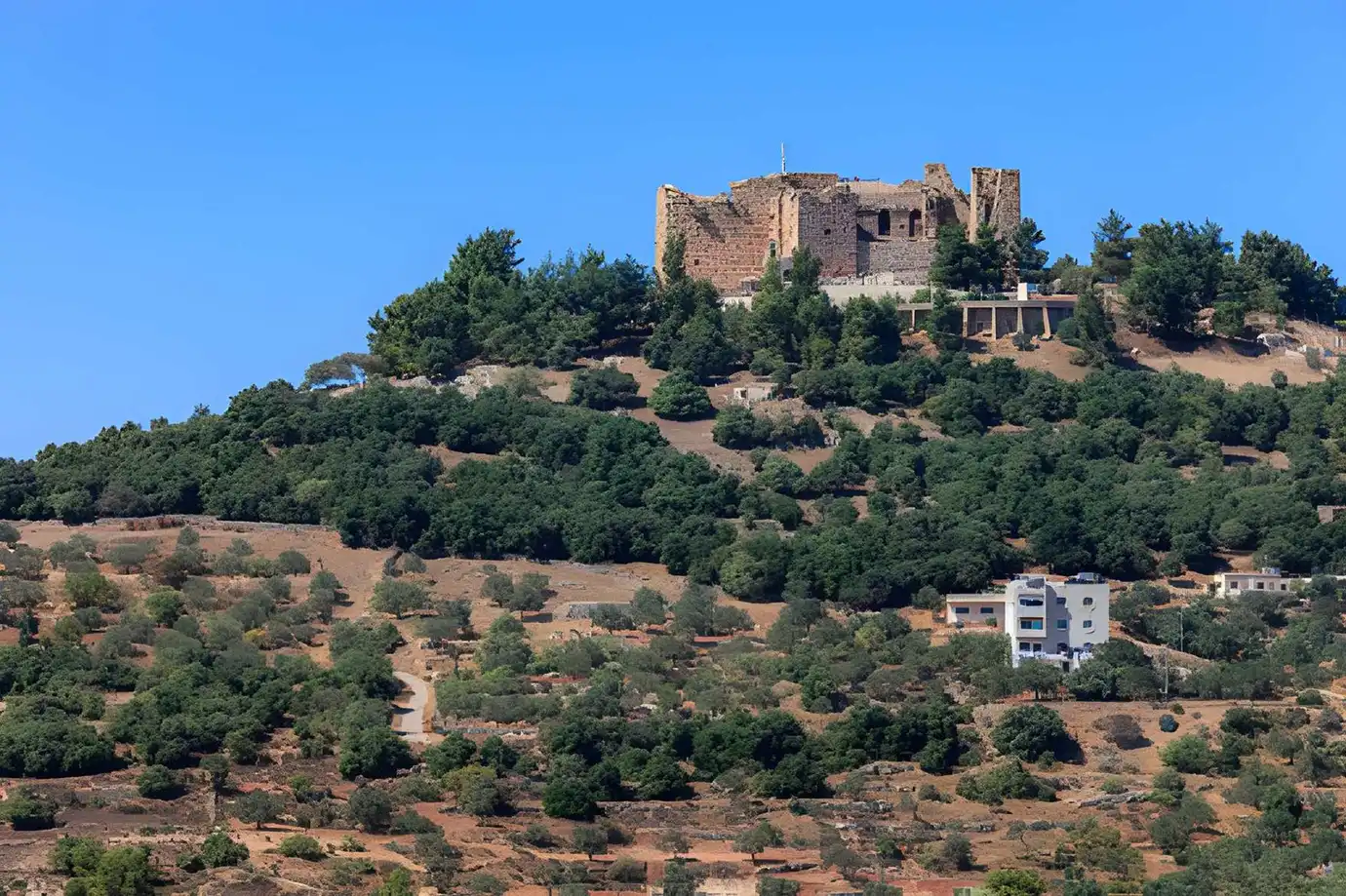
Ajloun Castle sits approximately 25 km southwest of Jerash. The drive takes about 40 minutes. Combining Jerash and Ajloun into a single full-day circuit from Amman is the natural itinerary.
Izz al-Din Usama, a nephew of Saladin, built Ajloun Castle in 1184 CE to counter Crusader control of the region. The castle sits on a forested hilltop at approximately 1,100 meters. The interior has dark corridors, underground chambers, and panoramic views across the Ajloun forest (oak and carob woodland) and the Jordan Valley.
Visit Jerash in the morning (three hours). Drive to Ajloun for a late-morning or early-afternoon visit (1-1.5 hours). Return to Amman by mid-afternoon. The Peregrine Classic Jordan Tour and Grand Tour both include the Jerash-Ajloun circuit.
Frequently Asked Questions
Is Jerash included in the Jordan Pass?
Yes. Entry to Jerash is included in all three Jordan Pass tiers (Wanderer, Explorer, Expert). The Jordan Pass must be purchased online at jordanpass .com before arriving in Jordan. The RACE chariot show in the Hippodrome requires a separate ticket and is not covered by the pass.
How far is Jerash from Amman?
Jerash sits 48 km north of Amman. The drive takes approximately one hour by private car. The JETT bus service also connects Amman to Jerash, though schedules vary by season. Most travelers visit Jerash as a morning half-day trip from Amman.
Is Jerash worth visiting if I am already going to Petra?
Yes. Jerash and Petra are different experiences. Jerash shows Roman urban planning: paved streets, colonnaded forums, theaters, and public fountains. Petra shows Nabataean rock-carving: facades cut into sandstone cliffs in a hidden canyon. Both sites are on the Jordan Pass. Visiting both gives a complete picture of ancient Jordan.
What is the best time of day to visit Jerash?
Morning. Arrive before 10:00 for cooler conditions and fewer visitors. The white limestone heats up quickly after midday. The South Theatre and Cardo Maximus photograph best in the soft light of early morning.
Explore Jerash on a Peregrine Jordan Tour
Every Peregrine Jordan tour that starts in Amman can include a full morning at Jerash. The Classic Jordan Tour, the Grand Tour, and the Family Tour all feature the Jerash-Ajloun circuit on Day 2.
Email sales@peregrinetreks.com or message WhatsApp +977 985 105 2413.