


Komodo National Park is one of the world’s genuinely rare wildlife places, the only place on Earth where Komodo dragons live in the wild. The park covers about 1,733 square kilometers across three main islands, Komodo, Rinca, and Padar, plus dozens of smaller islets in eastern Indonesia. It is a national park and a UNESCO World Heritage Site, and it was named one of the New 7 Wonders of Nature.
The park also sits inside the Coral Triangle, the richest marine region on the planet. So it is two great wildlife destinations in one. On land, you find dragons, deer, wild boar, and water buffalo. In the water, you find over 1,000 fish species and hundreds of coral types. It also holds one of the largest resident groups of reef manta rays anywhere. Most travelers reach the park from Labuan Bajo, a harbor town on the western tip of Flores, about 75 minutes by flight from Bali.
The Komodo Dragon: What to Know Before the Trek
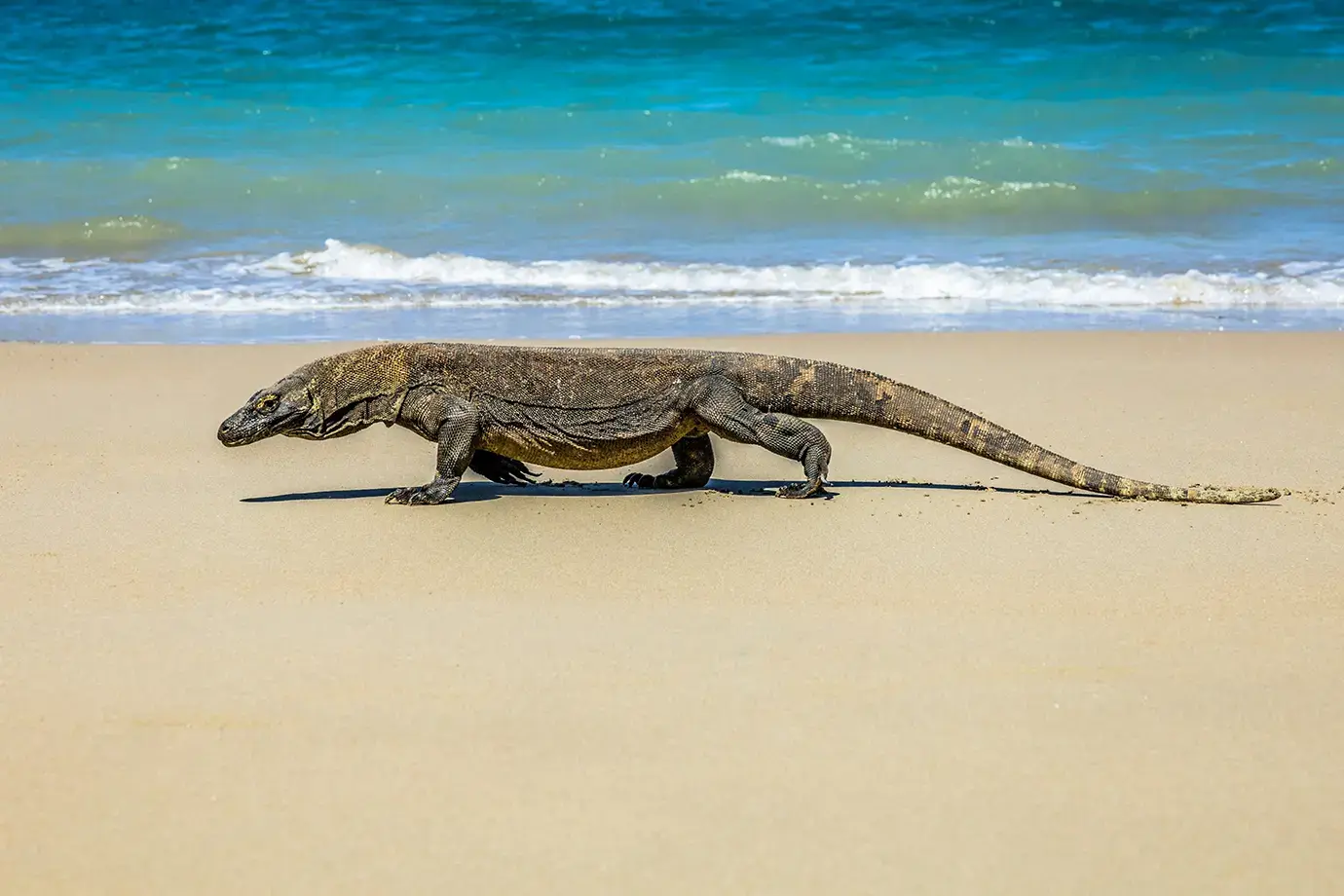
The Komodo dragon is the largest living lizard on Earth, an apex predator up to 3 meters long. It lives nowhere else in the wild. An apex predator sits at the top of its food chain, with nothing that hunts it. Understanding the animal before you meet it changes the trek entirely. You stop seeing a big lizard and start seeing one of evolution’s most formidable survivors.
Dragon Biology and Behavior
Komodo dragons are heavy, powerful ambush hunters built to bring down prey far larger than a person. Adults reach up to 3 meters and commonly weigh 70 to 90 kg, with the largest males weighing even more. Females run a little smaller. They can sprint in short bursts of around 20 km/h, but they hunt by ambush, not by chase.
The bite is the dragon’s real weapon, and the science behind it is often misunderstood. The animal has venom glands in its lower jaw that release proteins that slow the blood’s ability to clot. The old idea that dirty, bacteria-laden saliva killed the prey has largely fallen out of favor. In practice, victims die mainly from massive blood loss, since the serrated teeth tear deep, ragged wounds. For large prey like buffalo, a dragon may bite once, then track the wounded animal for hours or days until it drops.
Their senses are tuned for finding food across a wide range. A dragon flicks its long, forked tongue to taste the air, a sense called chemoreception. It can detect a carcass as far as 9 km away. Adults are also cannibalistic, so the young are at real risk from their elders. Juveniles spend their first few years living in trees to stay out of reach, and they can live up to 30 years in the wild.
Komodo dragons are listed as Endangered, with an estimated 3,000 to 3,400 left in the wild. Their whole world is tiny, a range of under 1,000 square kilometers. Few large predators anywhere survive in so small a space, which is part of what makes the encounter feel so singular.
How Do Komodo Dragons Reproduce?
Komodo dragons carry one of the strangest reproductive tricks in the animal world. A female can lay fertile eggs without a male, a process called parthenogenesis, producing young from her own genes alone. She digs a nest, often in an abandoned ground-bird mound, and lays a clutch of around 20 eggs. The eggs then incubate for roughly seven to eight months before hatching. The hatchlings are on their own at once, so they climb straight into the trees to escape hungry adults. Few large animals pair solo reproduction with tree-dwelling young, which makes the dragon stranger still.
Where Do Komodo Dragons Live?
Komodo dragons live only on Komodo Island, Rinca Island, and parts of western Flores. Small, isolated groups also hold on across the tiny islands of Gili Motang and Gili Dasami. Padar Island, the famous viewpoint, no longer has a resident dragon population, so you climb it for the view, not the wildlife. The combined range is one of the most restricted of any large predator on the planet. Rising seas and a shrinking prey base put even that small range under pressure, which is part of why the park guards it so closely.
An Island-by-Island Guide to Komodo National Park
Komodo National Park’s three main islands offer distinct experiences, and knowing the differences shapes your itinerary. Rinca is the reliable dragon encounter, Komodo is the namesake, and Padar is the viewpoint. Most travelers split them across two boat days, Rinca on one and Komodo with Padar on the other. The table below sets the three side by side.
| Factor | Rinca Island | Komodo Island | Padar Island |
|---|---|---|---|
| Distance from Labuan Bajo | About 2 hours by boat | About 3.5 hours by boat | About 3 hours by boat |
| Dragon encounters | Most reliable, often 4 to 12 on a 2-hour trek | Larger population but more spread out, so it varies | No resident dragons |
| Trek terrain | Flat-to-moderate dry savannah, a 2-hour ranger loop | Similar to a savannah, with short, medium, and long routes | A 450-meter climb to the viewpoint, steep in places |
| Main draw | The most practical dragon encounter; rangers know each dragon | The namesake island, which carries symbolic weight | A 360-degree view over three bays of white, black, and pink sand |
| Ranger station | Loh Buaya | Loh Liang, the park’s original station | No permanent station |
| Access limits | Capped daily, book ahead | Capped daily, book ahead | The tightest cap in the park, book the earliest |
| Best for | First-timers wanting a sure dragon sighting | Travelers wanting the full namesake experience | Photography and the iconic panorama |
Rinca Island, the Practical Choice
Rinca is the closest island to Labuan Bajo and the most dependable place to see dragons. Rangers at the Loh Buaya station know the resident animals by their individual markings. A typical 2-hour guided trek through dry savannah and mangrove edges turns up 4 to 12 dragons. You also pass Timor deer, wild boar, water buffalo, and plenty of birds along the way. The savannah itself surprises first-timers, all golden grass, volcanic hills, and scattered lontar palms, a world away from lush green Bali.
Komodo Island, the Namesake
Komodo Island is larger than Rinca and holds more dragons overall, but the animals are spread out more widely. The Loh Liang station runs three trek routes. You can choose a short, flat hour, a moderate two hours, or a longer, harder route of three hours or more. The longer route improves your odds of meeting dragons out in the wild rather than near the station. For many travelers, simply setting foot on Komodo Island carries a weight that Rinca cannot match. The name alone means something.
Padar Island, the Viewpoint
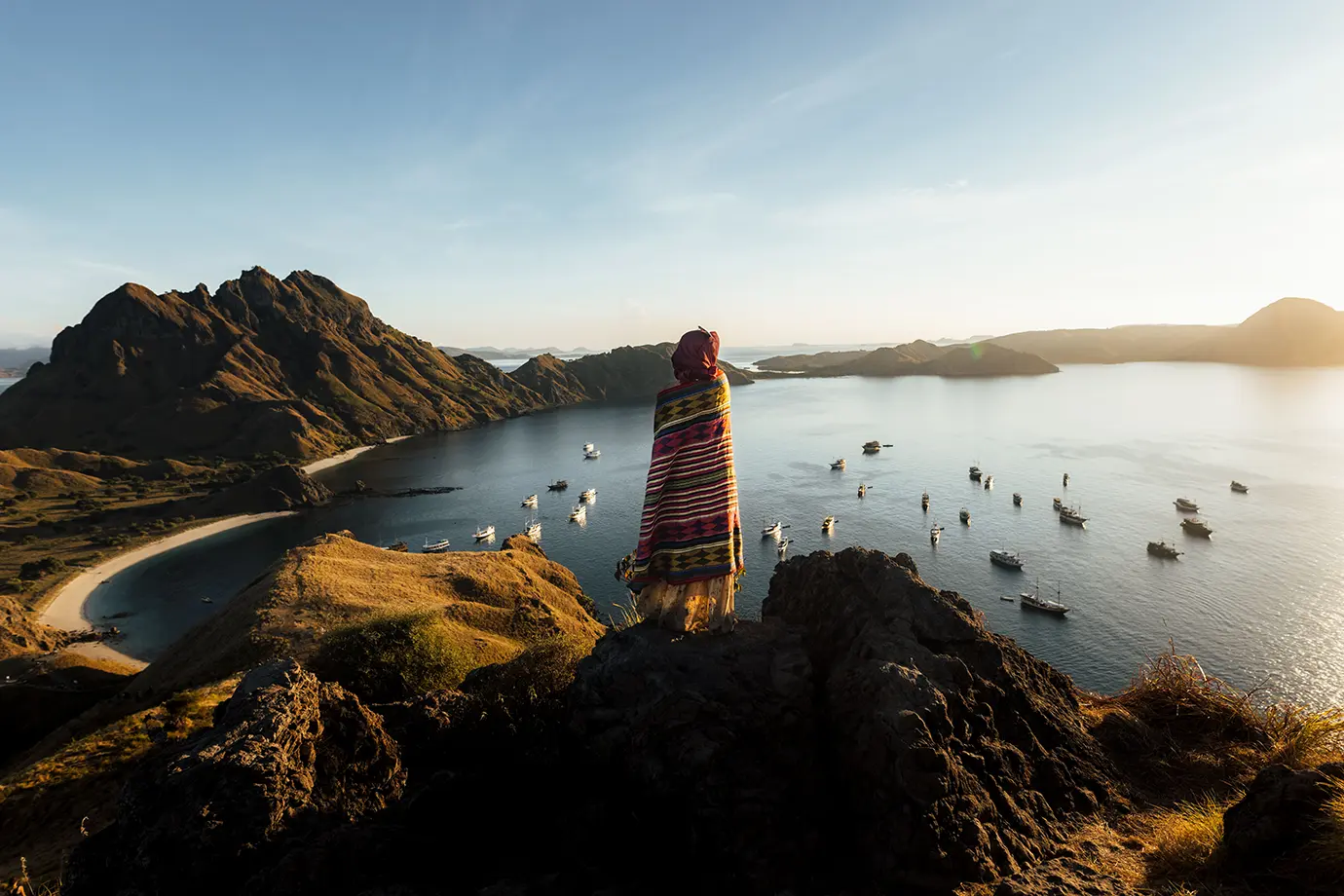
Padar delivers the park’s single most dramatic sight, a hilltop panorama over three curving bays of different-colored sand. White, black, and pink beaches sit side by side, ringed by turquoise water. The climb from the landing beach to the summit is about 450 meters and takes 30 to 40 minutes. The path is steep in spots, with loose gravel and open, exposed stretches, so it is tiring in the heat rather than technical. Bring water, wear a hat, and start early, because Padar has the tightest visitor cap in the park.
Private Boat vs Shared Tour Boat: Why It Matters Here
The choice between a private charter and a shared tour boat is the single most important decision in a Komodo trip. It shapes the dragon trek, the snorkeling, and the whole pace of the day. On a shared boat, you follow the group. On a private boat, the day follows you. Here is how the two compare.
The Shared Tour Boat
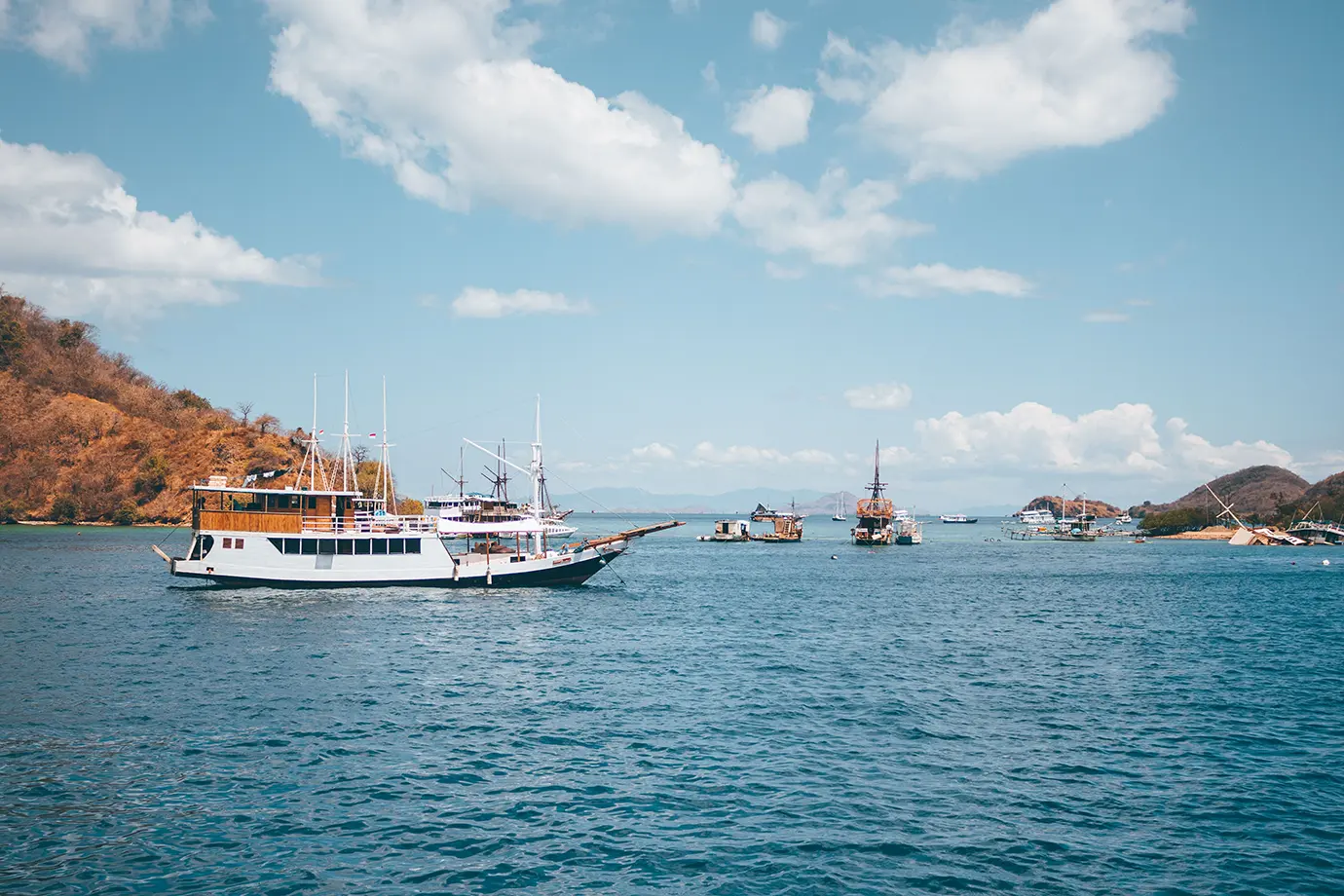
Most Labuan Bajo operators run shared day trips on speedboats or wooden boats, carrying 15 to 40 passengers. The itinerary, the stops, and the timing are all fixed. Snorkeling stops last 30 to 45 minutes, whatever the conditions. Dragon treks merge several groups, so you walk with 20 to 30 strangers and a handful of rangers. The experience is real, but it is crowded and moves to the operator’s clock. Shared trips are the cheapest way into the park, which is their main appeal.
The Private Boat Charter
A private charter runs for your party alone, and the captain shapes the day around you. Departure time, route, stops, and snorkeling length all bend to your pace. The dragon trek runs with your group and a dedicated ranger, never folded into another tour. A snorkeling stop lasts as long as the fish keep you interested. The boat waits for you, not the other way around. It is the same advantage Peregrine brings to the Phang Nga Bay speedboats in Thailand, and removing 40 strangers changes everything.
Liveaboard vs Day Trip
Some travelers weigh an overnight liveaboard, sleeping aboard the boat, against a land-based stay. For a comfort-focused trip, day trips from a proper resort win easily. Liveaboard cabins are small, the bathrooms are basic, and the rocking breaks up sleep. A land-based resort gives you a real bed, air conditioning, and quiet nights. The private day boat covers the park by day, and the resort delivers the recovery, which is a better balance for most travelers.
The Visitor Cap and How It Affects Your Planning
Komodo National Park now enforces a strict daily visitor cap of 1,000 people across the whole park. The cap is real, and slots sell out in the busy months, so booking is no longer optional. Per-island access is limited on top of the overall cap, and Padar is the most restricted of all. Plan early, and the system works smoothly. Turn up without a booking in peak season, and you may be turned away at the dock.
The practical upshot is simple. In the peak months of July and August, and the December-to-January holidays, slots can fill up weeks in advance. Operators must pre-purchase permits to guarantee access, and passport copies are required to secure them. Fees are paid in Indonesian rupiah, usually in cash at the ranger station, and the park charges more on weekends than on weekdays. A separate ranger fee covers your guided trek and is charged per small group.
Peregrine’s ground team handles all of this for you. They pre-book island access and ranger slots as part of the package, so you have no booking burden. The private-boat captain and the rangers then coordinate the day around which islands have slots open on your travel date. Simply show up, passport in hand, and walk into the park.
Snorkeling and Diving, the Marine Side of Komodo
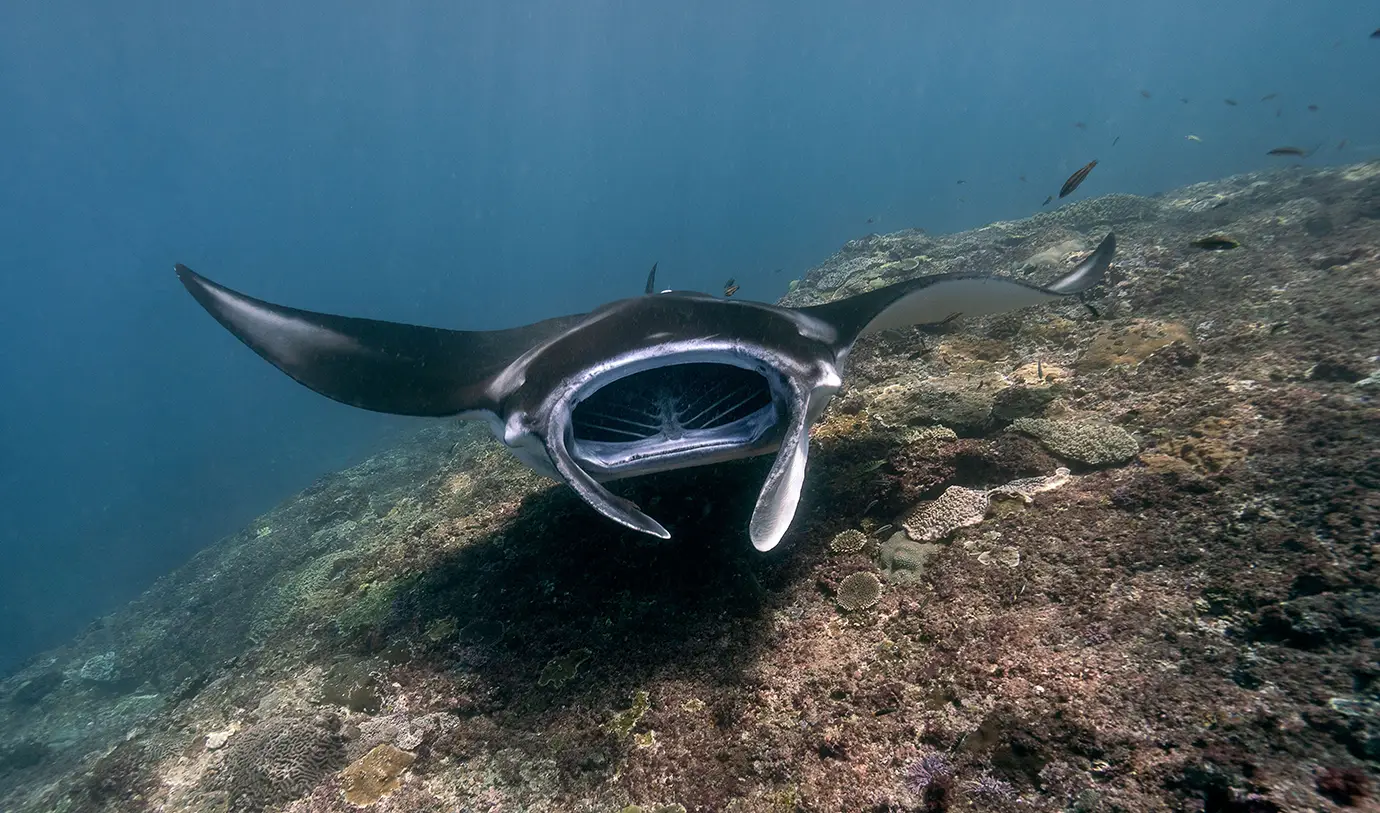
Komodo National Park sits in the Coral Triangle, the global center of marine life, so the waters rival the dragons. The park is home to over 1,000 fish species and hundreds of coral species. It also has one of the largest resident manta ray groups anywhere, with more than 1,200 identified individuals. Many travelers arrive for the dragons and leave raving about the reefs. You do not need to be a diver to see the best of it.
| Site | Experience | Level | Best For |
|---|---|---|---|
| Pink Beach (Pantai Merah) | Snorkeling straight off a pink-sand beach over healthy coral, calm and shallow | Beginner | Families and a post-trek cool-down |
| Karang Makassar (Manta Point) | A shallow reef where reef manta rays gather at cleaning stations and rise near the surface | Beginner to intermediate | Manta encounters are best from December to February |
| Mawan | A quieter second manta cleaning station, less visited than Manta Point | Beginner to intermediate | Calmer manta encounters |
| Batu Bolong | A pinnacle with strong currents, reef sharks, giant trevally, and barracuda | Advanced divers only | Experienced divers after big fish |
| Siaba Besar | A protected coral garden with resident sea turtles, calm and shallow | Beginner | Turtle sightings and family snorkeling |
| Taka Makassar | A tiny sandbar that vanishes at high tide, for swimming and photos | All levels | A rest stop and beach time |
You do not need a scuba certification to meet mantas, turtles, and coral gardens here. Pink Beach and Siaba Besar are suitable for first-time snorkelers wearing life jackets. Karang Makassar asks for comfort in open water, but the mantas glide up to you rather than the reverse. The private-boat model matters again, since your party controls how long each stop runs. On a shared boat, the whistle blows at 30 to 45 minutes, no matter what is below you.
Labuan Bajo, Your Base
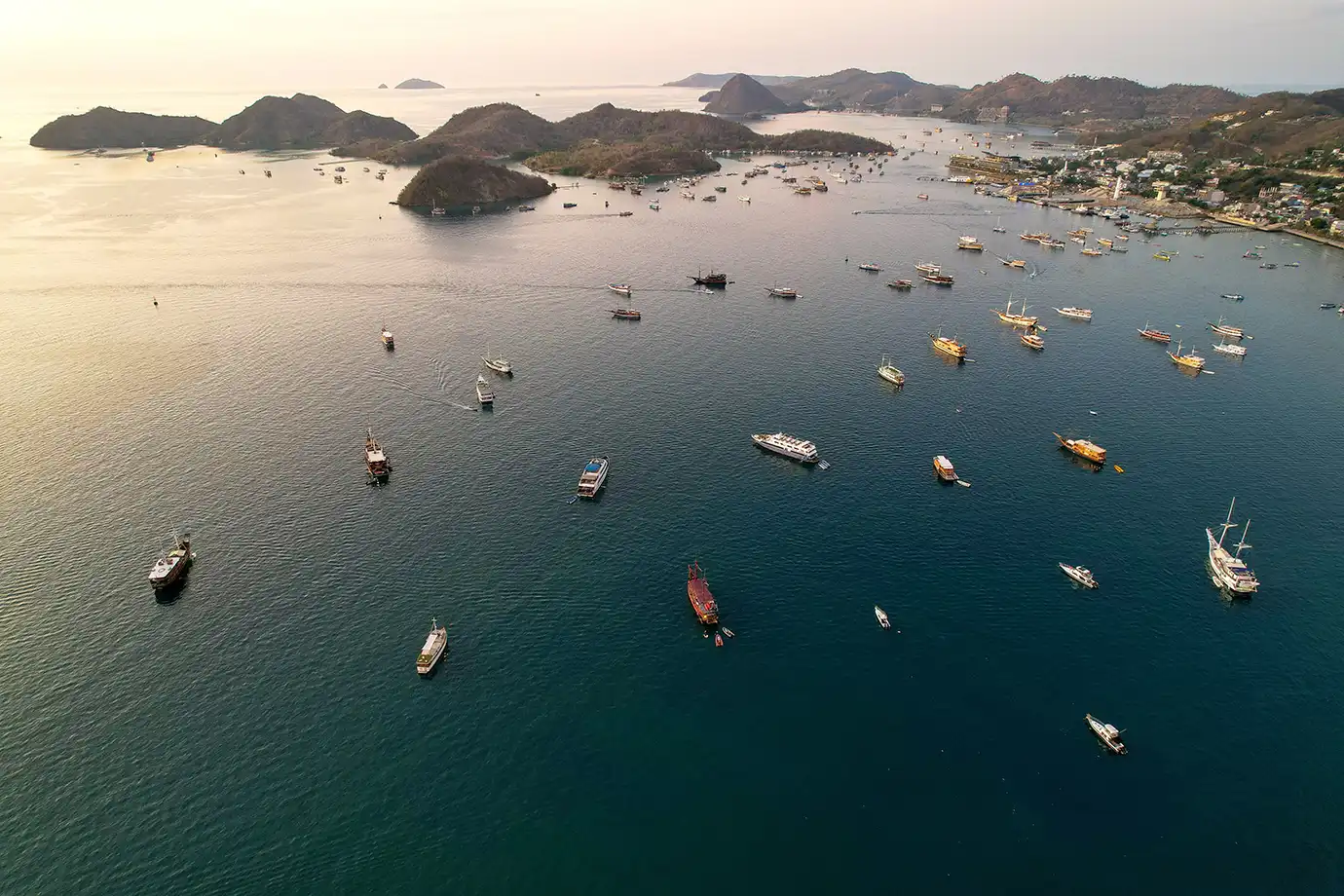
Labuan Bajo is a small fishing town on the western tip of Flores that has become the gateway to Komodo National Park. It carries a frontier-meets-tourism feel, with basic infrastructure sitting next to smart new boutique hotels. The town is the staging area, not the destination. The real draw is the harbor at your doorstep and the park just beyond it.
How Do You Get to Labuan Bajo?
Labuan Bajo is a short domestic flight from Bali, roughly 75 minutes, with several departures a day. The airport sits about 10 minutes from the town center, so transfers are quick. From Labuan Bajo, everything in the park is reached by boat. A private car handles the short hops on land, and the private boat handles the water.
Where to Stay and How Many Nights
Plan on two to three nights in Labuan Bajo for a full Komodo visit. Stay at an ocean-view boutique above the harbor, where the sunset over the Flores Sea and the traditional phinisi sailing boats make the evenings. Peregrine uses a leading harbor-view resort as its Komodo base. A typical rhythm runs like this. Day one arrives and settles in for the harbor sunset. Day two takes the first private boat day: Rinca and snorkeling. Day three takes the second, Padar, Komodo Island, and Pink Beach, before an evening or next-morning departure.
What Else Is Near Labuan Bajo?
Labuan Bajo offers a few worthwhile stops beyond the dragon islands. Kalong Island, also called Bat Island, sits out in the bay. At dusk, thousands of giant fruit bats lift off the mangroves against the sunset, a genuine spectacle. Rangko Cave, north of town, holds a clear saltwater pool inside a limestone cavern. Inland Flores adds waterfalls and traditional villages for travelers with an extra day. Your private boat can fold the Kalong bat sunset into the end of a park day.
What to Pack for a Komodo Boat Day
Pack light for a Komodo boat day, but do not skip the essentials: sun protection, water, and the trek. The days run long, hot, and fully exposed, on open decks and treeless savannah. A little preparation keeps the heat from wearing you down before the dragons even appear.
- Reef-safe sunscreen, a wide-brim hat, and sunglasses, since there is no shade on the boat or the trek
- A refillable water bottle, because you dehydrate fast in the dry-season heat
- Closed walking shoes with grip for the Padar climb and the savannah trails
- A swimsuit and a rash guard worn under your clothes, ready for the snorkeling stops
- A dry bag for your phone and camera on the wet boat transfers
- Light long sleeves for sun cover, plus insect repellent for the island trails
- Motion-sickness tablets if you are sensitive, since wet-season crossings turn rough
When Is the Best Time to Visit Komodo?
Komodo National Park runs year-round, but the season shapes the sea, the dragons, and the marine life. The dry season, from April to November, gives the best all-around experience. Calm seas make the boat crossings comfortable, and the hot, dry weather keeps the dragons active. The table below breaks down the trade-offs.
| Factor | Dry Season (April to November) | Wet Season (December to March) |
|---|---|---|
| Sea conditions | Calm, comfortable crossings and smooth snorkeling | Rougher, larger swells, and the odd canceled trip |
| Dragon activity | More active and visible in the hot, dry months | Less active, sheltering from the rain more often |
| Snorkeling visibility | Good, often 15 to 25 meters | Variable, cut by rain runoff and plankton blooms |
| Manta rays | Present year-round at Mawan and Karang Makassar | Peak season, with larger groups as plankton-rich water draws them |
| Crowds | Higher, especially in July and August | Lower, despite the manta advantage |
| Temperature | Hot and dry, around 30 to 35°C on land | Warm and humid, around 28 to 32°C on land |
The strongest windows are April to June and September to November, with dry weather, calm seas, active dragons, and manageable crowds. July and August run the busiest of all. December to February bring the best manta encounters but the roughest seas. Peregrine’s Komodo package is timed for the dry-season sweet spot.
Safety: The Rules That Matter
Komodo dragons are genuinely dangerous animals, and the safety rules exist because dragons have injured and killed people. Treat every rule as a survival instruction, not a formality. The animals are fast, powerful, and unpredictable, and they can go from still to sprinting in under a second. Follow your ranger without exception.
- Always trek with a licensed ranger, since no visitor may walk Komodo or Rinca alone. The ranger carries a forked stick and knows the terrain and the individual dragons.
- Keep at least 5 meters from any dragon, because these ambush hunters launch from rest with no warning.
- Never feed a dragon, since it teaches the animal to link people with food, to everyone’s danger.
- Stay on the marked trail, as dragons lie hidden in grass and low brush.
- Never run, because running triggers a chase response. Walk calmly and do exactly as the ranger says.
- Keep the group together, and never fall behind or wander off on your own.
Two more points round out the rules. Some ranger stations have long advised women who are menstruating to tell the ranger, since dragons detect blood by scent. The practice varies by station, so follow the local guidance. On the water, wear your life jacket on every transfer and heed the captain on currents, since sites like Batu Bolong run strong and fast.
Frequently Asked Questions
How Many Days Do You Need for Komodo?
Two boat days are the standard. Day one takes Rinca Island for the dragon trek plus a snorkeling stop. Day two takes Padar for the viewpoint, Komodo Island for a second trek, and Pink Beach to finish. Add a third day if you want extended snorkeling or a manta-focused run to Karang Makassar and Mawan. Plan on two to three nights in Labuan Bajo overall.
Will You Definitely See Dragons?
On Rinca, a 2-hour ranger-guided trek turns up 4 to 12 dragons on a typical visit, so the odds are high and consistent. On Komodo Island, sightings depend on the season, the time of day, and your route, and the medium or long trek improves your chances. Padar has no resident dragons at all. For a near-certain encounter, Rinca is the pick.
Is the Private Boat Worth It?
Yes, for the same reasons a private car beats a shared tour bus: pace, timing, and the absence of 30 strangers. A private charter shapes the departure, route, stops, and snorkeling length around your party. The dragon trek runs with your group and a dedicated ranger, never merged with other tours. A snorkeling stop lasts as long as you like, rather than ending on a fixed whistle.
Can You Snorkel If You Are Not a Strong Swimmer?
Yes. Pink Beach and Siaba Besar offer calm, shallow, protected water that suits beginners wearing life jackets. Karang Makassar, the main manta site, asks for comfort in open water but not strong swimming, since the mantas come to you. Life jackets are provided on every Peregrine boat charter. Tell your guide your comfort level, and the day is built around it.
Are the Dragons Really Dangerous?
Yes. Komodo dragons are apex predators with a venomous bite, and fatal attacks on people, while rare, are documented. The safety rules- a ranger escort, a 5-meter distance, staying on the trail, and never running- are not polite suggestions. They are survival instructions. Respect the animal, keep your distance, follow the ranger, and the trek will be safe and unforgettable.
How Do You Book With the Visitor Cap in Place?
Book through your tour operator or the park’s system well in advance. Peregrine pre-books island access and ranger slots as part of the package, so you don’t have to manage any of it yourself. During peak months, secure your slots several weeks in advance. Walk-up visitors without a booking risk being turned away at the dock because the daily cap is filled.
What Is the Difference Between Rinca and Komodo Island?
Rinca is closer to Labuan Bajo, about 2 hours by boat, and the more reliable place to see dragons. A typical trek turns up 4 to 12 of them. Komodo Island is farther, about 3.5 hours, larger, and holds more dragons, but they spread out more. Rinca is the practical choice for a sure sighting, while Komodo Island carries the weight of the park’s namesake. Many travelers visit both on the two boat days.
Is Komodo Suitable for Children?
Children aged 8 and up can join the Rinca and Komodo treks with close parental care and ranger guidance. Padar’s steep climb suits children of about 10 and up. The boat days and snorkeling are suitable for children ages 6 and up who wear life jackets. Children under 8 should stay on the boat during the dragon treks, since the animals are truly unpredictable around small humans.
Plan Your Komodo Trip
Komodo rewards the traveler who comes ready to understand it. Learn the dragon before you meet it, choose a private boat over a crowded one, and give the reefs as much time as the treks. Do that, and the park delivers both a wildlife encounter and a marine one that few places on Earth can match.
Send us your travel dates, and we will build Komodo into a wider Indonesia trip at your pace. Email sales@peregrinetreks.com or message WhatsApp +9779851052413. We handle the flights from Bali, the private boat, the ranger slots, and the island permits.