


Hiking to the base camp of the Everest requires immense physical effort. Trekkers walk for hours every day in thin air and challenging weather conditions. Proper rest becomes essential for safety and enjoyment in the mountains. Luxury Lodges of the Everest Region offer warm rooms and soft beds to tired hikers. These properties focus heavily on excellent food quality and clean environments.
Guests enjoy much-needed privacy in attached bathrooms after long days on the trail. Premium service helps trekkers recover quickly and prepare for the next day. Warmth remains a top priority when outside temperatures drop below freezing. Rest determines how well a person performs at high altitudes. High-altitude environments demand strict hygiene to prevent stomach illness.
Quick Facts
- Best luxury lodge chain: Yeti Mountain Home
- Highest luxury hotel: Hotel Everest View
- Luxury lodges available in: Lukla, Phakding, Monjo, Namche Bazaar, Deboche
- Premium alternative chain: Everest Summit Lodge
- Average nightly cost: $250 to $400
Comfortable properties meet these demands perfectly and keep trekkers healthy. Sherpa hospitality adds a deeply human element to the adventure. Local staff welcome guests with hot tea and warm smiles. A luxury Everest trek changes the way people experience the Himalayas. Trekkers no longer need to suffer in freezing tents to see Mount Everest.
Modern amenities provide a haven in a harsh landscape. Good sleep quality directly improves acclimatization. A well-rested body adapts to thin air much more quickly than an exhausted one. Booking premium accommodation represents an investment in health and safety. Peregrine Treks and Tours designs itineraries to maximize comfort using these excellent properties.
Many Luxury Lodges of the Everest Region operate in the lower and middle valleys. These specific hotels transform a difficult physical challenge into a comfortable holiday. Trekkers experience the wild beauty of Nepal without sacrificing basic personal comfort. Planning an Everest Base Camp luxury trek requires understanding exactly what comfort means in this context. We guide you through the realities of mountain accommodation.
Expectations must match the harsh realities of the remote Khumbu valley. True luxury exists, but nature sets absolute limits on what humans can build. Altitude dictates every single aspect of hospitality in the mountains. We want our clients to enjoy every step of their trip. Reading our honest advice helps you prepare for the actual conditions ahead.
What Luxury Lodges Mean in the Everest Region
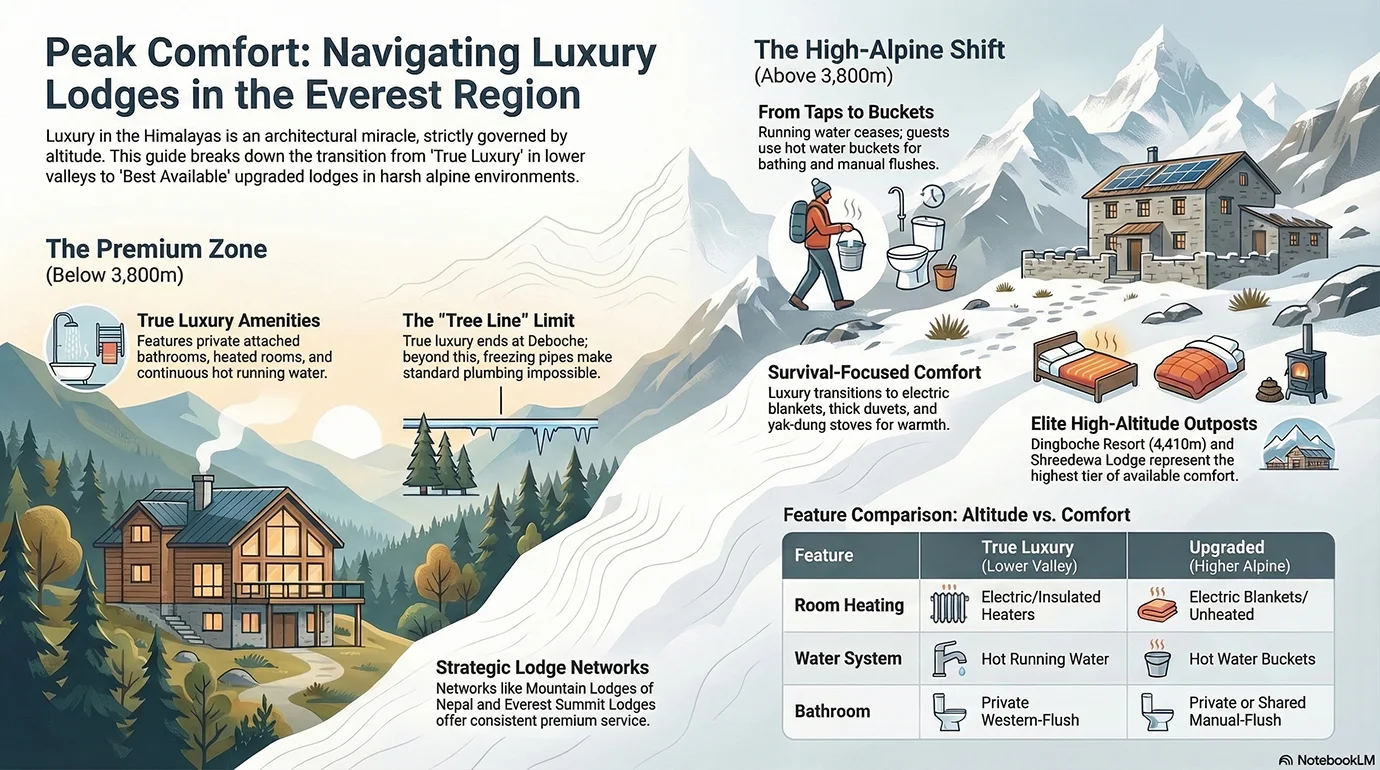
Urban five-star hotels do not exist in the high Himalayas. Luxury Lodges of the Everest Region define comfort differently, given the extreme mountain realities. True luxury lodges feature heated rooms, thick mattresses, and continuous hot water. Premium trekking lodges offer good beds and clean attached bathrooms without the extravagant extras. Standard teahouses provide simple plywood rooms and shared squat toilets down the hall.
Upgraded best-available lodges in high-altitude villages represent the finest options above a certain altitude. These high-altitude properties offer electric blankets and attached toilets where possible. They lack the consistent heating and pressurized water found lower down. Trekkers must understand these honest differences before booking a trip. Expecting city standards at high altitudes leads directly to disappointment.
Builders face massive challenges in the Khumbu valley. Roads do not connect the Everest trail to the rest of Nepal. Porters and helicopters carry every single piece of wood, glass, and metal. Creating a comfortable room at 3,000 meters requires incredible logistical planning. Luxury Lodges of the Everest Region represent architectural miracles in a remote setting.
Luxury here means double-glazed windows keeping the cold wind out. Warmth means clean sheets and heavy duvets, not dusty sleeping bags—gourmet means eating fresh vegetables grown in valley greenhouses. True mountain luxury focuses on warmth, hygiene, and excellent food. Peregrine Treks and Tours partners with the finest Everest luxury lodges to ensure your comfort.
| Accommodation Type | Room Heating | Bathroom Style | Water System |
|---|---|---|---|
| True Luxury Lodges | Electric heaters | Private attached | Hot running water |
| Premium Trekking Lodges | Warm blankets | Private attached | Gas-heated showers |
| Standard Teahouses | None | Shared squat | Cold tap or bucket |
| Upgraded Best-Available | Electric blankets | Attached possible | Bucket of hot water |
The distinction between true luxury and upgraded lodges remains critical. Luxury Lodges of the Everest Region operate only where the climate allows plumbing to survive. Freezing temperatures destroy water pipes in the higher villages. Staff cannot provide running water when the entire valley freezes solid. Trekkers trade ultimate comfort for pure mountain adventure as they walk higher. We always keep our clients fully informed about these changing conditions.



Where Luxury Lodges Exist on the Everest Trek
True premium properties operate only in the lower and middle sections of the trekking route. Luxury Lodges of the Everest Region are clustered at specific elevations for practical reasons. Lower altitudes allow helicopters to regularly deliver heavy building materials and fresh food. Warmer temperatures prevent water pipes from freezing constantly during the night. Operators build beautiful properties in these accessible zones to maximize guest comfort.
Three main networks dominate the premium market here. Yeti Mountain Home, Everest Summit Lodges, and Himalaya Luxury Lodges provide excellent service. These lodge networks strategically place their buildings a few hours apart. Trekkers walk at a relaxed pace from one comfortable bed to the next. The true luxury zone ends near 3,800 meters.
Nature makes running high-end hotels beyond an invisible line near Deboche impossible. Luxury Lodges of the Everest Region stop operating at the tree line. Peregrine Treks and Tours books these specific properties for our premium clients. Every location offers a unique view and a warm Sherpa welcome. We detail the specific networks below to help you understand your options.
Yeti Mountain Home / Mountain Lodges of Nepal
Yeti Mountain Home recently rebranded as Mountain Lodges of Nepal. These properties set a very high standard for Luxury Lodges of the Everest Region. The Lukla property welcomes trekkers right off the airplane with warm hospitality. Guests enjoy a comfortable first night before starting their actual walk. The Phakding lodge sits beautifully beside the flowing river and offers a peaceful garden.
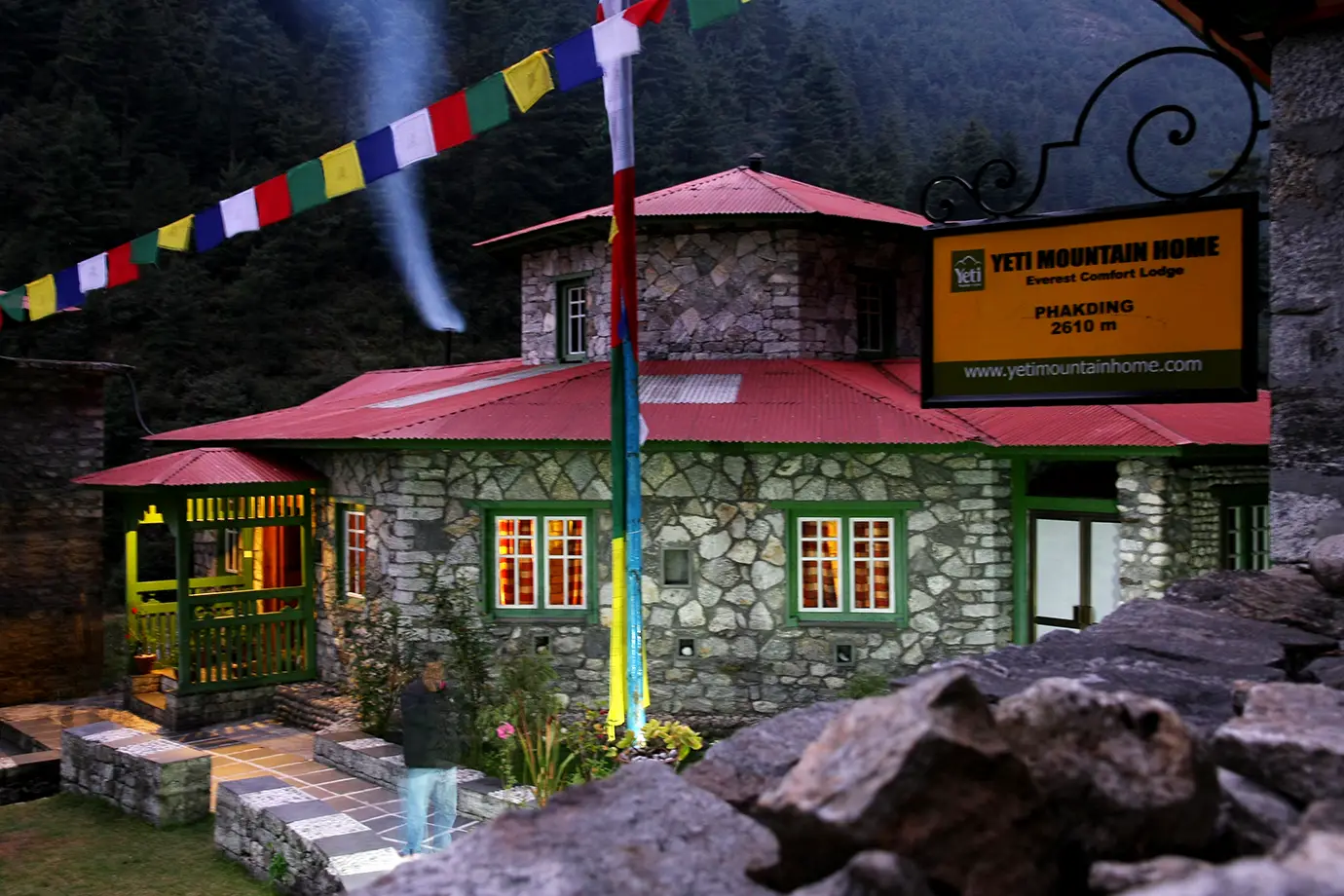
Monjo offers a quiet retreat near the national park entrance. The Namche building provides stunning views over the bustling Sherpa capital from its elevated position. Deboche serves as the final true premium stop on the main trail before the terrain becomes too harsh. Kongde offers an exclusive experience off the main path with spectacular panoramic views. Each location features electric blankets, rich wood interiors, and excellent dining.
Guests experience authentic Sherpa hospitality combined with exceptional premium comfort. Staff members greet arriving trekkers with hot towels and welcome drinks. The dining rooms feature massive windows facing the highest peaks. Bedrooms highlight traditional local architecture while providing modern insulation. The Kongde property stands out as a unique destination for luxury trekking in the Everest region.
Reaching Kongde requires a steep climb or a scenic helicopter flight. The view from Kongde includes Mount Everest, Lhotse, and Ama Dablam all at once. Yeti Mountain Home locations form the backbone of a perfect luxury Everest trek. Trekkers appreciate the consistent quality across all their different village locations.
| Location | Altitude | Key Feature | Route Importance |
|---|---|---|---|
| Lukla | 2,840 m | Airport access | Starting point |
| Phakding | 2,610 m | River views | First night acclimatization |
| Monjo | 2,835 m | Quiet forest | Park entrance rest |
| Namche | 3,440 m | Village views | Crucial acclimatization hub |
| Deboche | 3,820 m | Forest setting | Last true luxury stop |
| Kongde | 4,250 m | Panoramic views | Exclusive high-altitude retreat |
Everest Summit Lodges
Everest Summit Lodges operate four distinct properties designed for careful acclimatization. The Lukla lodge gives trekkers a comfortable start to their adventure. Monjo provides a peaceful environment away from the busy main trail sections. Mende sits high above the valley, offering incredible mountain panoramas from its ridge. Tashinga hides in a quiet pine forest away from the usual crowds.
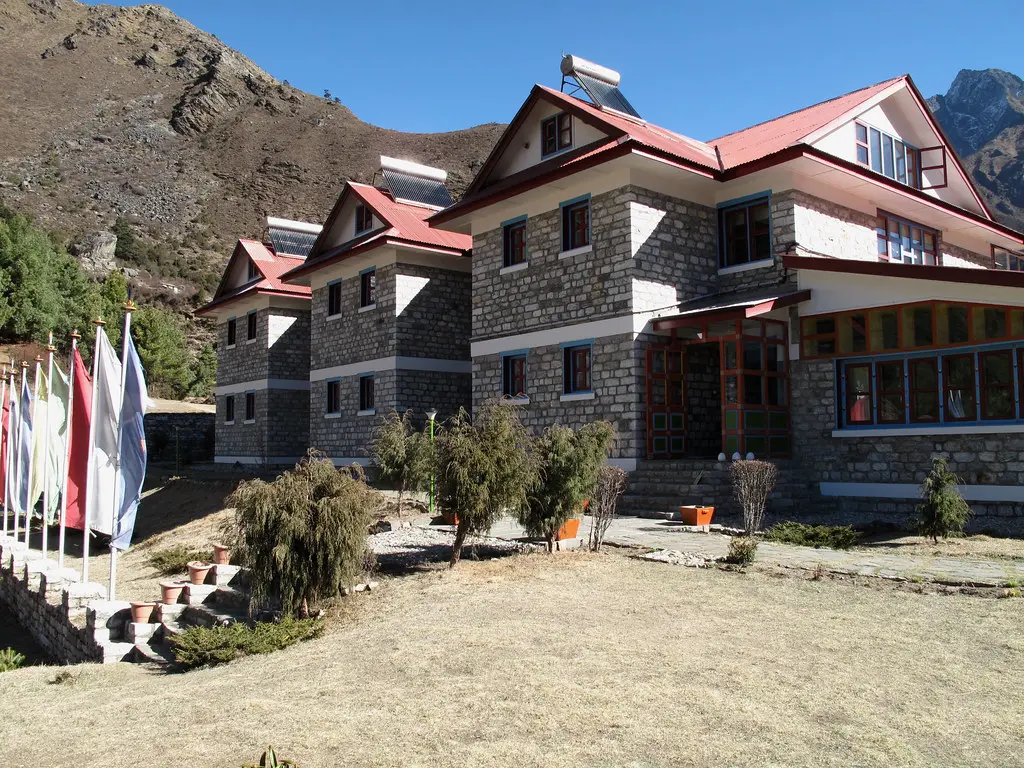
These locations matter because they allow trekkers to walk at a relaxed pace. They serve as perfect stops for a luxury Everest trek focused on slow altitude gain. Rooms feature heated beds and private bathrooms for maximum comfort. Guests enjoy beautiful landscaped gardens and well-stocked bars at the end of the day. These properties rank highly among the best lodges in the Everest region.
Building lodges in Mende and Tashinga gives trekkers quieter alternatives. Many people prefer avoiding the busy streets of Namche Bazaar. Mende offers direct access to the beautiful Thame Valley. Tashinga provides a perfect launching point for the climb to Tengboche. The company focuses heavily on sustainable practices and local employment.
Everest Summit Lodges blend traditional Sherpa building styles with modern interior comforts. Trekkers rest easy knowing their accommodation supports the local village economy. Our clients consistently praise the peaceful atmosphere found at these specific lodges. Choosing these locations guarantees a relaxing evening after a hard day of walking.
Himalaya Luxury Lodges
Himalaya Luxury Lodges run two exceptional properties on the main route. The Phakding location features private cottages spread along the riverbank. Trekkers love the wellness amenities and massage chair options available there. The Tengboche lodge sits near the famous monastery and offers sweeping views of the mountains. These two properties represent modern luxury lodges in the Everest Region.
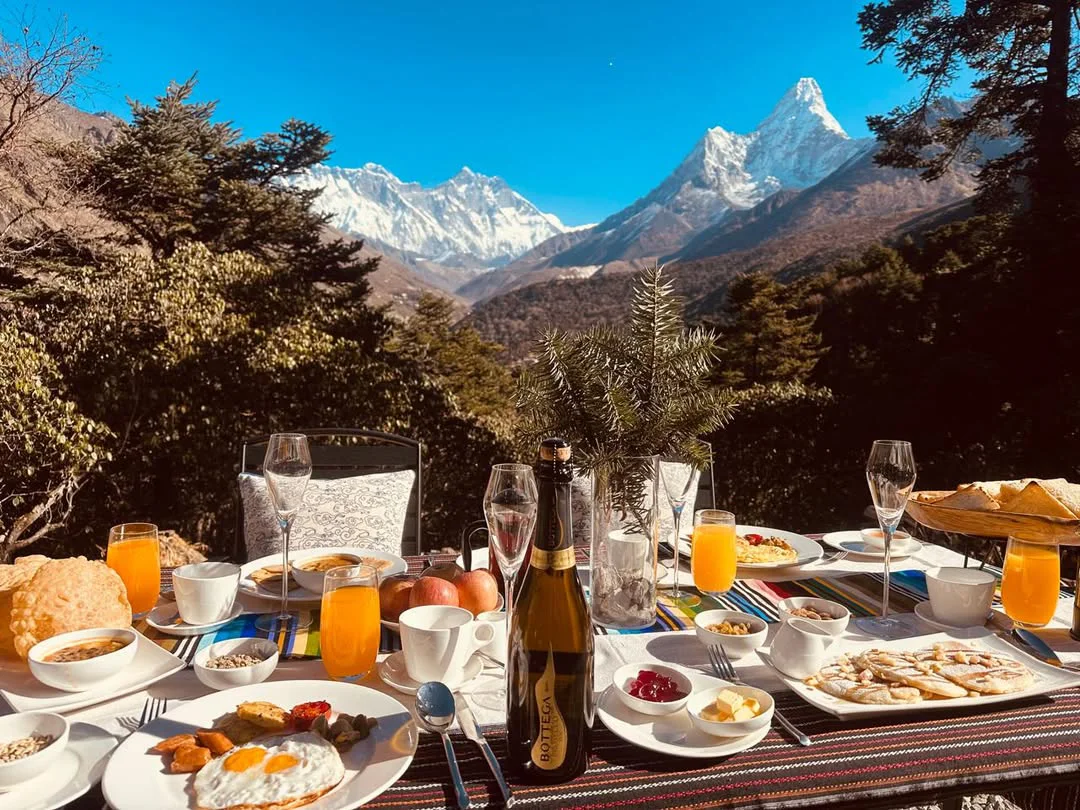
These locations matter greatly on the trekking route because of their strategic spacing. Phakding breaks up the first day of walking perfectly. Tengboche marks a major spiritual and visual highlight of the entire trip. Guests find warm rooms and gourmet food at both stops. These properties represent excellent options for Everest lodge accommodation.
The Phakding property feels like a high-end nature resort. Double-glazed windows keep the cold river air outside. The Tengboche property provides a warm refuge after a tough uphill climb. Hearing the monastery horns sound across the valley creates a magical atmosphere. Luxury Lodges of the Everest Region, like these, make the hard effort completely worthwhile.
Rivendell Lodge Debuche
Rivendell Lodge Debuche offers a peaceful, comfortable stay on the Everest Trail. Set in a quiet forested area, the lodge gives trekkers a calm place to rest before heading higher into the Khumbu. Guests enjoy clean rooms, a warm dining space, and a relaxed atmosphere after a long day of walking. Its location near Tengboche also makes it a convenient stop for travelers who want comfort, scenery, and easy access to the monastery area.
Lodge Coverage Above Deboche
Trekkers must accept a crucial route reality regarding mountain accommodations. Above Deboche, true Luxury Lodges of the Everest Region do not exist. Elevation makes running in premium properties impossible due to severe weather constraints. Water freezes inside pipes almost every night at higher camps. Helicopters struggle to carry heavy fuel and luxury supplies into thin air.
Trekkers leave premium comfort behind as they walk higher into the alpine zone. Upgraded best-available lodges take over from this point forward. Trekkers still find good beds and warm food to keep them going. You just lose the high-end amenities found lower down the mountain. The tree line ends shortly after leaving Deboche.
The landscape becomes rocky, shrubby, and glacial. Creating a heated, pressurized water system in this frozen desert remains impossible. Tour operators cannot cheat the laws of physics at 4,000 meters. Honest planning requires accepting this drop in comfort. Peregrine Treks and Tours prepares every client for this exact transition.
Best Available Upgraded Lodges Above Deboche
Trekkers need realistic information about high-altitude sleeping arrangements. The properties below represent the best options available in the upper valley. They replace the true Luxury Lodges of the Everest Region in the high alpine zone. We select these specific lodges to maximize your safety and warmth.
Pangboche – Shreedewa Lodge
Shreedewa Lodge serves as the best stop in the village of Pangboche. Trekkers find comfortable rooms with attached bathrooms here. The lodge sits right on the main trail, offering convenience and great views. The dining room stays warm and serves good food to hungry hikers. Pangboche acts as a crucial acclimatization stop for many itineraries.
Sleeping here helps the body adjust before pushing higher into the thin air. The comfort level drops slightly from Deboche, but remains very good for the altitude. The village is home to the oldest monastery in the Khumbu region. Trekkers can visit the monastery in the afternoon. The lodge staff provides excellent service to tired guests. Replacing true Luxury Lodges of the Everest Region begins here.
Dingboche – Dingboche Resort
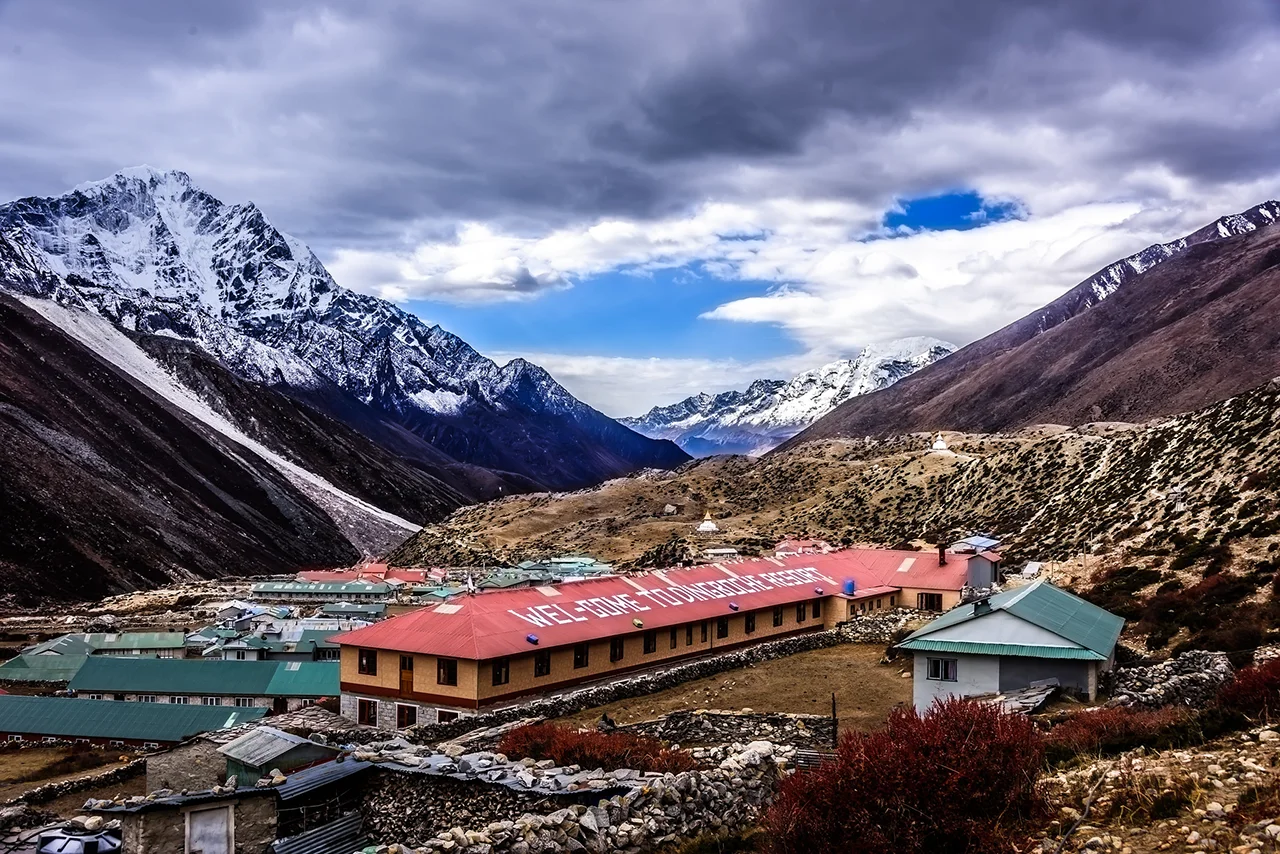
Dingboche Resort offers impressive comfort at an altitude of 4,410 meters. Trekkers need to spend two nights here to acclimatize properly. The resort features rooms with an attached bathroom for privacy. Guests can use a hot-water shower right in their room. The staff provides an electric blanket for extremely cold nights on the mountain.
Finding these specific amenities at this altitude is incredibly rare. It ranks among the best lodges in the Everest region for high altitude comfort. Trekkers appreciate the extra warmth here before tackling the hardest days. The views of Ama Dablam from the lodge windows look incredible. Staying warm here helps the body prepare for the push to Lobuche. Everest trekking lodges rarely offer electric blankets this high up.
Lobuche – New EBC Hotel
Lobuche sits at a harsh and freezing 4,940 meters. The new EBC Hotel provides the most comfortable rooms in this rocky settlement. Trekkers stay in rooms with an attached bathroom. Running water does not work due to sub-zero temperatures. Staff provide hot water in a bucket for basic washing.
The dining hall stays warm and welcoming despite the bitter cold outside. Comfort relies heavily on thick blankets and a good personal sleeping bag. The air feels very thin at this elevation. Walking up the stairs to the bedroom requires extra effort. The bucket shower provides a quick way to clean up after crossing the Thukla Pass. True Luxury Lodges of the Everest Region feel like a distant memory here.
Gorakshep – Himalaya Lodge
Gorakshep is the last place to sleep before reaching base camp. Himalaya Lodge provides electric blankets to keep trekkers warm at night. Attached bathrooms may be available in some specific rooms. Trekkers must be aware that bathroom hygiene remains poor due to the extreme altitude. Freezing temperatures make standard plumbing completely useless.
Water in the pipes and toilet bowls freezes solid overnight. Bathroom conditions become difficult for everyone staying there. Staff work hard, but the environment creates severe physical limits. Sleep becomes difficult due to the lack of oxygen. The electric blanket provides the only real comfort in this frozen outpost. Trekkers leave early the next morning to climb Kala Patthar.
Pheriche – Edelweiss Pheriche
Pheriche sits in a windy valley, often used on the return trip down the mountain. Edelweiss Pheriche offers surprisingly clean and comfortable rooms for weary hikers. Trekkers should expect thick carpets and very warm beds here. The dining room plays good music and serves great coffee. It acts as a perfect recovery stop after visiting base camp and walking long distances.
Guests find shared but very clean bathrooms here. The air feels incredibly thick and rich after returning from 5,364 meters. Breathing becomes easier immediately. The excellent food at Edelweiss helps restore lost energy quickly. Returning to lower altitudes brings you closer to the true Luxury Lodges of the Everest Region again.
| Upgraded Lodge | Village | Altitude | Key Amenities |
|---|---|---|---|
| Shreedewa Lodge | Pangboche | 3,985 m | Attached bathroom, warm dining |
| Dingboche Resort | Dingboche | 4,410 m | Attached bathroom, hot shower, electric blanket |
| New EBC Hotel | Lobuche | 4,940 m | Attached bathroom, hot water bucket |
| Himalaya Lodge | Gorakshep | 5,164 m | Electric blanket, basic attached bathroom |
| Edelweiss Pheriche | Pheriche | 4,371 m | Carpeted rooms, clean shared baths, great food |
How Lodge Comfort Changes as You Gain Altitude
Altitude dictates every aspect of mountain comfort. Luxury Lodges of the Everest Region operate easily below 4,000 meters. Higher up, the harsh environment takes complete control over daily life. Bathroom quality drops from flush toilets to basic bucket flushes. Water systems freeze solid overnight and stop functioning completely.
Heating in the main dining hall relies entirely on stoves fueled by dried yak dung. Bedroom heating disappears completely in the higher camps. Hygiene standards slip when water becomes scarce and frozen. Room comfort shifts from heated spaces to basic plywood walls. Shower access changes from gas-heated running water to a simple bucket of hot water.
Food variety shrinks because porters must carry every single ingredient up the mountain. Power supply switches from grid electricity to limited solar power. Cloudy days mean no electricity for charging phones or lighting rooms. Keeping warm requires wearing down jackets inside the lodge. Understanding these changes prevents shock during an Everest Base Camp luxury trek.
The higher you climb, the harder hospitality becomes. True Luxury Lodges of the Everest Region rely on complex infrastructure. Freezing weather destroys that infrastructure quickly. Local lodge owners do their absolute best to keep guests happy. They boil water continuously to provide warm drinks and hot buckets. Peregrine Treks and Tours educates clients about these specific altitude challenges.
Cost of Luxury Lodges in the Everest Region
Travelers often ask about the daily prices. Luxury Lodges of the Everest Region cost between $250 and $400 per night. Location dictates the exact room price. The extreme altitude influences the daily operational costs. Logistics drive the high prices in the mountains. Helicopters transport the heaviest building materials. Porters carry fresh food up the mountain daily. Yaks transport heavy gas cylinders for the kitchens.
Such logistics significantly increase the daily room rate. The price includes an attached private bathroom. The cost covers unlimited hot showers. Guests receive an electric blanket for supreme warmth. The payment pays for high-quality gourmet meals. The chefs cook expensive imported food items. The price always includes premium customer service. The staff works hard to maintain clean facilities.
Trekkers find the cost completely reasonable. The comfort justifies every single dollar spent. Luxury Lodges of the Everest Region provide immense value. Guests avoid sickness through better daily hygiene. Trekkers sleep better in heated rooms. The extra money buys true peace of mind. Luxury Lodges of the Everest Region prioritize health. Hikers feel strong and energetic every single morning.
What Travelers Should Expect from Luxury Lodges of the Everest Region
True Luxury Lodges of the Everest Region deliver specific comforts to their guests. The room’s style features traditional Sherpa design, mixed with modern touches. Bedding includes thick mattresses, clean sheets, and heavy duvets. Attached bathrooms feature western-flush toilets and hot showers. Dining room comfort centers around a warm stove and comfortable seating.
Mountain views look spectacular directly from the bedroom windows. Hospitality shines through polite and attentive Sherpa staff. Electricity runs reliably for lighting throughout the evening. Wi-Fi connects trekkers to the outside world, though speeds vary by location. Charging ports exist right inside the bedrooms for easy device management.
Hot water runs freely from the taps in the lower villages. Guests can read books in cozy lounge areas. Some properties even offer heated towel racks to dry damp clothes. Luxury Lodges of the Everest Region provide a perfect mix of adventure and comfort. You wake up feeling refreshed and ready to walk.
Sherpa culture influences the design and feel of every premium lodge. You notice beautiful wood carvings and colorful paintings in the hallways. You experience the highest level of mountain hospitality available anywhere in the world. Booking these lodges transforms a grueling expedition into a pleasant holiday.
| Expectation Category | True Luxury (Below Deboche) | Upgraded (Above Deboche) |
|---|---|---|
| Room Temperature | Heated or heavily insulated | Unheated, electric blankets sometimes |
| Bathroom | Private, flush toilet | Private or shared, manual flush |
| Shower | Hot running water | Hot bucket water only |
| Power | Reliable grid or strong solar | Limited solar, hourly charging fees |
| Bedding | Premium mattress, heavy duvet | Basic mattress, clean blankets |
Food and Dining in Everest Luxury Lodges
Eating well keeps trekkers strong and healthy. Luxury Lodges of the Everest Region serve excellent meals to replenish burned calories. Breakfast includes eggs, porridge, pancakes, and fresh toast. Lunch on the route happens in simple teahouses along the dusty trail. Dinner back at the luxury lodge turns into a gourmet experience.
Tea and coffee flow freely all day to keep guests hydrated. Soups warm the body quickly after a cold walk. Bakery items like apple pie offer a sweet treat in remote areas. Nepali meals center on the famous Dal Bhat, which provides a massive energy boost. International food options include pasta, pizza, and grilled chicken.
Chefs use fresh vegetables grown in the lower valley greenhouses to ensure quality. Clean kitchens prevent the stomach bugs that ruin many trekking holidays. Boiled water makes drinking safe for everyone. Luxury Lodges of the Everest Region employ highly trained chefs to satisfy hungry hikers. You eat meals that rival good restaurants in Kathmandu.
Proper nutrition helps your body fight altitude sickness. The premium lodges offer varied menus to encourage eating even when you lose your appetite. Sherpa stew provides a hearty mix of vegetables and broth. Fresh fruit often appears as a dessert option in the lower lodges. Peregrine Treks and Tours ensures our clients eat the best food available on the mountain.
Realistic Expectations for Everest Base Camp Luxury Trek Accommodation
Setting the right mindset prevents disappointment on the mountain. An Everest Base Camp luxury trek does not equal a stay in a city hotel. Luxury in the Himalayas means being warm when it is freezing outside. It means having a private toilet when others use shared outhouses down the hall. It means eating fresh food delivered by helicopter instead of basic dried rations.
Urban five-star service cannot exist without paved roads and infinite electricity. Mountain Comfort focuses on essential human needs met with high quality. Trekkers pay for the massive logistical effort required to provide these simple comforts. Luxury Lodges of the Everest Region deliver absolute miracles of high-altitude hospitality. A broken pipe or a slow internet connection happens frequently.
Weather delays helicopter food deliveries. Understanding these limits makes the trip much more enjoyable. You learn to appreciate a hot cup of tea and a thick blanket. True luxury here means surviving a harsh environment with a smile. Peregrine Treks and Tours believes in setting honest, clear expectations for every client.
Sample Accommodation Flow on a Luxury Everest Trek
A well-planned itinerary maximizes comfort and ensures proper acclimatization. Trekkers fly into Lukla and stay at a premium lodge to start the trip. The walk to Phakding ends at a beautiful riverside property. Two nights in Namche allow bodies to adjust while enjoying excellent amenities. The trail leads next to Deboche or Tengboche for another restful night.
Trekkers enjoy their final night in the true Luxury Lodges of the Everest Region here. The route then pushes higher into the harsh alpine environment. Pangboche introduces the upgraded lodge experience at Shreedewa Lodge. Two nights at the Dingboche Resort include electric blankets to keep you warm. Lobuche brings trekkers to the New EBC Hotel for a tough night.
Gorakshep demands a difficult night at the Himalaya Lodge before reaching base camp. The return journey drops down to Edelweiss Pheriche for much better rest. A helicopter flight back to Kathmandu often replaces the long walk down. This flow perfectly balances acclimatization needs with the best available comfort. We design every Everest Base Camp luxury trek using this exact logic.
| Trek Day | Village Location | Standard | Purpose |
|---|---|---|---|
| Day 1 | Lukla | True Luxury Lodge | Arrival and rest |
| Day 2 | Phakding | True Luxury Lodge | First walk, low altitude |
| Day 3 | Namche | True Luxury Lodge | Steep climb recovery |
| Day 4 | Namche | True Luxury Lodge | Acclimatization rest day |
| Day 5 | Deboche / Tengboche | True Luxury Lodge | Last premium comfort |
| Day 6 | Dingboche | Upgraded Lodge | High altitude entry |
| Day 7 | Dingboche | Upgraded Lodge | Crucial acclimatization |
| Day 8 | Lobuche | Upgraded Lodge | Alpine zone survival |
| Day 9 | Gorakshep | Upgraded Lodge | Base camp push |
| Day 10 | Pheriche | Upgraded Lodge | Altitude descent recovery |
Who Should Choose Luxury Lodges of the Everest Region
Luxury Lodges of the Everest Region appeal to specific groups of travelers. Couples looking for a romantic but adventurous trip love the privacy. Older trekkers appreciate the comfortable beds and warm rooms. First-time high-altitude trekkers feel safer with premium facilities supporting them. Comfort-focused travelers refuse to sleep in freezing, unheated rooms.
Photographers need reliable electricity to charge their many camera batteries. Premium adventure travelers gladly pay extra for better food and superior hygiene. These lodges make the high Himalayas accessible to people who dislike rough camping. Walking the trail remains physically demanding for everyone. The premium lodges simply make the recovery process much better.
Anyone who values good sleep will find the extra cost completely justified. Peregrine Treks and Tours recommends these lodges to clients wanting a seamless experience. You focus entirely on walking and enjoying the view. The lodge staff handles all the difficult living arrangements for you. Luxury trekking in Everest opens the door for many new adventurers.
Route Map of Luxury Lodges
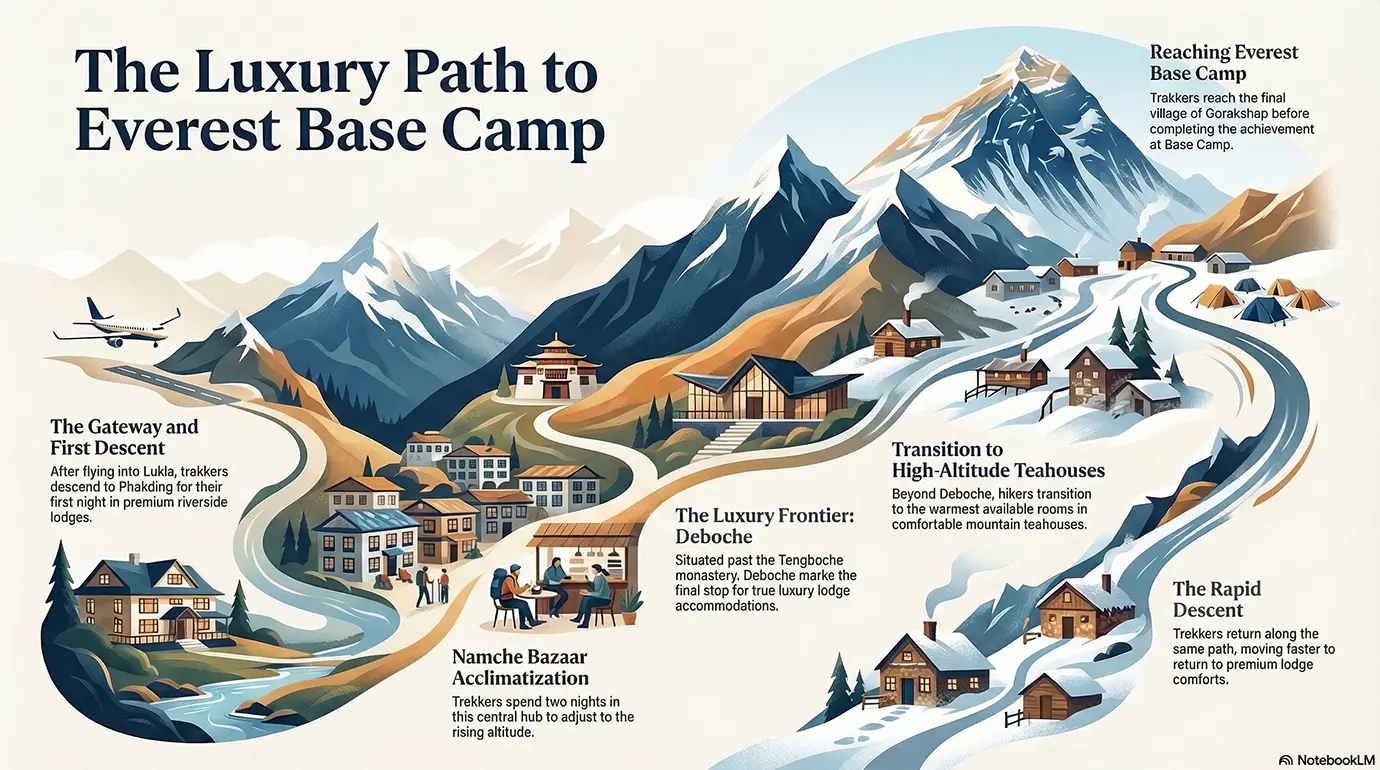
The trail follows a specific geographic path. Trekkers fly from Kathmandu directly to Lukla. Lukla is home to the very first premium lodges. The trail descends from Lukla down to Phakding. Phakding sits next to a large mountain river. Trekkers sleep in Phakding on the first night. The path goes north from Phakding toward Monjo. Monjo acts as the entrance to the national park.
The trail climbs a steep hill after Monjo. Trekkers walk slowly to avoid breathing problems. Hikers eventually arrive at busy Namche Bazaar. Namche Bazaar acts as the main mountain hub. Several luxury lodges in the Everest Region operate here. Trekkers spend two nights in Namche for acclimatization. The route goes eastward from Namche Bazaar. The trail stays mostly flat for a few miles.
Trekkers climb a hill to reach Tengboche monastery. The path drops down into a quiet forest. Trekkers arrive at Deboche before sunset. Deboche marks the final stop for true luxury. The path continues upward after Deboche. Trekkers walk past ancient stone walls. Hikers eventually pass through Pangboche and Dingboche. The air feels very thin in these high villages.
The trail reaches Lobuche shortly after. The final village stands at remote Gorakshep. Trekkers transition to comfortable teahouses after Deboche. The guides secure the warmest rooms available. Trekkers reach Everest Base Camp from Gorakshep. Hikers take photos and celebrate the massive achievement. The return trip follows the exact same path downward. Trekkers walk much faster going down the hill.
Trekkers enjoy the Luxury Lodges of the Everest Region again. The descent feels much easier physically. The premium beds feel amazing after the struggle at high altitude.
Best Time to Stay in Luxury Lodges of the Everest Region
Timing matters greatly for a successful and comfortable trek. Spring brings blooming flowers and steadily warmer temperatures. Autumn offers crystal clear skies and incredibly sharp mountain views. The weather remains the most stable during these two specific periods. Comfort peaks when the sun warms the valleys during the day.
Visibility allows trekkers to see Everest without being obscured by clouds. Booking demand surges during these prime trekking months. Luxury Lodges of the Everest Region sell out months in advance. Trekkers must secure their rooms early to guarantee premium comfort. Winter trekking brings bitter cold that even the best heating systems struggle to withstand.
Monsoon season brings heavy rain and constant flight cancellations. Planning a trip in October or April provides the best overall experience. We always advise clients to book their Everest lodge accommodation well in advance. Waiting too long forces you to sleep in lower-quality teahouses. The best lodges in the Everest region fill up incredibly fast.
| Trekking Season | Months | Weather Conditions | Booking Demand |
|---|---|---|---|
| Spring | March to May | Warm days, blooming rhododendrons | Very High |
| Monsoon | June to August | Heavy rain, cloudy views, and leeches | Very Low |
| Autumn | Sept to Nov | Clear skies, stable temperatures | Extremely High |
| Winter | Dec to Feb | Bitter cold, heavy snow risks | Low |
Cost Factors for Luxury Lodges of the Everest Region
Comfort comes with a noticeably higher price tag in the mountains. Luxury Lodges of the Everest Region cost significantly more to build and run. Helicopter transport inflates the price of every single item used in the lodges. Luxury lodge treks can cost twice or even three times the price of a standard teahouse trek. Premium trekking lodge treks offer a middle ground for budget-conscious hikers.
Standard teahouse treks remain the absolute cheapest way to see Everest. Trekkers pay for privacy, heat, and significantly better food. The investment pays off in better sleep and higher success rates. Getting sick from bad food ends a trip in an instant. Staying in premium properties drastically reduces the risk of illness.
The extra money buys peace of mind in a very remote area. Peregrine Treks and Tours offers transparent pricing for all our premium packages. You know exactly the level of comfort you’re purchasing. Luxury lodges in Nepal represent a unique value proposition. You buy safety, warmth, and excellent rest in a dangerous environment.
How to Prepare for a Luxury Lodge Trek in Everest
Preparation ensures a great trip regardless of accommodation style. Packing requires high-quality gear even when staying in nice places. Layering clothes helps manage the massive daily temperature swings. Altitude care involves drinking plenty of water and walking slowly. Hygiene items like wet wipes remain essential for higher camps.
Sleeping comfort depends on bringing a good sleeping bag for the days above Deboche. Expectations for bathrooms and showers must align with harsh mountain reality. Trekkers will use buckets instead of showers near base camp. Mental preparation matters just as much as physical fitness. Trekkers must accept that comfort decreases with increasing altitude.
Knowing exactly what to pack prevents freezing nights in Gorakshep. A thick down jacket remains mandatory for the evenings. We provide a detailed gear list to every client booking a trip. You need to prepare to allow you to fully enjoy the Luxury Lodges of the Everest Region. A positive perception of the altitude helps you to overcome the inevitable challenges of the mountain.
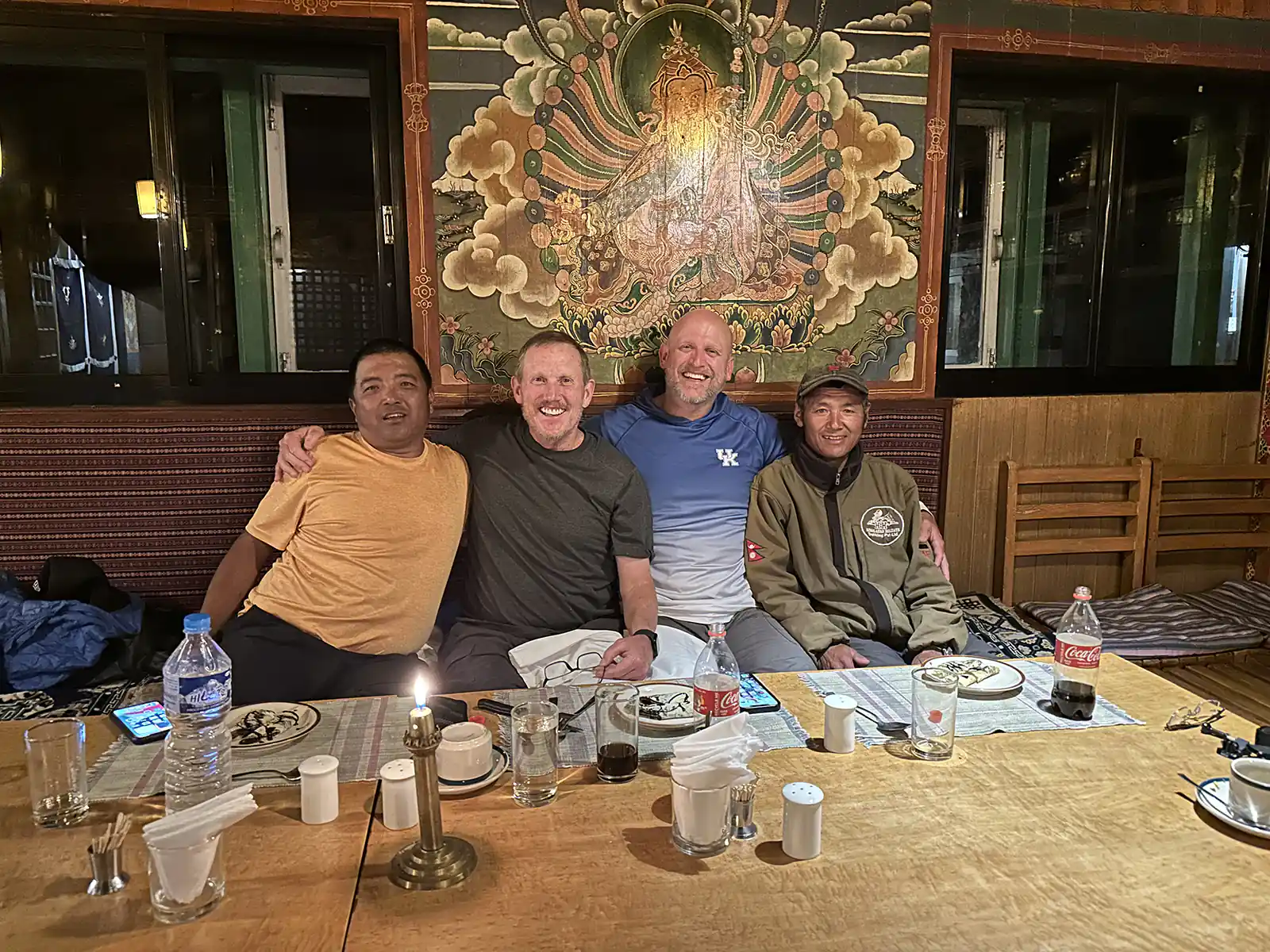
Honest Advice Before Booking Luxury Lodges of the Everest Region
Travelers need total honesty before spending money on a premium trip. Bathroom limits at high altitude shock many first-time visitors. Shower realities mean washing with a bucket in freezing air. Frozen water systems happen regularly above 4,000 meters. Gorakshep’s hygiene restrictions create a tough environment for everyone.
Early booking matters because premium rooms are extremely limited. The best lodge depends entirely on the route and exact elevation. Luxury Lodges of the Everest Region cannot cheat nature. Knowing the truth prevents angry complaints later. Paying for a luxury package does not stop altitude sickness.
Trekkers must still respect the mountains and walk carefully. Luxury makes the resting hours wonderful, but the walking hours remain tough. Peregrine Treks and Tours promises absolute transparency about mountain conditions. We want you to love your Everest Base Camp luxury trek. Honest preparation forms the foundation of a successful adventure.
Frequently Asked Questions (FAQ)
1. Are there real luxury lodges on the Everest Base Camp trek?
Yes. Real luxury lodges are available in Lukla, Phakding, Monjo, Namche Bazaar, and Deboche. Above Deboche, trekkers usually move into upgraded best-available lodges or comfortable teahouses rather than true luxury properties.
2. Where do luxury lodges end on the Everest Base Camp route?
True luxury lodges generally end around Deboche or Tengboche. After that point, the trail enters harsher high-altitude terrain, so plumbing, heating, and room comfort become more limited.
3. What makes a lodge “luxury” in the Everest region?
In the Everest region, luxury means warm rooms, thick mattresses, good insulation, attached bathrooms in many lower villages, hot water, and much better food and hygiene than standard teahouses. It does not mean a city-style five-star hotel.
4. How much does a luxury lodge in the Everest region cost?
A luxury lodge in the Everest region usually costs about USD 250 to USD 400 per night. Prices rise because operators must transport food, fuel, and building materials into a remote mountain area.
5. Do I still need a sleeping bag on a luxury Everest trek?
Yes. You can pack lighter than on a basic trek, but you should still bring a good sleeping bag for the days above Deboche. Near base camp, showers may turn into bucket washes, and room comfort drops sharply compared with the lower luxury lodges.
6. What is the best time to stay in luxury lodges in the Everest region?
Spring and autumn offer the best overall experience. The article highlights March to May and September to November as the most stable seasons, with April and October standing out as especially good months for comfort, views, and reliable trekking conditions.
7. Who should choose a luxury Everest lodge trek?
Luxury lodge trekking works well for couples, older trekkers, first-time high-altitude trekkers, photographers, and travelers who want better sleep, stronger hygiene, private bathrooms where possible, and more comfort during recovery hours. The walking is still physically demanding.
8. How far in advance should I book luxury lodges in Everest?
Book early, especially for spring and autumn. The article says premium lodges can sell out months in advance during peak trekking seasons, and late booking may force trekkers into lower-quality accommodation.
9. Are luxury lodges worth the extra cost on the Everest trek?
For many trekkers, yes. The extra cost buys better rest, better food, more privacy, stronger hygiene, and a more comfortable recovery after long walking days. The article presents luxury accommodation as an investment in warmth, sleep quality, and overall trekking comfort.
10. Can I do a luxury Everest trek all the way to base camp?
You can do a luxury-style trek, but not with true luxury lodges every night. Most itineraries combine real luxury lodges in the lower and middle trail sections with upgraded best-available lodges in Dingboche, Lobuche, Gorakshep, and other higher villages.
11. How much does a luxury Everest lodge cost?
Generally, Luxury Lodges of the Everest Region cost $250-$400 per night. The price includes fresh food and premium amenities. The extreme altitude increases daily operational costs.
Conclusion
A premium trek offers the best way to see the highest mountain in the world. Luxury Lodges of the Everest Region protect trekkers from the harshest elements. Warm beds and good food make the daily walking much easier. True luxury stops completely at Deboche. Upgraded lodges take over from there to provide basic survival comfort.
Nature dictates the rules of comfort above 4,000 meters. Realistic expectations guarantee a wonderful and safe adventure. Trekkers return home with incredible memories and great respect for the mountains. Choosing premium trekking lodges increases the likelihood of reaching base camp safely. The combination of Sherpa hospitality and high-altitude comfort creates an unforgettable experience.
Peregrine Treks and Tours stands ready to guide you on this amazing trip. We handle all the difficult lodge bookings and route planning. You focus entirely on walking and enjoying the spectacular Himalayan views. The best lodges in the Everest region wait to welcome you warmly. Planning your luxury Everest trek starts with understanding these simple realities.