


Mount Fuji is Japan’s most famous sight, the snow-capped volcano rising above a lake or framed by a red pagoda. Most first-time visitors plan a Mount Fuji day trip from Tokyo to see it for themselves. Here is the part the brochures skip. Close to half of them never see Fuji clearly.
Clouds hide the summit for days at a time, and summer is the worst season of all. The volcano makes its own weather, wrapping its upper cone in haze even when the sky below looks blue.
Plan around that, and your odds jump. Below you get the honest version. Which viewing area to pick: Kawaguchiko or Hakone. Which way to get there for your kind of trip. When Fuji actually shows itself, month by month. And the exact viewpoints worth your morning, with access notes for each.
The short version is this. Kawaguchiko is the better base for classic Fuji photos, especially from late autumn through winter. Hakone is the better base if you want hot springs, art, and a full day out that still delivers even when Fuji hides. Summer, from June through August, gives you the worst odds of the year.
Read the visibility table below before you pick your date.
Your Mount Fuji Day Trip from Tokyo at a Glance
Here is the whole decision in a few lines. Use it to pick your area, your date, and your transit, then read the section that fits your trip.
- Best area for photos: Lake Kawaguchiko, home to Chureito Pagoda and Oishi Park.
- Best area for hot springs and museums: Hakone.
- Best months for clear views: November through February.
- Worst months for clear views: June through August.
- Best transit: the Fuji Excursion train to Kawaguchiko, or the Odakyu Romancecar to Hakone.
- Trip length: about 12 to 14 hours door to door from Tokyo.
- The one-line rule: Kawaguchiko for Fuji itself, Hakone for the day out.
Kawaguchiko puts you closest to the classic view. Hakone gives you a richer day that holds up even in the clouds.
When Can You Actually See Mount Fuji?
You can see Mount Fuji most reliably from November through February, on cold, dry mornings before the clouds build. June through August are the worst months, when summer haze and cloud hide the summit for days on end. Aim for a winter dawn for the best odds of a clear view.
The Month-by-Month Visibility Guide
Here is how the odds run through the year. The bands reflect typical clear-morning visibility, not guarantees. Check the exact figures against the Japan Meteorological Agency or Fujiyoshida tourism records before you lock in a date.
| Month | Clear-view odds | Weather note | Verdict |
|---|---|---|---|
| January | Excellent | Cold, dry, clearest skies | Strongly recommended |
| February | Excellent | Cold and dry | Strongly recommended |
| March | Good | Warming, some haze | Recommended |
| April | Moderate | Sakura framing, hazier air | Good for photos despite haze |
| May | Moderate | Late-spring haze | Workable |
| June | Poor | Rainy season, heavy cloud | Avoid |
| July | Poor | Summer haze, climbing crowds | Avoid unless climbing |
| August | Poor | Peak haze, Obon crowds | Strongly avoid |
| September | Moderate | Improving late in the month | Workable later |
| October | Good | Autumn clarity returns | Recommended |
| November | Excellent | Clear skies plus fall color | Strongly recommended |
| December | Excellent | Cold, clear, fresh snow cap | Strongly recommended |
Why Summer Hides Fuji
Summer fails for two reasons. Warm, wet Pacific air hangs a thick haze over the horizon, softening the whole view to a pale smudge. And warm air rising off the volcano forms cloud around the summit that can sit for days. Even a blue-sky morning in July often leaves the upper cone buried, so the postcard shot is not there.
Why You Should Arrive by Early Morning
Go early, because Fuji shows itself best at dawn in every season. Clouds usually build from around 10 a.m. and thicken through the afternoon. Whatever month you choose, aim to stand at your viewpoint by 8 a.m. The first light also gives the cone a soft pink glow, called akafuji when it turns red, that repays the early alarm.
Hakone vs Kawaguchiko: Which Side Should You Choose?
Choose Kawaguchiko if your goal is to photograph Mount Fuji, since it sits closer and offers classic viewpoints. Choose Hakone if you want hot springs, museums, and a full day out that still works when Fuji hides. Your goal decides the side, not the other way around.
Pick Kawaguchiko for the View
Kawaguchiko wins on Fuji itself. It sits close to the mountain and holds the best viewpoints in the country, from Chureito Pagoda to Oishi Park and the lake’s north shore. Direct trains and frequent highway buses run from Shinjuku. The weakness is that it feels like a viewing town, with thinner dining and less to do. If the mountain stays hidden behind clouds all day, the town can feel thin.
Pick Hakone for the Whole Day
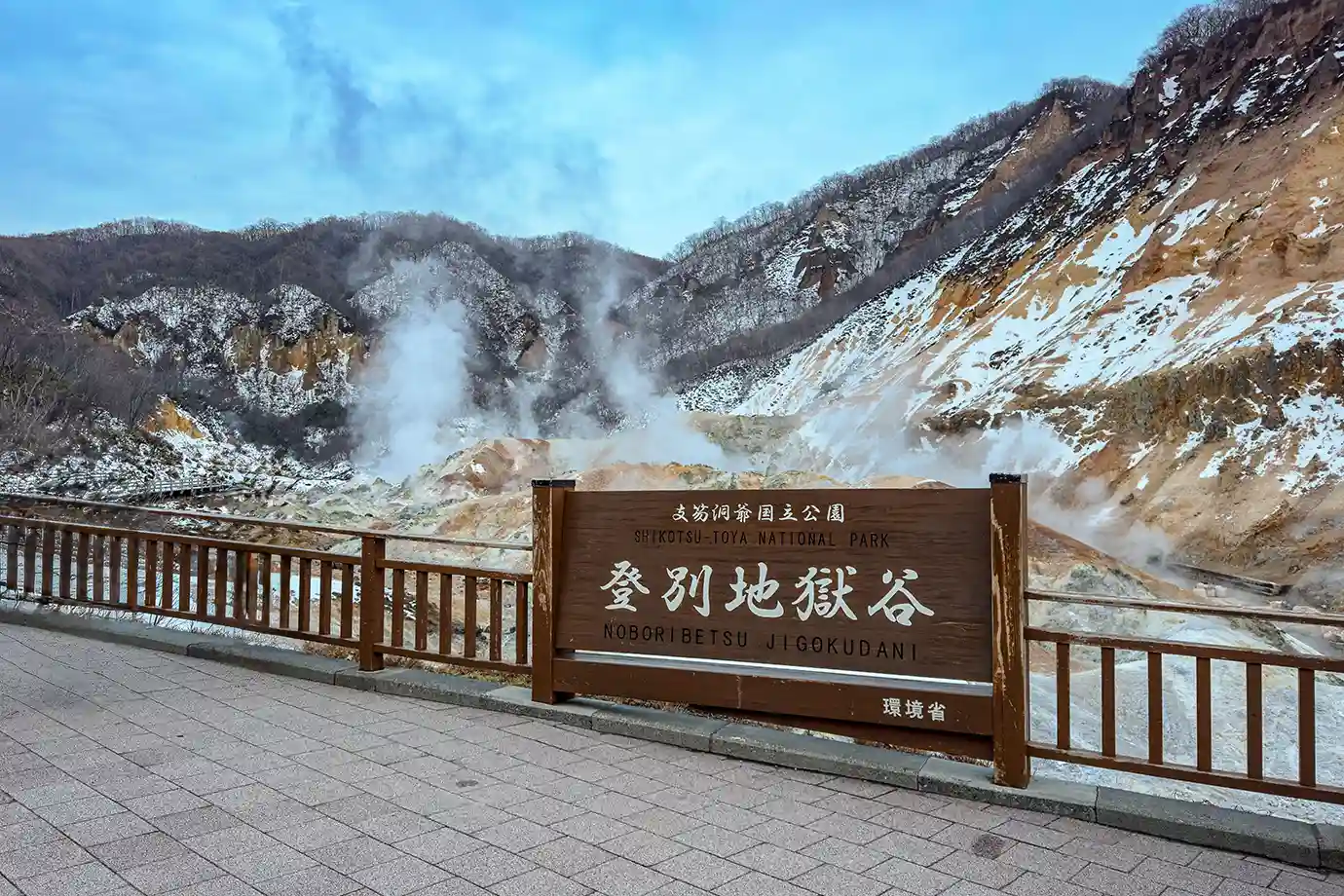
Hakone wins on everything besides the view. It is one of Japan’s finest hot-spring areas, with onsen at every tier. The draws include the renowned Hakone Open Air Museum, the steaming Owakudani valley and its black eggs, and a pirate-ship cruise on Lake Ashi. A single loop, the Hakone Round Course, ties it all together on one pass. Fuji is farther off and shyer here, so a good day never depends on it.
The Quick Decision
Match the side to your traveler type:
- Photographer or Fuji-focused traveler, choose Kawaguchiko.
- First-time couple wanting a well-rounded day? Choose Hakone.
- Family with young children, choose Hakone for the variety and less standing around.
- Older or mobility-conscious traveler, choose Hakone for its easier infrastructure.
- One shot at a clear Fuji, choose Kawaguchiko in winter.
- For an overnight onsen stay, choose Hakone, or a lakeside Kawaguchiko ryokan with Fuji-view rooms.
Where Are the Best Views of Mount Fuji?
The best views of Mount Fuji are Chureito Pagoda and Oishi Park near Kawaguchiko, plus the Hakone Shrine torii on Lake Ashi. Each frames the mountain differently, and each rewards an early, clear morning. Here is how to reach and shoot the ones worth your time.
Chureito Pagoda: The Postcard Shot
Chureito Pagoda is the classic Fuji image, a five-story red pagoda with the mountain rising behind it. It sits in Arakurayama Sengen Park in Fujiyoshida, reached by climbing about 400 stone steps from the parking area. The famous frame comes from the viewing platform, a short walk past the pagoda itself. Follow the platform signs rather than stopping at the first landing.
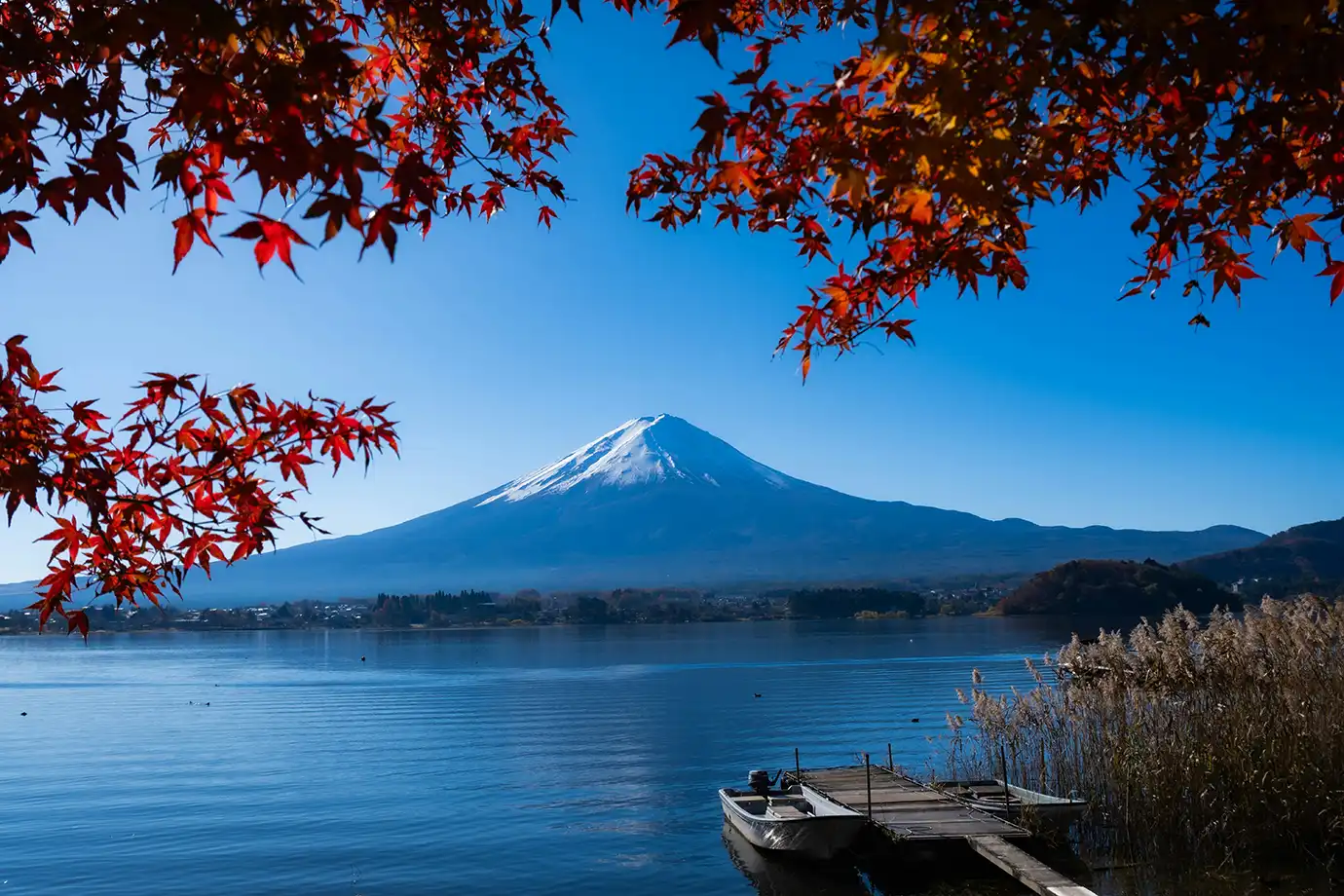
Go at dawn to around 9 a.m., before the crowds and the cloud. Early April adds cherry blossoms to the frame, the peak shot of the year, and photographers line up before 5 a.m. for a front-row spot. Mid-November brings the second peak of fall color.
Take the Fujikyu Railway from Kawaguchiko to Shimoyoshida Station. Then walk about 10 minutes to the base of the steps. The climb is short but steep, so give yourself time and skip it if you’re wearing stiff shoes.
Oishi Park: Fuji Across the Lake
Oishi Park frames Fuji across Lake Kawaguchiko from a lakeside garden, with seasonal flowers in the foreground. Red kochia bushes peak in mid-October, lavender colors the beds in July, and something blooms through most of the year. It feels calmer and less crowded than Chureito, and it asks for no climbing.
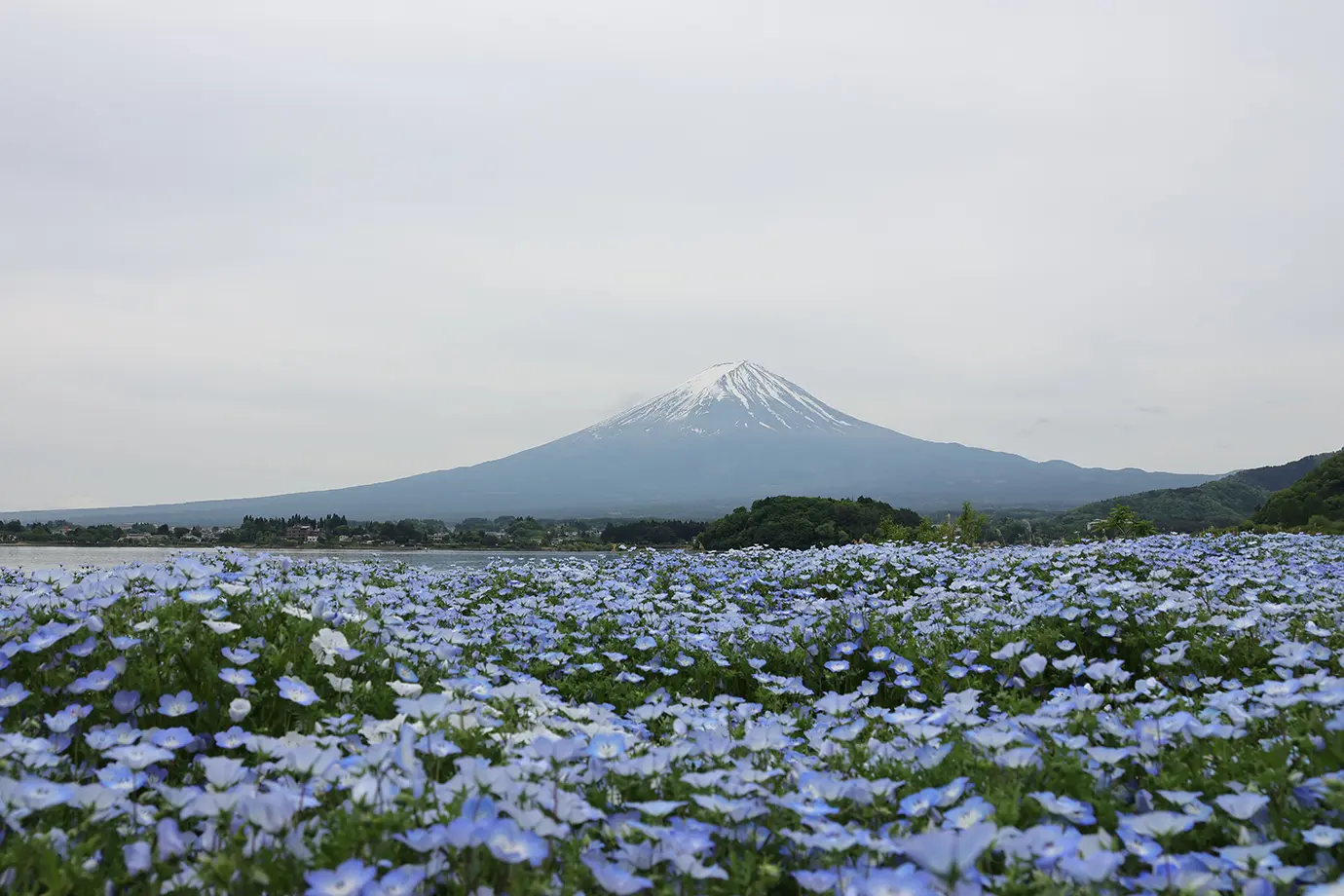
Morning gives you the clearest view of the mountain, though the afternoon light on Fuji’s face is lovely when it shows. Take the red sightseeing bus from Kawaguchiko Station, about 30 minutes, or rent a bike and ride the north-shore path.
From our guides: rent a bike at the station and follow the north shore slowly. You will find a dozen quiet Fuji angles that the tour buses never stop for, and the ride itself is half the pleasure.
Lawson Kawaguchiko: The Convenience-Store View
The Lawson Kawaguchiko view shows Fuji rising behind a blue-roofed convenience store. It went viral online and drew such large crowds that the town put up a screen to block the view. A version of that barrier remains in place. If it is still up, similar compositions can be found farther along the same street.
Whatever you do, stay out of the road and do not block traffic. The screen went up after real safety problems with visitors standing in the street for photos, so treat the whole area with care and courtesy. It is one shot among many, and not worth a close call with a car.
Kawaguchiko North Shore: A String of Views
The north shore of Lake Kawaguchiko gives you a run of Fuji views beyond Oishi Park. Rent a bike at the station and ride the lakeside path. Stop at the bright red torii of Kawaguchi Asama Shrine and the Momiji Kairo maple corridor. Late October to mid-November lights the maples deep red against the mountain. It is the most relaxed way to shoot Fuji, on your own clock and away from the coach crowds.
Hakone: Lake Ashi and the Floating Torii
Hakone’s signature Fuji view pairs the red Hakone Shrine torii, rising straight from Lake Ashi, with the mountain behind on clear days. Reach it on the Hakone Round Course, a bus from Hakone-Yumoto to Motohakone, then a 10-minute walk to the shrine.
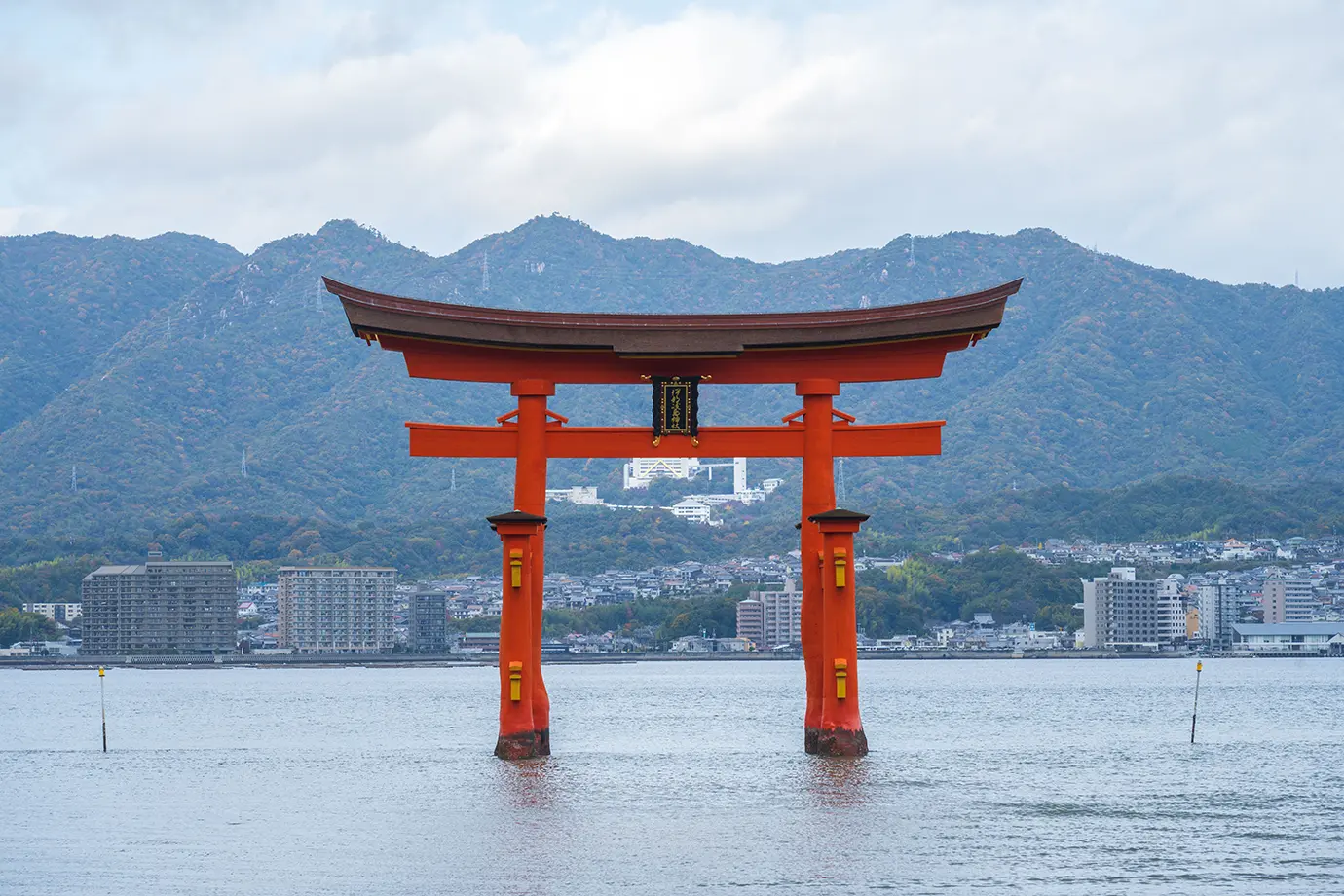
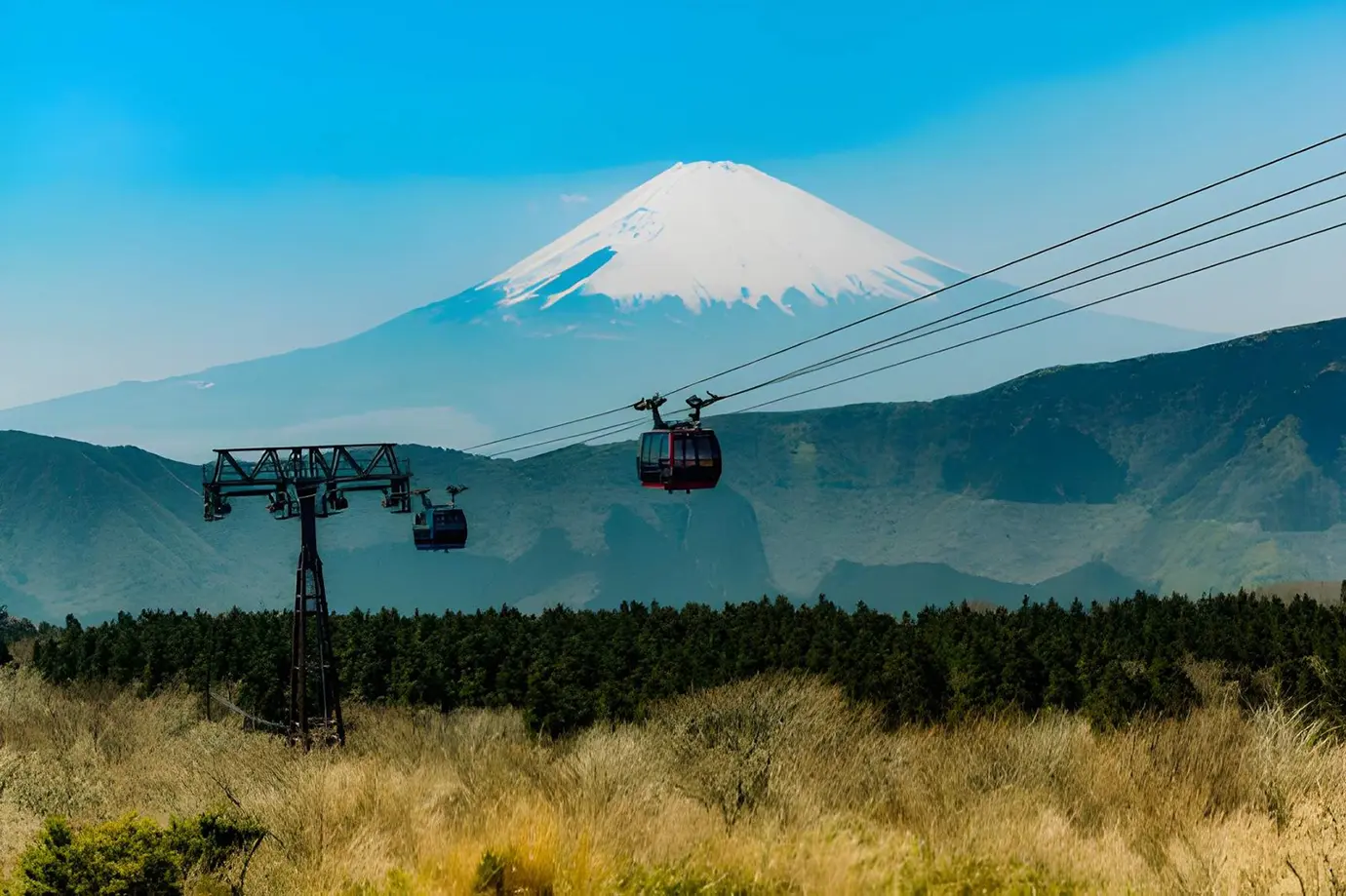
The waterline torii draws long photo queues, often half an hour in peak season. The clearest Fuji actually shows from the shrine steps above, not down at the gate. Up the ropeway, Owakudani adds another Fuji angle over its hissing sulfur vents. The air smells of struck matches, and eggs boil black in the hot spring water. The ropeway sometimes closes due to volcanic gas, so check the day’s status before you plan around it.
How Do You Get to Mount Fuji from Tokyo?
The best way to reach the Fuji area is the direct Fuji Excursion train from Shinjuku to Kawaguchiko, or the Odakyu Romancecar to Hakone. Buses cost less, private cars offer the most flexibility, and renting your own car is not worth the hassle for first-timers.
Fuji Excursion Train: Best for Kawaguchiko
The Fuji Excursion is the best public option for most travelers. It runs as a direct limited express from Shinjuku to Kawaguchiko in about two hours. Seats are reserved, and only a few services run each day, so book ahead in busy seasons. A Japan Rail Pass covers the Tokyo-to-Otsuki portion, but the Fujikyu Railway leg into Kawaguchiko requires a supplement. Best for independent travelers and photographers who want freedom at the lake.
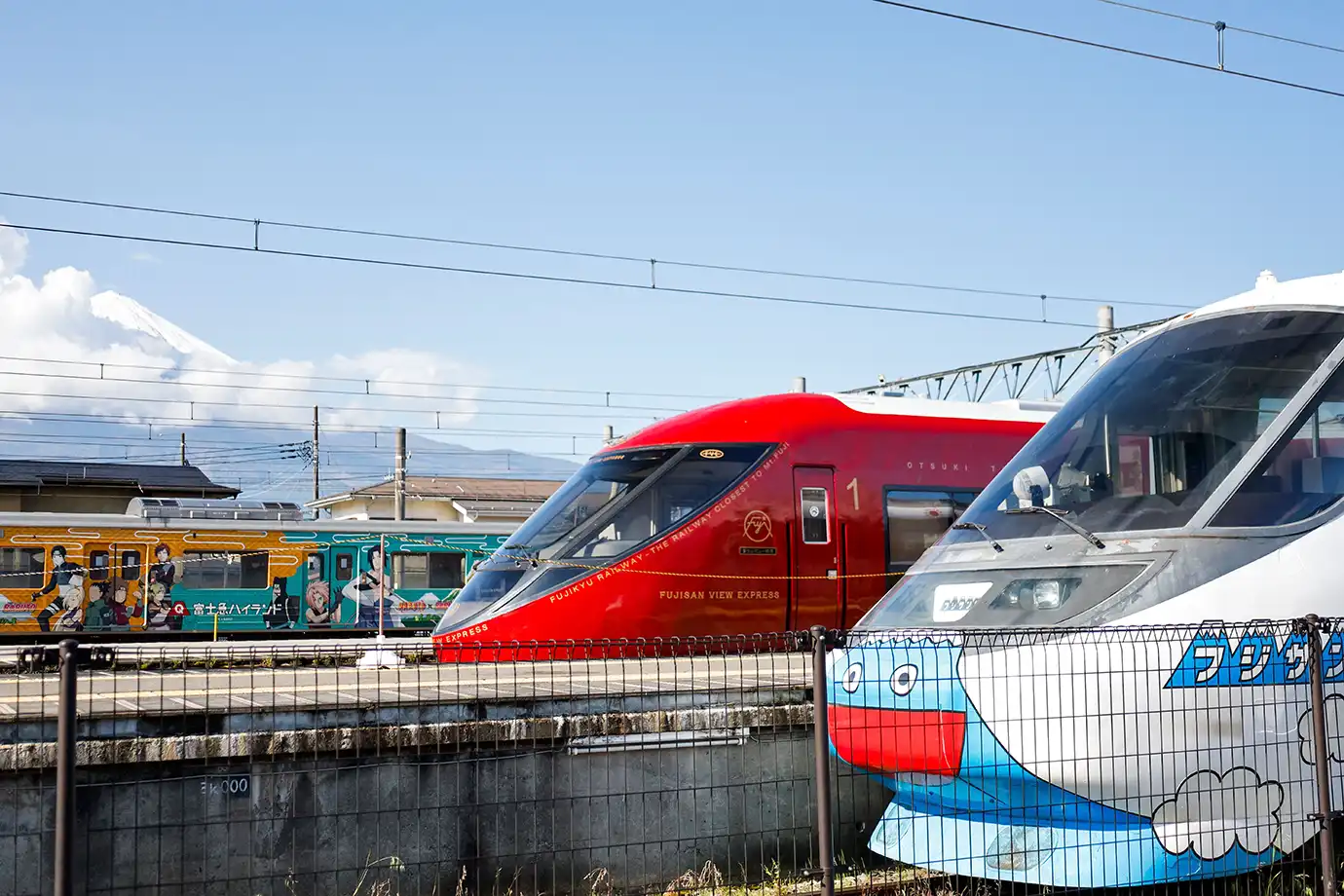
Odakyu Romancecar: Best for Hakone
The Odakyu Romancecar is the best public option for Hakone, a direct limited express from Shinjuku to Hakone-Yumoto in about 85 minutes. The Hakone Freepass includes the Romancecar, with a small supplement, for the entire Round Course of trains, buses, ropeway, and boat. Best for anyone building a full Hakone loop rather than chasing a single view.
Highway Bus: Best for Budget
The highway bus is the budget pick, running from Busta Shinjuku to Kawaguchiko in about two to two and a half hours, depending on traffic. Buses leave every 15 to 30 minutes and hold reserved seats. Book the earliest morning departure to beat both the midday cloud and the Tokyo-bound traffic. It is also your backup when the Fuji Excursion train sells out, which it does on clear winter weekends.
Private Car With Driver: Best for Flexibility
A chauffeured private car is the most flexible option, a full day of about 12 to 14 hours door to door. Your driver shapes the route around the light and the weather, hitting Chureito at dawn, the lake for lunch, and Oishi Park after. It is the top tier on cost, but for a group of four it lands near group-tour pricing per person, with far more freedom. Best for families, older travelers, and photographers who want no logistical friction.
Group Bus Tour: Best for No Planning
A group bus tour suits travelers who want zero logistics. It runs about 10 to 12 hours with a guide and set stops like the Fuji 5th Station, Oshino Hakkai, and the lake. The trade-off is fixed timing and rushed stops. If Fuji hides, the tour rolls on regardless of the sky. Best for solo travelers wanting company and first-timers who feel swamped by the transit.
Skip Renting Your Own Car
Do not rent a car for this trip as a first-timer. You need an international permit, the road signs are unfamiliar, and tolls run high. You also save no real time over a private car with a driver. Leave the mountain roads to someone who drives them every week.
Sample Mount Fuji Day-Trip Itineraries
Here are three tested day plans, one for photography at Kawaguchiko, one for the Hakone loop, and one flexible private-car day. Each runs dawn to evening and front-loads the morning, when Fuji is most likely to be out.
The Kawaguchiko Photography Day
Built around the best light and the classic viewpoints:
- 5:30 a.m. Leave Shinjuku on the Fuji Excursion train.
- 7:30 a.m. Arrive in Kawaguchiko; transfer toward Shimoyoshida.
- 8:00 a.m. Climb Chureito Pagoda for the postcard shot.
- 10:30 a.m. Take the sightseeing bus to Oishi Park.
- 12:30 p.m. Lunch on hoto, the local miso noodle stew.
- 2:00 p.m. Ride the north shore to Kawaguchi Asama Shrine.
- 5:00 p.m. Depart Kawaguchiko, reaching Shinjuku by around 7:00 p.m.
The Hakone Round Course Day
Built as a full day out that does not depend on Fuji:
- 7:30 a.m. Leave Shinjuku on the Romancecar.
- 9:30 a.m. Tour the Hakone Open Air Museum.
- 12:00 p.m. Lunch at Gora.
- 1:00 p.m. Ride the ropeway to Owakudani for the black eggs.
- 3:00 p.m. Cruise Lake Ashi to Motohakone.
- 4:30 p.m. Walk to the Hakone Shrine torii.
- 6:00 p.m. Depart, reaching Shinjuku by around 7:30 p.m.
The Private-Car Flexible Day
Built for groups and photographers who want to chase the weather:
- 6:00 a.m. Tokyo pickup by private car.
- 8:00 a.m. Chureito Pagoda at first light.
- 10:00 a.m. Fuji Subaru Line 5th Station, open in climbing season only.
- 12:00 p.m. Lunch at Kawaguchiko.
- 1:30 p.m. Oishi Park.
- 3:00 p.m. Lawson Kawaguchiko area.
- 5:00 p.m. Drive back for a Tokyo drop-off by around 7:30 p.m.
Should You Stay Overnight Instead?
Stay overnight if clear Fuji views matter most to you, since two mornings roughly double your chance of catching the mountain. An overnight also opens sunset and sunrise shots that day-trippers never see. Skip it on a short trip, when Kyoto and Osaka time matters more than a second try at the view.
When an Overnight Wins
An overnight pays off when the view is the whole point. If a single winter morning already runs strong odds of a clear Fuji, two mornings push you close to a sure thing. Staying also unlocks the dawn and dusk light, when the cone glows, and the lake goes still. A lakeside ryokan with a Fuji-view room turns the wait itself into the experience.
When to Just Day-Trip
Day-tripping makes more sense on a shorter trip. If your whole Japan trip runs under about eight days, an overnight at Fuji competes with time in Kyoto or Osaka that usually matters more. Winter travelers, with strong daily odds, can often catch a clear Fuji on a single well-timed day trip anyway.
What to Bring and What to Skip
Bring warm layers, a telephoto lens, cash, and a phone charger. Skip formal shoes, a heavy pack, and anything you do not need for one long day. The Fuji area runs colder than Tokyo, and its best viewpoints involve stairs and rural, cash-only vendors.
Pack These
- Warm layers, since the Fuji area runs about 5-10°C colder than Tokyo.
- A telephoto lens, ideally 200mm or longer, to pull Fuji in behind the foreground.
- Cash, since rural buses and lakeside vendors often take nothing else.
- A portable phone charger for a long day of maps and photos.
- Comfortable shoes that can handle Chureito’s 400 steps.
Leave These
Leave the formal shoes, the heavy backpack, and any gear you will not use in a day. Chureito’s steps punish stiff soles, and you carry everything up them yourself. Pack light and move fast, since the whole day rides on catching the morning.
Frequently Asked Questions
Is Mount Fuji Visible From Tokyo?
Yes, Mount Fuji is visible from parts of Tokyo on clear days, usually in the cooler months. Tall observation decks like Tokyo Skytree and Shibuya Sky offer distant winter views when the air is dry. For a real, close view, though, you need a day trip to the Kawaguchiko or Hakone area, roughly two hours from the city.
What Is the Best Month to See Mount Fuji?
The best months to see Mount Fuji are November through February, when cold, dry air brings the clearest skies and a fresh snow cap. December and January are especially reliable on early mornings. Avoid June through August, when summer haze and cloud hide the summit for days. Whatever month you pick, arrive at your viewpoint by early morning.
Hakone or Kawaguchiko, Which Is Better?
Kawaguchiko is better for photographing Fuji, and Hakone is better for a full day out. Kawaguchiko sits closer to the mountain and holds the classic viewpoints. Hakone offers hot springs, museums, and a lake cruise that still delights when Fuji hides. Choose by your goal: the mountain itself or the wider day around it.
Can You Climb Mount Fuji on a Day Trip?
No, you cannot safely climb Mount Fuji to the summit and back on a day trip from Tokyo. The full climb takes most people 10 to 12 hours over two days, with an overnight at a mountain hut, and the trails are open only in summer. A day trip reaches the Fuji Subaru Line 5th Station by road for the views, not the summit.
Is the Fuji Day Trip Worth It If the Weather Is Uncertain?
Yes, if you choose your side well. Book Kawaguchiko in the clear winter months for the best photo odds. Book Hakone when the weather looks doubtful, since its hot springs, art, and lake cruise fill a great day with or without a clear Fuji. Checking the forecast the night before and going early both improve your chances.
Do I Need a JR Pass for a Fuji Day Trip?
No, you do not need a JR Pass for a Fuji day trip, and it rarely pays off for this route alone. The Japan Rail Pass covers only part of the way to Kawaguchiko, and the final Fujikyu Railway leg needs a supplement. For most travelers, a point-to-point Fuji Excursion ticket or a Hakone Freepass is the simpler, better-value choice.
The Bottom Line on a Mount Fuji Day Trip
A Mount Fuji day trip from Tokyo rewards travelers who plan around the weather rather than hope for the best. Pick Kawaguchiko for the classic photo, and Hakone for the fuller day. Choose a cold, clear winter morning for the best odds of seeing the mountain at all. Arrive early, keep your plans flexible, and treat a clear Fuji as a gift rather than a guarantee.
Would you like the day handled for you, with a private driver, a dawn start at Chureito, and the timing shaped around the forecast? Peregrine’s Japan team can arrange it. Tell them your dates, and the trip can be built around your best chance at a clear view. We also offer more Japan Tour Packages.