


Nepal trekking permits operate in layers, and most treks require two or three at the same time. The first layer is a national park or conservation area permit. The second is a Restricted Area Permit for controlled zones like Manaslu and Upper Mustang. The third is a local municipality fee, which applies in the Everest region. No single permit covers the whole country. Which papers you need depends entirely on where you walk. I explain each of them below, in the order you will actually deal with them.
I process these permits every week from our office in Kathmandu. The queues, the counters, and the checkpoint routines described here come from doing it, not from reading about it.
Nepal Trekking Permits at a Glance
Every major trek in Nepal requires one to three permits, and the table below presents the full system in a single view. Standard treks like Annapurna Base Camp need a single conservation area permit. Everest treks need a park permit plus a local fee. Restricted zones like Manaslu need a special permit on top, arranged through a licensed agency.
| Permit Type | Applies To | Typical Fee (Foreign Nationals) | Where Do You Get It |
|---|---|---|---|
| National park permit | Everest, Langtang, Dolpo, and other park treks | NPR 3,000 | Kathmandu or the park entry checkpoint |
| Conservation area permit | Annapurna, Manaslu, and Kanchenjunga areas | NPR 3,000 | Kathmandu, Pokhara, or entry counters |
| Restricted Area Permit (RAP) | Manaslu, Upper Mustang, Upper Dolpo, Nar Phu, Tsum, Kanchenjunga, Humla | USD 20 to 500, depending on zone and season | Department of Immigration, through a licensed agency only |
| Khumbu Rural Municipality fee | All Everest region treks | NPR 2,000 to 3,000, cash | Lukla or Monjo checkpoint, on the trail |
Permit fees are revised at the start of each trekking season. Treat every figure on this page as the current published rate, and confirm the exact amount when you book. We re-verify all fees each season before quoting any package.
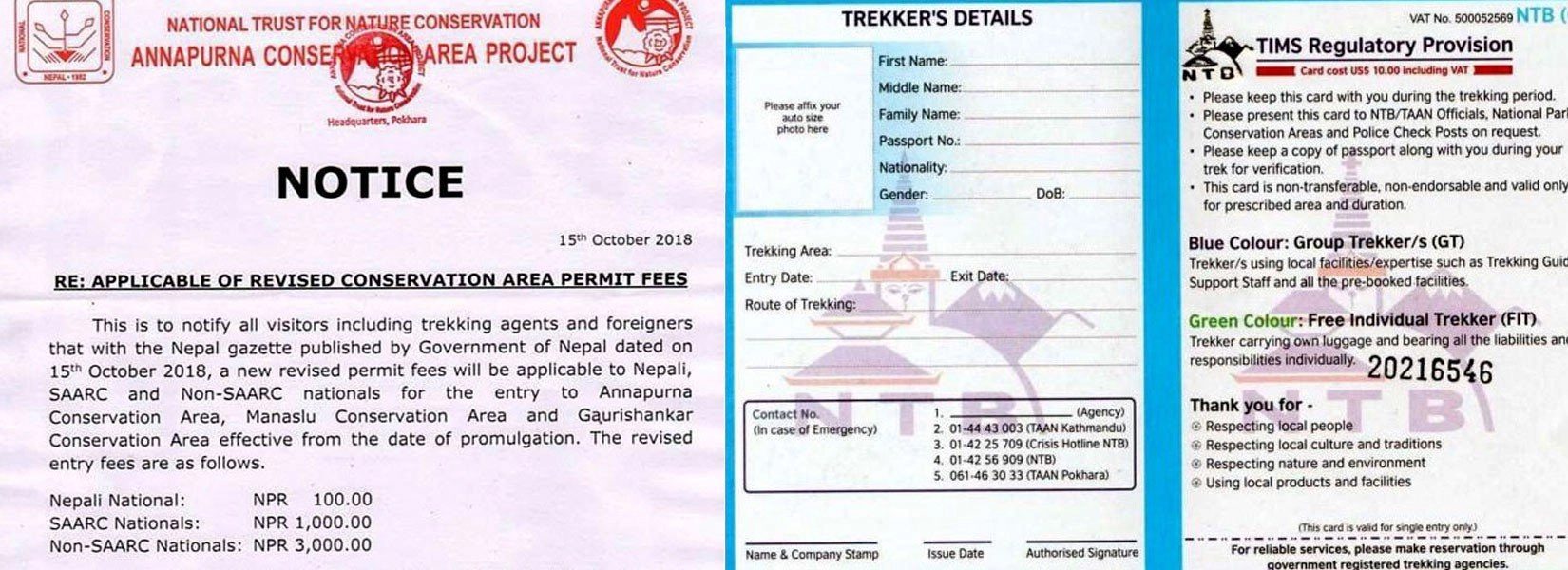
Do You Need a TIMS Card for Trekking in Nepal?
No, you do not need a TIMS card to trek in Nepal. There are no TIMS checkposts on the trails, and no checkpoint on the Everest, Annapurna, or other major routes asks for one. The permits that are actually checked are the ones covered in this guide, starting with your park or conservation area permit.
The confusion comes from history. TIMS, short for Trekkers’ Information Management System, was introduced years ago as a trekker registration scheme. Hundreds of older articles still list it as mandatory. On the ground today, the situation is simple. The Everest region replaced it entirely with the Khumbu Rural Municipality fee. Annapurna checkpoints from Birethanti to Jomsom verify your ACAP permit and nothing else. Restricted areas run on their own special permits.
So skip the TIMS counter and focus on where the checkpoints actually are. You need the correct park, conservation area, or restricted area papers for your route. In the Everest region, you also need cash for the municipality fee. Those are the documents that get you through the gate.
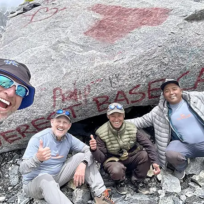



The Guide Requirement — The Rule That Actually Matters
A licensed Nepali guide is now required on Nepal’s major trekking routes, and in restricted areas, the guide requirement is written into the permit itself. Solo trekking without a guide is no longer permitted on the main national park and conservation area trails. For restricted zones, the rule has never been optional.
The guide must hold a government license and work through a registered trekking agency. Checkpoints verify this alongside your permits so that an unguided trekker can be turned back at the trailhead even with a valid entry permit.
Group size rules for restricted areas have been relaxed recently. Single trekkers can now apply for most restricted permits, provided a licensed guide accompanies them. Rules like this shift more often than fees do, so confirm the current requirement for your specific route when you book.
National Park and Conservation Area Permits
Every trek that enters a protected area needs that area’s own entry permit, and the permit from one park is never valid in another. Nepal’s trekking regions fall under either national parks or conservation areas. Parks answer to the Department of National Parks and Wildlife Conservation. Conservation areas are managed with local communities through the National Trust for Nature Conservation. The permit funds trail work, waste management, and conservation in the exact area you walk through.
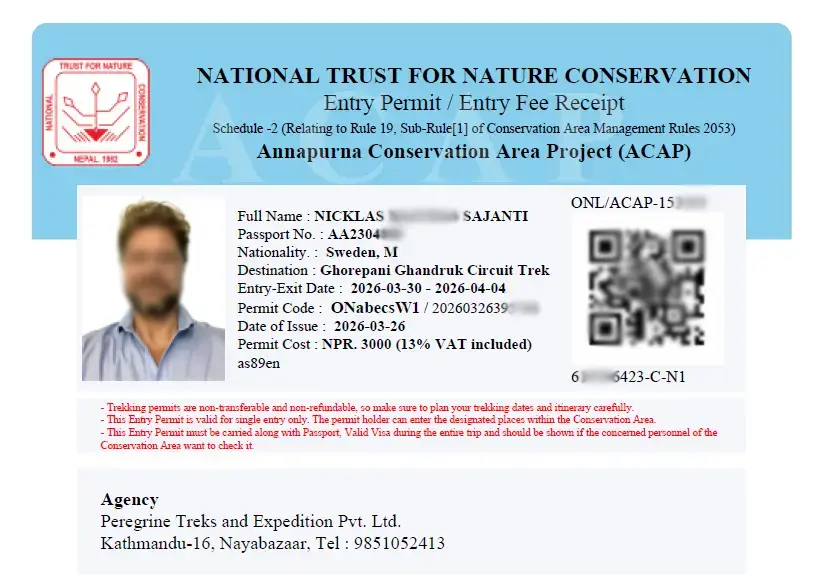
Sagarmatha National Park Permit — Everest Region
Every trek in the Khumbu needs the Sagarmatha National Park permit. The requirement covers Everest Base Camp, Gokyo Lakes, the Three Passes, and climbing trips to Island Peak or Lobuche East. The fee for foreign nationals is NPR 3,000.
You can buy it at the Nepal Tourism Board office in Kathmandu or at the park checkpoint in Monjo, a day’s walk beyond Lukla. Buying in Kathmandu is faster. The Monjo counter queue can run 30 minutes or more on busy October mornings. Standing in line at 2,835 m is not how you want to spend trekking energy.
Sagarmatha is a UNESCO World Heritage Site, and the permit directly funds waste management on one of the world’s most heavily walked high-altitude trails. Bring your passport. Photos are not required for park permits.
Annapurna Conservation Area Permit (ACAP)
One ACAP permit covers every standard Annapurna route, including the Annapurna Circuit, Annapurna Base Camp, Ghorepani Poon Hill, Mardi Himal, and Tilicho Lake. The fee for foreign nationals is NPR 3,000, with a lower SAARC rate. It is the only document checked at Annapurna trail checkpoints, and it is checked strictly.
Buy it at the Nepal Tourism Board offices in Kathmandu or Pokhara before you head to the trailhead. Entry counters at Besisahar, Beni, and Jomsom can issue it too. Buying at a trail checkpoint can cost double the office rate, so sort it in the city.
ACAP is a conservation area rather than a national park, which means the fee flows into community-run conservation projects across more than 7,600 sq km. Villages along the route maintain the trails you walk on with this money.
Langtang National Park Permit
The Langtang National Park permit covers the Langtang Valley trek, Gosaikunda, Helambu, and connecting routes on the Tamang Heritage Trail. The fee for foreign nationals is NPR 3,000, with a reduced SAARC rate. Buy it in Kathmandu or at the park entry checkpoint at Dhunche or Syabrubesi.
Langtang village was largely destroyed in the earthquake that struck the valley. Permit revenue has helped fund the rebuilding you now see along the trail. The teahouses standing in Langtang today were rebuilt stone by stone by the families who run them.
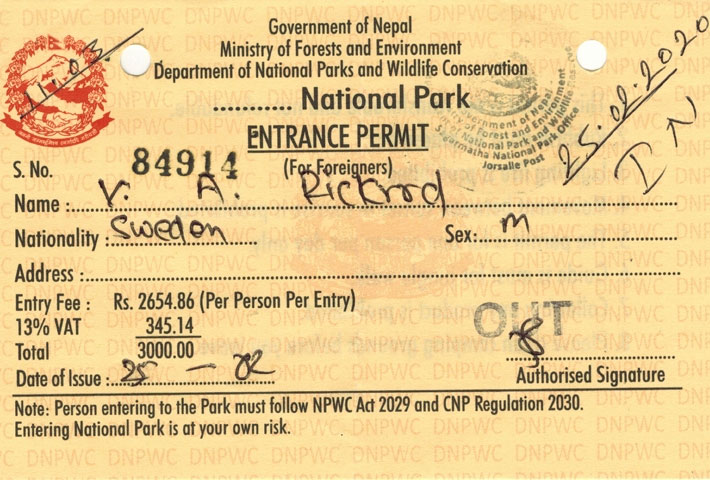
Manaslu Conservation Area Permit (MCAP)
The Manaslu Circuit requires the MCAP for the route’s conservation-area sections. It is one of the three documents the circuit requires. The other two are the Manaslu Restricted Area Permit, covered below, and the ACAP. The circuit crosses the Larkya La at 5,106 m and exits through the Annapurna Conservation Area, which is why the ACAP applies.
The MCAP fee is NPR 3,000 for foreign nationals. Your agency obtains it in Kathmandu, along with the restricted-area paperwork, and checkpoints at Jagat and beyond verify the full set.
Shey Phoksundo National Park Permit — Dolpo
Both Lower Dolpo and Upper Dolpo treks need the Shey Phoksundo National Park permit, which is separate from the Upper Dolpo Restricted Area Permit. The park fee is NPR 3,000 for foreign nationals. Obtain it in Kathmandu or through the park office access at Nepalgunj before flying to Juphal.
The park protects Nepal’s deepest lake, Phoksundo, at 3,611 m, along with snow leopard habitat across the trans-Himalayan plateau. Clearly distinguish the two Dolpo zones when you plan. Lower Dolpo runs on the park permit plus a modest restricted fee, while Upper Dolpo carries one of the highest permit costs in Nepal.
Kanchenjunga and Other Conservation Areas
The Kanchenjunga Conservation Area Permit (KCAP) is required for the Kanchenjunga Base Camp trek in the far east, alongside the Kanchenjunga Restricted Area Permit. Gaurishankar Conservation Area covers Rolwaling Valley access, and Api Nampa Conservation Area covers the far west. Fees for these sit in the same NPR 2,000 to 3,000 band as the majors.
These areas see a fraction of Annapurna’s traffic. On our last Kanchenjunga departure, the checkpoint register showed fewer entries in a month than the Birethanti logs in a morning.
Khumbu Rural Municipality Fee — The Permit Most Articles Miss
Every Everest region trekker pays a local entrance fee to the Khumbu Rural Municipality, and it is completely separate from the Sagarmatha National Park permit. The fee is NPR 2,000 to 3,000 per person, depending on the current season’s rate. You pay it in cash at the Lukla checkpoint, or at Monjo if you walk in from Jiri or Salleri.
What the Khumbu Fee Is
The municipality, formally the Khumbu Pasang Lhamu Rural Municipality, is the local government for the entire Everest region. Its entrance fee replaced older registration requirements in the Khumbu and now works as the region’s local permit. You pay it once per entry, directly at the checkpoint window, a few minutes’ walk from the Lukla runway.
Carry the amount in Nepali rupees before you fly. Card payment is not available at the checkpoint. The ATMs in Namche Bazaar run out of cash or connectivity often enough that we treat them as a backup, never a plan.
Why the Fee Exists
The municipality funds what the national park budget does not. Its fee pays for trail repairs after monsoon damage, rubbish collection between Lukla and Base Camp, and community services in Namche, Khumjung, and Pangboche. Roughly speaking, the park permit protects the mountains, and the municipal fee maintains the trail you walk on.
We include the fee in every Everest Base Camp package and brief trekkers on the exact amount before departure. Nobody should stand at the Lukla window short of cash at 2,860 m.
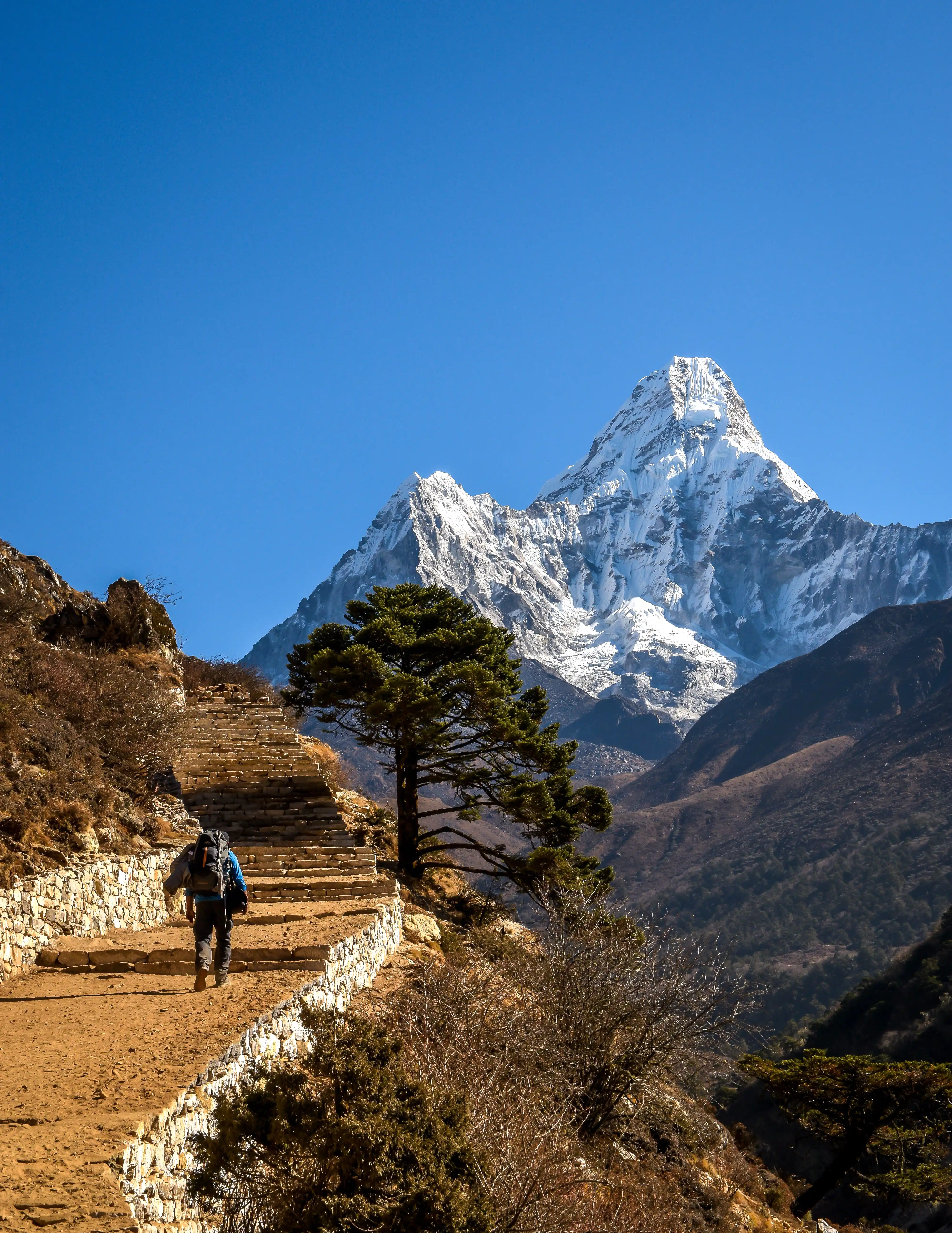
Restricted Area Permits — Nepal’s Special Permit Zones
Certain trekking areas in Nepal are designated as restricted. Entry needs a special permit from the Department of Immigration, a licensed Nepali guide, and processing through a registered trekking agency. You cannot apply for a Restricted Area Permit yourself at any counter. The zones sit mostly along the Tibetan border, and the restrictions protect fragile ecology, living Buddhist culture, and sensitive frontier districts all at once.
What Makes an Area Restricted
Four rules apply in every restricted zone, without exception. A licensed guide must accompany you, as a matter of law rather than advice. The permit must be processed through a registered agency, as the Department of Immigration does not accept individual applications. The permit covers a specific date range, and overstaying it is a serious immigration violation. Fees run far higher than standard permits, and most zones charge by the week.
Peak season for restricted-permit pricing runs from September to November, with lower rates for most zones for the rest of the year. Spring rates match peak pricing in some areas, so check the seasonal boundary for your specific zone when you book.
Manaslu Restricted Area Permit
The Manaslu Circuit needs a Restricted Area Permit, charged per week. The rate is USD 100 per person per week from September to November, and USD 75 per person per week for the rest of the year. Extra days are charged individually. A standard 14-day circuit means a two-week permit. Three documents travel with you in total: the RAP, the MCAP, and the ACAP for the exit through the Annapurna side.
Checkpoints at Jagat and Sama Gaun check the full set. The police post at Jagat records every passport by hand in a ledger the size of an atlas. Allow your agency two working days in Kathmandu to process the RAP before the drive to Machha Khola.
Upper Mustang Restricted Area Permit
Upper Mustang carries one of Nepal’s highest permit fees. The rate is USD 500 per person for the first 10 days, then USD 50 for each additional day. The permit opens the road north of Kagbeni toward Lo Manthang, the walled capital of the former Kingdom of Lo. You also need the ACAP, since the route runs inside the Annapurna Conservation Area.
The region stayed closed to foreigners for most of the twentieth century. The high fee deliberately keeps visitor numbers low, protecting the most intact Tibetan Buddhist culture you can reach without entering Tibet. Ten days is the minimum permit period, even if your itinerary runs shorter. Cave monasteries at Chhoser and the morning light on Lo Manthang’s whitewashed walls justify every one of those days.
Upper Dolpo Restricted Area Permit
Upper Dolpo matches Upper Mustang’s fee: USD 500 for the first 10 days, plus USD 50 per additional day. It is also the most remote restricted trek in Nepal. The Shey Phoksundo National Park permit is needed alongside. Lower Dolpo, by contrast, runs on a far cheaper weekly restricted fee, so confirm which zone your route actually enters.
Access runs through flights to Nepalgunj, and then to Juphal, with resupply points days apart. Experienced high-altitude guides are essential here beyond the legal requirement, because the route crosses passes above 5,000 m with no teahouse infrastructure between camps.
Nar Phu Valley Restricted Area Permit
Nar Phu needs a weekly Restricted Area Permit at roughly USD 100 per week in peak season and USD 75 off-peak, plus the ACAP. The valley branches off the Annapurna Circuit above Koto, and most itineraries cross the Kang La at 5,320 m to rejoin the circuit at Ngawal.
Combining Nar Phu with the full Annapurna Circuit builds one of the most complete routes in the Himalaya. You mix a medieval stone village at Phu with the circuit’s teahouse comfort. One week of permit coverage fits the standard side-trip itinerary.
Tsum Valley Restricted Area Permit
The Tsum Valley permit costs about USD 40 per person per week in peak season and USD 30 per week off-peak. It is the most affordable way into a genuinely restricted Himalayan valley. The MCAP is required for the Manaslu Circuit, and most trekkers combine Tsum with the circuit in a single 18- to 21-day trip.
Tsum only recently opened to trekkers, and the valley still runs on monastery time. Mu Gompa at 3,700 m sits at the head of the valley. The trail there smells of juniper smoke from the household altars you pass.
Kanchenjunga Restricted Area Permit
Kanchenjunga’s restricted permit is the cheapest among the major zones, at around USD 20 per person per week, when paired with the KCAP conservation permit. The trek approaches the world’s third-highest mountain at 8,586 m from Nepal’s far eastern corner. A round-trip to the north or south base camps takes 18 to 24 days.
The low fee reflects the government’s push to spread trekking traffic east. Getting there is the real cost, with a flight to Bhadrapur and a full day’s drive to the Taplejung trailhead.
Humla Restricted Area Permit
Humla in the far northwest charges USD 50 per person for the first week and USD 10 per day after. The permit covers routes from Simikot toward the Limi Valley and the border crossing used for Mount Kailash trips. Flights to Simikot pass through Nepalgunj, and the district is among the least visited in Nepal.
Restricted Area Permit Summary
| Zone | Peak Season Fee | Off-Peak Fee | Minimum Period | Also Required |
|---|---|---|---|---|
| Manaslu | USD 100/week | USD 75/week | 1 week | MCAP, ACAP |
| Upper Mustang | USD 500/10 days | Same year-round | 10 days | ACAP |
| Upper Dolpo | USD 500/10 days | Same year-round | 10 days | Shey Phoksundo NP |
| Nar Phu Valley | USD 100/week | USD 75/week | 1 week | ACAP |
| Tsum Valley | USD 40/week | USD 30/week | 1 week | MCAP |
| Kanchenjunga | USD 20/week | USD 20/week | 1 week | KCAP |
| Humla | USD 50/first week | USD 10/day after | 1 week | None |
Fees in the table reflect the current published rates and are revised each season, so confirm the exact figure with your agency before you budget.
Permit Combinations by Trek — What You Actually Need
Most confusion about Nepal trekking permits disappears once you see the exact combination for your route. Here is every major trek with its complete set of permits. Nothing on this table is optional, and nothing beyond it is needed.
| Trek | Park/Conservation Permit | Restricted Area Permit | Local Fee | Total Documents |
|---|---|---|---|---|
| Everest Base Camp | Sagarmatha NP | No | Khumbu municipality fee | 2 |
| Gokyo Lakes / Three Passes | Sagarmatha NP | No | Khumbu municipality fee | 2 |
| Annapurna Circuit | ACAP | No | No | 1 |
| Annapurna Base Camp | ACAP | No | No | 1 |
| Ghorepani Poon Hill | ACAP | No | No | 1 |
| Mardi Himal | ACAP | No | No | 1 |
| Langtang Valley | Langtang NP | No | No | 1 |
| Manaslu Circuit | MCAP + ACAP | Manaslu RAP | No | 3 |
| Tsum Valley | MCAP | Tsum RAP | No | 2 |
| Upper Mustang | ACAP | Mustang RAP | No | 2 |
| Upper Dolpo | Shey Phoksundo NP | Dolpo RAP | No | 2 |
| Nar Phu Valley | ACAP | Nar Phu RAP | No | 2 |
| Kanchenjunga | KCAP | Kanchenjunga RAP | No | 2 |
A licensed guide is required on all of these routes, and on the restricted routes, the guide is a condition of the permit itself.
Where to Get Nepal Trekking Permits — Kathmandu, Pokhara, or the Trail
Kathmandu is the only place where every Nepal trekking permit can be arranged, so plan your permit stop there unless your route is Annapurna-only. Standard park and conservation permits are issued the same day when your documents are complete. Restricted Area Permits take one to two working days through your agency.
In Kathmandu
The Nepal Tourism Board office at Pradarshani Marg, near Bhrikutimandap, issues permits for national parks and conservation areas. Arrive before mid-morning in October or March, because the queue builds fast after 11 am and the counter closes for lunch. The Department of Immigration at Maitighar handles all Restricted Area Permit applications, and only registered agencies can file there. Bring your passport for any permit. Photos are not needed for park permits.
In Pokhara
Pokhara issues ACAP permits at the Nepal Tourism Board office at Damside. It is the natural permit stop for Annapurna, Mardi Himal, and Poon Hill trekkers starting from the lakeside. Restricted Area Permits cannot be processed in Pokhara under any circumstances. If your route includes Nar Phu or Upper Mustang, the paperwork must be cleared in Kathmandu first.
At Trail Entry Points
Two permits can be handled on the trail, and one can only be handled there. The Sagarmatha park permit is available at Monjo, though the Kathmandu office is faster. ACAP counters operate at Besisahar, Beni, and Jomsom, at roughly double the office rate. The Khumbu municipality fee works the opposite way. It is collected only at the Lukla or Monjo checkpoint and cannot be prepaid in the city. Restricted Area Permits are never issued on the trail.
Independent Trekking vs. Booking a Package — The Permit Difference
Independent trekkers can obtain standard park and conservation permits themselves at the city offices. Restricted routes remove that option entirely, since RAPs only move through licensed agencies. The practical difference comes down to time, queue tolerance, and who carries the risk when paperwork goes wrong.
| Factor | Arranging It Yourself | On a Peregrine Package |
|---|---|---|
| Park/conservation permits | Queue at NTB Kathmandu or Pokhara | Arranged before you arrive |
| Restricted Area Permits | Must go through a licensed agency anyway | Included, processed by our team |
| Khumbu municipality fee | Cash at the checkpoint | Included is the exact amount briefed in advance |
| Licensed guide | Hire separately, mandatory regardless | Included |
| Permit errors | Your problem at the checkpoint | Our problem, fixed by our office |
Trekkers going independent on Annapurna routes should still budget half a day in the city for the permit run. Everest trekkers need the park permit and cash for checkpoints. Anyone heading into a restricted zone works with an agency by law, so the independent-versus-package question only truly applies to the standard routes.
How Peregrine Handles Permit Logistics
We are a TAAN-registered and Nepal Tourism Board-licensed operator, which is the registration class required by the Department of Immigration for filing Restricted Area Permits. Every permit for a package trek is arranged and paid for before your trek begins. The set covers park and conservation permits, restricted permits, and the Khumbu municipality fee.
You receive your complete permit set at the pre-trek briefing in Kathmandu, where it is checked against your passport in your presence. Our guides carry duplicate copies on the trail because a checkpoint ledger entry goes faster when the paperwork is in order twice over. Fees are reconfirmed with the issuing offices at the start of each season. Our quotes always reflect the current rates rather than last season’s figures.
Frequently Asked Questions
What permits do I need to trek in Nepal?
You need the entry permit for the protected area your route crosses. Add a Restricted Area Permit if the route enters a controlled zone, and the Khumbu Rural Municipality fee if you trek in the Everest region. Standard Annapurna and Langtang treks require a single permit. Everest treks need two. Restricted routes like Manaslu need up to three, arranged through a licensed agency.
How much does a Nepal trekking permit cost?
Standard permits cost NPR 3,000 per person, roughly USD 22-28, where applicable. The Khumbu municipality fee adds NPR 2,000 to 3,000 for Everest treks. Restricted zones cost USD 20 per week for Kanchenjunga, up to USD 500 for 10 days in Upper Mustang or Upper Dolpo. Fees are revised each season, so confirm current rates before you budget.
Do I need a TIMS card for trekking in Nepal?
No, a TIMS card is not required. No checkpoint on Nepal’s trekking routes asks for one, and there are no TIMS checkposts on the trails. The Everest region replaced it with the Khumbu Rural Municipality fee, and the Annapurna checkpoints verify only the ACAP permit. Older articles listing TIMS as mandatory are out of date, so put your budget toward the permits that are actually checked.
What permits do I need for Everest Base Camp?
Everest Base Camp needs two documents. The first is the Sagarmatha National Park permit at NPR 3,000, bought in Kathmandu or at Monjo. The second is the Khumbu Rural Municipality fee of NPR 2,000 to 3,000, paid in cash at the Lukla or Monjo checkpoint. A licensed guide is required alongside both.
Can I trek in Nepal without a guide?
No, a licensed guide is required on Nepal’s major trekking routes, and solo trekking without one is not permitted. In restricted areas, the guide requirement is a legal condition of the permit itself. The rule covers Manaslu, Upper Mustang, Upper Dolpo, Nar Phu, Tsum Valley, Kanchenjunga, and Humla. The guide must be licensed and affiliated with a registered agency.
Can I get my permits on arrival in Kathmandu?
Yes, standard permits are issued the same day at the Nepal Tourism Board office when your documents are complete. Restricted Area Permits take one to two working days through a licensed agency. Do not plan a restricted trek departure within 24 hours of landing. Booking a package removes the timing problem entirely, since permits are processed before you arrive.
How much is the Manaslu permit?
The Manaslu Restricted Area Permit costs USD 100 per person per week from September to November. From December to August,t the rate drops to USD 75 per week, with extra days charged individually. A 14-day circuit needs a two-week permit. The complete Manaslu set also includes the MCAP and the ACAP, since the route exits through the Annapurna Conservation Area.
How long is a Nepal trekking permit valid?
Park and conservation area permits remain valid for the duration of your trek within that specific area and allow a single entry. They never transfer between areas. Restricted Area Permits cover the exact specified date range, and overstaying is an immigration violation. Extensions for restricted permits are processed by the Department of Immigration in Kathmandu through your agency.
Let Us Handle Your Permits
You now know exactly which papers your route needs. The remaining work is queues, counters, and seasonal fee checks, and all of it is work we do every week anyway.
Please tell us which trek you are planning and your rough dates. Our Kathmandu team will confirm the current-season fees for your route and arrange every document before you land. You receive the complete set at your pre-trek briefing. Write to sales@peregrinetreks.com or message us on WhatsApp at +977 985 105 2413, and we will reply within one working day.