

Based on 9 reviews

Kathmandu to Lhasa Tour
Discover the Wonders of Nepal and Tibet: Kathmandu to Lhasa Overland

Duration
8 Days

Meals
- 7 Breakfast
- 1 Dinner

Accommodation
- 3-Star Hotel
- Normal Guesthouse

Activities
- Sightseeing
- Scenic Drive
SAVE
US$ 244Price Starts From
US$ 1220
Overview of Kathmandu to Lhasa Tour
IMPORTANT TRAVEL UPDATE
Kathmandu to Lhasa Tour Temporarily Suspended
The Kathmandu to Lhasa Overland Tour is temporarily suspended due to severe flash-flood damage along the
Rasuwagadhi–Kerung border route, which this tour uses to enter Tibet from Nepal.
The flash flood of August 26, 2026, caused extensive damage to roads, bridges, and border infrastructure in the Rasuwagadhi area. The border crossing remains closed, and reconstruction work continues.
We cannot operate this overland tour until the Rasuwagadhi–Kerung route is repaired and the border officially reopens for safe tourist movement.
Tour operations will resume once the route is safe and officially reopened.
Start the unforgettable tour from the bustling valleys of Kathmandu to the sacred streets of Lhasa, the capital of Tibet. The Kathmandu to Lhasa Tour is a unique overland adventure that takes you across the majestic Himalayas, offering up-close views of some of the world’s highest peaks and a chance to experience remote cultures. This tour blends breathtaking mountain scenery with rich cultural encounters as you travel from Nepal’s vibrant heritage to Tibet’s spiritual heart. If you’ve ever dreamed of standing on the “Roof of the World,” this overland journey is the perfect way to make it a reality.
The Kathmandu to Lhasa Tour is not just a transfer but an adventure. You’ll traverse the Friendship Highway, cross high mountain passes, and watch the terrain change from lush green hills to the stark, high-altitude Tibetan Plateau. Along the way, you’ll visit ancient monasteries and charming villages, where you can witness traditions that have remained unchanged for centuries. With professional guides leading the way and all logistics handled for you, the journey is safe, comfortable, and truly immersive.
Trip Highlights of Kathmandu to Tibet Tour:
- Drive across the majestic Himalayas on the scenic Friendship Highway.
- Witness breathtaking panoramic views of Mount Everest and other Himalayan giants from Tingri.
- Explore significant sacred monasteries and temples in Shigatse, Gyantse, and Lhasa.
- Be captivated by the breathtaking blue-green expanse of Yamdrok Lake as you traverse lofty Himalayan passes marked by fluttering prayer flags.
- Discover the iconic and awe-inspiring Potala Palace in Lhasa, a UNESCO World Heritage Site.
- Experience Tibet’s rich cultural and spiritual heritage through its landmarks and traditions.
- Enjoy the dramatic and diverse landscapes throughout the overland journey from Nepal to Tibet.
Why Choose the Kathmandu to Lhasa Overland Tour?
What makes the Kathmandu to Lhasa overland journey so unique? Here are some compelling reasons to choose this adventure over a fly-in trip:
- Spectacular Himalayan Scenery: Experience epic views you can’t get from a plane. Driving overland means seeing towering, snow-capped peaks right from the roadside. Marvel at Mt. Everest and other giants of the Himalayas as you wind through lofty passes. Each turn in the road reveals a new breathtaking panorama.
- Rich Cultural Experience: This tour connects two culturally vibrant lands. It starts in Nepal – the land of ornate temples and lively bazaars – and ends in Tibet – home of cliffside monasteries, prayer flags, and the Potala Palace. You’ll meet local people, taste traditional cuisines, and visit sacred sites, gaining insight into both Nepalese and Tibetan ways of life.
- Gradual Altitude Acclimatization: The overland journey involves a slow increase in altitude, allowing your body to acclimate. Opting for the overland route to Lhasa rather than a direct flight may reduce the likelihood of altitude sickness. You’ll feel more comfortable climbing above 4,000 meters, and you can enjoy the journey without rushing.
- Seamless Guided Travel: Our Kathmandu to Lhasa Tour is fully guided and expertly organized. We handle all the details, from obtaining visas and permits to navigating border formalities. An experienced local guide accompanies you in Tibet, sharing insider knowledge and handling logistics so you can focus on the experience.
Detail Itinerary of Kathmandu to Lhasa Tour
Day 1: Kathmandu (1,350 m) to Rasuwa Gadi (1,818 m) – 130 km, ~7 hours drive
Morning
After an early breakfast in Kathmandu (approx. 1,350 m), set out northward in a private jeep or coaster van toward the Tibetan border for the Kathmandu to Lhasa Tour. The drive of about 130 km (7 hours) winds along the Trishuli River and through terraced hillsides.
The air grows cooler as you leave the Kathmandu Valley. En route, altitude gradually rises by roughly 500 m – a gentle start to acclimatization. The road passes local villages where you might stop for tea or a plate of dal bhat (Nepal’s classic lentil curry with rice) to fuel up. Enjoy views of deep gorges and lush farmland, with occasional glimpses of snow-capped Himalayan peaks towering ahead.
Be prepared for some bumps – the last stretch of road into Rasuwa Gadi (the Nepalese border post) winds through Langtang National Park, where unpaved sections turn muddy in the monsoon and dusty in the dry season. Keep an eye out for wildlife in the park – if you’re lucky, you may spot playful langur monkeys or colorful Himalayan pheasants darting across the road.
Afternoon
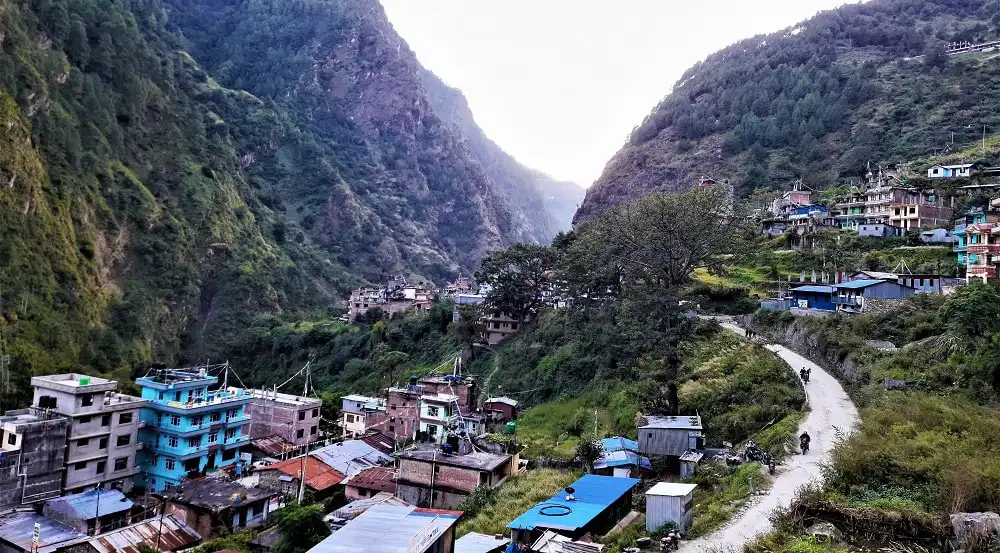
The Himalayas fill the horizon as you approach Rasuwa Gadi (1,818 m) on the Nepal-Tibet border. You’ll reach the border town by mid/late afternoon. Take a breather after the long drive and stretch your legs by the Bhote Koshi River, which forms the border here.
The border crossing is closed for the day by late afternoon, so plan to overnight on the Nepal side and cross into Tibet tomorrow when fresh. Use this downtime to double-check your travel documents – your guide will have secured your China Group Visa and Tibet Travel Permit in Kathmandu before departure (ensure you arrive in Nepal a few days early to arrange this).
If you feel up to it, you can walk around the small border village, perhaps visiting the old Rasuwa Gadi Fort ruins, which once guarded this trade route. Feel the elevation difference subtly – you might notice cooler air and slightly shorter breath than in Kathmandu, but this moderate gain helps your body prepare for higher altitudes.
Evening
Overnight into a simple guesthouse at Rasuwa Gadi. Accommodations here are basic but clean – a warm bed and a hearty meal await. Consider one last taste of Nepalese cuisine for dinner: perhaps steaming momos (dumplings) or a comforting bowl of thukpa noodle soup, as tomorrow you’ll enter Tibet.
Nights can be chilly even at 1,818 m, especially outside of summer, so dress in layers. Plan to sleep early after the whole day’s drive. Staying well-rested and hydrated is key for acclimatization; drink water or herbal tea (but avoid alcohol) to help your body adjust. Your guide or driver will explain what you must do for tomorrow’s border crossing; please ensure your passport and permits are prepared for the morning.
Elevation: 1818m
Accommodation: Normal Guesthouse
Meal: Not Included
Note: Expect the road to be winding and partially rough today – if you’re prone to motion sickness, take medication in advance. Spring and autumn offer the most ideal travel periods, characterized by clearer roads and crisper mountain vistas. In monsoon (summer), be prepared for rain and potential landslides on the Nepal side; in winter, check road conditions as snow can sometimes close high sections.
Day 2: Rasuwa Gadi (Nepal) to Gyirong Town (Tibet, 2,700 m) – 40 km, ~4 hours (including border formalities)
Morning:
Rise early to clear Himalayan views and get ready to cross into Tibet. After breakfast, it’s a short 15 km drive from your guesthouse to the Friendship Bridge at the border checkpoint. Bid farewell to your Nepalese driver here. You’ll walk across the border (a brief stroll over the river) as immigration officials process your exit stamp from Nepal.
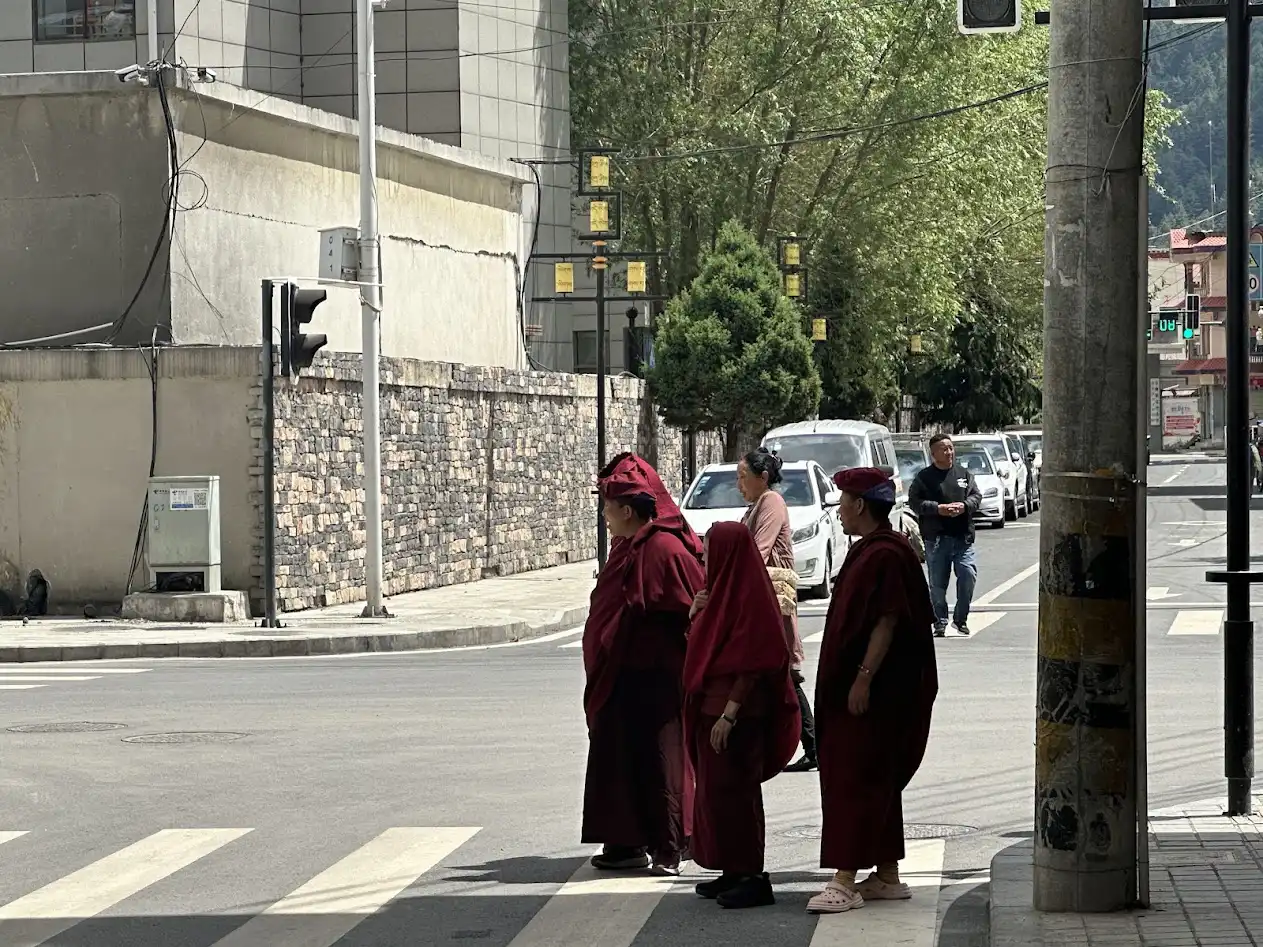
On the Chinese side (Gyirong Port), your Tibetan guide greets you with a warm “Tashi Delek!” and helps you navigate Chinese immigration. Show your passport and Group Visa/permit – formalities are usually straightforward but can take some time, so patience is key. You have officially entered Tibet, the “Roof of the World”! A new vehicle awaits on the Tibet side; once loaded up, begin the 25 km drive to Gyirong Town. Immediately, you’ll notice the smooth, well-paved road – China’s highways starkly contrast with the bumpy Nepal side.
Enjoy the spectacular scenery as you ascend into the Gyirong Valley, which British explorer Howard Bury once praised as “the most beautiful valley in the world.” The road climbs steadily, and you’ll gain nearly 900 m in elevation, reaching Gyirong Town (~2,700 m), a small village surrounded by forested hills and snow-capped summits. Take it slow – the air is thinner here, so acclimatization is crucial.
Afternoon:
Relax in your hotel when arriving in Gyirong (called Kyirong) around midday. You’ve entered a lush region of Tibet with an unusually mild climate – you might be surprised at the greenery around, resulting from Gyirong’s lower altitude and sheltered location.
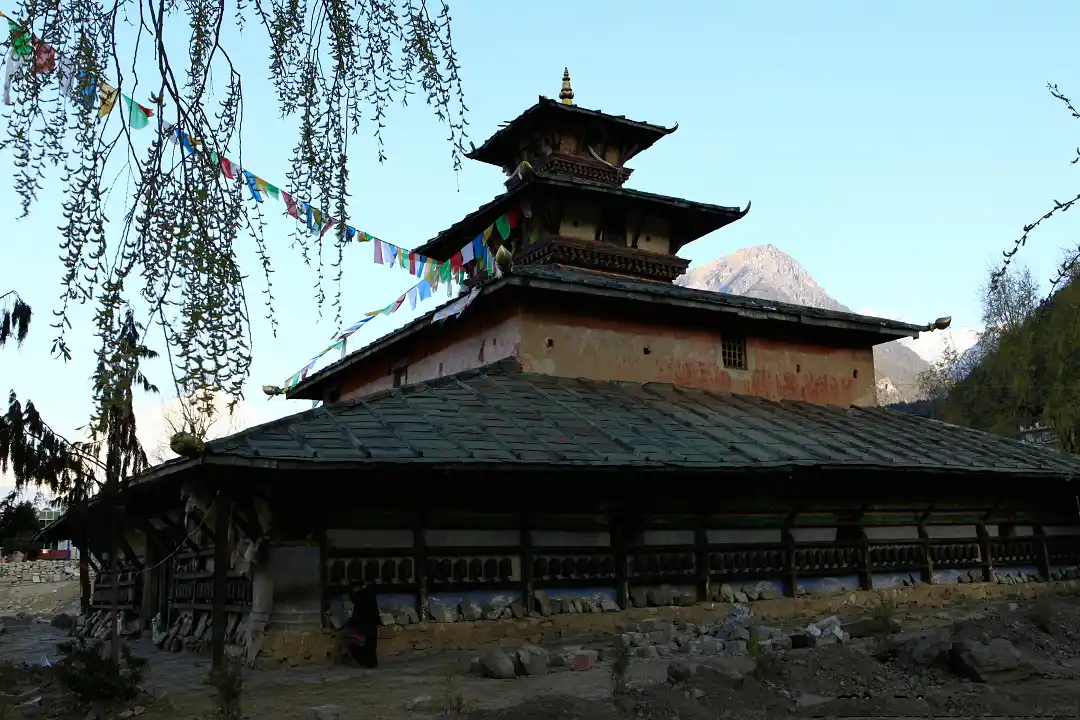
After lunch, head out to explore the cultural gems of Gyirong Town. Paba Temple (2850 m) is a must-visit, a small mid-7th-century Gelugpa monastery just a short walk from town. This temple has a fascinating history – it was built by Tibetan King Songtsen Gampo at the request of his Nepalese wife, Princess Bhrikuti, blending Nepali architectural style into its design.
Inside, admire the delicate murals and observe local Tibetans making offerings. As you wander the quiet streets, you may encounter Sherpa villages on the outskirts and notice how nearby Nepal influences the local culture here.
The vistas are stunning all around: dense forests cloak the lower slopes, with white peaks peeking above the woods. One particularly photogenic spot is a viewpoint just outside town where you can see the snowy summit of Mt. Shishapangma (8,027 m) in the distance on clear days – your first 8,000 m peak of the trip!
Evening:
This relatively easy day is deliberate for acclimatization – spending a night at 2,700 m will help your body adjust before climbing higher. Take a leisurely approach to the evening. Perhaps stroll through the Gyirong Market, where you can find Tibetan yak cheese and fresh produce, a reminder of the valley’s fertile microclimate.
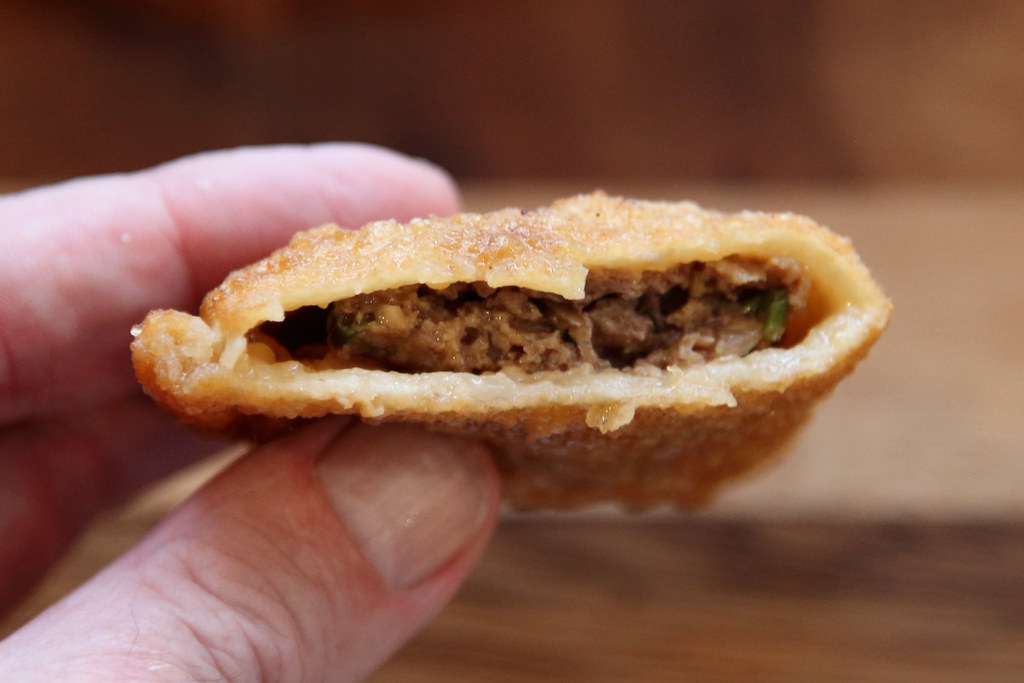
Try Tibetan cuisine for dinner: Gyirong’s restaurants often serve dishes like thenthuk (noodle soup with vegetables and meat) or sha phaley (fried meat pies). You might also enjoy a cup of butter tea – the salty, buttery flavor is an acquired taste, but it’s rich in calories and suitable for high altitude.
The night skies in this remote town can be spectacular – step outside for a glimpse of stars blazing over Himalayan silhouettes if weather permits. Before bed, double-check your gear for tomorrow’s long journey (you’ll be heading into much higher elevations).
Your guide will likely measure your oxygen level or ask about any altitude symptoms – mild headaches or insomnia can be expected at this stage. Remember to keep hydrated and avoid heavy exertion. A good night’s rest in Gyirong is essential, as tomorrow you ascend to Everest’s realm.
Elevation: 2700m
Accommodation: Phuntsok Kangsang Hotel or similar
Meal: Breakfast
Note: Gyirong’s altitude (~2,700 m) is within the range for safe acclimatization, but everyone adapts differently – listen to your body and inform your guide of any discomfort. Please dress respectfully when you visit Paba Temple or local villages, and remember to request permission before photographing any local people. The border crossing can be strict – photography is prohibited at the immigration area, so stow your camera until you’re well past the checkpoint.
Day 3: Gyirong to Everest Base Camp (5,200 m) to Tingri (4,300 m) – ≈370 km, 10–11 hours
Morning:
Wake up to crisp mountain air – today is the most action-packed and challenging day of the overland journey. After an early breakfast in Gyirong, depart by 7:00–7:30 AM for Everest Base Camp (EBC). The route follows the Friendship Highway (G318) eastward. This stretch is a long haul (nearly 380 km) across dramatically changing landscapes.
As you leave the lush Gyirong Valley, the road climbs onto the open Tibetan Plateau. Initially, you’re surrounded by deep forests and cascading waterfalls at around 2,800 m. The highway then snakes upward to the Kong Tang Lamu Pass (5,236 m), an ascent of over 2,400 m that tests your acclimatization.
Stop for unbelievable views at the pass: you have officially reached the high Tibetan plateau. From here, barren plains and enormous sky dominate the scenery. Since the oxygen level here is roughly half what you find at sea level, take frequent breaks to stretch and inhale deeply. However, refrain from any sudden, intense physical activity.
Afternoon:
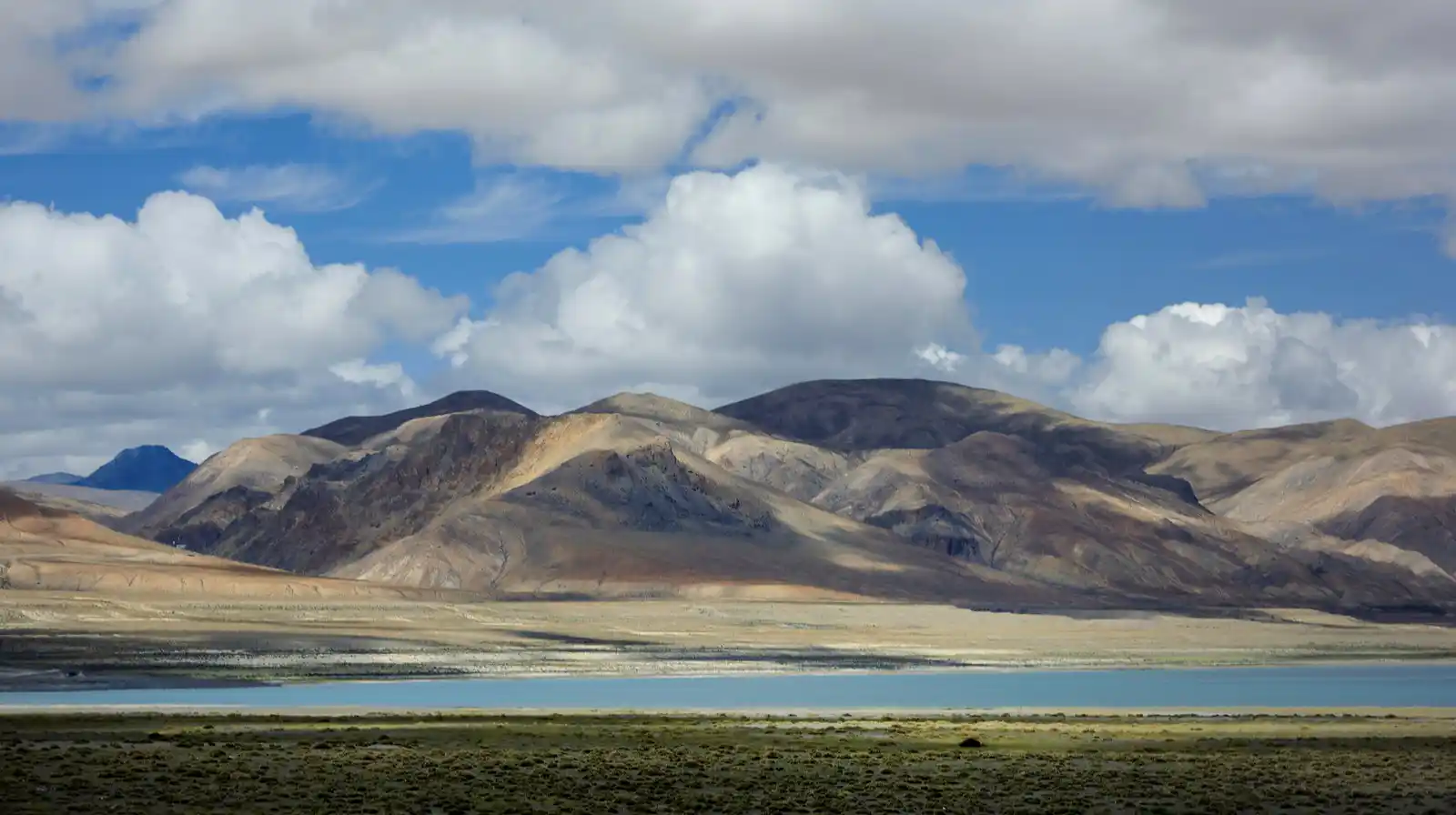
As you continue, the Kathmandu to Lhasa Tour becomes a Himalayan panorama. You skirt the shimmering Pelku Tso Lake at the foot of Mt. Shishapangma (8,027 m) – the lake’s tranquil turquoise waters mirror the snow dome of Shishapangma, offering a peaceful counterpoint to the rugged terrain.
Further on, you arrive at the iconic Gawula Pass (5,198 m), often dubbed the world’s most beautiful Everest viewpoint. Stop here to witness a jaw-dropping vista: five of Earth’s highest peaks are aligned across the horizon – Mt. Everest (8,848 m), Lhotse (8,516 m), Makalu (8,463 m), Cho Oyu (8,201 m), and Shishapangma (8,027 m) all in one sweep.
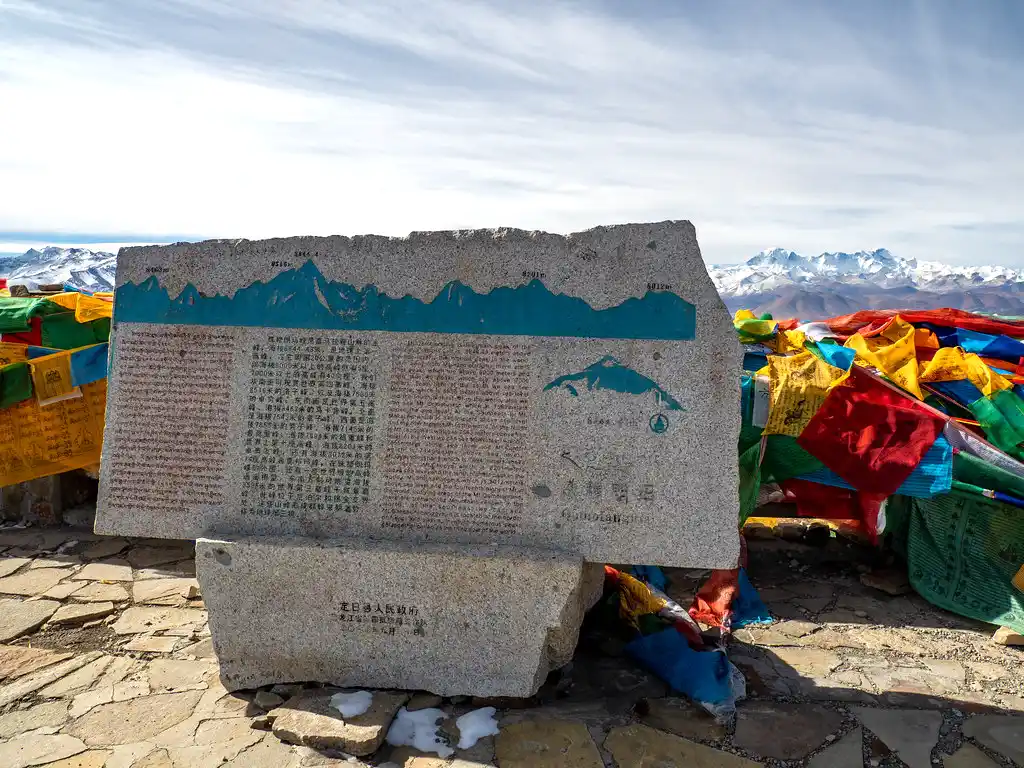
On clear days, you’ll see Everest’s unmistakable pyramid rising above a sea of clouds. It’s a photographer’s dream – bright prayer flags flutter at the viewpoint, framing the Himalayas in vibrant color. After soaking in the views (and perhaps a quick picnic lunch with the mountains as your backdrop), proceed towards Everest Base Camp.
A 100 km spur road leads off the highway toward Rongbuk Monastery and EBC. The road here is winding and sometimes rough – in parts a gravel track – but passable by your sturdy electric vehicle. As you approach Everest North Base Camp (5,200 m), the sheer grandeur of Chomolungma (Everest) looming at the end of the valley is humbling.
You’ll reach a checkpoint beyond which tourist vehicles stop. From here, shuttle buses (or horse carts in peak season) ferry visitors the final few kilometers to the marked Base Camp site unless road conditions allow driving all the way. Welcome to Everest Base Camp! Walk around the base camp area, marked by a cairn with prayer flags and a sign announcing the altitude. You will genuinely feel a sense of accomplishment – standing at the foot of Earth’s highest summit. Gaze up at Everest’s icy North Face, often plume-topped with blowing snow.
If the weather is clear, this is one of the best places to view Everest. Also, visit Rongbuk Monastery (if permitted), just a few minutes’ drive from the base camp marker. This humble monastery – the highest in the world – offers a spiritual dimension to the stark landscape. You might meet monks (and a few nuns) who maintain the small gompa; imagining a more isolated life is hard. Inside, butter lamps flicker in front of statues, but perhaps the most sacred “shrine” here is the view of Everest through the monastery’s courtyard.
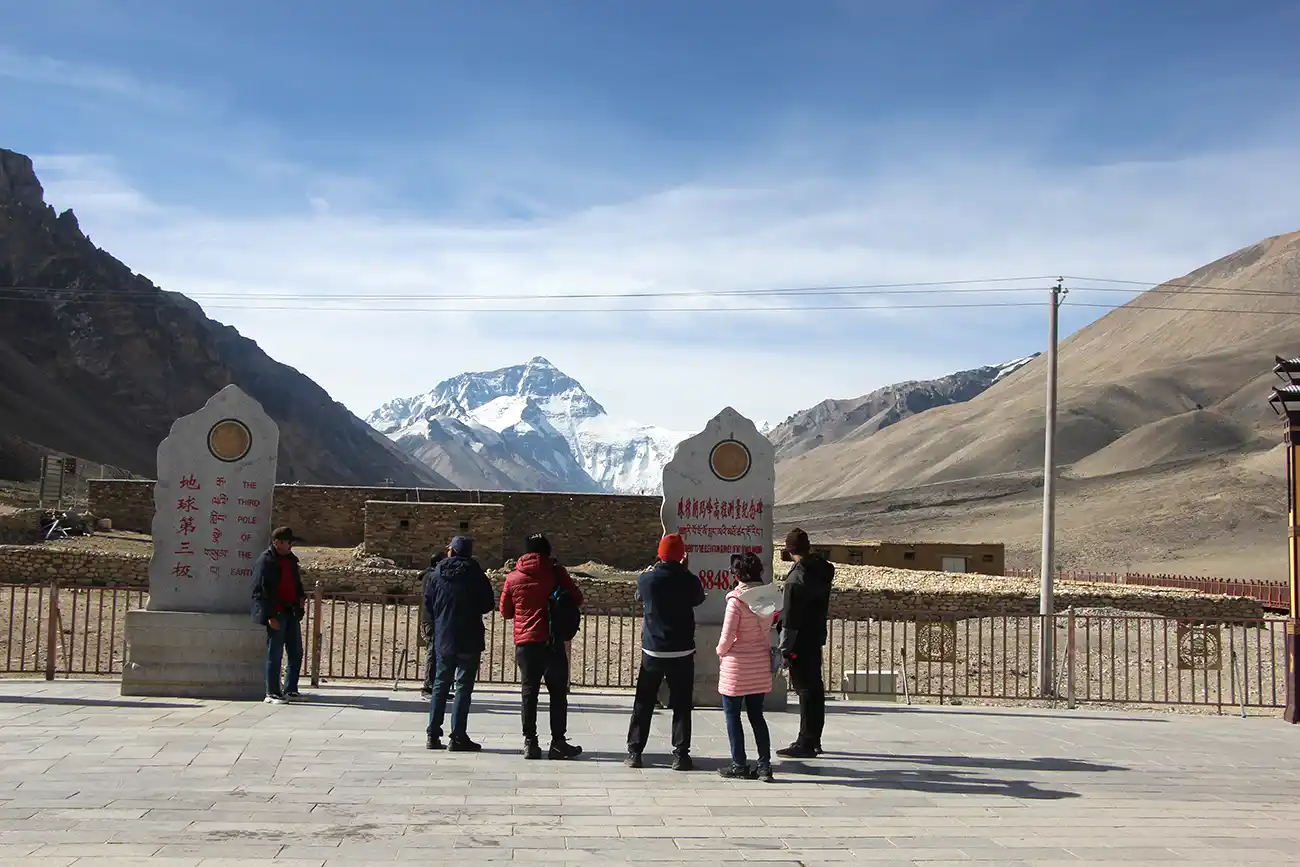
Photography tip: From Rongbuk, you can capture a classic shot of Everest with the monastery in the foreground.
Evening:
After your exhilarating EBC visit, it’s time to descend to a lower elevation for the night. In the late afternoon, depart Rongbuk and retrace the route to rejoin the Friendship Highway, then drive on to Tingri (also known as Old Tingri) at ~4,300 m. The drive to Tingri is about 2 hours (approx. 100 km from EBC).
Tingri is a small town on a broad plateau, famous among mountaineers as a launch point for Everest expeditions. Check into your hotel – by now, you’ll welcome the basic but comfortable amenities (a hot flask of ginger tea might await). You’ve dropped nearly 900 m from Base Camp, which will help with sleep, but Tingri is still high, so rest and stay warm. Gather with your group in the evening for a simple but hearty Tibetan dinner.
Try some yak meat stew or fried rice with yak jerky, along with tsampa (roasted barley flour) – staple fuel for locals. Warming up with a bowl of garlic soup can also help ward off altitude headaches (a traditional remedy).
Expect cold temperatures here, significantly if it’s autumn or spring – night lows can dip well below freezing. Bundle up, and consider using a portable oxygen canister if you feel very short of breath (your guide will have emergency oxygen if needed).
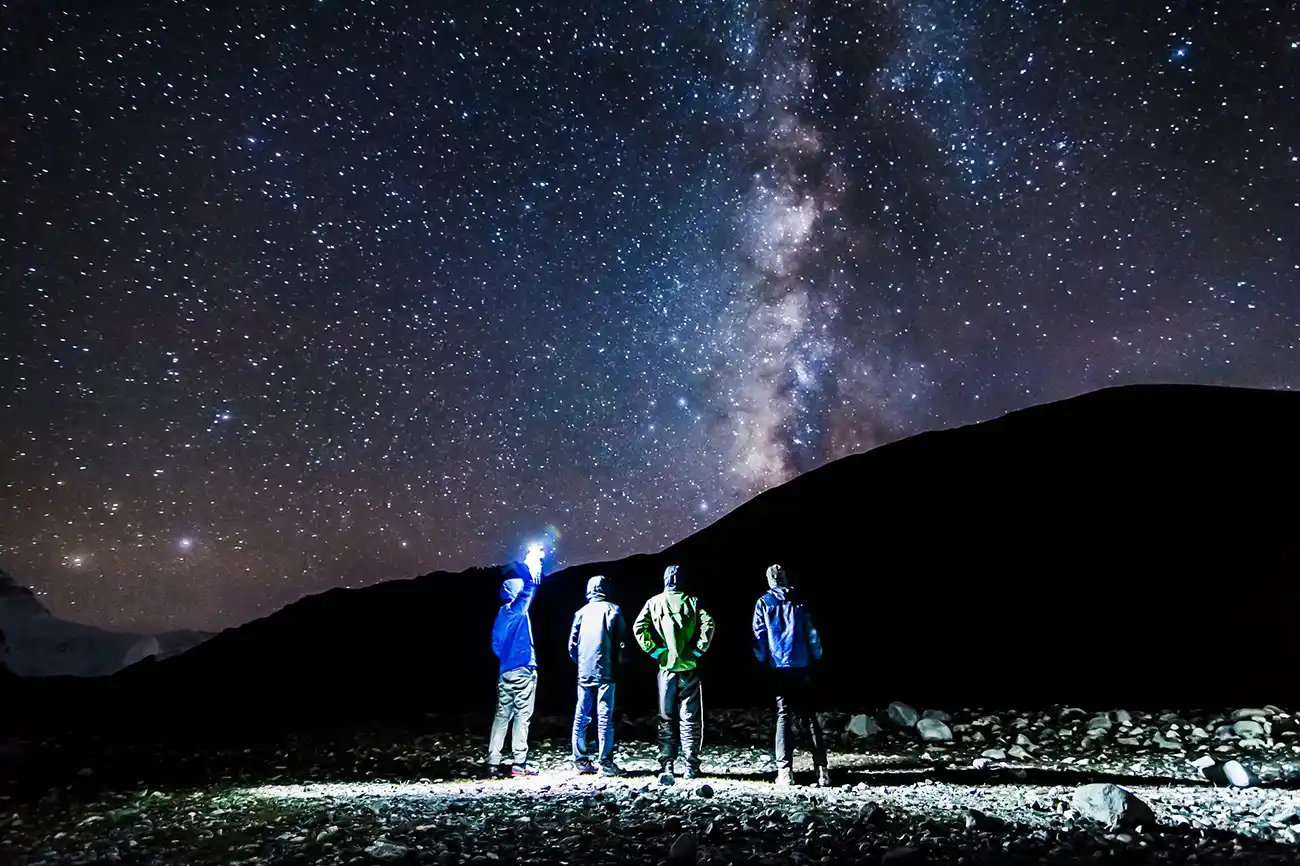
Tingri’s skies on a clear night are breathtaking – countless stars and the Milky Way arch over the Himalayan range. However, don’t strain yourself stargazing for too long in the cold. After dinner, your guide will likely check on everyone’s acclimatization status. Avoid alcohol and caffeine tonight, as your body is still adjusting. Instead, sip hot water or tea. With the most challenging day behind you, you can sleep knowing you’ve stood in Everest’s shadow today – a dream for many travelers.
Elevation: 4300m
Accommodation: Everest Hotel or similar 2* Hotel
Meal: Breakfast
Note: Climbing from 2,700 m to 5,200 m in a day is a big jump, even if you descend to 4,300 m to sleep. It’s normal to experience some headache, fatigue, or dizziness at EBC. Move slowly and deliberately – even a short walk can leave you winded at 5,200 m. Peregrine Treks and Tours handles the necessary Tibet Travel Permit and the special EBC permit for this area so you can focus on enjoying the moment. If you feel any severe symptoms (e.g., acute headache, nausea), inform your guide immediately – oxygen and prompt descent are the remedies. Dress in layers: The daytime sun at altitude is strong (wear sunscreen and sunglasses), but the wind is cold. Keep a windproof jacket, wool hat, and gloves in your daypack. Also, carry high-energy snacks (chocolate, nuts) for the long drive – lunch options en route are limited, so it’s wise to have your provisions.
Day 4: Tingri to Shigatse (3,900 m) via Lhatse – ≈240 km, 5–6 hours
Morning:
After a night in Tingri, you’ll notice the difference a lower altitude makes – hopefully, you will awake feeling refreshed. Enjoy a light breakfast (even at 4,300 m, your appetite might return) – perhaps some Tibetan flatbread with jam and boiled eggs, plus the ubiquitous butter tea or coffee. Today’s drive is shorter and less strenuous. Depart Tingri and continue east on the Friendship Highway towards Shigatse, Tibet’s second-largest city.
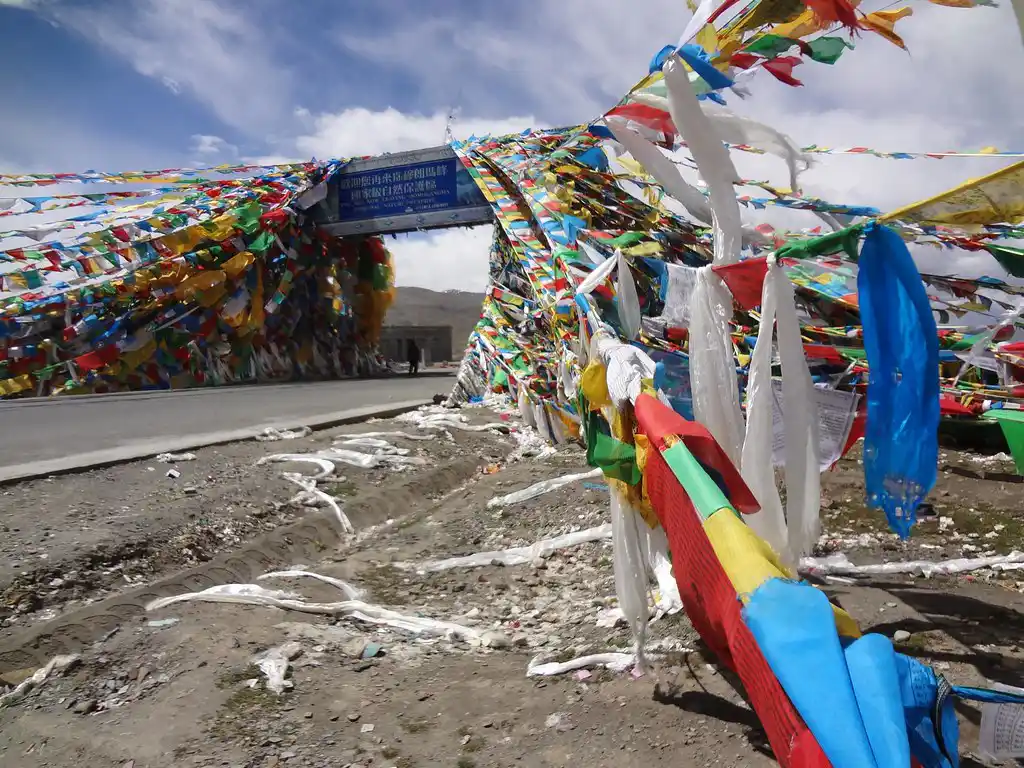
The route is around 240 km, mostly on well-paved roads across high plains. As you travel, you’ll cross a high point at Gyatso La Pass (5,220 m), marked by prayer flags and a signpost – another reminder of Tibet’s lofty terrain. Take in the panorama of rolling brown hills and distant snow peaks; on a clear morning, you might even catch a parting glimpse of Everest in the rearview.
From the pass, you enter the Tsang region’s flatter, arid landscape. En route, stop at Lhatse for a break. Lhatse is a truck-stop town about halfway to Shigatse, where you can stretch and grab some lunch (try simple fried rice or noodles at a local eatery). Just outside Lhatse, don’t miss the quirky landmark: the 5000 km Milestone of the G318. This stone marker signifies 5,000 km on China’s longest road (from Shanghai to the Nepal border)!
Snap a photo to commemorate the epic road trip you are part of. The Kathmandu to Lhasa Overland Tour continues upstream along broad valleys following the Yarlung Tsangpo (Brahmaputra) River. You may notice the air getting easier to breathe as you approach Shigatse, which sits below 4,000 m – a welcome relief for your body.
Afternoon:
Arrive in Shigatse (Xigazê) by early afternoon. At 3,900 m elevation, Shigatse feels almost “low” after EBC – you’re likely to feel significantly better and more energetic. After a short rest, explore Shigatse’s star attraction: the Tashilhunpo Monastery. This sprawling monastery, founded in 1447 by the 1st Dalai Lama, sits on a hill overlooking the city and is the traditional seat of the Panchen Lama, the second-highest incarnation in Tibetan Buddhism. As you enter through the massive monastery walls, you’ll walk cobbled lanes lined with chapels.
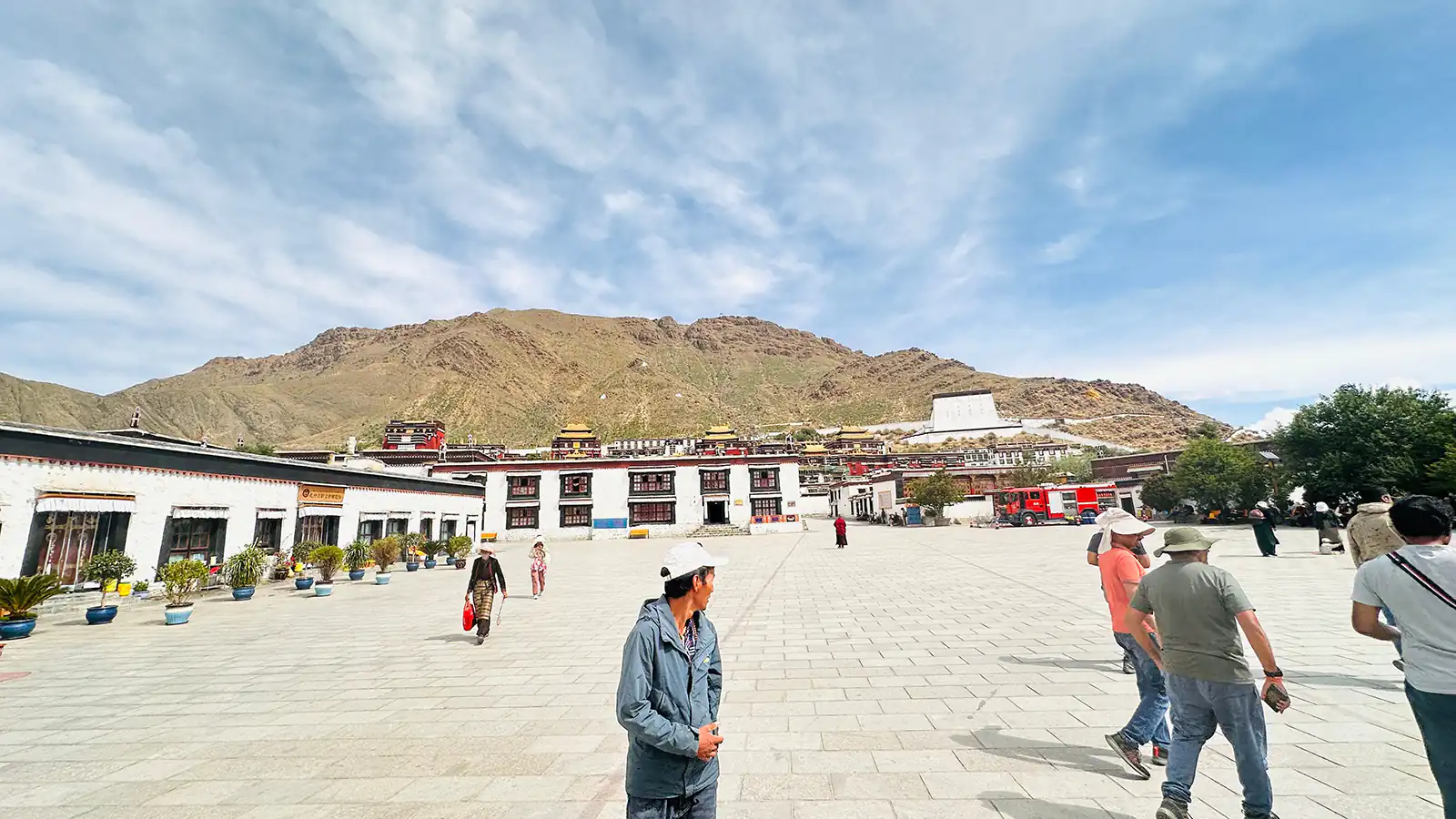
Inside the grand assembly halls, feel the ancient spiritual atmosphere – monks in crimson robes chant deep prayers, and the smell of yak butter lamps fills the air. Don’t miss the impressive Maitreya (Future Buddha) statue – at 26 meters; it’s one of the largest gilded statues in the world, housed in the Maitreya Temple within Tashilhunpo.
You can also see the stupas (tombs) of past Panchen Lamas, ornate with gold and jewels. A knowledgeable local guide will share insights, for instance, how Tashilhunpo’s name means “Heap of Glory” and how it miraculously survived the Cultural Revolution largely intact. As you explore, consider doing some of the “kora” (pilgrim circuit) that local Tibetans perform: a walk around the monastery’s perimeter, spinning prayer wheels set into the whitewashed walls. This provides a great view of Shigatse City below and the monastery’s golden rooftops above.
Evening:
After cultural sightseeing, enjoy a relaxed evening in Shigatse. This city offers a blend of Tibetan and Chinese influences, and you’ll have more dining choices here. You might try the Shigatse Dechen Tibetan Restaurant for dinner, known for authentic Tibetan dishes like yak steak with fries (a fusion of Tibetan and Western tastes) or momos.
If you crave a change, Shigatse also has Chinese Sichuan restaurants and even a few Nepali/Indian options catering to tourists – a variety you might welcome after several days of simple meals. Stroll the Shigatse Night Market if it’s open – you can browse stalls selling prayer flags, textiles, and locally grown Shigatse apples (famous in Tibet).
The streets here are paved and well-lit, and you might enjoy seeing locals in their routine – kids playing, shopkeepers closing up, monks heading back to the monastery. Since you’re at a lower altitude tonight, sleep should come easier. Consider this a recovery night: take a warm shower, maybe do some light stretching or yoga to unknot muscles from the long drives, and catch up on journaling your experiences so far.
Tomorrow, you head for Lhasa, so reorganize your bags if needed. Hydration and rest remain important – Shigatse’s climate is dry, so drink water. By now, your blood oxygen is improving, and you’re acclimatizing well, which will prepare you for crossing high passes on the way to Lhasa.
Elevation: 3900m
Accommodation: Yongze Lakeside International Hotel or similar
Meal: Breakfast
Note: Shigatse sits in a valley at nearly 4,000 m but is relatively mild. Daytime can be pretty warm under the sun, but evenings drop to near freezing in spring/fall – carry a jacket. Road conditions today are good; it’s wise to wear your seatbelt and expect some sharp curves descending passes. In Tashilhunpo, photography is allowed in the courtyard but forbidden inside chapels – respect the rules and signs. If you visit the local market, be ready to bargain politely for souvenirs (it's part of the culture). Finally, Shigatse is a good place to stock up on necessities – shops sell snacks, fruits, and toiletries in case you run low.
Day 5: Shigatse to Lhasa (3,650 m) via Gyantse – 350 km, 7–8 hours
Morning:
Have a hearty breakfast at your Shigatse hotel – you have a full day of spectacular sights ahead on the way to Lhasa. Depart Shigatse and drive east towards Gyantse, an old trading town about 90 km away. The drive takes around 2 hours over a smooth highway.
As you leave the modern amenities of Shigatse, you’ll soon step back in time: Gyantse (3,950 m) is known for its rustic charm and historic fort. Upon arriving in Gyantse late in the morning, your first stop is the Pelkor Chöde Monastery and its famous Kumbum Stupa.

The Kumbum is a must-see – a 32 m tall chorten filled with 108 small chapels across nine levels. As you ascend its floors (if open to climb), exquisite murals and statues are revealed in each chapel; it’s essentially a 3D mandala and a symbol of Gyantse’s former glory. From the top, you get a panoramic view of Gyantse town, including the imposing Gyantse Dzong (fort) perched on a hill.
Pelkor Monastery has a unique feature – once housed monks from different sects of Tibetan Buddhism under one roof. Walk the monastery complex to feel the historical atmosphere of a place that dates back to the 15th century. By now, you’ll have noticed Gyantse’s slower pace – donkeys bray in the distance, and there are fewer tourists. Many hurried tours bypass This hidden gem of Tibet, but it’s worth every minute.
Afternoon:
After exploring Gyantse, continue the Kathmandu to Lhasa Tour. The route now traverses the scenic heart of central Tibet, including two high passes. Climb up through serpentine roads to the Karo La Pass (~5,050 m). Looming right above the road is the staggering Karo-La Glacier (5,560 m) – a river of ice cascading down the slopes of Mt. Nyenchen Khangsar.
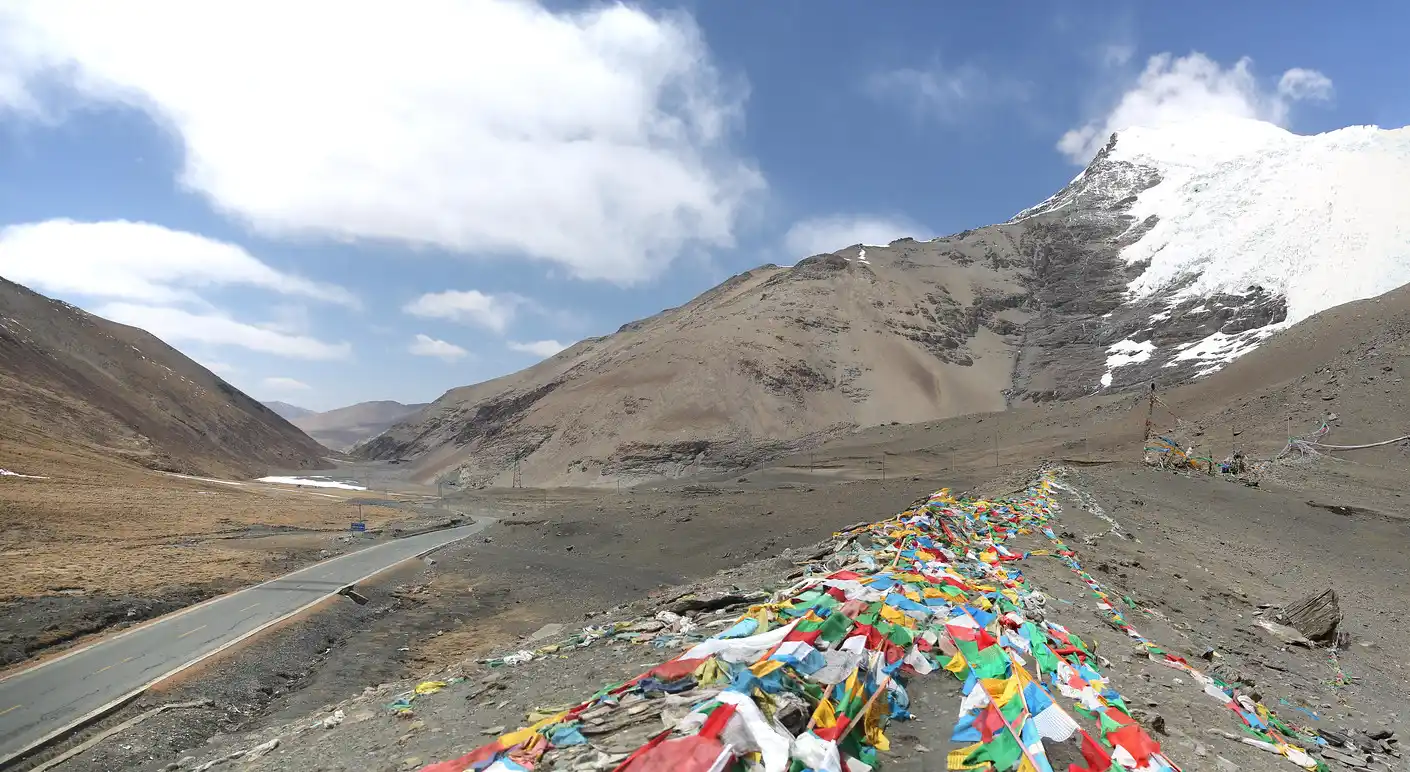
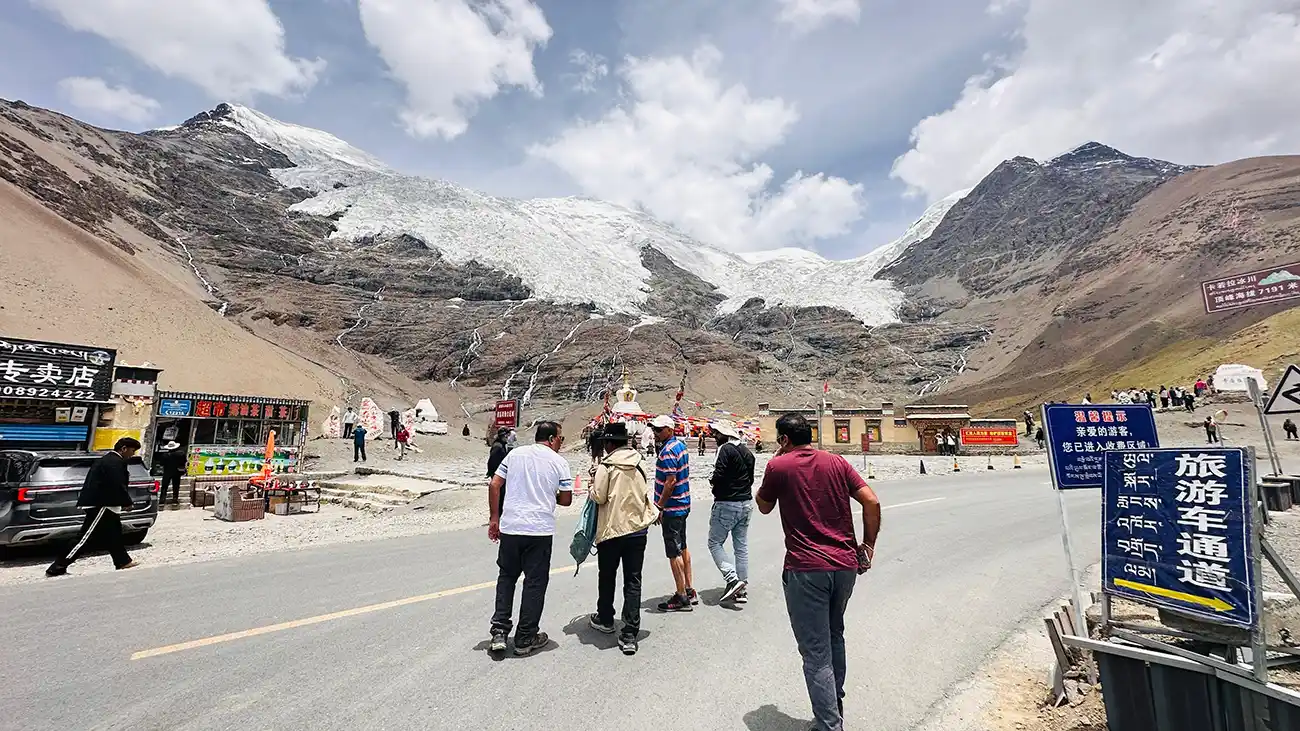
There is a viewing point where you can step out to admire the glacier’s blue-tinged ice wall close up. It’s an ideal quick photo stop – prayer flags are also strung here, fluttering in the sharp mountain wind. Vendors (often local Tibetan women in traditional attire) might sell souvenirs like turquoise beads or prayer flag strings; this is a good place to buy if something catches your eye (and it helps the local community).
You’ll soon ascend Gampa La Pass (4,794 m), which offers one of the most breathtaking views in Tibet. Suddenly, as you reach the pass, the vast Yamdrok Lake (Yamdrok Yumtso) bursts into view and its intense turquoise waters sprawl between the brown hills.
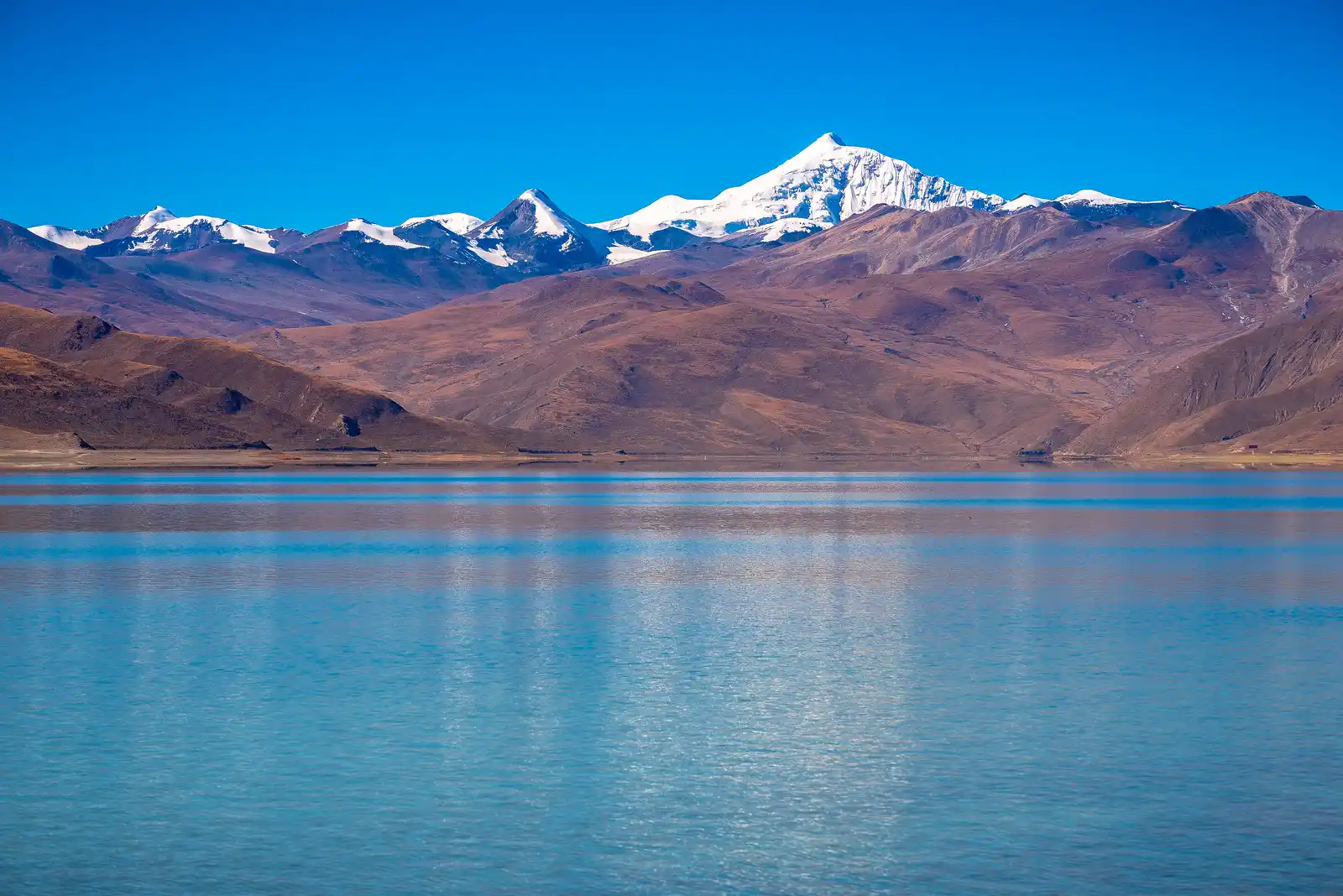
Yamdrok Lake (4,400 m) is one of Tibet’s three holiest lakes, and its beauty is otherworldly. The lake’s placid blue contrasts with the snow-capped peaks surrounding it. On a clear day, you can spot Mount Nyenchen Khangsar (7,191 m) gleaming in the distance beyond the lake. Drive down the switchbacks from Gampa La to the lakeshore, where you’ll likely park for a closer look.
The sparkling Yamdrok Lake (one of Tibet’s holiest lakes) unfolds in brilliant turquoise hues below Gampa La pass. This high-altitude lake, at about 4,400 m, is surrounded by barren hills and snowy peaks, offering an unforgettable vista. Take a leisurely walk along Yamdrok’s shore – you might see yaks and goats grazing and local nomads offering short yak rides for a fee.
The lake is sacred, so resist any temptation to swim; just being here and perhaps dipping your hands in the cold water is a spiritual experience. If timing allows, your guide may arrange a special treat: visiting a local family’s house in a nearby village. Stepping into a traditional Tibetan home, you can share a simple lunch. Expect offerings of butter tea, boiled potatoes, and homemade yak cheese, and enjoy genuine hospitality as you learn about the Tibetan way of life.
Such an immersive cultural encounter is a hidden gem of the trip – you’ll see the carefully hung portraits of the Dalai Lama or Panchen Lama on their walls and maybe playful children peeking curiously at the foreign guests. After farewells, continue the drive. The road winds along Yamdrok Lake for a while – each turn revealing new angles of its beauty – before eventually joining a main highway towards Lhasa.
Evening:
By late afternoon or early evening, you will arrive in Lhasa (3,650 m), the holy city, and your final destination is the Kathmandu to Lhasa Tour. Entering Lhasa, you’ll notice immediately the vibrant prayer flags on rooftops and the golden spires of temples, with the immense Potala Palace rising above the city. This sight signals the journey’s end.
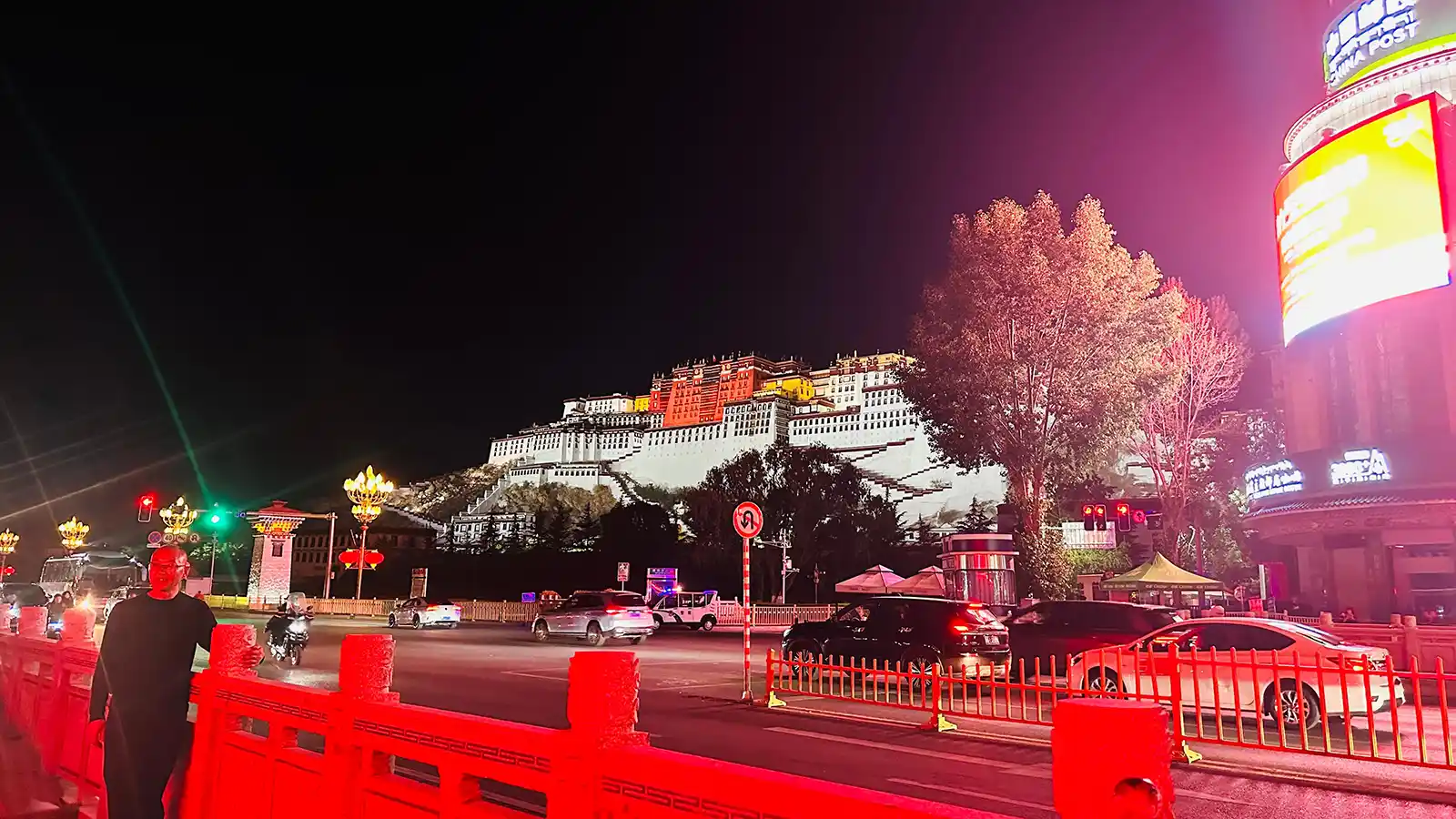
Check into your Lhasa hotel and get a well-deserved rest. You’ve traveled over 1,000 km from Kathmandu! Despite the excitement of being in Lhasa, having a relaxed evening after the long drive is wise. You might want to celebrate with something other than road food: Lhasa has various dining options, from Tibetan to Nepali, Indian, and Western.
Perhaps try the famous Tibetan hotpot (a hearty stew where you cook meats and veggies in a broth at your table) to warm up and recharge. Or if you crave something familiar, spots like the Lhasa Kitchen serve decent pizza and momos.
As you walk the streets near your hotel, you’ll feel Lhasa’s slightly lower altitude – breathing is more straightforward, and the climate a bit milder. In the evening, the city is beautifully lit: consider a quick stroll to Potala Square, where the Potala Palace is illuminated at night, reflected in a large plaza fountain – a magical first impression of Lhasa’s grandeur. Return to your hotel for a good night’s sleep, as the next two days will be filled with Lhasa’s cultural treasures.
Elevation: 3650m
Accommodation: Xinding Hotel or similar
Meal: Breakfast
Note: Start early to maximize daylight at scenic stops on long driving days like today. Yamdrok Lake’s colors are best seen under midday sun (cloudy weather can mute the turquoise, while morning/evening low light makes it dark blue). The road over Karo La and Gampa La is well-paved but steep – your driver is experienced, so sit back and trust their skill on hairpin bends. If you’re prone to car altitude sickness on winding roads, take medication or wear acupressure bands. Always have your hat, sunglasses, and sunscreen handy – the sun at nearly 5,000 m is intense. Lastly, upon arriving in Lhasa, note that foreign travelers are required to be with a guide – don’t wander too far alone just yet; you’ll have guided tours coming up.
Day 6: Lhasa Sightseeing – Drepung Monastery & Sera Monastery (3,650 m)
Morning:
Wake up in Lhasa, likely with relief and excitement. After breakfast at the hotel (try some Tibetan bread with local yak butter if available – rich but authentic), the day focuses on experiencing Lhasa’s famed monasteries.
Start with Drepung Monastery, located on the outskirts of Lhasa at the foot of a rocky hill. Drepung was once the largest monastery in the world, home to over 10,000 monks at its peak. About 8 km from the city center, a short drive takes you to its entrance. As you approach, Drepung’s white buildings sprawling up the hillside might remind you of a “heap of rice” – in fact, “Drepung” means rice heap in Tibetan, owing to this appearance.

Spend the morning walking through Drepung’s atmospheric alleyways and courtyard. Your guide will lead you through halls like the Coqen Assembly Hall, filled with rows of meditation cushions and giant pillars. Marvel at the ancient thangkas (Buddhist paintings) and the statues of Tsongkhapa (founder of the Gelugpa sect) and other revered lamas.
Its historical importance is further enhanced by Drepung serving as the Dalai Lamas’ residence before constructing the Potala Palace. If you’re lucky, you might witness the monks during a prayer session, their deep chants resonating off the stone walls – an unforgettable sound. Because Drepung involves walking up some steps and slopes, remember to pace yourself; even though you’re acclimatized, 3,650 m elevation can still make uphill climbs demanding. Take breaks to admire the view: from Drepung, you get a splendid overlook of Lhasa city and the valley.
Afternoon:
Head to Sera Monastery, on Lhasa’s north side, after a local lunch (perhaps ask your guide for a good Tibetan noodle soup restaurant – thukpa in Lhasa is delicious). Sera is one of Lhasa’s other great Gelugpa monasteries, founded in the 15th century, and it contrasts Drepung in that it’s famed for its scholarly tradition.
Arrive by 3:00 PM to catch the famous Monk Debates in the courtyard (held most afternoons except Sundays). This is a lively, must-see spectacle: dozens of monks pair off in the shady courtyard, one seated and one standing, debating points of Buddhist philosophy. As the seated monks respond or counter, the standing monks punctuate their arguments with theatrical claps and dramatic arm movements.
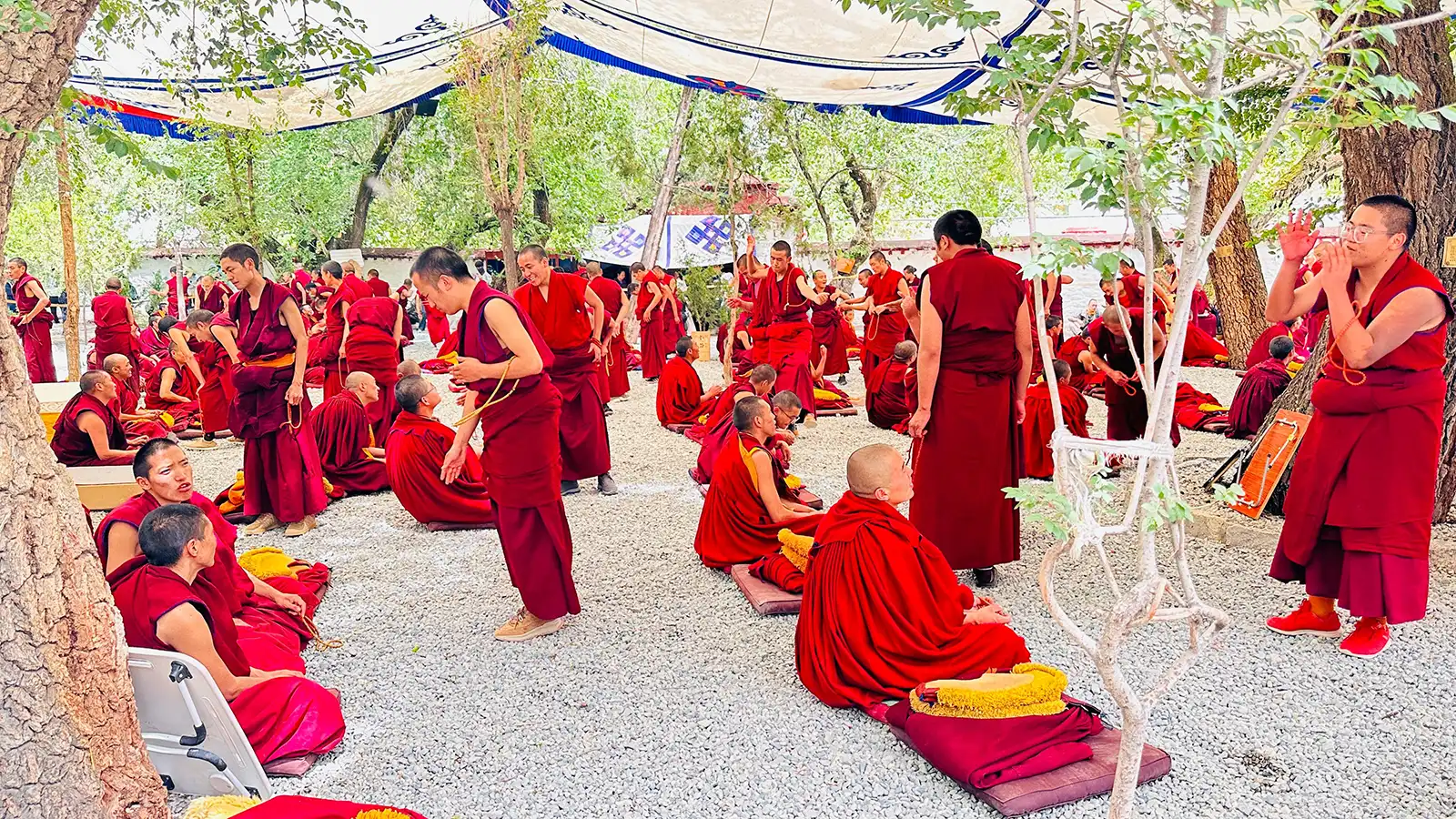
Though you won’t understand their Tibetan dialect, the energy is infectious, and you’ll sense their passion for learning. Your guide will explain the debate rituals and meaning – a unique teaching method in Tibetan monasteries. Before the debate begins, explore Sera’s impressive halls, including the Main Assembly Hall with oversized scriptures and statues and the Colleges where monks study. Notice the rock paintings of Buddha on the cliffs behind Sera – a point of interest if you hike a bit further up. During the debate, be respectful: you can observe and take photos (quietly) but maintain silence as an audience member. By around 5:00 PM, the debates conclude with a final clap.
Evening:
Return to your hotel in Lhasa by early evening. After absorbing so much spiritual and historical information, you might enjoy a gentle evening enjoying Lhasa’s more social side. A great option is to visit a traditional Tibetan teahouse. One famous spot is the Barkhor Tea House or Guangming Gangqiong Sweet Tea House, where locals gather.
Here, you can order a glass of sweet Tibetan tea (a milky, sweet beverage different from butter tea) and sit among chatting locals, watching the rhythm of daily life. It’s an immersive experience – often crowded and boisterous – but safe and welcoming. Pair your tea with a Tibetan pastry like sha bales (meat pie) or a steamed bun. Suppose you prefer something more upscale for dinner.
In that case, Lhasa has several Tibetan family-style restaurants where you can try a set meal of home-cooked dishes – think stir-fried yak with vegetables, potato curry Tibetan-style, and fresh yogurt (Tibetans make excellent creamy yogurt from dri milk – a dri is the female yak). You should be fully adjusted to the altitude by now, so a taste of Lhasa’s nightlight could be in order.
You could take an evening walk around the Barkhor Circuit (the pilgrims’ walkway around Jokhang Temple) to see it illuminated and less crowded, or head back to Potala Square if you missed the night view earlier. However, keep the night gentle; you have another big sightseeing day tomorrow. Back at the hotel, prepare your documents (passport, permit) for Potala Palace entry the following day – your guide will likely remind you, as Potala visits are tightly scheduled.
Elevation: 3650m
Accommodation: Xinding Hotel or similar
Meal: Breakfast
Note: Inside monasteries like Drepung and Sera, photography is generally not allowed in prayer halls – always ask your guide or look for signs. At Sera’s debates, you can take photos of the debating monks (they are used to it), but do not interfere. Both sites have souvenir stalls – Sera’s shop is known for its wooden monk debate rosaries and Drepung for thangka scroll paintings – feel free to browse or buy if something appeals. The sun in Lhasa is intense; you’ll often see monks holding an umbrella during debates to shade themselves – consider carrying one or wearing a hat during your tours. If you feel the altitude while walking uphill at Drepung, don’t hesitate to pause – this is normal; even locals can get winded on those steep steps. Stay hydrated and use sunscreen, as always.
Day 7: Lhasa Sightseeing – Potala Palace, Jokhang Temple & Barkhor Street
Morning:
Today is a highlight for many – visiting the Potala Palace, the legendary heart of Lhasa. After breakfast, make your way to Potala (your guide will have arranged the tickets in advance for a specific entry time, usually in the morning). Standing at the base of Potala, craning your neck up 13 stories of red and white walls, is awe-inspiring. Reflect on the fact that you are about to visit a UNESCO site historically significant as the winter residence of the Dalai Lamas for hundreds of years.
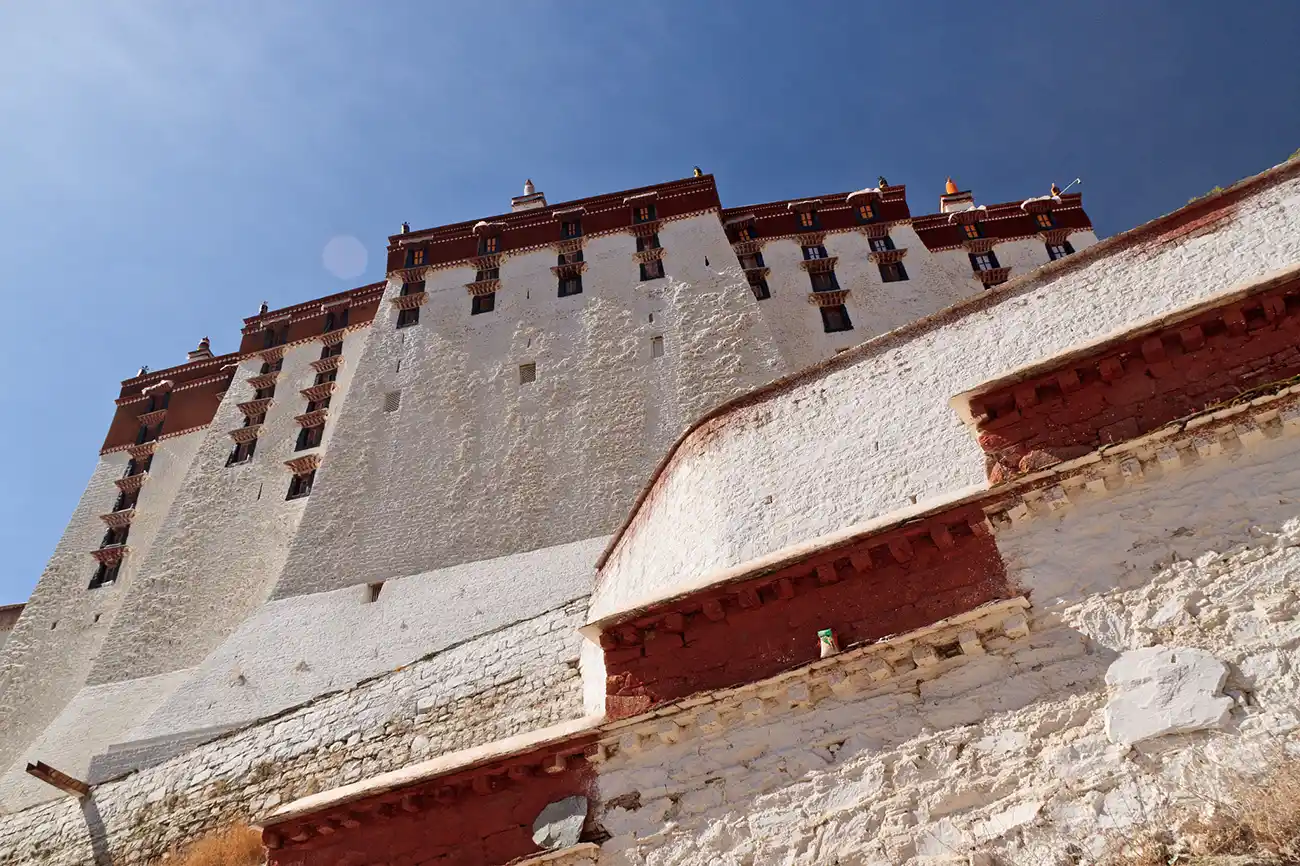
Begin the ascent up Potala’s zigzag stairs – there are over 300 steps to the top, so go slowly to avoid breathlessness. As you climb, the whitewashed lower palace (White Palace) and the crimson upper structures (Red Palace) reflect in the sunlight. Inside, you’ll explore Potala’s labyrinth of rooms (a guided route that is strictly one-way)—Marvel at the opulent sanctuaries filled with gilded statues and priceless antiquities.
The most revered areas are the golden stupas holding the remains of past Dalai Lamas – intricately crafted with tons of gold and semi-precious stones. You’ll also see the former living quarters of the Dalai Lama, kept as they were in 1959, and the ancient meditation cave of King Songtsen Gampo. Murals adorn the walls, depicting Tibetan history and mythology in vivid detail. Take in the panoramic views of Lhasa from the rooftop courtyards – you can spot the green dome of Jokhang Temple in the distance and the entire city sprawling around.
Because Potala Palace strictly limits visit time (usually around 1 hour inside), you’ll be moving at a measured pace, but not rushed. Listen closely as your guide shares stories: for example, how the 5th Dalai Lama built this colossal structure in the 17th century or how the palace has over 1,000 rooms (though only a fraction is open to the public). By late morning, you’ll exit through the back. It’s a steep descent down steps to ground level – hold the handrail if needed and watch your step.
After Potala, your guide may take you across the road to the serene Longwang Lake Park (Dragon King Park) at the base of Potala. Locals often practice tai chi or feed the doves here. It offers a fantastic angle from which to photograph Potala Palace reflecting in the lake – a different perspective from the postcard shots. From here, you might also see elderly Tibetans circumambulating Potala, spinning prayer wheels – join them for a short walk, if you wish, for an authentic slice of devotional life.
Afternoon:
Next, head to Jokhang Temple in Lhasa’s old town. Considered the holiest temple in Tibet, Jokhang is a 7th-century sanctuary. King Songtsen Gampo built it to house a sacred image of Buddha. As you approach Barkhor Square, the spiritual energy becomes palpable: hundreds of pilgrims make clockwise circuits around the Jokhang, many prostrating themselves every few steps on the ground, reciting prayers.
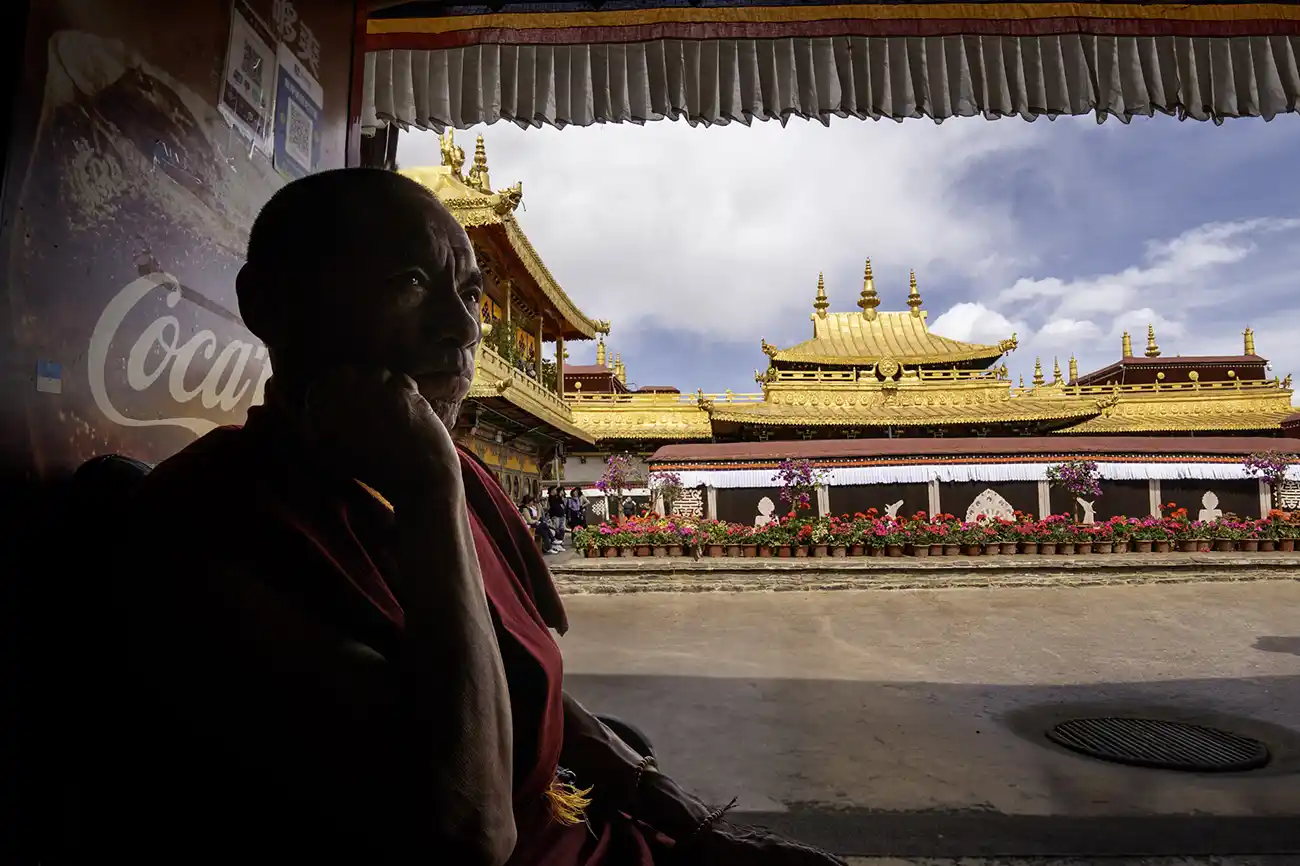
Enter the Jokhang Temple (literally “House of the Lord”) and feel the reverence. In the dimly lit interior, monks chant, and butter lamps flicker. The centerpiece is the Jowo Shakyamuni, a life-sized statue of Buddha at age 12, lavishly adorned with gold and jewels. Pilgrims who have journeyed for weeks or months are weeping with joy and devotion in front of this statue – it’s a moving scene. Your guide will explain the legends of how the Chinese Princess Wencheng, another wife of Songtsen Gampo, brought this statue.
You might join the line of devotees to approach the Jowo for a blessing. Look up at Jokhang’s roof, accessible via stairs and has gilded deer and wheel symbols. It offers a fantastic overlook of Barkhor Street below and Potala in the distance. Back on the ground, step out into the Barkhor Street marketplace encircling Jokhang.
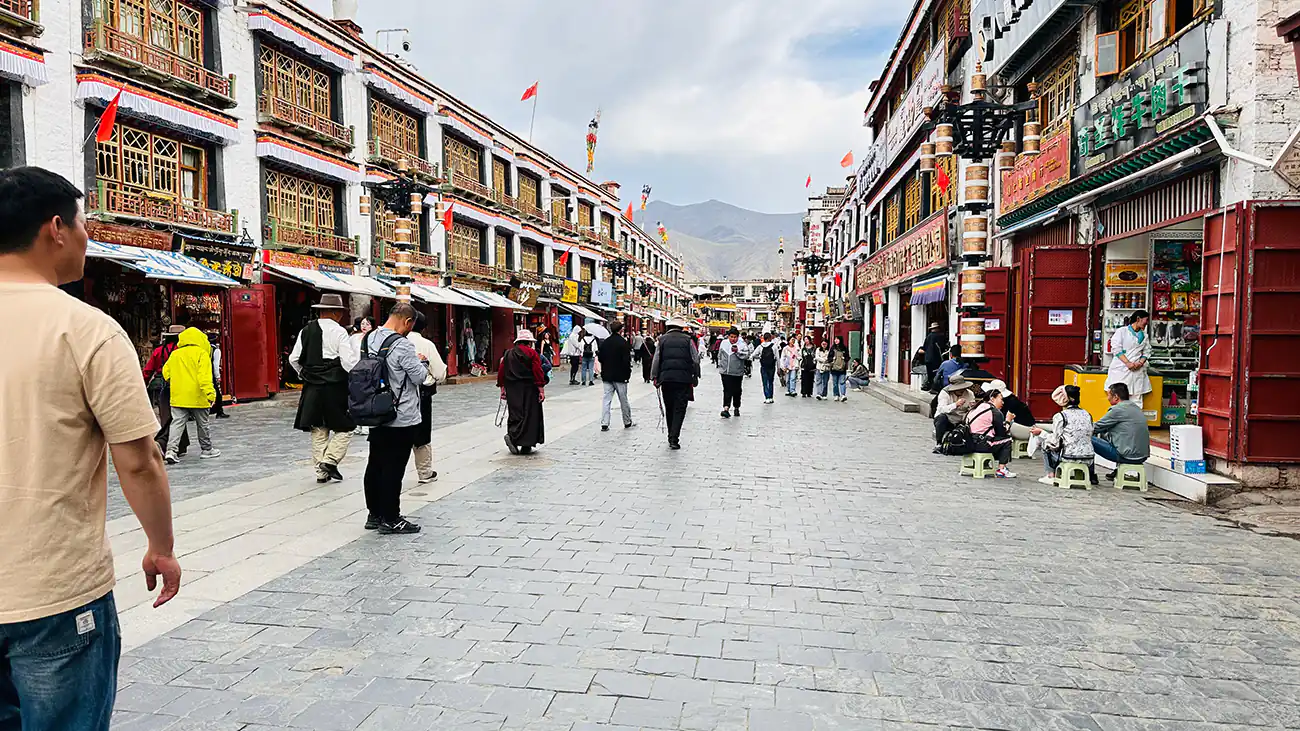
This is Lhasa’s old quarter, a lively bazaar of shops and stalls. Walk the Barkhor kora alongside pilgrims and locals: it mixes the spiritual and commercial. Merchants sell everything from prayer beads and incense to fur hats and turquoise jewelry. The smell of juniper incense wafts through the air, and you can hear the mutter of mantras mixed with bargaining shouts. Feel free to browse and pick up souvenirs – perhaps a prayer wheel or some Tibetan handmade crafts – but remember to haggle amicably (it’s expected in Barkhor).
After absorbing the market, your guide might take you to a nearby Tibetan teahouse or a local eatery as a cultural experience (if you didn’t do so the night before). You could also consider this afternoon a good time to try the famous Lhasa sweet tea and yak yogurt one more time or even sample tonga (a warm millet beer) if you’re curious – though go easy on alcohol at altitude.
Evening:
Tonight is your last evening in Tibet, so make it memorable. We often arrange a farewell dinner at a traditional restaurant with a cultural show. If available, you might attend a Tibetan music and dance performance – vibrant dancers twirling in colorful chubas (robes) and perhaps a demonstration of the melodious Tibetan long flute or throat singing.
Dine on an array of Tibetan dishes: spicy shark (stir-fried beef with chilies), momos stuffed with meat or vegetables, and the ever-present butter tea—toast with your travel companions to an incredible journey completed. Your guide will ensure your documents are ready for the next day’s departure and answer any final questions.
After dinner, take one last walk around the Barkhor if you wish, soaking up the nighttime ambiance of Lhasa – the city has a way of feeling mystical at night, with the stars above and the chatter of pilgrims continuing their circuits. Finally, return to the hotel and prepare to pack. It’s wise to have your bags mostly ready before you sleep, as tomorrow’s departure may be early.
Elevation: 3650m
Accommodation: Xinding Hotel or similar
Meal: Breakfast
Note: Visiting Potala Palace has some rules – no liquids, sharp objects, or photography inside. Security will check bags at entry. The climb is strenuous; if you have known heart or respiratory issues, inform your guide in advance so they can arrange a more leisurely pace or oxygen. The Jokhang can be very crowded; hold onto your valuables in the crush of pilgrims (Lhasa is generally safe, but pickpockets can operate in busy religious sites). When shopping on Barkhor Street, feel free to bargain – start at half the asking price as a general guideline and meet in the middle. Be respectful when photographing locals, especially pilgrims – it’s best to ask permission with a polite smile or let your guide facilitate. This evening, charge your camera/phone fully and keep an extra layer handy – nights can be chilly heading into early morning.
Day 8: Departure from Lhasa – Kathmandu to Lhasa Tour End
Morning:
Enjoy a final breakfast in Lhasa, with the Potala Palace possibly visible from your hotel’s dining hall as the sun rises over the city. Take a moment to reflect on the incredible overland journey you’ve completed – from Kathmandu’s streets across international borders to Everest Base Camp, and finally, here, the spiritual heart of Tibet.
Depending on your onward travel plans, your guide and driver will transfer you to Lhasa’s Gonggar Airport or the train station. It’s about a 1-hour drive (60 km) to the airport, so a morning departure is usually planned.
On the way, you’ll follow the Kyi Chu River to the Brahmaputra, retracing the first part of the journey. Your guide will help you verify flight or train details and handle any final permit checks (keep your Tibet Travel Permit handy as it may be needed to exit Tibet at the airport).
Say your goodbyes to your Tibetan guide and driver – who by now may feel like friends – and check in for your flight or train. If flying, try to get a window seat; on clear days, the flight from Lhasa offers jaw-dropping views of the Himalayas, perhaps even a parting glimpse of Everest.

Afternoon:
(If you have a later departure, you may have a free morning to wander Barkhor one last time or visit a museum. Some travelers extend their stay or connect to other Chinese destinations.) But assuming you are leaving by midday, you’ll likely be airborne or on the train by afternoon, watching the Tibetan plateau recede. Carry the countless memories and photos of epic landscapes and warm encounters with you.
Evening:
You might be back in Kathmandu (if you are flying) or continuing your journey in China by evening. As the stars come out, you can recount the experiences of the past 8 days – from the bumping roads of Nepal to the high passes of Tibet, quiet monastery chants to the lively Barkhor marketplace. This Kathmandu to Lhasa Tour has been about the journey as much as the destinations. Tashi Delek and Namaste! Though the tour ends today, the spirit of the Himalayas and the rich cultural insights gained will stay with you long after.
Elevation: 3650m
Meal: Breakfast
Note: Double-check you haven’t left anything in the hotel. Due to the potential for several security screenings at Lhasa Airport, ensure your boarding pass and identification are easily accessible until you have completely left the premises. If flying to Kathmandu, remember you will re-enter Nepal – a visa on arrival is available if you need a new one (unless you have a multiple-entry Nepali visa). It’s normal to feel tired as you descend to low altitude – your body has been through a lot, so stay hydrated and rest. Finally, congratulate yourself – you’ve completed one of the world’s great overland journeys!
Customize this trip with help from our local travel specialist that matches your interests.
Includes & Excludes
What is included?
- Tibet Travel Permit and all necessary local travel documents for the tour (standard processing only; express service not included).
- Based on group size, comfortable ground transportation in a tourist vehicle (5 to 29 seats).
- Admission fees to all listed sites and attractions as per the itinerary.
- Meals mentioned in the itinerary are provided throughout the tour.
- A professional Tibetan guide fluent in English will accompany your group.
- Hotel accommodation as specified in the itinerary, based on three-star standards or similar. Room upgrades can be arranged at an extra cost. (Single occupancy requires an additional supplement.)
- Complimentary transfers between Lhasa Gonggar Airport or Lhasa Railway Station and your hotel in the city center.
- All necessary service fees and government taxes.
- Full tour coordination, including planning, logistics, and local operations.
- Tourist accident insurance is included for basic coverage during your trip.
- Extra amenities, such as small Tibetan gifts, a travel map, bottled mineral water, portable oxygen, and medical-grade oxygen, are available in the transport vehicle.
What is excluded?
- China Group Visa, which must be applied for at the Chinese Embassy in Kathmandu.
- International airfare to and from China.
- Single room supplement if you prefer not to share or no roommate is available—ask your travel consultant for pricing.
- Meals not mentioned in the itinerary.
- Tips for guide and driver: Suggested $7 (50 RMB) per person per day if you’re happy with their service.
- Costs from unforeseen events like natural disasters, flight delays, or lost items.
- Personal expenses include laundry, drinks, snacks, phone use, and optional activities.
Departure Dates
We also operate Private Trips.
Trip Information
Visa & Permit Information for Nepal to Tibet Tour
Traveling from Nepal to Tibet requires special visa arrangements, but we make it easy. Our service includes the management of all essential visas and permits for a seamless travel experience.
- Chinese Group Visa: When starting in Kathmandu, you must obtain a Chinese Group Visa (a separate visa specifically for entry to Tibet from Nepal). We handle the application on your behalf in Kathmandu. The process takes about three working days, so you should plan to arrive in Nepal a few days before the tour departure. Our team will provide all the guidance and paperwork you need, making the process simple and hassle-free. With this group visa, you can travel to mainland China. Citizens of Andorra, Australia, Austria, Belgium, Brunei, Bulgaria, Croatia, Cyprus, Denmark, Estonia, Finland, France, Germany, Greece, Hungary, Iceland, Ireland, Italy, Japan, Latvia, Liechtenstein, Luxembourg, Malaysia, Malta, Monaco, Montenegro, Netherlands, New Zealand, North Macedonia, Norway, Poland, Portugal, Romania, Slovakia, Slovenia, South Korea, Spain, and Switzerland can enter the mainland China and Tibet without a visa for stays of up to 30 days.
- Tibet Travel Permit: In addition to the visa, a Tibet Tourism Bureau Travel Permit is required to enter Tibet. We arranged this permit. We will have the license ready for you before you reach the border. Without it, you cannot board a flight or cross into Tibet, but don’t worry – we take care of all the formalities, so you don’t have to.
- Other Permits & Requirements: Depending on your itinerary, we obtain additional permits (such as an Alien Travel Permit for the Everest region or other restricted areas). Your passport must be valid for no less than six months after your intended return date. Remember that foreigners cannot travel independently to Tibet – you must be part of an organized tour. Our Kathmandu to Lhasa Tour fulfills this requirement, and your guide will hold all necessary permits during the trip. With our expertise, all these entry procedures are handled seamlessly, letting you focus on enjoying the adventure.
Accommodation & Meals
Throughout your Kathmandu to Lhasa Tour, you’ll stay in accommodations that are the best available in each location, offering both comfort and local character:
- Accommodation: In the smaller towns along the route (Gyirong, Tingri, Gyantse), you will stay in clean but straightforward guesthouses or lodges. They offer basic facilities like a warm bed, electricity, and usually hot water (in some cases, bathrooms are shared). In Shigatse and Lhasa, you’ll stay at comfortable hotels (3-star or higher) with modern amenities: private hot showers, heating, Wi-Fi, etc.
- Meals: We ensure you’re well-fed and get a taste of local cuisine. Breakfasts are included and usually feature a mix of local and Western items (for example, Tibetan bread or porridge with eggs and coffee/tea). Your guide will pick clean, local restaurants for lunch and dinner where you can try authentic Tibetan and Nepali dishes. You might sample momos (dumplings), thukpa (noodle soup), or, in Nepal, a comforting dal bhat (lentil curry with rice). Vegetarian options are readily available throughout the trip. We provide safe drinking water (bottled or boiled), and your guide ensures that food is hygienic. You certainly won’t go hungry, and sharing meals is an enjoyable part of the journey!
Transportation & Guides – Kathmandu to Lhasa Overland Tour
We provide reliable transport and expert guidance to ensure your overland trip is safe, comfortable, and informative:
Transportation: The Kathmandu to Lhasa Tour is done in a comfortable, well-maintained Van suited for mountain roads. For luxury groups, we often use a 4×4 Toyota Land Cruiser or similar SUV; for larger groups, a van or minibus is provided. Our drivers are familiar with the terrain and drive cautiously on winding mountain roads. We frequently stop at beautiful viewpoints and take breaks to rest and photograph the scenery. Relax and appreciate the stunning views; we will take care of the driving.
Guides: You will be accompanied by professional English-speaking guides who are knowledgeable about the region. In Kathmandu, our staff will assist you with the China visa process and brief you on what to expect. Once in Tibet, a local Tibetan guide will travel with you throughout the tour. Your guide will share insightful background on each site – from the history of monasteries to the stories behind the landscape.
They also manage all the logistical details (checkpoints, hotel check-ins, permits) and help monitor everyone’s health at high altitudes. Our friendly and attentive guides ensure you feel well taken care of. With a skilled driver and an expert guide, you can confidently travel and fully immerse yourself in the journey.
Packing Tips – Essentials for High-Altitude Travel
Preparing for a Kathmandu to Lhasa overland tour is key to having a comfortable experience. Here are some essential packing tips for the Kathmandu to Lhasa Tour:
- Layered Clothing: Pack for a range of temperatures by dressing in layers. Include t-shirts or long sleeves, a warm fleece, a waterproof jacket, and a down coat for cold nights.
- Sturdy Footwear: Wear comfortable, closed-toe walking shoes or lightweight hiking boots (well-broken-in) for walking on uneven terrain without discomfort.
- Sun Protection: High-altitude sunshine is intense. Carry a sun hat, UV-protection sunglasses, and high-SPF sunscreen to protect your skin and eyes.
- Health & Medicine: Carry personal medications and a small first aid kit (including altitude sickness pills if your doctor advises). For proper hydration, bring a refillable water bottle; lip balm and moisturizer are recommended.
- Electronics: Remember to bring your camera or phone to photograph the landscapes.
- Documents & Money: Keep your passport, Chinese visa, and Tibet permit handy (we’ll organize the permits for you). Bring enough cash in Chinese Yuan for the journey since ATMs and card payments are scarce. Carry valuables in a secure money belt or pouch.
Book Your Adventure Now!
The Kathmandu to Lhasa Overland Tour is more than a trip – this is an unparalleled adventure amidst Earth’s most stunning natural beauty. From the moment you set out from Kathmandu to the day you gaze upon the Potala Palace in Lhasa, this tour is filled with experiences that will inspire and amaze you. Imagine crossing the Himalayas by road, standing at vantage points where Everest graces the horizon, and walking the streets of fabled Lhasa – all in one incredible adventure.
Don’t miss your chance to embark on this epic overland journey. With all the logistics handled by our expert team (visas, permits, transport, and accommodation), you can focus entirely on the experience. Book your Kathmandu to Lhasa Tour now, and let us handle the details. Peregrine Team can address any inquiries and customize the tour to fit your requirements. Leap and join this overland adventure – your journey to the Roof of the World awaits, leaving you with memories to treasure for a lifetime.
Frequently Asked Questions
While you’ll have reliable Wi-Fi in major cities like Kathmandu, Shigatse, and Lhasa, connectivity can be limited or unavailable in remote areas like Gyirong or Everest Base Camp. SIM cards with Chinese networks work in Tibet, but international roaming may not. We recommend downloading maps and key info offline before remote sections.
Yes, you can charge your devices at hotels and guesthouses along the route. However, power outages may occur in remote areas, and some basic lodges may have limited outlets. Carry a power bank and a universal adapter to stay charged throughout the trip.
This tour involves high-altitude travel (above 5,000 m) and long drives, which may not be ideal for young children or seniors with health concerns. However, fit and healthy older adults can enjoy the journey if properly acclimatized. Always consult a doctor before traveling to high altitudes.
Travel insurance is mandatory and should include high-altitude trekking or travel (above 5,000 m), emergency medical evacuation, trip cancellation, and personal liability. Ensure your policy is valid in both Nepal and China (Tibet). Proof of insurance may be requested during the permit application.
Yes, We allow customization. You can add extra days in Lhasa, explore more parts of Tibet (If you are on a private trip), or even continue to mainland China. Extensions to Bhutan or Everest Base Camp (Southside) in Nepal are also possible before or after the Kathmandu to Lhasa Tour.
You don’t need to be an athlete, but a moderate level of fitness is recommended. The tour involves long drives, walking at high altitude, and occasional uphill monastery visits. If you can comfortably walk for 30 minutes and handle mild exertion, you’ll likely be fine. Prior acclimatization or light hiking practice can help.
Yes, vegetarian meals are widely available throughout Nepal and Tibet. While options may be limited in remote areas, guides do their best to accommodate dietary needs like vegan, gluten-free, or allergy-friendly meals. Let your tour operator know in advance so they can prepare accordingly.
In Tibet, you’ll need Chinese Yuan (RMB). ATMs are only available in major cities like Shigatse and Lhasa. On the Nepal side, Nepalese Rupees are used. It’s best to exchange money in Kathmandu and Lhasa and carry enough cash for remote areas, where cards and ATMs are unavailable.
Mild altitude symptoms like headaches or fatigue are common, especially at elevations above 4,000 m. The itinerary is designed for gradual acclimatization. Guides monitor your condition and carry basic remedies and emergency oxygen. If symptoms worsen, descent and medical help are arranged immediately.
Yes, the tour is safe for solo female travelers, especially since independent travel in Tibet is not permitted — you’ll be part of an organized group with guides throughout. Respectful behavior, modest dress, and general travel precautions are recommended. Many solo female travelers rate this route as enriching and secure.
Reviews on Kathmandu to Lhasa Tour
5.0
Totally Awesome Himalayan Adventure!
This Kathmandu to Lhasa tour was seriously epic! Driving the Friendship Highway was a blast, and the views of the Himalayas were just insane. Seeing Everest from Tingri was a major highlight – bucket list stuff! The monasteries and temples in Tibet were super interesting, especially the Potala Palace, which was just mind-blowing. Yamdrok Lake’s color was unreal. The guides were fantastic and made everything so easy. If you’re looking for an adventure with incredible scenery and culture, this is it!

Mike Johnson
Los Angeles, California, USAA Truly Spectacular Himalayan Trek, Eh?
This Kathmandu to Lhasa tour was something else, eh? The drive along the Friendship Highway offered some truly breathtaking views of the Himalayas – absolutely stunning. Seeing Everest in the distance was a real treat. The monasteries and temples were fascinating, giving a great insight into Tibetan culture. Yamdrok Lake’s blue-green waters were just gorgeous. The whole trip was well-organized, and the guides were super friendly and helpful. Definitely recommend this to any Canadian looking for an unforgettable adventure!
David Lee
Vancouver, British Columbia, CanadaUnforgettable Journey to the Roof of the World!
What an incredible trip! From the bustling streets of Kathmandu to the majestic Potala Palace in Lhasa, every moment was memorable. The overland journey provided stunning views of the Himalayas, and the gradual ascent helped with the altitude. Exploring the ancient monasteries and learning about Tibetan culture was a highlight. Yamdrok Lake was breathtaking. The guides were knowledgeable and well-organized. I highly recommend this tour for a unique and enriching travel experience.
Jennifer Williams
Chicago, Illinois, USAA Splendid Overland Adventure to Lhasa
This Kathmandu to Lhasa tour was a rather splendid affair. The drive across the Himalayas on the Friendship Highway provided some truly magnificent scenery. The view of Everest from Tingri was simply breathtaking. Exploring the ancient monasteries and temples in Tibet offered a fascinating glimpse into their rich cultural heritage. Yamdrok Lake was exceptionally beautiful, and the Potala Palace in Lhasa was an absolute marvel. The entire trip was impeccably organized, and the guides were most knowledgeable and helpful. Highly recommended for the discerning traveller.
Eleanor Davies
Oxford, England, UKTop-Notch Trip to Lhasa
This Kathmandu to Lhasa tour was a fair dinkum great experience. The drive across the Himalayas was incredible, with views that’ll knock your socks off. Seeing Everest was a major highlight. Exploring the monasteries and learning about the Tibetan culture was fantastic. Yamdrok Lake was beautiful, and the Potala Palace in Lhasa was just amazing. The guides were legends and made everything so easy. Would definitely recommend this tour to anyone keen for an unforgettable adventure.
William Brown
Queensland, AustraliaA Cracking Trip to the Roof of the World
What a cracking adventure this was! Driving from Kathmandu to Lhasa was an experience in itself, with some truly spectacular views of the Himalayas. Seeing Everest was a proper highlight. The monasteries and temples were steeped in history and culture, and the Potala Palace was just magnificent. Yamdrok Lake’s vibrant colours were something else. The guides were brilliant and made the whole trip thoroughly enjoyable. I’d recommend this tour to anyone looking for a unique and rewarding journey.
Thomas Baker
Manchester, England, UKBonza Himalayan Adventure!
This Kathmandu to Lhasa tour was absolutely bonza! Driving the Friendship Highway through the Himalayas was unreal – the scenery was just stunning. Seeing Mount Everest in the distance was a definite highlight. The monasteries and temples were fascinating, and Yamdrok Lake was a real beauty with its turquoise water. The whole trip was well-organized, and the guides were top-notch and friendly. If you’re after an epic overland adventure, this one’s a ripper!
Olivia Green
Perth, Western Australia, AustraliaWunderbare Reise durch das Himalaya nach Lhasa
Diese Reise von Kathmandu nach Lhasa war eine wirklich wunderbare Erfahrung. Die Fahrt über den Friendship Highway durch das beeindruckende Himalaya-Gebirge bot atemberaubende Ausblicke auf die höchsten Gipfel der Welt. Der Blick auf den Mount Everest von Tingri war ein unvergessliches Highlight. Die Besichtigung der Klöster und Tempel in Tibet war faszinierend und vermittelte einen tiefen Einblick in die reiche Kultur und spirituelle Tradition des Landes. Der Yamdrok-See mit seinem leuchtend türkisfarbenen Wasser war wunderschön, und der Potala-Palast in Lhasa war ein architektonisches Meisterwerk. Die Organisation der Reise war ausgezeichnet, und die Reiseleiter waren sehr kompetent und freundlich. Ich kann diese Tour jedem empfehlen, der ein unvergessliches Abenteuer sucht.
Andreas Müller
Hamburg, GermanyRelated Packages
Destination
TibetDifficulty
EasyLhasa Tour from Kathmandu
 8 Days
US$ 1350
Destination
NepalDifficulty
EasyNepal and Tibet Tour
14 Days
US$ 3000
Destination
Nepal, Tibet, and BhutanDifficulty
EasyNepal Tibet Bhutan Tour
17 Days
US$ 4900