

Based on 746 reviews
Lhasa to Kathmandu tour
Discover the Magic of Tibet and Nepal in One Epic Trip

Duration
7 Days

Meals
- 6 Breakfast

Accommodation
- 3-star Hotel
- Guesthouse

Activities
- Sightseeing
- Scenic Drive
SAVE
US$ 238Price Starts From
US$ 1190
Overview of Lhasa to Kathmandu tour
IMPORTANT TRAVEL UPDATE
Lhasa to Kathmandu Tour Temporarily Suspended
The Lhasa to Kathmandu Tour is temporarily suspended due to severe flash-flood damage along the
Rasuwagadhi–Kerung border route, which this tour uses to travel from Tibet into Nepal.
The flash flood of August 26, 2026 caused extensive damage to roads, bridges, and border infrastructure in the Rasuwagadhi–Kerung area. The border remains closed, and reconstruction work continues.
We cannot operate the Lhasa to Kathmandu overland tour until the route is repaired and the Rasuwagadhi–Kerung border officially reopens for safe tourist movement.
Tour operations will resume once the route is safe and officially reopened.
Start an unforgettable Lhasa to Kathmandu tour that combines luxury and cultural immersion. The seven-day overland trek traverses the fearsome Himalayas, with unique opportunities to stay at sacred monasteries and along crystal-clear lakes near the foot of Mount Everest. Travelers enjoy a Lhasa to Kathmandu Overland tour in a private vehicle with expert guides, ensuring a smooth and enriching adventure across high mountain passes and vibrant valleys. The route uses Lhasa for the Kathmandu Overland Tour, giving you time to acclimate in Tibet’s spiritual heart before heading toward Nepal’s lively capital.
Each day of this itinerary is crafted for discerning travelers. You will visit World Heritage Sites and remote mountain hamlets in active voice narration. Expect short, clear sentences and a graceful tone. Distances, driving times, and altitudes are noted for each leg, reflecting current road conditions. Cultural etiquette tips prepare you for visits to ancient Buddhist monasteries and Hindu temples so you engage respectfully. From photographing turquoise alpine lakes to joining pilgrims in prayer halls, every experience is tailored to the curious luxury traveler.
Prepare to traverse around 1,000 kilometers on the classic Friendship Highway linking Tibet and Nepal. Over seven days, you will cross soaring passes above 5,000 meters and descend into lush lowlands at 1,300 meters. The combined altitude gains and drops require measured pacing, which this itinerary provides. With an average of 4–6 hours of driving on travel days, there is ample time for sightseeing and relaxation. Sink back into the comfort of your van as snow-dusted summits and prayer-flag-draped hills fly by outside your window. Relax in the three-star hotel accommodations (except Everest Base Camp) each night as you enjoy the region’s food and hospitality.
Highlights of the Lhasa to Kathmandu Tour:
- Awe-inspiring drive across the Himalayas via the Friendship Highway, covering ~1,000 km
- Guided exploration of Lhasa’s UNESCO World Heritage Sites: Potala Palace and Jokhang Temple
- Visits to historic monasteries (Drepung, Sera, Tashilhunpo, Sakya) with insider cultural insights
- Breathtaking scenery at Yamdrok Lake and high mountain passes (Kamba La, Karo La, Gyatso La)
- Overnight at Everest Base Camp (5,200m) with sunrise over Mount Everest’s north face
Below is a detailed day-by-day itinerary for this Lhasa to Kathmandu tour, complete with historical context, cultural insights, and engaging activities—a journey in style from Lhasa’s ancient palaces to Kathmandu’s ornate temples. Experience the Lhasa to Kathmandu Tour of a lifetime, where each day brings new wonders on top of the world.
Photo & Video Gallery
Detail Itinerary of Lhasa to Kathmandu tour
Day 1: Arrival in Lhasa (3,650m) – The Adventure Begins
Your Lhasa to Kathmandu tour starts in Lhasa, Tibet’s sacred capital (altitude 3,650 meters). English-speaking Tibetan guide greets you at Lhasa’s airport or train station and escorts you by private car (about 1-hour drive) to your hotel in the city center. Along the way, you glimpse the Potala Palace perched high on Marpo Ri Hill, a grand introduction to the city’s skyline. Check-in is smooth, and you are offered hot ginger tea to help you relax at altitude.
Spend the remainder of Day 1 making it easy to acclimate to Lhasa’s thin air. Avoid strenuous activity on this first day. Instead, take a stroll around the vicinity of your hotel or explore a nearby market if you feel up to it. In the Barkhor area, you might see Tibetan pilgrims making a kora (ritual circumnavigation) around the Jokhang Temple. The atmosphere is vibrant yet peaceful. Savor the experience quietly – perhaps sit at a local tea house and sip sweet Tibetan milk tea while watching the ebb and flow of daily life.
This first evening, enjoy a welcome dinner featuring Tibetan and Chinese specialties. The guide will provide more detailed information about your trip and ensure you’re ready for the high-altitude adventure. They’ll remind you of basic Tibetan etiquette: speak softly, take your hat off when entering temples, and always walk clockwise around shrines and prayer wheels. The excitement builds as you finally retire for the night in a comfortable Lhasa hotel. Now, the city’s spiritual wonders await.
Elevation: 3650m
Accommodation: Xinding Hotel or similar
Meal: Not Included
Day 2: Lhasa – Potala Palace and Jokhang Temple
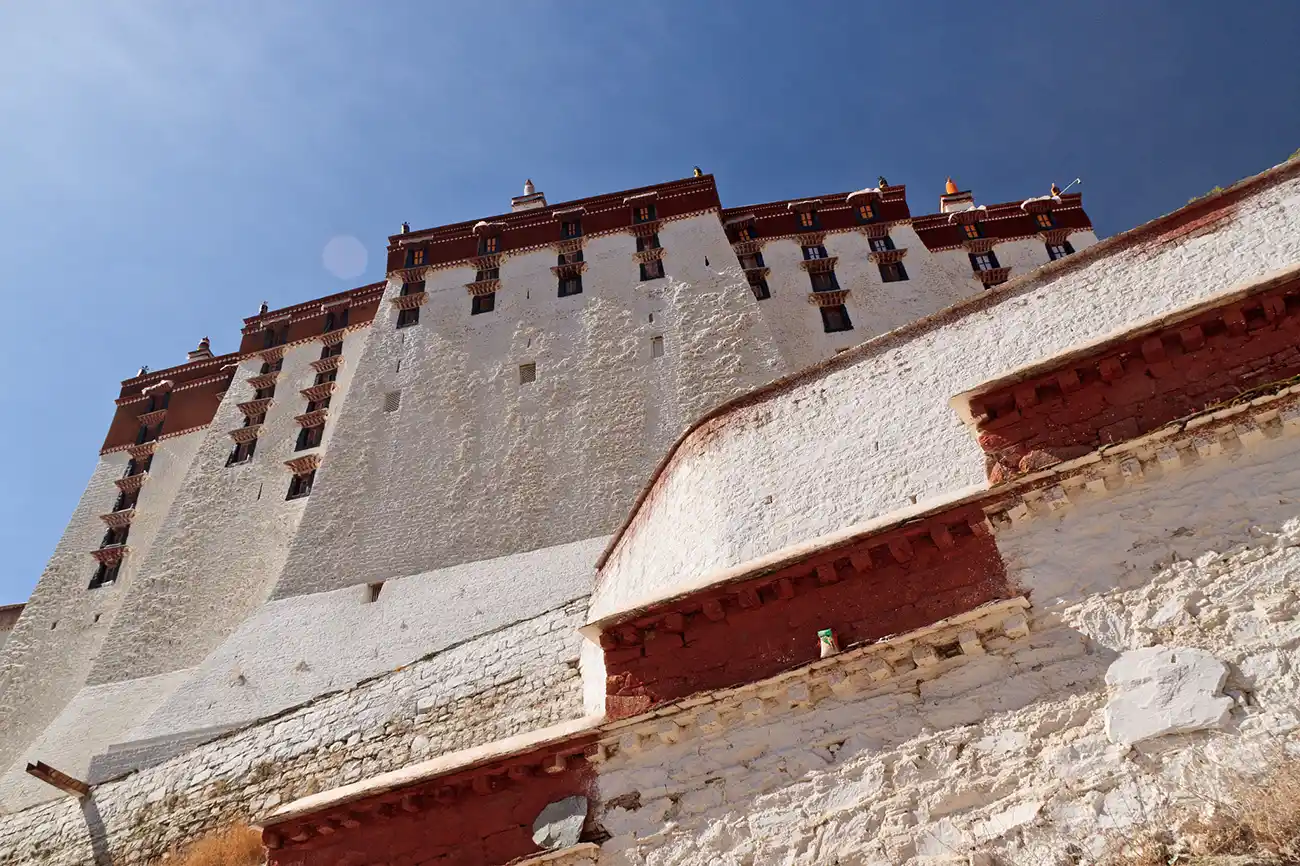
On day 2 of your Lhasa to Kathmandu tour, you experience the vibrant spiritual heritage of Lhasa. After breakfast, the guide will take you to the beautiful Potala Palace, the former winter home of the Dalai Lamas and the site of a 1994 Unesco World Heritage designation. Rising 13 stories and containing over a thousand rooms, the Potala dominates Lhasa’s skyline with red and white walls. You arrive early to beat the crowds, slowly ascending the palace’s stone steps to enjoy the view (and catch your breath in the high altitude).
Inside the Potala, you explore ornate chapels filled with golden statues, priceless scroll paintings, and jewel-encrusted stupas housing the tombs of past Dalai Lamas. The air is thick with the scent of butter lamps and incense. As you walk through dimly lit halls, your guide whispers historical anecdotes – how the 5th Dalai Lama built this palace in the 17th century atop the remains of King Songtsen Gampo’s 7th-century fortress. You marvel at the immense carved wooden beams and intricate murals depicting Buddhist cosmology. Photography is prohibited in most areas, so you take mental pictures of the Potala’s treasures. Be courteous: lower your voice, avoid touching altar offerings, and make way for visiting resident monks or locals to pray.
Once you’ve descended from the Potala, you will continue in the heart of Lhasa’s old town:
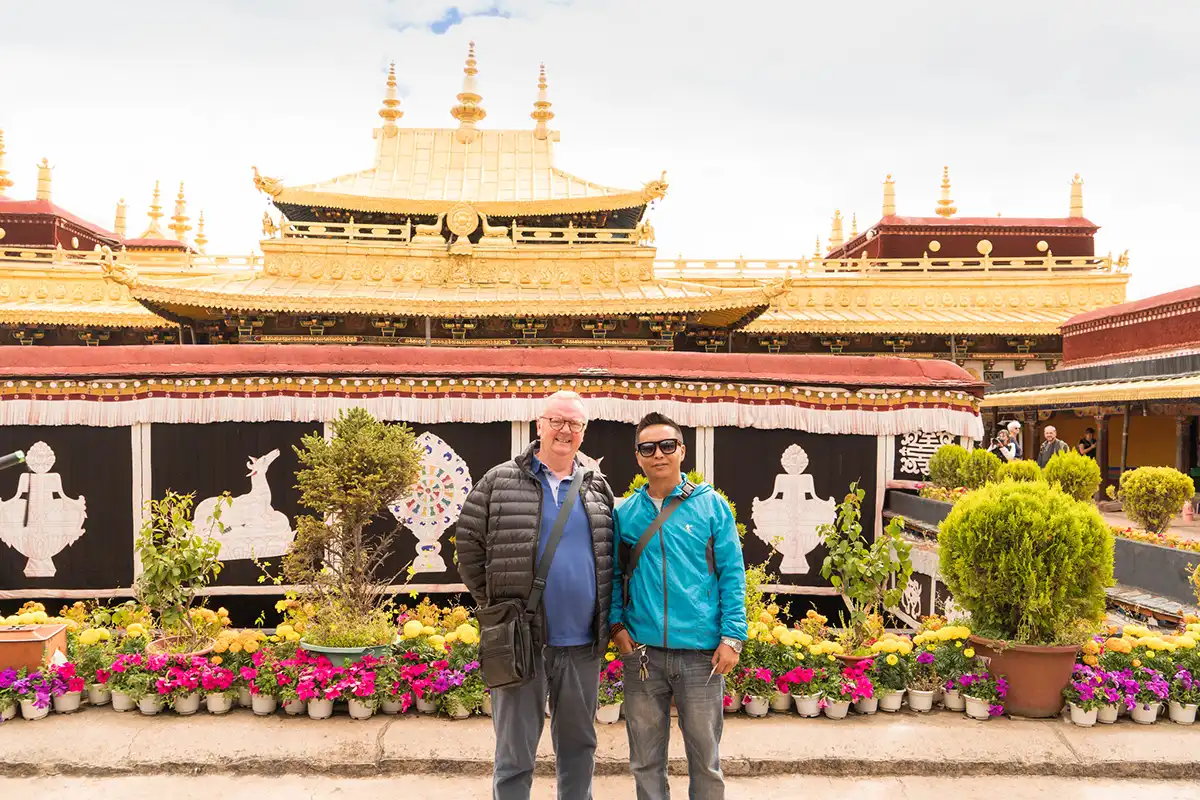
Jokhang Temple. This 7th-century temple is Tibet’s holiest shrine, home to the revered Jowo Shakyamuni statue. Outside, the Barkhor Street pilgrim circuit teems with throngs. You accompany devout Tibetans circling Jokhang clockwise, spinning prayer wheels and murmuring mantras. Some pilgrims lie flat, prostrating themselves thoroughly on the ground every few steps — a humbling expression of devotion. You take off your shoes and hat to pass through the Jokhang’s ancient wooden doors in a sign of respect.
Butter lamps flicker golden light inside the dim sanctuary across the Jowo statue’s serene face. Monks in maroon robes chant prayers rhythmically. You may quietly observe locals offering katas (white scarves) and yak butter to the shrine. Following local custom, you keep to the right side as you circumambulate through the temple’s chapels, always walking clockwise around sacred objects. The mix of juniper incense, chanting, and the sheer antiquity of the Jokhang makes for a moving experience. Your guide points out the beautifully painted murals. It explains how Queen Wencheng (a Chinese princess) brought the Jowo statue to Lhasa as part of her marriage dowry, making Jokhang a key site in Tibetan Buddhism.
After the spiritual morning, enjoy lunch at a fine restaurant in the old town – perhaps a chance to try momos (Tibetan dumplings) and thukpa (noodle soup). In the afternoon, you can wander Barkhor Bazaar, a circular street with shops selling prayer flags, turquoise jewelry, and yak wool carpets. You might purchase a spinning prayer wheel or enjoy people-watching as merchants, pilgrims, and monks go about their day. Photography is welcome outside so you can capture candid shots of daily life – the smiling face of an elderly nomad or the playful bargaining between a shopkeeper and traveler.
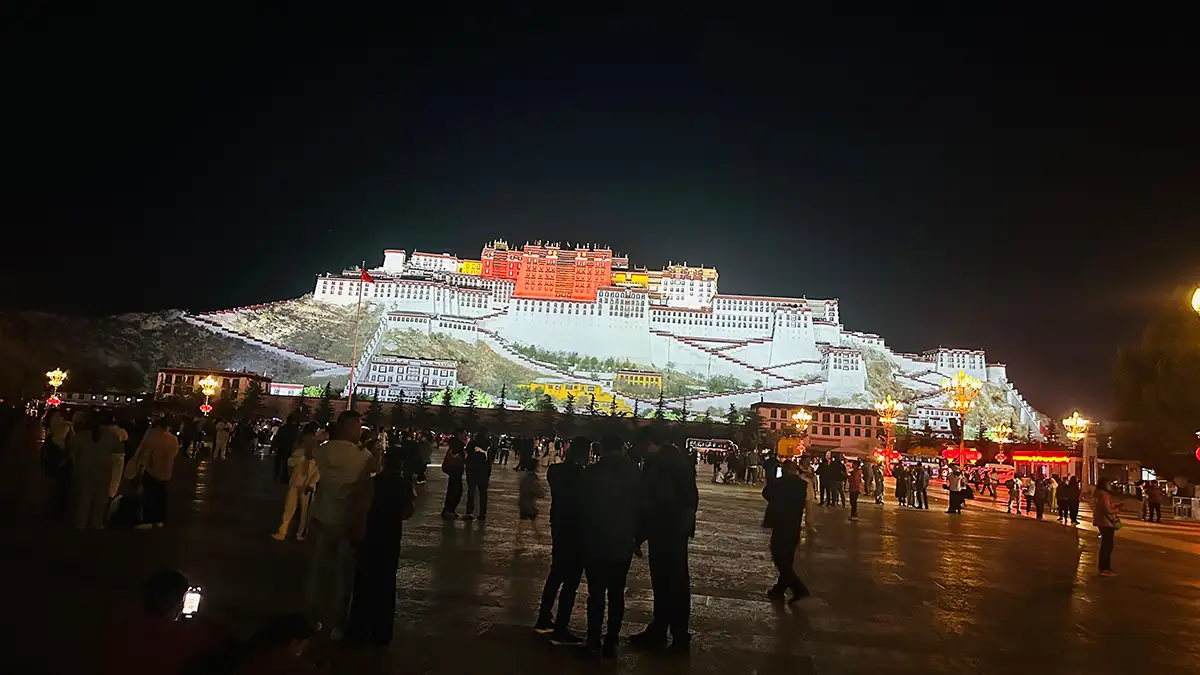
As the sun lowers, you may return to the Potala Palace Square to see the palace illuminated by soft evening light – a perfect photo opportunity. Dinner is on your own tonight; your guide can recommend an excellent restaurant serving Nepalese or Indian cuisine if you wish a change of taste. Back at the hotel, you reflect on Lhasa’s deep spirituality and vibrant street life. With two significant landmarks visited, your Lhasa to Kathmandu Tour has begun on a high note.
Elevation: 3650m
Accommodation: Xinding Hotel or similar
Meal: Breakfast
Day 3: Lhasa – Monasteries of Drepung and Sera
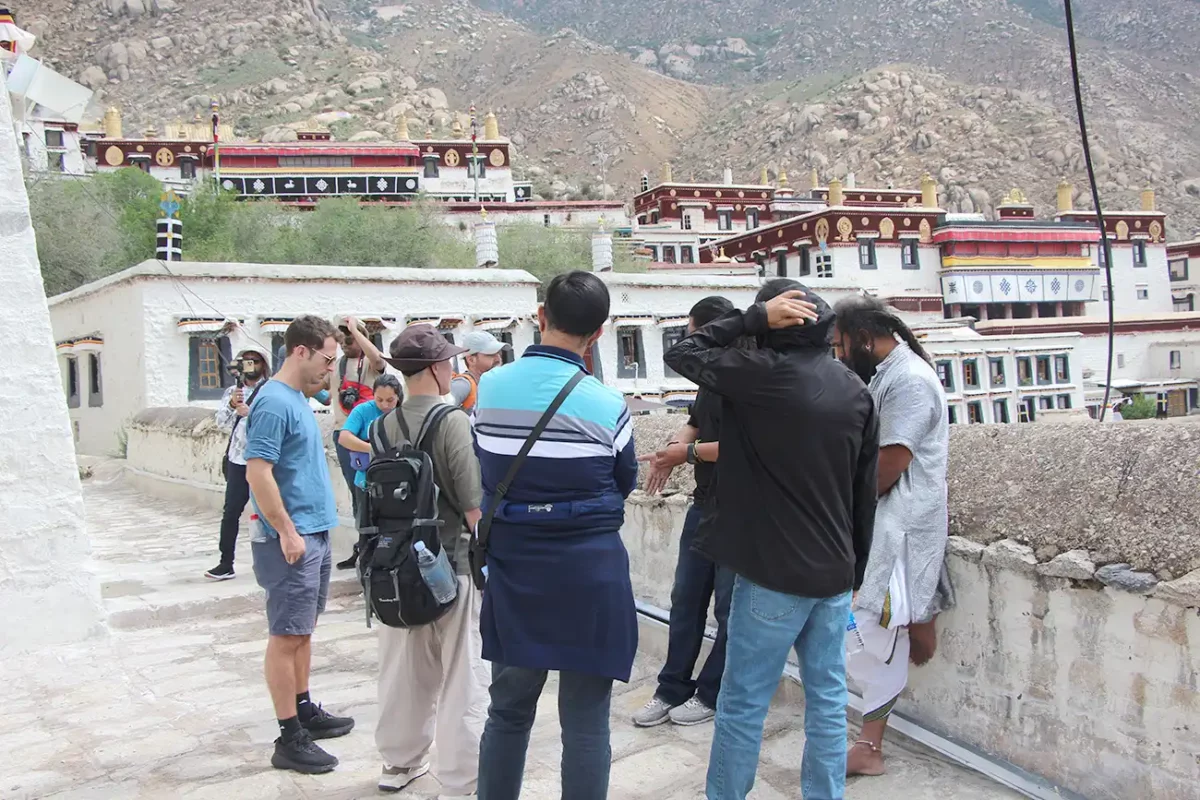
On Day 3, you continue to explore Lhasa’s holy hubs, visiting two of its great Gelugpa monasteries. Drive a short distance west of the city, after breakfast, to Drepung Monastery, which used to be the largest monastery in the world. Founded in 1416, Drepung sprawls on a hillside (about 3,800m) and houses up to 10,000 monks at its peak. Today, a few hundred monks remain, and the monastery retains an aura of scholastic devotion. You wander through Drepung’s maze of whitewashed buildings, entering assembly halls where rows of monks sit on cushions studying sacred texts. The massive prayer hall impresses with towering columns and a giant Buddha statue presiding over the space. If you’re lucky, you might witness part of a prayer ceremony – deep bass tones of long Tibetan horns echo through the halls. Always stay quiet and respectful; do not disturb the monks at prayer, but you may sit at the back to observe for a few minutes.
Your guide shows you the kitchen quarters where enormous copper pots simmer with yak butter tea to serve the monastic community. You can also visit the Nechung Temple within Drepung. The walls here are vivid with murals of protector deities. As you step outside, you admire panoramic views of Lhasa city and the valley below. The path down is strewn with colorful prayer flags fluttering in the breeze, carrying prayers across the mountains.
Before leaving the area, you also stop at Norbulingka. Compared to the grandeur of Potala, Norbulingka is a relaxed complex of low buildings and gardens filled with flowers and willow trees. You stroll through the verdant grounds and peek into the simple living quarters of the 14th Dalai Lama, preserved as they were in 1959. Walking in the footsteps of history here provides a poignant connection to Tibet’s more recent past.
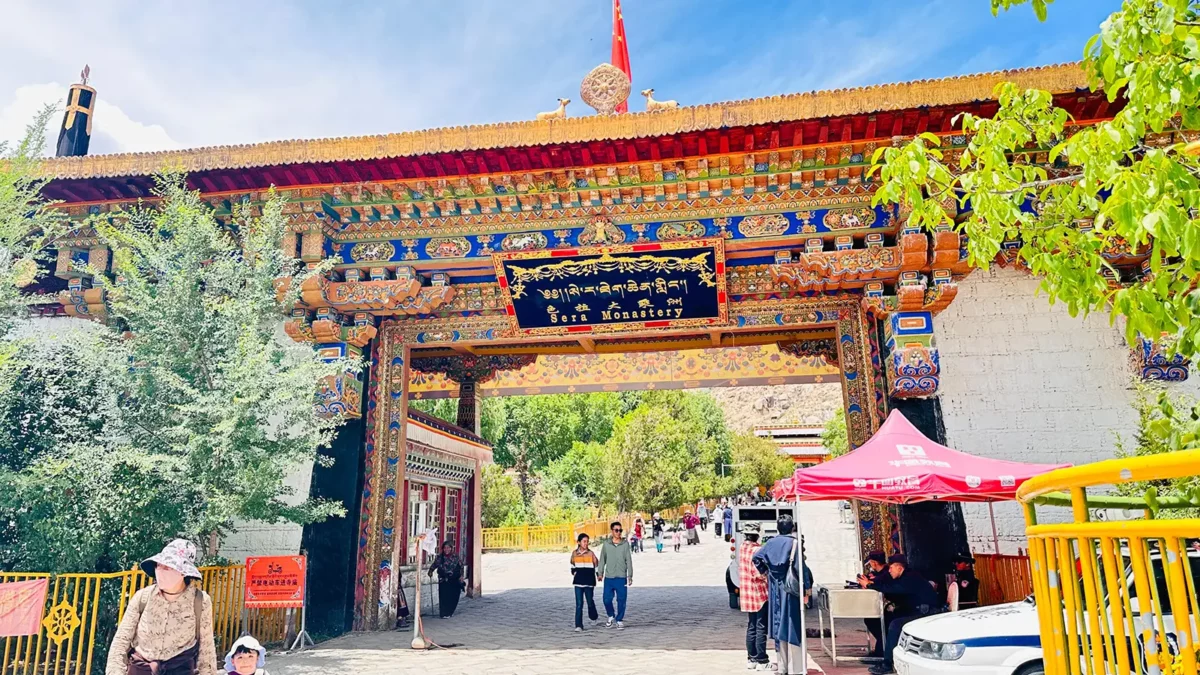
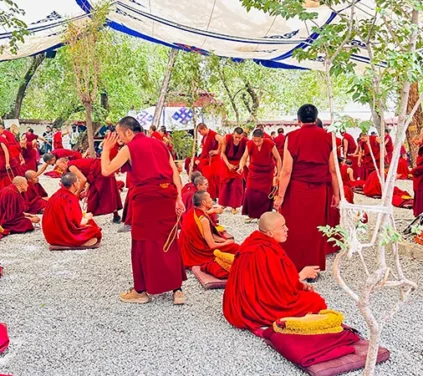
In the afternoon, you head to Sera Monastery, another of Lhasa’s great monasteries located north of the city. If there is such a thing as an academic celebrity, Sera is notorious for its monk debates, a unique form of intellectual gymnastics. By 3 PM, you’re in the tree-shaded debating courtyard of the monastery with other visitors. Here, young monks gather in small groups, loudly discussing Buddhist philosophy. They punctuate their statements with vigorous handclaps and broad gestures — an animated scene. You watch in fascination as one monk quizzes another, clapping like thunder each time he asks a question likely to stump him. This centuries-old tradition is the way monks hone their understanding of scripture. You can watch and take pictures (discreetly and with no flash, please) since Sera welcomes spectators to the debate. It’s a unique opportunity to witness Tibetan monastic education.
Afterward, visit Sera’s main assembly hall, which is alive with the sound of chanting in the late afternoon prayer. Golden statues of the Buddha and holy sages decorate the altars; butter lamps provide a warm cloak. Outside, the monastery’s courtyards are lined with prayer wheels, which you spin clockwise for good luck. Before leaving, your guide might introduce you to Sera’s resident butter sculpture artists (if available), who carve intricate religious figures from colored yak butter, especially during festival times.
With the day’s sightseeing complete, return to Lhasa for a final evening in the city. You might opt for a relaxing spa treatment or a stroll along the Kyichu River Park, which locals enjoy in the evenings. Dinner could be a gourmet affair – perhaps sample Tibetan-French fusion at a fine dining restaurant or stick to traditional fare like roasted lamb seasoned with Himalayan herbs. Toast your last night in Lhasa with a glass of Tibetan barley wine under the starry Tibetan sky. The overland drive begins tomorrow, taking your Lhasa to Kathmandu Tour westward across the world’s roof.
Elevation: 3650m
Accommodation: Xinding Hotel or similar
Meal: Breakfast
Day 4: Lhasa – Gyantse – Shigatse (Overland 360 km)
This morning, we wave goodbye to the magical city of Lhasa as our incredible Lhasa to Kathmandu Overland Tour sets off westward. Get ready for a scenic 360 km drive to Shigatse, passing through the charming town of Gyantse. We’ll be soaking in the views for around 7-8 hours, with plenty of stops to admire the beauty along the way. You’ll first ascend the winding road to Kamba La Pass (4,790m), where a spectacular view of Yamdrok Lake (4,440m) suddenly appears. Yamdrok Yumtso, one of Tibet’s three sacred lakes, shines a brilliant turquoise amid brown hills and snow-capped peaks. Descend to the lakeshore for photos of yaks by the water and a glimpse of Mount Nyenchen Khangsar (7,191m) looming in the distance. Continuing, drive alongside Yamdrok’s shoreline and through small farming villages, where you might spot herders tending shaggy yaks or fields of barley.
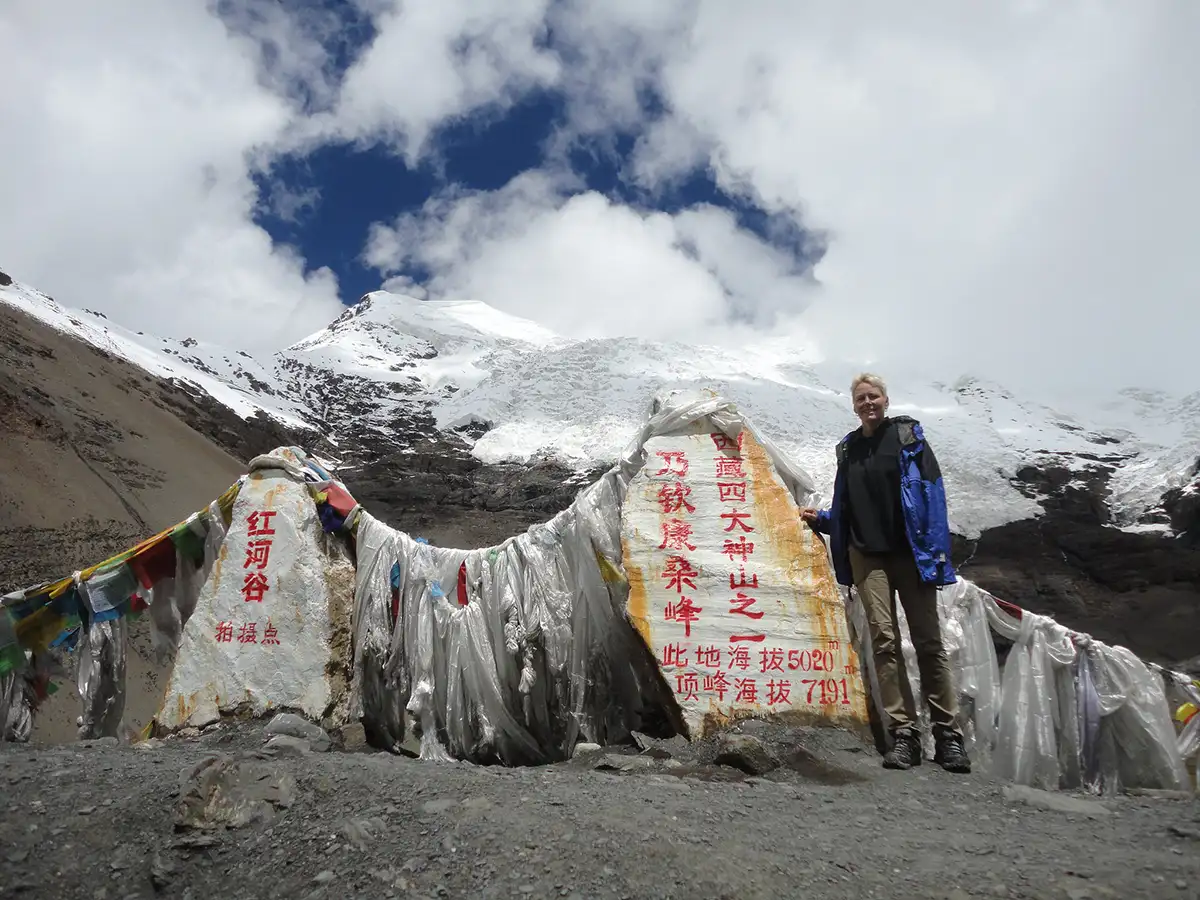
As you leave the lake, the road climbs again to the foot of the Karo La Glacier (5,050m), so close you could almost touch its icy wall right from the highway. Prayer flags flutter at a viewpoint, and it’s a great chance to appreciate the power of nature up close – the glacier’s white ice cascades down the dark rock face, a reminder you’re truly on the “Roof of the World.” Next, you’ll arrive in Gyantse (3,980m), a charming historic town dominated by the ancient Gyantse Dzong fortress on a hill. Stretch your legs and take photos of the dzong and the city below. If time permits, visit Gyantse’s Pelkor Chöde Monastery to see the remarkable Gyantse Kumbum Stupa, a 35-meter-tall, tiered stupa filled with hundreds of Buddhist chapels – a treasure of Tibetan architecture.
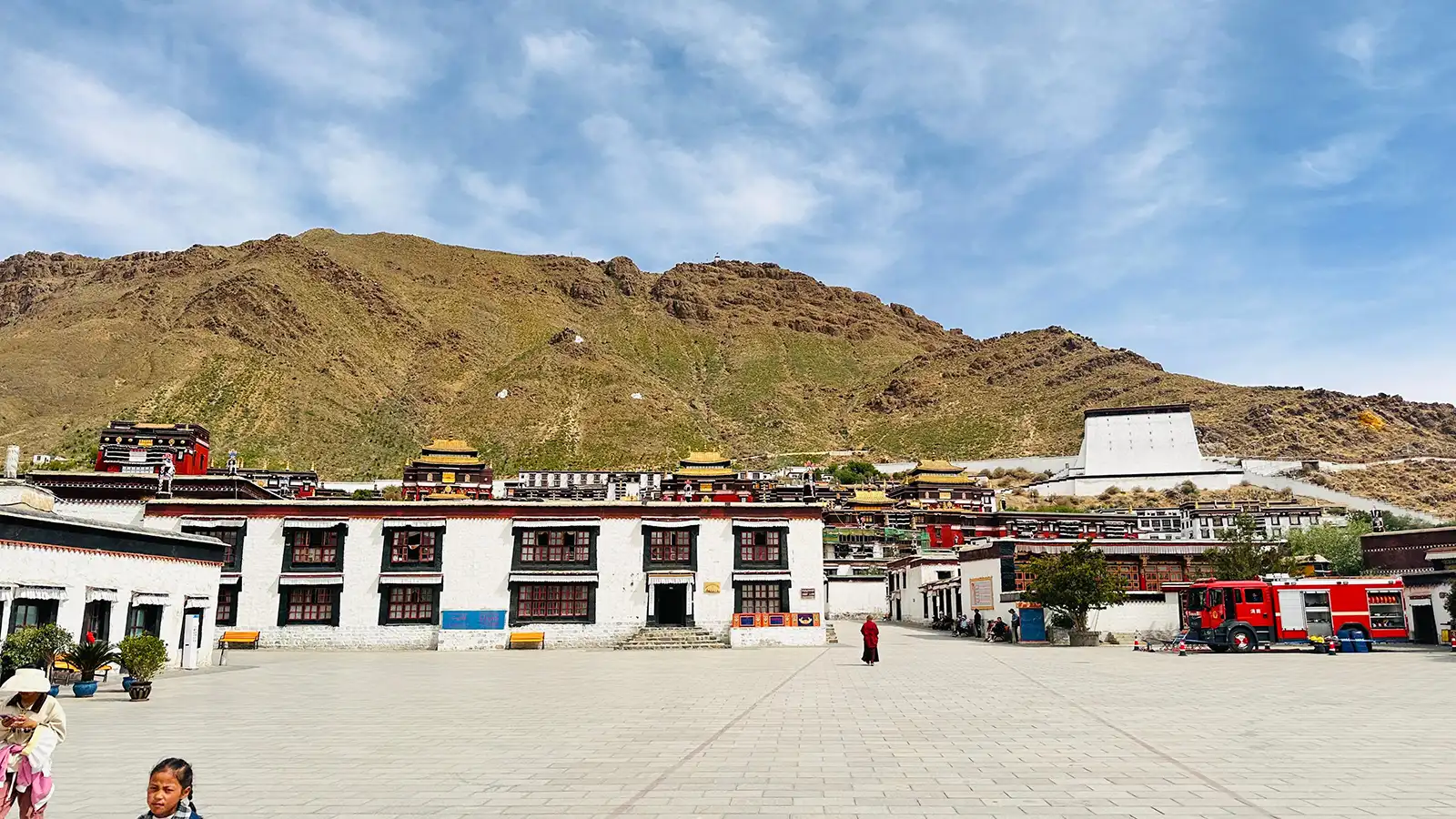
From Gyantse, it’s a two-hour drive (94 km) through fertile valleys to Shigatse (3,845m). You’ll pass golden barley fields and traditional villages where farmers use yaks to plow their fields. Arrive in Shigatse by late afternoon. This is Tibet’s second-largest city and the capital of the Tsang region. Before relaxing for the night, you can visit the Tashilhunpo Monastery, the seat of the Tibetan scholar Panchen Lama. Wandering Tashilhunpo’s cobbled lanes, you’ll find chapels with a massive 26-meter-tall gilded statue of the Future Buddha (Maitreya) and monks softly chanting evening prayers. Take in the sunset view over Shigatse’s cityscape and surrounding mountains. It’s been a full day of driving and discovery.
Elevation: 3845m
Accommodation: Yongze Lakeside International Hotel or similar
Meal: Breakfast
Note: The roads today are paved yet quite curvy. For those susceptible to motion sickness, taking medication is recommended. Also, keep a warm jacket handy; passes can be windy and cold even if Shigatse is warm.
Day 5: Shigatse – Everest Base Camp (5,200m) via New Tingri
Today is the pinnacle of your Lhasa to Kathmandu Tour – literally! An early start from Shigatse leads you on a long drive (approximately 8 hours, ~350 km) to Everest North Base Camp in Tibet. The journey begins on the Friendship Highway through high-altitude plateau scenery. After passing the town of Shelkar (New Tingri), you leave the main road and head south towards Everest.
The landscape becomes more rocky as you enter the Himalayas proper. You’ll cross the Gyatso La Pass (5,248m), marked with prayer flags and a viewing platform. If the weather is clear from here, you catch your first distant glimpse of Mount Everest, peeking above other peaks like a shy giant.
Further along, enter the Qomolangma (Everest) National Nature Reserve and ascend the amazing switchbacks up to Gawu La Pass (5,198m). This pass offers a jaw-dropping panorama of the Himalayas – five of the world’s highest peaks are visible at once: Everest (8,848m) along with Lhotse, Makalu, Cho Oyu, and Shishapangma. It’s a view to remember, so have your camera ready.
Now, the final stretch:
A winding road leads down into the valley of Rongbuk. As you approach Rongbuk Monastery (4,980m), the north face of Mount Everest (known locally as Chomolungma) comes into full view, towering at the end of the valley. Soon, you arrive at Everest Base Camp (EBC), around 5,200m altitude. Standing here, you are face-to-face with the highest mountain on Earth – an absolute highlight of this overland tour.
Picture yourself stirring awake to the awe-inspiring panorama of Everest’s snow-covered summit and its expansive north face filling the horizon. Take a moment to stand at the base camp marker, a real testament to your journey. Snap some photos with the iconic elevation sign, and just let the enormity of the moment sink in. If the evening sky is clear, you might be treated to a truly special spectacle: the summit of Everest turning a glorious gold in the last rays of sunlight – something Tibetans beautifully call “Everest’s sunset glow.” And as night falls, prepare to be amazed by the stars. High in the Himalayas, with the thin air and no city lights, they blaze with unbelievable brilliance across the sky. This remote camp offers basic comforts, but the sheer experience of being here, surrounded by such majesty, is vibrant.
Elevation: 5200m
Accommodation: Normal Guesthouse
Meal: Breakfast
Note: Expect frigid temperatures at night (often below freezing, even in summer). Dress in layers and keep a warm sleeping bag if you stay in the tented camp. Also, move slowly – everyone feels the lack of oxygen at EBC, so don’t over-exert. Drinking hot fluids like ginger tea can help with altitude comfort.
Day 6: Everest Base Camp – Gyirong Border (Down to 2,800m)
After a once-in-a-lifetime night at Everest, it’s time to journey from the heights of Tibet down toward the Nepalese border. If you wake up early, you may catch a spectacular sunrise on Everest’s peak, watching it glow pink and orange as a new day begins. Bid farewell to Everest and continue your Lhasa to Kathmandu Overland Tour as you start the drive westwards and then south.
Today’s route covers roughly 370 km to reach Gyirong Town near the border. As you retrace the road from Rongbuk, take one last look at the Himalayas in your rearview mirror. You’ll pass through Old Tingri and then divert onto the road leading to Gyirong. Stop at the stunning Peiku Tso Lake (4,590m) along the way. This sapphire-blue lake, framed by towering mountains, offers a serene vista with Mt. Shishapangma (8,027m) – the only 8,000+ meter peak entirely in Tibet – visible on the horizon. It’s a great spot to stretch your legs and enjoy a picnic lunch with a view if the weather permits.
Continuing, the descent in altitude becomes noticeable with each hour. You’ll cross one more high pass, perhaps the Tong La (around 5,100m), and then the landscape dramatically transforms. The road zigzags down from arid highlands into green forests and deep gorges. Suddenly, there are trees again and waterfalls tumbling off cliffs – a striking change after days on the stark plateau.
By late afternoon, you arrive in the Gyirong Valley (2,700m), a region blessed with a milder climate and dense vegetation. Breathing becomes more manageable as oxygen levels rise. Gyirong Town (called Kyirong) is a small border settlement with Tibetan and Nepali influences. Enjoy the sight of snow-capped Himalayan peaks peeking above lush hillsides. If time permits, you can visit the local market for fresh fruit (a treat after the dry Tibetan plateau) or relax.
Elevation: 2700m
Accommodation: Phuntsok Kangsang Hotel or similar
Meal: Breakfast
Note: The road can be rough in parts today, so expect some bumps. Keep your passport and Tibet Travel Permit handy for the upcoming border crossing. If you stay overnight at a high altitude, you’ll likely feel relief here, but don’t be surprised if the warmer, humid air in Gyirong makes you break a sweat for the first time in Tibet!
Day 7: Gyirong Border – Kathmandu (1,400m) – Welcome to Nepal
This morning, say goodbye to your Tibetan guide and driver at Gyirong Port (the Chinese border checkpoint) – the final farewell of your Lhasa to Kathmandu Overland Tour. With formalities complete, you will walk across the Friendship Bridge into Nepal – where a Nepali driver and guide await to greet you on the other side. Welcome to the next chapter of your journey! Switching vehicles, you start a scenic drive about 130 km from the border to Kathmandu, Nepal’s capital.
Though the distance isn’t huge, the road is narrow and winding so that the drive can take 6–7 hours. Sit back and enjoy the dramatic scenery as you follow the Bhote Koshi and Trishuli River valleys. The route passes through lush sub-tropical forests, terraced farmlands, and charming rural villages. You’ll notice Nepali culture immediately – small roadside shrines draped in marigolds, women carrying baskets of goods, and perhaps kids waving as you drive by.
As the road climbs over hills and enters the Kathmandu Valley, you’ll reach bustling Kathmandu (1,400m) by late afternoon or evening. The city’s energy is a stark contrast to the quiet of Tibet. Revel in the warm air and rich oxygen as you navigate Kathmandu’s lively streets filled with motorbikes, honking cars, and people from all walks of life.
This marks the end of your Lhasa to Kathmandu Overland Tour, but it’s also the beginning of exploring a whole new culture in Nepal. Consider celebrating your successful overland journey with a dinner in Thamel, Kathmandu’s traveler district, feasting on dal bhat (lentil curry) or momos, and reflecting on all you’ve experienced.
Cultural Highlights in Kathmandu:
Even though this itinerary ends on arrival, Kathmandu is rich with cultural sites worth exploring if you stay longer. Durbar Square’s old royal palaces and temples, the sacred Hindu temple of Pashupatinath, and the vibrant markets of Ason Tole all showcase the history and life of Nepal. After crossing the Himalayas from Lhasa to Kathmandu, you’ll have experienced an incredible range of landscapes, peoples, and traditions in just one week.
This 7-day Lhasa to Kathmandu Overland Tour offers a good mix of adventure and cultural immersion. From the tranquil monasteries of Lhasa to the thrill of Everest Base Camp and the tropical vistas of Nepal, each day is packed with unique experiences. Short driving segments, clear subheadings, and active storytelling keep the journey easy to follow and exciting to read. Following this itinerary and its tips will prepare you to enjoy your trans-Himalayan odyssey, creating memories on the ultimate Lhasa to Kathmandu Tour across the “Roof of the World.” Safe travels!
Elevation: 1300m
Meal: Breakfast
Customize this trip with help from our local travel specialist that matches your interests.
Includes & Excludes
What is included?
- Tibet Travel Permit and local travel documents (excluding expedited fees).
- Local tour transfers in a comfortable tourist vehicle.
- Entrance fees for all listed tourist sites.
- All meals are mentioned in the itinerary.
- English-speaking Tibetan local tour guide.
- Three-star hotels (or equivalent). Upgrades are available (a single-room supplement applies).
- Free Lhasa airport/train station to hotel shuttle.
- Service charges and government taxes.
- Tour planning and operational costs.
- Tourist accident insurance.
- Tibetan souvenirs, tourist maps, portable/medical oxygen, bottled water.
What is excluded?
- China Visa.
- Nepal Visa (30 USD cash at Gyirong border).
- International flights.
- Gyirong border to Kathmandu hotel transfer (60 USD per person).
- Single-room supplement (if required).
- Meals are not listed in the itinerary.
- Tips for guide and driver (suggested $7/person/day).
- Expenses due to force majeure events.
- Personal expenses (laundry, calls, snacks, drinks, optional tours).
Departure Dates
We also operate Private Trips.
Reviews on Lhasa to Kathmandu tour
5.0
Related Packages
Destination
TibetDifficulty
EasyKathmandu to Lhasa Tour
 8 Days
US$ 1220
Destination
TibetDifficulty
EasyLhasa Tour from Kathmandu
8 Days
US$ 1350
Destination
NepalDifficulty
EasyNepal and Tibet Tour
14 Days
US$ 3000