


Your Maldives trip is booked, and departure is 60 days out. Now the research spiral begins. One site shows a Traveler Declaration form; another contradicts it; a third warns about alcohol confiscation; and three government advisories say different things about safety. You want one clear source that reflects the current rules and treats you like a capable adult. Our Maldives travel guide does exactly that.
By the end, you will handle five things with confidence. Your entry paperwork is filed correctly and on time, and you understand the cultural rules and where each one actually applies. Arrival day at Velana International Airport, start to finish. The safety basics that matter. And what your operator handles versus what you own.
Peregrine’s Maldives desk coordinates the arrival day for every booking, so you land with all logistics confirmed in writing. Here is the plain truth up front. The Maldives is one of the easiest premium destinations to enter and one of the safest to visit. The rules are simpler than they look online, and this guide makes them practical.
How to Use This Maldives Travel Guide for First-Timers
Work through the five pre-trip tasks in order, and you will land relaxed. Each one is simple once you know the current rule. First, sort your entry paperwork, mainly the free Traveler Declaration. Second, learn the cultural rules and where they apply, which is less than you think for a resort stay. Third, plan your arrival day around your transfer. Fourth, lock in the sun-and-ocean safety basics. Fifth, know what your operator handles for you.
Read it now, then read it again a week before you fly. It is built to re-read.
Maldives Entry Requirements: Visa, Declaration, and Documents
Entering the Maldives is simple, with a free visa on arrival and one short online form. Sort the form and your documents before you fly, and immigration takes minutes.
Here is exactly what you need, current for 2026.
The Free Visa on Arrival
The Maldives grants a free 30-day tourist visa on arrival to almost all nationalities, with no pre-application required and no fee. You do not apply in advance beyond the online Traveler Declaration.
At immigration, you need a passport with a machine-readable zone valid for at least one month beyond arrival, a return or onward ticket, and a confirmed resort or hotel booking. The official minimum is one month, but carry at least six months of passport validity anyway, since airlines often enforce the stricter standard at check-in. One exception applies: since April 2025, entry is not granted on Israeli passports.
The Traveler Declaration: Free, Digital, and Time-Windowed
The Traveler Declaration is the one pre-arrival step you cannot skip. Every traveler files it online within 96 hours before arrival and again within 96 hours before departure.
File it only on the official IMUGA portal at imuga.immigration.gov.mv. The form is completely free. If any site asks for a fee, it is a scam; close it and use the official portal. The form takes 5 to 10 minutes and ends with a QR code you show at immigration.
What the Traveler Declaration Asks
Have these details ready before you start the form:
- Your full name exactly as printed in your passport
- Passport number and expiry date
- Nationality and contact details
- Arrival and departure flight numbers, dates, and times
- Your resort or hotel name and address
- Recent travel history and health details
- Yellow fever vaccination status, only if you arrive from a risk country
The system saves your progress, and using a desktop makes uploading the passport easier than on a phone. Filing too early does not work, since the window opens exactly 96 hours before your flight.
Vaccinations and Health
No vaccines are required for most travelers, and no malaria pills are needed, since the Maldives has no malaria. A yellow fever certificate is required only if you arrive from a country where yellow fever is present. Hepatitis A and typhoid vaccines are commonly recommended but not mandatory. Check with a travel clinic four to six weeks before you fly if your routine shots need updating.
Travel Insurance
Travel insurance is not required for entry, but treat it as non-negotiable. A serious injury at a far atoll means a seaplane or domestic flight to Malé, and complex care means an international transfer, both of which run into real money without cover.
Buy a policy with medical evacuation and repatriation. Divers should add DAN dive insurance, as standard policies often exclude scuba diving. Peregrine recommends insurance on every booking but does not sell it, so buy your own before you travel.
Peregrine’s Maldives desk sends a TravelerDeclaration reminder with a direct link five days before you fly, so the timing is taken care of for you.
Maldives Rules for Tourists: What Applies Where
The Maldives operates two cultural rulebooks, and knowing which one applies where removes almost all the confusion. Resort islands adhere to international standards, and inhabited local islands adhere to Maldivian standards.
For a resort-only first trip, your cultural prep is minimal. Here is the full picture anyway.
The Two Maldives
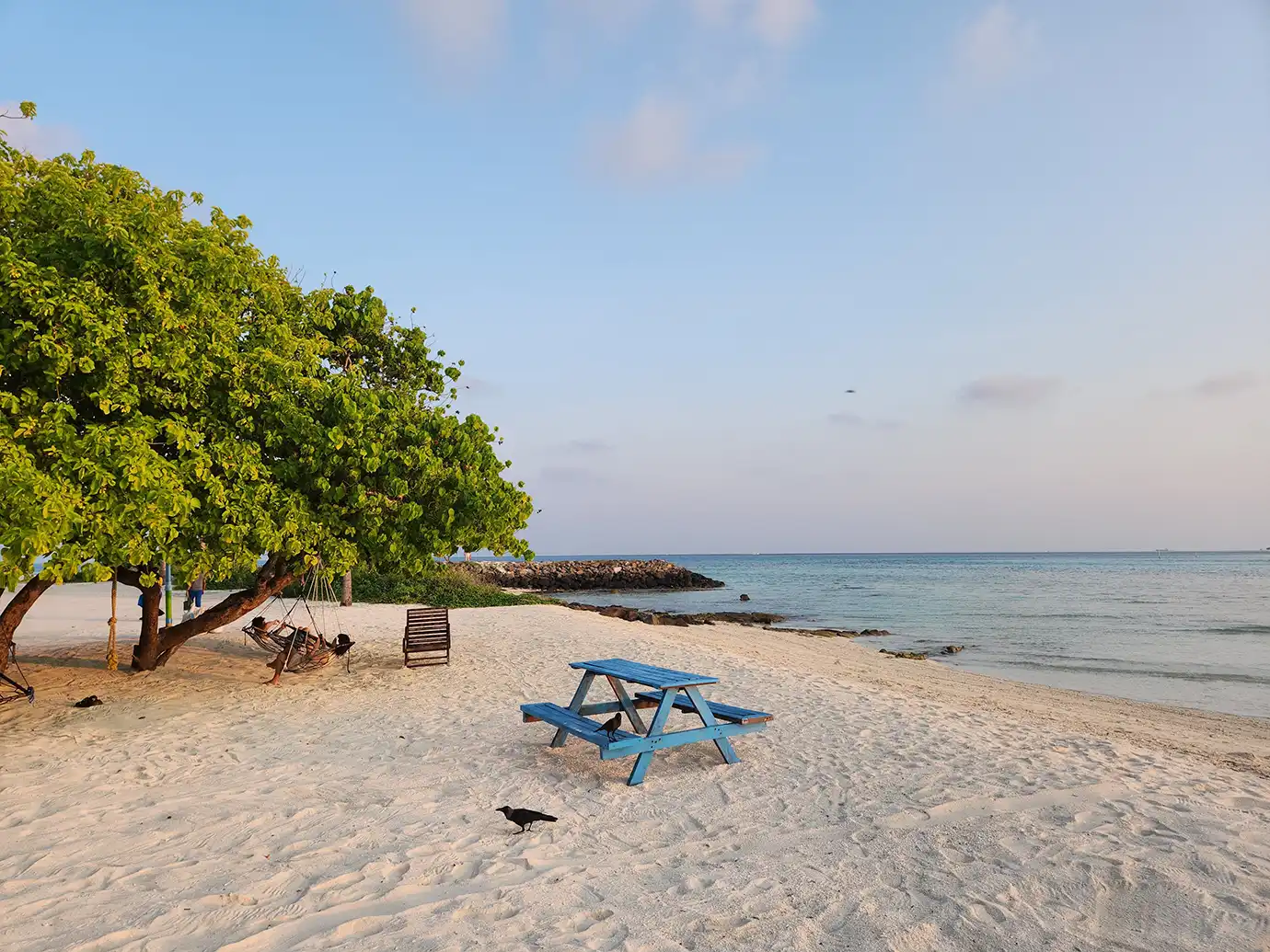
Resort islands operate like any global beach resort. Swimwear at the pool and beach, alcohol served freely, mixed-gender pools, and no religious observance asked of guests. Smart-casual is the only real dress code, requested at some specialty restaurants for dinner.
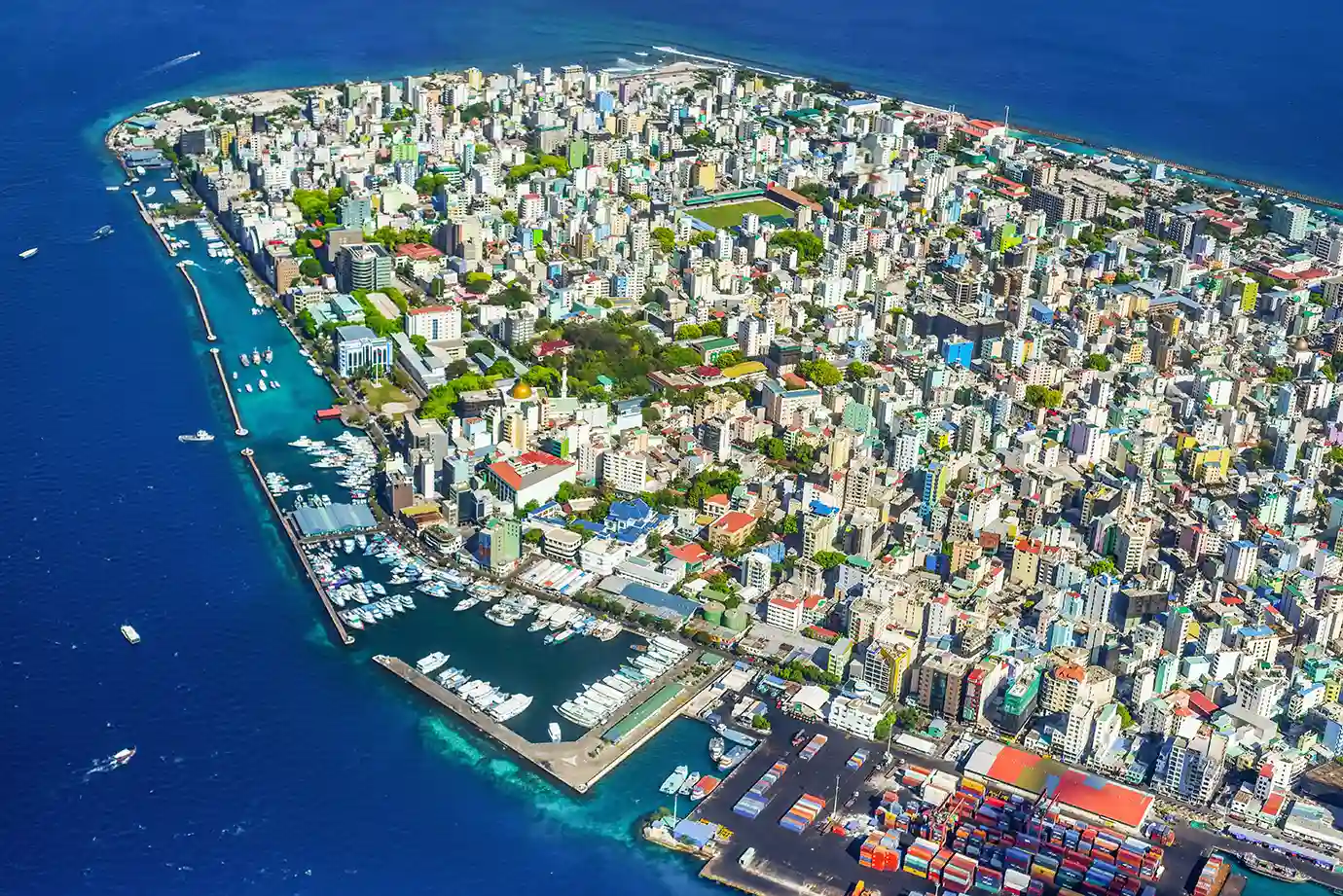
Inhabited local islands, including the capital Malé and islands like Maafushi and Ukulhas, run by Maldivian standards, since the country is fully Muslim. Modest dress in public; no alcohol; local customs apply. One island can feel worlds apart from the next.
Dress at Resorts Versus Local Islands
At a resort, wear what you would at any premium beach resort anywhere. No special rules apply beyond a collared shirt or blouse for the occasional smart-casual dinner.
On a local-island excursion, cover your shoulders and knees in public. Women can wear a loose dress, a midi skirt with a T-shirt, or light long trousers, and no headscarf is needed. Men should cover their shoulders and wear long trousers or knee-length shorts. At the designated tourist “bikini beach” on islands like Maafushi, swimwear is only allowed in the marked area, so change back before you return to the village.
Cultural Rules Off-Resort
On local islands, a few rules matter. No drinking alcohol in public, no public affection beyond hand-holding, and photographing mosques from the outside only.
Ask before photographing local people, especially women. Fridays run on reduced hours as the local weekend. During Ramadan, avoid eating, drinking, or smoking in public in daylight on local islands. Ramadan shifts about 11 days earlier each year, so check the dates for your travel year. At resorts, Ramadan does not affect guests, who receive full food and drink service as usual.
What You Cannot Bring Into the Maldives
Some items are banned outright and will be taken at customs. Do not pack any of these:
- Alcohol of any kind, including duty-free
- Pork products
- Vapes, e-cigarettes, and e-liquids have been banned since late 2024 and destroyed on the spot.
- Religious idols or non-Islamic materials for public display or handout
- Pornographic material
- Illegal drugs, which carry severe penalties
- Weapons, ammunition, and explosives
The one most travelers miss is alcohol. Duty-free bottles from Dubai, Doha, Muscat, or Colombo cannot be brought in, so drink them before you land, or do not buy them. Customs will hold confiscated alcohol in bond and return it to you when you fly home, before your outbound check-in.
What You Can Bring
Normal travel items are all fine. Bring your prescription medicines with a copy of the prescription, your phone and laptop, cameras for personal use, and everything you would pack for any beach trip. Reef-safe mineral sunscreen is the one item to prioritize, since chemical sunscreens harm coral, and some resorts restrict their use. Pack enough for the whole trip, as resort shops charge a premium.
Rules That Do Not Apply to You at a Resort
The local religious rules do not extend to your behavior at a resort. As a non-Muslim guest,t you eat, drink, dress, and relax freely on the island.
Thmodest dress rules apply only when you step off the resort onto an inhabited local island. For a resort-only trip, you can set those worries aside entirely.
Arrival Day at Velana International Airport
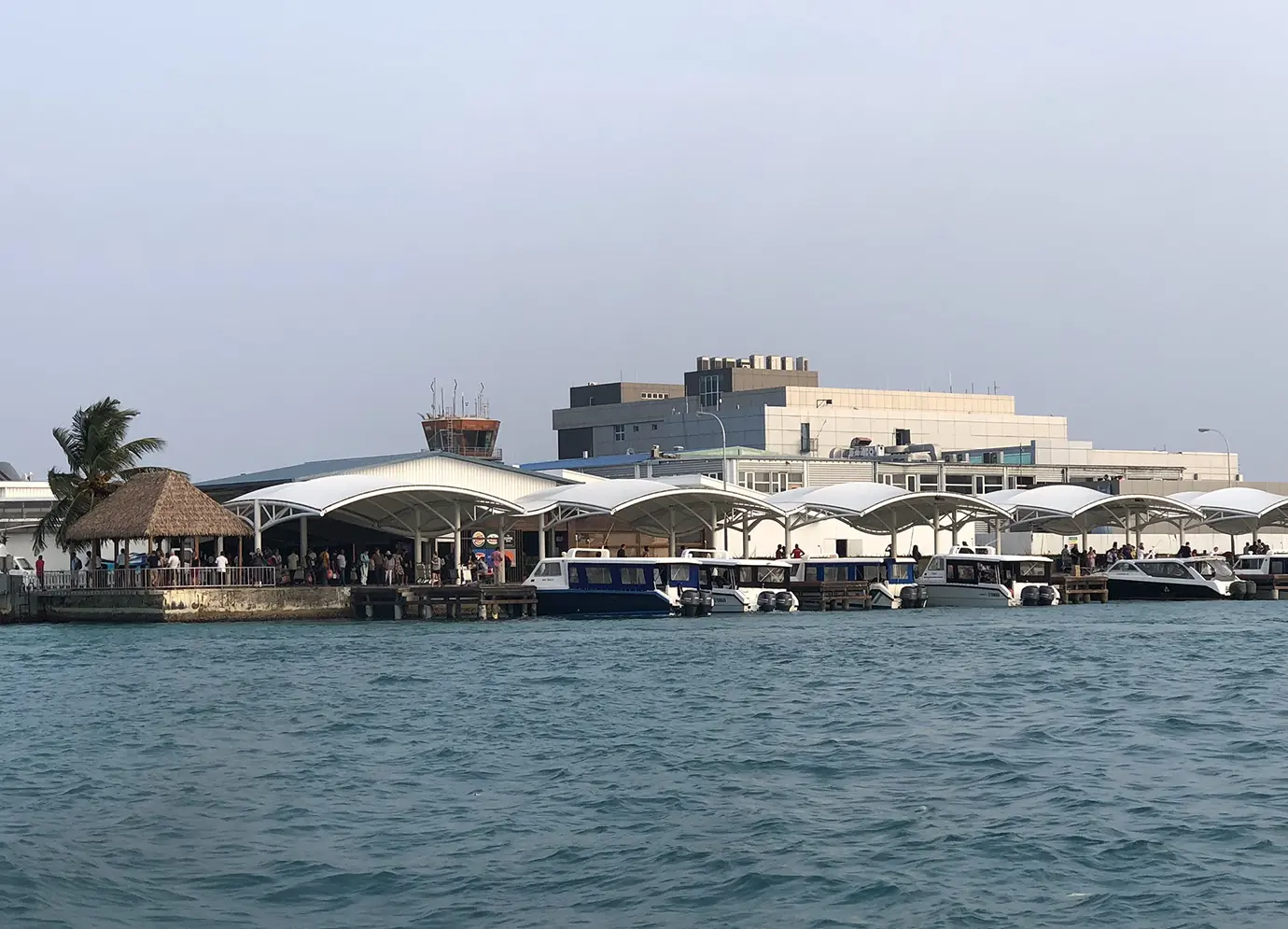
Arrival day is simple once you know the steps, from landing to your villa. Velana International Airport sits on its own island beside Malé, with a modern terminal and English signage throughout.
Here is the whole sequence, in order.
Immigration and Baggage
Immigration is quick for tourists, usually 20 to 40 minutes from plane door to exit. Have your passport open to the photo page, and have your Traveler Declaration QR code ready on your phone or printed.
Officers speak English and usually ask only your purpose and length of stay, then stamp the free visa. Collect your bags at the belts, which arrive 15 to 30 minutes later. At some resorts, the seaplane team collects your checked bags off the belt for you, which your advisor confirms in advance.
Customs
Customs is straightforward if you pack within the rules. Use the green channel if you have nothing to declare, and expect the occasional random bag screening. Carry no alcohol, pork, or vapes, and you will pass through in seconds. Declare anything you are unsure about rather than risk a fine.
Meeting Your Resort Team
Your resort team waits just past customs in the arrivals hall, holding a branded sign with your name. For Peregrine bookings, you get the team’s name and phone number in writing before you land. From there, your transfer depends on your resort’s atoll. Three pathways cover every property.
The Three Transfer Pathways
How you reach your island depends on where it sits:
- Speedboat resorts in North or South Malé Atoll: a short walk to the resort pier, then a 20 to 90 minute boat that runs day or night. You are usually at your villa within about 90 minutes of landing.
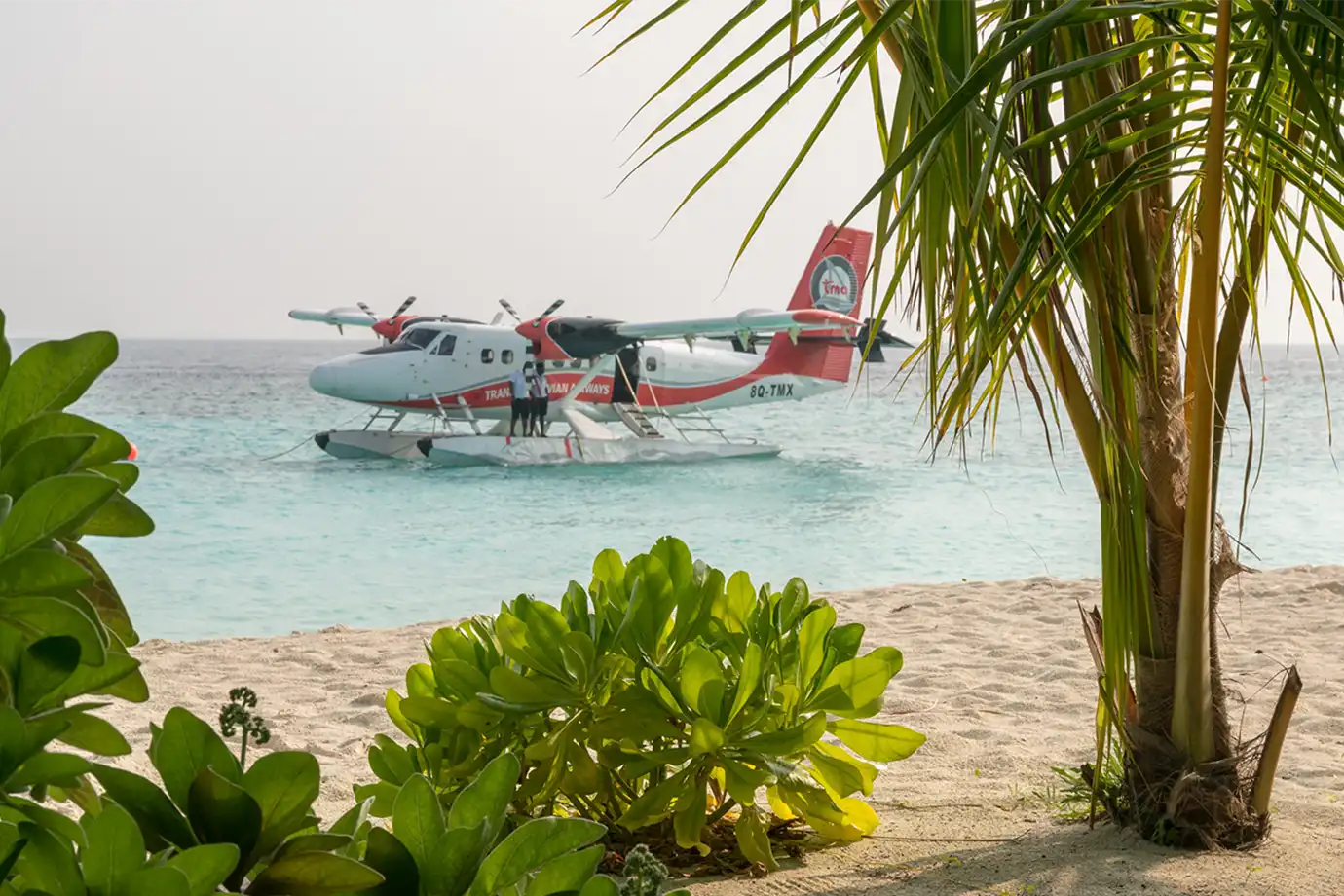
- Seaplane resorts in Baa, Raa, Lhaviyani, Ari, and beyond: a walk to the seaplane terminal, a wait in the resort lounge, then a 25 to 50 minute flight in daylight only, roughly 6 a.m. to 3:30 p.m. Plan 3 to 4 hours door to villa.
- Domestic-flight resorts in the far south like Gaafu and Addu: a 60 to 90-minute domestic flight, then a 15 to 45-minute speedboat ride, so 4 to 5 hours door to villa.
Your Arrival Timeline at a Glance
Here is roughly how long each route takes from plane door to villa:
- Speedboat atoll: about 90 minutes
- Seaplane atoll, arriving before noon: 3 to 4 hours
- Seaplane atoll, arriving after the mid-afternoon cutoff: usually a Malé overnight and a next-morning arrival
- Domestic flight: 4 to 5 hours
Your advisor confirms your exact timeline in the pre-departure briefing, so you know before you fly whether you will reach the villa the same day.
If You Land After the Seaplane Cutoff
A late arrival at a seaplane-only resort means a night in Malé, since seaplanes do not fly after dark. It is common and easily handled. Your advisor pre-books an airport hotel on Hulhulé or Hulhumalé, five to ten minutes from the terminal, at about $250 to $450 for a couple, with a seaplane pickup the next morning. Book a morning international arrival where you can, and you avoid the overnight entirely.
Peregrine sends a pre-departure briefing seven days out with your exact arrival timeline and transfer details, so nothing on arrival day is a surprise.
Safety Fundamentals
The Maldives is one of the safest tropical destinations in the world, so drop the worst-case worries. Violent crime against tourists is very rare, and resort theft is uncommon.
Two things actually matter for a first trip: the sun and the ocean. Neither is dramatic, but both catch people out.
Sun Care, the Mistake Most Guests Make
The Maldives sun is stronger than almost anywhere you have been, with a midday UV index of 11 to 13, the top of the scale. Fair skin burns in 10 to 15 minutes of direct midday sun without protection.
Protect yourself with a simple routine:
- Reef-safe mineral sunscreen, SPF 50, reapplied every 90 to 120 minutes and after every swim
- A UV-rated long-sleeve rash guard for long snorkel or pool sessions
- A sun hat and sunglasses for beach and pool time
- Shade from 10 a.m. to 3 p.m., under the villa deck or palms
- Extra water, 3 to 4 liters a day when you are active
A first-day burn shapes the whole trip, so start carefully and ease off, not the other way around.
Ocean Safety
Maldivian lagoons are calm, shallow, and easy for beginner swimmers, but the currents pick up past the reef edge. Respect the line between them.
Follow these rules in the water:
- Snorkel inside the lagoon, or go beyond the reef edge only with a guide
- Never swim into a reef pass or channel between islands, where currents run 2 to 4 knots and can pull you out to sea
- Watch the tide, since low tide exposes sharp coral and changes house reef access
- Wear fins in any current, since swimming without them is exhausting
- Follow the resort’s flags marking safe swimming zones
Marine Life Safety
Dangerous marine life encounters are rare, and the golden rule covers almost all of them: do not touch anything. Coral, fish, urchins, turtles, and rays are all best admired from a small distance.
A few specifics help:
- Wear reef shoes on reef rock and sandy shallows, since stonefish, lionfish, and sea urchins sting or spike if stepped on
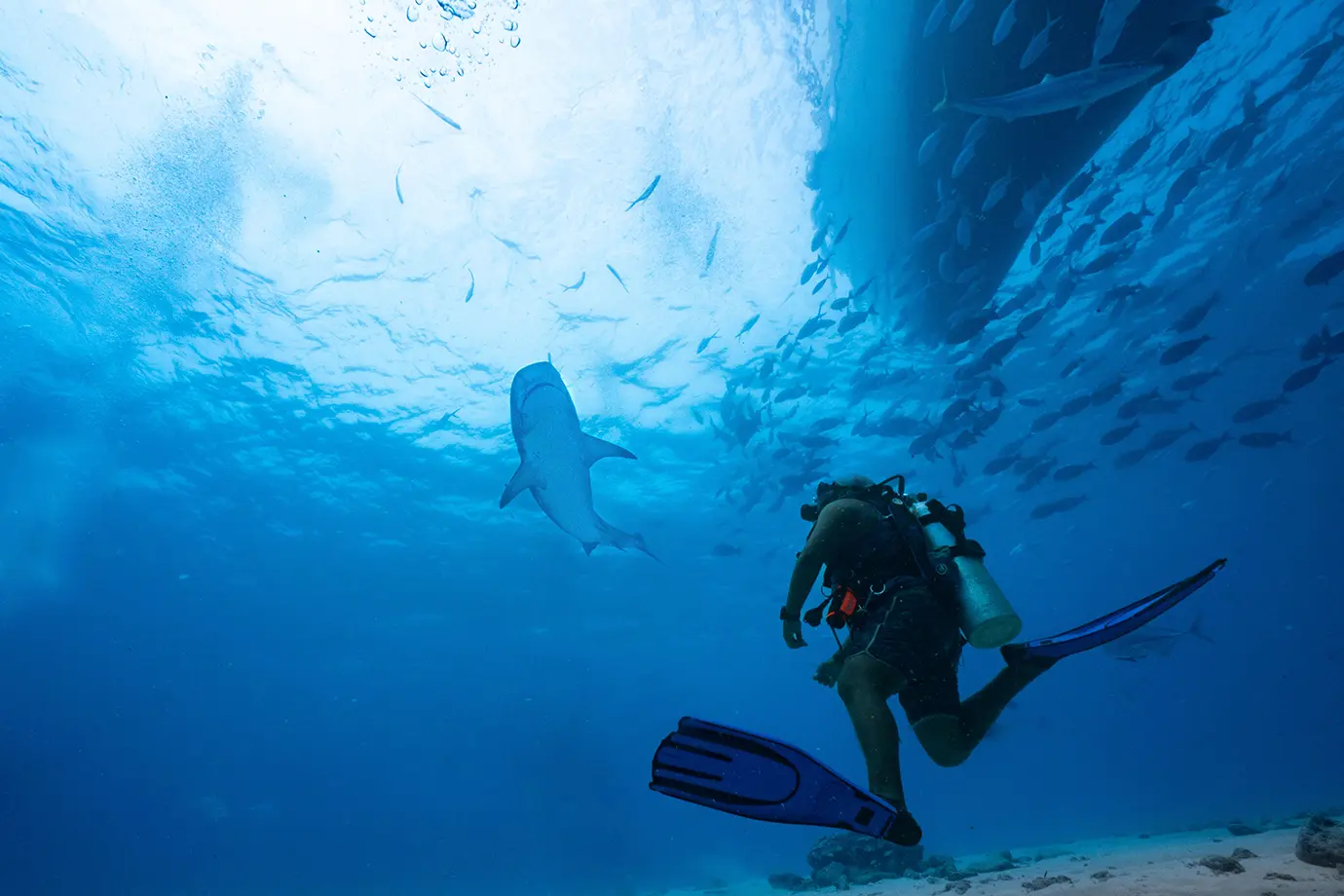
- Reef sharks at the house reef are non-aggressive and normal, not a threat
- Keep 3 to 5 meters from manta rays and whale sharks, which are harmless but protected
- Never touch or chase a turtle
Touching coral risks a cut that can quickly become infected in warm water, plus a fine for reef damage, so keep your hands to yourself.
Water, Reef, and Belongings
Drink the filtered water your villa provides, not the tap, and keep 3 to 4 liters a day going when you are active. Coconut water helps after long snorkels in the heat.
Protect the reef by using only mineral sunscreen, never standing on coral, and not collecting shells or sand, which is illegal to export. On security: resort islands run on trust; theft is very rare, but still keep your passport and a backup card in the villa safe, and carry just one card for the day.
Every Peregrine booking includes 24-hour WhatsApp access to your advisor during the stay, so any concern, from a dietary need to a medical question, gets handled fast.
Maldives Travel Tips: The Practical Details
A handful of small details make the trip smooth, from money to plugs. Here is what to know before you go.
None of it is complicated, and your resort handles most of it.
Money and Payments
US dollars are accepted everywhere at resorts, so you do not need local rufiyaa for a resort-only trip. Every charge is added to your villa bill, and you settle it at checkout by card or cash, along with a green tax of $12 per person per night.
Visa and Mastercard are accepted at every resort, with Amex accepted at most, and contactless is common. Carry one backup card for the safe, and bring some US cash in small denominations for tips and local island shopping.
Connectivity, Power, and Time
Resort Wi-Fi at this tier is strong enough for streaming and video calls, so a local SIM is optional. If you want your own data, buy an Ooredoo or Dhiraagu SIM at the airport for about $10-$25 for a week, or set up an eSIM before you fly.
Sockets are Type G and D (the British three-pin style), with some Type J, so bring a universal adapter. The Maldives runs on UTC+5, with no daylight saving, half an hour behind India and half an hour ahead of Oman.
Language and Tipping
English is spoken fluently across the whole tourism industry, so there is no language barrier at the airport, on transfers, or at the resort. Dhivehi is the local language, but you will not need it.
Tipping is not required but is appreciated at this tier. A rough guide is $5 to $10 a day for your villa host and $10 to $20 per dive for an instructor, in US dollars.
Packing List: Maldives Travel Guide for First-Timers
Pack light for warm weather, and prioritize a few Maldives-specific items:
- Reef-safe mineral sunscreen, enough for the whole trip
- A UV-rated rash guard and a packable sun hat
- Reef shoes for rocky reef entries and shallows
- A dry bag for boat transfers and excursions
- A universal Type G, D, and J plug adapter
- One smart-casual outfit for specialty dinners
- A modest outfit that covers shoulders and knees for any local-island visit
Leave the alcohol, vapes, and formal wear at home, and skip beach towels, since resorts provide them.
What to Confirm With Your Resort Before Arrival
A quick pre-arrival message to your resort or advisor smooths the first day. Confirm these:
- Villa preferences, like sunset or sunrise,e and a specific villa number if possible
- Any dietary requirements or allergies
- A honeymoon or anniversary flag, if it applies
- Your arrival transfer details and timing
- Any medical conditions the resort should know about
- Your diving certification level, if you plan to dive
On arrival, expect a villa walk-through with your host, a welcome drink, and a light meal depending on timing. After a long journey, keep the first evening easy, with sunset drinks over a big dinner.
What Peregrine Handles for You
Peregrine’s Maldives desk manages the logistics a first-timer would otherwise have to track on their own, so you arrive without a checklist in your head. Three parts of the service matter most.
Here is what the desk takes off your plate.
Before You Fly
Seven days out, the desk sends a single pre-departure briefing. It covers your Traveler Declaration reminder and link, your arrival timeline, the seaplane cutoff status, a packing checklist, money and connectivity notes, tipping guidance, and your confirmed villa preferences.
Everything you need sits in one document, so you are not stitching together ten browser tabs the night before you fly.
On Arrival and During the Stay
On arrival day, the desk confirms in writing which resort team member will meet you, their phone number, your expected arrival timeline, and any Malé overnight stay. If a flight delay threatens your transfer, the desk works directly with the seaplane operator to ensure it goes ahead. goes ahead
Throughout the stay, you have 24-hour WhatsApp access to your assigned advisor. Any issue routes through the advisor and the property relationship rather than a reception queue, from a villa concern to a medical situation.
Multi-Country Trips
If you are adding the Maldives to Sri Lanka, Oman, Nepal, Bhutan, or India, a single advisor coordinates the entire trip. Peregrine’s teams in those countries work directly with the Maldives desk, so the cultural and beach halves connect cleanly.
Send your dates and trip type, and the desk replies within 24 hours with property recommendations, transfer options and costs, and a clear quote.
Frequently Asked Questions
Do I need a visa in advance to visit the Maldives?
No. The Maldives gives almost every nationality a free 30-day tourist visa on arrival, with no advance application and no fee. You only need a passport valid for at least one month beyond arrival, a return or onward ticket, and a confirmed resort booking. The single online step before travel is the free Traveler Declaration. Israeli passport holders are the exception, as entry is not granted on Israeli passports since April 2025.
When exactly do I submit the Traveler Declaration?
Within 96 hours before your arrival flight, and again within 96 hours before departure. The system opens the window exactly 96 hours out, so you cannot file earlier. Use only the official IMUGA portal at imuga.immigration.gov.mv, where the form is free and takes 5 to 10 minutes to complete. to complete. It ends with a QR code you show at immigration. If a website asks you to pay for it, it is a scam; leave and use the official site.
What happens if I forget to file the Traveler Declaration?
You can still file it at the airport, but it causes delay and stress you do not want after a long flight. Immigration expects the QR code on arrival, and filing on the spot means finding Wi-Fi and completing the form in the hall. Set a reminder for the 96-hour window, or let your advisor send you the link and instructions. Filing calmly from home beats scrambling at the immigration desk.
Can I bring duty-free alcohol into the Maldives?
No. Alcohol imports are banned, including duty-free bottles bought in Dubai, Doha, Muscat, or Colombo, and customs will take any they find. Alcohol is served freely once you reach your resort island, so you lose nothing by leaving it out of your bag. If you do buy duty-free, customs holds it in bond and returns it to you before your outbound check-in. Do not pack it in your checked bag.
What if my flight arrives after the seaplane cutoff?
You spend one night in Malé and fly to the resort the next morning. Seaplanes only fly in daylight, roughly 6 a.m. to 3:30 p.m., so a late arrival cannot reach a seaplane resort the same day. Your advisor pre-books an airport hotel minutes from the terminal, at about $250 to $450 for a couple, with a morning pickup. To avoid an overnight stay, book a morning arrival or choose a speedboat resort where boats run at any hour.
Is the Maldives safe for solo female travelers?
Yes, very. The Maldives is among the safest tropical destinations, and resort islands are private, enclosed, and low-crime, so solo women generally feel comfortable day and night. Open-air villas and unlocked doors are normal because the island geography makes theft impractical. On a local-island visit, dress modestly and behave as you would in any Muslim community. Keep your passport in the villa safe, carry one card, and standard travel sense covers the rest.
Do I need to speak Dhivehi?
No. English is spoken fluently across the entire tourism industry, from immigration and airport staff to resort teams, transfer crews, and shops in Malé. You will not hit a language barrier anywhere on a normal trip. Dhivehi is the local language, and a simple “shukuriyaa,” meaning “thank you,” is a nice touch on a local island, but it is never necessary. Every part of your trip runs in English without effort.
What if I need medical care during my stay?
Resorts have a clinic or a visiting doctor for minor issues, and larger hospitals sit in Malé. Minor cuts, sunburn, and stomach upsets are handled on the island. A serious case means a seaplane or speedboat transfer to Malé, or an international transfer for complex care, which is exactly why medical-evacuation insurance is essential. Carry your prescription medicines with a copy of the prescription. Your Peregrine advisor helps coordinate any medical situation through the resort.
Is Ramadan a bad time to visit?
No, not for a resort stay. Resort operations are usually unaffected during Ramadan, with full food, bar, and activity offerings, so your holiday is not affected. The only difference is seen on inhabited local islands, where you avoid eating, drinking, or smoking in public during daylight, and some cafes keep shorter hours. If you plan a local-island excursion during Ramadan, be discreet in public. Ramadan dates shift about 11 days earlier each year, so check them for your travel year.
Can I use my mobile phone easily?
Yes. Resort Wi-Fi at this tier is strong enough for streaming and video calls, so many guests never buy a SIM at all. If you want your own data off the resort, pick up an Ooredoo or Dhiraagu SIM at the airport for about $10-$25 per week, or set up an eSIM before you fly. Coverage is good across the tourism areas. For most first-timers, the resort Wi-Fi alone is plenty.
What if I get seasick on the boat transfer?
Take a motion-sickness tablet 30 to 60 minutes before a speedboat or domestic flight transfer if you are prone to it. Speedboats can bounce in the wet-season chop, though dry-season seas are usually calm. Sit toward the middle of the boat, look at the horizon, and keep water handy. Seaplanes are smoother than boats for most people. Tell your advisor if you are a nervous sailor, and a speedboat resort with a short transfer may suit you better.
What travel insurance do I actually need?
Buy a policy with medical evacuation and repatriation cover, which is the part that matters most in the Maldives. A far-atoll injury can mean a seaplane to Malé, followed by an international flight for care, both of which are expensive without cover. Add trip-cancellation cover for the multi-leg journey, and DAN dive insurance if you plan to dive. Peregrine recommends insurance on every booking but does not sell it, so arrange your own before you travel.
Land With Confidence
You now have the entire first trip mapped out: the paperwork, the cultural rules, arrival day, and the safety basics. The rest is just enjoying the water.
Send Peregrine your dates and questions, and the Maldives desk will recommend the right resort, handle the arrival-day logistics, and send a pre-departure briefing with every detail confirmed in writing. We reply within 24 hours by email or WhatsApp, with a real advisor and 24-hour support throughout your stay. Our offices in Kathmandu and Muscat cover the wider region if you are adding another country. Book the trip, file the form, and let the rest take care of itself.