


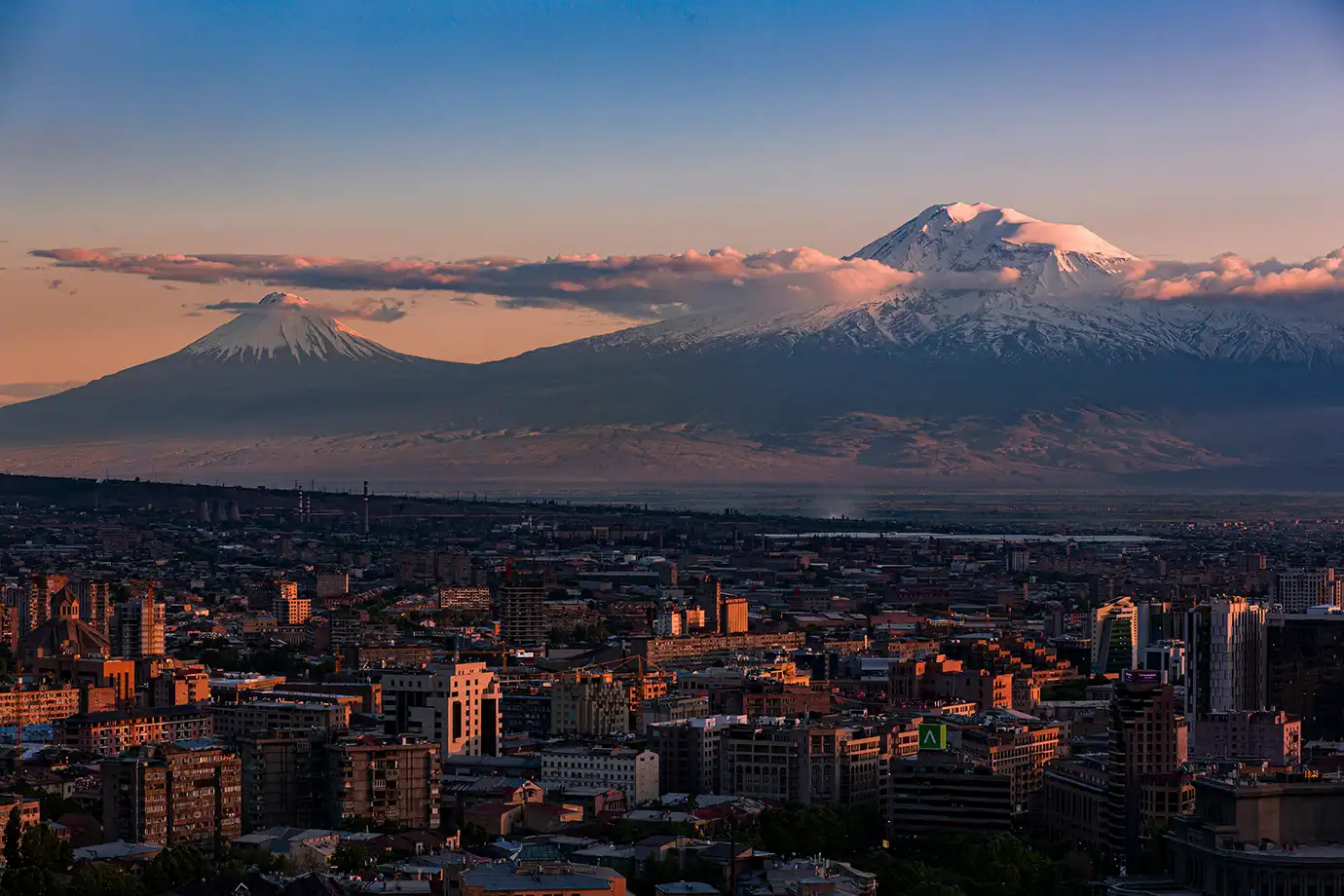
Seven days in Armenia give you enough time to understand the country rather than simply visit it. Your 7-day Armenia itinerary starts in Yerevan, the pink-stone capital with Mount Ararat on its southern horizon. You move east through a Roman-era temple and a rock-hewn monastery. You drive south to the most photographed view in the country, then into a red canyon. You finish at a high-altitude lake and deep inside a national park where beech forests hide a 10th-century monastery.
No day on this itinerary wastes your time. Each one follows a logical geographic arc, keeps driving manageable, and leaves enough room in the afternoon to absorb what you have seen.
Is 7 Days Enough for Armenia?
Seven days cover the four essential zones of Armenia: Yerevan, the eastern monastery circuit, the southern Ararat plain, and the northern lake and forest region. For a first visit, seven days is the right length. Shorter trips force you to skip either Dilijan or the southern sites — both are worth the full day each needs.
Days 1–2: Yerevan
Yerevan takes two full days to do properly. The city is built of tufa stone in a dozen shades of rose and amber. The street grid is walkable. Most major sites sit within 20 minutes of Republic Square on foot or by a short GG Taxi ride.
Day 1: Republic Square and the Cascade
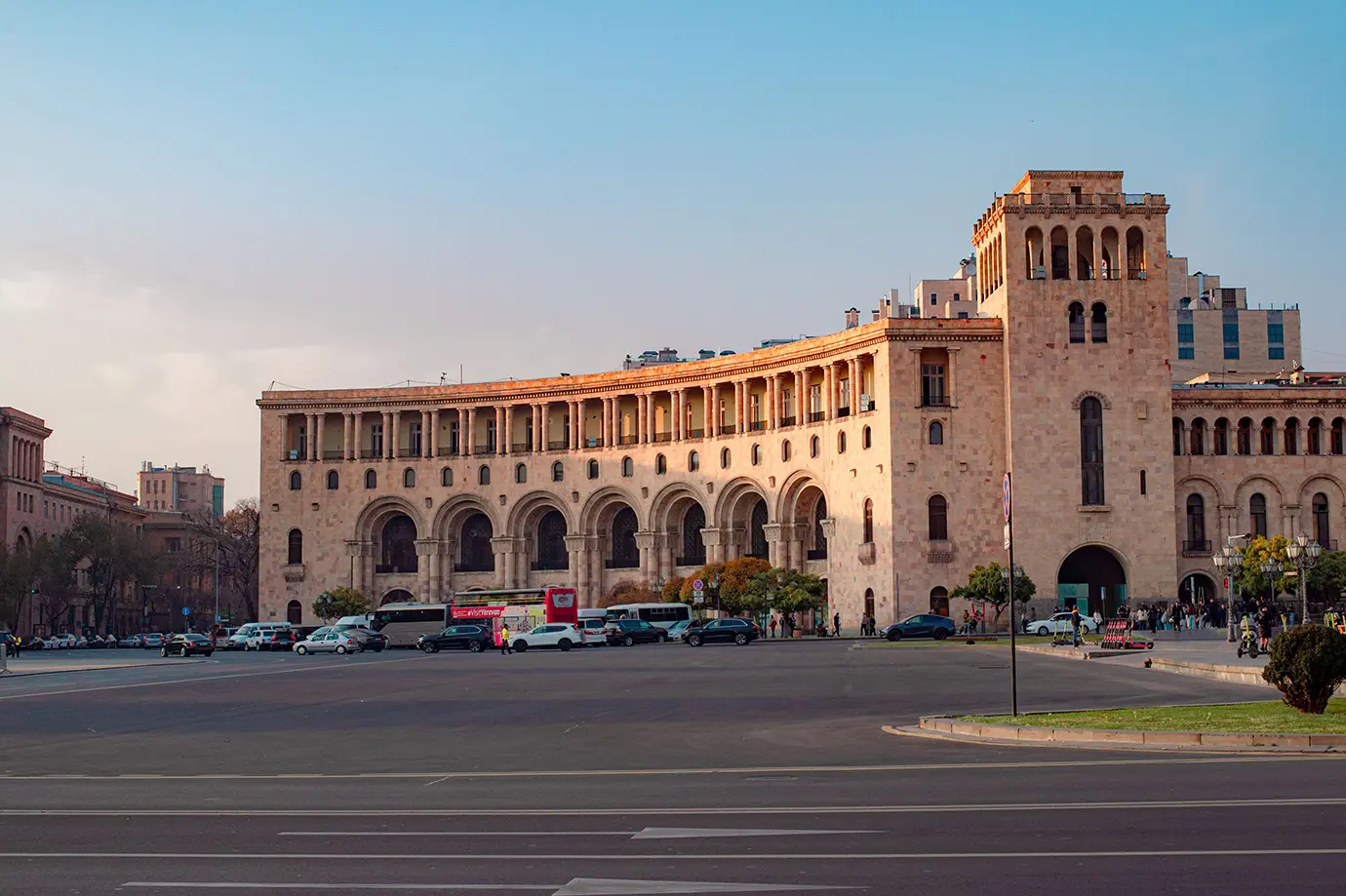
Arrive in Yerevan and start at Republic Square, the city’s monumental heart. The square is ringed by matching tufa-stone government buildings in the style of Soviet classicism blended with Armenian national motifs. The dancing fountains at its center run through the evening and draw the whole city out on warm nights.
Walk or take a taxi northwest to the Cascade Complex on Tamanyan Street. The Cascade is a giant stepped stairway built into a hillside, connecting the city center with Victory Park above. It rises 302 meters across 572 steps. If you prefer not to climb, take the free interior escalators. They run daily from 8:00 to 20:00, passing sculptures, glass art, and gallery installations on each landing through the Cafesjian Center for the Arts. At the top, the view opens over the entire Yerevan basin and, on a clear day, Mount Ararat fills the southern horizon.
Come at sunset. The light turns the city from pink to amber to dark gold in the hour before dark. The Botero bronzes at the base are by the same sculptor and are found in Medellín, Madrid, and Singapore. A massive cat, a Roman warrior, and a reclining woman sit free on the public grass. Here they sit free and unguarded on the public grass.
Day 2: Matenadaran and the Old Quarter
Spend the morning at the Matenadaran, the world’s largest repository of Armenian manuscripts, on Mesrop Mashtots Avenue. The building is intentionally monumental: gray basalt, fortress-like. A statue of Mesrop Mashtots — inventor of the Armenian alphabet in 405 AD — stands at the entrance. Inside, the museum holds over 23,000 manuscripts dating from the 5th to the 19th centuries. Armenian, Greek, Latin, Arabic, Persian, Hebrew, and other languages are all represented. The largest manuscript in the collection covers each page with the skin of a single calf. The smallest weighs 19 grams and fits in a matchbox. Allow 90 minutes.
After the Matenadaran, walk south to the old Kond quarter. Narrow lanes and collapsing stone buildings sit pressed between modern apartment towers. Kond is the last surviving pre-Soviet neighborhood in Yerevan. It is unglamorous and real in a way most of Yerevan is not.
Spend the late afternoon at the outdoor Vernissage Market near Republic Square, which is open on weekends. Vendors sell handmade carpets, carved wooden backgammon sets, Soviet pins, antique cameras, lacework, and pomegranate-print ceramics. Cash only, in Armenian Dram.
Day 3: The UNESCO Trio — Garni, Geghard, and the Symphony of Stones
The Day 3 circuit runs east of Yerevan along the Azat River gorge. Garni, Geghard, and the Symphony of Stones all sit within easy reach of each other. A private driver combines all three comfortably in a single day. Total driving time from Yerevan runs about 90 minutes each way.
Temple of Garni
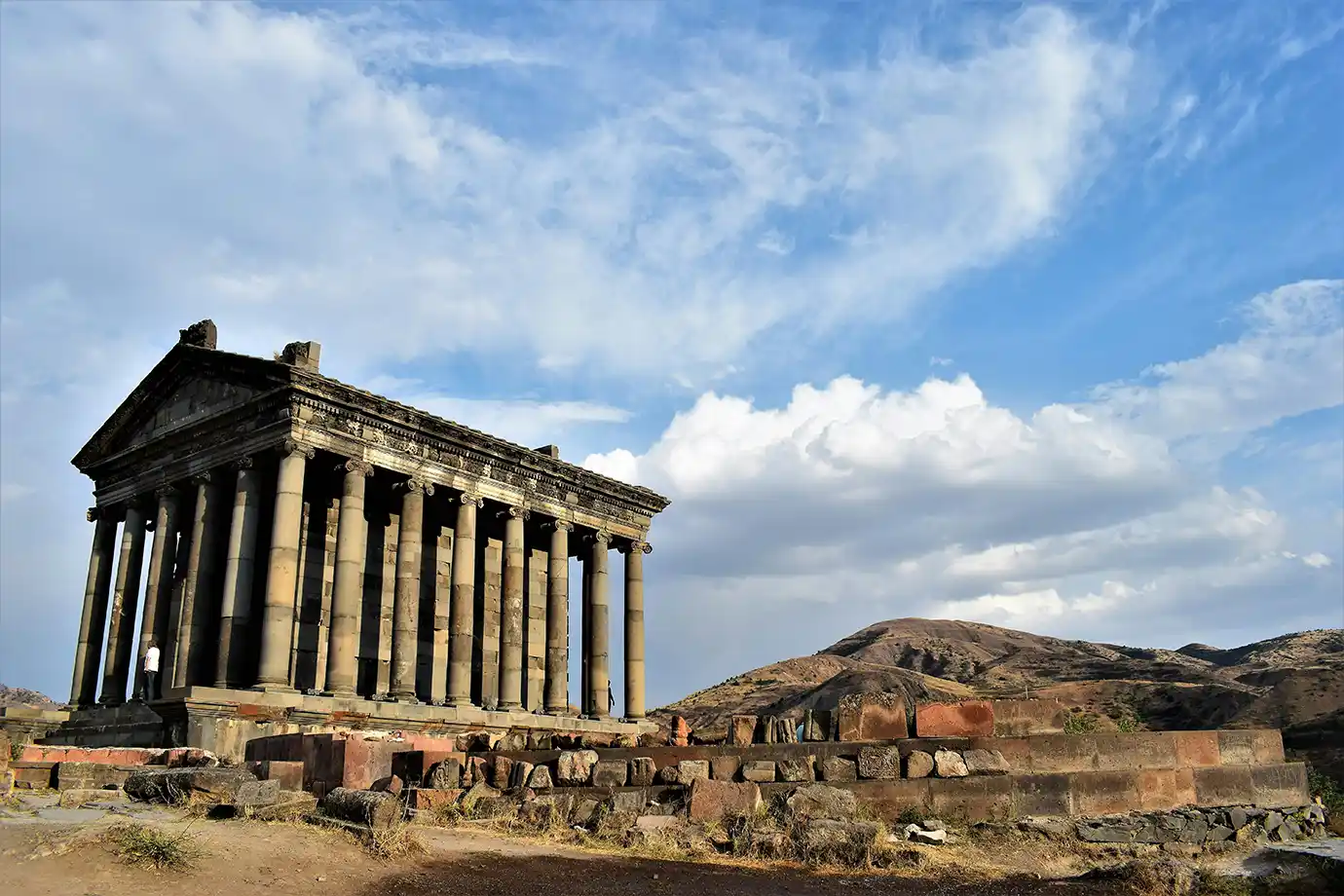
Garni sits approximately 30 km east of Yerevan. King Tiridates I built the Temple of Garni around 77 AD. It is the only fully standing Greco-Roman classical structure in Armenia and the entire former Soviet Union. Twenty-four Ionic columns, each 6.54 meters tall, surround the stone cella on a raised podium above the Azat River gorge. Some researchers believe the columns were brought from Asia Minor. The number 24 is also thought to symbolize the 24 hours of a day. The temple was destroyed in the 1679 earthquake and reconstructed in its current form between 1969 and 1975, using the original stones wherever possible.
Most travelers photograph the temple from the front and leave. Walk around the back and look down into the gorge. The cliff drops sharply away, and the hexagonal basalt columns of the gorge walls echo the geometry of the temple above. A royal bathhouse with surviving mosaic floors lies beneath the temple podium.
Symphony of Stones
Drive two minutes from Garni along the gorge to the Symphony of Stones. A natural wall of hexagonal basalt columns lines the gorge face, packed together like organ pipes and rising 50 meters from the river below. The formation comes from ancient lava flows that cooled slowly and contracted into interlocking six-sided columns. From the right angle, late-afternoon light catches each facet, and the whole wall reads as a single piece of scored stone.
Geghard Monastery
Drive 10 km further east to Geghard. The monastery was carved directly into the Azat gorge cliff face in the 4th century. Freestanding churches and rock-cut chambers were added in the 12th and 13th centuries. UNESCO inscribed Geghard as a World Heritage Site in 2000. The name means “spear” — legend holds that the monastery once housed the spear that pierced Christ at the crucifixion.
The main complex sits partly inside the cliff, partly in front of it. The carved interior chambers, called gavits, have stalactite stone ceilings, cross-reliefs in the rock walls, and spring water running through channels cut into the floor. The sound inside is full of reverb. On weekday mornings, the monastery holds almost no visitors, and the silence inside the rock chamber is complete. On weekends, local families picnic in the surrounding gorge. Folk musicians play the duduk — a double-reed Armenian wind instrument — at the entrance.
Day 4: Khor Virap and Noravank
Drive south from Yerevan along the Ararat Valley for the most geographically dramatic day of the itinerary.
Khor Virap
Khor Virap sits approximately 40 km south of Yerevan, in the flat Ararat plain, just 100 meters from the sealed Turkish border. The monastery compound stands on a low hillock above surrounding vineyards. Mount Ararat rises directly behind it across the border. The main peak stands at 5,137 meters, the smaller cone at 3,896 meters.
The name Khor Virap means “deep dungeon” in Armenian. Gregory the Illuminator converted Armenia to Christianity in 301 AD. King Tiridates III imprisoned him here for 13 years before the king’s own conversion ended his captivity. A narrow iron ladder descends into the underground pit where Gregory was held. The pit is small, dark, and roughly two meters across. Most visitors descend once, feel the weight of the space, and come back up quickly.
Morning gives the clearest views of Mount Ararat before haze builds. Afternoon light hits the monastery facade from the west and works well for photography from the vineyard tracks below the hillock. The drive from Yerevan takes about 45 minutes.
Noravank
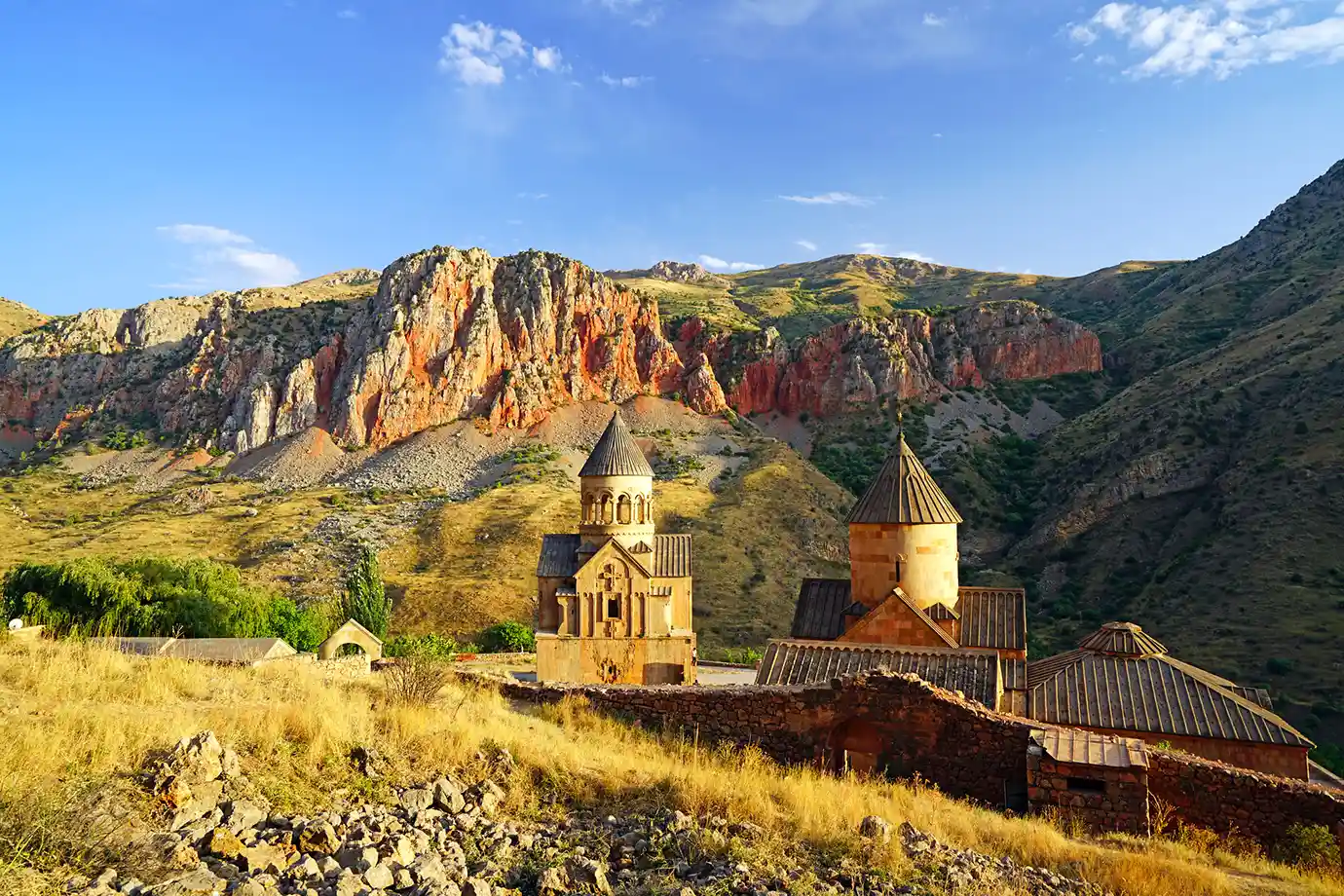
Continue 90 km south from Khor Virap to Noravank, a 13th-century monastery built into a narrow red-rock canyon. The canyon walls close in on both sides as you approach — the road runs through a corridor of vertical orange-red limestone cliffs. The monastery appears suddenly at a bend: two churches of rosy tufa stone set against the ochre canyon face.
The upper church of Surb Astvatsatsin has an external staircase built directly onto the facade. The stairs are steep and narrow, rising to a second-floor chapel accessed through a door barely wide enough for one person. From the landing, looking back at the canyon gives the postcard view of Noravank: red walls, dark evergreens, and the pale stone monastery below.
Plan 60-90 minutes at Noravank. The canyon light is best in mid-afternoon when the sun hits the west face of the walls directly. Drive back north through Vayots Dzor, a wine region where the Areni grape has been cultivated for at least 6,000 years. The cave at Areni is the site of the world’s oldest known winery, discovered in 2010.
Day 5: Lake Sevan
Lake Sevan sits approximately 60–70 km northeast of Yerevan on the high Armenian plateau. The drive takes about 60 to 75 minutes. Sevan is the largest lake in Armenia and the entire Caucasus region. It covers approximately 1,241 square kilometers at an elevation of 1,900 meters above sea level. The water is a deep, cold blue on clear days.
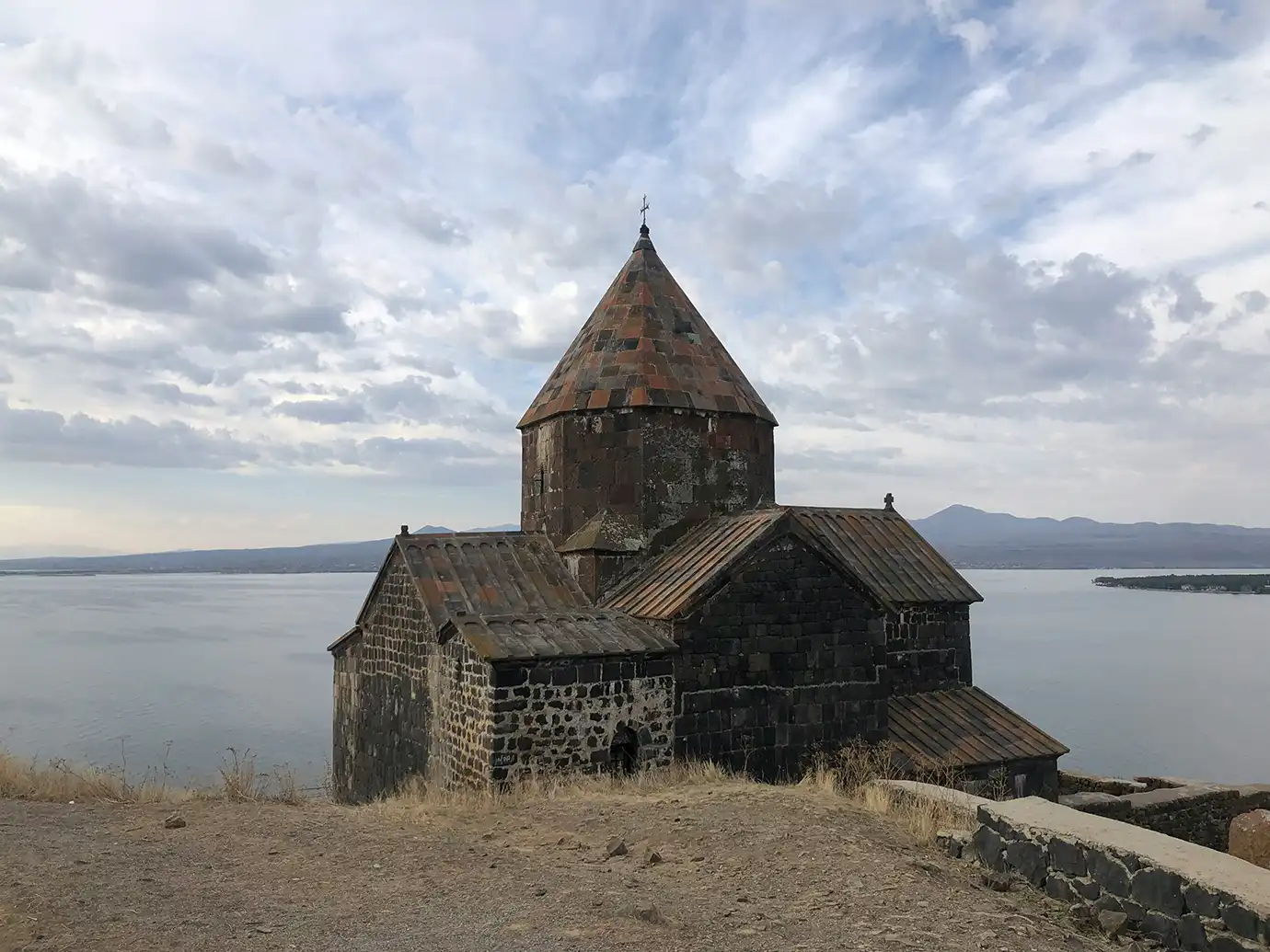
Sevanavank Monastery
The first stop is Sevanavank Monastery on a peninsula that was once an island. Soviet-era engineering projects lowered the lake level by roughly 20 meters, turning the island into a connected landmass. Two 9th-century churches sit at the top of the hill above the main town. Climb the 250 steps from the base. The ascent takes about 10 minutes. From the church terrace, the full lake spreads out in every direction. The scale is striking. Yerevan sits in a bowl surrounded by mountains. Sevan sits on an open plateau between mountain chains, and the horizon in every direction stays low and wide.
The Lake in the Afternoon
Spend the afternoon along the lake shore. The water temperature peaks in late July and August at around 20°C — cold by Mediterranean standards, comfortable by Armenian plateau standards. Several small beaches operate along the northern shore. The town of Sevan has simple lakeside restaurants serving ishkhan, the local trout caught from the lake, grilled whole over charcoal. Order it with lavash and fresh herbs.
Sevan is the right place to slow down after three intensive days of driving. A sunset walk along the waterfront from Sevanavank peninsula back toward town takes about 30 minutes and ends at the right time to find dinner.
Days 6–7: Dilijan National Park
Dilijan sits in the Tavush Province of northeastern Armenia, approximately 100 km from Yerevan. The town earned the nickname “Armenian Switzerland” for a partly accurate comparison: the forested hills here look nothing like the rest of Armenia. Dense Oriental beech, oak, and hornbeam cover the mountains around the valley. The climate runs cooler and wetter than Yerevan. Light through the canopy on a summer morning feels genuinely Alpine.
Dilijan National Park protects approximately 24,000 hectares of these forests. Established in 2002, the park holds a network of hiking trails, two major medieval monastery complexes, and several mountain lakes.
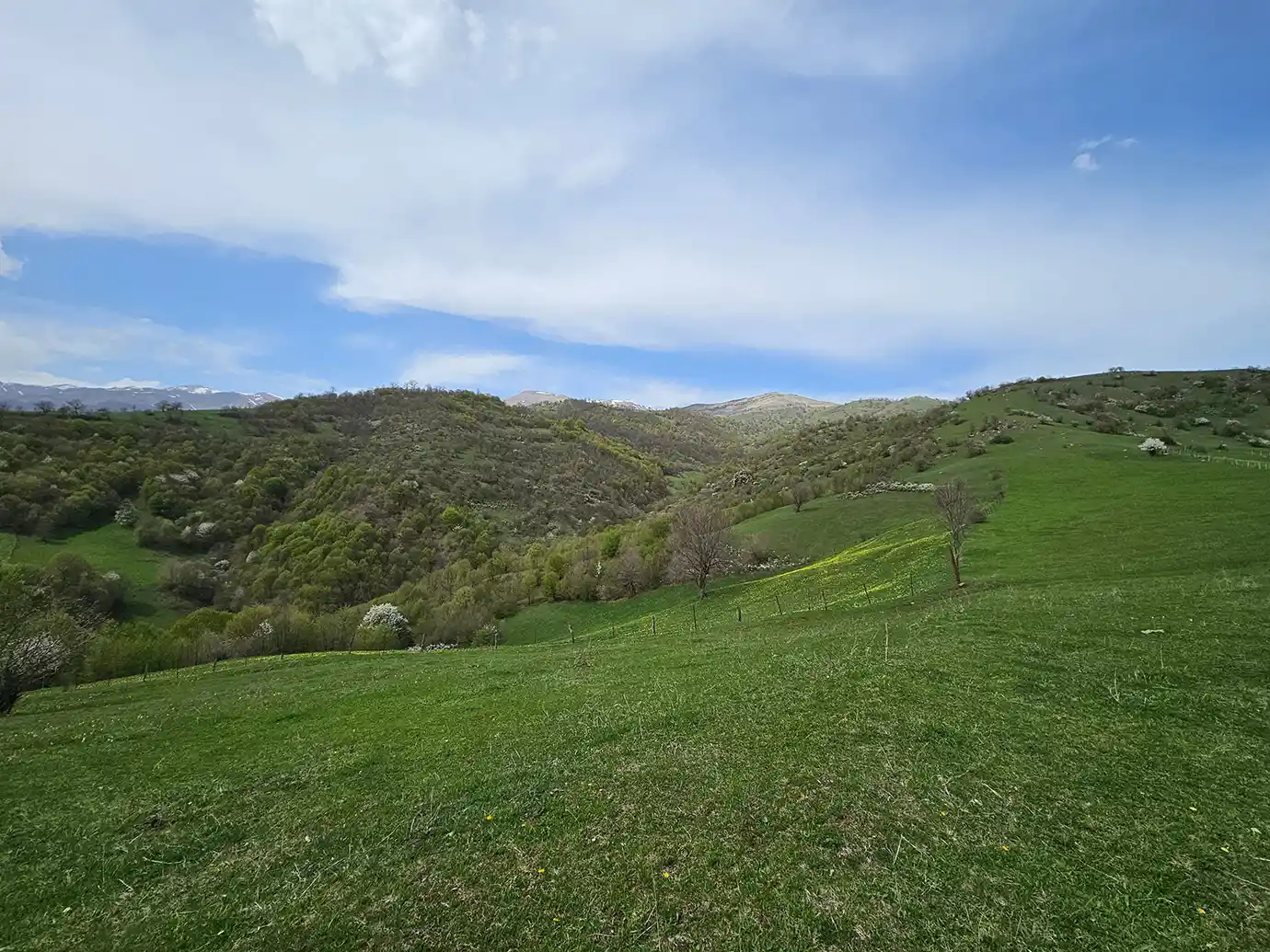
Day 6: Arriving and Sharambeyan Street
Arrive in Dilijan in the morning. Walk Sharambeyan Street in the old town — a preserved 19th-century lane of wooden-balconied stone houses with traditional craftspeople working at ground-floor workshops. A ceramicist, a woodcarver, and a carpet weaver often work with open doors on the same 200-meter stretch. The street has been restored but stays genuinely active.
Use the afternoon to walk any of the short park trails near town. The trail to Jukhtak Monastery follows a stream through the forest for about 45 minutes before reaching a small medieval church in a clearing. No crowds, no organized tour stops.
Day 7: Haghartsin Monastery
Haghartsin Monastery is the defining experience of a visit to Dilijan. Drive 18 km northeast of Dilijan through the forest to reach it. The monastery sits in a narrow forested valley where sunlight reaches the stones only in limited windows during the day. The complex dates from the 10th through 13th centuries and includes three churches, a large gavit (vestibule), and a refectory with an intact vaulted stone ceiling.
The refectory ceiling is one of the finest surviving examples of medieval Armenian stone vaulting. Carved geometric patterns cover the interior arches. On quiet mornings, the sound inside is just the forest and occasional bird calls from outside the windows.
Arrive early — before 9:00 AM on weekdays — to have the monastery to yourself before day-trip groups arrive from Yerevan. A resident priest sometimes gives informal commentary in Armenian or Russian. The surrounding forest trail takes 30 to 40 minutes and connects the monastery to the river valley below.
Drive back to Yerevan for departure. The drive from Dilijan takes about 90 minutes without stops.
Practical Planning for This Itinerary
How Do I Get Around Armenia?
Private car hire with an English-speaking driver-guide is the most efficient way to cover Armenia itinerary. Marshrutky (shared minibusses) connect Yerevan to most regional towns but operate on irregular schedules and require multiple connections for sites like Noravank or Haghartsin. A private vehicle gives you control over departure times, stops, and pace.
What Is the Best Season for This Itinerary?
May through early June and September through October are the optimal windows. Spring brings wildflowers in the Ararat Valley, and clear views of Mount Ararat before summer haze builds. Autumn turns the Dilijan beech forest gold and red — the drive through Tavush Province in October rivals anything the region offers in summer. July and August are good for swimming in Lake Sevan, but Yerevan gets very hot.
How Many Nights Should I Spend in Each Place?
Two nights in Yerevan cover Days 1 and 2. Day 3 runs as a day trip from Yerevan. Day 4 can be done as a day trip from Yerevan or with accommodation in the Ararat Valley. One night at Lake Sevan covers Day 5. Two nights in Dilijan cover Days 6 and 7. Peregrine can adjust the breakdown based on your preferred base locations.
Frequently Asked Questions About This Armenia Itinerary
Can I do this 7-day itinerary in Armenia independently?
Yes, but with some friction. Yerevan is fully walkable and served by GG Taxi and Yandex GO. Day trips to Garni and Geghard are manageable by marshrutka or hired taxi. Visiting Khor Virap and Noravank on the same day requires a private vehicle or an organized Armenia Tour Package — public transport cannot connect both efficiently. Lake Sevan and Dilijan are reachable by public bus from Yerevan. For the full itinerary at a comfortable pace, a private car with a guide removes all scheduling uncertainty.
Is this itinerary suitable for families with children?
The itinerary works well for families with children aged 8 and older. Garni is flat and open. The Cascade escalators appeal to most children. The descent into the Khor Virap dungeon is a tight ladder climb that younger children may find difficult but manageable with an adult. The Noravank staircase is steep — hold small children’s hands on the upper section. Dilijan forest walks and the lakeside at Sevan are straightforward for all ages.
What should I wear for monastery visits?
Cover your shoulders and knees at every church and monastery on this itinerary. Women need a headscarf or a light shawl to cover their hair. Most sites have shawls available at the entrance, but carrying your own is more practical. Garni Temple is a pagan site with no dress code. Geghard, Khor Virap, Noravank, Sevanavank, Haghartsin, and Jukhtak all require modest dress.
How physically demanding is this itinerary?
The itinerary rates light to moderate. The Cascade offers escalators for those who prefer not to climb 572 steps. The Geghard interior involves uneven stone floors and some steps. The Khor Virap dungeon requires descending a vertical iron ladder — optional and skippable. The Noravank upper church staircase is steep but short. Haghartsin involves some forest walking on uneven ground. No section requires trekking fitness. Comfortable walking shoes are worn every day.
What are the opening hours for the main sites?
Garni Temple is open daily from 9:00 to 18:00 in winter and from 9:00 to 20:00 in summer. Geghard Monastery is open daily from 9:00 to 19:00. Khor Virap opens at 8:00 and closes at 18:00 in winter and 20:00 in summer. The Matenadaran is open Tuesday through Saturday, 10:00 to 17:00, and closed on Sundays and Mondays. The Cascade interior escalators run daily from 8:00 to 20:00. Haghartsin Monastery has no set admission hours. Verify current hours through your guide or the official sites before Armenia travel.