


The best time for the luxury Everest trek depends on what matters most to you. Choose April for warmer trail days, blooming rhododendrons, and the classic Everest season feel. Choose October for the clearest skies, strong flight conditions, and sharp mountain views. Choose November for crisp views and fewer crowds. Choose late March for a quieter premium trek and easier access to top lodge rooms.
For most high-end travelers, October and November offer the best balance of clear views, strong helicopter availability, and smooth photography days. Late March to mid-May suits travelers who want spring color, a lively trail atmosphere, and the energy of the Everest climbing season. Premium rooms at top lodges often sell out early, so booking 6 to 9 months in advance helps secure the best dates and room choices.
Comparative Analysis of Primary Trekking Seasons
The Everest region follows a bi-modal peak season structure. These two windows—Spring and autumn—each offer distinct advantages and trade-offs in terms of visibility, temperature, and trail density.
The Spring Window: March to May
Spring represents the awakening of the Khumbu. As the deep winter freeze of February recedes, the valley transitions from a stark, snowy landscape to a verdant corridor of life.
In the early spring, specifically March, the high-altitude trails still retain a winter character. The nights remain cold, with temperatures at Everest Base Camp frequently dropping to -15 degrees Celsius. However, the advantage of a March trek lies in its relative privacy. Most standard trekking groups wait for the warmer temperatures of April, meaning that the luxury lodges in Phakding and Monjo have higher availability and offer a more secluded atmosphere for guests.
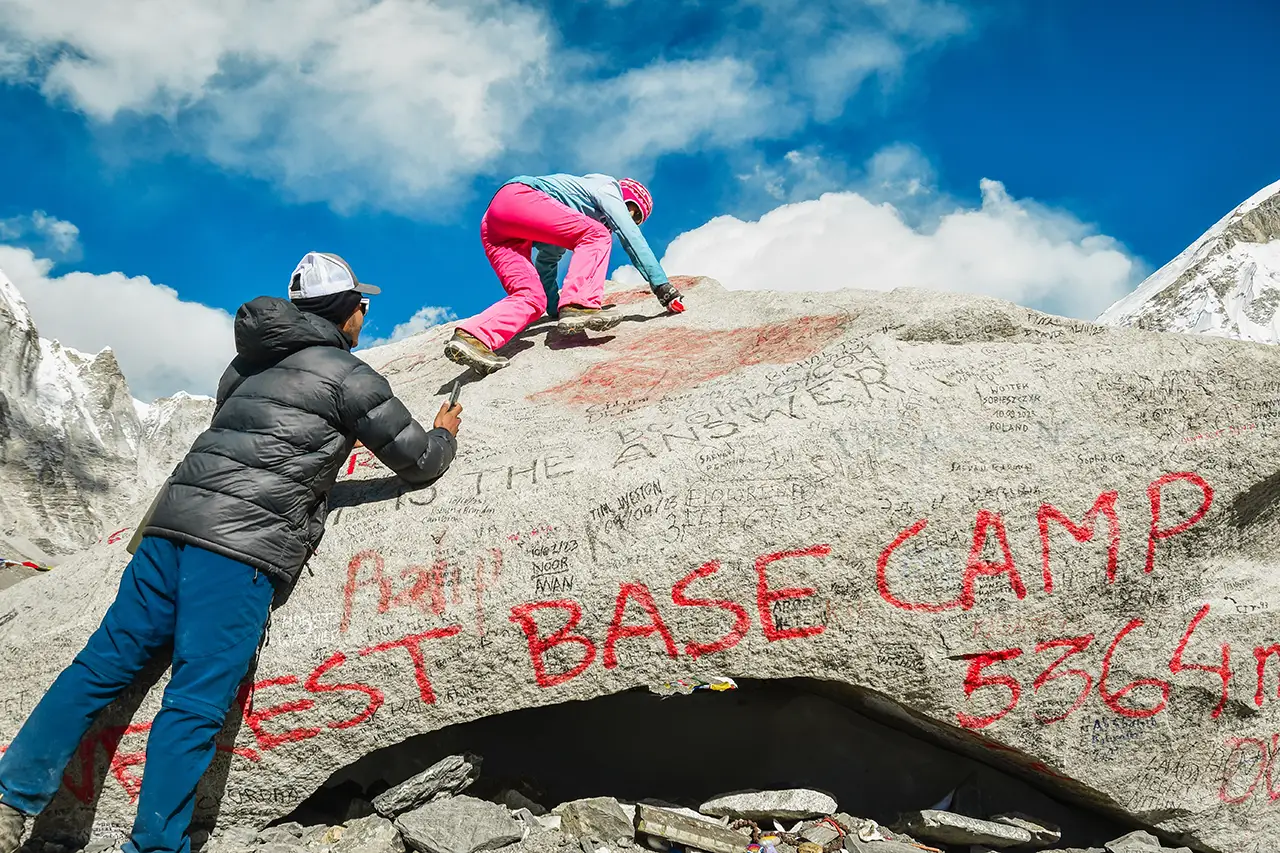
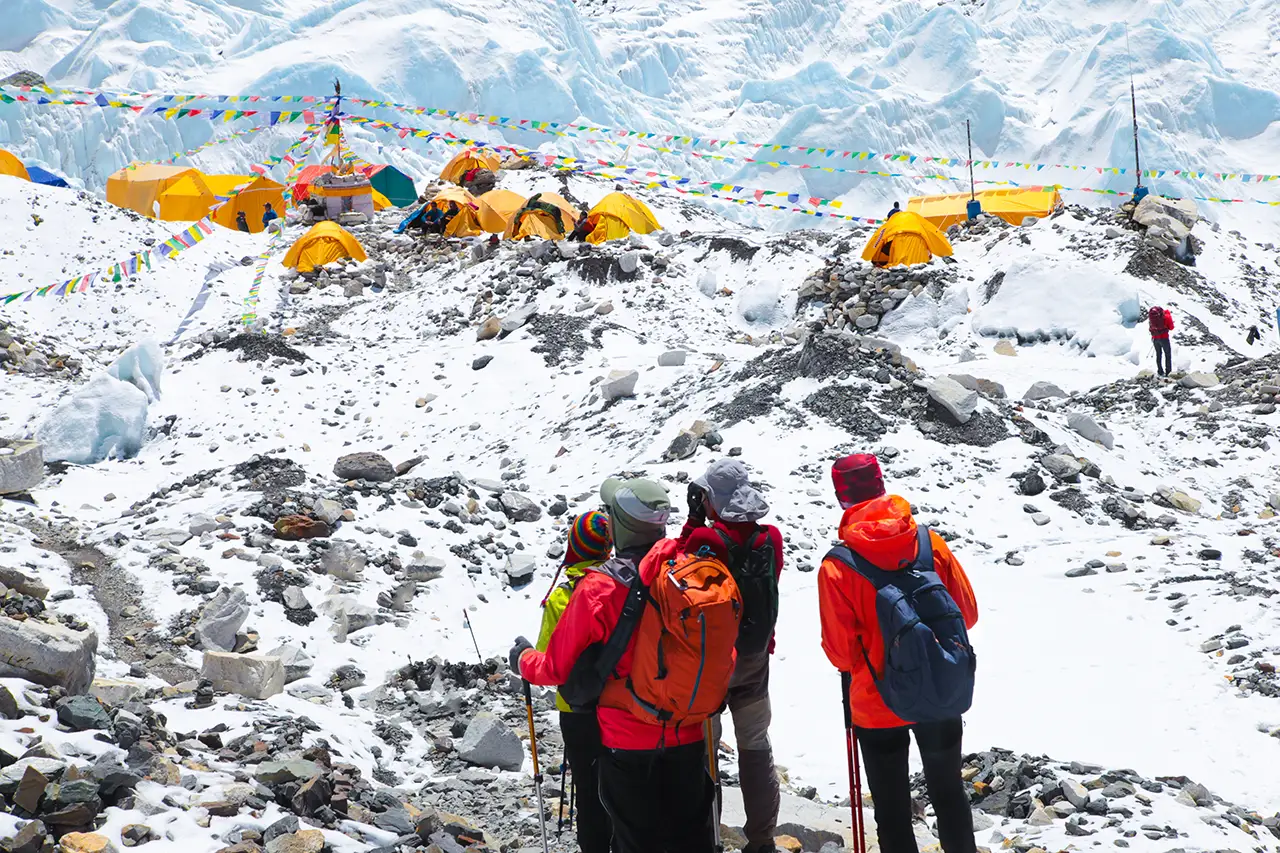
By mid-April, the environmental character changes. The lower hillsides, typically between 2,500 and 3,200 meters, erupt with the bloom of Rhododendron arboreum, Nepal’s national flower. For the luxury traveler, this provides a botanical foreground that contrasts sharply with the white peaks of Thamserku and Ama Dablam. This is also the period when the “Yellow Tent City” begins to form at Everest Base Camp. For premium trekkers, this adds a layer of social energy; the trails are shared with world-class mountaineers, and the spirit of the “climbing season” is palpable.
May is the warmest month of the spring window. Daytime temperatures at Namche Bazaar can reach 15-20 degrees Celsius, making for very comfortable walking conditions. However, the trade-off for this warmth is the build-up of pre-monsoon haze. While mornings are usually clear, afternoons are often cloudy, which can occasionally obscure views of the Everest summit from lower viewpoints like the Hotel Everest View.
The Autumn Window: September to November
Autumn is widely considered the gold standard for mountain visibility. The monsoon rains of June through August have washed the atmosphere of dust and pollutants, resulting in a level of clarity that is often referred to as “high-definition” visibility.
September acts as the transition. While the early part of the month may still see occasional afternoon showers, the latter half of September brings stable high-pressure systems. The unique benefit of September is the greenery; the valley is at its most lush, and waterfalls are at their peak volume following the monsoon.
October is the peak of the trekking year. The sky is a consistent, deep cobalt blue, and the weather is remarkably stable. For travelers using helicopter returns, October offers the lowest cancellation risk of the year. The primary challenge of October is the sheer volume of travelers. Even the luxury lodge networks operate at near-maximum capacity, and the trails can feel crowded, particularly at bottleneck points like the Hillary Bridge or the final climb to Namche Bazaar.
November brings a cooling trend but even greater atmospheric stability. As the month progresses, the air becomes drier, and the temperatures drop, but the clarity of the peaks remains perfect. For the traveler who prioritizes sharp photography and can handle colder nights, November is the superior choice, as the peak crowds of October begin to thin.
| Season Attribute | Spring (Mar-May) | Autumn (Sep-Nov) |
|---|---|---|
| Dominant Visuals | Wildflowers and Greenery | Sharp Peaks and Blue Skies |
| Morning Visibility | Excellent | Outstanding |
| Afternoon Visibility | Moderate (Clouds often build) | High (Stable skies) |
| Temperature | Gradually warming | Gradually cooling |
| Trail Atmosphere | High energy (Climber focus) | Festive (Cultural focus) |
| Lodge Pressure | High in April/May | Maximum in October |
Book Now Luxury Everest Trek



Month-by-Month Deep Dive for 2026/2027 Planning
March: The Strategic Early Start
March is the month of awakening. The frozen rivers of the Khumbu begin to flow, and the luxury teahouses that may have closed for the winter deep-freeze reopen their doors. In 2026 and 2027, March will appeal to the traveler who wants the “mountain to themselves.”
The weather in March is characterized by high clarity but low temperatures. Daytime highs in Namche Bazaar range from 7 to 10 degrees Celsius, while nights can dip to -12 degrees Celsius. For a premium trek, this is manageable because lodges like Yeti Mountain Home provide electric blankets and insulated rooms that retain heat much better than standard stone teahouses. The helicopter success rate in March is approximately 75%, with occasional delays due to late-winter snow squalls.
April: The Botanical Peak
April is arguably the most beautiful month for a premium trek. The “Lali Gurans” (red rhododendrons) create a stunning visual corridor as you trek from Phakding to Namche. The temperatures are milder, with daytime highs at the base camp hovering around 10 degrees Celsius.
Logistically, April is the busiest month of spring. To secure a suite at the Hotel Everest View, which offers pressurized rooms and incredible sunrise vistas, advanced booking is mandatory. The presence of mountaineering teams at base camp adds a unique layer of prestige and interest to the journey this month.
May: The Climber’s Grand Finale
May is the month of the summit bids. The weather is at its warmest, which is beneficial for those who struggle with the cold, but humidity is rising in the lower valleys. The “Yellow Tent City” at base camp is at its most extensive during the first two weeks of May.
One nuance for the luxury traveler in May is the “morning window.” Due to rising temperatures, clouds tend to form in the valleys by late morning. Helicopter returns should be scheduled as early as possible (typically 6:00 AM to 8:00 AM) to ensure a smooth flight back to Kathmandu before the thermals create turbulence.
September: The Post-Monsoon Refresh
Late September offers a unique aesthetic. The air is fresh, and the landscape is an intense emerald green. For those seeking privacy, the last week of September is a “shoulder” period where you can enjoy luxury accommodations without the October crowds.
Flight reliability to Lukla begins to improve significantly in late September. While the early part of the month may still see cancellations due to lingering monsoon patterns, the 2026/2027 forecasts suggest that the stable autumn air masses are arriving earlier each year.
October: The Perfectionist’s Month
If you were to design the perfect trekking month in a laboratory, it would look like October. The air is at its driest, and atmospheric stability is at its peak. This is the best time for photography, particularly for the golden-hour light on the south face of Lhotse and the Everest summit.
However, October carries a “success tax” in the form of crowds. Trail traffic is at its highest, and the luxury lodges are often booked out a year in advance for specific dates. For the premium traveler, the solution to the October crowds is to hire private guides and helicopters, which let you bypass the most congested sections of the trail and the wait times at the airport.
November: Best Time for the Luxury Everest Trek
Many professional guides prefer November. The skies remain clear, but the temperatures start to drop, naturally filtering out casual trekking crowds. The visibility is often even better than in October because there is absolutely no residual moisture in the air.
For the premium experience, November is excellent for aviation. The “flight success rate” remains very high, and the crisp, cold air provides better lift for helicopters. The nights are cold, but with the high-quality down jackets and heated lodge facilities provided in a premium package, the cold becomes an aesthetic feature of the high Himalayas rather than a hardship.
| Month | Avg Temp (Namche) | Visibility | Lodge Availability | Heli Success |
|---|---|---|---|---|
| March | 7°C | High (Dry) | Moderate-High | 75% |
| April | 10°C | High (Mornings) | Low (Book early) | 90% |
| May | 12°C | Moderate (Haze) | Moderate-Low | 85% |
| September | 13°C | Moderate-High | Moderate | 80% |
| October | 10°C | Outstanding | Very Low | 95% |
| November | 6°C | Exceptional | Moderate | 90% |
Helicopter Visibility and Aviation Logistics
For a premium Everest trek, aviation is not just a luxury; it is a primary logistical tool that determines the pace and comfort of the trip. The 2026 and 2027 seasons will continue to rely heavily on helicopter movements for both the Lukla connection and the high-altitude return.
The VFR Window: Why Timing Matters
All flights in the Khumbu region operate under Visual Flight Rules (VFR). This means that pilots must be able to see the ground and the mountain ridges to navigate the narrow valleys. In the spring, the warming of the ground creates rising air currents (thermals) by 10:00 AM or 11:00 AM, which often pull up moisture from the lower valleys to form clouds. This is why almost all successful helicopter flights occur in the early morning.
In contrast, the autumn months are characterized by descending cold, dry air from the Tibetan plateau. This suppresses cloud formation, creating much longer “flying windows” that often last until mid-afternoon. For a traveler planning a helicopter return from Gorak Shep, October and November offer a much higher probability of departing on schedule without waiting for the weather to clear.
Helicopter Success and Cancellation Risks
While fixed-wing planes to Lukla are highly sensitive to crosswinds and visibility on the short runway, helicopters can often fly in conditions that ground the smaller planes. However, “lift” becomes an issue at higher altitudes. In the warmer months of May and September, the air is less dense, which can occasionally limit the number of passengers a helicopter can carry from Gorak Shep or Kala Patthar, sometimes requiring multiple shuttles to ferry a group back to a lower altitude where the air is thicker.
| Season | Heli Success Rate | Primary Risk | Premium Benefit |
|---|---|---|---|
| Spring | 85% | Afternoon cloud/Haze | Viewing the “Yellow Tent City” from above |
| Summer | 40% | Monsoon fog/Rain | Lowest costs (not recommended) |
| Autumn | 95% | High winds (Late Nov) | Crystal-clear photography of the Everest summit |
| Winter | 70% | Extreme cold/Snow | Pristine, untouched snow views |
The Lukla Flight Shift: Kathmandu vs. Ramechhap
A critical update for 2026/2027 travelers is the ongoing diversion of Lukla flights. During the peak months of April, May, October, and November, the Civil Aviation Authority of Nepal often relocates all Lukla flights from Kathmandu to Ramechhap (Manthali Airport).
This change is made to reduce congestion at Kathmandu’s international airport, but it adds a layer of complexity to the first day of the trek. Traveling to Ramechhap requires a 4- to 5-hour drive from Kathmandu, usually departing between 1:00 AM and 2:00 AM to catch early-morning flights.
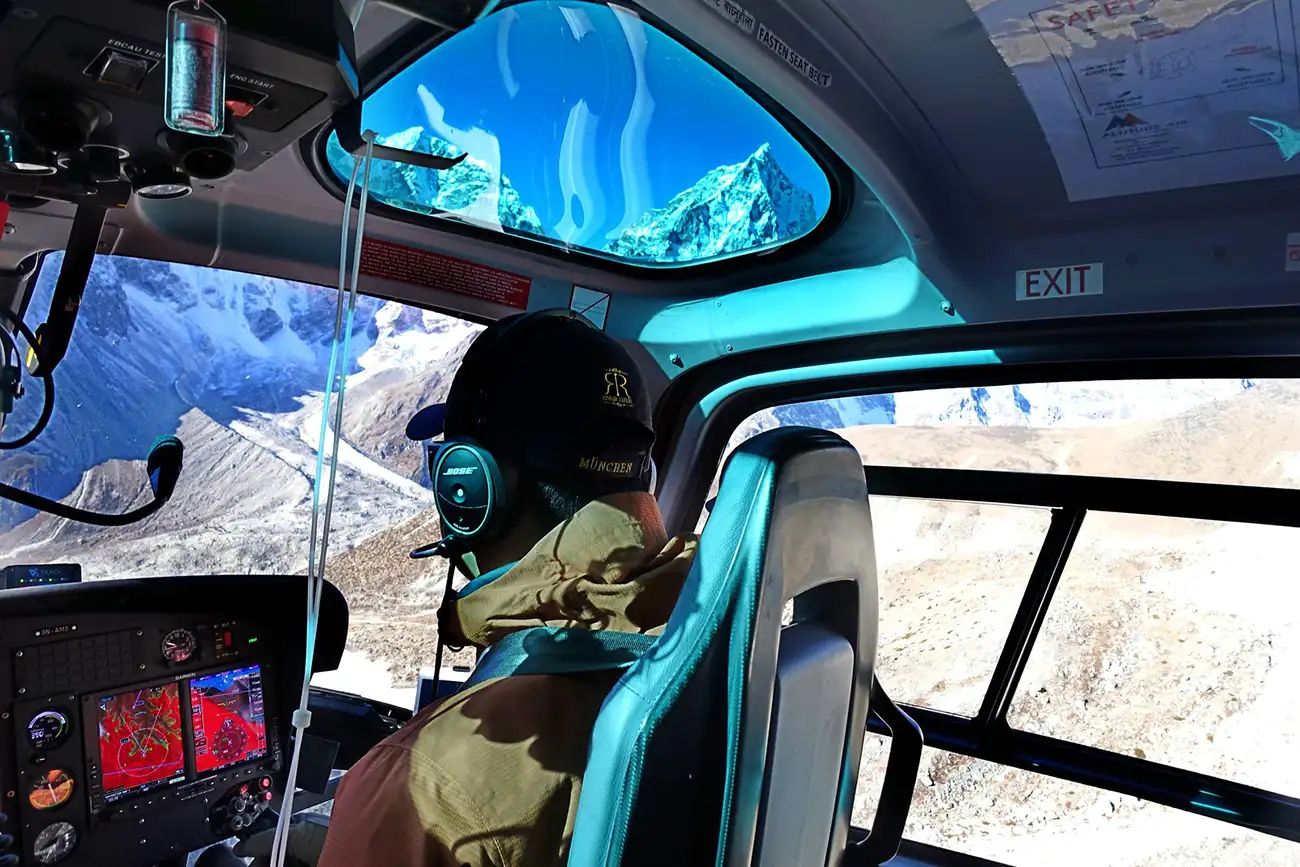
For a premium experience, many trekkers opt to bypass this by booking a private helicopter directly from Kathmandu to Lukla. This 45-minute flight lets you get a full night’s sleep in your 5-star hotel and reach the mountains in comfort, avoiding the bumpy road to Ramechhap. When choosing your seasonal window, keep in mind that the “Ramechhap diversion” is standard during the best trekking months, making the helicopter upgrade an even more valuable investment in your comfort.
Luxury Lodges: Privacy and Comfort Standards
The hallmark of a premium Everest trek is the quality of the stay. In the Khumbu, three primary lodge networks set the standard for 2026 and 2027: Yeti Mountain Home (now Mountain Lodges of Nepal), Everest Summit Lodges, and the Hotel Everest View.
Yeti Mountain Home (Mountain Lodges of Nepal)
This network is the most comprehensive in the region. Properties in Lukla, Phakding, Monjo, Namche Bazaar, and Deboche feature heated beds with electric blankets, ensuring you sleep warm even when the outside temperature is well below freezing. The lodge in Namche is particularly famous for its library and its elevated position, which provides a quieter atmosphere away from the bustling center of the town.
The dining experience in these lodges is a significant step above standard teahouses. Menus are designed to provide the high-calorie intake needed for trekking without sacrificing flavor, featuring fresh vegetables, organic soups, and a variety of international dishes.
Hotel Everest View
Located at 3,880m, this is one of the highest hotels in the world. For many, an overnight stay here is a highlight of the trek. The rooms are equipped with oxygen if needed, and the large glass windows and balconies offer unobstructed views of Everest, Lhotse, and the iconic Ama Dablam. The best time to stay here for visibility is October and November, when the sunrise hits the peaks with a golden hue that is rarely obscured by clouds.
High-Altitude Accommodation Realities
As you move above the 4,000-meter mark (into Dingboche and beyond), the extreme cold makes the kind of plumbing required for en-suite luxury bathrooms difficult to maintain. In these zones, the “best available” lodges are used. These properties represent the highest standard at that altitude, offering carpeted rooms, high-quality sleeping bags, and dining areas kept warm by central heaters.
| Lodge Location | Altitude | Luxury Feature | Privacy Season |
|---|---|---|---|
| Phakding | 2,610m | En-suite hot showers | March or Late Sept |
| Namche | 3,440m | Heated beds/Electric blankets | March or November |
| Hotel Everest View | 3,880m | Oxygen-equipped rooms | Late Autumn |
| Deboche | 3,820m | Forest seclusion | April (Rhododendron) |
| Lobuche | 4,940m | Best-available insulation | Any peak month |
Cultural Depth: Festivals and Local Life
A luxury trek is not only about the scenery; it is about the “soul of the mountains,” found in Sherpa culture and Tibetan Buddhism.
Mani Rimdu Festival: 2026 and 2027
Mani Rimdu is the most important festival in the Khumbu, celebrated at the Tengboche Monastery. It commemorates the founding of Buddhism in the Himalayas by Guru Rinpoche. For the luxury traveler, this is a chance to see the region’s cultural heritage at its most vibrant, with monks performing masked dances that dramatize the triumph of Buddhism over older spiritual traditions.
- 2026 Mani Rimdu: Expected dates for the public celebration are October 26, 27, and 28, 2026. (Verification closer to the date is advised due to the lunar calendar.
- 2027 Mani Rimdu: Expected dates are November 14, 15, and 16, 2027.
The atmosphere at Tengboche during the festival is electric, but it also means that the nearby lodges are at 100% capacity. If you plan to attend the festival, you must book your 2027 trek at least a year in advance to ensure a room at the premium lodges in Deboche or Tengboche.
The Auspicious Fire Horse Year (2026)
The year 2026 is the “Fire Horse” year in the Tibetan calendar. In Himalayan culture, these specific years are often considered highly auspicious for making pilgrimages and starting significant life events. This can lead to a more festive atmosphere in the villages, with more local families gathering for celebrations, offering trekkers a deeper insight into the region’s authentic social fabric.
Trail Crowd Levels and Privacy Strategy
Privacy is one of the most difficult luxuries to maintain on the Everest trail. In the 2026 and 2027 seasons, the number of trekkers is expected to continue its upward trend. To maintain a sense of exclusivity, travelers should consider the following “shoulder” windows:
- Late March: You get the clarity of spring and the emerging rhododendrons, but you beat the “April rush”.
- Early May: Most climbers are already at base camp, and many of the early spring trekkers have finished. The weather is warm, and while there may be some haze, the social atmosphere is at its peak.
- Late November: Clarity is at its absolute maximum, and crowds have dropped by 50% to 60% compared to October. For those who can handle the -15 degree Celsius nights (mitigated by luxury lodge heating), this is the ultimate privacy window.
| Trekking Window | Crowd Density | Privacy Level | Best For |
|---|---|---|---|
| Mid-October | Highest | Low | Reliable weather |
| Late April | High | Moderate-Low | Mountaineering culture |
| Late November | Moderate-Low | High | Photography/Solitude |
| Early March | Low | Very High | Wilderness feel |
Strategic Booking Timelines for 2026/2027
To successfully execute a luxury Everest Base Camp trek, the planning phase must begin significantly earlier than for a standard trip. This is due to the limited number of “true luxury” rooms available in each village. For example, a village like Phakding may have dozens of teahouses but only one or two properties like Yeti Mountain Home.
Advance Booking Schedule
- 9-12 Months Out: Decide on your seasonal window (Spring vs. Autumn) and your specific goals (Photography vs. Festivals). Secure your international flights.
- 6-9 Months Out: Finalize your booking with a luxury operator to ensure your spot in the premium lodge network for specific dates, especially if your trek coincides with Mani Rimdu or the October peak.
- 4-6 Months Out: If you are not flying by private helicopter, this is when Lukla flight slots are typically allocated to operators. Early booking ensures you get the first flight of the morning (the most reliable).
- 3 Months Out: Finalize your physical preparation and ensure you have all the specific high-altitude gear needed. However, premium packages often include high-end down jackets and sleeping bags for your use.
The 2026/2027 seasons are expected to be particularly busy as global interest in “bucket-list” adventure travel continues to grow. By booking early, you also protect yourself against price increases in aviation fuel and lodge rates, which tend to fluctuate with seasonal demand.
Conclusion: Synthesizing the Optimal Window
The decision of when to start a luxury Everest trek is a personal calculation that balances environmental conditions with logistical certainty. For the traveler who views mountain photography as the primary objective, the autumn window (specifically mid-October to mid-November) is the only logical choice. The atmospheric clarity and the high success rate of helicopter returns provide a level of security that other months cannot match.
For the traveler who wants to experience the Himalayas in their most vibrant and “alive” state, the Spring window (specifically April) is superior. The combination of blooming rhododendrons, milder temperatures, and the fascinating culture of the Everest climbing season creates an energetic environment that defines the classic Himalayan experience.
Regardless of the season, the key to a premium experience lies in the trek’s infrastructure. By staying in the luxury lodge network and using helicopter logistics, the challenges of altitude and cold are transformed into manageable, even enjoyable, aspects of the journey. As you plan for the 2026 or 2027 season, remember that the “best” time is the one that aligns with your specific desires for comfort, culture, and clarity. To secure your place in this exclusive mountain environment, we recommend booking with a reputable luxury provider that understands the nuanced logistics of the Khumbu region.